Naar de inhoud

Romenu

Over literatuur, gedichten, kunst en cultuur
akke.beakke.be

Berichten van 28 mei 2018 tot 29 mei 2018

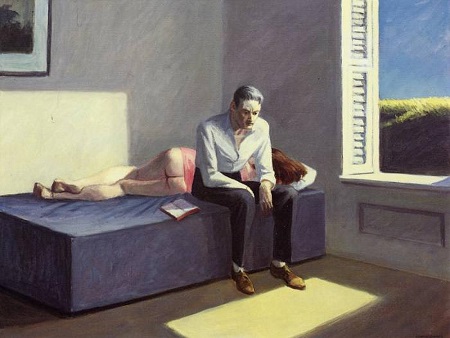
Summer in the City, 1949 (Ernest Farrés)


Dolce far niente


 2150558-ccf642714a9a49bb3cf117dc060161fd.jpg
Summer in the City door Edward Hopper, 1949


Summer in the City, 1949

The man is looking for trouble,
thrills, sublime ecstasies, places
devoid of folklore, deals,
calculated approximations, objects
of desire that hold
your attention and help you
keep your cool, the latest rage
at your fingertips, binges,
infatuations, sexual icons,
irrefutable proofs, joyrides, advice
within parentheses, green lights, comfy shoes,
forms of expression that presume
supremacy, free tickets to the game,
ways of killing time that are reckless and frenzied,
the upper hand before bellyaching, straight
answers. The woman, however, is looking for love.


Vertaald door Lawrence Venuti


 2150558-85295e1d3080ab86b33c3e15fe30e3b6.jpg
Ernest Farrés (Igualada, 21 juli 1967)
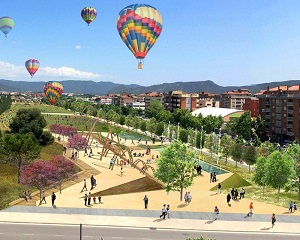
Igualada, de geboorteplaats van Ernest Farrés tijdens een ballonfestival


Zie voor de schrijvers van de 29e mei ook mijn vorige blog van vandaag.

Geschreven door Romenu om 18:21 Reageer op dit bericht

André Brink, Eduard Escoffet, G. K. Chesterton, Bernard Clavel, T. H. White, Hans Weigel, Alfonsina Storni, Max Brand, Joel Benton

De Zuid-Afrikaanse schrijver André Brink werd geboren op 29 mei 1935 in Vrede. Zie ook alle tags voor André Brink op dit blog.

Uit: A dry white season

“Even if I’m hated, and ostracized, and persecuted, and in the end destroyed, nothing can make me black. And so those who are cannot but remain suspicious of me. In their eyes my very efforts to identify myself with Gordon, with all the Gordons, would be obscene. Every gesture I make, every act I commit in my efforts to help them makes it more difficult for them to define their real needs and discover for themselves their integrity and affirm their own dignity. How else could we hope to arrive beyond predator and prey, helper and helped, white and black, and find redemption?
On the other hand: what can I do but what I have done? I cannot choose not to intervene: that would be a denial and a mockery not only of everything I believe in, but of the hope that compassion may survive among men. By not acting as I did I would deny the very possibility of that gulf to be bridged.
If I act, I cannot but lose. But if I do not act, it is a different kind of defeat, equally decisive and maybe worse.
Because then I will not even have a conscience left.
The end seems ineluctable: failure, defeat, loss. The only choice I have left is whether I am prepared to salvage a little honour, a little decency, a little humanity — or nothing. It seems as if a sacrifice is impossible to avoid, whatever way one looks at it. But at least one has the choice between a wholly futile sacrifice and one that might, in the long run, open up a possibility, however negligible or dubious, of something better, less sordid and more noble, for our children…”
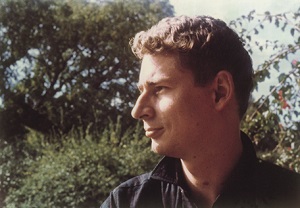
 

 2150556-f79002cc56c37ab4771178aa962cd20c.jpg
André Brink (29 mei 1935 - 6 februari 2015)
Begin jaren 1960


De Catalaanse dichter, schrijver en vertaler Eduard Escoffet werd geboren op 29 mei 1979 in Barcelona. Zie ook alle tags voor Eduard Escoffet op dit blog.


alles egal

die liebe
macht alles kaputt;
sie macht den sex kaputt,
sie zerstört den verstand
und sie bleicht den teint.
sie macht aus den augen ein möbel
und aus dem bett ein anderes möbel
– und zwar eins ums andere mal.
die liebe
macht das flirten kaputt,
sie tötet die masern,
sie tötet den schweifenden blick und
erhöht die moral
hin zu unbekannten neigungen.

die liebe
macht alles kaputt;
sie lässt die stimme rostig werden,
zerstört pläne und panoramablicke,
sie füllt den kaffee mit klumpen und
die adern mit nervenfasern, die sich überschlagen.
die liebe lässt das meer ruhig werden und die landschaften zahmer,
sie lässt die plattfüße platt
und macht platt die härteste rute.

die liebe
macht alles kaputt:
sie bedeckt dir die augen,
und zwischen den vorhängen und fensterläden
vergesse ich mich selbst,
die flüsse sind immer noch flüsse
und ich weiß nicht mehr was tun.


Vertaald doorRoger Friedlein
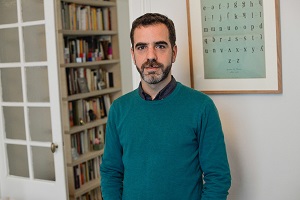
 

 2150556-c9048823df23e7f9c3a92473a447ef44.jpg
Eduard Escoffet (Barcelona, 29 mei 1979)


De Engelse dichter, letterkundige, schrijver en journalist Gilbert Keith Chesterton werd geboren in Londen op 29 mei 1874. Zie ook alle tags voor G. K. Chesterton en alle tags voor Chesterton op dit blog.

Uit: The Secret Garden (The Complete “Father Brown”)

“I mean,” said little Father Brown, from the corner of the room, “I mean that cigar Mr. Brayne is finishing. It seems nearly as long as a walking-stick.”
Despite the irrelevance there was assent as well as irritation in Valentin’s face as he lifted his head.
“Quite right,” he remarked sharply. “Ivan, go and see about Mr. Brayne again, and bring him here at once.”
The instant the factotum had closed the door, Valentin addressed the girl with an entirely new earnestness.
“Lady Margaret,” he said, “we all feel, I am sure, both gratitude and admiration for your act in rising above your lower dignity and explaining the Commandant’s conduct. But there is a hiatus still. Lord Galloway, I understand, met you passing from the study to the drawing-room, and it was only some minutes afterwards that he found the garden and the Commandant still walking there.”
“You have to remember,” replied Margaret, with a faint irony in her voice, “that I had just refused him, so we should scarcely have come back arm in arm. He is a gentleman, anyhow; and he loitered behind—and so got charged with murder.”
“In those few moments,” said Valentin gravely, “he might really—”
The knock came again, and Ivan put in his scarred face.
“Beg pardon, sir,” he said, “but Mr. Brayne has left the house.”
“Left!” cried Valentin, and rose for the first time to his feet.
“Gone. Scooted. Evaporated,” replied Ivan in humorous French. “His hat and coat are gone, too, and I’ll tell you something to cap it all. I ran outside the house to find any traces of him, and I found one, and a big trace, too.”
“What do you mean?” asked Valentin.
“I’ll show you,” said his servant, and reappeared with a flashing naked cavalry sabre, streaked with blood about the point and edge. Everyone in the room eyed it as if it were a thunderbolt; but the experienced Ivan went on quite quietly:
“I found this,” he said, “flung among the bushes fifty yards up the road to Paris. In other words, I found it just where your respectable Mr. Brayne threw it when he ran away.”
There was again a silence, but of a new sort. Valentin took the sabre, examined it, reflected with unaffected concentration of thought, and then turned a respectful face to O’Brien. “Commandant,” he said, “we trust you will always produce this weapon if it is wanted for police examination. Meanwhile,” he added, slapping the steel back in the ringing scabbard, “let me return you your sword.”
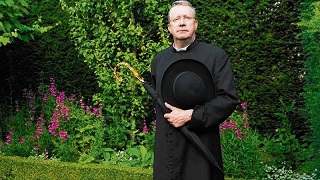
 

 2150556-6d91a51d12e5cbc0ddf4b18fcf1ca0fe.jpg
G. K. Chesterton (29 mei 1874 - 14 juli 1936)
Mark Williams speelt Father Brown in de BBC-serie vanaf 2013


De Franse schrijver Bernard Charles Henri Clavel werd geboren op 29 mei 1923 in Lons-le-Saunier. Zie ook alle tags voor Bernard Clavel op dit blog.

Uit: Les roses de Verdun

« Je suis allé à la porte. La neige tenait. La rue n'était pas déblayée et la voiture de Mme Vallier garée le long du trottoir, un peu plus bas, dans un renfoncement, était blanche. J'ai pensé un instant à la nettoyer, mais comme je ne savais pas quelle décision serait prise, je me suis dit que c'était inutile. Heureusement, elle était venue avec leur plus grosse auto qui était une quinze-chevaux Citroën. Si nous devions partir, sur la neige, la traction avant nous serait très précieuse. Et c'est une voiture que j'aime beaucoup conduire. [...]
Ce matin-là encore Monsieur allait m'étonner. Alors que je m'attendais à l'entendre pester contre le mauvais sort qui semblait s'acharner sur nous depuis le début du voyage, lorsqu'il a vu tomber la neige il nous a déclaré:
- Quelle chance que l'Hotchkiss soit cassée, nous serons plus en sécurité dans la traction avec une route pareille.
Mais, au petit déjeuner, il y a eu un très vif accrochage entre les deux femmes et lui. En dépit de l'état des routes et de la piètre visibilité, il s'était mis en tête de pousser jusqu'à Aulnois. Ce qui représentait, en comptant le retour, pas loin de quatre cents kilomètres de plus. Ça me semblait à proprement parler de la folie pure. Fort heureusement, cette empoignade avait dû faire monter sa tension artérielle. Il est devenu rouge et son souffle, de nouveau court et saccadé, l'a obligé à se taire.
- Veux-tu que j'appelle le médecin? a demandé Madame.
Dans un grand effort qui faisait un peu mal à voir car la souffrance se lisait sur ses traits, il est parvenu à gronder:
- Fous-moi la paix avec ce con! Il t'a fait acheter pour une fortune de drogues à foutre aux chiottes... Il doit toucher des ristournes du pharmacien, celui-là... Entre les toubibs qui ne font rien et ceux qui font trop... Les malades qui s'en tirent ont vraiment la peau dure...
- Tais-toi, papa. Tu parles trop. Tu t'essouffles encore plus.
Sa fille lui a pris la main qu'elle a caressée tendrement. Elle lui ressemble. Mince et les traits un peu durs comme lui. Le même grand front. Elle a ajouté d'une voix très douce:
- Tu devrais aller te reposer un moment. Nous ferons les valises et, dès que des voitures auront circulé un peu, on essaiera de partir. S'il faut s'arrêter en route, ce ne sont pas les hôtels qui manquent, entre ici et Lyon. «
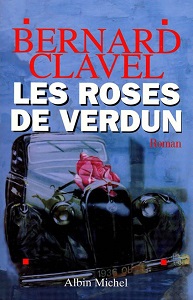
 

 2150556-e29386537c02ecf3e863253f2691837f.jpg
Bernard Clavel (29 mei 1923 – 5 oktober 2010)
Cover


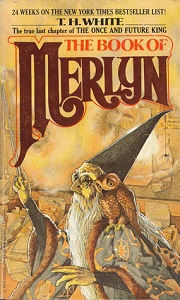
De Engelse dichter en schrijver Terence Hanbury White werd geboren op 29 mei 1906 in Bombay (Mombai). Zie ook alle tags voor T. H. White op dit blog.

Uit:The Book of Merlyn

"The best thing for being sad," replied Merlin, beginning to puff and blow, "is to learn something. That's the only thing that never fails. You may grow old and trembling in your anatomies, you may lie awake at night listening to the disorder of your veins, you may miss your only love, you may see the world about you devastated by evil lunatics, or know your honour trampled in the sewers of baser minds. There is only one thing for it then — to learn. Learn why the world wags and what wags it. That is the only thing which the mind can never exhaust, never alienate, never be tortured by, never fear or distrust, and never dream of regretting. Learning is the only thing for you. Look what a lot of things there are to learn".
(...)

“He caught a glimpse of that extraordinary faculty in man, that strange, altruistic, rare, and obstinate decency which will make writers or scientists maintain their truths at the risk of death. Eppur si muove, Galileo was to say; it moves all the same. They were to be in a position to burn him if he would go on with it, with his preposterous nonsense about the earth moving round the sun, but he was to continue with the sublime assertion because there was something which he valued more than himself. The Truth. To recognize and to acknowledge What Is. That was the thing which man could do, which his English could do, his beloved, his sleeping, his now defenceless English. They might be stupid, ferocious, unpolitical, almost hopeless. But here and there, oh so seldome, oh so rare, oh so glorious, there were those all the same who would face the rack, the executioner, and even utter extinction, in the cause of something greater than themselves. Truth, that strange thing, the jest of Pilate's. Many stupid young men had thought they were dying for it, and many would continue to die for it, perhaps for a thousand years. They did not have to be right about their truth, as Galileo was to be. It was enough that they, the few and martyred, should establish a greatness, a thing above the sum of all they ignorantly had.”
 

 2150556-8f60effa6ee6d834066aa46a2a42db62.jpg
T. H. White (29 mei 1906 – 17 januari 1964)
Cover


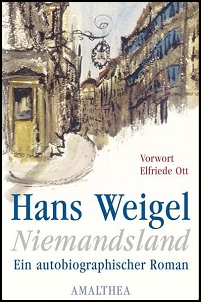
De Oostenrijkse schrijver en theatercriticus Hans Weigel werd geboren op 29 mei 1908 in Wenen. Zie ook alle tags voor Hans Weigel op dit blog.

Uit: Niemandsland

„Österreich nimmt den Untergang Österreichs nicht zur Kenntnis. Man hört hier auch schon das verhängnisvolle Wort vom "kleineren Übel", das in Deutschland geprägt worden ist, so lange, bis die Betonung von dem "kleiner" unerheblich immer mehr auf "Übel" gewechselt hatte, so lange, bis das Übel unversehens immer grösser und schliesslich das ganz grosse geworden war. Peter versucht vergeblich darzutun, dass man jedes Übel bekämpfen müsse, ob es nun kleiner oder grösser sei.
Peter kann solche Gespräche nicht mehr hören. Es ist gespenstisch, höllisch, dass man hier das selbe erleben muss wie draussen, einen Staat auf dem selben Weg in den Untergang sehen und ein Volk die selben selbstbetrügerischen Phrasen dazu sagen hören muss, ohne dass man helfen kann, ja ohne dass der dokumentarische Hinweis dieser Gleichartigkeit auch nur zur Kenntnis genommen wird.
Peter fühlt sich erschöpft und völlig leer. Alles, was er, seit er denken kann, erlebt hat, alle Enttäuschung, alle Fragwürdigkeit seiner Existenz und der letzten Tage zumal, alles steigt auf, wächst unerträglich in ihm an und höhlt ihn aus. Kein Erlebnis kann ihn aus dieser Hoffnungslosigkeit reissen, was immer geschieht, wird sie nur bestätigen, falls es unerfreulich, wird sie doppelt grausam machen, wenn es erfreulich ist.“
 2150556-78f747d137d777c64a8b4e760234cb79.jpg
Hans Weigel (29 mei 1908 – 12 augustus 1991) 
Cover


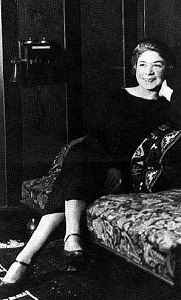
De Argentijnse dichteres Alfonsina Storni werd geboren in Sala Capriasca, Zwitserland op 29 mei 1892. Zie ook alle tags voor Alfonsina Storni op dit blog.


You Want Me White

You want me to be the dawn
You want me made of seaspray
Made of mother-of-pearl
That I be a lily
Chaste above all others
Of tenuous perfume
A blossom closed

That not even a moonbeam
Might have touched me
Nor a daisy
Call herself my sister
You want me like snow
You want me white
You want me to be the dawn

You who had all
The cups before you
Of fruit and honey
Lips dyed purple
You who in the banquet
Covered in grapevines
Let go of your flesh
Celebrating Bacchus
You who in the dark
Gardens of Deceit
Dressed in red
Ran towards Destruction

You who maintain
Your bones intact
Only by some miracle
Of which I know not
You ask that I be white
(May God forgive you)
You ask that I be chaste
(May God forgive you)
You ask that I be the dawn!

Flee towards the forest
Go to the mountains
Clean your mouth
Live in a hut
Touch with your hands
The damp earth
Feed yourself
With bitter roots
Drink from the rocks
Sleep on the frost
Clean your clothes
With saltpeter and water
Talk with the birds
And set sail at dawn
And when your flesh
Has returned to you
And when you have put
Into it the soul
That through the bedrooms
Became entangled
Then, good man,
Ask that I be white
Ask that I be like snow
Ask that I be chaste


Vertaald door Catherine Fountain
 

 2150556-cf8aad5e7ff8e2837e6c09884ed9b39b.jpg
Alfonsina Storni (29 mei 1892 – 25 oktober 1938)


De Amerikaanse schrijver Max Brand (eig. Frederick Schiller Faust) werd geboren op 29 mei 1892 in Seattle. Zie ook alle tags voor Max Brand op dit blog.

Uit: The Garden of Eden

“By careful tailoring the broad shoulders of Ben Connor were made to appear fashionably slender, and he disguised the depth of his chest by a stoop whose model slouched along Broadway somewhere between sunset and dawn. He wore, moreover, the first or second pair of spats that had ever stepped off the train at Lukin Junction, a glowing Scotch tweed, and a Panama hat of the color and weave of fine old linen. There was a skeleton at this Feast of Fashion, however, for only tight gloves could make the stubby fingers and broad palms of Connor presentable. At ninety-five in the shade gloves were out of the question, so he held a pair of yellow chamois in one hand and in the other an amber-headed cane. This was the end of the little spur-line, and while the train backed off down the track, staggering across the switch, Ben Connor looked after it, leaning upon his cane just forcibly enough to feel the flection of the wood. This was one of his attitudes of elegance, and when the train was out of sight, and only the puffs of white vapor rolled around the shoulder of the hill, he turned to look the town over, having already given Lukin Junction ample time to look over Ben Connor.
The little crowd was not through with its survey, but the eye of the imposing stranger abashed it. He had one of those long somber faces which Scotchmen call "dour." The complexion was sallow, heavy pouches of sleeplessness lay beneath his eyes, and there were ridges beside the corners of his mouth which came from an habitual compression of the lips. Looked at in profile he seemed to be smiling broadly so that the gravity of the full face was always surprising. It was this that made the townsfolk look down. After a moment, they glanced back at him hastily. Somewhere about the corners of his lips or his eyes there was a glint of interest, a touch of amusement--they could not tell which, but from that moment they were willing to forget the clothes and look at the man.
While Ben Connor was still enjoying the situation, a rotund fellow bore down on him.
"You're Mr. Connor, ain't you? You wired for a room in the hotel? Come on, then. My rig is over here. These your grips?"
He picked up the suit case and the soft leather traveling bag, and led the way to a buckboard at which stood two downheaded ponies.”

 

 2150556-d15871becf100970a9dec3852658ca8b.jpg
Max Brand (29 mei 1892 – 12 mei 1944)
Cover


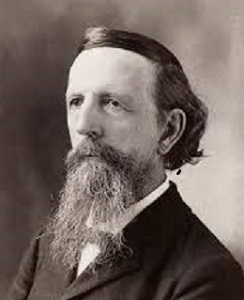
De Amerikaanse dichter, schrijver en publicist Joel Benton werd geboren op 29 mei 1832 in het kleine stadje Amenia, in county New York. Zie ook alle tags voor Joel Benton op dit blog.


The Scarlet Tanager

A all of fire shoots through the tamarack
In scarlet splendor, on voluptuous wings;
Delirious joy the pyrotechnist brings,
Who marks for us high summer’s almanac.
How instantly the red-coat hurtles back!
No fiercer flame has flashed beneath the sky.
Note now the rapture in his cautious eye,
The conflagration lit along his track.
Winged soul of beauty, tropic in desire,
Thy love seems alien in our northern zone;
Thou giv’st to our green lands a burst of fire
And callest back the fables we disown.
The hot equator thou mightst well inspire,
Or stand above some Eastern monarch’s throne.
 

 2150556-85e98eb1976934f8a5a34a0917d36ae1.jpg
Joel Benton (29 mei 1832 – 15 september 1911)


Zie voor nog meer schrijvers van de 29e mei ook mijn blog van 29 mei 2016 deel 2.

Geschreven door Romenu om 18:19 Reageer op dit bericht

Ein Sommergedicht (Thomas Gsella)


Dolce far niente


 2150090-92275997b83af3f0be5a417ccbdcf4ab.jpg
Bryant Park in the summer door Rob Pointon, 2013


Ein Sommergedicht

Wenn ihn Tiere tätlich beißen,
soll der Mensch sich wortreich rächen
 – wenn auf lieblich wüstenheißen
grillgeschmückten Außenflächen
Schnaken, Zecken, Wespen, Mücken
zwicken, zwacken, saugen, summen,
Zähne fletschen, Säbel zücken
und die pflaumendicken dummen
Hummeln brummeln, Spinnen rennen,
Kneifer krabbeln, Läuse pissen,
spucken, reizen, ätzen, brennen,
und dann kommen die Hornissen,
weil sie uns im feuchten Glanze
unsres Schweißes gern besuchen,
sie versenken ihre Lanze,
aber niemand hört uns fluchen,
denn von oben dröhnt das Fiepsen
all der Meisen, Amseln, Spatzen,
all dies gottverdammte Piepsen
über sonnverbrannten Glatzen –
soll der Mensch zwar regredieren,
aber groß sei seine Wut:
»Hitze Mist! Haut ab, ihr Tieren!
Sommer Kacke! Winter gut!


 2150090-5db2f712f1c32b39827ae822be47fca7.jpg
Thomas Gsella (Essen,19 januari 1958)
Essen, de geboortestad van Thomas Gsella


Zie voor de schrijvers van de 28e mei ook mijn vorige blog van vandaag.

Geschreven door Romenu om 18:34 Reageer op dit bericht

Ad Zuiderent, Leo Pleysier, Adriaan Bontebal, Guntram Vesper, Frank Schätzing, Maeve Binchy, Ian Fleming, Sjoerd Leiker, Vladislav Chodasevitsj

De Nederlandse dichter en criticus Ad Zuiderent werd geboren in ’s-Gravendeel op 28 mei 1944. Zie ook alle tags voor Ad Zuiderent op dit blog.


Wind in het haar

Twee keer zo oud als Alexander bijna
bij zijn dood en vrijwel niets veroverd
een paar trouwe lezers hoogstens
maar die dan gedeeld met collega’s –
bijna twee keer zo oud als Jezus en die
stond weer op na zijn dood, ga eerst
maar eens dood dus en zie dan
of anderen zeggen: hij stichtte ooit
zonder volgelingen en zonder iets van
macht, alleen met gedichten, het
geloof in zichzelf, de hoogmis
een fietstocht, een blik op oneindig,
een stop voor een appel, een vlotte
terugweg, gevoel van wind om
het hoofd vooral, niet gehinderd
door andere wijzen van denken dan
van een gelukkige jeugd, kom daar
maar om, en ‘s avonds het rozig
gevoel dat er niets anders hoeft
dan een dag als een gat in het leven,
geen heerser, geen god of diens zoon
maar een leven met wind in het haar.


Tuin der wetenschap

Daar is de lucht geregeld, de zon
geweerd bij dag. Het duister vijftien
vloeren dik is jou een zorg. Pracht van

een hortus om de hoek - geen heemtuin -
met paden van verpulverd hout en
bordjes wie aanwezig is, wie uit.

Daar sproeien slangen hun verdoving
over perk en pad. Tuin van papier;
lees je erover, lijkt het heel wat.

Wat groeit omhoog in vreemde talen?
kijk op de plattegrond: carrière
onder airconditioning. Een boom

van kennis die je longen uit tot
lucht vervloog. Op je bureau een bloed-
spoor van verbeelding? Hou het maar droog.


 2150088-a8557923bc3dc19c15a2b664c151850b.jpg
Ad Zuiderent (’s-Gravendeel, 28 mei 1944)


De Belgische schrijver Leo Pleysier werd geboren in Rijkevorsel op 28 mei 1945. Zie ook alle tags voor Leo Pleysier op dit blog.

Uit: De zoon, de maan en de sterren

“– Kom, mama, we beginnen, zegt Maarten. Ben je er klaar voor? vraagt hij.
En dan nog eens: Klaar?
Maar zijn moeder reageert niet. Of toch: ze knippert met haar ogen.
– Oké, dan beginnen we, zegt Maarten.
Moeder (57) en zoon (24) bevinden zich in het appartement op tweehoog van een gerestaureerd Antwerps pand waarvan de ramen aan de straatzijde uitzicht bieden op het viaduct waarlangs de spoortreinen zowel boven– als ondergronds het station van Antwerpen Centraal bereiken. Aan de achterkant kijk je uit op de gecementeerde zijgevel van een synagoge, op een stadstuintje waar een wilde kastanje in bloei staat en op de met een hek omheinde speelplaats van een grote Joodse school. De woonkamer van het appartement is licht en het is er ook aangenaam van temperatuur. Maarten staat met zijn ene schouder tegen de wand geleund. Zijn moeder zit aan tafel: onbeweeglijk, afwachtend en zwijgend.
– Daar gaan we, zegt Maarten.
En met zijn vinger wijst hij de eerste letter aan op het alfabetbord dat hij zes weken geleden tegen de kamerwand, vlak boven de verwarmingsradiator, heeft opgehangen – als ging het om een wandversiering, een schilderij, een kopergravure of een aquarel.
– A! zegt Maarten.
Daarbij kijkt hij zijn moeder recht in de ogen en wacht hij op haar reactie. Maar die volgt niet.
Dan naar de tweede letter.
Ook geen reactie.
– C dan?
Ook niet.
– D?
Ook al niet.
– De E?
– De F?
– De G?
– De H?
– De I?
Nu pas knippert zijn moeder weer met haar ogen, en vervolgens schrijft Maarten met geel krijt de letter
I op het groene schrijfbordje dat vlak onder het alfabetbord is aangebracht.
– Voilà.”


 2150088-8696f9541bbdb91360df9b5a2c8f0495.jpg
Leo Pleysier (Rijkevorsel, 28 mei 1945)


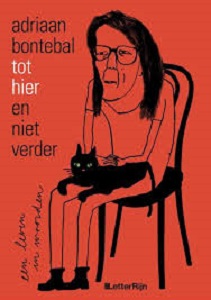
De Nederlandse dichter en schrijver Adriaan Bontebal werd als Aad van Rijn op 28 mei 1952 in Leidschendam geboren. Zie ook alle tags voor Adriaan Bontebal op dit blog.

Uit: Tot hier en niet verder

“Het was de eerste dag van een nieuwe carrière. Ik ging naar het centrum van de stad en zette mijn fiets vast aan de Haagse Kakmadam, die er volkomen stoïcijns onder bleef. Ze is dan ook een standbeeld, maar dat moet je weten. Op een hink-stap-sprong afstand van haar staat, naast de ingang van C&A, weer of geen weer, een man met één been accordeon te spelen. Om misverstanden te voorkomen: de man heeft slechts één been en zit in een invalidebolide, die naast de ingang van het warenhuis geparkeerd staat. Hij bespeelt zijn knoppen gewoon met zijn handen. Ik liep op hem af en groette joviaal: 'Ha, collega.' Waarschijnlijk dacht de man nu dat ik ook muzikaal was; wist hij veel. Mijn stijl van lopen verdient dan geen schoonheidsprijs, maar voor de oppervlakkige beschouwer oog ik redelijk compleet. Ik luisterde even naar zijn spel en moest concluderen dat het echt iets voor de liefhebber was. Zoals brood met zand op het strand. Ik pakte de hoed, die hij uitnodigend voor zich had staan, en telde de inhoud. 'Het gaat lekker vandaag,' complimenteerde ik hem, niet zonder bewondering. 'Er zit zelfs papiergeld bij.' Ik verklapte hem het totale bedrag, telde de helft voor hem uit en gooide deze terug in de hoed. De rest stak ik in mijn zak. 'Ga zo door,' en ik gaf hem een bemoedigende knipoog en een dreun op zijn schouder. Hij miste enkele noten. 'Wij zien elkaar morgen wel weer.' Ik haastte me naar de Haagse markt. Daar staat een eenbenige op krukken ansichtkaarten te verkopen.”


 2150088-abf34a572dd0b4dcf681d421daec6a75.jpg
Adriaan Bontebal (28 mei 1952 – 11 februari 2012)
Cover


De Duitse schrijver Guntram Vesper werd geboren op 28 mei 1941 in Frohburg. Zie ook alle tags voor Guntram Vesper op dit blog.

Uit: Nördlich der Liebe und südlich des Hasses

„Er wurde tot in einem Waldstück am Fuß des Hohen Ha-egen gefunden. Das war am fünfundzwanzigsten März. Bedenkliche Zeitungsnachrichten steigerten die Erregung. Niemand konnte nämlich sagen, wie cr ums Leben gekom-men war. Es hieß, sein Kopf sei gar nicht gefunden worden. In der folgenden Nacht brannte der Ziegenstall des Lehrers Meseke nieder. Und am siebenundzwanzigsten März hielt die Bevölkerung eine Versammlung ab. An Grönwohl, der sich in Hannover aufhielt, wurde ein Ultimatum geschickt. Die Bevölkerung verlangte die Herstellung alter Rechte. Mit ergebenem Gruß. An dic Spitze der Fordernden hatten sich Kawe und Bergweitemeier gestellt. Die Versammlung nahm einen stürmischen Verlauf. Alle waren sehr aufgebracht. Sie nannten Grönwohl einen Ausbeuter, den Förster und den Lehrer seine 1 lelfershelfer und Lakaien. Die Ansprachen von Bornemann, Elend und einem Tischler namens Bertram, der aus Göttingen heraufgekommen war, fanden starke Beach-tung. Ende März ließ Grönwohl durch den Lehrer die ein-schlägigen Gesetze verlesen. Es ist nicht bekannt geworden, wie viele Zuhörer Meseke fand, doch am ersten April war das ganze Dorf in Aufruhr. Mit Hacken, Äxten und Spaten zog man auf den Kirchhof. Grönwohl jedoch hatte, um die Be-völkerung und besonders seine Landarbeiter zu beruhigen, einen Ochsen schlachten und mit einem Zentner Kartoffeln verteilen lassen. Allerdings schien das keinen besonderen Eindruck gemacht zu haben. Man nahm hin, was gegeben wurde, aber Liebe entstand nicht. Infolge dessen beklagte Grönwohl beim Pfarrer seinen schlechten Ruf unter den Aufständischen. Er glaubte, mehr verdient zu haben. Der Pfarrer wies auf den abgebrannten Ziegenstall hin und nickte. Am zweiten April wurde der Tote endlich begraben, ohne daß sein Kopf gefunden worden wäre. Allgemein hielt man Grönwohl für schuldig. Anderntags marschierte die Garde der einfachen Leute, der wüste Haufe. Auf Zureden der An-führer hatte man die Fahne auf dem Schloß gelassen, worüber die Schloßbewohner sehr erbittert waren. Grönwohl reiste ab. Keinesfalls wollte er die Fahne eigenhändig übergeben, was die Garde einerseits als Beleidigung empfand und andererseits als Stolz auslegte. Als ein Kind im Basaltbruch den Kopf fand, wußte es nicht gleich, daß es der Kopf war.“


 2150088-5b478704f8427769cad5066e7d04e772.jpg
Guntram Vesper (Frohburg, 28 mei 1941)


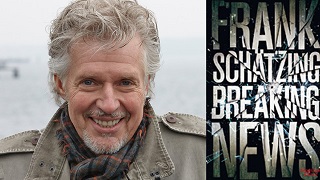
De Duitse schrijver Frank Schätzing werd geboren in Keulen op 28 mei 1957. Zie ook alle tags voor Frank Schätzing op dit blog.

Uit:Breaking News

„Afghanistan, nördliche Provinzen
Unterwegs in einem Toyota Land Cruiser, sieben Uhr morgens, Sack uberm Kopf, unter der Kinnlade zugebunden. Der offene Mund saugt Stoff an, da durch die Nase nicht genug Luft in die Lungen strömen will, doch tatsächlich ist es ein mentales Problem. Das Gewebe ist durchlässig, der Rest Gewohnungssache.
Kann man sich daran gewöhnen? Seiner Sicht beraubt uber Bergstrasen voller Schlaglöcher zu kacheln, wahrend einem die Rückbank ins Kreuz drischt?
Hängt von den Umständen ab. Selbst in weniger zivilisierten Gegenden gibt es nicht viele Gründe, jemandem eine muffige schwarze Kapuze über den Kopf zu stuüpen. Entweder wird man gleich darauf erschossen oder aufgehängt, womit sich die Frage nach der Gewöhnung erübrigt hat. Oder man wird verschleppt, hört den gelassenen Schritt des Folterers nahen, seine freundliche Stimme, bevor er einem die Hölle bereitet, solcherlei Unannehmlichkeiten.
Dritte Moglichkeit, man trägt das Ding freiwillig, weil der Fahrer nicht will, dass man sich später an die Route erinnert.
Hagen weis, dass Björklund neben ihm weniger gut mit der Situation zurechtkommt. Sein Asthma macht ihm zu schaffen. Ihn selbst stört eigentlich nur, dass sich irgendwann mal jemand in seinen Sack erbrochen haben muss. Der Stoff ist sauber, also gewaschen, aber manche Gerüche setzen sich für alle Zeiten fest. Weniger die Moleküle selbst konservieren die Vergangenheit, als vielmehr die Umstände ihres Hineingelangens, etwa so, wie sich die Gedanken Verstorbener in einem Geisterhaus einnisten. Hagen mag sich nicht vorstellen, welches Schicksal der arme Teufel durchleiden musste, der die Kapuze vollgekotzt hat. Möchte glauben, dass er oder sie das Ding ebenso aus freien Stücken getragen hat wie sie beide in diesem Moment, und weis es doch besser.
War es Marianne Degas, Max Keller oder Walid Bakhtari? Welchem der drei sind unter dem Stoff, der ihn vorubergehend erblinden lasst,
Nerven und Magenwande entgleist?“


 2150088-d108a1765a85f9eb6b3d8c60c0c11472.jpg
Frank Schätzing (Keulen, 28 mei 1957)


De Ierse schrijfster en columniste Maeve Binchy werd geboren op 28 mei 1940 in Dalkey. Zie ook alle tags voor Maeve Binchy op dit blog.

Uit: Minding Frankie

“Katie Finglas was coming to the end of a tiring day in the salon. Anything bad that could happen had happened. A woman had not told them about an allergy and had come out with lumps and a rash on her forehead. A bride’s mother had thrown a tantrum and said that she looked like a laughingstock. A man who had wanted streaks of blond in his hair became apoplectic when, halfway through the process, he had inquired what they would cost. Katie’s husband, Garry, had placed both his hands innocently on the shoulders of a sixty-year-old female client, who had then told him that she was going to sue him for sexual harassment and assault.
Katie looked now at the man standing opposite her, a big priest with sandy hair mixed with gray.
“You’re Katie Finglas and I gather you run this establishment,” the priest said, looking around the innocent salon nervously as if it were a high-class brothel.
“That’s right, Father,” Katie said with a sigh. What could be happening now?
“It’s just that I was talking to some of the girls who work here, down
at the center on the quays, you know, and they were telling me . . .”
Katie felt very tired. She employed a couple of high school dropouts: she paid them properly, trained them. What could they have been complaining about to a priest?
“Yes, Father, what exactly is the problem?” she asked.
“Well, it is a bit of a problem. I thought I should come to you directly, as it were.” He seemed a little awkward.
“Very right, Father,” Katie said. “So tell me what it is.”
“It’s this woman, Stella Dixon. She’s in hospital, you see . . .”
“Hospital?” Katie’s head reeled. What could this involve? Someone who had inhaled the peroxide?
“I’m sorry to hear that.” She tried for a level voice. »


 2150088-871232e0f9953aa2c0edca6239062b93.jpg
Maeve Binchy (28 mei 1940 – 30 juli 2012)
Cover


De Britse schrijver Ian Fleming werd geboren op 28 mei 1908 in Londen. Zie ook alle tags voor Ian Fleming op dit blog.

Uit:The Man With The Golden Gun

“The Secret Service holds much that is kept secret even from very senior officers in the organization. Only M. and his Chief of Staff know absolutely everything there is to know. The latter is responsible for keeping the Top Secret record known as The War Book' so that, in the event of the death of both of them, the whole story, apart from what is available to individual Sections and Stations, would be available to their successors. One thing that James Bond, for instance, didn't know was the machinery at Headquarters for dealing with the public, whether friendly or otherwise — drunks, lunatics, bona fide applications to join the Service, and enemy agents with plans for penetration or even assassination. On that cold, clear morning in November he was to see the careful cog-wheels in motion.
The girl at the switchboard at the Ministry of Defence flicked the switch to 'Hold' and said to her neighbour, 'It's another nut who says he's James Bond. Even knows his code number. Says he wants to speak to M. personally.' The senior girl shrugged. The switchboard had had quite a few such calls since, a year before, James Bond's death on a mission to Japan had been announced in the Press. There had even been one pestiferous woman who, at every full moon, passed on messages from Bond from Uranus where it seemed he had got stuck while awaiting entry into heaven. She said, 'Put him through to Liaison, Pat.' The Liaison Section was the first cog in the machine, the first sieve. The operator got back on the line: 'Just a moment, sir. I'll put you on to an officer who may be able to help you.' James Bond, sitting on the edge of his bed, said, 'Thank you.' He had expected some delay before he could establish his identity. He had been warned to expect it by the charming 'Colonel Boris' who had been in charge of him for the past few months after he had finished his treat-ment in the luxurious Institute on the Nevsky Prospekt in Leningrad. A man's voice came on the line. 'Captain Walker speaking. Can I help you?' James Bond spoke slowly and clearly. 'This is Commander James Bond speaking. Number 007. Would you put me through to M., or his secretary, Miss Moneypenny. I want to make an appointment.' Captain Walker pressed two buttons on the side of his telephone. One of them switched on a tape recorder for the use of his department, the other alerted one of the duty officers in the Action Room of the Special Branch at Scotland Yard that he should listen to the conversation, trace the call, and at once put a tail on the caller."


 2150088-9464becd6a4095a376a233f98e4661f6.jpg
Ian Fleming (28 mei 1908 – 12 augustus 1964)
Cover DVD


De Nederlandse schrijver en dichter Sjoerd Leiker werd geboren in Drachten op 28 mei 1914. Zie ook alle tags voor Sjoerd Leiker op dit blog.

Uit: Kind van het elysium

“Men moet zich denken, dat hij zoo den slaap betrad: Hij stond voor de deur van een somber huis. Dat is direct al een ding om een kind schrik aan te jagen. Hij was daar echter al over heen. Toen hij voor de eerste maal voor die deur stond had hij geaarzeld nu niet meer, hij had het zich al zoo vaak gedroomd. Hij duwde tegen de deur, die langzaam dan open week en trad binnen in een hoog vertrek, waar langs de wanden het keukengerei van zijn harde moeder hing. Daar was ook de houten lepel bij, waarmee ze hem eens een bloedende wond aan het hoofd geslagen had. Dat keukengerei en die lepel hingen daar in een honderd-jarige rust. Hij kon wel angstig zijn, maar dan niet voor de rustende requisieten van die vrouw, meer voor de duisternis. Daar kwam hij echter spoedig uit door een tweede deur, die vanzelf open ging. Zoo wordt de slaap een sprookje, nietwaar? Als hij dan die tweede deur achter zich had, zag hij op naar een nachtelijken hemel met drie, vier heldere sterren. Daaronder lag een smalle straat; weerzijds stonden zwarte huizen zonder vensters. Boven het laatste huis welft roerloos, bijna gelijkend op een Moskeedak, de kroon van een zware palm. Een ijzerzware kroon van een palm.
Als hij aan ijzer denkt, wordt hij plotseling erg vermoeid. Hij haast zich voort: de laatste phase van dezen wonderlijken ingang tot den slaap, waarvan niemand ooit den zin zal leeren verstaan. De smalle straat loopt met trappen omhoog, daalt dan plotseling af, met breede trappen eerst, die al smaller worden. De dalingshoek wordt grooter, de straat glijdt omneer in een steeds steiler wordende diepte, een koker, een put. Hij bevindt zich daarin en voelt zich niet duizelig - hij weet immers: zoo is de ingang tot den slaap, elke nacht - en hij daalt steeds dieper.
Heel ver beneden ziet hij opeens zijn hoofd, een schaduw, weerspiegelen in water. Hij denkt, dat het water is, doch hij heeft zich daarvan nooit kunnen overtuigen, omdat hij dàn, plotseling, is waar hij moet zijn: in de vergetelheid, in de rust, in den slaap......”


 2150088-26c3f113b2a701817e580a80441ec895.jpg
Sjoerd Leiker (28 mei 1914 - 15 december 1988)
Carillon in het centrum van Drachten


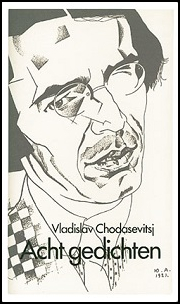
De Russische schrijver en dichter Vladislav Felitsianovitsj Chodasevitsj werd geboren in Moskou op 28 mei 1885. Zie ook alle tags voor Vladislav Chodasevitsj op dit blog.


Avond

Onder de voeten gladheid en gekraak.
De wind woei, het sneeuwde.
Mijn God, wat een droefenis!
Heer, wat een pijn!

Zwaar is Jouw ondermaanse wereld,
en ook Jij bent onbarmhartig.
En waartoe zoveel wijdte,
als op aarde de dood bestaat?

En niemand verklaart
waarom hij in zijn levensavond
nog zin heeft in zwerven,
geloven, verstarren en zingen.


Lentegebrabbel stemt streng

Lentegebrabbel stemt streng
saamgeperste verzen niet mild.
Ik ben gaan houden van het ijzergeknars
van kakofonische werelden.

In de hiaat van open vocalen
adem ik licht en vrij.
In de veelheid van consonanten verbeeld ik me
het gedrang van kruiende ijsschotsen te horen.

Dierbaar is mij - de slag van een gebroken schicht
uit een tinkleurige wolk;
ik houd van het zangerige en kermende
gesnerp van een elektrische zaag.

En in dit leven is me waardevoller
dan al het harmonische schoon -
de siddering, die over de huid rent,
of het koude zweet van ontzetting,


Vertaald door Jan Paul Hinrichs


 2150088-48b2bd55a240bda3db4fbc9e4c210107.jpg
Vladislav Chodasevitsj (28 mei 1885 - 14 juni 1939)
Cover


Zie voor nog meer schrijvers van de 28e mei ook mijn blog van 28 mei 2017 deel 2 en ook mijn blog van 28 mei 2016.

Geschreven door Romenu om 18:29 Reageer op dit bericht

Meg Wolitzer

De Amerikaanse schrijfster Meg Wolitzer werd geboren op 28 mei 1959 in Brooklyn, New York, als dochter van Hilma Wolitzer (geboren Liebman), ook een schrijfster, en Morton Wolitzer, een psycholoog. Ze werd Joods opgevoed en studeerde creatief schrijven aan het Smith College en studeerde in 1981 af aan de Brown University. Ze schreef haar eerste roman, “Sleepwalking”, toen zij nog een undergraduate was; het werd gepubliceerd in 1982. Zij publiceerde vervolgens “Hidden Pictures” (1986), “This Is Your Life” (1988), “Surrender, Dorothy” (1998), “The Wife” (2003), “The Position” (2005), “The Ten-Year Nap” (2008), “The Uncoupling” (2011 ) en “The Interestings” (2013). Haar korte verhaal "Tea at the House" werd opgenomen in de Best American Short Stories-Collection van 1998. Haar roman voor jongere lezers, “The Fingertips of Duncan Dorfman”, verscheen in 2011.
Ze was ook co-auteur, met Jesse Green, van een boek met cryptische kruiswoordpuzzels: “Nutcrackers: Devilishly Addictive Mind Twisters for the Insatiably Verbivorous” (1991), en schreef over de relatieve moeilijkheid waarmee vrouwelijke schrijvers geconfronteerd worden bij het verkrijgen van lovende kritieken. Wolitzer doceerde creatief schrijven aan de Writers 'Workshop van de University of Iowa, Skidmore College, en was recentelijk een gastschrijfster aan de Princeton University. In het afgelopen decennium heeft ze ook lesgegeven in het MFA-programma van Stony Brook Southampton in het Creative Writing-programma en de Southampton Writers Conference en de Florence Writers Workshop. Drie films zijn gebaseerd op haar werk; “This Is My Life”, geregisseerd door Nora Ephron, de in 2006 gemaakte televisievideo, “Surrender, Dorothy” en het drama “The Wife” uit 2017, met in de hoofdrol Glenn Close.

Uit: The Wife

“The moment I decided to leave him, the moment I thought, enough, we were thirty-five thousand feet above the ocean, hurtling forward but giving the illusion of stillness and tranquility. Just like our marriage, I could have said, but why ruin everything right now? Here we were in first-class splendor, tentatively separated from anxiety; there was no turbulence and the sky was bright, and somewhere among us, possibly, sat an air marshal in dull traveler’s disguise, perhaps picking at a little dish of oily nuts or captivated by the zombie prose of the in-flight magazine. Drinks had already been served before takeoff, and we were both frankly bombed, our mouths half open, our heads tipped back. Women in uniform carried baskets up and down the aisles like a sexualized fleet of Red Riding Hoods.
“Will you have some cookies, Mr. Castleman?” a brunette asked him, leaning over with a pair of tongs, and as her breasts slid forward and then withdrew, I could see the ancient mechanism of arousal start to whir like a knife sharpener inside him, a sight I’ve witnessed thousands of times over all these decades. “Mrs. Castleman?” the woman asked me then, in afterthought, but I declined. I didn’t want her cookies, or anything else.
We were on our way to the end of the marriage, heading toward the moment when I would finally get to yank the two-pronged plug from its holes, to turn away from the husband I’d lived with year after year. We were on our way to Helsinki, Finland, a place no one ever thinks about unless they’re listening to Sibelius, or lying on the hot, wet slats of a sauna, or eating a bowl of reindeer. Cookies had been distributed, drinks decanted, and all around me, video screens had been arched and tilted. No one on this plane was fixated on death right now, the way we’d all been earlier, when, wrapped in the trauma of the roar and the fuel-stink and the distant, braying chorus of Furies trapped inside the engines, an entire planeload of minds—Economy, Business Class, and The Chosen Few—came together as one and urged this plane into the air like an audience willing a psychic’s spoon to bend.
Of course, that spoon bent every single time, its tip drooping down like some top-heavy tulip. And though airplanes didn’t lift every single time, tonight this one did. Mothers handed out activity books and little plastic bags of Cheerios with dusty sediment at the bottom; businessmen opened laptops and waited for the stuttering screens to settle. If he was on board, the phantom air marshal ate and stretched and adjusted his gun beneath a staticky little square of Dynel blanket, and our plane rose in the sky until it hung suspended at the desired altitude, and finally I decided for certain that I would leave my husband. Definitely. For sure. One hundred percent. Our three children were gone, gone, gone, and there would be no changing my mind, no chickening out.”


 2207583-eecb505550f321eead5c5d398bc1886a.jpg
Meg Wolitzer (New York, 28 mei 1959)

Geschreven door Romenu om 00:00 Reageer op dit bericht

Dolores Dorantes

Onafhankelijk van geboortedata

De Mexicaanse dichteres en journaliste Dolores Dorantes werd in 1973 geboren in Veracruz aan de Golf van Mexico, maar groeide op in Ciudad Juárez, vlak naast El Paso, net over de grens in de VS.
Het sociaaleconomisch geweld en het politiek gemotiveerde dagelijks geweld in de omgeving waarin zij hier opgroeide hebben haar als dichteres, journaliste en maatschappelijk-cultureel werkster gevormd. Dorantes beschuldigde de Mexicaanse regering openlijk van het falen om het geweld te stoppen. En samen met haar mede-activisten werd ze geïntimideerd en bedreigd vanwege dit krachtige standpunt en haar vanwege haar journalistieke werk. Toen de bedreigingen bijzonder gewelddadig werden, werd ze gedwongen naar El Paso te vluchten zonder iemand van haar plannen op de hoogte te stellen. In de VS vroeg ze politiek asiel aan, dat ze uiteindelijk in 2013 ontving, en op dat moment woonde ze in Los Angeles. Dorantes studeerde Spaanse literatuur aan de Autonome Universiteit van Ciudad Juárez. Zij publiceerde negen poëzie- en prozabundels, waaronder: “Poemas para niños” (Gedichten voor kinderen, 1999), “Para Bernardo: un eco” (Voor Bernardo: een echo, 1997), “sexoPUROsexoVELOZ (2004), “Estillo” (Stijl, 2011) en een bundel met proza “Lola (cartas cortas) (Lola (korte letters, 2002). “Poemas para niños” werd in het Engels vertaald. In 2000 ontving zij de David Alfaro Siqueiros-prijs in Chihuahua. In 2002 ontving hij de Pacmyc-prijs. Zij was een fellow van het Veracruz Institute of Culture (2001).


Branches

Branches crossing the air. Branches cutting the air. Cutting across the interminable skin of sky. Lashing the sky. Of us all you have is shreds of sky, fervor. We are shreds. Live parts of a tree. Goldwork applied painfully onto the air, the skin of air is what you have. The blue flesh of sky. Skin that you cannot trample. We want you to want to hug us. We like that you try to hold onto the sky. We like that your hands knock against the branches. We like that you direct the branches in the air. We all want you to cut us. A gust of birds. We want you to cover our mouths. The strands of your veins calmly against the skin of sky. Hold us from within the pulse, fervor.”


Above our knives

Above our knives. May they come. May other masks recognized worldwide come to give you some prize. May they come disguised as volcano or jungle. As purified water. As telephone or thirst. May they come simulating possession of fuel and breathing. May minds unite with the disguise of presidency. Questions for girls. That life sustained in the codes. May he disguised as art come to kiss our petals. Our masks will lick their masks and we’ll keep everything for ourselves. May that one come too, she disguised as light, and also that other, she disguised as rain.”


Vertaald door Jen Hofer


 2150744-785cac502d83a50c020d6d5f4a4890b3.jpg
Dolores Dorantes (Veracruz, 1973)

Geschreven door Romenu om 00:00 Reageer op dit bericht

Meer van Romenu

↑ Terug naar de berichten