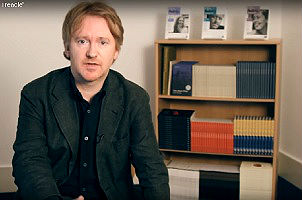
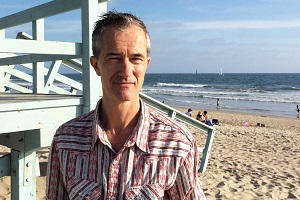
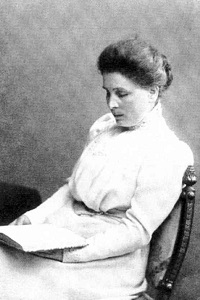
De Duitse dichter en schrijver Ralf Thenior werd geboren op 4 juni 1945 in Bad Kudowa. Zie ook alle tags voor Ralf Thenior op dit blog.
Uit: Das Gelächter der Sterne
“Wenn der Abend fällt, leeren sich die Strände; die Badegäste begeben sich in ihre Wohnungen, Zimmer und Appartements und bereiten sich auf das Nachtleben vor. Hochgewachsene Frauen mit tragischen Mienen schreiten in den Fußgängerzonen auf und ab, während aus den Lautsprechern leise Jacques Brels Ne me quitte pas erklingt, und durch die Fensterscheiben der Restaurants sieht man – wie in einem Aquarium – Menschen, die ihre Münder öffnen und schließen und mit kleinen silbernen Zangen Hummerscheren knacken.
Es war zweiundzwanzig Uhr siebenunddreißig. Claire und Albert tauchten in das Neongeflacker der Lange Straat ein.
– Wo ist meine Sonnenbrille?
Claire nahm ihre Brille ab und verstaute sie in ihrer Handtasche.
– Was siehst du ohne Brille?
– Die Leuchtreklamen an den Fassaden nur als undeutliche Lichtreflexe und die Gesichter der Passanten sind bis auf zwei Meter milchige Schemen, aber deine Nasenspitze sehe ich gestochen scharf.
Claire stupste mit der Faust seine Nase. Albert lachte.
Ohne sich anzufassen, aber auf Tuchfühlung, gingen sie schweigend weiter und überließen sich dem Rhythmus ihrer Schritte.
Sie konnten es beide kaum fassen; es war Donnerstagabend, schon Donnerstagabend, erst Donnerstagabend, und sie gingen zusammen durch die Lange Straat, mit vollen Augen und leerem Magen.
Claire ließ sich durch ein Neonschriftenspalier treiben, das für sie Ornamentbänder aus sich verwischenden, sich vermischenden farbigen Bogen und Linien bildete, die im Pulsschlag der Straße zuckten.
Albert konnte sich nicht losreißen von den Worten, die ihm von allen Seiten entgegenkamen; Wortkörper aus Glas, Plastik, Eisen, Messing, Blech, Holz und Farbe, Worte mit Pappnasen, die ihm zuzwinkerten, Worte mit ausgestopften Bäuchen, falschen Schnurrbärten, Buckeln, Rucksäcken, Perücken ausgeschlagenen Zähnen und blauen Augen
LUUNNAAPPAARRKK …
– Und dann diese riesige schwarze Wolke, die aussah wie ein Seeungeheuer.
– Wann war das? In Irland?
– In meinem Traum. Ariane hat ein Medium gekannt, das mit dem Geist von Jules Verne Kontakt aufgenommen hat.“
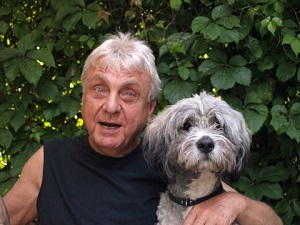
Ralf Thenior (Bad Kudowa, 4 juni 1945)
De Franse schrijfster Marie Ndiaye werd geboren op 4 juni 1967 in Pithiviers. Zie ook alle tags voor Marie Ndiaye op dit blog.
Uit: Ladivine (Vertaald door Jordan Stump)
« She was Malinka again the moment she got on the train, and she found it neither a pleasure nor a burden, having long since stopped noticing.
But it happened, she could tell, for no more could she answer without a second thought to “Clarisse” when, rarely, someone she knew took that same train and called to or greeted her as “Clarisse,” only to see her stare back in puzzled surprise, a hesitant smile on her lips, creating a mutual discomfort that the slightly flustered Clarisse never thought to dispel by simply echoing that “Hello,” that “How are you,” as offhandedly as she could.
It was this, her inability to answer to Clarisse, that told her she was Malinka the moment she got on the train to Bordeaux.
Had that been the name she was hailed by, she knew, she would immediately turn her head—had someone spotted her face or recognized from afar her slender form, her always slightly unsteady walk, and called out: “Hey there, Malinka, hello.”Which couldn’t possibly happen—but was she sure?
There was a time, now long gone, when, in another city, another part of France, girls and boys called her Malinka because they knew her by no other name, and she had yet to invent one.
It was not out of the question that a woman her age might one day accost her and ask in delighted surprise if she wasn’t that Malinka from her past, from that school and that city whose name and look she, Clarisse, had forgotten.
And a smile would come to Clarisse’s lips, not hesitant but bold and assured, and she would be neither puzzled nor surprised, though she would most certainly not recognize that woman who claimed to have known her when she was Malinka.”
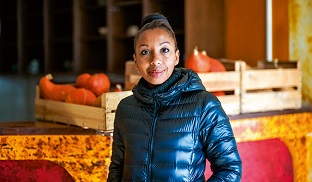
Marie Ndiaye (Pithiviers, 4 juni 1967)
De Duitse schrijver Erasmus Schöfer werd geboren op 4 juni 1931 in Altlandsberg bij Berlijn. Zie ook alle tags voor Erasmus Schöfer op dit blog.
Uit: Unsichtbar lächelnd träumt er Befreiung
„Aber er hats gewusst, natürlich hat ers gewusst dass sie uns Reisholzer kaputt machen wolln, egal ob wir den besten Stahl in Deutschland schmieden, nur um aus Montan rauszukommen, kein Sterbenswort davon hat er uns wissen lassen, damit wir schön brav produzieren bis zur letzten Tonne und keinen Stunk machen und er, ihr werdets erleben, in der nächsten Regierung Arbeitsminister wird, egalb ob bei Schmidt oder Strauss, oder vielleicht wie der Leber Verteidigungsminister und die ganze IG Metall wird jubeln Einer von uns im Kabinett! Kein Wort mehr von Gegenmacht! Das ist die Konzertierte Aktion über die Hintertreppe meine Herrn, deshalb scheiß ich auf ihre Mitbestimmung, egal ob Montan oder nicht, mit der sie uns eingeseift haben, und ein ganzer stolzer betriebsrat, 14 Mann und eine Frau, nickts ab wenn ihm der Vorsitzende weggeschossen wird! Hab ich mir denn meine Bude renovieren lassen auf betriebskosten wie der Feckler von F&G? Hab ich unsre Ellie vernascht? Hab ich Lustreisen nach Brasilien gemacht mit Mannesmannknete wie der Loderer? Hab ich das? Wie?“
Anklam packte Willi mit beiden Fäusten an der Jacke, rüttelte ihn: Hab ich das? Oder was gibts noch im Angebot der Einkäufer? He Manni mach kein Scheiß jetzt. Frank und Jupp und ich haben gegen deine Entlassung gestimmt. Hans Wiedemann hielt ihm sein Glas unter die Nase dass er Willi loslassen musste: Weil du das Gegenteil von all dem gemacht hast, Herrgott weil du ihnen ihre Schweinerein versalzen hast, deshalb haben sie dich gefeuert! Das weißt dugenau. Und es gibt einen Haufen Kollegen bei uns die wissen das auch. Aber jetzt redst dun Haufen Schnapszeug und außerdem mussich —So! Schnapszeug nennst du das! Wenn ich mal die Wahrheit sag! Bist auch schon eingekauft wie? Mensch Manni siehst du noch klar? Das ist der Hans! Ja der Hans! Hans bist du mein Freund? Besorgst du mir eine Knarre? Weißt du wo der Overbeck der Obergauner wohnt? Wiedemann blickte zum Wirt: Heinz ruf uns ein Taxi! Taxi? Wozu das denn? Mein Fahrrad steht draußen! Klar Manni. Aber bis zu Overbeck isses zu weit. Komm, wir fahrn zusammen! Wiedemann zahlte ihren Deckel. Sie nahmen Anklam rechts und links unter die Arme, zogen ihn auf die Straße. Das Taxi war gleich da. Der braunhäutige Fahrer schaute misstrauisch auf den Betrunknen: Kotzt der mir in Wagen? Fahr langsam Mustafa, dann kotzt er nicht. Sind nur fünfhundert Meter. Ihr zahlen mir Reinigung! Sie verstauten Anklam auf dem Rücksitz, setzten sich neben ihn. Zerrten den Fluchenden raus vor seinem Haus und in den Fahrstuhl, holten ihm den Schlüssel aus der Tasche, schubsten ihn aufs Bett. Hast du ne Aspirin im Haus? fragte Willi als er ihm die Schuh auszog.“
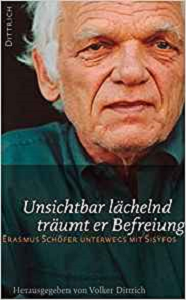
Erasmus Schöfer (Altlandsberg, 4 juni 1931)
Cover
De Amerikaanse (slam) dichter Buddy Wakefield werd geboren op 4 juni 1974 in Shreveport, Louisiana. Zie ook alle tags voor Buddy Wakefield op dit blog.
A Hole In God
you appeared like a body bag
fulla hymnal books
unzipped in half I
never saw so many door jams fall
outta anyone’s mouth
into math like that when
Tennessee put its crooked smile
on a wadded up map
and sent you packin’
west
wood
gospel gospel got god
stuck to the rock he made and
and he mighta made it larger than us
or it mighta served to save this place
sure I coulda swore I heard you calling
for a shot at a grip on vice
doesn’t mean your mouth was moving
doesn’t mean I even heard you right
all I know is that your skin keeps calling
and I don’t care if it’s a busted flint
‘cause every time you pull your thumb down on it
I get [up up] back up to my feet
again
all of them
move move
like an offering plate
on’m one by one
it’s a penchant for a savior
a tendency to over – run
whatever shook do not get shook up
whatever’s lost you don’t get lost
even if they say you must give more than
everything you ever offered up
I know a voice does not come easy
I know the words fell out in bites
I know the moment when the
abandonment looked a lot like flight
you pulled whatever got left
inside
out right

Buddy Wakefield (Shreveport, 4 juni 1974)
Affiche
De Duitse dichter en schrijver Yaak Karsunke werd geboren op 4 juni 1934 in Berlijn. Zie ook alle tags voor Yaak Karsunke op dit blog.
Der Schakal
Der Schakal, der Schakal
ist viel kleiner als ein Wal
doch er sieht viel größer aus
als beispielsweise eine Maus.
Dem Schakal, dem Schakal
ist das allerdings egal
denn er liebt die Mittelgröße
& dazu Kartoffelklöße.
Das Zebra
Eins wird das Zebra nie begreifen:
Wie kommt man übern Zebrastreifen?
Es bleibt am Straßenrande stehn
& ist dort stundenlang zu sehn –
bis sein Anblick jemand rührt
ders dann übern Fahrdamm führt.
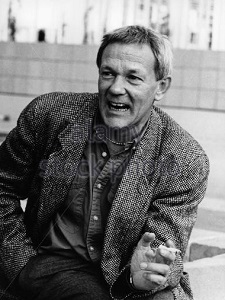
Yaak Karsunke (Berlijn, 4 juni 1934)
De Amerikaanse schrijver Charles Dickinson werd geboren op 4 juni 1951 in Detroit, Michigan. Zie ook alle tags voor Charles Dickinson op dit blog.
Uit: Shortcut in Time
“The police interviewed me just once, in our house at 1112 East Collier Street.
"The latch was held shut with a ballpoint pen," I insisted.
The cop held up the pen he was using to take notes. "Like this?"
"It was blue."
"You're sure?"
"Yes."
"Where is it then?"
"I had it and dropped it. Did you check the bottom of the pool?"
"We followed the drain all the way out to the street."
"It had gold writing on it."
"What did the writing say?"
"I don't know."
The incident was ruled an accident, the tragic consequence of two young men just goofing around. Nobody listened when I said that Kurt never goofed around.
* * *
Flo Garner stopped me in the hall on the first day of school.
"How's your brother?" she asked.
I shrugged. "Not great. My dad's already started complaining about the hospital bills."
"Can I ask you something?"
"Sure."
"Did you bring Kurt up first because he was your brother?"
"No. He was on top."
She touched my arm. I thought she was going to thank me for at least trying.
"I wish I could believe that," she said.”

Charles Dickinson (Detroit, 4 juni 1951)
Detroit, Michigan
De Duitse schrijfster Dana Bönisch werd geboren op 4 juni 1982 in Frechen. Zie ook alle tags voor Dana Bönisch op dit blog.
Uit: Rocktage
„Er hoffte, sich sein Leben nicht einzubilden. In der U-Bahn hatte er aus Testgründen mal laut gesungen, aber niemand hatte wirklich hingesehen oder ihn angelacht oder Ähnliches. Sie saßen alle da wie vorher. All dies gab zu denken. Möglicherweise träumte er nur. Er konnte die Leute verstehen, die sich die Arme aufritzten, um zu spüren, dass sie da waren. Aber er selbst hatte viel zu viel Angst vor seinem eigenen Blut. Am Tag seines Rauswurfs fuhr Puck genauso still und tot U-Bahn wie die anderen auch. Es war eben einfacher. Allerdings saß an diesem Tag auch Johann Wolfgang neben ihm, der vor sich hin flüsterte: »Was zieht mir das Herz so? Was zieht mich hinaus?« Und Puck fühlte tatsächlich Ähnliches. Eine undefinierte Sehnsucht, vielleicht nach etwas, was er mal gekannt und dann verloren, oder nach etwas, was er nie gekannt und immer gesucht hatte. Schließlich stieg er an der Universitätsstraße aus und kaufte sich eine Brezel, und mit der Brezel im Mund rief er Mo an und bestellte sich Gras. Mo erwartete ihn dann schon am Weiher, saß auf den Steinen am Ufer und fütterte Enten. In einer H&M-Tüte hatte er altes Brot mitgebracht. Und blitzbildartig erinnerte sich Puck an anderes altes Brot, in einer Zeit, die ihm vorkam wie ein anderes Leben, Brot in einer Kaufring-Tüte, und an Regen, der sich in den Sommertag mischt. »Alter«, sagte Mo. »Alter«, sagte Puck. Er setzte sich neben ihn auf den kalten Stein. Später gingen sie im Biergarten noch was trinken, denn Mo hoffte, die Rothaarige aus der Meteorologie-Vorlesung wiederzusehen, die angeblich fast jeden Tag um diese Zeit hierherkam. Nach zwei Bier und einer Stunde wurde es jedoch langsam kalt für T-Shirt-Leute, und Mos Handy quäkte wegen wichtiger Geschäfte, und beide, Mo und Puck, gingen wieder ihrer Wege. »Alter«, sagte Puck. »Alter«, sagte Mo. Und verschwand Richtung U-Bahn, während Puck den Uni-Trampelpfad einschlug. Er mochte die Luft an Früh-Frühlingstagen, abends wenn schon ein paar Lichter brannten, hier eins, da eins, und wenn es plötzlich dämmrig geworden war, ohne dass man es bemerkt hatte, weil man sich unterhalten oder nachgedacht oder vom Gesicht eines Mädchens im folgenden Sommer geträumt hatte.“
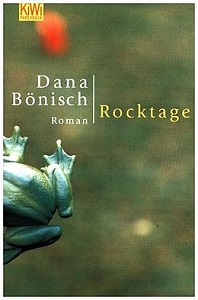
Dana Bönisch (Frechen, 4 juni 1982)
Cover
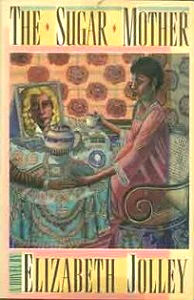
De Australische schrijfster Elizabeth Jolley werd geboren op 4 juni 1923 in Birmingham, Engeland. Zie ook alle tags voor Elizabeth Jolley op dit blog.
Uit: The Sugar Mother
“The Old Country!” Buffy said. They were still standing but would have risen if they had been sitting down.
“To Home. Here's to Home. Down the hatch. The Old Country!”
“The Queen!” Buffy was inspired. “God bless the Queen.”
“I'll drink to that,” Tuppy said. “God bless the Queen.” Edwin, in silence, drank his share. With toasts it was impossible not to. In a minute, he thought, he would slip out and fetch Leila from the very awkward position she was in. A stranger in the yard, yet familiar. He looked at his guests. They were very good-looking and very good-hearted people. They would never knowingly hurt anyone, but Leila would be frightened of them. They were toasting their old regiments now. It seemed inconceivable that he belonged with these people. He never spoke or thought of England as the Old Country. He never thought of it as Home as they apparently, after many years, did. He believed this was described as a migration syndrome; he had heard the phrase. What was home anyway other than a place you lived in and came back to every night?
“Leila dear,” Leila's mother said, “we shall be running out of knickers. Remind me, dear, to do some washing tonight when we come home. Now, have we got everything? Got the tickets? Yes? Slam the door then, dear. We'll wait by the gate for our taxi. He should be here any minute now.”
The two women negotiated, in single file, the red-slabbed path between wet lavender and rosemary bushes. In the misty, sweet-smelling dusk they stood close together, easing their feet, lifting one and then the other, their best shoes pinching rather. Leila's mother, feeling the weight and the expense of her coat, said in a low voice, nudging her daughter with her thick shoulder, “You know, dear, I am certain that the people next door have separate bedrooms.”
“There's only one light on now,” Leila said, turning with a ponderous movement to peer through thick leaves.
“It isn't bedtime yet,” Leila's mother said, “and I have the feeling that she has gone away. I'm pretty certain. I saw him wave to her from the edge of the veranda. Last evening, dear, last night she left.”
“She goes every day and he always waves,” Leila said. “She goes to work. I think she goes in the night too sometimes.”
Elizabeth Jolley (4 juni 1923 – 13 februari 2007)
Cover
De Russische dichter Apollon Nikolayevich Maykov werd geboren op 4 juni 1821 in Moskou. Zie ook alle tags voor Apollon Maykov op dit blog.
The Aeolian Harp
The land lies parched in sun,- to heaven the air is still,
Hushed now upon the harp the golden strings' lost thrill;
Aeolian harps our native singers are,- and numb
Must be their heart, their dying life blood cease to flow,
Forever silent be their voice, if longer dumb
Their breath be suffocated in this sultry glow!
O if a Genius on tempest-pinions winging,
Stormed through our native land,- Spirit with freedom rife!
How jubilant would our Aeolian harps be ringing
To greet the Godly power that promises new life!
Mother And Child
'Mother, why weepest thou ever
For my little sister fair?
She is now in heaven's kingdom-
Ah, it must be wondrous there!'
'Yes, she is in heaven's glory,
But in heaven's own land, alas!
There are no butterflies nor flowers-
Nor meadows of velvet grass!'
'But mother, God's blessed angels
There, rejoicing sing to Him!'
Forth from the sunset's rosy fires
Now cometh the midnight dim.
Ah, the mother wants her baby-
That she watched from the window wide,
When 'mid butterflies and blossoms
She played in the meadow's pride!
Apollon Maykov (4 juni 1821 – 20 maart 1897)
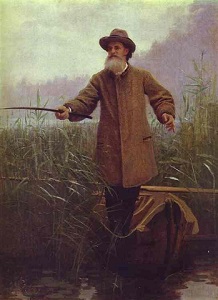
Portret van een vissende Maykov door Ivan Kramskoy, 1883
Zie voor nog meer schrijvers van de 4e juni ook mijn blog van 4 juni 2017 deel 2.


 Dolce far niente, Groen-grijs gebied (Jesse Laport)