Naar de inhoud

Romenu

Over literatuur, gedichten, kunst en cultuur
akke.beakke.be

Berichten van 10 juni 2018 tot 11 juni 2018

William Styron, Sophie van der Stap, N. P. van Wyk Louw, Renée Vivien, Jean-Pierre Chabrol, Ben Jonson, Yasunari Kawabata, Athol Fugard, Nnimmo Bassey
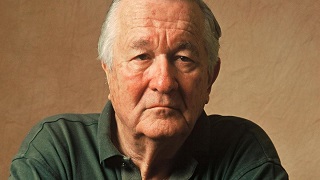
De Amerikaanse schrijver William Styron werd op 11 juni 1925 in Newport News in de staat Virginia geboren. Zie ook alle tags voor William Styron op dit blog.

Uit: The Long March

“One noon, in the blaze of a cloudless Carolina summer, what was left of eight dead boys lay strewn about the landscape, among the poison ivy and the pine needles and loblolly saplings. It was not so much as if they had departed this life but as if, sprayed from a hose, they were only shreds of bone, gut, and dangling tissue to which it would have been impossible ever to impute the quality of life, far less the capacity to relinquish it. Of course, though, these had really died quickly, no doubt before the faintest flicker of recognition, of wonder, apprehension, or terror had had time to register in their minds. But the shock, it occurred to Lieutenant Culver, who stood in the shady lee of an ambulance and watched the scene, must have been fantastic to those on the periphery of the explosion, those fifteen or so surviving marines who now lay on the ground beneath blankets, moaning with pain and fright, and who, not more than half an hour before, had been waiting patiently in line for their lunch before the two mortar shells, misfired—how? why? the question already hung with a buzzing, palpable fury in the noontime heat—had plummeted down upon the chow-line and had deadened their ears and senses and had hurled them earthward where they lay now, alive but stricken in a welter of blood and brain, scattered messkits and mashed potatoes, and puddles of melting ice cream. Moments ago in the confusion—just before he had stolen off from the Colonel’s side to go behind a tree and get sick—Lieutenant Culver had had a glimpse of a young sweaty face grimed with dust, had heard the boy’s voice, astonishing even in that moment of nausea because of its clear, unhysterical tone of explanation: “Major, I tell you I was on the field phone and I tell you as soon as they come out the tube I knew they were short rounds and so I hollered …” Of course it had been an accident. But why? He heard the Major shout something, then Culver had heard no more, retching on the leaves with a sound that, for the moment, drowned out the cries and whines of the wounded and the noise of trucks and ambulances crashing up through the under-brush.
It was not that he had a weak stomach or that he was unacquainted with carnage that allowed him to lose control. If anything, he prided himself on his stomach, and as for blood he had seen a lot spilled on Okinawa and had himself (although through no act of valor whatever) received a shrapnel wound —in the buttocks, a matter which even in retrospect, as he had often been forced to remind his wife, possessed no elements of comedy at all. In this case it was simply that on the one hand he himself had been shocked. The sight of death was the sort of thing which in wartime is expected, which one protects one-self against, and which is finally excused or at least ignored, in the same way that a beggar is ignored, or a head cold, or a social problem.”


 2153977-223d789a795ab12fff16d1ee44777ce2.jpg
William Styron (11 juni 1925 – 1 november 2006)


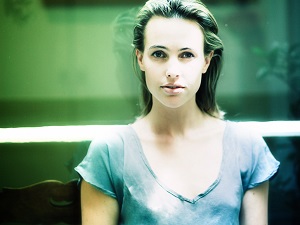
De Nederlandse schrijfster Sophie van der Stap werd geboren in Amsterdam op 11 juni 1983. Zie ook alle tags voor Sophie van der Stap op dit blog.

Uit: Buiten spelen

“Die vissenkom is niet zomaar uit de lucht komen vallen. Ze had al een plekje veroverd in mijn hoofd en lag ergens, onder een stapel versere gedachten, te wachten totdat ik haar weer op zou pakken.
Op de dag voor mijn vertrek naar Parijs – waar ik naartoe ging om aan een nieuw leven te beginnen (ja dat kan) – kwam dit beeld van de vissenkom met Job aangefietst over de Lijnbaansgracht. Zoals gewoonlijk was Job niet met lege handen gekomen. Hij ging zitten op een van de lege stoelen om de keukentafel en ik schonk ons allebei een glas rode wijn in zonder te weten dat het boek dat hij dit keer voor me mee had genomen, er eentje was dat me heel lang zou achtervolgen. Of beter gezegd, leiden. Maar misschien is dat wel hetzelfde.
Op de voorkant van het boek stond een zwarte kat afgebeeld, en profil, niet zoals je je een Amsterdamse vensterbankkat voorstelt, dik en lui achter het raam, maar eentje die je voor je ziet als je aan Parijs denkt: balancerend over de glinsterende daken van de stad, de staart zelfbewust in de lucht en de pootjes elegant achter elkaar. Verder was er een stukje Parijse hemel. Boven die hemel stond de titel geschreven: Elegant als een egel. Auteur: Muriel Barbery. Ik had meteen zin om het boek open te slaan.
In het boek stelt Paloma, een hoogbegaafd twaalfjarig meisje, de vraag of het leven wel waard is om te leven als ze toch al weet hoe het eindigt: in een vissenkom. De vissenkom werkt als volgt. Je wordt erin geboren en je gaat erin dood. Je kunt een beetje naar links zwemmen en een beetje naar rechts, maar daar houdt het op. Soms raak je de wand en kijk je naar buiten, naar de wereld die erachter ligt. Het is er mooi en je kijkt lang, want daar is je fantasie nooit te groot. In de jaren na je geboorte leef je in de waan dat je leven nog alle kanten op kan schieten. Je kunt astronaut worden, bergbeklimmer, waarschijnlijk win je en passant nog een NobeIprijs voor de Vrede, en op een dag komt de prins in de witte Porsche langs gereden, hij steekt zijn hand uit en jij stapt in.”
 

 2153977-87dee3b5d8f8d989dd03c7a31fee53d5.jpg
Sophie van der Stap (Amsterdam, 11 juni 1983)


De Zuid-Afrikaans schrijver en dichter Nicolaas Petrus van Wyk Louw werd geboren in Sutherland op 11 juni 1906. Zie ook alle tags voor N. P. van Wyk Louw op dit blog.


Aanraking van de dood

Slechts rakelings streek over mijn haren
de wind van Zijn vleugelslag, en Zijn schaduw
was koelte rondom mij; ik kon niet zien
of Hij vernietiging of leven gaf,
ik kon geen laatste, dappere woorden vinden;
ik boog alleen, en rondom mij was een wand
van vrees, totdat ik kon luisteren, helemaal verblind,
hoe Hij vér wegruisde over het land.
Maar toen de vrees weggewaaid was van mijn ogen,
stond alles er nieuw bij, van vreemde smart
dooraderd en diep verbonden door alle tijden heen;
er was een grote liefde in mij, en mededogen,
en een besef van het duister in ons hart,
want alles was doorweekt van sterfelijkheid.


Vertaald door Peter Pit


Grense

My naakte siel wil sonder skrome
in alle eenvoud tot jou gaan,
soos uit diepe slaap ons drome,
soos teen skemerlug die bome
opreik na die bloue maan;

gaan met al sy donker wense,
en die heilige, nooit-gehoorde
dinge sê, waarvoor die mense
huiwer, en wat om die grense
flikker van my duister woorde.


Voël

'n Voël vlieg voor my venster verby,
'n naalddun lyn wat daaroor gly
en die glas in twee vlakke sny;

die wêrelde val apart en bly
elk in sy enkelheid geskei –
ek hierbinne, en daarbuite hy.

^ 
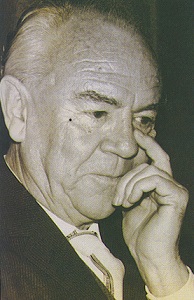
 2153977-e6792a1f045270c293011da785c3500a.jpg
N. P. van Wyk Louw (11 juni 1906 – 18 juni 1970)


De Britse dichteres en schrijfster Renée Vivien (eig. Pauline Mary Tarn) werd geboren op 11 juni 1877 in Londen. Zie ook alle tags voor Renée Vivien op dit blog.


Lassitude

Je dormirai ce soir d’un large et doux sommeil…
Fermez bien les rideaux, tenez les portes closes.
Surtout, ne laissez pas pénétrer le soleil.
Mettez autour de moi le soir trempé de roses.

Posez, sur la blancheur d’un oreiller profond,
De ces fleurs sans éclat et dont l’odeur obsède.
Posez-les dans mes mains, sur mon cœur, sur mon front,
Les fleurs pâles au souffle amoureusement tiède.

Et je dirai très bas : « Rien de moi n’est resté…
Mon âme enfin repose… ayez donc pitié d’elle.
Qu’elle puisse dormir toute une éternité. »
Je dormirai, ce soir, de la mort la plus belle.

Que s’effeuillent les fleurs, tubéreuses et lys,
Et que meure et s’éteigne, au seuil des portes closes,
L’écho triste et lointain des sanglots de jadis.
Ah ! le soir infini ! le soir trempé de roses !


Les Arbres

Dans l’azur de l’avril, dans le gris de l’automne,
Les arbres ont un charme inquiet et mouvant.
Le peuplier se ploie et se tord sous le vent,
Pareil aux corps de femme où le désir frissonne.

Sa grâce a des langueurs de chair qui s’abandonne,
Son feuillage murmure et frémit en rêvant,
Et s’incline, amoureux des roses du Levant.
Le tremble porte au front une pâle couronne.

Vêtu de clair de lune et de reflets d’argent,
S’effile le bouleau dont l’ivoire changeant
Projette des pâleurs aux ombres incertaines.

Les tilleuls ont l’odeur des âpres cheveux bruns,
Et des acacias aux verdures lointaines
Tombe divinement la neige des parfums.
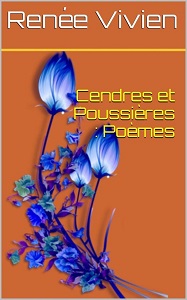
 

 2153977-4dc063ac4dee2545fdfddd379ce38f1f.jpg

Renée Vivien (11 juni 1877 – 10 november 1909)
Cover


De Franse schrijver Jean-Pierre Chabrol werd geboren op 11 juni 1925 in Chamborigaud. Zie ook alle tags voor Jean-Pierre Chabrol op dit blog.

Uit: La banquise

“Le petit village cévenol de Bouscassel est en fête. Son unique rue, qui longe la rivière, est pavoisée de drapeaux rouges et de quelques drapeaux tricolores. Les gens rient, se donnent l'accolade à s'en étouffer, chantent des couplets de La Jeune Garde, parfois de L'Internationale mais surtout des refrains populaires arrangés pour la circonstance. Par moments, la joie s'exprime par quelques coups de feu tirés en l'air. Certains hommes en civil, arborant le brassard FFI, sont armés, qui d'un fusil de guerre allemand, qui d'un revolver... Ils ont rajouté ce qu'ils ont trouvé comme accessoires pour faire plus militaire, celui-ci un ceinturon, celui-là un casque de la guerre de 14... Il traîne là-dessus des souffles composés d'odeurs fortes où priment tour à tour la poudre, la poussière, la vinasse, la sueur et la crasse, et qui ont presque complètement étouffé le parfum des foins coupés, aux portes du village, que l'on rentrait dans les granges, il y a peu. C'est, dans l'air cotonneux de cette matinée d'un mois d'août torride, un pétillement très gai. Devant le bistrot de Marie, dite « la Rumeur » à cause de sa langue, les gens se servent librement au robinet d'un tonneau que son mari, dit « le Gamate » parce qu'il est aussi maçon, vient de mettre en perce. Le bureau de tabac a été pillé, chacun s'est servi, les premiers arrivés fument des cigares, les gosses jouent au canon avec la carotte de l'enseigne, en se gavant de réglisse. Une belle maison aux volets dos ne pavoise pas, les gens grondent en la longeant. Soudain, on se passe le mot : « Elle arrive, tous au pont !... » Sur le pont en dos d'âne, arrive une charrette aussitôt entourée d'une foule qui crie, certaines femmes hurlent à la mort. — Tipendjarén ! « Nous allons te pendre », le vieux cri, le hurlement oublié des rages populaires, semble resurgir soudain d'un lointain Moyen Age, tout naturellement, tout neuf. Au milieu de ce tombereau à ridelles tiré péniblement par un vieux percheron, sur une chaise, les mains liées derrière le dos, une femme est assise, une solide quadragénaire qui baisse la tête. Ce qu'elle a de plus remarquable, c'est une extraordinaire chevelure rousse dépeignée qui lui tombe sur les épaules et devant la figure qu'elle masque. En sautoir sur sa poitrine, une pancarte se balance au rythme du roulis qu'impriment à la charrette les coups de collier du vieux canasson sur les pavés disjoints de la calade. Cette planche porte ces mots d'une écriture maladroite mais parfaitement lisible même de loin. »
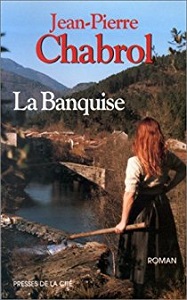
 

 2153977-e9c9f90608cbbdc85add84fee61793a1.jpg
Jean-Pierre Chabrol (11 juni 1925 – 1 december 2001)
Cover


De Engelse dichter en schrijver Ben Jonson werd geboren rond 11 juni 1572 in Westminster, Londen. Zie ook alle tags voor Ben Jonson op dit blog.


Hymn To The Belly

Room! room! make room for the bouncing Belly,
First father of sauce and deviser of jelly;
Prime master of arts and the giver of wit,
That found out the excellent engine, the spit,
The plough and the flail, the mill and the hopper,
The hutch and the boulter, the furnace and copper,
The oven, the bavin, the mawkin, the peel,
The hearth and the range, the dog and the wheel.
He, he first invented the hogshead and tun,
The gimlet and vice too, and taught 'em to run;
And since, with the funnel and hippocras bag,
He's made of himself that now he cries swag;
Which shows, though the pleasure be but of four inches,
Yet he is a weasel, the gullet that pinches
Of any delight, and not spares from his back
Whatever to make of the belly a sack.
Hail, hail, plump paunch! O the founder of taste,
For fresh meats or powdered, or pickle or paste!
Devourer of broiled, baked, roasted or sod!
And emptier of cups, be they even or odd!
All which have now made thee so wide i' the waist,
As scarce with no pudding thou art to be laced;
But eating and drinking until thou dost nod,
Thou break'st all thy girdles and break'st forth a god.
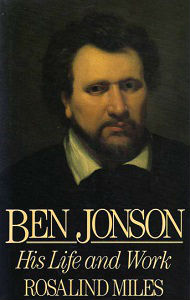
 

 2153977-ddd57f7245bd4538de96e8e71982e1bd.jpg

Ben Jonson (ca. 11 juni 1572 – 6 augustus 1637) 
Cover biografie


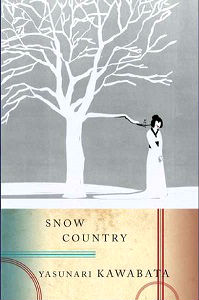
De Japanse schrijver Yasunari Kawabata werd geboren op 11 juni 1899 in Osaka. Zie ook alle tags voor Yasunari Kawabata op dit blog.

Uit: Snow Country (Vertaald door Edward Seidensticker)

“Black though the mountains were, they seemed at that moment brilliant with the color of the snow. They seemed to him somehow transparent, somehow lonely. The harmony between sky and mountains was lost.'
- Yasunari Kawabata, Snow Country. Translator: Edward G. Seidensticker
Small shifts in atmosphere, in emphasis, in tone of voice or choice of words, outlined against the contantly shifting backdrops afforded by the picturesque snow country resort town and its inhabitants take on great significance in this most subtle of novels. With both grace and economy, Kawabata unfolds the story of Shimamura, a wealthy dilletante from Tokyo and his liaison with Komaka, a geisha in the hot springs resort he visits. Shimamura is taken with Komaka's innocence and simplicity; yet unwilling to fully believe that her professed love for him is real and not the pose of a geisha, or indeed that any sort of reciprocity beyond a never-defined, sporadic relationship without even the status of patron and favoured geisha is possible between them.
Both of them are, in some way, empty people, pursuing what Shimamura thinks of as wasteful effort. Shimamura, at one time a well-regarded commentator on Japanese dance and expected to soon enter into the fray himself finds his hobby getting too real and transfers his scholarly attentions to western dance, despite never having seen a ballet performance, and refusing to see ballets put up by Japanese troupes. Mountain climbing, another hobby of his, is also seen as a classic example of wasted effort - once you reach the top you have climb all the way back down again. Komako reads everything she can get her hands on, from classics to trash, and keeps a record of it all in a diary that she has been maintaining for years.
She doesn't try to analyse what she reads, or impose any quality control on it - she just reads omnivourously and keeps a record of it. She teaches herself to play songs using sheet music, with no exposure to actual peformance practise, creating a naive and affecting but essentially quaint and insular art of her own. »
 

 2153977-5078746edc22f16c2ee7db9b9e61aea8.jpg
Yasunari Kawabata (11 juni 1899 — 16 april 1972)
Cover


De Zuidafrikaanse schrijver Harold Athol Lannigan Fugard werd geboren op 11 juni 1932 in Middelburg, Kaapprovincie. Zie ook alle tags voor Athol Fugard op dit blog.

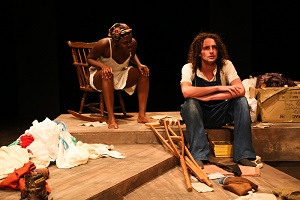
Uit: Hello And Goodbye

"JOHNNIE. All right I made a mistake. I forgot. I applied. Satisfied?
HESTER. You didn't forget. You lied to me. You know you posted it.
JOHNNIE. I'm telling you I forgot.
HESTER. You knew they said you must come.
JOHNNIE. Can't I forget things too?
HESTER. And you wanted to go!
JOHNNIE. Maybe ... it's a long time ago ... ten years ... My memory....
HESTER. Don't try to get out of it.
JOHNNY [desperate] What do you want me to say?
HESTER. What are you trying to hide?
JOHNNY. Nothing. So leave me alone. Understand ? Just leave us alone. Take what you want and go! [He is squirming—then a clumsy move and the crutches fall—he stands on his feet.] Look, what you've made me do!!
[Pause.]
Yes, I wanted to go. They are the most beautiful things in the world! Black, and hot, hissing, and the red glow of their furnaces, their whistles blowing out like ribbons in the wind! And the engine driver, grade one, and his stoker up there, leaning out of the cab, watching the world like kings! Yes, I wanted to go. I could have gone. It was up to me. He didn't say anything to stop me posting the forms in duplicate. And when I got the letter saying I must come he even said he was happy because now his son would also work for the railways. I said I'd come home for all my holidays to be with him and give the house a good sweep out. And when I was packing my suitcase he gave me one of his railway shirts—even made a joke, with tears in his eyes—said it would fit when my muscles were big. So there we stood with tears in our eyes, him on his crutches—me with my suitcase. He came to the door and waved to me all the way down Valley Road.”
 

 2153977-d41d7b307ac5c3650558883ad087db5d.jpg
Athol Fugard (Middelburg (ZA), 11 juni 1932)
Scene uit een opvoering in Kaapstad, 2016


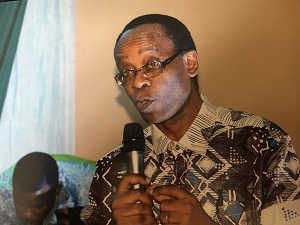
De Nigeriaanse dichter, schrijver, architect, en milieuactivist Nnimmo Bassey werd geboren in Akwa Ibom op 11 juni 1958. Zie ook alle tags voor Nnimmo Bassey op dit blog.

Uit:To cook a continent

« What makes possible the lack of regulation in Africa’s extractive sectors, the open robbery and the incredibly destructive extractive activities? Leading the multiplicity of factors are unjust power relations that follow from and amplify the baggage of slavery, colonialism and neo-colonialism. From a Nigerian stand-point, but within the tradition of Pan-Africanist political economy and global political ecology, this book unpacks these issues and sets up bins for these needless and toxic loads.
Because of my own experiences, the pages that follow pay close attention to the oil industry in Africa, to the history of environmental justice struggles in the Niger Delta, to the discovery of oilfields in Uganda’s rift Valley, and to the big pull of the offshore finds in the Gulf of Guinea. As we examine the impacts of fossil fuel extraction on the continent, we also look at massive land grabs for the production of agrofuels and foods for export.
What can Africa do? And once our peoples decide, can the rest of the world act in solidarity? If not, will we continue on the path laid out by elites, a path that brings us ever closer to the brink? Must we live in denial even at a time of a rising tide of social and ecological disasters?
….

One of the worst gas flares in the Niger Delta is at a former Shell facility at Oben, on the border of Delta and Edo states. They have been roaring and crackling non-stop for over 30 years, since Shell first lit them. The flared gas comes from the crude oil extracted from the oil wells in the Oben field. As at more than 200 other flow stations across the Niger Delta, these gas flares belch toxic elements into the atmosphere, poisoning the environment and the people. Globally, gas flares pump about 400 million tonnes of carbon dioxide into the atmosphere annually. Here in Nigeria, the climate is brazenly assaulted both in the short term by gas flaring and over the long term because of the CO2 emissions from this filthy practice. In the hierarchy of gas flares infamy, Nigeria is second only to Russia.”
 

 2153977-8d1b60f39b26e69a143c31c7f23be8d0.jpg
Nnimmo Bassey (Akwa Ibom, 11 juni 1958)


Zie voor nog meer schrijvers van de 11e juni ook mijn blog van 11 juni 2017 deel 2.
Geschreven door Romenu om 18:31 Reageer op dit bericht

Magdalene—The Seven Devils (Marie Howe)


Bij de derde zondag na Pinksteren


 2153686-d6b60ced48efe8f036749fd379aba58e.jpg
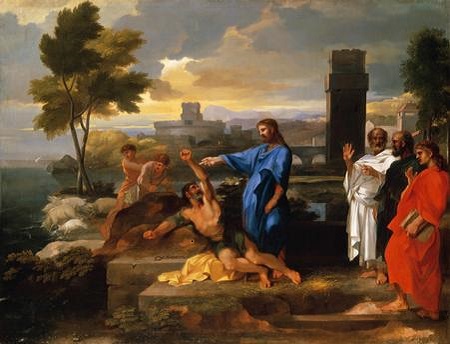
La guérison du Démoniaque door Sébastien Bourdon, 1660


Magdalene—The Seven Devils

                                   “Mary, called Magdalene, from whom seven devils had been cast out”,Luke 8:2.

The first was that I was very busy.

The second—I was different from you: whatever happened to you could
not happen to me, not like that.

The third—I worried.

The fourth—envy, disguised as compassion.

The fifth was that I refused to consider the quality of life of the aphid,
The aphid disgusted me. But I couldn’t stop thinking about it.
The mosquito too—its face. And the ant—its bifurcated body.

Ok the first was that I was so busy.

The second that I might make the wrong choice,
because I had decided to take that plane that day,
that flight, before noon, so as to arrive early
and, I shouldn’t have wanted that.
The third was that if I walked past the certain place on the street
the house would blow up.

The fourth was that I was made of guts and blood with a thin layer
of skin lightly thrown over the whole thing.

The fifth was that the dead seemed more alive to me than the living

The sixth—if I touched my right arm I had to touch my left arm, and if I
touched the left arm a little harder than I’d first touched the right then I had
to retouch the left and then touch the right again so it would be even.

The seventh—I knew I was breathing the expelled breath of everything that
was alive, and I couldn’t stand it.
I wanted a sieve, a mask, a, I hate this word—cheesecloth—
to breath through that would trap it—whatever was inside everyone else that
entered me when I breathed in.

No. That was the first one.

The second was that I was so busy. I had no time. How had this happened?
How had our lives gotten like this?

The third was that I couldn’t eat food if I really saw it—distinct, separate
from me in a bowl or on a plate.

Ok. The first was that. I could never get to the end of the list.
The second was that the laundry was never finally done.

The third was that no one knew me, although they thought they did.
And that if people thought of me as little as I thought of them then what was
love?

The fourth was I didn’t belong to anyone. I wouldn’t allow myself to belong
to anyone.

The fifth was that I knew none of us could ever know what we didn’t know.

The sixth was that I projected onto others what I myself was feeling.

The seventh was the way my mother looked when she was dying,
the sound she made—her mouth wrenched to the right and cupped open
so as to take in as much air… the gurgling sound, so loud
we had to speak louder to hear each other over it.

And that I couldn’t stop hearing it—years later—grocery shopping, crossing the street—

No, not the sound—it was her body’s hunger
finally evident—what our mother had hidden all her life.

For months I dreamt of knucklebones and roots,
the slabs of sidewalk pushed up like crooked teeth by what grew underneath.

The underneath. That was the first devil. It was always with me
And that I didn’t think you—if I told you—would understand any of this—


 2153686-d61213aae0e7b41e45c8efda43541bdb.jpg
Marie Howe (Rochester, 1950)
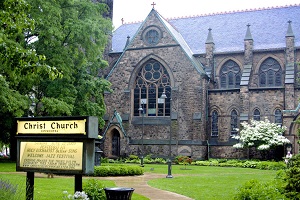
Christ Church, in Rochester, New York, de geboorteplaats van Marie Howe


Zie voor de schrijvers van de 10e juni ook mijn vorige twee blogs van vandaag.

Geschreven door Romenu om 11:33 Reageer op dit bericht

Louis Couperus, D. Hooijer, Jacques Perk, James Salter, Mensje van Keulen, Jan Brokken

De Nederlandse schrijver Louis Couperus werd op 10 juni 1863 geboren in Den Haag. Zie ook alle tags voor Louis Couperus op dit blog.

Uit: Noodlot

“De handen in de zakken, den kraag van zijn pels op, ging Frank door het stuiven der sneeuw voort, langs den eenzamen Adelaïde-Road, in den avond. Toen hij het villa-tje naderde, waar hij woonde, - White-Rose, geheel gedoken, gedompeld, verzonken in de blankheid der sneeuw, als een nestje in watten, - zag hij iemand op zich afkomen, van Primrose Hill. Hij richtte zijn blik vast op het gelaat van den man, die hem blijkbaar wilde aanspreken; niet wetende wat deze in zijn schild voerde in dien eenzamen sneeuwnacht, en hij was zeer verbaasd, toen hij, in het Hollandsch, hoorde:
- Neemt u me niet kwalijk... is u niet meneer Westhove?
- Ja, antwoordde Frank. Wie is u? Wat is er?
- Ik ben Robert van Maeren, misschien herinnert u zich...
- Bertie, jij? riep Frank uit. Hoe kom je hier in Londen!
En in zijne verbazing, zag hij, door het stuiven der sneeuw heen, een vizioen verrijzen uit zijn jeugd, een helder tafereel van jongensvriendschap, iets jongs en warms...
- Misschien niet zoo heel toevallig! antwoordde de vreemde, wiens stem bij den klank van dien verkleinnaam ‘Bertie’ iets vaster klonk; ik wist, dat u hier woonde en ik ben al driemaal aan uw deur geweest, maar u was niet thuis. De juffrouw zei, dat u van avond toch thuis zoû komen en daarom ben ik zoo vrij geweest hier op u te wachten...
De stem verloor weêr alle vastheid en werd smeekend, als van een bedelaar.
- Moest je me zoo dringend spreken? vroeg Frank verbaasd.
- Ja... ik woû... of u me misschien helpen kon... ik ken hier niemand...
- Waar woon je?
- Nergens; ik ben van morgen vroeg hier aangekomen en ik heb... ik heb geen geld...
En hij kromp, huiverend van het staan in de koude tijdens dit korte gesprek, zich bijna smeekend samen, als een hond, die bang is.
- Ga maar meê met me, sprak Frank, vol verbazing, medelijden, vol van de warme herinneringen zijner jongensjaren. Kom maar van nacht bij me.
- O ja, graag! klonk het antwoord, haastig en bevend, als angstig voor eene terugname dier goddelijke woorden.
Zij gingen samen een paar passen voort; toen haalde Frank den sleutel uit zijn zak, den sleutel van White-Rose. Hij opende de deur; een zeshoekige Moorsche lantaren scheen in de vestibule zacht met halve vlam.”


 2153682-2ae7920f1eb34e86895595272910878c.jpg
Louis Couperus (10 juni 1863 – 16 juli 1923)
Cover


De Nederlands dichteres en schrijfster D. Hooijer (pseudoniem van Catharina Antonetta (Kitty) Ruys-Krijgers Janzen) werd geboren in Hilversum op 10 juni 1939. Zie alle tags voor D. Hooijer op dit blog.


Twee gedichten

de laatste kerk op de heizee
gesloopt, de muren, de daken
de miniature armen en benen

een oude kapelvloer komt boven
daaraan nog de adem
van de Maria-gebeden

graaf door, de goden
werd wijn opgedrongen de verzoeken
deugden de helft van de tegenpartij

graaf door de tweede potsol
de steen met de bloedgoot
dat bidden was handel

nooit knielde de slachter, nooit
nam een god een beet
van het offer - overwoog hij beloning.


Ik ken niets van de dood, geen hand
geen stap vlak is zijn terrein totdat
we zwemmen in water
zonder bovenkant.

Ik ken hem niet, ken hem steeds
minder steeds minder juist
vind ik zijn waarheid
en ik vecht licht.

Stel de egel voelt aan zijn stekels
en knikt voor hij zich inrolt
zo licht vecht ik,
een duif wil het.


 2153682-c617692ae763b39157deafae16ec88da.jpg
D. Hooijer (10 juni 1939 – 25 september 2013)


De Nederlandse dichter Jacques Fabrice Herman Perk werd geboren in Dordrecht op 10 juni 1859. Zie ook alle tags voor Jacques Perk op dit blog.


Liefde

Het vurig hart des jonglings, haast nog kind,
Gevoelt een rijke en ongekende weelde,
Wanneer hij zachtheid, liefde, schoonheid vindt,
Zooals die nooit het jong gemoed nog streelde.

Hij ziet de jonkvrouw, de met schoon bedeelde....
En die geen zege wil, zij overwint.
Hij mint het Schoone... en liefde is ingebeelde,
Als hij de ‘liefde’ van de vrouw bemint. -

Mathilde! ik vond de liefde in elke vrouw,
Ik heb van 't schoone in allen haast gevonden,
En velen liefgehad te goeder trouw,

Maar die geliefden, allen saêmverbonden,
Bezitten niet, wat ik in ú aanschouw,
Die meer bekoort, dan zij tezamen konden.


Ik min uw minnaar

Dai ik mijn hoofd mocht aan uw boezem vlijen,
En zalig zijn als een onschuldig kind,
En duizendmaal met blijden blik belijden,
Dat gij, Mathilde, mij bezielt, bezint;

Dat ik gelukkig ben, nu u verbindt
De band der trouw, dien de eeuwigheid zal wijden...!
Ik heb hem lief, (omdat gij hem bemint)
Wiens min voor u mijn liefde doet gedijen.

Gij wilt mij, u te minnen, niet verbieden:
Ik bedel ú niet om uw wedermin,
Schutsengel! Gij zijt ziel, - en mijn Godin!

Ik schijn u als de zonnebloem de zon te ontvlieden.
Ik ben, zoolang gij mij uw bijzijn gunt,
Gelukkig, nu gij 't innig wezen kunt!


Die lach

Zooals wanneer op eens de zonneschijn
Door 't zwart der breede wolken heen komt breken,
En schittert in de tranen, die er leken
Van blad en bloem, als vloeiend kristallijn,

Zóó, dat het weenen lachen schijnt te zijn:
Zoo is, wat mij ontstemt, op eens geweken,
Mathilde! ontsluit úw mond zich om te spreken,
En doolt een glimlach om uw lippen, fijn: -

Doch van den lach is glimlach dageraad,
En klinkt uw lach, hoe drinken hem mijne ooren!
De vreugde vaart door pols en vezel rond, -

En met geloken oog zie 'k uw gelaat,
Zoo zonnig: 'k meen uw zilvren lach te hooren,
Wanneer ik roerloos wacht op de' uchtendstond....


 2153682-914c901c200253b3971d5949fff50c97.jpg
Jacques Perk (10 juni 1859 – 1 november 1881)
Portret door Johan Heinrich Neuman, 1882


De Amerikaanse schrijver James Salter werd op 10 juni 1925 in New York geboren. Zie ook alle tags voor James Salter op dit blog.

Uit: Last Night

“Philip married Adele on a day in June. It was cloudy and the wind was blowing. Later the sun came out. It had been a while since Adele had married and she wore white: white pumps with low heels, a long white skirt that clung to her hips, a filmy blouse with a white bra underneath, and around her neck a string of freshwater pearls. They were married in her house, the one she’d gotten in the divorce. All her friends were there. She believed strongly in friendship. The room was crowded.
— I, Adele, she said in a clear voice, give myself to you, Phil, completely as your wife . . . Behind her as best man, somewhat oblivious, her young son was standing, and pinned to her panties as something borrowed was a small silver disc, actually a St. Christopher’s medal her father had worn in the war; she had several times rolled down the waistband of her skirt to show it to people. Near the door, under the impression that she was part of a garden tour, was an old woman who held a little dog by the handle of a cane hooked through his collar.
At the reception Adele smiled with happiness, drank too much, laughed, and scratched her bare arms with long showgirl nails. Her new husband admired her. He could have licked her palms like a calf does salt. She was still young enough to be good-looking, the final blaze of it, though she was too old for children, at least if she had anything to say about it. Summer was coming. Out of the afternoon haze she would appear, in her black bathing suit, limbs all tan, the brilliant sun behind her. She was the strong figure walking up the smooth sand from the sea, her legs, her wet swimmer’s hair, the grace of her, all careless and unhurried.
They settled into life together, hers mostly. It was her furniture and her books, though they were largely unread. She liked to tell stories about DeLereo, her first husband—Frank, his name was—the heir to a garbage-hauling empire. She called him Delerium, but the stories were not unaffectionate. Loyalty—it came from her childhood as well as the years of marriage, eight exhausting years, as she said—was her code. The terms of marriage had been simple, she admitted. Her job was to be dressed, have dinner ready, and be fucked once a day. One time in Florida with another couple they chartered a boat to go bonefishing off Bimini.”


 2153682-0bf2ac9174e67f1d54312a6479fe7a5b.jpg
James Salter (10 juni 1925 – 19 juni 2015)


De Nederlandse schrijfster Mensje van Keulen werd op 10 juni 1946 geboren in Den Haag. Zie ook alle tags voor Mensje van Keulen op dit blog.

Uit: Neerslag van een huwelijk

“1 januari 1977

De klok op de televisie sloeg twaalf. Gelukkig nieuwjaar.
We waren in het appartement van John J., die er net twee dagen woonde. Fl 150.000 voor drie kamers en dat schijnt mee te vallen. Een paar jongetjes op de Nieuwe Herengracht staken vuurwerk af. Ik moest, zoals elk jaar, denken aan de kerstbomenjacht vroeger in mijn Haagse buurt, de fik die het afsloot, soms zo gigantisch dat er ramen sprongen.
C kwam, ging bij Lon in een hoek zitten en is er niet meer uit gekomen. Uiteindelijk zaten ze belachelijk ernstig te fluisteren. Om me heen deed iedereen of er niets aan de hand was en ik probeerde te luisteren en af en toe deel te nemen aan het gesprek en mee te lachen, terwijl mijn hart als een gek tekeerging.
Gelukkig nieuwjaar.
Ik liet de auto staan op de gracht, ter hoogte van het Vrouwenhuis, waar straat en stoep schoon waren. Het was tussen vijf en zes. Ik rende zowat naar huis, zag mijn witte laarsjes stappen. We zeiden geen woord. Gingen naar bed. Geen woord. Toen Lon sliep ging ik naar mijn kamer, dronk een glas whisky en viel op het logeerbed in slaap.
Een of twee uur later stond Lon naast me. Hij kroop bij me in het smalle bed. We gingen naar boven, sliepen verder. Toen we ontwaakten, was hij aanhankelijk, ik bleef voor dood liggen. Op een gegeven moment ging ik overeind zitten en zei zonder erbij na te denken: ‘Thee? Koffie?’
‘Blijf nog even liggen.’
En toen, ik weet niet meer hoe ik begon, stroomden de woorden eruit. Af en toe hoorde ik mezelf van alles uitroepen. Hij bleef geduldig, veegde mijn tranen weg.
Ik zei het ineens: ‘Ik weet zeker dat je wat met haar hebt. Ze kijkt naar me of ze last van haar geweten heeft of iets van me wil. Wat een plaatje vannacht, niet om aan te zien!’ Ik ging maar door en hij liet me maar praten, werd niet kwaad, liep niet weg. Het kan niet waar zijn, dacht ik. Het kan niet, het mag niet, ik heb zelf ook wel wat te vertellen. En zal dan meteen erachteraan zeggen: ‘Maar het stelde niets voor.’ Dat cliché, al is het gemeend. Zou het helpen? Zou het juist erger worden?”


 2153682-55ce9eda8008d32ed7dc6c186e1a3935.jpg
Mensje van Keulen (Den Haag, 10 juni 1946)
Cover


De Nederlandse schrijver Jan Brokken werd geboren op 10 juni 1949 in Leiden. Zie ook alle tags voor Jan Brokken op dit blog.

Uit:Baltische zielen

“De maan kwam net op toen de loodsboot langszij draaide. Huig en ik konden inrukken; de loods zou wel weten waar de mijnen lagen. Kort na middernacht voer het schip de haven van Pärnu binnen en meerde recht tegenover het stadje af, aan een smalle kade. Ons schip was het enige in de haven.
Midden in de nacht werd ik van bed gelicht door de eerste stuurman. De grenspolitie wilde zien of mijn gezicht bij de foto in mijn paspoort hoorde. Ik kleedde me aan en liep naar de hut van de kapitein. Drie chagrijnige koppen keken me aan. De grenswachters hadden om sloffen sigaretten gevraagd en de kapitein had ze de huid vol gescholden. ‘De zak,’ mompelde de eerste stuur, ‘als hij zich niet zo Hollands calvinistisch had gedragen, hadden we kunnen blijven maffen.’
Een voor een moesten we voor de grenswachters verschijnen. Ik werd het langst ondervraagd, van de negen man aan boord was ik de enige passagier.
‘Why are you hanging around on this ship?’
‘Ik wilde de Oostzee zien,’ antwoordde ik slaperig in het Engels.
‘Is daar dan iets bijzonders aan?’
‘Volgens zeelieden is het de mooiste aller zeeën.’
‘Hebben wij nooit iets van gemerkt.’
‘Het licht is bijzonder. Zacht en warm.’
‘Het licht?’ De mannen keken elkaar aan.
‘Het smeult in de herfst.’
‘Wat doet u voor de kost?’
‘Schrijver.’
‘O…’
Dan was je gewoon gek in plaats van gevaarlijk.
In de manier waarop mijn paspoort werd gestempeld, meende ik iets schampers te zien.
De volgende ochtend, een maandagmorgen, ging ik aan land. De huizen van Pärnu stonden in de steigers of waren net geel, rood, helder grijs of blauw geschilderd.”


 2153682-e3d4205b448dac5cbb4ec2cdec83566f.jpg
Jan Brokken (Leiden, 10 juni 1949)


Zie voor nog meer schrijvers van de 10e juni ook mijn vorige blog van vandaag.

Geschreven door Romenu om 11:30 Reageer op dit bericht

Saul Bellow, Ion Creanga, Oktay Rifat, Peter Kurzeck, Antun Mihanović, Tijl Nuyts

De joods-Amerikaanse schrijver Saul Bellow werd geboren op 10 juni 1915 te Lachine, een voorstad van Montreal. Zie ook alle tags voor Saul Bellow op dit blog.

Uit: By The St. Lawrence

“Not the Rob Rexler?
Yes, Rexler, the man who wrote all those books on theater and cinema in Weimar Germany, the author of Postwar Berlin and of the controversial study of Bertolt Brecht. Quite an old man now and, it turns out, though you wouldn't have guessed it from his work, physically handicapped-not disabled, only slightly crippled in adolescence by infantile paralysis. You picture a tall man when you read him, and his actual short, stooped figure is something of a surprise. You don't expect the author of those swift sentences to have an abrupt neck, a long jaw, and a knot-back. But these are minor items, and in conversation with him you quickly forget his disabilities.
Because New York has been his base for half a century, it is assumed that he comes from the East Side or Brooklyn. In fact he is a Canadian, born in Lachine, Quebec, an unlikely birthplace for a historian who has written so much about cosmopolitan Berlin, about nihilism, decadence, Marxism, national socialism, and who described the trenches of World War I as "man sandwiches" served up by the leaders of the great powers.
Yes, he was born in Lachine to parents from Kiev. His childhood was divided between Lachine and Montreal. And just now, after a near-fatal illness, he had had a curious desire or need to see Lachine again. For this reason he accepted a lecture invitation from McGill University despite his waning interest in (and a growing dislike for) Bertolt Brecht. Tired of Brecht and his Marxism-his Stalinism-he stuck with him somehow. He might have canceled the trip. He was still convalescent and weak. He had written to his McGill contact, "I've been playing hopscotch at death's door, and since I travel alone I have to arrange for wheelchairs between the ticket counter and the gate. Can I count on being met at Dorval?"
He counted also on a driver to take him to Lachine. He asked him to park the Mercedes limo in front of his birthplace. The street was empty. The low brick house was the only one left standing. All the buildings for blocks around had been torn down. He told the driver, "I'm going to walk down to the river. Can you wait for about an hour?" He anticipated correctly that his legs would soon tire and that the empty streets would be cold, too. Late October was almost wintry in these parts. Rexler was wearing his dark-green cloaklike Salzburg loden coat.”

 2153681-cd7b3c46c568817d00025a4ad70e5199.jpg
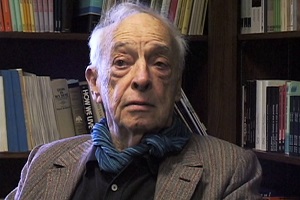
Saul Bellow (10 juni 1915 – 5 april 2005)


De Roemeense schrijver Ion Creanga werd geboren op 10 juni 1839 in Humuleşti. Zie ook alle tags voor Ion Creanga op dit blog.

Uit: Memories of My Boyhood (Vertaald door Ana Cartianu en R.C. Johnston)

“Yet, the true St. Nicholas seems to have been mindful of me, for, lo and behold, that blessed boy walked into the schoolroom. Where upon, with permission or not, I made for the door, slipped out quickly, and, never lingering about the school, took to my heels homewards! A glance over my shoulder showed me two hulking brutes already on my tracks. Then I started running so fast that my feet struck sparks out of the ground! I passed our house without going in, turned left and entered the yard of one of our neighbors; from the yard I went into the stableyard, and from the stableyard into the maize field, newly hoed and tilled, with the boys after me. Before they reached me, scared out of my wits as I was, I somehow managed to burrow into the mound at the root of a maize stalk. Nica, Costache's son, with Toader, Catinca's son, an equally loathsome brute, passed by me, saying just what they were going to do to me.
Surely the Lord blinded them, so that they couldn't find me! After a while, hearing no rustling of maize leaves, not even a hen scratching the ground, I suddenly darted out, with earth on my head, and rushed home to mother and began telling her with tears in my eyes that I would not go back to school, no, not if they were to kill me. The next day, however, the priest came to our house and settled things with father; they calmed me down and took me back to school again. "For really, it's a pity to be left without any education, " the priest was saying, "you're now past your ABC's, you're working on the prayerbook, and, one of these days, you'll go on to the psalter, which is the key to all wisdom. And who can tell what time has in store for us? Maybe you'll live to become the priest here, at the church of St. Nicholas, because it's for the likes of you that I take the pains I do. I have an only daughter, and I will think seriously about my choice of a son-in-law."


 2153681-9d70382203ade9bb2e80c0ccce24d629.jpg
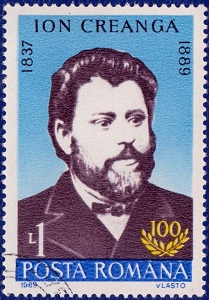
Ion Creanga (10 juni 1839 – 31 december 1889)


De Turkse dichter Oktay Rifat werd geboren op 10 juni 1914 in Trabzon. Zie ook alle tags voor Oktay Rifat op dit blog.


Agamemnon I (Fragment)

Leaving the ships to be scraped we trudged on, and reached a valley; each of us rolled a cigarette with fingers gnarled or missing.
A smoke killed time as we crouched and leant against the rocks.
The quickest way to kill time! It gets less and less or ends for good. Or then again, it expands against the pull of earth and the north-caster! Panting like squirrels, suspicious, always suspicious!
Whatever is ours is behind the mountain. But they are there, running away in the sudden flight of a partridge, or in a lizard's glance, in every hole and under every stone.
They turned their fiery sharp savage weapons of destruction against us, cowardly with their long-shadowed spears, murderous as their guns or mortars, shells and bazookas.
Just when we say they can't increase, they do! Their faces are like ours but inside their armour are gods, their luminous eyes terrifying!
`What have we done wrong?' we asked, ‘can someone tell us our crime?' We know the weight of guilt. Our backs bent double under this rock, our teeth blackened with tbis water.
If we must land up in hospital wards or in prison cells, or be sold dirt-cheap in the labour-market, so be it!
From behind the barbed wire let's look at someone taking random instant photographs of the white muslin over the copper yoghurt vessel, or of the huge Prison full of light!

In the evening the water in our jug is finished and perched on stone, or sometimes concrete, our birds all fly away.
One piece of lokum remains on the rose-patterned plate - God knows how! The fruit on the branch consumes night for us.
Yes, for us! Agamemnon laughs at this. Diomedes belts on his swords to become the icon of deathless epics.


Vertaald door Richard McKane en Ruth Christie


 2153681-db4afe7edca1269daf5d620f11efa6f6.jpg
Oktay Rifat (10 juni 1914 – 10 april 1988)
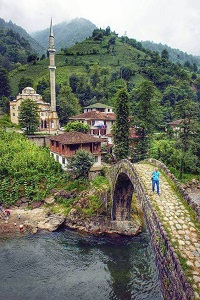
Trabzon


De Duitse schrijver Peter Kurzeck werd geboren op 10 juni 1943 in Tachau, Bohemen. Zie ook alle tags voor Peter Kurzeck op dit blog.

Uit: Ein Kirschkern im März

„Im Westend ein vornehmes Mietshaus. Die Wohnung im zweiten Stock und im Dachgeschoß nochmal zwei Zimmer. Birgit und Peter heißen meine Gastgeber. Und Domi ihr Sohn. Mit Carina im Kinderladen. Birgit ist Lehrerin. Sie will malen. Als Lehrerin eine halbe Stelle. Schon ihr Leben lang will sie malen. Und Peter (der andere Peter, sagen Domi und Carina, mein Peter und dein Peter) am Institut für Friedens- und Konfliktforschung. Bart und Doktortitel. Ein freundliches Gesicht. Birgits Arbeitszimmer mit hellen Möbeln, die nach Bienenwachs riechen. Ihr Schreibtisch schon für mich leergeräumt. Über dem Schreibtisch ein Oberlichtfenster. Viel Himmel und den ganzen Tag hell das Licht auf den Schreibtisch. Ein großer Strauß frische Tulpen und ein voller Obstkorb für mich. Wie für ein Bild der Obstkorb und Kunstbücher in den Regalen. Teppich und Holzfußboden. Und ein Sofa, aus dem man mit drei Handgriffen ein Bett machen kann. Hier also. Und daneben das zweite, sein Arbeitszimmer. Groß. In der Mitte ein Schreibtisch und noch zwei Tische daneben. Überall Papier, Akten, Mappen und Ordner. Regale, ein Schrank. Auf dem Fußboden Domis Spielzeug. Playmobil. Eine Ritterburg, Elefanten, Bauernhoftiere, ein Indianerlager und Schiffe. Ein Meer von Schiffen. Drei Fenster nach Westen und unter den Fenstern eine stille Nachmittagsseitenstraße. Du kannst mein Arbeitszimmer auch mitbenutzen, sagt er zu mir. Tagsüber sowieso, tagsüber ist er in seinem Büro. Mitbenutzen nicht, sagte ich mir, aber manchmal zur Tür herein und durch das Licht und die Stille von Fenster zu Fenster. Hier also! Und dann noch das Bad. Ein kleines perfektes Bad. Für heißes Wasser ein Boiler mit bunten Lämpchen. Und im Vorraum zum Bad Waschmaschine, Kühlschrank und Kochplatte. Also gerettet? In Sicherheit? Vorerst gerettet, aber wie lang? Und zusammen mit Freunden noch ein Haus auf dem Land, sagen meine Gastgeber am ersten Tag mittags beim Essen zu mir.In der Schwalm. Klein und alt und für die Wochenenden beinah schon ein bißchen zu weit. Ein Fachwerkhaus mit spitzem Giebel und kleinen Fenstern. Und ein Gärtchen dabei und im Gärtchen die Jahreszeiten. Vielleicht bald einmal zusammen hinfahren, sagen sie. Mit den Kindern. Wenn es jetzt wärmer wird. Görzhain heißt das Dorf. In der Schwalm sind die Winter länger. Schön, daß Carina und Domi sich so gut verstehen. Als Gast, wie lang bleibt man als Gast? Mittag, der erste Tag. Mit meinen Gastgebern essen und nach dem Essen noch jeder einen Kaffee.“


 2153681-b5f4e02fe92de0dd321ec51276e9b57e.jpg
Peter Kurzeck (10 juni 1943 – 25 november 2013)


De Kroatische dichter en diplomaat Antun Mihanović werd geboren in Zagreb op 10 juni 1796. Zie ook alle tags voor Antun Mihanović op dit blog.


Ons mooie vaderland

Ons mooie vaderland,
Zo onverschrokken en verfijnd,
De oude glorie van onze vaders,
moge u voor altijd gelukkig zijn.
Beste, u bent voor ons als enige glorieus,
U bent ons als enige lief,
Beste, waar u een vlakte bent,
Beste, waar u een berg bent.
Drava, Sava, blijf stromen,
Noch de Donau verliest kracht.
Diepe blauwe zee, vertel de wereld,
Dat een Kroaat van zijn volk houdt.
Zolang z'n gebieden in de zonneschijn warm zijn,
Zolang z'n eiken door wilde winden worden geschud,
Zolang z'n doden in graven verborgen liggen,
Zolang zijn levende hart slaat.


 2153681-fe0af5c517b21750eba2c49e7ac1281f.jpg
Antun Mihanović (10 juni 1796 – 14 november 1861) 


Onafhankelijk van geboortedata:

De Vlaamse dichter Tijl Nuyts werd geboren in 1993. Zie ook alle tags voor Tijl Nuyts op dit blog.


Safra

het tetragrammaton licht op in het duister
zon breekt als een stralend mes in onze ogen

onder de trompetboom drinken we zwart vocht
en lezen boeken vol mensenproza
de tijd is een tumor die de taal in een hoek drukt

ik zal jullie vertellen wat ik gisteren zag
vanuit mijn zetel van bruine skai, in de schaduw van de ficus:

een kleuter-krijger liep over het hete asfalt de rotonde op
en slalomde tussen de auto’s

toen hij stilstond op het riooldeksel was de straat leeg
het ene moment stond hij gewoon naast de brievenbus en de kriekelaar
het volgende werd hij opgegeten door papier

(het klinkt raar, ik weet het, maar zo ging het):

boodschappenlijsten, doktersvoorschriften, boeken over ibn ‘arabi
werden aangeblazen door de lome wind en drukten zich op zijn
zomerarmen, -benen, -schouders, -hoofd, -romp, -handen, -voeten;
de bladen bezetten zijn lichaam met kleur en lastlijn

de kleuter-krijger werd volledig gemummificeerd

toen het oud papier even later wegwaaide
was de kleuter-krijger verdwenen


 2153681-89bfaa0f8308a9b4c1625aa5d6a29389.jpg
Tijl Nuyts (Kortrijk (?), 1993)

Geschreven door Romenu om 11:28 Reageer op dit bericht

Meer van Romenu

↑ Terug naar de berichten