

 David Vann, Philip Pullman, Miguel Ángel Asturias, Fannie Hurst, Leigh Hunt, Nardo Aluman, Andrew Vachss, John le Carré, Adam Lindsay Gordon
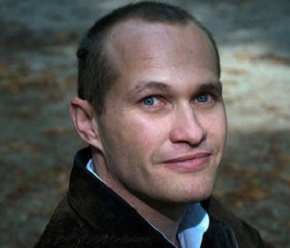
De Amerikaanse schrijver David Vann werd geboren op 19 oktober 1966 op Adak Island, Alaska. Zie ook alle tags voor David Vann op dit blog.
Uit: Legend of a Suicide
“My mother gave birth on Adak Island, a small hunk of rock and snow far out on the Aleutian chain, at the edge of the Bering Sea. My father was serving two years as a dentist in the Navy; he had wanted Alaska because he liked hunting and fishing, but he obviously had not known about Adak at the time of his request. Had my mother known, she would have scratched out the request herself. Given enough information, my mother has never made the wrong choice.
So it was that she refused to have her sweltering, jaundiced baby yanked out of Adak's underground naval hospital and thrown into the jet that sat waiting on the runway for more than six hours. Because my temperature was 105 degrees and still climbing, the doctors and my father recommended I be flown to the mainland, to a real hospital (no one on Adak survived even a mild heart attack while we were there — no one), but my mother refused. She was certain, with what my father always described as an animal, instinctive fear, that the moment I was borne aloft, I would perish. She placed me in an ordinary white bathtub filled with cold water, and there I survived. Flourished, even. My orange, blotchy skin gradually calmed to a healthy baby pink, my limbs unlocked, and I flailed my legs in the waters until she lifted me out and we both slept.
When my father had finished his sentence with the Navy, we moved to Ketchikan, an island in southeastern Alaska, where he bought a dental practice and, three years later, a fishing boat. The boat was a new twenty-three-foot Uniflite fiberglass cabin cruiser. Still wearing his dental smock beneath his jacket, he launched the boat late on a Friday afternoon as we cheered from shore. He slipped it into its stall in the docks, and the next morning he stood on the edge of those docks looking down thirty feet through clear, icy Alaskan water to where the Snow Goose sat like a white mirage on the rounded gray stones. My father had named it the Snow Goose because he had been filled with dreams of its white hull flying over the waves, but he had forgotten to put in the drain plugs the afternoon of the launching. Unlike my mother, he had neither eyes nor ears for matters below the surface.
That summer, as we flew back over the waves from a day of fishing (my father had had the Snow Goose raised and cleaned, proof that persistence sometimes can make up for a lack of vision), I would be on the open but high-sided back deck with the day's catch of halibut, flopping into the air with them each time my father sailed over one wave and smashed into the next. The halibut themselves lay flat, like gray-green dogs on the white deck of the boat, their large brown eyes looking up at me hopefully until I whacked them with a hammer.”
David Vann (Adak Island, 19 oktober 1966)
De Britse schrijver Philip Pullman werd geboren op 19 oktober 1946 in Norwich als zoon van een luchtmachtofficier. Zie ook alle tags voor Philip Pullman op dit blog.
Uit: Daemon Voices. On Stories and Storytelling
“The first responsibility to talk about is a social and financial one: the sort of responsibility we share with many other citizens—the need to look after our families and those who depend on us. People of my age will probably remember that wonderfully terrifying advertisement they used to have for Pearl Assurance. It told a little story which I used to read all the way through every time I saw it. When many years later I learned the meaning of the word catharsis, I realised what it was that I’d been feeling as I read that little story: I had been purged by pity and terror.
The advertisement consisted of five drawings of a man’s face. The first was labelled “At age 25,” and it showed a bright-eyed, healthy, optimistic young fellow, full of pep and vigour, with a speech balloon saying “They tell me the job doesn’t carry a pension.”
Each succeeding drawing showed him ten years older, and the speech balloons changed with each one. At forty-five, for example, he was looking sombre and lined and heavy with responsibility, and saying “Unfortunately, the job is not pensionable.” It ended with him at sixty-five: wrinkled, haggard, wild-eyed, a broken-down old man staring into the very abyss of poverty and decrepitude, and saying, “Without a pension I really don’t know what I shall do!”
Well, I’m not going to sell you a pension. I’m just going to say that we should all insist that we’re properly paid for what we do. We should sell our work for as much as we can decently get for it, and we shouldn’t be embarrassed about it. Some tender and sentimental people—especially young people—are rather shocked when I tell them that I write books to make money, and I want to make a lot, if I can.
When we start writing books we’re all poor; we all have to do another job in the daytime and write at night; and, frankly, it’s not as romantic as it seems to those who aren’t doing it. Worry—constant low-level unremitting anxiety about bank statements and mortgages and bills—is not a good state of mind to write in. I’ve done it. It drains your energy; it distracts you; it weakens your concentration. The only good thing about being poor and obscure is the obscurity—just as the only trouble with being rich and famous is the fame.
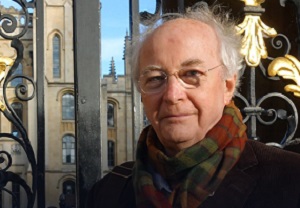
Philip Pullman (Norwich, 19 oktober 1946)
De Guatemalteekse dichter en schrijver Miguel Ángel Asturias werd geboren op 19 oktober 1899 in Guatemala-Stad. Zie ook alle tags voor Miguel Ángel Asturias op dit blog.
In the Light of the Goldthinking-Stars (Fragment)
The rain scorched the whites of his eyes,
the quicklime corneas,
in the presence of those who bejewel the earth
with water tattoos,
tattoos in motion, navigable tattoos,
Fluvial Tattooers;
before those who pearl the fields with tearful dust,
Tattooers of the Dew;
before those who set out to tattoo the beaches
with snails, sponges and sargassos,
the raucous skeleton of the sea,
Oceanic Tattooers;
before those who steal from serpentariums
tattoos that shorten distance
and move away the near,
Tattooers of Roads;
before the Tattooers of the Dusk,
their hands with handfuls of sunset clouds...
Before the Tattooers of the Night,
their hands with amulets of fire...
The Night, Nothingness and Life,
those Immense Widows
in the light of the Goldthinking-stars,
Emissaries who lost their way in the nickel sky,
without revealing their message,
and the Twohanded Tattooer
with his hollow pupils,
craters of extinct volcanoes
in the cemetery of his corneas,
on the move - Blinded by Fresh Rain,
those Blinded by Fresh Rain see what they dream -
in all the white shadow his steps provided,
his countless feet moving beneath the tunic woven
with amnesia of silkworms,
the silver-dust cloak in the wind at his shoulders,
to keep from losing the thread of the tattoo
when crossing the shadowy world
where touch is demagnetized
and one must dodge, transformed into dream,
jaguars forged of fire,
blue turkeys forged of sky,
corals of coral vipers,
breathless jades,
women cut into islands,
masks pockmarked with rubies,
skulls with teeth encrusted with jadeites,
horoscopes of breeze
and cities of white copal ,
until one emerges at respiration,
at respirations,
at scent,
at pollen,
at the calendar of ashes,
at the hailstorm of hieroglyphics...
Vertaald door Robert W. Lebling
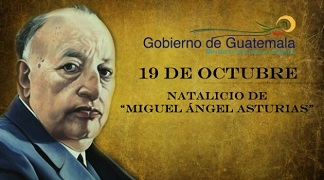
Miguel Ángel Asturias (19 oktober 1899 – 9 juni 1974)
De Amerikaanse schrijfster Fannie Hurst werd geboren op 19 oktober 1889 in Hamilton, Ohio. Zie ook alle tags voor Fanny Hurst op dit blog.
Uit: Back Street
“One evening in one of those Over-the-Rhine cafés which were plentiful along Vine Street of the Cincinnati of the nineties, a traveling salesman leaned across his stein of Moerlein’s Extra Light and openly accused Ray Schmidt of being innocent.
“I know! You’re one of those cheating girls who act fly but aren’t. You’ll lead a man on, but you won’t go all the way.”
At the implication and all that went with it, Ray’s hand flew to her tippet, color ran beneath her tan pallor, and as usual when under stress, she rolled her eyes and became flippant.
“Try me,” was what she said, with little sense of the outrageousness of such a remark.
“That’s exactly what I have been trying to do all evening,” said the traveling salesman who, having exhibited what was for him an unprecedented astuteness in his summary of Ray Schmidt, now leaned to pinch her knee softly underneath the table.
Ray was forever being pinched underneath tables. As far back as she could remember, as a child and then as a girl growing up on Baymiller Street, boys had been fond of pinching and pulling her toward them for kisses.
“Spooning” was not unpleasant, particularly in the evening, when somehow the boys’ faces receded out of a pimply reality into the velvet tunnels of Cincinnati’s low kind of darkness. With the boys whose faces persisted in jutting lumpily, even out of cover of nighttime, Ray simply had not the heart to follow the slightly disgusted impulse to push them away.
One “spooned” to be kind. It gave you the reputation of being “fly,” no doubt of that, particularly if, like Ray, you were endowed with that subtle womanish dimension known as “style.” Ray had that. When she even so much as walked past the Stag Hotel, skirts held up off the sidewalk with that ineffable turn of wrist which again denoted “style,” there was that in her demeanor which caused each male head and eye to turn.
Sometimes they made kissing sounds with their lips, past which she sailed with her head high.”
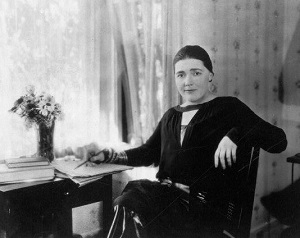
Fannie Hurst (19 oktober 1889 – 23 februari 1968)
De Engelse dichter, schrijver en essayist James Leigh Hunt werd geboren op 19 oktober 1784 in Southgate, Middlesex. Zie ook alle tags voor Leigh Hunt op dit blog.
The Olive Of Peace
Now sheath'd is the Sword that was wild as the blast:
The Tempest of Slaughter and Terror is past;
Old ALBION her Neighbour all smilingly hails—
For the OLIVE of PEACE blooms again in our Vales!
Beam on the day,
Thou Olive gay:
'Matchless is he
Who planted thee;
And mayst thou like him immortal be!'
Divinest of Olives, O, never was seen
A bloom so enchanting, a verdure so green!
Sweet, sweet do thy Beauties entwiningly smile
In the Vine-tree of France and the Oak of our Isle!
Beam on the day,
Thou Olive gay, &c.
Long, long did thy envied Exotic delay,
'Till the voice of HUMANITY charm'd thee away;
And here, ever here mayst thou bloom in repose,
As firm as our Oak-tree, and gay as the Rose!
Bloom on the day,
Thou Olive gay, &c.
Let ALCIDES his Poplar of Majesty prize,
And VENUS her Myrtle exalt to the skies:
FRANCE and ALBION excell all the Gods of old Greece—
For they crown their wise heads with the OLIVE of PEACE!
Bloom on the day,
Thou Olive gay, &c.
The delicate Lily may gracefully mount,
And the Pink all her charms with the Rainbow recount;
Green, green is the Olive on ALBION'S brow,
And the Lily and Pink to the Olive must bow!
Bloom on the day,
Thou Olive gay, &c.
Thou Olive divine, may Eternity's Sun
Beam warm where thy roots thro' the ages shall run;
The Dew of Affection 'light soft where they twine,
And the Love of an Universe stamp thee divine!
Bloom on the day,
Thou Olive gay:
'Matchless was he
Who planted thee;
And mayst thou like him immortal be!'
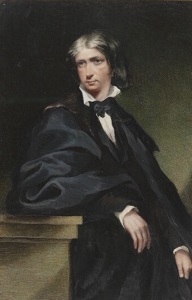
Leigh Hunt (19 oktober 1784 – 28 augustus 1859)
Portret door Margaret Gillies in de National Portrait Gallery, Londen, 1838-1846
De Surinaamse schrijver Nardo Aluman (eig. Ronald Renardo Aloema) werd geboren in Christiaankondre op 19 oktober 1946. Zie ook alle tags voor Nardo Aluman op dit blog.
Uit: Julawai / De strijd tussen goed en kwaad
“Bij het water aangekomen had hij toch wel spijt dat hij geen lamp had meegenomen, want het was pikdonker. Toen hij enkele ogenblikken genoot van de stilte van de nacht en aanstalten maakte om zijn lange blauwe kamisa (lendendoek) uit te trekken, kreeg hij het gevoel dat hij door iemand benaderd werd. Hij kreeg kippevel. Op korte afstand klonk ineens een mannenstem. De stem zei dat hij een goede vriend was. Julawai zag hoe in het donker een mannelijke figuur hem naderde. De stem vroeg of Julawai geen zin had om bij hem thuis te komen.
‘Er is voldoende eten en drinken thuis’, zei de onbekende. Julawai kon niet antwoorden, hij voelde zich lamgeslagen. Zijn oren begonnen te suizen. De omgeving werd donkerder voor hem. In zijn lichaam voelde hij geen botten meer. Ineens pakte de onbekende man hem bij zijn schouders en zette een hoofdtooi op zijn hoofd. Toen pas realiseerde Julawai zich dat er iets onheilspellends gebeurde, dat hij in de handen van een kwaadwillige gevallen was. Hij begon om hulp te schreeuwen. Zijn vrouw werd hierdoor wakker. Zij herkende de stem van haar man. Samen met andere dorpelingen holde zij naar de plaats des onheils. Ondertussen werd Julawai door de onbekende man bij zijn arm gepakt en gedwongen om mee te gaan. Vanaf het moment dat hij de hoofdtooi op zijn hoofd kreeg, kon hij alles weer helder zien. Hij zag dat de man die hem bij zijn arm vastpakte niet alleen was, maar dat er nog twee anderen bij waren. De drie mannen zagen er vriendelijk uit. Maar nog steeds vertrouwde Julawai de zaak niet en hij begon harder te roepen.
De Byjai, de vrouw van Julawai en enkele anderen waren inmiddels aan de waterkant aangekomen. Ze zagen Julawai niet, maar hoorden hem om hulp roepen. Met een olielamp op het hoofd zette het groepje koers in de richting van het geschreeuw. Julawai riep dat hij meegenomen werd door onbekenden. Sneller en sneller zetten ze de achtervolging in. Ze hadden al een behoorlijke afstand gelopen, toen ze het geroep van Julawai net enkele meters van hen vandaan hoorden. Julawai zag zijn vrouw aankomen, maar zijn vrouw en de anderen konden hem niet zien. Hij begreep toen dat hij onzichtbaar was gemaakt door zijn ontvoerders. De Byjai en zijn vrouw vroegen hem om terug te keren naar huis. Hij zei dat hij dat graag wilde, maar dat hij werd vastgehouden door drie mannen. De Byjai begreep dat Julawai door ewarumyn (boze geesten) onzichtbaar was gemaakt en dat hij nu in de ban was van de slechte geestelijke krachten van het oerwoud. Julawai sprak nog een laatste woord tot zijn vrouw. Hij zei dat alleen de hoofdtooi hem belemmerde om zichtbaar te zijn. De Byjai wist dat het zinloos was Julawai verder te volgen en dat ze beter naar het dorp konden terugkeren.”
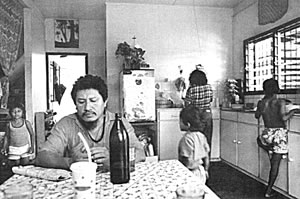
Nardo Aluman (Christiaankondre, 19 oktober 1946)
De Amerikaanse schrijver Andrew Vachss werd geboren op 19 oktober 1942 in New York. Zie ook alle tags voor Andrew Vachss op dit blog.
Uit: Blue Belle
“Spring comes hard down here. The switchman was in the lo-tus position—serenely posed on an army blanket he had neatly folded into quarters before he assembled his tools and took up his post for the day. A black man with glowing bronze skin, hair falling straight and glossy down either side of his head like a helmet, framing a face that was mostly skull. He held a thick pad of graph paper open on his lap, carefully filling a page with finely shaded symbols—a covert calligraphy all his own. He didn't bother to hide his work from passing citizens. His half-smile said it all—the simple slugs thought him insane; they could never understand the difference between the messenger and the message. A pale-blue quilt covered his shoulders. He placed three identical blue china bowls on the blanket around him. To his right, the bowl sported a generous supply of fine-point felt-tip pens in different colors. The bowl on his left held a heavy Zippo cigarette lighter and some loose cigarettes—various brands. Directly in front was a bowl with some coins, encouraging the passing citizens to make a contribution to his mystical cause.
He had long tapering fingers, clean and smooth, the nails man-icured and covered with clear polish. I got a good look at his hands yesterday when I stopped to look over his shoulder and watch him work. He filled a quarter of the page with symbols, never using the same one twice, working in five separate colors, not acknowledging my presence. I helped myself to one of his cigarettes, lit it with his lighter. He never moved. I tossed some coins into his china bowl and moved on, smoking his cigarette. It tasted like it was about my age. I didn't need the polished nails to tell me he was the switchman. The neighborhood is full of halfway houses for discharged mental patients—they disgorge their cargo into the streets each morning, but this guy wasn't part of that herd. He wasn't talking to himself and he hadn't tried to tell me his story. And he didn't look afraid. The little piece of winter chill still hanging around in April didn't seem to bother him. He worked the same post every day—starting around eleven in the morning and staying on the job until about three. The switchman had a choice spot, always setting up his shop at the edge of a tiny triangle of dirt on West Broadway, between Reade and Chambers. The slab of dirt had a couple of broken backless benches and a runty tree that had been bonsai'ed by years of attention from pigeons, dogs, squirrels, and winos. An alley without walls. Down in this part of the city, they call it a park. At eleven, he would still be in shadow, but the sun would make its move from the East River over to the Hudson past noon, and things would warm up.”
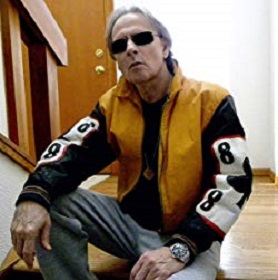
Andrew Vachss (New York, 19 oktober 1942)
De Britse schrijver John le Carré werd geboren op 19 oktober 1931 in Poole, Dorset, Engeland. Zie ook alle tags voor John le Carré op dit blog.
Uit: The Constant Gardener
“The news hit the British High Commission in Nairobi at nine-thirty on a Monday morning. Sandy Woodrow took it like a bullet, jaw rigid, chest out, smack through his divided English heart. He was standing. That much he afterwards remembered. He was standing and the internal phone was piping. He was reaching for something, he heard the piping so he checked himself in order to stretch down and fish the receiver off the desk and say, "Woodrow." Or maybe, "Woodrow here." And he certainly barked his name a bit, he had that memory for sure, of his voice sounding like someone else's, and sounding stroppy: "Woodrow here," his own perfectly decent name, but without the softening of his nickname Sandy, and snapped out as if he hated it, because the High Commissioner's usual prayer meeting was slated to start in thirty minutes prompt, with Woodrow, as Head of Chancery, playing in-house moderator to a bunch of special-interest prima donnas, each of whom wanted sole possession of the High Commissioner's heart and mind.
In short, just another bloody Monday in late January, the hottest time in the Nairobi year, a time of dust and water shortages and brown grass and sore eyes and heat ripping off the city pavements; and the jacarandas, like everybody else, waiting for the long rains.
Exactly why he was standing was a question he never resolved. By rights he should have been crouched behind his desk, fingering his keyboard, anxiously reviewing guidance material from London and incomings from neighboring African missions. Instead of which he was standing in front of his desk and performing some unidentified vital act -- such as straightening the photograph of his wife Gloria and two small sons, perhaps, taken last summer while the family was on home leave. The High Commission stood on a slope, and its continuing subsidence was enough to tilt pictures out of true after a weekend on their own.
Or perhaps he had been squirting mosquito spray at some Kenyan insect from which even diplomats are not immune. There had been a plague of "Nairobi eye" a few months back, flies that when squidged and rubbed accidentally on the skin could give you boils and blisters, and even send you blind.”
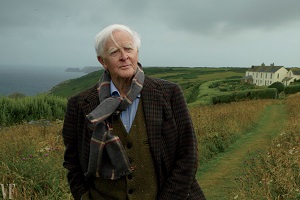
John le Carré (Poole, 19 oktober 1931)
De Australische dichter Adam Lindsay Gordon werd geboren op 19 oktober 1833 op de Azoren. Zie ook alle tags voor Adam Lindsay Gordon op dit blog.
Hippodromania; or, Whiffs from the Pipe
Part I: Visions In The Smoke (Fragment)
Rest, and be thankful ! On the verge
Of the tall cliff rugged and grey,
But whose granite base the breakers surge,
And shiver their frothy spray,
Outstretched, I gaze on the eddying wreath
That gathers and flits away,
With the surf beneath, and between my teeth
The stem of the 'ancient clay'.
With the anodyne cloud on my listless eyes,
With its spell on my dreamy brain,
As I watch the circling vapours rise
From the brown bowl up to the sullen skies.
My vision becomes more plain,
Till a dim kaleidoscope succeeds
Through the smoke-rack drifting and veering,
Like ghostly riders on phantom steeds
To a shadowy goal careering.
In their own generation the wise may sneer,
They hold our sports in derision ;
Perchance to sophist, or sage, or seer,
Were allotted a graver vision.
Yet if man, of all the Creator plann'd,
His noblest work is reckoned,
Of the works of His hand, by sea or by land,
The horse may at least rank second.
Did they quail, those steeds of the squadrons light,
Did they flinch from the battle's roar,
When they burst on the guns of the Muscovite,
By the echoing Black Sea shore ?
On ! on ! to the cannon's mouth they stride,
With never a swerve nor a shy,
Oh ! the minutes of yonder maddening ride,
Long years of pleasure outvie !
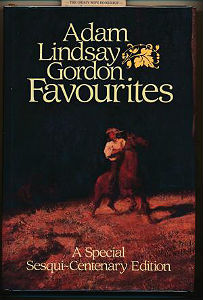
Adam Lindsay Gordon (19 oktober 1833 – 24 juni 1870)
Cover
Zie voor nog meer schrijvers van de 19e oktober ook mijn blog van 19 oktober 2011 deel 1 en eveneens deel 2.


