Naar de inhoud

Romenu

Over literatuur, gedichten, kunst en cultuur
akke.beakke.be

Berichten van 6 december 2018 tot 7 december 2018

Tatamkhulu Afrika, Dirk Stermann, Johann Nestroy, Joyce Cary, Gabriel Marcel, Willa Cather, Noam Chomsky, Friedrich Schlögl, Samuel Gottlieb Bürde
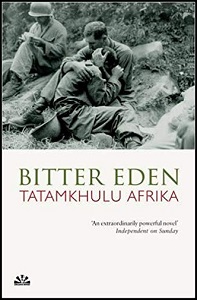
De Zuid-Afrikaanse dichter en schrijver Tatamkhulu Afrika werd geboren op 7 december 1920 in Egypte. Zie ook alle tags voor Tatamkhulu Afrika op dit blog.

Uit: Bitter Eden

“Down at the dead end of the beach, I wash my face in the tideless sea, stare out over the still darkened warm-as-blood water to the skyline that has become a cage's prohibi-tive ring, go back, then, to the higher, now sunlit land where silent men are smashing rifles over rocks with the fe-rocity of those who wrestle serpents with their bare hands. I pass what is clearly an officer's tent. It is dug in until only the ridge shows, neat steps leading down. Outside, a batman is washing a china plate, saucer, cup, his pug-dog peasant's face seemingly unconcerned, but it does not raise from its staring down at the trembling of the hands. I pass another tent sunk in the sand. Again the ubiqui-tous robot's playing games, denying midnight now. Fren-ziedly the hands polish the buttons on an officer's tunic, button-stick inserted round the buttons so that the Brasso will not whiten the sullen cloth, bring upon the hands a comic wrath. The tunic's shoulder flaps flaunt a crown. I am thinking 'Christr, beating back bile. He is coming towards me, studying the anonymity of my fatigues, two pips glinting on his shoulders, sandy hair lifting in the awakening wind. The hair, the prissy pursing of the lips, the button mushroom eyes, warn of the worst of the breed and I snap him my still smart training college salute. He floppy-chops an arm back, barks, 'Unit and rank?' I think to tell him I am Colonel this-or-that because how would he — now — ever find out otherwise, but the solemnness in the air like bells' dissuades me and I say, 'Ser-geant. Second Divisional Headquarters. Sir!' His eyes widen a little as he balances between surprise and what I suspect is a chronic tendency to disbelieve. 'Div. H.Q? What do you do at Div. H.Q.?' There is a slight em-phasis on the 'you'. `Chemical Warfare Intelligence and Training. Sir!' He is impressed and it shows in a slight inclining to me of stance and tone, and something like a greediness of the eyes, which makes no sense and which I dismiss as a stress-induced fancifulness of the mind. `Do you want to hand yourself over like a sheep or make a break?' His voice is casual but his glance is sharp and I hear myself saying, 'Make a break,' even though previously there had been no thought of that in my mind. I am honest enough to admit that I am no hero and, even now, I am painfully aware that my excitement at the prospect of escape only slightly exceeds my congenital dread. `Get in that truck then,' he says and indicates a battered three-tonner a few paces off. 'Where's your kit? Are you armed?' `No kit, sir. No arms.' Even as the words still sound, I realize what I'm saying and I hump not my kit but my shame as I for the first time am faced by the fact that I never even thought of retrieving my kit from the anti-gas truck before I set the latter alight.“


 2198877-cf6e19b890856fed735a997a744eff53.jpg
Tatamkhulu Afrika (7 december 1920 – 23 december 2002)
Cover


De Duits-Oostenrijkse schrijver, presentator en cabaretier Dirk Stermann werd geboren op 7 december 1965 in Duisburg. Zie ook alle tags voor Dirk Stermann op dit blog.

Uit: Kurz & Klein

„Mein Name ist Caspar. Manchmal gehe ich gern in den Wald. Manchmal aber auch nicht. Im Wald da gibt es Bäume. Ich kenne Eichen und Fichten und die Bäume, die man zu Weihnachten in die Häuser stellt. Die heißen Tannen. Die meisten Bäume sind ganz schön hoch, es gibt aber auch welche, die sind nicht so hoch. Wenn die Hohen umkippen, muss man ganz schnell in Deckung gehen, weil sonnst hauen die einen um. Ich hab deswegen Angst vor den hohen Bäumen. Die Kleinen sind ja nicht so schlimm. Wenn die umkippen. find ich das lustig. Meine Freunde und ich machen das oft. Im Wald da gibt es sonnen Tümpel oder so und da drin sind Frösche. Viele Frösche. Denen stecken wir ein Strohhalm hinten rein und blasen die dann auf. Die werden dann ganz dick, dann kann man Fußball mit den spielen. Wer den dicksten bläst, hat gewonnen. Meistens gewinn ich nie nicht, :aber manchmal doch. Da gibt es auch noch so andere Tiere, die erschrecken wir immer. Man braucht nur in die Hände klatschen, dann hauen die schon ah. So feige sind die. Der Michael ist mein Freund und hat gesagt, daß er Tiere doof findet. Das find ich nicht. Ich finde, man kann sie ja immerhin aufblasen und erschrecken und so. Und viele Menschen haben ja auch Tiere zu Hause. Nicht nur Weihnachten wie die Tannen, sondern ich glaub immer. Aber das sind ja auch ganz andere Tiere. Nicht so richtige. Die beißen einen ja auch. Michael wurde neulich von einem gebissen. Der mußte dann ins Krankenhaus und da haben die den mit einer Nadel und einem Nähgarn genäht. Ich glaub, ich find Tiere doch doof. Am liebsten spiele ich bei uns auf der Straße.“

 

 2198877-b56bff8396145cdf6d0992ab36e2da06.jpg
Dirk Stermann (Duisburg, 7 december 1965)


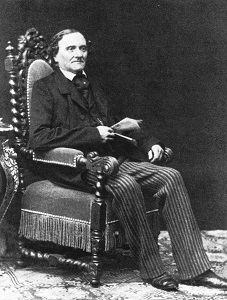
De Oostenrijkse dichter en schrijver Johann Nepomuk Eduard Ambrosius Nestroy werd geboren in Wenen op 7 december 1801. Zie ook alle tags voor Johann Nestroy op dit blog.


K.-Jammer

Diese graue Wolkenschar
Stieg aus einem Meer von Freuden;
Heute muß ich dafür leiden,
Daß ich gestern glücklich war.

Ach, in Wermut hat verkehrt
Sich der Nektar! Ach, wie quälend,
Katzenjammer, Hundeelend
Herz und Magen mir beschwert!


Ein steiler Felsen ist der Ruhm

Ein steiler Felsen ist der Ruhm,
Ein Lorbeerbaum wächst darauf.
Viel kraxeln drum und dran herum,
Doch wenig kommen 'nauf;
Darneben ist ein Präzipiß,
's geht kerzengrad hinab,
Da drunnt' ein Holz zu finden is,
Es heißt der Bettelstab.

Wer nicht enorm bei Kräften is,
Soll nicht auf'n Felsen steig'n.
Er rutscht und fallt ins Präzipiß,
Viel Beispiel tun das zeig'n…
Die Mittelstraßen ist ein breiter Raum,
Die Fahrt kommod talab,
Es wachst zwar drauf kein Lorbeerbaum,
Doch auch kein Bettelstab.


Heute ist Tag der Lyrik

O Knute, o Knute!
Die schwingen man tute,
Machst Wirkung sehr gute
Bei frevelndem Mute.
Was dem Kinde die Rute,
Ist dem Volke die Knute;
Du stillest die Wute
Rebellischem Blute.
Das alles, das tute
Die Knute, die Knute!
Wehalb ich mich spute,
In einer Minute
Poetischer Glute
Schrieb ich an die Knute
Dies Gedichtchen, dies gute.
 

 2198877-3ee48c0aa6ea21363a5cef0a183f6ebc.jpg
Johann Nestroy (7 december 1801 – 25 mei 1862) 


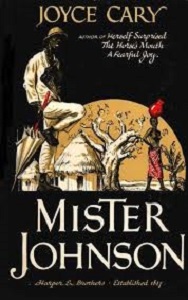
De Brits – Ierse schrijver Arthur Joyce Lunel Cary werd geboren op 7 december 1888 in Derry, Ierland. Zie ook alle tags voor Joyce Cary op dit blog.

Uit: Mr. Johnson

“No officer who has ever commanded a Nigerian company can forget the Hausa Farewell, that tune upon the bugles played as he rides away for the last time. But I don't know why, having met and greeted plenty of veterans, I remember so vividly that scene on the parade ground—perhaps only because I was taken by surprise, I can still see the sergeant's face, the men running; I can't forget their grins (and laughter—an African will laugh loudly with pleasure at any surprise), the hands stretched out, the shouts of greeting from the back where some young and short soldier felt excluded. It is not true that Africans are eager but fickle. They remember friendship quite as long as they strongly feel it.
As for the style of the book, critics complained of the present tense. And when I answered that it was chosen because Johnson lives in the present, from hour to hour, they found this reason naïve and superficial. It is true that any analogy between the style and the cast of a hero's mind[Pg 8] appears false. Style, it is said, gives the atmosphere in which a hero acts; it is related to him only as a house, a period, is related to a living person.
But this, I think, is a view answering to a critical attitude which necessarily overlooks the actual situation of the reader. For a critic, no doubt, style is the atmosphere in which the action takes place. For a reader (who may have as much critical acumen as you please, but is not reading in order to criticize), the whole work is a single continuous experience. He does not distinguish style from action or character.
This is not to pretend that reading is a passive act. On the contrary, it is highly creative, or recreative; itself an art. It must be so. For all the reader has before him is a lot of crooked marks on a piece of paper. From those marks he constructs the work of art which conveys idea and feeling. But this creative act is largely in the subconscious. The reader's mind and feelings are intensely active, but though he himself is fully aware of the activity (it is part of his pleasure) he is absorbed, or should be absorbed, in the tale. A subconscious creative act may be a strange notion, but how else can one describe the passage from printer's ink into active complex experience. After all, a great deal of rational and constructive activity goes on in the subconscious. We hear of people who dream solutions of difficult mathematical problems. “
 2198877-681b1c8a5ec10982a7fe9fa87415374e.jpg
Joyce Cary (7 december 1888 – 29 maart 1957)
Cover


De Franse filosoof en toneelauteur Gabriel Marcel werd geboren op 7 december 1889 in Parijs. Zie ook alle tags voor Gabriel Marcel op dit blog.

Uit:The mystery of being

“One might note here, in passing, that in our modern world, because of its extreme technical complication, we are, in fact, condemned to take for granted a great many results achieved through long research and laborious calculations, research and calculations of which the details are bound to escape us.
One might postulate it as a principle, on the other hand, that in an investigation of the type on which we are now engaged, a philosophical investigation, there can be no place at all for results of this sort. Let us expand that: between a philosophical investigation and its final outcome, there exists a link which can not be broken without the summing up itself immediately losing all reality. And of course we must also ask ourselves here just what we mean, in this context, by reality.
We can come to the same conclusions starting from the other end. We can attempt to elucidate the notion of philosophical investigation directly. Where a technician, like the chemist, starts off with some very general notion, a notion given in advance of what he is looking for, what is peculiar to a philosophical investigation is that the man who undertakes it cannot possess anything equivalent to that notion given in advance of what he is looking for. It would not, perhaps, be imprecise to say that he starts off at random ; I am taking care not to forget that this has been sometimes the case with scientists themselves, but a scientific result achieved, so to say, by a happy accident acquires a kind of purpose when it is viewed retrospectively ; it looks as if it had tended towards some strictly specific aim. As we go on we shall gradually see more and more clearly that this can never be the case with philosophic investigation.
On the other hand, when we think of it, we realize that our mental image of the technician of the scientist, too, for at this level the distinction between the two of them reaches vanishing point is that of a man perpetually carrying out operations, in his own mind or with physical objects, which anybody could carry out in his place. The sequence of these operations, for that reason, can be schematized in universal terms. I am abstracting here from the mental gropings which are inseparable, in the individual scientist s history, from all periods of discovery. These gropings are like the useless roundabout routes taken by a raw tourist in a country with which he has not yet made himself familiar. Both are destined to be dropped and forgotten, for good and all, once the traveller knows the lie of the land.”
 

 2198877-2df984edd4cb51a4ca2a87670df1e1a3.jpg
Gabriel Marcel (7 december 1889 – 8 oktober 1973)
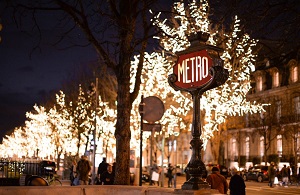
Parijs in de Adventstijd


De Amerikaanse schrijfster Willa Cather werd geboren op 7 december 1873 in de buurt van Winchester, Virginia. Zie ook alle tags voor Willa Cather op dit blog.

Uit:Behind the Singer Tower

“It was a hot, close night in May, the night after the burning of the Mont Blanc Hotel, and some half dozen of us who had been thrown together, more or less, during that terrible day, accepted Fred Hallet's invitation to go for a turn in his launch, which was tied up in the North River. We were all tired and unstrung and heartsick, and the quiet of the night and the coolness on the water relaxed our tense nerves a little. None of us talked much as we slid down the river and out into the bay. We were in a kind of stupor. When the launch ran out into the harbor, we saw an Atlantic liner come steaming up the big sea road. She passed so near us that we could see her crowded steerage decks.
"It's the Re di Napoli," said Johnson of the "Herald." "She's going to land her first cabin passengers to-night, evidently. Those people are terribly proud of their new docks in the North River; feel they've come up in the world."
We ruffled easily along through the bay, looking behind us at the wide circle of lights that rim the horizon from east to west and from west to east, all the way round except for that narrow, much-traveled highway, the road to the open sea. Running a launch about the harbor at night is a good deal like bicycling among the motors on Fifth Avenue. That night there was probably no less activity than usual; the turtle-backed ferryboats swung to and fro, the tugs screamed and panted beside the freight cars they were towing on barges, the Coney Island boats threw out their streams of light and faded away. Boats of every shape and purpose went about their business and made noise enough as they did it, doubtless. But to us, after what we had been seeing and hearing all day long, the place seemed unnaturally quiet and the night unnaturally black. There was a brooding mournfulness over the harbor, as if the ghost of helplessness and terror were abroad in the darkness. One felt a solemnity in the misty spring sky where only a few stars shone, pale and far apart, and in the sighs of the heavy black water that rolled up into the light. The city itself, as we looked back at it, seemed enveloped in a tragic self-consciousness.”

           

 2198877-ba9b95ae25768bf3dd29ee3af0ce5869.jpg
Willa Cather (7 december 1873 – 24 april 1947)
Cover


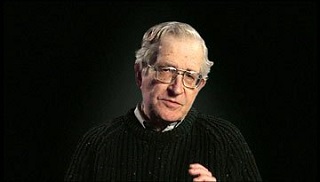
De Amerikaanse taalkundige, mediacriticus en anarchistisch denker Noam Chomsky werd geboren in Philadelphia op 7 december 1928. Zie ook alle tags voor Noam Chomsky op dit blog.

Uit: Propaganda, American-style

“Like the Soviets in Afghanistan, we tried to establish a government in Saigon to invite us in. We had to overthrow regime after regime in that effort. Finally we simply invaded outright. That is plain, simple aggression. But anyone in the U.S. who thought that our policies in Vietnam were wrong in principle was not admitted to the discussion about the war. The debate was essentially over tactics.
Even at the peak of opposition to the U.S. war, only a minuscule portion of the intellectuals opposed the war out of principle--on the grounds that aggression is wrong. Most intellectuals came to oppose it well after leading business circles did--on the "pragmatic" grounds that the costs were too high.
Strikingly omitted from the debate was the view that the U.S. could have won, but that it would have been wrong to allow such military aggression to succeed. This was the position of the authentic peace movement but it was seldom heard in the mainstream media. If you pick up a book on American history and look at the Vietnam War, there is no such event as the American attack on South Vietnam. For the past 22 years, I have searched in vain for even a single reference in mainstream journalism or scholarship to an "American invasion of South Vietnam" or American "aggression" in South Vietnam. In America's doctrinal system, there is no such event. It's out of history, down Orwell's memory hole.
If the U.S. were a totalitarian state, the Ministry of Truth would simply have said, "It's right for us to go into Vietnam. Don't argue with it." People would have recognized that as the propaganda system, and they would have gone on thinking whatever they wanted. They would have plainly seen that we were attacking Vietnam, just as we can see the Soviets are attacking Afghanistan.
People are much freer in the U.S., they are allowed to express themselves. That's why it's necessary for those in power to control everyone's thought, to try and make it appear as if the only issues in matters such as U.S. intervention in Vietnam are tactical: Can we get away with it? There is no discussion of right or wrong.
During the Vietnam War, the U.S. propaganda system did its job partially but not entirely. Among educated people it worked very well. Studies show that among the more educated parts of the population, the government's propaganda about the war is now accepted unquestioningly. One reason that propaganda often works better on the educated than on the uneducated is that educated people read more, so they receive more propaganda. Another is that they have jobs in management, media, and academia and therefore work in some capacity as agents of the propaganda system--and they believe what the system expects them to believe. By and large, they're part of the privileged elite, and share the interests and perceptions of those in power.”
 

 2198877-d16dec32705dd81ed992141056f8de19.jpg
Noam Chomsky (Philadelphia, 7 december 1928)


De Oostenrijkse schrijver en columnist Friedrich Kilian Schlögl werd geboren op 7 december 1821 in de Weense voorstad Laimgrube (nu Wenen). Zie ook alle tags voor Friedrich Schlögl op dit blog.

Uit: Veni sancte spiritus! (Wiener Blut)

„Das war mir immer ein Räthsel; warum soll die Furcht der Anfang der Weisheit sein, wenn gerade die unverschämtesten Subjecte in diesem Jammerthale am klügsten fahren, und warum will die Menschheit überhaupt weise werden, wenn doch unstreitig die allerdümmsten ihrer Genossen zeitlebens vom Glücke begünstigt bleiben?
Aber man drillt uns fort und fort nach dem altmodischen Muster und mir drillen wieder unsere Sprößlinge, nur recht »weise« zu werden, und wir wissen nicht genug »lehrreiche« Bücher aufzutreiben, die die stupendeste Weisheit in brochürtem Zustande auf so und so vielen Druckbogen enthalten, welche Weisheit, in mäßige Dosen (Lectionen) vertheilt, löffel(seiten)weise genossen, den Lernbegierigen nach dem aufliegenden Schulprogramme in der gesetzlich bemessenen Zeit so vollkommen »reif« macht, daß er augenblicklich z. B. Verwaltungsrath der Lemberg-Czernowitzer Bahn, oder einer beliebigen, selbst der dunkelsten Bank werden könnte, wenn die bezüglichen Posten nicht von anderen »Reifen« bereits besetzt wären.
Sei es wie es sei; aber die letzte Septemberwoche war mir stets ein tragikomisches Kaleidoskop, wenn ich sah, wie sich Alt und Jung für den ersten oder abermaligen Schulanfang rüstet und welche kostspieligen Apparate mitunter benützt werden, um das junge Reis zu einem fruchtbringenden Baume, den unwissenden Knirps zu einem soi-disant »nützlichen Staatsbürger« heranzubilden. Welche herbe Opfer werden da oft gebracht und welch' Schweiß klebt, um mich recht unbildlich auszudrücken, an diesen, außerdem noch mit einem Agio belasteten Banknoten, welche die obligaten Vehikel der Gelehrsamkeit, genannt Schulbücher, verschlingen.
Nun fällt mir nichts weniger ein, als gegen den in unserer wissenschaftlich gemäßigten Zone ohnehin nur sporadisch auftretenden »Büchereinkauf« zu predigen. Meine geehrten Landsleute treiben den Büchersport bekanntlich nur in zahmster Weise und die wenigen bibliothekarischen Dilettanten, welche die Metropole des Backhendlthums birgt, gehören zu den kulturhistorischen Curiositäten. Ja selbst die wohlhabendere Classe des Bürgerstandes findet es überhaupt meist »unbegreiflich«, für ein Buch – Geld auszulegen, und wenn z. B. der lebenslustige Hausherr X. und sein »Aeltester«, sich nicht lange besinnen, ihrem Leibfiaker einen Viertel Eimer Bier zu zahlen, falls es diesem gelingt, sie in fünfundsechzig Minuten von Schottenfeld zum »rothen Stadl« zu führen, so werden sie sicher die Zumuthung, etwa »Goethe's Faust«, nach der neuen Classiker-Verschleuderung um zwanzig Kreuzer zu kaufen, für eine unnöthige »Geldverschwendung« erklären.“
 

 2198877-42a41b655306f43e1744600932ae9b12.jpg
Friedrich Schlögl (7 december 1821 – 7 oktober 1892)
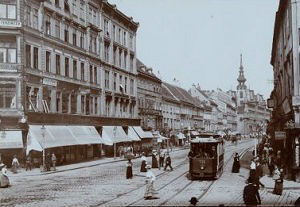
Laimgrube (Wenen) Mariahilfer Straße, 1901


De Duitse dichter Samuel Gottlieb Bürde werd geboren op 7 december 1753 in Breslau. Zie ook alle tags voor Samuel Gottlieb Bürde op dit blog.


Wir gönnen jedem Glücklichen

Wir gönnen jedem Glücklichen
des Reichtums goldnen Fund;
er sei nicht stolz, noch poch er drauf,
das Glück geht unter und geht auf.
Sein Fußgestell ist rund.

Der Redliche, mit dem das Glück
stiefmütterlich es meint,
der seinem Schiffbruch kaum entschwimmt,
und nackend ans Gestade klimmt,
der finde einen Freund!


Freut euch des Herrn, ihr Frommen

Freut euch des Herrn, ihr Frommen,
und heißt mit lautem Jubelruf
das junge Jahr willkommen
und preist ihn, der den Frühling schuf!
Seht, wie im Blumenkleide
die Wiese lieblich prangt!
Nur der fühlt wahre Freude,
der Gott von Herzen dankt.
Auf, jeder pflügt und säe und singe froh dazu:
Ehr' sei Gott in der Höhe, auf Erden Fried und Ruh!
 

 2198877-6e8a4f9252f5c973b5c7dcb3bc225f6c.jpg
Samuel Gottlieb Bürde (7 december 1753 – 28 april 1831)
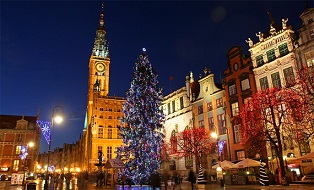
Breslau – Pools: Wrocław, in de Adventstijd (Geen portret beschikbaar)


Zie voor nog meer schrijvers van de 7e december ook mijn blog van 7 december 2014 deel 2.

Geschreven door Romenu om 18:51 Reageer op dit bericht

Karl Ove Knausgård, Peter Handke, Yolanda Entius, Rafał, Wojaczek, Henk van Woerden, Alfred Joyce Kilmer, Sophie von La Roche, Paul Adam, Charlotte Wood

De Noorse schrijver en vertaler Karl Ove Knausgård werd geboren in Oslo op 6 december 1968. Zie ook alle tags voor Karl Ove Knausgård op dit blog.

Uit: Engelen vallen langzaam (Vertaald door Marianne Molenaar)

“Dit argument, dat Thomas van Aquino verder uitwerkte en verfijnde, gaat echter uit van de veronderstelling dat de verhouding tussen de engelen en het licht niet alleen metaforisch van aard is, zoals algemeen wordt aangenomen, maar dat ze ook op gecompliceerde wijze met elkaar verweven zijn, bijna identiek. Licht is niet gelijk engelen, maar engelen is gelijk licht. Hoe mooi deze gedachte ook is en hoeveel ze ook over de aard van de engelen zegt, ze voldoet helaas niet. Licht is slechts een van de vele verschijningsvormen van de engelen, zoals uit de Bijbel blijkt, en waarom zou juist die als benaming zijn gebruikt toen deze volmaakte, door God uitverkoren schepselen ontstonden? Omdat ze in hun buitenaardsheid beschreven noch begrepen kunnen worden? In dat geval is het toch merkwaardig dat ze vlak daarna, in het verhaal over de tuin van Eden, zonder enige schroom met name worden genoemd en dat ze daar, de allereerste keer dat de engelen direct in de Schrift worden vermeld, zo concreet en resoluut present zijn dat ze met zwaarden zijn uitgerust. Daarom geloof ik dat Hiëronymus gelijk had met zijn bewering en dat de engelen niet in het scheppingsverhaal worden genoemd omdat ze toen al bestonden. In hoeverre ze altijd al hadden bestaan, zoals bijvoorbeeld Antinous Bellori beweerde, is natuurlijk onmogelijk met zekerheid te zeggen. Uberhaupt is alles wat de engelen betreft in een soort vage nevel gehuld: we weten niet wanneer ze zijn ontstaan, we weten niet waar ze vandaan komen, we weten niet welke eigenschappen ze bezitten, hoe ze denken of wat ze zien als ze ons zien. Anderzijds zijn ze in de hele Bijbel met een soort vertrouwdheid omgeven alsof hun aanwezigheid zo vanzelf spreekt dat er geen verdere verklaring nodig is. Deze ambivalentie ligt voor de hand, aangezien het belangrijkste kenmerk van de engelen is dat ze tot twee werelden behoren en de ene altijd meenemen naar de andere. Dat wordt nergens zo duidelijk als in het verhaal over de val van Sodom en Gomorra. Ze hebben iets vreemds — zodra Lot hen 's avonds voor de stadspoort ziet, holt hij hun tegemoet en buigt hij zich voor hen in het stof — maar ook iets vertrouwds, want vlak daarop nodigt hij hen uit bij zich thuis, hij bakt brood en maakt een maaltijd voor hen klaar, die ze nuttigen. Waarschijnlijk komt het door bovengenoemde vertrouwdheid dat de schrijver het niet nodig vindt de situatie uitvoeriger te beschrijven. Aan een tafel in een keuken in Sodom zitten twee engelen te eten, door God gezonden om het lot van de stad te bezegelen, haar eventueel te verwoesten, en we krijgen niets te horen over de sfeer, over hoe ze eruitzien, wat ze tegen elkaar zeggen.”


 2198500-898c1a4d73660ffbb505b89048dab7be.jpg
Karl Ove Knausgård (Oslo, 6 december 1968)
Cover


De Oostenrijkse schrijver Peter Handke werd op 6 december 1942 in Griffen in Karinthië geboren. Zie ook alle tags voor Peter Handke op dit blog.

Uit: Kali: Eine Vorwintergeschichte

„Ab und zu hat sich ein Gesicht aus der Menge von außen den Scheiben genähert, anfänglich mit einem neugierigen Starren, das sich angesichts der Passagierin drinnen jeweils in ein Staunen verwandelte, wozu ein sofortiges Zurückweichen gehörte. Der Fahrer ist ein noch junger Mann, als eine Art Uniform weiße Handschuhe, und eine Kappe, die sie ihm gleich abnahm, so wie sie auch auf der Stelle das Radio abschaltete,was beides zu einem gemeinsamen Ritual zu gehören schien.
Und etwa so läßt sich der Fahrer dann hören: »Zu Ihrem Abschied von unserem Land möchte ich Ihnen etwas sagen. Ich war in allen IhrenKonzertenhier.IhrletztesKonzertheute war etwas ganz Besonderes. Aber auch die anderen Abende waren etwas Besonderes und, ich weiß das, nicht bloß für mich.Sie wollen einem mit ihrem Musizieren etwas geben.Auch wenn Sie zeitweise stumm sind und ich Sie nur noch in der Einbildung höre, geben Sie, entäußern Sie sich, teilen Sie sich auf für unsereinen – oft gerade dann.Ohne sich zu verausgaben, geben Sie, und wie. Oder nein: Sie verausgaben sich doch,wie nur je ein Musiker, aber so anders als die Musiker, die ich kenne, und ich kenne sie alle, alle. Auch die möchten geben, sich selber. Sie aber geben nichts, rein gar nichts von sich selber, sondern ich weiß nicht was. Es geht bei Ihnen keinen Ton oder Takt lang um Ehrlichkeit,oder gar Wahrheit, sondern um – ich weiß nicht was. Ich habe mir abgewöhnt, Wir zu sagen. Ich habe mir jedes Wir sogar verboten. Aber Ihre Musik hat mein Wir neubelebt. Wir, ja, wir sind von Ihren Konzerten gemeinsam weggegangen, ein jeder in seine Richtung, oder, umso besser, in gar keine Richtung, bloß keine Richtung, und bloß nicht nachhause.«


 2198500-cb79acf29223d593d0ac56cdbe147838.jpg
Peter Handke (Griffen, 6 december 1942)


De Nederlands schrijfster en actrice Yolanda Entius werd geboren in Den Haag op 6 december 1961. Zie ook alle tags voor Yolanda Entius op dit blog.

Uit: Abdoel en Akil 

“Augustus 1978. Met zware rugzakken op hun schouders liepen Gaby, Doris en Nola langs de oever van de Ouvèze. Meer dan een etmaal hadden ze in een overvolle trein naar het zuiden gezeten. Vanaf Orange hadden ze de bus naar Vaison-la-Romaine genomen vanwaar ze, bij gebrek aan geld voor een taxi, over het plakkende asfalt naar de camping liepen. Zweet sijpelde van Nola’s voorhoofd en prikte in haar ogen. Haar rugzak trok aan haar schouders en kleefde aan haar rug. In de verte, aan de andere kant van de trillende lucht boven het wegdek, kon ze het hek van de camping al zien. Nog een minuutje of tien en dan waren ze er. Ze had dorst en hoofdpijn van de stank van smeltend asfalt en zette er flink de pas in. Achter haar zuchtte Doris en vloekte Gaby: Nola ging, vonden zij, veel te hard. Vanaf de oever van de rivier hoorde ze iemand fluiten. Fjietfjieuw, en toen nog eens: fjietfjieuw!
Daar zat een man in de schaduw van de openstaande achterklep van een Renault die tussen het zand, de dorre struiken en de gladgeslepen keien stond. Hij was eind twintig, had een woest stoppelbaardje, door de zon gebleekt haar, lichtblauwe ogen en hij droeg een linnen overhemd dat een inkijk bood op zijn bruinverbrande borstkas. Hij stak zijn hand op, heel rustig, en lurkte aan een sigaret. Het lag niet in Nola’s aard te stoppen voor fluitende mannen, maar omdat hij zo kalm was en terughoudend – benen over elkaar, zijn opgestoken hand, de sigarettenrook die als een wolkje vrede richting hemel kringelde – minderde ze vaart en bleef, toen hij vroeg of ze haast had, staan.
‘Nee,’ zei ze, ‘geen haast, het is alleen nogal warm.’
Hij knikte. Ze keek achterom. Ook Gaby en Doris waren blijven staan.
Waar gaat de reis naartoe?’ vroeg hij.
‘Naar de camping,’ zei Gaby.
‘Les Trois Rivières ‘Willen jullie niet liever een roseetje met me drinken?’
Uitnodigend wees hij naar de rivier achter hem waar het water bruisend tussen de stenen stroomde. ‘Hij staat koud.’
‘Zullen we gewoon doorlopen.’ Geërgerd probeerde Doris een steentje uit het asfalt te schoppen.
‘Ik heb wel zin,’ zei Gaby luchtig, ‘jij?’
Nola haalde haar schouders op.
‘Weet je wat dat kost, die camping?’ vroeg de man.
‘Geen idee,’ zei Gaby.
Doris begon ongeduldig te worden.‘Verdomme,’ siste ze, ‘ik heb hier helemaal geen zin in.’ Maar Gaby had de heupband van haar rugzak al losgegespt waarna de man zijn sigaret in het zand gooide. Hij kwam overeind en liep naar hen toe. Hij stak zijn hand uit. ‘André,’ stelde hij zich voor.”


 2198500-c7ae58449c73ef641d90ac096b8724c0.jpg
Yolanda Entius (Den Haag, 6 december 1961)


De Poolse dichter Rafał Wojaczek werd geboren in Mikołów op 6 december 1945. Zie ook alle tags voor Ralf Wojaczek op dit blog.

Five Sentences About Hair

1.
Hair is sad: the brain haunted by
Proud madness doesn't care for it anymore

2.
Hair is silent when the brain is cosmically
Sawed by the long fiddlebow of spheres

3.
Hair falling out: though proud
When hungry the brain eats its roots

4.
Lonely hair: the brain isn't here
Neither in the sky nor on the Earth

5.
Triumphant hair: it has guessed that
There is no brain because - rats have eaten it!


Vertaald door Jan J. Kałuża


 2198500-4b49f7151fd4b616f7573b91fb8e5bca.jpg
Rafał Wojaczek (6 december 1945 – 11 mei 1971)


De Nederlandse schrijver en schilder Henk van Woerden werd op 6 december 1947 geboren te Leiden. Zie ook alle tags voor Henk van Woerden op dit blog.

Uit: De Turken zijn barbaren. Enkele brieffragmenten van Henk van Woerden

“Istanboel, 16 [september 1970]
Liefste Linda en Nicole,
Ik sprak in het Grieks met een Turk wiens familie eerder deze eeuw Kreta afgegooid was. Hij was uitgerekend over Kreta enorm enthousiast. Blijkbaar zijn er verschillende dorpjes aan de kust bij de zee van Marmara, ten westen van Istanboel, en ook aan de westkust, vooral Smirna, die voornamelijk bestaan uit voormalige Kretenzer gemeenschappen - waar je heen kan gaan om te luisteren naar oude mannen die nostalgisch vertellen. Deze man kwam zelf uit Chania. Er lopen mensen door de straten van Athene die zich de straten van Smirna herinneren. Er lopen mannen door de straten van Smirna die zich Herakleion herinneren. De Turken zijn arrogant tegenover buitenlanders - antagonistisch tegenover toeristen. Op elke straathoek staan kleine mannetjes hasj te verkopen. Clive kan er niet tegen: hij heeft er een hekel aan als hij wordt aangezien voor een hippie, en dat levert blasfemische en obscene uitwisselingen op. Toch zijn ze (de Turken) aardig voor katten en kinderen. Ik stond een keer per ongeluk op een kat - in Griekenland zouden ze dat juist opzoeken.
Gisteravond, terwijl we een ‘na-gileh’ (een Turkse waterpijp) aan het roken waren, wat we regelmatig doen, als de rups in Wonderland - maar zonder paddenstoelen, zelfs niet in de pijp, spraken we met een Turkse chirurg die geen chirurg kon zijn aan zijn handen te zien, hij was een charlatan. Schaamteloos liegen komt heel natuurlijk voor Turken - ik geloof dat Perzen geen gevoel voor eerlijkheid hebben, het concept lijkt hen vreemd.”


 2198500-3db023d8ee7af9953b090ceb0896e5d2.jpg
Henk van Woerden (6 december 1947 – 16 november 2005)
Leiden in de Adventstijd


De Amerikaanse journalist en dichter Alfred Joyce Kilmer werd geboren op 6 december 1886 in New Brunswick, New Jersey. Zie ook alle tags voor Alfred Joyce Kilmer op dit blog.


Prayer Of A Soldier In France

My shoulders ache beneath my pack
(Lie easier, Cross, upon His back).

I march with feet that burn and smart
(Tread, Holy Feet, upon my heart).

Men shout at me who may not speak
(They scourged Thy back and smote Thy cheek).

I may not lift a hand to clear
My eyes of salty drops that sear.

(Then shall my fickle soul forget
Thy agony of Bloody Sweat?)

My rifle hand is stiff and numb
(From Thy pierced palm red rivers come).

Lord, Thou didst suffer more for me
Than all the hosts of land and sea.

So let me render back again
This millionth of Thy gift. Amen.


 2198500-d4a574ddf6b1fa75ff22b14d11d6994b.jpg
Alfred Joyce Kilmer (6 december 1886 – 30 juli 1918)
Cover


De Duitse schrijfster Sophie von La Roche werd geboren op 6 december 1730 in Kaufbeuren als Marie Sophie Gutermann von Gutershofen. Zie ook alle tags voor Sophie von La Roche op dit blog.

Uit: Rosalie und Cleberg auf dem Lande

„Die gute Geschöpfe blickten mich an, reichten nach meinen Händen, küßten sie, und ich umarmte die Kinder mit der äussersten Bewegung, denn ihre Trauerkleider und die Erklärung der Madame Grafe – meine nun eigene Kinder, sagten mir, daß die kranke Mutter, wie man es befürchtet hatte, den Tod des Vaters nicht überlebte. Die gute alte Wärterinn von den verstorbenen Kindern unserer Grafe kam nun auch in die Stube, und letzte sagte:
»Rosalie! ich bleibe heute bei Ihnen, ich kann in diesem Regen nicht zurück, und muß Sie, als einen Lohn für erlittenen Kummer, wenigstens auf vier und zwanzig Stunden geniessen.«
»Herzlich gerne, liebe Frau! es ist Raum und es sind auch Betten im Hause:«
»Wenn Sie uns nur Raum und Betten für mich und Frau Sille geben, so ist es genug, denn die Betten der Kinder hab ich noch bei mir, und die sind bald in einer Ecke des Zimmers zurecht gelegt – aber ich will Ihnen erzählen wie ich herkam.
»Mein letztes Nachtquartier war nahe an W. Wir standen früh auf und waren bald in der Stadt, ich fragte gleich nach Ihnen, man sagte, Sie wären schon nach Seedorf gezogen, um dort die Abreise von Marianen zu beweinen! Es war mir leid für Sie, daß Ihre Freundinn fort ist; und für mich, daß ich Sie nicht fand. Ich gieng unmuthig in meinem Zimmer auf und ab. Mittlerweile wurden die Pferde von meiner Kutsche abgespannt und die Koffers abgepackt – mein Mann bleibt noch für mehrere Tage in A – ich konnte den Gedanken nicht tragen Sie zu missen, und gab kurz den Befehl, man solle den Bettsack wieder festbinden und die zwei Kutschenkistgen auch nicht auspacken, sondern um frische Pferde sich umsehen, weil ich weiter wollte. Frau Sille und mein guter Jacob sahen wechselsweis bald mich bald sich selbst an, und giengen zugleich an das Fenster, welches Frau Sille stillschweigend öffnete, und mit der Hand auf das gegenüber stark überströmende Dachtrauf zeigte. Ich seh es wohl ihr lieben Guten! aber Rosalie ist nicht hier – Rosalia weint wie der Himmel über uns; ich muß sie sehen – Herr Grafe kommt erst in sechs Tagen – Jacob setzt sich zu uns in den Wagen, in den Kistchen ist alles was wir brauchen und die Kinderbetten im Sack, die großen Koffers bleiben hier, und der Postillion wird für doppeltes Trinkgeld wohl den Regen ausdauren.“


 2198500-57582f0fa80958a2a23b5bbd8a6594b0.jpg
Sophie von La Roche (6 december 1730 – 18 februari 1807) 
Cover


De Franse dichter en romanschrijver Paul Adam werd geboren in Parijs op 6 december 1862. Zie ook alle tags voor Paul Adam op dit blog.

Uit: Chair molle

«Avec un bruit étourdisseur de vitres dansant en leurs châssis, l’omnibus cahota par la ville. Le monsieur avait mis un binocle. Partout, il scrutait Lucie, dans une étude insolente de sa toilette et de ses gestes. Sous ce regard la fille détourna la tête. Par le vasistas elle fixait les yeux sur une place caillouteuse, vers un kiosque à musique militaire, renfermant des chaises en piles. Elle songea : Ainsi on la méprisait, tout de suite, sitôt sa condition décelée et, pourtant, elle n’était pas encore au bordel ! Que serait-ce quand elle en porterait la livrée, ces hardes voyantes qu’elle imaginait bleues, rouges, vertes, très décolletées ; et, si on lui donnait des peignoirs de gaze, ils lui siéraient parfaitement, car elle avait la peau fort blanche.
Elle s’oublia en une minutieuse analyse de ses beautés corporelles et, ayant pensé aux costumes qui lui conviendraient le mieux, les magasins l’intéressèrent. Puis elle se mit à considérer les passants ; des dames marchandant au seuil des boutiques, des hommes graves, portant sous le bras des serviettes en cuir. En elle-même, furent critiquées leurs allures, impitoyablement. Aux rampes des balcons, des jeunes gens s’étayaient, fumant. L’idée qu’ils seraient ses clients ramena la fille à l’appréhension de son nouveau métier, la fit se désoler encore, se reprocher, ainsi qu’une faute, l’instant de distraction qu’elle venait de prendre. Cependant, il lui était bien permis s’éjouir un peu ; bientôt, elle allait être prisonnière pour un long temps.
Le monsieur s’était approché : il se serrait à elle, érotique. Lucie se recula, mimant une moue froissée. Vraiment il la dégoutait, cet homme ; il n’était même pas convenable, devant le monde ! Sévèrement, elle le toisa.”


 2198500-00b18def9fdb5858195d528c15c3f5ed.jpg
Paul Adam (6 december 1862 – 2 januari 1920)
Cover


Onafhankelijk van geboortedata

De Australische schrijfster Charlotte Wood werd geboren in 1965 in Cooma, New South Wales. Zie ook alle tags voor Charlotte Wood op dit blog.

Uit: The Natural Way of Things

“Then they got too hot, and Darren left her there sitting on the verge while he went and fetched two cups of water, but still nobody bought any moss. So they climbed the stairs and went inside to watch TV, and the moss dried out and turned grey and dusty and died.This was what the nightdress made her think of, the dead moss, and she loved Darren even though she knew it was him who let them bring her here, wherever she was. Perhaps he had put her in the crazed orange bucket and brought her here himself.
What she really needed was a ciggy.
While she waited there in the bed, in the dead-moss nightdress and the wide silence—the kookaburras stopped as instantly as they began—she took an inventory of herself.
Yolanda Kovacs, nineteen years eight months. Good body (she was just being honest, why would she boast, when it had got her into such trouble?). She pulled the rustling nightdress closer—it scratched less, she was discovering, when tightly wrapped.
One mother, one brother, living. One father, unknown, dead or alive. One boyfriend, Robbie, who no longer believed her (at poor Robbie, the rush of a sob in her throat. She swallowed it down). One night, one dark room, that bastard and his mates, one terrible mistake. And then one giant fucking unholy mess.
Yolanda Kovacs, lunatic. And that word frightened her, and she turned her face and cried into the hard pillow.She stopped crying and went on with her inventory. Things missing: handbag, obviously. Ciggies (almost full pack), purple lighter, phone, make-up, blue top, bra, underpants, skinny jeans.
Shoes. Three silver rings from Bali, reindeer necklace from Darren (she patted her chest for it again, still gone). Yolanda looked up at the dark window.
Oh, stars. Stay with me.
But very soon the sky was light and the two stars had gone, completely.She breathed in and out, longed for nicotine, curled in the bed, watching the door.”

 2198500-c15a19f118cb2aa36f1ccd05a9129d6a.jpeg
Charlotte Wood (Cooma, 1965)


Zie voor nog meer schrijvers van de 6e december ook mijn blog van 6 december 2017

Geschreven door Romenu om 18:12 Reageer op dit bericht

Julia Kasdorf

De Amerikaanse dichteres Julia Mae Spicher Kasdorf werd geboren op 6 december 1962 in Lewistown, Pennsylvania. Zij groeide op in de buitenwijken van Pittsburgh. Haar ouders waren Doopsgezinden die ervoor hadden gekozen hun landelijke gemeenschap te verlaten om in een stedelijke omgeving te werken. Kasdorf bezocht Goshen College, maar behaalde haar B.A. en Ph.D. aan de New York University. Als student aan het Goshen College bezocht Kasdorf in 1982 China voor het Study-Service Trimester aan het Sichuan Teachers College. Ze publiceerde “Moss Lotus”, een gedichtenbundel geïnspireerd door haar ervaringen in China, als tweedejaars Engelse major in Gosen in 1983. Kasdorf behaalde haar B.A., M.A. in creatief schrijven, en Ph.D. van New York University (1997), waar ze onder meer studeerde bij dichter Yehuda Amichai. Kasdorf begon al tijdens haar middelbare schooltijd gedichten te schrijven. Haar eerste gepubliceerde gedicht verscheen in 1977 in Images Remembered II, een bloemlezing van het Poets-in-the-Schools-programma van de Pennsylvania Council on the Arts. In 1981 won ze de Scholastic Writing Awards met werk dat vervolgens werd gepubliceerd in Literary Cavalcade. In 1992 verscheen haar bundel “Sleeping Preacher”, gevolgd door “Eve’s Striptease” (1998) en “Poetry in America” (2011).


What I Learned From My Mother

I learned from my mother how to love
the living, to have plenty of vases on hand
in case you have to rush to the hospital
with peonies cut from the lawn, black ants
still stuck to the buds. I learned to save jars
large enough to hold fruit salad for a whole
grieving household, to cube home-canned pears
and peaches, to slice through maroon grape skins
and flick out the sexual seeds with a knife point.
I learned to attend viewings even if I didn’t know
the deceased, to press the moist hands
of the living, to look in their eyes and offer
sympathy, as though I understood loss even then.
I learned that whatever we say means nothing,
what anyone will remember is that we came.
I learned to believe I had the power to ease
awful pains materially like an angel.
Like a doctor, I learned to create
from another’s suffering my own usefulness, and once
you know how to do this, you can never refuse.
To every house you enter, you must offer
healing: a chocolate cake you baked yourself,
the blessing of your voice, your chaste touch.


Underground

During those years, petals were purged from their stems.
At first, greenhouse panes shattered
on chrysanthemum’s upturned buds;
clay pots crushed into shards.
Flowers in public squares
tilled under to grow turnips,
radishes, cabbages for the masses.
Seeds grew old and impotent in their packs;
bulbs shriveled and died in dark cellars.
Bonsais hunched under tea tables
in hushed, city apartments
while peasants risked only a ragged row
of marigolds along the mud walls of home.
Perhaps the perennials persisted,
their roots ignorant of the law —
stems, straining up through earth
to be trampled — or secretly saved,
petals pressed in books like isinglass icons.


 2229885-2c0eaefd0e7d5bb05073db196d8a5f8d.jpg
Julia Kasdorf (Lewistown, 6 december 1962)

Geschreven door Romenu om 00:00 Reageer op dit bericht

Meer van Romenu

↑ Terug naar de berichten