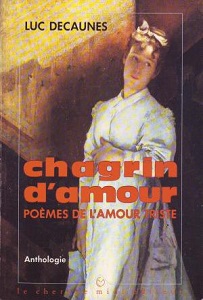
Peter Ghyssaert, Henk van der Waal, Dirk Ayelt Kooiman, J.R.R. Tolkien, Smith Henderson, Marie Darrieussecq, Alex Wheatle, Cicero, Jean Muno
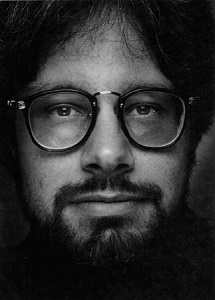
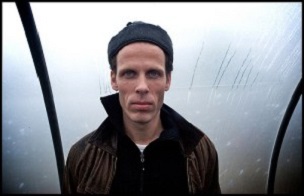
De Vlaamse dichter Peter Ghyssaert werd geboren op 3 januari 1966 te Wilrijk. Zie ook alle tags voor Peter Ghyssaert op dit blog.
Hobo
Te mager zijn zij toch gesteeld
want de ronding der violen blijft
ook achterwege in hun klank.
Nergens heeft de wind dunnere flanken
nergens ook wordt hij daar
rot geknepen dat het godgeklaagd is.
(Zo droog en droevig
als de hobo klinkt, men denkt
aan de ascese van versleten mannen.)
De ziekenhuispatiënt
Na de ramp groeiden de baardstoppels
de andere kant op, dus de keel binnen.
Zijn huig zat in de modder vast
als een waardeloos plastic, en verder
was het hele hoofd niet meer in orde.
Of je ook mocht trainen in het ziekenhuis?
vroeg hij de zuster. Ja, het mocht.
Met zwaar vernikkeld bed en al de gangen
op en af, en op en af. Men vond
hem moed hebben voor zo een zwaar geval.
Maar na een week of twee ging het al trager.
En nog drie dagen daarna stopte hij knarsend
voor het rode licht van zuster Beatrijs.
Op zijn lichaam stelde men een derde oog
vast, donker als Malaga-wijn. Het knapte,
Gaf wat ingewandsvlees prijs, en toen
verdween de heldere weg, vanuit de plasma-
zak in 't langzaam zwartgeworden lijf
gebaand, geheel onder een struikgewas
van zachtwuivende aderen en zenuwen.
Moeder
Moeder, ingekuild tussen de meubels
en het porselein, komt nog maar moeizaam
boven hout, mummelt sterfberichten
van vriendinnen.
Boekdelen van pluis schikt ze de kast in
en ze hoest het laatste restje warmte
uit haar schrale rinkelende borst;
schouderbladen van verdriet geblakerd
breken uit de rug te voorschijn.
Langzaam groeien kinderen weg
van haar schoot waarin onvruchtbaarheid
werd afgeworpen.
Dor is moeder; oud machien.
Herinnering hangt als een teder lint
van ingebruikname dwars door haar heen, maar
niemand krijgt haar nog in gang of weet
waartoe ze dient.
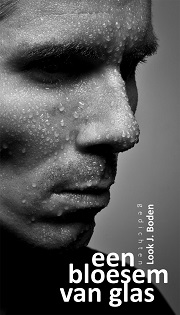
Peter Ghyssaert (Wilrijk, 3 januari 1966)
In 1998
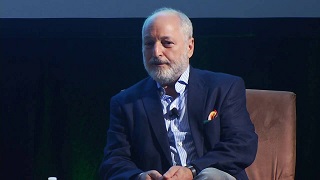
De Nederlandse dichter en filosoof Henk van der Waal werd op 3 januari 1960 geboren in Hilversum. Zie ook alle tags voor Henk van der Waal op dit blog.
de vierde persoon enkelvoud
waarom zouden die niet bij je zijn, die paar woorden van een toevalling die
de mond brak maken: in plaats van je stilletjes te verkneukelen over de
dood van god en te roepen: zie mij eens, hoe vrij ik ben en opstandig,
vermag je misschien ontvangst te sonderen omtrent hoe de
ontwrichtster de ouwel van de toekomst verkruimelt
op de tong van de tot zich beperkten
die vervanging zoekers in lust en ontwijkers van
de vierde persoon enkelvoud
die halsbreekster en bandeloze jaknikster
die het uiterste geeft en ten
behoeve van de terugdeinzers
voor de dood met fluwelen hand
dominosteentjes uit de rij tegen elkaar
tikkende seconden tilt tot niets meer voort valt en de
tijdgevoeligen gehouden zijn in het nooit van wat wordt: puur hoop
Of zoals
Of zoals
wanneer het buiten
regent en je je uitstrekt en
lang maakt en langzaam doortastbaar
laat zodat het water ook van binnen kan
gaan stromen als voorproefje van al het
oeverloze dat komen gaat
simpelweg omdat de stilte,
waar het gonzen van de dingen uit is weggelekt, nu
al aanspraak op je maakt en een vermoeden in je wakker
roept van hoe het zijn zal als je buiten adem over de rand
van de toekomst gekropen bent om je in de gedaante der
mensen aan het menselijke te onttrekken en te wachten
op de streling van de hand die alles weet.
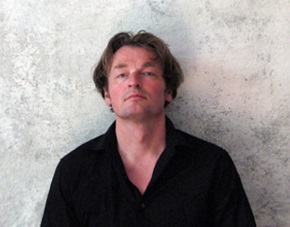
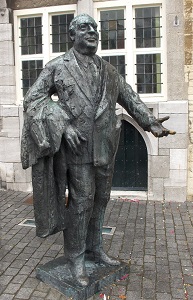
Henk van der Waal (Hilversum, 3 januari 1960)
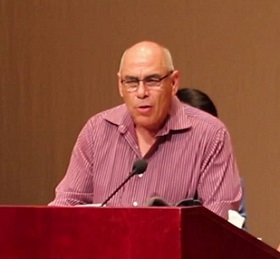
De Nederlandse schrijver en essayist Dirk Ayelt Kooiman werd geboren in Amsterdam op 3 januari 1946. Zie ook alle tags voor Dirk Ayelt Kooiman op dit blog.
Uit: De grote stilte
“Wat hij zich tenslotte nog had kunnen verwijten was hoogstens dat hij de landstaal niet beheerste. In dat geval had hij de mogelijkheid gehad de chauffeur opdracht te geven om toch maar liever door te rijden. Nu zat hij verdoofd - maar dat kon ook door de hitte komen - weggezakt op de achterbank van de taxi, en tastte werktuiglijk met zijn linkerhand in zijn binnenzak naar de envelop bankpapier die gedurende de hele rit in opgerolde vorm in zijn rechterhand gekleefd had.
Had hij zich, twintig jaar na dato, nog een voorstelling kunnen maken van dit hotel, waarvan hij gedachteloos de naam aan de chauffeur had opgegeven - zonder eigenlijk te weten dat hij die nog kende of zelfs ooit gekend had? Amper. Toch had hij de gevel met één oogopslag herkend. Niets was eraan veranderd, al verkeerde het gebouw in een verdere staat van verval dan toen. En hij zou er zich misschien over kunnen verbazen dat het zoveel kleiner bleek te zijn dan in zijn herinnering, maar daarbij was het toch in de eerste plaats de verbazing zélf die zijn verwondering moest wekken, want het verschijnsel was hem beslist niet onbekend. De tijd had niet stilgestaan, voor het gebouw noch voor hemzelf. Hij nam zijn koffers over van de chauffeur en liep de stoep op. Met zijn schouder duwde hij de deur open, waarvan een van de geslepen ruitjes door een stuk triplex was vervangen.
In de hal was het koel. Een lange, kaalhoofdige man stond gebogen over de portiersbalie ingespannen een krant te lezen, waarbij hij met iedere hand een poot van zijn bril tussen duim en wijsvinger hield, zodat deze ter hoogte van het puntje van zijn neus zweefde. Hij keek op en staarde kippig door de lenzen van de bril die hij nog steeds op leesafstand van zijn ogen hield. De fout bemerkend glimlachte hij - alsof hij te kennen wilde geven dat hij het die vage schim wel vergaf verder van hem verwijderd te zijn dan de krant - en drukte de bril op zijn neus. Na hem van top tot teen te hebben opgenomen schudde hij het hoofd en zei:
‘Sju’.
Johan deed een stap naar voren. ‘Do you speak English? Sprechen Sie Deutsch?’ Maar de ander volhardde erin het hoofd te schudden:
‘Sju! Sju!’ En hij vulde die uitroep aan met een gebaar dat ‘stop’ en ook wel ‘vol’ uitdrukt. Toch keek hij niet onvriendelijk, als betrof het een spelletje en was hij nu benieuwd naar de tegenaktie van de ander. Het viel ook moeilijk voor te stellen dat het hotel vol was; het wekte een uitgestorven indruk. Misschien is het hier helemaal geen hotel meer, bedacht hij, maar half teleurgesteld. Wanneer het in de hal niet zo heerlijk koel geweest was, en buiten niet zo warm, zou hij waarschijnlijk zijn koffer weer opgepakt hebben - het hotel het hotel latend, en het verleden het verleden. Nu diepte hij met een zucht het wisselgeld op dat hij van de taxichauffeur gekregen had, en legde een roze bankbiljetje waarvan hij aannam dat het een hogere waarde vertegenwoordigde dan de lichtmetalen muntstukken, op de balie.”
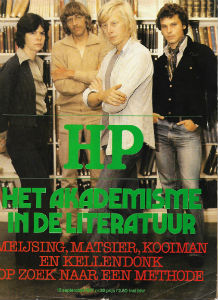
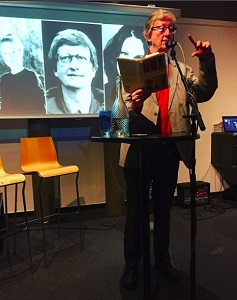
Dirk Ayelt Kooiman (3 januari 1946 – 2 oktober 2018)
V.l.n.r. Doeschka Meijsing, Nicolaas Matsier, Dirk Ayelt Kooiman en Frans Kellendonk
op de cover van de Haagse Post, september 1977
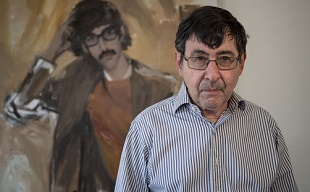
De Engelse schrijver J.R.R. Tolkien werd geboren op 3 januari 1892 in Bloemfontein, Zuid-Afrika. Zie ook alle tags voor J.R.R. Tolkien op dit blog.
Uit: The Lord of the Rings (The Hobbit)
"Lots!" Bilbo found himself answering, to his own surprise; and he found himself scuttling off, too, to the cellar to fill a pint beer-mug, and to the pantry to fetch two beautiful round seed-cakes which he had baked that afternoon for his after-supper morsel.
When he got back Balin and Dwalin were talking at the table like old friends (as a matter of fact they were brothers). Bilbo plumped down the beer and the cake in front of them, when loud came a ring at the bell again, and then another ring.
"Gandalf for certain this time," he thought as he puffed along the passage. But it was not. It was two more dwarves, both with blue hoods, silver belts, and yellow beards; and each of them carried a bag of tools and a spade. In they hopped, as soon as the door began to open-Bilbo was hardly surprised at all.
"What can I do for you, my dwarves?" he said. "Kili at your service!" said the one. "And Fili!" added the other; and they both swept off their blue hoods and bowed.
"At yours and your family's!" replied Bilbo, remembering his manners this time.
"Dwalin and Balin here already, I see," said Kili. "Let us join the throng!"
"Throng!" thought Mr. Baggins. "I don't like the sound of that. I really must sit down for a minute and collect my wits, and have a drink." He had only just had a sip-in the corner, while the four dwarves sat around the table, and talked about mines and gold and troubles with the goblins, and the depredations of dragons, and lots of other things which he did not understand, and did not want to, for they sounded much too adventurous-when, ding-dong-a-ling-' dang, his bell rang again, as if some naughty little hobbit-boy was trying to pull the handle off. "Someone at the door!" he said, blinking. "Some four, I should say by the sound," said Fili. "Be-sides, we saw them coming along behind us in the distance."
The poor little hobbit sat down in the hall and put his head in his hands, and wondered what had happened, and what was going to happen, and whether they would all stay to supper. Then the bell rang again louder than ever, and he had to run to the door. It was not four after all, it was FIVE. Another dwarf had come along while he was wondering in the hall. He had hardly turned the knob, be-x)re they were all inside, bowing and saying "at your service" one after another.”
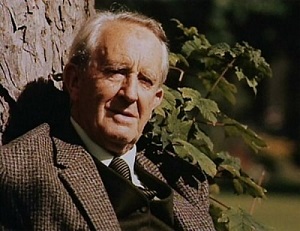
J.R.R. Tolkien (3 januari 1892 – 2 september 1973)
De Amerikaanse schrijver Smith Henderson werd geboren op 3 januari 1954 in Montana. Zie ook alle tags voor Smith Henderson op dit blog.
Uit: Fourth of July Creek
“Pete nodded and wrote some more.
“So then what?”
“So he says ‘fuckit’ and calls it in.”
“And the situation when you got here?”
The situation was a perfect fucking mess. The situation was the kid climbing up onto the slanted, dented aluminum carport and stomping on the rusted thing like an ape. Just making the whole unsound shelter boom and groan under his weight. The mother saying so help her if that thing falls on her Charger she’ll gut him, and the kid just swagging the carport back and forth so that it was popping and starting to bow under his weight. Now the cop was about ready to shoot the ornery shit off the goddamn thing.
Then the situation got interesting.
“The mother has the air rifle and—”
“No way,” Pete said.
“Yeah, fuckin way,” the cop said.
“She shoot him?”
“Before I get to her, yeah, she shoots. You can see the big old welt on his forearm.”
Pete started to write.
“And then what?”
Then the kid leaps off the carport just as the cop has taken the air rifle and ordered the woman inside, but the kid and his mother are already tearing at each other like two wet cats in a sack. Right in front of a goddamn cop, mind you. Like he ain’t even there. All the neighbors are out on their nice, normal lawns in their bathrobes clutched closed at the neck watching the cop trying to disentangle the two of them, taking it in like the fucking rodeo. And the bitch—“pardon my French” the cop at last says about all his cussing—won’t desist, and the kid won’t desist, so the cop wrangles the first one he can get a hand on—the woman it turns out—and wrestles her onto her belly and into the cuffs, but not before the kid makes a run to kick her in the face, which the cop just barely stops with his own body. And realizing he’s just kicked one seriously pissed-off police officer in the chest, the dumbshit turns tail and flees.”
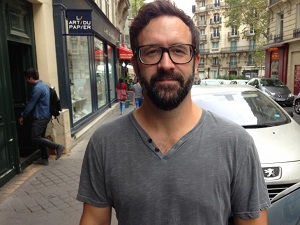
Smith Henderson (Montana, 3 januari 1954)
De Franse schrijfster Marie Darrieussecq werd geboren in Bayonne, Pyrénées-Atlantiques, op 3 januari 1969. Zie ook alle tags voor Marie Darrieussecq op dit blog.
Uit: Men
“He talked to her about the Congo. Not any old Congo, not the little Brazzaville Congo, no, the big Kinshasa one, where very quickly the road runs out and there are just the long arms of the river, which she had looked at on Google Earth three hours earlier. The coincidence was disturbing. She was going to chat about the islands—but he had drawn breath to introduce a new topic of conversation, and was now talking about Heart of Darkness. He told her about Conrad’s novel. The story of a man who is looking for a man. Marlow looking for Kurtz, a retired officer from a colonial regiment, a ‘devil of a rapacious and pitiless folly’. Conrad’s Congo is ‘something great and invincible, like evil or truth’. And Europe—white-faced Europe, the premonition of genocides. He cited the African woman in the novel ‘with a slight jingle and flash of barbarous ornaments’, ‘brass leggings to the knees’ (she pictured the sorceress in Kirikou). He cited the ‘Intended’, ‘this pale visage’, blonde and diaphanous (she pictured herself). Was it a racist novel? No. But it was time for an African to seize power in Hollywood. It was time to take back from America the history of indigenous people.
She was overwhelmed with tiredness. Couldn’t they just have a normal conversation? But he kept talking: he wanted to make a film adaptation of Heart of Darkness, something different from Coppola’s Apocalypse Now and, in any case, on location—a crazy project, he was aware of that, his first film as a director and with equatorial ambitions to transport a crew into the heart of the forest and, once there, attempt to mount that masterpiece of a novel. Coppola went to the Philippines in order to film Vietnam; he would go to the Congo to film the Congo.
She interrupted him. She hadn’t read the novel, but wasn’t it a bit of a cliché: Heart of Darkness? A bit too run-of-the-mill for Africa? He protested. What he was interested in was precisely the stereotype, the ultimate cliché, what white people saw when they thought about Africa: darkness and elephants.”
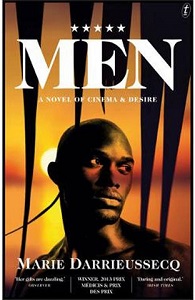
Marie Darrieussecq (Bayonne, 3 januari 1969)
Cover
De Britse schrijver Alex Wheatle werd geboren op 3 januari 1963 in Londen. Zie ook alle tags voor Alex Wheatle op dit blog.
Uit: Crongton Knights
‘Don’t answer the door!’ barked Dad from the kitchen, the washing-up suds popping on his grimy white vest.
‘Mr Tambo!’ a voice boomed from outside. It was deep. I imagined the owner of that tone strutting in the park with a rhino on a leash. ‘We know you’re in there! Let’s be adult about this, Mr Tambo. Let us in so we can sit down and talk about your repayments. This is notgoing to go away.’
I breathed in a dose of pure fear. Why are we in so much deep debt? Dad’s working.Why won’t he give me the full score on what’s going on?Dad dried his hands on the dishclothand then draped it over his shoulder. He looked at my olderbrother, Nesta, who was standing in the hallway only a couple of metres from our drawbridge. Dad beckoned him to retreat. Nesta shook his head. I put my fork down on my plate.
Suddenly, I didn’t love my pasta and mince even though I had grated some cheese on top to nice it up. The letter box crashed again. My heart rumbled. ‘Mr Tambo!’
Dad walked out of the kitchen and switched off the light in the front room. He gestured to Nesta again but Nesta took a step towards the door. I closed my eyes and willed for the men outside to go missing. I also prayed that Nesta wouldn’t let loose his temper.
‘Why are you scared of them pussies?’ spat Nesta, glaring at Dad like he wanted to go head-to-head with the debt brothers outside. Dad raised his palms, trying to calm Nesta down. I could hardly bear to watch.
I strained my ears and could just about make out muffled conversations. Nesta took another stride forward. We all looked at each other. I sank half of my blackcurrant. When I placed the glass down I nearly knocked it over cos my hands were shaking. Kiss my knights! Will evenings like this ever stop?
‘They’re moving on,’ said Nesta. ‘Yeah, I can hear them bouncing down the stairs.’
My heart put its brakes on. Dad closed his eyes and let out a mighty sigh.
‘Why do you let them chat to you like you’re a pussy?’ charged Nesta. He rolled towards Dad, taking his hands out of his pockets. I stood up from my chair and stepped between them. I didn’t want them to be warring again.
‘Stand up to them!’ raged Nesta. ‘Or go outside our gates and tell them to remove their grimy, money-sucking asses from our slab!’
‘Nesta,’ I called. ‘They’re gone now. Calm down, bro.’
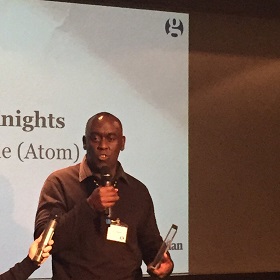
Alex Wheatle (Londen, 3 januari 1963)
De Romeinse schrijver, redenaar, politicus, advocaat en filosoof Marcus Tullius Cicero werd geboren in Arpinum op 3 januari 106 v. Chr. Zie ook alle tags voor Cicero op dit blog.
Uit: De Goden (De Natura Deorum, vertaald door Vincent Hunink)
“Toen zei Cotta: ‘Als het waar is wat mijn leermees ter Antiochus zegt in het boek dat hij onlangs aan Balbus heeft opgedragen, dan hoef jij je vriend Piso hier niet te missen. Want volgens Antiochus zitten Stoïci en Peripatetici inhoudelijk op één lijn, maar verschillen ze in hun terminologie. Wat vind je eigenlijk van dat boek, Balbus?’
‘Ik?’, zei hij. ‘Ik sta verbaasd dat zo’n uitzonderlijk scherpzinnig man als Antiochus niet heeft gezien dat er een zeer groot verschil is tussen de Stoïci en de Peripatetici. Bij de eerste school is het onderscheid tussen goed en aangenaam niet nominaal maar reëel, terwijl bij de andere aangenaam en goed zo vermengd zijn dat ze alleen relatief en als het ware gradueel van elkaar verschillen en niet absoluut. Dat is namelijk geen kleine terminologische onenigheid maar een zeer grote inhoudelijke. Maar daarover wellicht een andere keer meer. Laten we nu doorgaan met ons eigenlijke onderwerp, als jullie het goed vinden.’
‘Ik vind het goed’, zei Cotta ‘maar degene die er nu bij gekomen is’ (hierbij keek hij mij aan) ‘moet wel weten waarover het gaat. We hadden het over het wezen der Goden. Ikzelf vond dit probleem, zoals gebruikelijk, geheel ondoorgrondelijk, en daarom vroeg ik Velleius naar de opvatting van Epicurus. Welnu, Velleius, als je het niet erg vindt, begin dan even van voren af aan.’
‘Dat zal ik doen, hoewel niet ik, maar jij nu een medestander krijgt. Want jullie allebei,’ zei hij met een glimlach, ‘hebben van Philo geleerd om "niets te weten."‘
Toen zei ik: ‘Wat wij geleerd hebben, dat laat ik graag aan Cotta over. Wat jou betreft, geloof me, ik ben hier niet gekomen als medestander van hem, maar als toeschouwer, en wel een onpartijdige en onbevooroordeelde: ik voel me geenszins verplicht om één bepaalde opvatting eventueel tegen heug en meug te verdedigen.’
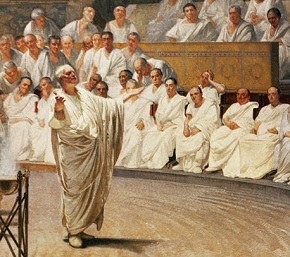
Cicero (3 januari 106 v. Chr. – 7 december 43 v. Chr.)
“Cicero veroordeelt Catilina”. Fresco door Cesare Maccari, 1888 (detail)
De Belgische schrijver Jean Muno (pseudoniem van Robert Burniaux) werd geboren in Molenbeek op 3 januari 1924. Zie ook alle tags voor Jean Muno op dit blog.
Uit: Histoire exécrable d'un héros brabançon
« C’est alors queje me suis vu. Dans mon assiette, oui, dans l’épaisseur de mon ris que j’incisais d’une lame circonspecte et vaguement écoeurée. Il y avait là quelque chose d’anormal, d’étranger à la texture conventionnelle de l’organe. Je me suis penché. Etalé de tout mon long, cuit dans le mou, j’étais là, Papin, sous les espèces d’un cloporte. Les antennes coquines, les papattes frisées comme des crosses de fougères, bien peinard, sage pour l’éternité, c’était moi sans aucun doute, cuit et recuit dans le thymus du biengrandir.
(…)
Dans ces lieux, je me sentais vraiment chez moi. Je m’installais bien commodément, comme s’il se fût agi chaque fois d’une occasion majeure, et je poussais un peu, pas trop, afin de ne point gaspiller les matières. Elles venaient doucettement, ce n’était pas désagréable. Autant que possible, je retardais le floc terminal, souvent ténu. Hé oui, nous avions le sens de l’épargne à cette époque-là, la guerre et l’Occupation ne nous surprendraient pas autre mesure.
Entretemps, je continuais même de m’instruire, de mériter en somme mon modique salaire. On mettait à ma disposition des pages du Soir coupées en huit et retenus par une ficelle, elle-même de remploi. A chacune de mes retraites, chose faisant, j’avais l’occasion de parcourir quelques feuilles, recto verso. L’actualité politique, intellectuelle et sportive, les faits divers, les beaux crimes et les scandales financiers, les petites annonces aussi, fidèles reflets de la vie quotidienne..."
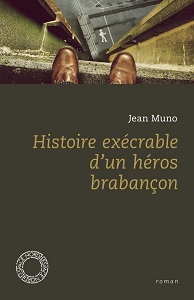
Jean Muno (3 januari 1924 – 6 april 1988)
Cover
Zie voor nog meer schrijvers van de 3e januari ook mijn blog van 3 januari 2018 en ook mijn blog van 3 januari 2017 en eveneens mijn blog van 3 januari 2016 deel 1, deel 2 en deel 3.