Naar de inhoud

Romenu

Over literatuur, gedichten, kunst en cultuur
akke.beakke.be

Berichten van 24 januari 2019 tot 25 januari 2019

Renate Dorrestein, Lisa Weeda, David Grossman, William S. Maugham, Virginia Woolf, Alessandro Baricco, Paavo Haavikkom, J. G. Farrell, Robert Margerit
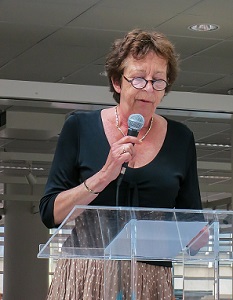
De Nederlandse schrijfster Renate Dorrestein werd geboren in Amsterdam op 25 januari 1954. Zie ook alle tags voor Renate Dorrestein op dit blog.

Uit: Dagelijks werk - een schrijversleven

„In de zomer van 2016 had ik een nieuwe koelkast nodig, ter vervanging van het chagrijnige oude beest dat in mijn bijkeuken stroom stond te slurpen. Op dus naar die witgoedwinkel in Haarlem-Noord waar ik eerder zo goed was geslaagd. Omdat het een prachtige middag was en het noordelijke stadsdeel ‘achter het spoor’ mij relatief onbekend was, besloot ik daar na de aanschaf van mijn nieuwe koelkast een wandeling te maken. Het is een stedelijk woongebied, zoals die rond 1900 overal in Nederland zijn gebouwd, met overwegend lage woningbouw en poortachtige toegangen tot de zijstraten.
Al binnen een paar minuten stond ik stil, getroffen door iets wat ik niet eens zozeer zág als wel voelde: ik stond op de locatie waar mijn volgende roman zich zou gaan afspelen.
Je moet al zoveel verzinnen als je een roman schrijft, dus een bestaande locatie biedt in elk geval houvast en grond onder de voeten. Voor iedere schrijver zal het anders zijn, maar voor mij begint alles met die aardende, verankerende plaatsbepaling. Heb ik de plek, dan komt het verhaal vanzelf. Die rare term ‘de plaats van handeling’ is zo gek nog niet. Als ik eenmaal weet wat de plaats van handeling van mijn volgende boek is, dan kom ik al schrijvende ook wel te weten wat die handeling behelst.
Wat mij triggerde op die zonovergoten middag in Haarlem-Noord was dat in één straat de monotonie van eengezinswoningen werd onderbroken door een schoolachtig gebouw dat zich als een schuw dier zo laag mogelijk tegen de stoep gedrukt hield, alsof het aan mijn blik wilde ontsnappen, maar daarmee bereikte het dus het tegendeel. noorder kinderhuis, stond er in de gevel gebeiteld.
Bij die woorden zag ik een ijsvlakte voor me waarover sneeuwvlagen joegen. Ik wist genoeg. Onguurder dan dit ging ik het niet krijgen. Het Noorder Kinderhuis! Mijn god, dat was een plek waar je als kind niet moest zijn!
Ik stak de straat over en tuurde door een raam naar binnen. Er was een doodgewoon hedendaags kinderdagverblijf gevestigd. Maar dat betekende niets. Als je aan dat soort details gewicht toekent, schrijf je nooit een roman. Dit had best sinds mensenheugenis een goelag voor kleine mensen kunnen zijn. Gemene ouders dumpten hier hun nageslacht als ze er genoeg van hadden.
Op slag vlogen wonderlijke namen mijn hoofd binnen. Zebedee, Hosanne, Anne-Eden, de tweeling Michaël en Daniël. Voor mijn geestesoog rees een compleet, kroostrijk gezin uit de Biblebelt op, met van die bleke, langgerekte kinderen die zonder vaccins of mobieltjes door het leven moeten terwijl ze elkaars kleren afdragen en naar bevindelijke zomerkampen gaan. Zo’n gezin met minstens tien kinderen, waarbij niemand het merkt als er opeens een kotertje minder is.”


 2210630-8f30f11ea0d9be58507165c6c7c33bac.jpg
Renate Dorrestein (25 januari 1954 – 4 mei 2018)


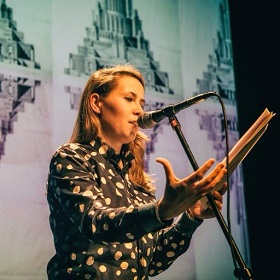
De Nederlandse schrijfster Lisa Weeda werd geboren in Dordrecht op 25 januari 1989. Zie ook alle tags voor Lisa Weeda op dit blog.

Uit: Rijskracht

“De laatste keer dat ik mijn vader zag, snoof ik achterin de bus een halve gram coke van de voordeursleutel van mijn ouderlijk huis. Het was zondagmiddag, één uur. Naast me zat een oude dame in een geruite trenchcoat, een paraplu tussen haar benen geklemd. Toen ik met trillende handen het koude ijzer van de met poeder gevulde baard tegen mijn neus perste, keek ze opzij. Ze verschoof niet, had een kalme blik in haar ogen.
‘Zou je dat nu wel doen jongen,’ vroeg ze.
Rustig, alsof ze een in een hoek gedreven kat wilde aaien, legde ze haar rechterhand op mijn bovenbeen. We bleven een tijdje zo zitten. We reden langs boerenbedrijven, voorbij borden ‘aardappelen te koop’, Sjaaks garage. Ik keek de bus rond: altijd dezelfde vriendelijk lachende koppen op de stoelen, een besnorde man achter het stuur. Na tien minuten legde ik mijn hand op die van de vrouw. Ze was oud, maar warm.
‘Ik probeer al een tijd iets te worden,’ zei ik. ‘Maar het wil niet echt. Mijn vrienden zeiden: alleen wat lijntjes in de tentamenweken. Je moet naar de klote gaan om aan de top te komen.’
‘Lukte dat?’
‘Negens, achten. Uitnodigingen voor masterclasses, meelopen op vooraanstaande kantoren.’
‘Waar is je maatpak nu, jongen?’
Alle gekken vallen op een gegeven moment van de rand af. Tuimelen zacht door een glazen wand zonder daarna te zien dat ze aan de andere kant van het glas terechtgekomen zijn. Nog eens keek ze me aan. Ze legde haar andere hand op de mijne, pakte me in, vouwde me klem. Bijna trilde ik niet meer.”
 

 2210630-c0545230e36dc1817dfc640ab51a6ffd.jpg
Lisa Weeda (Dordrecht, 25 januari 1989)


De Israëlische schrijver David Grossman werd geboren op 25 januari 1954 in Jeruzalem. Zie ook alle tags voor David Grossman op dit blog.

Uit:Be My Knife (Vertaald door Vered Almog en Maya Gurantz)

“April 7
(Just a few more words.) I sent that letter, came back, and still couldn't calm down--why should I?--oh, Miriam, please pay no attentionto this fool who's been smiling uncontrollably since this morning. He's so happy. He wants right at this minute to take off his clothes, strip off his epidermis, everything, and stand before you bare, right down to the white kernel of his soul. I wish I could paint for you, bray for you, neigh, bark, even whistle for you everything roaring inside me (which reminds me--when I was about twenty, I looked for ways to be a secular version of one of the Righteous Thirty-six. This led to a plan to, at least once a week, sit down on the bus behind a solitary woman, preferably a woman in black widow's weeds--but you can't be picky--and, without letting her see me, quietly whistle a love song in her ear that could trip through the outer shell, into her inner ear, and touch everything that was asleep, despaired of, congealed) ...
I'm not at all scared that we're strangers, by the way. On the contrary, tell me, what is more attractive and provocative than the possibility of taking something very precious--the most precious thing--a secret or weakness, or a thoroughly implausible request like the one I made of you, and deliberately placing it in the hands of a total stranger? And then to be tormented by so much shame and disgrace for allowing the beggar in me such a transparent delusion, so that for three days and three nights I spent every moment in self-imposed solitary confinement, a trap ... then, just as I was about to give up, stupid, spiteful, gloomy, and gray, all of a sudden your white hand--
Look, maybe you can't see what excites me so terribly, but your warm, radiant letter, especially the P.S. at the end, that one line--it was as if you came and led me by the hand from shadow into light. That's how I felt, that you had given me your hand and led me across a watershed of light, it was so simple, as if it was completely natural for a person to do that for a stranger.
(And now, a cold wave. Of all the times, now, just at this moment, and why? Because it was good? A cold wave rising from my stomach, a cold fist rolled up into a ball just under my heart--get acquainted with it.)
Again, please understand I'm really talking about letters only, not a meeting, never a body. No flesh, not with you, your letter made that so clear to me: only words. It would ruin us, being face-to-face, it would immediately take us down into familiar territory. Also, of course, we will keep this strictly secret, we won't let anybody in on it, so that no one from the outside can use our secret words against us. Only my words meeting yours, so we can feel the rhythm of our breath slowly becoming one.
It makes me so tired to write this way, not a usual fatigue, but after every few lines I really have to stop to take a breath, calm down.”

 

 2210630-826bf1a60fa55ce7100a5ca66cbd65c6.jpg
David Grossman (Jeruzalem, 25 januari 1954)


De Engelse schrijver William Somerset Maugham werd geboren in Parijs op 25 januari 1874. Zie ook alle tags voor William Somerset Maugham op dit blog.

Uit: Rain

“It was nearly bed-time and when they awoke next morning land would be in sight. Dr. Macphail lit his pipe and, leaning over the rail, searched the heavens for the Southern Cross. After two years at the front and a wound that had taken longer to heal than it should, he was glad to settle down quietly at Apia for twelve months at least, and he felt already better for the journey. Since some of the passengers were leaving the ship next day at Pago-Pago they had had a little dance that evening and in his ears hammered still the harsh notes of the mechanical piano. But the deck was quiet at last. A little way off he saw his wife in a long chair talking with the Davidsons, and he strolled over to her. When he sat down under the light and took off his hat you saw that he had very red hair, with a bald patch on the crown, and the red, freckled skin which accompanies red hair; he was a man of forty, thin, with a pinched face, precise and rather pedantic; and he spoke with a Scots accent in a very low, quiet voice. Between the Macphails and the Davidsons, who were missionaries, there had arisen the intimacy of shipboard, which is due to propinquity rather than to any community of taste. Their chief tie was the disapproval they shared of the men who spent their days and nights in the smoking-room playing poker or bridge and drinking. Mrs. Macphail was not a little flattered to think that she and her husband were the only people on board with whom the Davidsons were willing to associate, and even the doctor, shy but no fool, half unconsciously acknowledged the compliment. It was only because he was of an argumentative mind that in their cabin at night he permitted himself to carp.
"Mrs. Davidson was saying she didn't know how they'd have got through the journey if it hadn't been for us," said Mrs. Macphail, as she neatly brushed out her transformation. "She said we were really the only people on the ship they cared to know." 1 shouldn't have thought a missionary was such a big bug that he could afford to put on frills."
"If s not frills. I quite understand what she means. It wouldn't have been very nice for the Davidsons to have to mix with all that rough lot in the smoking-room." "The founder of their religion wasn't so exclusive," said Dr. Macphail with a chuckle. "I've asked you over and over again not to joke about religion," answered his wife. "I shouldn't like to have a nature like yours, Alec. You never look for the best in people." He gave her a sidelong glance with his pale, blue eyes, but did not reply. After many years of married life he had learned that it was more conducive to peace to leave his wife with the last word.”
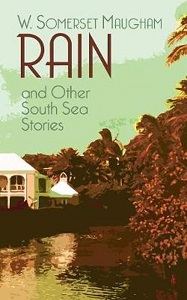
 

 2210630-11a248127d024dbed6e9b9a7dd82db45.jpg
William Somerset Maugham (25 januari 1874 – 16 december 1965)
Cover


De Engelse schrijfster Virginia Woolf werd geboren op 25 januari 1882 te Londen. Zie ook alle tags voor Virginia Woolf op dit blog

Uit: The Diary of Virginia Woolf

“Friday 1 September (1939)
War is on us this morning. Hitler has taken Dantzig: has attacked - or is attacking - Poland. Our P(arliamen)t meets at 6 tonight. This after a day in London, submerged doubts & hopes. Last night we heard terms to Poland read. We then had some hope. Now at 1 I go in to listen I suppose to the declaration of war.
By the early summer of 1940 the Woolfs were much preoccupied with the threat of a German invasion. Leonard told Virginia that he was keeping petrol in the garage for the purpose of committing suicide by carbon monoxide poisoning if Hitler won. Wednesday 15 May
An appeal last night for home defence - against parachutists. L. says he'll join. An acid conversation. Our nerves are harassed - mine at least: L. evidently relieved by the chance of doing something. Gun & uniform to me slightly ridiculous. Behind that the strain: this morning we discussed suicide if Hitler lands. Jews beaten up. What point in waiting? Better shut the garage doors. This a sensible, rather matter of fact talk. Then he wrote letters, & I too: thanked Bernard Shaw for his love letter. Copied my lecture contentedly. A thunderous hot day. Dutch laid down arms last night. The great battle now raging. Ten days, we say, will settle it. I guess we hold: then dig in; about Nov. the USA comes in as arbitrator. On the other hand -
Mabel just come. She says theyre building wooden bridges beside the others on the Thames. Pop-pop-pop, as we play bowls. Probably a raider over Eastbourne way. Now thunder rain sets in. No, I dont want the garage to see the end of me. I've a wish for 10 years more, & to write my book wh. as usual darts into my brain. L. finished his yesterday. So we've cleared up our book accounts - tho' its doubtful if we shall publish this June. Why am I optimistic? Or rather not either way? because its all bombast, this war. One old lady pinning on her cap has more reality. So if one dies, it'll be a common sense, dull end - not comparable to a days walk, & then an evening reading over the fire. Hospital trains go by. A hot day to be wounded. Anyhow, it cant last, this intensity - so we think - more than 10 days. A fateful book this. Still some blank pages - & what shall I write on the next 10?
This idea struck me: the army is the body: I am the brain. Thinking is my fighting.”

 2210630-1129b3780f08801a85f600af5af1b70c.jpg
Virginia Woolf (25 januari 1882 – 28 maart 1941) 
Cover


De Italiaanse schrijver Alessandro Baricco werd geboren op 25 januari 1958 in Turijn. Zie ook alle tags voor Alessandro Baricco op dit blog.

Uit: Ocean Sea (Vertaald door Alastair McEwen)

“As it is always like this, you need only the glimmer of a man to wound the repose of that which would otherwise be a split second away from becoming truth but instead immediately becomes suspense and doubt once more, because of the simple and infinite power of that man who is a slit, a chink, a small doorway through which return a flood of stories and the enormous inventory of what could be, an infinite gash, a marvelous wound, a path made of thousands of steps where nothing can be true anymore but everything will be  -- just as the steps are of that woman who, wrapped in a purple cloak, her head covered, is pacing the beach with measured tread, skirting the backwash of the sea, her feet tracing furrows from right to left across what is by then the lost perfection of the great picture, consuming the distance that separates her from the man until she comes to within a few paces of him, and then right beside him, where it takes nothing to pause and silently look on.
The man does not even turn. He continues staring out at the sea. Silence. From time to time he dips the brush in a copper cup and makes a few light strokes on the canvas. In their wake the bristles of the brush leave a shadow of the palest obscurity that the wind immediately dries bringing the pristine white back to the surface. Water. In the copper cup there is only water. And on the canvas, nothing. Nothing that may be seen.
The north wind blows as it always does and the woman pulls her purple cloak closer around her.
"Plasson, you have been working for days and days down here. Why do you carry all those colors around with you if you do not have the courage to use them?"
This seems to wake him up. This hits home. He turns to observe the woman's face. And when he speaks it is not to reply.
"Please, do not move, he says."
Then he brings the brush up to the woman's face, hesitates a moment, rests it on her lips and slowly runs it from one corner of her mouth to the other. The bristles come away tinged with carmine. He looks at them, dips them ever so slightly in the water and looks up once more towards the sea. On the woman's lips there lingers the  hint of a taste that obliges her to think "sea water, this man is painting the sea with the sea" -- and it is a thought that brings a shiver.”

 

 2210630-d43ca143a8f8bc74b92d8e59090bdbab.jpg
Alessandro Baricco (Turijn, 25 januari 1958)


De Finse dichter, toneelschrijver en uitgever Paavo Juhani Haavikko werd geboren in Helsinki op 25 januari 1931. Zie ook alle tags voor Paavo Haavikko op dit blog.

Uit: No. That’s to say, yes


To begin with, one must note:
There are many wise men. But on the other hand, there is not a single
insane tree.
      We are allies, the forest and I, in the sense that the forest is my ally,
and that I am a representative and responsible person.
      There are many such alliances in the world.
      That is because they have not been studied much.

*

I have written: ‘From the very beginning, the human being has been
designed as a throwaway item. It finds it hard to understand that, since it
did not create itself.’
      The human being is a superego. The trees know that.


*

It is hard to communicate with trees because they do not want to speak,
read, count, or lie.
      It has become apparent to them that it is difficult to say a single truthful
word without insulting the public or objects.
      They do not speak because they do not want to insult or restrain the
public.
      They do not want to speak because they are afraid of being understood
by accident.
      They do not agree with flight or attack. They have seen war.
The sun might go out if trees started speaking, telling what they have
seen, asking for compensation.
      If they were to start asking questions, the questions would turn into
answers. And they would be accurate.


Vertaald door Anselm Hollo
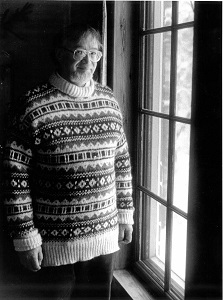
 

 2210630-2a7817f6dd3dc2b7edf52d3b5f3b4c9f.jpg
Paavo Haavikko (25 januari 1931 – 6 oktober 2008)
In 1997


De Iers-Britrse schrijver James Gordon Farrell werd geboren op 25 januari 1935 in Liverpool. Zie ook alle tags voor J. G. Farrell op dit blog.

Uit:The Singapore Grip

“There, in those 'lower depths' Chinese secret societies undoubtedly performed monstrous crimes, kidnapped their own prominent citizens, fought out appalling territorial battles, stunned themselves with drugs and so forth. If you were merely a visitor, a sailor, say, in those years before the war, Singapore would undoubtedly have seemed no less tawdry, no less exciting than another of the great Eastern sea ports. You would have gone to drink and dance at one of the amusement parks, perhaps even at The Great world itself, whose dance-hall, a vast, echoing barn of a place, had for many years entertained lonely sailors like yourself. There, for twenty-five cents, you could dance with the most beautiful taxi-girls in the East, listen to the loudest bands and admire the glorious dragons painted on the walls. In the good old days, before the troops started flooding in at the beginning of the War, that place could swallow an entire ship's company and still seem empty except for you and the two or three Chinese girls with dolls' painted faces sitting at your table, ready to support you with tiny but firm hands should you look like plunging to the floor full of Tiger beer. There, too, when you staggered outside into the sweltering night, you would have been able to inhale that incomparable smell of incense, of warm skin, of meat cooking in coconut oil, of money and frangipani, and hair-oil and lust and sandalwood and heaven knows what, a perfume like the breath of life itself. And from the roof of the Seamen's Institute, or from some other less respectable roof, you might have seen the huge purple sign advertising Tiger Balm and, beside it, once darkness had completely fallen, its guardian, the great sabre-toothed tiger with glowing orange stripes beginning its nightly prowl over the sleeping roofs of Singapore. But there is no denying it, certain parts of the city were tawdry and others were wretched, and becoming more so as the age advanced: already, by 1940, the walls of cheap hotels and boarding-houses, hitherto impermeable except to an occasional muffled groan or sigh, were becoming porous and beginning to leak radio music, twangings of guitars and news bulletins. Every great city has its seamy side. And so let us look for preference at the gentler parts of the city, at the elegant European suburb of Tanglin, for instance, where Walter Blackett, chairman of the illustrious merchant and agency house of Blackett and Webb Limited, lived with his family At first glance Tanglin resembled any quiet European suburb with its winding, tree-lined streets and pleasant bungalows. There was a golf course close at hand with quite respectable greens; numerous tennis courts could be seen on the other side of sweet-smelling hedges and even a swimming pool or two. It was a peaceful and leisurely life that people lived here, on the whole. Yet if you looked more closely you would see that it was a suburb ready to burst at the seams with a dreadful tropical energy. Foliage sprang up on every hand with a determination unknown to our own polite European vegetation. Dark, glistening green was smeared over everything as if with a palette knife, while in the gloom (the jungle tends to be gloomy) something sinister which had been making a noise a little while ago was now holding its breath.”
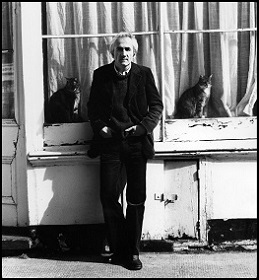
 

 2210630-5dae58483608d308351d6976dbeaaa74.jpg
J. G. Farrell (25 januari 1935 – 11 augustus 1979)


De Franse schrijver en journalist Robert Margerit werd geboren op 25 januari 1910 in Brive-la-Gaillarde. Zie ook alle tags voor Robert Margerit op dit blog.

Uit: La Révolution

« Danton ne s'en souciait pas, et ni Robespierre ni Marat ne donnaient aucun signe de le vouloir. Du reste, pensait Claude, il fallait que ses propres recommandations, pour empêcher les Brissotins suspendus de s'enfuir en province, aient été annulées par Marat en personne. Dangereuse mansuétude. Lui-même, bien entendu, ne songeait point à user de rigueur envers ces hommes. Il ne les aurait pas moins retenus très fermement à Paris. On ne surveillait même pas sérieusement ceux qui restaient. Ils correspondaient, recevaient des visites, sortaient, gardés chacun par un seul gendarme. Le ministre Lebrun venait sous l'oeil du sien travailler au Comité de salut public, auquel les Montagnards avaient fait adjoindre Saint-Just, Couthon, Hérault-Séchelles, Ramel, ci-devant de Nogaret, et Mathieu. Ce renfort était bien nécessaire pour lutter contre les ravages du fédéralisme. Aux nouvelles du 31 mai, puis du 2 juin, la province achevait de prendre feu. L'insurrection touchait à cette heure soixante départements. Les rapports que Claude recevait des représentants en mission donnaient le vertige. Robert Lindet, délégué par le Comité pour prendre la situation en main à Lyon, venait de trouver la grande cité entièrement au pouvoir des royalistes alliés aux Brissotins du cru, mandait-il. S'étant rendus maîtres de l'hôtel de ville après un dur combat, ils avaient emprisonné la municipalité montagnarde et se déclaraient en guerre ouverte avec la Convention. Les représentants Roux et Antiboul, chassés de Marseille, faisaient savoir que les Modérés, avec Rebecqui, s'associaient aux aristocrates pour combattre les Jacobins locaux qu'ils arrêtaient par centaines et traduisaient devant un tribunal contre-révolutionnaire. De Bordeaux, les représentants ne pouvaient plus écrire, ils étaient arrêtés. À leur place, des Montagnards signalaient qu'une prétendue commission populaire, évinçant les autorités constituées, en partie complices, avait mis la main sur les caisses publiques, levait des troupes et invitait les départements voisins à se fédérer contre Paris. »
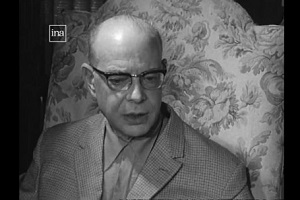
 

 2210630-739e1760fde4409df75ba4c3bbc2fe4a.jpg
Robert Margerit (25 januari 1910 – 27 juni 1988)


Zie voor nog meer schrijvers van de 25e januari ook mijn blog van 25 januari 2018 en ook mijn blog van 25 januari 2017 en mijn blog van 25 januari 2015 deel 2 en eveneens deel 3.
 

Geschreven door Romenu om 18:18 Reageer op dit bericht

Wintertag (Friedrich Rückert)


Dolce far niente


 2210329-3024b4c6bfa60f831c55cd54eaa3935f.jpg
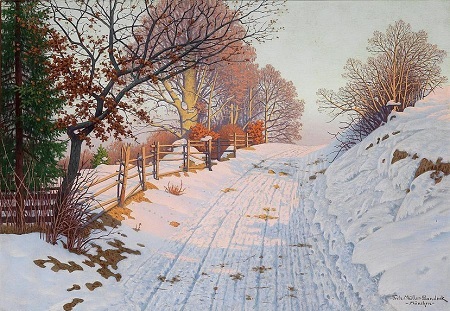
Ein sonniger Wintertag door Fritz Muller-Landeck (1865-1942)


Wintertag

Reine Schönheit, Wintertag,
Wo nur Himmelsstrahlen leben,
Und kein Erdetrieb vermag,
Frostgebunden, aufzustreben.
Dieser Sonnenblicke Gruß
Will die Seele mir beschwingen,
Nicht, ein buhlerischer Kuß,
In die Adern Aufruhr bringen.
Dieser keusche Schnee der Au'
Nährt nicht Schlangen der Bethörung,
Dieses stille Himmelblau
Nicht gewitt'rische Empörung.
Daß ich, athmend Sommergluth,
Von der Rose Düften trunken,
An der Erde je geruht,
Ist dem Geiste wie versunken.
Höh're Wonnen weiß ich nicht,
Als, vom Boden ungehalten,
Himmelssrhön', in deinem Licht
Stehn, dem reinen, glänzend kalten.


 2210329-3f3b54b63ce72ad4d6a702500da8a015.jpg
Friedrich Rückert (16 mei 1788 – 31 januari 1866)
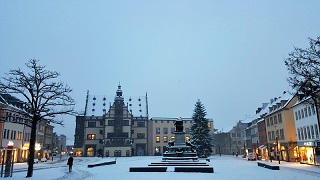
Schweinfurt, de geboorteplaats van Friedrich Rückert


Zie voor de schrijvers van de 24e januari ook mijn vorige blog van vandaag.

Geschreven door Romenu om 18:19 Reageer op dit bericht

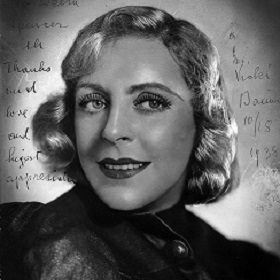
E. Th. A. Hoffmann, Ivan Ivanji, Eugen Roth, Ulrich Holbein, Edith Wharton, Jiří Karásek ze Lvovic, Vicki Baum, John Donne, Charles Sackville

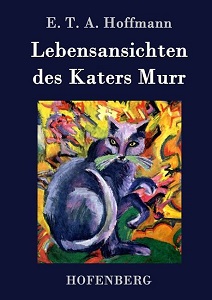
De Duitse dichter en schrijver Ernst Theodor Amadeus Hoffmann werd geboren in Koningsbergen op 24 januari 1776. Zie ook alle tags voor E. Th. A. Hoffmann op dit blog.

Uit: Lebensansichten des Katers Murr

„Ganz dunkel erinnere ich mich gewisser knurrender, prustender Töne, die um mich her erklangen, und die ich beinahe wider meinen Willen hervorbringe, wenn mich der Zorn überwältigt. Deutlicher und beinahe mit vollem Bewußtsein finde ich mich in einem sehr engen Behältnis mit weichen Wänden eingeschlossen, kaum fähig, Atem zu schöpfen, und in Not und Angst ein klägliches Jammergeschrei erhebend. Ich fühlte, daß etwas in das Behältnis hinabgriff und mich sehr unsanft beim Leibe packte, und dies gab mir Gelegenheit, die erste wunderbare Kraft, womit mich die Natur begabt, zu fühlen und zu üben. Aus meinen reich überpelzten Vorderpfoten schnellte ich spitze gelenkige Krallen hervor und grub sie ein in das Ding, das mich gepackt, und das, wie ich später gelernt, nichts anderes sein konnte als eine menschliche Hand. Diese Hand zog mich aber heraus aus dem Behältnis und warf mich hin, und gleich darauf fühlte ich zwei heftige Schläge auf den beiden Seiten des Gesichts, über die jetzt ein, wie ich wohl sagen mag, stattlicher Bart herüberragt. Die Hand teilte mir, wie ich jetzt beurteilen kann, von jenem Muskelspiel der Pfoten verletzt, ein paar Ohrfeigen zu, ich machte die erste Erfahrung von moralischer Ursache und Wirkung, und eben ein moralischer Instinkt trieb mich an, die Krallen ebenso schnell wieder einzuziehen, als ich sie hervorgeschleudert. Später hat man dieses Einziehen der Krallen mit Recht als einen Akt der höchsten Bonhomie und Liebenswürdigkeit anerkannt und mit dem Namen »Samtpfötchen« bezeichnet.
Wie gesagt, die Hand warf mich wieder zur Erde. Bald darauf erfaßte sie mich aber aufs neue beim Kopf und drückte ihn nieder, so daß ich mit dem Mäulchen in eine Flüssigkeit geriet, die ich, selbst weiß ich nicht, wie ich darauf verfiel, es mußte daher physischer Instinkt sein, aufzulecken begann, welches mir eine seltsame innere Behaglichkeit erregte. Es war, wie ich jetzt weiß, süße Milch, die ich genoß, mich hatte gehungert, und ich wurde satt, indem ich trank. So trat, nachdem die moralische begonnen, die physische Ausbildung ein.
Aufs neue, aber sanfter als vorher, faßten mich zwei Hände und legten mich auf ein warmes weiches Lager. Immer besser und besser wurde mir zumute, und ich begann mein inneres Wohlbehagen zu äußern, indem ich jene seltsamen, meinem Geschlecht allein eigenen Töne von mir gab, die die Menschen durch den nicht unebenen Ausdruck: spinnen bezeichnen. So ging ich mit Riesenschritten vorwärts in der Bildung für die Welt. Welch ein Vorzug, welch ein köstliches Geschenk des Himmels, inneres physisches Wohlbehagen ausdrücken zu können durch Ton und Gebärde! – Erst knurrte ich, dann kam mir jenes unnachahmliche Talent, den Schweif in den zierlichsten Kreisen zu schlängeln, dann die wunderbare Gabe, durch das einzige Wörtlein »Miau« Freude, Schmerz, Wonne und Entzücken, Angst und Verzweiflung, kurz, alle Empfindungen und Leidenschaften in ihren mannigfaltigsten Abstufungen auszudrücken. Was ist die Sprache der Menschen gegen dieses einfachste aller einfachen Mittel, sich verständlich zu machen! – Doch weiter in der denkwürdigen, lehrreichen Geschichte meiner ereignisreichen Jugend! – Ich erwachte aus tiefem Schlaf, ein blendender Glanz umfloß mich, vor dem ich erschrak, fort waren die Schleier von meinen Augen, ich sah!“


 2210323-9582edf8f0b881ac661f4c7314f9f77b.jpg
E. Th. A. Hoffmann (24 januari 1776 – 25 juni 1822)
Cover


De Joegoslavische schrijver, vertaler, diplomaat en journalist Ivan Ivanji werd geboren op 24 januari 1929 in Zrenjanin. Zie ook alle tags voor Ivan Ivanji op dit blog.

Uit: Schlussstrich

„Pero trat zurück, warf einen kontrollierenden Blick in das Stiegenhaus, versperrte die Wohnungstür hinter ihnen und begann mit einem Redeschwall: »Du, ich weiß nicht, ob es bei mir sicher ist, für eine Nacht vielleicht oder zwei, wir müssen etwas Besseres finden … Unterbrich mich nicht! Du weißt doch, wie mein Vater ist, also verpfeifen würde er dich nie, nie direkt … Aber gewiss wird er dich bitten, uns nicht zu gefährden. Er weiß, dass du Jude bist, aber natürlich nicht, dass wir beide Jungkommunisten sind. Dass man mir selbst auf die Schliche kommen könnte, wenn jemand verhaftet wird und nicht durchhält, das weiß er natürlich erst recht nicht, aber … Hör mal, wieso trägst du keinen Judenstern?«
»Lass mich doch endlich zu Wort kommen. Ich brauche keine Bleibe, ich bin ganz legal in einem Hotel angemeldet …«
»Was bist du?«
»Legal bin ich. Ein braver, ungarischer Mitbürger, Mitglied des deutschen Kulturbunds, angestellt beim deutschen Militärkommando. Ich will dich abholen, du kommst jetzt mit, Pero. Und zieh dich anständig an, wie ich. Feine Herrschaften fallen nicht auf. Ich muss dir auf dem Terazije-Platz etwas zeigen. Aber willst du mir nicht inzwischen einen Platz anbieten?«
»Ja, ich sage doch, dass du verrückt geworden bist. Bitte, nimm Platz. Soll ich dir vielleicht einen Kaffee kochen? Meine Mutter hat rechtzeitig einige Kilogramm beiseitegeschafft …«
Der Besucher kümmerte sich nicht um die Nervosität seines Kommilitonen und Genossen, er fand sie sogar ein wenig lächerlich. Freilich staunte er gleichzeitig, dass er so überlegen war, was ihn ziemlich selbstzufrieden machte: »Deine Eltern sind nicht zu Hause?«
»Nein, sie sind … Papa in der Bank, Mama in ihrem Blumenladen.«


 2210323-6294b3ad3e56701380f54c99a93cce07.jpg
Ivan Ivanji (Zrenjanin, 24 januari 1929)


De Duitse dichter Eugen Roth werd op 24 januari 1895 in München geboren. Zie ook alle tags voor Eugen Roth op dit blog.


Die guten Vierziger

Das Leben, meint ein holder Wahn,
geht erst mit vierzig Jahren an.
Wir lassen uns auch leicht betören,
von Meinungen, die wir gern hören,
und halten, längst schon vierzigjährig,
meist unsre Kräfte noch für bärig.
Was haben wir, gestehn wir's offen,
von diesem Leben noch zu hoffen?
Ein Weilchen sind wir noch geschäftig
und vorderhand auch steuerkräftig,
doch spüren wir, wie nach und nach
gemächlich kommt das Ungemach,
und wie Hormone und Arterien
schön langsam gehen in die Ferien.
Man nennt uns rüstig, nennt uns wacker
und denkt dabei: "Der alte Knacker!"
Wir stehn auf unsres Lebens Höhn,
doch ist die Aussicht gar nicht schön -
ganz abgesehen, daß auch zum Schluß
wer droben, wieder runter muß.
Wer es genau nimmt, kommt darauf:
Mit vierzig hört das Leben auf.


Optische Täuschung

Ein Mensch sitzt stumm und liebeskrank
Mit einem Weib auf einer Bank:
Er nimmt die bittre Wahrheit hin,
Daß sie zwar liebe, doch nicht ihn.
Ein andrer Mensch geht still vorbei
Und denkt, wie glücklich sind die zwei,
Die - in der Dämmrung kann das täuschen -
Hier schwelgen süß in Liebesräuschen.
Der Mensch in seiner Not und Schmach
Schaut trüb dem andern Menschen nach
Und denkt, wie glücklich könnt ich sein,
Wär ich so unbeweibt allein.
Darin besteht ein Teil der Welt,
Daß andre man für glücklich hält.


 2210323-c541269fda7bb5ab0865e238e7c4a949.jpg
Eugen Roth (24 januari 1895 – 28 april 1976)


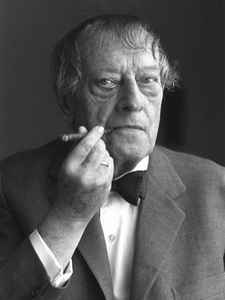
De Duitse schrijver Ulrich Holbein werd op 24 januari 1953 in Erfurt geboren. Zie ook alle tags voor Ulrich Holbein op dit blog.

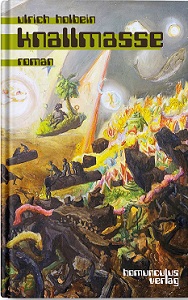
Uit:Knallmasse

„Ruckweise kam der Wecker in Gang. Pressluftstöße wanderten durchs Zwielicht des eisernen Schlafzimmers. Knallmasse — ruckweise — erwachte. Er stellte, mit eisernem Finger, seinen Einbau-Wecker aus. Die Stöße verebbten. Leisere Geräusche meldeten sich. Sehorgane, blicklos eingerostet, klappten auf, hinter grauschwarzer Metallbrille. Deckel klemmten. Im Rumpf des Knallmasse knackten Zahnräder. Ein großer Zahn knackte alle zwölf Sekunden. Alle zwölf Mikrosekunden klickten winzige Rädchen. Wei-tere Räder begannen zu arbeiten. Immer winzigere Zähn-chen knisterten ineinander, als werde altes Blech gebürstet. Knallmasse hob den Kopf vom Kopfkissen: Die Zentral-schulpflicht rief! Das Kopfkissen lag im Bett, als Eisenklumpen, defor-miert, viereckig wie Knallmasses Kopf, auf dem jetzt beide Kopfbirnchen hellgraues Licht versendeten, nötigerweise. Das eiserne Schlafzimmer besaß keine Fenster. Die ganze Sache kam in Bewegung, ruckweise, mausgrau austapeziert, durch und durch verbeult. Möbel verschoben sich. Wände begannen zu wandern. Aus dem Innern von Knallmasses Kopf schoben sich viereckige Ohrmuscheln, dann eine An-tenne, die sich dünnbeinig aufrichtete. Aus der mausgrauen Tapete kam eine übergroße Pinzette herausgefahren, die geräuschvoll auf Knallmasses Metallbrille — eine weitere Metallbrille stülpte. Erst ab jetzt begann Knallmasse zu sehen. »Guten Morgen, Stöpsel!•, sagte Knallmasse. Stöpsel we-delte mit seinem kiesgrauen Zeiger und drehte sein Vorder-ende seinem Herrchen zu. »Ich hoffe, dass du, wie immer, gut geschlafen hast.« Stöpsels Zeiger wedelte schneller. Ein übergroßer Schraubenzieher zog einige Schrauben fest, die sich nachts am Knallmasse gelockert hatten, und verschwand wieder in der mausgrauen Tapete des eisernen Schlafzimmers. Knallmasses Traumschlauch, dünner als jedes Verlänge-rungskabel, stöpselte sich selbstständig ab vom Rumpf des Knallmasse, genauso sein Kraftschlauch, dicker als jeder Python. Beide zogen sich geräuschvoll zurück in die maus-graue Tapete des eisernen Schlafzimmers. Knallmasse, strotzend vor Kraft, sann noch eine Minute lang dem Traum nach, in ihn eingeflossen durch den Traum-schlauch. Alle seine Gehirndrähte standen in freudiger Vi-bration. Denn der unbewusste Traum fühlte sich weiterhin wunderschön an und lag ihm auf der Zunge aus Blech. Hoch über seiner Mutterstadt hatte Knallmasse schwe-ben dürfen, freihändig und rundum glücklich. Er sah hinun-ter auf die prachtvollen Stadtteile der Metropole DeziBel, die ungeheuren Baustellen, auf sehenswerte Grauanlagen, angenehme Wohnklotzmassen, hinreißende Fabriken mit Schloten und Türmen, köstliche Startbahnen, grandiose Ufo-Häfen, beglückende Omnibushaltestellen, mittendrin der Uralte Turm, breit, asphaltfarben und herrlich umflossen vom Strom, der durch den Staat des Dröhnens floss, der Heimat des Knallmasse, weiter hinten imposante Außenbezirke, gigantische Krater, umsäumt vom Silbernen Gebirge.“


 2210323-8c229dcc5e9ddfca762b448852207be9.jpg
Ulrich Holbein (Erfurt, 24 januari 1953)
Cover


De Amerikaanse schrijfster Edith Wharton werd geboren op 24 januari 1862 in New York. Zie ook alle tags voor Edith Wharton op dit blog.

Uit:The Custom of the Country

"Undine Spragg!-how can you?" her mother wailed, raising a prematurely wrinkled hand heavy with rings to defend the note which a languid "bell-boy" had just brought in.
But her defense was as feeble as her protest, and she continued to smile on her visitor while Miss Spragg, with a turn of her quick young fingers, possessed herself of the missive and withdrew to the window to read it.
"I guess it's meant for me," she merely threw over her shoulder at her mother.
"Did you ever, Mrs. Heeny?" Mrs. Spragg murmured with deprecating pride.
Mrs. Heeny, a stout professional-looking person in a waterproof, her rusty veil thrown back, and a shabby alligator bag at her feet, followed the mother's glance with good-humored approval.
"I never met with a lovelier form," she agreed, answering the spirit rather than the letter of her hostess's inquiry.
Mrs. Spragg and her visitor were enthroned in two heavy gilt armchairs in one of the private drawing rooms of the Hotel Stentorian. The Spragg rooms were known as one of the Looey suites,and the drawing room walls, above their wainscoting of highly varnished mahogany, were hung with salmon-pink damask and adorned with oval portraits of Marie Antoinette and the Princess de Lamballe. In the center of the florid carpet a gilt table with a top of Mexican onyx sustained a palm in a gilt basket tied with a pink bow. But for this ornament, and a copy of The Hound of the Baskervilles which lay beside it, the room showed no traces of human use, and Mrs. Spragg herself wore as complete an air of detachment as if she had been a wax figure in a show-window. Her attire was fashionable enough to justify such a post, and her pale soft-cheeked face, with puffy eye-lids and drooping mouth, suggested a partially melted wax figure which had run to double-chin.
Mrs. Heeny, in comparison, had a reassuring look of solidity and reality. The planting of her firm black bulk in its chair, and the grasp of her broad red hands on the gilt arms, bespoke an organized and self-reliant activity, accounted for by the fact that Mrs. Heeny was a "society" manicure and masseuse. Toward Mrs. Spragg and her daughter she filled the double role of manipulator and friend; and it was in the latter capacity that, her day's task ended, she had dropped in for a moment to "cheer up" the lonely ladies of the Stentorian.
The young girl whose "form" had won Mrs. Heeny's professional commendation suddenly shifted its lovely lines as she turned back from the window.”


 2210323-136ff54e8c9255c6a627a07b81e6e93b.jpg
Edith Wharton (24 januari 1862 – 11 augustus 1937)
“The Mount”: het huis dat Wharton haar “first real home” noemde, in Lenox, Massachusetts.
Zij ontwierp het huis en de tuin eromheen zelf en woonde er van 1902 tot 1911.


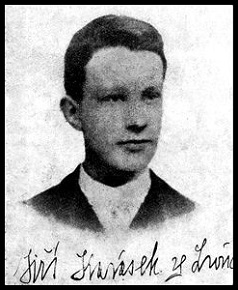
De Tsjechische dichter, schrijver en literair criticus Jiří Karásek ze Lvovic werd geboren in Praag op 24 januari 1871. Zie ook alle tags voor Jiří Karásek ze Lvovic op dit blog.

Uit: Stagnant Waters (Vertaald door Kirsten Lodge)

“With an unconstrained, indolent step, engrossed in his thoughts, in vague, diffuse dreaming unconsciously merging with the tumult of the streets, with the hazy luminosity of the lampposts and the moving black stains of the evening pedestrians, it was a constant overflowing, mixing, and pouring of that same melancholy, cold yellow into the blue and heavy black, he strolled from street to street. His hands clenched in his pockets, he smiled ironically, gripping an extinguished cigarette in the corner of his delicately modeled, artfully and gracefully sculpted mouth, and becoming intoxicated by the hubbub in the midst of which he unexpectedly found himself, closing and half-opening his eyes, which were flooded with the conquering illumination of the reflected elevated lights of elegant store windows, in which the weak lights of chandeliers, feeble, sickly, and fading, poured out into the frosty air, superfluous and useless in their impotence and their seemingly last and final exhaustion. He walked down the promenade and back up again, immersed in himself in the midst of the sound of the strolling pedestrians, which gave the impression of a single undulating mass, cut into yellow and black strips, a mingling and moving play of hard, contrasting colos. Someone greeted him and he turned, startled, but he did not see and did not even apprehend who it was. Odd, odd—that word kept coming to mind, and he sought an image to accompany it, but it kept slipping away, and he grimaced and but his brow and suddenly felt an emptiness, a cold emptiness beneath his skull, and in his eats a weak, nervously provoked and persistent resonance.
— — — how stupid, he said almost under his breath, and laughed. And suddenly he felt so light, so fresh, that he could laugh. He felt as though his entire inner self had been flooded with a hot, boiling shower, washing away all the filth, all the sediment that had dried and stuck there. Only an eagerness, and eagerness for something, whether for work, for laughter, for anger, or for derision, just not this stagnant mud, inertia, stagnation, indifference. To work, to work—five, six pages a day, prose, about which he had been thinking the whole month, after a long period of complete barrenness. The splendid prose of glorious sentences, majestic in the range of their rhythms, his final Work, his last work, the fulfillment of his dream —
He just needed to start. Bind himself to his work with the heavy ball of a galley-slave, the chains of a firm decision, and work, work, work, persistently, like a machine — — —
He found himself in deep thought across from the column with the lighted clock by the Powder Tower. Six-thirty — — — it is still too early to go home. There is still time to walk around...or to stop in somewhere. He started walking back towards Ovocni Street, lighting a cigarette. It is splendid to walk here. This bustle will finally move even the stagnant waters inside. It will warm the blood, rouse the nerves. The whole machine will start up and start working.”

 2210323-3246010f456bd8799f9e78ae12d84a25.jpg
Jiří Karásek ze Lvovic (24 januari 1871 – 5 maart 1951)
Op 20-jarige leeftijd in 1891


De Oostenrijkse schrijfster Vicki Baum werd op 24 januari 1888 in Wenen geboren. Zie ook alle tags voor Vicki Baum op dit blog.

Uit: Makkaroni in der Dämmerung

“Als ich ein Baby war, bekam ich viele Bilderbücher geschenkt; das hörte auf zwischen meinem fünften und sechsten Jahr, in der Zeit, da ich mit viel Kunst und Zähigkeit das Lesen erlernte. Aber neuerdings hat es wieder angefangen. Bilderbücher sind ein Geschenkartikel geworden, der sich auf dem Gabentisch des modernen Erwachsenen zu Haufen türmt. Das hängt erstens zusammen mit den Fortschritten der Fotografie und den Errungenschaften der Drucktechnik, habe ich mir sagen lassen. Und zweitens mit jenen infantilen Eigenschaften, die sich im Wesen des modernen Erwachsenen großgezüchtet haben: Ungeduld und Neugierde.
Wozu sich noch die Mühe machen, zu lesen? denkt dieser moderne Erwachsene, da man doch alles und jedes fotografieren kann! Ihm fliegen die gebratenen Resultate ins Gehirn, er braucht nicht mehr den Umweg des Denkens zu Hilfe zu nehmen. Tiere sehen uns an, Kinder sehen uns an, Dinge sehen uns an – und wir sehen sie an, mit einem ziemlich beschwerdelosen Vergnügen und ohne viel Kritik. Die Fotografen, diese Teufelskerle, kommen doch hinter alles. Sie zeigen uns: das Gesicht der Städte, das Antlitz der Zeit, Frauen von heute, den Mann von morgen. Sie entdecken Wolkenkratzer, Hände, die Staubfäden der Feuerlinie, Totenmasken, das Liebesspiel der Stichlinge, den Tanz der Maschinen und die Landschaft, die sich in einem Wassertropfen spiegelt. Sie knipsen, und wir brauchen überhaupt nichts mehr zu tun. Wir kriegen alle Eindrücke fertig belichtet und vorgekaut.
Es gibt da eine Art von Fotografien, die sehr überhandgenommen haben. Ich habe zu meiner inneren Erleichterung den Sammelnamen »Makkaroni in der Dämmerung« dafür erfunden. Weiß man, was ich meine? Ich meine: Zweihundert Zwirnspulen auf einer Tischplatte, ein bißchen Lichtspielerei und ein bißchen Perspektivzauber. Ich meine: Achtzehn Paar Schuhe hintereinander aufgestellt, und so von schräg unten aufgenommen, daß sie wie eine Straße oder ein Turm aussehen. Marke: Sachliche Fotografie. Ich meine: Aus einem Jutesack (wunderbar wie das Material lebt! sagt der Kenner) fließen dreieinviertel Pfund geschälter Reis. Sieht das nicht wunderbar aus?
Ja, liebe Fotografen, das sieht wunderbar aus, wenn man es zum erstenmal sieht. Auch beim drittenmal noch macht es Eindruck und beim zehntenmal Vergnügen. Aber beim hundertstenmal fängt es an, langweilig zu werden. Wir sind langsam hinter eure Tricks gekommen, wir kennen euer ewiges Treppenhaus, von unten her zur Schnecke zusammengeschoben, eure kühn verkürzten Hausfassaden und eure Schornsteinsilhouetten. Ihr kommt noch immer, seit drei oder vier Jahren kommt ihr und wollt uns immer wieder mit der gleichen Sache überrumpeln. Aber wir wissen schon! Achthundert Teerfässer. Gut. Tausend Glasplatten. Schön. Zwölfhundert Holzlöffel. Ausgezeichnet. Zweitausend Allgäuer Käse. Prachtvoll. Viertausend Pfund Makkaroni. Wunderbar, wie das aussieht. Und so sachlich – nicht?”


 2210323-ca14bf6840a4f01b9983cfced9cb9649.jpg
Vicki Baum (24 januari 1888 – 29 augustus 1960)


De Engelse dichter John Donne werd ergens tussen 24 januari en 19 juni 1572 geboren in Londen. Zie ook alle tags voor John Donne op dit blog.


Holy Sonnet XVI: Father

Father, part of his double interest
Unto thy kingdome, thy Sonne gives to mee,
His joynture in the knottie Trinitie
Hee keepes, and gives to me his deaths conquest.
This Lambe, whose death, with life the world hath blest,
Was from the worlds beginning slaine, and he
Hath made two Wills, which with the Legacie
Of his and thy kingdome, doe thy Sonnes invest.
Yet such are thy laws, that men argue yet
Whether a man those statutes can fulfill;
None doth; but all-healing grace and spirit
Revive againe what law and letter kill.
Thy lawes abridgement, and thy last command
Is all but love; Oh let this last Will stand!


Holy Sonnet XVII: Since she whom I loved

Since she whom I loved hath paid her last debt
To Nature, and to hers, and my good is dead,
And her soul early into heaven ravishèd,
Wholly on heavenly things my mind is set.
Here the admiring her my mind did whet
To seek thee, God; so streams do show the head;
But though I have found thee, and thou my thirst hast fed,
A holy thirsty dropsy melts me yet.
But why should I beg more love, whenas thou
Dost woo my soul, for hers offering all thine:
And dost not only fear lest I allow
My love to saints and angels, things divine,
But in thy tender jealousy dost doubt
Lest the world, flesh, yea, devil put thee out.


 2210323-c7f5c3d2a3528405533fd2d86da3b0bb.jpg
John Donne (24 januari 1572 – 31 maart 1631)
Cover biografie


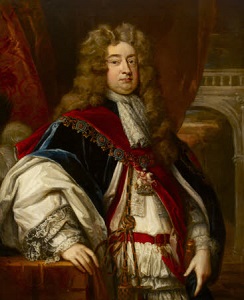
De Engelse dichter en edelman Charles Sackville werd geboren op 24 januari 1638 in Buckhurst. Zie ook alle tags voor Charles Sackville op dit blog.


To all you ladies now at land (Fragment)

To all you ladies now at land
We men at sea indite;
But first would have you understand
How hard it is to write:
The Muses now, and Neptune too,
We must implore to write to you--
With a fa, la, la, la, la!

For though the Muses should prove kind,
And fill our empty brain,
Yet if rough Neptune rouse the wind
To wave the azure main,
Our paper, pen, and ink, and we,
Roll up and down our ships at sea--
With a fa, la, la, la, la!

Then if we write not by each post,
Think not we are unkind;
Nor yet conclude our ships are lost
By Dutchmen, or by wind:
Our tears we'll send a speedier way,
The tide shall bring 'em twice a day--
With a fa, la, la, la, la!


 2210323-85681a699eb831f4507c1c67005e1cda.jpg
Charles Sackville (24 januari 1638 – 29 januari 1706)
Portret door Godfrey Kneller in Sissinghurst Castle, ca. 1694 - 1706


Zie voor nog meer schrijvers van de 24e januari ook mijn blog van 24 januari 2018 en ook mijn blog van 24 januari 2017 en ook mijn blog van 24 januari 2016 deel 2.

Geschreven door Romenu om 18:18 Reageer op dit bericht

Meer van Romenu

↑ Terug naar de berichten