De Nederlandse schrijfster journaliste en columniste Hanna Marleen Bervoets werd geboren in Amsterdam op 14 februari 1984. Zie ook alle tags voor Hanna Bervoets op dit blog.
Uit: Ivanov
“Geheimen willen we altijd kwijt. Ja, uiteindelijk vertelt iedereen elkaar altijd alles. Ik heb me vaak afgevraagd waarom. Waarschijnlijk is het omdat juist dat wat anderen niet van ons weten, ons maakt tot wie we zijn; onze uitzonderlijkheid bewijst. Zo dragen we onze geheimen mee als een zak glimmende edelstenen. Het is een onopvallende zak, die we bewaren op een onopvallende plek. Tot er per ongeluk iemand over struikelt, de zak opent, nog net iets ziet blinken voor we zijn hand wegduwen – nee, dit mag jij niet weten. Maar wanneer de fonkeling eenmaal ontsnapt is, wordt de verleiding groot; willen we pochen met wat we bij ons dragen en zullen we de zak alsnog opentrekken: kijk dan, hier zijn ze, mijn edelstenen, edelstenen die alleen ík heb, die maken dat ik ben geworden wie ik nu ben. Het snelst trekken we de zak open voor de mensen om wie we geven, want nog meer dan de ander willen zien, betekent liefde dat je jezelf aan de ander wilt laten zien, is het niet?
En toch.
De eerste keer dat ik Jonas over Helena vertelde, was ook meteen de laatste keer.
We kenden elkaar nog maar een paar weken. Het was een warme, droge zomer. Jonas zou met vrienden naar Italië gaan maar had die vakantie één dag voor vertrek afgezegd. Omdat hij geen zin had, beweerde hij. Omdat hij mij had leren kennen, wist ik. Vanaf dat moment zagen we elkaar dagelijks. We spraken af in parken en op stadse terrassen, tot we de ogen van anderen niet meer nodig hadden om onze afspraakjes een zekere ongedwongenheid te verschaffen. Daarna zaten we vooral op mijn balkon. Wanneer de onderburen niet thuis waren dronken we bier en mojito’s tot laat in de avond, en vertelden we elkaar onze levensverhalen; telkens opnieuw, steeds andere details, alsof onze levens routes op een landkaart waren die we nauwkeurig moesten volgen met onze wijsvingers, omdat iedere afslag een nieuwe karaktertrek, een nieuw geheim zou kunnen prijsgeven.
Zijn jeugd in Brabant: vader kweker, moeder huisvrouw, één zus, twee broers, een warm gezin (‘maar ook beklemmend’), met neefjes de maïsvelden in om elkaar af te trekken, als tiener het dorp uit, Architectuur in Antwerpen (‘eigenlijk begon mijn leven daar pas’).”
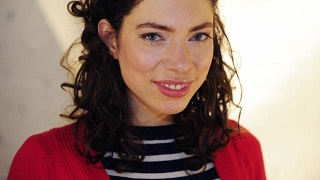
Hanna Bervoets (Amsterdam, 14 februari 1984)
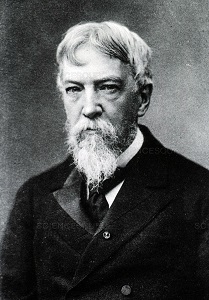
De Nederlandse dichter en predikant Piet Paaltjens werd geboren in Leeuwarden op 14 februari 1835. Zie ook alle tags voor Piet Paaltjes op dit blog
Aan Hedwig
Wat nu een kerkhof in mij is, was, lang geleên,
Een vrolijk marktplein, waar een dartle zwerm dooreen
Krioelde van de dolste dromen, somtijds wel
Wat al te dol, en toch vermaaklijk en hun spel.
Het was me een leventje daarbinnen! Zien verging
Een mens en horen. Doch op eenmaal, daar verging
Een aaklig steunen 't blij rumoer, en dan - een gil
Als van een zinkende equipage. En toen was 't stil.
Ach, wat geen enkle van mijn dromen had verwacht:
Een zoete vrouwenhand had ze allen omgebracht.
Zoet, vals, arm handje! 't Vonnis, dat u trof, was zwaar:
Gij hebt u moeten geven aan een weduwnaar.
Gij glimlacht, Hedwig, maar ik zeg u, glimlach niet!
Nog strenger oordeel zie ik voor u dagen in 't verschiet.
De hand, die eens mijn dromen worgde, was wel wreed,
Maar wreder was nog, wat uw dartle hand misdeed.
Op de piano dansend dorst uw hand begaan,
Wat zelfs hyena's slechts bij nacht bestaan:
Met onbarmhartig-smeltendteer klaviergeluid
Trok ze al mijn doode dromen weer hun graven uit.
Afschuwlijk! Wat reeds halfvergaan was in de schoot
Van mijn gemoed, dat woelde uw wreevle hand weer bloot
Het is daarbinnen niet meer uit te houden! 'k Stik,
Als ik maar even afdaal in mijn eigen ik!
En toch, met wellust zou 'k me domplen in mij zelf,
Kon 'k u slechts met mij sleuren in dat grafgewelf.
Als 'k u daar, Hedwig, in de stikstof smoren zag,
Hoe zou mijn ziel dan dreunen van mijn laatste lach!
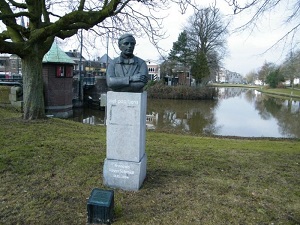
Piet Paaltjens (14 februari 1835 – 19 januari 1894)
Borstbeeld in Leeuwarden
De Nederlandse dichter, schrijver en criticus Albert (Ab) Visser werd geboren in Groningen op 14 februari 1913. Zie ook alle tags voor Ab Visser op dit blog.
Nocturne
De avond heeft niets lieflijks in dit land;
het licht vergloeit als in ontstoken ogen,
de lucht weegt grauw en bitter als nat zand
op bomen, in de Noordenwind gebogen.
’t Cholerisch bruisen in de naakte kruinen
vervult nachtlang, naargeestig en alom
de schemering en in verkleurde tuinen
waart regen, ijzig, als een ziekte om.
En ik, geslachtenlang hiermee verbonden,
toch tot geen vereenzelviging in staat,
ga langzaam aan die somberheid te gronde
en aan een pijn, waarvoor geen naam bestaat.
Die Unvollendete
Hij denkt de wereld leeg en licht
En weet dat nu het lied zal komen.
Het zal hem in en overstromen …
Dan trekt zijn hart in wrangheid dicht.
`t Lied vlucht als wind weg door de bomen,
De natte nacht slaat zijn gezicht,
Hij dacht de wereld leeg en licht,
Maar weet zich vreemd aan al zijn dromen
En zoekt verklaring voor `t gericht,
Waarin hem `t liefste wordt ontnomen.
Dan buigt hij zijn beschreid gezicht
En wacht en weet dat God zal komen
En denkt het einde leeg en licht.
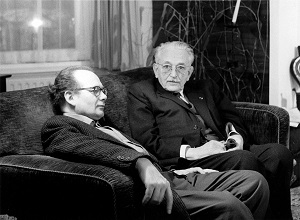
Ab Visser (14 februari 1913 – 9 mei 1982)
Hier met Jan Greshoff (rechts)
De Nederlandse journalist, schrijver, dichter, filmacteur en televisiepresentator Ischa Meijer werd geboren in Amsterdam op 14 februari 1943. Zie ook alle tags voor Ischa Meijer op dit blog.
Uit: De interviewer en de schrijvers (Cees Buddingh')
“Remco Campert dichtte:
sinds buddingh'
verwachten veel mensen
van poëzie een avondje lachen...
Cees Buddingh' zegt: ‘De mensen lachen vaak om dingen waar helemaal niet om te lachen valt. Neem nou es die “kachel-cyclus” die ik geschreven heb: dertien manieren waarop je een doodgewone kachel kunt bekijken. Een van die manieren is:
hoeveel men ook van elkaar houdt, op den duur kan men niet zonder kachel.
Daar lachen de mensen dan om, terwijl het hier eigenlijk gaat om een van die essentiële bronnen van het menselijk tekort waar altijd zoveel over gezeurd wordt. Ze lachen uit misverstand, ze lachen om het misverstand. En ik wil niet aansprakelijk gesteld worden voor de misverstanden die ik zelf opwek, haha!’
Dichter, romancier, sportjournalist, televisiepresentator, vertaler, criticus, toneelschrijver, hoorspelbewerker, detectiveschrijver, citatenverzamelaar en aforistisch denker Cees Buddingh' (52) dankt zijn succes en gemoedsrust aan een van understatement doortrokken schrijf- en levensstijl. Een korte, vriendelijke pijproker, immer gehuld in een bijna tweedehands tweedjasje, bezitter van een hoogst ongebruikelijk stemgeluid: hoog en lijzig tegelijkertijd.
'Het eigen Buddingh'-geluid,’ zegt hij zelf, ‘zoals dat, vooral na '56 ook in mijn poëzie doorklinkt, is gebaseerd op het principe van de gewone spreektaal waarin ernst en humor nuchter en laconiek op louter constaterende toon ten gehore wordt gebracht.’ Het maakte hem tot een van de populaìrste dichters in deze drassige dreven: van zijn laatste twee bundels werden in totaal al meer dan 12.000 exemplaren verkocht, een ongehoord resultaat ook voor de voordrachtskunstenaar Buddingh' die voor het eerst eigenlijk ‘ontdekt’ werd op de grote poëzieavond (1966) in het Amsterdamse Carré.
Daar droeg hij zelf, stomverbaasd over de razend enthousiaste bijvalsbetuigingen uit de zaal, enige van zijn ‘toevallig genoteerde’ ontboezemingen voor die snel hoog genoteerd kwamen te staan op de letterkundige hitlijsten van de middelbareschooljeugd. Zoals het vers over de dekseltjes van het Marmite- en Heinz-sandwichspreadpotje die, na een proefondervindelijk onderzoekje, onderling verwisselbaar bleken.”
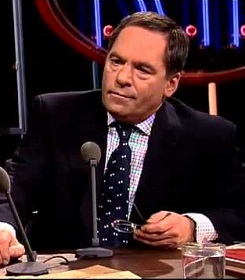
Ischa Meijer (14 februari 1943 – 14 februari 1995)
De Franse schrijver, komiek en regisseur Jean-Luc Lagarce werd geboren op 14 februari 1957 in Héricourt (Haute-Saône, in de buurt van Belfort). Zie ook alle tags voor Jean-Luc Lagarce op dit blog.
Uit: Juste la fin du monde
« Louis. - Et plus tard, vers la fin de la journée,
c'est exactement ainsi,
lorsque j'y réfléchis,
que j'avais imaginé les choses,
vers la fin de la journée
sans avoir rien dit de ce qui me tenait à cœur
- c'est juste une idée mais elle n'est pas jouable -
sans voir jamais osé faire tout ce mal,
je repris la route,
je demandai qu'on m'accompagne à la gare,
qu'on me laisse partir.
Je promets qu'il n'y aura plus tout ce temps
avant que je revienne,
je dis des mensonges,
je promets d'être là, à nouveau, très bientôt,
des phrases comme ça.
Les semaines, les mois peut-être,
qui suivent,
je téléphone, je donne des nouvelles,
j'écoute ce qu'on me raconte, je fais quelques efforts,
j'ai l'amour plein de bonne volonté,
mais c'était juste la dernière fois,
ce que je me dis sans le laisser voir.
Elle, elle me caresse une seule fois la joue,
doucement, comme pour m'expliquer qu'elle me
pardonne je ne sais quels crimes,
et ces crimes que je ne connais pas,
je les regrette,
j'en éprouve du remords.
Antoine est sur le pas de la porte,
il agite les clefs de sa voiture,
il dit plusieurs fois qu'il ne veut en aucun cas me
presser,
qu'il ne souhaite pas que je parte,
que jamais il ne me chasse,
mais qu'il est l'heure du départ,
et bien que tout cela soit vrai,
il semble vouloir me faire déguerpir, c'est l'image
qu'il donne,
c'est l'idée que j'emporte.
Il ne me retient pas,
et sans le lui dire, j'ose l'en accuser.
C'est de cela que je me venge.
(Un jour, je me suis accordé tous les droits.) »
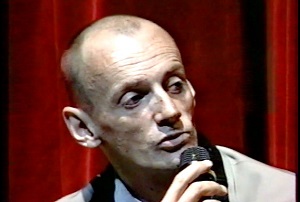
Jean-Luc Lagarce (14 februari 1957 – 30 september 1995)
De Canadees-Duitse schrijver en vertaler Frederick Philip Grove werd geboren als Felix Paul Greve op 14 februari 1879 in Radomno, Westpruisen. Zie ook alle tags voor Frederick Philip Grove op dit blog.
Uit: Settlers of the Marsh
“On the road leading north from the little prairie town Minor two men were fighting their way through the gathering dusk.
Both were recent immigrants; one, Lars Nelson, a giant, of three years’ standing in the country; the other, Niels Lindstedt, slightly above medium size, but compactly built, of only three months’. Both were Swedes; and they had struck up a friendship which had led to a partnership for the winter that was coming. They had been working on a threshing gang between Minor and Balfour and were now on their way into the bush settlement to the north-east where scattered homesteads reached out into the wilderness.
It was the beginning of the month of November.
Niels carried his suitcase on his back; Nelson, his new friend’s bundle, which also held the few belongings of his own which he had along. He wore practically the same clothes winter and summer.
Above five miles from town they reached, on the north road, the point where the continuous settlement ran out into the wild, sandy land which, forming the margin of the Big Marsh, intervened between the territory of the towns and the next Russo-German settlement to the north, some twenty miles or so straight ahead.
At this point the road leapt the Muddy River and passed through its sheltering fringe of bush to strike out over a sheer waste of heath-like country covered with low, creeping brush. The wind which had been soughing through the tree tops had free sweep here; and an exceedingly fine dust of dry, powdery ice-crystals began to fly — you could hardly call it snow so far.
It did not occur to Niels to utter or even harbour apprehensions. His powerful companion knew the road; where he went, Niels could go.
They swung on, for the most part in silence.”
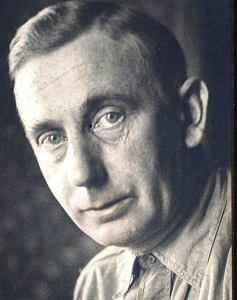
Frederick Philip Grove (14 februari 1879 – 19 augustus 1948)
De Iers-Engelse schrijver, publicist, uitgever en redacteur Frank Harris werd geboren op 14 februari 1856 in Galway, Ierland Zie ook alle tags voor Frank Harris op dit blog.
Uit: My Life and Loves
“The next morning I saw Ethel Dodge through the knothole. She was slim and shapely with wide breasts, pert nipples, flaring hips, and a thick mossing of dark hair on her mount. She was so attractive that I wanted her to come to my cabin as she came from the bath. The stewardess introduced me and Ethel seemed willing to be friends. Yes, she was pretty and well-made, but not as lovely, or as young as Winnie. She needed money, however, as she was going to be married. She confessed at once that she loved love and was not averse to earning moneyin whatever manneron her voyage. While we were talking, I heard the stewardess tap lightly on the door; whoever was passing must have heard us laugh. Ethel plainly told me she was at my service for she liked me greatly.
“No nonsense about you, that's what I like,” she added.
When I met Winnie on deck half an hour later, she was very cold to me, so I merely bowed and smiled and passed on. A little later, while I was pacing the deck, she stopped me.
“I suppose you're proud of your new conquest?” she huffed.
“No,” I replied, “I've made no conquest new or old.”
“Yet I heard you both laughing in your room as I passed,” she replied.
“Possibly,” I said, “but that proves nothing.”
“You probably took off her bathrobe and fondled her breasts andand" Winnie said passionately.
“I didn't even want to,” I answered.
“I wish I could believe that,” she cried with intense feeling in voice and looks. As luck would have it, we had reached the forecastle and were clean out of sight and hearing of the rest of the passengers. I put my arm around her waist, drew her to me strongly and kissed her lips. While my mouth was on hers, her arms went around my neck and she murmured, “Then you do love me best?”
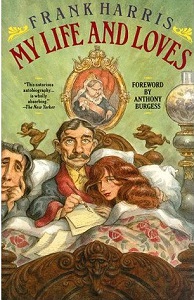
Frank Harris (14 februari 1856 – 27 augustus 1931)
Cover
De Puerto Ricaanse dichteres en schrijfster Julia de Burgos (eig. Julia Constanze Burgos García) werd geboren op 14 februari 1914 in Carolina. Zie ook alle tags voor Julia de Burgos op dit blog.
Poem to my Death
Confronting a longing
To die with my very self, abandoned and alone,
On the densest rock of a deserted island.
At that moment, a final yearning for carnations,
On the landscape, a tragic horizon of stone.
My eyes filled with graves of stars,
My passion spread out, exhausted and dispersed,
My fingers like children watching a cloud fade,
My reason mobbed with enormous sheets.
My pale affections returning to silence
--Even love, consumed brother on my path!--
My name untangling, yellow in the branches,
And my hands, twitching to give me to the grass.
To rise to the final, the whole minute,
And offer myself to the fields,
Then to bend the leaf of my ordinary flesh
And fall unsmiling, without witness to intertia.
Let nobody dishonor my death with sobs
Or wrap me forever in plain earth
For in a moment of freedom I may freely
Demand the one liberty of this planet.
With what mad joy will my bones begin
To seek airholes in my brown flesh
And I, giving myself, giving myself fiercely and boldly
To the elements: in solitude breaking my chains!
Who will detain me with useless dreams
When my soul begins to fulfill its task
Making of my sleep a rich douh
For the frail worm that knocks at my door?
Smaller and smaller my worn-out humility
At every instant greater and easier the surrender
Perhaps my chest will turn to begin a flower bud
Maybe my lips will feed lilies.
What shall I be called when all that remains
Is my memory of myself on the rock of the deserted island?
A carnation wedged between my shadow and the wind,
Death's child and mine: My name will be poet.
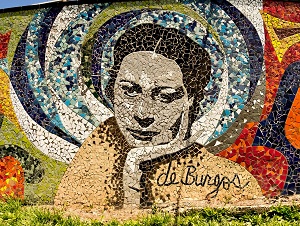
Julia de Burgos (14 februari 1914 – 6 juli 1953)
Muurschildering in Carolina, Puerto Rico
De zwarte Amerikaans abolitionist, schrijver, redacteur, publicist, politicus en hervormer Frederick Douglass werd geboren nabij Easton in de staat Maryland op 14 februari 1818 als Frederick Augustus Washington Bailey, (Zijn precieze geboortedag is nooit opgeschreven, maar hij koos 14 februari om het te vieren.) Zie ook alle tags voor Frederick Douglas op dit blog.
Uit: Self-Made Men
“The subject announced for this evening's entertainment is not new. Man in one form or another, has been a frequent and fruitful subject for the press, the pulpit and the platform. This subject has come up for consideration under a variety of attractive titles, such as "Great Men," "Representative Men," "Peculiar Men," "Scientific Men," "Literary Men," "Successful Men," "Men of Genius," and "Men of the World;" but under whatever name or designation, the vital point of interest in the discussion has ever been the same, and that is, manhood itself, and this in its broadest and most comprehensive sense.
The tendency to the universal, in such discussion, is altogether natural and all controlling: for when we consider what man, as a whole, is; what he has been; what he aspires to be, and what, by a wise and vigorous cultivation of his faculties, he may yet become, we see that it leads irresistably to this broad view of him as a subject of thought and inquiry.
The saying of the poet that "The proper study of mankind is man," and which has been the starting point of so many lectures, essays and speeches, holds its place, like all other great utterances, because it contains a great truth and a truth alike for every age and generation of men. It is always new and can never grow old. It is neither dimmed by time nor tarnished by repetition; for man, both in respect of himself and of his species, is now, and evermore will be, the center of unsatisfied human curiosity.
The pleasure we derive from any department of knowledge is largely due to the glimpse which it gives us of our own nature. We may travel far over land and sea, brave all climates, dare all dangers, endure all hardships, try all latitudes and longitudes; we may penetrate the earth, sound the ocean's depths and seep the hollow sky with our glasses, in the pursuit of other knowledge; we may contemplate the glorious landscape gemmed by forest, lake and river and dotted with peaceful homes and quiet herds; we may whirl away to the great cities, all aglow with life and enterprise; we may mingle with the imposing assemblages of wealth and power; we may visit the halls where Art works her miracles in music, speech and color, and where Science unbars the gates to higher planes of civilization; but no matter how radiant the colors, how enchanting the melody, how gorgeous and splendid the pageant: man himself, with eyes turned inward upon his own wondrous attributes and powers surpasses them all.”
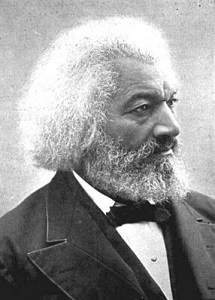
Frederick Douglass (14 februari 1818 – 20 februari 1895)
Zie voor nog meer schrijvers van de 14e februari ook mijn blog van 14 februari 2018 en ook mijn blog van 14 februari 2016 deel 2 en ook deel 3.


 Dolce far niente, John Ashbery, Richard Blanco, Stacie Cassarino, Silas Weir Mitchell