

Naar de inhoud

Romenu

Over literatuur, gedichten, kunst en cultuur
akke.beakke.be

Berichten van 24 februari 2019 tot 25 februari 2019

Amin Maalouf, Gerald Murnane, Gabriël Smit, Anthony Burgess, Robert Rius, Karl May, Lesja Oekrajinka, Aldo Busi, Karel Toman
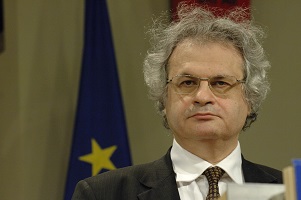
De Libanese (Franstalige) schrijver Amin Maalouf werd geboren in Beiroet, Libanon, op 25 februari 1949. Zie ook alle tags voor Amin Maalouf op dit blog.

Uit: De rots van Tanios (Vertaald door Eef Gratama)

“Het was heel lang geleden, ik was nog niet eens geboren, en mijn eigen vader ook nog niet. In die tijd voerde de pasja van Egypte oorlog tegen de Osmanen, onze voorouders hebben het niet makkelijk gehad. Vooral niet na de moord op de patriarch. Hij is precies daar, aan het begin van het dorp gedood, met het geweer van de consul van Engeland ...' Zo sprak mijn grootvader wanneer hij me geen antwoord wilde geven, hij uitte flarden van zinnen alsof hij een weg aanwees, dan weer een andere, vervolgens een derde, zonder ooit een ervan te volgen. Ik heb jaren moeten wachten voordat ik de ware toedracht ontdekte. Toch zat ik dicht bij de bron want ik kende de naam Lamia. Iedereen in de streek kende die naam, dankzij een gezegde dat ons bij toeval na een reis van twee eeuwen ter ore kwam: `Lamia, Lamia, hoe zou je je schoonheid kunnen verhullen?' Nu nog, wanneer de jongelui die op het dorpsplein bij elkaar komen, een vrouw gehuld in een omslagdoek voorbij zien komen, is er altijd wel één die mompelt: `Lamia, Lamia ...' Wat vaak een welgemeend compliment is, maar soms ook het toppunt van wrede spot. De meesten van deze jongens weten niet veel van Lamia, noch van het drama dat dankzij dit gezegde niet in de vergetelheid is geraakt. Ze volstaan met te herhalen wat ze uit de mond van hun ouders en grootouders hebben gehoord, en soms maken ze daarbij, net als zij, een handgebaar in de richting van het hoger gelegen deel van het dorp, waar nu niemand meer woont en waar je de nog altijd de imposante ruïne van een kasteel kunt zien. Vanwege dat gebaar, dat ik zo vaak heb gezien, heb ik lange tijd gedacht dat Lamia een soort prinses was die haar schoonheid achter die hoge muren voor de blikken van de dorpelingen verhulde. Arme Lamia, als ik haar in de keukens in de weer had gezien, of blootsvoets lopend van het ene voorportaal naar het andere met een kruik in haar handen en een sjaal om haar hoofd, zou ik haar moeilijk voor de kasteelvrouwe hebben kunnen aanzien. Maar ze was evenmin een dienstmeisje. Nu weet ik iets meer over haar. In de eerste plaats dankzij de oude dorpelingen, zowel mannen als vrouwen die ik alsmaar met vragen heb bestookt. Dat was meer dan twintig jaar geleden, nu zijn ze allemaal dood, op één na. Zijn naam is Gebrayel, hij is een neef van mijn grootvader en is nu zesennegentig jaar oud. Dat ik hem ter sprake breng, komt niet alleen omdat hij het voorrecht heeft gehad de anderen te overleven, maar vooral omdat de getuigenis van deze voormalige onderwijzer met een hartstochtelijke belangstelling voor de plaatselijke geschiedenis het meest waardevol is geweest; in feite onvervangbaar. Ik kon uren naar hem blijven kijken, hij had grote neusgaten, dikke lippen en een klein, gerimpeld kaal hoofd —trekken die met het klimmen der jaren sterk de nadruk hebben gekregen. Ik heb hem de laatste tijd niet meer gezien, maar men verzekert mij dat hij nog altijd op dezelfde vertrouwelijke toon spreekt, met dezelfde waterval van woorden en een ijzeren geheugen. Tussen de woorden door die ik hierna op papier ga zetten, zal de lezer vaak de echo van zijn stem horen.”


 2218763-17ccfc57e7d1b326b7fe125d0051934c.jpg
Amin Maalouf (Beiroet, 25 februari 1949)


De Australische schrijver Gerald Murnane werd geboren op 25 februari 1939 in Coburg, Victoria. Zie ook alle tags voor Gerald Murnane op dit blog.

Uit: Border Districts

“Two months ago, when I first arrived in this township just short of the border, I resolved to guard my eyes, and I could not think of going on with this piece of writing unless I were to explain how I came by that odd expression.
I got some of my schooling from a certain order of religious brothers, a band of men who dressed each in a black soutane with a bib of white celluloid at his throat. I learned by chance last year, and fifty years since I last saw anyone wearing such a thing, that the white bib was called a rabat and was a symbol of chastity. Among the few books that I brought here from the capital city is a large dictionary, but the word rabat is not listed in it. The word may well be French, given that the order of brothers was founded in France. In this remote district, I am even less inclined than I was in the suburbs of the capital city to seek out some or another obscure fact; here, near the border, I am even more inclined than of old to accept as well-founded any supposition likely to complete a pattern in my mind and then to go on writing until I learn the meaning for me of such an image as that of the white patch which appeared just now against a black ground at the edge of my mind and will not be easily dislodged.
The school where the brothers taught was built in the grounds of what had been a two-storey mansion of yellow sandstone in a street lined with plane-trees in an inner eastern suburb of the capital city. The mansion itself had been converted into the brothers’ residence. On the ground floor of the former mansion, one of the rooms overlooking the return veranda was the chapel, which was used by the brothers for their daily mass and prayers but was available also to us, their students.
In the language of that place and time, a student who called at the chapel for a few minutes was said to be paying a visit. The object of his visitation was said to be Jesus in the Blessed Sacrament or, more commonly, the Blessed Sacrament. We boys were urged by teachers and priests to pay frequent visits to the Blessed Sacrament. It was implied that the personage denoted by that phrase would feel aggrieved or lonely if visitors were lacking. My class once heard from a religious brother one of a sort of story that was often told in order to promote our religious zeal. A non-Catholic of good will had asked a priest to explain the teachings of the Church in the matter of the Blessed Sacrament. The priest then explained how every disc of consecrated bread in every tabernacle in every Catholic church or chapel, even though it appeared to be mere bread, was in substance the body of Jesus Christ, the Second Person of the Blessed Trinity. The inquirer of good will then declared that if only he were able to believe this, he would spend every free moment in some or another Catholic church or chapel, in the presence of the divine manifestation.”

 

 2218763-9a8cea6aa0e034389e15d643942ebe9c.jpg
Gerald Murnane (Coburg, 25 februari 1939)


De Nederlandse dichter, essayist, toneelschrijver, vertaler, kunstcriticus, journalist, redacteur en politicus Gabriël Wijnand Smit werd geboren in Utrecht op 25 februari 1910. Zie ook alle tags voor Gabriël Smit op dit blog


Oud familieportret

Tussen de grote mensen - van de grond
gescheiden door een berg van brede plooien,
als op een onbereikbaar wereldrond -
zit zich het kind geduldig te verstrooien.

Het kijkt bevreemd de leegte in het rond:
het dikke kleed, de glinstering van het strooien
boeket, het grijze tuindoek, - al die mooie
dingen bekijkt het als een kleine hond.

Leeg is zijn hoofd achter de koele ogen,
zijn netvlies spiegelt alles onbewogen,
maar toch begint al in zijn rond gezicht

vermoeden van verwondering te trillen:
de mond bewoog, bevende om de stille
rimpeling van een wazig binnenlicht.


Tien sonnetten

V
En meer: Gij hebt ze om mij heen gezet,
uw hand even tevoren weggenomen
en warm van liefde, schuw in huiverend schromen,
vervullen zij hun opdracht: van uw wet

hier, voor mijn oog, de vaste stem te zijn,
mij dringend en vermanend niet te blijven
waar trots en zelfzucht mij willen inlijven
bij het verraad van hun devoten schijn.

Want alleen hier, in dit aandachtig spreken
met al wat Gij mij laat als troost en teeken,
ken ik de liefde, die de dag mij rooft.

Wat deed ik toch? Waar ben ik toch gebleven?
Bang keer ik terug naar wat mij heeft verdreven...
‘Caïn’, roept Gij, - en ik buig mijn hoofd.


 2218763-71a596ed00839c2b0bc169d1bebd65cd.JPG
Gabriël Smit (25 februari 1910 – 23 mei 1981)


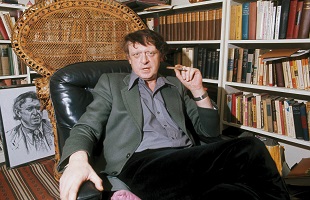
De Britse dichter en schrijver Anthony Burgess werd geboren op 25 februari 1917 in Manchester, Engeland. Zie ook alle tags voor Anthony Burgess op dit blog.

Uit: Machten der duisternis (Vertaald door Paul Syrier)

“Ik bleef nog even liggen, naakt, vlekkerig, vaalbleek, uitgemergeld, een sigaret rokend die postcoïtaal had moeten zijn maar het niet was. Geoffrey trok puffend zijn sandalen aan, waarbij zijn buik zich in drie rollen vet plooide, en daarna zijn gebloemde overhemd. Ten slotte verborg hij zich achter zijn zonnebril, zo een van het onbeschofte soort waarvan de bolle oppervlakken de wereld een duo metalen spiegels voorhouden. Ik kon mijn eenentachtig jaar oude gezicht en hals er heel duidelijk in zien: de bekende afgeleefde grimmigheid van iemand die het leven intens heeft ervaren, de ontvleesde pezen als kabels, de anatomie van de kaken, de Fribourg & Treyersigaret in zijn Dunhillpijpje, die mijn herkomst verried uit een tijd waarin roken een handeling was die men met elegantie verrichtte. Ik bezag het dubbelbeeld zonder rancune, terwijl Geoffrey zei: ‘Ik vraag me af wat Zijne Aartsbisschap in de zin heeft. Misschien komt hij een excommunicatiebul afleveren. In kakelbonte cadeauverpakking, natuurlijk.’
'Zestig jaar te laat,’ zei ik. Ik reikte Geoffrey de halfopgerookte sigaret aan om uit te drukken in een van de onyx asbakken en merkte op hoe ongaarne hij me zelfs die kleine dienst bewees. Ik stapte uit het bed, naakt, vlekkerig, vaal, uitgemergeld. Mijn zomerbroek zat, conform het fatsoensminimum, verre van strak. Het overhemd met begonia’s en orchideeën stond een man van mijn leeftijd belachelijk, maar ik had al lang geleden de angel uit Geoffreys rotopmerkingen getrokken met de woorden: ‘Lieve jongen, ik zal toch ééns moeten wennen aan het vooruitzicht van een laatste bloemenhulde.’ Deze zinsnede dateerde uit 1915. Ik had hem gehoord in Lamb House te Rye, maar hij was minder echt Henry James dan Henry James die de spot dreef met de echte Meredith. Hij had herinneringen opgehaald aan 1909 en het moment dat een of andere dame Meredith te veel bloemen had gestuurd. ‘Een laatste bloemenhulde, ha, ha, ha,’ had James gespot, schokschouderend van geveinsde vrolijkheid.
‘De gelukwensen van de tróúwe gelovigen, dan.’
Ik kon de overdreven stembuiging waarmee Geoffrey dit woord uitsprak geenszins waarderen. Het ademde seks en zijn eigen infame trouweloosheden; het was een woord dat ik ooit in tranen tegen hem had gebezigd; het was voor mij geladen met een ouderwetse morele ernst die voor Geoffreys generatie niet meer dan een nichtengrap was.”
‘
 2218763-f3c412947407c4f754bfebbd450efa79.jpg
Anthony Burgess (25 februari 1917 – 22 november 1993)
Cover Engelse uitgave 


De Franse dichter Robert Rius werd geboren op 25 februari 1914 in Château-Roussillon. Zie ook alle tags voor Robert Rius op dit blog

Uit: Votre vie vaut cinquante francs (mede ondertekend door André Breton, Henry Espinouze, Maurice Henry, Georges Hugnet, Jean, Benjamin Péret en Yves Tanguy)

« Deux cents francs pour quatre cadavres, on ne peut pas dire que ce soit cher. Soyons précis : Soixante-six francs soixante-six centimes, si l'on compte à sa juste valeur, c'est-à-dire rien, la carcasse de l'adjudant Untel, qui a trouvé une fin hono-rable dans l'exercice de ses sordides fonctions. Qu'on ne vienne pas nous dire que ce n'était pas sa faute. On ne devient pas adjudant comme on devient plombier; il faut la vocation. Après tout, Dreyfus n'avait qu'à ne pas être capitaine. Ça lui aurait évité des difficultés avec l'armée. Les paysans dont le sort nous touche aujourd'hui ont été assiégés dans leur ferme parce qu'ils devaient deux cents francs au fisc. On voit ici l'effet des direc-tions données par les responsables du Front Populaire aux percepteurs : accorder des facilités, ne pas instrumenter contre les gens trop visiblement désargentés. Il est très probable que les Cornuel auraient préféré payer deux cent francs que mourir grillés et mitraillés. 11 est entendu que le pauvre serrurier qu'ils ont descendu n'y était pour rien ; d'autant plus que si on l'avait laissé chez lui, il ne serait pas refroidi maintenant. Mais on a lancé des bombes lacrymogènes sur la vache des Cornuel. Erreur politique, d'ailleurs, il n'y avait rien d'autre à saisir dans leur lamentable ferme. On a mis le feu à la ferme (en sorte que l'enterrement des martyrs retombera finalement aux frais de la commune). Ne l'oubliez pas. Nous avons tous lu Sade avec un certain plaisir. N'oubliez pas la vieille paysanne qui fuyait la fournaise, les cheveux enflammés, canardée à loisir par des gendarmes épouvantés. »
 

 2218763-6029d43d546da26f8b53a535c4efde77.jpg
Robert Rius (25 februari 1914 – 21 juli 1944)
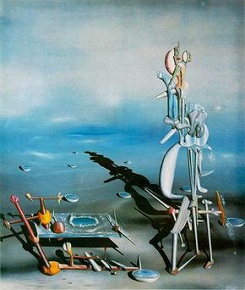
Divisibilité indéfinie door Yves Tanguy, 1942


De Duitse schrijver Karl May werd geboren op 25 februari 1842 in Hohenstein-Ernstthal. Zie ook alle tags voor Karl May op dit blog.

Uit: Old Surehand

„Ich hatte dies natürlich in unsere Zeitrechnung zu übersetzen, und war zur bestimmten Zeit dort. Es war weder Winnetou noch eine Spur von ihm zu sehen, obgleich die Schattenlänge der Eiche genau fünfmal die meinige betrug. Ich wartete mehrere Stunden lang; er stellte sich nicht ein. Ich wußte, daß ihn nur ein Unfall hindern konnte, ein einmal gegebenes Wort zu halten, und wollte darum schon besorgt um ihn werden; da kam mir der Gedanke, daß er schon hier gewesen sein und einen triftigen Grund gehabt haben könne, nicht auf mich zu warten. In diesem Falle hatte er mir ganz gewiß ein Zeichen hinterlassen. Ich untersuchte also den Stamm der Eiche, und richtig! es steckte in demselben in Manneshöhe ein kleiner, verdorrter Fichtenzweig. Da eine Eiche keine Fichtenzweige hat, so mußte er mit Absicht angebracht worden sein, und zwar schon vor längerer Zeit, weil er vollständig vertrocknet war. Ich zog ihn heraus und mit ihm ein Papier, welches um sein zugespitztes, unteres Ende festgewickelt war. Als ich es aufgerollt hatte, las ich die Worte:
»Mein Bruder komme schnell zu Bloody-Fox, den die Comantschen überfallen wollen. Winnetou eilt, ihn noch rechtzeitig zu warnen.«
Diejenigen meiner Leser, welche Winnetou kennen, wissen, daß er sehr wohl lesen und auch schreiben konnte. Er führte fast stets Papier bei sich. Die Nachricht, welche ich hiermit von ihm erhielt, war keine gute; sie machte mich um ihn besorgt, obgleich ich wußte, daß er jeder, auch der größten Gefahr gewachsen sei. Auch um Bloody-Fox wurde mir bange, denn er war sehr wahrscheinlich verloren, wenn es Winnetou nicht gelang, ihn noch vor der Ankunft der Comantschen zu erreichen. Und was mich selbst betrifft, so war auch meine Lage nichts weniger als unbedenklich. Bloody-Fox hauste auf einer, ja wohl der einzigen Oase des öden Llano estakado, und der Weg dorthin führte durch das Gebiet der Comantschen, mit denen wir oft feindlich zusammengeraten waren.“
 2218763-abf9d827a672e72e48e95cd1b7244628.jpg
Karl May (25 februari 1842 – 30 maart 1912)
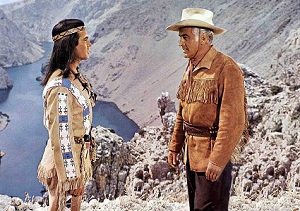
Pierre Brice als Winnetou en Stewart Granger als Old Surehand.in de gelijknamige film uit 1965


De Oekraïense dichteres, schrijfster en vertaalster Lesja Oekrajinka werd geboren op 25 februari 1871 in Novograd-Volynsky. Zie ook alle tags voor Lesja Oekrajinka op dit blog.

Uit: The Forest Song (Vertaald door Percival Cundy) 

“The Lost Babes
Please, oh, please! be not so savage,
Or our home you’ll surely ravage.
One small cave – for there’s none other
Than the one found by our mother.
Humble is the place we own –
Father’s love we’ve never known…
(They seize him by the hand, beseeching him.)
We’ll dive down to depths profound
Where no light or warmth is found;
There Rusalka watch is keeping
Where a fisher drowned is sleeping.
“He Who Rends the Dikes”
Let her leave him lying there!
Straightway let her come up here!
(The Lost Babes dive down into the lake.)
Come up, love, I say!
Rusalka comes up out of the water, smiling alluringly, joyfully clapping her hands. She is wearing two chaplets: the larger one, green; the other, small, like a crown of pearls, from which there hangs a veil.
Rusalka
Ah! ‘tis you, my sweetheart gay.
“He Who Rends the Dikes”
(Angrily)
Why all this delay?
Rusalka
(She starts to swim as though to meet him, but veers aside, avoiding him.)
All the night, dear, I’ve been yearning,
Dreaming that you were returning!
All the many tears I wept
In a silver cup I’ve kept.
Without you, the tears, my lover,
Filled the cup till it brimmed over.
(She claps her hands, darts forward as though to meet his embrace, but again swerves aside and avoids him.)
Some gold to the bottom fling,
And baptize the wedding ring!
(She laughs in bell-like tones.) “

 

 2218763-5e5a01045e50474311019791c64cf7e8.jpg
Lesja Oekrajinka (25 februari 1871 – 1 augustus 1913) 
Scene uit een opvoering op Bainbridge Island, 2017


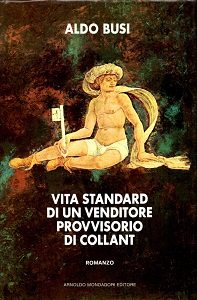
De Italiaanse schrijver en vertaler Aldo Busi werd geboren op 25 februari 1948 in Montichiari, Brescia. Zie ook alle tags voor Aldo Busi op dit blog.

Uit: Standard Life of a Temporary Pantyhose Salesman (Vertaald door Ercole Guidi)

“In the compartment Angelo had felt uneasy toward Jürgen Ölberg, his friend always so avid of new diseases; the venereal warts Jürgen had yet to collect, and he, who had been so close to getting them, had ran away, like any other mortal still contaminated by the categories of disease and cure.
But Angelo was fed up to the back teeth with clinical testing and rubber gloves. He might as well get used to dying of health, and not speak a word to Jürgen.
No sooner was he back home than he couldn't wait a minute longer for the imminent inhalation.
The man by the white or red shorts was having a snack, light, together with that man and that woman likewise disdainful, without a reason, as they both were freckled and freckles are the demise of all regality on lakes that be not Scandinavian. Angelo felt as if three minutes and not three days had passed since the affront suffered. He must think of something else.
At Portese an old fisherman-innkeeper had complained of the increasingly meager catch because «the lake is inclined of the discharges. He saw a shim beneath Riva, as beneath the leg of a table, and the water overflowing in all the directions of the imaginary geographical vulva. But the first to be swept away and sucked into that «inclination» were always those three, placid and manducating, with their backs turned.
It was at that moment that he saw the yacht, which surely had been there for hours, pop out of nowhere and approach with precaution the emerging rocks.
Angelo was heedful of the signs of social opulence and genetic paucity which contemporarily intercross within the same family. One of the things which he found most horrifying (splendidly subversive: nothing like nature could intervene with a more candidly vindictive and revolutionary hand), was an economical empire founded upon a couple of dynamic and capable and with attitude to leading persons who had generated a seriously handicapped or mentally challenged as their sole heir.”
 

 2218763-4afb18e1a5aeb2854156c70268df5950.jpg
Aldo Busi (Montichiari, 25 februari 1948)
Cover Italiaanse uitgave


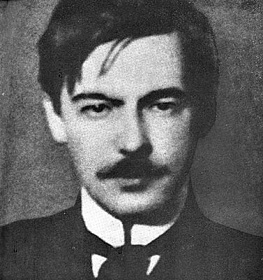
De Tsjechische dichter, journalist en vertaler Karel Toman werd geboren 25 februari 1877 in Kokovice. Zie ook alle tags voor Karel Toman op dit blog.


The Sundial

A house in ruins. On holed-out walls the moss
is creeping ravenous
and lichen hordes of infestation bask.

In the yard bindweed hustles
and nettles stand a-jungled. The poisoned well
is for the rats to drink.

A cankered apple tree, half lightning-felled,
strains, of past blooms to think.

On clear days come the whistles
as linnets rummage. On sun-glowing days
the gable-end sundial arc revives,
and on it carefree jolly flits and jives
time’s shadow
reciting skyward in stern righteous gloom:
Sine sole nihil sum.

For all is but a mask.


Vertaald door Václav ZJ Pinkava
 

 2218763-2eee9c47034b76e74e16e54f4ae31fc8.jpg
Karel Toman (25 februari 1877 – 12 juni 1946)


Zie voor nog meer schrijvers van de 25e februari ook mijn blog van 25 februari 2018 deel 1 en eveneens deel 2.

Geschreven door Romenu om 18:35 Reageer op dit bericht

Bregje Hofstede

Onafhankelijk van geboortedata

De Nederlandse schrijfster, journaliste en columniste Bregje Hofstede werd geboren in Ede in 1988. Hofstede studeerde kunstgeschiedenis en Frans in Utrecht, Parijs en Berlijn. Ze schrijft voor diverse kranten en literaire tijdschriften en is correspondent Nieuw Feminisme bij online journalistiek platform De Correspondent. Haar debuutroman “De hemel boven Parijs” is vertaald in het Duits en Deens. Hij werd genomineerd voor onder andere de Libris Literatuur Prijs, de Anton Wachterprijs en de Gouden Boekenuil. Hofstede is lid van feministische actiegroep De Bovengrondse.

Uit: Drift

“Er was eens een winternacht. Er was een vrouw die haar huis uit wankelde, gekromd onder een veel te zware rugtas. Die vrouw ben ik. Die nacht is nu.
Ik had van alles kunnen meepakken, maar het eerste dat ik in de grijze rugtas stopte was mijn dagboek. En toen het schriftje dat vorig jaar die rol vervulde. En toen dat van het jaar daarvoor. Met elk boekje dat in de tas verdween werd duidelijker welk deel van mij ik uit dit huis wilde weghalen: niet alleen de laatste maanden, maar het afgelopen jaar en ten slotte alle jaren die we samen hebben doorgebracht. Ik bleef stapelen tot de backpack vol zat.
In de bovenste flap stak ik mijn tandenborstel, telefoon en pinpas, en ik verdween.
De waterbassins van de Brusselse Vismet zijn leeggepompt en overdekt met een glibberige plankenvloer waarop pasgeleden nog de kerstmarkt stond.
Midden op de Vismet staat een sokkel met een groot tandwiel uit de tijd dat dit een haven was.
Naast de sokkel zet ik mijn backpack neer en ik ga zitten op het randje, in het flauwe schijnsel van de restaurants.
Zo broos als nu was ik nog nooit. Er zit een trilling in mijn ellebogen en mijn knieholtes. Het gestrekte been is niet te vertrouwen, de arm voelt alsof hij elk moment kan dubbelklappen.
Al die bladzijden, al die ernstige notities om de liefde te verankeren die ik zojuist heb losgeslagen. Een anker zonder schip is kitsch, een nutteloos gewicht waarvan de onverplaatsbaarheid ineens alleen nog maar onhandig is.
Ik stel me voor dat ik op zal staan, mijn tas zal laten liggen en wegloop. Ik kan een halve kreeft gaan eten en vanaf mijn tafel toezien hoe zwervers mijn tas pakken en de episodes van ons leven tevoorschijn halen, terwijl ik binnen het warme vlees uit pantsers trek.
Maar ik blijf zitten.
Pas als ik volledig koud ben, ga ik op zoek naar een hotel, de tas op mijn rug.”


 2226636-b3c086d138920e5a97b8b6a0b368ea8a.jpg
Bregje Hofstede (Ede, 1988)

Geschreven door Romenu om 00:00 Reageer op dit bericht

John Lanchester

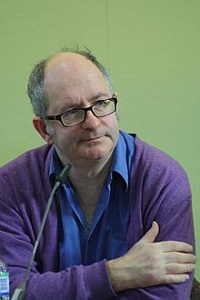
De Britse schrijver John Lanchester werd geboren op 25 februari 1962 in Hamburg. Lanchester groeide op in het Verre Oosten en werkte na zijn opleiding in Engeland als redacteur bij uitgeverij Penguin Books voordat hij lid van de redactieraad van de London Review of Books werd. Daarnaast was hij werkzaam voor tal van kranten en tijdschriften, waaronder Granta en The New Yorker en werkte hij als culinair criticus voor The Observer en als columnist voor The Daily Telegraph. In 1996 publiceerde Lanchester zijn veelgeprezen debuutroman “The Debt to Pleasure”, een onorthodoxe en geleerde autobiografie van de fijnproever "Tarquin Winot". Hiervoor ontving hij meerdere literaire prijzen: de Whitbread Book Award voor de beste debuutroman, de Hawthornden Prize, de Betty Trask Prize en de Julia Child Award. Het boek werd in twintig talen vertaald. Zijn tweede boek, “Mr Phillips” (2000), is een innerlijke monoloog die de gedachten en fantasieën vertelt van een werkloze vijftigjarige accountant. De in Hong Kong spelende roman “Fragrant Harbour” (2002) werd genomineerd voor de James Tait Black Memorial Prize. Verder verschenen het autobiografisch aandoende boek “Family Romance” (2007) en " Whoops! Why Everyone Owes Everyone and No One Can Pay”, een weergave van de financiële crisis van 2007. De roman “Capital” (2012) beschrijft in episodes de denk- en leefwereld van de inwoners van Londen gedurende een paar maanden in 2008, kort voor de bancaire crisis na het faillissement van Lehman Brothers. Van de roman, maakte de BBC een drieledige miniserie, die in 2015 werd uithezonden. Begin 2019 verscheen de dystopische roman “The Wall”, die met grimmige humor en scherpzinnigheid een ommuurde nieuwe realiteit schildert na een volwaardige Brexit. Daarin sluit het land zich na een klimaatcatastrofe achter een 10.000 kilometer lange muur van de rest van de wereld af, terwijl klimaatvluchtelingen worden geëuthanaseerd of tot slaaf worden gemaakt.

Uit: The Wall

“It’s cold on the Wall. That’s the first thing everybody tells you, and the first thing you notice when you’re sent there, and it’s the thing you think about all the time you’re on it, and it’s the thing you remember when you’re not there any more. It’s cold on the Wall.
You look for metaphors. It’s cold as slate, as diamond, as the moon. Cold as charity – that’s a good one. But you soon realise that the thing about the cold is that it isn’t a metaphor. It isn’t like anything else. It’s nothing but a physical fact. This kind of cold, anyway. Cold is cold is cold.
So that’s the first thing that hits you. It isn’t like other cold. This is a cold that is all about the place, like a permanent physical attribute of the location. The cold is one of its fundamental properties; it’s intrinsic. So it hits you as a package, the first time you go to the Wall, on the first day of your tour. You know that you are there for two years. You know that it’s basically the same everywhere, as far as the geography goes, but that everything depends on what the people you will be serving with are like. You know that there’s nothing you can do about that. It is frightening but also in its way a little bit freeing. No choice – everything about the Wall means you have no choice.
You get a little training but not much. Six weeks. Mainly it’s about how to hold, clean, look after and fire your weapon. In that order. Some fitness training, but not much; a lot of training in midnight awakening, sleep disruption, sudden panics, sudden changes of order, small-hours tests of discipline. They drum that into you: discipline trumps courage. In a fight, the people who win are the ones who do what they’re told. It’s not like it is in films. Don’t be brave, just do what you’re told. That’s pretty much it. The rest of the training happens on the Wall. You get it from the Defenders who’ve been there longer than you. Then in your turn you give it to the Defenders who come after. So that’s what you arrive able to do: get up in the middle of the night, and look after your weapon.
You usually arrive after dark. I don’t know why but that’s just how they do it. Already you had a long day to get there: walk, bus, train, second train, lorry. The lorry drops you off. You and your rucksack are left standing there in the cold and the blackness. There is the Wall in front of you, a long low concrete monster. It stretches into the distance. Although the Wall is completely vertical, when you stand underneath it, it feels as if it overhangs. As if it could topple over onto you. You feel leant on.
The air is full of moisture, even when it isn’t actually wet, which it often is, either with rain or with sea-spray splashing over the top. It isn’t usually windy, immediately behind the Wall, but it sometimes is. In the dark and the damp, the Wall looks black. The only path or sign or hint for what you should do or where you should go is a flight of concrete steps – they always drop you near the steps.”


 2221898-48195dad2f05eebf9e685af1e7bd3acd.jpg
John Lanchester (Hamburg, 25 februari 1962)

Geschreven door Romenu om 00:00 Reageer op dit bericht

Alain Mabanckou, Leon de Winter, George Moore, Erich Loest, Herman Maas, Luc Verbeke, Wilhelm Grimm, Friedrich Spielhagen, Jacques Presser

De Congolese dichter en schrijver Alain Mabanckou werd geboren op 24 februari 1966 in Congo-Brazzaville (Frans Congo). Zie ook alle tags voor Alain Mabanckou op dit blog.

Uit: Black Moses (Vertaald door Helen Stevenson)

« In fact, until the year the Revolution fell on us like a rainfall which even the most celebrated fetishers hadn’t seen coming, I believed the orphanage at Loango was not an institution for minors who were parentless, or had been mistreated, or who had been born into a problem family, but rather a school for the very gifted. Bonaventure was more realistic, he said it was a place where they kept all the kids no one wanted, because if you love someone, if you want them, you take them out, go for walks with them, you don’t shut them up in some old building, as if they were in captivity. He based this on his own experience, and on his own inability to understand how a mother such as his own, who was still alive, could leave him there, surrounded by all these other boys and girls, each with their own ‘serious problem’, which led inevitably to their admission to Loango.
In my mind, our studies at Loango were designed to make us superior to most other children in the Congo. This was the impression we got from Dieudonné Ngoulmoumako. He liked to boast that he was Director of one of those public establishments whose academic results were equal in every way to those of the state primaries, secondaries and lycées. He’d puff out his chest and declare proudly that the masters and teachers at Loango earned more than their colleagues at the Charles-Miningou primary, Roger-Kimangou secondary and even the Pauline-Kengué lycée, the most prestigious lycée in Pointe-Noire. He was careful not to admit that if these teachers were indeed better paid, it was no thanks to the charity of the President of the Republic. The running costs of the orphanage and the salaries of the staff were provided for by the descendants of the former kingdom of Loango, who wanted to show that their monarchy continued to exist, at least symbolically, through the generosity of its heirs. However, as I perceived it, our orphanage was separate from the rest of the Congo, in fact from the whole of the rest of the world. Since the school was in the hinterland, we knew nothing of the neighbouring agglomerations of Mabindou, Poumba, Loubou, Tchiyèndi, or our own economic capital, Pointe-Noire, which was spoken of as though it was the promised land Papa Moupelo used to talk to us about.
Yet the village of Loango was only about twenty kilometres from Pointe-Noire, and according to Monsieur Doukou Daka, our history teacher, it had once been the capital of the kingdom of Loango, founded in the 15th century by the ancestors of the vili people and other southerners. It was here that their descendants had been taken into slavery. Monsieur Doukou Daka raged against the whites who had taken our strongest men, our most beautiful women, and piled them up in the ship’s hold to make that dreadful voyage to the land of the Americas, where they were branded with irons, some had their legs amputated, some were left with only one arm, because they’d tried to run away, even though it would have been impossible to find the path back to their village.”

 2218444-195670842510a9de1650d643677cccf7.jpg
Alain Mabanckou (Congo-Brazzaville, 24 februari 1966)


De Nederlandse schrijver Leon de Winter werd geboren in ’s-Hertogenbosch op 24 februari 1954. Zie ook alle tags voor Leon de Winter op dit blog.

Uit: VSV

‘Ik heb hard gewerkt,’ was het enige wat Kohn kon bedenken.
‘Jimmy ook,’ zei ze. ‘Jimmy wilde het goede verspreiden. Tot de Heer hem bij Zich riep. Zijn hart klopt nu in uw lichaam. De dokters kunnen alles tegenwoordig. Veel. Ik heb suikerziekte, daar is nog geen medicijn voor. Maar het hart van een dode kunnen ze gewoon in een andere dode zetten en die kan dan weer leven. Was u dood toen u het hart van mijn zoon kreeg?’
Kohn antwoordde: ‘Nee. Ik was dood geweest als Jimmy niet was gestorven.’
Vijf mannen met hoge hoeden in de hand – door de lage deuropeningen konden ze de hoeden niet dragen – kwamen bijna geruisloos de kamer binnen. De kist zou nu worden weggehaald.
Kohn hield nog steeds haar hand vast.
De vrouw zei: ‘Ik zal voor u bidden dat Jimmy voor u bidt. Janet is nu bij hem. Ze hebben altijd goed contact gehouden. Jimmy heeft in Afrika gewerkt, weet u dat?’
‘Ik heb daarover gelezen.’
Ze draaide haar goede oor in de richting van de kist en concentreerde zich op wat ze hoorde: ‘Zijn de dragers er?’
Father Joseph boog zich naar haar toe: ‘Ja. Ze zijn er. We gaan nu naar de begraafplaats.’
Ze trok haar vingers terug uit Kohns handen.
‘Komt u nog eens langs,’ zei ze. ‘U bent altijd welkom. U bent niet zwart, toch?’
‘Nee.’
‘Een zwart hart in een wit lijf,’ spotte ze. ‘Dat wordt nog wat.’


 2218444-d88cdf1529ee5ed73f2bbd463ec43b8d.jpg
Leon de Winter (’s-Hertogenbosch, 24 februari 1954)
Cover


De Duitse schrijver Erich Loest werd geboren op 24 februari 1926 in Mittweida. Zie ook alle tags voor Erich Loest op dit blog.

Uit: Löwenstadt

„Siebzigtausend Bürger vereinten sich an diesem Abend zum Protest. Sie waren in Ansichten und Zielen zerklüftet, doch das minderte nicht ihre Zahl. Die meisten wollten eine freundlich funktionierende DDR mit netten Polizisten, Reisefreiheit und Bananen. Berufsschüler wollten ihre Meister ärgern und einfache Genossen den Parteisekretär, Mieter den Hausbeauftragten, Altbaubewohner mit Wasserschäden im Kinderzimmer die Zicke vom Wohnungsamt, LVZ-Leser den Leitartikler, Eltern den Schulleiter, der ihre Tochter von der Oberschule ferngehalten, die Tochter den Vater, weil der viel zu lasch reagiert hatte. Hier zogen ehemalige Bausoldaten und ihre Bräute, Zeugen Jehovas, Jugend-Fußballspieler, deren Trainer sie zusammengeschissen hatte, weil ihre Klamotten in Aldi-Beuteln steckten, Chorsänger, die sich über die ewigen Thälmann- und Stalinkantaten erbosten, Herzens-Sozialdemokraten, geschlagene des 17. Juni 1953, Nazis, Biermannfreunde, wer von einer Hochschule geflogen war, weil seine Mitarbeit im Elferrat als destruktiv gegolten hatte, Twisttänzer, von Ordnungskräften verprügelt, weil sie auseinander getanzt hatten, Althäftlinge aus den Speziallagern Bautzen, Mühlberg und Buchenwald, Ringelsockenträger der fünfziger Jahre, Teilnehmer des Olof-Palme-Friedensmarschs, RIAS-Hörer, Deutschlandfunkhörer, wer "Die Revolution entlässt ihre Kinder" verschlungen hatte. Schlesierland, mein Heimatland, drei Mal Ausreiseantrag gestellt, der Bruder wegen Fluchthilfe in Brandenburg – hier mitzuziehen löschte eigene Feigheiten aus, man zeigte es denen, war unversehens ein Hecht, ein Kerl, das Mäuschen im Männchen tanzte, da die Katze den Schwanz einkniff. Wer hier dabei war, erteilte sich selbst Absolution für getreuliche Mitarbeit an jedweder Wandzeitung.“


 2218444-c1d79b2a5db849d60a3c9956e999918d.png
Erich Loest (24 februari 1926 – 12 september 2013)
Cover


De Ierse schrijver en kunstcriticus George Augustus Moore werd geboren op 24 februari 1852 in Ballyglass. Zie ook alle tags voor George Moore op dit blog.

Uit: Celibates

'The other day when I came into the drawing-room she didn't say a word. I waited and waited to see if she would speak--no, not a word.
She sat reading. Occasionally she would look up, stare at the ceiling, and then take a note. I wonder what she put down on that slip of paper? But when I spoke she seemed glad to talk, and she told me about Oxford. It evidently was the pleasantest time of her life. It must have been very curious. There were a hundred girls, and they used to run in and out of each other's rooms, and they had dances; they danced with each other, and never thought about men. She told me she never enjoyed any dances so much as those; and they had a gymnasium, and special clothes to wear there--a sort of bloomer costume. It must have been very jolly. I wish I had gone to Oxford. Girls dancing together, and never thinking about men. How nice!
'At Oxford they say that marriage is not the only mission for women-- that is to say, for some women. They don't despise marriage, but they think that for some women there is another mission. When I spoke to Mrs. Fargus about her marriage, she had to admit that she had written to her college friends to apologise--no, not to apologise, she said, but to explain. She was not ashamed, but she thought she owed them an explanation. Just fancy any of the girls in Sutton being ashamed of being married!'
The darkness was thick with wandering scents, and Mildred's thoughts withered in the heat. She closed her eyes; she lay quite still, but the fever of the night devoured her; the sheet burned like a flame; she opened her eyes, and was soon thinking as eagerly as before.
She thought of the various possibilities that marriage would shut out to her for ever. She reproached herself for having engaged herself to Alfred Stanby, and remembered that Harold had been opposed to the match, and had refused to give his consent until Alfred was in a position to settle five hundred a year upon her. ... Alfred would expect her to keep house for him exactly as she was now keeping house for her brother. Year after year the same thing, seeing Alfred go away in the morning, seeing him come home in the evening. That was how her life would pass. She did not wish to be cruel; she knew that Alfred would suffer terribly if she broke off her engagement, but it would be still more cruel to marry him if she did not think she would make him happy, and the conviction that she would not make him happy pressed heavily upon her. What was she to do? She could not, she dared not, face the life he offered her. It would be selfish of her to do so.”


 2218444-09c1fb3422add4d9ca7345351da4bc3a.jpg
George Moore (24 februari 1852 – 20 januari 1933)
Cover


De Nederlandse schrijver en journalist Herman Hubertus Joannes (Herman) Maas werd geboren in Venray op 24 februari 1877. Zie ook alle tags voor Herman Maas op dit blog.

Uit: Het goud van de Peel

“De boerin was woedend, toen zij hoorde, dat er zo over haar geschandaald werd. Zij had nooit iets gemerkt, wist van niets af, en nu moest zij zes over de tong. Het verbitterde haar juist, dat de knecht en de meid hun vrijerij zo goed voor haar verborgen hadden kunnen houden. Dat ze daar nu niks van gezien had! Het was dan toch te gek. Zij viel uit in een stroom van scheldwoorden en verwijten tegen de meid. Die even kwaad tegen haar inkeef, dat op haar niks te zeggen viel. Het gaf een heftig geruzie. En het eind was, dat de meid over zes weken zou moeten vertrekken. Maar toen de eerste woede wat aftrok, kwam de boerenberekeningszucht weer boven. Het was toch een goeie meid, die werken kon voor twee. En de knecht had de huur ook opgezegd, als Dien weg moest. Dat trof heel slecht. Vooral tegen de oogst was het erg. Zonder knecht en zonder meid.
Hoe kregen ze nog nieuw volk? En Toon was een bekwame knecht, dat moest gezegd worden. Zij hadden gemeend, dat het zo goed uitgevallen was met de `booien' en nou moest dit er tussen komen. Het was wat te zeggen. Boeren, die niet met eigen volk konden werken, hadden toch wat leed te doorstaan. De boer en zijn vrouw braken zich het hoofd met overleggen. En Toon en Dien kwamen er nu openlijk voor uit, dat zij met elkaar wijden, de dorpspraatjes tartend door hun houding van nergens iets-om-geven. Van vrijen was voor die tijd nooit gesproken. Maar de plotseling opgelawaaide herrie in het hele dorp en op de boerderij bracht de ommekeer tussen hen, dat het nu `gemeend' was. Geen van de twee bezat iets. Hij was blij, dat ie met zijn huur toekwam, en wat Dien had overgehouden, bracht ze aan haar ouders. Dat was zo het gebruik. Van haar elfde jaar af had zij voorgoed gediend. Op haar tiende jaar had ze 's zomers al bij een boer gewoond om op de koeien te passen, maar was toen nog één winter thuis geweest, omdat ze naar de catechismusles moest voor haar eerste Communie. In die zomer had zij een rijksdaalder verdiend en een paar nieuwe klompen. Vader had het geld opgebeurd. Zij had plezier gekregen in het wilde ravotten buiten, in de weiden, met andere jongens en meisjes, die ook de koeien hoedden. 's Winters verveelde ze zich, had ook op school geen aard meer, was er onhandelbaar en ruw, in spelen en spreken.”


 2218444-10c6c72181a89bb56d809dec97fa4196.jpg
Herman Maas (24 februari 1877 – 27 januari 1958)


De Vlaamse dichter en schrijver Luc Verbeke werd geboren in Wakken op 24 februari 1924. Zie ook alle tags voor Luc Verbeke op dit blog.


Vreugdegroet
Aan mijn drie Zusters in het klooster van de H. Jozef te Brugge

Blij zijn
omdat wij zijn in Hem
als de lucht in het licht,
omdat wij zijn van Hem
als van de lucht het geluid.
Blij zijn,
omdat wij zijn in Zijn Mond
als een zingende fluit
waarlangs Hij blaast
Zijn Geluk in ons uit.
Blij zijn,
in lichaam en ziel,
in ogen en hart,
vol van Zijn Geest;
en alles wordt klein,
de donkere aarde,
het lijden, het leed,
of ook wat hier roem
en rijkdom heet.
Blij zijn,
o altijd blij zijn,
omdat wij een rank,
een bloeiende rank
aan Zijn Wijnstok zijn.


 2218444-65926132574da43fbcd7a852608d8ccd.jpg
Luc Verbeke (24 februari 1924 – 30 september 2013)


De Duitse schrijver en taalwetenschapper Wilhelm Karl Grimm werd geboren in Hanau op 24 februari 1786. Zie ook alle tags voor Wilhelm Grimm op dit blog.

Uit: Die drei Sprachen

„In der Schweiz lebte einmal ein alter Graf, der hatte nur einen einzigen Sohn, aber er war dumm und konnte nichts lernen. Da sprach der Vater: "Höre, mein Sohn, ich bringe nichts in deinen Kopf, ich mag es anfangen, wie ich will. Du mußt fort von hier, ich will dich einem berühmten Meister übergeben. der soll es mit dir versuchen." Der Junge ward in eine fremde Stadt geschickt, und blieb bei dem Meister ein ganzes Jahr. Nach Verlauf dieser Zeit kam er wieder heim, und der Vater fragte: "Nun mein Sohn, was hast du gelernt?" – "Vater, ich habe gelernt, was die Hunde bellen," antwortete er. "Daß Gott erbarm!" rief der Vater aus, "ist das alles, was du gelernt hast? ich will dich in eine andere Stadt zu einem andern Meister tun."
Der Junge ward hingebracht, und blieb bei diesem Meister auch ein Jahr. Als er zurückkam, fragte der Vater wiederum: "Mein Sohn, was hast du gelernt?" Er antwortete: "Vater, ich habe gelernt, was die Vögli sprechen." Da geriet der Vater in Zorn und sprach: "O, du verlorner Mensch, hast die kostbare Zeit hingebracht und nichts gelernt, und schämst dich nicht, mir unter die Augen zu treten? Ich will dich zu einem dritten Meister schicken, aber lernst du auch diesmal nichts, so will ich dein Vater nicht mehr sein." Der Sohn blieb bei dem dritten Meister ebenfalls ein ganzes Jahr, und als er wieder nach Haus kam und der Vater fragte: "Mein Sohn, was hast du gelernt?" so antwortete er: "Lieber Vater, ich habe dieses Jahr gelernt, was die Frösche quaken." Da geriet der Vater in den höchsten Zorn, sprang auf, rief seine Leute herbei und sprach:"Dieser Mensch ist mein Sohn nicht mehr, ich stoße ihn aus und gebiete euch, daß ihr ihn hinaus in den Wald führt und ihm das Leben nehmt." Sie führten ihn hinaus, aber als sie ihn töten sollten, konnten sie nicht vor Mitleiden und ließen ihn gehen. Sie schnitten einem Reh Augen und Zunge aus, damit sie dem Alten die Wahrzeichen bringen konnten.“
Der Jüngling wanderte fort und kam nach einiger Zeit zu einer Burg, wo er um Nachtherberge bat. "Ja," sagte der Burgherr, "wenn du da unten in dem alten Turm übernachten willst, so gehe hin, aber ich warne dich, es ist lebensgefährlich, denn er ist voll wilder Hunde, die bellen und heulen in einem fort, und zu gewissen Stunden müssen sie einen Menschen ausgeliefert haben, den sie auch gleich verzehren.“


 2218444-2b297b04b2906a04b365f6f2fd385eac.jpg
Wilhelm Grimm (24 februari 1786 – 16 december 1859)
Wilhelm (links) und Jacob Grimm


De Duitse schrijver Friedrich Spielhagen werd geboren op 24 februari 1829 in Magdeburg. Zie ook alle tags voor Friedrich Spielhagen op dit blog.

Uit: Problematische Naturen

„Der schweigsame Kutscher klatschte zum Zeichen der Ankunft mit der Peitsche. Die einzige Antwort war der helle Ton einer Glocke in der Nähe, die langsam elf Uhr schlug. Als der letzte Ton verklungen war, tat sich die Haustür auf, ein Diener trat heraus an den Wagen, und hinter ihm wurde die Gestalt eines alten Herrn sichtbar, dessen runzliges Gesicht von dem Schein der Kerze, die er mit der einen Hand gegen den Luftzug zu schützen suchte, hell beleuchtet wurde.
Der junge Mann sprang rasch aus dem Wagen auf den alten Herrn zu, der ihm die Rechte entgegenstreckte und mit einer Stimme, deren Freundlichkeit das Zittern des Alters und ein etwas ausländischer Akzent nicht verhüllten, sagte:
»Seien der Herr Doktor bestens willkommen!«
Der junge Mann erwiderte herzlich den Druck der dargebotenen welken Hand: »Ich komme zwar etwas spät, Herr Baron«, sagte er, »aber –«
»Das tut nichts, das tut nichts«, unterbrach ihn der alte Herr. »Frau von Grenwitz ist noch auf. Johann, tragen Sie die Sachen auf das Zimmer des Herrn Doktor! Wollen Sie hier eintreten!«
Oswald hatte auf dem mit Steinfliesen ausgelegten Vorsaal seinen Anzug flüchtig geordnet und folgte jetzt dem Baron in ein hohes, schönes Zimmer.
Als er eintrat, erhoben sich zwei Damen, die an dem Tisch vor dem Sofa, wie es schien, mit Lesen beschäftigt gewesen waren.
»Meine Frau«, sagte der Baron, Oswald der älteren von den beiden Damen vorstellend, einer hohen, schlanken Frau von etwa vierzig Jahren, die dem Ankömmling ein paar Schritte entgegengegangen war und jetzt mit einiger Förmlichkeit seine Begrüßung erwiderte, und dann verbeugte er sich auch vor der jüngeren, einer zierlichen kleinen Gestalt mit einem etwas scharfen, echt französischen, von langen Locken eingerahmten Gesicht, da er in dem Umstande, daß sie ihm nicht besonders vorgestellt wurde, keinen zwingenden Grund sah, diese Höflichkeit zu unterlassen.“


 2218444-4b356f5f1afb0b5b17eb9adbaf66e28c.jpg
Friedrich Spielhagen (24 februari 1829 – 25 februari 1911)
Cover


De Nederlandse historicus, schrijver en dichter Jacques (Jacob) Presser werd geboren in Amsterdam op 24 februari 1899. Zie ook alle tags voor Jacques Presser op dit blog.

Uit: Ondergang

“De geschiedschrijver mag zich ook hier ontheven achten van de plicht, diep in te gaan op waardoor of waarom, in normale tijden en in individuele gevallen al zo dikwijls ondoenlijk. Het ene woord paniek vormt in de meidagen van 1940 wel een sleutel; men kan natuurlijk die paniek zelve weer in haar oorzaken analyseren en stuit dan uiteraard weer dadelijk op het gerucht, zo op dat van een dreigende pogrom, meteen al, in de Jodenbuurt; één zegsman had het, via een bevriende relatie, van een politie-agent vernomen, had zijn deur ‘enigszins gebarricadeerd’ en met zijn vrouw de hele nacht wakker gelegen, opschrikkend bij elke voetstap, in afwachting. Anderen wachtten niet. Overigens gingen niet allen tot de daad over in paniek; er zijn gevallen bekend van opperste sereniteit, van rust, van berusting. De psycholoog spreke hier het laatste woord. Als hij dit tenminste aandurft.
Datzelfde voorbehoud moet men maken op een veel prozaïscher vlak, dat der cijfers. Wij hebben hier nl. wel heel weinig houvast, doordat de statistiek alleen de mogelijkheid biedt, het aantal Joodse zelfmoorden te benaderen, d.w.z. de geslaagde; met een getal van 150 zal men wel niet al te ver van de waarheid zijn. De Monchy vermeldt voor Den Haag ruim 30 zelfmoorden. Herzberg verwijst naar de zerken op Joodse begraafplaatsen met de sterfdata van 15 en 16 mei en eveneens naar de ‘brede grafzerken, waarop een man met zijn vrouw en kinderen zijn vermeld’. Inderdaad, er waren nogal wat gezins- of familiezelfmoorden. ‘Hoe de familieverhouding was, is niet altijd na te gaan. Het waren slachtoffers, die in eenzelfde woning werden aangetroffen. Soms had men het vermoeden, dat zij bij elkaar waren gekomen om gezamenlijk de dood in te gaan’.Aldus een onderzoeker, die ook even ingaat op de wijzen van zelfmoord (‘veelal gecombineerd met moord, waar het om jeugdige kinderen ging’): ‘in de meeste gevallen een dosis veronal, waarna men de gaskraan opende, daarnaast: ophanging, revolverschot, doorsnijding van polsslagaders en doodspuiten met morphine’. Op vele plaatsen ontmoet men het woord zelfmoordepidemie. Die term blijkt op zijn plaats, wanneer men zich rekenschap geeft van de talrijke mislukte pogingen; de mensen van die dagen zelf hadden soms de indruk van ‘talloze’. Toen enkele dagen na de capitulatie het gerucht ging, dat Joden alsnog Nederland zouden kunnen verlaten, merkte men aan de loketten van het Bevolkingsregister bij verschillende bezoekers sporen op van mislukte pogingen tot zelfmoord, zoals verbonden polsen en halzen. Dergelijke epidemieën hebben zich overal voorgedaan, waar de Duitsers binnenvielen of heersten.”


 2218444-efa20e48700387ce3f0df0fc63ecce52.jpg
Jacques Presser (24 februari 1899 – 30 april 1970)
Cover


Zie voor nog meer schrijvers van de 24e februari ook mijn vorige blog van vandaag.

Geschreven door Romenu om 14:29 Reageer op dit bericht

Stanisław Witkiewicz, August Derleth, Keto von Waberer, Yüksel Pazarkaya, Irène Némirovsky, Vincent Voiture, Rosalía de Castro, Erich Pawlu. Paul Alfred Kleinert

De Poolse schrijver, filosoof, fotograaf en schilder Stanisław Witkiewicz werd geboren in Warschau op 24 februari 1885. Zie ook alle tags voor Stanisław Witkiewicz op dit blog.

Uit: Narcotics (Vertaald door Soren A. Gauger)

“Given that my 'free-form creativity" has amounted to no more than 'whistling Dixie" I realized my writing experiments were of no use to the nation and society, and thus I have decided to share my views on narcotics with the general public. I begin with the most commonplace — tobacco — and conclude with perhaps the most bizarre — peyote (for which I reserve a special place). MS is my modest contribution to help the forces of good battle humanity's most diabolical foes, outside of war, poverty, and disease. As the intent of this work is to lay bare bitter truths, it might end up being received in the same humorous or negative vein as my aesthetics, philos-ophy, works for the stage, essential portraits, old compositions, etc. — a "free-form produce' I hereby declare that I am writing in total seriousness, and that I finally seek to produce something useful. Yet there is no way of getting through to idiots and lowlifes, as I have learned over the course of my dreary career. It's utterly futile to tell someone, 'You're stupid, go learn a thing or two, maybe you'll wise up," because a stupid man is also an arrogant man, so even if he could learn to wise up, it still wouldn't break the vicious circle. It's wasted breath to tell a scumbag: It's not nice to be such a swine. Why don't you smarten up, get your act together?' We fail to comprehend that the majority of scumbags are consciously scummy — they are aware of it and would not wish to be any different, as long as they're able to conceal their scumminess. `Can youfolgive a stick for being a stidcr wondered Tadeusz Szymberski — and he had a point. I was once alighting man par excellence: I had my ideas and wanted to fight for them, but there was no one around to fight.”


 2218441-03813e4fd3d2d23b9393b47faf7fb1f6.jpg
Stanisław Witkiewicz (24 februari 1885 – 18 september 1939)
Zelfportret 1902


De Amerikaanse schrijver en uitgever August William Derleth werd geboren op 24 februari 1909 in Sauk City, Wisconsin. Zie ook alle tags voor August Derleth op dit blog.

Uit: Walden West

“The house of childhood is long gone from the street where it stood in Sac Prairie, but it still stands in memory—a little, one-story ground-hugging house, set close to the lane that passed by west of it in lieu of sidewalk which was to come later, sheltered by huge, century-old soft maples and some younger red cedars and hackberry trees, a little house of white-painted siding, and too few windows, its front door opening abruptly from its south wall, and its back door to the east, on to a snug little verandah, walled in to the south by a bedroom ell, and on the north by a short wooden fence running along the raised wooden sidewalk to the summer-kitchen, which shut off the north winds in winter, and which summered us from spring to late autumn—a place to eat and bathe away from the main house. On this porch the sunlight pooled warmly on the coldest winter day, and from it ran, a little way east and then north among grape arbors, a wooden walk that led still farther north across the garden to the home of my Grandmother Volk and my Great-uncle Philip, my Grandfather Volles brother, whom she had married a quarter of a century after my Grand-father Volk had died, and who was, on my mother's side, the only grandfather I knew.
It was a snug, cozy house, in the shape of a compact L, standing with its base to the south, with a little kitchen at the north end, then a small dining-room, then a somewhat larger "front" room—in those days, in Sac Prairie, the sitting-room or parlor was always called the "front" room—dominated by a large coal stove, red with heat in winter, off which opened the bedroom which my sister and I shared with our parents. The house had a piano in it—some-times along the west wall of the dining-room, sometimes along the north wall of the front room. All the openings to the rooms were at their northeast corners, so that a kind of passageway seemed to run along the east wall of the house to that point at which the front door opened out into the spacious lawn, where, under one of the old maples, sat a lawn swing, and, at that same point to the left, the door opened into our common bedroom. A huge clump of bridalwreath stood at the northwest corner of the house, where its fragrance poured into the kitchen on spring days. East of the bedroom stood an old-fashioned pump, and south of it a sturdy black ash tree grew, and there beneath it our dog Fido had his house, from which he ran to the south through the lawn for half a block on a chain attached to a long wire, so that he commanded a wide range. Gardens stretched eastward and into the northwest, toward a woodshed, a henhouse and yard, and the two-holer from which we were afforded a leisurely view of the street and such passersby as ventured along it while any of us was occupied within.”


 2218441-7efc61ab6de1489ed70fd53ae6c1ffbe.jpg
August Derleth (24 februari 1909 – 4 juli 1971)
Cover


De Duitse schrijfster en architekte Keto von Waberer werd geboren op 24 februari 1942 in Augsburg. Zie ook alle tags voor Keto von Waberer op dit blog.

Uit: Mingus

„Papa Tabletten. Das sind deine, da in der roten Schachtel. Da steht ›Mingus‹ drauf. Dein Name.« Ich will die Tabletten nicht. Ich will nicht schlafen. Jetzt aber werde ich schlafen. Papa ist tot. Ich höre das Windrad klappern hoch überm Haus. Da stehen seine Schuhe vor dem Bett. Ich schaue hinüber und versuche, seine nackten Füße zu sehen, dort, wo er liegt. Er ist nur ein dunkler Haufen.
Als es hell wird, schließe ich die Tür auf und stehe auf der Schwelle. Ich stehe da. Ich habe Lust gehabt, gleich loszulaufen, und es macht mich böse, dass er mich zurückhält, ganz so, als könnte er noch sprechen. Ich weiß, wo er die Spaten hat, drüben im verbotenen Haus aus Metall, in das ich noch nie hineindurfte. »Das ist gefährlich«, sagt Papa. »Das ist kein Ort für dich. Du würdest sofort sterben, sobald du auch nur die Tür berührtest. Verstehst du mich?« Ich weiß, was sterben ist. Ich habe gesehen, wie die Kleinen starben, hässliche magere Dinger, die schlecht rochen und mit offenen Mäulern schrien, nicht essen wollten, um sich schlugen und uns nachts nicht schlafen ließen. Sie wollten nicht sterben. Dann lagen sie still, und Papa brachte sie weg. Eingewickelt in ihre Schlafdecken. Er selbst hockt da und heult, als wäre er selber gestorben. »Was ist mit dir los?«, frage ich ihn. »Das sind deine Brüder!«, brüllt er, und als ich lache, schlägt er mich. »Du warst auch so klein«, flüstert er. »Du warst auch so klein.« Ich kann mich nicht daran erinnern. Ich war immer stark, und ich habe immer gerne gegessen. Mehr weiß ich nicht.
Am Morgen liegt Tau auf den Felsen, ich lecke daran. Ich laufe los, meine Schritte werden immer größer. Sie werden zu hohen Sprüngen. Noch einer, noch einer, weiter, höher, noch höher. Das ist schön. Ich brülle. Ich umrunde das Haus, das Windrad, und es trägt mich weiter bis zu den fernsten Felsen. Ich fliege. Sand hebt sich und streift meine Beine mit Nadelstichen. Ich mag Nadelstiche nicht, aber diese prickeln wunderbar. Ich renne, bis ich keine Luft mehr in mir habe. Ich lasse mich in den Sand fallen. »Brüll nicht so hässlich«, sagt Papa. »Hör auf«, sagt Papa. Ich gehe und trinke Wasser. Viel Wasser.“

 2218441-48d9ee955fa56f070f5444d4d6b9abc8.jpg
Keto von Waberer (Augsburg, 24 februari 1942)


De Turkse dichter, schrijver en vertaler Yüksel Pazarkaya werd geboren op 24 februari 1940 in Izmir. Zie ook alle tags voor Yüksel Pazarkaya op dit blog.


Gedanken auf der Flucht

2
Meine gestauten Ängste kann ich hier nicht zurücklassen
Meine verbrauchten Hoffnungen
Auch sie will ich mitnehmen
Beschimpfungen gesammelt durch so viele Jahre
Beleidigende Blicke gehäuft zu einem Buckel
Schritte die ich gemacht
Die Kraft meiner Arme dahin auf Fließbändern
 
Die Jahre verflossen vor meinen Augen
Alles alles möchte ich mitnehmen
Dazu noch meine Träume gerade die Träume
Die Luftschlösser die ich baute
Und all meine Verbrauchtheit all meine Erschöpfung
 
Ich soll gehen na gut ich soll gehen von hier
Hier hinterlassen möchte ich jedoch
Nichts von mir


 2218441-6d9b857221f59a5ee267938a880fa2f3.jpg
Yüksel Pazarkaya (Izmir, 24 februari 1940)


De Franstalige schrijfster Irène Némirovsky werd op 24 februari 1903 in Kiev geboren. Zie ook alle tags voor Irène Némirovsky op dit blog.

Uit: Suite française

« Où allait le monde ? Que serait l'esprit de demain ? Ou bien les gens ne penseraient plus qu'à manger et il n'y aurait plus de place pour l'art, ou bien un nouvel idéal ? Cynique et las, il pensa: "Une nouvelle mode !" Mais lui, Corte, était trop vieux pour s'adapter à des goûts nouveaux. Il avait déjà en 1920 renouvelé sa manière. Une troisième fois, ce serait impossible. Il s'essoufflait à le suivre, ce monde qui allait renaître. Ah ! qui pourrait prévoir la forme qu'il prendrait au sortir de cette dure matrice de la guerre de 1940, comme d'un moule d'airain, il allait sortir géant ou contrefait (ou les deux), cet univers dont on percevait les premiers soubresauts. C'était terrible de se pencher sur lui, de le regarder... et de ne rien y comprendre. Car il ne comprenait rien. Il pensa à son roman, à ce manuscrit sauvé du feu, des bombes, et qui reposait sur une chaise. Il éprouva un intense découragement. Les passions qu'il décrivait, ses états d'âme, ses scrupules, cette histoire d'une génération, la sienne, tout cela était vieux, inutile, périmé. Il dit avec désespoir: périmé !”


 2218441-ad52b4bc6858ff093472196af29efaf1.jpg
Irène Némirovsky (24 februari 1903 – 17 augustus 1942)


De Franse dichter en schrijver Vincent Voiture werd geboren op 24 februari 1598 in Amiens. Zie ook alle tags voor Vincent Voiture op dit blog.


Sous un habit de fleurs, la Nymphe que j'adore

Sous un habit de fleurs, la Nymphe que j'adore,
L'autre soir apparut si brillante en ces lieux,
Qu'à l'éclat de son teint et celui de ses yeux,
Tout le monde la prit pour la naissante Aurore.

La Terre, en la voyant, fit mille fleurs éclore,
L'air fut partout rempli de chants mélodieux,
Et les feux de la nuit pâlirent dans les Cieux,
Et crurent que le jour recommençait encore.

Le Soleil qui tombait dans le sein de Thétis,
Rallumant tout à coup ses rayons amortis,
Fit tourner ses chevaux pour aller après elle.

Et l'Empire des flots ne l'eût su retenir ;
Mais la regardant mieux, et la voyant si belle,
Il se cacha sous l'onde et n'osa revenir.


 2218441-7e7a798839b86e43371ae6c5e803b148.jpg
Vincent Voiture (24 februari 1598 – 26 mei 1648)
Cover


De Spaanse dichteres Rosalía de Castro werd geboren op 24 februari 1837 in Santiago de Compostela. Zie ook alle tags voor Rosalía de Castro op dit blog.


The Atmosphere Is Incandescent

The atmosphere is incandescent;
The fox explores an empty road;
Sick grow the waters
That sparkled in the clear arroyo,
Unfluttered stands the pine
Waiting for fickle winds to blow.

A majesty of silence
Overpowers the meadow;
Only the hum of an insect troubles
The spreading, dripping forest shadow,
Relentless and monotonous
As muffled rattle in a dying throat.

In such a summer the hour of midday
Could as well go
By the name of night, to struggle-weary
Man who has never known
Greater vexation from the vast cares
Of the soul, or from matter;s majestic force.

Would it were winter again! The nights! The cold!
O those old loves of ours so long ago!
Come back to make this fevered blood run fresh,
Bring back your sharp severities and snows
To these intolerable summer sorrows…
Sorrows!…While vine and corn stand thick and gold!

The cold, the heat; the autumn or the spring;
Where, where has delight set up its home?
Beautiful are all seasons to the man
Who shelters happiness within his soul;
But the deserted, orphaned spirit feels
No season smile upon its luckless door.


Vertaald door Edwin Morgan


 2218441-3b443ed038df9cd31a353e1c9d92a071.jpg
Rosalía de Castro (24 februari 1837 – 15 juli 1885)
Cover


De Duitse schrijver Erich Pawlu werd geboren op 24 februari 1934 in Frankstadt, Mähren. Zie ook alle tags voor Erich Pawlu op dit blog.

Uit: Kurioser Brautschau-Irrtum (Bespreking)

„Für den reichen Herrn Morose ist jedes Geräusch wie ein Heavy-Metal-Konzert. Die Überempfindlichkeit des Gehörs erschwert seine Vermittlung am Heiratsmarkt. Deshalb lässt sich Morose ein scheinbar stilles Wesen andrehen. Aber nach der Hochzeit erweist sich das Geschöpf nicht nur als schrill,sondern auch als männlich. Erfunden hat die Geschichte um 1600 Ben Jonson, wobei er bei der Zusammenstellung der Zutaten den literarischen Diebstahl nicht scheute. Seitdem haben verschiedene Autoren das Gericht neu zubereitet. Stefan Zweig hat es Richard Strauß unter der Libretto-Bezeichnung „Die schweigsame Frau“ serviert. Ellis Kaut, die „Pumuckl“-Erfinderin, lieferte mit „Die Ohren des Herrn Morose“ nun dem Stadeltheater ein Rezept für ein exquisites sommerliches Menü. Denn Regisseur Leo Schmitt taucht die Handlung in den Lichterglanz eines heiteren Sommertags. Der komödiantische Ablauf der Ereignisse räumt dem Publikum viel Gelegenheit ein, sich im Dunkel des Parketts mit einigen dümmeren Menschen oben im Scheinwerferlicht zu beschäftigen. Die meisten Gestalten typisieren nämlich jene Formen menschlicher Verirrung, denen Psychiater und Komödiendichter ihre Einkünfte verdanken.“


 2218441-728b9a07c5d83c10ddb0aaf857acf385.jpg
Erich Pawlu (Frankstadt, 24 februari 1934)
Scene uit een opvoering van Die schweigsame Frau" van Richard Strauss, München, 2014


Zie voor onderstaande schrijver ook mijn blog van 24 februari 2018 deel 2.

De Duitse dichter en schrijver Paul Alfred Kleinert werd geboren op 24 februari 1960 in Leipzig. Zie ook alle tags voor Paul Alfred Kleinert op dit blog.


Geschreven door Romenu om 14:28 Reageer op dit bericht

Luke (Malcolm Guite)


Bij de zevende zondag door het jaar


 2218437-b48aa2a6e74c5fc5b727a49a54bd6ac8.jpg
Sint Lucas de Evangelist door Jacopo Pontormo, 1526
(Kerk Santa Felicita, Florence)


Luke

His gospel is itself a living creature
A ground and glory round the throne of God,
Where earth and heaven breathe through human nature
And One upon the throne sees it is good.
Luke is the living pillar of our healing,
A lowly ox, the servant of the four,
We turn his page to find his face revealing
The wonder, and the welcome of the poor.
He breathes good news to all who bear a burden
Good news to all who turn and try again,
The meek rejoice and prodigals find pardon,
A lost thief reaches paradise through pain,
The voiceless find their voice in every word
And, with Our Lady, magnify Our Lord.


 2218437-7b027947c0002586f9c51e5849e1b209.jpg
Malcolm Guite (Ibanda, 12 november 1957)
Ibadan, Nigeria, de geboorteplaats van Malcolm Guite


Zie voor de schrijvers van de 24e februari ook mijn twee volgende blogs van vandaag.

Geschreven door Romenu om 14:28 Reageer op dit bericht

Meer van Romenu

↑ Terug naar de berichten