Naar de inhoud

Romenu

Over literatuur, gedichten, kunst en cultuur
akke.beakke.be

Berichten van 25 februari 2019 tot 26 februari 2019

Michel Houellebecq, Victor Hugo, Adama van Scheltema, George Barker, Ulrike Syha, Hermann Lenz, Antonin Sova, Jean Teulé, Elias Annes Borger

De Franse dichter en schrijver Michel Houellebecq werd geboren in Réunion op 26 februari 1956. Zie ook alle tags voor Michel Houellebecq op dit blog.

Uit: Submission (Vertaald door Lorin Stein)

“In that time he had managed to write books that made me consider him a friend more than a hundred years later. Much, maybe too much, has been written about literature. (I know better than anyone; I'm an expert in the field.) Yet the special thing about literature, themajor art form of a Western civilization now ending before our very eyes, is not hard to define. Like literature, music can overwhelm you with sudden emotion, can move you to absolute sorrow or ecstasy; like literature, painting has the power to astonish, and to make you see the world through fresh eyes. But only literature can put you in touch with another human spirit, as a whole, with all its weaknesses and grandeurs, its limitations, its pettinesses, its obsessions, its beliefs; with whatever it finds moving, interesting, exciting, or repugnant. Only literature can grant you access to a spirit from beyond the grave—a more direct, more complete, deeper access than you'd have in conversation with a friend. Even in our deepest, most lasting friendships, we never speak so openly as when we face a blank page and address an unknown reader. The beauty of an author's style, the music of his sentences, have their importance in literature, of course; the depth of an author's reflections, the originality of his thought, certainly can't be overlooked; but an author is above all a human being, present in his books, and whether he writes very well or very badly hardly matters—as long as he gets the books written and is, indeed, present in them. (It's strange that something so simple, so seemingly universal, should actually be so rare, and that this rarity, so easily observed, should receive so little attention from philosophers in any discipline: for in principle human beings possess, if not the same quality, at least the same quantity, of being; in principle they are all more or less equally present; and yet this is not the impression they give, at a distance of several centuries, and all too often, as we turn pages that seem to have been dictated more by the spirit of the age than by an individual, we watch these wavering, ever more ghostly, anonymous beings dissolve before our eyes.) In the same way, to love a book is, above all, to love its author: we wish to meet him again, we wish to spend our days with him. During the seven years it took me to write my dissertation, I got to live with Huysmans, in his more or less permanent presence. Born in the rue Suger, having lived in the rue de Sèvres and the rue Monsieur, Huysmans died in the rue Saint-Placide and was buried in Montparnasse. He spent almost his entire life within the boundaries of the Sixth Arrondissement of Paris, just as he spent his professional life, thirty years and more, in the Ministry of the Interior and Ecclesiastical Affairs.”


 2219078-6aa61549c55f79bd4858d844316a9f66.jpg
Michel Houellebecq (Réunion, 26 februari 1958)
Cover van de Engelse uitgave


De Franse dichter en schrijver Victor Hugo werd geboren in Besançon (Franche-Comté) op 26 februari 1802. Zie ook alle tags voor Victor Hugo op dit blog.

Extase

Et j’entendis une grande voix.
Apocalypse.

J’étais seul près des flots, par une nuit d’étoiles.
Pas un nuage aux cieux, sur les mers pas de voiles.
Mes yeux plongeaient plus loin que le monde réel.
Et les bois, et les monts, et toute la nature,
Semblaient interroger dans un confus murmure
Les flots des mers, les feux du ciel.

Et les étoiles d’or, légions infinies,
À voix haute, à voix basse, avec mille harmonies,
Disaient, en inclinant leurs couronnes de feu ;
Et les flots bleus, que rien ne gouverne et n’arrête,
Disaient, en recourbant l’écume de leur crête :
― C’est le Seigneur, le Seigneur Dieu!


Le Poète Au Calife

Tous les habitants de la terre sont devant lui comme un néant; i
l fait tout ce qui lui plaît ; et nul ne peut résister à sa main puissante, ni lui dire:
Pourquoi avez-vous fait ainsi ?
Daniel.

Ô sultan Noureddin, calife aimé de Dieu !
Tu gouvernes, seigneur, l’empire du milieu,
De la mer rouge au fleuve jaune.
Les rois des nations, vers ta face tournés,
Pavent, silencieux, de leurs fronts prosternés
Le chemin qui mène à ton trône.

Ton sérail est très grand, tes jardins sont très beaux.
Tes femmes ont des yeux vifs comme des flambeaux,
Qui pour toi seul percent leurs voiles.
Lorsque, astre impérial, aux peuples pleins d’effroi
Tu luis, tes trois cents fils brillent autour de toi
Comme ton cortège d’étoiles.

Ton front porte une aigrette et ceint le turban vert.
Tu peux voir folâtrer dans leur bain, entr’ouvert
Sous la fenêtre où tu te penches,
Les femmes de Madras plus douces qu’un parfum,
Et les filles d’Alep qui sur leur beau sein brun
Ont des colliers de perles blanches.

Ton sabre large et nu semble en ta main grandir.
Toujours dans la bataille on le voit resplendir,
Sans trouver turban qui le rompe,
Au point où la mêlée a de plus noirs détours,
Où les grands éléphants, entre-choquant leurs tours,
Prennent des chevaux dans leur trompe.

Une fée est cachée en tout ce que tu vois.
Quand tu parles, calife, on dirait que ta voix
Descend d’un autre monde au nôtre ;
Dieu lui-même t’admire, et de félicités
Emplit la coupe d’or que tes jours enchantés,
Joyeux, se passent l’un à l’autre.

Mais souvent dans ton cœur, radieux Noureddin,
Une triste pensée apparaît, et soudain
Glace ta grandeur taciturne ;
Telle en plein jour parfois, sous un soleil de feu,
La lune, astre des morts, blanche au fond d’un ciel bleu,
Montre à demi son front nocturne.


 2219078-6830fbba82465fe87a16e077e678de56.jpg
Victor Hugo (26 februari 1802 – 22 mei 1885)
Cover


De Nederlandse dichter Carel Steven Adama van Scheltema werd geboren in Amsterdam op 26 februari 1877. Zie ook alle tags voor Adama van Scheltema op dit blog.


Stadsklokken

Een laatste roep der donkre stad verzonk,
Het zwijgend water wiegde gouden spranken,
Nog poosde een late lichtschijn bij een kranke,
Bij zure arbeid, of een zoete dronk.

Toen galmde de verlaten stad en schonk
Een donkre stroom van volle bronzen klanken
In mijne open ziel, - ik boog tot danken,
Toen 't dreunend antwoord in een cirkel klonk.

Zo breekt een lied uit elke hoge toren,
En slaat een band van jublende geluiden
Om ieder eenzaam hart, dat nog kan horen;

Een krans van klokken komt me 't uur beduiden,
Daar stijgt mijn donkre ziel in lichte koren -
Daar slaat mijn hart, dat als een klok gaat luiden!


Vrede

Vrede spreid gij uw zachte vleugels
Over de donkere aarde heen -
Over de moede en de gewonden,
Over de duizenden, die verzwonden,
Over al de snikkende monden,
Die verbleekt zijn van geween!

Vrede daal gij uit de lichte sferen,
Waarheen gij vluchtet voor deze wereldsmart,
Daal over hen, die u hebben verraden,
En over de dwazen, die op u smaadden,
En over de blinden, die om u baden,
Daal - daal gij weder in ons hart!

Opdat uw liefde daar weder wone,
Opdat uw liefde ons weer genas -
Liefde bove' onze ijdele wensen,
Liefde over alle ijdele grenzen,
Liefde alleen, van mens tot mensen,
Die eindelijk leerden wat liefde was!


 2219078-5117ae909816338319e127659cee1fa4.jpg
Adama van Scheltema (26 februari 1877 – 6 mei 1924)
Rond 1915


De Engelse dichter George Granville Barker werd geboren op 26 februari 1913 in Loughton, Essex. Zie ook alle tags voor George Barker op dit blog.


At Thurgarton Church (Fragment)
To the memory of my father

Haunting the December
fields their bitter lives
entreat us to remember
the lost spirit that grieves
over these fields like a scarecrow.

That grieves over all it ever
did and all, all not
done, that grieves over
its crosspurposed lot:
to know and not to know.

The masterless dog sits
outside the church door
with dereliction haunting its
heart that hankers for
the hand that loved it so.

Not in a small grave
outside the stone wall
will the love that it gave
ever be returned, not for all
time or tracks in the snow.

More mourned the death of the dog
than our bones ever shall
receive from the hand of god
this bone again, or all
that high hand could bestow.

As I stand by the porch
I believe that no one has heard
here in Thurgarton Church
a single veritable word
save the unspoken No.


George Barker (26 februari 1913 – 27 oktober 1991)


De Duitse schrijfster en vertaalster Ulrike Syha werd geboren op 26 februari 1976 in Wiesbaden. Zie ook alle tags voor Ulrike Syha op dit blog.

Uit: Privatleben

“Es schneit noch nicht. Nebel legt sich die Hänge eines erstaunlich nichtssagenden Mittelgebirges. Ein kleiner Teil der Menschheit fährt mit dem Zug durch Deutschland.

ER Und um gleich mit der Wahrheit anzufangen: Ich gehöre dazu. Zu dieser Minderheit. Wir haben die Welt von unseren Kindern nur geliehen. Ich fürchte, es gibt eine Menge Leute, die behaupten würden, das sei eine Art Motto von ihnen. Sie wissen schon. Klimaschutz. Im Schlamm feststeckende, sterbende Pinguine und so weiter. Wir haben die Welt von unseren Kindern nur geliehen. Schrecklich. Um aber nicht bloß mit der Wahrheit anzufangen, sondern auch eine Weile bei ihr zu bleiben, müsste ich Ihnen an dieser Stelle eigentlich erklären, wie es dazu kam, dass ich keinen Führerschein mehr habe. Und auf die degradierende Mithilfe der Bahn angewiesen bin. Aber ich denke, diese kleine, für mich etwas beschämende Anekdote sparen wir uns noch auf.
DER SCHAFFNER Personalwechsel. Ihre Fahrkarten, bitte.
ER Für einen anderen Moment unseres geselligen Beisammenseins hier.
DER SCHAFFNER Hallo. Die Fahrkarte, der Her, wenn's recht wäre.
ER Verstehen Sie mich bitte nicht falsch. Aber ich rede nicht übermäßig GERNE über mich und mein Privatleben.
SIE Was du nicht sagst.
ER Hm?
SIE Nichts. Du warst im Zug. Du warst im Zug und redest nicht übermäßig gerne über dich und dein Privatleben.
ER Ja. Ich bin im Zug. Und IIAHE zu diesem Zeitpunkt gar kein Privatleben, über das sich reden ließe.
DER SCHAFFNER Hallo? Jemand zu Hause? Ich hab nicht bis morgen Zeit.
ER Was? Oh, Entschuldigung. Hier, bitte.
DER SCHAFFNER Sie haben ja sogar eine Reservierung. Warum stehen Sie dann hier mitten im Gang?
ER Ich, äh — also —
DER SCHAFFNER Mit Ihrem Gepäck? Tut mir leid, aber das geht nicht.
ER Ich werfe einen wenig entspannten Blick auf den von mir reservierten Platz. An einem Vierertisch. Um den Tisch gruppiert: eine junge Mutter mit Kind. Eine Thennoskanne. Apfelschnitten. Eine Mittdreißigerin mit dunklen Locken, die so unentwegt telefoniert, seit sie eingestiegen ist, dass sie es bislang nicht mal geschafft hat, Trenchcoat und Hut auszuziehen. Trenchcoat und HUT. In welchem Jahrzehnt ist die denn stecken geblieben. Ihr gegenüber, am Fenster, auf meinem Platz natürlich, ein im Vollrausch vor sich hin.“


 2219078-6fe7d39a5967abdf02f641151f11c841.jpg
Ulrike Syha (Wiesbaden, 26 februari 1976)


De Duitse dichter en schrijver Hermann Lenz werd op 26 februari 1913 in Stuttgart geboren. Zie ook alle tags voor Hermann Lenz op dit blog.


Verlorenes Gesicht

Niemand verraten, was dich bewegt,
Weil es jeden befremden würde,
Wenn er’s erführe.

Auch im Tod dein Gesicht behalten,
Möglichst mit einem Lächeln
Und nicht allzu geschrumpft.

Oder denkst du: was kümmert’s dich?
Wer geht neben dir, der die Entscheidung fällt?

Niemand. Vor dem Ewigen
Brauchst du nicht mal dein Gesicht.


Liebe Zeit

Was war es,
Im Ganzen gesehen?

Ewige Weisheiten
Können sie von dir nicht erwarten.
Vielleicht hast du etwas versäumt.

Liebschaften und Reisen?
Die Gesichter der Länder?
Immerhin sahest du mancherlei
Zwischen Leningrad und San Francisco,
Allerdings unter ungemütlichen Umständen,
Aber es macht nichts.

Ach, du liebe Zeit.

Froh bist du, wenn du unbehelligt
Irgendwo gehst oder liegst,
Am Waldrand zum Beispiel.

Bei klarer Luft ein Blick in die Weite.


Meeresluft

Milde Meeresluft.
Der Himmel zuweilen gewitterschwarz.

Dann ein Abendlicht,
Als wäre etwas zu finden,
Wenn einer unbeirrt westwärts fliegt.

Vielleicht leuchtende Ewigkeit.


 2219078-45cfbde9ab3226ed64a21a3d1b3874e9.jpg
Hermann Lenz (26 februari 1913 – 12 mei 1998)


De Tsjechische schrijver en dichter Antonín Sova werd geboren op 26 februari 1864 in Pacov (Dt. Patzau). Zie ook alle tags voor Antonín Sova op dit blog.


Fields

Now wheatstalks massed turn yellow, ripening bounty,
down footpath mazes mystic music stringing,
portent of harvest-tide, in this, our county,
where now to hazel groves the birds come winging,
as stones glow, while the waters, shallow flowing,
their shell-strewn sandy courses are revealing,
the air sears hot, far hamlets dab-wise showing
on the horizon, contoured hills appealing…
The fields are tables, spread full brimming, golden…
Who laboured, let him reap, in peace enchanted.
By blood, sweat, calloused palms to Him beholden,
unto His folk, the Lord this land has granted.


Vertaald door Václav Z J Pinkava


The First Concert

Pallid, in black array he strode
And marked the hush beneath his feet,
The air breathed perfume out and heat,
The hall with russet lustre glowed. —

Gossamer-like before him shed.
In muslin, silk and lace arrayed,
Half in the light and half in shade,
Ladies in semi-circle spread.

Billows of dark and golden hair;
These scarlet lips, these eyes on fire!
See, silhouettes of black attire,
See, the lorgnettes with gloating stare!

His violin with dazing spell
Grips the hushed air in deep refrains,
From the piano gentle strains
In waves of joy and potence fell. —

His master, whose renown is o'er
Astray within some passage quakes,
In sudden dread within him wakes
His debut in the days of yore.

Critics to shun was his desire,
Their infamy and their applause,
Their hatred with its gaping jaws,
Whose will drags beauty in the mire.

Constrained afresh, he seeks the hall;
His shrivelled fingers, how they quiver! —
Perchance that someone will deliver
His name this evening from its fall?


Vertaald door Paul Selver


 2219078-1c493b2a668951587a3525526bbc8463.jpg
Antonín Sova (26 februari 1864 – 16 augustus 1928)
Rond 1910


De Franse schrijver, scenarioschrijver en acteur Jean Teulé werd geboren op 26 februari 1953 in Saint-Lô, Manche. Zie ook alle tags voor Jean Teulé op dit blog

Uit: Entrez dans la danse

« Strasbourg – 12 juillet 1518
Rue du Jeu-des-Enfants, une femme sort d’une maison avec le sien dans les bras. Elle est blonde, constellée de taches de rousseur sur le nez et les pommettes sans doute dues au soleil encore brûlant aujourd’hui à l’approche de midi. Retenu au creux d’un coude gauche, le nourrisson ébloui, de trois mois, grimace. La jeune mère très mince, contre le front du petit, étend les doigts de sa main droite en visière pour le protéger de la lumière. Pâle, sans éclat ni luxe – robe grise de crin rêche et vaste voile noir usé enveloppant l’enfant nu dont la peau est si fragile –, ses pas la guident le long de la voie dans un choc régulier de sabots à travers des excréments en putréfaction, des odeurs fétides, des nuées de mouches. Aux abords d’une place entourée de façades à colombages, contre la porte d’un asile, décorée d’une croix, qu’on n’ouvre pas, des gens en haillons tambourinent. L’enfant frémit. La blonde lui bouche les oreilles. Il plisse ses lèvres pour pleurer, elle y dépose un index et traverse un marché vide sans rien aux étals. À présent, sous les arcades d’une rue plus large, les galets arrondis qui la pavent tordent les chevilles de la mère jusqu’à un imposant bâtiment officiel surmonté d’une girouette aux couleurs rouges et blanches de la ville. Elle poursuit tout droit, atteint, à l’ombre des remparts, un pont couvert chapeauté d’une toiture. Au milieu de cette passerelle, elle s’arrête et jette son enfant à la rivière. Dans une onde chargée de chaux éteinte, mauvaise à boire, le nourrisson balance. Ses petits membres y ondulent comme s’il dansait. Il culbute, roule parmi les remous pollués, pivote encore sur lui-même puis coule. Sa génitrice se retourne. Tout est dit pour elle. Par une venelle isolée où la misère pleure, pauvre voile sans boussole, sans étoile, elle s’égare ensuite sous le drapeau de l’évêché devant la somptueuse demeure privée de l’évêque. Un va-et-vient de lourdes cloches sonne midi à la cathédrale, plus haut édifice d’Occident. Celle qui a foutu son fils à la baille lève la tête. Un nuage passe. L’éclat du soleil se voile d’un crêpe alors les ombres roulent sur les sculptures des trois portails – représentations de saints, de prophètes, vices terrassés par des vertus, vierges sages et d’autres folles. Les statues intégrées à l’architecture, fondues dans la pierre, semblent en surgir et s’animer d’un pied sur l’autre. Les corps taillés dans du grès rose paraissent bouger autour des vitraux colorés de l’immense rosace. L’infanticide revient rue du Jeu-des-Enfants.”


 2219078-bf970c77d9097ab1a6b426a3a75c7132.JPG
Jean Teulé (Saint-Lô, Manche, 26 februari 1953)


De Nederlandse dichter, schrijver, letterkundige en theoloog Elias Annes Borger werd geboren in Joure op 26 februari 1784. Zie ook alle tags voor Elias Annes Borger op dit blog.

Uit: Iets voor mijn kind

Ja, treuren is mijn werk , en 't huis een wildernis,
Waar eens het stil geluk de huwelijkstrouw bekroonde
Een stoel staat aan mijn zij, maar 'k mis haar aan den disch,
Die eens mijn liefde en zorg, met liefde en zorg beloonde.

Komt mij , in d' ochtendstond , het flaauwe schemerlicht
Aan de armen van den slaap , na korte rust , ontrukken,
Vergeefs in 't rond gezocht , naar 't vriendlijk aangezigt,
Om op dat beeld der deugd den morgenzoen te drukken.

Dan rijs ik uit het bed, bij 't graauwen van den dag,
Om in den stillen hof, mijn' boezem lucht te Geven.
De tuinmuur kaatst terug den weerklank van 't geklag,
En elke kreet dien 'k slaak , wordt weer in 't oor gedreven.

Of wordt eens mijn gerucht vervangen door den wind,
Die lispelt in den top der hoogo notenboomen,
Dan hoort verbeelding haar, die mijne ziel bemint
En 'k zie verrukt omhoog, alsof haar geest zal komen.

Neen ! 't is mijn gade niet : zij is voor eeuwig heen.
Ik voel op 't heet gelaat den kouden drop der bladen,
't Geboomte hoort mijn klagt , en deelt in mijn geween;
En schijnt het treurig loof , in tranendauw te baden.

En ik verbied mijn' zoon, zijn' bittren nood en rouw
Te ontboezemen voor God der wenen schets en hoeder:
Neen, nooit heb ik bemind mijn vroeg gestorven vrouw
Zoo ik haar kind belet te weenen om zijn moeder.

 2219078-51438446b4295370dfcd00c159bc4cc0.jpg
Elias Annes Borger (26 februari 1784 – 12 oktober 1820) 


Zie voor nog meer schrijvers van de 26e februari ook mijn blog van 26 februari 2017 deel 2.
Geschreven door Romenu om 18:34 Reageer op dit bericht

Amin Maalouf, Gerald Murnane, Gabriël Smit, Anthony Burgess, Robert Rius, Karl May, Lesja Oekrajinka, Aldo Busi, Karel Toman

De Libanese (Franstalige) schrijver Amin Maalouf werd geboren in Beiroet, Libanon, op 25 februari 1949. Zie ook alle tags voor Amin Maalouf op dit blog.

Uit: De rots van Tanios (Vertaald door Eef Gratama)

“Het was heel lang geleden, ik was nog niet eens geboren, en mijn eigen vader ook nog niet. In die tijd voerde de pasja van Egypte oorlog tegen de Osmanen, onze voorouders hebben het niet makkelijk gehad. Vooral niet na de moord op de patriarch. Hij is precies daar, aan het begin van het dorp gedood, met het geweer van de consul van Engeland ...' Zo sprak mijn grootvader wanneer hij me geen antwoord wilde geven, hij uitte flarden van zinnen alsof hij een weg aanwees, dan weer een andere, vervolgens een derde, zonder ooit een ervan te volgen. Ik heb jaren moeten wachten voordat ik de ware toedracht ontdekte. Toch zat ik dicht bij de bron want ik kende de naam Lamia. Iedereen in de streek kende die naam, dankzij een gezegde dat ons bij toeval na een reis van twee eeuwen ter ore kwam: `Lamia, Lamia, hoe zou je je schoonheid kunnen verhullen?' Nu nog, wanneer de jongelui die op het dorpsplein bij elkaar komen, een vrouw gehuld in een omslagdoek voorbij zien komen, is er altijd wel één die mompelt: `Lamia, Lamia ...' Wat vaak een welgemeend compliment is, maar soms ook het toppunt van wrede spot. De meesten van deze jongens weten niet veel van Lamia, noch van het drama dat dankzij dit gezegde niet in de vergetelheid is geraakt. Ze volstaan met te herhalen wat ze uit de mond van hun ouders en grootouders hebben gehoord, en soms maken ze daarbij, net als zij, een handgebaar in de richting van het hoger gelegen deel van het dorp, waar nu niemand meer woont en waar je de nog altijd de imposante ruïne van een kasteel kunt zien. Vanwege dat gebaar, dat ik zo vaak heb gezien, heb ik lange tijd gedacht dat Lamia een soort prinses was die haar schoonheid achter die hoge muren voor de blikken van de dorpelingen verhulde. Arme Lamia, als ik haar in de keukens in de weer had gezien, of blootsvoets lopend van het ene voorportaal naar het andere met een kruik in haar handen en een sjaal om haar hoofd, zou ik haar moeilijk voor de kasteelvrouwe hebben kunnen aanzien. Maar ze was evenmin een dienstmeisje. Nu weet ik iets meer over haar. In de eerste plaats dankzij de oude dorpelingen, zowel mannen als vrouwen die ik alsmaar met vragen heb bestookt. Dat was meer dan twintig jaar geleden, nu zijn ze allemaal dood, op één na. Zijn naam is Gebrayel, hij is een neef van mijn grootvader en is nu zesennegentig jaar oud. Dat ik hem ter sprake breng, komt niet alleen omdat hij het voorrecht heeft gehad de anderen te overleven, maar vooral omdat de getuigenis van deze voormalige onderwijzer met een hartstochtelijke belangstelling voor de plaatselijke geschiedenis het meest waardevol is geweest; in feite onvervangbaar. Ik kon uren naar hem blijven kijken, hij had grote neusgaten, dikke lippen en een klein, gerimpeld kaal hoofd —trekken die met het klimmen der jaren sterk de nadruk hebben gekregen. Ik heb hem de laatste tijd niet meer gezien, maar men verzekert mij dat hij nog altijd op dezelfde vertrouwelijke toon spreekt, met dezelfde waterval van woorden en een ijzeren geheugen. Tussen de woorden door die ik hierna op papier ga zetten, zal de lezer vaak de echo van zijn stem horen.”


 2218763-17ccfc57e7d1b326b7fe125d0051934c.jpg
Amin Maalouf (Beiroet, 25 februari 1949)


De Australische schrijver Gerald Murnane werd geboren op 25 februari 1939 in Coburg, Victoria. Zie ook alle tags voor Gerald Murnane op dit blog.

Uit: Border Districts

“Two months ago, when I first arrived in this township just short of the border, I resolved to guard my eyes, and I could not think of going on with this piece of writing unless I were to explain how I came by that odd expression.
I got some of my schooling from a certain order of religious brothers, a band of men who dressed each in a black soutane with a bib of white celluloid at his throat. I learned by chance last year, and fifty years since I last saw anyone wearing such a thing, that the white bib was called a rabat and was a symbol of chastity. Among the few books that I brought here from the capital city is a large dictionary, but the word rabat is not listed in it. The word may well be French, given that the order of brothers was founded in France. In this remote district, I am even less inclined than I was in the suburbs of the capital city to seek out some or another obscure fact; here, near the border, I am even more inclined than of old to accept as well-founded any supposition likely to complete a pattern in my mind and then to go on writing until I learn the meaning for me of such an image as that of the white patch which appeared just now against a black ground at the edge of my mind and will not be easily dislodged.
The school where the brothers taught was built in the grounds of what had been a two-storey mansion of yellow sandstone in a street lined with plane-trees in an inner eastern suburb of the capital city. The mansion itself had been converted into the brothers’ residence. On the ground floor of the former mansion, one of the rooms overlooking the return veranda was the chapel, which was used by the brothers for their daily mass and prayers but was available also to us, their students.
In the language of that place and time, a student who called at the chapel for a few minutes was said to be paying a visit. The object of his visitation was said to be Jesus in the Blessed Sacrament or, more commonly, the Blessed Sacrament. We boys were urged by teachers and priests to pay frequent visits to the Blessed Sacrament. It was implied that the personage denoted by that phrase would feel aggrieved or lonely if visitors were lacking. My class once heard from a religious brother one of a sort of story that was often told in order to promote our religious zeal. A non-Catholic of good will had asked a priest to explain the teachings of the Church in the matter of the Blessed Sacrament. The priest then explained how every disc of consecrated bread in every tabernacle in every Catholic church or chapel, even though it appeared to be mere bread, was in substance the body of Jesus Christ, the Second Person of the Blessed Trinity. The inquirer of good will then declared that if only he were able to believe this, he would spend every free moment in some or another Catholic church or chapel, in the presence of the divine manifestation.”


 2218763-9a8cea6aa0e034389e15d643942ebe9c.jpg
Gerald Murnane (Coburg, 25 februari 1939)


De Nederlandse dichter, essayist, toneelschrijver, vertaler, kunstcriticus, journalist, redacteur en politicus Gabriël Wijnand Smit werd geboren in Utrecht op 25 februari 1910. Zie ook alle tags voor Gabriël Smit op dit blog


Oud familieportret

Tussen de grote mensen - van de grond
gescheiden door een berg van brede plooien,
als op een onbereikbaar wereldrond -
zit zich het kind geduldig te verstrooien.

Het kijkt bevreemd de leegte in het rond:
het dikke kleed, de glinstering van het strooien
boeket, het grijze tuindoek, - al die mooie
dingen bekijkt het als een kleine hond.

Leeg is zijn hoofd achter de koele ogen,
zijn netvlies spiegelt alles onbewogen,
maar toch begint al in zijn rond gezicht

vermoeden van verwondering te trillen:
de mond bewoog, bevende om de stille
rimpeling van een wazig binnenlicht.


Tien sonnetten

V
En meer: Gij hebt ze om mij heen gezet,
uw hand even tevoren weggenomen
en warm van liefde, schuw in huiverend schromen,
vervullen zij hun opdracht: van uw wet

hier, voor mijn oog, de vaste stem te zijn,
mij dringend en vermanend niet te blijven
waar trots en zelfzucht mij willen inlijven
bij het verraad van hun devoten schijn.

Want alleen hier, in dit aandachtig spreken
met al wat Gij mij laat als troost en teeken,
ken ik de liefde, die de dag mij rooft.

Wat deed ik toch? Waar ben ik toch gebleven?
Bang keer ik terug naar wat mij heeft verdreven...
‘Caïn’, roept Gij, - en ik buig mijn hoofd.


 2218763-71a596ed00839c2b0bc169d1bebd65cd.JPG
Gabriël Smit (25 februari 1910 – 23 mei 1981)


De Britse dichter en schrijver Anthony Burgess werd geboren op 25 februari 1917 in Manchester, Engeland. Zie ook alle tags voor Anthony Burgess op dit blog.

Uit: Machten der duisternis (Vertaald door Paul Syrier)

“Ik bleef nog even liggen, naakt, vlekkerig, vaalbleek, uitgemergeld, een sigaret rokend die postcoïtaal had moeten zijn maar het niet was. Geoffrey trok puffend zijn sandalen aan, waarbij zijn buik zich in drie rollen vet plooide, en daarna zijn gebloemde overhemd. Ten slotte verborg hij zich achter zijn zonnebril, zo een van het onbeschofte soort waarvan de bolle oppervlakken de wereld een duo metalen spiegels voorhouden. Ik kon mijn eenentachtig jaar oude gezicht en hals er heel duidelijk in zien: de bekende afgeleefde grimmigheid van iemand die het leven intens heeft ervaren, de ontvleesde pezen als kabels, de anatomie van de kaken, de Fribourg & Treyersigaret in zijn Dunhillpijpje, die mijn herkomst verried uit een tijd waarin roken een handeling was die men met elegantie verrichtte. Ik bezag het dubbelbeeld zonder rancune, terwijl Geoffrey zei: ‘Ik vraag me af wat Zijne Aartsbisschap in de zin heeft. Misschien komt hij een excommunicatiebul afleveren. In kakelbonte cadeauverpakking, natuurlijk.’
'Zestig jaar te laat,’ zei ik. Ik reikte Geoffrey de halfopgerookte sigaret aan om uit te drukken in een van de onyx asbakken en merkte op hoe ongaarne hij me zelfs die kleine dienst bewees. Ik stapte uit het bed, naakt, vlekkerig, vaal, uitgemergeld. Mijn zomerbroek zat, conform het fatsoensminimum, verre van strak. Het overhemd met begonia’s en orchideeën stond een man van mijn leeftijd belachelijk, maar ik had al lang geleden de angel uit Geoffreys rotopmerkingen getrokken met de woorden: ‘Lieve jongen, ik zal toch ééns moeten wennen aan het vooruitzicht van een laatste bloemenhulde.’ Deze zinsnede dateerde uit 1915. Ik had hem gehoord in Lamb House te Rye, maar hij was minder echt Henry James dan Henry James die de spot dreef met de echte Meredith. Hij had herinneringen opgehaald aan 1909 en het moment dat een of andere dame Meredith te veel bloemen had gestuurd. ‘Een laatste bloemenhulde, ha, ha, ha,’ had James gespot, schokschouderend van geveinsde vrolijkheid.
‘De gelukwensen van de tróúwe gelovigen, dan.’
Ik kon de overdreven stembuiging waarmee Geoffrey dit woord uitsprak geenszins waarderen. Het ademde seks en zijn eigen infame trouweloosheden; het was een woord dat ik ooit in tranen tegen hem had gebezigd; het was voor mij geladen met een ouderwetse morele ernst die voor Geoffreys generatie niet meer dan een nichtengrap was.”
‘

 2218763-f3c412947407c4f754bfebbd450efa79.jpg
Anthony Burgess (25 februari 1917 – 22 november 1993)
Cover Engelse uitgave 


De Franse dichter Robert Rius werd geboren op 25 februari 1914 in Château-Roussillon. Zie ook alle tags voor Robert Rius op dit blog

Uit: Votre vie vaut cinquante francs (mede ondertekend door André Breton, Henry Espinouze, Maurice Henry, Georges Hugnet, Jean, Benjamin Péret en Yves Tanguy)

« Deux cents francs pour quatre cadavres, on ne peut pas dire que ce soit cher. Soyons précis : Soixante-six francs soixante-six centimes, si l'on compte à sa juste valeur, c'est-à-dire rien, la carcasse de l'adjudant Untel, qui a trouvé une fin hono-rable dans l'exercice de ses sordides fonctions. Qu'on ne vienne pas nous dire que ce n'était pas sa faute. On ne devient pas adjudant comme on devient plombier; il faut la vocation. Après tout, Dreyfus n'avait qu'à ne pas être capitaine. Ça lui aurait évité des difficultés avec l'armée. Les paysans dont le sort nous touche aujourd'hui ont été assiégés dans leur ferme parce qu'ils devaient deux cents francs au fisc. On voit ici l'effet des direc-tions données par les responsables du Front Populaire aux percepteurs : accorder des facilités, ne pas instrumenter contre les gens trop visiblement désargentés. Il est très probable que les Cornuel auraient préféré payer deux cent francs que mourir grillés et mitraillés. 11 est entendu que le pauvre serrurier qu'ils ont descendu n'y était pour rien ; d'autant plus que si on l'avait laissé chez lui, il ne serait pas refroidi maintenant. Mais on a lancé des bombes lacrymogènes sur la vache des Cornuel. Erreur politique, d'ailleurs, il n'y avait rien d'autre à saisir dans leur lamentable ferme. On a mis le feu à la ferme (en sorte que l'enterrement des martyrs retombera finalement aux frais de la commune). Ne l'oubliez pas. Nous avons tous lu Sade avec un certain plaisir. N'oubliez pas la vieille paysanne qui fuyait la fournaise, les cheveux enflammés, canardée à loisir par des gendarmes épouvantés. »


 2218763-6029d43d546da26f8b53a535c4efde77.jpg
Robert Rius (25 februari 1914 – 21 juli 1944)
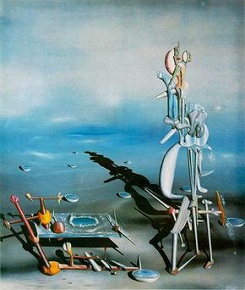
Divisibilité indéfinie door Yves Tanguy, 1942


De Duitse schrijver Karl May werd geboren op 25 februari 1842 in Hohenstein-Ernstthal. Zie ook alle tags voor Karl May op dit blog.

Uit: Old Surehand

„Ich hatte dies natürlich in unsere Zeitrechnung zu übersetzen, und war zur bestimmten Zeit dort. Es war weder Winnetou noch eine Spur von ihm zu sehen, obgleich die Schattenlänge der Eiche genau fünfmal die meinige betrug. Ich wartete mehrere Stunden lang; er stellte sich nicht ein. Ich wußte, daß ihn nur ein Unfall hindern konnte, ein einmal gegebenes Wort zu halten, und wollte darum schon besorgt um ihn werden; da kam mir der Gedanke, daß er schon hier gewesen sein und einen triftigen Grund gehabt haben könne, nicht auf mich zu warten. In diesem Falle hatte er mir ganz gewiß ein Zeichen hinterlassen. Ich untersuchte also den Stamm der Eiche, und richtig! es steckte in demselben in Manneshöhe ein kleiner, verdorrter Fichtenzweig. Da eine Eiche keine Fichtenzweige hat, so mußte er mit Absicht angebracht worden sein, und zwar schon vor längerer Zeit, weil er vollständig vertrocknet war. Ich zog ihn heraus und mit ihm ein Papier, welches um sein zugespitztes, unteres Ende festgewickelt war. Als ich es aufgerollt hatte, las ich die Worte:
»Mein Bruder komme schnell zu Bloody-Fox, den die Comantschen überfallen wollen. Winnetou eilt, ihn noch rechtzeitig zu warnen.«
Diejenigen meiner Leser, welche Winnetou kennen, wissen, daß er sehr wohl lesen und auch schreiben konnte. Er führte fast stets Papier bei sich. Die Nachricht, welche ich hiermit von ihm erhielt, war keine gute; sie machte mich um ihn besorgt, obgleich ich wußte, daß er jeder, auch der größten Gefahr gewachsen sei. Auch um Bloody-Fox wurde mir bange, denn er war sehr wahrscheinlich verloren, wenn es Winnetou nicht gelang, ihn noch vor der Ankunft der Comantschen zu erreichen. Und was mich selbst betrifft, so war auch meine Lage nichts weniger als unbedenklich. Bloody-Fox hauste auf einer, ja wohl der einzigen Oase des öden Llano estakado, und der Weg dorthin führte durch das Gebiet der Comantschen, mit denen wir oft feindlich zusammengeraten waren.“

 2218763-abf9d827a672e72e48e95cd1b7244628.jpg
Karl May (25 februari 1842 – 30 maart 1912)
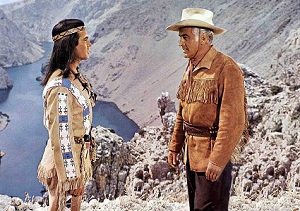
Pierre Brice als Winnetou en Stewart Granger als Old Surehand.in de gelijknamige film uit 1965


De Oekraïense dichteres, schrijfster en vertaalster Lesja Oekrajinka werd geboren op 25 februari 1871 in Novograd-Volynsky. Zie ook alle tags voor Lesja Oekrajinka op dit blog.

Uit: The Forest Song (Vertaald door Percival Cundy) 

“The Lost Babes
Please, oh, please! be not so savage,
Or our home you’ll surely ravage.
One small cave – for there’s none other
Than the one found by our mother.
Humble is the place we own –
Father’s love we’ve never known…
(They seize him by the hand, beseeching him.)
We’ll dive down to depths profound
Where no light or warmth is found;
There Rusalka watch is keeping
Where a fisher drowned is sleeping.
“He Who Rends the Dikes”
Let her leave him lying there!
Straightway let her come up here!
(The Lost Babes dive down into the lake.)
Come up, love, I say!
Rusalka comes up out of the water, smiling alluringly, joyfully clapping her hands. She is wearing two chaplets: the larger one, green; the other, small, like a crown of pearls, from which there hangs a veil.
Rusalka
Ah! ‘tis you, my sweetheart gay.
“He Who Rends the Dikes”
(Angrily)
Why all this delay?
Rusalka
(She starts to swim as though to meet him, but veers aside, avoiding him.)
All the night, dear, I’ve been yearning,
Dreaming that you were returning!
All the many tears I wept
In a silver cup I’ve kept.
Without you, the tears, my lover,
Filled the cup till it brimmed over.
(She claps her hands, darts forward as though to meet his embrace, but again swerves aside and avoids him.)
Some gold to the bottom fling,
And baptize the wedding ring!
(She laughs in bell-like tones.) “


 2218763-5e5a01045e50474311019791c64cf7e8.jpg
Lesja Oekrajinka (25 februari 1871 – 1 augustus 1913) 
Scene uit een opvoering op Bainbridge Island, 2017


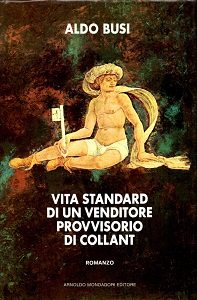
De Italiaanse schrijver en vertaler Aldo Busi werd geboren op 25 februari 1948 in Montichiari, Brescia. Zie ook alle tags voor Aldo Busi op dit blog.

Uit: Standard Life of a Temporary Pantyhose Salesman (Vertaald door Ercole Guidi)

“In the compartment Angelo had felt uneasy toward Jürgen Ölberg, his friend always so avid of new diseases; the venereal warts Jürgen had yet to collect, and he, who had been so close to getting them, had ran away, like any other mortal still contaminated by the categories of disease and cure.
But Angelo was fed up to the back teeth with clinical testing and rubber gloves. He might as well get used to dying of health, and not speak a word to Jürgen.
No sooner was he back home than he couldn't wait a minute longer for the imminent inhalation.
The man by the white or red shorts was having a snack, light, together with that man and that woman likewise disdainful, without a reason, as they both were freckled and freckles are the demise of all regality on lakes that be not Scandinavian. Angelo felt as if three minutes and not three days had passed since the affront suffered. He must think of something else.
At Portese an old fisherman-innkeeper had complained of the increasingly meager catch because «the lake is inclined of the discharges. He saw a shim beneath Riva, as beneath the leg of a table, and the water overflowing in all the directions of the imaginary geographical vulva. But the first to be swept away and sucked into that «inclination» were always those three, placid and manducating, with their backs turned.
It was at that moment that he saw the yacht, which surely had been there for hours, pop out of nowhere and approach with precaution the emerging rocks.
Angelo was heedful of the signs of social opulence and genetic paucity which contemporarily intercross within the same family. One of the things which he found most horrifying (splendidly subversive: nothing like nature could intervene with a more candidly vindictive and revolutionary hand), was an economical empire founded upon a couple of dynamic and capable and with attitude to leading persons who had generated a seriously handicapped or mentally challenged as their sole heir.”


 2218763-4afb18e1a5aeb2854156c70268df5950.jpg
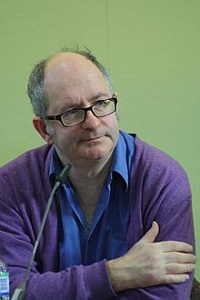
Aldo Busi (Montichiari, 25 februari 1948)
Cover Italiaanse uitgave


De Tsjechische dichter, journalist en vertaler Karel Toman werd geboren 25 februari 1877 in Kokovice. Zie ook alle tags voor Karel Toman op dit blog.


The Sundial

A house in ruins. On holed-out walls the moss
is creeping ravenous
and lichen hordes of infestation bask.

In the yard bindweed hustles
and nettles stand a-jungled. The poisoned well
is for the rats to drink.

A cankered apple tree, half lightning-felled,
strains, of past blooms to think.

On clear days come the whistles
as linnets rummage. On sun-glowing days
the gable-end sundial arc revives,
and on it carefree jolly flits and jives
time’s shadow
reciting skyward in stern righteous gloom:
Sine sole nihil sum.

For all is but a mask.


Vertaald door Václav ZJ Pinkava


 2218763-2eee9c47034b76e74e16e54f4ae31fc8.jpg
Karel Toman (25 februari 1877 – 12 juni 1946)


Zie voor nog meer schrijvers van de 25e februari ook mijn blog van 25 februari 2018 deel 1 en eveneens deel 2.

Geschreven door Romenu om 18:35 Reageer op dit bericht

Bregje Hofstede

Onafhankelijk van geboortedata

De Nederlandse schrijfster, journaliste en columniste Bregje Hofstede werd geboren in Ede in 1988. Hofstede studeerde kunstgeschiedenis en Frans in Utrecht, Parijs en Berlijn. Ze schrijft voor diverse kranten en literaire tijdschriften en is correspondent Nieuw Feminisme bij online journalistiek platform De Correspondent. Haar debuutroman “De hemel boven Parijs” is vertaald in het Duits en Deens. Hij werd genomineerd voor onder andere de Libris Literatuur Prijs, de Anton Wachterprijs en de Gouden Boekenuil. Hofstede is lid van feministische actiegroep De Bovengrondse.

Uit: Drift

“Er was eens een winternacht. Er was een vrouw die haar huis uit wankelde, gekromd onder een veel te zware rugtas. Die vrouw ben ik. Die nacht is nu.
Ik had van alles kunnen meepakken, maar het eerste dat ik in de grijze rugtas stopte was mijn dagboek. En toen het schriftje dat vorig jaar die rol vervulde. En toen dat van het jaar daarvoor. Met elk boekje dat in de tas verdween werd duidelijker welk deel van mij ik uit dit huis wilde weghalen: niet alleen de laatste maanden, maar het afgelopen jaar en ten slotte alle jaren die we samen hebben doorgebracht. Ik bleef stapelen tot de backpack vol zat.
In de bovenste flap stak ik mijn tandenborstel, telefoon en pinpas, en ik verdween.
De waterbassins van de Brusselse Vismet zijn leeggepompt en overdekt met een glibberige plankenvloer waarop pasgeleden nog de kerstmarkt stond.
Midden op de Vismet staat een sokkel met een groot tandwiel uit de tijd dat dit een haven was.
Naast de sokkel zet ik mijn backpack neer en ik ga zitten op het randje, in het flauwe schijnsel van de restaurants.
Zo broos als nu was ik nog nooit. Er zit een trilling in mijn ellebogen en mijn knieholtes. Het gestrekte been is niet te vertrouwen, de arm voelt alsof hij elk moment kan dubbelklappen.
Al die bladzijden, al die ernstige notities om de liefde te verankeren die ik zojuist heb losgeslagen. Een anker zonder schip is kitsch, een nutteloos gewicht waarvan de onverplaatsbaarheid ineens alleen nog maar onhandig is.
Ik stel me voor dat ik op zal staan, mijn tas zal laten liggen en wegloop. Ik kan een halve kreeft gaan eten en vanaf mijn tafel toezien hoe zwervers mijn tas pakken en de episodes van ons leven tevoorschijn halen, terwijl ik binnen het warme vlees uit pantsers trek.
Maar ik blijf zitten.
Pas als ik volledig koud ben, ga ik op zoek naar een hotel, de tas op mijn rug.”


 2226636-b3c086d138920e5a97b8b6a0b368ea8a.jpg
Bregje Hofstede (Ede, 1988)

Geschreven door Romenu om 00:00 Reageer op dit bericht

John Lanchester

De Britse schrijver John Lanchester werd geboren op 25 februari 1962 in Hamburg. Lanchester groeide op in het Verre Oosten en werkte na zijn opleiding in Engeland als redacteur bij uitgeverij Penguin Books voordat hij lid van de redactieraad van de London Review of Books werd. Daarnaast was hij werkzaam voor tal van kranten en tijdschriften, waaronder Granta en The New Yorker en werkte hij als culinair criticus voor The Observer en als columnist voor The Daily Telegraph. In 1996 publiceerde Lanchester zijn veelgeprezen debuutroman “The Debt to Pleasure”, een onorthodoxe en geleerde autobiografie van de fijnproever "Tarquin Winot". Hiervoor ontving hij meerdere literaire prijzen: de Whitbread Book Award voor de beste debuutroman, de Hawthornden Prize, de Betty Trask Prize en de Julia Child Award. Het boek werd in twintig talen vertaald. Zijn tweede boek, “Mr Phillips” (2000), is een innerlijke monoloog die de gedachten en fantasieën vertelt van een werkloze vijftigjarige accountant. De in Hong Kong spelende roman “Fragrant Harbour” (2002) werd genomineerd voor de James Tait Black Memorial Prize. Verder verschenen het autobiografisch aandoende boek “Family Romance” (2007) en " Whoops! Why Everyone Owes Everyone and No One Can Pay”, een weergave van de financiële crisis van 2007. De roman “Capital” (2012) beschrijft in episodes de denk- en leefwereld van de inwoners van Londen gedurende een paar maanden in 2008, kort voor de bancaire crisis na het faillissement van Lehman Brothers. Van de roman, maakte de BBC een drieledige miniserie, die in 2015 werd uithezonden. Begin 2019 verscheen de dystopische roman “The Wall”, die met grimmige humor en scherpzinnigheid een ommuurde nieuwe realiteit schildert na een volwaardige Brexit. Daarin sluit het land zich na een klimaatcatastrofe achter een 10.000 kilometer lange muur van de rest van de wereld af, terwijl klimaatvluchtelingen worden geëuthanaseerd of tot slaaf worden gemaakt.

Uit: The Wall

“It’s cold on the Wall. That’s the first thing everybody tells you, and the first thing you notice when you’re sent there, and it’s the thing you think about all the time you’re on it, and it’s the thing you remember when you’re not there any more. It’s cold on the Wall.
You look for metaphors. It’s cold as slate, as diamond, as the moon. Cold as charity – that’s a good one. But you soon realise that the thing about the cold is that it isn’t a metaphor. It isn’t like anything else. It’s nothing but a physical fact. This kind of cold, anyway. Cold is cold is cold.
So that’s the first thing that hits you. It isn’t like other cold. This is a cold that is all about the place, like a permanent physical attribute of the location. The cold is one of its fundamental properties; it’s intrinsic. So it hits you as a package, the first time you go to the Wall, on the first day of your tour. You know that you are there for two years. You know that it’s basically the same everywhere, as far as the geography goes, but that everything depends on what the people you will be serving with are like. You know that there’s nothing you can do about that. It is frightening but also in its way a little bit freeing. No choice – everything about the Wall means you have no choice.
You get a little training but not much. Six weeks. Mainly it’s about how to hold, clean, look after and fire your weapon. In that order. Some fitness training, but not much; a lot of training in midnight awakening, sleep disruption, sudden panics, sudden changes of order, small-hours tests of discipline. They drum that into you: discipline trumps courage. In a fight, the people who win are the ones who do what they’re told. It’s not like it is in films. Don’t be brave, just do what you’re told. That’s pretty much it. The rest of the training happens on the Wall. You get it from the Defenders who’ve been there longer than you. Then in your turn you give it to the Defenders who come after. So that’s what you arrive able to do: get up in the middle of the night, and look after your weapon.
You usually arrive after dark. I don’t know why but that’s just how they do it. Already you had a long day to get there: walk, bus, train, second train, lorry. The lorry drops you off. You and your rucksack are left standing there in the cold and the blackness. There is the Wall in front of you, a long low concrete monster. It stretches into the distance. Although the Wall is completely vertical, when you stand underneath it, it feels as if it overhangs. As if it could topple over onto you. You feel leant on.
The air is full of moisture, even when it isn’t actually wet, which it often is, either with rain or with sea-spray splashing over the top. It isn’t usually windy, immediately behind the Wall, but it sometimes is. In the dark and the damp, the Wall looks black. The only path or sign or hint for what you should do or where you should go is a flight of concrete steps – they always drop you near the steps.”


 2221898-48195dad2f05eebf9e685af1e7bd3acd.jpg
John Lanchester (Hamburg, 25 februari 1962)

Geschreven door Romenu om 00:00 Reageer op dit bericht

Meer van Romenu

↑ Terug naar de berichten