

Naar de inhoud

Romenu

Over literatuur, gedichten, kunst en cultuur
akke.beakke.be

Berichten van 26 februari 2019 tot 27 februari 2019

Cynan Jones, Mischa Andriessen, John Steinbeck, Ruy Belo, Lawrence Durrell, André Roy, Elisabeth Borchers, James T. Farrell, Irwin Shaw
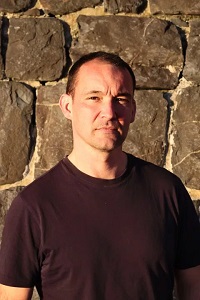
De Welshe schrijver Cynan Jones werd geboren op 27 februari 1975 in Aberystwyth, Wales. Zie ook alle tags voor Cynan Jones op dit blog.

Uit: The Long Dry

“He comes in, scraping his feet on the metal grill outside the back door, not because he needs to, but from habit. Or perhaps it is his announcement—a signal they have always had but never spoken of. They had many of these when they were younger.
She rinses the cafetière and warms the cup with water from the kettle, which she’s boiled several times while she has waited for him. She does not make the coffee. Some things she mustn’t do. She’s threatened by the coffee, about how strong to make it, how it tastes when it is made. He makes coffee every day, just for himself as no one else drinks it. He makes a strong potful of coffee at this time of the morning and it does him for the day, warming up the cupfuls in a pan as they are needed, which makes them stronger as the day goes on. No one else touches the pan. She says it’s why he does not sleep. His first coffee each morning is the remnants of the night before because he does not want to wake the house grinding the beans, and the children sleep above the thin ceiling of the kitchen.
He sits at the table with a loose fist and runs his thumb over the first joint of his forefinger in the way he has, so it makes a quiet purring sound, like rubbing leather.
“What about the dosing?”
“It’ll have to wait,” he says.
He rubs his finger. He does this always at the table, talking or reading a paper, even with the handle of a cup held there, so that this part of his finger is smooth and shines. Whenever he’s at rest.
“I don’t know,” he says. “I’ve checked the obvious places and she’s not there. She’s got her head down and gone.”
He does not tell her about the stillborn calf.
“It’s typical. It has to be today,” she says. “I should have gotten up to check.”
“She would have gone anyway,” he says quietly.
He looks down at the missing part of his little finger on his right hand and makes the sound against his thumb again. She still blames herself for this damage to him. He was trying to free the bailer from the new tractor and she had done something and the catch had just bit down. He takes a mouthful of coffee. It was a clean cut and it healed well and he could have lost his hand instead. That’s how he looks at it. In some ways he loves it.”


 2219313-bbd0e070f4d6ea1d13272364c09bccf4.jpg
Cynan Jones (Aberystwyth, 27 februari 1975)


De Nederlandse dichter Mischa Andriessen werd geboren in Apeldoorn op 27 februari 1970. Zie ook alle tags voor Mischa Andriessen op dit blog.


De vogelkoning

Het zijn normaal jonge jongens.
In de lente verlaten ze hun huizen
halsoverkop, alsof iemand hen riep.
Wie overleeft, herinnert zich niet
wat het was – het zachte wieken
van wijd uitgestrekte vleugels
een stille roep, zoals stenen zingen
in de hoofden van krankzinnigen.
Van sommigen zijn de vaders
eerder gegaan, er is geen kaart
een richting, geen route; soms
komt er een aan, keert terug
naar waar hij eens vertrok
vertelt het na, vervormd, gehavend
kleren tot op de draad kapot
de blik spreekt louter waanzin:
Een arendsnest op de rotsen
weggedraaide ogen, paarse lippen
heel het gastpad afgedwaald
om weer hier te zijn.
De mare wil dat ze luisteren.


Portaal

Vader stond buiten voor de deur.
De zoon stuurde hem weg, wachtte
lange dagen tot hij terugkwam
verjaagde hem telkens opnieuw
maar keek bij elke terugkeer langer
prentte zijn trekken in als zocht hij
ten slotte iets om zich te kunnen herinneren.
Toen vader toch weer op het tuinpad stond
schoot hij ogenblikkelijk zijn jas aan, ging
naar buiten, trok de deur achter zich dicht.
Ze liepen samen op, kenden de richting.

 

 2219313-876dd29202235c701ddecfa4258c5bae.jpg
Mischa Andriessen (Apeldoorn, 27 februari 1970)


De Amerikaanse schrijver John Steinbeck werd geboren in Salinas, Californië, op 27 februari 1902. Zie ook alle tags voor John Steinbeck op dit blog.

Uit: The Grapes of Wrath

“And all the time the farms grew larger and the owners fewer. And there were pitifully few farmers on the land any more. And the imported serfs were beaten and frightened and starved until some went home again, and some grew fierce and were killed or driven from the country. And farms grew larger and the owners fewer.
And the crops changed. Fruit trees took the place of grain fields, and vegetables to feed the world spread out on the bottoms: lettuce, cauliflower, artichokes, potatoes--stoop crops. A man may stand to use a scythe, a plow, a pitchfork; but he must crawl like a bug between the rows of lettuce, he must bend his back and pull his long bag between the cotton rows, he must go on his knees like a penitent across a cauliflower patch.
And it came about that owners no longer worked on their farms. They farmed on paper; and they forgot the land, the smell, the feel of it, and remembered only that they owned it, remembered only what they gained and lost by it. And some of the farms grew so large that one man could not even conceive of them any more, so large that it took batteries of bookkeepers to keep track of interest and gain and loss; chemists to test the soil, to replenish; straw bosses to see that the stooping men were moving along the rows as swiftly as the material of their bodies could stand. Then such a farmer really became a storekeeper, and kept a store. He paid the men, and sold them food, and took the money back. And after a while he did not pay the men at all, and saved bookkeeping. “These farms gave food on credit. A man might work and feed himself; and when the work was done, he might find that he owed money to the company. And the owners not only did not work the farms any more, many of them had never seen the farms they owned.
And then the dispossessed were drawn west--from Kansas, Oklahoma, Texas, New Mexico; from Nevada and Arkansas families, tribes, dusted out, tractored out. Carloads, caravans, homeless and hungry; twenty thousand and fifty thousand and a hundred thousand and two hundred thousand.”
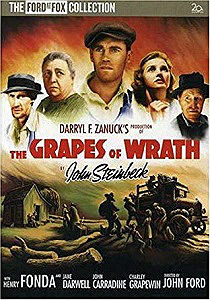
 

 2219313-70d6680c10bd3f29ec48d31abd19687e.jpg
John Steinbeck (27 februari 1902 – 20 december 1968)
Poster voor de gelijknamige film uit 1940


De Portugese dichter, vertaler en essayist Ruy de Moura Belo werd geboren op 27 februari 1933 in São João da Ribeira, nabij Rio Maior. Zie ook alle tags voor Ruy Belo op dit blog.


Anniversary Mass

It’s been one year since your steps
last walked in our parish
Where do you who belonged to these fields
whose wheat is again turning ripe
belong now?
What’s your new name?
Can there be a more unusual weekend
than a saturday like this one that never ends?
How do you fill your time
now that all the time ahead of you is free?
What sort of steps might take you
behind the cooing of a dove in our skies?
Why have you never again had a birthday
even though the table is set and waiting for you
and the mulberry trees along the road are in bloom again?

That’s what his voice was like that’s how he talked
says the yellow-flowered broom that grows here
and that saw him walk on the pathways of childhood
next to his first flight of partridges

Now only in our neckties do we take you who are dead
to those paths where you left the mark of your feet
Only in our neckties. Your death
has stopped dressing us up completely
The summer you departed I clearly remember
thinking profound things
It’s summer again. You have ever less place
in this corner of us where every year
we will piously unearth you
Until the death of your death


Vertaald door Richard Zenith
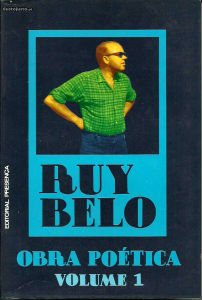
 

 2219313-0dd49ab60cfc57fbccc13c228613a153.jpg
Ruy Belo (27 februari 1933 – 8 augustus 1978)
Cover


De Britse dichter en schrijver Lawrence George Durrell werd geboren op 27 februari 1912 in Jalandhar in India. Zie ook alle tags voor Lawrence Durrell op dit blog.

Uit: Bitter Lemons of Cyprus

“Journeys, like artists, are born and not made. A thousand differing circumstances contribute to them, few of them willed or determined by the will — whatever we may think. They flower spontaneously out of the demands of our natures — and the best of them lead us not only outwards in space, but inwards as well. Travel can be one of the most rewarding forms of introspection ... These thoughts belong to Venice at dawn, seen from the deck of the ship which is to carry me down through the islands to Cyprus; a Venice wobbling in a thousand fresh-water reflections, cool as a jelly. It was as if some great master, stricken by dementia, had burst his whole colour-box against the sky to deafen the inner eye of the world. Cloud and water mixed into each other, dripping with colours, merging, overlapping, liquefying, with steeples and balconies and roofs floating in space, like the fragments of some stained-glass window seen through a dozen veils of ricepaper. Fragments of history touched with the colours of wine, tar, ochre, blood, fire-opal and ripening grain. The whole at the same time being rinsed softly back at the edges into a dawn sky as softly as circumspectly blue as a pigeon's egg. Mentally I held it all, softly as an abstract painting, cradling it in my thoughts — the whole encampment of cathedrals and palaces, against the sharply-focused face of Stendhal as he sits forever upon a stiff-backed chair at Florian's sipping wine: or on that of a Corvo, flitting like some huge fruit-bat down these light-bewitched alleys ... The pigeons swarm the belfries. I can hear their wings across the water like the beating of fans in a great summer ballroom. The vaporetto on the Grand Canal beats too, softly as a human pulse, faltering and renewing itself after every hesitation which marks a landing-stage. The glass palaces of the Doges are being pounded in a crystal mortar, strained through a prism. Venice will never be far from me in Cyprus — for the lion of Saint Mark still rides the humid airs of Famagusta, of Kyrenia. It is an appropriate point of departure for the traveller to the eastern Levant ... But heavens, it was cold. Down on the grey flagged quay I had noticed a coffee-stall which sold glasses of warm milk and croissants. It was immediately opposite the gang-plank, so that I was in no danger of losing my ship. A small dark man with a birdy eye served me wordlessly, yawning in my face, so that in sympathy I was forced to yawn too. I gave him the last of my liras. There were no seats, but I made myself comfortable on an upended barrel and, breaking my bread into the hot milk, fell into a sleepy contemplation of Venice from this unfamiliar angle of vision across the outer harbour. A tug sighed and spouted a milky jet upon the nearest cloud.”
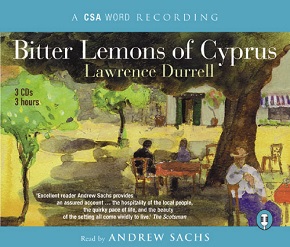
 

 2219313-a11925cdeca62571ddce704fc122e3bd.jpg
Lawrence Durrell (27 februari 1912 – 7 november 1990)
Cover


De Canadese dichter, schrijver en essayist André Roy werd geboren op 27 februari 1944 in Montréal. Zie ook alle tags van André Roy op dit blog.


Het is nog nacht

Het is nog nacht
de actieve droom,
de machine van actie;
de nacht in de bossen, de woestijnen, de steden.
Ik droomde van twee werelden:
een, zichtbaar en sterfelijk;
de andere, onzichtbaar, met fantomen
moe sinds de geboorte.
Ik observeer, ik zie de dans van de tijd,
de criminelen die 's nachts terugkwamen.


In de nacht houden wij ons op

In de nacht houden wij ons op
jij, ik, wij, de anderen, die zijn zoals wij.
Nogmaals de actie,
de structuur van het denken in actie.
Moderne wereld van bossen en water.
Je behoort tot de reizende kooplieden,
onze voorouders de vampieren.
De steden, de huizen, de bedden,
waar we ons mysterieus, onmogelijk,
onsterfelijk waanden
wat een waanzin!
Het verlangen stroomt;
we zouden onszelf kunnen doden
voor de kennis van het verlangen.


Vertaald door Frans Roumen
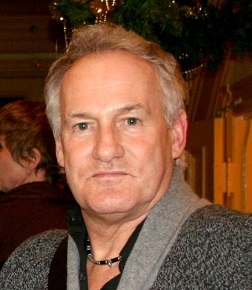
 

 2219313-ce23bcce62e8390e8a51b49d95e2b374.jpg
André Roy (Montréal, 27 februari 1944)


De Duitse schrijfster en dichteres Elisabeth Borchers werd geboren in Homberg op 27 februari 1926. . Zie ook alle tags voor Elisabeth Borchers op dit blog.


Niemand behaupte

Niemand behaupte
ich sei taub.
Allabendlich höre ich
die Unrast der Sterne.

Niemand behaupte
ich sei blind oder lahm.
Ich nehme Stock und Stein
bis zum jähen Ereignis.

Niemand behaupte
ich hätte zu träumen versäumt.
Ich werde nicht nach Tibet reisen
und auch nicht nach Tanger.
Mir träumte
ich fände den Weg
nicht zurück.


An ein Kind

Wenn wir lange genug warten,
dann wird es kommen.
Heute noch, fragt das Kind.
Heut oder morgen. Ein Schiff,
mußt du wissen, braucht Zeit.
So weit und breit wie das Meer.
Dann bist du groß.
Dann steigen wir ein
und machen die Reise.
Zusammen. Wir beide.
Und jeder auf seine Weise.
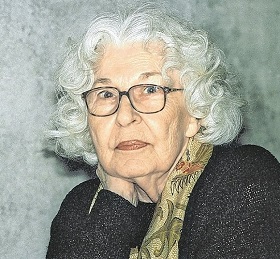
 

 2219313-97a155f40625366bfae5577965e3add1.jpg
Elisabeth Borchers (27 februari 1926 – 25 september 2013)


De Amerikaanse schrijver James Thomas Farrell werd geboren op 27 februari 1904 in Chicago. Zie ook alle tags voor James T. Farrell op dit blog.

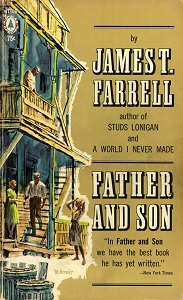
Uit: Father and Son

“When he'd come home, Bill was there, white and scared. But he hadn't hit him. He'd talked to Bill like a father. Lizz had gone to see McCarthy, the police sergeant whose boys played with Bill and Danny, and McCarthy had quashed it all. He'd paid for the pocketbook, and it was all forgotten. After that, Bill had settled down. Now, you couldn't want for a decenter boy. He looked at his leathery face in the mirror. He washed it, dried himself, cleaned out the wash bowl, and left the bathroom. He put on his khaki shirt, passed through the small hallway to the dining room, and was ready to eat. The dining-room table was covered with dishes and papers. In the center of it there was a large glass cake-dish, which contained crumbs and a stale chunk of cake. Lizz pushed dishes aside and set coffee, sugar buns, and a plate of ham and eggs before him. She wore an old apron and had a rag tied under her chin. She looked sloppy. Jim pitched into the ham and eggs. "I was over to see my mother yesterday," Lizz remarked, sitting down to talk with him. He nodded, but said nothing. He bit into a sugar bun. He was waiting to see whether or not she'd had another scrap with her people. "Mother said that Al isn't well," she said. "You wouldn't think he would be, having a doctor like Mike Geraghty," Jim said, suddenly bitter. His face clouded. He remembered his Little Arty, now three years dead. All their good luck had to come after Arty was long since dead. He wiped up the yolk from the plate with a bun and ate it, and then he shoved his plate aside and handed Lizz his cup for more coffee. She returned with a filled cup and sat down. "Lizz, it's a long time since the little fellow left us. You really ought to take off your mourning. If you do that you won't be sad so often. You have to let time heal old wounds," he said, his voice kindly. "Oh, Jim, I see the children playing on Calumet Avenue, and it breaks my heart. Not one of them is as beautiful as our Arty was." "Come on now, Lizz, we've got to brace up. We've got lots to be thankful for, even with the tough breaks we had in the past," he said, but the image of little Arty stood in his mind, a lovely, light-haired boy in a dirty dress, staring with those wonderful sad eyes and saying "Fither." Lizz wiped her eyes with her apron. "Jim, I can't help it. I look at our new house and I think of him. Oh, how he would have loved it. He'd be going to school this year or next. Everywhere I see, Jim, makes me think of him. I can't help it. I can't take off my mourning," she said in tears.”
 

 2219313-5dae58483608d308351d6976dbeaaa74.jpg
James T. Farrell (27 februari 1904 – 22 augustus 1979)
Cover


De Amerikaanse schrijver Irwin Shaw werd geboren op 27 februari 1913 als Irwin Gilbert Shamforoff in New York. Zie alle tags voor Irwin Shaw op dit blog.

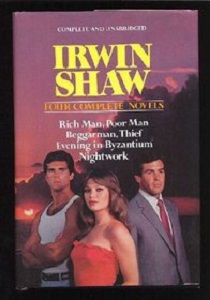
Uit: Rich Man, Poor Man

“Boylan was standing at the bar in his tweed topcoat, staring at his glass, when Rudolph came down the little flight of steps from Eighth Street, carrying the overnight bag. There were only men standing at the bar and most of them were probably fairies. "I see you have the bag," Boylan said. "She didn't want it." "And the dress?" "She took the dress." "What are you drinking?" "A beer, please." "One beer, please," Boylan said to the bartender. "And I'll continue with whiskey." Boylan looked at himself in the mirror behind the bar. His eyebrows were blonder than they had been last week. His face was very tan, as though he had been lying on a southern beach for months. Two or three of the fairies at the bar were equally brown. Rudolph knew about the sun lamp by now. "I make it a point to look as healthy and attractive as I can at all times," Boylan had explained to Rudolph. "Even if I don't see anybody for weeks on end. It's a form of self-respect." Rudolph was so dark, anyway, that he felt he could respect himself without a sun lamp. The bartender put the drinks down in front of them. Boylan's fingers trembled a little as he picked up his glass. Rudolph wondered how many whiskies he had had. "Did you tell her I was here?" Boylan asked. "Yes." "Is she coming?" "No. The man she was with wanted to come and meet you, but she didn't." There was no point in not being honest. "Ah," Boylan said. "The man she was with." "She's living with somebody." "I see," Boylan said flatly. "It didn't take long, did it?" Rudolph drank his beer. "Your sister is an extravagantly sensual woman," Boylan said. "I fear for where it may lead her." Rudolph kept drinking his beer. "They're not married, by any chance?" "No. He's still married to somebody else." Boylan looked at himself in the mirror again for a while. A burly young man in a black turtle-neck sweater down the bar caught his eye in the glass and smiled. Boylan turned away slightly, toward Rudolph. "What sort of fellow is he? Did you like him?" "Young," Rudolph said. "He seemed nice enough. Full ofjokes." "Full of jokes," Boylan repeated. "Why shouldn't he be full of jokes? What sort of place do they have?" "Two furnished rooms in a walkup." "Your sister has a romantic disregard of the advantages of money," Boylan said. "She will regret it later. Among the other things she will regret." "She seemed happy." Rudolph found Boylan's prophecies distasteful.”
 

 2219313-8da097f64141e3565fe2ba9f7bfae966.jpg
Irwin Shaw (27 februari 1913 – 16 mei 1984)
Cover voor een omnibus


Zie voor nog meer schrijvers van de 27e februari ook mijn blog van 27 februari 2018 en eveneens mijn blog van 27 februari 2016 deel 2.

Geschreven door Romenu om 18:52 Reageer op dit bericht

Michel Houellebecq, Victor Hugo, Adama van Scheltema, George Barker, Ulrike Syha, Hermann Lenz, Antonin Sova, Jean Teulé, Elias Annes Borger

De Franse dichter en schrijver Michel Houellebecq werd geboren in Réunion op 26 februari 1956. Zie ook alle tags voor Michel Houellebecq op dit blog.

Uit: Submission (Vertaald door Lorin Stein)

“In that time he had managed to write books that made me consider him a friend more than a hundred years later. Much, maybe too much, has been written about literature. (I know better than anyone; I'm an expert in the field.) Yet the special thing about literature, themajor art form of a Western civilization now ending before our very eyes, is not hard to define. Like literature, music can overwhelm you with sudden emotion, can move you to absolute sorrow or ecstasy; like literature, painting has the power to astonish, and to make you see the world through fresh eyes. But only literature can put you in touch with another human spirit, as a whole, with all its weaknesses and grandeurs, its limitations, its pettinesses, its obsessions, its beliefs; with whatever it finds moving, interesting, exciting, or repugnant. Only literature can grant you access to a spirit from beyond the grave—a more direct, more complete, deeper access than you'd have in conversation with a friend. Even in our deepest, most lasting friendships, we never speak so openly as when we face a blank page and address an unknown reader. The beauty of an author's style, the music of his sentences, have their importance in literature, of course; the depth of an author's reflections, the originality of his thought, certainly can't be overlooked; but an author is above all a human being, present in his books, and whether he writes very well or very badly hardly matters—as long as he gets the books written and is, indeed, present in them. (It's strange that something so simple, so seemingly universal, should actually be so rare, and that this rarity, so easily observed, should receive so little attention from philosophers in any discipline: for in principle human beings possess, if not the same quality, at least the same quantity, of being; in principle they are all more or less equally present; and yet this is not the impression they give, at a distance of several centuries, and all too often, as we turn pages that seem to have been dictated more by the spirit of the age than by an individual, we watch these wavering, ever more ghostly, anonymous beings dissolve before our eyes.) In the same way, to love a book is, above all, to love its author: we wish to meet him again, we wish to spend our days with him. During the seven years it took me to write my dissertation, I got to live with Huysmans, in his more or less permanent presence. Born in the rue Suger, having lived in the rue de Sèvres and the rue Monsieur, Huysmans died in the rue Saint-Placide and was buried in Montparnasse. He spent almost his entire life within the boundaries of the Sixth Arrondissement of Paris, just as he spent his professional life, thirty years and more, in the Ministry of the Interior and Ecclesiastical Affairs.”


 2219078-6aa61549c55f79bd4858d844316a9f66.jpg
Michel Houellebecq (Réunion, 26 februari 1958)
Cover van de Engelse uitgave


De Franse dichter en schrijver Victor Hugo werd geboren in Besançon (Franche-Comté) op 26 februari 1802. Zie ook alle tags voor Victor Hugo op dit blog.

Extase

Et j’entendis une grande voix.
Apocalypse.

J’étais seul près des flots, par une nuit d’étoiles.
Pas un nuage aux cieux, sur les mers pas de voiles.
Mes yeux plongeaient plus loin que le monde réel.
Et les bois, et les monts, et toute la nature,
Semblaient interroger dans un confus murmure
Les flots des mers, les feux du ciel.

Et les étoiles d’or, légions infinies,
À voix haute, à voix basse, avec mille harmonies,
Disaient, en inclinant leurs couronnes de feu ;
Et les flots bleus, que rien ne gouverne et n’arrête,
Disaient, en recourbant l’écume de leur crête :
― C’est le Seigneur, le Seigneur Dieu!


Le Poète Au Calife

Tous les habitants de la terre sont devant lui comme un néant; i
l fait tout ce qui lui plaît ; et nul ne peut résister à sa main puissante, ni lui dire:
Pourquoi avez-vous fait ainsi ?
Daniel.

Ô sultan Noureddin, calife aimé de Dieu !
Tu gouvernes, seigneur, l’empire du milieu,
De la mer rouge au fleuve jaune.
Les rois des nations, vers ta face tournés,
Pavent, silencieux, de leurs fronts prosternés
Le chemin qui mène à ton trône.

Ton sérail est très grand, tes jardins sont très beaux.
Tes femmes ont des yeux vifs comme des flambeaux,
Qui pour toi seul percent leurs voiles.
Lorsque, astre impérial, aux peuples pleins d’effroi
Tu luis, tes trois cents fils brillent autour de toi
Comme ton cortège d’étoiles.

Ton front porte une aigrette et ceint le turban vert.
Tu peux voir folâtrer dans leur bain, entr’ouvert
Sous la fenêtre où tu te penches,
Les femmes de Madras plus douces qu’un parfum,
Et les filles d’Alep qui sur leur beau sein brun
Ont des colliers de perles blanches.

Ton sabre large et nu semble en ta main grandir.
Toujours dans la bataille on le voit resplendir,
Sans trouver turban qui le rompe,
Au point où la mêlée a de plus noirs détours,
Où les grands éléphants, entre-choquant leurs tours,
Prennent des chevaux dans leur trompe.

Une fée est cachée en tout ce que tu vois.
Quand tu parles, calife, on dirait que ta voix
Descend d’un autre monde au nôtre ;
Dieu lui-même t’admire, et de félicités
Emplit la coupe d’or que tes jours enchantés,
Joyeux, se passent l’un à l’autre.

Mais souvent dans ton cœur, radieux Noureddin,
Une triste pensée apparaît, et soudain
Glace ta grandeur taciturne ;
Telle en plein jour parfois, sous un soleil de feu,
La lune, astre des morts, blanche au fond d’un ciel bleu,
Montre à demi son front nocturne.


 2219078-6830fbba82465fe87a16e077e678de56.jpg
Victor Hugo (26 februari 1802 – 22 mei 1885)
Cover


De Nederlandse dichter Carel Steven Adama van Scheltema werd geboren in Amsterdam op 26 februari 1877. Zie ook alle tags voor Adama van Scheltema op dit blog.


Stadsklokken

Een laatste roep der donkre stad verzonk,
Het zwijgend water wiegde gouden spranken,
Nog poosde een late lichtschijn bij een kranke,
Bij zure arbeid, of een zoete dronk.

Toen galmde de verlaten stad en schonk
Een donkre stroom van volle bronzen klanken
In mijne open ziel, - ik boog tot danken,
Toen 't dreunend antwoord in een cirkel klonk.

Zo breekt een lied uit elke hoge toren,
En slaat een band van jublende geluiden
Om ieder eenzaam hart, dat nog kan horen;

Een krans van klokken komt me 't uur beduiden,
Daar stijgt mijn donkre ziel in lichte koren -
Daar slaat mijn hart, dat als een klok gaat luiden!


Vrede

Vrede spreid gij uw zachte vleugels
Over de donkere aarde heen -
Over de moede en de gewonden,
Over de duizenden, die verzwonden,
Over al de snikkende monden,
Die verbleekt zijn van geween!

Vrede daal gij uit de lichte sferen,
Waarheen gij vluchtet voor deze wereldsmart,
Daal over hen, die u hebben verraden,
En over de dwazen, die op u smaadden,
En over de blinden, die om u baden,
Daal - daal gij weder in ons hart!

Opdat uw liefde daar weder wone,
Opdat uw liefde ons weer genas -
Liefde bove' onze ijdele wensen,
Liefde over alle ijdele grenzen,
Liefde alleen, van mens tot mensen,
Die eindelijk leerden wat liefde was!


 2219078-5117ae909816338319e127659cee1fa4.jpg
Adama van Scheltema (26 februari 1877 – 6 mei 1924)
Rond 1915


De Engelse dichter George Granville Barker werd geboren op 26 februari 1913 in Loughton, Essex. Zie ook alle tags voor George Barker op dit blog.


At Thurgarton Church (Fragment)
To the memory of my father

Haunting the December
fields their bitter lives
entreat us to remember
the lost spirit that grieves
over these fields like a scarecrow.

That grieves over all it ever
did and all, all not
done, that grieves over
its crosspurposed lot:
to know and not to know.

The masterless dog sits
outside the church door
with dereliction haunting its
heart that hankers for
the hand that loved it so.

Not in a small grave
outside the stone wall
will the love that it gave
ever be returned, not for all
time or tracks in the snow.

More mourned the death of the dog
than our bones ever shall
receive from the hand of god
this bone again, or all
that high hand could bestow.

As I stand by the porch
I believe that no one has heard
here in Thurgarton Church
a single veritable word
save the unspoken No.


George Barker (26 februari 1913 – 27 oktober 1991)


De Duitse schrijfster en vertaalster Ulrike Syha werd geboren op 26 februari 1976 in Wiesbaden. Zie ook alle tags voor Ulrike Syha op dit blog.

Uit: Privatleben

“Es schneit noch nicht. Nebel legt sich die Hänge eines erstaunlich nichtssagenden Mittelgebirges. Ein kleiner Teil der Menschheit fährt mit dem Zug durch Deutschland.

ER Und um gleich mit der Wahrheit anzufangen: Ich gehöre dazu. Zu dieser Minderheit. Wir haben die Welt von unseren Kindern nur geliehen. Ich fürchte, es gibt eine Menge Leute, die behaupten würden, das sei eine Art Motto von ihnen. Sie wissen schon. Klimaschutz. Im Schlamm feststeckende, sterbende Pinguine und so weiter. Wir haben die Welt von unseren Kindern nur geliehen. Schrecklich. Um aber nicht bloß mit der Wahrheit anzufangen, sondern auch eine Weile bei ihr zu bleiben, müsste ich Ihnen an dieser Stelle eigentlich erklären, wie es dazu kam, dass ich keinen Führerschein mehr habe. Und auf die degradierende Mithilfe der Bahn angewiesen bin. Aber ich denke, diese kleine, für mich etwas beschämende Anekdote sparen wir uns noch auf.
DER SCHAFFNER Personalwechsel. Ihre Fahrkarten, bitte.
ER Für einen anderen Moment unseres geselligen Beisammenseins hier.
DER SCHAFFNER Hallo. Die Fahrkarte, der Her, wenn's recht wäre.
ER Verstehen Sie mich bitte nicht falsch. Aber ich rede nicht übermäßig GERNE über mich und mein Privatleben.
SIE Was du nicht sagst.
ER Hm?
SIE Nichts. Du warst im Zug. Du warst im Zug und redest nicht übermäßig gerne über dich und dein Privatleben.
ER Ja. Ich bin im Zug. Und IIAHE zu diesem Zeitpunkt gar kein Privatleben, über das sich reden ließe.
DER SCHAFFNER Hallo? Jemand zu Hause? Ich hab nicht bis morgen Zeit.
ER Was? Oh, Entschuldigung. Hier, bitte.
DER SCHAFFNER Sie haben ja sogar eine Reservierung. Warum stehen Sie dann hier mitten im Gang?
ER Ich, äh — also —
DER SCHAFFNER Mit Ihrem Gepäck? Tut mir leid, aber das geht nicht.
ER Ich werfe einen wenig entspannten Blick auf den von mir reservierten Platz. An einem Vierertisch. Um den Tisch gruppiert: eine junge Mutter mit Kind. Eine Thennoskanne. Apfelschnitten. Eine Mittdreißigerin mit dunklen Locken, die so unentwegt telefoniert, seit sie eingestiegen ist, dass sie es bislang nicht mal geschafft hat, Trenchcoat und Hut auszuziehen. Trenchcoat und HUT. In welchem Jahrzehnt ist die denn stecken geblieben. Ihr gegenüber, am Fenster, auf meinem Platz natürlich, ein im Vollrausch vor sich hin.“


 2219078-6fe7d39a5967abdf02f641151f11c841.jpg
Ulrike Syha (Wiesbaden, 26 februari 1976)


De Duitse dichter en schrijver Hermann Lenz werd op 26 februari 1913 in Stuttgart geboren. Zie ook alle tags voor Hermann Lenz op dit blog.


Verlorenes Gesicht

Niemand verraten, was dich bewegt,
Weil es jeden befremden würde,
Wenn er’s erführe.

Auch im Tod dein Gesicht behalten,
Möglichst mit einem Lächeln
Und nicht allzu geschrumpft.

Oder denkst du: was kümmert’s dich?
Wer geht neben dir, der die Entscheidung fällt?

Niemand. Vor dem Ewigen
Brauchst du nicht mal dein Gesicht.


Liebe Zeit

Was war es,
Im Ganzen gesehen?

Ewige Weisheiten
Können sie von dir nicht erwarten.
Vielleicht hast du etwas versäumt.

Liebschaften und Reisen?
Die Gesichter der Länder?
Immerhin sahest du mancherlei
Zwischen Leningrad und San Francisco,
Allerdings unter ungemütlichen Umständen,
Aber es macht nichts.

Ach, du liebe Zeit.

Froh bist du, wenn du unbehelligt
Irgendwo gehst oder liegst,
Am Waldrand zum Beispiel.

Bei klarer Luft ein Blick in die Weite.


Meeresluft

Milde Meeresluft.
Der Himmel zuweilen gewitterschwarz.

Dann ein Abendlicht,
Als wäre etwas zu finden,
Wenn einer unbeirrt westwärts fliegt.

Vielleicht leuchtende Ewigkeit.


 2219078-45cfbde9ab3226ed64a21a3d1b3874e9.jpg
Hermann Lenz (26 februari 1913 – 12 mei 1998)


De Tsjechische schrijver en dichter Antonín Sova werd geboren op 26 februari 1864 in Pacov (Dt. Patzau). Zie ook alle tags voor Antonín Sova op dit blog.


Fields

Now wheatstalks massed turn yellow, ripening bounty,
down footpath mazes mystic music stringing,
portent of harvest-tide, in this, our county,
where now to hazel groves the birds come winging,
as stones glow, while the waters, shallow flowing,
their shell-strewn sandy courses are revealing,
the air sears hot, far hamlets dab-wise showing
on the horizon, contoured hills appealing…
The fields are tables, spread full brimming, golden…
Who laboured, let him reap, in peace enchanted.
By blood, sweat, calloused palms to Him beholden,
unto His folk, the Lord this land has granted.


Vertaald door Václav Z J Pinkava


The First Concert

Pallid, in black array he strode
And marked the hush beneath his feet,
The air breathed perfume out and heat,
The hall with russet lustre glowed. —

Gossamer-like before him shed.
In muslin, silk and lace arrayed,
Half in the light and half in shade,
Ladies in semi-circle spread.

Billows of dark and golden hair;
These scarlet lips, these eyes on fire!
See, silhouettes of black attire,
See, the lorgnettes with gloating stare!

His violin with dazing spell
Grips the hushed air in deep refrains,
From the piano gentle strains
In waves of joy and potence fell. —

His master, whose renown is o'er
Astray within some passage quakes,
In sudden dread within him wakes
His debut in the days of yore.

Critics to shun was his desire,
Their infamy and their applause,
Their hatred with its gaping jaws,
Whose will drags beauty in the mire.

Constrained afresh, he seeks the hall;
His shrivelled fingers, how they quiver! —
Perchance that someone will deliver
His name this evening from its fall?


Vertaald door Paul Selver


 2219078-1c493b2a668951587a3525526bbc8463.jpg
Antonín Sova (26 februari 1864 – 16 augustus 1928)
Rond 1910


De Franse schrijver, scenarioschrijver en acteur Jean Teulé werd geboren op 26 februari 1953 in Saint-Lô, Manche. Zie ook alle tags voor Jean Teulé op dit blog

Uit: Entrez dans la danse

« Strasbourg – 12 juillet 1518
Rue du Jeu-des-Enfants, une femme sort d’une maison avec le sien dans les bras. Elle est blonde, constellée de taches de rousseur sur le nez et les pommettes sans doute dues au soleil encore brûlant aujourd’hui à l’approche de midi. Retenu au creux d’un coude gauche, le nourrisson ébloui, de trois mois, grimace. La jeune mère très mince, contre le front du petit, étend les doigts de sa main droite en visière pour le protéger de la lumière. Pâle, sans éclat ni luxe – robe grise de crin rêche et vaste voile noir usé enveloppant l’enfant nu dont la peau est si fragile –, ses pas la guident le long de la voie dans un choc régulier de sabots à travers des excréments en putréfaction, des odeurs fétides, des nuées de mouches. Aux abords d’une place entourée de façades à colombages, contre la porte d’un asile, décorée d’une croix, qu’on n’ouvre pas, des gens en haillons tambourinent. L’enfant frémit. La blonde lui bouche les oreilles. Il plisse ses lèvres pour pleurer, elle y dépose un index et traverse un marché vide sans rien aux étals. À présent, sous les arcades d’une rue plus large, les galets arrondis qui la pavent tordent les chevilles de la mère jusqu’à un imposant bâtiment officiel surmonté d’une girouette aux couleurs rouges et blanches de la ville. Elle poursuit tout droit, atteint, à l’ombre des remparts, un pont couvert chapeauté d’une toiture. Au milieu de cette passerelle, elle s’arrête et jette son enfant à la rivière. Dans une onde chargée de chaux éteinte, mauvaise à boire, le nourrisson balance. Ses petits membres y ondulent comme s’il dansait. Il culbute, roule parmi les remous pollués, pivote encore sur lui-même puis coule. Sa génitrice se retourne. Tout est dit pour elle. Par une venelle isolée où la misère pleure, pauvre voile sans boussole, sans étoile, elle s’égare ensuite sous le drapeau de l’évêché devant la somptueuse demeure privée de l’évêque. Un va-et-vient de lourdes cloches sonne midi à la cathédrale, plus haut édifice d’Occident. Celle qui a foutu son fils à la baille lève la tête. Un nuage passe. L’éclat du soleil se voile d’un crêpe alors les ombres roulent sur les sculptures des trois portails – représentations de saints, de prophètes, vices terrassés par des vertus, vierges sages et d’autres folles. Les statues intégrées à l’architecture, fondues dans la pierre, semblent en surgir et s’animer d’un pied sur l’autre. Les corps taillés dans du grès rose paraissent bouger autour des vitraux colorés de l’immense rosace. L’infanticide revient rue du Jeu-des-Enfants.”


 2219078-bf970c77d9097ab1a6b426a3a75c7132.JPG
Jean Teulé (Saint-Lô, Manche, 26 februari 1953)


De Nederlandse dichter, schrijver, letterkundige en theoloog Elias Annes Borger werd geboren in Joure op 26 februari 1784. Zie ook alle tags voor Elias Annes Borger op dit blog.

Uit: Iets voor mijn kind

Ja, treuren is mijn werk , en 't huis een wildernis,
Waar eens het stil geluk de huwelijkstrouw bekroonde
Een stoel staat aan mijn zij, maar 'k mis haar aan den disch,
Die eens mijn liefde en zorg, met liefde en zorg beloonde.

Komt mij , in d' ochtendstond , het flaauwe schemerlicht
Aan de armen van den slaap , na korte rust , ontrukken,
Vergeefs in 't rond gezocht , naar 't vriendlijk aangezigt,
Om op dat beeld der deugd den morgenzoen te drukken.

Dan rijs ik uit het bed, bij 't graauwen van den dag,
Om in den stillen hof, mijn' boezem lucht te Geven.
De tuinmuur kaatst terug den weerklank van 't geklag,
En elke kreet dien 'k slaak , wordt weer in 't oor gedreven.

Of wordt eens mijn gerucht vervangen door den wind,
Die lispelt in den top der hoogo notenboomen,
Dan hoort verbeelding haar, die mijne ziel bemint
En 'k zie verrukt omhoog, alsof haar geest zal komen.

Neen ! 't is mijn gade niet : zij is voor eeuwig heen.
Ik voel op 't heet gelaat den kouden drop der bladen,
't Geboomte hoort mijn klagt , en deelt in mijn geween;
En schijnt het treurig loof , in tranendauw te baden.

En ik verbied mijn' zoon, zijn' bittren nood en rouw
Te ontboezemen voor God der wenen schets en hoeder:
Neen, nooit heb ik bemind mijn vroeg gestorven vrouw
Zoo ik haar kind belet te weenen om zijn moeder.

 2219078-51438446b4295370dfcd00c159bc4cc0.jpg
Elias Annes Borger (26 februari 1784 – 12 oktober 1820) 


Zie voor nog meer schrijvers van de 26e februari ook mijn blog van 26 februari 2017 deel 2.

Geschreven door Romenu om 18:34 Reageer op dit bericht

Meer van Romenu

↑ Terug naar de berichten