Naar de inhoud

Romenu

Over literatuur, gedichten, kunst en cultuur
akke.beakke.be

Berichten van 27 februari 2019 tot 28 februari 2019

Bart Koubaa, Sylvie Marie, Stephen Spender, John Montague, Josef Svatopluk Machar, Luc Dellisse, Marcel Pagnol, Benedict Wells, Martin Suter

De Vlaamse schrijver Bart Koubaa (pseudoniem van Bart van den Bossche) werd geboren op 28 februari 1968 in Eeklo. Zie ook alle tags voor Bart Koubaa op dit blog.

Uit: Ninja Nero

“Het onschuldige vlammetje dat op het kopje danste van de tweede lucifer die Jona Van Rein had afgestreken, was opgerezen tot een woeste zee van torenhoge vuurtongen die met zichtbaar plezier de eikenhouten vloer en houten muren, de boekenkast, de bamboeladder ertegen en de vleugelpiano met erop de ingelijste foto en erboven het abstracte schilderij verslonden. Het eerste lucifertje was middendoor gebroken en brandend op de doorleefde planken gevallen waar het voor zijn voeten was gedoofd. Het tweede lucifertje echter had hij een paar seconden triomfantelijk voor zich uit gehouden voor hij het op de in benzine gedrenkte aan elkaar geknoopte lakens smeet waardoor het vuur als een westelijke windstoot in een bootzeil ontvlamde en stiller dan verwacht langs de witte benzinelont naar zijn doel kroop: de moderne Steinway.
Terwijl de hitte en de rookontwikkeling binnen toenamen en de vlammen van de vleugelpiano oversprongen naar het schilderij, de gordijnen en de boekenkast, liep Jona Van Rein, die een poosje met hongerige ogen het spektakel had aanschouwd, via de klapdeur achter in de keuken over het terras diep het sombere stoppelveld achter het huis in, waar hij glimlachend de vernietigende vuurkroon met een oog dichtgeknepen tussen duim en wijsvinger gadesloeg en daarna als een indiaan rond de flarden wit licht danste die hij in de plassen tussen de stoppels verspreid zag oplichten. Dat hij zo uitgelaten in de modder de regen. en vuurgoden tegen elkaar opzette besefte de dertienjarige Jona Van Rein niet, en toen het in de verre donkerte begon te rommelen en de wind de vlammen in de vuurzee aanwakkerde verstomde hij een moment, trok zijn linkerschoen uit de slurpende modder en rende naar het in lichterlaaie staande ouderlijke huis met de blik van iemand die iets vergeten is. Ondanks de grillige najaarswindstoten was het overdekte terras nog gespaard gebleven van de uitslaande vlammen die nu atonaal in het huis knetterden en de dertienjarige liep met zijn capuchon over zijn hoofd getrokken en een hand voor de mond terug langs de keuken de vuurzee in, waar hij zag hoe een balk boven hem, als het eerste lucifertje dat hij had afgestreken, doormidden brak en een deel van het dak instortte terwijl hij opgelucht en opgewonden de sirenes van de brandweerwagens de donder en het vuur hoorde overstemmen. 'Niet regenen,' zong hij bijna, 'niet regenen.'
De brandweerman had het hoofd koel gehouden en de wonden op de bewusteloze jongen die hij uit het brandend huis naar buiten had gedragen herkend: ze waren niet nat, blaarvormig en roze, maar grijs, wit en droog, wat op een ernstige graadverbranding wees. Hij had de wonden op zijn gezicht, borst, en rechterarm direct met lauw water afgekoeld en was toen met de hulpdiensten naar het brandwondencentrum meegereden terwijl zijn collega’s nog aan het blussen waren. Nadat de jongen, in kritieke toestand, was afgewerkt op de spoedgevallendienst had hij hem uit handen moeten geven. Hij had hem rijdend op een brancard door een groenige gang zien verdwijnen, een onherkenbaar voor zijn leven vechtend wezen dat toen hij het terug kon zien door woorden werd gedefinieerd waar hij zich, behalve bij ‘de huid is er zeer ernstig aan toe’ en ‘pulmonaire schade’, niets bij kon voorstellen.”


 2219547-f1403ecdf5d1e7c2645ca880c5f9e664.jpg
Bart Koubaa (Eeklo, 28 februari 1968)


De Vlaamse dichteres Sylvie Marie (pseudoniem van Sylvie De Coninck) werd geboren in Tielt op 28 februari 1984. Zie ook alle tags voor Sylvie Marie op dit blog.


we zouden kunnen gaan zitten
in een koffiekopje.

je weet wel,
een klassiek,
met schuine wanden,
zodat we telkens naar elkaar toe schuiven.

geen mok, dat niet.
geen grote cilinder
met platte bodem

maar zo’n kleintje,
bol.

misschien dat we daarin
moeten investeren:
van alle kamers kopjes maken.


*


beginnen

hij zou haar bloemen moeten brengen,
een vaas en kraanwater. een rood tafellaken
en kaarslicht om samen naar te kijken. het is dat
hij zich geen blijf weet met zijn houding. bij haar
komen er blozende kaken. krijgt hij het niet
altijd goed gezegd. hoe zou zij zich voelen
als ze er bij iemand naakt lijkt bij te zitten?
zou ze ook geen zaken zoeken om achter
te verdwijnen: haren, handen en vrolijke
verhaaltjes waarin de hoofdpersonages eerst
heel veel hindernissen moeten overwinnen
vooraleer ze in elkaars armen mogen vallen?
er zijn sprookjes die nooit eindigen
op ‘en ze leefden nog lang en gelukkig’.
sommige sprookjes verlangen
‘er was eens’.


 2219547-b2b2387cc9358b63288920c7529e7092.jpg
Sylvie Marie (Tielt, 28 februari 1984)


De Engelse dichter, essayist en schrijver Stephen Spender werd geboren op 28 februari 1909 in Londen. Zie ook alle tags voor Stephen Spender op dit blog.


Ultima Ratio Regum

The guns spell money's ultimate reason
In letters of lead on the spring hillside.
But the boy lying dead under the olive trees
Was too young and too silly
To have been notable to their important eye.
He was a better target for a kiss.

When he lived, tall factory hooters never summoned him.
Nor did restaurant plate-glass doors revolve to wave him in.
His name never appeared in the papers.
The world maintained its traditional wall
Round the dead with their gold sunk deep as a well,
Whilst his life, intangible as a Stock Exchange rumour, drifted outside.

O too lightly he threw down his cap
One day when the breeze threw petals from the trees.
The unflowering wall sprouted with guns,
Machine-gun anger quickly scythed the grasses;
Flags and leaves fell from hands and branches;
The tweed cap rotted in the nettles.

Consider his life which was valueless
In terms of employment, hotel ledgers, news files.
Consider. One bullet in ten thousand kills a man.
Ask. Was so much expenditure justified
On the death of one so young and so silly
Lying under the olive tree, O world, O death?


 2219547-1eac8c7d9a76c3d0ea48afeded4d92d3.jpg
Stephen Spender (28 februari 1909 – 16 juli 1995)


De Ierse dichter John Montague werd geboren in New York op 28 februari 1929. Zie ook alle tags voor John Montague op dit blog.


Paths

We had two gardens.

A real flower garden
overhanging the road
(our miniature Babylon).
Paths which I helped
to lay with Aunt Winifred,
riprapped with pebbles;
shards of painted delph;
an old potato boiler;
a blackened metal pot,
now bright with petals.

Hedges of laurel, palm.
A hovering scent of boxwood.
Crouched in the flowering
lilac, I could oversee
the main road, old Lynch
march to the wellspring
with his bucket, whistling,
his carrotty sons herding
in and out their milch cows:
a growing whine of cars.

Then, the vegetable garden
behind, rows of broad beans
plumping their cushions,
the furled freshness of
tight little lettuce heads,
slim green pea pods above
early flowering potatoes,
gross clumps of carrots,
parsnips, a frailty of parsley,
a cool fragrance of mint.

Sealed off by sweetpea
clambering up its wired fence,
the tarred goats' shack
which stank in summer,
in its fallow, stone-heaped corner.

With, on the grassy margin,
a well-wired chicken run,
cheeping balls of fluff
brought one by one into the sun
from their metallic mother
—the oil-fed incubator—
always in danger from
the marauding cat, or
the stealthy, hungry vixen:
I, their small guardian.

Two gardens, the front
for beauty, the back
for use. Sleepless now,
I wander through both
and it is summer again,
the long summers of youth
as I trace small paths
in a trance of growth:
flowers pluck at my coat
as I bend down to help,
or speak to my aunt,
whose calloused hands
caressing the plants
are tender as a girl's.


 2219547-e16ae51dfbb0c0598c7f15dcf2289367.jpg
John Montague (28 februari 1929 – 10 december 2016)
Hier met echtgenote, de Amerikaanse schrijfster Elizabeth Wassell


De Tsjechische dichter, schrijver, journalist en politicus Josef Svatopluk Machar wed geboren op 29 februari 1864 in Kolín. Zie ook alle tags voor Josef Svatopluk Machar op dit blog.

Uit: Dreißig Jahre

„Ein zweites Mal fuhren wir nicht nach Favoriten – die Sehnsucht nach Landsleuten war mir vergangen. Unsere Entdeckungsreisen
258 Josef Svatopluk Machar
setzten wir aber fort. Wir gingen in die Vorstädte – Wien war damals noch nicht Groß-Wien –, wir besuchten und besichtigten Währing, Döbling, Hernals, Ottakring, fuhren nach Schönbrunn, in den Prater und auf den Kahlenberg. Dort ereignete sich sozusagen die „Empfängnis“ jenes Gedichts, das ich drei Jahre später schrieb und das einer der bekanntesten Texte meiner „Tristia“ ist. Nach diesen Ausflügen stellte ich einen Reiseführer durch Wien zusammen: Die Ringstraße abfahren, Schönbrunn und den Prater besuchen, auf den Kahlenberg fahren – und Sie haben alles gesehen, was sich Wien nennt. Jahrelang habe ich dann jedem, der Wien zum ersten Mal besuchte und es kennenlernen wollte, diesen Führer mündlich weitergegeben – er war für jeden ausreichend, jeder von ihnen war in zwei Tagen mit Wien fertig. Die Gemäldegalerie befand sich damals im Belvedere, dem ehemaligen Lustschloß des Prinzen Eugen. Ich besichtigte auch sie und fügte sie dem Verzeichnis meines Reiseführers hinzu (für jene Personen, die sich in Wien einen Vormittag länger aufhalten wollten). Ich hatte mich dort in Velázquez verliebt – eine Liebe, der ich während der ganzen Zeit meines Wiener Aufenthalts treu blieb.“


 2219547-9daaa75bf64ea0362ff871be60e586da.jpg
Josef Svatopluk Machar (29 februari 1864 – 17 maart 1942)
Cover biografie


De Belgische-Franse dichter, schrijver, essayist, dramaturg en scenarioschrijver Luc Dellisse werd geboren op 28 februari 1953 in Brussel. Zie ook alle tags voor Luc Delisse op dit blog.

Uit: La treizième poche

“Entre deux périodes d’abattement, j’ai presque une vie sublime. Ma solitude extrême est peuplée de paysages et de rencontres imaginaires dont je suis irradié. La moindre promenade dans la rue me plonge dans une forêt transparente, et les cyclistes sont des Dianes chasseresses, et les perroquets, dans les arbres du square, un halo de Jouvence.
Le monde visible est l’antidote du monde réel. Le tamtam bipolaire du temps résonne à mes oreilles comme les échos d’une danse sans fin. N’étaient les visages effarés sur les écrans du ciel, je pourrais tenir indéfiniment.
Mais par un symptôme au moins je connais ma fêlure, la lézarde dans mon esprit. Tous les jours, à une certaine heure de l’après-midi, les quatre objets usuels sans lesquels l’existence se complique disparaissent de la portée de ma main, et pourtant je les avais sur moi. Oui, j’avais mes clés, mon téléphone, mes lunettes et mon argent. Je ne les ai abandonnés sur aucune table, aucune banquette arrière, aucun comptoir, aucun amas de coussins. Ils ne sont plus là. Commence alors l’investigation.
J’ai une méthode lente et sûre. Je sais exactement combien je trimballe de poches avec moi. Aujourd’hui, j’en ai quatorze, puisqu’il fait froid. Quatorze ? J’ai peur de vous perdre en route. Comptons ensemble. Le pantalon, quatre poches. La chemise, une. Le veston, quatre. Le manteau enfin, facultatif : cinq. Le compte juste”.

 2219547-aa0d1d250cb9244259b76c34e471e623.jpg
Luc Dellisse (Brussel, 28 februari 1953)


De Franse dichter, schrijver, dramaturg en regisseur Marcel Pagnol werd geboren op 28 februari 1895 in Aubagne, Bouches-du-Rhône. Zie ook alle tags voor Marcel Pagnol op dit blog.

Uit: Souvenirs d’enfance – Le temps des amours

“Sa main, dans sa poche, tourmentait sa bouffarde, qu'il n'osait point sortir car, me confia-t-il, ce serait indécent ! Et pourtant, il avait une fameuse envie d'en incendier une... Les petites baraques étaient assaillies et chaque lycéen, ayant déjà « repéré » quelque beauté de son goût, se mettait en chasse, armé de bonbons fondants et de fleurs. Lagneau frémissait d'impatience ; il me confia tout bas qu'il allait lui proposer de l'enlever, car il ne pouvait plus vivre sans elle... Havet vint à nous et nous demanda si nous étions contents de nos épreuves ; pour lui, il nous donna son compte de points et de demi-points ; et comme nous ne l'écoutions guère, il se rabattit sur Polype qui arrivait, et l'assiégea. Tout à coup, L'agneau s'écria : « La voilà !... » C'était elle, en effet, tout de bleu vêtue, avec un col blanc qui lui donnait un air charmant de fillette. Deux cousines l'accompagnaient et, derrière elles, marchait une dame fort grosse et vêtue de soie brillante, qui semblait demander grâce à chaque pas. Elles se tournèrent vers la dame, et se concertèrent. Puis le petit groupe, à travers la foule, se dirigea vers la buvette en plein air. La grosse dame accabla de son poids une chaise de jardin, et se fit apporter de la limonade. Puis elle distribua de l'argent aux jeunes filles, qui tout de suite s'avancèrent vers les baraques.
(…)

Je me promis de ne point regarder et de remplir mon rôle avec abnégation. Pourquoi diable venait-elle avec sa cousine ? Cela me chiffonnait. Cela devait paraître peu convenable à Peluque, car il les rejoignit à quelque distance de la grotte, et je l'entendis qui offrait à la cousine (charmante, ma foi) de lui faire visiter le Parc. On aurait cru vraiment qu'il en était l'indiscutable propriétaire, et il disait ça si bien qu'elle accepta, et tous deux montèrent sous les yeuses, tandis que Lucienne s'avançait vers la caverne. De ma cachette, j'entendis éternuer Lagneau. Elle entra. Je n'entendis rien... J'eus bien envie de me retourner mais je luttai. Puis une voix, celle de Lagneau, s'éleva : « Alors, tu... tu... vous êtes un peu venue à cette kermesse ? - Oui. - Ah ah ! C'est très bien. C'est très bien... » Je n'y pus résister, et je regardai. Lagneau, écarlate, était debout, en face de Lucienne, sur la porte de la grotte. Il tournait gauchement son chapeau dans ses mains et regardait fixement son soulier gauche. La jeune personne, les joues en feu... chiffonnait nerveusement une fleur... « Il y a beaucoup de monde », fit remarquer Lagneau. Elle ne répondit pas. « La recette sera bonne », reprit-il. Puis, d'un ton convaincu : « Tant mieux. C'est pour les pauvres... »


 2219547-2898360e2d2c680c05f1dc5b82ca44be.jpg
Marcel Pagnol (28 februari 1895 – 18 april 1974)
Cover biografie


De Duitse schrijver Benedict Wells werd geboren geboren in München op 29 februari 1984. Zie ook alle tags voor Benedict Wells op dit blog.

Uit: Vom Ende der Einsamkeit

„Die spartanischen Zimmer teilte man mit Fremden, die manchmal zu Freunden wurden. Nach einem Jahr musste man wieder umziehen. Schwierig, sein ganzes Leben auf so wenig Zeit und Raum ausbreiten zu müssen, es gab viel Streit, aber auch nächtelange Unterhaltungen. Ganz selten sprachen wir über wirklich wichtige Dinge, Dinge, die wir bei Tageslicht nie wiederholt hätten, meistens jedoch redeten wir nur über Lehrer oder Mädchen. »Hat sie heute beim Essen wieder zu mir hergesehen?«, oder: »Wie, die kennst du nicht? Verdammt, Moreau, das ist die Schönste an der ganzen scheiß Schule.« Viele Heimschüler waren zu Hause schon einmal auffällig geworden oder durchgefallen, manche hatten Drogen genommen. Hin und wieder wurden auch besonders kriminelle Exemplare wie Strandgut ins Internat gespült, das als staatliche Einrichtung dazu verpflichtet war, nahezu jeden aufzunehmen. Dem gegenüber stand die fassungslose Dorfjugend, die mit ansehen musste, wie die Verrückten aus der Stadt in ihre Idylle einfielen. »Bist du auch aus dem Heim?«, fragten sie einen dann, wobei mit »Heim« weniger Internat als Irrenanstalt gemeint war. Beim Essen schlangen wir alles in uns hinein, es gab nie genug. In uns ein Hunger, der nie ganz gestillt werden konnte. Dafür gab es im Heim ein ständiges Grundrauschen von Gerüchten, es wurde genau registriert, wer mit wem sprach, welche Freundschaften entstanden und wer bei den Mädchen hoch im Kurs stand. Nicht jede Veränderung wurde gebilligt. Es gab neue Klamotten, die von ihrem Besitzer erst stolz vorgeführt wurden und dann schnell wieder im Schrank verschwanden, wenn sie keinen Anklang gefunden hatten. Manche Heimschüler versuchten, sich über die Sommerferien ein neues Image zuzulegen, sie kamen von zu Hause mit frischem Selbstbewusstsein, aber die meisten von ihnen waren bereits nach wenigen Tagen wieder die Alten. Man war und blieb der, für den die anderen einen hielten.“


 2219547-36e597eaa9b55066f8fdac5e1700a47f.jpg
Benedict Wells (München, 29 februari 1984)


De Zwitserse schrijver Martin Suter werd geboren op 29 februari 1948 in Zürich. Zie ook alle tags voor Martin Suter op dit blog.

Uit: Die Zeit, die Zeit

„Etwas war anders, aber er wusste nicht, was. Peter Taler stand am Fenster und hielt die Bierfla-sche mit zwei Fingern am Hals, damit seine Hand ihren Inhalt nicht wärmte. Als kitte er seinem Feierabendbier je-mals genügend Zeit gelassen, wann zu werden. Ein grauer Nissan fuhr vor und parkte auf einem der vier Parkplätze vor dem Haus. Zwischen Talers Citroin und dem Lancia der neuen Mieter. deren Namen er noch nicht kannte. Keller stieg aus, nahm sein Jackett vom Rücksitz, zog es an. ergriff seine Mappe, verriegelte den Wagen mit der Fernbedienung seines Autoschlüssels und ging zum Briefkasten. Er hob die Klappe, versicherte sich, dass seine Frau ihn schon geleert hatte, und ging auf die Haustür zu. Taler trank einen Schluck. Von allen Getränken, die er kannte, war ihm eiskaltes Bier das liebste. Die Art, wie es sich im Mund anfühlte und wie es die Kehle hinunterlief. der Geschmack, den es zurückließ, die Behutsamkeit, mit der es seine Wirkung entfaltete — alles konkurrenzlos wun-derbar. Nur den Geruch mochte er nicht. Deshalb trank er es aus der Flasche. Je enger das Gefäß, fand er, desto diskre-ter die Geruchsentfaltung. Der letzte der vier Parkplätze, von denen jeder ein Schild mit der Autonummer des legitimen Benutzen trug, war noch frei. Er gehörte Frau Feldter, deren Parkplatzbelegung so unberechenbar war wie ihr Arbeitsrhythmus. Manchmal war der Platz tagelang frei, manchmal wochenlang besetzt, manchmal stand ihr nirkisblauer Fiat joo den ganzen Tag über dort und manchmal, ganz bürgerlich, nur in der Nacht. Frau Feldter war Flugbegleiterin. Sie befand sich jetzt ir-gendwo in der Luft oder an einer ihrer Destinationen. Ihr Wagen stand wohl auf dem Personalparkplatz des Flug-hafens. Alles ging seinen gewohnten Gang. Und doch war etwas anders. Auf dem Weg in die Küche trank er die Flasche aus, stellte sie in die Tüte für Altglas, holte eine neue aus dem Kühlschrank und postierte sich wieder am Fenster. Etwas war anders. Er kannte diesen Ausschnitt der Welt sehr genau. Wenn er sich ganz nahe ans Fenster stellte, sah er links etwa hun-dertzwanzig Meter bis zu einer Kurve. aus der der Gustav-Rautner-Weg hervorkam. Rechts reichte der Blick nur etwa halb so weit bis dorthin, wo dieser in einer zweiten Kurve wieder verschwand. Die gegenüberliegende Seite der schmalen Teerstraße war gesäumt von immer wieder renovierten und umgebauten Einfamilienhäusern aus den fünfziger Jahren mit kleinen Gärten, von denen die meisten zu pflegeleichten Sitzplätzen umfunktioniert worden waren, mit mehr Betonplatten als Rasen. Auf seiner Seite der Straße standen in zwei Reihen drei-stöckige Wohnblocks, wie sie in den sechziger Jahren mo-dern gewesen waren: die Seitenfassaden mit Waschbeton-platten verkleidet, die Fronten aus beigem Verputz.“


 2219547-755d8a5410ed1fa20c26a647511f62ef.jpg
Martin Suter (Zürich, 29 februari 1948)


Zie voor nog meer schrijvers van de 28e en de 29e februari ook mijn blog van 28 februari 2018 en eveneens mijn blog van 28 februari 2018 deel 2.

Zie voor de schrijvers van de 29e februari ook mijn blog van 29 februari 2016 deel 1.


Geschreven door Romenu om 17:23 Reageer op dit bericht

Cynan Jones, Mischa Andriessen, John Steinbeck, Ruy Belo, Lawrence Durrell, André Roy, Elisabeth Borchers, James T. Farrell, Irwin Shaw

De Welshe schrijver Cynan Jones werd geboren op 27 februari 1975 in Aberystwyth, Wales. Zie ook alle tags voor Cynan Jones op dit blog.

Uit: The Long Dry

“He comes in, scraping his feet on the metal grill outside the back door, not because he needs to, but from habit. Or perhaps it is his announcement—a signal they have always had but never spoken of. They had many of these when they were younger.
She rinses the cafetière and warms the cup with water from the kettle, which she’s boiled several times while she has waited for him. She does not make the coffee. Some things she mustn’t do. She’s threatened by the coffee, about how strong to make it, how it tastes when it is made. He makes coffee every day, just for himself as no one else drinks it. He makes a strong potful of coffee at this time of the morning and it does him for the day, warming up the cupfuls in a pan as they are needed, which makes them stronger as the day goes on. No one else touches the pan. She says it’s why he does not sleep. His first coffee each morning is the remnants of the night before because he does not want to wake the house grinding the beans, and the children sleep above the thin ceiling of the kitchen.
He sits at the table with a loose fist and runs his thumb over the first joint of his forefinger in the way he has, so it makes a quiet purring sound, like rubbing leather.
“What about the dosing?”
“It’ll have to wait,” he says.
He rubs his finger. He does this always at the table, talking or reading a paper, even with the handle of a cup held there, so that this part of his finger is smooth and shines. Whenever he’s at rest.
“I don’t know,” he says. “I’ve checked the obvious places and she’s not there. She’s got her head down and gone.”
He does not tell her about the stillborn calf.
“It’s typical. It has to be today,” she says. “I should have gotten up to check.”
“She would have gone anyway,” he says quietly.
He looks down at the missing part of his little finger on his right hand and makes the sound against his thumb again. She still blames herself for this damage to him. He was trying to free the bailer from the new tractor and she had done something and the catch had just bit down. He takes a mouthful of coffee. It was a clean cut and it healed well and he could have lost his hand instead. That’s how he looks at it. In some ways he loves it.”


 2219313-bbd0e070f4d6ea1d13272364c09bccf4.jpg
Cynan Jones (Aberystwyth, 27 februari 1975)


De Nederlandse dichter Mischa Andriessen werd geboren in Apeldoorn op 27 februari 1970. Zie ook alle tags voor Mischa Andriessen op dit blog.


De vogelkoning

Het zijn normaal jonge jongens.
In de lente verlaten ze hun huizen
halsoverkop, alsof iemand hen riep.
Wie overleeft, herinnert zich niet
wat het was – het zachte wieken
van wijd uitgestrekte vleugels
een stille roep, zoals stenen zingen
in de hoofden van krankzinnigen.
Van sommigen zijn de vaders
eerder gegaan, er is geen kaart
een richting, geen route; soms
komt er een aan, keert terug
naar waar hij eens vertrok
vertelt het na, vervormd, gehavend
kleren tot op de draad kapot
de blik spreekt louter waanzin:
Een arendsnest op de rotsen
weggedraaide ogen, paarse lippen
heel het gastpad afgedwaald
om weer hier te zijn.
De mare wil dat ze luisteren.


Portaal

Vader stond buiten voor de deur.
De zoon stuurde hem weg, wachtte
lange dagen tot hij terugkwam
verjaagde hem telkens opnieuw
maar keek bij elke terugkeer langer
prentte zijn trekken in als zocht hij
ten slotte iets om zich te kunnen herinneren.
Toen vader toch weer op het tuinpad stond
schoot hij ogenblikkelijk zijn jas aan, ging
naar buiten, trok de deur achter zich dicht.
Ze liepen samen op, kenden de richting.


 2219313-876dd29202235c701ddecfa4258c5bae.jpg
Mischa Andriessen (Apeldoorn, 27 februari 1970)


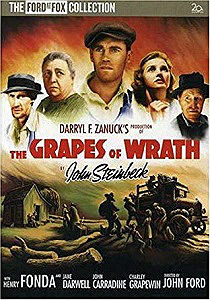
De Amerikaanse schrijver John Steinbeck werd geboren in Salinas, Californië, op 27 februari 1902. Zie ook alle tags voor John Steinbeck op dit blog.

Uit: The Grapes of Wrath

“And all the time the farms grew larger and the owners fewer. And there were pitifully few farmers on the land any more. And the imported serfs were beaten and frightened and starved until some went home again, and some grew fierce and were killed or driven from the country. And farms grew larger and the owners fewer.
And the crops changed. Fruit trees took the place of grain fields, and vegetables to feed the world spread out on the bottoms: lettuce, cauliflower, artichokes, potatoes--stoop crops. A man may stand to use a scythe, a plow, a pitchfork; but he must crawl like a bug between the rows of lettuce, he must bend his back and pull his long bag between the cotton rows, he must go on his knees like a penitent across a cauliflower patch.
And it came about that owners no longer worked on their farms. They farmed on paper; and they forgot the land, the smell, the feel of it, and remembered only that they owned it, remembered only what they gained and lost by it. And some of the farms grew so large that one man could not even conceive of them any more, so large that it took batteries of bookkeepers to keep track of interest and gain and loss; chemists to test the soil, to replenish; straw bosses to see that the stooping men were moving along the rows as swiftly as the material of their bodies could stand. Then such a farmer really became a storekeeper, and kept a store. He paid the men, and sold them food, and took the money back. And after a while he did not pay the men at all, and saved bookkeeping. “These farms gave food on credit. A man might work and feed himself; and when the work was done, he might find that he owed money to the company. And the owners not only did not work the farms any more, many of them had never seen the farms they owned.
And then the dispossessed were drawn west--from Kansas, Oklahoma, Texas, New Mexico; from Nevada and Arkansas families, tribes, dusted out, tractored out. Carloads, caravans, homeless and hungry; twenty thousand and fifty thousand and a hundred thousand and two hundred thousand.”


 2219313-70d6680c10bd3f29ec48d31abd19687e.jpg
John Steinbeck (27 februari 1902 – 20 december 1968)
Poster voor de gelijknamige film uit 1940


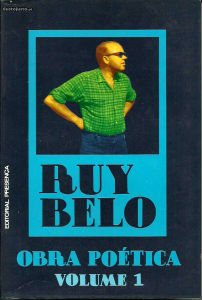
De Portugese dichter, vertaler en essayist Ruy de Moura Belo werd geboren op 27 februari 1933 in São João da Ribeira, nabij Rio Maior. Zie ook alle tags voor Ruy Belo op dit blog.


Anniversary Mass

It’s been one year since your steps
last walked in our parish
Where do you who belonged to these fields
whose wheat is again turning ripe
belong now?
What’s your new name?
Can there be a more unusual weekend
than a saturday like this one that never ends?
How do you fill your time
now that all the time ahead of you is free?
What sort of steps might take you
behind the cooing of a dove in our skies?
Why have you never again had a birthday
even though the table is set and waiting for you
and the mulberry trees along the road are in bloom again?

That’s what his voice was like that’s how he talked
says the yellow-flowered broom that grows here
and that saw him walk on the pathways of childhood
next to his first flight of partridges

Now only in our neckties do we take you who are dead
to those paths where you left the mark of your feet
Only in our neckties. Your death
has stopped dressing us up completely
The summer you departed I clearly remember
thinking profound things
It’s summer again. You have ever less place
in this corner of us where every year
we will piously unearth you
Until the death of your death


Vertaald door Richard Zenith


 2219313-0dd49ab60cfc57fbccc13c228613a153.jpg
Ruy Belo (27 februari 1933 – 8 augustus 1978)
Cover


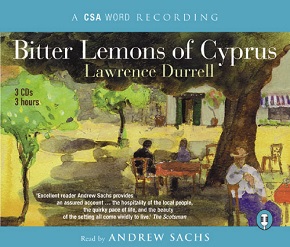
De Britse dichter en schrijver Lawrence George Durrell werd geboren op 27 februari 1912 in Jalandhar in India. Zie ook alle tags voor Lawrence Durrell op dit blog.

Uit: Bitter Lemons of Cyprus

“Journeys, like artists, are born and not made. A thousand differing circumstances contribute to them, few of them willed or determined by the will — whatever we may think. They flower spontaneously out of the demands of our natures — and the best of them lead us not only outwards in space, but inwards as well. Travel can be one of the most rewarding forms of introspection ... These thoughts belong to Venice at dawn, seen from the deck of the ship which is to carry me down through the islands to Cyprus; a Venice wobbling in a thousand fresh-water reflections, cool as a jelly. It was as if some great master, stricken by dementia, had burst his whole colour-box against the sky to deafen the inner eye of the world. Cloud and water mixed into each other, dripping with colours, merging, overlapping, liquefying, with steeples and balconies and roofs floating in space, like the fragments of some stained-glass window seen through a dozen veils of ricepaper. Fragments of history touched with the colours of wine, tar, ochre, blood, fire-opal and ripening grain. The whole at the same time being rinsed softly back at the edges into a dawn sky as softly as circumspectly blue as a pigeon's egg. Mentally I held it all, softly as an abstract painting, cradling it in my thoughts — the whole encampment of cathedrals and palaces, against the sharply-focused face of Stendhal as he sits forever upon a stiff-backed chair at Florian's sipping wine: or on that of a Corvo, flitting like some huge fruit-bat down these light-bewitched alleys ... The pigeons swarm the belfries. I can hear their wings across the water like the beating of fans in a great summer ballroom. The vaporetto on the Grand Canal beats too, softly as a human pulse, faltering and renewing itself after every hesitation which marks a landing-stage. The glass palaces of the Doges are being pounded in a crystal mortar, strained through a prism. Venice will never be far from me in Cyprus — for the lion of Saint Mark still rides the humid airs of Famagusta, of Kyrenia. It is an appropriate point of departure for the traveller to the eastern Levant ... But heavens, it was cold. Down on the grey flagged quay I had noticed a coffee-stall which sold glasses of warm milk and croissants. It was immediately opposite the gang-plank, so that I was in no danger of losing my ship. A small dark man with a birdy eye served me wordlessly, yawning in my face, so that in sympathy I was forced to yawn too. I gave him the last of my liras. There were no seats, but I made myself comfortable on an upended barrel and, breaking my bread into the hot milk, fell into a sleepy contemplation of Venice from this unfamiliar angle of vision across the outer harbour. A tug sighed and spouted a milky jet upon the nearest cloud.”


 2219313-a11925cdeca62571ddce704fc122e3bd.jpg
Lawrence Durrell (27 februari 1912 – 7 november 1990)
Cover


De Canadese dichter, schrijver en essayist André Roy werd geboren op 27 februari 1944 in Montréal. Zie ook alle tags van André Roy op dit blog.


Het is nog nacht

Het is nog nacht
de actieve droom,
de machine van actie;
de nacht in de bossen, de woestijnen, de steden.
Ik droomde van twee werelden:
een, zichtbaar en sterfelijk;
de andere, onzichtbaar, met fantomen
moe sinds de geboorte.
Ik observeer, ik zie de dans van de tijd,
de criminelen die 's nachts terugkwamen.


In de nacht houden wij ons op

In de nacht houden wij ons op
jij, ik, wij, de anderen, die zijn zoals wij.
Nogmaals de actie,
de structuur van het denken in actie.
Moderne wereld van bossen en water.
Je behoort tot de reizende kooplieden,
onze voorouders de vampieren.
De steden, de huizen, de bedden,
waar we ons mysterieus, onmogelijk,
onsterfelijk waanden
wat een waanzin!
Het verlangen stroomt;
we zouden onszelf kunnen doden
voor de kennis van het verlangen.


Vertaald door Frans Roumen


 2219313-ce23bcce62e8390e8a51b49d95e2b374.jpg
André Roy (Montréal, 27 februari 1944)


De Duitse schrijfster en dichteres Elisabeth Borchers werd geboren in Homberg op 27 februari 1926. . Zie ook alle tags voor Elisabeth Borchers op dit blog.


Niemand behaupte

Niemand behaupte
ich sei taub.
Allabendlich höre ich
die Unrast der Sterne.

Niemand behaupte
ich sei blind oder lahm.
Ich nehme Stock und Stein
bis zum jähen Ereignis.

Niemand behaupte
ich hätte zu träumen versäumt.
Ich werde nicht nach Tibet reisen
und auch nicht nach Tanger.
Mir träumte
ich fände den Weg
nicht zurück.


An ein Kind

Wenn wir lange genug warten,
dann wird es kommen.
Heute noch, fragt das Kind.
Heut oder morgen. Ein Schiff,
mußt du wissen, braucht Zeit.
So weit und breit wie das Meer.
Dann bist du groß.
Dann steigen wir ein
und machen die Reise.
Zusammen. Wir beide.
Und jeder auf seine Weise.


 2219313-97a155f40625366bfae5577965e3add1.jpg
Elisabeth Borchers (27 februari 1926 – 25 september 2013)


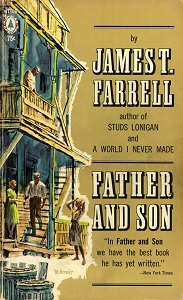
De Amerikaanse schrijver James Thomas Farrell werd geboren op 27 februari 1904 in Chicago. Zie ook alle tags voor James T. Farrell op dit blog.

Uit: Father and Son

“When he'd come home, Bill was there, white and scared. But he hadn't hit him. He'd talked to Bill like a father. Lizz had gone to see McCarthy, the police sergeant whose boys played with Bill and Danny, and McCarthy had quashed it all. He'd paid for the pocketbook, and it was all forgotten. After that, Bill had settled down. Now, you couldn't want for a decenter boy. He looked at his leathery face in the mirror. He washed it, dried himself, cleaned out the wash bowl, and left the bathroom. He put on his khaki shirt, passed through the small hallway to the dining room, and was ready to eat. The dining-room table was covered with dishes and papers. In the center of it there was a large glass cake-dish, which contained crumbs and a stale chunk of cake. Lizz pushed dishes aside and set coffee, sugar buns, and a plate of ham and eggs before him. She wore an old apron and had a rag tied under her chin. She looked sloppy. Jim pitched into the ham and eggs. "I was over to see my mother yesterday," Lizz remarked, sitting down to talk with him. He nodded, but said nothing. He bit into a sugar bun. He was waiting to see whether or not she'd had another scrap with her people. "Mother said that Al isn't well," she said. "You wouldn't think he would be, having a doctor like Mike Geraghty," Jim said, suddenly bitter. His face clouded. He remembered his Little Arty, now three years dead. All their good luck had to come after Arty was long since dead. He wiped up the yolk from the plate with a bun and ate it, and then he shoved his plate aside and handed Lizz his cup for more coffee. She returned with a filled cup and sat down. "Lizz, it's a long time since the little fellow left us. You really ought to take off your mourning. If you do that you won't be sad so often. You have to let time heal old wounds," he said, his voice kindly. "Oh, Jim, I see the children playing on Calumet Avenue, and it breaks my heart. Not one of them is as beautiful as our Arty was." "Come on now, Lizz, we've got to brace up. We've got lots to be thankful for, even with the tough breaks we had in the past," he said, but the image of little Arty stood in his mind, a lovely, light-haired boy in a dirty dress, staring with those wonderful sad eyes and saying "Fither." Lizz wiped her eyes with her apron. "Jim, I can't help it. I look at our new house and I think of him. Oh, how he would have loved it. He'd be going to school this year or next. Everywhere I see, Jim, makes me think of him. I can't help it. I can't take off my mourning," she said in tears.”


 2219313-5dae58483608d308351d6976dbeaaa74.jpg
James T. Farrell (27 februari 1904 – 22 augustus 1979)
Cover


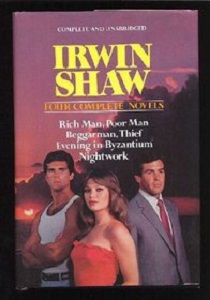
De Amerikaanse schrijver Irwin Shaw werd geboren op 27 februari 1913 als Irwin Gilbert Shamforoff in New York. Zie alle tags voor Irwin Shaw op dit blog.

Uit: Rich Man, Poor Man

“Boylan was standing at the bar in his tweed topcoat, staring at his glass, when Rudolph came down the little flight of steps from Eighth Street, carrying the overnight bag. There were only men standing at the bar and most of them were probably fairies. "I see you have the bag," Boylan said. "She didn't want it." "And the dress?" "She took the dress." "What are you drinking?" "A beer, please." "One beer, please," Boylan said to the bartender. "And I'll continue with whiskey." Boylan looked at himself in the mirror behind the bar. His eyebrows were blonder than they had been last week. His face was very tan, as though he had been lying on a southern beach for months. Two or three of the fairies at the bar were equally brown. Rudolph knew about the sun lamp by now. "I make it a point to look as healthy and attractive as I can at all times," Boylan had explained to Rudolph. "Even if I don't see anybody for weeks on end. It's a form of self-respect." Rudolph was so dark, anyway, that he felt he could respect himself without a sun lamp. The bartender put the drinks down in front of them. Boylan's fingers trembled a little as he picked up his glass. Rudolph wondered how many whiskies he had had. "Did you tell her I was here?" Boylan asked. "Yes." "Is she coming?" "No. The man she was with wanted to come and meet you, but she didn't." There was no point in not being honest. "Ah," Boylan said. "The man she was with." "She's living with somebody." "I see," Boylan said flatly. "It didn't take long, did it?" Rudolph drank his beer. "Your sister is an extravagantly sensual woman," Boylan said. "I fear for where it may lead her." Rudolph kept drinking his beer. "They're not married, by any chance?" "No. He's still married to somebody else." Boylan looked at himself in the mirror again for a while. A burly young man in a black turtle-neck sweater down the bar caught his eye in the glass and smiled. Boylan turned away slightly, toward Rudolph. "What sort of fellow is he? Did you like him?" "Young," Rudolph said. "He seemed nice enough. Full ofjokes." "Full of jokes," Boylan repeated. "Why shouldn't he be full of jokes? What sort of place do they have?" "Two furnished rooms in a walkup." "Your sister has a romantic disregard of the advantages of money," Boylan said. "She will regret it later. Among the other things she will regret." "She seemed happy." Rudolph found Boylan's prophecies distasteful.”


 2219313-8da097f64141e3565fe2ba9f7bfae966.jpg
Irwin Shaw (27 februari 1913 – 16 mei 1984)
Cover voor een omnibus


Zie voor nog meer schrijvers van de 27e februari ook mijn blog van 27 februari 2018 en eveneens mijn blog van 27 februari 2016 deel 2.

Geschreven door Romenu om 18:52 Reageer op dit bericht

Meer van Romenu

↑ Terug naar de berichten