

Naar de inhoud

Romenu

Over literatuur, gedichten, kunst en cultuur
akke.beakke.be

Berichten van 18 maart 2019 tot 19 maart 2019

Mano Bouzamour, Hans Mayer, Philip Roth, Noud Bles, Lynne Sharon Schwartz, Lina Kostenko, Kirsten Boie, William Allingham, Julie Hausmann
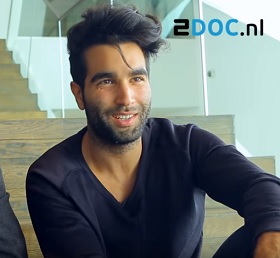
De Nederlandse schrijver Mano Bouzamour werd geboren op 19 maart 1991 in Amsterdam. Zie ook alle tags voor Mano Bouzamour op dit blog.

Uit: Bestsellerboy

“De herder en ik kwamen bij een heuvel aan. Daar dook hij de bosjes in. Waarschijnlijk om te schijten.
De wijn verzachtte niets van mijn pijn. Het verergerde het juist. Het liefst wilde ik nu eigenlijk dood. Levend in de warme woestijngrond worden begraven. Ik had drie jaar van mijn leven verspild aan een boek dat godverdomme nooit gepubliceerd zou gaan worden. Van mijn negentiende tot mijn tweeëntwintigste. Cruciale jaren compleet naar de haaien. Iedere nacht tot drie, vier, vijf uur ’s nachts zitten tikken alsof ik de tering uit mijn tengels probeerde te typen. Om maar te zwijgen over de jaren van koortsachtige zelfstudie.
Wat in jezusnaam moet ik nu doen met mijn leven?
Ik begon tegen mezelf te praten, dialogen met mezelf te voeren, alsof ik een gespleten persoonlijkheid had.
‘Dacht je serieus dat je kon schrijven?’
‘Wat een giller.’
‘Niemand in je omgeving kan een behoorlijk zinnetje opschrijven, laat staan een fucking roman.’
‘En jij dacht dat jij dat wel kon?’
Om mezelf nog meer te tergen, herhaalde ik wat de redactrice tegen mij zei – ik deed haar helse stem zelfs na.
‘Gedraag je niet als een proleet, Mohamed. Gedraag je niet als een proleet, Mohamed. Gedraag je godverdomme niet als Mohamed, de proleet.’
Toen schrok ik op uit mijn zelfbestraffende gedachten.
De verspreking bleek een goddelijke ingeving.
Mohamed, de proleet.
Dat wordt de titel van mijn debuutroman!
Als die ooit wordt uitgegeven. En alsof de goden met mij probeerden te communiceren en te beamen dat wat ik dacht het juiste was, waren er geleidelijk aan, uit alle windstreken, godsdienstige geluiden te horen.
De muezzins zongen de gebedsoproepen vanuit de minaretten van de moskeeën.
Op dat moment ging mijn telefoon trillend over.
+31206241934.
Ik nam niet op. Het kon me even geen moer schelen wie belde. Ik absorbeerde tevreden de harmonieuze geluiden. Bovendien wilde ik niet voor de extra kosten opdraaien. Ik werd nog een keer gebeld. Bij de derde keer kreeg mijn nieuwsgierigheid de overhand, ik nam op en zette de telefoon op luidspreker.”


 2224481-e33bfb73887630caad5223dc164657ad.jpg
Mano Bouzamour (Amsterdam, 19 maart 1991)


De Duitse literatuurwetenschapper, schrijver, criticus, jurist en socioloog Hans Mayer werd geboren op 19 maart 1907 in Keulen. Zie ook alle tags voor Hans Mayer op dit blog.

Uit: Du störst mich nicht (Über Thomas und Heinrich Mann: Briefwechsel 1900-1949)

„Auf den ersten Blick erscheint Heinrich Mann im Briefwechsel als Repräsentant ernster und verantwortungsvoller Lebensführung, wogegen der jüngere Bruder sich als Bajazzo" Bohemien und moralisch verantwortungsloser Künstler stilisiert. Auch die Ingredienzen für den Hochstapler Felix Krull entnahm Thomas Mann dem eigenen Leben.
Andererseits schließt Thomas Mann eine großbürgerliche Ehe, stilisiert sich, diesmal mit erheblichen materiellen Kosten, den adäquaten Lebensstil. Heinrich dagegen wirkt in der Lebensführung betont gegenbürgerlich. Die beiden Ehen schließt er jeweils aus praktischen Erwägungen und unmittelbar im Zusammenhang mit einem Kriegsausbruch. Darin hielt er es wie Goethe, der erst durch Kriegsgefahr dazu gebracht wurde, Christiane Vulpius zu heiraten. Den Goethe-Roman einer literarischen Anverwandlung ("Lotte in Weimar") hinwiederum hat Thomas Mann geschrieben.
Der großbürgerliche Thomas Mann beruft sich, auf dem Höhepunkt der Familien- und Weltanschauungskrise, auf menschliche und künstlerische Würde. Er zitiert am 3. Januar 1918 Adalbert Stifter, der seine Bücher verstanden wissen wollte als "sittliche Offenbarungen, als mit strengem Ernste bewahrte menschliche Würde". Thomas Mann setzt hinzu: "Ich habe ein Recht, ihm das nachzusprechen, und Tausende, denen ich leben half -- auch ohne eine Hand auf dem Herzen und die andere in der Luft, den contrat social zu rezitieren -, sehen es. dieses Recht." Heinrich begegnet diesem literarischen Subjektivismus ganz ohne Glorifizierung der Literatur, daher ganz objektiv: "Ich weiß nicht, ob irgend jemand seinem Mitmenschen 'leben helfen' kann; nur möge unsere Literatur ihm dann nie zum Sterben verhelfen!"
 

 2224481-ea1d20940462635e1dba95f14e38a719.jpg
Hans Mayer (19 maart 1907 – 19 mei 2001)
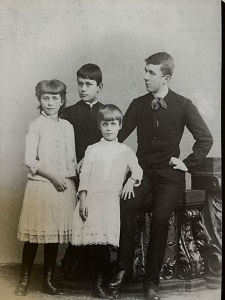
Julia, Thomas, Carla en Heinrich Mann, rond 1889


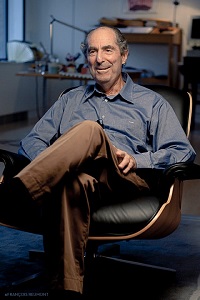
De Amerikaanse schrijver Philip Roth werd geboren op 19 maart 1933 in Newark. Zie ook alle tags voor Philip Roth op dit blog.

Uit:The Humbling

“He'd lost his magic. The impulse was spent. He'd never failed in the theater, everything he had done had been strong and successful, and then the terrible thing happened: he couldn't act. Going onstage had become agony. Instead of the certainty that he was going to be wonderful, he knew he was going to fail. It happened three times in a row, and by the last time nobody was interested, nobody came. He couldn't get over to the audience. His talent was dead.
Of course, if you've had it, you always have something unlike anyone else's. I'll always be unlike anyone else, Axler told himself, because I am who I am. I carry that with me—that people will always remember. But the aura he'd had, all his mannerisms and eccentricities and personal peculiarities, what had worked for Falstaff and Peer Gynt and Vanya—what had gained Simon Axler his reputation as the last of the best of the classical American stage actors—none of it worked for any role now. All that had worked to make him himself now worked to make him look like a lunatic. He was conscious of every moment he was on the stage in the worst possible way. In the past when he was acting he wasn't thinking about anything. What he did well he did out of instinct. Now he was thinking about everything, and everything spontaneous and vital was killed—he tried to control it with thinking and instead he destroyed it. All right, Axler told himself, he had hit a bad period. Though he was already in his sixties, maybe it would pass while he was still recognizably himself. He wouldn't be the first experienced actor to go through it. A lot of people did. I've done this before, he thought, so I'll find some way. I don't know how I'm going to get it this time, but I'll find it—this will pass.
It didn't pass. He couldn't act. The ways he could once rivet attention on the stage! And now he dreaded every performance, and dreaded it all day long. He spent the entire day thinking thoughts he'd never thought before a performance in his life: I won't make it, I won't be able to do it, I'm playing the wrong roles, I'm overreaching, I'm faking, I have no idea even of how to do the first line. And meanwhile he tried to occupy the hours doing a hundred seemingly necessary things to prepare; I have to look at this speech again, and by the time he got to the theater he was exhausted. And dreading going out there. He would hear the cue coming closer and closer and know that he couldn't do it. He waited for the freedom to begin and the moment to become real, he waited to forget who he was and to become the person doing it, but instead he was standing there, completely empty, doing the kind of acting you do when you don't know what you are doing. He could not give and he could not withhold; he had no fluidity and he had no reserve. Acting became a night-after-night exercise in trying to get away with something.”

 2224481-0c71b4c1b4486ea5a351723f416e6bc0.jpg
Philip Roth (19 maart 1933 – 22 mei 2018)


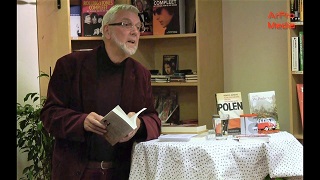
De Nederlandse dichter en schrijver Noud Bles werd op 19 maart 1945 in Vinkeveen geboren. Zie ook alle tags voor Noud Bles op dit blog.

Uit: Liszt voor de lichte linkerhand

‘Ben jij katholiek opgevoed?’ vraagt Károly terwijl hij de spaghettibandjes over haar schouders omlaag schuift.
‘Nee,’ zegt Zsuzsi. ‘Moet dat?’ Op haar bleke huid verschijnt kippenvel. ‘Je hebt koude handen.’
‘Wacht tot ik gespeeld heb. Dan springen de vonken van mijn vingers. Een katholiek verleden is handig. Liszt was in naam katholiek.’
Ze helpt hem de sluiting op haar rug te openen. Hij kijkt langdurig naar haar meisjesbovenlichaam.
‘Ik voel me net een schilderij,’ klaagt ze.
‘Iets meer wegdraaien,’ wijst hij. ‘En je rechterarm naar voren. Maak de beweging.’
‘Zo?’
‘Nu weer terug.’
‘En?’
‘Ik wil de Introductie nog één keer oefenen.’
‘Alleen met mijn trui aan.’
Hij heeft zich al omgedraaid naar de piano en bladert naar het begin van de partituur.
Vlak boven de toetsen zweven zijn handen. Nu gaat hij nog drie keer verzitten, weet ze. Daarna sluit hij kort tweemaal zijn ogen. Ineens is er de eerste toon.
*

Met zijn ogen dicht wacht hij tot het publiek in de zaal volkomen stil is. Het eerste deel begint met een uiterst langzame wandeling van de rechterhand. Tijdens de loop gaan zijn ogen open. Een prachtige rechterhand heeft hij. Een hand die ver uit de manchet van zijn overhemd steekt. Het nieuwe overhemd is speciaal gekocht voor het concert. Als de rechterhand terugkeert naar het midden van het klavier schudt hij even met de mouw van zijn jacquet.
Ik hoop niet dat vrouwelijke pianisten een jacquet moeten dragen tijdens hun optreden."
 

 2224481-98e3caff402261d7df8088c142fa675a.jpg
Noud Bles (Vinkeveen, 19 maart 1945)


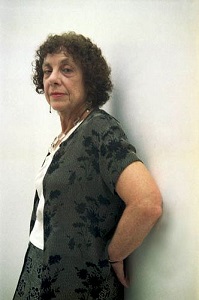
De Amerikaanse schrijfster Lynne Sharon Schwartz werd geboren op 19 maart 1939 in New York. Zie ook alle tags voor Lynne Sharon Schwartz op dit blog.

Uit: I Wish I Could Say the Same

“My mother was not prudishly silent about sex. Many mothers of her generation behaved (and looked) as though sex were not part of the basic human repertoire. For that difference my friends envied me, growing up, and it's true I didn't bear the burden of the common inhibitions. I had others, though, so I'm not sure their envy was war-ranted. I imagine that my childhood friends managed to get over their sexual inhibitions (people do, as a rule), but other kinds of learned fears may be more tenacious. From remarks my mother let drop, it was clear that she and my father engaged in sex ("did it," as we used to say), that she assumed one day I would do the same, and that it was a good thing in general. The crucial words are "let drop." Sex was something to be alluded to coyly, even lewdly—a born performer, she could do a great delivery of off-color jokes, though never very gross ones. But it was not a topic for extended discussion, either entertaining or serious. I once asked her what we would do if I had a baby before marriage. "Out of wed-lock," as we then said. That was a calamitous thing to have happen, or so it seemed to me. She smiled at my question; the likelihood must have appeared remote. Besides being ten years old, I was bookish and unworldly and had shown no signs of incipient promiscuity. "If you had a baby, we would take care of it," she said kindly. End of story. I was touched by her answer. I still am. Nowadays I suppose an enlight-ened mother would probe into the whys and wherefores of such a question, but at the time I was satisfied. My father was the more close-mouthed on the subject. To me he never mentioned anything concerning sex, though I found out years later, with some dismay, that he was more frank with my older sister. "Sleep with him if you must:' he advised her about one boyfriend, "but don't marry him." What I would have given to be addressed that way, as if I were capable of both judgment and passion! Probably he was more frank with my younger brother too, in the manner of fathers and sons, whatever that might have been.”
 

 2224481-15cb02c78567ff0c82f85f99c1e4a5e9.jpg
Lynne Sharon Schwartz (New York, 19 maart 1939)


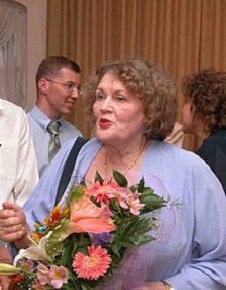
De Oekraïense schrijfster en dichteres Lina Kostenko werd op 19 maart 1930 geboren in Rzhyshchiv. Zie ook alle tags voor Lina Kostenko op dit blog.


In childhood I floated above dahlias

In childhood I floated above dahlias,
and grew up, flying, for years.
Now I walk the paths and trails
and pave the way through swamps.
My heart has tired of rattling.
I endure and quietly pave the way.
I who learned to fly in dreams ...
I, who could have walked on spires ...


A terrifying kaleidescope

A terrifying kaleidescope:
at this moment someone somewhere died.
At this moment. At this very moment. Each of every minute.
A ship has broken apart. The Galapagos Islands burn.
And the bitter star-wormwood* descends above the river Dnieper.

Somewhere an explosion. Somewhere a volcano. Ruin. Destruction.
Someone gets better. Someone falls. Someone begs: "Don't shoot!"

He doesn't know the tales of Sheherezade.
Lorelei doesn't sing above the Rhine.

A comet flies. A child plays.
Faces bloom, not effaced by fear.

Blessed is every minute of life
on these universal scythes of death!


Vertaald door Michael M. Naydan
 

 2224481-e6950d094c17e573e1cf4376654e545d.jpg
Lina Kostenko (Rzhyshchiv, 19 maart 1930)


De Duitse schrijfster Kirsten Boie werd geboren op 19 maart 1950 in Hamburg. Zie ook alle tags voor Kirsten Boie op dit blog.

Uit: Alhambra

„Er atmete langsamer. Dies ist ein Wald. Aber eben noch war ich in einer Gasse.
Sein Herz galoppierte noch immer, sein Atem jagte, langsam atmen, langsam atmen, aber das Schwirren kam nicht wieder.
Irgendwo aus der Ferne hörte er Geräusche, als würde Metall auf Metall geschlagen. Eine Stimme, die etwas rief, weit entfernt. Den Schrei eines Esels.
Er ließ die Augen geschlossen und erlaubte seinen Gedanken zu tun, was sie wollten. Die Verwirrung kam nicht wieder. Er begriff, was an diesen Geräuschen so merkwürdig war: All das, was fehlte.
Kein Motorenlärm, dachte Boston und war gleichzeitig erstaunt und glücklich, dass er etwas begriffen hatte und es in seinen Gedanken formulieren konnte, dass sein Gehirn also wieder funktionierte, wahrnahm, verstand. Wie tief muss dieser Wald sein, dass man keinen Motorenlärm hört. Und trotzdem hängt in der Luft ein Schleier aus Geräuschen, Stimmen, ein Holpern und Klappern, unvertraut.
Gut. Er konnte wieder nachdenken, das war gut. Wenn er wieder er selbst war, konnte alles andere nicht mehr so schrecklich sein.
Boston öffnete die Augen. Die Sonne schien noch immer durch die Pinienwipfel.
Isabella sah auf zum Himmel. Noch keine Sterne.
Ferdinand hatte sich verabschiedet, sie konnte sich denken, wohin. Boten waren gekommen mit Nachrichten, Bitten, Fragen; sie hatte mit dem Hauptmann der Burgwache gesprochen, einem klugen Mann; der Nachmittag war vergangen. Über den Dächern zeigte sich der Mond. Er war groß und rund und sah aus wie eine Orange.
Wie schön dies alles ist, dachte sie und ließ sich auf einem Sessel nieder, den ein Diener heraus in den Hof getragen hatte. Und zum Dank, Herr mein Gott, will ich tun, was in meiner Macht steht, um dafür zu sorgen, dass alle Ungläubigen bekehrt werden und Dich preisen wie ich, das gelobe ich bei allem, was mir heilig ist.“

 

 2224481-a67a5473bc9667f4bd45dd969d3843f1.jpg
Kirsten Boie (Hamburg, 19 maart 1950)
Cover


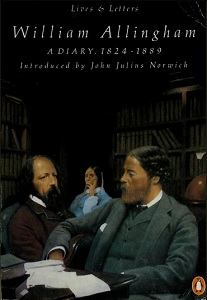
De Ierse dichter William Allingham werd geboren op 19 maart 1824 in Ballyshannon, Donegal. Zie ook alle tags voor William Allingham op dit blog.


The Bubble

See the pretty planet!
Floating sphere!
Faintest breeze will fan it
Far or near;

World as light as feather;
Moonshine rays,
Rainbow tints together,
As it plays.

Drooping, sinking, failing,
Nigh to earth,
Mounting, whirling, sailing,
Full of mirth;

Life there, welling, flowing,
Waving round;
Pictures coming, going,
Without sound.

Quick now, be this airy
Globe repelled!
Never can the fairy
Star be held.

Touched--it in a twinkle
Disappears!
Leaving but a sprinkle,
As of tears.


Places And Men

In Sussex here, by shingle and by sand,
Flat fields and farmsteads in their wind-blown trees,
The shallow tide-wave courses to the land,
And all along the down a fringe one sees
Of ducal woods. That 'dim discovered spire'
Is Chichester, where Collins felt a fire
Touch his sad lips; thatched Felpham roofs are these,
Where happy Blake found heaven more close at hand.

Goodwood and Arundel possess their lords,
Successive in the towers and groves, which stay;
These two poor men, by some right of their own,
Possessed the earth and sea, the sun and moon,
The inner sweet of life; and put in words
A personal force that doth not pass away.
 

 2224481-ba6f37d70c494e60a69766cf107f80d8.jpg
William Allingham (19 maart 1824 – 18 november 1889)
Cover biografie


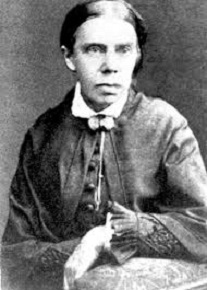
De Baltisch Duitse dichteres Julie Katharina von Hausmann werd geboren in Riga op 19 maart 1826. Zie ook alle tags voor Julie Hausmann op dit blog.


Von Gnade will ich leben

Von Gnade will ich leben,
auf Gnade sterben auch,
auf Gnade mich ergeben
bis zu dem letzten Hauch.
Der Quell all meiner Freude,
all meines Trostes Grund,
die Kraft in jedem Leide
bleibt Gottes Gnadenbund.

Wohl hat auf allen Wegen
viel Lieb und Freundlichkeit,
viel tausendfachen Segen
mein Gott für mich bereit;
wohl in der Näh und Ferne
erkenn´ ich seine Güt,
hier unten Baum und Blüt.

Ich weiß, was sie verkünden,
hab´ meine Lust daran.
Doch daß in meinen Sünden
ich Gnade finden kann,
das ist das Allergrößte,
dem kommt doch gar nichts gleich;
das ist der Gaben beste,
macht auch den Ärmsten reich.

Wie müßt´ ich doch verzagen,
wo fänd´ ich Kraft und Licht,
wie könnt´ ich selbst mich tragen,
Trüg´ mich die Gnade nicht!
Der Gnad allein ergeben
stimmt alle mit mir ein:
Von Gnade will ich leben,
durch Gnade selig sein!
 

 2224481-7739f78fd7f9a4dcacf8364869fed63d.jpg
Julie Hausmann (19 maart 1826 – 2 augustus 1901)


Zie voor nog meer schrijvers van de 19e maart ook mijn blog van 19 maart 2018 en ook mijn blog van 19 maart 2017 deel 1 en eveneens deel 2.

Geschreven door Romenu om 18:18 Reageer op dit bericht

Tonnus Oosterhoff, John Updike, Charlotte Roche, Max Barry, Christa Wolf, Wilfred Owen, Stéphane Mallarmé, Hellema, Frans Babylon

De Nederlandse dichter en schrijver Tonnus Oosterhoff werd geboren in Leiden op 18 maart 1953. Zie ook alle tags voor Tonnus Oosterhoff op dit blog.


O jongens, zeg je prevelementjes

O jongens, zeg je prevelementjes,
de geschiedenisleraar komt binnen.
Op de mutor is slecht nieuws voor doven en horenden.
'Er is een schuchtere rede die wij afschaffen.'
De realiteit sloopt de mogelijkheden.

Met de strekking naar de speelvelden;
welk gevoel roept het product op?
Ouwe Truffoto heeft de mutorreclamebron geslagen,
Kemp rimpelt water uit de rotsen. Vrijheid van uiting.

Nu de voorlopige naam van de eeuwige organisatie nog even.


Tropical beach

Oplettendheid bracht de vogel.
Hier ligt het geluste in aftel,
het aas van de vissende bomen.
Voor vogelhoofdboothuis een kano
al omgekeerd op een plankje.
De vogel het nut van de snavel.
De snavel het nut van de vogel.

De zin van kleurige wieken
naar de tak van de vissende bomen.
Droom standen vol notige zaden.
Het kuifje dat even omhoog komt
om de mens in zich te onderdrukken.


Geheim agent

Alles heb ik geregeld: de valse naam
en het hotel waar niemand ons zou zoeken.
Zijn spierkracht, dat hij klein was, niet veel sprak,
zijn gladde bruine zolen heb ik zelf bedacht.

De rust waarmee hij alles met me deed
om me tot een bekentenis te dwingen.
Stroomstoot, ijslikeur, bamboe, valse hoop:
hij was een meester in het derdegraads verhoor.

Toen ik vertrok had ik gezworen wat hij wou.
Ik had gemoord, verraden en gelogen,
en meer getierd dan hij ooit had gehoord
en toegegeven: deze ontmoeting vond nooit plaats.


 2224115-2291d17f9af49a6d76c4190efb387d8f.jpg
Tonnus Oosterhoff (Leiden, 18 maart 1953)


De Amerikaanse dichter en schrijver John Updike werd geboren in Shillington, Pennsylvania, op 18 maart 1932. Zie ook alle tags voor John Updike op dit blog.


Perfection Wasted

And another regrettable thing about death
is the ceasing of your own brand of magic,
which took a whole life to develop and market —
the quips, the witticisms, the slant
adjusted to a few, those loved ones nearest
the lip of the stage, their soft faces blanched
in the footlight glow, their laughter close to tears,
their tears confused with their diamond earrings,
their warm pooled breath in and out with your heartbeat,
their response and your performance twinned.
The jokes over the phone. The memories packed
in the rapid-access file. The whole act.
Who will do it again? That's it: no one;
imitators and descendants aren't the same.


On The Road

Those dutiful dogtrots down airport corridors
while gnawing at a Dunkin' Donuts cruller,
those hotel rooms where the TV remote
waits by the bed like a suicide pistol,
those hours in the air amid white shirts
whose wearers sleep-read through thick staid thrillers,
those breakfast buffets in prairie Marriotts—
such venues of transit grow dearer than home.

The tricycle in the hall, the wife's hasty kiss,
the dripping faucet and uncut lawn—this is life?
No, vita thrives via the road, in the laptop
whose silky screen shimmers like a dark queen's mirror,
in the polished shoe that signifies killer intent,
and in the solitary mission, a bumpy glide
down through the cloud cover to a single runway
at whose end a man just like you guards the Grail.


Burning Trash

At night—the light turned off, the filament
Unburdened of its atom-eating charge,
His wife asleep, her breathing dipping low
To touch a swampy source—he thought of death.
Her father's hilltop home allowed him time
To sense the nothing standing like a sheet
Of speckless glass behind his human future.
He had two comforts he could see, just two.

One was the cheerful fullness of most things:
Plump stones and clouds, expectant pods, the soil
Offering up pressure to his knees and hands.
The other was burning the trash each day.
He liked the heat, the imitation danger,
And the way, as he tossed in used-up news,
String, napkins, envelopes, and paper cups,
Hypnotic tongues of order intervened.


 2224115-de698b1ee19d460d2af44ac38c3879bd.jpg
John Updike (18 maart 1932 – 27 januari 2009)
Cover


De Duitse schrijfser, televisiepresentatrice, actrice en zangeres Charlotte Roche werd geboren in High Wycombe, Engeland, op 18 maart 1978. Zie ook alle tags voor Charlotte Roche op dit blog.

Uit: Wrecked (Vertaald door Tim Mohr)

“Every time we have sex, we turn on both of the electric blankets half an hour in advance. We have extremely high-quality electric blankets, and they stretch from the head of the bed to the foot. I’ve always been terribly scared of those types of things, scared they’ll heat up after I fall asleep and that I’ll be roasted alive or die of smoke inhalation. But our electric blankets automatically switch themselves off after an hour. We lie down next to each other in the bed—heated to 105 degrees—and stare up at the ceiling. The warmth relaxes our bodies. I begin to breathe deeply, smiling on the inside with the excitement of what’s to come. Then I roll over and kiss him as I put my hand into his XL yoga pants. No zipper or anything else that could catch on hairs or foreskin. I don’t grab his cock at first. I reach down farther—to his balls. I cradle them in my hand like a pouch full of gold. At this point I’m already betraying my man-hating mother.
She tried to teach me that sex was something bad. It didn’t work.
Breathe in, breathe out. This is the only moment in the day when I really breathe deeply. The rest of the time I tend to just take shallow gasps. Always wary, always on the lookout, always bracing for the worst. But my personality completely changes during sex. My therapist, Frau Drescher, says I have subconsciously split myself in two—since my feminist mother tried to raise me as an asexual being, I have to become someone else in bed to avoid feeling as if I’m betraying her. It works very effectively. I am completely free. Nothing can embarrass me. I’m lust incarnate”.


 2224115-3cc8ef3cd68ea34868eee8b6f5654639.jpg
Charlotte Roche (High Wycombe, 18 maart 1978) 
Cover


De Australische schrijver Max Barry werd geboren op 18 maart 1973 in Melbourne. Zie ook alle tags voor Max Barry op dit blog.

Uit: Machine Man

“As a boy, I wanted to be a train. I didn’t realize this was unusual— that other kids played with trains, not as them. They liked to build tracks and have trains not fall off them. Watch them go through tunnels. I didn’t understand that. What I liked was pretending my body was two hundred tons of unstoppable steel. Imagining I was pistons and valves and hydraulic compressors.
“You mean robots,” said my best friend, Jeremy. “You want to play robots.” I had never thought of it like that. Robots had square eyes and jerky limbs and usually wanted to destroy the Earth. Instead of doing one thing right, they did everything badly. They were general purpose. I was not a fan of robots. They were bad machines.

***

I woke and reached for my phone and it was not there. I groped around my bedside table, fingers sneaking between novels I didn’t read anymore because once you start e-reading you can’t go back. But no phone. I sat up and turned on my lamp. I crawled underneath the bed, in case my phone had somehow fallen in the night and bounced oddly. My eyes were blurry from sleep so I swept my arms across the carpet in hopeful arcs. This disturbed dust and I coughed. But I kept sweeping. I thought: Have I been burgled? I felt like I would have woken if someone had tried to swipe my phone. Some part of me would have realized.
I entered the kitchen. Kitchenette. It was not a big apartment. But it was clean, because I didn’t cook. I would have spotted my phone. But I did not. I peered into the living room. Sometimes I sat on the sofa and watched TV while playing with my phone. Possibly the phone had slipped down between cushions. It could be there now, just out of sight. I shivered. I was naked. The living room curtains were open and the window looked onto the street. The street looked into the window. Sometimes there were dogwalkers, and school-going children. I shivered again. I should put on some clothes. My bedroom was six feet away. But my phone could be closer. It could be right there. I cupped my hands over my genitals and ran across the living room and pulled up sofa cushions. I saw black plastic and my heart leaped but it was only a remote. I got down on my hands and knees and felt around beneath the sofa. My ass tingled with the first touch of morning sun. I hoped nobody was outside that window.”


 2224115-8a22a7ec599c92ecca078777837b3ba2.jpg
Max Barry (Melbourne, 18 maart 1973)


De Duitse schrijfster Christa Wolf werd geboren op 18 maart 1929 in het huidige Poolse Gorzów Wielkopolski. Zie ook alle tags voor Christa Wolf op dit blog.

Uit: Kindheitsmuster

„In die Erinnerung drängt sich die Gegenwart ein, und der heutige Tag ist schon der letzte Tag der Vergangen-heit. So würden wir uns unaufhaltsam fremd werden ohne unser Gedächtnis an das, was wir getan haben, an das, was uns zugestoßen ist. Ohne unser Gedächtnis an uns selbst. Und die Stimme, die es unternimmt, davon zu spre-chen. Damals, im Sommer 1971, gab es den Vorschlag, doch endlich nach L., heute G., zu fahren, und du stimmtest zu. Obwohl du dir wiederholtest, daß es nicht nötig wä-re. Aber sie sollten ihren Willen haben. Der Tourismus in alte Heimaten blühte. Zurückkehrende rühmten die fast durchweg freundliche Aufnahme durch die neuen Einwohner der Stadt und nannten Straßenverhältnisse, Verpflegung und Unterkunft »gut«, »passabel«, »ordent-lich«, was du dir alles ungerührt anhören konntest. Was die Topographie betreffe, sagtest du, auch um den An-schein wirklichen Interesses zu erwecken, könntest du dich ganz auf dein Gedächtnis verlassen: Häuser, Stra-ßen, Kirchen, Parks, Plätze — die ganze Anlage dieser im übrigen kaum bemerkenswerten Stadt war vollstän-dig und für immer in ihm aufgehoben. Eine Besichti-gung brauchtest du nicht. Trotzdem, sagte 1-1. Da fingst du an, die Reise gewissenhaft vorzubereiten. Der visa- freie Reiseverkehr war zwar noch nicht eingeführt, aber schon damals wurden die Bestimmungen lax gehand-habt, so daß der nichtssagende Vermerk »Stadtbesich-tigung«, in die dreifach auszufertigenden Antragsfor-mulare unter der Rubrik »Begründung« eingetragen, anstandslos durchging. Zutreffende Angaben wie »Ar-beitsreise« oder »Gedächtnisüberprüfung« hätten Be-fremden erregt. (Besichtigung der sogenannten Vater-stadt!) Die neuen Paßfotos fandet ihr — im Gegensatz zu den Angestellten der Volkspolizeimeldestelle — euch unähnlich, eigentlich abscheulich, weil sie dem Bild, das ihr von euch hattet, um den entscheidenden nächsten Altersschritt voraus waren. Lenka war, wie immer, gut getroffen, nach eurer Meinung. Sie selbst verdrehte die Augen, um sich zu ihren Fotos nicht äußern zu müssen. Während die Anträge auf Ausreise und bei der Indu-strie-und Handelsbank die Gesuche um Geldumtausch liefen, bestellte Bruder Lutz in der Stadt, die in deinen Formularen zweisprachig, unter verschiedenen Namen auftauchte, als »Geburtsort« L. und als »Reiseziel« G., vorsichtshalber telegrafisch Hotelzimmer, denn ihr kennt in deiner Heimatstadt keine Menschenseele, bei der ihr hättet übernachten können. Fristgerecht konntet ihr so-wohl die Anlagen zum Personalausweis als auch die dreimal dreihundert Zloty in Empfang nehmen, und du verrietest dich erst am Vorabend des geplanten Rei-setages, als Bruder Lutz anrief und mitteilte, er habe es nicht geschafft, seine Papiere abzuholen: Da machte es dir nicht das geringste aus, eine ganze Woche später zu fahren.“


 2224115-9231c477b01266868e45558f7b7a8abe.jpg
Christa Wolf (18 maart 1929 – 1 december 2011) 
Cover


De Engelse dichter en schrijver Wilfred Owen werd op 18 maart 1893 geboren in Oswestry in Shropshire. Zie ook alle tags voor Wilfred Owen op dit blog.


Shadwell Stair

I am the ghost of Shadwell Stair.
Along the wharves by the water-house,
And through the cavernous slaughter-house,
I am the shadow that walks there.

Yet I have flesh both firm and cool,
And eyes tumultuous as the gems
Of moons and lamps in the full Thames
When dusk sails wavering down the pool.

Shuddering the purple street-arc burns
Where I watch always; from the banks
Dolorously the shipping clanks
And after me a strange tide turns.

I walk till the stars of London wane
And dawn creeps up the Shadwell Stair.
But when the crowing syrens blare
I with another ghost am lain.


On My Songs

Though unseen Poets, many and many a time,
Have answered me as if they knew my woe,
And it might seem have fashioned so their rime
To be my own soul's cry; easing the flow
Of my dumb tears with language sweet as sobs,
Yet are there days when all these hoards of thought
Hold nothing for me. Not one verse that throbs
Throbs with my heart, or as my brain is fraught.
'Tis then I voice mine own weird reveries:
Low croonings of a motherless child, in gloom
Singing his frightened self to sleep, are these.
One night, if thou shouldst lie in this Sick Room,
Dreading the Dark thou darest not illume,
Listen; my voice may haply lend thee ease.


 2224115-2287461b477a411c71d2833c5a631379.jpg
Wilfred Owen (18 maart 1893 – 4 november 1918)
Affiche voor een herdenking in Shropshire


De Franse dichter Stéphane Mallarmé werd geboren in Parijs op 18 maart 1842. Zie ook alle tags voor Stéphane Mallarmé op dit blog.


Apparition

La lune s'attristait. Des séraphins en pleurs
Rêvant, l'archet aux doigts, dans le calme des fleurs
Vaporeuses, tiraient de mourantes violes
De blancs sanglots glissant sur l'azur des corolles.
— C'était le jour béni de ton premier baiser.
Ma songerie aimant à me martyriser
S'enivrait savamment du parfum de tristesse
Que même sans regret et sans déboire laisse
La cueillaison d'un Rêve au coeur qui l'a cueilli.
J'errais donc, l'oeil rivé sur le pavé vieilli
Quand avec du soleil aux cheveux, dans la rue
Et dans le soir, tu m'es en riant apparue
Et j'ai cru voir la fée au chapeau de clarté
Qui jadis sur mes beaux sommeils d'enfant gâté
Passait, laissant toujours de ses mains mal fermées
Neiger de blancs bouquets d'étoiles parfumées.


L'enfant prodigue

Chez celles dont l'amour est une orange sèche
Qui garde un vieux parfum sans le nectar vermeil,
J'ai cherché l'Infini qui fait que l'homme pèche,
Et n'ai trouvé qu'un Gouffre ennemi du sommeil.

— L'Infini, rêve fier qui berce dans sa houle
Les astres et les cœurs ainsi qu'un sable fin !
— Un Gouffre, hérissé d'âpres ronces, où roule
Un fétide torrent de fard mêlé de vin !


II.

Ô la mystique, ô la sanglante, ô l'amoureuse
Folle d'odeurs de cierge et d'encens, qui ne sus
Quel Démon te tordait le soir où, douloureuse,
Tu léchas un tableau du saint-cœur de Jésus,

Tes genoux qu'ont durcis les oraisons rêveuses,
Je les baise, et tes pieds qui calmeraient la mer ;
Je veux plonger ma tête en tes cuisses nerveuses
Et pleurer mon erreur sous ton cilice amer ;

Là, ma sainte, enivré de parfums extatiques,
Dans l'oubli du noir Gouffre et de l'Infini cher,
Après avoir chanté tout bas de longs cantiques
J'endormirai mon mal sur votre fraîche chair.


 2224115-478eb6f084e7ed158d9ee75ce3e6008e.jpg
Stéphane Mallarmé (18 maart 1842 – 9 september 1898)
Portret door François Nardi, 1887


De Nederlandse schrijver Hellema (pseudoniem voor Alexander Bernard (Lex) van Praag) werd geboren in Amsterdam op 18 maart 1921. Zie ook alle tags voor Hellema op dit blog.

Uit: Klèm

“Het was zes graden onder nul. De thermometer zat aan de raamlijst en was van binnenuit af te lezen. Hij opende de deur naar de tuin en stapte naar buiten. De sneeuw, gekrompen langs de rand van de gevel, liet een smalle strook tegels vrij, net genoeg om erop te staan. In de hoek die de hospitaalvleugel met het hoofdgebouw maakte, een hoek waar nooit zon kwam, lag de sneeuw hoog opgewaaid en glansde in het schijnsel van de booglampen van de buitenverlichting. Het was doodstil, een oord zonder gerucht, een hemels Jeruzalem.
In het vroege voorjaar was soms het kraken en kruien van het ijs te horen op de rivier, in warme zomernachten als overal de ramen en tuindeuren openstonden hoorde je van alle kanten geluiden of liever, je wist dat er overal geluiden waren, nachtgeluiden van slapende mensen, maar wat je werkelijk hoorde was hier en daar een enkeling die niet sliep en die hoestte of zijn stoel verschoof op de tegels voor zijn deur. En in de herfst, met wind uit het westen, kon je heel in de verte treinen horen rijden. Waarom reden er 's nachts zoveel treinen? Het zou eigenlijk goed zijn om over al deze dingen nog eens na te denken. Over de verlichting die de mensen 's nachts uit de slaap hield en over de treinen en ook over de rivier en de grote binnenschepen die daar voeren. Nee, dat kon hij niet weten, dat dacht hij maar zo, rivieren en binnenschepen dat hoort bij elkaar, maar gezien had hij ze van hieruit nooit.
Hij begon het koud te krijgen. Zes graden maar, dat zou niet voldoende zijn. Hij zou ziek worden, maar doodgaan zou hij niet. Hij ging naar binnen en sloot de tuindeur. Hij had er dikwijls over nagedacht hoe ze hem zouden vinden, stijf rechtop in zijn stoel op het tegelterrasje voor zijn deur, netjes in pyjama.
In het donker, bij het schijnsel van de buitenverlichting, dat door de dunne gordijnen drong, liep hij voorzichtig de paar stappen naar zijn bed, dat nog warm aanvoelde, en dekte zich toe. So wie man sich bettet so liegt man, es deckt einen da keiner zu. Dat moest Ianggeleden zijn dat hij daaraan nog eens gedacht had. Het werd toen al als achterhaald beschouwd en misschien was hij nog maar een van de weinigen geweest die - ah, Brecht, dat was de naam - die hem gelezen hadden, de meesten hadden zelfs nooit van hem gehoord.
Hij was nu klaarwakker, maar hield de ogen gesloten. Hij lag op zijn rug met de handen onder zijn hoofd gevouwen. Was dat een vliegtuig wat hij hoorde, hoog in de lucht? Hij sloeg zijn ogen op en één snelle hartslag lang meende hij dat wat hij door de gordijnen zag een zoeklicht was. Dit verwonderde hem. Waarom moest hij nu juist daaraan denken? Of kon hij zich dit nu opeens herinneren?”


 2224115-d97c24c55084966ea8463a6a2bcf1786.jpg
Hellema (18 maart 1921 – 19 maart 2005)
Cover


De Nederlandse dichter Frans Babylon (pseudoniem van Franciscus Gerardus Jozef Obers) werd geboren in Deurne op 18 maart 1924.Zie ook alle tags voor Frans Babylon op dit blog.


Wintermorgen

In deze lichte morgensneeuw
van mijn abrupt ontwaken
verschijnt je vol en zacht gezicht

geruisloos vlokken witte woorden
van goedheid in mijn wezen neer

ik vind geen antwoord geen verweer

ik sta vergrauwd en wat ontredderd
te kleumen in je glimlach lief

en jij omvat mij primitief
behoedend zonder mij te raken

jij weet mij weer tot mens te maken


Lichten in nevel

als zich traag de avondnevel
weer in amsterdam verdicht
loop ik eenzaam langs de gevels
zoekend naar een vergezicht.

dubbelzinnig zijn reklames
punten voor mijn evenwicht;
achter de miljoenen ramen
leven mensen in het licht.

in zo’n ruime nevelavond
voel ik mij in ’t diepst gericht
naar de wezens die gehavend
geven hoe ze zijn ontwricht.

en bij één der voze grachten
-waar elk licht in damp vergaat-
smoor ik schamel kleine klachten
in een goede schoot van ’t kwaad.

en ik keer door lege stegen
waar ooit breero zwierf van pijn
godverlaten doodgezwegen
door de nevel van het Zijn.


 2224115-2ed488ee3498235737dab11ab3b8ec41.jpg
Frans Babylon (18 maart 1924 – 21 augustus 1968)


Zie voor nog meer schrijvers van de 18e maart ook mijn blog van 18 maart 2018 deel 1 en eveneens deel 2 en ook mijn blog van 18 maart 2017 deel 3.

Geschreven door Romenu om 18:37 Reageer op dit bericht

Vicky Francken


De Nederlandse dichteres Vicky Francken werd geboren op 18 maart 1989 in Boxmeer. Zie ook alle tags voor Vicky Francken op dit blog.


Hier draait het leven om

Hier draait het en zoekt het zijn voeten.
Vermaalt het de grond onder zijn zolen
en boent het zijn schoenen voordat
het iets inslaat, bij voorkeur
een laan of een pad dat niet
inleidt maar verleidt en wijdte
bereikt. Zo span ik mijn vleugels,
gelukkig te vliegen, mijn missie
de afstand van kiezels tot keien verslaan.
Ik stort me te pletter, luister naar raad
van omstanders. Niets anders hoor ik
dan drijfvesten van gelegde verbanden
en taal.


Foto

Hier sta ik vervreemd tot oude planten
te behoren en deel te zijn van wie
jij bezoekt omdat we water willen proeven,
maar slechts jouw zwijgen mogen ruiken
want je wilt niet dat we groeien.
We slapen en slijten de tijd
aan een ander, aan iemand met armen
en emmers met uien, aan iemand met spade
en ondiepe kuilen. Daar lig ik
met open mond en open ogen
maar te wuiven bij het graan,
ongeveer als met een tong van aarde
over water praten of op je strepen liggen
en in bed gaan staan.


 2242507-3a8b1e8aa22bcb45123efc1c2d60ea20.jpg
Vicky Francken (Boxmeer, 18 maart 1989)

Geschreven door Romenu om 00:00 Reageer op dit bericht

Meer van Romenu

↑ Terug naar de berichten