Tennessee Williams, Martin McDonagh, Gregory Corso, Hwang Sun-won, Robert Frost, Patrick Süskind, A. E. Housman, Bettina Galvagni, Erica Jong
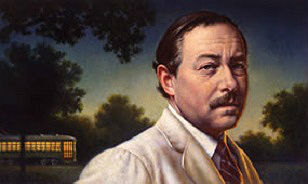
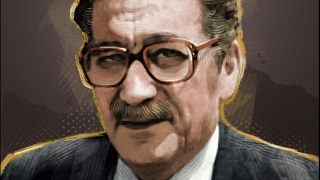
De Amerikaanse dichter en schrijver Tennessee Williams (eigenlijk Thomas Lanier Williams) werd geboren in Columbus, Mississippi, op 26 maart 1911. Zie ook alle tags voor Tennessee Williams op dit blog.
This Hour
At break of dawn the shape of life
Is chiselled with a keener knife,
And angularities emerge
From the illusion of a curve.
This is the hour that imparts
A special nudity to hearts,
When every secret thing is known
Inward to the very bone.
No mist of rain nor veil of snow
Can blur this stark intaglio
Of sculptured hill and hollowed plain,
Poignant as thought, distinct as pain.
This is the keen recurrent edge
Of shuttling time. The frosty hedge,
The arrowed song of birds betray
The sword unsheathed in break of day.
This is the hour when men who dare
Shake lightning from their unbound hair,
And cherish in their last retreat
The will to bear, the strength to meet
Unflinchingly and with iron heart
The steel that smites the breast apart!
My love was light
My love was light the old wives said —
Light was my love and better dead!
My love was of such little worth
Stones were but wasted on her tomb;
She left no kettle by the hearth,
No crying child nor silent loom.
My love drank wine the old wives said
And danced her empty days away;
She baked no bread, she spun no thread,
She shaped no vessels out of clay ....
But how should old wives understand
Eternally my heart must grieve,
The cup remembering in her hand,
The dance her ghostly feet still weave ....
My love was light the old wives said —
Light was my love and better dead!
Tennessee Williams (26 maart 1911 – 25 februari 1983)
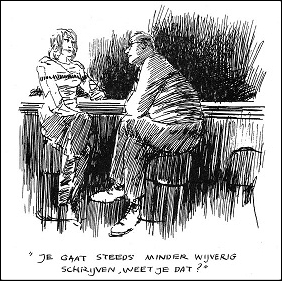
De Engels-Ierse schrijver en regisseur Martin McDonagh werd geboren op 26 maart 1970 in Camberwell, Londen. Zie ook alle tags voor Martin McDonagh op dit blog.
Uit: The Cripple of Inishmaan
“Billy I want to, Bobby. See, I never thought at all this day would come when I’d have to explain. I’d hoped I’d disappear forever to America. And I would’ve too, if they’d wanted me there. If they’d wanted me for the filming. But they didn’t want me. A blond lad from Fort Lauderdale they hired instead of me. He wasn’t crippled at all, but the Yank said ‘Ah, better to get a normal fella who can act crippled than a crippled fella who can’t fecking act at all.’ Except he said it ruder. (Pause.) I thought I’d done alright for meself with me acting. Hours I practiced in me hotel there. And all for nothing. (Pause.) I gave it a go anyways. I had to give it a go. I had to get away from this place, Babbybobby, be any means, just like me mammy and daddy had to get away from this place. (Pause.) Going drowning meself I’d often think of when I was here, just to . . . just to end the laughing at me, and the sniping at me, and the life of nothing but shuffling to the doctor’s and shuffling back from the doctor’s and pawing over the same oul books and finding any other way to piss another day away.
Another day of sniggering, or the patting me on the head like a broken-brained gosawer. The village orphan. The village cripple, and nothing more. Well, there are plenty round here just as crippled as me, only it isn’t on the outside it shows. (Pause.) But the thing is, you’re not one of them, Babbybobby, nor never were. You’ve a kind heart on you. I suppose that’s why it was so easy to cod you with the TB letter, but that’s why I was so sorry for codding you at the time and why I’m just as sorry now.
Especially for codding you with the same thing your Mrs passed from. Just I thought that would be more effective. But, in the long run, I thought, or I hoped, that if you had a choice between you being codded a while and me doing away with meself, once your anger had died down anyways, you’d choose you being codded every time. Was I wrong, Babbybobby? Was I?
Bobby slowly walks over to Billy, stops just in front of him, and lets a length of lead piping slide down his sleeve into his hand.
Bobby Aye.
Bobby raises the pipe . . .
Billy No, Bobby, no . . . !
Billy covers up as the pipe scythes down. Blackout, with the sounds of Billy’s pained screams and the pipe scything down again and again.”
Martin McDonagh (Camberwell, 26 maart 1970)
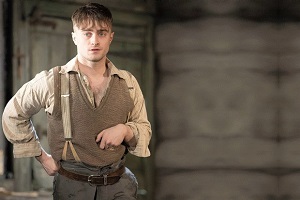
Daniel Radcliffe als Billy in The Cripple of Inishmaan, Londen, 2013
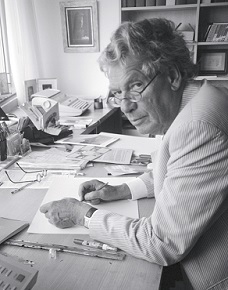
De Amerikaanse dichter Gregory Corso werd geboren in New York op 26 maart 1930. Zie ook alle tags voor Gregory Corso op dit blog.
America Politica Historia, In Spontaneity (Fragment)
He looks and acts like a boyman.
He never looks cruel in uniform.
He is rednecked portly rich and jolly.
White-haired serious Harvard, kind and wry.
A convention man a family man a rotary man & practical joker.
He is moonfaced cunning well-meaning & righteously mean.
He is Madison Avenue, handsome, in-the-know, and superstitious.
He is odd, happy, quicker than light, shameless, and heroic
Great yawn of youth!
The young don’t seem interested in politics anymore.
Politics has lost its romance!
The “bloody kitchen” has drowned!
And all that is left are those granite
façades of Pentagon, Justice, and Department—
Politicians do not know youth!
They depend on the old
and the old depend on them
and lo! this has given youth a chance
to think of heaven in their independence.
No need to give them liberty or freedom
where they’re at—
When Stevenson in 1956 came to San Francisco
he campaigned in what he thought was an Italian section!
He spoke of Italy and Joe DiMaggio and spaghetti,
but all who were there, all for him,
were young beatniks! and when his car drove off
Ginsberg & I ran up to him and yelled:
“When are you going to free the poets from their attics!”
Great yawn of youth!
Mad beautiful oldyoung America has no candidate
the craziest wildest greatest country of them all!
and not one candidate—
Nixon arrives ever so temporal, self-made,
frontways sideways and backways,
could he be America’s against? Detour to vehicle?
Mast to wind? Shore to sea? Death to life?
The last President?
Gregory Corso (26 maart 1930 – 17 januari 2001)
Cover
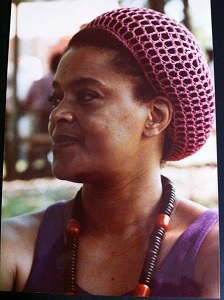
De Zuid-Koreaanse dichter en schrijver Hwang Sun-won werd geboren op 26 maart 1915 in Taedong, Zuid-Pyongan, in het hedendaagse Noord-Korea. Zie ook alle tags voor Hwang Sun-won op dit blog.
Uit: Cranes (Vertaald door David R. McCann)
“Once, when they were young, he had gone with Tŏkchae to swipe chestnuts from the old grandfather with the wen. It had been Sŏngsam’s turn to climb the tree. Next instant, the old grandfather was shouting at them. He slipped and fell out of the tree. The chestnut burs pierced his backside, but they just ran. Only when they had gone far enough so the old grandfather with the wen couldn’t follow, did he turn his backside to Tŏkchae. It hurt like anything, pulling out the chestnut burs. He couldn’t help the tears that trickled down. Tŏkchae suddenly reached out with a fistful of his own chestnuts and stuck them in Sŏngsam’s pocket....Sŏngsam threw away the cigarette he had just lit. He makes up his mind not to light another while escorting this fellow Tŏkchae.They reached the hill road. The hill is where he and Tŏkchae had gone all the time to cut fodder, until two years before Liberation when Sŏngsam moved to a place near Ch’ŏnt’ae, south of the 38th.Sŏngsam, overwhelmed by sudden anger, gave a shout.“You son of a...! How many people have you killed so far?”Only then does Tŏkchae look over, then lower his head again.“Sunnavabitch...! How many people have you killed?”Tŏkchae raises his head and turns his way. He shoots a look at Sŏngsam. His expression turns darker, and the edges of his mouth, surrounded by his dangling beard, quiver and shake.“So, that’s how you killed people?”Sunnavabitch! Somehow Sŏngsam’s heart feels relieved at its core. As if something blocking it has eased and fallen loose. But,“Some guy gets to be vice chairman of the Farmers Collective Committee, why didn’t you run off? Hiding out with some secret mission?”Tŏkchae says nothing.“Go ahead, tell the truth! What sort of mission was it you were hiding out to do?”But Tŏkchae just keeps walking silently along. Clear enough, this one is feeling caught. It’s good to see their faces at a moment like one is feeling caught. It’s good to see their faces at a moment like this, but he keeps his face turned away, and doesn’t look over.
Grasping the pistol that he carried at his waist, Sŏngsam says, “It’s no use trying to defend yourself. You’re going to be shot, no doubt about it. So you might as well tell the truth right here and now.”Without turning his head, Tŏkchae replies,“There’s nothing to defend myself about. I’m just the son of a dirt-poor farmer. I’m known as a guy who can handle the hard work, and that’s why I was made vice chairman of the Farmers Cooperative Committee. If that’s a crime to get killed for, there’s nothing to be done about it. All I’m good at, all I ever was good at to stay alive, is digging in the dirt.”He pauses for a moment.“My father is laid up now. It’s half a year already.”Tŏkchae’s father was a widower, a poor farmer getting old, caring just for his son Tŏkchae. Seven years ago his back had already given out and his face was covered with age spots.“You married?”A moment, and“Yeah, married.”“Who with?”“Short Stuff.”No. Short Stuff? This is great. Short Stuff. Kind of fat, and too short to know the skies were high, just how wide the earth is. Sort of a loner. They hadn’t liked that, so he and Tŏkchae, together they used to tease her all the time and make her cry. And now Tŏkchae had gone and married Short Stuff.”
Hwang Sun-won (26 maart 1915-14 september 2000)
Cover
De Amerikaanse dichter Robert Lee Frost werd geboren op 26 maart 1874 in San Francisco. Zie ook alle tags voor Robert Frost op dit blog.
Brown’s Descent (Fragment)
He reeled, he lurched, he bobbed, he checked;
He fell and made the lantern rattle
(But saved the light from going out.)
So half-way down he fought the battle
Incredulous of his own bad luck.
And then becoming reconciled
To everything, he gave it up
And came down like a coasting child.
"Well—I—be—" that was all he said,
As standing in the river road,
He looked back up the slippery slope
(Two miles it was) to his abode.
Sometimes as an authority
On motor-cars, I'm asked if I
Should say our stock was petered out,
And this is my sincere reply:
Yankees are what they always were.
Don't think Brown ever gave up hope
Of getting home again because
He couldn't climb that slippery slope;
Or even thought of standing there
Until the January thaw
Should take the polish off the crust.
He bowed with grace to natural law,
And then went round it on his feet,
After the manner of our stock;
Not much concerned for those to whom,
At that particular time o'clock,
It must have looked as if the course
He steered was really straight away
From that which he was headed for—
Not much concerned for them, I say:
No more so than became a man—
And politician at odd seasons.
I've kept Brown standing in the cold
While I invested him with reasons;
But now he snapped his eyes three times;
Then shook his lantern, saying, "Ile's
'Bout out!" and took the long way home
By road, a matter of several miles.
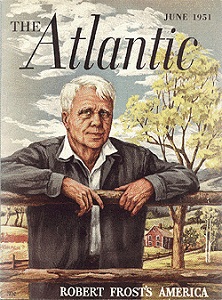
Robert Frost (26 maart 1874 – 29 januari 1963)
Cover
De Duitse schrijver Patrick Süskind werd geboren in Ambach op 26 maart 1949. Zie ook alle tags voor Patrick Süskind op dit blog.
Uit: Die Taube
„Anfang der fünfziger Jahre – Jonathan begann, an der Existenz eines Landarbeiters Gefallen zu finden – verlangte der Onkel, er solle sich zum Militärdienst melden, und Jonathan verpflichtete sich gehorsam für drei Jahre. Im ersten Jahr war er einzig damit beschäftigt, sich an die Widerwärtigkeiten des Horden- und Kasernenlebens zu gewöhnen. Im zweiten Jahr wurde er nach Indochina verschifft. Den größten Teil des dritten Jahres verbrachte er mit einem Fußschuß und einem Beinschuß und der Amöbenruhr im Lazarett. Als er im Frühjahr 1954 nach Puget zurückkehrte, war seine Schwester verschwunden, ausgewandert nach Kanada, hieß es. Der Onkel verlangte nun, daß sich Jonathan unverzüglich vereheliche, und zwar mit einem Mädchen namens Marie Baccouche aus dem Nachbarort Lauris, und Jonathan, der das Mädchen noch nie gesehen hatte, tat brav wie ihm geheißen, ja tat es sogar gerne, denn wenngleich er nur eine ungenaue Vorstellung von der Ehe besaß, so hoffte er doch, in ihr endlich jenen Zustand von monotoner Ruhe und Ereignislosigkeit zu finden, der das einzige war, wonach er sich sehnte. Aber bereits vier Monate später gebar Marie einen Knaben, und noch im selben Herbst brannte sie durch mit einem tunesischen Obsthändler aus Marseille. –
Aus all diesen Vorkommnissen zog Jonathan Noel den Schluß, daß auf die Menschen kein Verlaß sei und daß man nur in Frieden leben könne, wenn man sie sich vom Leibe hielt. Und weil er nun auch noch zum Gespött des Dorfes geworden war, was ihn nicht wegen des Gespötts an sich störte, sondern wegen der öffentlichen Aufmerksamkeit, die er dadurch erregte, traf er zum ersten Mal in seinem Leben selbst eine Entscheidung: Er ging zum Crédit Agricole, hob seine Ersparnisse ab, packte den Koffer und fuhr nach Paris.“

Patrick Süskind (Ambach, 26 maart 1949)
De Engelse dichter Alfred Edward Housman werd geboren op 26 maart 1859 in Fockbury, Worcestershire. Zie ook alle tags voor A. E. Housman op dit blog.
'Tis five years since, `An end,' said I
'Tis five years since, `An end,' said I;
`I'll march no further, time to die.
All's lost; no worse has heaven to give.'
Worse has it given, and yet I live.
I shall not die to-day, no fear:
I shall live yet for many a year,
And see worse ills and worse again,
And die of age and not of pain.
When God would rear from earth aloof
The blue height of the hollow roof,
He sought him pillars sure and strong,
And ere he found them sought them long.
The stark steel splintered from the thrust,
The basalt mountain sprang to dust,
The blazing pier of diamond flawed
In shards of rainbow all abroad.
What found he, that the heavens stand fast?
What pillar proven firm at last
Bears up so light that world-seen span?
The heart of man, the heart of man.
Good creatures, do you love your lives
Good creatures, do you love your lives
And have you ears for sense?
Here is a knife like other knives,
That cost me eighteen pence.
I need but stick it in my heart
And down will come the sky,
And earth's foundations will depart
And all you folk will die.
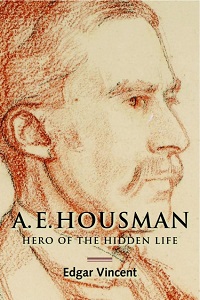
A. E. Housman (26 maart 1859 – 30 april 1936)
Cover
De Italiaanse, Duitstalige, dichteres en schrijfster Bettina Galvagni werd geboren op 26 maart 1976 in Neumarkt, Zuid-Tirol. Zie ook alle tags voor Bettina Galvagni op dit blog.
Uit: Guinevere in Zürich
„Und im Winter eben, da spielt Paris Venedig. Alle die Vögel des Zürichbergs, die Eichhörnchen auf der großen Buche vor dem Haus, und die vielen gefräßigen aristokratischen Katzen, sie alle erinnerten mich nur an meine sanfte, zärtliche moumoutte in Paris. Am Samstag begleitete ich meine Tante immer zum Einkaufen. Mit ihrem großen roten Auto fuhren wir von einem Supermarkt zum nächsten. Nie vorher hatte ich jemanden gesehen, der so aufmerksam durch einen Supermarkt ging wie meine Tante. Ich fing an, mich für bestimmte Artikel zu begeistern, am meisten liebte ich die verschiedenen Reisezahnbürsten und die dazugehörigen bunten Zahnpasten. Diese kleinen subtilen Gegenstände ließen sofort Koffer und Flughäfen vor meinen Augen entstehen. Ich wußte noch nicht, daß Rachel Zilberstein nach Israel gegangen war, ich wußte nicht, daß sie in der Zeit nahezu alle zwei Wochen von Paris nach Tel Aviv und zurück flog, daß sie alle zwei Wochen auf dem Charles-de-Gaulle-Flughafen und in Ashdod war, in einem Kostüm aus einem modernen Stoff, der nicht knittert, mit einer großen Schauspielerinnen-Sonnenbrille, zweifarbigen Chanel-Schuhen und so viel rotem Lippenstift, als ob sie gleich auf die Bühne gerufen würde, um eine exaltierte Judith zu spielen. Meine Tante pflegte für die ganze Woche einzukaufen, vor allem große Mengen an Gemüse. Ihre Leidenschaft war Mangold. Sie konnte ihn in jeder Variante zubereiten, und da ich ihn ebenfalls liebte, aß ich oft tagelang Mangoldreis,
Mangoldsuppe und Mangoldgemüse. Ich aß so viel davon, daß mir einmal, an einem Abend, so schlecht davon wurde, daß ich den Mangold verfluchte und später wieder um Verzeihung bat. Bei unseren langen Aufenthalten in den Supermärkten war die Tante sehr nett. Sie fragte mich jedesmal, ob ich eine besondere Schokolade, eine neue Frucht oder sonst etwas haben möchte. Und meistens fing sie mit jemandem zu reden an, oft geriet sie mit einer der Angestellten in einen Streit, und manchmal ließ sie ihre Brieftasche liegen (mein Onkel hatte sie ihr geschenkt, sie besaß ein Schachbrettmuster, genauso wie ihre Tasche; nachdem sie sie etwa zehnmal verloren und wiederbekommen und unzählige Ausflüge zu Fundbüros, Polizei und ähnlichem hinter sich hatte - ich begleitete sie natürlich immer -, hatte sie sie endgültig verloren), manchmal verlor sie ihren Ring, weil er sich am Morgen durch die Seife oder später durch das Abspülmittel leicht gelöst hatte undsoweiter. Manchmal wurde ihr auch schwindelig, und sie setzte sich hin und ich holte für sie Wasser aus einem Plastikbehälter. Dann fuhren wir mit dem großen roten Auto zurück. Sie fragte mich nach Paris, ob ich es vermißte, und dann begann sie meine Haarlocken auseinanderzuzupfen.“
Bettina Galvagni (Neumarkt, 26 maart 1976)
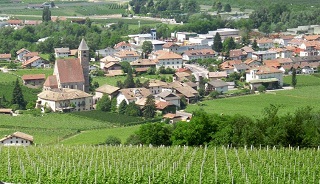
Neumarkt in Zuid-Tirol
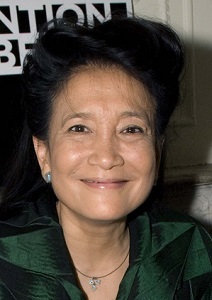
De Amerikaanse dichteres en schrijfster Erica Jong werd geboren in New York op 26 maart 1942. Zie ook alle tags voor Erica Jong op dit blog.
Uit: Fear of Dying
“A time of new beginnings (Yom Kippur), starting over (Rosh Hashanah), and laying in acorns against a barren winter (Succoth). When I placed the ad, I had thought of myself as a sophisticate coolly interviewing lovers. But now I was suddenly overcome with panic. I began fantasizing about what sort of creeps, losers, retreads, extortionists, and homicidal maniacs such an ad would attract -- and then I got so busy with calls from my ailing parents and pregnant daughter that I forgot all about it.
A few minutes went by. Then suddenly the responses poured out of the Internet like coins out of a slot machine. I was almost afraid to look. After a couple of beats, I couldn't resist. It was like hoping I had won the lottery. The first response showed a scanned Polaroid of an erect penis -- a tawny uncircumcised specimen with a drop of dew winking at the tip. Under the photo, on the white border, was scrawled: "Without Viagra." The accompanying e- mail was concise:
I like your style. Have always risen for assertive women. Send nude shot and measurements.
The next one began like this:
Dear Seeker,
Sometimes we think it's carnality we want when actually we long for Jesus. We discover that if we open our hearts and let Him in, all sorts of satisfaction undreamt of can be ours. Perhaps you think you are seeking Eros, but Thanatos is what you really seek. In Jesus, there is eternal life.
He is the lover who never disappoints, the friend who is loyal forever. It would be an honor to meet and counsel you ...
A telephone number was proffered: 1-800- JESUS-4U. “
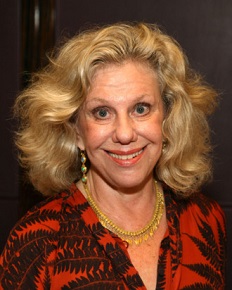
Erica Jong (New York, 26 maart 1942)
Zie voor nog meer schrijvers van de 26e maart ook mijn blog van 26 maart 2017 deel 2.