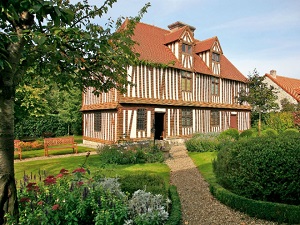
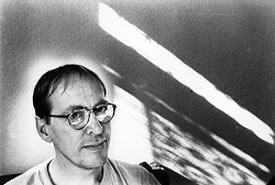
Orhan Pamuk, Monika Mann, Nikki Giovanni, Harry Crews, Louise Erdrich, Mascha Kaléko, Jan Engelman, Gwendolyn Brooks, Elizabeth Bowen
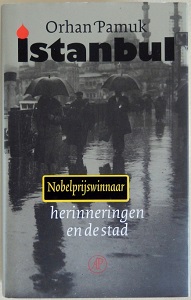
De Turkse schrijver Orhan Pamuk werd geboren op 7 juni 1952 in Istanbul. Zie ook alle tags voor Orhan Pamuk op dit blog.
Uit: Istanbul. Herinneringen en de stad (Vertaald door Hanneke van der Heijden)
“Terwijl ik luisterde naar de verhalen van mijn vader, die hij soms onderbrak om me te wijzen op een mooi uitzicht, of op mooie vrouwen die over het trottoir liepen, en naar zijn wijze raad over het leven, die hij er terloops en ontspannen tussendoor vlocht, keek ik op die loodgrijze winterochtenden naar de Istanbulse beelden die aan de voorruit voorbijtrokken. Ik keek naar de voertuigen die over de Galatabrug reden, de achterbuurten, toen nog omgeven door houten huizen die later gesloopt zouden worden, de smalle steegjes, de drommen mensen onderweg naar een voetbalwedstrijd of een sleepboot met een iele schoorsteen die met kolen beladen sloepen over de Bosporus voorttrok, terwijl ik ondertussen aandachtig luisterde naar de wijze levenslessen van mijn vader, naar zijn woorden, die bijvoorbeeld suggereerden dat je je eigen intuïtie, preoccupaties en obsessies nauwlettend moet volgen, of dat het leven in feite heel snel voorbijgaat en dat het goed is te weten wat je wilt, of dat je eigenlijk alleen door schijven of tekenen een bepaalde diepte in het leven kunt bewerkstelligen, en ik voelde hoe die woorden zich in mijn hoofd met de beelden verenigden. Na een tijdje gebeurde het dan dat de muziek waar ik naar luisterde, de Istanbulse beelden die aan de voorruit voorbijtrokken, de sfeer van sommige met straatkeien geplaveide stoepen en steegjes, waarvan mijn vader vroeg of we die in zouden slaan terwijl hij de auto er al glimlachend indraaide, zich allemaal in mijn hoofd samenvoegden en me lieten voelen dat we nooit een antwoord zullen krijgen op onze levensvragen, maar dat het goed is om ze toch te stellen, dat het doel en het geluk in het leven op plekken liggen die wij niet precies kunnen onderscheiden, of die we gewoon niet willen zien, maar dat er nog iets anders is dat minstens even belangrijk is als al deze zorgen, namelijk de beelden die we door de ramen van de auto, het huis of de boot zien als we over deze bekommernissen piekeren of als we in het leven genot of diepte najagen want in de loop van de tijd zal het leven net als muziek, tekeningen of verhalen met dalingen en stijgingen ten einde komen, maar de beelden van de stad die aan onze ogen voorbijtrekken zullen ons zelfs jaren later nog als uit dromen afkomstige herinneringen blijven vergezellen.”
Orhan Pamuk (Istanbul, 7 juni 1952)
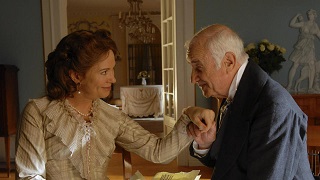
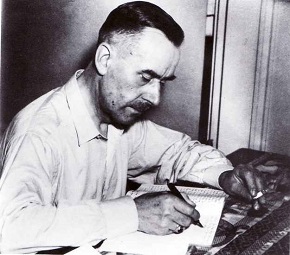
De Duitse schrijfster Monika Mann werd als vierde kind van Thomas Mann geboren op 7 juni 1910 in München. Zie ook alle tags voor Monika Mann op dit blog.
Uit: Das fahrende Haus
„Wenn man auf eine kurze Frage eine lange Antwort gibt, so ist das verdächtig oder zumindest sonderbar. Frägt man dich, wie du heißt, so ist die Antwort ein Name, sonst nichts. Man frägt mich, welcher Nationalität ich bin, und ich antworte – ich bin amerikanischer, ursprünglich deutscher, zwischenhinein auch tschechischer und ungarischer und demnächst wohl wieder deutscher Nationalität. – Es ist eine viel zu lange Antwort, als daß sie einen nicht verwundert, ja argwöhnisch lassen sollte. Und wirklich, man schaut mich mit großen Augen an, als wolle man sagen – Teufel, dahinter muß eine Geschichte stehen! – Mit Gott, hier ist sie denn! Das heißt, eine Geschichte ist es eigentlich nicht, sonderneine persönliche Erfahrung, entsprungen dem Geist der Zeit – pointenlos in ihrer Wirrheit und Verworrenheit, Traurigkeit und dennoch gut, ja strahlend. Einst ließ man ein Wort ins Gebet einfließen für das Vaterland, daß es erhalten bleiben möge im Kriege zwischen den Völkern: Heute läßt man ein Wort ins Gebet einfließen für die Welt, daß sie erhalten bleiben möge im Kriege gegen sich selbst. Unsere Gedanken, Träume und Gebete, mögen sie intim sein, sind heute mondial gefärbt. Einst war der Gipfel von Scherz, seinen Hund, angetan miteinem karierten Mäntelchen und Federhut, in einen Fesselballon zu setzen, mochten Gebell und Gewinsel den blauen Äther entzücken! Heute setzt man seinen Hund, mit allerlei sphärischen Schinken ausstaffiert, in einen Sputnik und gibt ihn der Frau Erde auf ihrer Rundreise als Begleiter mit. Möchte mein Hündchen mir dann erzählen, wie der Mond von hinten aussieht, ich sehe immer nur sein unheimlich Gesicht! So scherzt sich’s also in unserer Zeit, und es vergeht einem fast das Lachen. Man schämt sich fast vor seinem Hund, dem kosmischen Haustier.“
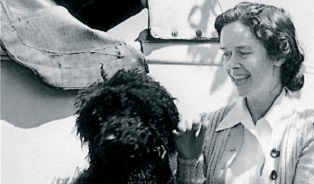
Monika Mann (7 juni 1910 – 17 maart 1992)
De Amerikaanse dichteres en schrijfster Nikki Giovanni werd geboren op 7 juni 1943 in Knoxville, Tennessee. Zie ook alle tags voor Nikki Giovanni op dit blog.
Uit: On My Journey Now
“When swimming pools were segregated, that made it harder for African Americans to learn to swim. But of course Africans could swim; many lived near the Atlantic Ocean, and they would swim. In some cases when they jumped overboard, they were shot in the back and wounded and they died, and in other cases they made it. Most ended up in the belly of a shark. The sharks, too, changed their patterns. They began to follow the ships west, feeding on the bodies of the dead or dying Africans.
So the slavers waited, got to that fourth and fifth day, and then there was a calm among the Africans, and they talked about that. There was a calm because they could look out, and although they couldn't see the land, they could see the heat coming off the land. They could see that shimmer, and it's the most fantastic thing to travel to Africa by boat, because you see the heat before you see the land.
And so, by that sixth or seventh day, or maybe around the eighth day, they could no longer see the land or the heat, and so there is going to be a restlessness, because people are beginning to feel lost, because now they're thinking, "Well, this is farther out." So now we have the Africans in a position of not really being able to see anything familiar. But of course they followed the clouds, and we do know that clouds above land are different from clouds over water, so they could see that land had to be that way. And so we're going to have a serious problem somewhere around the tenth day. And those who study this - I'm just a poet, but the people who study slavery - say that those ships' captains knew that this was going to be the day that, I don't want to say all hell is going to break loose, but the day they really have to tighten up, because now the people realize they will not know how to get home.
Fare you well, fare you well, fare you well, everybody.
Fare you well, fare you well, whenever I do get a-home.
What those captured people had - which is why I so admire those people - was a tone, a voice, a moan. They made a decision, because they had to decide: Do we shut ourselves down, or do we continue forward?”
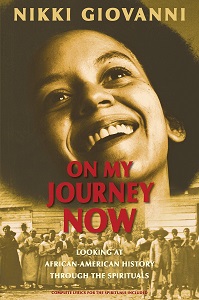
Nikki Giovanni (Knoxville, 7 juni 1943)
Cover
De Amerikaanse schrijver Harry Crews werd geboren op 7 juni 1935 in Bacon County, Georgia. Zie ook alle tags voor Harry Crews op dit blog.
Uit: Classic Crews: A Harry Crews Reader
"And you thought the rain would hurt you if you walked home in it?" "It's raining, Dad," he said, exasperated now. "I'll tell you what," I said. "You go out there and stand in it and we'll see how bad it hurts you." He walked out into the rain and stood looking at me. "How long do I have to stand here?" "Only until we see if it hurts you. Don't worry, I'll tell you when you are about to get hurt." I went back inside. So far, pretty shitty, but it gets worse. When I went back inside, I sat down in a recliner, meaning to stay there only a minute. But I hadn't reckoned with the liquor and the rain on the roof. I woke with a start and looked at my watch. It was a quarter of nine. I went outside and there the boy stood, his blond hair plastered and every thread on him soaked. He didn't look at all sad or forlorn; what he did look was severely pissed. "Come on in," I said. And then: "Where do you want to eat?" "I don't want to eat." "How do you feel?" I asked. He glared at me. "Well, I'm not hurt." We sat there on the top of Springer Mountain and looked at each other with the rain falling around us. I'd forgotten entirely about my feet and the tent and the fire. My throat felt like it was closing up and I had to speak to keep breathing. "I wanted to apologize, but I had done such a sorry-asked thing that I couldn't bring myself to do it. But at the time, it didn't seem like it'd do any good." "It probably wouldn't have," he said. "Then." "Well, I'm sorry. I was wrong. I should have said so, but... ," I'd run out of words. He said, "I know. And I was only down the block. I've thought about it. I could have called. But, shit, I was only a little kid."
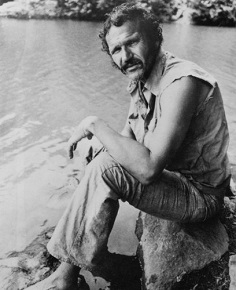
Harry Crews (7 juni 1935 – 28 maart 2012)
De Amerikaanse dichteres en schrijfster Louise Erdrich werd geboren op 7 juni 1954 in Little Falls, Minnesota. Zie ook alle tags voor Louise Erdrich op dit blog.
Uit: The Plague of Doves
“The out-house drama, always the first in the momentous day, was filled with the sort of detail that my brother and I found interesting. The out-house, well-known to us although we now had plumbing, and the horror of the birds' death by excrement, as well as other features of the story's beginning, gripped our attention. Mooshum was our favorite indoor entertainment, next to the television. But our father had removed the television's knobs and hidden them. Although we made constant efforts, we never found the knobs and came to believe that he carried them upon his person at all times. So we listened to our Mooshum instead. While he talked, we sat on kitchen chairs and twisted our hair. Our mother had given him a red coffee can for spitting snoose. He wore soft, worn, green Sears work clothes, a pair of battered brown lace-up boots, and a twill cap, even in the house. His eyes shone from slits cut deep into his face. The upper half of his left ear was missing, giving him a lopsided look. He was hunched and dried out, with random wisps of white hair down his ears and neck. From time to time, as he spoke, we glimpsed the murky scraggle of his teeth. Still, such was his conviction in the telling of this story that it wasn't hard at all to imagine him at twelve.
His big brother put on his vestments, the best he had, hand-me-downs from a Minneapolis parish. As real incense was impossible to obtain, he prepared the censer by stuffing it with dry sage rolled up in balls. There was an iron hand pump and a sink in the cabin, and Mooshum's brother, or half brother, Father Severine Milk, wet a comb and slicked back his hair and then his little brother's hair. The church was a large cabin just across the yard, and wagons had been pulling up for the last hour or so. Now the people were in the church and the yard was full of the parked wagons, each with a dog or two tied in the box to keep the birds and their droppings off the piled hay where people would sit. The constant movement of the birds made some of the horses skittish. Many wore blinders and were further . . .”
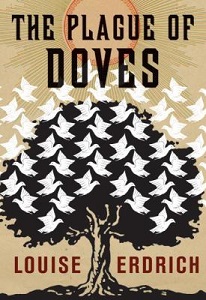
Louise Erdrich (Little Falls, 7 juni 1954)
Cover
De Duitstalige dichteres Mascha Kaléko (eig. Golda Malka Aufen) werd geboren op 7 juni 1907 in Krenau of Schidlow in Galicië in het toenmalige Oostenrijk-Hongarije, nu Polen. Zie ook alle tags voor Mascha Kaléko op dit blog.
Rezept
Jage die Ängste fort
Und die Angst vor den Ängsten.
Für die paar Jahre
Wird wohl alles noch reichen.
Das Brot im Kasten
Und der Anzug im Schrank.
Sage nicht mein.
Es ist dir alles geliehen.
Lebe auf Zeit und sieh,
Wie wenig du brauchst.
Richte dich ein.
Und halte den Koffer bereit.
Es ist wahr, was sie sagen:
Was kommen muß, kommt.
Geh dem Leid nicht entgegen.
Und ist es da,
Sieh ihm still ins Gesicht.
Es ist vergänglich wie Glück.
Erwarte nichts.
Und hüte besorgt dein Geheimnis.
Auch der Bruder verrät,
Geht es um dich oder ihn.
Den eignen Schatten nimm
Zum Weggefährten.
Feg deine Stube wohl.
Und tausche den Gruß mit dem Nachbarn.
Flicke heiter den Zaun
Und auch die Glocke am Tor.
Die Wunde in dir halte wach
Unter dem Dach im Einstweilen.
Zerreiß deine Pläne. Sei klug
Und halte dich an Wunder.
Sie sind lang schon verzeichnet
Im grossen Plan.
Jage die Ängste fort
Und die Angst vor den Ängsten.
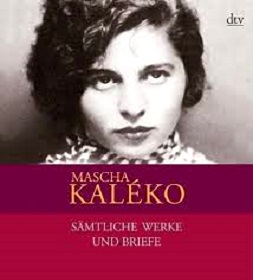
Mascha Kaléko (7 juni 1907 – 21 januari 1975)
Cover
De Nederlandse dichter Johannes Aloysius Antonius Engelman werd geboren in Utrecht op 7 juni 1900. Zie ook alle tags voor Jan Engelman op dit blog.
Over het gras
Over het gras en over het water
dwaal ik achter de beminde
die ik vroeg en die ik later,
die ik nimmer, nimmer vinde.
Smalle schelpen zijn haar handen
om een eeuwge zee te horen,
in zijn wieg en broze wanden
zingt haar hart mijn wee verloren.
Handen die mijn hoofd niet koelen
met hun sneeuw, de lichte, zachte.
Hartklop die ik niet zal voelen
onder stergoud, al de nachten.
Over het gras en over het water
dwaal ik achter de beminde,
tot ik aanzie - later, later,
in een licht dat mij hervinde.
Bij de rozen
‘Zij zijn voor sterven en vergaan geboren,’
zo dacht ik vluchtig toen ik bij de rozen was.
Maar schrok, en hoorde dreunen in mijn oren:
wat is u zelve, ijdel mens, beschoren,
zo kort als gij hier wandelt bij de rozen op het gras?
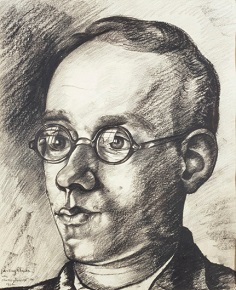
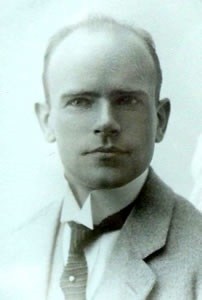
Jan Engelman (Utrecht 7 juni 1900 ;Amsterdam 20 maart 1972)
Portret door Charley Toorop, 1936
De Amerikaanse dichteres Gwendolyn Brooks werd geboren op 7 juni 1917 in Topeka, Kansas. Zie ook alle tags voor Gwendolyn Brooks op dit blog.
The Rites For Cousin Vit
Carried her unprotesting out the door.
Kicked back the casket-stand. But it can't hold her,
That stuff and satin aiming to enfold her,
The lid's contrition nor the bolts before.
Oh oh. Too much. Too much. Even now, surmise,
She rises in the sunshine. There she goes,
Back to the bars she knew and the repose
In love-rooms and the things in people's eyes.
Too vital and too squeaking. Must emerge.
Even now she does the snake-hips with a hiss,
Slops the bad wine across her shantung, talks
Of pregnancy, guitars and bridgework, walks
In parks or alleys, comes haply on the verge
Of happiness, haply hysterics. Is.
Boy Breaking Glass
To Marc Crawford
from whom the commission
Whose broken window is a cry of art
(success, that winks aware
as elegance, as a treasonable faith)
is raw: is sonic: is old-eyed première.
Our beautiful flaw and terrible ornament.
Our barbarous and metal little man.
“I shall create! If not a note, a hole.
If not an overture, a desecration.”
Full of pepper and light
and Salt and night and cargoes.
“Don’t go down the plank
if you see there’s no extension.
Each to his grief, each to
his loneliness and fidgety revenge.
Nobody knew where I was and now I am no longer there.”
The only sanity is a cup of tea.
The music is in minors.
Each one other
is having different weather.
“It was you, it was you who threw away my name!
And this is everything I have for me.”
Who has not Congress, lobster, love, luau,
the Regency Room, the Statue of Liberty,
runs. A sloppy amalgamation.
A mistake.
A cliff.
A hymn, a snare, and an exceeding sun.
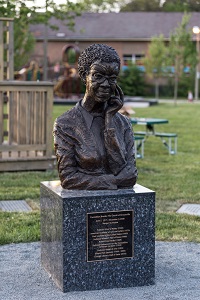
Gwendolyn Brooks (7 juni 1917 – 3 december 2000)
Standbeeld in Chicago
De Ierse schrijfster Elizabeth Bowen werd geboren op 7 juni 1899 in Dublin. Zie ook alle tags voor Elizabeth Bowen op dit blog.
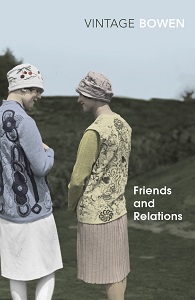
Uit: Friends and Relations
“Janet, the bride's younger sister, knew that Cousin Richard would be certain, sooner or later, to say 'Pass along the car, please.' She supposed that one did not mind? She supposed that someone was bound to be humorous at a wedding? Might not her Wolf Cubs be better? She proffered two. Several had been already allotted to laying down duck-boards or directing cars round the corner where they could park. But Mrs Studdart thought no, on the whole. The little boys' boots ... Besides, one did not want friends to feel like traffic, in any way `directed'. Also one could not disappoint Cousin Richard, who had Janet said: 'Just as you think, of course.' Young Mr and Mrs Tilney, between her train and the lilies, with a background of pleasant outdoor sunshine, now stood waiting for their photograph by the world to be taken, for the curtain to rise. In the hall, first guests from the church could be heard arriving; Lady Elfrida Tilney tittering in the porch. Their two heads turned, rather beautifully apprehensive; they had an instant for conversation. Edward: 'This morning, I wanted to ring you up.' Out of her bride's formality, fall of tulle and lace, came the gay little scoffing laugh. 'Oho!' she remarked. `But mother kept saying, "Now I expect you will ring up Laurel?" So I went out and bought some labels.' `Labels?' `For my things.' `Oh, labels. Well, that's one conversation we'll never have.' They're coming —' `No, that's the ices going round to the marquee. Edward ...' But his emotions were quite at a standstill. He had at any time more address than an occasion required. Edward was determined that his wedding, like the execution of Julien Sorel, should go off simply, suitably, without any affectation on his part. Laurel went on: 'I suppose we can't possibly ...' But at this point Lady Elfrida brought in the Daubeneys; remarking with the keenest sense of effect: 'My daughter-in-law.' Laurel amazed the Daubeneys with a lovely, composed smile. After the Daubeneys, guests began to come through on a strong current. Edward remained throughout wonderfully self-possessed; perhaps because of this he did not make an entirely good impression. Lady Elfrida, in claret-coloured georgette, also overacted a little. Besides being a divorcée, which should but does not subdue, she was the bridegroom's mother — and one apt to play always a little too gracefully a losing game. The Tilney connection (here to shower on Edward for his marriage as well as his mother a loving depreciation), bright woof to a sober warp, shuttled their way to and fro through the Studdart connection. Impervious to strangers, signalling, smiling, these bright friends distinguished each other; where two or three met intimacies flowered and branched.”
Elizabeth Bowen (7 juni 1899 – 22 februari 1973)
Cover
Zie voor nog meer schrijvers van de 7e juni ook mijn blog van 7 juni 2015 deel 2.