

 Lucille Clifton, Rafael Chirbes, Teju Cole, Paul Laurence Dunbar, E. J. Potgieter, Kees Ouwens, Dawud Wharnsby, João Guimarães Rosa, Zsuzsanna Gahse
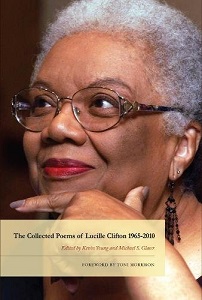
De Amerikaanse dichteres en schrijfster Lucille Clifton werd geboren in New York op 27 juni 1936. Zie ook alle tags voor Lucille Clifton op dit blog.
Lorena
it lay in my palm soft and trembled
as a new bird and i thought about
authority and how it always insisted
on itself, how it was master
of the man, how it measured him, never
was ignored or denied, and how it promised
there would be sweetness if it was obeyed
just like the saints do, like the angels
and I opened the window and held out my
uncupped hand; I swear to god
I thought it could fly
sorrow song
for the eyes of the children,
the last to melt,
the last to vaporize,
for the lingering
eyes of the children, staring,
the eyes of the children of
buchenwald,
of viet nam and johannesburg,
for the eyes of the children
of nagasaki,
for the eyes of the children
of middle passage,
for cherokee eyes, ethiopian eyes,
russian eyes, american eyes,
for all that remains of the children,
their eyes,
staring at us, amazed to see
the extraordinary evil in
ordinary men.
Lucille Clifton (27 juni 1936 – 13 februari 2010)
Cover
De Spaanse schrijver Rafael Chirbes werd geboren op 27 juni 1949 in Tabernes de Valldigna bij Valencia. Zie ook alle tags voor Rafael Chirbes op dit blog
Uit: París-Austerlitz (Vertaald door Eugenie Schoolderman)
“Laat op de avond ging ik naar de Marokkanenbar. Ik was daar vaak samen met hem geweest. Maar nu bevond Michel zich niet meer onder de schaarse gasten die er op dat uur nog bleven drinken. Hij was verhuisd naar een parallelle stad. Vanuit de keuken van mijn woning kon ik de slecht verlichte binnenplaats zien met aan de andere kant, in duisternis gehuld, het raam van de kamer die we hadden gedeeld. Ik probeerde niet aan hem te denken, hoe hij op dat tijdstip in zijn ziekenhuiskamer lag, de naald van het infuus in zijn hand en het zuurstofmasker over zijn gezicht. Ondanks de pijnstillers die hij kreeg – of juist daardoor – had hij last van nachtmerries. Hij zei dat hij werd vastgebonden op zijn bed en werd gedwongen gruwelijke beelden te bekijken op een scherm dat ’s nachts in zijn kamer werd gezet. Hij leed aan hallucinaties. Wat konden ze hem nou laten zien, hij klaagde immers steeds dat hij amper meer iets zag, al heb ik altijd het gevoel gehad dat er wel iets van waarheid school in dat vastbinden. Ik kan me zo voorstellen dat het, zeker in het begin, niet eenvoudig zal zijn geweest om zijn woedeaanvallen in te tomen, en daar komt nog eens bij dat slachtoff ers van de plaag door artsen en verpleegkundigen vaak worden behandeld met een mengeling van afk eer, wreedheid en minachting. We raken allemaal ondersteboven van het raadselachtige verloop van de ziekte, van de heft igheid ervan. We raken allemaal van slag.
Ondanks mijn pogingen om een praatje aan te knopen zei niemand ooit een stom woord. Ze keken wantrouwig naar me, misschien omdat ik daar altijd in spijkerbroek, leren jack of donsjas kwam, terwijl ze me overdag op straat, op de terugweg van mijn werk of in de rij bij de bakker of de groenteboer, altijd in keurige blauwe jas, colbert en stropdas zagen. Zo’n kerel aan wie te horen was dat hij zijn Frans had geleerd op het Lycée français in Madrid, ondersteund door privéles van moedertaalsprekers, en het nog eens had geperfectioneerd op talenscholen in Bordeaux en Lausanne: ze konden het vast niet erg waarderen dat zo iemand in hun café kwam. Ze waren ervan overtuigd dat ik van de narcoticabrigade of van de vreemdelingenpolitie was, een bemoeial die zijn neus graag in stinkende zaakjes stak, waar ze die ook verborgen hielden, of in het gunstigste geval dachten ze dat ik een journalist was of zoiets, iemand die ver van hun wereld af stond, of – nog erger – uit een wereld die op voet van oorlog stond met de hunne.”
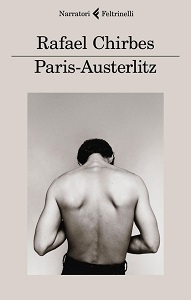
Rafael Chirbes (27 juni 1949 – 15 augustus 2015)
Cover Italiaanse uitgave
De Nigeriaans-Amerikaanse schrijver, fotograaf en kunsthistoricus Teju Cole werd geboren op 27 juni 1975 in Kalamazoo, Michigan. Zie ook alle tags voor Teju Cole op dit blog.
Uit: Every Day Is for the Thief
There is a wheedling tone in his voice, and the feeling of desperation one senses about him isn’t helped by his dowdy appearance, brown polyester sweater and brown trousers. A stressed-out man in stressed-out clothes. Abdul speaks into the microphone:
—What can I do? The person who is supposed to sign it is not here. That’s why I said come back at three.
—Look, look, that’s my ticket. Abdul, come on now, just look at it. It says five o’clock. I can’t miss that flight. I just can’t miss it.
The man continues to plead, thrusting a piece of paper under the glass. Abdul looks at the ticket with showy reluctance and, exasperated, speaks in low tones into the microphone.
—What can I do? The person is not here. Okay, please go and sit down. I’ll see what can be done. But I can’t promise anything.
The man slinks away, and immediately several others rise from their seats and jostle in front of the window, forms in hand.
—Please, I need mine quickly too. Abeg, just put it next to his.
Abdul ignores them and calls out the next number in the sequence. Some continue to pace near the window. Others retake their seats. One of them, a young man with a sky-blue cap, rubs his eye repeatedly. An older man, seated a few rows ahead of me, puts his head into his hands and says out loud, to no one in particular:
—This should be a time of joy. You know? Going home should be a thing of joy.
Another man, sitting to my right, fills out forms for his children. He informs me that he recently had his passport reissued. I ask him how long it took.
—Well, normally, it’s four weeks."
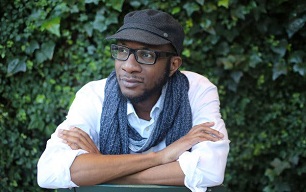
Teju Cole (Kalamazoo, 27 juni 1975)
De Amerikaanse dichter en schrijver Paul Laurence Dunbar werd geboren op 27 juni 1872 in Dayton, Ohio. Zie ook alle tags voor Paul Laurence Dunbar op dit blog.
The Masters
OH, who is the Lord of the land of life,
When hotly goes the fray?
When, fierce we smile in the midst of strife
Then whom shall we obey?
Oh, Love is the Lord of the land of life
Who holds a monarch's sway;
He wends with wish of maid and wife,
And him you must obey.
Then who is the Lord of the land of life,
At setting of the sun?
Whose word shall sway when Peace is rife
And all the fray is done?
Then Death is the Lord of the land of life,
When your hot race is run.
Meet then his scythe and pruning-knife
When the fray is lost or won.
The Poet And The Baby
How's a man to write a sonnet, can you tell,--
How's he going to weave the dim, poetic spell,--
When a-toddling on the floor
Is the muse he must adore,
And this muse he loves, not wisely, but too well?
Now, to write a sonnet, every one allows,
One must always be as quiet as a mouse;
But to write one seems to me
Quite superfluous to be,
When you 've got a little sonnet in the house.
Just a dainty little poem, true and fine,
That is full of love and life in every line,
Earnest, delicate, and sweet,
Altogether so complete
That I wonder what's the use of writing mine.
The Pool
By the pool that I see in my dreams, dear love,
I have sat with you time and again;
And listened beneath the dank leaves, dear love,
To the sibilant sound of the rain.
And the pool, it is silvery bright, dear love,
And as pure as the heart of a maid,
As sparkling and dimpling, it darkles and shines
In the depths of the heart of the glade.
But, oh, I 've a wish in my soul, dear love,
(The wish of a dreamer, it seems,)
That I might wash free of my sins, dear love,
In the pool that I see in my dreams.
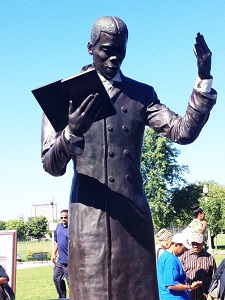
Paul Laurence Dunbar (27 juni 1872 – 9 februari 1906)
Standbeeld in Chicago
De Nederlandse schrijver en dichter Everhardus Johannes Potgieter werd geboren in Zwolle op 27 juni 1808. Zie ook alle tags voor Potgieter op dit blog.
Heugenis van Zandvoort (Fragment)
Het vurig tweespan, dat de wagen
voor 't badhuis uit het stof deed dagen,
stond nauw onwillig stil
of hoff'lijk voerde van de trede
de jonge man zijn gade mede,
gedost naar modes laatste gril;
had zich de schone les zien geven
een trap bevallig op te zweven?
Het viel niet sierlijker te doen;
hoe jammer dat tot prettig praten
noch hem noch haar lectuur mocht baten!
Toen op het klein terras zij zaten,
van zoete kout zelfs geen vermoên.
't Was 't alledaagse: ‘Hebt ge ook hinder
van tocht?’ ‘Heel weinig, hier nog minder.’
En straks: ‘Hoe lastig is die zon!’
Een pauze... Jan brak ze af. ‘Niet helder,’
was 't water, en ‘niet koel de kelder,’
‘Fi donc! coupé,’ bleek haar bouillon.
Al wand'lend aan de voet der duinen
verdroten hen de witte kruinen
dier ‘lege, lege zee!’
Noch in de scheem'ring van die kolken,
noch op de lichte zoom dier wolken
ging hun verbeelding mijm'rend mee!
In schrik bezweem 't verveelziek staren,
daar rees een hoofd, met blonde haren,
eens jonglings borstbeeld uit de baren:
hoe fier die worst'laar overwon!
En toch door breder reeks van golven
met blinkend schuim al was bedolven,
eer kiesheid zelve blozen kon!
Nee, vraag niet of zij zich vermeiden
de tinten-grenslijn te onderscheiden
van hemel en van oceaan,
om in een stip een schip te ontdekken,
dat zoete fantasie zal wekken,
reeds zijn ze 't huis weer doorgegaan.
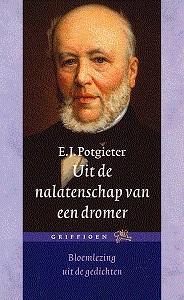
Potgieter (27 juni 1808 – 3 februari 1875)
Cover
De Nederlandse dichter Kees Ouwens werd geboren op 27 juni 1944 in Zeist. Zie ook alle tags voor Kees Ouwens op dit blog.
De ontdekking
Op een zomeravond, dat ik onder oude eiken liep,
de handen genoeglijk in de zakken genesteld had,
wierp ik de voeten naar voren, ten teken
dat ik liep.
Ik liep onder oud gebladerte en, hoewel alleen,
ik voelde mij niet eenzaam.
Want, klein dier, gij liept immers met mij, de warmte uit
uw zachte pels steeg tot mij op, en gij waart,
ik zag het overduidelijk, tevreden met het verloop
van mijn voetenwerk over deze weerbarstige aarde.
En van vreugde dit ontdekt te hebben, kneep ik
mijn roede - want liefde is niet blind - en
toonde mij uitgelaten.
Het poesje
Op deze stille zomeravond, dat de zon in modieuze kleuren onderging,
dat ik naar een trage rivier verlangde
waarover zich nederig twijghout buigt,
en aan welks oever een zuiver loofwoud zich verheft,
sprong een speels en breekbaar poesje op mijn gulp
en ik dacht:
Heden kwam zij thuis in een glanzende automobiel
en haar gelaat was lijnwaad.
Toen zij lachte zag ik dat haar tanden wit waren.
Zó wit, dacht ik, zó wit zijn haar tanden.
Een mondvol kersen
Na het veld der zelfbevrediging verlaten te hebben, begaf ik
mij in een vervallen woning.
Hoewel het er donker was, wist ik mij omringd door voor-
werpen.
Ik noemde ze alle bij de naam en noemde dat Informatie.
Vervolgens begaf ik mij naar buiten, tot aan een oude wa-
terput,
waarboven ik, met een mondvol kersen, schreide over de
ontmoedigende waarschijnlijkheid van mijn Verhouding tot
de Dingen.
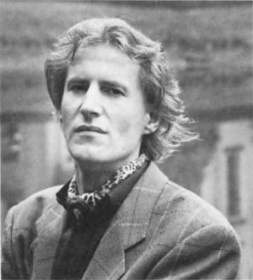
Kees Ouwens (27 juni 1944 – 24 augustus 2004)
De Canadese dichter, singer-songwriter, performer en sociale activist. Dawud (David) Wharnsby Ali werd geboren op 27 juni 1972 in Kitchener, Ontario. Zie ook alle tags voor Dawud Wharnsby op dit blog.
A Whisper of Peace (Reprise)
In the name of God, the Most Gracious, the Most Merciful
By (the Token of) Time (through the ages),
Verily Mankind is in loss,
Except those who have Faith, and do righteous deeds,
And (join together) in the mutual teaching of Truth,
And of Patience and Constancy.
A whisper of peace
Moving through the land,
Allah will surely run to us
If we hold out our hand.
A word of hope,
A call to every woman and man,
A light until the end of time,
This is our Islam.
A whisper of peace
Moving through the land,
Allah will surely run to us
But do we understand?
A word of hope,
A call to every woman and man,
A light until the end of time,
Is this our Islam?
A whisper of peace
Moving through the land,
Allah will surely run to us
But do we understand?
A word of hope,
A call to every woman and man,
A light until the end of time,
Is this our Islam?
A whisper of peace
Moving through the land,
Allah will surely run to us
But do we understand?
A word of hope,
A call to every woman and man,
A light until the end of time,
Is this just a waste of rhyme?
What if we run out of time?
Is this our Islam?
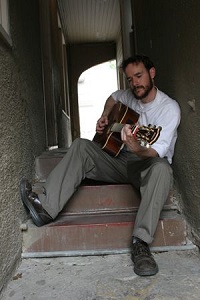
Dawud Wharnsby (Kitchener, 27 juni 1972)
De Braziliaanse schrijver João Guimarães Rosa werd geboren op 27 juni 1908 in Cordisburgo, Minas Gerais. Zie ook alle tags voor João Guimarães Rosa op dit blog.
Uit: The Devil To Pay In The Backlands (Vertaald door James L. Taylor en Harriet de Onís)
“I thank you again. All right, then, there is no devil. And no spirits. I never saw any. And if anybody was to see one, it should be me, your humble servant. If I was to tell you… So, the devil rules his black kingdom, in animals, in men, in women. Even in children, I say. For isn’t there a saying: “A child – spawn of the devil?” And in things, in plants, in waters, in the earth, in the wind… “The devil in the street, in the middle of the whirlwind.”
What? Ah, yes. Just an idea of mine, memories of things worse than bad. It’s not that it hurts me to talk about them. It’s better, it relieves me. Look here: in the same ground, and with branches and leaves of the same shape, doesn’t the sweet cassava, which we eat, grow and the bitter cassava, which kills? Now the strange thing is that the sweet cassava can turn poisonous – why, I don’t know. Some say it is from being replanted over in the same soil, from cuttings – it grows more and more bitter and then poisonous. But the other, the bitter cassava, sometimes changes too, and for no reason turns sweet and edible. How do you account for that? And have you ever seen the ugliness of glaring hate in the eyes of a rattlesnake? Or a fat hog, happier every day in its brutishness, that would gladly swallow the whole world if it could, for its filthy satisfaction? And some hawks and crows – just the look of them shows their need to slash and tear with that beak honed sharp by evil desire. There are even breeds of twisted, horrible, rocks, that poison the water in a well, if they lie at the bottom of it. The devil sleeps in them. Did you know that? And the devil – which is the only way you can call a malign spirit – by whose orders and by what right does he goes around doing as he damn well pleases? Mixed up in everything, he is.
What wears him out, little by little, the devil inside folks, is suffering wisely. Also the joy of love – so say my compadre Quelemém. The family. Is that the thing? It is and it isn´t. Everything is and isn´t . The most ferocious criminal, of the worst kind, is often a good husband, a good son, a god father, a good friend of his friends. I´ve known some like that. Only, there is the hereafter – and God too. Many´s the cloud I´ve seen.”
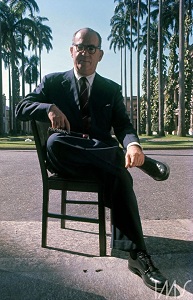
João Guimarães Rosa (27 juni 1908 – 19 november 1967)
De Duitse dichteres, schrijfster en vertaalster Zsuzsanna Gahse werd op 27 juni 1946 in Boedapest geboren. Zie ook alle tags voor Zsuzsanna Gahse op dit blog.
Höhenmeter
Der Berghang, der jetzt auf mich zukommt, könnte meine
Stimme entweder verschlucken oder sie zurückschlagen. Wenn
er sie zurückschlägt, wird mehr aus der Stimme, doppelt oder
viermal so viel, und weil der Hang jetzt immer näher rückt,
schweige ich sicherheitshalber eine Weile.
Seit einigen Jahren möchte ich alles so sehen, wie es ist, so dass
ich nicht versuche, jedes Ding mit etwas Bekanntem zu
vergleichen.
Das Gebirge ist wirklich das Gebirge, der Berg ist der Berg, der
Hügel ein Hügel und nichts sonst, niemand braucht rot zu
werden, Hintergründiges ist nicht gemeint.
Das Tal ist in der Tat das Tal, schön hinzuschauen. Jetzt fahre
ich seit fast einer Stunde in einer Gondel von Celerina nach
Marguns hinauf, wieder zurück, schaue mich um und sehe, dass
ich fahre.
Bisher habe ich nie versucht, so zu hören, wie ich zu sehen
versuche. Sicher kam es zwischendurch vor, dass ich richtig
hingehört habe, aber versucht habe ich das nicht, manchmal
ist es mir zufällig gelungen, ohne zu merken, dass es mir
gelungen war, und jetzt, in der Gondel, hier bin ich
einigermaßen abgeschottet, höre nur die lauten Kuhglocken
unter mir
am Hang, hier frage ich mich in einer mir nach wie vor
fremden Landschaft, was mit der Stimme in den Bergen
passiert.
Der Berghang, der jetzt auf mich zukommt, könnte die Stimme
verschlucken. Falls er sie aber zurückwirft, verdoppelt sich die
Stimme vielleicht.
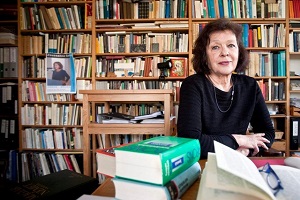
Zsuzsanna Gahse (Boedapest, 27 juni 1946)
Zie voor nog meer schrijvers van de 27e juni ook mijn blog van 27 juni 2016 en eveneens mijn blog van 27 juni 2015 deel 2.


