Naar de inhoud

Romenu

Over literatuur, gedichten, kunst en cultuur
akke.beakke.be

Berichten van 13 juli 2019 tot 14 juli 2019

Volker Kaminski, Yukiko Motoya, Irving Stone, Natalia Ginzburg, Jacques de Lacretelle
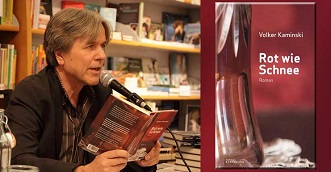
De Duitse schrijver Volker Kaminski werd op 14 juli 1958 in Karlsruhe geboren. Zie ook alle tags voor Volker Kaminski op dit blog.

Uit: Rot wie Schnee

„Tom war sich sicher, dass der Junge nach ihm rief. Er glaubte seine helle Stimme zu hören, während er den Flur zwischen Küche und Atelier durchquerte. Er knips te das Neonlicht an und betrat das Atelier. Mach dich nicht verrückt, dachte er, es ist doch nur ein Bild. Die noch unfertige Leinwand, die an der Schmalseite des Raums lehnte, zeigte einen etwa siebzehnjährigen Jungen, der mit den Füßen im Schnee versank und sein bleiches Gesicht dem Betrachter zuwandte. Er hatte den Mund weit geöffnet und die Augen aufgerissen. In einer stark ausholenden Körperdrehung streckte er den rechten Arm nach hinten und deutete auf eine Stelle im Schnee, an der ein umgestürzter Wagen lag. Bettdecken, Körbe, große Kisten, verblichene Reisekoffer lagen im Schnee verstreut. Das Gestänge eines Vogelkäfigs ragte heraus, ein Fahrradlenker, eine alte Standuhr. Weiter hinten, halb verschüttet, aber gut sichtbar, lag eine junge Frau, die ihren gewölbten Bauch schützend mit den Armen bedeckte. Das Bild war 250 mal 180 Zentimeter groß, Toms bevor zugtes Standardmaß. Er hatte beschlossen, die Pferde weg zu lassen. Pferde würden das Elend zu sehr betonen, es wären Mitleid erregende Kreaturen, die aus offenen Wunden bluteten. Natürlich hätte er die Pferde an den Horizont stellen können, sie hätten still und ergeben dagestanden und damit angedeutet, um was für einen Wagen es sich handelte. Er musste jetzt wieder an die Pferde denken, obwohl er sich letzte Nacht gegen sie entschieden hatte. Es war ein Bild von der Flucht im Zweiten Weltkrieg. Der junge Mann im Vordergrund, der zerbrochene Wagen und der dichte Schnee gaben genügend Hinweise darauf. Tom nahm einen feinen Pinsel vom Tisch und machte sich wieder an die Arbeit. Keine Pferde, dachte er noch einmal. Der Schnee war das beherrschende, alles verschluckende Element. Er lag meterhoch, sodass man sich wildes, windgepeitschtes Schneetreiben vorstellen konnte. In der Szene selbst schneite es nicht. Es war keine einzige Schneeflocke zu sehen, nichts trat zwischen das Gesicht des Jungen und den Betrachter. So lebendig und aufgebracht sollte der Junge erscheinen, so plastisch und real, dass der Betrachter meinte, er steige zu ihm heraus. Dabei war Tom die Nähe zu dem Jungen beim Malen eher unangenehm; er fühlte sich beklommen, wenn er seinem Gesicht zu nahe kam. Als Vorlage diente ihm eine kleine Schwarz­Weiß­Fotografie, darauf war die Haltung, um die es ihm ging, nicht zu erkennen. Das Foto zeigte einen schmächtigen, freundlich lächelnden Schüler, keineswegs ein verzerrtes Gesicht. So angespannt und überdreht wie auf der Leinwand war er im Leben selten anzutreffen gewesen, aber Tom hatte sich dieser Ausdruck trotzdem tief eingeprägt. Er hatte manchmal von ihm als wild tanzendem Mann geträumt und sich für ihn im Traum geschämt. Im Zentrum seines Lebens hatte die Katastrophe gestanden, die mit dem Krieg über ihn hereingebrochen war. Und Tom hatte immer gewusst, dass er diese Katastrophe eines Tages auf die Leinwand bringen würde.“


 2252916-b1c22b00c37411a6d9c01497a2f3841e.jpg
Volker Kaminski (Karlsruhe, 14 juli 1958)


De Japanse schrijfster Yukiko Motoya werd geboren op 14 juli 1979 in Hakusan, Ishikawa. Zie ook alle tags voor Yukiko Motoya op dit blog.

Uit: The Reason I Carry Biscuits to Offer to Young Boys (Vertaald door Asa Yoneda)

“Try these—they’re really delicious.”
I was in the bus shelter opposite the train station, taking shelter from the rain while I waited for my mom, when the guy with the umbrella started talking to me. I hadn’t noticed him turn up but the old guy, who was dressed in rags, gave me a friendly smile and offered me a little packet of biscuits. “You look hungry,” he said. “Go ahead, they’re really delicious.” Even though we were in the middle of a huge typhoon and the ferocious wind was howling past my ears, I thought I caught a whiff of the old guy’s sour smell.
“Aw, biscuits!” I said, taking them like a good child. I was clutching the biscuits inside my palm and nervously pretending to eat them when then the guy pointed toward the junction where the wide station road met a smaller road and, out of nowhere, said, “Don’t ever underestimate people like them.” He was pointing at a man in a suit waiting for the lights to turn, desperately holding his umbrella open in the storm.
I didn’t react, but secretly I was pretty worried that he’d read my mind. I’d been watching people just like suit man passing by, laughing at them inside. Any time I saw typhoon coverage on TV, I just had to wonder: What on earth were these people thinking? Walking along looking totally focused on holding their barely open umbrellas in front of them when their clothes, their hair and most likely even their socks were wet through. I was like, Are you sure there isn’t something wrong with your head? Don’t tell me you kowtow to umbrellas, at your age? But I’d never mentioned these thoughts to anyone else.
“Just watch,” said the old guy. “Soon he’ll be down to bare bones.” I didn’t know what he meant, but his voice was strong like a sea captain’s, so I looked to where his gnarly finger was pointing, at the man in a suit holding on for dear life to the guardrail by the crossing. I’d nearly been blown out onto the road there too, earlier, as I battled the rain that blew horizontally into my face. Because it was a junction, the strong winds bore straight at you.
“Three! Two! One!” The old guy shouted, just as the man’s umbrella turned inside out like a rice bowl and its fabric disappeared as though an invisible man had ripped it off, instantly reducing the umbrella to just its skeleton. I was speechless. The old guy’s timing had been perfect.
*
Associating with people like him was a bad idea. I knew this, but his shabby appearance and offensive smell didn’t bother me that much any more. He handed me another packet of biscuits, and I pretended to nibble them again, apologizing to him in my head for deceiving him. Oblivious to that, the guy started telling a story about some boy from a tribe that lived deep in a forest. It was about what the young kid did to win an umbrella that a foreigner had brought to their village.
“They beat each other with sticks,” said the guy. The wind was whipping his long, tangled hair around, and it looked like the strands were trying to feed on his face.”

 

 2252916-f1fa5c7b8cb8118cd1b44e290863aac1.jpg
Yukiko Motoya (Hakusan, 14 juli 1979)


De Amerikaanse schrijver Irving Stone werd geboren op 14 juli 1903 in San Francisco. Zie ook alle tags voor Irving Stone op dit blog.

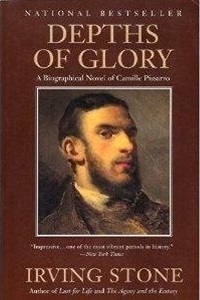
Uit: Depths of Glory

“The opening of the official Salon on April 30, 1863, was attended by several thousand Parisians interested in art exhi-bitions. The jury gave a prize to the picture called The Pearl and the Wave, a young woman voluptuously extended on the bank receiving the embraces of the caressing waves. Corot and Millet were described by the judges as "foremost". Gustave Courbet was infuriated because he had been described as "fad-ing and passing away". Portrait of the Emperor was judged "the most important work of the exhibit". Le Figaro's critic was disappointed with the Salon. He wrote: "It is an honest and prudent French school. The general effect is sleepy". The two weeks preceding the "Salon des Refuses" dragged unmercifully. When, a couple of days prior to the opening, the Emperor announced that he and his Empress would attend the showing of the unwanted artists, a shock wave went through Paris. Everyone who had been at the opening of the official Salon would have to attend this second Salon to see and be seen by their Majesties. It was expected that there would be an enormous crowd. "We'll have a great success," cried Claude Monet. Camille Pissarro responded, "You see, to be rejected is not the same as being ignored." On the day of the opening he and his colleagues assembled in the passageway between Palais de l'Industrie and the adjoining building shortly before the opening hour. They found the exhibit as luxuriously mounted as that of the official Salon. Antique tapestries hung in the doorways. The benches were made comfortable with red velvet cushions. The skylights were covered with white cotton screens to cut the glare. There was a long series of display rooms. All like the official Salon.., except for the pictures. The brightness of their color, the mood, the authenticity of the figures and the presence of fresh air. The feeling of youth, of gaiety. Of innovation. In the two areas termed "the place of dishonor" were Edouard Manet's Luncheon on the Grass, two gentlemen fully clothed in vests, jackets and cravats, and two women entirely naked, sitting and gathering flowers, beside them the picnic basket and its luxurious contents overflowing into the foreground.“
 

 2252916-814e914aaea2b514eeac20e31f04cba7.jpg
Irving Stone (14 juli 1903 – 26 augustus 1989)
Cover


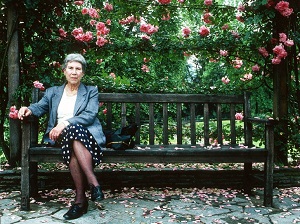
De Italiaanse schrijfster Natalia Ginzburg werd geboren op 14 juli 1916 in Palermo. Zie ook alle tags voor Natalia Ginzburg op dit blog.

Uit: Al onze gisterens (Vertaald door Henny Vlot)

“Ze bleef altijd heel lang in de badkamer en dan kwam iedereen aan de deur kloppen, terwijl zij begon te roepen dat ze er ge-noeg van had in een huis te wonen waar niemand respect voor haar had; ze wilde meteen haar koffers pakken en naar haar zuster in Genua vertrekken. Twee of drie keer had ze haar koffers onder de kast vandaan gehaald en was ze begonnen haar schoenen in stoffen zakjes te stoppen. Je moest gewoon doen of er niets aan de hand was en dan haalde ze even later haar schoenen weer tevoorschijn. Overigens wist iedereen dat die zuster in Genua haar helemaal niet in huis wilde hebben.Juffrouw Maria kwam geheel gekleed, met haar hoed op, de badkamer uit en rende meteen de straat op met een schepje om mest te verzamelen voor de rozen, vliegensvlug, terwijl ze goed oplette dat er niemand aan kwam. Daarna ging ze inkopen doen met het boodschappennet, ze speelde het klaar om in een halfuur de hele stad door te rennen op haar vlugge voetjes in schoenen met een strik. Iedere morgen speurde ze de hele stad af naar koopjes, en kwam doodmoe thuis. Ze had altijd een slecht humeur als ze boodschappen had gedaan en viel uit tegen Concettina, die nog in haar ochtendjas rond-liep: ze zei dat ze nooit had gedacht dat ze nog eens met een boodschappennet door de stad zou moeten sjouwen, toen ze vroeger in het rijtuig naast grootmoeder zat, met haar knieën lekker warm onder de deken en de mensen die haar groet-ten. Concettina borstelde langzaam haar haar voor de spiegel, bracht daarna haar gezicht tot vlak bij het glas en bekeek een voor een haar sproeten, bekeek haar tanden en haar tandvlees, stak haar tong uit en bekeek die ook. Ze kamde haar haar strak naar achteren in een wrong in haar nek, met een warrige pony op haar voorhoofd; met die pony leek ze precies op een cocot-te, zei juffrouw Maria. Daarna deed ze de kast wijd open en dacht na over welke kleren ze zou aantrekken. Intussen luchtte juffrouw Maria de bedden en klopte de kleden, met een doek om haar hoofd en haar mouwen opgerold over haar oude, ta-nige armen. Maar ze dook weg bij het raam als ze de mevrouw van het huis aan de overkant het balkon op zag komen, want ze hield er niet van gezien te worden met haar hoofddoek om terwijl ze de kleden aan het kloppen was, en dan dacht ze er-aan terug dat ze in dit huis was gekomen als gezelschapsdame, en kijk nu eens wat ze moest doen.De overbuurvrouw had ook een pony, maar een door de kapper gekrulde, stijlvol verwarde pony, en juffrouw Maria zei dat ze jonger leek dan Concettina wanneer ze ’s morgens naar buiten kwam in haar lichtgekleurde, frisse peignoir, en toch wist iedereen zeker dat ze vijfenveertig was.Er waren dagen dat Concettina er niet in slaagde iets te vinden om aan te trekken.”
 

 2252916-6583480c11b750997ce61981473a155e.jpg
Natalia Ginzburg (14 juli 1916 – 7 oktober 1991)


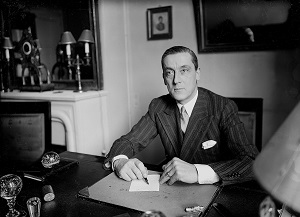
De Franse schrijver en letterkundige Jacques de Lacretelle werd geboren in Cormatin (Saône-et-Loire) op 14 juli 1888. Zie ook alle tags voor Jacques de Lacretelle op dit blog.

Uit: Silbermann


"Or, Célestine, notre cuisinière, n’aimait pas cet homme « venu on ne sait d’où », disait-elle, et lorsqu’elle avait eu affaire avec lui, on l’entendait maugréer en revenant :
— C’est malheureux de voir ces beaux fruits touchés par ces mains-là.
Silbermann, ignorant ce petit mouvement instinctif, poursuivit :
— Si les livres t’intéressent, tu viendras un jour chez moi, je te montrerai ma bibliothèque et je te prêterai tout ce que tu voudras.
Je le remerciai et acceptai.
— Alors quand veux-tu venir ? dit-il aussitôt. Cet après-midi, es-tu libre ?
Je ne l’étais point. Il insista.
— Viens goûter jeudi prochain.
Il y eut dans cet empressement quelque chose qui me déplut et me mit sur la défensive. Je répondis que nous conviendrions du jour plus tard ; et comme nous étions arrivés devant la maison de mes parents, je lui tendis la main.
Silbermann la prit, la retint, et me regardant avec une expression de gratitude, me dit d’une voix infiniment douce :
— Je suis content, bien content, que nous nous soyons rencontrés... je ne pensais pas que nous pourrions être camarades.
— Et pourquoi ? demandai-je avec une sincère surprise.
— Au lycée, je te voyais tout le temps avec Robin ; et comme lui, durant un mois, cet été, a refusé de m’adresser la parole, je croyais que toi aussi... Même en classe d’anglais où nous sommes voisins, je n’ai pas osé...
Il ne montrait plus guère d’assurance en disant ces mots. Sa voix était basse et entrecoupée ; elle semblait monter de régions secrètes et douloureuses. Sa main qui continuait d’étreindre la mienne comme s’il eût voulu s’attacher à moi, trembla un peu.
Ce ton et ce frémissement me bouleversèrent. J’entrevis chez cet être si différent des autres une détresse intime, persistante, inguérissable, analogue à celle d’un orphelin ou d’un infirme. Je balbutiai avec un sourire, affectant de n’avoir pas compris :
— Mais c’est absurde... pour quelle raison supposais-tu...
— Parce que je suis Juif, interrompit-il nettement et avec un accent si particulier que je ne pus distinguer si l’aveu lui coûtait ou s’il en était fier."
 

 2252916-a7be7520be04bfadd9c9fb8d8983ddb4.jpg
Jacques de Lacretelle (14 juli 1888 – 2 januari 1985)


Zie voor nog meer schrijvers van de 14e juli ook mijn vorige blog van vandaag.

Geschreven door Romenu om 13:21 Reageer op dit bericht

Gavrila Derzjavin, Béatrix Beck, Arthur Laurents, Owen Wister, Willard Motley

De Russische dichter Gavrila Romanovitsj Derzjavin werd geboren in Kazan op 14 juli 1743. Zie ook alle tags voor Gavrila Derzjavin op dit blog.


On The Death Of Prince Meshchersky (Fragment)

O, Voice of time! O, metal's clang!
Your dreadful call distresses me,
Your groan doth beckon, beckon me
It beckons, brings me closer to my grave.
This world I'd just begun to see
When death began to gnash her teeth,
Like lightening her scythe aglint,
She cuts my days like summer hay.

No creature thinks to run away,
From under her rapacious claws:
Prisoners, kings alike are worm meat,
Cruel elements the tomb devour,
Time gapes to swallow glory whole.
As rushing waters pour into the sea,
So days and ages pour into eternity
And death carnivorous all eats.

We slide along the edge of an abyss
And we will someday topple in.
With life, we take at one time death,
To die's the purpose of our birth.
Death strikes all down without a thought.
It shatters e'en the stars,
Extinguishes the suns,
It threatens every world.


 2252915-e422ccee87af2c9f14b2fd84c4e0def7.jpg
Gavrila Derzjavin (14 juli 1743 – 20 juli 1816)
Op een postzegel uit 1972


De Franse schrijfster van Belgische origine Béatrix Beck werd geboren in Villars-sur-Ollon op 14 juli 1914. Zie ook alle tags voor Béatrix Beck op dit blog.

Uit: La Petite Italie

"Au dernier étage, dans un placard à balais coquettement aménagé, tapissé d’échantillons de papier mural, vivotait la très vieille signora Cumini, trois fois veuve et plus de dents. Elle dormait recroquevillée pour pouvoir fermer sa porte. On la nourrissait gratis, les uns par solidarité sociale, les autres pour l’amour de la bienheureuse Maria Goretti, la grande Teresa ou, carrément, Dieu.
— Du pareil au même, chuintait Lucrezia Cumini.
Lait de poule, purées de toutes choses, même gâtées, elle n’y voit que du feu. Consommé où le chat mijote trois heures et demie, c’est pas la mort d’un pape. Avec les herbes, un vrai lapin. La nonagénaire Lulu larmoyait d’attendrissement en déglutissant.
Alida étreignit sa fille comme si elle venait d’échapper à un carnage, coiffa de sa belle grande main abîmée la tête ronde de son fils, rasée à cause des poux des riches :
— Mon cœur, qu’est ce que t’as fait à l’école aujourd’hui ?
— Rien.
— Oh, protesta Alia. Ils ont appris une chanson. Chante à maman.
— La pou-oule noire pond dans l’a-armoire.
— Et puis ?
— La poule blanche je sais pas.
La toute petite Sandra donna de la voix. Mère et fille se jetèrent sur elle, l’arrachèrent à son moïse, se l’arrachèrent. Alida dut lâcher prise pour touiller la sublime soupe des premiers jours du mois, une totalité, un absolu. Dans chaque assiette un filet d’or liquide. Mon huile c’est mon sang, disait Alida en rebouchant serré le bidon. Fête intérieure, recueillement. Seigneur, priait in petto Alida, mange avec nous cette bonté.
Quand le travail venait à manquer, on allait jusqu'à bouffer de l'herbe bien bouillie, bien tordue, bien hachée. Les macaronis vivent de l'air du temps, disaient les Français, les gaspilleurs, avec envie et mépris.
Après le repas, succulent ou misérable, les trois enfants baisaient la main de leur mère qui l'avait préparé, l'hommage de Nicola tenant plutôt du suçon. Alida accueillait le cérémonial avec naturel et dignité. Essayait de raconter à son mari : — La voisine... le boulanger... la pluie... — Les ragots j'en ai rien à foutre. Parle-moi de la dictature du prolétariat."


 2252915-2b9f2b865b0fd821293c351bdd4e094d.jpg
Béatrix Beck (14 juli 1914 – 30 november 2008)


De Amerikaanse schrijver, scenarioschrijver en regisseur Arthur Laurents is geboren in New York op 14 Juli 1918.Zie ook alle tags voor Arthur Laurents op dit blog.

Uit: West Side Story

“By the time the mambo music starts the Jets and Sharks are each on their own side of the hall. At the climax of the dance, Tony and Bernardo's sister, Maria, see one another :as a delicate cha-cha-cha, they slowly walk forward to meet each other.
MEETING SCENE
TONY
You're not thinking I'm someone else?
MARIA
I know you are not.
TONY
Or that we have met before?
MARIA
I know we have not.
TONY
I felt I knew something-never-before was going to happen, had to happen. But this is ...
MARIA
interrupting
My hands are so cold.
He takes them in his.
Yours too.
He moves her hands to his face.
So warm.
She moves his hands to herface.
TONY
Yours, too...
MARIA
But of course. They are the same.
TONY
It's so much to believe. You're not joking me?
MARIA
I have not yet learned how to joke that way.
I think how I never will.

[JUMP]
Bernardo is upon them in an icy rage. Chino, whom Bernardo has brought Maria from Puerto Rico to marry, takes her home. Riff wants Bernardo for"War Council"; they agree to meet in half an hour at Doc's drugstore.”


 2252915-9a23c1082681dd0783b3da3a3ac53115.jpg
Arthur Laurents (14 juli 1918 – 5 mei 2011)
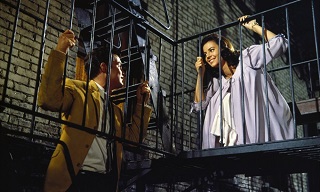
Scene uit de film uit 1961 met Natalie Wood (Maria) and Richard Beymer (Tony)


De Amerikaanse schrijver Owen Wister werd geboren op 14 juli 1860 in Germantown, Pennsylvania. Zie ook alle tags voor Owen Wister op dit blog.

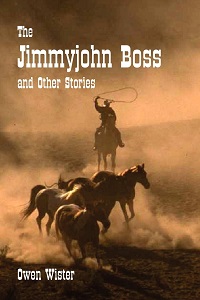
Uit: The Jimmyjohn Boss

“One day at Nampa, which is in Idaho, a ruddy old massive jovial man stood by the Silver City stage, patting his beard with his left hand, and with his right the shoulder of a boy who stood beside him. He had come with the boy on the branch train from Boise, because he was a careful German and liked to say everything twice--twice at least when it was a matter of business. This was a matter of very particular business, and the German had repeated himself for nineteen miles. Presently the east-bound on the main line would arrive from Portland; then the Silver City stage would take the boy south on his new mission, and the man would journey by the branch train back to Boise. From Boise no one could say where he might not go, west or east. He was a great and pervasive cattle man in Oregon, California, and other places. Vogel and Lex--even to-day you may hear the two ranch partners spoken of. So the veteran Vogel was now once more going over his notions and commands to his youthful deputy during the last precious minutes until the east-bound should arrive.
"Und if only you haf someding like dis," said the old man, as he tapped his beard and patted the boy, "it would be five hoondert more dollars salary in your liddle pants."
The boy winked up at his employer. He had a gray, humorous eye; he was slim and alert, like a sparrow-hawk--the sort of boy his father openly rejoices in and his mother is secretly in prayer over. Only, this boy had neither father nor mother. Since the age of twelve he had looked out for himself, never quite without bread, sometimes attaining champagne, getting along in his American way variously, on horse or afoot, across regions of wide plains and mountains, through towns where not a soul knew his name. He closed one of his gray eyes at his employer, and beyond this made no remark.
"Vat you mean by dat vink, anyhow?" demanded the elder.
"Say," said the boy, confidentially--"honest now. How about you and me? Five hundred dollars if I had your beard. You've got a record and I've got a future. And my bloom's on me rich, without a scratch. How many dollars you gif me for dat bloom?" The sparrow-hawk sailed into a freakish imitation of his master.
"You are a liddle rascal!" cried the master, shaking with entertainment. "Und if der peoples vas to hear you sass old Max Vogel in dis style they would say, 'Poor old Max, he lose his gr-rip.' But I don't lose it." His great hand closed suddenly on the boy's shoulder, his voice cut clean and heavy as an axe, and then no more joking about him. "Haf you understand that?" he said.”


 2252915-05ee32e2e7b6595e7ad8dc71abed4106.jpg
Owen Wister (14 juli 1860 – 21 juli 1938)
Cover


De Amerikaanse schrijver Willard Frances Motley werd geboren op 14 juli 1909 in Chicago. Zie ook alle tags voor Willard Motley op dit blog.

Uit: Alan M. Wald.American Night: The Literary Left in the Era of the Cold War (Hoofdstuk over Willard Motley)

“Like Oscar Wilde, Motley yearned for an escape from moralistic prohibi-tionism, but unlike Wilde he would not turn victimization into martyrdom. In personal notes he kept for a planned book-length novel about homosexual culture in the postwar era, he explained that he did not want to write the kind of book later known as the "Homosexual Problem Novel"; he hated the ones he read such as Gore Vidal's The Pillar and the City (1946).107 He also refused to depict a homosexual as a redemptive figure, as in James Baldwin's Another Country (1962). While Motley's rejection of the available racial and gender definitions makes sense in a pre-Stonewall age, the absence of an alternative turned into a no-win predicament. Rather than producing fiction that replaced settled forms of identity with processes embedded in class, national, ethnic, and personal contexts, Motley could generate only a disconcerting sequence of enigmas and stereotypes. Hoist with his own petard of nondisclosure, Motley nonetheless partook, instinctively, of an "Adornian" dialectic through which his novels register a cognition of tension between concepts of race and gender and the non-conceptuality of the same. He merged with Petry and others in eroding prior categories, which in Petry's case created a narrative that promoted a dissolu-tion of the 193os idea of the novel as reflective of the material configuration of experience. But anyone seeking in Motley a nimble and buoyant presenta-tion of such art will be disappointed. He aspired to panoramic volumes on a grand scale, and these are weighted with the deadly undertow of exhaustively researched sociological settings. Only a vigilant reader can discern how Mot-ley's literary trajectory exhibits a process of paradoxical self-negation. Unlike Petry, there is no rematerializing logic to his texts through a vivid seizure of the imagination. In the eyes of his FBI watchers, Willard Motley was simply a "Negro writer with Leftist and homosexual tendencies who has lived in Mexico for a num-ber of years.."00 To understand more intricately what this redaction denoted, one needs to recover motives and meanings from Motley's intimate life.”


 2252915-d34b0b1d167b562d614309b606c1da5e.jpg
Willard Motley (14 juli 1909 – 15 maart 1965)

Geschreven door Romenu om 13:21 Reageer op dit bericht

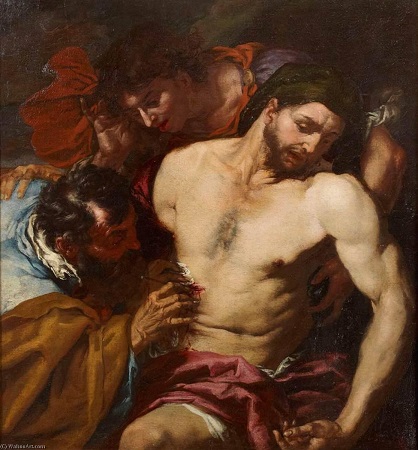
The Good Samaritan (Henry Lawson)


Bij de vijfde zondag na Pinksteren


 2252913-73dd3c96a78e92382edb8fd0109213fb.jpg
De barmhartige Samaritaan door Giovanni Battista Langetti, 1670


The Good Samaritan

HE comes from out the ages dim—
The good Samaritan;
I somehow never pictured him
A fat and jolly man;
But one who'd little joy to glean,
And little coin to give—
A sad-faced man, and lank and lean,
Who found it hard to live.

His eyes were haggard in the drought,
His hair was iron-grey—
His dusty gown was patched, no doubt,
Where we patch pants to-day.
His faded turban, too, was torn—
But darned and folded neat,
And leagues of desert sand had worn
The sandals on his feet.

He's been a fool, perhaps, and would
Have prospered had he tried,
But he was one who never could
Pass by the other side.
An honest man whom men called soft,
While laughing in their sleeves—
No doubt in business ways he oft
Had fallen amongst thieves.

And, I suppose, by track and tent,
And other ancient ways,
He drank, and fought, and loved, and went
The pace in his young days.
And he had known the bitter year
When love and friendship fail—
I wouldn't be surprised to hear
That he had been in jail.

A silent man, whose passions slept,
Who had no friends or foes—
A quiet man, who always kept
His hopes and sorrows close.
A man who very seldom smiled,
And one who could not weep
Be it for death of wife or child
Or sorrow still more deep.

But sometimes when a man would rave
Of wrong, as sinners do,
He'd say to cheer and make him brave
‘I've had my troubles too.’
(They might be twittered by the birds,
And breathed high Heaven through,
There's beauty in those world-old words:
‘I've had my sorrows too.’)

And if he was a married man,
As many are that roam,
I guess that good Samaritan
Was rather glum at home,
Impatient when a child would fret,
And strict at times and grim—
A man whose kinsmen never yet
Appreciated him.

Howbeit—in a study brown—
He had for all we know,
His own thoughts as he journeyed down
The road to Jericho,
And pondered, as we puzzle yet,
On tragedies of life—
And maybe he was deep in debt
And parted from his wife.

(And so ‘by chance there came that way,’
It reads not like romance—
The truest friends on earth to-day,
They mostly come by chance.)
He saw a stranger left by thieves
Sore hurt and like to die—
He also saw (my heart believes)
The others pass him by.

(Perhaps that good Samaritan
Knew Levite well, and priest)
He lifted up the wounded man
And sat him on his beast,
And took him on towards the inn—
All Christ-like unawares—
Still pondering, perhaps, on sin
And virtue—and his cares.

He bore him in and fixed him right
(Helped by the local drunk),
And wined and oiled him well all night,
And thought beside his bunk.
And on the morrow ere he went
He left a quid and spoke
Unto the host in terms which meant—
‘Look after that poor bloke.’

He must have known them at the inn,
They must have known him too—
Perhaps on that same track he'd seen
Some other sick mate through;
For ‘Whatsoe'er thou spendest more’
(The parable is plain)
‘I will repay,’ he told the host,
‘When I return again.’

He seemed to be a good sort, too,
The boss of that old pub—
(As even now there are a few
At shanties in the scrub).
The good Samaritan jogged on
Through Canaan's dust and heat,
And pondered over various schemes
And ways to make ends meet.

*****

He was no Christian, understand,
For Christ had not been born—
He journeyed later through the land
To hold the priests to scorn;
And tell the world of ‘certain men’
Like that Samaritan,
And preach the simple creed again—
Man's duty! Man to man!

*****

‘Once on a time there lived a man,’
But he has lived alway,
And that gaunt, good Samaritan
Is with us here to-day;
He passes through the city streets
Unnoticed and unknown,
He helps the sinner that he meets—
His sorrows are his own.

He shares his tucker on the track
When things are at their worst
(And often shouts in bars outback
For souls that are athirst).
To-day I see him staggering down
The blazing water-course,
And making for the distant town
With a sick man on his horse.

He'll live while nations find their graves
And mortals suffer pain—
When colour rules and whites are slaves
And savages again.
And, after all is past and done,
He'll rise up, the Last Man,
From tending to the last but one—
The good Samaritan.


 2252913-f71ca5ef6ca1906b5ff72853fcd1e8b6.jpg
Henry Lawson (17 juni 1867 – 2 september 1922)
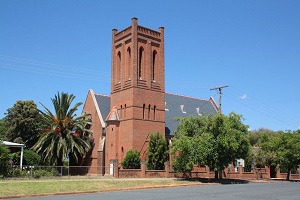
De Anglicaanse Holy TrinityChurch in Grenfell, New South Wales, de geboorteplaats van Henry Lawson


Zie voor de schrijvers van de 14e juli ook mijn volgende twee blogs van vandaag.

Geschreven door Romenu om 13:20 Reageer op dit bericht

Henry Longfellow, Wole Soyinka, Rien Vroegindeweij, Isaak Babel, Scott Symons, Rebecca Salentin


Dolce fa niente


 2252616-dbb1ba919bdfceec8bebfb8a7cc6efb2.jpg
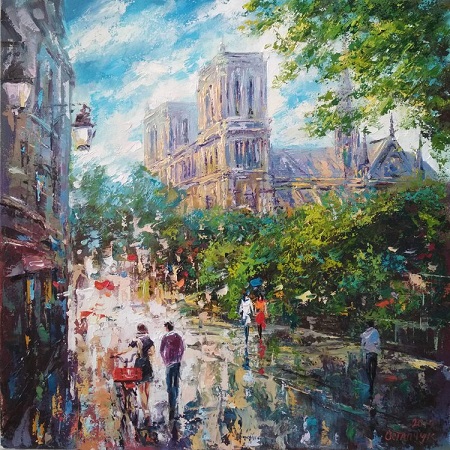
Parijs na de regen door Andrej Ostapchuk, 2019


Rain in Summer

How beautiful is the rain!
After the dust and heat,
In the broad and fiery street,
In the narrow lane,
How beautiful is the rain!
How it clatters along the roofs,
Like the tramp of hoofs
How it gushes and struggles out
From the throat of the overflowing spout!
Across the window-pane
It pours and pours;
And swift and wide,
With a muddy tide,
Like a river down the gutter roars
The rain, the welcome rain!
The sick man from his chamber looks
At the twisted brooks;
He can feel the cool
Breath of each little pool;
His fevered brain
Grows calm again,
And he breathes a blessing on the rain.
From the neighboring school
Come the boys,
With more than their wonted noise
And commotion;
And down the wet streets
Sail their mimic fleets,
Till the treacherous pool
Ingulfs them in its whirling
And turbulent ocean.
In the country, on every side,
Where far and wide,
Like a leopard's tawny and spotted hide,
Stretches the plain,
To the dry grass and the drier grain
How welcome is the rain!
In the furrowed land
The toilsome and patient oxen stand;
Lifting the yoke encumbered head,
With their dilated nostrils spread,
They silently inhale
The clover-scented gale,
And the vapors that arise
From the well-watered and smoking soil.
For this rest in the furrow after toil
Their large and lustrous eyes
Seem to thank the Lord,
More than man's spoken word.
Near at hand,
From under the sheltering trees,
The farmer sees
His pastures, and his fields of grain,
As they bend their tops
To the numberless beating drops
Of the incessant rain.
He counts it as no sin
That he sees therein
Only his own thrift and gain.
These, and far more than these,
The Poet sees!
He can behold
Aquarius old
Walking the fenceless fields of air;
And from each ample fold
Of the clouds about him rolled
Scattering everywhere
The showery rain,
As the farmer scatters his grain.
He can behold
Things manifold
That have not yet been wholly told,--
Have not been wholly sung nor said.
For his thought, that never stops,
Follows the water-drops
Down to the graves of the dead,
Down through chasms and gulfs profound,
To the dreary fountain-head
Of lakes and rivers under ground;
And sees them, when the rain is done,
On the bridge of colors seven
Climbing up once more to heaven,
Opposite the setting sun.
Thus the Seer,
With vision clear,
Sees forms appear and disappear,
In the perpetual round of strange,
Mysterious change
From birth to death, from death to birth,
From earth to heaven, from heaven to earth;
Till glimpses more sublime
Of things, unseen before,
Unto his wondering eyes reveal
The Universe, as an immeasurable wheel
Turning forevermore
In the rapid and rushing river of Time.


 2252616-f93ef417ef791f5843ac83ee3e380aff.jpg
Henry Longfellow (27 februari 1807 – 24 maart 1882)
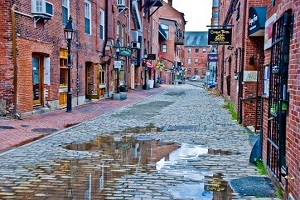
Portland, Maine. Wharf Street na de regen. Henry Longfellow werd geboren in Portland


De Nigeriaanse dichter, schrijver en voorvechter van democratie Akinwande Oluwole “Wole” Soyinka werd geboren op 13 juli 1934 in Abeokuta. Zie ook alle tags voor Wole Soyinka op dit blog.

Uit: Aké. The Years of Childhood

“The bedroom door opened and mother peeped in. Seeing me awake she entered, and was followed in by father. When I asked for Osiki, she gave me a peculiar look and turned to say something to father. I was not too sure, but it sounded as if she wanted father to tell Osiki that killing me was not going to guarantee him my share of iyan. I studied their faces intently as they asked me how I felt, if I had a headache or a fever and if I would like some tea. Neither would touch on the crucial question, so finally I decided to put an end to my suspense. I asked them what they had done with my dansiki.
‘It’s going to be washed,’ mother said, and began to crush a halftablet in a spoon for me to take.
‘What did you do with the blood?’
She stopped, they looked at each other. Father frowned a little and reached forward to place his hand on my forehead. I shook my head anxiously, ignoring the throb of pain this provoked.
‘Have you washed it away?’ I persisted.
Again they looked at each other. Mother seemed about to speak but fell silent as my father raised his hand and sat on the bed, close to my head. Keeping his eyes on me he drew out a long, ‘No-o-o-o-o.’
I sank back in relief. ‘Because, you see, you mustn’t. It wouldn’t matter if I had merely cut my hand or stubbed my toe or something like that – not much blood comes out when that happens. But I saw this one, it was too much. And it comes from my head. So you must squeeze it out and pump it back into my head. That way I can go back to school at once.’
My father nodded agreement, smiling. ‘How did you know that was the right thing to do?’
I looked at him in some surprise, ‘But everybody knows.’
Then he wagged his finger at me, ‘Ah-ha, but what you don’t know is that we have already done it. It’s all back in there, while you were asleep. I used Dipo’s feeding-bottle to pour it back.’
I was satisfied. ‘I’ll be ready for school tomorrow’ I announced.”


 2252616-8884dd591268990f2effa78bcaeb7306.jpg
Wole Soyinka (Abeokuta, 13 juli 1934)


De Nederlandse dichter en (toneel)schrijver Rien Vroegindeweij werd geboren in Middelharnis op 13 juli 1944. Zie ook alle tags voor Rien Vroegindeweij op dit blog.


Onweer

Ik hou van de hete zon
die schittert op de rivier
en ik ben gek op de eerste
kou van de winter. Ik hou

van de zon die ondergaat
en zou, als ik de kans kreeg,
ook genieten van een kort
doch hevig bosbrandje. Ik hou

van mijn moeder die oud is
en na een godvruchtig leven
niet weet wat het worden zal,
de hel of de hemel. Ik lijk

op haar omdat mijn dochter
op haar lijkt. Maar ik maak
haar niet bang met het vuur
dat opstijgt rond de zondaars.

Noch vrolijk ik haar op
met het vooruitzicht op hemels
gezang: als zij mijn hand vast
houdt, durf ik voor het raam

te staan, als zij lacht om mijn
oud geloof dat God in de donder
spreekt, praat zij hem na
en zegt: boemdereboemboemboem.


Dierbaar

Niet de aap maar het paard
lijkt het meest op de mens,
als je 't in de ogen kijkt.

Of sla de boeken erop na,
veldslagen, ontdekkingsreizen,
de melkboer in de straat.

Held van 't wilde Westen,
ruilobject voor koninkrijken,
verlosser van de filosoof.

Hier en daar staat op een plein
in brons een krijgsheer op zijn paard,
- dat zou andersom moeten zijn.


 2252616-008d95cd0787770ffe30d7790d20b987.jpg
Rien Vroegindeweij (Middelharnis, 13 juli 1944)


De Russische schrijver Isaak Emmanuïlovitsj Babel werd geboren in Odessa op 13 juli 1894. Zie ook alle tags voor Isaak Babel op dit blog.

Uit: De geschiedenis van mijn duiventil (Vertaald door Froukje Slofstra)

“In onze winkel zat een klant, een boer, zich besluiteloos het hoofd te krabben. Toen hij mij zag, liet mijn vader de boer achter en hij hoorde gretig, zonder enige scepsis, mijn verhaal aan. Hij riep de bediende om de winkel te sluiten en snelde naar de Sobornaja-straat om een pet met het schoolembleem voor mij te kopen. Mijn arme moeder kon me nauwelijks van die uitzinnige man wegrukken. Mijn moeder zag bleek op dat moment en peilde het lot. Ze aaide over mijn hoofd en duwde me dan weer vol weerzin weg. Ze zei dat de krant de namen publiceerde van de jongens die waren toegelaten tot het gymnasium en dat God ons zou straffen en de mensen ons zouden uitlachen als we voortijdig een schooluniform kochten. Mijn moeder zag bleek, ze peilde het lot in mijn ogen en keek naar me met bitter medelijden, als naar een kreupele, omdat alleen zij wist hoe ongelukkig onze familie was.
Alle mannen van ons geslacht waren te goed van vertrouwen en geneigd tot ondoordachte daden, we hadden nergens geluk in gehad. Mijn grootvader was ooit rabbijn geweest in Belaja Tserkov, hij was wegens godslastering verjaagd en had nog veertig jaar tumultueus en armoedig verder geleefd, vreemde talen gestudeerd, en vanaf zijn tachtigste zijn verstand verloren. Mijn oom Lev, de broer van mijn vader, had aan de jesjiva in Volozjin gestudeerd, was in 1892 weggelopen uit de militaire dienst en had de dochter ontvoerd van een intendant die in het militaire district Kiev diende. Oom Lev had die vrouw meegenomen naar Californië, naar Los Angeles, had haar daar in de steek gelaten en was gestorven in een dubieus huis, tussen negers en Maleiers. Na zijn dood stuurde de Amerikaanse politie ons zijn erfenis uit Los Angeles: een grote hutkoffer, beslagen met bruine ijzeren banden. In die koffer zaten halters, lokken vrouwenhaar, mijn grootvaders talliet, zweepjes met vergulde handgrepen en bloementhee in met goedkope parels versierde kistjes. Van de hele familie waren alleen mijn krankzinnige oom Simon, die in Odessa woonde, mijn vader en ik over. Maar mijn vader was te goed van vertrouwen, hij beledigde de mensen met zijn uitgelaten, idolate onthaal, dat vergaven ze hem niet en ze bedrogen hem. Mijn vader geloofde derhalve dat zijn leven werd geregeerd door een kwade genius, een ondoorgrondelijk wezen dat hem achtervolgde en in niets op hem leek. En dus was ik voor mijn moeder de enige die overbleef van onze hele familie.”


 2252616-b22c46d544e5b42d8bc0d05616dfb63d.jpg
Isaak Babel (13 juli 1894 – 27 januari 1940)
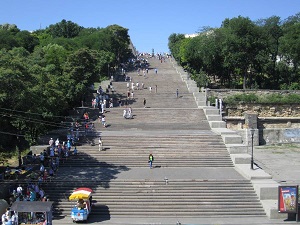
De Potjomkintrappen in Odessa


De Canadese schrijver Scott Symons werd geboren op 13 juli 1933 in Toronto. Zie ook alle tags voor Scott Symons op dit blog.

Uit: Place d’Armes

“To rest a moment ... slowly it focused him ... drew him out again — he heard the thunder of the candles ... and again his eardrums were probed and penetrant — again he lost his male maidenhead ... he reeled, held tight, and then relented ... gave himself to the verity ... and as he did he felt his eyes palped by the entrelacings of the gilt pillars .. and he followed the line of gold, up to the gold florescence under the balcony — to the scallopings of wood frieze ... and he knew that he had to abandon himself to this ... had to give to this — give himself to this. There was no other viable alternative. No other way — not out — but in. No other truth. Everything else was shadow. ... for a moment the veil dropped again — threatened to drop — he tried to make his eye bounce back off the entrelacs ... briefly he succeeded — yet he knew that if the veil did drop, he was lost — that once again he was still-born.... He looked back at the writhings of the gold ... and as his eye turned to them, they shot in, under his guard, before he even knew what had happened ... shot into him, writhing and convulsing — the candles raged in him — again he tried to close down — to shut out this realization ... but now it was too late, gloriously, with absolute finality, too late ... his whole body soared from the pew — followed his eyeballs in with the entrelacings ... the roof lifted and he was adrift absolutely, afloat ... no longer was there any question of details, of itemization — all that had gone now ... he was confounded in utter conjugation with the body of the Church — it was militant in him. He turned — and staggered out ... the Place d'Armes was outrageously alive in him ... detonating everywhere, everything, in a profusion of knowledge ... suddenly every detail was searingly evident — each outline blared in him, and the mass of the square raged in him ... he saw the beaver again ... and as he did heard the thunder of the candles ... his throat swole, his eyes blazed ... ca creve les yeux, Pierre had said — he was right — it stabbed your eyes out ... no in ... stabbed his eyes back in.... He was haemorrhaging now ... could feel the stream of blood blurting from him ... hideously alive.... La Place....The Place ... he could see the Place ... he started to shout ... "La Place ... it's there ... don't you see ... La Place ... Look...." And he started to run toward the statue of Maisonneuve ... and his run became a dance, his whole body vibrant, like the dancers in the nightclub, like the old High Altar by Quevillon in the Church, that was (he knew it now) the same altar as in his dream at home, as sideboard of hospitality, like the commode in the Flesh Market, like the sternum of the Lesser Sphinx ... out into La Place, grasping Holy Host to place it in the very centre of La Place.”


 2252616-0c712b5dc1aed1a678622ff6563a2918.jpg
Scott Symons (13 juli 1933 – 23 februari 2009)
Toronto 


De Duitse schrijfster Rebecca Salentin werd geboren op 13 juli 1979 in Eschweiler. Zie ook alle tags voor Rebecca Salentin op dit blog.

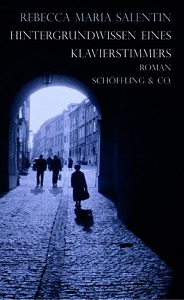
Uit: Hintergrundwissen eines Klavierstimmers

„Die Übelkeit müsse wohl eine Form der Vorahnung gewesen sein. Denn noch nie war das Gewissen so hinterrücks über den Klavierstimmer hergefallen wie an jenem Tag. Jahrelang hatte Kazimierz das Gefühl der Scham mit sich herumgetragen, ohne zu wissen, wofür er sich schämte. In den letzten Tagen hatte er sich eingestanden, dass es die Mitwisserschaft war, die ihm ein Dauergefühl der Scham verursachte, dass ihm davon übel wurde. Dazu war eine Macke, ein Tick gekommen, den er sich selbst nie hatte erklären können: Wo immer er auch ging oder stand, was immer er auch tat, ständig sah der Klavierstimmer sich fallen, ausrutschen, stürzen und seinen Kopf auf Kanten knallen. Er sah sich, wie er sich den Schädel an Klavieren und Flügeln stieß, er sah sich auf Bordsteinkanten stürzen, wo sein Kopf blutig aufschlug. Er sah sich auf Treppen ausrutschen, den Hinterkopf hart auf den Stufen aufprallen, er sah sich gegen die Straßenbahnwagen laufen, deren Elektrizität ihm immer noch Angst einjagte, obwohl sie schon seit einigen Jahren die pferdebetriebene ersetzte, und sah seinen Kopf von der Härte des Aufpralls aus Nacken und Genick reißen. Fuhr er doch einmal mit der Straßenbahn, klammerte er sich mit schwitzigen Handflächen an die Metallstangen, dass es in den Kurven nur so quietschte, damit er nicht bei jeder Station den Halt verlöre und mit dem Kopf gegen Holzbänke, heruntergeklappte Fenster oder andere Passagiere stoße. Tischkanten musste er umklammern, um vor einer Kollision mit ihnen gefeit zu sein. Wenn er abends zu Bett lag und die Termine des nächsten Tages ordnete oder Vergangenes Revue passieren ließ, so sah er sich jedes Mal in dem Moment, in dem er das Wort ergriff, um seine eigene Meinung kundzutun, keine streitende oder rechthaberische, nein, nur seine ganz persönliche Meinung, in dem Moment, wo die Worte aus seinem Mund kamen und die Gesichter sich ihm zuwandten, sah er sich stürzen. Es reichte schon der Gedanke daran, Lieba oder Dawid um ein Brot zu bitten, und er sah seinen Kiefer auf ihre Verkaufstheke krachen, dass seine restlichen Zähne zersplitterten. Nie war eine dieser schmerzvollen Visionen Wirklichkeit geworden, er kannte andere seines Alters, die wirklich stürzten und fielen, er hatte sich jedoch, aus Angst vor dem Sturz, einen langsamen tastenden Gang angewöhnt. Er war immer sehr aufmerksam, besah jeden Schritt seiner Wege genau, schätzte alle Gefahren im Umkreis von einigen Metern mit den Augen ab, bevor er sich ein Gefühl der Entspannung zugestand. An diesem Nachmittag, in Karols Stube, hatte er sich gefragt, ob es die Ereignisse im dwór, zwanzig Jahre zuvor, gewesen waren, die ihm derart den Boden unter den Füßen wegzogen.“


 2252616-37a6a9875fcb9d1b44c099c89be16cba.jpg
Rebecca Salentin (Eschweiler, 13 juli 1979)
Cover


Zie voor nog meer schrijvers van de 13e juli ook mijn blog van 13 juli 2018 en ook mijn blog van 13 juli 2016 en ook mijn blog van 13 juli 2014 deel 1 en ook deel 2.

Geschreven door Romenu om 08:00 Reageer op dit bericht

Meer van Romenu

↑ Terug naar de berichten