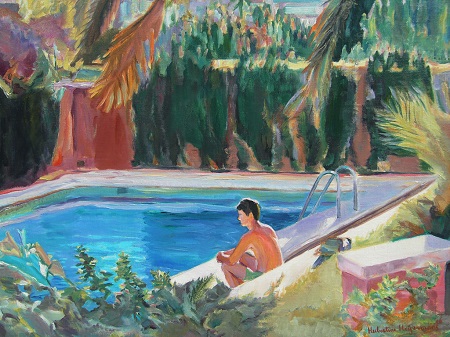
Dolce far niente
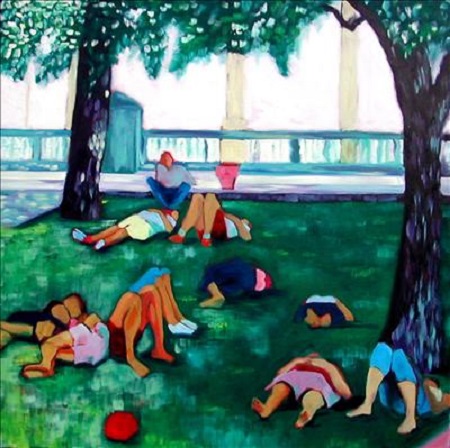
Prague heatwave 2004 door Caroline-Evans
Hittegolf
Soms kan het zo stil zijn in de stad
en ligt de brug haast verlaten.
Het gerucht van de schoenen en wielen – wat
is dat? – dempt op de straat.
Hitte regeert, er roert zich geen blad.
Twee mannen op het brugbeton
kijken omhoog. ‘Hoor je dat?
Pierre Kemp schiet weer op de zon!’
Pierre Kemp (1 december 1886 – 21 juli 1967)
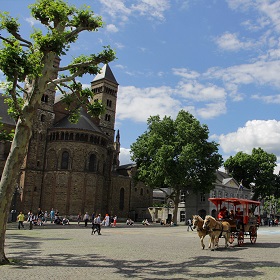
Het Vrijthof in Maastricht, de geboorteplaats van Pierre Kemp
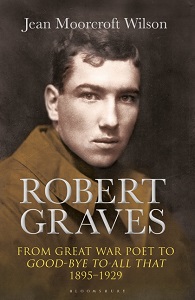
De Engelse dichter en schrijver Robert Graves werd geboren in Londen (Wimbledon) op 24 juli 1895. Zie ook alle tags voor Robert Graves op dit blog.
Morning Phœnix
In my body lives a flame,
Flame that burns me all the day;
When a fierce sun does the same,
I am charred away.
Who could keep a smiling wit,
Roasted so in heart and hide,
Turning on the sun's red spit,
Scorched by love inside?
Caves I long for and cold rocks,
Minnow-peopled country brooks,
Blundering gales of Equinox,
Sunless valley-nooks,
Daily so I might restore
Calcined heart and shrivelled skin,
A morning phœnix with proud roar
Kindled new within.
The God Called Poetry
Now I begin to know at last,
These nights when I sit down to rhyme,
The form and measure of that vast
God we call Poetry, he who stoops
And leaps me through his paper hoops
A little higher every time.
Tempts me to think I'll grow a proper
Singing cricket or grass-hopper
Making prodigious jumps in air
While shaken crowds about me stare
Aghast, and I sing, growing bolder
To fly up on my master's shoulder
Rustling the thick strands of his hair.
He is older than the seas,
Older than the plains and hills,
And older than the light that spills
From the sun's hot wheel on these.
He wakes the gale that tears your trees,
He sings to you from window sills.
At you he roars, or he will coo,
He shouts and screams when hell is hot,
Riding on the shell and shot.
He smites you down, he succours you,
And where you seek him, he is not.
To-day I see he has two heads
Like Janus--calm, benignant, this;
That, grim and scowling: his beard spreads
From chin to chin' this god has power
Immeasurable at every hour:
He first taught lovers how to kiss,
He brings down sunshine after shower,
Thunder and hate are his also,
He is YES and he is NO.
The black beard spoke and said to me,
'Human frailty though you be,
Yet shout and crack your whip, be harsh!
They'll obey you in the end:
Hill and field, river and marsh
Shall obey you, hop and skip
At the terrour of your whip,
To your gales of anger bend.'
The pale beard spoke and said in turn
'True: a prize goes to the stern,
But sing and laugh and easily run
Through the wide airs of my plain,
Bathe in my waters, drink my sun,
And draw my creatures with soft song;
They shall follow you along
Graciously with no doubt or pain.'
Then speaking from his double head
The glorious fearful monster said
'I am YES and I am NO,
Black as pitch and white as snow,
Love me, hate me, reconcile
Hate with love, perfect with vile,
So equal justice shall be done
And life shared between moon and sun.
Nature for you shall curse or smile:
A poet you shall be, my son.
Robert Graves (24 juli 1895 – 7 december 1985)
Cover
De Nederlandse dichter Johan Andreas dèr Mouw (Adwaita) werd geboren op 24 juli 1863 in Westervoort. Zie ook alle tags voor Johan Andreas dèr Mouw op dit blog.
't Jonge, lelijke eendje
Dan las ik weer van 't jonge, lelijke eendje:
eerst zwom hij blij door 't groene licht op 't water;
toen joegen ze hem weg met kwaad gesnater,
en gooide een jongen naar hem met een steentje;
toen plaste hij rond met één bevroren beentje
's nachts in een kolk; en toen ontmoette hij, later,
bij de oue vrouw, die deft'ge, wijze kater
en kipje Kortpoot met 't verbrande teentje!
En stilletjes werd 't kleine eendje groot;
en vloog eens in een meer. Daar kwamen aan,
drie zwanen, en hij zei: 'Pik me maar dood!'
en boog naar 't water; en hij zag een zwaan.
En 'k had altijd, wanneer ik 't sprookje las,
een vreemd gevoel, dat 'k zelf zo'n zwaantje was.
Orpheus
Waar 't strandgebergt' duiz'lend de hemel bijt
Met gletscherkaak, die dreunt van 't golvenbranden -
Langblauwe zaag, prikken zich vast de tanden,
Tot waar wegwaast zilv'rige oneindigheid;
Wolken trekken, tot slagorden gerijd,
Vol sperengoud langs 't midden van de wanden,
Afwerend de overmoed, die aan mocht randen
De stille toppen en hun heiligheid;
Brandingen stuiven, nieuwe bergen deinen,
Aantorsend, wit, in evenwijd'ge lijnen
Hun lange donder op brekende rug;
En, tweede brandingstreep, slingert naar onder
Het wakend wolkenvolk zijn lange donder
Op dubbel-echoënd strand en zee terug.
Violenbed
Het heele perk was vol: je zag geen zand.
De paarsen leken ernstige oude heertjes,
De bruinen glanzend-moll'ge, goed'ge beertjes,
De gelen pluimen van een goudfazant;
En massa's witten stonden om de rand,
Zoo wit als vlinders of als duiveveertjes,
Net roomsche kindertjes in Pinksterkleertjes,
Die om iets heiligs heen staan, hand in hand.
Verwilderd is 't, deels plat, deels uitgeschoten,
Zoodat ik - 'k zie ze nog - die mooie grooten
In de verschrompelden nauw'lijks herken;
Maar even lang als toen sta ik te kijken:
Ze deden goed hun best; 't mag nu niet lijken,
Alsof 'k voor 't vroeger moois ondankbaar ben.
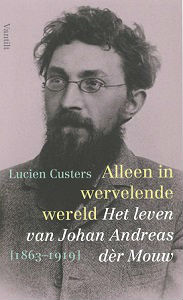
Johan Andreas dèr Mouw (24 juli 1863 – 8 juli 1919)
Cover biografie
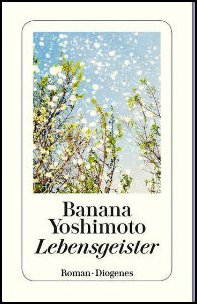
De Japanse schrijfster Banana Yoshimoto werd geboren op 24 juli 1964 inTokyo. Zie ook alle tags voor Banana Yoshimoto op dit blog.
Uit: Lebensgeister (Vertaald door Thomas Eggenberg)
„Als ich die Eisenstange bemerkte, wie sie da in meinem Bauch steckte, dachte ich: Verdammt, das sieht nicht gut aus … Ich werde sterben.
Was mich nicht weniger beunruhigte, war der Rost an der Stange. Verrückt. Sollte es in einer solchen Situation nicht vollkommen egal sein, ob die Stange rostig war oder glänzte wie Edelstahl?
Ein hef tiger Widerwille packte mich. Wie gebannt starrte ich auf das rostige Ding.
Damals war ich achtundzwanzig und lebte in dem Gefühl, noch eine Ewigkeit vor mir zu haben.
Aus dem Nichts wurde ich mit der elementaren Lebenswirklichkeit konfrontiert, dass der Tod tatsächlich unser ständiger Begleiter ist. Ah, da ist er also!, dachte ich ungläubig.
Irgendwann war die Stange dann zwar weg, doch ich spürte sie noch lange Zeit in mir.
Der Unfall geschah auf dem Heimweg zum Wohnatelier meines Freundes Yōichi, er saß am Steuer. Yōichi lebte im Kamigamo-Viertel von Kyōto, ich in Tōkyō, Hunderte Kilometer weit entfernt.
Es war Spätsommer. In Kurama* hatten wir uns ein heißes Quellenbad gegönnt, waren dann nach Kibune gefahren, um uns im Schatten von üppigfeuchtem Grün ein wenig abzukühlen, und von da aus zurück nach Kyōto. Bis sich die herrlich weite Flusslandschaft des Kamo vor uns ausbreiten würde, war es nur noch ein kleines Stück.
Den kanadischen Sänger und Songwriter Leonard Cohen bewunderte Yōichi über alles. Er liebte seine Musik und hörte sie oft. Auch damals im Auto erklang Cohens tiefe, wundervolle Stimme –
eine Liveaufnahme von Lover Lover Lover.
Wie schon tausend Mal zuvor, ganz alltäglich, selbstverständlich.
Wir ließen uns gegenseitig viel Freiheit, und wir genossen das beide sehr. Es war mir selbst ein Rätsel, wie ein solcher Raum an Freiheit zwischen Mann und Frau überhaupt möglich war. Ganz langsam, behutsam, mit viel Liebe und Geduld wuchs er heran. Es fühlte sich an wie ein Souf flé oder wie ein frisches, noch warmes Brötchen.
Plötzlich sahen wir ein Auto direkt auf uns zukommen. Der Fahrer musste eingenickt sein.
Yōichi versuchte auszuweichen. Vergeblich. Ein heftiger Aufprall, unser Auto schoss über die Uferböschung und überschlug sich.
Mein Kopf schlug irgendwo auf, Blut spritzte in die Augen, färbte alles rot. Und dann spürte ich auf einmal die Stange, die sich in meinen Bauch gebohrt hatte. Yōichi hatte sich gleich mehrere davon für eine Kunstinstallation besorgt.“
Banana Yoshimoto (Tokyo, 24 juli 1964)
Cover
De Britse dichter en Anglicaans priester John Henry Newton werd geboren in Londen op 24 juli 1725. Zie ook alle tags voor John Newton op dit blog.
Harvest
See! the corn again in ear!
How the fields and valleys smile!
Harvest now is drawing near
To repay the farmer's toil:
Gracious Lord, secure the crop,
Satisfy the poor with food;
In thy mercy is our hope,
We have sinned but thou art good.
While I view the plenteous grain
As it ripens on the stalk;
May I not instruction gain,
Helpful, to my daily walk?
All this plenty of the field
Was produced from foreign seeds;
For the earth itself would yield
Only crops of useless weeds.
Though, when newly sawn, it lay
Hid awhile beneath the ground,
Some might think it thrown away
Now a large increase is found:
Though concealed, it was not lost,
Though it died, it lives again;
Eastern storms, and nipping frosts
Have opposed its growth in vain.
Let the praise be all the Lord's,
As the benefit is ours!
He, in seasons, still affords
Kindly heat, and gentle flow'rs:
By his care the produce thrives
Waving o'er the furrowed lands;
And when harvest-time arrives,
Ready for the reaper stands.
Thus in barren hearts he sows
Precious seeds of heav'nly joy;
Sin, and hell, in vain oppose,
None can grace's crop destroy:
Threatened oft, yet still it blooms,
After many changes past,
Death, the reaper, when he comes,
Finds it fully ripe at last.
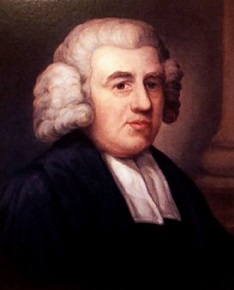
John Newton (24 juli 1725 – 21 december 1807)
Zie voor nog meer schrijvers van de 24e juli ook mijn blog van 24 juli 2018 en ook mijn blog van 24 juli 2017 en eveneens mijn blog van 24 juli 2016 deel 2.


 The Swimming Pool (Conor O'Callaghan)