Naar de inhoud

Romenu

Over literatuur, gedichten, kunst en cultuur
seniorennet.beseniorennet.be

Danilo Kiš, Sean O'Faolain, Jane Bowles, Ishmael Reed
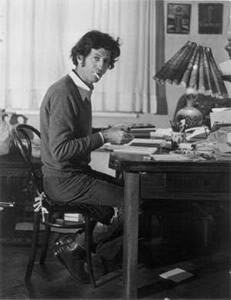
De Servische schrijver Danilo Kiš werd geboren op 22 febrari 1935 in Subotica. Zie ook alle tags voor Danilo Kiš op dit blog.


Uit: Garden, Ashes (Vertaald door William J. Hannaher)


“The little jars and glasses were just samples, specimens of the new lands at which the foolish barge of our days would be putting ashore on those summer mornings. Fresh water glistened in the glass, and we would drink it down expertly, in tiny sips, clucking like experienced tasters. We would sometimes express dissatisfaction by grimacing and coughing: the water was tasteless, greasy like rainwater, and full of autumnal sediment, while the honey had lost its color and turned thick and turbid, showing the first signs of crystallization. On rainy days, cloudy and gloomy, our fingerprints would stay on the teaspoon handle. Then, sad and disappointed, hating to get up, we would back under the covers to sleep through a day that had started out badly.

The branches of the wild chestnut trees on our street reached out to touch each other. Vault overgrown with ivylike leafage thrust in between these tall arcades. On ordinary windless days, this whole architectural structure would stand motionless, solid in its daring. From time to time the sun would hurtle its futile rays through the dense leafage. Once they had penetrated the slanting, intertwined branches, these rays would quiver for a while before melting and dripping onto the Turkish cobblestones like liquid silver. We pass underneath these solemn arches, grave and deserted, and hurry down the arteries of the city. Silence is everywhere, the dignified solemnity of a holiday morning. The postmen and salesclerks are still asleep behind the closed, dusty shutters. s we move along past the low one-story houses, we glance at each other and smile, filled with respect: the wheezings of the last sleepers are audible through the dark swaying curtains and accordion shutters. The great ships of sleep are sailing the dark Styx. At times it seems as though the engines will run down, that we are on the verge of a catastrophic failure. One engine starts to rattle, to lose its cadence, to falter, as if the ship has run aground on some underwater reef. But the damage has apparently been repaired, or possibly there had never been any damage at all. We are sailing downstream, at thirty knots.”


 1341548-3af55f7ba0f7812de02ecff53f31cb98.jpg

Danilo Kiš (22 februari 1935 – 15 oktober 1989)


De Ierse schrijver Sean O'Faolain werd geboren op 22 februari 1900 in Cork. Zie ook alle tags voor Sean O'Faolain op dit blog.


Uit: The Irish: A Character Study


‘If we turn to early Irish literature, as we naturally may, to see what sort of people the Irish were in the infancy of the race, we find ourselves wandering in delighted bewilderment through a darkness shot with lightning and purple flame. One expects the beginnings of any people to be dark; the darkness at the beginning of the story of the Irish mind is an unnatural darkness. There is somewhat too much of the supernatural about it. Alternatively we may feel that here a racial imagination has, from the start, got out of control; or we may simply say that early Irish literature is wildly romantic; or that the popular idea of the Celt as a romantic is correct; or that the nineteenth century, in exploiting this romantic quality, committed only the fault of piling on top of something already sufficiently embroidered by nature a lot of superfluous William Morris trappings. But the impression of a supernatural infusion is, I think, far and away the most important one.

The Celt’s sense of the Otherworld has dominated his imagination and affected his literature from the beginning. So I see him at any rate struggling, through century after century, with this imaginative domination, seeking for a synthesis between dream and reality, aspiration and experience, a shrewd knowledge of the world and a strange reluctance to cope with it, and tending always to find the balance not in an intellectual synthesis but in the rhythm of a perpetual emotional oscillation. “


 1341548-6f6b1a51ceb953d2e2c5f5f3965bacb1.jpg

Sean O'Faolain (22 februari 1900 – 20 april 1991)

Cork 


De Amerikaanse schrijfster
Jane Bowles werd als Jane Auer geboren op 22 februari 1917 in New York. Zie ook alle tags voor Jane Bowles op dit blog.


Uit: Everything is nice


„The highest street in the blue Moslem town skirted the edge of a cliff. She walked over to the thick protecting wall and looked down. The tide was out, and the flat dirty rocks below were swarming with skinny boys. A Moslem woman came up to the blue wall and stood next to her, grazing her hip with the basket she was carrying. She pretended not to notice her, and kept her eyes fixed on a white dog that had just slipped down the side of a rock and plunged into a crater of sea water. The sound of its bark was earsplitting. Then the woman jabbed the basket firmly into her ribs, and she looked up.

‘That one is a porcupine,’ said the woman, pointing a henna-stained finger into the basket.

This was true. A large dead porcupine lay there, with a pair of new yellow socks folded on top of it.

She looked again at the woman. She was dressed in a haik, and the white cloth covering the lower half of her face was loose, about to fall down.

‘I am Zodelia,’ she announced in a high voice. ‘And you are Betsoul’s friend.’ The loose cloth slipped below her chin and hung there like a bib. She did not pull it up. ‘You sit in her house and you sleep in her house and you eat in her house,’ the woman went on, and she nodded in agreement. ‘Your name is Jeanie and you live in a hotel with other Nazarenes. How much does the hotel cost you?’

A loaf of bread shaped like a disc flopped on to the ground from inside the folds of the woman’s haik, and she did not have to answer her question. With some difficulty the woman picked the loaf up and stuffed it in between the quills of the porcupine and the basket handle. Then she set the basket down on the top of the blue wall and turned to her with bright eyes.


 1341548-2deb82e0d94b1c07a324ba5dc1e8142c.jpg

Jane Bowles (22 februari 1917 – 4 mei 1973)


De Afro-Amerikaanse dichter, schrijver en essayist Ishmael Scott Reed werd geboren op 22 februari 1938 in Chattanooga, Tennessee. Zie ook alle tags voor Ishmael Reed op dit blog.


FOR DANCER


When lovers die they blossom
grapes
That's why there's so much
wine in love
That's why I'm still drunk
on you


KALI'S GALAXY


My 200 inch eyes are trained
on you, my love spectroscope
Breaking down your wavelengths
With my oscillating ear
I have painted your
Portrait: ermine curled about
Yonder's glistening neck


They say you are light-years
Away, but they understand so
Little


You are so near to me
We collide
Our stars erupt into supernovae
An ecstatic cataclysm that
Amazes astronomers


I enter your Milky Way
Seeking out your suns
Absorbing your heat
Circumventing your orbs
Radiating your nights


Once inside your heavens
I hop from world to world
Until I can go no longer
And Z out in your dust
Your new constellation
Known for my shining process
And fish-tailed chariot.


 1341548-bb0bb3223b019ed96391418f2440e491.jpg

Ishmael Reed (Chattanooga, 22 februari 1938)


Zie voor nog meer schrijvers van de 22e februari ook mijn blog van 22 februari 2011 deel 2.

Geschreven door Romenu om 18:57 Reageer op dit bericht
Reageer op dit bericht

Reageer op dit bericht

Een titel of je eigen website toevoegen

De blogger leest alles eerst na: je tekst verschijnt zodra die goedgekeurd is.

Herman de Coninck, Chuck Palahniuk, Hans Andreus, Wystan Hugh Auden, Laure Limongi, Justus van Effen

De Vlaamse dichter, essayist, journalist en tijdschriftuitgever Herman de Coninck werd geboren in Mechelen op 21 februari 1944. Zie ook alle tags voor Herman de Coninck op dit blog.


Winter


winter. je ziet weer de bomen
door het bos, en dit licht
is geen licht maar inzicht:
er is niets nieuws
zonder de zon.


En toch is ook de nacht niet
Uitzichtloos, zo lang er sneeuw ligt
Is het nooit volledig duister, nee,
Er is de klaarte van een soort geloof
Dat het nooit helemaal donker wordt.
Zo lang er sneeuw is, is er hoop.


Taarlo


Wij lopen door het najaar met ons twee.
En dat gevoel heb ik ook in de lente
Wij lopen door veel bruine kroegenbruin van blaren
en door veel donkerrood gemis, appellation controlée,


dat dieper wordt in de kelder van de jaren.
Wij lopen door de beiger wordende bossen van Drenthe.
Hoor de wind door de henna-bomen varen
met een klank van hobo,de zwerver onder de instrumenten.


33, en in het midden van het donker woud
des levens. En met een gevoel van nergens horen
in de bossen thuis en thuis verloren.


Zullen wij later, misschien, ooit?
De zomer is voorbij, er wordt niet meer gehooid.
Het hier is nergens, en het nu is nooit.


Toekomst


Weggaan. En terugkomen.

Dromen. En niet meer dromen.

En niet meer weggaan.


En echte weemoed, niet om hoe het vroeger was

maar om hoe het ook vroeger nooit is geweest.

De herinnering aan wat nooit heeft bestaan.


Ik steek nog even een sigaar

niet op, drink nog even niet van een glas Marc,

wacht nog even op wat ik heb, bedachtzamer.


Want we hebben de tijd.

Je bent in mij als schemer in de kamer.

We hebben de verleden tijd.


 1340914-743b99f7c079bb4ff9668c45288cd779.jpg

Herman de Coninck (21 februari 1944 - 22 mei 1997)


De Amerikaanse schrijver en journalist Chuck Palahniuk werd geboren op 21 februari 1962 in Pasco, Washington. Zie ook alle tags voor Chuck Palahniuk op dit blog.


Uit: Fight Club


“What about it? He shakes the paper under my nose. What do I think, he asks, what should he do with an employee who spends company time in some little fantasy world. If I was in his shoes, what would I do?
What would I do?
The hole in my cheek, the blue-black swelling around my eyes, and the swollen red scar of Tyler’s kiss on the back of my hand, a copy of a copy of a copy.
Speculation.
Why does Tyler want ten copies of the fight club rules?
Hindu cow.
What I would do, I say, is I’d be very careful who I talked to about this paper.
I say, it sounds like some dangerous psychotic killer wrote this, and this buttoned-down schizophrenic could probably go over the edge at any moment in the working day and stalk from office to office with an Armalite AR-180 carbine gas-operated semiautomatic.
My boss just looks at me.
The guy, I say, is probably at home every night with a little rattail file, filing a cross into the tip of every one of his rounds. This way, when he shows up to work one morning and pumps a round into his nagging, ineffectual, petty, whining, butt-sucking, candy-ass boss, that one round will split along the filed grooves and spread open the way a dumdum bullet flowers inside you to blow a bushel load of your stinking guts out through your spine. Picture your gut chakra opening in a slow-motion explosion of sausage-casing small intestine.


 1340914-eef4fb2d86b2f810b2ceb10ed95d58ad.jpg

Scene uit de film “Fight Club” uit 1999 met Brad Pitt


My boss takes the paper out from under my nose.
Go ahead, I say, read some more.
No really, I say, it sounds fascinating. The work of a totally diseased mind.
And I smile. The little butthole-looking edges of the hole in my cheek are the same blue-black as .a dog’s gums. The skin stretched tight across the swelling around my eyes feels varnished.
My boss just looks at me.
Let me help you, I say.
I say, the fourth rule of fight club is one fight at a time.
My boss looks at the rules and then looks at me.
I say, the fifth rule is no shoes, no shirts in the fight.
My boss looks at the rules and looks at me.”


 1340914-56f70117f05f020a05c787369fb01b25.jpg

Chuck Palahniuk (Pasco, 21 februari 1962)


De Nederlandse dichter en prozaschrijver Hans Andreus werd geboren in Amsterdam op 21 februari 1926. Zie ook alle tags voor Hans Andreus op dit blog.


Liedje van de luie week


Maandag
is Kalmpjes-aan-dag.

Dinsdag
is Kom-ik-begin-'s-dag.

Woensdag
is Zou-ik-het-wel-doen-dag,

Donderdag
is Dit-is-een-bijzondere-dag,

want Vrijdag
is Morgen-weer-vrij-dag

en Zaterdag
is 's Avonds-wordt-het-later-dag

en Zondag
is Eet-je-buikje-rond-dag,

dus Maandag,
tja Maandag,
dat is weer Kalmpjes-aan-dag.


Not for me


Niet voor mij,
de ferme stemmen,
de woorden als wapens
en tweede huid.

Wat moet ik met
schrijvers en praters?
Ik wil alleen
woorden waarvoor ik

zelf niet veilig ben, die
(om het nog eens te zeggen)
wit niet wit
licht geen licht

doorlaten, laten
bestaan
in mijn vluchtend en
terugvluchtend lichaam.


Kil


De herfst wordt nu kil.
De meeste bomen houden hun groen vol,
maar de berken, van vorm en tint toch al ijl, slinken tot geesten.
Hun schemerende skeletten zijn behangen
met dunne gouden munten waar de zon doorheen schijnt,
versleten dukaten die zullen
vallen op vochtige Hollandse zandgrond.


1340914-96efe74b3238136da4e34dde367f92b0.jpg
H
ans Andreus (21 februari 1926 – 9 juni 1977)


De Engelse dichter, essayist en criticus Wystan Hugh Auden werd geboren in York op 21 februari 1907. Zie ook alle tags voor Wystan Hugh Auden op dit blog.


The Fall of Rome


The piers are pummelled by the waves;

In a lonely field the rain

Lashes an abandoned train;

Outlaws fill the mountain caves.


Fantastic grow the evening gowns;

Agents of the Fisc pursue

Absconding tax-defaulters through

The sewers of provincial towns.


Private rites of magic send

The temple prostitutes to sleep;

All the literati keep

An imaginary friend.


Cerebrotonic Cato may

Extol the Ancient Disciplines,

But the muscle-bound Marines

Mutiny for food and pay.


Caesar's double-bed is warm

As an unimportant clerk

Writes I DO NOT LIKE MY WORK

On a pink official form.


Unendowed with wealth or pity,

Little birds with scarlet legs,

Sitting on their speckled eggs,

Eye each flu-infected city.


Altogether elsewhere, vast

Herds of reindeer move across

Miles and miles of golden moss,

Silently and very fast.


Funeral Blues


Stop all the clocks, cut off the telephone,

Prevent the dog from barking with a juicy bone,

Silence the pianos and with muffled drum

Bring out the coffin, let the mourners come.


Let aeroplanes circle moaning overhead

Scribbling on the sky the message He is Dead.

Put crepe bows round the white necks of the public doves,

Let the traffic policemen wear black cotton gloves.


He was my North, my South, my East and West,

My working week and my Sunday rest,

My noon, my midnight, my talk, my song;

I thought that love would last forever: I was wrong.


The stars are not wanted now; put out every one,

Pack up the moon and dismantle the sun,

Pour away the ocean and sweep up the wood;

For nothing now can ever come to any good.


 1340914-6f56bf20cd63d6106239e0301929f817.jpg

W. H. Auden (21 februari 1907 – 29 september 1973)


De Franse dichteres en schrijfster Laure Limongi werd geboren op 21 februari 1976 in Bastia (Corsica). Zie ook alle tags voor Laure Limongi op dit blog.


Résonnez sonnets !


La trame de Golden Gate serait assez classique
Si elle ne déchantait pas désespérément
Ses héros se déchirent sans apaisement
Sans goûter de l’amour la puissante musique.

Vikram Seth ose le vers contre toute prudence
Mais sa forme se fond dans la grâce de l’histoire
Et on est pris aux rets de son puissant vouloir
Transformant le roman en symphonie immense

Lecteur tu te plieras au doux spleen narquois
Que révèlent ses pages, tu en resteras coi
Charmé et cornaqué le long de la corniche

De ce pont traversant destinées, idéaux
Et tu remercieras le traducteur Claro
Qui nous dit que « la mort attend à l’hémistiche ».


1340914-df79bdcb8d44b319e3498cf8c1e33961.jpg 

Laure Limongi (Bastia 21, februari 1976)


De Nederlandse schrijver Justus van Effen werd geboren in Utrecht op 21 februari 1684. Zie ook alle tags voor Justus van Effen op dit blog.


Uit: No. 3. Den 3. September 1731. De Hollandsche Spectator


“Onlangs heb ik by geval 't geluk gehad van kennis te maaken met een fatzoenlyk Burgerman, die, hoewel, zyne levenswyze zich laagjens by de grond houd, veel geld, door zyn naarstigheid en goed overleg verkregen, bezit. My dunkt dat by alle Volken het middelbaare slag van Menschen het beste is, en zulks meen ik wel voornamentlyk in onze landaard te hebben ondervonden. Ik wil gaaren bekennen dat ik met diergelyke lieden het liefst omga. Myn nieuwe Vriend is niet openhartig, rondborstig, oprecht; 't is de oprechtheid en openhartigheid zelfs. Niets kan goedaardiger en vriendhoudender uitgedacht worden; in zyn leedige uuren is men hem altyd welkom, voornamentlyk indien men voor een verstandig of geestryk man te boek staat 't Is echter geen man van studie, maar in zaaken, waar op hy gevat is, en in welke zyne reden, door een al te groote onderwerping aan 't gevoelen van anderen niet misleid word, van een zeer gezond oordeel; hy verstaat de Koophandel in de grond, en de wyste mannen trachten, in de neteligste omstandigheden, welke deze nutte wetenschap betreffen, zich van 's mans raad te bedienen. Schoon hy nauwlyks zyn vyftigste jaar bereikt, heeft hy alle hoofdbrekende bezigheden van de hand gewezen, om voortaan een gerust en stil leven te lyden. Op allerlei wyzen is hy mildadig, en zo hy niet ruim, en volgens zyn inkomen leeft, de reden van die zuinigheid is, dat hy noit de kunst van geld te verteeren geleerd heeft.”


 1340914-13b39bd2242486922e4ece35d14083b0.jpg

Justus van Effen (21 februari 1684 - 18 september 1735)

Titelblad van De Hollandsche Spectator 


Zie voor nog meer schrijvers van de 21e februari mijn blog van 21 februari 2012 deel 2 en ook mijn blog van 21 februari 2011.

Geschreven door Romenu om 18:44 Reageer op dit bericht

P. C. Boutens, Ellen Gilchrist, Julia Franck, David Nolens, Georges Bernanos, William Carleton

De Nederlandse dichter Pieter Cornelis Boutens werd geboren in Middelburg op 20 februari 1870. Zie ook alle tags voor P. C. Boutens op dit blog.


In de mist


De zon wordt onverbeeldbaar schoon
Boven de mist die houdt omhangen
Der wereld windestille woon
In dit vertederd dagenlang verlangen.

Weer blankt de boskamp, een besloten zaal,
Een witte kamer die de bruid verwacht,
In smetteloze glanzeloze praal
Op uit de zwarte nacht.

't Berijpte hout van alle kanten
In gaasgeplooide wand verscholen
Reikt diepe tuilen van chrysanten,
Asters en gladiolen.

Daar daalt langs wolkentreê uit hoge toren
Van naakte voetjes luideloze tred:
Leden omsluierd overgloren
Het sneeuwen statiebed.


In de manteling bij Domburg


In de spanne luwe stilte
In de wieg van ’t glooiend mos
Lig ik: boven vaart de zilte
Zeewind over ’t neigend bos.

Al de toppen wuiveblinken
In der zonne gouden lust,
Wijl de dorre bladers zinken
Om mij heen tot rosse rust.

IJle vogelvluchten rissen
Achter weemlend twijgenweb:
’t Zijn de meeuwen die gaan vissen
Met de wederkeer der eb...

Ieder jaar wordt sneller ouder,
Vroeger avondt elke dag,–
Maar mijn hoofd ligt aan uw schouder
En ik hoor uw harteslag.

Boven drijft het leven over,
En geen schijn of schaûw ontgaat:
Elke siddering in ’t lover
Spiegelt over uw gelaat.

Als een god die zou beluistren
Aards gerucht uit hemels vreê,
Hoor ik uwe adem fluistren
Door de stem van wind en zee.


Uit: Strofen en andere verzen uit de nalatenschap van Andries de Hoghe


Vijfde strofe


Traag tot beminnen werd ik... Niet tot deze rijke wonden,

de scherpe weeën van dit staâg zichzelf herbarend leven,

die trouw in schemerwindselen van eenzaamheid genezen

tot zoeter wondbaarheid... Een andere rondomme deernis

houdt elken aandrift tegen in dees strakke onuitgesproken

beslotenheid, een onverdringbaar voorgevoel, een dreigend weten

dat nooit de bleeke geestdrift dezer onvolgroeide kindren

meêkomen kan door de verrukkingen van liefdes wegen,

en 't hard besef van 't lot van hen die achter zijn gebleven,

zoo droeven voordood en zoo wreed bewuste ballingschappen

in vaders nauwe huizing waar hun moeheid wel moet keeren,

maar nooit meer uitslaapt tot verlangens nieuwe morgenonrust...

Traag tot beminnen werd ik...


 1340256-dd931a7096e319e9d37a10ccb8a572c1.jpg

Pieter Cornelis Boutens (20 februari 1870 – 14 maart 1943)


De Amerikaanse schrijfster Ellen Gilchrist werd geboren op 20 februari 1935 in Vicksburg, Mississippi. Zie ook alle tags voor Ellen Gilchrist op dit blog.


Uit: Nora Jane: A Life in Stories


“Nora Jane's mother had a darker meaner view. She thought God and other people were to blame for everything that went wrong. She thought they had gotten together to kill her beautiful black-haired husband and she was paying them back by st aying inside and drinking herself to death. Still, it wasn't her fault she was weak. Her mother had been weak before her and her mother before that. It was their habit to be weak.

Nora Jane's grandmother came from a line of women who had a habit of being strong. One of them had come to New Orleans from France as a casket girl, had sailed across the Atlantic Ocean when she was only sixteen years old, carrying all her possessions in a little casket and when she arrived had refused to marry the man to whom she was assigned. She had married a Welshman instead, a man who had been on the boat as a steward. Each generation of women was told this story in Nora Jane's grandmother's family and so they believed they were strong women with strong genes and acted accordingly. When she was about four years old Nora Jane had looked at the strong story and the weak story and decided to be strong. It was the year her father died and her grandmother sat in the swing on her porch and watched the morning glory vines open and close and the sun rise and fall and believed that God did not hate her even if he had allowed her son to die in a stupid war. Many of the men who fought with him had written her letters and she read them out loud to Nora Jane. One young man, whose name was Fraser, came and stayed for five weeks and painted the outside of the house a fresher, brighter blue and put a new floor in the kitchen of the house. Every day he sat on the porch with Nora Jane's grandmother as the sun went down and talked about the place where he lived. A place called Nebraska. When all the painting was done and the furniture put back in the kitchen, he kissed Nora Jane and her grandmother good-bye and went off to see his own family. After he was gone Nora Jane and her grandmother would talk about him. "Where's Fraser gone?" Nora Jane would ask.”


 1340256-b326011da73ec75b5ea054a5ea057fdd.jpg

Ellen Gilchrist (Vicksburg, 20 februari 1935)


De Duitse schrijfster Julia Franck werd geboren op 20 februari 1970 in Oost-Berlijn. Zie ook alle tags voor Julia Frank op dit blog.


Uit: Streuselschnecke


“Der Anruf kam, als ich vierzehn war. Ich wohnte seit einem Jahr nicht mehr bei meiner Mutter und meinen Schwestern, sondern bei Freunden in Berlin. Eine fremde Stimme meldete sich, der Mann nannte seinen Namen, sagte mir, er lebe in Berlin, und fragte, ob ich ihn kennen lernen wolle. Ich zögerte, ich war mir nicht sicher. Zwar hatte ich schon viel über solche Treffen gehört und mir oft vorgestellt, wie so etwas wäre, aber als es soweit war, empfand ich eher Unbehagen.

Wir verabredeten uns. Er trug Jeans, Jacke und Hose. Ich hatte mich geschminkt. Er führte mich ins Café Richter am Hindemithplatz und wir gingen ins Kino, ein Film von Rohmer. Unsympathisch war er nicht, eher schüchtern. Er nahm mich mit ins Restaurant und stellte mich seinen Freunden vor. Ein feines, ironisches Lächeln zog er zwischen sich und die anderen Menschen. Ich ahnte, was das Lächeln verriet. Einige Male durfte ich ihn bei seiner Arbeit besuchen. Er schrieb Drehbücher und führte Regie bei Filmen.

Ich fragte mich, ob er mir Geld geben würde, wenn wir uns treffen, aber er gab mir keins, und ich traute mich nicht, danach zu fragen. Schlimm war das nicht, schließlich kannte ich ihn kaum, was sollte ich da schon verlangen? Außerdem konnte ich für mich selbst sorgen, ich ging zur Schule und putzen und arbeitete als Kindermädchen. Bald würde ich alt genug sein, um als Kellnerin zu arbeiten, und vielleicht würde ja auch noch eines Tages etwas Richtiges aus mir. Zwei Jahre später, der Mann und ich waren uns noch immer etwas fremd, sagte er mir, er sei krank. Er starb ein Jahr lang, ich besuchte ihn im Krankenhaus und fragte, was er sich wünsche. Er sagte mir, er habe Angst vor dem Tod und wolle es so schnell wie möglich hinter sich bringen.”


 1340256-6cbd2821fee33b145973d556778b9a3e.jpg

Julia Franck (Oost-Berlijn, 20 februari 1970)

Oost Berlijn, Palast der Republik, begin jaren ‘80 


De Vlaamse schrijver David Nolens werd geboren in Antwerpen op 20 februari 1973. Zie ook alle tags voor David Nolens op dit blog.


Uit: De kunst van het wachten


“Hij was inmiddels midden dertig en wat had hij bereikt? Hij was partner in een succesvol reclamebureau. Hij woonde in een mooi en ruim appartement in het centrum van Brussel. Hij was vrijgezel en werd begeerd. Als hij zijn aandeel in het agentschap zou verkopen, zou hij op voorwaarde van een sobere levensstijl kunnen rentenieren. Dit korte lijstje was de mantra waarmee hij zich steeds weer het geluk aanpraatte. Een soort rationeel geluk, louter gebaseerd op de feiten van zijn comfort.

(…)


"Het jarenlange bedenken van slogans deed iets met het eigen denkpatroon, dat in steeds kortere en gevattere boodschappen de eigen werkelijkheid trachtte te vatten. Tot er uiteindelijk, bedacht hij soms spottend, slechts een uitroepteken zou overblijven."

(…)


‘Van de weeromstuit zag Jack nu bij heel wat mannen een pronte bips, zodat hij vermoedde dat de push-up-slip, waarmee zijn bestemmingsvlucht was begonnen, ingang had gevonden. Maar waren de klassieke pantalons wel aangepast aan de iets dikkere siliconen van de nieuwe broekjes? Het leek toch of heel wat van de zich altijd voortbewegenden moeilijker liepen, of ze een luier droegen. Hun billen schuurden, hun kont stak te veel omhoog, de kont van een loopse baviaan.’


 1340256-5023c6a84ee6ff59baa45c928fa651d7.jpg

David Nolens (Antwerpen, 20 februari 1973)

Antwerpen, Grote Markt 


De Franse schrijver Georges Bernanos werd geboren in Parijs op 20 februari 1888. Zie ook alle tags voor Georges Bernanos op dit blog.


Uit: Sous le soleil de Satan


« - Vraiment ? tu n’as jamais senti … comment dire ? Cela nous vient comme une idée … comme un vertige … de se laisser tomber, glisser … d’aller jusqu’en bas, - tout à fait- jusqu’au fond, - où le mépris des imbéciles ne viendrait même pas vous chercher … Et puis, mon vieux, là encore, rien ne vous contente … quelque chose vous manque encore … Ah ! jadis … que j’avais peur ! d’une parole … d’un regard … de rien. Tiens ! cette veille dame Sangner …m’a-t-elle fait du mal, un jour ! – un jour que je passais sur le pont de Planques – en écartant de moi, bien vite, sa petite nièce Laure … Hé quoi ! suis-je donc la peste, je me disais … Ah ! maintenant ! Maintenant … maintenant … maintenant son mépris : je voudrais aller au-devant ! Quel sang ont-elles dans mes veines, ces femmes qu’un regard fait hésiter – oui – dont un regard empoisonnerait le plaisir, et qui se donnent l’illusion d’être d’honnêtes nitouches jusque dans les bras de leur amant … On a honte ? Bien sûr, si tu veux, on a honte ! Mais, entre nous, depuis le premier jour, est-ce qu’on cherche autre chose ? »

(…)


“Qu’elle est longue la route du retour, la longue route ! Celle des armées battues, la route du soir, qui ne mène à rien, dans la poussière vaine !… Il faut aller, cependant, il faut marcher, tant que bat ce pauvre vieux cœur – pour rien, pour user la vie – parce qu’il n’y a pas de repos tant que dure le jour tant que l’astre cruel nous regarde, de son œil unique, au-dessus de l’horizon. Tant que bat le pauvre vieux cœur.”


 1340256-3f9c9905f40110d86218876dfd0eb1e7.jpg

Georges Bernanos (20 februari 1888 - 5 juli 1948)

In 1946 


De Ierse schrijver William Carleton werd geboren op 20 februari 1794 in Glogher, in het graafschap Tyrone. Zie ook alle tags voor William Carleton op dit blog.


Uit: Wildgoose Lodge


“I had read the anonymous summons, but from its general import I believed it to be one of those special meetings convened for some purpose affecting the usual objects and proceedings of the body; at least the terms in which it was conveyed to me had nothing extraordinary or mysterious in them, beyond the simple fact, that it was not to be a general but a select meeting: this mark of confidence flattered me, and I determined to attend punctually. I was, it is true, desired to keep the circumstances entirely to myself, but there was nothing startling in this, for I had often received summonses of a similar nature. I therefore resolved to attend, according to the letter of my instructions, "on the next night, at the solemn hour of midnight, to deliberate and act upon such matters as should then and there be submitted to my consideration." The morning after I received this message, I arose and resumed my usual occupations; but, from whatever cause it may have proceeded, I felt a sense of approaching evil hang heavily upon me; the beats of my pulse were languid, and an undefinable feeling of anxiety pervaded my whole spirit; even my face was pale, and my eye so heavy, that my father and brothers concluded me to be ill; an opinion which I thought at the time to be correct, for I felt exactly that kind of depression which precedes a severe fever. I could not understand what I experienced, nor can I yet, except by supposing that there is in human nature some mysterious faculty, by which, in coming calamities, the dread of some fearful evil is anticipated, and that it is possible to catch a dark presentiment of the sensations which they subsequently produce. For my part I can neither analyze nor define it; but on that day I knew it by painful experience, and so have a thousand others in similar circumstances.”


 1340256-0ab8acaff572770a364aa63f80e74147.jpg

William Carleton (20 februari 1794 – 30 januari 1869)
Illustratie uit “Wildgoose Lodge”


Zie voor nog meer schrijvers van de 20e februari ook mijn blog van 20 februari 2012 deel 2.

Geschreven door Romenu om 19:25 Reageer op dit bericht

Björn Kuhligk, Amy Tan, Dmitri Lipskerov, Thomas Brasch

De Duitse dichter en schrijver Björn Kuhligk werd geboren op 19 februari 1975 in Berlijn. Zie ook alle tags voor Björn Kuhligk op dit blog.


Während des Freitagsgebetes

(für Katja Krauß)


WÄHREND DES FREITAGSGEBETES

die kopftuchgebückten Frauen

auf den Feldern, von den Minaretten

fallen die Worte wie Ringe um die Häuser, abends

stellen sich Sprenger an, die zerfallenen

Gewächshäuser, eine Ansammlung

Zelte, vor denen zwei Kinder am Feuer

bei Nacht der Swimmingpool, pauschal-beleuchtet

bis ins Hellblau, das Anschlagen der Zikaden

in den Dörfern stehen Häuser leer, auf den Dächern

rostende Wassertonnen, LADIES

AND GENTLEMEN: MR. GERMANY, dann

der Clubtanz, Hände hoch und rechts und links

und Beine breit, IHR NAME AUF EINEM REISKORN

die Sonne seilt sich, das kennt man hier, wie jeden Abend

hinter den Bergen ab, SIE WERDEN ES NICHT VERGESSEN

die Fotoserie, in der ein Pärchen am Meer

und freundlich auf das Wasser blickt

über den nackten Oberkörpern am Morgen

drei Kampfjets Richtung Osten

dann der Clubtanz, Hände hoch und rechts

und links, irgendjemand macht das Foto


Horizontbetrachter

Hier ist ein Wald

da sind die Bäume

darin sind die Ringe

darin schläft die Angst

du schlägst zu mit der Axt

und trinkst den Harzstein mit

und das Lieblingstier

das ist der Affe im Zoo

den kannst du besuchen

und er dich nicht


1339625-bc46e0b5bf3ac9e7365c82457eb282eb.jpg
Björn Kuhligk (Berlijn, 19 februari 1975)


De Amerikaanse schrijfster

Amy Tan werd geboren in Oakland, Ohio, op 19 februari 1952. Zie ook alle tags voor Amy Tan op dit blog.


Uit: The Hundred Secret Senses


“My sister Kwan believes she has yin eyes. She sees those who have died and now dwell in the World of Yin, ghosts who leave the mists just to visit her kitchen on Balboa Street in San Francisco.
"Libby-ah," she'll say to me. "Guess who I see yesterday, you guess." And I don't have to guess that she's talking about someone dead.
Actually, Kwan is my half sister, but I'm not supposed to mention that publicly. That would be an insult, as if she deserved only fifty percent of the love from our family. But just to set the genetic record straight, Kwan and I share a father, only that. She was born in China. My brothers, Kevin and Tommy, and I were born in San Francisco after my father, Jack Yee, immigrated here and married our mother, Louise Kenfield.
Mom calls herself "American mixed grill, a bit of everything white, fatty, and fried." She was born in Moscow, Idaho, where she was a champion baton twirler and once won a county fair prize for growing a deformed potato that had the profile of Jimmy Durante. She told me she dreamed she'd one day grow up to be different -- thin, exotic, and noble like Luise Rainer, who won an Oscar playing O-lan in The Good Earth. When Mom moved to San Francisco and became a Kelly girl instead, she did the next-best thing. She married our father. Mom thinks that her marrying out of the Anglo race makes her a liberal. "When Jack and I met," she still tells people, "there were laws against mixed marriages. We broke the law for love." She neglects to mention that those laws didn't apply in California.”


 1339625-6ef14c05904d73677e5414be9faf5351.jpg

Amy Tan (Oakland, 19 februari 1952)


De Russische schrijver Dmitri Lipskerov werd geboren op 19 februari 1964 in Moskou. Zie ook alle tags voor Dmitri Lipskerov op dit blog.


Uit: The Last Sleep of Reason (Vertaald door Dmitri Priven)


"My legs glow in the dark!"

"Send him away to the psychiatric ward!"

"I'm ready for discharge!" Volodya instantly came to his senses…

Later that day he was discharged and his sick leave was over.

Anna Karlovna brought her husband home in a taxi and nursed him like a baby, heedless of her husband's malicious taunts about her barren German belly and Nazi relatives.

That night Volodya's legs got frozen over like a river in winter, and he was already grateful to his wife for bandaging his sore thighs with angora wool. A forgiving woman, she was stroking her husband's hair till the morning; he was crying bitterly, bidding farewell to his hopes for international recognition and generalship. Of all his fantasies only one remained: that Zubov would give him some of his pumpkin seeds, but then only if Major Pogosian commanded so.

The following morning Anna Karlovna found her husband's legs absolutely recovered, at least exactly the same as they were before the relapse - just slightly swollen at thighs. Tenderly she rubbed grandma's live cell ointment into them and helped her husband into the boots.

The police department welcomed Sinichkin back with mixed feelings. Major Pogosian patted him on the shoulder, but then lifted up his hands with typical Armenian sadness and talked at length that fame can spoil you and it is all good that the record did not happen.”


 1339625-d01e15b21a079897377f76b107d1bbf0.jpg

Dmitri Lipskerov (Moskou, 19 februari 1964)


De Duitse dichter en schrijver Thomas Brasch werd geboren in Westow,Yorkshire (Engeland) op 19 februari 1945. Zie ook alle tags voor Thomas Brasch op dit blog.


Schlaflied für K.


Nacht oder Tag oder jetzt
Will ich bei dir liegen
Vom schlimmsten Frieden gehetzt
Zwischen zwei Kriegen


Ich oder wir oder du
Denken ohne Gedanken
Schließ deine Augen zu
Siehst du die Städte schwanken


In den Traum oder Tod oder Schlaf
Komm in den Steingarten
wo ich dich nie traf
will ich jetzt auf dich warten


WENN ICH DICH BEGEHRE GEGEN JEDE VERNUNFT

wenn ich in dir suche meine Unterkunft

wenn ich das Sehnen und die Sucht benenn mit deinem Namen

und denke, es war gestern, als wir zu uns kamen

wenn ich inmeiner Liebe ganz verfangen bin

und alle meine Wünsche wandern zu dir hin

was kann denn daran unvernünftig sein,

wenn wir nicht uns, nur der Vernunft jetzt sagen:

Bleib allein.


 1339625-7d965bb19e2d254c17515ea1a1dff527.jpg

Thomas Brasch (19 februari 1945 – 3 november 2001)


Zie voor nog meer schrijvers van de 19e februari ook mijn blog van 19 februari 2011 deel 2 en eveneens deel 3.

Geschreven door Romenu om 19:48 Reageer op dit bericht

Siri Hustvedt, Helen Fielding, Jaan Kross, Herbert Rosendorfer

De Amerikaanse schrijfster en essayiste Siri Hustvedt werd geboren op 19 februari 1955 in Northfield, Minnesota. Zie ook alle tags voor Siri Hustvedt op dit blog.


Uit: Living, Thinking, Looking


“DESIRE APPEARS AS A FEELING, a flicker or a bomb in the body, but it’s always a hunger for something, and it always propels us somewhere else, toward the thing that is missing. Even when this motion takes place on the inner terrain of fantasy, it has a quickening effect on the daydreamer. The object of desire—whether it’s a good meal, a beautiful dress or car, another person, or something abstract, such as fame, learning, or happiness—exists outside of us and at a distance. Whatever it is, we don’t have it now. Although they often overlap, desires and needs are semantically distinct. I need to eat, but I may not have much desire for what is placed in front of me. While a need is urgent for bodily comfort or even survival, a desire exists at another level of experience. It may be sensible or irrational, healthy or dangerous, fleeting or obsessive, weak or strong, but it isn’t essential to life and limb. The difference between need and desire may be behind the fact that I’ve never heard anyone talk of a rat’s “desire”—instincts, drives, behaviors, yes, but never desires. The word seems to imply an imaginative subject, someone who thinks and speaks. In Webster’s, the second definition for the noun desire is: “an expressed wish, a request.” One could argue about whether animals have “desires.” They certainly have preferences. Dogs bark to signal they wish to go outside, ravenously consume one food but leave another untouched, and make it known that the vet’s door is anathema. Monkeys express their wishes in forms sophisticated enough to rival those of their cousins, the Homo sapiens. Nevertheless, human desire is shaped and articulated in symbolic terms not available to animals.
When my sister Asti was three years old, her heart’s desire, repeatedly expressed, was a Mickey Mouse telephone, a Christmas wish that sent my parents on a multi-city search for a toy that had sold out everywhere.”


 1339630-01c864c9ab067be7d920162801b7ee9c.jpg

Siri Hustvedt (Northfield, 19 februari 1955)


De Engelse schrijfster Helen Fielding werd geboren in Morley, Yorkshire op 19 februari 1958. Zie ook alle tags voor Helen Fielding op dit blog.


Uit: Bridget Jones's Diary


"Sorry. I got lost."
"Lost? Durr! What are we going to do with you? Come on in!"
She led me through the frosted-glass doors into the lounge, shouting, "She got lost, everyone!"
"Bridget! Happy New Year!" said Geoffrey Alconbury, clad in a yellow diamond-patterned sweater. He did a jokey Bob Hope step then gave me the sort of hug which Boots would send straight to the police station.
"Hahumph," he said, going red in the face and pulling his trousers up by the waistband. "Which junction did you come off at?"
"Junction nineteen, but there was a diversion ..."
"Junction nineteen! Una, she came off at Junction nineteen! You've added an hour to your journey before you even started. Come on, let's get you a drink. How's your love life, anyway?"
Oh God. Why can't married people understand that this is no longer a polite question to ask? We wouldn't rush up to them and roar, "How's your marriage going? Still having sex?" Everyone knows that dating in your thirties is not the happy-go-lucky free-for-all it was when you were twenty-two and that the honest answer is more likely to be, "Actually, last night my married lover appeared wearing suspenders and a darling little Angora crop-top, told me he was gay/a sex addict/a narcotic addict/a commitment phobic and beat me up with a dildo," than, "Super, thanks."
Not being a natural liar, I ended up mumbling shamefacedly to Geoffrey, "Fine," at which point he boomed, "So you still haven't got a feller!"
"Bridget! What are we going to do with you!" said Una. "You career girls! I don't know! Can't put it off forever, you know. Tick-tock-tick-tock."


1339630-a4f58e9df98a7290d53f7d9d3b8fc983.jpg 

Helen Fielding (Morley, 19 februari 1958)


De Estlandse schrijver Jaan Kross werd geboren op 19 februari 1920 in Tallin. Zie ook alle tags voor Jaan Kross op dit blog.


Uit: Uncle (Vertaald door Eric Dickens)


“Why should the most valuable items be packed in the first place? To save them from air raids? All well and good. But not only for that reason. To also send them out of Estonia at the first opportunity! And why the hell should they have any interest in that? To rescue them from the impending battles in Tartu. Fine. But encouraging their theft?! No! The order the librarians had received was a monolithic order from a monolithic robot. Like the majority of orders at the time. Any attempt to sabotage it could in itself prove deadly. But a deadliness which may, in fact have spurred on rather than scared off. Lord knows. The order came from Berlin to Tallinn and Tallinn to Tartu like a vehicle speeding along on caterpillar tracks. Armoured, targeted and utterly merciless. Like most orders at that time. Resistance to the order shot up like so much grass (weeds, they would have said in the other camp). Victorious grass. Whose existence always presented the risk of a thickening of the blood, but which thrives and grow rank over everything. The result: the contents, numbers and addresses of the crates became all of a jumble.
Where what ended up, whether in Germany, Tallinn, Haapsalu or in the manor houses of the Province of Tartumaa, no one there ever found out for sure. Even now, in August '45, no one had a complete overview. But one thing was clear: some of the crates, about two or three lorry loads, had ended up at Mardimäe Manor in the cellars of the present schoolhouse. And now that the order had been given to return evacuated books to Tartu, these too had to be returned. Lorries drove out, to that end, from locations in Tartu, including the University, to seven or eight places that week. So the chain split off in seven or eight different directions. It was therefore pretty unlikely that anything had been left to chance.”


 1339630-38b2627777e9d0a99e09da79b2fa360b.jpg

Jaan Kross (19 februari 1920 – 27 december 2007)


De Duitse schrijver
Herbert Rosendorfer werd op 19 februari 1934 in Gries geboren. Zie ook alle tags voor Herbert Rosendorfer op dit blog.


Uit: Deutsche Geschichte. Ein Versuch (Das Jahrhundert des Prinzen Eugen)


“Nach dem Ende des Dreißigjährigen Krieges war in Deutschland, und nicht nur in Deutschland,

nichts mehr so, wie es vorher gewesen war.

Die katholische Seite hatte den Krieg verloren, die protestantische Seite ihn nicht gewonnen. Das Deutsche Reich gab es noch, stark angeschlagen und verwundet, vor allem wirtschaftlich geschwächt. Der einzige Vorteil aus dem Frieden von Münster und Osnabrück für das Reich war, daß in gewisser Weise der verbleibende Rest, geographisch und institutionell gesehen, festgeschrieben und umrissen war. Die Regeln der Diplomatie, die in den folgenden Jahrhunderten das Scharnier aller Politik zumindest in Friedenszeiten bilden sollten, beruhten auf den mühsamen Errungenschaften des Westfälischen Friedensinstruments. Daß die Reichsgewalt, die Macht des Kaisers, in rasantem Sinken

begriffen war, konnte davon allerdings nicht aufgehalten werden. Vermutlich bewirkte nur das immer

zu beobachtende politische Beharrungsvermögen, daß das Reich die Katastrophe von 1618/48 um eineinhalb Jahrhunderte überdauerte.

Die kleinen oder sogar winzigen Territorialherrschaften wurstelten recht und schlecht vor sich hin. Sie waren, sofern nicht Reichsstädte oder geistliche Fürstentümer, Aufsplitterungen von ehemals größeren Gebieten.”


 1339630-5133760814ae0cecb85ae26464e99429.jpg

Herbert Rosendorfer (Gries, 19 februari 1934)


Zie voor nog meer schrijvers van de 19e februari ook mijn vorige blog van vandaag

Geschreven door Romenu om 19:30 Reageer op dit bericht

Helene Hegemann

De Duitse schrijfster, regisseuse en actrice Helene Hegemann werd geboren in Freiburg im Breisgau op 19 februari 1992. Hegemann groeide bij haar gescheiden moeder in Bochum op, die echter overleed toen Helene veertien jaar oud was. Daarop trok ze bij haar vader in, regisseur Carl Hegemann in Berlijn. Hegemanns theaterstuk Ariel 15 ging in december 2007 in het Ballhaus Ost in première en werd in 2008 door de Deutschlandradio tot luisterspel bewerkt. Het draaiboek voor de film Torpedo, dat ze reeds als veertienjarige geschreven had, werd in 2008 met ondersteuning van de Kulturstiftung des Bundes verfilmd en leverde haar in 2008 de Max Ophüls-prijs op. Als actrice trad Hegemann op in de film Deutschland 09, in de bijdrage Die Unvollendete van Nicolette Krebitz. In 2010 bereikte Helene Hegemann nationale bekendheid met haar roman “Axolotl Roadkill”, verschenen bij de Ullstein Verlag. Begin februari 2010 merkte een blogger op dat de roman sterke gelijkenissen met het boek Strobo van de blogger Airen uit 2009 vertoonde, evenwel zonder dat de roman enige bronvermelding bezat. Hegemann gaf toe dat ze tekstpassages uit dit werk gekopieerd had en Airen niet gecontacteerd. Hegemann verklaarde dat deze vorm van sampling een corollarium van de hedendaagse mediacultuur is, waarin de herkomst van materiaal onduidelijk wordt. Dit ontlokte een verregaand debat in de media omtrent intertekstualiteit en het auteursrecht. Uitgeverij Ullstein voegde in de tweede editie van het werk verschillende bronnen toe, die in de vierde nog gedetailleerd werden uitgebreid. Zo bevat Axolotl Roadkill onder andere fragmenten van Kathy Acker, David Foster Wallace, Rainald Goetz en Valérie Valère. Het Thalia Theater uit Hamburg heeft in 2010 een theaterversie op de planken gebracht en beklemtoonde dat de keuze voor Axolotl Roadkill alreeds vóór de plagiaataffaire gemaakt was.

Uit: Axolotl Roadkill

 „Wenn ich lüge, dann neurotisch und zwanghaft. Meine Lügen ergeben sich aus einer Abhängigkeit von metaphysischen Begebenheiten. Wenn Annika lügt, sollen ihre Lügen dem Wohl der Belogenen dienen oder der Harmonie der Gruppe oder zumindest ihrer Leistungsmotivation. Davon ist sie fest überzeugt.
Lars: „Ja, das tut mir jetzt natürlich auch total leid dass wir euch stören hier, aber das ist echt scheiße ohne Playstation an so einem Scheißtag.“
Mifti (wirft mit einer lässigen Geste die Haare zurück): „Kein Ding, Lars! Ich bin aber auch nicht durchgekommen durch dieses Spiel da, ich weiß nicht, zuerst habe ich dann sechshundert Zombies pro Minute abgeballert, aber das Schlimme war dann später, dass da irgendwann dieses Seeungeheuer kam mit dem Ding im Rücken, und ich habe das mit dem Anker nicht getroffen.“
Lars: „Das ist kein Anker, sondern eine Harpune!“
Mifti: „Ich glaube, das ist ein Anker, weil der Typ ja spontan war und gerade keine Harpune zur Hand hatte auf dem Ruderboot und dann diesen Anker in die zu Flossen umgestalteten Vorderextremitäten des großen Fisches rammen sollte, aber das hab ich dann halt nicht hingekriegt.“
Lars: „Wahrscheinlich, weil man da am Anfang den Hund befreien musste aus dieser Bärenfalle und du das nicht gemacht hast. Mir ist der Hund bei der Geschichte mit dem großen Raubfisch später zu Hilfe gekommen, weil ich ihn da im ersten Level gerettet habe.“
Mifti: „Dieser Scheißhund? Scheiße!“
Lars: „Ja, scheiße.“
Mifti: „Wie scheiße. Was für eine Scheiße das ist, oder? Dass man da mit gedrückter B-Taste Menschen abknallt, und sich im Endeffekt alles nur noch um einen weißen Bernhardiner-Grönlandhund-Mischling dreht.“
Annika: „Was führt ihr hier gerade für einen außerirdischen Dialog, Kinder?“


1509470-06231eefe07c98e47e70ea8dacdae771.jpg
Helene Hegemann (Freiburg im Breisgau, 19 februari 1992)

Geschreven door Romenu om 00:00 Reageer op dit bericht

Nick McDonell, Toni Morrison, Bart FM Droog, Huub Beurskens, Gaston Burssens

De Amerikaanse schrijver Nick McDonell werd geboren op 18 februari 1984 in New York. Zie ook alle tags voor Nick McDonell op dit blog.


Uit: Twelve


“The city is a mess this time of year, this year especially. Madison Avenue is all chewed up with construction, and there are more bums on Lexington than White Mike remembers. It is crowded on the sidewalks, and the more snow, the worse it gets, and there has been plenty of snow. On some streets when the snowdrifts pile up there is only a salted corridor of frozen dog shit and concrete. It’s been cold since Thanksgiving, very cold, coldest winter in decades says the TV, but White Mike doesn’t mind the cold.

When White Mike first started dealing, it was summer and hot, and he tried to go as long as he could without sleep as a kind of experiment. White Mike already looked pale and scary to the kids he sold to, and then by the third day his jeans and white T-shirt were grimed out and he looked like some refugee James Dean, and the last hours were just a blur and the cars on the street flew past so close to him that people who saw flinched, but he had the cadences of the city down so tight that he was fine.

At Lexington and Eighty-sixth, his friend Hunter saw him and said, Mike, are you feeling okay, and White Mike turned to him and there was a smear of dirt on his face and his eyes were glowing in the neon light from the Papaya King juice/hot dog place. White Mike smiled at him and said watch this and took off running, just running so fucking fast up the block toward Park Avenue. There were a bunch of private school kids walking the same direction, and when they saw White Mike running past them, one of them said, loud enough for White Mike to hear, Madman running. And White Mike turned and walked back to them saying, Madman, madman, madman, madman, and the kids got scared, and then White Mike ran full into them, and they scattered, and they didn’t think it was funny at all, and then White Mike started barking at them, howling, and they all ran.”


 1339120-88f1d67a2b7800600a0bf2691ae00778.jpg

Nick McDonell (New York, 18 februari 1984)


De Afro-Amerikaansschrijfster Toni Morrison werd geboren op 18 februari 1931 in Lorain, Ohio. Zie ook alle tags voor Toni Morrison op dit blog.


Uit: A Mercy


„As a result, Lina says, my feet are useless, will always be too tender for life and never have the strong soles, tougher than leather, that life requires. Lina is correct. Florens, she says, it's 1690. Who else these days has the hands of a slave and the feet of a Portuguese lady? So when I set out to find you, she and Mistress give me Sir's boots that fit a man not a girl. They stuff them with hay and oily corn husks and tell me to hide the letter inside my stocking — no matter the itch of the sealing wax. I am lettered but I do not read what Mistress writes and Lina and Sorrow cannot. But I know what it means to say to any who stop me.
My head is light with the confusion of two things, hunger for you and scare if I am lost. Nothing frights me more than this errand and nothing is more temptation. From the day you disappear I dream and plot. To learn where you are and how to be there. I want to run across the trail through the beech and white pine but I am asking myself which way? Who will tell me? Who lives in the wilderness between this farm and you and will they help me or harm me? What about the boneless bears in the valley? Remember? How when they move their pelts sway as though there is nothing underneath? Their smell belying their beauty, their eyes knowing us from when we are beasts also. You telling me that is why it is fatal to look them in the eye. They will approach, run to us to love and play which we misread and give back fear and anger. Giant birds also are nesting out there bigger than cows, Lina says, and not all natives are like her, she says, so watch out. A praying savage, neighbors call her, because she is once churchgoing yet she bathes herself every day and Christians never do. Underneath she wears bright blue beads and dances in secret at first light when the moon is small. More than fear of loving bears or birds bigger than cows, I fear pathless night. How, I wonder, can I find you in the dark? Now at last there is a way. I have orders. It is arranged. I will see your mouth and trail my fingers down. You will rest your chin in my hair again while I breathe into your shoulder in and out, in and out. I am happy the world is breaking open for us, yet its newness trembles me.”


 1339120-e0a8a562f57aef3d15bfe5cb3906091c.jpg

Toni Morrison (Lorain, 18 februari 1931)


De Nederlandse dichter Bart FM Droog werd geboren in Emmen op 18 februari 1966. Zie ook alle tags voor Bart FM Droog op dit blog.


LOTTE

En dan was er Lotte

we kusten en vreeën

aan de oever van de Dijle

die woest kolkte, die nacht

ons gehijg zelfs overstemde

en Leuven overspoelde, die nacht

was kort en onder de

vriendelijke zomerzon

wandelde ik weg

langsheen Damiaan’s graf


Srebrenica

Lik de wonden uit geronnen bloed

in vette, vette plakken

struikel de strikdraden omver

over het volle, volle mijnenveld

waar zoeklichten als gretige vingers

de verlaten dorpen doorzoeken

zet je schrap in je schuttersput

duw de wanden ver uiteen:

uit deze scène valt niet te vluchten

hopeloos verdwaald

verdwaald

in deze dagen.


 1339120-e1229eb8a395725b95b0fa23679844d3.jpg

Bart FM Droog (Emmen, 18 februari 1966)


De Nederlandse dichter,vertaler en schilder Huub Beurskens is geboren in Tegelen op 18 februari 1950. Zie ook alle tags voor Huub Beurskens op dit blog.


Behandeling van de okkernoot

Aan niets anders dan aan wat gesloten okkernoten
besloten denken kunnen kunnen okkernoten denken

zie toch hoe opengebroken de helften in halve schil
gelijken wat geen hoofd van zichzelf bekijken kan of

bekijken laten wil inhoud van lijken passend in twee
handen een paskwil o waren wij zo'n hard omsloten

dubbel hersenstelsel geweest dan ervoeren we wellicht
ook niet dit leven als levend van ons einde af te weten

zie de notenboom een heerlijk aan de wandel door late
kleuren gerijpt met invallen van eeuwigheden volstaan

ga er onder zitten hoogbejaard en probeer vergeefs je
met een noot de schedel in te slaan roepend waarom

moeder heb je me dit aangedaan tot het kraakt dan
proef hoe het smaakt naar de kindertijd met de dader.


 1339120-e361fca71796447bac715cf537821ad6.jpg

Huub Beurskens (Tegelen, 18 februari 1950)


De Vlaamse dichter en schrijver Gaston Burssens werd geboren in Dendermonde op 18 februari 1896. Zie ook alle tags voor Gaston Burssens op dit blog.


De schemerlamp


De schemerlamp scheen op je handen
koralen vingertoppen branden
doorheen de spiegel van het tafelblad
en door een onzichtbarekat
werd een gezelligheid gesponnen vande wanden
tot de vergeelde vleugel aan zijn zwarte tanden
maar die muziek is mij te laf
zei ik als ik alleen maar jou bedoelde
en toen was de gezelligheid er af


Je was zoveel gevoeliger dan ik het voelde


Er hingen gordijnen


Er hingen gordijnen aan ‘t venster
Van Brugse kant
een penduul empire sloeg met kristallen gensters
Middernacht uit de wand
Een stilte hing haar suizen
Eerst buiten eenmaal boven de vergeten huizen
en binnen in je hand en in mijn hand
en tweemaal aan de pluizen
Van d’ uitgeplozen nacht


Je was toen mooier dan ik dacht


 1339120-c8cd11ffce9f799733a4e074c852860c.jpg

Gaston Burssens (18 februari 1896 – 29 januari 1965)


Zie voor nog meer schrijvers van de 18e februari ook mijn blog van 18 februari 2012 deel 1 en eveneens deel 2.

Geschreven door Romenu om 21:38 Reageer op dit bericht

Robbert Welagen

De Nederlandse schrijver Robbert Welagen werd geboren in Dordrecht op 18 februari 1981. Hij volgde de kunstacademie in Den Bosch en studeerde kunstgeschiedenis in Utrecht. Welagen publiceerde verhalen in onder andere Hollands Maandblad, Bunker Hill en HP/De Tijd. Zijn eerste roman “Lipari“(2006) werd bekroond met de Selexyz Debuutprijs. In 2008 verscheen zijn tweede boek “Philippes middagen” en in datzelfde jaar ontving hij het Charlotte Köhler Stipendium, een prijs voor veelbelovend schrijftalent. In 2009 verscheen Welagens derde roman “Verre vrienden” die voor de BNG Literatuurprijs werd genomineerd, gevolgd door “Porta Romana in 2011”. Voor De Groene Amsterdammer schreef hij over beeldende kunst en interviewde hij Françoise Hardy.

Uit: Porta Romana

“In zijn hotelkamer markeerde Emilio met een pen op de stadsplattegrond de twee routes die hij als kind zeker moest hebben afgelegd. De ene route ging van het huis naar zijn lagere school. De andere route ging van het huis naar de kerk San Miniato al Monte. Allebei de routes bleven onder de Arno. Zijn jeugd moest zich vooral ten zuiden van de rivier hebben afgespeeld.
Halverwege de tweede route lag zijn middelbare school, maar daar was hij minder nieuwsgierig naar. Hij wilde verder terug in de tijd.
Emilio besloot deze dag te beginnen met het afleggen van de eerste route. Een taxi zette hem weer af voor Viale Torricelli 3. Zijn lagere school was vanuit het hotel dichterbij en de taxi had hem daar kunnen afzetten, maar hij wilde de route bovenop de heuvel beginnen, in de ochtend, zoals hij dat als kind ook gedaan had.
Vijf keer per week, twee keer per dag wandelde hij de Viale del Poggio Imperiale af en op. Nu hing er een milde geur van rook. Iemand was bladeren aan het verbranden achter een tuinmuur. De door boomwortels omhoog geduwde trottoirstenen. Voor zijn voeten schoot een hagedisje weg.
Hij bereikte de rotonde voor de Porta Romana en stak de weg over via het zebrapad. Het wit was bijna niet meer zichtbaar. De laan, geflankeerd door een stenen leeuw en een wolf, liet Emilio rechts liggen. Een pleintje vol met geparkeerde auto’s. De Porta Romana onderdoor, langs mensen die bij de bushalte stonden te wachten. Zij bezetten het trottoir, dus hij liep een stukje over de straat.
Het zonlicht werd in de Via Romana tegengehouden door de huizen. De gevels waren vuil. Het trottoir smal. Auto’s reden rakelings voorbij. Tussen deze grauwheid viel zijn oog op een lange muur waarachter een tuin schuilging. De takken van de bomen in die tuin hingen ver over de straat. Droge bladeren lagen opgehoopt tegen de ruitenwissers van de auto’s die eronder geparkeerd stonden.
”


 1537540-0c60520fbf702bcee09b795c85120fd4.jpg
Robbert Welagen (Dordrecht, 18 februari 1981)

Geschreven door Romenu om 00:00 Reageer op dit bericht

Dolce far niente (Lazy, James Weldon Johnson)


Dolce far niente


 1338300-e0ddd964ced0857b206e01553cf806ec.jpg

"Wake Up You Lazy Boy" door Florence A. Saltmer, 1907


Lazy


Some men enjoy the constant strife
Of days with work and worry rife,
But that is not my dream of life:
I think such men are crazy.
For me, a life with worries few,
A job of nothing much to do,
Just pelf enough to see me through:
I fear that I am lazy.


On winter mornings cold and drear,
When six o'clock alarms I hear,
'Tis then I love to shift my ear,
And hug my downy pillows.
When in the shade it's ninety-three,
No job in town looks good to me,
I'd rather loaf down by the sea,
And watch the foaming billows.


Some people think the world's a school,
Where labor is the only rule;
But I'll not make myself a mule,
And don't you ever doubt it.
I know that work may have its use,
But still I feel that's no excuse
For turning it into abuse;
What do you think about it?


Let others fume and sweat and boil,
And scratch and dig for golden spoil,
And live the life of work and toil,
Their lives to labor giving.
But what is gold when life is sped,
And life is short, as has been said,
And we are such a long time dead,
I'll spend my life in living.


 1338300-97f175c6f60a574f58cf02519ef6a15d.jpg

James Weldon Johnson  (17 juni 1871 – 26 juni 1938)


Zie voor de schrijvers van de 17e februari ook mijn blog van 17 februari 2012 deel 1 en eveneens deel 2.

Geschreven door Romenu om 16:04 Reageer op dit bericht

Elisabeth Eybers, Anil Ramdas, Ingmar Heytze, Iain Banks, Iris Kammerer, Alfred Kolleritsch

De Zuidafrikaanse dichteres Elisabeth Eybers werd geboren op 16 februari 1915 in Klerksdorp. Zie ook alle tags voor Elisabeth Eybers op dit blog.


Vriesweer


Net by die krom brug bly die water swart

maar verder sloot af flikker alles hard.


Die mooi bont eende buig en duik en trap

binne die skuiling van die brug se kap.


'n Wye seemeeu, misties wit en grys,

dryf nader, aarsel, land dan op die ys


en word 'n uitverkore voël wat droog,

steltpotig afkyk uit sy ronde oog.


Terwyl sy maters saam eerbiedig kakel

oor aanbreek van 'n tydvak van mirakel


verlaat 'n Petrus-eend die donker boog

en krabbel, voor hy terugplons, lomp omhoog.


Voetjie vir voetjie


Voetjie vir voetjie word mens immigrant...
Toevallig uit, toevallig tuis, gestrand
op hierdie teennatuurlike terras
sonder om ooit onloenbaar aan te land.


Ter sake


Die eerste (ná ontswagtling)

wat Lasarus nodig het


om die wonderkuur te keur

is 'n nuwe alfabet


Half-tuis nog in die grotland

waaruit ek tastend keer


moet ek van jou 'n huistaal

vir hierdie lewe leer.


Jy sal die dinge opnoem,

die pasmuntname sê


en wat op die punt van jou tong is

my tussen die lippe lê.


 1337841-43512e245a1a0e27534e26100b38e9b1.jpg

Elisabeth Eybers (16 februari 1915 – 1 december 2007)


De Surinaams-Nederlandse schrijver,columnist, essayist, programmamaker en presentator Anil Ramdas werd geboren in Paramaribo op 16 februari 1958 Zie ook alle tags voor Anil Randas op dit blog.


Uit: Doktor Murke


‘Het zou onzinnig zijn om oorlog voor de vrijheid van meningsuiting te voeren door te zwijgen.’

Toen ik dit zinnetje had gelezen legde ik de krant neer. Het was een artikel van Salman Rushdie, zijn verhaal van vier jaar gevangenschap, dat in verschillende kranten in de wereld is verschenen. Hoe zou ik het zinnetje hebben geformuleerd, dacht ik. Het is nu al een goede, heldere zin en de waarheid ervan raakt mij diep. Net als alle verstandige mensen sta ik onvoorwaardelijk achter Rushdie. Maar ik was afgeleid. Hoe zou ik het zeggen: ‘Het recht om te spreken krijg je niet door te zwijgen’, zou dat niet beter hebben geklonken? Zwijgen, mijn gedachten dwarrelden voort op dat ene woord: zwijgen. Ik zou graag eens een stukje willen schrijven over het zwijgen, en ineens dacht ik aan schlagers.

Ik kan het uitleggen. Ik was zeventien toen mijn lerares Duits op de middelbare school probeerde uit te leggen wat schlagers waren. Ze was net uit Europa gekomen, en met groot enthousiasme was ze aan haar taak begonnen: zwarte kindertjes Duits leren lezen en spreken. Dat was ook al zoiets. Waarom kiest een jongen in een land dat omringd wordt door het Frans, het Engels, het Portugees en het Spaans, juist Duits op de middelbare school? Omdat we een vreemde taal mochten kiezen - en wat was nou vreemder dan Duits - en omdat mijn vader van mening was dat het de taal was van wetenschap en filosofie. Ik was op het atheneum in de grote stad terecht gekomen, in plaats van op de plaatselijke mulo, waar al mijn medeleerlingetjes van de landelijke lagere school naar toe waren gestuurd. Voor mij lag de geleerdheid in het verschiet, na het atheneum de universiteit, wat wil zeggen: Europa. Mijn vader keek vooruit, en hij besliste dat ik Duits zou leren.

Voor mezelf was er een belangrijker argument: de lerares Duits was mooi. En eigenlijk is dat niet helemaal het woord. Ze had een Europees soort vrouwelijkheid, vanwege haar Europese kleren - ze droeg altijd zachtgrijze tinten - en haar Europese manieren: in de pauze at ze bruin brood met kaas, uit een bakje, dat was heel bijzonder. En ze wist, met haar hese stem, prachtige verhalen te vertellen over dat verre continent waar we ons op voorbereidden.”


 1337841-71678b2908c8d60a9d22cfd9618e75c3.jpg

Anil Ramdas (16 februari 1958 - 16 februari 2012)


De Nederlandse schrijver en dichter Ingmar Heytze werd geboren op 16 februari 1970 in Utrecht. Zie ook alle tags voor Ingmar Heytze op dit blog.


Uit


Kijk, we waren met zijn tienen: daar is Hanco
die wou bidden voor het eten. Ik sta links naast
Merel die de grootste had en TCS ging doen.
Daar is Sem, die heimwee kreeg, en Alma

die voortdurend met haar vriendje liep te bellen.
Die boom daarnaast is Jelle, die stond maandag
al te zoenen met Manon. Toen gaf hij over op
haar nieuwe schoenen. En daar heb je Fleur,

die gaat bij de Club. Het meisje naast haar
zijn we ergens in de kroeg vergeten. Daar weer
naast, met ogen als meren, staat Julie. Ze sliep
vanaf de eerste nacht bij mentor Frank.

Negen nieuwe vrienden die ik nooit meer zie.
Ik kan niet wachten op de eerste reünie.


Air mail


Vannacht lag ik iedereen brieven te schrijven
op luchtpostpapier. Het ging over rozen,
trombones, de maan.
Beter bewijs dat ik droomde bestaat niet:
ze zweefden als vliegtuigjes weg door de kamer
en kwamen in dromen van anderen aan.


Testament


Ik heb een oude ster ontmoet
die valt wanneer ik sterven ga.
Soms, als ik naar de hemel staar,
knikken we even naar elkaar.

Ik heb een afspraak met een boom
dat hij zich over mij ontfermt
en witte bloesems bloeien laat
wanneer ik in zijn wortels slaap.

Ik heb een zwarte kaars gekocht
die dooft als ik mijn ogen sluit
en fluister in het verste duister
'samen thuis en samen uit.'


 1337841-5bf6d47b3503c0a5c3ec0e2401a9d33e.jpg

Ingmar Heytze (Utrecht, 16 februari 1970)


De Schotse schrijver Iain Menzies Banks werd geboren op 16 februari 1954 in Dunfermline, Schotland. Zie ook alle tags voor Ian Banks op dit blog.


Uit: Surface Detail


"This one might be trouble."

She heard one of them say this, only ten or so metres away in the darkness. Even over her fear, the sheer naked terror of being hunted, she felt a shiver of excitement, of something like triumph, when she realised they were talking about her. Yes, she thought, she would be trouble, she already was trouble. And they were worried too; the hunters experienced their own fears during the chase. Well, at least one of them did. The man who'd spoken was Jasken; Veppers' principal bodyguard and chief of security. Jasken. Of course; who else?

"You think so ... do you?" said a second man. That was Veppers himself. It felt as though something curdled inside her when she heard his deep, perfectly modulated voice, right now attenuated to something just above a whisper. "But then ... they're all trouble." He sounded out of breath. "Can't you see ... anything with those?" He must be talking about Jasken's Enhancing Oculenses; a fabulously expensive piece of hardware like heavyduty sunglasses. They turned night to day, made heat visible and could see radio waves, allegedly. Jasken tended to wear them all the time, which she had always thought was just showing off, or betrayed some deep insecurity. Wonderful though they might be, they had yet to deliver her into Veppers' exquisitely manicured hands.”


 1337841-215fd296dd7d3e1813b0649262d2887f.jpg

Iain Banks (Dunfermline, 16 februari 1954)


De Duitse schrijfster Iris Kammerer werd geboren op 16 februari 1963 in Krefeld. Zie ook alle tags voor Iris Kammerer op dit blog.


Uit: Varus


„Eine kleine Gruppe bahnte sich durch das Gewühl den Weg zum Podium, wo acht Soldaten in Reihe vor den Richterstühlen standen und mit ausdruckslosen Mienen über die Menschen hinweg starrten.
Annius las die Anspannung aus ihren Zügen und ihrer Haltung. Er wusste, was es bedeutet, einen solchen Volkshaufen vor sich zu haben, der sich binnen eines Wimpernschlags in eine reißende, alles zermalmende Bestie verwandeln konnte. Das Echo von Schlachtenlärm, das aus den Tiefen seiner Erinnerung empordrang, mischte sich in die fordernden Rufe einiger Barbaren auf dem Platz. Annius spürte das sachte Ziehen im Knie, die Narbe, die ein Fremdkörper geblieben war, als steckte noch ein Stück Holz oder Eisen darin. Die Verletzung hatte ihm immerhin ein Paar Armreifen, eine üppige Sonderzahlung und, weil man zu nächst angenommen hatte, dass er zum Kämpfen nicht mehr tauge, den Posten eines Schreibers mit doppeltem Sold eingebracht. Hätte ihm dieser dreimal verfluchte Wilde nicht den Spieß ins Bein gerammt, säße er jetzt mit seinen Kameraden von der Vierzehnten Legion in Mogontiacum beim Würfelspiel.
Zwei Lictoren betraten das Podium, über den Schultern die Rutenbündel, aus denen ein Beil ragte, und verkündeten lauthals das Eintreffen des noblen Publius Quinctilius Varus, Legat des Augustus im Range eines Praetors. Annius straffte sich unwillkürlich. Die Menschen auf dem Gerichtsplatz verstummten, reckten die Hälse, riefen einander den Namen des Statthalters zu, riefen ihn an, ihre Stimmen schwollen zu einem gellenden Heulen, bis die Lictoren sie mit einem scharfen Zischen zur Ruhe brachten.”


 1337841-6bb705ae67f4aadaa4990901364ea4cc.jpg

Iris Kammerer (Krefeld, 16 februari 1963)


De Oostenrijkse dichter en schrijver Alfred Kolleritsch werd geboren op 16 februari 1931 in Brunnsee, Südsteiermark. Zie ook alle tags voor Alfred Kollertitsch op dit blog.


Uit: Marginalie (Über Wolfgang Bauer)


“1962 hat Wolfgang Bauer sein erstes kurzes Gedicht in den manuskripten veröffentlicht – er ist bis zu seinem letzten Stück „Foyer“ unser Autor geblieben, sein schriftstellerisches Leben lang.

Dieses Leben: ein anarchisches, oft bitteres Spiel – zugleich ein arbeitsreiches Leben. Es war auf seine Weise auch geordnet.

Das Theater müsste jetzt darüber nachdenken, wen es verloren hat. Wir, die wir weniger mit dem Theater beschäftigt sind, wissen allerdings, dass das Theater oft Stücke, bloße Texte, Sprache überhaupt, neu erfinden, verwandeln, gestalten und auferstehen lassen kann. Ebenso selbstmächtig unachtsam betreibt es aber auch das Gegenteil, es übersieht, will übersehen, lässt in die Versenkung verschwinden, befreit sich von der Verantwortung, macht es sich leicht, - den Autor zum Sündenbock und lässt ihn fallen. Fast allen Dramatikern ist es einmal so ergangen. Die Inspiration kann auch das Theater verlassen, nicht unbedingt immer den Autor.

Wolfgang Bauers frühe Stücke haben aufgedeckt: die Wirklichkeit, auf die sie zielten, mit Phantasie durchtränkt, sie zeichenhaft gemacht. Aus dem Alltag haben sie das Alltägliche als besonderes, fast gnadenloses Phänomen herausgearbeitet. Und in dieser Werkstatt seines Kopfes hat er alle anderen Stücke geschrieben, mit souveräner Phantasie, und wenn es mitunter schien, als ginge es ihm um die Darstellung sozialer Zustände der Außenseiter, der anders leben Wollenden, dann ist aber sein Engagement ohne Ideologie, seine Kritik höchstens eine aufzeigende, eine fast lustvolle Teilhabe am Tragischen, am anarchisch „organisierten“ Spieltisch des Lebens. Er übersteigt die eindimensional zurechtgemachte Welt”

.


1337841-a447daa317f4a85e69023434d3fa7ed8.jpg
Alfred Kolleritsch (Brunnsee, 16 februari 1931)


Zie voor nog meer schrijvers van de 16e februari ook
mijn vorige blog van vandaag en eveneens mijn eerste blog van vandaag
.

Geschreven door Romenu om 20:28 Reageer op dit bericht

Aharon Appelfeld, Annie van Gansewinkel, Richard Ford, Karl Otto Mühl, Wiebke Lorenz, Vyacheslav Ivanov

De Israëlische schrijver Aharon Appelfeld werd geboren op 16 februari 1932 in Sadhora in de Oekraïne. Zie ook alle tags voor Aharon Appelfeld op dit blog.


Uit: Until the Dawn's Light


“After a week of displacements, Otto stopped pestering her. He slept and barely poked his head out of his coat. Blanca was upset: perhaps his dreams were showing him what she wanted to keep from his sight. She thought that despite her efforts he had figured something out, and that the dream would turn his guess into a certainty—­the thought disturbed her. She buried her face in her hands, the way her mother had done when headaches assailed her.
Otto sank ever deeper into sleep, and his face was relaxed. What she would do, and where the trains would lead them, Blanca still didn’t know. The summer light was full. The sky was blue, and the fields were yellow and spread out over the low hills. The bright view brought to mind the long vacations she had taken with her parents. They were so far away now, it was as if those vacations had never taken place.
When Otto woke from his sleep he was pale, and he immediately started vomiting. In his infancy he used to vomit, but since then he hadn’t complained about stomachaches or vomited. Now he shuddered in her arms as if fleeing from a nightmare.
“We’ll get off here,” said Blanca, and they got off right away.
It was a small village, with wooden houses scattered amid ­greenery.
“This is it,” she said, as if they had reached a safe haven.”
 

 1337830-b949314e3dd29446882e9cc64f013659.jpg

Aharon Appelfeld (Sadhora, 16 februari 1932)


De Nederlandse schrijfster Annie van Gansewinkel werd geboren in Weert op 16 februari 1954. Zie ook alle tags voor Annie van Gansewinkel op dit blog.


Uit: De oppas

“Door de babyfoon komt nog steeds geen geluid. Alles is volledig onder controle.
Als hij weer naar de boekenkast loopt, ziet hij pas het Afrikaanse masker. Enorme tanden grijnzen in de brede kaken. In de bolle ogen heerst een moordzuchtige blik, die speurt naar een slachtoffer. Snel draait Sjoerd zijn hoofd weg. Er hangen nog drie andere maskers aan de muur. Twee lieve hoofdjes van vrouwen die met een mooie schelpenrand versierd zijn. Er hangt ook een dierenkop met een lange snavel. Die ziet er eveneens vriendelijk uit.
Of Sjoerd wil of niet, zijn ogen gaan weer naar die afgrijselijke kop. Dit voorspelt niets goeds.
Sjoerd schudt die gedachte af.
Vreemde lui, die familie Marsman. Wie hangt zoiets voor de sier aan de muur? Hij schudt zijn hoofd. Bij de boekenkast valt zijn oog op een paar beeldjes die vast ook uit Afrika komen of uit een ander ver werelddeel. Kleine beeldjes waar naalden en spijkers in geprikt zijn. Voodoopoppen zijn het.
Hij heeft erover gelezen.
Het gaat heel simpel. Als je een vijand hebt, maak je er een beeldje van. Daar ga je dan lekker in prikken. Op de plekken waar je het raakt, wordt je vijand ziek. Meestal gaat hij nog dood ook.
Handig toch? Sjoerd grinnikt. Even maar, tot hij het briefje ziet dat met een knopspeld op de buik van een poppetje is geprikt. De letters zijn geschreven door een kind.
'Oppas Sjoerd' staat erop.
Ineens vindt hij het niet grappig meer. Hij heeft Suzanne nog nooit gezien, maar hij weet zeker dat ze helemaal geen leuk kind is. Vaag voelt hij buikpijn opkomen.
Verbeelding!”


 1337830-0d883ee313f37435ba3780c56be70f8b.jpg

Annie van Gansewinkel (Weert, 16 februari 1954)


De Amerikaanse schrijver Richard Ford werd geboren op 16 februari 1944 in Jackson, Missisippi. Zie ook alle tags voor Richard Ford op dit blog.


Uit: The Lay of the Land


“A drive across the coastal incline back to Haddam is not at all unusual for me. Despite my last decade spent happily on the Shore, despite a new wife, new house, a new professional address—Realty-Wise Associates—despite a wholly reframed life, I’ve kept my Haddam affiliations alive and relatively thriving. A town you used to live in signifies something—possibly interesting—about you: what you were once. And what you were always has its private allures and comforts. I still, for instance, keep my Haddam Realty license current and do some referrals and appraisals for United Jersey, where I know most of the officers. For a time, I owned (and expensively maintained) two rental houses, though I sold them in the late-nineties gentrification boom. And for several years, I sat on the Governor’s Board of the Theological Institute—that is, until fanatical Fresh Light Koreans bought the whole damn school, changed the name to the Fresh Light Seminary (salvation through studied acts of discipline) and I was invited to retire. I’ve also kept my human infrastructure (medical- dental) centered in Haddam, where professional standards are indexed to the tax base. And quite frankly, I often just find solace in the leaf-shaded streets, making note of this change or that improvement, what’s been turned into condos, what’s on the market at what astronomical price, where historical streets have been revectored, buildings torn down, dressed up, revisaged, as well as silently viewing (mostly from my car window) the familiar pale faces of neighbors I’ve known since the seventies, grown softened now and re- charactered by time’s passage.”


 1337830-4391d95a349425ba48d734a898e4581a.jpg

Richard Ford (Jackson, 16 februari 1944)


De Duitse dichter en schrijver
Karl Otto Mühl werd geboren op 16 februari 1923 in Nürnberg. Zie ook alle tags voor Karl Otto Mühl op dit blog.


Uit: Die alten Soldaten

“Der Arzt in Tirschenreuth hatte lange nicht erkannt, dass die Mutter Krebs hatte. Er hatte nicht einmal den Darmverschluss mit seinen drohenden Konsequenzen diagnostiziert. Caspers wusste damals noch nichts darüber. Der Arzt kam zweimal in dieser entscheidenden Woche, meinte, das Fieber sei schon etwas zurückgegangen, und ging. Um einen möglichen Darmverschluss hatte er sich nicht gekümmert, obwohl er von den Bauchbeschwerden wusste.
Das Fieber blieb, auch ihr Gesicht behielt die rosige Färbung. Sie klagte nicht, sie lächelte, wenn Caspers ins Schlafzimmer kam. Caspers ahnte zum ersten Male, dass sie diesmal sterben würde. Gedanken, die er vorher nie gehabt hatte, stellten sich zwischen den Augenblicken der Verzweiflung ein. Sie hat das Recht, zu sterben. Du darfst dich schon um ihretwillen nicht an sie klammern. Es ist nichts Ungewöhnliches, was da geschehen wird, es ist das Gleiche, was auch eines Tages mit dir passieren wird, auch du wirst sterben. Unerwartet brachte dieser Gedanke Trost, die Katastrophe wurde überschaubarer. Für Caspers war es dennoch immer noch unmöglich zu glauben, was da geschah.
Schließlich veranlasste der Arzt die Einweisung ins Krankenhaus. Das geschah am Morgen. Als sie dort in ihr Zimmer gefahren worden war, traten ihr Mann und ihr Sohn zu ihr. Wieder lächelte sie. Sie war den Ärzten dankbar.
"Hier fühle ich mich sicher", sagte sie zufrieden.
Mittags wurde sie operiert. Vater und Sohn warteten in der Nähe des Operationssaales, bis sie herausgefahren wurde. Während man sie über den Gang schob, trat der Arzt zu den beiden Männern.”


1337830-e2aea3bf733b73ed1392a90aa2d85fe5.jpg
Karl Otto Mühl (Nürnberg, 16 februari 1923)


De Duitse schrijfster en journaliste Wiebke Lorenz werd geboren op 16 februari 1972 in Düsseldorf. Zie ook alle tags voor Wiebke Lorenz op dit blog.


Uit: Allerliebste Schwester


“Sie umklammert den Fenstergriff und schließt für einen Moment die Augen, wartet, bis sie wieder festen Boden unter ihren Füßen spürt. Dann blickt sie erneut hinunter auf die Straße. Tobias hebt gerade den schweren Karton mit Wochenendeinkäufen von der Rückbank des Autos. Da, wo eigentlich die Babyschale hätte sein sollen. Hätte sein müssen.
Lukas kam in der siebenundzwanzigsten Woche zur Welt. Ende Mai hatten die Wehen eingesetzt, viel zu früh, aber auf dem Weg ins Krankenhaus war sie noch sicher gewesen, dass ihr Kind gesund sei. »So was kommt vor«, hatte auch Tobias gemeint, »wahrscheinlich geben sie dir einen Wehenhemmer oder so, bestimmt musst du nicht mal über Nacht bleiben. Mach dir keine Sorgen, es wird schon alles gut.« Aber es wurde nicht gut.
Nicht mal tausend Gramm wog ihr Sohn, ein kleines Kerlchen mit winzigen Händen und Füßen. Die Schwester legte ihn ihr auf die Brust; sein Körper, weich und vom Mutterleib noch warm, duftete nach Zuhause und Glück, nach Sommertagen am Meer, nach Vanille und süßen Äpfeln. Ganz friedlich sah er aus, als würde er sich nur von den Strapazen der Geburt erholen und bloß ein wenig schlafen. Dabei war er vermutlich bereits eine Woche zuvor gestorben. Das hatten die Ärzte ihr gesagt. Lukas' Herz hatte einfach aufgehört zu schlagen und sein Leben beendet, bevor es hatte beginnen können. Und sie hatte es nicht einmal bemerkt.
Tobias saß neben ihr am Bett, sprachlos, und streichelte immer wieder über Lukas' Köpfchen, das schon mit dem ersten dunklen Flaum überzogen war. Wie sein Vater hätte er später ausgesehen, die gleichen schwarzen Locken, die morgens in alle Himmelsrichtungen abstehen und die nur durch konsequentes Kurzschneiden zu bändigen sind.”


 1337830-b78e9657c13d67ef7a204c5eba4cfa8e.jpg

Wiebke Lorenz (Düsseldorf, 16 februari 1972)


De Russische dichter, schrijver, criticus, vertaler en filosoof Vyacheslav Ivanovich Ivanov werd geboren op 16 februari 1866 in Moskou. Zie ook alle tags voor Vyacheslav Ivanov op dit blog.


The Russian Mind


Willful and avid mind,-
The Russian mind is dangerous as flame:
So unrestrainable, so clear,
A happy and a gloomy mind.

Like the steady hand of a compass
It sees the pole through swells and fog;
It leads the timid will
From distracted dreams to life.

Like an eagle gazing through the mist
To survey the valley's dust
It soberly contemplates the earth,
Floating in a mystic night.


 1337830-decd9a2a622b9380f0cc4ed6b4c4b621.jpg

Vyacheslav Ivanov (16 februari 1866 - 16 juli 1949)

Geschreven door Romenu om 20:18 Reageer op dit bericht

Marie Noël, Octave Mirbeau, Joseph von Scheffel, Luigi Meneghello, Nikolaj Leskov, Hubert van Herreweghen

De Franse dichteres en schrijfster Marie Noël werd geboren op 16 februari 1883 in Auxerre. Zie ook alle tags voor Marie Noël op dit blog.


A mâtines (Fragment)


Vêts-moi, Père ! Je n'ai ni chaussures, ni bourse.

Donne-moi ce qu'il faut pour reprendre ma course.


Baigne mon âme en l'innocence du matin,

Dans le bruit de la source et dans l'odeur du thym ;


Fais couler sur mes mains le ciel rose et l'arôme

Tendre du jeune jour pour que mon oeuvre embaume ;


Donne à ma voix le son transparent des ruisseaux ;

Donne à mon coeur l'essor ingénu des oiseaux ;


Verse le calme ailé des brises sur ma face,

En mes yeux la candeur immense de l'espace ;


A mes pieds nus parmi les herbes en émoi

Prête un pas large et pur pour m'en aller vers Toi.


Et par les prés flottants voilés de mousselines,

Par le recueillement limpide des collines,


Mène-moi dans le haut et lumineux versant,

Aux cimes d'où l'eau vive éternelle descend.


Conduis-moi lentement seul à travers les choses

Le long des heures tour à tour brunes et roses,


Seul avec Toi, du ciel aspirant tout l'espoir,

De la paix du matin jusqu'à la paix du soir.


1337826-f4fb5a3dd52365afe221ce3316fe8e31.jpg
Marie Noël (16 februari 1883 – 23 december 1967)


De Franse schrijver, journalist, pamfletschrijver, kunstcriticus en toneelschrijver Octave Henri Marie Mirbeau werd geboren in Trévières (Calvados) op 16 februari 1848. Zie ook alle tags voor Octave Mirbeau op dit blog.


Uit:Le Calvaire


“Ma famille habitait, à l’extrémité du pays, en face de l’église, très ancienne et branlante, une vieille et curieuse maison qu’on appelait le Prieuré, - dépendance d’une abbaye qui fut détruite par la Révolution et dont il ne restait que deux ou trois pans de murs croulants, couverts de lierre. Je revois sans attendrissement, mais avec netteté, les moindres détails de ces lieux où mon enfance s’écoula. Je revois la grille toute déjetée qui s’ouvrait, en grinçant, sur une grande cour qu’ornaient une pelouse teigneuse, deux sorbiers chétifs, hantés des merles, des marronniers très vieux et si gros de tronc que les bras de quatre hommes - disait orgueilleusement mon père, à chaque visiteur - n’eussent point suffi à les embrasser. Je revois la maison, avec ses murs de brique, moroses, renfrognés, son perron en demi-cercle où s’étiolaient des géraniums, ses fenêtres inégales qui ressemblaient à des trous, son toit très en pente, terminé par une girouette qui ululait à la brise comme un hibou. Derrière la maison, je revois le bassin où baignaient des arums bourbeux, où se jouaient des carpes maigres, aux écailles blanches ; je revois le sombre rideau de sapins qui cachait les communs, la basse-cour, l’étude que mon père avait fait bâtir en bordure d’un chemin longeant la propriété, de façon que le va-et-vient des clients et des clercs ne troublât point le silence de l’habitation. Je revois le parc, ses arbres énormes, bizarrement tordus, mangés de polypes et de mousses, que reliaient entre eux les lianes enchevêtrées, et les allées, jamais ratissées, où des bancs de pierre effritée se dressaient, de place en place, comme de vieilles tombes.”


 1337826-6d84dabf5fd816e4a2605434643789ea.jpg

Octave Mirbeau (16 februari 1848 - 16 februari 1917)

Portret door Auguste Rodin 


De Duitse dichter en schrijver Joseph Victor von Scheffel werd geboren op 16 februari 1826 in Karlsruhe. Zie ook alle tags voor Joseph von Scheffel op dit blog.


Primula Veris


Der Winter haust gar strenge,

Hat alle Blumen entführt,

Fast scheint's, er hatte dich selber

Mit seinem Hauch berührt.


Doch laß dein Herz nur glühen

In frischer Lust umher,

Dann ist's, als ob der Frühling

Schon angebrochen wär'.


Und daß wir stets hier innen

Des Lenzes uns können freu'n,

Des soll dies Frühlingsblümlein

Dir eine Mahnung sein.


1337826-3cd76ef847d3b0f0372f0be03a82929a.jpg 

Joseph von Scheffel (16 februari 1826 – 9 april 1886)


De Italiaanse schrijver Luigi Meneghello werd geboren op 16 februari 1922 in Malo. Zie ook alle tags voor Luigi Meneghello op dit blog.


Uit: Deliver Us


“We sensed, too, that adults were playing games about this, and we admired that young, anonymous man of the people--inimitable, alas--who protested so radically as to attack the very fundamentals of our society, Family and Religion....

(…)


A man's personality is made of two strata: on top, lie the superficial wounds in Italian, French, Latin, or whatever; down below, the older wounds that, healing, made scars of the words in dialect.  Touch one and it sets off a chain reaction, very difficult to explain to someone who has no dialect.  There's an indestructible core of material that has been apprehended, picked up with the prehensile shoots of the senses.  The dialect word is eternally pegged to reality because the word is the thing itself, perceived even before we begin to reason, and its power doesn't diminish with time, given that we've been taught to reason in another language.  This is true above all for the names of things. “ 


1337826-fb93053f218d1f6f875b82474c6a7294.jpg
Luigi Meneghello (16 februari 1922 – 26 juni 2007)


De Russische schrijver Nikolaj Semjonovitsj Leskov werd geboren in Orjol op 16 februari 1831. Zie ook alle tags voor Nikolaj Leskov op dit blog.


Uit: The Steel Flea (Vertaald door Isabel F. Hapgood)


“And no sooner had he uttered these words to himself than the Emperor said to him: "Thus and so. To-morrow you and I will go to inspect their arsenal museum. There," says he, "exist such perfections of nature, that when you look upon them you will no longer dispute the fact that we Russians, in spite of all our self-importance, are of no account whatever."

Platoff made no reply, but merely buried his hooked nose in his shaggy felt cloak, retired to his quarters, commanded his orderly to fetch a flask of Caucasian brandy—kizlyariki—from the cellaret, tossed off a bumper, prayed to God before a holy picture which folded up for travelling, wrapped himself in his thick felt mantle, and began to snore so that not a single Englishman in all the house was able to sleep.

He said to himself: "The morning is wiser than the evening."


II

On the following day the Emperor and Platoff went to the museum. The Emperor took none of the other Russians with him, because he had been provided only with a two-seated carriage.

They drive up to a smallish building—the entrance indescribable, corridors stretching out interminably, and a row of chambers one after another, and, at last, in the chief hall of all, divers huge busts, and in the centre, under a canopy, stands the Abolo Polveder.[7]

The Emperor casts a glance at Platoff, to see whether he is much amazed, and what he is gazing at, but Platoff is walking along with downcast eyes as though he beholds nothing, and is merely twisting his mustaches into rings.”


 1337826-082f5efe7d5c1d4fc1ee655053e622cf.jpg

Nikolaj Leskov (16 februari 1831 - 5 maart 1895)

Portret door  Ilja Efimowitsch Repin


De Vlaamse dichter Hubert van Herreweghen werd geboren in Pamel op 16 februari 1920. Zie ook alle tags voor Hubert van Herreweghen op dit blog.


Tranen


De tranen die de moeders schreien
als noodlots onweer loeit,
daarvan groenen de weien
waarop hun nakroost stoeit.


Op dat gras, met zout gedrenkt,
grazen de beste schapen.
Meisjes en knapen,
gedenkt.


I

Ik zeg de dingen die ik zag.
Waarheid alleen is mijn bejag.
't Leed duurde langer dan de lach.
De mens wil meer dan hij vermag.


II

Waarheid alleen is mijn bejag.
Rijk man betaalde nooit 't gelag.
Het onrecht op de plaats waarach-
tig van 't gerecht, was wat ik zag.


 1337826-5c65e48d3ab8844ac11f67eca1faf940.jpg

Hubert van Herreweghen (Pamel, 16 februari 1920)

Geschreven door Romenu om 20:14 Reageer op dit bericht

Richard Blanco, Elke Heidenreich, Chrystine Brouillet, Hans Kruppa, Douglas Hofstadter

De Amerikaanse dichter Richard Blanco werd geboren op 15 februari 1968 in Madrid. Richard Blanco was uitgenodigd om een gedicht voor te dragen tijdens de inaugurele rede van Barack Obama op 21 januari jongstleden. Zie ook alle tags voor Richard Blanco op dit blog.


MAYBE

for Craig


Maybe it was the billboards promising
paradise, maybe those fifty-nine miles
with your hand in mine, maybe my sexy
roadster, the top down, maybe the wind
fingering your hair, sun on your thighs
and bare chest, maybe it was just the ride
over the sea split in two by the highway
to Key Largo, or the idea of Key Largo.
Maybe I was finally in the right place
at the right time with the right person.
Maybe there'd finally be a house, a dog
named Chu, a lawn to mow, neighbors,
dinner parties, and you forever obsessed
with crossword puzzles and Carl Young,
reading in the dark by the moonlight,
at my bedside every night. Maybe. Maybe
it was the clouds paused at the horizon,
the blinding fields of golden sawgrass,
the mangrove islands tangled, inseparable
as we might be. Maybe I should've said
something, promised you something,
asked you to stay a while, maybe.


SOMEWHERE TO PARIS

The sole cause of a man's unhappiness
is that he does not know how to stay quietly in his room.

--Pascal, Pensées


The vias of Italy turn to memory with each turn
and clack of the train's wheels, with every stitch
of track we leave behind, the duomos return again
to my imagination, already imagining Paris--
a fantasy of lights and marble that may end
when the train stops at Gare de l'Est and I step
into the daylight. In this space between cities,
between the dreamed and the dreaming, there is
no map--no legend, no ancient street names
or arrows to follow, no red dot assuring me:
you are here--and no place else. If I don't know
where I am, then I am only these heartbeats,
my breaths, the mountains rising and falling
like a wave scrolling across the train's window.
I am alone with the moon on its path, staring
like a blank page, shear and white as the snow
on the peaks echoing back its light. I am this
solitude, never more beautiful, the arc of space
I travel through for a few hours, touching
nothing and keeping nothing, with nothing
to deny the night, the dark pines pointing
to the stars, this life, always moving and still.


 1337316-f603a6178c0eed23658d890d27c578d5.jpg

Richard Blanco (Madrid, 15 februari 1968)


De Duitse schrijfster, critica en presentatrice Elke Heidenreich werd geboren op 15 februari 1943 in Korbach. Elke Heidenreich viert vandaag haar 70e verjaardag. Zie ook alle tags voor Elke Heidenreich op dit blog.


Uit: Die Liebe


“Eines Nachmittags im April 1955 ging Irmas Mutter mit uns ins Kino. Es war ein Mittwoch, es war sechzehn Uhr, das Kino hieß Lichtburg und der Film «Jenseits von Eden». In dem Film kämpften zwei Brüder um die Liebe ihres Vaters und um die Liebe eines Mädchens namens Abra. Der eine der beiden Brüder hieß Cal, und wir hielten zwei Stunden lang die Luft an. Hier war sie, endlich, hier war die Liebe: Cal hatte ein Gesicht, weich und hochmütig, verletzlich, reizbar, mürrisch, sensibel, er konnte weinen und war doch ein Mann, der schönste Mann, den wir je gesellen hatten, und auch der erste neben all den Jungen, die wir küssten und kannten. Als wir aus dem Kino kamen, waren wir keine kleinen Mädchen mehr, und Irmas Mut­ter wischte sich die Augen, atmete tief und sagte: «Das war James Dean.»
An diesem Abend ging ich nicht nach Hause. Ich saß mit Irma in der dunklen Küche, während ihre Mutter längst schlief, und wir redeten über Cal, wir wollten einen Bruder, einen Liebsten, einen Freund, einen Vater wie ihn. Wir weinten und liefen hin und her, wir entwarfen einen Brief an ihn, wir verfluchten Aron und den Vater, der nichts, nichts verstand, wir waren erschüttert, über­wältigt, verliebt, getröstet: Das, wonach wir immer gesucht hatten, gab es, gleichgültig, ob auf einer Kinoleinwand oder irgendwo in Amerika - es gab diesen James Dean, und er stand vielleicht gerade an eine Wand gelehnt, hatte die Augen geschlossen und fühlte und dachte dasselbe wie wir.
Ab sofort interessierten uns die Jungen aus der Schule, aus der Eisdiele, aus der Tanzstunde nicht mehr, die wie eckige Kälber um uns herumstan­den, und als mein derzeitiger Freund Christian mir einen selbstgehämmerten flachen Kupferring mit seinen Initialen schenkte, trug ich ihn zwar, ritzte aber innen mit einer Nagelschere J. D. ein und erzählte das nur Irma. Irma wurde immer stiller”.


 1337316-ecc3f389b1973d0843ab2213d84bc83b.jpg

Elke Heidenreich (Korbach, 15 februari 1943)


De Canadese schrijfster Chrystine Brouillet werd geboren op 15 februari 1958 in Loretteville, Quebec. Zie ook alle tags voor Chrystine Brouillet op dit blog.


Uit: Rouge Secret


“Elle se rappelait encore le premier récit qu’elle avait lu dans ce magazine: Caroline chérie ! Elle s’était dit alors qu’elle voulait ressembler à l’héroïne, être aussi audacieuse, aussi vivante, toujours prête à l’aventure. C’était d’ailleurs la seule qualité qu’elle avait accordée au Survenant quand une voisine avait prêté le roman à sa mère. Elle l’avait lu rapidement et avait préféré le texte à l’adaptation radiophonique.

— Mais non ! s’était écriée Lucile. C’est plus le fun d’entendre la voix de Jean Coutu.

— On peut imaginer qui on veut quand on lit.

Elle n’avait pas dit à sa mère qu’elle pensait à Bobby quand il était question d’un héros. Elle s’étonnait qu’un garçon aussi convoité s’intéresse à elle. Est-ce que France aurait accepté de suivre Bobby à Limoilou ? Non, sûrement pas. Mais Jacinthe… Ou Évelyne ? Elles trouvaient Bobby à leur goût et n’attendaient qu’un faux pas d’Irène pour lui faire des avances. Elles s’étaient montrées aimables  à son anniversaire mais Irène n’était pas dupe; elles se moquaient pas mal de ses dix-huit ans, elles n’étaient venues au bar que pour Bobby Lamothe. Mais lui, heureusement, ne leur avait prêté aucune attention. Il avait offert un Southern Comfort à Irène et trinqué à sa santé. « À la plus belle blonde du monde !» avait-il dit avant d’ajouter qu’il avait des projets pour elle. Il avait pourtant mis plus d’un mois avant de lui parler du cambriolage.”


 1337316-7023266be4296879b1a509337153b41f.jpg

Chrystine Brouillet (Loretteville, 15 februari 1958)


De Duitse dichter en schrijver Hans Kruppa werd geboren op 15 februari 1952 in Marl. Zie ook alle tags voor Hans Kruppa op dit blog.


Laß sie nicht ein

Wie schön es ist
im Irrgarten deiner Illusionen,
wie gut es duftet
nach Phantasie und Sehnsucht,
die sich nicht begnügt
mit dem Möglichen.
Noch hat die Hitze der Entbehrung
sein üppiges Gras nicht verbrannt,
noch hat der Hagel der Enttäuschung
seine bunten Blumen nicht geknickt,
noch können die Bäume flüstern,
und ihre Früchte schmecken
nach ewiger Freude.

Laß sie nicht ein,
die ernsten, forschen Gärtner
mit den Sicheln und Heckenscheren,
den Sägen und Äxten,
die gerade Wege anlegen wollen,
damit niemand sich mehr in dir verirrt.
Sie wissen nicht, was Schönheit ist.

Laß nur jene in dein Labyrinth,
die Hoffnung in den Händen tragen
und Zärtlichkeit in ihren Augen,
die Tage nicht nach Stunden messen
und ihr Herz öffnen
dem Zauber hinter den Erscheinungen –
und dabei ganz vergessen,
den Ausgang zu suchen.


 1337316-8e7fd9cff08a6aba0d4e052643308b70.jpg

Hans Kruppa (Marl, 15 februari 1952)


De Amerikaanse wetenschapper en schrijver Douglas Richard Hofstadter werd geboren op 15 februari 1945 in New York. Zie ook alle tags voor Douglas Hofstadter op dit blog.


Uit: Chikadee


“Chickadee” was Carol’s sole foray into Marot territory. She was uncertain whether she could do a job that would meet my approval, and hence put off doing it for ages. This drove me crazy and in my heavy-handed way, I kept on prodding her to try — and that of course made her less inclined to do it, rather than more so. A typical marital interaction.

But one pretty spring day, not long after I had written “Carol Dear” for her in the hospital, I went into her study in Bloomington and chanced to see a lined notebook lying open on her desk, with a penciled-in poem on the page. I read the poem and was enormously touched: it was called “My Chickadee” and was very beautifully rendered. Carol was out of the house at the time, but as soon as she got back I told her what I had seen, and how beautiful I thought it was. She couldn’t believe I liked it so well, and I assured her I was sincere. My only critical comment was that she might improve it a little by thinning it down from four syllables to three, which she immediately did, and having done so, she agreed with me that that way it was better.

“Chickadee” is a lovely exploration of the “bird” conceit, from beginning to end. The idea of replacing the metaphorical prison by a “cage,” for example, is charming and elegant, as is the transfer of the loss of color from skin to feathers. The bird swooping along, picking up bits of food in midcourse, is another pretty image, a frame blend par excellence, and it reminds me of a similar image she once suggested..


 1337316-457c3e20d231d0c29165852c14730831.jpg

Douglas Hofstadter (New York, 15 februari 1945)


Zie voor nog meer schrijvers van de 15e februari ook mijn blog van 15 februari 2012 deel 1 en eveneens deel 2.

Geschreven door Romenu om 22:09 Reageer op dit bericht

Ich liebe dich...(Friedrich Rückert), Ischa Meijer, Alexander Kluge, Piet Paaltjens, Robert Shea, Frank Harris


Bij Valentijnsdag


 1336585-6f9e1e073a398b64cf4fde95a1736e75.jpg

Sint Valentijn van Terni trouwt Sabino en Serapia

Glas-in-lood raam, Basilica di San Valentino, Terni


Ich liebe dich ...


Ich liebe dich, weil ich dich lieben muss ...
Ich liebe dich, weil ich nicht anders kann;
Ich liebe dich nach einem Himmelsschluss;
Ich liebe dich durch einen Zauberbann.


Dich liebe ich, wie die Rose ihren Strauch;
Dich liebe ich, wie die Sonne ihren Schein;
Dich liebe ich, weil du bist mein Lebenshauch;
Dich liebe ich, weil dich lieben ist mein Sein.


 1336585-3f3b54b63ce72ad4d6a702500da8a015.jpg

Friedrich Rückert (16 mei 1788 – 31 januari 1866)

Rückert monument in Schweinfurt


De Nederlandse journalist, toneelschrijver, filmacteur en televisiepresentator Ischa Meijer werd geboren in Amsterdam op 14 februari 1943. Zie ook alle tags voor Ischa Meijer op dit blog.


De interviewer en de schrijvers (Hugo Claus)


“Het belangrijkste lijkt de vraag: hóe breng je een bepaald boek in de publiciteit; een roman die gekoppeld is aan de sensatie die een zeker privé-leven (Bekend Auteur Plus Bekend Actrice) bij de massa kan wekken?

Claus: ‘Ja, die dingen lopen door elkaar. Je kunt in dit land doen wat je wilt, maar je kunt 't blijkbaar niet in De Telegraaf doen. Iemand uit “Onze Club” gaat niet met De Telegraaf om, dat “hoort” blijkbaar niet. Nou, ik heb een boel geschreven en geen van de andere kranten heeft mij gevraagd. De Telegraaf heeft mij gevraagd, niet andersom; zie je mij met m'n manuscript onder de arm naar De Telegraaf gaan?

Kijk, ik praat hier uit een soort “luxe” hoor, ik ben niet van plan me hier te verantwoorden. Goed, als de grootste krant van Nederland mij vraagt, dan zeer graag. Hoe ze van 't boek wisten? De Telegraaf weet toch alles. Ik was toch met dat boek in de rubriek “Privé” gekomen, ook wanneer ik helemaal niets had gedaan. Gisteren stonden Henk Hofland en Harry Mulisch ook in die krant en onder de foto: “Zij poseerden voor onze bladen.” Nou, dan kun je 't beter in eigen hand houden.

Ik heb tegen dat interview, noch tegen de voorpublicatie enig bezwaar. Omdat ik wil dat dit boek in tegenstelling tot mijn vorige roman Schaamte, die maniëristisch, duister, ontoegankelijk is, door meer mensen gelezen wordt. En wie ben ik om de grote massa dit boek te onthouden? Dat de grote massa er op de beste manier kennis van kan nemen, namelijk door tóch op de tekst te kunnen oordelen, en ze kunnen oordelen over wat ik vind van parallelle problemen zoals de liefde, enzovoorts.’


 1336585-83e57c4352815c1ccc3f45690a9ad137.jpg

Ischa Meijer (14 februari 1943 – 14 februari 1995)


De Duitse schrijver en regisseur
Alexander Kluge werd op 14 februari 1932 geboren in Halberstadt. Zie ook alle tags voor Alexander Kluge op dit blog.
 

Uit: Alexander Kluge - Facts & Fakes 5 - Einar Schleef - der Feuerkopf spricht


“Kluge: Ihr Programm heißt 20 Opern, 80 Chorwerke und der Gesamtzyklus von Schiller, Hochhuth, usw. Wer sind Ihre Lieblingsautoren?

Schleef: Mein Lieblingsautor bin ich selber.

Kluge: Worin besteht eine dramatische Qualität? Was ist ein Drama?

Schleef: Wenn zwei sich kloppen, das ist Drama.

Kluge: Was ist eine Tragödie? Was ist tragisch?

Schleef: Wenn einer auf der Strecke bleibt, ist es eine Tragödie. Tragisch ist es, wenn wie bei Orpheus bei beiden Figuren die Beweggründe des Sterbens verschlossen sind. Da berührt sich Glucks Ehe- oder Paarszene mit Bergmann, denn Orpheus wie Eurydike ist verschlossen, warum sie da sind. Sie können darüber nicht diskutieren, wenn sie es tun und sich ansehen, sind sie des Todes und das wird von der Frau bei Gluck erbarmungslos gegen den Mann geführt und plötzlich bekommt man Mitleid mit dem Mann, weil der so unter der Fuchtel dieser Frau steht, aber natürlich geht voraus, daß Orpheus zugelassen hat, daß sie stirbt. Das kann man überhaupt nicht getrennt sehen, zumindest in der Endszene ist die Frau furchtbar, denn sie kapiert ja nicht, was der Typ will. Sie schreit immer: du liebst mich nicht, du liebst mich nicht, dreh dich um, dreh dich um.

Kluge: Das sagt sie?

Schleef: Ja, ununterbrochen. Dann dreht er sich um und weiß: wenn es die Götter gibt, ist das ihr Tod. Er weiß aber schon, daß es die Götter gibt und er weiß auch, daß sein Leben dann auch am Ende ist. Das wird zweimal im Text behauptet, er bringt sich um oder er stirbt, aber praktisch hört man es gar nicht. Fakt ist, nachdem er das Tabu gebrochen hat, ist sein Leben beendet, und dann kommt bei Gluck Amor und sagt, das ist alles anders, wir fangen von vorne an. Zumindest gibt es zwei Personen, die aneinander sterben, die nichts Positives entwickeln können, sondern zugrunde gehen.”


1336585-5dccb17b43c0f4a2b7a44c4d4e145bf9.jpg

Alexander Kluge (Halberstadt, 14 februari 1932)


De Nederlandse dichter en predikant Piet Paaltjens werd geboren in Leeuwarden op 14 februari 1835. Zie ook alle tags voor Piet Paaltjes op dit blog.


Wie ziet daar op die vieze bank


Wie zit daar op die vieze bank
In het hoekje van die vunze kroeg
En drinkt er zijn borrels uit en de na
En drinkt er toch - lijkt het wel - nooit genoeg?

Zijn hoed ziet rood - maar roder nog ziet
De punt van zijn neus, de kraag van zijn rok
Glimt smerig, - doch smeriger glans nog glimt
Zijn ogen uit bij iedere slok.

Niet altijd zag die hoed zo rood
Niet altijd was die kraag zo glad.
Ook die neus heeft eenmaal een andere kleur
Ook dat oog eens een andere gloed gehad.

Wat boze geest kwam over die mens
En wierp hem zijn schaduw op het gewaad.
Wat monster uit het diepste der hel
Sloeg hem de klauwen in 't bloeiend gelaat?

Wat monster? Ha! als de lente zo schoon
Was zij die de schande bracht over zijn hoofd,
Als het dons van de zwaan zo blank en zo zacht
Was de hand die voor eeuwig zijn eer heeft geroofd.


Romance


Ik min u teer, o lief, o aanvallig wezen!
Vond naar mijn hart bij U ook wedermin!
Dan was de wond daarbinnen dra genezen:
Nu bloed ik dood, om U, mijn zielsvriendin!

En evenwel, ik wil daarom niet treuren:
Voor u te sterven, engel, is zo zoet!
Zo gij slechts nu en dan mij op woudt beuren
Met éne blik, wanneer ik u ontmoet.

Eén blik van medelij uit Uw bruine ogen,
En in die blik één enkle zilte traan! -
Hierbij een doek, om die dan af te drogen. -
Droog af, Margot, en laat mij stil vergaan!


Als ik een bidder zie lopen


Als ik een bidder zie lopen,
Dan slaat mij ’t hart zo blij,
Dan denk ik, hoe hij weldra
Uit bidden zal gaan voor mij.


1336585-0394be756c098d79ddf90183ba9fb709.jpg 

Piet Paaltjens (14 februari 1835 – 19 januari 1894)

Cover 


De Amerikaanse schrijver Robert Shea werd geboren op 14 februari 1933 in New York. Zie ook alle tags voor Robert Shea op dit blog.


Uit: All Things Are Lights


“The ground shook as a second Cathar boulder landed somewhere inside the fort. He heard splintering wood and shrieks of pain and terror. Then came another massive thump, this time a counterweight of the crusaders’, sending a huge stone screaming overhead to answer the heretic missiles. Behind him rose the clamor of the French knights struggling into hauberks, buckling on swords, shouting names of their patron saints and their crusader war cry, “God wills it!”

A cruel God, if He wills this, Roland thought.

The Cathars had to cross a rock-strewn ridge, barely wide enough for two men abreast, that connected their stronghold on the main peak of Mont Segur to the lower peak, where the crusaders had their hastily built siege fort. If any Cathars had spied Roland coming out, by the time they got to this spot, he would be hidden among the boulders farther down the slope. Having no intention of fighting the Cathars, he sheathed his sword. He took his sword belt off and buckled it across his shoulder and chest, so that sword and dagger hung down his back.

With the tips of his fingers Roland touched the red silk cross on the left breast of his black surcoat, wishing he could tear away the symbol he hated. But only by joining the crusaders had he been able to get here. And this night he would bring Diane out safely, or he would die.

He stood in the darkness breathing deeply, gathering himself for the effort. Despite his chain mail and his helmet, he felt vulnerable, frightened.

Crouching, he slipped away to the left. Beyond the narrow rim of the ridge, the slope fell steeply. A misstep would send him hurtling to the rocks below. He made his way down carefully, painstakingly, over the large boulders for long minutes until he arrived at a narrow ledge about thirty feet below the top of the ridge. He took cover behind a row of charred huts where Cathar hermits had dwelt before the siege began. This whole mountain stank of burnt wood. As he began to work his way around to the other peak, from behind him issued shouts in the dialect of Languedoc: the Cathars, raising their war cries. They must have reached the crusader fort. How wonderful if they managed to drive the crusaders off the mountaintop!”


1336585-c1c6ffbac8f838af86b7d495b626bb13.jpg
Robert Shea (14 februari 1933 – 10 maart 1994)

Cover 


De Iers-Engelse schrijver, publicist, uitgever en redacteur Frank Harris werd geboren op 14 februari 1856 in Galway, Ierland Zie ook alle tags voor Frank Harris op dit blog


Uit: Oscar Wilde, His Life and Confessions


“He was always generous, kindly, good-tempered. I remember he and myself were on one occasion mounted as opposing jockeys on the backs of two bigger boys in what we called a 'tournament,' held in one of the class‑rooms. Oscar and his horse were thrown, and the result was a broken arm for Wilde. Knowing that it was an accident, he did not let it make any difference in our friendship.

He had, I think, no very special chums while at school. I was perhaps as friendly with him all through as anybody, though his junior in class by a year....

Willie Wilde was never very familiar with him, treating him always, in those days, as a younger brother....

When in the head class together, we with two other boys were in the town of Enniskillen one afternoon and formed part of an audience who were listening to a street orator. One of us, for the fun of the thing, got near the speaker and with a stick knocked his hat off and then ran for home followed by the other three. Several of the listeners, resenting the impertinence, gave chase, and Oscar in his hurry collided with an aged cripple and threw him down - a fact which was duly reported to the boys when we got safely back. Oscar was afterwards heard telling how he found his way barred by an angry giant with whom he fought through many rounds and whom he eventually left for dead in the road after accomplishing prodigies of valour on his redoubtable opponent. Romantic imagination was strong in him even in those schoolboy days; but there was always something in his telling of such a tale to suggest that he felt his hearers were not really being taken in; it was merely the romancing indulged in so humorously by the two principal male characters in 'The Importance of Being Earnest.'...


 1336585-1e0a823ba5c6669da4d662fb1bdee1ed.jpg

Frank Harris (14 februari 1856 – 27 augustus 1931)


Zie voor nog meer schrijvers van de 14e februari ook mijn blog van 14 februari 2012 deel 1 en eveneens deel 2.

Geschreven door Romenu om 17:54 Reageer op dit bericht

Hanna Bervoets

De Nederlandse schrijfster, journaliste en columniste Hanna Marleen Bervoets  werd geboren ion Amsterdam op 14 februari 1984. Bervoets behaalde in 2002 haar diploma aan het Barlaeus Gymnasium. Daarna volgde zij een bacheloropleiding Media en Cultuur aan de Universiteit van Amsterdam, met als specialisatie Televisie en Populaire Cultuur. In 2008 voltooide zij daarnaast een duale Master Journalistiek en Research, eveneens aan de Universiteit van Amsterdam.


Tijdens haar studie schreef Hanna Bervoets filmrecensies en korte columns over het Amsterdamse uitgaansleven voor stadsmagazine NL20. Daarnaast was zij werkzaam als freelance journaliste voor verschillende kranten en tijdschriften, waaronder Marie Claire, Elsevier Thema, Nrc.next, CJP Magazine en Volkskrant Magazine. Sinds 2009 heeft ze een vaste column in Volkskrant Magazine en sinds 2011 een wekelijkse duo-column in "Viva", samen met Anna Drijver. In 2011 werd een bundel van haar columns in Volkskrant Magazine uitgegeven onder de titel Leuk zeg doei. In 2009 verscheen Bervoets debuutroman “Of Hoe Waarom”, waarvoor ze in datzelfde jaar de ScriptPlus HvA Debutant van het Jaar-prijs won. In 2010 schreef Hanna Bervoets in opdracht van de Haagse toneelgroep Firma MES haar eerste toneelstuk: Roes. In 2011 publiceerde Bervoets haar tweede roman “Lieve Céline.” Daarmee won ze de Opzij Literatuurprijs 2012. Ook schreef zij het scenario voor de televisiefilm “Bowy is binnen”. Haar nieuwe roman “Alles Wat Er Was verscheen januari 2013”.


Uit: Lieve Céline


“Schiphol, 11:03 uur

Lieve Céline,

Dit is niet mijn 1e brief. Ik heb je al 3 dingen geschreven. Maar ik heb nog geen antwoord van jou. Misschien is het niet goed aangekomen of iets? De eerste 2 brieven stuurde ik naar het adres van op je site.

Maar op de valentijnskaart voor jou en René het adres van je agent. Had ik van een meisje van het forum. KateGirl heet zij. Van Kate Winslet. Dus eigenlijk is ze geen echte fan.

Ze is van NA Titanic: van na My Heart Will Go On zeg maar. KateGirl zei dat jouw agent haar post aan jou had gegeven. En dat jij haar toen een foto had gestuurd met handtekening. Kan zijn dat ze liegt. Ja echt wel dat ze liegt. Anders had ik toch ook allang iets van je gekregen?

Dus ga ik je deze brief zelf geven. Want ik kom naar je toeCéline!

Eindelijk. Ik zou al eerder naar je show. Ik had genoeg gespaard met mijn baan. Er kwam alleen iets tussen. Maar dat is nu opgelost.

Morgen zijn we samen. Dan zie ik voor het eerst je show! Of nou ja: ik heb em natuurlijk al HEEL vaak gezien. Allebei de dvds heb ik en de filmpjes van YouTube ken ik uit mn hoofd. Ik weet al wat mijn

lievelingsstukje is. Niet die met vuur en elfen. Dat vind ik echt wel heel goed maar dat vindt iedereen. I Surrender is mijn lievelingsstukje.

Omdat het begint met een donkere zaal: even zie je niets. Dan gaat er een groene laser aan. Rook over het podium en op een blok staat een man. Je ziet alleen zijn rug maar hij danst: gooit zijn armen

omhoog en een been in de lucht. Pas als de man zich omdraait zie je dat hij een masker op heeft. Natuurlijk best raar. Maar ik vind het dus mooi Céline. Dat je zn gezicht niet ziet.

Oh ik heb zo een ZIN! Ik heb al 3 jaar zoooon zin.”


1359531-807fa296c7f2f793d9010db106975ab6.jpg 

Hanna Bervoets  (Amsterdam, 14 februari 1984)

Geschreven door Romenu om 00:00 Reageer op dit bericht

Am Aschermittwoch (Annette von Droste-Hülshoff), Karol Wojtyla

Bij Aswoensdag


 1335944-c77a3444a5d58acab71e257d8f4a5732.jpg

Aswoensdag door Franz Everhard Bourel, 1839


Am Aschermittwoch


Auf meiner Stirn dies Kreuz
Von Asche grau:
O schnöder Lebensreiz,
Wie bist du schlau
Uns zu betrügen!
Mit Farben hell und bunt,
Mit Weiß und Rot
Deckst du des Moders Grund;
Dann kömmt der Tod
Und straft dich Lügen.

Und wer es nicht bedacht
Und wohl gewußt,
Sein Leben hingelacht
In eitler Lust,
Der muß dann weinen;
Er achtet nicht was lieb;
Und was ihm wert,
Das flieht ihn wie ein Dieb,
Fällt ab zu Erd'
Und zu Gebeinen.

Was schmückt sich denn so hold
In bunter Seid'?
Was tritt einher in Gold
Und Perlgeschmeid'?
O Herr! ich hasche
Nach Allem, was nicht gut,
Nach Wahn und Traum,
Und hänge Erd' und Blut
Und Meeresschaum
Um bunte Asche.

Was wird so heiß geliebt?
Was legt in Band,
Ob's gleich nur Schmerzen gibt,
Sinn und Verstand?
O Herr, verzeihe!
Die Seele minnt man nicht,
Die edle Braut,
Und wagt um ein Gesicht,
Aus Staub gebaut,
Die ew'ge Reue!

Stellt ein Geripp' sich dar
Vor meinem Blick,
So sträubt sich mir das Haar;
Ich fahr' zurück
Vor dem, was ich einst bleibe,
Und werd' es selber noch,
Und weiß es schon,
Und trag' es selber doch
Zu bitterm Hohn
Im eignen Leibe!

Fühl' ich des Pulses Schlag
In meiner Hand,
Worüber sinn ich nach?
O leerer Tand:
Ob ich gesunde!
Und denke nicht betört,
Daß für und für
Ein jeder Pulsschlag zehrt
Am Leben mir,
Schlägt Todeswunde!

Du schnöder Körper, der
Mich oft verführt,
Mit Welt und Sünde schwer
Mein Herz gerührt,
Noch hast du Leben!
Bald liegst du starr wie Eis,
Der Würmer Spott,
Den Elementen preis;
O möge Gott
Die Seele heben!


 1335944-c9dce97498548c5cf5be73e21399b92e.jpg

Annette von Droste-Hülshoff (10 januari 1797 – 24 mei 1848)

Meersburg: Fürstenhäusle met Droste-Museum


Bij het aftreden van Benedictus XVI


 1335944-3f54535e3d09f1c2447ea1b7480d782e.jpg

Fra Angelico: Altaarstuk, Johannes en Maria (rechter paneel), 1447/48


John Beseeches Her


Don't lower the wave of my heart,
it swells to your eyes, mother;
don't alter love, but bring the wave to me
in your translucent hands.
He asked for this.
I am John the fisherman. There isn't much
in me to love.
I feel I am still on that lake shore,
gravel crunching under my feet--
and, suddenly--Him.
You will embrace his mystery in me no more,
yet quietly I spread round your thoughts like myrtle.
And calling you Mother--His wish--
I beseech you: may this word
never grow less for you.
True, it's not easy to measure the meaning
of the words he breathed into us both
so that all earlier love in those words
should be concealed.


Vertaald door Jerzy Peterkiewicz


 1335944-37a9cde092011bdc34df6c169ee06b0a.jpg

Karol Wojtyla (18 mei 1920 – 2 april 2005)

Benedictus XVI (Joseph Ratzinger)


Zie voor de schrijvers van de 13 februari ook mijn vorige blog van vandaag.

Geschreven door Romenu om 18:13 Reageer op dit bericht

M. Vasalis, Jan Arend, Georges Simenon, Nynke van Hichtum

De Nederlandse dichteres en psychiater M. Vasalis werd geboren in Den Haag op 13 februari 1909. Zie ook alle tags voor M. Vasalis op dit blog.


Regressie in de supermarkt, bij de kassa


Diep uit mijn jeugd, waarover nooit een doodsbericht
gekomen is, maar die is zoekgeraakt, vermist
komt dit gevoel: ik zou haar brede rug willen omhelzen,
haar stevige, onopgesmukte hand, nu op mijn hoofd
of in mijn nek af willen smeken -
en in een vlaag van onbeheerste en jaloerse pijn
begeer ik heftig weer als een kindje in haar
zo hoog gevulde, met overleg gepakte, kalm bestuurde
hemelse boodschappenwagentje te zijn.


Is het vandaag of gistren, vraagt mijn moeder


Is het vandaag of gistren, vraagt mijn moeder,
bladstil, gewichtloos drijvend op haar witte bed.
Altijd vandaag, zeg ik. Ze glimlacht vaag
en zegt: zijn we in Roden of Den Haag ?
Wat later: kindje ik word veel te oud.
Ik troost haar, dierbare sneeuwwitte astronaut
zo ver al van de aarde weggedreven,
zo moedig uitgestapt en in de ruimte zwevend
zonder bestek en her en der.
Zij zoekt - het is een s.o.s. -
haar herkomst en haar zijn als kind
en niemand niemand, die haar vindt
zoals zij was. Haar franse les
herhaalt zij: van haar 8e jaar:
'bijou, chou, croup, trou, clou, pou, òu,
die eerste juffrouw, weet je wel
die valse ouwe mademoiselle
hoe heet ze nou. Ik ben zo moe.'

Had ik je maar als kind gekend,
die nu mijn moeder bent


Op een recht, zwart kousenbeen


Op een recht, zwart kousenbeen
dunne rokjes opgeheven,
dansend in de vroege regen
en de tuin voor zich alleen,

staan twee jonge appelbomen,
't witte bloed omhoog gestegen,
vlinder-hoofden wijd omgeven
door hun allereerste dromen.


 1335940-0da4668cb37bc3b236a885f11630c33a.jpg

M. Vasalis (13 februari 1909 - 6 oktober 1998)

Cover biografie 


De Nederlandse schrijver en dichter Jan Arends werd geboren op 13 februari 1925 in Den Haag. Zie ook alle tags voor Jan Arends op dit blog.


Ik ben een arme man


Ik ben een arme man
en ik verdien
mijn dagelijks brood
in schande.

Ik haal
dat is mij opgedragen
met emmers
water uit de regenput
en voel mij schuldig
omdat ik modder
op de bodem zie.
En zo begint de dag
nog voor het kwaad ontwaakt is.

Een hand voor mij
is witter dan een bloem
en het is waar dat woorden
mij vreesachtig maken.

Ik leef zo.
Ik ben zo.

Mijn dag verstrijkt
in regelmaat van schande.
Ik ben een arme man
en alle leven doet mij zeer.


Verdreven ben ik


Verdreven ben ik
uit de baarmoeder
Gods.

Verstoten
uit weeshuizen
en daklozenkolonies.

Klaprozen
langs de weg.
Boeren
en de honger.

Hoog en licht
is boven mij
wat ik de lucht
zou willen noemen
maar dat in waarheid
de toegang is
tot Hem
die mij verdreven heeft.

Zondig
zijn
wij allen.

Maar Hij heeft
een baarmoeder
Hij is
de goede God.


 1335940-7c5e8567bdcc55f666842141fee6d243.jpg

Jan Arends (13 februari 1925 – 21 januari 1974)


De Belgische (Franstalig) schrijver Georges Simenon werd geboren in Luik op 13 februari 1903. Zie ook alle tags voor Georges Simenon op dit blog.


Uit: Maigret et le clochard


“Tout en parlant, il avait la bille de sa poche et il la faisait rouler sur la nappe.
- Qu'est-ce que c'est?
- Une bille. Le Toubib en possédait trois.
Elle regardait son mari avec attention.
- Tu l'aimes bien, non?
- Je crois que je commence à le comprendre.
- Tu comprends qu'un hommme comme lui devienne clochard?
- Peut-être. Il a vécu en Afrique, seul blanc, éloigné des villes et des grand-routes. Là aussi il a été déçu.
- Pourquoi?
N'était-il difficile d'expliquer ça à Mme Maigret qui avait passé sa vie dans l'ordre et la propreté?
- Ce que je cherche à deviner, continuait-il sur un ton léger, c'est en quoi il pouvait être coupable.
Elle avait l'air de ne pas comprendre.
- Coupable? Que veux-tu dire? C'est lui qu'on a attaqué et jeté dans la Seine, non?
- Il est la victime, c'est vrai. Mais souvent, dans un crime, la victime partage dans un large mesure la responsabilité de l'assassin.”


 1335940-6b3041bc8f2456af003360a6c1bf7f73.jpg

Georges Simenon (13 februari 1903 - 4 september 1989)


De Nederlandse schrijfster
Nynke van Hichtum (pseudoniem van Sjoukje Troelstra-Bokma de Boer) werd geboren in Nes op 13 februari 1860. Zie ook alle tags voor Nynke van Hichtum op dit blog.


Uit: Afke's tiental


„'t Was heel stil in de anders zoo drukke kamer. Poes lag te spinnen tusschen de geraniums op de vensterbank. Oude Saapke, de baker, zat half te dutten bij de tafel.

Daar klonk een héél fijn, klagend stemmetje uit een hoek van de kamer: ‘E-ê-lê-lê!’ en meteen verscheen er een magere hand tusschen de dichtgeschoven gordijnen van een hooge bedstee, waarvan de deuren openstonden.

‘Saapke, de kleine jongen is wakker. Toe, laat me hem eens zien!’

Saapke stond langzaam op en waggelde naar den hoek, vanwaar het stemmetje zich liet hooren. 't Kwam uit een kist, die in een hoek bij 't bed stond, en die door moeder-zelf keurig bespijkerd was met blauwe stof, met een laag oude lappen er onder. Haar tiende kindje moest toch een lekker zacht nestje hebben, 't arme kleine ding, al schoot er geen echt wiegje voor hem over! De oude ‘nane’ toch was totaal versleten, en voor een nieuwe had moeder geen geld. 't Was al moeilijk genoeg om rond te komen en al die hongerige mondjes elken dag, zoo goed als 't ging, te verzadigen!

En zoo had moeder Afke dan van die oude houten kist een nestje gemaakt, zóó zacht en zóó lekker als 't kindje maar wenschen kon, en dat 't er van buiten minder mooi uitzag, daar had het kleine schepseltje nog geen weet van.

Daar haalde Saapke ‘de pop’ te voorschijn; - elk klein kindje heet in Friesland ‘de pop’ of ‘de kleine pop,’ moet je weten - en bracht hem zegevierend bij zijn moeder.“


1335940-70304e40d1c0c70eddfca9d11faa1ce0.jpg 

Nynke van Hichtum (13 februari 1860 - 9 januari 1939)

Cover


Zie voor nog meer schrijvers van de 13e februari ook mijn blog van 13 februari 2012 deel 1 en eveneens deel 2 en ook deel 3.


Geschreven door Romenu om 18:03 Reageer op dit bericht

Carnival (John Hennessy), Barbara Honigmann, Detlev Meyer, Lou Andreas-Salomé


Bij Carnaval


1335355-6238bdcd3c06703563bc362121714576.jpg 

Carnaval door Paul Cézanne, 1888.


Missing Carnival


O Venlo, Venlo, stedje van pleseer. This time

her body made him think of countryside,

some figure from his childhood, sun on scythe,

wind blowing shadows across the shining barley,


the milk-pail dented from use, the smell of leaf-mulch

and leather in the tack room. Soon she’d take bus

and ferry from London to Belfast, but first

the fire in her bed-sit. Her fingers traveled too,


down the raised purple scars along his vertebrae,

the flannel sheets between her thighs, his hair

trailing along her abdomen, the quill

of a feather poking through seams of the comforter,


the comforter itself. Those scars—he’d lied

to her, his time in Nicaragua, thugs cut

him coming from the fields. The bloodier fight

was with his brother, slicing tines of a pitchfork


plucked up along the flooded Maas. Everything

reduced to trinket and anecdote, the beer

and facepaint of carnival, street-dance and tuba,

beyond the muddy English roundabouts, the brown


and white waves, yellow lamps along Dutch highways,

his work at the union office pinned beneath

a glass globe paperweight—shaken

it showered silver snow over the wide


straw hat, red and green plow, the slouching body,

a campesino from days before Somoza fell.

He wondered if she were any better, smuggling

French social theory into Ulster, encounter


groups in the rec-centers of tower-block basements.

She’d just gotten the news: her last lover died

in a fire along the side of the highway, body

broken in seven places, silver chrome,


pearl and gold gas tank scorched, his bike crumpled

beneath the husk of an overturned van.

There wasn’t much to talk about. Afterwards she lay

with her back to him and he sang her carnival songs


in a language she didn’t speak, O Venlo, stedje van

pleseer. He thought of himself as the sun, kissing

her neck at the hairline, turning grey cobblestones

of the town-square silver, marshaling parades.


 1335355-15e7fd3dc08d9d06f8bb9912af4d5b1e.jpg

John Hennessy (New Jersey, 1965)


De Duitse schrijfster Barbara Honigmann werd geboren op 12 februari 1949 in Oost-Berlijn. Zie ook alle tags voor Barbara Honigmann op dit blog.


Uit: Bilder von A.


“Irgendwann tat mir der Hintern vom Auf-der-Stange-Fahren weh, gefährlich war es zwar nicht, aber sehr bequem war es auch nicht gerade. A. begleitete mich nach Hause in meine Kniprode-Straße, gleich hinter dem Friedrichshain, die gerade in Arthur-Becker-Straße umbenannt worden war, darüber regten sich die Leute in meinem Haus noch lange auf, wozu denn das nun noch! Arthur Becker war ein kommunistischer Antifaschist, der während des Spanienkrieges in den internationalen Brigaden gekämpft hatte und dann erschossen worden war, diese Geschichte kannte aber kein Mensch, und sie interessierte auch keinen Menschen in meinem Haus, es reichte schon, daß der kleine Park neben der S-Bahn-Station jetzt nach einem hingerichteten Antifaschisten Anton-Saefkow-Park hieß und daß es im ganzen Umkreis noch mindestens fünfzehn andere Antifa-Kämpfer-Straßen gab. Die Leute wollten ihre Kniprode-Straße wiederhaben, wer immer der Herr Kniprode gewesen sein mag, er war bestimmt kein Antifaschist, und die Straße habe doch schon immer so geheißen, noch in Friedenszeiten, zeterten die Leute. Heute wohnen sie, wenn sie noch leben, wieder in der Kniprode-Straße.
Der Radfahrer, das erste Bild von A. also. Ich malte es auf ein Brett, das ich aus meinem Bücherregal nahm, auf diese Weise entstand dort gleichzeitig eine höhere Abteilung für Kunstbücher. Der Radfahrer ist längs auf das Regalbrett gemalt, en face, er fährt direkt auf den Betrachter zu; ein Mann en face auf einem Fahrrad verliert jeden Raum, jedes Volumen. A. hält seine rechte Hand an die Stirn, er hat, wie so oft, Kopfschmerzen. Der Hintergrund ist changierend in Lila-Grau-Gelb mit starker Wolkenbildung gehalten, dramatisch. Das Längsformat war für die Abbildung von A.s langen Beinen nötig, die er mit allen Fluchttieren gemeinsam hatte, Gazellen, Giraffen, Antilopen.
Entflohen ist er seit langem.”


1335355-f2291fc37593f215a966150b02e6a6f1.jpg
Barbara Honigmann (Oost-Berlijn, 12 februari 1949)


De Duitse schrijver en dichter Detlev Meyer werd geboren op 12 februari 1950 in Berlijn. Zie ook alle tags voor Detlev Meyer op dit blog.


Ich habe an der Tafel der Götter gesessen


Ich habe an der Tafel der Götter gesessen,

und alles an mir war von Gold.


Ich leuchtete in die Erdennächte,

und in meiner Jugend ging die Sonne nie unter.


Nun sind alle Himmel kalt.

Ich bin unter die Menschen gefallen.


Wir gehen alle


Wir gehen alle

mit der Zeit,

die keine Wunden heilt,

die Wunden schlägt,

die nicht verweilt,

die uns nicht trägt,

die keine Zeit ließ

zum Verschnaufen,

die vor der Zeit

davongelaufen.


Die spuckt uns aus,

weil wir nicht munden,

weil wir nicht zahlten

für die Stunden,

in denen wir die Ewigkeit

in Gold auf unsre Körper

                      malten.

Wir gehen.


 1335355-efd1725e1745826206c9d3aeda77bd0f.jpg

Detlev Meyer (12 februari 1950 – 30 oktober 1999)

Berlijn, Gedächtniskirche, Festival of Lights, 2011


De Russisch-Duitse dichteres en schrijfster Lou Andreas-Salomé werd geboren op 12 februari 1861 in Sint Petersburg. Zie ook alle tags voor Lou Andreas-Salomé op dit blog.


Du heller Himmel über mir


Du heller Himmel über mir,
Dir will ich mich vertrauen:
Laß nicht von Lust und Leiden hier
Den Aufblick mir verbauen!


Du, der sich über alles dehnt,
Durch Weiten und durch Winde,
Zeig mir den Weg, so heiß ersehnt,
Wo ich Dich wiederfinde.


Von Lust will ich ein Endchen kaum
Und will kein Leiden fliehen;
Ich will nur eins: nur Raum - nur Raum,
Um unter Dir zu knieen.


Durch Dich


Was nur das Leben faßt an Allgewalten -
Durch Dich allein ergriff es mein Gemüt,
Zugleich in Leidenschaft und Händefalten,
Hab ich in Dir vor Gott gekniet.


Durch Dich allein auch ist die tiefste Wunde
Auf immer meinem Leben eingebrannt,
Da ich, in vergeßlich dunkler Stunde,
Im Gott das Menschenbild erkannt.


Hab Dank für alles, was Du mir gegeben!
Das Höchst' und Tiefste, das wir Menschen haben -
Durch Dich ward's mein in schweigendem Erleben:
Den Gott zu schau'n - und zu begraben.


 1335355-2f32e11469d93b2fe153f82cad60d75f.jpg

Lou Andreas-Salomé (12 februari 1861 – 5 februari 1937)

Hier met Paul Rée en Friedrich Nietzsche, rond 1882


Onafhankelijk van geboortedata:


De Amerikaanse dichter John Hennessy werd geboren in 1965 en groeide op in New Jersey. Hij kon aan Princeton University studeren middels een Cane Scholarship. Hij woonde in New York, Amsterdam, en Austin, en rondde zijn studies af aan de Universiteit van Texas en de Universiteit van Arkansas. Zijn gedichten verschijnen in The New Republic, The Yale Review, New Letters, Ontario Review, Fulcrum Annual, Harvard Review, Salt (UK), Notre Dame Review, Jacket (Australia), The Sewanee Review, en Best New Poets 2005. In. In  2007 was hij Resident Fellow aan het Amy Clampitt House. Tegenwoordig woont hij met zijn gezin in Amherst en doceert aan de Universiteit van Massachusetts.


The Green Man In April


There’s no shade in this New World like the hemlock
for settling the liver, uncoiling fish-shaped pancreas—
or just forgetting. I trample paths through burdock,
groom myself with crow’s wing, to cool my night-sweats.

When sunlight fixes me in place for daytime’s lapse,
I like to ground my limbs under the live oak tree
outside my wife’s new office, branch above the stacks
of papers there. Slow surge—I spread to see her stately

hips and bum, long, round thighs, her downward dog
to cobra pose, the arc of sweat, ecstatic drops
splattering on her yoga mat. After her evening jog,
she rubs my trunk, stretches like ivy. She stops

to sort me like a jolt of chlorophyll, her entire
elegant fist stuck in my knothole, a secret place
for keys and notes, old rings and diaphragm, wax figure
of what I've become, photos of my younger face.


 1335355-de81861812aa405469bd8e70300f848b.jpg

John Hennessy (New Jersey, 1965)

Geschreven door Romenu om 17:56 Reageer op dit bericht

Maskenball (Heinrich Heine), Maryse Condé, Else Lasker-Schüler, Kazys Bradūnas


Bij Carnaval


 1334817-ba5dc1ccc89e82ad4271d48e7d97463a.jpg

Bal Masqué door August Willem van Voorden, ca 1910


Maskenball


Gib her die Larv, ich will mich jetzt maskieren
In einen Lumpenkerl, damit Halunken,
Die prächtig in Charaktermasken prunken,
Nicht wähnen, ich sei einer von den ihren.


Gib her gemeine Worte und Manieren,
Ich zeige mich in Pöbelart versunken,
Verleugne all die schönen Geistesfunken,
Womit jetzt fade Schlingel kokettieren.


So tanz ich auf dem großen Maskenballe,
Umschwärmt von deutschen Rittern, Mönchen, Köngen,
Von Harlekin gegrüßt, erkannt von wengen.


Mit ihrem Holzschwert prügeln sie mich alle.
Das ist der Spaß. Denn wollt ich mich entmummen,
So müßte all das Galgenpack verstummen.


 1334817-c3a4940bfca3f5b1d1654f3b119b6869.jpg

Heinrich Heine (13 december 1797 – 17 februari 1856)


De Franse schrijfster Maryse Condé werd op 11 februari 1937 in Pointe-à-Pitre op Guadeloupe geboren. Zie ook alle tags voor Maryse Condé op dit blog.


Uit: En attendant la montée des eaux 


“Il emplissait à nouveau son verre quand la sonnerie de l'entrée retentit avec violence, pressée par une main fiévreuse.  

Babakar sortit sur la galerie et, malgré la pluie, traversa en courant la pelouse, ses pieds nus s'enfonçant dans la gadoue puis s'en arrachant avec un bruit de succion. Un homme se tenait derrière la grille, s'abritant d'une feuille de bananier. Il était jeune. Beau. L'air craintif. Noir. Très noir. Habillé de hardes, curieusement chaussé de conver- ses rouges qui prenaient l'eau de toutes parts. Il s'agissait visiblement d'un Haïtien, innombrables dans la région malgré les arrestations et les reconduites aux frontières de plus en plus féroces de la police. Il balbutia :  

- Fô li vini kounye-a. Li pral mouri !  

Babakar ne s'était pas trompé : il reconnut le créole haïtien qu'il ne comprenait pas plus que le guadeloupéen et interrogea en français :  
- De qui s'agit-il ? D'une de mes patientes ?  

L'homme se borna à répéter avec plus de force :  

- Li pral mouri !  

Babakar retourna à l'intérieur de la maison pour s'habiller et prendre sa trousse. Puis, il rejoignit l'Haïtien qui, la tête entre les mains, s'était accroupi dans un coin du garage. Ils prirent place dans la vieille Mercedes, achetée pour une bouchée de pain à un VAT qui retournait à Angoulême, son contrat terminé. C'était une de ces nuits où ne peuvent germer que l'étrange ou l'insolite. Par une nuit semblable, Dieu avait dû créer l'homme avec tous les déboires que cela avait entraînés.


 1334817-8a829686f9ec6521d4962ca029f34e06.jpg

Maryse Condé (Pointe-à-Pitre, 11 februari 1937)


De Duitse schrijfster en dichteres Else Lasker-Schüler werd geboren in Elberfeld op 11 februari 1869. Zie ook alle tags voor Else Lasker-Schüler op dit blog.


An den Ritter aus Gold


Du bist alles was aus Gold ist
In der großen Welt.

Ich suche deine Sterne
Und will nicht schlafen.

Wir wollen uns hinter Hecken legen,
Uns niemehr aufrichten.

Aus unseren Händen
Süße Träumerei küssen.

Mein Herz holt sich
Von deinem Munde Rosen.

Meine Augen lieben dich an,
Du haschst nach ihren Faltern.

Was soll ich tun,
Wenn du nicht da bist.

Von meinen Lidern
Tropft schwarzer Schnee;

Wenn ich tot bin,
Spiele du mit meiner Seele.


Orgie


Der Abend küsste geheimnisvoll

Die knospenden Oleander.

Wir spielten und bauten Tempel Apoll

Und taumelten sehnsuchtsvoll

Ineinander.

Und der Nachthimmel goss seinen schwarzen Duft

In die schwellenden Wellen der brütenden Luft,

Und Jahrhunderte sanken

Und reckten sich

Und reihten sich wieder golden empor

Zu sternenverschmiedeten Ranken.

Wir spielten mit dem glücklichsten Glück,

Mit den Früchten des Paradiesmai,

Und im wilden Gold Deines wirren Haars

Sang meine tiefe Sehnsucht

Geschrei,

Wie ein schwarzer Urwaldvogel.

Und junge Himmel fielen herab,

Unersehnbare, wildsüsse Düfte;

Wir rissen uns die Hüllen ab

Und schrieen!

Berauscht vom Most der Lüfte.

Ich knüpfte mich an Dein Leben an,

Bis dass es ganz in ihm zerrann,

Und immer wieder Gestalt nahm

Und immer wieder zerrann.

Und unsere Liebe jauchzte Gesang,

Zwei wilde Symphonieen!


 1334817-01b553da884f33f23148c1b573e88843.jpg

Else Lasker-Schüler (11 februari 1869 - 22 januari 1945)


De Litouwse dichter Kazys Bradūnas werd geboren in Kiršai, Rayon Vilkaviškis, op 11 februari 1917. Zie ook alle tags voor Kazys Bradūnas op dit blog.


Sun Of Our Folk Songs


Only the sun of our folk songs
Ever visits your grave
And so day after day
On frozen hands it descends.


Those hands — our whole country —
Unclenched to the bright sky,
Lift from beneath the grass
A heart, like a precious stone,


Which cleaves not with heat,
Disintegrates not to white dust,
But only in an ancient song
Rises as the sun at dawn.


Exiled Poets


Exiled poets — desert cactuses,
No moisture,
Only sand all around,
Yet they grow and bloom
Spiny red blossoms.


Years fade,
Sand covers their tracks.
Only the exiled poets
Remain,
Grow
And bloom
With painful crimson flowers.


When your heart and mine
Is pierced by a poem's spine,
Let us not cry —
Exiled poets — desert cactuses
Feed on our blood.


Vertaald door Jurgis Bradūnas


 1334817-57eb7b0ff7f6c6b70d760c2ca4ba6360.jpg

Kazys Bradūnas (11 februari 1917 - 9 februari 2009)


Zie voor nog meer schrijvers van de 11e februari ook mijn blog van 11 februari 2012 deel 1 en eveneens deel 2 en ook deel 3

Geschreven door Romenu om 20:16 Reageer op dit bericht

Karneval (Wilhelm Busch)


Bij Carnaval


1334166-cd6e82c9e3ee7404c37f26d07c141fbd.jpg
Carnaval in Rome door Johannes Lingelbach (1622-1674)


Karneval

Auch uns, in Ehren sei's gesagt,
Hat einst der Karneval behagt,
Besonders und zu allermeist
In einer Stadt, die München heißt.

Wie reizend fand man dazumal
Ein menschenwarmes Festlokal,
Wie fleißig wurde über Nacht
Das Glas gefüllt und leer gemacht,

Und gingen wir im Schnee nach Haus,
War grad die frühe Messe aus,
Dann können gleich die frömmsten Frau'n
Sich negativ an uns erbau'n.

Die Zeit verging, das Alter kam,
Wir wurden sittsam, wurden zahm.
Nun sehn wir zwar noch ziemlich gern
Die Sach' uns an, doch nur von fern
(Ein Auge zu, Mundwinkel schief)
Durchs umgekehrte Perspektiv.


1334164-9db4374284769f71f1d4ccd738d629a4.jpg

Wilhelm Busch (15 april 1832 - 9 januari 1908)


Zie voor de schrijvers van de 10e februari ook mijn
vorige drie blogs van vandaag.

Geschreven door Romenu om 20:51 Reageer op dit bericht

Meer van Romenu

↑ Terug naar de berichten