Naar de inhoud

Romenu

Over literatuur, gedichten, kunst en cultuur
seniorennet.beseniorennet.be

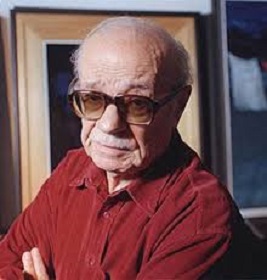
János Csokits

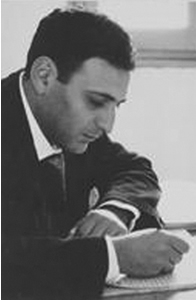
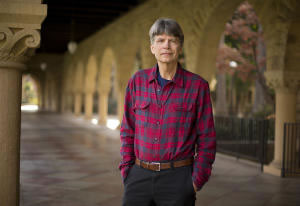
De Hongaarse dichter en vertaler János Csokits werd geboren in Boedapest op 30 juni 1928. Csokits verliet Hongarije in 1949. Hij woonde eerst in Londen, daarna in Parijs en München, waar hij werkte voor Radio Free Europe. Tenslotte keerde hij weer terug naar Londen om te werken voor de Hongaarse afdeling van de BBC. Zijn gedichten en essays werden gepubliceerd in verschillende Engelstalige literaire tijdschriften buiten Hongarije. In 1989 keerde Csokits terug naar zijn geboorteland, waar hij woonde tot zijn dood op 4 augustus 2011. János Csokits speelde een grote rol in de campagne om de Engelssprekende wereld te laten kennismaken met de poëzie van met János Pilinszky. Omdat hij geloofde dat alleen een groot dichter poëzie kan vertalen haalde hij Ted Hughes over om Pilinszky te vertalen. Zelf leverde hij slechts de eerste ruwe versies. Het resultaat van de samenwerking, Pilinszky’s “Selected Poems” verscheen in 1976.

Passion of Ravensbrück
 
He steps out from the others.
He stands in the square silence.
The prison garb, the convict’s skull
blink like projection.

He is horribly alone.
His pores are visible.
Everything about him is so gigantic,
everything is so tiny.

And this is all.
The rest–––
the rest was simply
that he forgot to cry out
before he collapsed.


Janos Pilinsky
Vertaald door Janos Csokits en Ted Hughes


 1711522-2bab950f7bbdfead8fc0d0a29f157340.jpg
János Csokits (30 juni 1928 - 4 augustus 2011)
Ted Hughes, János Csokits en János Pilinszky in 1977.

Geschreven door Romenu om 00:00 Reageer op dit bericht
Reageer op dit bericht

Reageer op dit bericht

Een titel of je eigen website toevoegen

De blogger leest alles eerst na: je tekst verschijnt zodra die goedgekeurd is.

Dolce far niente (Aaro Hellaakoski)


Dolce far niente


 1618519-690183fae5c8bd78248a2a12ca66be38.jpg
Boar Lane, Leeds, door John Atkinson Grimshaw, 1881


Dolce far niente

9 o'clock
evening-lively street
with shining stones
like a colorful tale
your way home under the row of lamps
                                               delightful hurry
   when                                   
                                               sonorous rumble
       you get back                   
                                               silly smile
              from work                 
                                               of the mannequins
                                               misted smile
     g l e a m i n g s h o p w i n d o w s
     t h o u s a n d s o f   s t r a n g e rs w a l k i n g
                        car
                 paws
         claw
   the street
eyes fill
with light whirling toward your head
              white glove
                    STOP
white glove on an outstretched hand
hrr-rr-rh
walk safely, weary man
evening     eveningwayway
windows windows are shining
thoughts are already tasting sleep
sweet sweet weariness
ardent beauty of the evening
                                          dolce far niente


Vertaald door Keith Bosley


 1618519-be13b28aaefcdb0a98bd18674b3f3b42.jpg
Aaro Hellaakoski (22 juni 1893 – 23 november 1952)


Zie voor de schrijvers van de 29e juni ook mijn blog van 29 juni 2013 deel 1 en eveneens deel 2.

Geschreven door Romenu om 12:04 Reageer op dit bericht

Florian Zeller, Ryszard Krynicki, Mark Helprin, Marlene Streeruwitz, Fritzi Harmsen van Beek, Luigi Pirandello, Jean Jacques Rousseau

De Franse schrijver Florian Zeller werd op 28 juni 1979 in Parijs geboren. Zie ook alle tags voor Florian Zeller op dit blog.

Uit:Climax (Vertaald door William Rodarmor)

“He breathed calmly, seeking a thought, a subject, an object that could neutralize the sight of these two entwined women. Miraculously, his gaze fell on a book that happened to be lying on the night table: Letters of Abélard and Héloïse. Pauline had given it to him a few weeks earlier, saying she thought it was the most beautiful account in all of romantic literature. He tried to remember the last passage he had read. In fact, wasn’t it the moment when Abelard was castrated?
Right then, his objective was less to take pleasure than to hold it off as long as possible. Nicolas was considerate and polite, but every man has his weaknesses. The combined effect of Pauline and Sophia’s tongues soon broke his concentration. He raised himself on his elbows. “What’s the matter?” asked Sofia in surprise.
How could you claim that nature is well designed, he was tempted to answer her, when an excess of pleasure precipitates the very end of that pleasure? He just muttered vaguely, “Easy, girls…” Sofia, who wasn’t very obedient, continued stroking his penis while Pauline took off her panties so as to move on to serious matters.
So of course what had to happen, did.
“What, already?” exclaimed Sofia, looking at him little ironically.
Let’s immediately put Nicolas’s disappointing performance in perspective. The English novelist Adam Thirwell once came across notes of a conversation between several eminent members of the Surrealist group, and this is the conversation that comes to mind. It took place on 3 March 1928, and its theme was the male orgasm. Each of the participants was to talk as honestly as possible about what they did in bed. Raymond Queneau asked the first question: “How long before you ejaculate, from the moment you are alone with the woman?” André Breton closed his eyes, trying to remember, wanting to be accurate. Before answering, he distinguished between two periods: all that preceded the act (which for him lasted more than half an hour) and the act itself (twenty seconds, maximum).»
 

 1618154-65eedc87a25b266ea700ced89c155922.jpg
Florian Zeller (Parijs, 28 juni 1979)


De Poolse dichter, vertaler en uitgever Ryszard Krynicki werd geboren op 28 juni 1943 in St.Valentin, Lager Wimberg, Oostenrijk. Zie ook alle tags voor Ryszard Krynicki op dit blog.


The Museum of Fine Arts in Budapest

How did you find yourself here,
poor mummy of an Egyptian princess,
exposed to alien stares?
Now it is here you have your afterlife.
I myself am a part of it for a moment,
while I'm looking at you.

So far there is no other.
No one knows
if there will be.


Save Me, Guide Me

Save me, shield me, faithful journey,
from my own lies and from our era.
Protect me, you, Angel and Guardian,
but you, White Cloud, guide me.

Keep me from thunder, hurricane,
immaculate truth, give me light.
Don't overlook me, little dove,
when you send us a sign from the heights.

Forgive me, twilight,
don't pierce me, spear of nightmares.
Don't bless me with madness,

wake me, morning star.


Vertaald door Alissa Valles


 1618154-a4a62f3c48ac4cf36e6caaf1ef982dc6.jpg
Ryszard Krynicki (St.Valentin, 28 juni 1943)


De Amerikaanse schrijver en journalist Mark Helprin werd geboren in New York op 28 juni 1947. Zie ook alle tags voor Mark Helprin op dit blog.

Uit: Winter’s Tale

“Nothing is random, nor will anything ever be, whether a long string of perfectly blue days that begin and end in golden dimness, the most seemingly chaotic political acts, the rise of a great city, the crystalline structure of a gem that has never seen the light, the distributions of fortune, what time the milkman gets up, the position of the electron, or the occurrence of one astonishing frigid winter after another. Even electrons, supposedly the paragons of unpredictability, are tame and obsequious little creatures that rush around at the speed of light, going precisely where they are supposed to go. They make faint whistling sounds that when apprehended in varying combinations are as pleasant as the wind flying through a forest, and they do exactly as they are told. Of this, one is certain.
And yet, there is a wonderful anarchy, in that the milkman chooses when to arise, the rat picks the tunnel into which he will dive when the subway comes rushing down the track from Borough Hall, and the snowflake will fall as it will. How can this be? If nothing is random, and everything is predetermined, how can there be free will? The answer to that is simple. Nothing is predetermined, it is determined, or was determined, or will be determined. No matter, it all happened at once, in less than an instant, and time was invented because we cannot comprehend in one glance the enormous and detailed canvas that we have been given - so we track it, in linear fashion piece by piece. Time however can be easily overcome; not by chasing the light, but by standing back far enough to see it all at once. The universe is still and complete. Everything that ever was is; everything that ever will be is - and so on, in all possible combinations. Though in perceiving it we image that it is in motion, and unfinished, it is quite finished and quite astonishingly beautiful.
In the end, or rather, as things really are, any event, no matter how small, is intimately and sensibly tied to all others. All rivers run full to the sea; those who are apart are brought together; the lost ones are redeemed; the dead come back to life; the perfectly blue days that have begun and ended in golden dimness continue, immobile and accessible; and, when all is perceived in such a way as to obviate time, justice becomes apparent not as something that will be, but something that is.“


 1618154-e6b64148be3e5e4ba78d8a4773b3655d.jpg
Mark Helprin (New York, 28 juni 1947)


De Oostenrijkse schrijfster Marlene Streeruwitz werd geboren op 28 juni 1950 in Baden bij Wenen. Zie ook alle tags voor Marlene Streeruwitz op dit blog.

Uit: Partygirl

“Das war das Beste an den Abenden allein. Niemand fragte, ob sie etwas gegessen hatte. Sie blieb im Zimmer stehen. Der Boden auf dem Balkon naß. Der Wind. Madeline zerbröselte die Semmel. Streute die Semmelstückchen auf den Balkon. Die Taube würden die Brösel schon holen. Sie stand da. Sah hinaus. Hinunter. Auf den Luegerplatz nach links. Tief unten. Zur Postsparkassa rechts. Warum niemand begreifen wollte, was das Problem war. Niemand wollte verstehen, wie schwierig es war, etwas in den Mund zu stecken. Das Schmecken. Der Mund. Die Lippen. Sie waren wie zugewachsen. Es ging nicht, etwas anderes zu schmecken. Etwas anderes als den eigenen Mund. Es ging nicht, etwas zu ändern. Am eigenen Geschmack. Beim Gedanken, ein Stück Semmel auf die Zunge zu legen. Die Mundhöhle zu füllen. Damit. Es war nicht möglich. Bei der Vorstellung. Sie hätte sofort zu weinen beginnen können. Oder lachen. So lang lachen, bis die Unruhe hinter dem Nabel verschwunden war. Fremde Dinge in den Mund stecken. Dinge, die ihr andere vorschrieben. Rick meinte es ja gut. Wahrscheinlich meinte Rick es gut. Aber sie würde schon essen. Wenn sie Lust hatte. Wann sie es wollte. Sie war alt genug dazu. Und es war nur natürlich. Nach den letzten Jahren. Nach den Verlusten. Den Veränderungen. Dem Umzug. Sie mußte sich davon erholen. Und hier. Jetzt. In der neuen Wohnung. Es mußte alles anders werden. Es würde alles anders werden. Zu Hause wäre immer jemand dagewesen. Ein Anruf. Und sie wäre nicht mehr allein. Aber jeder wußte auch alles. Von ihr. Von ihnen. Von allen. Jeder wußte viel mehr, als zu wissen war. Sie mußte das erst lernen. Daß sie unbekannt war. Und sie hatte sich das gewünscht. Weg von Baden. Weg aus diesem vertratschen Kaff. Und allein sein. Niemand mehr, der in der Nacht nach einem rief. Bei geschlossener Tür schlafen können. Und nichts tun müssen. Sich um nichts kümmern müssen. Sich nie wieder um etwas kümmern müssen.“


 1618154-086784dc882f6957fd647b015235f00d.jpg
Marlene Streeruwitz (Baden, 28 juni 1950)


De Nederlandse dichteres en schrijfster Fritzi Harmsen van Beek werd geboren in Blaricum op 28 juni 1927. Zie ook alle tags voor Fritzi Harmsen van Beek op dit blog


Brief

Aan: onvernoemd. Onverstuurd.

'Kom ogenblikkelijk, ik ben ongeneeslijk ziek:
een liefde van zo'n dertig of zo jarenlang beleden

is vervallen, schijnbaar, in het niets, alwaar het
klaarblijkelijk al op zijn plaats was, al die tijd.

Indien nu koning Arthur nog maar bestond, was je een
vliegend schaak, of minstens Parcival, die had ook

onovertreffelijke zit, te paard. Met die gouden schotel,
is dat toen niet misgelopen? Zeker weet ik het meer niet.

Maar in elk geval was er sprake van een tafel en, nog
belangrijker een Ronde! De ridders doolden nog, ja, en

vonden, zo af en toe. Wat dan ook. Ik was toen, jammer
genoeg nog niet op de vlakte, nou ja, geef me desnoods,

vanwege doodsnood een injectie, per die juffrouwdame,
die dat zo voortreffelijk doet. Opdat ik weer vrolijk

word. Ach, ongeneeslijk is het waarschijnlijk toch, zó-
veel is nu toch eindelijk wel zeker. Maar er zijn meer

patiënten nog, die hoewel opgeschreven met opgeheven
hoofd de dood, de liefde, in de ogen zien, ach...

de herfst stemt me somber, stemt me vrolijk, bij de
gedachte aan uw stem, aan uw bij voorbaat ruwe woorden,

omdat, als paardenkenner, bij hemelsblauwste oogopslag je
had gezien: dat ding valt niet te temmen meer, voor-

uit maar: een paar verantwoorde medicamenten. Nu,
nog bedankt, maar in Godsnaam, wie was je, waar bèn

je en waarom niet hier? Waarom ik wèl?


 1618154-cdeae5cf64bc3c21f6626400ab31544a.jpg
Fritzi Harmsen van Beek (28 juni 1927 – 4 april 2009)


De Italiaanse schrijver Luigi Pirandello werd op 28 juni 1867 geboren in de villa 'Caos' (chaos) in de buurt van Agrigento. Zie ook alle tags voor Luigi Pirandello op dit blog.

Uit: Iemand, niemand en honderdduizend (Vertaald door Leonie Bijman en Annegret Böttner)

“Het denkbeeld dat anderen in mij zagen, iemand die niet was zoals ik mezelf kende; iemand die alleen zij konden kennen door me van buitenaf te bekijken met ogen die niet de mijne waren en die me een uiterlijk gaven dat voor mij altijd onbekend moest blijven, hoewel het toch echt in me zat, het toch echt mijn uiterlijk voor hen was (een ‘mijn’ dus dat mij niet toebehoorde!); dat anderen dus een leven zagen dat voor hen het mijne was, waarin ik evenwel niet kon doordringen, dit denkbeeld liet me niet meer met rust. Hoe moest ik deze vreemde in mij verdragen? Deze vreemde die ik zelf was? Zonder hem ooit te zien? Zonder hem ooit te kennen? Hoe kon ik verdragen om voor altijd veroordeeld te blijven hem met me, in me mee te torsen, in het gezichtsveld van anderen, maar ondertussen buiten dat van mij om?”
(...)

“Ik construeer mezelf voortdurend, en ik construeer u, en u doet hetzelfde. En de constructie blijft overeind totdat het materiaal van onze gevoelens afbrokkelt en het cement van onze wil uiteenvalt. Waarom denkt u anders dat er telkens zo wordt gehamerd op wilskracht en standvastigheid? Onze wil hoeft maar een klein beetje te wankelen, en onze gevoelens hoeven slechts heel weinig te verschuiven of te veranderen, en daar gaat onze werkelijkheid! We merken dan meteen dat het niets anders was dan een illusie van ons.
Dus: wilskracht. Standvastigheid. Weest u sterk en standvastig, anders duikt u in het niets en komt u voor onaangename verrassingen te staan."


 1618154-2c0e43da45095e323b38a02c62f655fd.jpg
Luigi Pirandello (28 juni 1867 - 10 december 1936)
Jeugdportret


De Franse schrijver, filosoof en componist Jean Jacques Rousseau werd geboren in Genève op 28 juni 1712. Zie ook alle tags voor Jean-Jacques Rousseau op dit blog.

Uit: Bekentenissen (Vertaald door Leo van Maris)

‘Ik ga iets ondernemen dat nooit eerder is gedaan en dat, als het eenmaal is uitgevoerd, niet zal worden nagevolgd. Ik wil aan mijn medemensen een mens laten zien zoals hij werkelijk is en die mens, dat ben ik zelf.
Enkel en alleen ik zelf.Ik ervaar mijn eugen innerlijk en ik ken de mensen.Ik ben niet gemaakt als enig ander mens die ik heb ontmoet.Ook al zou ik niet beter zijn, ik ben op zijn minst anders.Of de natuur er goed of slecht aan heeft gedaande mal te breken waarin ik gegoten ben, daarover kan men alleen oordelen als men mij gelezen heeft”.
(…)

'Maar toen ik op het punt stond in onmacht te vallen op een boezem die voor de eerste keer de mond en de handen van een man leek te dulden, merkte ik dat ze een borst zonder tepel had. Ik raakte van mijn stuk, keek wat beter en het drong tot me door dat die borst niet zo gebouwd was als de andere. Toen probeerde ik te bedenken hoe men een borst zonder tepel kan hebben en ervan overtuigd dat het kwam door een ernstig aangeboren gebrek zag ik, na die gedachte grondig te hebben overwogen, zo helder als glas dat ik in de persoon van de innemendste vrouw die ik me kon voorstellen, niet meer dan een soort monster in mijn armen hield, het uitschot van natuur, mensen en liefde.'


 1618154-1ba0da554ce4b5a0f8ffa241bc84e19d.jpg
Jean-Jacques Rousseau (28 juni 1712 - 2 juli 1778)


Zie voor nog meer schrijvers van de 28e juni ook mijn vorige blog van vandaag.

Geschreven door Romenu om 14:46 Reageer op dit bericht

Juan José Saer, Anton van Wilderode, Otto Julius Bierbaum, A. E. Hotchner, Eric Ambler, Jürg Federspiel

De Argentijnse schrijver Juan José Saer werd geboren in Serodino op 28 juni 1937. Zie ook alle tags voor Juan José Saer op dit blog.

Uit: Ermittlungen (Vertaald door Hanna Grzimek)

„Auch wenn die Nacht sie verschluckt, kommen sie, wie ich schon sagte, am Tag wieder hervor, und jene, die nicht von Hoffnungslosigkeit, Elend, verlorenen Illusionen oder Trauer verzehrt wurden, blühen am Vormittag auf mit ihren aus der Mode gekommenen Hütchen, ihren strengen Mänteln und ihren zurückhaltenden Pinselstrichen Schminke und tippeln im Gleichschritt neben ihren Hündchen einher, steigen fünf oder sechs Treppen hinab, um Katzen- oder Kanarienfutter zu kaufen oder eine Wochenzeitschrift mit dem kompletten Fernsehprogramm, oder vielleicht, und warum auch nicht, in ein Restaurant zu gehen, das sie dann am frühen Nachmittag wieder verlassen, um einen Bekannten im Krankenhaus zu besuchen, oder, was noch wahrscheinlicher ist, zum Friedhof zu gehen und das Grab eines Verwandten zu pflegen – dabei sind sie selbst schon fast nicht mehr Materie, sondern zu einer Art Symbol, Idee, Metapher oder Prinzip geworden.
Ganz gewiß sind sie eine Eigenheit dieser Stadt, ein Bestandteil des Lokalkolorits wie das Louvremuseum und der Triumphbogen oder die Malvengewächse auf den Fensterbänken, zu deren Erhalt sie, zugegeben, mit ihren Plastikgießkännchen und morgendlichen Wasserkrügen in jedem Fall mehr beitragen als jeder andere. Vielleicht ist es ja zur Belohnung für die Mühe, in ihrem so begehrten Unterkörper Mensch und Welt nicht nur zu bewahren, sondern sogar zu vermehren, oder rein zufällig, aufgrund einer aleatorischen Anordnung von Gewebe, Blut und Knorpel, sehr vielen von ihnen gegeben, ein bißchen länger als alle übrigen am Rande der Zeit fortzubestehen, den ruhigen Stellen in Flüssen gleich, an denen das Wasser bewegungslos und glatt scheint dank einer unsichtbaren Kraft, welche die Strömung horizontal aufhält, jedoch unerbittlich und vertikal zum Grund zieht.“


1618147-3a57f4bc631b16d509da1e8786c0ec1f.jpg
Juan José Saer (28 juni 1937 - 11 juni 2005)


De Vlaamse schrijver dichter, vertaler en scenarist Anton van Wilderode (pseudoniem van Cyriel Paul Coupé werd geboren in Moerbeke op 28 juni 1918. Zie ook alle tags voor Anton van Wilderode op dit blog.


Het Land van Amen

1.
Ik zal voorbij zijn en het dorp zal duren
gelijk vandaag met harpen in de bomen.
Geblaat geblaf. En telkens toegenomen
bewegingen tegen de middaguren.
Het gras ontelbaar tussen vogelveren
en leeuwerikken als omhooggetrokken
onhoorbaar bezig in een tijd vol klokken.

De knapen die nu haastig huiswaarts keren,
en ransels rondzwaaiend naar alle kanten
zullen volwassen zijn met grote handen.


De dag van Eden
In memoriam matris

1
Als ik vanavond thuiskom ben je weg.
Ik zal de tuin inlopen rokend en verdrietig
om al het liefs dat ik je wilde zeggen.
Je zwarte stoel staat in het erwtenbed.

Je zat er vaak tussen twee beurten in
nog met je handen aan de groene lussen
een uur vol gras en vogels uit te rusten,
de druppels zweet al haastig weggewist.

Een fijne sluier zand ligt op je stoel.
Ik zal hem in spiraaltjes openblazen.
Want je bent weg, ik moet mij nooit meer haasten.
Voor hoeveel jaren is dat nu voorgoed.


 1618147-927711e45a642b1a5404693af96319de.jpg
Anton van Wilderode (28 juni 1918 - 15 juni 1998)
Basreliëf aan het Wilderodehuis in Moerbeke-Waas


De Duitse dichter en schrijver Otto Julius Bierbaum werd geboren op 28 juni 1865 in Grünberg. Zie ook alle tags voor Otto Julius Bierbaum op dit blog.


Letzter Wunsch

Dass Deine Hand auf meiner Stirne liegt,
Wenn mich das Sterben in der Wiege wiegt,
Die leis hinüber ins Vergessen schaukelt,
Von schwarzen Schmetterlingen schwer umgaukelt.
Ein letzter Blick in Deine braunen Sonnen:
Vorüber strömen alle uns're Wonnen
In einer bitter-süssen Letztsekunde;
Ein letzter Kuss von Deinem warmen Munde,
Ein letztes Wort von Dir, so liebeweich:
Dann hab' ich, eh' ich todt, das Himmelreich,
Und tauche selig in den grossen Frieden:
Der Erde Holdestes war mir beschieden.


Zwei Sonette

I. Verzagt

Soll ich wieder schwärmen, ich,
Der ich müd bin und verdrossen,
Schicksalslaugenübergossen,
Traurig, trüb und jämmerlich?

Soll ich? Nein, ich drücke mich.
Meine Schwärmer sind verschossen,
Und das Schicksal hat's beschlossen:
Keine Wonnen mehr für dich.

Aber deine Augen, Kind,
Sind bestimmt, das Glück zu schauen,
Das im schönsten Bogen geht:

Ruhe, Klarheit, Majestät,
Davon deine Augenbrauen
Allerschönstes Abbild sind.


 1618147-5e7587f9c93a717ddb0ec8afb55dd1ed.jpg
Otto Julius Bierbaum (28 juni 1865 – 1 februari 1910)


De Amerikaanse schrijver, en biograaf Aaron Edward Hotchner werd geboren op 28 juni 1920 in St. Louis. Zie ook alle tags voor A. E. Hotchner op dit blog.

Uit: The Good Life According to Hemingway

“There are only two absolutes I know about writing: one is that if you make love while you are jamming on a novel, you are in danger of leaving the best parts of it in the bed; the other is that integrity in a writer is like virginity in a woman—once lost, it is never recovered.
Fiction is inventing out of what knowledge you have. If you invent successfully it is more true than if you try to remember it.
This is where I wrote The Snows of Kilimanjaro, upstairs here [Key West], and that's as good as I've any right to be. Pauline and I had just come back from Africa, and when we hit New York, the newsboys asked me what my next project was, and I said to work hard and earn enough money to get back to Africa. It ran in the papers that way and a woman who read it got in touch with me and asked me to have a drink with her. Very classy society woman, extremely wealthy, damn attractive. We had good martini conversation and she said if I wanted to return to Africa so badly, why put it off just for money when she would be very happy to go with me and my wife and foot the bill. I liked her very much and appreciated the offer but refused it. By the time we got down here to Key West, I had given a lot of thought to her and the offer and how it might be if I accepted an offer like that. What it might do to a character like me whose failings I know and have taken many soundings on. Never wrote so directly about myself as in that story. The man is dying, and I got that pretty good, complete with handles, because I had been breathed upon by the Grim Reaper more than once and could write about that from the inside out.
I learned how to make a landscape from Mr. Paul Cézanne by viewing his paintings at the Luxembourg Museum a thousand times on an empty gut, and I am pretty sure that if Mr. Paul was around, he would like the way I write them and be happy that I learned it from him.”


 1618147-98e35dfb689485c7429c218d74a1439b.jpg
A. E. Hotchner (St. Louis, 28 juni 1920)
Ernest Hemingway geeft advies aan Hotchner voor een stierengevecht


De Engelse schrijver Eric Ambler werd geboren op 28 juni 1909 in Londen. Zie ook alle tags voor Eric Ambler op dit blog.

Uit: The Schirmer Inheritance

“George Carey came from a Delaware family that looked like an illustration for an advertisement of an expensive make of car. His father was a prosperous doctor with snow-white hair. His mother came from an old Philadelphia family and was an important member of the garden club. His brothers were tall, solid, and handsome. His sisters were slim, strong, and vivacious. All had fine regular teeth, which showed when they smiled. The whole family, indeed, looked so happy, so secure, and so successful that it was difficult not to suspect that the truth about them might be different. But no, they actually were happy, secure, and successful. They were also exceedingly smug.
George was the youngest son and, although his shoulders were not so broad as those of his brothers nor his smile as self-satisfied, he was the most talented and intelligent member of the family. When the glories of their football-playing days had departed, his brothers had made their ways aimlessly into business. George's plans for the future had been clear-cut from the moment he left high school. Despite his father's hope for a successor in his practice, George had declined to pretend to an interest in medicine which he did not feel. What he wanted to go in for was law; and not the criminal, courtroom kind, but the kind that led in early middle age to the presidencies of railroads and steel corporations or to high political office. But while the war, which came just after he had been graduated from Princeton, had removed much of his solemnity and smugness and had had beneficial effects upon his sense of humour, it had done nothing to change his mind about his chosen profession. After four and a half years as a bomber pilot, he went to Harvard Law School. He graduated, cum laude, early in 1949. Then, having spent a useful year as secretary to a learned and famous judge, he joined Lavater, Powell and Sistrom.”


 1618147-92cc8a06eccbb010ecff106b1b1964ab.jpg
Eric Ambler (28 juni 1909 – 22 oktober 1998)


De Zwitserse dichter en schrijver Jürg Federspiel werd geboren op 28 juni 1931 in Kemptthal. Zie ook alle tags voor Jürg Federspiel op dit blog.

Uit: Die Ballade von der Typhoid Mary

„Am frühen Morgen des 11. Januar 1868 tauchte im Schneewirbel ein Schiff auf, das die New Yorker Hafenbehörde erst bemerkte, als es die Bannmeile verletzt hatte. Doch es war nicht nur die schlechte Sicht auf die schwärzliche See, nicht nur Dämmerung und Schnee -, da war noch etwas anderes, das befremdete: Kein Jubelgeschrei, wie es sonst von jedem Emigrantenschiff aus Europa zu vernehmen war, hatte die schläfrige Küstenwache geweckt. Ein Offizier, Remigius Farrell, schilderte in seinem Rapport an die Emigrationsbehörde: "Der Anblick war so leblos wie ein Scherenschnitt. Die Segel waren zerfetzt und ein Mast gebrochen. Es war noch zwölf Yards entfernt, als uns der Wind einen Gestank entgegenfegte, in dem sich Fäkalien- und Leichengeruch mischten. Fast alle Emigrantenschiffe stinken, wie wir wissen, doch dieses stank fast unerträglich."
Die LEIBNITZ, so hieß das zum Wrack gewordene Segelschiff, war in hervorragender Weise in Boston gebaut worden und ursprünglich für den Handel mit China bestimmt; später wurde es von der SLOMAN'S HAMBURG LINE- erworben, eine Schiffsgesellschaft, die bis dahin ohne Tadel gewesen war. Die LEIBNITZ hatte Hamburg am 2. November 1867 unter Capt. H. F. Bornholm verlassen und lag dann wegen ungünstiger Winde etliche Tage vor Cuxhaven. Der Kapitän hatte sich deshalb für die südliche Route nach New York entschieden, die Breitengrade hinunter (über Madeira), wo die Passagiere mitunter eine Hitze von 94 Grad Fahrenheit zu erdulden hatten. Viele von ihnen stammten aus Mecklenburg und wollten sich als Farmer in Wisconsin niederlassen; andere kamen aus Preußen, und einige wenige aus Süddeutschland und der Schweiz.“


 1618147-91ea4cc520d0af98dc486188bec2636b.jpg
Jürg Federspiel (28 juni 1931 – 12 januari 2007)

Geschreven door Romenu om 14:41 Reageer op dit bericht

Lucille Clifton, Rafael Chirbes, E. J. Potgieter, Kees Ouwens, Dawud Wharnsby, Zsuzsanna Gahse

De Amerikaanse dichteres en schrijfster Lucille Clifton werd geboren in New York op 27 juni 1936. Lucille Clifton overleed op 13 februari van dit jaar. Zie ook alle tags voor Lucille Clifton op dit blog.


the lost baby poem


the time i dropped your almost body down
down to meet the waters under the city
and run one with the sewage to the sea
what did i know about waters rushing back
what did i know about drowning
or being drowned

you would have been born in winter
in the year of the disconnected gas
and no car
we would have made the thin walk
over the genecy hill into the canada winds
to let you slip into a stranger's hands
if you were here i could tell you
these and some other things

and if i am ever less than a mountain
for your definite brothers and sisters
let the rivers wash over my head
let the sea take me for a spiller of seas
let black men call me stranger always
for your never named sake


won't you celebrate with me

won't you celebrate with me
what i have shaped into
a kind of life? i had no model.
born in babylon
both nonwhite and woman
what did i see to be except myself?
i made it up
here on this bridge between
starshine and clay,
my one hand holding tight
my one hand; come celebrate
with me that everyday
something has tried to kill me
and has failed.


 1617799-ed789933e39b0d97f8bee10f7da12c1f.jpg
Lucille Clifton (27 juni 1936 – 13 februari 2010)
Hier met collega dichteres  Rita Dove (rechts)


De Spaanse schrijver Rafael Chirbes werd geboren op 27 juni 1949 in Tabernes de Valldigna bij Valencia. Zie ook alle tags voor Rafael Chirbes op dit blog

Uit: Alte Freunde (Vertaald door Dagmar Ploet)

“Beim Verlassen des Restaurants wird uns die Kälte mit Krallen empfangen, während es vor meinem Häuschen in Denia noch grünt und blüht trotz der fortgeschrittenen Jahreszeit, Mitte November, daran denke ich; auch daran, wie sanft mich die mildfeuchte Luft heute Morgen umfing, als Pedrito seinen Wagen vor meinem Haus parkte und wir die Reisetasche einluden, in die ich ein paar Hemden gepackt hatte, Unterwäsche, Kulturbeutel, das Nötige für den zweitägigen Ausflug, und er, neben dem Wagen stehend, die rechte Hand auf die Klappe des Kofferraums gestützt, sagte: »Stimmt, das Haus ist klein, aber die Aussicht ist prächtig.« Ins Notizbuch eintragen, welche Empfindung der tiefblaue, von Wolken durchzogene Himmel in mir auslöste, als läge ein Filter über der Landschaft und alles fügte sich zu einer Filmsequenz: die Pinien, die am Wagenfenster vorbeizogen, die steinige Sierra, mit einigen grünen Tupfern versehen seit den ersten Herbstregen, Pinienhaine, die auf den ersten Blick kaum auffallen, schaut man jedoch genauer hin, entdeckt man, dass sie einen beträchtlichen Teil der Landschaft ausmachen, man weiß nicht recht, wo sie stehen, in Mulden, Winkeln, an widerhaarigen Stellen, zum Teil so versteckt, dass man sie erst sieht, wenn die Straße um einen felsigen Brocken biegt, und schon sind sie über dir. Zweige, Felsen, Sträucher, ein paar Stechginsterbüsche, Zwergpalmen, die in Kolonien wachsen; ein paar Feigenkakteen voller Früchte, und keiner pflückt sie, Johannisbrotbäume, die auch die vielen gelegten Brände überlebt haben: resistent gegen das Übel.“


 1617799-c92821b5e3c2ba95e7811121322c57b0.jpg
Rafael Chirbes (Tabernes de Valldigna, 27 juni 1949)


De Nederlandse schrijver Everhardus Johannes Potgieter werd geboren in Zwolle op 27 juni 1808. Zie ook alle tags voor Potgieter op dit blog.

Uit:Het Rijks-Museum te Amsterdam

“Den oude zijne schoone wereld, en zijn nog schoonere Olympus, door zijne dochters gedroomd, door zijne wijsgeeren gedacht; – den zoon van het zuiden eene kunst, die zijne eeredienst schoort, die zijne zinnen in prikkels van godsdienstig gevoel verkeert, ontvankelijk als het volwassen kind levenslang voor de eerste blijft; – ons daarentegen, ons natuur, maar gezien met de oogen der liefde; ons waarheid, maar beschouwd met zin voor het schoone; ons voorgeslacht, vaderland, vrijheid, het hoogste, waar voor ons harte blaakt, uitgezonderd het goddelijke, waarvan wij geene afbeeldsels dulden. Hoe onbruikbaar wordt, van dit standpunt, de ijdele theorie van het hooge en lage in de kunst; of wat zijn hare duizenderlei vormen anders, dan zoovele uitdrukkingen van behoeften, welke zij bevredigt? Allen regt doende, vreest ge niet langer voor den glimlach des medelijdens, voor het verwijt van opgewondenheid, schoon ge, zoomin als ik, de hand ooit zonder aandoening aan den knop der deur hebt geslagen, die u toegang tot onze oude school verleenen zou.
Welligt heb ik, onbescheiden genoeg, u reeds te lang voor deze doen toeven; en echter, al verzwaar ik er mijn vergrijp door, ik heb u, eer wij de zaal binnengaan, eenen wensch mede te deelen, welken ik noode onder de vergeefsche tel, schoon ik mij met zijne vervulling naauwelijks vlei. Hij geldt niets minder dan een’ voorhof voor dien tempel, dan ééne groote schilderij, welker aanschouwing ons stemmen zou, om de overige volkomen te genieten. Beslis over het gegronde van dat verlangen, als ik u gezegd zal hebben, wat ik haar gaarne voorstellen zag.
Eene herfstzon zou hare stralen werpen door de hooge vensterramen der vergaderzaal van ’s lands Staten, te Brussel, als verlustigden die gulden boden er zich in, haren glans weêrschitterd te zien door goud en door staal; als gingen zij gaarne in de plooijen van damast en fluweel ter ruste. Immers, ik zou u door mijn tafreel in die oude huizinge willen verplaatsen, omstreeks het midden der zestiende eeuw; zoude u die wanden doen aanschouwen, op eenen oogenblik, dat zij verblindden door pracht van wapenpraal en hofsieraden, door allerlei zinnebeelden van grafelijke, koninklijke, keizerlijke waardigheid.”


 1617799-e9851852570bfa9e27e94ae96ee34da4.jpg
Potgieter (27 juni 1808 – 3 februari 1875)
Het Rijksmuseum, eregalerij 


De Nederlandse dichter Kees Ouwens werd geboren op 27 juni 1944 in Zeist. Zie ook alle tags voor Kees Ouwens op dit blog.


Maar als in de nadagen...

Maar als in de nadagen van je lot heel
die zwarte hemel weggevaagd wordt door het
daglicht en het reële doet zich aan je voor zoals je
het ook vroeger reeds gezien hebt maar voor het
eerst nu wordt het werkelijk door je opgemerkt
dan word je aangegrepen door de droefheid dat het
nu daarvoor te laat is en dat een leven als een dag is
omgegaan en heel het werkelijke komt nu in
dat licht te staan, dat het zo dierbaar maakt
en tegelijk onwezenlijk


Klem

Ik keek omhoog met de mond naar...
Naar daar, hart,
hoe iets er het aanriep
hoe er het schreeuwde in de nadag
op de flatrand naar de trant van te zien van wat
niet zegbaar
met tongkracht is in de toon van het veeg licht in het
blikveld
in de voornacht

Hart,
Ik vluchtte uitwaarts in de nieuwbouw
van de bijstad op de plempgrond
in het westelijk licht in de naschijn

Droefheid van de keel,
Ik zag niets dan de borstkas
van mijn lichaam
van mijn ik-schap
in de nadag
op de flatrand,
hart


 1617799-261ee98e1cfbe96ae02e0b6dab47ce21.jpg
Kees Ouwens (27 juni 1944 – 24 augustus 2004)


De Canadese dichter, singer-songwriter, performer en sociale activist. Dawud (David) Wharnsby Ali werd geboren op 27 juni 1972 in Kitchener, Ontario. Zie ook alle tags voor Dawud Wharnsby op dit blog.


December Music

Darkened, dreaming jaunts
through crowded December Streets.
A black world behind office tower lights.
Disoriented, running, aching,
cold in the snow;
drinking and dining,
called home by the sound of her piano.

Haunting me near
this time of year,
running scales through my mind.
The whispered thoughts I hear.
Cold and sweet.

Train from the Radiant City,
watching the night rise.
In the bus window, my reflection with
her words across my eyes.

In the darkness, downward into sleep.
Above the icing sugar street,
breathing quietly in my ear,
her whispers make me weep.


 1617799-e42fecb8f52b2e1e32384fa94cab9309.jpg
Dawud Wharnsby (Kitchener, 27 juni 1972)


De Duitse schrijfster en vertaalster Zsuzsanna Gahse werd op 27 juni 1946 in Boedapest geboren. Zie ook alle tags voor Zsuzsanna Gahse op dit blog.

Uit: Kleine instabile Ortskunde

“Jetzt sind zwischendurch alle unterwegs, daher sind die Sesshaften, die Ursesshaften gefragt. Ein Sesshafter hat lang an einem Ort gewohnt, so lange, bis daraus eine Wohnheit entstanden ist. 
Der andere hat sein Gesicht verloren. Erst hat er oft gelächelt, und auf welche Art er lächeln sollte, hat man ihm gleich zu Hause beigebracht, dann ist er ausgewandert, er war jung und hat umgelernt. Er hat sich einen ernsthaften Gesichtsausdruck angeeignet, mit dem er dann, nach seiner zweiten Auswanderung, allerdings nicht ankam. In dieser zweiten, neuen Umgebung kam er nicht an, nie mehr. Er meinte, die Leute zu verstehen und antwortete ihnen, er war da, zugegen, aber er blieb für die anderen unverständlich, als sei er noch nicht angekommen, und damit hatte er sein Gesicht zum zweiten Mal verloren.
Das Gesicht zu verlieren ist sehr bezeichnend für die Wanderungen. An einem neuen Ort hilft einem kein Blick in den Spiegel, nichts hilft, niemand kommt entgegen, die eigenen Gesichtszüge sind unbekannt, zuerst für die anderen, allmählich auch für einen selbst. 
Außer der Angekommene ist eine von vornherein bekannte Persönlichkeit; in diesem Fall haben sich seine Gesichtszüge jedem längst eingeprägt, längst bevor er angekommen ist, und dann ist der Fremde in einem sehr guten Sinn fremd. Jemand kann auch im überaus guten Sinn fremd sein, das heißt, nicht wirklich fremd, sondern bekannt, als Fremder bekannt, und für das von vornherein Bekannte wird sich fast jeder immer von vornherein interessieren. 
Wandern oder wohnen. Früher hieß auch wohnen so etwas wie wandern, nämlich suchen (nach dem, was an Nahrung zu finden war). Das Wort könnte sich weiterwandeln und erweitern, neue Möglichkeiten wären: sich einwohnen, erwohnen, sich ein Gebiet gewohnen, ein Land anwohnen, sich mit anderen zusammenwohnen.“


 1617799-15254c01bc441db2c7f724d9b7529909.jpg
Zsuzsanna Gahse (Boedapest, 27 juni 1946)


Zie voor nog meer schrijvers van de 27e juni ook mijn blog van 27 juni 2011 deel 1 en eveneens deel 2.

Geschreven door Romenu om 18:37 Reageer op dit bericht

Jacqueline van der Waals, Aimé Césaire, Yves Beauchemin, Elisabeth Büchle, Laurie Lee, Pearl S. Buck, Branwell Brontë

De Nederlandse dichteres Jacqueline Elisabeth van der Waals werd geboren op 26 juni 1868 in Den Haag. Zie ook alle tags voor Jacqueline van der Waals op dit blog.


Herfst

Vreemd, dat boom en tak zo stil staan
In het gouden licht vandaag,
Dat de bladertjes zo stil gaan,
't Een na 't ander, naar omlaag.

Dat het zonlicht zo voorzichtig
Door de ijlheid straalt van 't lof,
En het groene blad doorzichtig
En veel eed'ler maakt van stof,

Dat het windje in de twijgen
Zo behoedzaam gaat te werk
En alleen wat blaadjes zijgen
Doet op 't pad en 't bloemenperk,

Zonder 't wazig diep te raken
Waar de groene schemer blauwt,
Of de goudglans schuw te maken
In het ijlbebladerd hout,

Of te roeren aan de vijver,
Waar zeer statiglijk en traag
Twee voorname zwanen drijven
Met hun spiegelbeeld omlaag,

En wat late najaarsrozen,
Als bewasemend amethyst,
Al de weemoed van hun broze
Schoonheid heffen in de mist.


Moeder

Moeder naar wier liefde mijn verlangen
Sinds mijn kinderjaren heeft geschreid,
Ach, hoe zult gij mij zoo straks ontvangen
Na den langen scheidingstijd?

Zult gij me aanstonds als uw kind begroeten,
Als 'k ontwaken zal uit mijnen dood?
Zal ik nederknielen mogen voor Uw voeten
Met mijn hoofd in uwen schoot……

Maar wat dan? Wat zult gij tot mij zeggen,
Bij het ver gegons van de engelenschaar,
Als ge uw jonge, blanke hand zult leggen
Op dit oude grijze haar?


 1617369-0de2037fbd10b33c59db25340f69ef70.jpg
Jacqueline van der Waals (26 juni 1868 – 29 april 1922)
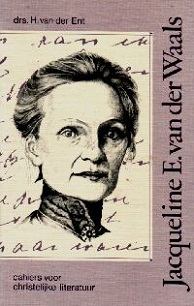
Cover bloemlezing


De Afrocaraïbische schrijver en politicus Aimé Césaire werd geboren op 26 juni 1913 in Basse-Pointe, Martinique. Zie ook alle tags voor Aimé Césaire op dit blog.


Des crocs

Il n’est poudre de pigment
ni myrrhe
odeur pensive ni délectation
mais fleur de sang à fleur de peau
carte de sang carte du sang
à vif à sueur à peau
ni arbre coupé à blanc estoc
mais sang qui monte dans l’arbre de chair
à crans à crimes
                             Rien de remis
à pic le long des pierres
                             à pic le long des os
du poids du cuivre des fers des cœurs
venins caravaniers de la morsure
au tiède fil des crocs
Des crocs


En vérité...

la pierre qui s’émiette en mottes
le désert qui se blute en blé
le jour qui s’épelle en oiseaux
le forçat l’esclave le paria
la stature épanouie harmonique
la nuit fécondée la fin de la faim

du crachat sur la face
et cette histoire parmi laquelle je marche mieux que
durant le jour

la nuit en feu la nuit déliée le songe forcé
le feu qui de l’eau nous redonne
l’horizon outrageux bien sûr
un enfant entrouvrira la porte..


 1617369-1529b1974ed52e3393d315e19c8a1265.jpg
Aimé Césaire (26 juni 1913 – 17 april 2008)
Affiche bij zijn 100e geboortedag 


De Canadese schrijver Yves Beauchemin werd geboren op 26 juni 1941 in Rouyn-Noranda, Quebec. Zie ook alle tags voor Yves Beauchemin op dit blog.

Uit: Le Matou

« - Late as usual, remarqua monsieur Spufferbug en levant vers lui son front dégarni, qui reflétait désagréablement la lueur des néons.
Florent haussa les épaules, fit un clin dceil à son collègue
Slipskin et abattit sa journée de travail avec le même entrain que d'habitude.
Le lendemain matin, à son arrivée au bureau, il reçut des mains de mademoiselle Relique, l'antique secrétaire de Muslpop, un colis enrubanné d'où s'échappait une forte odeur de musc. Il déchira l'emballage et demeura silencieux pendant quelques secondes. Un énorme C en bronze luisait au fondd'une boîte doublée de velours bleu.
- Quel est le farceur qui vous a remis ça ? demanda-t-il à la secrétaire.
- Ce n'est pas un farceur, c'est le concierge, répliqua l'autre sèchement. Il l'a reçu à sept heures ce matin.
Le surlendemain, Florent recevait un deuxième colis, tout aussi odorant, contenant cette fois-ci un B.
- C'est un vieux monsieur à barbiche, lui apprit mademoiselle Relique d'un air désapprobateur. Il s'est d'abord moqué du concierge, puis lui a donné une bouteille de vin. La Sainte Vierge elle-même ne m'en ferait pas boire une goutte.
Au troisième colis, qui contenait la lettre A accompagnée d'un bout de papier où l'on avait griffonné: «Patience, un message existe», les secrétaires commencèrent à jaser avec des airs mystérieux.. Sur les entrefaites, Florent dut s'absenter pour un voyage de trois jours dans la région du lac Saint-Jean. À son retour, les let tres R, M et H l'attendaient, ernpilées sur son bureau. Made!noiselle Relique se plaignait de violents maux de tête causés par l'odeur du musc.»


 1617369-fbfd545097d7ea63eec80e8f6d975f84.jpg
Yves Beauchemin (Rouyn-Noranda, 26 juni 1941)


De Duitse schrijfster Elisabeth Büchle werd geboren op 26 juni 1969 in Trossingen, Baden-Württemberg. Zie ook alle tags voor Elisabeth Büchle op dit blog.

Uit: Im Herzen die Freiheit

„Den Berichten meiner Großmutter zufolge haben alle im Vieux Carré lange Zeit angenommen, dass aus dir und Dominique eines Tages ein Paar wird“, führte Mathieu das Gespräch fort, während die beiden jungen Männer in die laue Herbstnacht hinaustraten und von einer jungen Sklavin je ein Glas Champagner gereicht bekamen.
„Wäre es nach Dominique gegangen, hättet ihr alle Recht behalten.“
„Du wolltest nicht?“
André schüttelte schweigend den Kopf, während seine Augen die umhergehenden und tanzenden Menschen auf der Wiesenfläche nach dem Brautpaar absuchten. Obwohl er aus einer der angesehensten Familien Louisianas stammte, hatte André den aufopferungsvollen
Beruf eines Arztes gewählt und war zum Studium nach Frankreich gegangen. Die alten Gerüchte um André und Dominique ließen Mathieu nun vermuten, dass seinem Freund dieser Auslandsaufenthalt eine willkommene Fluchtmöglichkeit vor seiner Familie und der Familie Leroux gewesen sein könnte.
Es dauerte nicht lange, da entdeckte Dominique André. Sie löste sich von ihrem Tanzpartner – vermutlich ihrem Ehemann –, um in ihrem weißen Kleid auf ihn und seinen Freund zuzueilen. „André!
Du bist doch noch gekommen! Wie wunderbar!“, rief sie überschwänglich.
„Ich gratuliere, Dominique. Du siehst aus wie das blühende Leben. Ich freue mich, dich so glücklich zu sehen“, erwiderte André und küsste der jüngeren Frau galant die Hand.
„Danke. Du kennst meinen Mann, Louis Poirier?“ Sie deutete mit einer knappen Handbewegung zu ihrem stehen gelassenen Tanzpartner hinüber.
„Ja, wir waren einige Zeit lang bei demselben Fechtlehrer. Ich werde ihn gleich begrüßen.“


 1617369-486ddef52e8ba34b0a4da83577f522a1.JPG
Elisabeth Büchle (Trossingen, 26 juni 1969)


De Engelse dichter en schrijver Laurence Edward Alan "Laurie" Lee werd geboren in Stroud, Gloucestershire op 26 juni 1914. Zie ook alle tags voor Laurie Lee op dit blog.


Winter poem

Tonight the wind gnaws with teeth of glass
The jackdaw shivers in caged branches of iron
The stars have talons
There is hunger in the mouth of vole and badger
Silver agonies of breath in the nostril of the fox
Ice on the rabbit’s paw
Tonight has no moon, no food for the pilgrim
The fruit tree is bare, the rose bush a thorn
And the ground is bitter with stones
But the mole sleeps and the hedgehog lies curled in a womb of leaves
And the bean and the wheat seed hug their germs in the earth
And a stream moves under the ice
Tonight there is no moon
But a star opens like a trumpet over the dead
And tonight in a nest of ruins the blessed babe is laid
And the fir tree warms to a bloom of candles
And the child lights his lantern and stares at his tinsel toy
And our hearts and hearths smoulder with live ashes
In the blood of our grief the cold earth is suckled
In our agony the womb convulses its seed
And in the last cry of anguish
The child’s first breath is born


 1617369-22436cccc02f189a122dd320860f26fa.jpg
Laurie Lee (26 juni 1914 – 13 mei 1997)


De Amerikaanse schrijfster Pearl S. Buck werd geboren in Hillsboro West-Virginia, op 26 juni 1892. Zie ook mijn blog van 26 juni 2010 en eveneens alle tags voor Pearl S. Buck op dit blog.

Uit: Pavilion of Women

“Andre had been telling her an ancient legend of the fall of man into evil. It came about, he said, by the hand of a woman, Eve, who gave man forbidden fruit.
"And how was this woman to know that the fruit was forbidden?" Madame Wu had inquired.
"An evil spirit, in the shape of a serpent, whispered it to her," Andre had said.
"Why to her instead of to the man?" she had inquired.
"Because he knew that her mind and her heart were fixed not upon the man, but upon the pursuance of life," he had replied. "The man's mind and heart were fixed upon himself. He was happy enough, dreaming that he possessed the woman and the garden. Why should he be tempted further? He had all. But the woman could always be tempted by the thought of a better garden, a larger space, more to possess, because she knew that out of her body would come many more beings, and for them she plotted and planned. The woman thought not of herself, but of the many whom she would create. For their sake she was tempted. For their sake she will always be tempted.”


 1617369-90dbbcaa0fbf52cdf15549df991f3fc8.jpg
Pearl S. Buck (26 juni 1892 – 6 maart 1973)
Portret door Freeman Elliot, 1964


De Engelse dichter en schilder Branwell Brontë werd op 26 juni 1817 geboren in Thornton, Yorkshire. Zie ook alle tags voor Branwell Brontë op dit blog.


Thorp Green

I sit, this evening, far away,
From all I used to know,
And nought reminds my soul to-day
Of happy long ago.

Unwelcome cares, unthought-of fears,
Around my room arise;
I seek for suns of former years
But clouds o'ercast my skies.

Yes-Memory, wherefore does thy voice
Bring old times back to view,
As thou wouldst bid me not rejoice
In thoughts and prospects new?

I'll thank thee, Memory, in the hour
When troubled thoughts are mine-
For thou, like suns in April's shower,
On shadowy scenes wilt shine.

I'll thank thee when approaching death
Would quench life's feeble ember,
For thou wouldst even renew my breath
With thy sweet word 'Remember'!


 1617369-2176b80c68faceb595a1bee24fc78d3a.jpg
Branwell Brontë (26 juni 1817 – 24 september 1848)
Schets door Barbara Tanke


Zie voor nog meer schrijvers van de 26e juni ook mijn blog van 26 juni 2011 deel 1 en eveneens deel 2.

Geschreven door Romenu om 19:07 Reageer op dit bericht

Rob van Essen

De Nederlandse schrijver en vertaler Rob van Essen werd op 25 juni 1963 geboren in Amstelveen en groeide op in Twente en op de Veluwe. Zijn eerste boek verscheen in 1996: “Reddend Zwemmen”. Daarna volgden: “Troje” (2000), “Kwade dagen” (2002), “Engeland is gesloten” (2004), “Het jaar waarin mijn vader stierf” (2006) en “Visser” (2008). Rob van Essen vertaalt vanuit het Engels, zowel fictie als non-fictie. Sinds 2005 maak t hij deel uit van de redactie van het Biografie Bulletin. Ook schrijft hij vanaf oktober 2007 voor NRC Boeken over Engelstalige literatuur.

Uit: In het restaurant (drie gangen)

“1. voorgerecht
Nadat hij mijn soep heeft neergezet, blijft de ober naast mijn tafeltje staan. Hij pakt het mes dat klaar ligt voor het hoofdgerecht en begint met de punt ervan in het tafellaken te tekenen. Hij trekt de lijnen van een slordige rechthoek, waarin hij her en der wat kleine vormen plaatst.
‘De woning van mijn grootmoeder,’ zegt hij zacht, en zonder mij aan te kijken trekt hij nog wat lijnen. Het tafellaken is dik, aan weerszijden van elke lijn bolt de stof een beetje op.
De kok komt naast hem staan en haalt zijn handen over zijn schort. ‘Kwam hij daar vandaan?’ Hij laat een dikke wijsvinger vlak boven de tekening zweven.
‘Nee, nee,’ zegt de ober. ‘Dat is de gang. Hij kwam via het balkon.’  Hij wijst met de punt van het mes.
De kok veegt met zijn hand over zijn ongeschoren kin en kijkt nadenkend naar de tekening.  ‘Soep goed, meneer?’ vraagt hij wanneer hij mijn blik vangt.
‘Ja, ja,’ zeg ik haastig, hoewel ik nog niet heb geproefd. Ik steek mijn hand uit naar de lepel.
De kok richt zich weer naar de ober. ‘En de balkondeuren?’
De ober haalt zijn schouders op. ‘Ze lag ik bed, wat kan ze nou…’
De kok knikt en kijkt weer naar de tekening, waarvan de lijnen langzaam vervagen. De ober ziet het ook en zet met de mespunt sommige lijnen  wat duidelijker aan.
Ik leg mijn lepel neer en strek mijn hand uit naar mijn glas rode wijn. Ik doe het niet goed, in plaats dat ik het glas oppak, gooi ik het om. De tekening van de ober wordt onmiddellijk bedekt door een grote paarsrode vlek.
De ober trekt wit weg. Hij keert zich naar mij, maar voor hij iets kan doen, pakt de kok hem vanachteren bij de schouders en trekt hem mee naar de keuken.
‘Alsof hij erbij was,’ sist de ober, ‘alsof hij erbij was.’ En hij blijft geagiteerd fluisteren. ‘Nee, nee, dat is onzin,’ zegt de kok, en hij blijft de ober kalmerend toespreken tot ze beiden achter de slappe klapdeuren naar de keuken zijn verdwenen.”


 1724133-8448a33ec24d2fdf7ce7d88eaa91b5c7.jpg
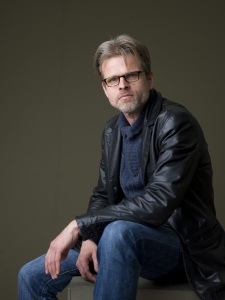
Rob van Essen (Amstelveen, 25 juni 1963)

Geschreven door Romenu om 00:00 Reageer op dit bericht

Yann Martel, Michel Tremblay, Nicholas Mosley, Ingeborg Bachmann, Arseny Tarkovsky, George Orwell, Claude Seignolle

De Canadese schrijver Yann Martel werd op 25 juni 1963 geboren in Salamanca. Zie ook alle tags voor Yann Martel op dit blog.

Uit:Life of Pi

„I still smart a little at the slight. When you’ve suffered a great deal in life, each additional pain is both unbearable and trifling. My life is like a memento mori painting from European art: there is always a grinning skull at my side to remind me of the folly of human ambition. I mock this skull. I look at it and I say, “You’ve got the wrong fellow. You may not believe in life, but I don’t believe in death. Move on!” The skull snickers and moves ever closer, but that doesn’t surprise me. The reason death sticks so closely to life isn’t biological necessity—it’s envy. Life is so beautiful that death has fallen in love with it, a jealous, possessive love that grabs at what it can. But life leaps over oblivion lightly, losing only a thing or two of no importance, and gloom is but the passing shadow of a cloud. The pink boy also got the nod from the Rhodes Scholarship committee. I love him and I hope his time at Oxford was a rich experience. If Lakshmi, goddess of wealth, one day favours me bountifully, Oxford is fifth on the list of cities I would like to visit before I pass on, after Mecca, Varanasi, Jerusalem and Paris.


 1616931-d9283d9bfd8fb88e5f966776ae7ec33d.jpg
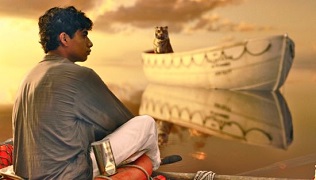
Scene uit de film “Life of Pi” uit 2012


I have nothing to say of my working life, only that a tie is a noose, and inverted though it is, it will hang a man nonetheless if he’s not careful.
I love Canada. I miss the heat of India, the food, the house lizards on the walls, the musicals on the silver screen, the cows wandering the streets, the crows cawing, even the talk of cricket matches, but I love Canada. It is a great country much too cold for good sense, inhabited by compassionate, intelligent people with bad hairdos. Anyway, I have nothing to go home to in Pondicherry.
Richard Parker has stayed with me. I’ve never forgotten him. Dare I say I miss him? I do. I miss him. I still see him in my dreams. They are nightmares mostly, but nightmares tinged with love. Such is the strangeness of the human heart. I still cannot understand how he could abandon me so unceremoniously, without any sort of goodbye, without looking back even once. That pain is like an axe that chops at my heart.”


 1616931-bfe2cbd1b77b30511583b7d01b72fe6f.jpg
Yann Martel (Salamanca, 25 juni 1963)


De Canadese schrijver Michel Tremblay werd geboren in Quebec op 25 juni 1942. Zie ook alle tags voor Michel Tremblay op dit blog.

Uit: Crossing the Continent (Vertaald door Sheila Fischman)

“Her grandmother hugged her tight, unable to say a word; her grandfather swallowed his tears; only her sisters let themselves go and cried, copiously. With her big suitcase beside her, she herself hasn’t moved, her lips quivering slightly but not too much. Strangely enough, no goodbyes have been exchanged though both grandparents and granddaughter know that they’ll probably never see one another again. Don’t say things. Avoid them or arrange so that they don’t exist. A calculated chill instead of outpourings, though they are necessary.
She did not turn around when she climbed into the buggy so she hasn’t seen the dejection in the eyes of Josephine and Meo from whom one-third of what is left of their reason for living is being taken away this morning while they wait for the rest to be cut off. Will the other two leave on the same day or will they have to live twice more through this intolerable scene that should be taking place amid heartbreaking sorrow and cries but is actually Image: cover of "Crossing the Continent" by Michel Tremblayhappening in a terrifying silence? Will they be able to bear three departures, three times on the same train?
When Monsieur Sanschagrin’s whistle echoed in the early morning chill, Rheauna held out her ticket to the tall man with a moustache who had just asked her if she was Rheauna Rathier due to leave for Saskatoon, Regina, Winnipeg, Ottawa and Montreal. He spoke each name in a resonant voice as if they were all exotic destinations on the other side of the world. The door of the car closed with a gruesome bang, she ran to the first window, pressed her nose against the glass and then, as the train was starting to move, her sisters and her grandparents on the wooden platform waved desperately, she allowed herself to weep, to cry, to pound her fist. She wished that the other four wouldn’t see her collapse, that she could wait for the train to pull away from the station."


 1616931-333964edbeb4f598d78d7d87c3a555d3.jpg
Michel Tremblay (Quebec, 25 juni 1942)


De Engelse schrijver Nicholas Mosley werd geboren op 25 juni 1923 geboren in Londen. Zie ook alle tags voor Nicholas Mosley op dit blog.

Uit: Children of Darkness and Light

“You know the story of the children in Yugoslavia who said they had seen the Virgin Mary: she appeared to them on the side of a hill and went on talking to them in the village church in the evenings; the hillside and the church became a shrine. I did a piece on this for the newspaper I was working for at the time — about the susceptibilities and projections of adolescent children, the local political situation from which the authorities might welcome a diversion, church rivalries in which the Franciscans might be using the children in their battle with the state-backed clergy. My editor said `But people don't want this analytical stuff; they want a piece about children who say they've seen the Virgin Mary.'
I said `But people don't believe that, do they?'
`Part of them will want to believe. Part of them will think it's rubbish.'
`So they won't have to think at all.'
`You'll learn.'
So I went and wrote a piece about the wonderment of the children on the side of the hill; the ruthlessness of church and state authorities in their treatment of the children. I managed to make the harassment of the children seem vaguely sexual.
My editor said `You're learning.'
I said `But the interesting thing is what the Virgin Mary seemed to be saying. She said that humans, with their greed and violence, are in danger of destroying themselves: this is the last time she's going to appear to give warning.'
The editor said `You don't believe that, do you?'
`She goes on and on about the need for prayer and fasting. But people have been trying that for centuries, and it doesn't seem to work.' I added `I mean, I think this language is some sort of metaphor.'


 1616931-aa7b597ca2991f3ab1e4099294b3a5d4.jpg
Nicholas Mosley (Londen, 25 juni 1923)


De Oostenrijkse dichteres Ingeborg Bachmann werd geboren op 25 juni 1926 in Klagenfurt. Zie ook mijn blog van 25 juni 2010 en eveneens alle tags voor Ingeborg Bachmann op dit blog.


Wie soll ich mich nennen ?

Einmal war ich ein Baum und gebunden,
dann entschlüpft ich als Vogel und war frei,
in einen Graben gefesselt gefunden,
entließ mich berstend ein schmutziges Ei.

Wie halt ich mich? Ich habe vergessen,
woher ich komme und wohin ich geh,
ich bin von vielen Leibern besessen,
ein harter Dorn und ein flüchtendes Reh.

Freund bin ich heute den Ahornzweigen,
morgen vergehe ich mich an dem Stamm . . .
Wann begann die Schuld ihren Reigen,
mit dem ich von Samen zu Samen schwamm?

Aber in mir singt noch ein Beginnen
- oder ein Enden – und wehrt meiner Flucht,
ich will dem Pfeil dieser Schuld entrinnen,
der mich in Sandkorn und Wildente sucht.

Vielleicht kann ich mich einmal erkennen,
eine Taube einen rollenden Stein . . .
Ein Wort nur fehlt! Wie soll ich mich nennen,
ohne in anderer Sprache zu sein.


De havens waren geopend

De havens waren geopend. We scheepten ons in,
de zeilen voor de wind, de droom overboord,
staal aan de knieën en lachen rond onze haren,
Want onze riemen kliefden de zee, sneller dan God.

Onze riemen versloegen de spanen van God en deelden de vloed;
vóór was het dag, en achter bleven de nachten,
boven was onze ster, en onder verzonken de anderen,
buiten verstomde de storm, en binnen groeide onze vuist.

Pas toen een regen ontbrandde, luisterden we weer;
speren vielen neer en engelen traden te voorschijn,
richtten zwartere ogen op ónze zwarte ogen.
Vernietigd stonden we daar. Ons blazoen vloog omhoog;

Een kruis in het bloed en een groter schip boven het hart.


Vertaald door Paul Beers en Isolde Quadflieg


 1616931-aa99474d2e9079e02ff5fe02ea63e97c.jpg
Ingeborg Bachmann (25 juni 1926 – 17 oktober 1973)


De Russische dichter en vertaler Arseny Alexandrovich Tarkovsky werd geboren op 25 juni 1907 in Elisavetgrad. Zie ook alle tags voor Arseny Tarkovsky op dit blog.


Life, Life

3
I tailored the age to fit me.
We walked to the south, raising dust above the steppe;
The tall weeds fumed; the grasshopper danced,
Touching its antenna to the horse-shoes - and it prophesied,
Threatening me with destruction, like a monk.
I strapped my fate to the saddle;
And even now, in these coming times,
I stand up in the stirrups like a child.

I'm satisfied with deathlessness,
For my blood to flow from age to age.
Yet for a corner whose warmth I could rely on
I'd willingly have given all my life,
Whenever her flying needle
Tugged me, like a thread, around the globe.


 1616931-3e540ef52a2600128e4320cc9ca7e22b.jpg
Arseny Tarkovsky (25 juni 1907 – 27 mei 1989)
Hier met zoontje Andrei in de jaren 1930 


De Britse schrijver George Orwell (pseudoniem van Eric Arthur Blair) werd op 25 juni 1903 geboren in Motihari, India. Zie ook mijn blog van 25 juni 2010 en eveneens alle tags voor George Orwell op dit blog.

Uit: 1984

“Winston glanced across the hall. In the corresponding cubicle on the other side a small, precise-looking, dark-chinned man named Tillotson was working steadily away, with a folded newspaper on his knee and his mouth very close to the mouthpiece of the speakwrite. He had the air of trying to keep what he was saying a secret between himself and the telescreen. He looked up, and his spectacles darted a hostile flash in Winston’s direction.
Winston hardly knew Tillotson, and had no idea what work he was employed on. People in the Records Department did not readily talk about their jobs. In the long, windowless hall, with its double row of cubicles and its endless rustle of papers and hum of voices murmuring into speakwrites, there were quite a dozen people whom Winston did not even know by name, though he daily saw them hurrying to and fro in the corridors or gesticulating in the Two Minutes Hate. He knew that in the cubicle next to him the little woman with sandy hair toiled day in day out, simply at tracking down and deleting from the Press the names of people who had been vaporized and were therefore considered never to have existed. There was a certain fitness in this, since her own husband had been vaporized a couple of years earlier. And a few cubicles away a mild, ineffectual, dreamy creature named Ampleforth, with very hairy ears and a surprising talent for juggling with rhymes and metres, was engaged in producing garbled versions — definitive texts, they were called — of poems which had become ideologically offensive, but which for one reason or another were to be retained in the anthologies. »


 1616931-381277ef35fc7f47894034a4ad2c9a40.jpg
George Orwell (25 juni 1903 – 21 januari 1950)
Scene uit de film “1984” uit 1984


De Franse schrijver Claude Seignolle werd geboren op 25 juni 1917 in Périgueux. Zie ook alle tags voor Claude Seignrolle op dit blog.

Uit: Le meneur de loups

“C'est sur la fin d'une journée de ce terrible hiver 1870, frappé d'un triple malheur : l'invasion, la famine et le froid, qui enfantent à leur tour cent et mille autres peines.
Ses grands doigts de glace profondément enfoncés dans la terre, le froid se cramponne sur la Sologne et s'attarde à pondre son frimas sur l'échine du pauvre monde. Visible en buées au contact des bouches, il ballotte son grand corps fluide au gré des vents mordants. Sa souveraineté sur les mois d'hiver a des exigences cruelles. Il se roule, se prélasse sur tout. Dans les bois, ses jeux font naître les douleurs sourdes des grands arbres aux branches déjà blessées par la foudre des jours d'été et brisées par les colères des vents automne. Les jeunes sapins à la chair tendre éclatent à cris secs, sonores. L'homme entend cette annonce de ruine et blêmit, impuissant.
Chez les pauvres gens, cet hiver a achevé bien des vieillards et repris les quelques jours de vie de bien des nouveau-nés. Les fossoyeurs doivent appuyer de toutes leurs forces sur les membres raidis, ces branches d'homme, pour les coucher dans le cercueil de sapin au parfum de printemps. En ouvrant le sol durci, ils jurent contre le froid qui, pour se gausser, mord les oreilles et leur met de ridicules glaçons dans les moustaches. La terre prend un peu de repos entre ses deux peines d'automne et de printemps, avant que la charrue ne vienne déchirer, en longues et fines lanières, son ventre à nouveau mou. Les bonnes bêtes gisent flanc à flanc, sur un épais lit de paille souple, dans la douce chaleur des étables aux murs crépis de bouses. Les bêtes sauvages viennent rôder près des fermes, poussées par la faim qui leur noue les entrailles comme le froid noue le mal dans les poitrines.
Et les bûcherons n'osent guère s'aventurer à des abattages lointains, dans la crainte de rencontrer le loup qui jette la terreur en déchirant ses hurlements sur ses crocs avides d’entrailles et de chair.”


 1616931-5ca0cbb23a2d03a2a410cf976439854c.jpeg
Claude Seignolle (Périgueux, 25 juni 1917)


Zie voor nog meer schrijvers van de 25e juni ook mijn blog van 25 juni 2012 deel 1 en eveneens deel 2 en ook ook mijn blog van 25 juni 2011 deel 2 en eveneens deel 3.

Geschreven door Romenu om 00:00 Reageer op dit bericht

Ernesto Sabato, Yves Bonnefoy, Scott Oden, Matthijs Kleyn, Madelon Székely-Lulofs, Josse Kok

De Argentijnse schrijver Ernesto Sabato werd op 24 juni 1911 geboren in Rojas, een dorp in de provincie Buenos Aires. Zie ook alle tags voor Ernesto Sabato op dit blog.

Uit: The Resistance (Vertaald door D. Ohmans)

“There are days when I arise with a demented hope, moments when I feel that the possibilities of a more human life are within reach of our hands. This is one of those days.
And then, I have set to writing almost groping in the dawn, with urgency, like one who might go into the street to ask for help against the threat of a fire, or like a ship that, at the point of disappearing, were to send a last and fervent signal towards a port it knows is near but deafened by the noise of the city and by the number of billboards that disturb the view.
I ask you that we pause to think of the greatness to which we can still aspire if we dare to value life in another way. I ask that courage of you which situates us on man's true dimension. Everyone, at one time or another, yields. But there is something unfailing and it is the conviction that--only-- spiritual values can save us from this earthquake that threatens the human condition.
While I write to you, I have lingered to touch a rustic statuette that the Tuobas gave to me and which reminded me, like a ray in my memory, of a virtual exposition that they showed me yesterday on a computer, which I should admit seemed to me like something from Mandingo. Because to the extent that we relate in an abstract manner, the further we move from the heart of things and a metaphysical indifference takes charge of us while entities without blood or proper names assume power. Tragically, man is losing dialogue with others and recognition of the world that surrounds him, given that it is there where encounters are made, where love is possible, the supreme gestures of life. Table talk, including the discussions or angers, already seem replaced by the hypnotic vision. Television tantalizes us, we remain almost captivated by it. This effect between magical and malevolent is due, I think, to the excess of its light that overcomes us with its intensity.”


 1616575-622febeb48bbe604ae09901d2f0309e4.jpg
Ernesto Sabato (24 juni 1911 – 30 april 2011)


De Franse dichter, schrijver en vertaler Yves Bonnefoy werd in Tours geboren op 24 juni 1923. Zie ook alle tags voor Yves Bonnefoy op dit blog.


Ici, dans le lieu clair

Ici, dans le lieu clair. Ce n'est plus l'aube,
C'est déjà la journée aux dicibles désirs.
Des mirages d'un chant dans ton rêve il ne reste
Que ce scintillement de pierres à venir.

Ici, et jusqu'au soir. La rose d'ombres
Tournera sur les murs. La rose d'heures
Défleurira sans bruit. Les dalles claires
Mèneront à leur gré ces pas épris du jour.

Ici, toujours ici. Pierres sur pierres
Ont bâti le pays dit par le souvenir.
A peine si le bruit de fruits simples qui tombent
Enfièvre encore en toi le temps qui va guérir.


Psyché devant le château d’Amour

Il rêva qu’il ouvrait les yeux, sur des soleils
Qui approchaient du port, silencieux
Encore, feux éteints ; mais doublés dans l’eau grise
D’une ombre où foisonnait la future couleur.

Puis il se réveilla. Qu’est-ce que la lumière ?
Qu’est-ce que peindre ici, de nuit ? Intensifier
Le bleu d’ici, les ocres, tous les rouges,
N’est-ce pas de la mort plus encore qu’avant ?

Il peignit donc le port mais le fit en ruine,
On entendait l’eau battre au flanc de la beauté
Et crier des enfants dans les chambres closes,
Les étoiles étincelaient parmi les pierres.

Mais son dernier tableau, rien qu’une ébauche,
Il semble que ce soit Psyché qui, revenue,
S’est écroulée en pleurs ou chantonne, dans l’herbe
Qui s’enchevêtre au seuil du château d’Amour.


 1616575-46d93da775aeb0dccfe92bbb70d8592b.jpg
Yves Bonnefoy (Tours, 24 juni 1923)


De Amerikaanse schrijver Scott Oden werd geboren op 24 juni 1967 in Columbus, Indiana. Zie ook alle tags voor Scott Oden op dit blog.

Uit: A Gathering of Ravens

“For two days, under skies hewn from the cold heart of winter, Grimnir guided them south and west.  They left the settled fjord-lands of northern Sjaelland for the wilder country of the south, a land of moors and fens and tangled forests.  They ate what food they had left – hard bread and salt pork and the last of her store of dried figs – and drank from clear running streams.  By night, as the temperatures plunged and snow threatened, Grimnir grudgingly built a small fire.  Étaín would huddle near it for warmth, but the cold had little effect on the now-taciturn skraelingr.  He sat away from the fire, muttering to himself in the harsh tongue of his kind or singing some tuneless chant that echoed with the drums, horns, and wrack of war; he was awake when Étaín dropped off to sleep, and awake when she crawled stiff-limbed from beneath her blanket.  She wondered if he slept at all.
     For the most part, her first impressions were spot on.  Grimnir was as godless and profane as any heathen Northman.  He sneered at her morning prayers and scoffed at her wish to pray at midday, or over her food.  The skraelingr had no time for anything that smacked of Christ – even the sight of the small silver cross Hrolf Asgrimm’s son had cast aside filled Grimnir with sullen rage – but he made an effort to pause by every moss-covered rune stone, poring over each surface like a priest over the Gospel.  What he found there dictated not only the direction they traveled, but also his mood.  Stones commemorating those who had fallen in battle left him nigh upon jubilant, while the few they happened across trumpeting some nameless Dane’s conversion sent him into a curse-laden tirade.”


 1616575-9ccaa74d6ddf14b07e31063be6e58970.jpg
<Scott Oden (Columbus, 24 juni 1967)


De Amerikaanse dichter, vertaler en etymoloog John Anthony Ciardi werd geboren op 24 juni 1916 in Boston. Zie ook alle tags voor John Ciardi op dit blog.


About the Teeth of Sharks

The thing about a shark is—teeth,
One row above, one row beneath.

Now take a close look. Do you find
It has another row behind?

Still closer—here, I’ll hold your hat:
Has it a third row behind that?

Now look in and...Look out! Oh my,
I’ll never know now! Well, goodbye.


Mummy Slept Late and Daddy Fixed Breakfast
 

Daddy fixed the breakfast.
He made us each a waffle.
It looked like gravel pudding.
It tasted something awful.

“Ha, ha,” he said, “I’ll try again.
This time I’ll get it right.”
But what I got was in between
Bituminous and anthracite.

“A little too well done? Oh well,
I’ll have to start all over.”
THAT time what landed on my plate
Looked like a manhole cover.

I tried to cut it with a fork:
The fork gave off a spark.
I tried a knife and twisted it
Into a question mark.

I tried it with a hack-saw.
I tried it with a torch.
It didn’t even make a dent.
It didn’t even scorch.

The next time Dad gets breakfast
When Mommy’s sleeping late,
I think I’ll skip the waffles,
I’d sooner eat the plate!


 1616575-89dbbe08908343af9ca32a4358483946.jpg
John Ciardi (24 juni 1916 – 30 maart 1986)


De Nederlandse schrijver en televisiemaker Matthijs Leonard Kleyn werd geboren in Leiden op 24 juni 1979. Zie ook alle tags voor Matthijs Kleyn op dit blog.

Uit: Vita

‘Is het leuk?’ vraag ik.
‘Ik weet niet wat het is,’ zegt ze zacht.
‘America’s Next Topmodel,’ antwoord ik. ‘Daar kijk je toch wel vaker naar, dat zei je een keer. Dat vond ik nog zo gek omdat je een hekel hebt aan mutserige barbiepopjes.’
Vita knijpt haar ogen samen en lijkt ineens te schrikken.
‘O ja. Topmodel. Dat vind ik leuk, ja.’
‘Had je niet door waar je naar keek?’
‘Nee. Ik was ook niet echt aan ’t kijken.’
‘Wat was je dan aan het doen in het donker?’
‘Luisteren.’
Ze zwijgt even.
‘Of eigenlijk proberen niet te luisteren.’
Ik weet dat ik nu door moet vragen, maar wil dat niet. Niet nu, niet zo. Ik word bang van Vita en wil dat ze contact met me maakt. Ik pak de afstandsbediening uit haar slappe hand en zet de tv zachter. Ik doe een lamp aan en steek met m’n aansteker een paar kaarsen aan.
‘Wil je wat drinken?’ vraag ik.
‘Graag, ik heb dorst.’
Ze zegt weinig, maar luistert enthousiast naar m’n verhalen. Ik praat honderduit over de interviews die ik heb gedaan, de grappen die ik heb gemaakt met de cameraploegen, welk boek ik lees en welke films ik heb gezien. Ze concentreert zich op m’n gezicht, staart naar m’n ratelende lippen en lacht als ze me ineens aankijkt.
Ik wil dat ze uit zichzelf gaat vertellen wat zij de afgelopen weken heeft gedaan, waarom ze me ontweek, of ze me wel miste en of ze kan beschrijven hoe ze zich voelt. Maar ze begint er niet over en ik vraag er niet naar. Dat komt nog wel, zeg ik tegen mezelf. Dat ze anders is, weet ik al. Van haar moeder en van haarzelf.“


 1616575-3e6fefc15b1f1621a93ff37a63366811.jpg
Matthijs Kleyn (Leiden, 24 juni 1979)


De Nederlandse schrijfster en journaliste Magdalena Hermina Székely-Lulofs werd geboren in Soerabaja op 24 juni 1899. Zie ook alle tags voor Madelon Székely-Lulofs op dit blog.

Uit: De hongertocht

“De sergeant van de wacht ondervroeg Toegono’
‘Wat is er nu eigenlijk gebeurd?!’
De fuselier gaf het verslag:
‘Ik kwam uit het wachthuis om Darmo af te lossen. Ik was hier vlak bij de post, opeens viel er een schot en Darmo plofte bijna op mij.’
‘Waar kwam het schot vandaan?’
‘Dáár vandaan!’ Toegono wees de richting aan. In die richting, achter de donkerte van den nacht, lagen de heuvels.
‘Heb je niets gezien... iets bewegen bij de draadversperring?’
‘Nee toewan sersant. Ik heb niets gezien.’
De europeesche sergeant tuurde in de dichte duisternis. Er was niets te zien, alles was stil, bewegingloos. Er kon in die duisternis buiten het bivak één vijand zijn, één Atjeher, die doodstil nabij geslopen daar nu ademloos op de loer lag, er konden er ook duizend zijn. Maar misschien was er niet één meer. Het land, dat van dezen vijand was, hield hen bedekt en beschermd, zij doken er uit op en gleden er in weg als de nevel, dien de aarde uitwasemt en weer inzuigt.
‘Nou...’ zei de sergeant en maakte aanstalten om terug te gaan naar het wachthuis, ‘goed uitkijken hoor, en als je wat ziet, onmiddellijk schieten!’


 1616575-fc6aecb9e6461d5986ba0e7ccceea54b.gif
Madelon Székely-Lulofs (24 juni 1899 – 22 mei 1958)
Cover


Onafhankelijk van geboortedata

De Nederlandse dichter Josse Kok werd geboren in Zeist in 1983.Kok woont in Dordrecht en werkt in een staalmagazijn. Vanaf 2001schrijft hij in zijn vrije tijd gedichten. Begin 2010 is hij aan Poetry Slams mee gaan doen en dat leverde hem een derde plaats op bij het NK Poetry Slam van 2011. In april 2014 debuteerde hij met de gedichtenbundel“Ik heb geslacht”, waarmee hij genomineerd werd voor de C. Buddingh'-prijs.


Binnen

Tussen deze drukke muren
van zelfontworpen algebra
vol helden en momentopnames
borrelt onze wereld.

Hier sturen wij de dwergen aan.
Zij schilderen en schrijven, nemen
foto’s van objecten, dirigeren wat
ons op het lijf geschreven staat.

Buiten is het anders.
Buiten wandelen de reuzen.
Starre stropdasdragers, die
ons willen kneden, taken geven
tot wij hen produkten schenken.

Zij reizen ieder weekend
naar de keizer, een cycloop
en knielen voor zijn lege blik,
getekend door het winstoogmerk.

Wij blijven liever binnen.
De dwergen zijn vrijwilligers.
Wij vieren ieder weekend
al hun luttele creaties.


 1616575-8865b67e13a2432d1e479a2f7a580c40.jpg
Josse Kok (Zeist, 1983)


Zie voor nog meer schrijvers van de 24e juni ook
mijn blog van 24 juni 2013 en ook mijn blog van 24 juni 2011 deel 2.

Geschreven door Romenu om 18:59 Reageer op dit bericht

David Leavitt, Aart van der Leeuw, Pascal Mercier, Franca Treur, Jean Anouilh, Richard Bach, Anna Achmatova, Hanneke van Eijken

De Amerikaanse schrijver David Leavitt werd geboren in Pittsburgh op 23 juni 1961. Zie ook alle tags voor David Leavitt op dit blog.

Uit: The Two Hotel Francforts

“We met the Frelengs in Lisbon, at the Café Suiça. This was in June 1940, when we were all in Lisbon waiting for the ship that was coming to rescue us and take us to New York. By us I mean, of course, us Americans, expatriates of long standing mostly, for whom the prospect of returning home was a bitter one. Now it seems churlish to speak of our plight, which was as nothing compared with that of the real refugees - the Europeans, the Jews, the European Jews. Yet at the time we were too worried about what we were losing to care about those who were losing more.
Julia and I had been in Lisbon almost a week. I am from Indianapolis; she grew up on Central Park West but had dreamed, all through her youth, of a flat in Paris. Well, I made that dream come true for her — to a degree. That is to say, we had the flat. We had the furniture. Yet she was never satisfied, my Julia. I always supposed I was the piece that didn’t fit.
In any case, that summer, Hitler’s invasion of France had compelled us to abandon our Paris establishment and fly headlong to Lisbon, there to await the SS Manhattan, which the State Department had commandeered and dispatched to retrieve stranded Americans. At the time, only four steamships—the Excalibur, the Excambion, the Exeter, and the Exochorda—were making the regular crossing to New York. They were so named, it was joked, because they carried ex-Europeans into exile. Each had a capacity of something like 125 passengers, as opposed to the Manhattan’s 1, 20 0, and, like the Clipper flights that took offeach week from the Tag us, you couldn’t get a booking on one for love or money unless you were a diplomat or a VIP.
And so we had about a week to kill in Lisbon until the Manhattan arrived, which was fine by me, since we had had quite a time of it up until then, dodging shellfire and mortar fire all the way across France, then running the gantlet of the Spanish border crossing and contending with the Spanish customs agents, who in their interrogation tactics were determined to prove themselves more Nazi than the Nazis. And Lisbon was a city at peace, which meant that everything that was scarce in France and Spain was plentiful there: meat, cigarettes, gin. The only trouble was overcrowding.”


 1616040-e42da064e93cb81d0808f4f7174312be.JPG
 David Leavitt (Pittsburgh, 23 juni 1961)


De Nederlandse dichter en schrijver Aart van der Leeuw werd geboren in Hof van Delft op 23 juni 1876. Zie ook alle tags voor Aart van der Leeuw op dit blog.


De herdersstaf

Ik was nog blond en jong van jaren
Toen ik een sterke, rechte tak
Zag wuiven met zijn vlag van blaren,
En tot hem opklom en hem brak.

Ik boog mij zingend tot hem over,
Dien kloeke telg van de oude es,
En ras verloor hij schors en lover
Onder het knarsen van mijn mes.

Dan heb ik half in droom gesproken:
"Ook míj, Heer, bid ik, breek mij af,
En bén ik uit Uw kroon gebroken,
Snijd míj ook tot zo'n schone staf."

Doch nauwlijks had ik dit gebeden,
Of plotsling merkte ik aan mijn hart
Het vlijmend wee van snee bij sneden,
Diep kervend, want dit staal trof hard.

Ik beidde 't eind, de pijn blééf duren,
Terwijl ik wachtte, werd ik oud,
Ja, al die zware, langzame uren
Had ik Gods handgreep om mijn hout.

Ook nú nog, maar wie klaagde of morde,
Niet ik, die 't lijden alles gaf,
Want onder 't werk zie ik hem worden
De slanke, gave herdersstaf.


Het zonnespel

Zacht daalde een zondagsrust, ik lei mij dromend
In ’t geurig bloemgoud, dat de wei bemint,
En voor mij rees, het groene veld omzomend,
Een berg van beuken, wuivend op de wind.

Ik zag hun toppen, beurtlings licht en donker,
In vlammend opgaand en weer uitgeblust,
Zich tot dit spel van schaduw en geflonker
Alle gewillig lenen, onbewust.

Doch ik, de blik gericht, het hoofd geheven,
Zocht naar de speler, die deez’ scherts begon,
En vond hem, waar de zomerwolken dreven
In stille stoeten langs dat schild: de zon.

Toen, turend, werd ook ik gelijk die bomen
Een door het hemels licht beschenen kind,
En voelde vreugde en weemoed me overkomen,
In beide zwelgend, en voor beide blind.


 1616040-6d8f67a1629010fe5951578ca0678d6a.jpg
Aart van der Leeuw (23 juni 1876 – 17 april 1931)
Als student in 1899


De Zwitserse schrijver en filosoof Pascal Mercier (eig. Peter Bieri) werd geboren op 23 juni 1944 in Bern. Zie ook alle tags voor Pascal Mercier op dit blog.

Uit:Nachttrein naar Lissabon (Vertaald door Gerda Meijerink)

“En het zou goed zijn als hij zich niet alleen zou richten op teleurstellingen die toegeschreven kunnen worden aan de anderen of aan omstandigheden. Wanneer je eenmaal hebt ontdekt dat teleurstelling een leidraad kan zijn voor je eigen leven, zul je begerig zijn te ervaren hoezeer je teleurgesteld bent over jezelf: bijvoorbeeld over de moed die je ontbreekt en over je gebrek aan waarachtigheid, of over de verschrikkelijk nauwe grenzen die zijn gesteld aan je eigen voelen, doen en zeggen. Wat was het ook alweer wat we van onszelf hadden verwacht en gehoopt? Dat we onbegrensd zouden zijn, of in elk geval heel anders dan we nu zijn?
Iemand zou de hoop kunnen koesteren dat hij door zijn verwachtingen te reduceren werkelijker zou kunnen worden, dat hij zichzelf zou kunnen beperken tot een harde, betrouwbare kern van en daarmee immuun zou worden voor de pijn van de teleurstelling. Maar hoe zou het zijn om een leven te leiden dat zich verre houdt van grootse, onbescheiden verwachtingen, een leven waarin alleen nog banale verwachtingen bestaan, zoals de verwachting dat de bus komt?”


 1616040-4010f1dfcfcf85ce9363f8a7f816521d.jpg
Pascal Mercier (Bern, 23 juni 1944)
Jeremy Irons als Raimund Gregorius in de film “Night Train to Lisbon” uit 2013


De Nederlandse schrijfster en freelance journaliste Franca Treur werd geboren in Meliskerke op 23 juni 1979. Zie ook alle tags voor Franca Treur op dit blog.

Uit: De woongroep

“Ik heb zin om iets geks te doen en het wordt het huren van een Greenwheels-auto om mee naar Nieuw-Sloten te rijden.
Erik vindt het ook humor. Hij ziet Freddie z’n gezicht al.
‘Nemen we een fles wijn mee?’ vraagt hij.
‘Wijn bij beschuit met muisjes?’
‘Ik ga toch geen beschuit met muisjes eten. Freddie kent mij, die gaat mij geen beschuit met muisjes voorzetten. Die heeft netjes een lasagne in de oven staan, of gewoon burrito’s met extra gehakt.’
Ik vind het lief, zoals hij weet hoe Freddie denkt.
Erik zet de radio aan om naar de fileberichten te luisteren.
‘Heb je ook zo’n visitegevoel?’ vraag ik. ‘Weet je zéker dat we te eten krijgen?’
‘Natuurlijk,’ zegt Erik. Freddie kennende zou die hem niet om halfacht bestellen als dat niet voor het eten was.
‘Ons,’ zeg ik. ‘Hij heeft mij ook uitgenodigd.’
‘Ja natuurlijk. Ik bedoel alleen maar: jou kent hij niet, althans niet zoals hij mij kent.’
Dat is zo. Zij kennen elkaar al sinds de brugklas. Alle nieuwe dingen hebben ze onafscheidelijk beleefd. Ik ken Freddie nog maar sinds Erik ook wel eens iets met mij beleeft.
‘Als je liever alleen gaat,’ zeg ik, ‘dan is dat ook goed. Dan ga ik een film kijken op mijn nieuwe plasmascherm. Dat vind ik toevallig helemaal niet erg.’
‘Hé!’ zegt Erik. ‘Hou het een beetje leuk, wil je.’
Gisteren had ik ook al zo’n zin om iets geks te doen. In de winkel was het opeens een plasmascherm dat mijn fantasie prikkelde en een halfuur later had ik de fantasie vervangen door plasma. Ook anno 2010 beleef ik de fijnste geluksmomentjes nog altijd op een ouderwetse koopavond. Afrekenen en dan hup, de doos mee op de bagagedrager.”


 1616040-751f653b08997b018e940644041eb7c5.jpg
Franca Treur (Meliskerke,23 juni 1979)


De Franse (toneel)schrijver Jean Anouilh werd geboren in Bordeaux op 23 juni 1910. Zie ook alle tags voor Jean Anouilh op dit blog.

Uit: Antigone (Vertaald door Lewis Galantiére)

“CHORUS indicates HAEMON.
The young man talking to Ismene — to the gay and golden BEAUTIFUL Ismene — is Haemon.
He is the King's son, Creon's son. The apple of the tyrant’s eye. Antigone and he are engaged to be married. You wouldn't have thought she was his type. He likes dancing, sports, competition; he likes women, too.
Now look at Ismene again. She is certainly more beautiful than Antigone. She is the girl you'd think he'd go for. Well...There was a ball one night. Ismene wore a new evening dress. She was radiant. Haemon danced every dance with her: he wouldn’t look at any other girl. And yet, that same night, before the dance was over, suddenly he went in search of Antigone, found her sitting alone — like that, with her arms clasped round her knees — and asked her to marry him.
We still don't know how it happened. It didn't seem to surprise Antigone in the least. It didn’t seem to surprise Antigone in the least. She looked up at him out of those solemn eyes of hers, smiled sort of sadly and said "yes." That was all.
The band struck up another dance. Ismene, surrounded by a group of young men, laughed out loud. And... well, here is Haemon expecting to marry Antigone. He won't, of course. He didn't know, when he asked her, that the earth wasn't meant to hold a husband of Antigone, and that this princely distinction was to earn him no more than the right to die sooner than he might otherwise have done."


 1616040-00964378cc0009c71e83833bb79ae5c2.jpeg
Jean Anouilh (23 juni 1910 – 3 oktober 1987)
Antigone bij het lijk van haar broer Polyneikes. Schilderij uit 1865 van Nikiforos Lytras


De Amerikaanse schrijver Richard Bach werd geboren in Oak Park, Illinois op 23 juni 1936. Zie ook alle tags voor Richard Bach op dit blog.

Uit: One

“Have you ever felt so at one with the world, with the universe, with everything that is, that you were overcome with love? That is reality. That is the truth. What we make of it is up to us, as the painting of the sunrise is up to the artist. In our world humanity has strayed from that love. It lives hatred and power struggles and manipulations of the earth itself for its own narrow reasons. Continue and no one will see the sunrise. The sunrise will always exist, of course, but people on earth will know nothing of it and finally even stories of its beauty will fade from our knowing.”
(…)

“We are each given a block of marble when we begin a lifetime, and the tools to shape it into sculpture. We can drag it behind us untouched, we can pound it to gravel, we can shape it into glory. Examples from every other life are left for us to see, lifeworks finished and unfinished, guiding and warning. Near the end our sculpture is nearly finished, and we can smooth and polish what we started years before. We can make our progress then, but to do it we must see past the appearances of age.”


 1616040-6117414ac37dc47ca6e6721dfcd255be.jpg
Richard Bach (Oak Park, 23 juni 1936)


De Russische dichteres Anna Achmatova werd geboren in Bolshoi Fontan bij Odessa, 23 juni 1889. Zie ook alle tags voor Anna Achmatova op dit blog.


Memory of Sun

Memory of sun seeps from the heart.
Grass grows yellower.
Faintly if at all the early snowflakes
Hover, hover.

Water becoming ice is slowing in
The narrow channels.
Nothing at all will happen here again,
Will ever happen.

Against the sky the willow spreads a fan
The silk's torn off.
Maybe it's better I did not become
Your wife.

Memory of sun seeps from the heart.
What is it? -- Dark?
Perhaps! Winter will have occupied us
In the night.


 1616040-ec3b95f1314e1188280a6fbf53b2f67d.jpg
Anna Achmatova ( 23 juni 1889 - 5 maart 1966)
Portret door Nathan Altman, 1914


Onafhankelijk van geboortedata

De Nederlandse dichteres Hanneke van Eijken werd geboren in 1981 in Amersfoort en groeide op in een dorpje in Zeeland. Van Eijken studeerde aan de Universiteit van Utrecht Sociaal Juridische Dienstverlening en Europees recht. Tegenwoordig doceert zij Europees recht aan de Utrechtse Universiteit. Toen ze nog studeerde, werkte ze achter de schermen bij de Stichting Het Poëziecircus. Vanaf 2004 is ze zelf weer gaan schrijven, publiceren en voordragen. Ze deed ook mee aan diverse poetryslams. Ze publiceerde o.a. in: Krakatau, Meander, Lava en Beeldspraak, plus in vele bloemlezingen.


Niemandsland

Jouw ramen beplakt met historie
Koppen schreeuwen naar buiten vanuit dit aquarium
'benzine duurder', 'man gevonden op brug', en
'liefde niet in de AWBZ'.

Op het kleine gaatje tussen de b en de e
leg ik een oog op het zachte papier
Zie ik je
zwem jij als gekooide tijgerhaai rondjes langs het raam
jij met iedere vinslag zeggen lijkt

'kijk bij mij naar binnen en eet wat van mijn lucht
Proef me maar, want ik besta'

Daarbuiten worden voeten stevig in stof geplaatst
piano's naar binnen getakeld in zondagochtendlicht

'En als ik droom of drink en zeker allebei
dan ben ik daar ook en adem jij mijn mond in met lenteblad
Als ik er niet helemaal bij mag horen
laat mij dan maar een kijkdoos zijn'


 1616040-b68cc21c17053dbce0cf019016bef96d.jpg
Hanneke van Eijken (Amersfoort, 1981)


Zie voor nog meer schrijvers van de 23e juni ook mijn blog van 23 juni 2013 deel 2.

Geschreven door Romenu om 14:01 Reageer op dit bericht

Nescio, Juliën Holtrigter, Jaap Robben, Willie Verhegghe, Henry Rider Haggard, Erich Maria Remarque, Dan Brown

De Nederlandse schrijver Nescio (pseudoniem van Jan Hendrik Frederik Grönloh) werd geboren in Amsterdam op 22 juni 1882. Zie ook alle tags voor Nescio op dit blog.

Uit: Dichtertje

“De duivel heeft altijd schik in lieve, jonge natuurlijke vrouwtjes, die veel van hun wettige man houden. Als ze een jaar of wat getrouwd zijn krijgen ze een vreemd heimwee naar een land, dat ze kennen. Maar ze zijn er toch nooit geweest. Hoe kunnen ze verlangen naar iets dat ze niet kennen? Hoe kun je iets kennen dat je toch niet kent? Vreemd, wat missen ze? En zingende zetten ze in den voorjaarsmorgen de balkondeuren open en ineens zijn ze weer vaag droevig. Waarom toch? C'est là, c'est là qu'il faut être.
Là? Waar? ‘'k Ben mal.’ En ze drukken hun kindje tegen zich aan en zoenen 't erg.
(…)

Maar hij begreep zichzelf wel, akelig duidelijk en daarom gebeurde er niets. Hij zag haar aan en de dichter in hem aanbad haar en hief haar ten troon naast den God van hemel en aarde en durfde haar niet aanraken. En tegelijk zat diep in 't dichtertje 't beest gedoken voor den sprong, dat zich zat wilde vreten aan alles wat als een temptatie in onverschilligheid om hem heen had gestaan en langs hem was gelopen en hem niet erkend had. En haar eerst, 't mooie, 't beminde eerst, zoo dat er geen pardon meer zou zijn voor al 't mindere. Haar te verheffen zoo hoog als de sterren in de winternacht en met haar 't ergste te genieten en haar dan te laten vallen in 't zwarte grondelooze. Op haar te wreken in het genot de tempteerende onverschilligheid. En wat zou een dichteresje ook beter verlangen, dan zóó te vallen.”


 1615369-412de09e477867589b441cbf974f1f7a.jpg
Nescio (22 juni 1882 – 25 juli 1961)


De Nederlandse dichter Juliën Holtrigter (pseudoniem van Henk van Loenen) werd geboren op 22 juni 1946 in Hilversum. Zie ook alle tags voor Juliën Holtrigter op dit blog.


Onder de sterren geslapen

Onder de sterren geslapen. Lang in de tijd
liggen kijken, in de ijlende, krijsende ruimte,
de vreemde vreugde die dat ondenkbare schept.

Ik zag een foto die iemand vanuit een kuil had genomen.
'Uitzicht vanuit een graf stond eronder. je zag
een stuk van de hemel en de dunne kruinen van bene.

Ik denk aan mijn vader, heel ver van huis, niet meer
bij machte terug te keren.
En aan mijn ex die ik plots bij mijn tandarts aantrof
boven mijn wijd open mond, mooier en harder dan ooit,
met een slang in haar hand om het gruis en het vocht
weg te zuigen. Daar lag ik.

Ik zou zo graag licht willen reizen, met in mijn rugzak
niet meer dan wat kleren, een veldfles,
een pen en papier.


Een fijne avond

Het strand ligt bezaaid met kammen,
strengen, katrollen. De zee is vrijgevig.

Maar de schappen zijn bijna leeg. Het is druk
bij de kassa, men hamstert.

De massa dringt op, eist rijkdom, vrijheid,
gelijkheid. Er zullen koppen gaan rollen!

Mijn brood en mijn wijn afgerekend.
Zegeltjes nog? Een fijne avond!

Hoor ik het goed? Men groet mij
uiterst beleefd. Ik heb niets te vrezen.


 1615369-a8fc4158cb398e579af710d9913ccb51.jpg
Juliën Holtrigter (Hilversum, 22 juni 1946)


De Nederlandse dichter en theatermaker Jaap Robben werd geboren in Oosterhout op 22 juni 1984. Zie ook alle tags voor Jaap Robben op dit blog.


Letters

Vertrouw letters nooit.
Ze laten zich gemakkelijk gebruiken
door ieder woord dat zonder hen
niet klinkt.

Zonder hun leestekens te knipperen
veranderen ze zomaar
van droom in moord.

Maar als het bloed dan ergens
van de muren druipt,
hoef je de M niet te ondervragen.
Doden?
Neeee, dat doet de klank van lekker nooit.

De O. De O klinkt verbaasd,
snapt de dingen beter met z’n tweeën
en heeft daardoor altijd
een alibi.

Dan de R.
Laffe laffe letter.
Een R alleen heeft het koud,
durft pas te grommen
wanneer hij met een groepje is,
als blaffende honden
die het spreekwoord bedachten.

Is er enkel nog de D
van dik en dom.
D.
De letter die zich omdraait
en niet weet
dat hij geen achterkant heeft.

Nee, letters kun je niet vertrouwen,
pin ze daarom nooit
op woorden vast.


 1615369-b18c0f6b41d910254bc02b6256634224.jpg
Jaap Robben (Oosterhout, 22 juni 1984)


De Belgische dichter en schrijver Willie Verhegghe werd op 22 juni 1947 te Denderleeuw geboren. Zie ook alle tags voor Willie Verhegghe op dit blog.


Uit: Met ikaros op schoot

Ik, Willie verhegghe,
ben op zondag 22 juni 1947
-met de helm- geboren.
Humaniora/denderleeuw
journalistiek/brussel.
Ik hou van de liefde,
van baan- en wegkoersen
met goeie koereurs
en de natuur zonder voetafdrukken.
Geld en luxe maken mensen
tot domme, schrokkerige dieren.
Ik verafschuw de ploegkoersen
in onze schrijverswereld
(polemieken voeren
en zij aan zij rijden
betekent voor de meeste
-mogelijk talentvolle-auteurs
een literaire zelfmoord)
Ik ben geen underdog,
mijn konformisme is mijn beste wapen.
Ik alleen bepaal
of mijn woorden messen op de keel zijn
of zalf op de dagelijkse wonde.


 1615369-c0a2bd1c26b051979fda746406745650.jpg
Willie Verhegghe (Denderleeuw, 22 juni 1947)
Hier met Simon Vinkenoog (links) 


De Engelse schrijver Henry Rider Haggard werd geboren in Norfolk op 22 juni 1856. Zie ook alle tags voor Henry Rider Haggard op dit blog.

Uit: Beatrice

“The autumn afternoon was fading into evening. It had been cloudy weather, but the clouds had softened and broken up. Now they were lost in slowly darkening blue. The sea was perfectly and utterly still. It seemed to sleep, but in its sleep it still waxed with the rising tide. The eye could not mark its slow increase, but Beatrice, standing upon the farthest point of the Dog Rocks, idly noted that the long brown weeds which clung about their sides began to lift as the water took their weight, till at last the delicate pattern floated out and lay like a woman's hair upon the green depth of sea. Meanwhile a mist was growing dense and soft upon the quiet waters. It was not blown up from the west, it simply grew like the twilight, making the silence yet more silent and blotting away the outlines of the land. Beatrice gave up studying the seaweed and watched the gathering of these fleecy hosts.
"What a curious evening," she said aloud to herself, speaking in a low full voice. "I have not seen one like it since mother died, and that is seven years ago. I've grown since then, grown every way," and she laughed somewhat sadly, and looked at her own reflection in the quiet water.
She could not have looked at anything more charming, for it would have been hard to find a girl of nobler mien than Beatrice Granger as on this her twenty-second birthday, she stood and gazed into that misty sea.
Of rather more than middle height, and modelled like a statue, strength and health seemed to radiate from her form. But it was her face with the stamp of intellect and power shadowing its woman's loveliness that must have made her remarkable among women even more beautiful than herself. There are many girls who have rich brown hair, like some autumn leaf here and there just yellowing into gold, girls whose deep grey eyes can grow tender as a dove's, or flash like the stirred waters of a northern sea, and whose bloom can bear comparison with the wilding rose. But few can show a face like that which upon this day first dawned on Geoffrey Bingham to his sorrow and his hope.”


 1615369-6f786906072a9b5d213734835a2f2db4.jpg
Henry Rider Haggard (22 juni 1856 - 14 mei 1925)


De Duitse schrijver Erich Maria Remarque (pseudoniem van Erich Paul Remark) werd geboren op 22 juni 1898. Zie ook alle tags voor Erich Maria Remarque op dit blog.

Uit: Im Westen nichts Neues

„Ich nicke. "Ja, Kat, man sollte einen Revolver nehmen."

" Gib her", sagt er und bleibt stehen. Er ist entschlossen, ich sehe es. Wir blicken uns um, aber wir sind nicht mehr allein. Vor uns sammelt sich ein Häuflein, aus den Trichtern und Gräbern kommen Köpfe. Wir holen eine Bahre.
Kat schüttelt den Kopf. " So junge Kerle" - Er wiederholt es: "So junge, unschuldige Kerle -"
Unsere Verluste sind geringer, als anzunehmen war: fünf Tote und acht Verwundete. Es war nur ein kurzer Feuerüberfall. Zwei von unseren Toten liegen in einem der aufgerissenen Gräbern; wir brauchen sie bloß zuzubuddeln.
Wir gehen zurück. Schweigend trotten wir im Gänsemarsch hintereinander her. Die Verwundeten werden zur Sanitätsstation gebracht. Der Morgen ist trübe, die Krankenwärter laufen mit Nummern und Zetteln, die Verletzten wimmern. Es beginnt zu regnen.
Nach einer Stunde haben wir unsere Wagen erreicht und klettern hinauf. Jetzt ist mehr Platz als vorher da.
Der Regen wird stärker. Wir breiten Zeltbahnen aus und legen sie auf unsere Köpfe. Das Wasser trommelt darauf nieder. An den Seiten fließen die Regensträhnen ab. Die Wagen platschen durch die Löcher, und wir wiegen uns im Halbschlaf hin und her.
Zwei Mann vorn im Wagen haben lange gegabelte Stücke bei sich. Sie achten auf die Telefondrähte, die quer über die Straße hängen, so tief, daß sie unsere Köpfe wegreißen können. Die beiden Leute fangen sie mit ihren gegabelten Stücken auf und heben sie über uns hinweg. Wir hören ihren Ruf: "Achtung - Draht", und im Halbschlaf gehen wir in die Kniebeuge und richten uns wieder auf.
Monoton pendeln die Wagen, monoton sind die Rufe, monoton rinnt der Regen. Er rinnt auf unsere Köpfe und auf die Köpfe der Toten vorn, auf den Körper des kleinen Rekruten mit der Wunde, die viel zu groß für seine Hüfte ist, er rinnt auf das Grab Kemmerichs, er rinnt auf unsere Herzen.“ 
 

 1615369-aa96931bf22afc084d4d7b0ebd95ff28.jpg
Erich Maria Remarque (22 juni 1898 – 25 september 1970)
Scene uit de film “All Quiet on the Western Front” uit 1979


De Amerikaanse schrijver Dan Brown werd geboren in Exeter, New Hampshire, op 22 juni 1964. Zie ook alle tags voor Dan Brown op dit blog.

Uit: Inferno

“The memories materialized slowly. . .like bubbles surfacing from the darkness of a bottomless well.
A veiled woman.
Robert Langdon gazed at her across a river whose churning waters ran red with blood. On the far bank, the woman stood facing him, motionless, solemn, her face hidden by a shroud. In her hand she gripped a blue tainia cloth, which she now raised in honor of the sea of corpses at her feet. The smell of death hung everywhere.
Seek, the woman whispered. And ye shall find.
Langdon heard the words as if she had spoken them inside his head. "Who are you?" he called out, but his voice made
no sound.
Time grows short, she whispered. Seek and find.
Langdon took a step toward the river, but he could see the waters were bloodred and too deep to traverse. When Langdon raised his eyes again to the veiled woman, the bodies at her feet had multiplied. There were hundreds of them now, maybe thousands, some still alive, writhing in agony, dying unthinkable deaths. . .consumed by fire, buried in feces, devouring one another. He could hear the mournful cries of human suffering echoing across the water.
The woman moved toward him, holding out her slender hands, as if beckoning for help.
"Who are you?!" Langdon again shouted.
In response, the woman reached up and slowly lifted the veil from her face. She was strikingly beautiful, and yet older than Langdon had imagined -- in her sixties perhaps, stately and strong, like a timeless statue. She had a sternly set jaw, deep soulful eyes, and long, silver-gray hair that cascaded over her shoulders in ringlets. An amulet of lapis lazuli hung around her neck -- a single snake coiled around a staff.
Langdon sensed he knew her. . .trusted her. But how? Why?
She pointed now to a writhing pair of legs, which protruded upside down from the earth, apparently belonging to some poor soul who had been buried headfirst to his waist. The man's pale thigh bore a single letter -- written in mud -- R.“


 1615369-c0d90d54583d6ee74e93d3dec25670ad.jpg
Dan Brown (Exeter, 22 juni 1964)


Zie voor nog meer schrijvers van de 22e juni ook mijn vorige blog van vandaag.

Geschreven door Romenu om 10:22 Reageer op dit bericht

Tadeusz Konwicki, Xavier Grall, Anne Morrow Lindbergh, Johannes Baader, Ida von Hahn-Hahn, Jacques Delille

De Poolse schrijver en regisseur Tadeusz Konwicki werd geboren op 22 juni 1926 in Nowa Wilejka bij Vilnius. Zie ook alle tags voor Tadeusz Konwicki op dit blog.

Uit: The Calendar and the Hourglass (Vertaald door Daniel Bourne)

“But it would be even nicer if one could write the truth, the whole truth, about one's times, one's contemporaries, one's self. But this is impossible for many reasons. I don't know how to write for the drawer. To count on future generations takes either terrible humility or a crazed self-pride. I have no basis whatsoever to think that in ten years someone will want to reach for one of my books, much less want to rummage around in my house, which by then will have burned maybe three times. If I still have some desire or other to write, it's only the desire to correspond with those of my own age, those whom I know like the back of my hand, those whom I despise and hate and still must love, because after all I know no others.
Thus, I can only manage to write about these times of ours in the broadest of terms, about people warily and without name, while to write about myself just isn't worth it, for it is too easy to fall into the trap of a nasty self-preening egotism, in which studier literati than I have strangled themselves. My biggest regret is the matter of writing the truth about my contemporaries. I could have had a field day. All these levels of crap we carry around like the layers on an onion. Some even look like old artichokes. Truth is a basic instinct each one of us violates daily. Truth is our last sip of air, our deathbed absolution.
I realize the obligations I have towards my reader, which out of a false sense of pride I am going to call my confidant. I know what people like to read. I know that pages covered with small type, unfestooned with frequent breakages of paragraphs and unembellished with waterfalls of dialogue would scare off the most tenacious. I know that it is boring to wade through a bunch of thoughts when they are not all that golden. And when they are golden, one can still get stuffed, even at times to choke.”


 1615363-3d0c0d3269a56cec100bf3f01ece404c.jpg
Tadeusz Konwicki (Nowa Wilejka, 22 juni 1926)


De Franse dichter en schrijver Xavier Grall werd geboren op 22 juni 1930 in Landivisiau (Finistère). Zie ook alle tags voor Xavier Grall op dit blog.


Les Déments (Fragment)

Effarés
Oubliés
Damnés
De rares souvenirs parfois illuminent
Leur mémoire rabougrie
Ils songent aux jours anciens
Des avoines et des luzernes
Aux grandes faux lumineuses
Dans le golfe des hautes herbes,
Aux moissons triomphales, ils rêvent
Dans les étés criblés d’hirondelles
Au Jabadao, à l’an-dro des fêtes de nuit
Ils songent aux truites rieuses et aux rivières
Aux plaisirs des bretonnes enfances
Parmi les ogives les chênes et les hêtres
Et parfois raclant des colères
Sur leurs derniers chicots
Ces crapauds humiliés de l’ère industrielle
Crachent des venins dans les coquelicots

Ivrognes
Sourds
Lourds
Cramoisis
Les déments de l’Arrée sans descendance
Eteignent les vieux clans campagnards
Des gerbes et des meules
Ils ont refusé l’exil, l’usine et l’encan
Et la vie qui marche a piétiné leur raison
Leur laissant le quignon la soif et la misère
Et les grands chiens galeux des désastres fermiers
Lèchent leurs pieds jaunes sous les tables rondes

Par les chemins noirs
De l’Arrée
Où vont-ils les déments
A quel orme
Pour quel suicide ?

Seuls ils rient tels des idiots
Des choses de la vie et des grimaces de la mort
Et l’aube bondissante les trouve ainsi
Affalés dans leur fêlure mentale
La soif des gnôles meurtrières et flamboyantes
Reprend alors leur esprit solitaire
Et c’est en titubant
A Botmeur Commana et Brasparts
Qu’ils arpentent les chemins du néant
Face à la haine des pierres et au cynisme des ifs
Nos déments, nos semblables, nos frères…


 1615363-1897c84cf8d6fed8cb5441ef11091668.jpg
Xavier Grall (22 juni 1930 – 11 december 1981)


De Amerikaanse schrijfster en luchtvaartpionier Anne Morrow Lindbergh werd geboren op 22 juni 1906 inEnglewood, New Jersey. Zie ook alle tags voor Anne Morrow Lindbergh op dit blog.


Interior Tree

Burning tree upon the hill
and burning tree within my heart,
what kinship stands between the two,
what cord I cannot tear apart?

The passionate gust that sets one free,
– a flock of leaves in sudden flight –
shatters the bright interior tree
into a shower of splintered light.

Fused moments of felicity,
when flame and I and heart unite,
come they from earth, or can they be
the swallows of eternity?


Within the Wave

Within the hollow wave there lies a world,
gleaming glass-perfect, rising to be hurled
into a thousand fragments on the sand,
driven by tide’s inexorable hand.
Now in the instant while disaster towers,
I glimpse the land more beautiful than ours,
another sky, more lapis-lazuli,
lit by unsetting suns, another sea
by no horizon bound, another shore,
glistening with shells I never saw before.
Smooth mirror of the present, poised between
the crest’s “becoming” and the foam’s “has-been” –
how luminous the landscape seen across
the crystal lens of an impending loss!


 1615363-10d7275110bcf045034ba2fae58145ea.jpg
Anne Morrow Lindbergh (22 juni 1906 - 7 februari 2001)


De Duitse schrijver, dadaïst en architekt Johannes Baader werd geboren op 22 juni 1875 in Stuttgart. Zie ook alle tags voor Johannes Baader op dit blog.

Uit: Die acht Weltsätze

„Die Menschen sind Engel und leben im Himmel.
Sie selbst und alle Körper, die sie umgeben, sind Weltallkumulationen gewaltigster Ordnung.
Ihre chemischen und physikalischen Veränderungen sind zauberhafte Vorgänge, geheimnisvoller und größer als jeder Weltuntergang oder jede Weltschöpfung im Bereich der sogenannten Sterne.
Jede geistige und seeliche Äußerung oder Wahrnehmung ist eine wunderbarere Sache als das unglaublichste Begebnis, das die Geschichten von Tausendundeine Nacht schildern.
Alles Tun und Lassen der Menschen und aller Körper geschieht zur Unterhaltung der himmlichen Kurzweil als ein Spiel höchster Art, das so vielfach verschieden geschaut und erlebt wird, als Bewußtseinseinheiten seinem Geschehen gegenüberstehen.
Eine Bewußtseinseinheit ist nicht nur der Mensch, sondern auch alle die Ordnungen von Weltgestalt, aus denen er besteht und inmitten deren er lebt, als Engel.
Der Tod ist ein Märchen für Kinder, und der Glaube an Gott war eine Spielregel für das Menschenbewußtsein während der Zeit, da man nicht wußte, daß die Erde ein Stück des Himmels ist wie alles andere.
Das Weltbewußtsein hat keinen Gott nötig.
Wo anders sollen wir sein als im Himmel? Nennen Sie mir ein größeres Wunder als das Dasein der Welt und des Menschen.
Was ist ein Weltall und eine Weltallkumulation?
Der biologischen Wissenschaft gelang es auszurechnen, wie viele Milliarden von Weltall-Kosmen in einer einzigen Zelle der menschlichen Leber kreisen. Es sind 227 000 Milliarden. Soviele Moleküle sind notwendig, damit das einzige Stäubchen von Zelle, das sie enthält, so arbeite, wie der gesunde Mensch es von den Zellen seiner Leber gewohnt ist.“
 

 1615363-20b68160e58ed1e3a403134ce11c4d87.jpg

Johannes Baader (22 juni 1875 – 15 januari 1955)
Dubbelportret van Johannes Baader en  Raoul Hausmann (links)


De Duitse schrijfster Ida von Hahn-Hahn werd geboren op 22 juni 1805 in Tressow (Schlingendorf). Zie ook alle tags voor Ida von Hahn-Hahn op dit blog.

Uit: Orientalische Briefe

“An meine Mutter
Dresden, im Junius 1844
Meine liebe Herzensmutter, da sind nun meine sämtlichen Briefe beieinander, und ich bringe sie Dir jetzt alle, weil sie Dir das größte Vergnügen machen werden. Ferner bist Du so daran gewohnt, Nachsicht mit mir haben zu müssen, daß Dir die mannigfachen Unvollkommenheiten, Widersprüche und Inkonsequenzen, die untrennbar von einer solchen Briefsammlung sind, nicht störend auffallen werden, und dieser Gedanke ist mir sehr angenehm. Denn wenn ich auch bereit bin meinen Briefen tausend Unvollkommenheiten anzuerkennen, so muß ich doch die scheinbaren Widersprüche und Inkonsequenzen ein wenig in Schutz nehmen, weil sie wirklich nur scheinbar sind. Am Montag sah ich ein Ding von der Seite an, und schrieb es Dir; am Mittwoch betrachtete ich es von der anderen, und schrieb es Dir auch. Erklärungen, Ergänzungen, die Du auf der Stelle haben möchtest, findest Du vielleicht erst zehn Briefe weiter, – vielleicht gar nicht, wenn ich nicht wieder an den Gegenstand gedacht habe, was auf einer an fremden und neuen Eindrücken reichen Reise ziemlich natürlich ist. Wiederholungen kommen denn auch vor, z. B. spreche ich ein bißchen oft von den Sternen und von der Luft; aber die sind nun einmal meine Liebe und machen mich glücklich – Gnade für Sie! – Dafür, daß ich meinen Glauben, meine Ansicht, meine Meinung mit der vollkommensten Unbefangenheit, ohne Hehl und ohne Rücksicht bei jeder Gelegenheit ausspreche, bitte ich Dich nicht um Gnade; denn obwohl Du auf der weiten Gotteswelt die einzige Person bist, die mir imponiert, hast Du mich dennoch immer meine eigenen Wege gehen lassen, so fern und fremd sie den Deinen sein mögen, und mir eine selbständige Entwicklung gegönnt, deren Resultat mein Glaube und meine Meinungen sind.“


 1615363-439abe7ba4f193bf60f10dd9d3bf8a4f.jpg
Ida von Hahn-Hahn (22 juni 1805 – 12 januari 1880)


De Franse dichter Jacques Delille werd geboren op 22 juni 1738 in Clermont-Ferrand. Zie ook alle tags voor Jacques Delille op dit blog.


Les jardins (Fragment)

Au lieu de cet amas, de ce confus mélange,
Variez les sujets, ou que leur aspect change :
Rapprochés, éloignés, entrevus, découverts,
Qu'ils offrent tour à tour vingt spectacles divers.
Que de l'effet qui suit l'adroite incertitude
Laisse à l'oeil curieux sa douce inquiétude ;
Qu'enfin les ornements avec goût soient placés,
Jamais trop imprévus, jamais trop annoncés.
Surtout du mouvement : sans lui, sans sa magie,
L'esprit désoccupé retombe en léthargie ;
Sans lui, sur vos champs froids mon oeil glisse au hasard.
Des grands peintres encor faut-il attester l'art ?
Voyez-les prodiguer de leur pinceau fertile
De mobiles objets sur la toile immobile,
L'onde qui fuit, le vent qui courbe les rameaux,
Les globes de fumée exhalés des hameaux,
Les troupeaux, les pasteurs, et leurs jeux et leur danse ;
Saisissez leur secret, plantez en abondance
Ces souples arbrisseaux, et ces arbres mouvants,
Dont la tête obéit à l'haleine des vents ;
Quels qu'ils soient, respectez leur flottante verdure,
Et défendez au fer d'outrager la nature.
Voyez-la dessiner ces chênes, ces ormeaux ;
Voyez comment sa main, du tronc jusqu'aux rameaux,
Des rameaux au feuillage, augmentant leur souplesse,
Des ondulations leur donna la mollesse.


 1615363-72f6e9e9cecfc01fef9bd0dd32d6056b.jpg
Jacques Delille (22 juni 1738 – 1 mei 1813)

Geschreven door Romenu om 10:04 Reageer op dit bericht

Aaro Hellaakoski

De Finse  dichter, criticus en geograaf Aaro Hellaakoski werd geboren op 22 juni 1893 in Oulu. Van beroep was hij een geograaf die onderzoek deed op het gebied van fysische geografie en geomorfologie en die werkzaam was als geografieleraar en als universitair docent. Als geograaf publiceerde hij wetenschappelijke studies over onderwerpen als de geologische geschiedenis van het Saimaa-meer en de geologische geschiedenis van het Puula-meer. Hellaakoski bracht jarenlang zijn zomers door met geomorfologisch veldwerk in het Finse merengebied. Hij schreef ook enkele schoolboeken over aardrijkskunde. Daarnaast werkte Hellaakoski, die zeer geïnteresseerd was in schilderkunst en erg vertouwd met de kunstgeschiedenis, als literatuur- en kunstcriticus. Zijn literaire werk bevat enkele van de vroegste voorbeelden van het modernisme in de Finse literatuur. Zijn eerste dichtbundel “Runoja” (Gedichten) verscheen in 1916 kreeg nog slechte recensies - Eino Leino deed hem af als onvolwassen, zowel qua inhoud als vorm. De volgende bundels “Nimettömiä lauluja” (Naamloze liederen) en “Me Kaksi” (Wij Twee) werden al beter ontvangen. De jaren 1920 waren een intens creatieve periode voor Hellaakoski, die zich ook waagde aan het maken van aquarellen. Hij publiceerde drie dichtbundels, studies over kunstenaars en een verzameling van korte verhalen “Iloinen yllätys” (Gelukkige verrassing) 1927). Met “Jääpeili” (1928, IJsspiegel) bereikte Hellaakoski het hoogtepunt van zijn vroege periode. De innovatieve picturale typografie in 'Sade' en 'Dolce far niente' herinnerde aan Apollinaires Calligrammes (1918). Andere inspiratiebronnen waren het kubisme en de Italiaanse, futuristische dichter FT Marinetti. Na deze bundel, die slecht werd verkocht, publiceerde Hellaakoski 12 jaar lang niets meer. Zijn eerstvolgende bundel “Vartiossa” Engels: On guard) verscheen in 1941. Voor de Winteroorlog (1939-1940) had Hellaakoski gedacht dat de uitgave van zijn gedichten een "grafsteen voor een levend lichaam" zou zijn, maar de oorlog brak zijn mentale blokkade, Hij las Fröding, Rilke, Goethe en Verlaine en voelde dat hij nog dingen te zeggen had als dichter. “Uusi Runo” (1943) - de titel betekent 'nieuw gedicht "- werd tijdens de vervolgoorlog ‘s nachts geschreven. Belangrijke werken uit deze latere periode zijn onder andere “Huojuvat keulat” (1946, Eng: The swaying prows) en Sarjoja (1952, Eng: Suites). Naast gedichten en geografische studies publiceerdep Hellaakoski essays, korte verhalen en aforismen.

Evening

How ranquilly the evening’s darkening,
dusk deepening beneath the trees.
Consult the long alleyways of the skies
for the gift of this evening
and the cause of your ease.

But the waste! the pain and stress –
those reachings into secrets of the dark –
quarrying endlessness,
plummeting bottomlessness,
quizzing every question mark.

Why this rummaging into whence and why?
Empty let’s be. Open and free.
Let secrets come, or let them fly
away, diffuse like cloudscapes
or whisperings through a tree.

Eyes must glow as your spirits peer
through a wakeful cranny in where you are.
Only the silent have ears to hear.
When the doorstep feels the touch of a toe
only the vigilant’s door is ajar.


Moonlight in the forest

Under the sleeping branches light
glimmers weirdly in the night,

through the wood the cryptic road
comes from nowhere, nowhere goes.

My shadow’s fled. And soon
my body’s gone. Dissolved in moon.

My footfall hovers ownerless.
Fingers touch on emptiness.


Vertaald door Herbert Lomas


 1618513-2ec654a00f59a3c00f6256879a84861a.jpg
Aaro Hellaakoski (22 juni 1893 - 23 november 1952)

Geschreven door Romenu om 00:00 Reageer op dit bericht

Ed Leeflang, Thomas Blondeau, Anne Carson, Adam Zagajewski, Ian McEwan, Alon Hilu, Robert Menasse

De Nederlandse dichter Ed Leeflang werd geboren op 21 juni 1929 in Amsterdam. Zie ook alle tags voor Ed Leeflang op dit blog.


Ze is zo groot

Ze is zo groot, zo warm, zo zonnig.
Ze haalt haar wijsheid uit een land
waar vuilnisbakken zijn beverfd met bloemen;
's zomers zeilt zij op haar houten ledikant.

Haar lach vliegt zeer omslachtig
als een fazant bijvoorbeeld door het lokaal,
zo kleurig ook; zij houdt van allemaal
en niemand is alleen gelaten.
Ze kan niet haten.

Op het bord zij waaren en hij hete;
ze is er voor het zijn, niet voor het weten,
naar kennis heeft ze nooit gedorst.
Ze is zo groot, zo warm, zo zonnig;
ze geeft straks heel de klas de borst.


Werkcoupé

Besneeuwde velden zijn de wereld zelf.
De zware hekken sluiten niets meer af.
Tot suikerbeesten eten paarden zich
waarna de bakker ze komt halen.
O palmen van de boerenkool.
Magere haas, golfplaat van eterniet,
contour die slingert, sierend niets
voorbijschiet en ontroert.
De reigers vasten, maraboes
mijn stiltes trouw gebleven
in menselijk teveel. Tellen
houdt op. Roestende emmer, halfbedoelven
steekt schuins zijn hengsel uit
naar het gewapend riet.
Houwdegens posten in de leegte
het liefste bij verdriet.


Kortenhoef

De avond komt over de kleine binnenplas.
Ik peddel niet meer, licht zuchtend loopt
de kano vast in de plompeblaren. Nog een
kleine opmerking van de wind
achter mij in het riet. De watermunt
geurt me met kracht achterna van het
licht aanvaren.

Een fuut komt haastig nog door de ban,
met watervrees zwemmend, alsof het zo weer
spertijd is, weer jeugd en oorlog worden kan.

Een bel ontploft zacht aan het oppervlak;
heeft ook het ongeborene al ontzetting?

Wat heb je toch met de stilte,
steeds minder beangste, verouderde man?
Je leven heb je onder de leden
en je wil toch niemand meer laten delen
in die besmetting?


 1614967-7bfed2661e4301d2ed4d077f28a1eee2.jpg
Ed Leeflang (21 juni 1929 – 17 maart 2008)


De Vlaamse dichter, schrijver en journalist Thomas Blondeau werd geboren in Poperinge op 21 juni 1978. Zie ook Zie ook alle tags voor Thomas Blondeau op dit blog.


mijn geweten stond buiten tegen

mijn geweten stond buiten tegen
een boom te pissen toen ik stierf
en ter ere van die gelegenheid
hebben zij mij tentoongesteld

al mijn vrienden van ebbenhout kwamen langs
de boktorren en de bomen, de kristallen fles wijn
de godvergeten decors en de cicaden van vlees

iemand plaatste een schorpioen op
mijn borst omdat het nu toch geen
kwaad meer kon en koud dat het was
koud

ik werd begraven in een schildpaddenschild
en mijn pyjama die ene die S. ooit droeg en waarin ze me
’s ochtends devoot de mooiste tieten aanbood

de priester zegende ‘t publiek maar vatte vlam
door een fout van de vuurspuwer die indruk wou
maken op mijn vrouw geloof ik

boven mij een paarlemoeren iets dat dikke
druppels bloedde die in een meer van versteende planten
vielen, ze werden daar kikkers, vogels en mistsluiers dik als mijn oogleden


Uit: ‘Mijn beste gedicht dat u nooit zult lezen

IV

we hebben gelogen om bij elkaar te zijn
dat draagt niet ver deze dagen dit zal dan
geen muur meer zijn geen contrapunt geen bed
ik ben nog jong bedden zijn om over op te
scheppen niet om te slapen te scheiden

vrienden verloren om bij elkaar te zijn
en dat allemaal zonder cirkels in het zand
handschoenen in het gezicht een godbetert
voorhangsel die brokaten druppels bloei – hou maar op

vraag me belachelijk te zijn ik zal manmoedig
op tafel staan een voet in de soepkom en zwaaien
met een heilig vuil servet


 1614967-ee502f6ec7e2d168b041251207422f7d.jpg
Thomas Blondeau (21 juni 1978 – 20 oktober 2013)


De Canadese dichteres, essayiste en vertaalster Anne Carson werd geboren op 21 juni 1950 in Toronto. Zie ook alle tags voor Anne Carson op dit blog.


Book of Isaiah, Part I

Isaiah awoke angry.
Lapping at Isaiah’s ears black birdsong no it was anger.  
God had filled Isaiah’s ears with stingers.
Once God and Isaiah were friends.
God and Isaiah used to converse nightly, Isaiah would rush into the garden.
They conversed under the Branch, night streamed down.
From the sole of the foot to the head God would make Isaiah ring.  
Isaiah had loved God and now his love was turned to pain.  
Isaiah wanted a name for the pain, he called it sin.
Now Isaiah was a man who believed he was a nation.
Isaiah called the nation Judah and the sin Judah’s condition.  
Inside Isaiah God saw the worldsheet burning.
Isaiah and God saw things differently, I can only tell you their actions.
Isaiah addressed the nation.  
Man’s brittleness! cried Isaiah.
The nation stirred in its husk and slept again.
Two slabs of bloody meat lay folded on its eyes like wings.  
Like a hard glossy painting the nation slept.
Who can invent a new fear?
Yet I have invented sin, thought Isaiah, running his hand over the knobs.
And then, because of a great attraction between them—
which Isaiah fought (for and against) for the rest of his life—
God shattered Isaiah’s indifference.
God washed Isaiah’s hair in fire.
God took the stay.
From beneath its meat wings the nation listened.  
You, said Isaiah.
No answer.
I cannot hear you, Isaiah spoke again under the Branch.  
Light bleached open the night camera.
God arrived.
God smashed Isaiah like glass through every socket of his nation.  
Liar! said God.
Isaiah put his hands on his coat, he put his hand on his face.
Isaiah is a small man, said Isaiah, but no liar.
God paused.
And so that was their contract.  
Brittle on both sides, no lying.
Isaiah’s wife came to the doorway, the doorposts had moved.  
What’s that sound? said Isaiah’s wife.  
The fear of the Lord, said Isaiah.  
He grinned in the dark, she went back inside.


 1614967-0a29e47f19f1c9cd16a54230fe310d9f.jpg
Anne Carson (Toronto, 21 juni 1950)


De Poolse dichter en essayist Adam Zagajewski werd geboren op 21 juni 1945 in Lwów, het huidige Lviv. Zie ook alle tags voor Adam Zagajewski op dit blog.


Tracht de verwonde wereld te bezingen

Tracht de verwonde wereld te bezingen.
Gedenk de lange junidagen,
de wilde aardbeien, de druppels roséwijn.
De brandnetels, die steevast door ballingen
verlaten panden overgroeiden.
Je moet de verwonde wereld bezingen.
Je aanschouwde stijlvolle jachten en schepen;
één had een lange reis voor de boeg,
anderen wachtte enkel het zilte niets.
Je zag vluchtelingen op weg naar nergens,
je hoorde de beulen een lied van vreugde zingen.
De verwonde wereld hoor je te bezingen.
Gedenk de ogenblikken waarop jullie samen waren
in een witte kamer; het gordijn bewoog.
Keer in gedachten terug naar het concert
toen de muziek losbarstte.
In de herfst raapte je eikels in het park
en bladeren dwarrelden over de
littekens van de aarde.
Bezing de verwonde wereld
en de grijze, door een lijster verloren veer,
en het zachte licht, dat dwaalt en verdwijnt
en weerkeert.


Vertaald door René Smeets en Kris van Heuckelom


Balance

I watched the arctic landscape from above
and thought of nothing, lovely nothing.
I observed white canopies of clouds, vast
expanses where no wolf tracks could be found.

I thought about you and about the emptiness
that can promise one thing only: plenitude—
and that a certain sort of snowy wasteland
bursts from a surfeit of happiness.

As we drew closer to our landing,
the vulnerable earth emerged among the clouds,
comic gardens forgotten by their owners,
pale grass plagued by winter and the wind.

I put my book down and for an instant felt
a perfect balance between waking and dreams.
But when the plane touched concrete, then
assiduously circled the airport’s labryinth,

I once again knew nothing. The darkness
of daily wanderings resumed, the day’s sweet darkness,
the darkness of the voice that counts and measures,
remembers and forgets.


 1614967-be339dbb1b75788041156dd63150cb75.jpg
Adam Zagajewski (Lwów, 21 juni 1945)


De Britse schrijver Ian McEwan werd op 21 juni 1948 geboren in de Engelse garnizoensplaats Aldershot. Zie ook alle tags voor Ian McEwan op dit blog.

Uit: Amsterdam

“George, the sad, rich publisher who doted on her and whom, to everyone's surprise, she had not left, though she always treated him badly. They looked now to where he stood outside the door, receiving commiseration from a group of mourners. Her death had raised him from general contempt. He appeared to have grown an inch or two, his back had straightened, his voice had deepened, a new dignity had narrowed his pleading, greedy eyes. Refusing to consign her to a home, he had cared for her with his own hands. More to the point, in the early days, when people still wanted to see her, he vetted her visitors. Clive and Vernon were strictly rationed because they were considered to make her excitable and, afterward, depressed about her condition. Another key male, the foreign secretary, was also unwelcome. People began to mutter; there were muted references in a couple of gossip columns. And then it no longer mattered, because the word was she was horribly not herself; people didn't want to go and see her and were glad that George was there to prevent them. Clive and Vernon, however, continued to enjoy loathing him.
As they turned about again, the phone in Vernon's pocket rang. He excused himself and stepped aside, leaving his friend to proceed alone.
Clive drew his overcoat about him and slowed his pace. There must be over two hundred in the black-suited crowd outside the crematorium now. Soon it would seem rude not to go over and say something to George. He got her finally, when she couldn't recognize her own face in the mirror.He could do nothing about her affairs, but in the end she was entirely his. Clive was losing the sensation in his feet, and as he stamped them the rhythm gave him back the ten-note falling figure, ritardando, a cor anglais, and rising softly against it, contrapuntally, cellos in mirror image. Her face in it. The end. All he wanted now was the warmth, the silence of his studio, the piano, the unfinished score, and to reach the end. He heard Vernon say in parting, "Fine. Rewrite the standfirst and run it on page four. I'll be there in a couple of hours." Then he said to Clive, "Bloody Israelis. We ought to wander over."


 1614967-1a1b0a87d8ca7111d863a1badfc97d17.jpg
Ian McEwan (Aldershot, 21 juni 1948)


De Israëlische schrijver Alon Hilu werd geboren op 21 juni 1972 in Jaffa. Zie ook alle tags voor Alon Hilu op dit blog.

Uit: Ver weg (Vertaald door Sylvie Hoyinck)

“Denk je echt in alle eerlijkheid dat jouw persoonlijkheid verbrijzeld is en verdwenen vanwege een beetje moeilijke periode? Ben je vergeten dat er een ware identiteit bestaat die helemaal van jou, van Nadav is, de Nadaviteit, wie jij bent, een identiteit en een doel die altijd bij je blijven, een essentie die gevormd wordt door de ziel en de geestelijke bouw van wie je bent?’
(…)

‘De crux is dat je een volwassen, zelfs gerespecteerd, man bent; er werd altijd waarderend over jou, de jurist bij het parket, gesproken en ook ik was er, tot ik een paar maanden geleden die eerste bizarre brief van je ontving, altijd van overtuigd dat je zo’n onderkoeld type was, zo’n ernstige oom die tot ’s avonds laat zit te werken en niet weet hoe hij zijn gevoelens moet tonen. [ … ] Je kunt dan wel besluiten dat je bezeten bent, maar moet je er dan meteen de hele wereld mee besmetten?’
(…)

‘Vergeet niet dat we zonder de pijn van slechte tijden, in goede tijden het genot niet op juiste waarde kunnen schatten! De pijn van vandaag bestaat zodat we ons die herinneren op andere dagen, bij een glas bier aan het strand, omgeven door goede vrienden, als we volmondig lachen en we misschien met enige weemoed terugdenken aan die moeilijke periode.”


 1614967-390f2c9c15b66097da4a32910bccbbff.jpg
Alon Hilu (Jaffa, 21 juni 1972)


De Oostenrijkse schrijver Robert Menasse werd geboren op 21 juni 1954 in Wenen. Zie ook alle tags voor Robert Menasse op dit blog.

Uit: Ich kann jeder sagen

„Im Flugzeug von Wien nach Rio de Janeiro – Nein. Ich möchte neu anfangen. Als ich Eva zum ersten Mal küsste, hörten wir die Platte »Born to be wild«. Das ist sechzehn Jahre her. Als ich unlängst von der Arbeit heimkam, wehrte Eva meinen Versuch, sie zu küssen, ab, worauf ich in das Zimmer unserer Tochter schaute.
Vanessa lag mit geschlossenen Augen auf ihrem Bett und hörte »Born to be alive«. Sie öffnete nicht einmal die Augen. Ich – Nein. Ich möchte neu anfangen. Ich war ein sehr guter Student, der zu den schönsten Hoffnungen berechtigte. Es war, als steckte in mir eine bis zum Äußersten angespannte Stahlfeder. Mein Lehrer, Professor Schneider, gab mir zu verstehen, dass er von mir erwartete, das Studium mit Auszeichnung abzuschließen. Aber die Feder löste sich nicht, ich machte nicht den Sprung nach vorne, sondern verhedderte mich in Theorien. Ich studierte übrigens Wirtschaftswissenschaften. Ich schrieb eine Arbeit zum Thema »Heterodoxer Schock«. Die Methode des heterodoxen Schocks gilt als Mittel, eine darniederliegende Nationalökonomie durch eine bewusst herbeigeführte reinigende Krise zu sanieren, in der man völlig geänderte Bedingungen für einen neuen Aufschwung durchsetzt.
Das war die Lehrmeinung. Ich plädierte aber dafür, diese Methode auch einmal bei saturierten, stabilen Volkswirtschaften anzuwenden, um auch diesen wie-der das Gefühl von Aufbruch und Neubeginn zu geben. Diese These war ein Skandal. Am Ende musste ich froh sein, eine positive Abschlussnote zu bekommen. Seit damals – Nein. Ich will neu anfangen. Wahr- scheinlich begann es schon, als ich zur Schule ging. Es war die Zeit, Ende der 60er-Jahre, als die Idee, man könne und müsse neu beginnen, alles anders und besser machen, zum allgemeinen Fetisch wurde.“


 1614967-1ead8abaa47b3253b7165d58d39d3720.jpg
Robert Menasse (Wenen, 21 juni 1954)


Zie voor nog meer schrijvers van de 21e juni ook mijn vorige twee blogs van vandaag.

Geschreven door Romenu om 14:11 Reageer op dit bericht

Jean-Paul Sartre, Machado de Assis, Georg Lentz, Chitra Gajadin, Helmut Heißenbüttel, Françoise Sagan

De Franse schrijver Jean Paul Sartre werd geboren op 21 juni 1905 in Parijs. Zie ook alle tags voor Jean-Paul Sartre op dit blog.

Uit: Nausea (Vertaald door Robert Baldick)

“I jump up: it would be much better if I could only stop thinking. Thoughts are the dullest things. Duller than flesh. They stretch out and there's no end to them and they leave a funny taste in the mouth. Then there are words, inside the thoughts, unfinished words, a sketchy sentence which constantly returns: "I have to fi. . . I ex. . . Dead . . . M. de Roll is dead . . . I am not ... I ex. . ." It goes, it goes . . . and there's no end to it. It's worse than the rest because I feel responsible and have complicity in it. For example, this sort of painful rumination: I exist, I am the one who keeps it up. I. The body lives by itself once it has begun. But though I am the one who continues it, unrolls it. I exist. How serpentine is this feeling of existing, I unwind it, slowly. ... If I could keep myself from thinking! I try, and succeed: my head seems to fill with smoke . . . and then it starts again: "Smoke . . . not to think . . . don't want to think ... I think I don't want to think. I mustn't think that I don't want to think. Because that's still a thought." Will there never be an end to it?
My thought is me: that's why I can't stop. I exist because I think . . . and I can't stop myself from thinking. At this very moment, it's frightful, if I exist, it is because I am horrified at existing. I am the one who pulls myself from the nothingness to which I aspire: the hatred, the disgust of existing, there are as many ways to make myself exist, to thrust myself into existence. Thoughts are born at the back of me, like sudden giddiness, I feel them being born behind my head ... if I yield, they're going to come round in front of me, between my eyes, and I always yield, the thought grows and grows and there it is, immense, filling me completely and renewing my existence.”


 1614961-844923b2fa73eb8fb7b9a14a73c6289a.jpg
Jean-Paul Sartre (21 juni 1905 - 15 april 1980)
Portret op een muur in Saint-Romain-au-Mont-d'Or


De Braziliaanse schrijver Joaquim Maria Machado de Assis werd geboren in Rio de Janeiro op 21 juni 1839. Zie ook alle tags voor Machado de Assis op dit blog.

Uit: The Posthumous Memoirs of Brás Cubas (Vertaald door Gregory Rabassa)

“Late and bored. Some nine or ten people had seen me leave, among them three ladies: my sister Sabina, married to Cotrim--their daughter, a lily of the valley,--and ... Be patient! In just a little while I'll tell you who the third lady was. Be content with knowing that the unnamed one, even though not a relative, suffered more than the relatives did. It's true. She suffered more. I'm not saying that she wailed, I'm not saying that she rolled on the ground in convulsions, or that my passing was a highly dramatic thing ... An old bachelor who expires at the age of sixty-four doesn't seem to gather up all the elements of a tragedy in himself. And even if that were the case, what least suited that unnamed lady was to show such feelings. Standing by the head of the bed, her eyes cloudy, her mouth half open, the sad lady had a hard time believing my extinction.
"Dead! Dead!" she kept saying to herself.
And her imagination, like the storks that an illustrious traveler watched taking flight from the Ilissus on their way to African shores without the hindrance of ruins and times--that lady's imagination also flew over the present rubble to the shores of a youthful Africa ... Let it go. We'll get there later on. We'll go there when I get my early years back. Now I want to die peacefully, methodically, listening to the ladies sobbing, the men talking softly, the rain drumming on the caladium leaves of my suburban home, and the strident sound of a knife a grinder is sharpening outside by a harness-maker's door. I swear to you that the orchestra of death was not at all as sad as it might have seemed. From a certain point on it even got to be delightful. Life was thrashing about in my chest with the surging of an ocean wave. My consciousness was evaporating. I was descending into physical and moral immobility and my body was turning into a plant, a stone, mud, nothing at all.
I died of pneumonia, yet if I tell my reader that it wasn't so much the pneumonia that caused my death but a magnificent and useful idea he might not believe me and, nevertheless, it's the truth. Let me explain briefly. You can judge for yourself.”


 1614961-701511569cb880f755e5f235aeed3b24.jpg
Machado de Assis (21 juni 1839 - 29 september 1908)
Standbeeld in Rio de Janeiro


De Duitse schrijer en uitgever Georg Lentz werd geboren in Blankenhagen op 21 juni 1928. Zie ook alle tags voor Georg Lentz op dit blog.

Uit: Muckefuck

„(Die Sorte hat sich leider als anfällig gegen Mehltau erwiesen.) Wir alle haben in den Wintergärten ausrangierte Badewannen oder Tonnen aufgestellt, in die wir das Regenwasser vom Dach leiten, zur Bewässerung der Pflanzen. Im Mai ernten wir die ersten Radieschen, rot und frisch. Sie knacken, wenn man hineinbeißt, und brennen die Zunge. Und im Sommer sitzen alle draußen, die Frauen kühlen Bierflaschen in Emailleeimern und bringen selbst gebackenen Bienenstich.
Heute benutzen die meisten Kühlschränke. Ich nicht. Denn als Ede, mein Vater, von Beruf erst Taxifahrer, dann Taxenbesitzer, die Laube baute, sorgte er für einen großen, kühlen Keller. Im Fußboden der Veranda ist eine Falltür eingelassen, und eine hölzerne, etwas wackelige Stiege führt hinunter.
Mit diesem Keller hängt eine meiner frühesten Erinnerungen zusammen. Fünf Jahre alt mag ich gewesen sein, als ich meine erste Expedition in den kramgefüllten Keller unternahm, auf der Suche nach zwei schwarzen, gelb gebordelten Kavalleriestiefeln, deren genaues Aussehen mir längst bekannt war. Durch ein Bild. In meinem Zimmer nämlich hing ein ziemlich großer Vierfarbdruck, Reminiszenz an die aktive Dienstzeit meines Vaters als Kavallerist. Es zeigte Ede in dunkelblauer Paradeuniform, zu der eben die gelb gebordelten Stiefel, hier augenscheinlich auf Hochglanz poliert, gehörten. Im Hintergrund unterstrich ein tänzelnder Apfelschimmel die hippologische Beziehung. Nur Edes Gesicht war schwarz-weiß. Ein aufgeklebtes Foto. An den Rändern löste es sich.”


 1614961-7fd56e789c04f42249591fda7d79c8c4.jpg
Georg Lentz (21 juni 1928 - 18 januari 2009)
Cover


De Surinaamse dichteres en schrijfster Chitra Gajadin werd geboren in District Suriname op 21 juni 1954. Zie ook alle tags voor Chitra Gajadin op dit blog.


Jodenbreestraat

Boslandcreoolse op de stoep
uitgestald op wankel krat handvol
waren blijft mijn broer staan wijst
een vapetablet aan vijftig cent per
stuk in vluchtig opkijken staren haar
ogen door ons heen weerkaatst haar
blik verre oerwouden het lange
weerzien
heb je twee gulden
wat doe je met vier tabletjes?
twee nachten met één
gelaten stem in de strijd zonder
wapens in een land vol bloedzuigers


Domburg 1986

De rivier is diepbruin in rimpelloos
zwijgen
droge ogen vol mijmering langs de
kant
treurende oude bomen de
schemering
holt op blote kindervoeten vooruit

Avondstilte ruw gesmoord in
alcohol
wk-kijkers in warungs
bromfietsen stuiven uiteen
als geschrokken honden in de nacht


 1614961-bc7eabc182ecad0a0bcb129be5d16013.jpg
Chitra Gajadin (District Suriname, 21 juni 1954)


De Duitse dichter, schrijver en essayist Helmut Heißenbüttel werd geboren op 21 juni 1921 in Rüstringen, tegenwoordig Wilhelmshaven. Zie ook alle tags voorHelmut Heißenbüttel op dit blog.


Gedicht über die Übung zu sterben (Fragment)

americans in trains Bleiglanz auf der Limmat gleichmäßige
Verteilung von Licht Figur Geräusch Wasserglock Leuteschaum
Schneewind Steingesicht Efeurhomb Glanzknot Mövenflugornament
oberhalb strandend an einem Ufer aus abendlich aufeinander
getürmt Gespräch das nicht Sicherung und Mussorgsky gespielt von
Sviatoslav Richter Partner die fröhlich einander verständlich
ohne je selbst ins Auge das die Tendenz zu weit Ortsfremde
sowieso triumphierend über den Torso des weiblichen Rückens
blasses Licht aber angenehm und IN WELCHEN VERHÄLTNISSEN
SONST MEIN TREIBEN ZU VIELEM WAS SONST HIER GILT UND
 
IST UND NICHT GILT UND GILT UND NICHTS IST UND WIE
SICH DIESER ZUSTAND SONST IN SICH SELBER BEFINDE
DARÜBER WÄRE WOHL VIEL DENN UNSER WESEN HAT HIER
DEN VORTEIL IN SEINER WELTLÄUFIGKEIT DAVON BERÜHRT
ZU WERDEN MEIST NUR WENN MAN LUST HAT ES VON SICH
SO ZIEMLICH Schräghandgeruch Wurzelhand hin und her
wagrecht Lupinengelb zwischen Gitterhand Strichketten Gestäng
schattenschuppig Küste indrin und eine Schwierigkeit
kommt von hinten und geht nie mehr weg Grenzriß weißrasch
wütend bewischt vorüber die Silhouette die weggedreht plötzlich


 1614961-60117af9f2f955bc46f38f3554928fbe.jpg
Helmut Heißenbüttel (21 juni 1921 – 19 september 1996)


De Franse schrijfster Françoise Sagan (pseudoniem van Françoise Quoirez) werd geboren in Cajarc, Lot op 21 juni 1935. Zie ook alle tags voor Françoise Sagan op dit blog.

Uit: Een korte pijn (Vertaald door Marijke Arijs)

‘U bent, geloof ik, net zo dol op de hedendaagse architectuur als ik,’ lachte Matthieu.
Ten teken van respect stak hij Saltiéry een sigaar toe. Een zo veelzeggend teken van respect, dat zijn medewerkers bij het binnenkomen dadelijk roken of ze Matthieus nieuwe klant met egards moesten behandelen.
‘Ik heb erover nagedacht,’ zei Matthieu met tegenzin. ‘Het ergste zou wel vermeden kunnen worden. Veel hangt af van het gebruikte materiaal, de vorm, het aantal huisjes dat u wil bouwen…’
Plots was hij ontspannen, geïnteresseerd, nieuwsgierig. Plots kreeg hij zin om dat terrein om te vormen tot een lieflijke, romantische plek, net zo adembenemend mooi als hij ze vijftien jaar geleden als verliefde jongeman had gevonden. Of tien jaar geleden. Wat maakte het uit? Die Saltiéry leek een geschikte kerel. Had hij maar zo iemand als vriend gehad, en niet die Robert Gaudet.
‘Ik heb al een paar schetsen gemaakt. Ik zal ze u laten zien.’
Hij trok zijn la open, haalde er de mappen uit en gooide ze op een hoop op zijn bureau – tegen alle ongeschreven regels in die bepalen dat een architect de vruchten van zijn verbeelding alleen schets na schets, angstvallig en geleidelijk mag onthullen wanneer alle contracten zo goed als getekend zijn, precies zoals ze een vrouw het gruwelijk verminkte lijk van haar echtgenoot laten zien ter identificatie. Daar lagen alle plannen, alle ideën ingegeven door Matthieus geest en schoonheidsgevoel, op een hoop. Werk dat die man zich, als hij oneerlijk was, in het geheugen kon prenten om het later te gebruiken.”


 1614961-427c04093f06d3ec58b40532a9f307e6.jpg
Françoise Sagan (21 juni 1935 – 24 september 2004)


Zie voor nog meer schrijvers van de 21e juni ook mijn vorige blog van vandaag.

Geschreven door Romenu om 13:53 Reageer op dit bericht

Wulf Kirsten, Frans de Cort, Patrick Lowie, Henry S. Taylor, Mary McCarthy, Aleksandr Tvardovsky, Fyodor Gladkov

De Duitse dichter, schrijver en uitgever Wulf Kirsten werd geboren op 21 juni 1934 in Klipphausen bij Meißen. Zie ook alle tags voor Wulf Kirsten op dit blog.


KURFÜRSTENDAMM

Eisenzahnstraße, abgewinkelten arms.
emaille. gingkobäumchen in reih und glied.
astlos. vorübergehend an pfähle gebunden,
laufen neben den passanten her. so tun,
als ob. und wie sie marschieren.
pomologie, preußisch gedrillt. flexibel
gekrümmt bogenlaternen, eisenkunstguß.
nostalgisch verschnörkelt.
die geschmacksbildende idee alternierend
und eine spur zu absichtlich
zwischen die baumschulflüchter gesetzt.
abgeplatzte platanenrinde: heißt das,
ich soll entziffern, was die urbanisierte
natur mir achtlos vor die füße wirft?
eingemummt in ein giftgrünes brillengestell
die bankbesetzerin und ihr ausgesperrtes
eigentum. hinter einem wall sparriger
bündel das sperrgut mitten auf der avenue.
die einzige und ihr eigentum. anschauungs-
modell. sorgsam verschnürt und gehütet.
die geheimnisse des lebens. fremdbestimmt.
die krümel teilt sie mit den tauben, fittich,
fußkrank und stahlblau. ein ausgewildertes
team. gut eingespielt. auf einem endlosband
gestreckt fassadenfrohes grafitti-esperanto.
der mauerabtrag von spechten handlich
geklopft, oder waren die heiligen brocken
bloß auf feindwall getrimmt? verhökert
an einer straßenecke in Berlin.


 1614952-939f0364c3200f0d9c5e21aed10c9873.jpg
Wulf Kirsten (Klipphausen, 21 juni 1934)
De Kurfürstendamm in Berlijn


De Vlaamse dichter Frans Joseph de Cort werd geboren in Antwerpen op 21 juni 1834.Zie ook alle tags voor Frans de Cort op dit blog en ook mijn blog van 21 juni 2011 deel 2.


Mijne moedertaal

Mijne moedertaal, mijne moedertaal,
Wie of haar ook kleinere,
Min ik als mijn vaderland,
Sta ik voor met hand en tand!
O mijn Neerlands, ja mijn Neerlands,
Dat houd ik steeds in ere!

Mijne moedertaal, mijne moedertaal,
Wat andre komt daarnevens!
Zwaardgekletter, klokkenklank,
Snarenspel en minnezang,
O mijn Neerlands, ja mijn Neerlands,
Dat alles zijt gij tevens!

Mijne moedertaal is de schoonste taal,
En zou ze 't ook niet wezen,
Haar verkiezen zou ik nog,
Want zij is de mijne toch!
O mijn Neerlands, ja mijn Neerlands,
Wees eeuwig mij geprezen!


 1614952-e78bde1c9d885501ff972ce1cd3e847d.jpg
Frans de Cort (21 juni 1834 – 18 januari 1878)
Monument in het stadspark van Antwerpen


De Belgische, Franstalige schrijver Patrick Lowie werd geboren op 21 juni 1964 in Brussel. Zie ook alle tags voor Patrick Lowie op dit blog.

Uit: L'enfant du Kerala

« Le beau jeune homme aux surprenantes allures lit d’autres infos. Des allures d’adolescents. Un sourire aux lèvres l’embellissant encore. Il lit les infos sur d’honnêtes citoyens devenus en peu de temps terroristes. Sur des étrangers renvoyés dans leur pays. Peu importent les prétextes. L’Italie est aux côtés de l’Empire. Pour retrouver le sien ? Ce n’est pas la première fois qu’elle se trompe d’histoire. La péninsule a changée. Fellini et Pasolini sont morts. Darwin est rayé des manuels scolaires. On reprend l’idée d’Adam. Et Eve pour la cuisine. Le sourire de l’adolescent cache une infinie tristesse.
L’Italie est donc redevenue fasciste. Noire. L’expulsion de pauvres se fait en silence. Les hommes en noir du Vatican interdisent les mariages interreligieux. Les relations hors mariage. Le préservatif. L’homosexualité. Ils financent des dictatures. Forcément. Va-t-on à nouveau interdire le mariage aux artistes ? Va-t-on à nouveau jeter du fenouil aux pieds des pédés calcinés sur les bûchers ?
Le jeune homme au sourire craquant se refuse d’acheter les best-sellers qu’on lui impose dans les médias. Ceux qu’on voit partout. Ceux qui n’ont rien à offrir. Il évite d’acheter les livres qui ne sont pas écrits par ceux qui prétendent les avoir écrit. Il entre dans une librairie. Y découvre un minuscule très vieux carnet. Presque un livre : « Théâtre à Bethléem ». Il l’achète.
Il ne peut s’empêcher de passer devant la gelateria.
S’offrir un cornet à la straciatella. »
Il les attend sur un banc : elle et la fin de ses cours. Attente interminable. Long tout est trop long. Bruyant aussi. Il ne s’entend plus penser. Elle le rejoint sur le banc. Ils retournent chez eux. Elle lui dit je t’aime en arabe. Une langue qu’il ne comprend plus. Il ne peut que sourire. Rougir un peu.”


 1614952-4d6877560030e0807e8efc8f57b072ff.jpg
Patrick Lowie (Brussel, 21 juni 1964)
In 1989


De Amerikaanse dichter Henry S. Taylor werd geboren op 21 juni 1942 in Loudoun County, Virginia. Zie ook alle tags voor Henry S. Taylor op dit blog.


The Way It Sometimes Is

At times it is like watching a face you have just met,
trying to decide who it reminds you of—
no one, surely, whom you ever hated or loved,
but yes, somebody, somebody. You watch the face
as it turns and nods, showing you, at certain angles,
a curve of the lips or a lift of the eyebrow
that is exactly right, and still the lost face
eludes you. Now this face is talking, and you hear
a sound in the voice, the accent on certain words—
yes! a phrase . . . you barely recall sitting outside,
by a pool or a campfire, remarking
a peculiar, recurring expression. Two syllables,
wasn’t it? Doorknob? Bathroom? Shawcross? What the hell
kind of word is shawcross? A name; not the right one.
A couple of syllables that could possibly be
a little like something you may once have heard.
So the talk drifts, and you drift, sneaking glances,
pounding your brain. Days later a face occurs to you,
and yes, there is a resemblance. That odd word, though,
or phrase, is gone. It must have been somebody else.
Yes, it’s like that, at times; something is, maybe;
and there are days when you can almost say what it is.


 1614952-088ddd003a1c641d96ea66c68129113c.jpg
Henry S. Taylor (Loudoun County, 21 juni 1942)


De Amerikaanse schrijfster en feministe Mary McCarthy werd geboren op 21 juni 1912 in Seattle. Zie ook alle tags voor Mary MaCarthy op dit blog.

Uit: The Group

“Kay was glad when Harald tooled home (that was one of his favorite expressions) for dinner, instead of eating with the others in that speak-easy. Once he had brought one of the authors, and Kay had made salmon loaf with cream pickle sauce. That would have to be the night they broke for dinner early, and there was quite a wait ('Bake 1 hour', the recipe went, and Kay usually added fifteen minutes to what the cookbook said), which they had to gloss over with cocktails. Harald did not realize what a rush it was for her, every day now, coming home from work at Mr Macy's and having to stop at Gristede's for the groceries; Harald never had time any more to do the marketing in the morning. And, strange to say, ever since she had started doing it, it had been a bone of contention between them. He liked the A&P because it was cheaper, and she liked Gristede's because they delivered and had fancy vegetables - the Sutton Place trade, Harald called it. Then Harald liked to cook the same old stand-bys (like his spaghetti with dried mushrooms and tomato paste), and she liked to read the cookbook and the food columns and always be trying recipes with her glasses on and measuring the seasonings and timing everything; cooking was a lively art and she made it academic and lifeless. It was funny, the little differences that had developed between them, in the course of three months; at first, she had just been Harald's echo. But now, if he said why not be sensible and open a can (this was another night when dinner was not ready), she would scream that she could not do that, it might be all right for him, but she could not live that way, week in, week out, eating like an animal, just to keep alive. Afterward, when he had left, she was sorry, and made a resolution to be a better planner and budget her preparation time, the way the food columns said.”


 1614952-d26f70a71a5ab5311508bdf29909bcc1.jpg
Mary McCarthy (21 juni 1912 – 25 oktober 1989)


De Russische dichter Aleksandr Tvardovsky werd geboren in Oblast Smolenskop 21 juni 1910. Zie ook alle tags voor Aleksandr Tvardovsky op dit blog.


I was killed near Rzhev (Fragment)

I was killed near Rzhev
In a nameless bog,
In fifth company,
On the Left flank,
In a cruel air raid

I didn’t hear explosions
And did not see the flash
Down to an abyss from a cliff
No start, no end

And in this whole world
To the end of its days -
Neither patches, nor badges
From my tunic you’ll find

I am where the blind roots
Seek for food in the dark
I am where the rye waves
On a hill in the dust

I am where the cockerel cries
In the dew of the dawn
I am where your cars
Tear the air on highways

Where – small stalk to small stalk –
River’s weaving its grass
Where for the remembrance
Even my mother won’t come

In a bitter year’s summer
I was killed.
And for me
Neither news nor bulletins
Will come after this day


Vertaald door Mike Munford


1614952-b7782c4b59decfe44b368a0ec5ba6a39.jpg
Aleksandr Tvardovsky (21 juni 1910—18 december 1971)


De Russische schrijver Fyodor Gladkov werd geboren op 21 juni 1883 in Chernavka. Zie ook alle tags voor Fyodor Gladkov op dit blog.

Uit: Cement (Vertaald door A.S. Arthur en C. Ashleigh)

'"I don't know what you mean by Utopia, Comrade Shidky. If you don't pronounce the word factory, the workmen will say it. What are you jawing about: the factory is the past or the future? If the workers are banging their heads against the factory every day- as they are- then the factory is there, and it's waiting for workers' hands to run it. What's all the joke about with you, Comrades? Have you been to the factory? Have you seen the Diesel engines and the workmen? The factory is a whole little town and the machines are all ready to run. Why have the workers been robbing the factory? Why do rain and wind eat into the concrete and iron? Why does destruction go on? And the rubbish heaps pile up? Why have the workers nothing to do except fool around with empty bellies? The worker isn't a broody hen: you can't ask him to sit down on the eggs and hatch chicks! And you keep on telling him that the factory isn't a factory, but an abandoned quarry, and he spits on you then and curses with all his might. How could he treat you otherwise? he's* right in stripping the factory and dragging it bit by bit to his home; it would all go to the devil anyway. You've been filling his head with all sorts of beautiful language, but what have you done to make him a class-conscious proleterian instead of a cheese-paring haggler? That's the way you have to put the question, my dear Comrades."
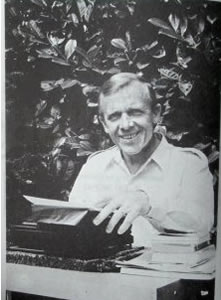
 

 1614952-3a424057d339800d95e29a13ed85f6be.jpg
Fyodor Gladkov (21 juni 1883 – 20 december 1958)

Geschreven door Romenu om 13:36 Reageer op dit bericht

Vikram Seth, Paul Muldoon, Kurt Schwitters, Jean-Claude Izzo, Silke Andrea Schuemmer, Carel van Nievelt

De Indische schrijver Vikram Seth werd geboren op 20 juni 1952 in Kolkata. Zie ook alle tags voor Vikram Seth op dit blog.

Uit: An Equal Music

„I stared at her with such incredulity that she looked down.
"You're always humming," she said in a much quieter voice, feeling perhaps that she had to explain.
"It's my work," I said, ashamed of my bitterness. Another customer entered the shop, and I left.
As I put my week's croissants--all except one--in the freezer, I noticed I was humming the same half-tuneless tune of one of Schubert's last songs:
I see a man who stares upwards
And wrings his hands from the force of his pain.
I shudder when I see his face.
The moon reveals myself to me.
I put the water on for coffee, and look out of the window. From the eighth floor I can see as far as St Paul's, Croydon, Highgate. I can look across the brown-branched park to spires and towers and chimneys beyond. London unsettles me--even from such a height there is no clear countryside to view.
But it is not Vienna. It is not Venice. It is not, for that matter, my hometown in the North, in clear reach of the moors.
It wasn't my work, though, that made me hum that song. I have not played Schubert for more than a month. My violin misses him more than I do. I tune it, and we enter my soundproof cell. No light, no sound comes in from the world. Electrons along copper, horsehair across acrylic create my impressions of sense.
I will play nothing of what we have played in our quartet, nothing that reminds me of my recent music-making with any human being. I will play his songs.”


 1614650-2f1f3559b927989920ce7585f5e193ac.jpg
Vikram Seth (Kolkata, 20 juni 1952)


De Ierse dichter en schrijver Paul Muldoon werd geboren in Portadown, County Armagh, in Noord-Ierland op 20 juni 1951, Zie ook alle tags voor Paul Muldoon op dit blog.


Extraordinary Rendition

1.
I gave you back my claim on the mining town
and the rich vein we once worked,
the tumble down
from a sluice box that irked

you so much, the narrow gauge
that opened up to one and all
when it ran out at the landing stage
beyond the falls.

I gave you back oak ties,
bully flitches, the hand-hewn crossbeams
from which hung hardtack

in a burlap bag that, I'd surmise,
had burst its seams
the last night we lay by the old spur track.


2.
You gave me back your frown
and the most recent responsibility you'd shirked
along with something of your renown
for having jumped from a cage just before it jerked

to a standstill, your wild rampage
shot through with silver falderals,
the speed of that falling cage
and the staidness of our canyon walls.

You gave me back lake skies,
pulley glitches, gully pitches, the reflected gleams
of two tin plates and mugs in the shack,

the echoes of love sighs
and love screams
our canyon walls had already given back.


 1614650-551ada35903351b2075ff0b5cf386bcd.jpg
Paul Muldoon (Portadown, 20 juni 1951)


De Duitse schrijver, dichter en kunstenaar Kurt Schwitters werd geboren op 20 juni 1887 in Hannover. Zie ook alle tags voor Kurt Schwitters op dit blog.


Sie puppt mit Puppen

Die Puppen puppen mit kleinen Puppen,
Die kleinen Puppen puppen mit winzigen Puppen,
Die winzigen Puppen puppen mit Püppchen,
Die Püppchen puppen mit kleinen Püppchen,
Die kleinen Püppchen puppen mit winzigen Püppchen,
Die winzigen Püppchen puppen,
Keiner puppt mit ihr.
Ah, Du meine Puppe,
Meine süße Puppe;
Mir ist alles schnuppe,
Wenn ich meine Schnauze
Auf die Deine - bauze.
Püppchen Schnüppchen
Puppe Schnuppe
Schnuppe bauze.
Die bäuzchen, Püppchen, Puppenfraun
Sie machen nur noch schnauze bauze.


Unsittliches i-Gedicht

Dames-Hemden . . . . . . . . .
Dames-Pantalons, fransch model
Dames-Pantalons . . . . . . . .
Prima Dames Nachtponnen . . . .
Dames-Combinations . . . . . .
Heeren Hemden, zwaar graslinnen


 1614650-2aef41c37facf42db8fb63ace12923bd.jpg
Kurt Schwitters (20 juni 1887 – 8 januari 1948)
Das Bumerbild door Kurt Schwitters, 1920


De Franse dichter en schrijver Jean-Claude Izzo werd geboren op 20 juni 1945 in Marseille. Zie ook alle tags voor Jean-Claude Izzo op dit blog.


Soif d'avoir soif

Et l'eau bue jusqu'à la cécité bleue
des océans érigés en écritoire.

Et l'abondance des mots, à blanc,
jusqu'à l'à-pic dérisoire des pages nues.

Ne rien écrire qui ne soit vu.
Ne rien dire qui n'ait été écrit.

Alors, dans ce silence à couper au regard,
s'abreuver
aux seuls chemins qui se refusent
et s'insoumettre
à l'ordre des choses.

Alors encore, d'immobilisme
renverser le paysage,
se hisser à l'écume des houles annonciatrices
des jours mourants.

La chute d'une hirondelle
n'empêchera pas le retour du printemps.


Uit : Braises de la mémoire, IV

Terre.
Gisent les hommes dans les villages défaits.
Cimetières.
Aux fenêtres des maisons tombent les pierres d'angle.
Larmes.
Larmes, et pierres sur pierres, les ruines s'érigent.
Cri – trou que font mes lèvres dans l'opacité bleue pour rompre le silence, pour
rendre la parole à ces heurs dans le plain-chant du soleil. Et les coquelicots enfin
rendus à leur éphémère splendeur.
Terre.
Là.


 1614650-398816b7d554379bd509b9969b4267da.jpg
Jean-Claude Izzo (20 juni 1945 – 26 januari 2000)


De Duitse dichteres, schrijfster en kunsthistorica Silke Andrea Schuemmer werd geboren op 20 juni 1973 in Aken. Zie ook alle tags voor Silke Andrea Schuemmer op dit blog.


Amourellen

I

Wenn du aus meinen Händen Schwalben faltest,
zieht ihr Flug die Himmel lakentief
drin gehn wir als vergessne Blinde um
Mit einem Seufzen setz ich dir mein Auge in die Stirn
und seh mich tastend gegenüber stehn
Die Luft wird knapp bei deinem Kuss
denn ein Insekt hab ich verschluckt
das flirrt und flattert mit vier Flügeln
bis zum Bersten in der Brust


Wind

III

Vom blassen Kleid aus Sturm und Luft
hängt noch ein Zipfel im Geäst
ob Nixenschwanz ob Mirtenschmuck
und verdunstet wie der Mond
im allerersten Licht
Der Windsbrautklang und der Gesang
nach wilder Jagd und Menschenfleisch
heult durch den hohlen Stamm
Der Schritt der Weiterhetzenden ist
nur ein Alpdruckgruß im Morgenschlaf
Doch oben hoch im grad erwachten Baum
loben gefiederte Fische das Meer


 1614650-808b3fbfafc19283ff4d91be09678570.jpg
Silke Andrea Schuemmer (Aken, 20 juni 1973)
Jean-François Millet, Le coup de vent, nationaal museum, Cardiff, 1871-73


De Nederlandse schrijver Carel van Nievelt werd op 20 juni 1843 geboren in Delfshaven, als zoon van een boekhandelaar. Zie ook mijn blog van 20 juni 2007.

Uit: Mijn Angelo. Herinneringen van het Garda-meer

“Wanneer ik u thans in dit dorp Nago iets langer doe verwijlen, dan misschien voor uwe reuk- en gezichtsorganen aangenaam kan zijn, zoo moet gij dit beschouwen als een soort van afdoener. Al deze Italiaansch-Tiroleesche dorpen immers, op weinige gezegende uitzonderingen na, zijn in eenzelfden vorm gebakken, met eenzelfde sop van grauwheid en groezeligheid overgoten, met eeuzelfden geest van ontiegheid en onhuislijkheid doortrokken. Kent gij er één, zoo kent gij er honderd.
Stel u voor een brok van eene achterbuurt uit eene groote Italiaansche stad, neergeploft ergens midden tusschen de bergen - dan hebt gij een begrip van een dorp in Italiaansch Tirol, of Tiroleesch Italië, naar het met meer juistheid te noemen ware. Zulk een dorp heeft in zijnen houwtrant geen zweem van dorpschheid. Flank tegen flank geplakt, staan om de onvermijdelijke piazza en aan de enge straat de berookte, drie of vier verdiepingen hooge huizen. Meest vensterloos, ontdaan van alle sieraad en behang, maken zij den indruk alsof zij kort geleden door een brand bezocht werden, die slechts de naakte muren overliet. Werpt gij door de zwarte openingen eenen blik naar binnen, dan griezelt gij bij de gedachte aan het leven der bewoners van die donkere, schier van alle huisraad verstokene spelonken - en het verwondert u niet, dat de menschen op de morsige straat zoo schuw en lusteloos daar heenschuifelen; dat menig fijn kindergezichtje zoo flets, menig donker meisjesoog zoo lijdend staat; dat mannen en vrouwen zoo iets misnoegde of kwaadaardigs in hunne trekken hebben; dat in het algemeen op het gelaat van oud en jong het stempel gedrukt is, niet zoozeer van de armoede waarmede men worstelt, als wel van de doffe vreugdeloosheid eener existentie aan welke de fleur en de geur van het menschzijn ontbreken: een opgewekt gemoedsleven, een zin voor reinheid, schoonheid en huislijke gezelligheid.”


 1614650-fb9ce19cded259522a25db141caef2ed.jpg
Carel van Nievelt (20 juni 1843 – 2 augustus 1913)
Nago-Torbole aan het Gardameer


Zie voor nog meer schrijvers van de 20e juni ook mijn blog van 20 juni 2011 deel 2.

Geschreven door Romenu om 18:30 Reageer op dit bericht

Salman Rushdie, Sybren Polet, Josef Nesvadba, Osamu Dazai, José Rizal, Friedrich Huch, Gustav Schwab

De Indisch-Britse schrijver en essayist Salman Rushdie werd geboren in Bombay op 19 juni 1947. Zie ook alle tags voor Salman Rushdie op dit blog.

Uit: Joseph Anton: A Memoir

“Afterwards, when the world was exploding around him and the lethal blackbirds were massing on the climbing frame in the school playground, he felt annoyed with himself for forgetting the name of the BBC reporter, a woman, who had told him that his old life was over and a new, darker existence was about to begin. She had called him at home on his private line without explaining how she got the number. “How does it feel,” she asked him, “to know that you have just been sentenced to death by the Ayatollah Khomeini?” It was a sunny Tuesday in London but the question shut out the light. This is what he said, without really knowing what he was saying: “It doesn’t feel good.” This is what he thought: I’m a dead man. He wondered how many days he had left to live and thought the answer was probably a single- digit number. He put down the telephone and ran down the stairs from his workroom at the top of the narrow Islington row house where he lived. The living room windows had wooden shutters and, absurdly, he closed and barred them. Then he locked the front door.
It was Valentine’s Day but he hadn’t been getting on with his wife, the American novelist Marianne Wiggins. Six days earlier she had told him she was unhappy in the marriage, that she “ didn’t feel good around him anymore,” even though they had been married for little more than a year, and he, too, already knew it had been a mistake. Now she was staring at him as he moved nervously around the house, drawing curtains, checking window bolts, his body galvanized by the news as if an electric current were passing through it, and he had to explain to her what was happening. She reacted well, beginning to discuss what they should do next. She used the word “we.” That was courageous.
A car arrived at the house, sent by CBS television. He had an appointment at the American network’s studios in Bowater House, Knightsbridge, to appear live, by satellite link, on its morning show. “I should go,” he said. “It’s live television. I can’t just not show up.” Later that morning the memorial service for his friend Bruce Chatwin was to be held at the Orthodox church on Moscow Road in Bayswater”.


 1614256-3583029bf484cfebbd20fce29330eecd.jpg
Salman Rushdie (Bombay, 19 juni 1947)


De Nederlandse dichter en schrijver Sybren Polet (pseudoniem van Sybe Minnema) werd geboren in Kampen op 19 juni 1924. Zie ook alle tags voor Sybren Polet op dit blog.


Overleven

Elke dag minstens één koude-oorlog.
De hele aardbevolking
even bevroren. IJspoppen met rode ogen.

Ontdooid. En daar lopen wij weer,
in een landschap
vredig als zeegras in de landwind,
wind
als een zegen uit het nihil.

Windmolens als gebedsmolens:
de wind komt op tijd
als ademstoten van inspiratie
uit rondwervelende windstreken.

Begeleid door de laatste vrije geluiden
waaien wij mee.
Zeer mooi
zoals wij de laatste koude oorlog doorstaan
en weten waar te gaan:
wij,
spelingen van de natuur:
ónze verspeelde natuur.


Eén minuut stilte 1

De stad
rilt
onder zijn asfalt.

Ik steek al je lampen aan bij daglicht
om naar de stilte te luisteren.

Oorsuizingen van asters
narcissen
bloemen voor mijn broer -

Ik heb een voor een mijn bloemen gedoofd
om naar je oren te luisteren. - Luister maar;

je leeft,

zo zachtjes als de duif die men kan horen koeren
op het Weteringcircuit
de éne voet die schuifelt,
de éne nek

die zich omdraait

en knarst


 1614256-1b8179433a2cd825f1e1e936a029c4ad.jpg
Sybren Polet (Kampen, 19 juni 1924)
Op de cover van het tijdschrift Parmentier, 2008


De Tsjechische schrijver Josef Nesvadba werd geboren op 19 juni 1926 in Praag. Zie ook alle tags voor Josef Nesvadba op dit blog.

Uit: Horribly Beautiful, Beautifully Horrible

“We had to pass through the Iron Curtain, about which we had heard so much from previous expeditions. It was not a literal curtain of iron, but a system of holorays that wouldn't permit anything metallic to pass through: no equipment, no computers and, of course, no weapons. We found ourselves becalmed within it, unable to take a single step forward; the only solution was to take off our clothes and continue our journey naked. Once on the other side, though, we all felt cold and had difficulty breathing the planet's smog-filled atmosphere.
We walked across a fouled desert plain from which strange and stunted hills emerged here and there, like the finger-bones of a huge skeleton. Only the crest of these finger-like hills were inhabited by living beings; the natives had evidently abandoned the cities and villages of the plain because of the smog. We found many of these abandoned settlements, all in ruins, as though they had suffered some long and bloody conflict. In some of the derelict dwellings we found coats and dirty suits to cover our nakedness. We felt warmer then, but we looked rather silly, like the retreating soldiers of a beaten army.
At least, we thought, they won't be afraid of us.
Thus clad, we undertook the arduous climb to the summit of one of the digital hills, and eventually arrived at the gate of the natives' new abode. It looked like a medieval town. The towns in the plain had been much more advanced. A queue had formed before the gate, made up of suspicious characters like ourselves. They were being examined one by one by guards who were armed with swords and shields. Our commander decided that someone should be sent ahead to find out exactly what was going on. "Someone" turned out to be me.“


 1614256-ce04e7d3518ba1c67ca8c992a9c147ea.jpg
Josef Nesvadba (19 juni 1926 – 26 april 2005)
Praag 


De Japanse schrijver Osamu Dazai (eig.Shūji Tsushima) werd geboren op 19 juni 1909 in Tsugaru. Zie ook alle tags voor Osamu Dazai op dit blog.

Uit: No Longer Human (Vertaald door Donald Keene)

“Though I have always made it my practice to be pleasant to everybody, I have not once actually experienced friendship. I have only the most painful recollections of my various acquaintances with the exception of such companions in pleasure as Horiki. I have frantically played the clown in order to disentangle myself from these painful relationships, only to wear myself out as a result. Even now it comes as a shock if by chance I notice in the street a face resembling someone I know however slightly, and I am at once seized by a shivering violent enough to make me dizzy. I know that I am liked by other people, but I seem to be deficient in the faculty to love others. (I should add that I have very strong doubts as to whether even human beings really possess this faculty.) It was hardly to be expected that someone like myself could ever develop any close friends—besides, I lacked even the ability to pay visits. The front door of another person’s house terrified me more than the gate of Inferno in the Divine Comedy, and I am not exaggerating when I say that I really felt I could detect within the door the presence of a horrible dragon-like monster writhing there with a dank, raw smell.”
(…)

“Unhappiness. There are all kinds of unhappy people in the world. I suppose it would be no exaggeration to say that the world is composed entirely of unhappy people. But those people can fight their unhappiness with society fairly and squarly, and society for its part easily understands and sympathizes with such struggles. My unhappiness stemmed entirely from my own vices, and I had no way of fighting anybody.”


 1614256-ab6db8662cf281f7a6a4d6924e07ba81.jpg
Osamu Dazai (19 juni 1909 – 13 juni 1948)


De Filippijnse dichter en schrijver José Rizal (eig. José Protacio Rizal Mercado y Alonso Realonda) werd geboren op 19 juni 1861 in Calamba. Zie ook alle tags voor José Rizal op dit blog.


First Inspiration


Why falls so rich a spray
of fragrance from the bowers
of the balmy flowers
upon this festive day?

Why from woods and vales
do we hear sweet measures ringing
that seem to be the singing
of a choir of nightingales?

Why in the grass below
do birds start at the wind's noises,
unleashing their honeyed voices
as they hop from bough to bough?

Why should the spring that glows
its crystalline murmur be tuning
to the zephyr's mellow crooning
as among the flowers it flows?

Why seems to me more endearing,
more fair than on other days,
the dawn's enchanting face
among red clouds appearing?

The reason, dear mother, is
they feast your day of bloom:
the rose with its perfume,
the bird with its harmonies.

And the spring that rings with laughter
upon this joyful day
with its murmur seems to say:
'Live happily ever after!'

And from that spring in the grove
now turn to hear the first note
that from my lute I emote
to the impulse of my love.


 1614256-4544f39df275d090df9cd2227da72477.jpg
José Rizal (19 juni 1861 - 30 december 1896)
Standbeeld in Manilla


De Duitse dichter en schrijver Friedrich Huch werd geboren op 19 juni 1873 in Braunschweig. Zie ook alle tags voor Friedrich Huch op dit blog.

Uit: Peter Michel

„Peter Michels Vater war Schuhmacher in einem Dorfe. Er hatte träumerische Augen, die sich nie mit Bewußtsein dauernd auf eine Stelle konzentrieren konnten, und einen Geist, der fortwährend grübelte, ohne an etwas Festem zu haften. Er dachte über die abenteuerlichsten Fragen nach, ohne aber je zu einem Resultate oder zur Annäherung an ein solches zu gelangen. Er hatte eine unbegrenzte Hochachtung für andere; vor allem für seine Frau, welche gar keinen Maßstab an sich legte, sondern sich unbesehen für etwas ganz Bedeutendes hielt. – Beobachtung fehlte Herrn Michel beinahe gänzlich; doch hatte er ein gutes Auge für die Füße anderer: er maß einem jeden sogleich in Gedanken Stiefel an. Einmal ereignete es sich, daß eine fremde, durchreisende Dame ihm ihr Schuhwerk zur Ausbesserung bringen ließ, kleine Stiefelchen aus feinem gelbem Leder. Er, der gewöhnt war, pfundschwere Ware unter den Händen zu haben, fühlte sich einer so zierlichen Aufgabe nicht gewachsen. Da war es aber seine Frau, die ihre ganze Energie einsetzte, der fremden Dame zu zeigen, daß es auch in ihrem Dorfe Leute gäbe, »welche mit der Welt in Verbindung ständen«. Sie fuhr persönlich in das nächste größere Städtchen, kaufte feines Leder, feine Stifte, Glanzwichse, und die Schuhe wurden repariert. Diese Dame machte auf den kleinen Peter einen großen Eindruck. Wenn er später etwas von Prinzessinnen las, dachte er stets sogleich an gelbe Schuhe, eine Ideenverbindung, die sich erst in seinem weiteren Leben verlor.
Sein Vater war sehr beliebt im Dörfchen. Er verdarb es mit niemandem, hörte jeden an und stimmte jedem bei, in aufrichtiger Bewunderung der fremden Größe. Er glaubte alles, was man ihm sagte. Der Schulze und der Pastor erprobten zuweilen die Tragfähigkeit dieses Glaubens, indem sie sich gegenseitig überboten in den plumpsten Lügenbauten.“


 1614256-51ebef968fe7ff7df9d8b9920fc4a847.jpg
Friedrich Huch (19 juni 1873 – 12 mei 1913)


De Duitse dichter, schrijver en pastor Gustav Schwab werd geboren op 19 juni 1792 in Stuttgart. Zie ook alle tags voor Gustav Schwab op dit blog.

Uit: Wanderungen durch Schwaben

„Das Neckartal von Cannstatt bis Heidelberg.

Unsre Galerie malerischer Gegenden aus Schwaben eröffnet sich mit einem Tale, über welches eine südlichere Natur das Füllhorn ihres Segens ausgegossen zu haben scheint. Schon der alte Hübner in seinem jetzt hundertjährigen Zeitungslexikon sagt: »Cannstatt ist nach Stuttgart und Tübingen eine der feinesten Städte im Württembergischen.« Er konnte mit diesem rühmlichen Prädikate keineswegs unmittelbar das Städtchen Cannstatt selbst bezeichnen wollen, denn dieses ist ein unansehnliches, in seinem Innern nichts weniger als »feines« Landstädtchen, von dessen Einrichtung zu Hübners und zu unsrer Zeit galt und gilt, was schon zu Ende des sechzehnten Jahrhunderts Martin Crusius in seiner Chronik vorgemerkt hat: »Die Häuser von Cannstatt sind nicht zur Pracht, sondern zum Gebrauch gebaut.« Jenes Lob kann also nur der Umgegend gelten, und diese verdient es auch in vollem Maße. Der Teil des Neckartals, in dessen Schoße Cannstatt liegt, gehört nicht zu den großartigeren, wohl aber zu den freundlichsten und fruchtbarsten von ganz Schwaben. Das üppigste Rebenlaub kleidet seine sonnigen Hügel, deren Höhen und tiefere Taleinschnitte wuchernde Obstgärten oder vielmehr Obstwälder bedecken und ausfüllen; breite Weidenpflanzungen auf frischen grünen Wiesen ziehen sich zu beiden Seiten der Flußufer hin und machen, in der Nähe zahlreicher und lachender Ortschaften, Gärten und Äckern, wohl auch Weinpflanzungen Platz; einzeln auf Hügeln stehende Kirchen, zu welchen nur die letzten Häuser der Dörfer sich emporziehen, erinnern, mitten im protestantischen Lande, an die alte katholische Zeit, aus der wohl auch einmal die einsame Kapelle eines verschwundenen Dorfes übrig geblieben ist; einige Dörfer sind, wie die Städte Italiens, ganz auf Hügeln gelagert; die neueste Zeit hat diesem lachenden Gemälde Landhäuser, Tempel, Badehallen und Pavillons hinzugefügt, und das unscheinbare Cannstatt selbst verschwindet unter einer Umkleidung von schmucken Vorwerken, Gasthöfen, Badehäusern, Fabriken und vor einer gewerbreichen, an Bauten von Jahr zu Jahr wachsenden Vorstadt jenseits des Neckars, die binnen Jahresfrist mit der Stadt selbst durch die massivste und schönste Steinbrücke des Landes verbunden sein wird.“


 1614256-7466d518c235e398e77ed71ad18fb327.jpg
Gustav Schwab (19 juni 1792 – 4 november 1850)
Cannstatt, rond 1900

Geschreven door Romenu om 19:02 Reageer op dit bericht

Richard Powers, Raymond Radiguet, Geoffrey Hill, Bert Schierbeek, Karin Fellner, Aster Berkhof

De Amerikaanse schrijver Richard Powers werd geboren op 18 juni 1957 in Evanston, Illinois. Zie ook alle tags voor Richard Powers op dit blog.

Uit: Orfeo

“Lights blaze from an American Craftsman home in a demure neighborhood, late on a spring evening, in the tenth year of the altered world. Shadows dance against the curtains: a man working late, as he has every night that winter, in front of shelves filled with glassware. He's clad in mufti, protective goggles, and latex hospital gloves, and his Giacometti body hunches forward as if in prayer. A gray but still-thick Beatles mop hangs in his eyes.
He studies a book on the gear-cluttered workbench. In one hand-a single-channel pipette, raked like a dagger. From a tiny refrigerated vial, he sucks up no more colorless liquid than a hoverfly might take from a sprig of bee balm. This pellet goes into a tube no bigger than a mouse's muzzle, a dollop so small he can't be sure it's really there. His gloved hands shake as he shoots the used pipette tip into the trash.
More liquids go from the beakers into the dollhouse cocktail: oligo primers to start the magic; heat-stabilized catalyzing polymerase; nucleotides that fall in line like enlisted men for a five a.m. reveille, a thousand bonds per minute. The man follows the printed recipe like an amateur cook.
The brew goes into the thermal cycler for twenty-five rounds of roller-coaster flux, swinging between near-boiling and tepid. For two hours, DNA melts and anneals, snatches up free-floating nucleotides, and doubles each time through the loop. Twenty-five doublings turn a few hundred strands into more copies than there are people on Earth.
Outside, budding trees submit to the whims of a light wind. A wave of holdout nightjars skim the air for bugs. The do-it-yourself genetic engineer removes a colony of bacteria from his incubator and sets it under the laminar flow hood. He stirs the flattened culture flask and dispenses the loosened cells into a twenty-four-well sample plate. This plate goes under a microscope, at 400x. The man puts his eye up to the lens and sees the real world.“


 1613777-2fae18e5e92681fca7559fffeda10b0c.jpg
Richard Powers (Evanston, 18 juni 1957)


De Franse schrijver Raymond Radiguet werd geboren op 18 juni 1903 in Saint-Maur-des-Fossés. Zie ook alle tags voor Raymond Radiguet op dit blog.

Uit: The Devil in the Flesh (Vertaald door Christopher Moncrieff)

“It was now the beginning of March. Spring was early. On the days when Marthe did not come with me into Paris she was waiting for me in the evening on my return from art school. Naked beneath her dressing-gown, she lay in front of the fire. Olive-wood from her parents-in-law's estate burned in the hearth. She had asked them to renew her supply. I do not know what held me back. Perhaps it was simply the fear of doing something one has never done before. I was reminded of Daphnis. But in this case it was Chloe who had been given one or two lessons and Daphnis did not dare to ask her to teach him. Besides, I tended to regard Marthe as a virgin, given over during the first fortnight of her marriage into the arms of an unknown man, who had taken her several times by force.


 1613777-844ed3bae33fd27a13dd29958fa100fe.jpg
Scene uit de film “Il diavolo in corpo” van Marco Bellocchio uit 1986


Alone in my bed at night I spoke Marthe's name, furious with myself - I who regarded myself as a man - for not being man enough to make her my mistress. Each time I went to see her I swore I would not leave until she was.
On my sixteenth birthday, In March 1918, she gave me a dressing-gown like her own. She hoped I would not be angry but she wanted to see me try it on there. I was so happy that I nearly made a pun; something I never did. My toga praetexta, my pretext! For I realised that what had inhibited me was a sense of the ridiculous, of feeling dressed when she was not. At first I was going to put the dressing gown on that same day. Then, blushing, I saw what a reproach this present implied”.


 1613777-326b6cfb7ea9a10c83d29b3ac231d6da.jpg
Raymond Radiguet (18 juni 1903 – 12 december 1923)
Portret door Modigliani, 1915


De Engelse dichter Geoffrey Hill werd geboren op 18 juni 1932 in Bromsgrove, Worcestershire. Zie ook alle tags voor Geoffrey Hill op dit blog.


Tenebrae

He was so tired that he was scarcely able to hear a note of the songs: he felt imprisoned in a cold region where his brain was numb and his spirit was isolated.

1
Requite this angel whose
flushed and thirsting face
stoops to the sacrifice
out of which it arose.
This is the lord Eros
of grief who pities
no one; it is
Lazarus with his sores.


2
And you, who with your soft but searching voice
drew me out of the sleep where I was lost,
who held me near your heart that I might rest
confiding in the darkness of your choice:
possessed by you I chose to have no choice,
fulfilled in you I sought no further quest.
You keep me, now, in dread that quenches trust,
in desolation where my sins rejoice.
As I am passionate so you with pain
turn my desire; as you seem passionless
so I recoil from all that I would gain,
wounding myself upon forgetfulness,
false ecstasies, which you in truth sustain
as you sustain each item of your cross.


 1613777-b1fe32c9fd7550680f1f423288e608e4.jpg
Geoffrey Hill (Bromsgrove, 18 juni 1932)


De Nederlandse schrijver en dichter Bert Schierbeek werd geboren op 18 juni 1918 in Glanerbrug in Twente. Zie ook alle tags voor Bert Schierbeek op dit blog.


Kijk

kijk,
ik weet het niet
ik was nog nooit dood
maar als je nou dood bent
wat zie je dan
wat zie jij nu wat ik niet zie
Want als de ogen zich sluiten
en het zicht naar binnen keert
waar ben ik dan
en jij?
en wij?

kijk,
als ik die kurketrekker pak
die zweedse van blank berken
en een fles rooie ontkurk
dan zie ik jou voor me
zoals je dat deed
je ogen
je hand
het glas

kijk,
dat wel
en de zon
een rooie bal over de heuvels
en de meeuw
een vliegende vlek in de zon
net als jij


 1613777-27fb94a913e7ae84a53f9fa19ee0cdc1.jpg
Bert Schierbeek (18 juni 1918- 9 juni 1996)
Cover


De Duitse dichteres Karin Fellner werd geboren 1970 in München, waar zij nog steeds woont. Zie ook alle tags voor Karin Fellner op dit blog..


ab bricht der sommer die zelte

ab bricht der sommer die zelte
rundum renovation
mit hämmern und sägen kreischen
die vollen backen aaa

mode moschee da köcheln
zungen kanacken weg
anderes wird im kessel
konserviert im weck

glas zwetschgen geballt und
kaum verhallt der verhaltne
ruf nach einem der

mia schuftn songs doch söiba
aba da kurde do kriagt
a neies hüftglenk gschenkt


 1613777-1d6abaca42533c60e0431ea19ba576fb.jpg
Karin Fellner (München, 18 juni 1970)


De Vlaamse schrijver Aster Berkhof (eig. Louis van den Bergh werd geboren in Rijkevorsel op 18 juni 1920. Zie ook alle tags voor Aster Berkhof op dit blog.

Uit: De zomer en ik

“Hebt u onlangs nog deel uitgemaakt van een 'luie hoek'? U weet toch wat dat is. Het dient zomer te zijn, natuurlijk. Ook avond. Een warme, zachte, geurige zomeravond. Een stil plekje daarin, een stadspleintje met bomen, dehoek van een straat, een meerpaaltje op de vaartdijk, dewarme muur van een bakkerij, een berm waar landwegeltjes elkaar kruisen. Daar een groepje mensen die tijdensde dag goed gewerkt hebben, tevreden zijn over zich zelf en zonder enig doel of plan bij elkaar gekomen zijn.
Sommigen staan. Sommigen zitten neergehurkt. En ze keuvelen. Uren lang, tot ze elkaar in het donker nog maar nauwelijks kunnen zien.
Deze vreedzame avondlijke keuvelpartijtjes op de 'luie hoeken' gaan nu verloren. Ze zijn al verloren gegaan. Men heeft geen tijd meer. Men heeft nooit meer gedaan. Er moet geld zijn voor zoveel dingen. Dat huis, die auto, die tweede auto, die zomerreis, die winterreis. Men moet ook naar de televisie kijken. Men rijdt per auto naar de kruidenier. Neen, men rijdt niet meer naar de kruidenier.
Men doet al zijn boodschappen in één keer in het winkelcentrum. Men ontmoet elkaar niet meer. Men kent elkaar niet meer. We hebben partijtjes waar in de fauteuils naast ons onbekenden zitten. We hebben ook zo'n 40 jaar maaltijden. We geven daar vertoningen. Dit vreemde verschijnsel vond plaats, dat men ons, arbeidende mensen, genoeg vrije tijd gaf om die nuttig in arbeidstijd te kunnen omzetten en dat we dat deden en daardoor de gejaagdheid in ons verhoogden.”


 1613777-e77941175ba97a18ddc250e6222d81af.jpg
Aster Berkhof (Rijkevorsel, 18 juni 1920)


Zie voor nog meer schrijvers van de 18e juni ook mijn blog van 18 juni 2012 en eveneens mijn blog van 18 juni 2011 deel 2.

Geschreven door Romenu om 18:23 Reageer op dit bericht

Peter Rosei, Gail Jones, Ward Ruyslinck, Hanna Johansen, Max Dendermonde, James Weldon Johnson

De Oostenrijkse dichter en schrijver Peter Rosei werd geboren op 17 juni 1946 in Wenen. Zie ook mijn blog van 17 juni 2009 en eveneens alle tags voor Peter Rosei op dit blog.

Uit: Madame Stern

„Sie haben also auch Kinder?“
„Eins. Unsere kleine Sophie.“ Die Frau Doktor sagte es in liebevollem Ton und mit fürsorglichem Nachdruck.
„Wir haben auch ein Mäderl, meine Frau und ich!“ Niki Schestak brachte es herzig heraus.
„Wie alt ist sie denn?“
Man saß im Café Mozart, Schestak hatte den Treffpunkt vorgeschlagen: „Dann können wir zum Essen gleich ins Sacher hinübergehen.“
„Ob ich so lang Zeit haben werde?“, hatte die Frau Doktor Stern darauf gesagt.
Sie saßen in einer der komfortablen Nischen, in einer etwas entlegeneren Ecke, und hatten den Saal vor sich. Mäßig besetzt. Wie üblich ein paar Japaner, eine Reisegruppe, mit ihren unvermeidlichen Sonnenhüten auf den Köpfen, leise miteinander schnatternd. Einige Zeitung lesende ältere Herrschaften, bequem in die Polster zurückgelehnt, ihre Morgenmelange vor sich.
„Ein schöner Tag heute.“
„Ein wunderbarer Tag!“
„Um diese Jahreszeit ist Wien doch am schönsten.“
Schestak hatte Frau Doktor Stern zu dieser Aussprache gebeten. Nach einigem Hin und Her mit dem Terminkalender hatte sie doch eingewilligt.
Die leichteste, die am besten abgesicherte Route führt über die Familie: Haben Sie Kinder? Wie viele? Wie reizend! Und die Masern? Was macht denn Ihr Mann? Dazu Anmerkungen übers Wetter, über die Jahreszeit, übers Essen eingestreut. Vielleicht speist sie gern fein? Oder was Kulturelles? Ins Kunsthistorische vielleicht? Sport war für Frauen für gewöhnlich wenig zielführend.
„Und was macht Ihr Mann, wenn ich fragen darf?“, fragte Schestak, sich dabei ein wenig vorbeugend.
Frau Doktor Stern zog die Augenbrauen in die Höhe, gerade so, als hätte ihr der Magister mit dieser Frage einen Antrag gemacht. Mein Gott! Was die sich ziert! Trampel. Sie antwortete knapp: „Er arbeitet bei der Sachwalterschaft.“


 1613272-426b1dc26becd54b8a37754b6f6b8e07.jpg
Peter Rosei (Wenen, 17 juni 1946)


De Australische schrijfster Gail Jones werd geboren op 17 juni 1950 in Harvey. Zie ook alle tags voor Gail Joenes op dit blog.

Uit: Sorry

“How to gather, quietly and honourably, all that is now scattered? How to reanimate the dead as if they were human after all, not symbols, or functions that I must somehow deal with, not flimsy puppet cut-outs trimmed to my purpose?
When I was born, two years after my parents’ marriage, my mother was thirty-eight, my father thirty-six. Neither had expected children; indeed, both were accustomed to self-enclosure and habituated to types of loneliness their partnership did not quite alleviate. I was a mistake, a slightly embarrassing intervention, and knew this melancholy status from earliest childhood. Predictably, both treated me as a smallish adult, arranging a regimen of behaviour, insisting on rules and repression, talking in stern, pedagogical tones. Neither thought it necessary to express affection, nor to offer any physical affirmations of our bond. I was, in consequence, a beseeching child, grumpy, insecure, anxious for their approval, but also wilfully emphatic in ways that I knew would test and annoy them. In the battle between us, there were only losses. If it had not been for the Aboriginal women who raised me, I would never have known what it is like to lie against a breast, to sense skin as a gift, to feel the throb of a low pulse at the base of the neck, to listen, in intimate and sweet propinquity, to air entering and leaving a resting body.
I was born in 1930; part of my childhood was in war-time. My father, who had served as a young captain in the First World War, carried fragments of shrapnel deep in his back and therefore walked with an awkward, halting tilt. He had hated being invalided out of the army – a vague shame attached to his incapacitation – and when war came again he was doubly shamed to be refused a commission. He had become stubborn and mean-spirited, but also intent on proving his manhood. By 1928 he already had the weary eyes of someone disappointed by life, and married my mother, I think, as some obscure, even unnameable, compensation. It was certainly not love; love makes itself manifest, love is a tangible tenderness. It was an assertion against loss, a form of acquisition.”


 1613272-40c0c938088caf57250f5c75b902a464.jpg
Gail Jones (Harvey, 17 juni 1950)


De Vlaamse schrijver Ward Ruyslinck (pseudoniem van Raymond Charles Marie De Belser) werd geboren in Berchem op 17 juni 1929. Zie ook alle tags voor Ward Ruyslinck op dit blog.

Uit: De ontaarde slapers

“Silvester luisterde naar de wind die als een vlam tegen de deur sprong. Boven op het dak lag een pan los, die ratelde zoals in de nazomer de klappermolen in de boomgaard van Jom Pekke, de Zwarte Loeder. Al vier dagen waaide de wind uit het westen aan, als een donker loeiend vloedwater rollend over de vlakte achter de stad. Als een wild dier huilde hij in het nabije akkermaalsbos, waarboven de kraaien met zware trage slagen rusteloos rondroeiden, en op het voetbalveld zweepte hij met donderend geweld onder de golfplaten van de tribunes. Het was een ruige, vochtige wind die de omgeploegde aarde roestig kleurde en de rook die uit de vele scheve schouwen van de stad opsteeg met een klap in de lucht wegsloeg. Maar de storm kon Silvester niet deren. Hij wachtte niet op de lente, die rond deze tijd van het jaar, met het gisten van het mos en het zachte ruisen van de lichte lauwe wind, placht te komen. Hij wachtte op niets. Zijn hart hing niet aan deze wereld, aan de wisselende schoonheid der seizoenen en de altijd andere gezichten van de mensen. Hij wachtte op niets en hij verlangde ook niets.”
(…)

“Op dat moment verliet Silvester de dreef die het akkermaalsbos verbond met de steenweg en geruime tijd nadien nog, op zijn weg naar het steunlokaal, hoorde hij de wind in de toppen van de naakte bomen gieren. In de lucht, bij tussenpozen van luwte, ruiste de regen met een hoog en wijd ruimtelijk geluid, als de klapperwiekende overtocht van vele vluchten trekvogels. De steenweg strekte zich in een indeloze rechte voortgang uit tussen een open veld en enkele alleenstaande werkmanswoningen.”


 1613272-d4e17cbb359587194eabdc30ceb703ce.jpg
Ward Ruyslinck (Berchem, 17 juni 1929)
Portret door Jan Vanriet, 1979


De Zwitserse schrijfster Hanna Johansen (eig. Hanna Margarete Meyer) werd geboren op 17 juni 1939 in Bremen. Zie ook alle tags voor Hanna Johansen op dit blog.

 Uit: Der schwarze Schirm

„Kleine Tropfen setzten sich ans Fenster. Wenn sich ein paar gesammelt hatten, fingen sie an, nach unten zu laufen, und hielten wieder inne, bis mehr Tropfen kamen, um dann weiterzulaufen. Der Wagen war um die Tageszeit so gut wie leer, die Türen schlugen zu, der Zug fuhr an, und eine Frau mit Plastiktüten kam herein.
Diese Reise habe ich umsonst gemacht, dachte ich. Nicht daß ich viel erhofft hatte, das liegt mir nicht, aber tatsächlich war überhaupt nichts dabei herausgekommen. Sobald wir fuhren, wanderten die Tropfen nach rechts. Dann hörten sie damit auf, weil keine neuen mehr kamen.
Die Frau stand noch an der Tür und schaute in den Wagen. Ihr Mantel war alt und entschieden zu groß. Sie selber war jung, strahlte aber nichts Jugendliches aus und atmete schwer. Sie hatte auch einen Koffer. Hoffentlich setzt sie sich nicht zu mir, dachte ich, als sie zu gehen begann. Sie richtete ihre Blicke auf die vielen leeren Sitze, an denen sie vorbeikam, und setzte sich zu mir.
»Wie heißt du?« sagte sie, keuchend, wie man keucht, wenn man lange gerannt ist, um den Zug nicht zu verpassen. Wie man mit solchen Absätzen rennen kann, werde ich nie begreifen. Dann schien sie ihre Frage zu vergessen und atmete nur noch, schnell und laut und lange. Sie saß gerade gegenüber, nicht auf dem Platz daneben, wie man es sonst tut, wenn die Züge so leer sind. Ihren Koffer hatte sie neben sich auf den Sitz geworfen, die Plastiktüten hielt sie noch fest, ihr Schirm tropfte, und sie keuchte. In diesem Alter, habe ich immer gedacht, erholt man sich schneller. Und sie sah auch gar nicht so aus, als wäre sie das Rennen nicht gewohnt. Zwischendurch atmete sie auf die übliche Weise, als hätte sie das Keuchen vergessen, und dann schien es ihr wieder ein zufallen.“


 1613272-3efeb2d70cebb80f2456f9a6753b43fc.jpg
Hanna Johansen (Bremen, 17 juni 1939)


De Nederlandse dichter en schrijver Max Dendermonde (pseudoniem van Hendrik Hazelhoff) werd geboren op 17 juni 1919 in Winschoten. Zie ook alle tags voor Max dendermonde op dit blog.


Glurend in Amsterdam West

Ik moet je - zwijgend - iets biechten, kleine Yolande:
ik zag, verstolen door mijn venster, 's avonds laat
jou langzaam lopen met lachebek Agaath,
en hoorde jullie fluisteren, zag jullie handen

tederheid doen, je streek het haar weg van haar wangen,
ze weerde zich, zoals dat in de aanvang gaat
- een schuchter Lesbos in onze arbeiderstraat –
en bood daarop haar lippen, al voluit verlangend.

Verraad? Ach nee. Er heerst bij ons een sterke wet:
had Agaath 's nachts zo graag thuis gehouden bij mij,
maar dat brengt bittere heibel in onze buurt.

Ik stond daar. Door je zachte vrijen daagde het
dat jij haar meer verdient dan ik. Want besef jij
dat ik een les kreeg in jullie meisjesnatuur?


Wittaal en kader

Een vel wit papier. Leg er een rode streep over,
willekeurig, met wat franje, een veeg, een spat.
Het is niets, zonder bezwering, teken of tover.

Neem nu een kader, schuif, wik, weeg en sjoemel wat,
en uit een witgat is een nieuwe taal geboren.

Op een ritmische zekerheid, boog in, boog uit,
dansen flarden van zinnige grootheid zich naar voren,
de hele wereld wordt al in die veeg geduid.

Gezeten ‘s ochtends bij mijn halve omelet
ben ik al een grote nul voor elke buitenstaander,
maar in mezelf sjoemel ik al hard aan mijn kader,
ik bouw een dag, vol ongeschreven, eigen wet.

Ik of jij, wie ook, elk kind, wijf, jongeling, kerel
schept grootheid uit wittaal en kaders in de wereld.


 1613272-8b224f09e082b9d8ea1935ba3b833322.jpg
Max Dendermonde (17 juni 1919 – 24 maart 2004)
Hier met echtgenote, 1955


De Amerikaanse dichter, schrijver en diplomaat James Weldon Johnson werd geboren op 17 juni 1871 in Jacksonville, Florida. Zie ook alle tags voor James Weldon Johnson op dit blog.


Mother Night

Eternities before the first-born day,
Or ere the first sun fledged his wings of flame,
Calm Night, the everlasting and the same,
A brooding mother over chaos lay.
And whirling suns shall blaze and then decay,
Shall run their fiery courses and then claim
The haven of the darkness whence they came;
Back to Nirvanic peace shall grope their way.

So when my feeble sun of life burns out,
And sounded is the hour for my long sleep,
I shall, full weary of the feverish light,
Welcome the darkness without fear or doubt,
And heavy-lidded, I shall softly creep
Into the quiet bosom of the Night.


Sleep

O Sleep, thou kindest minister to man,
Silent distiller of the balm of rest,
How wonderful thy power, when naught else can,
To soothe the torn and sorrow-laden breast!
When bleeding hearts no comforter can find,
When burdened souls droop under weight of woe,
When thought is torture to the troubled mind,
When grief-relieving tears refuse to flow;
'Tis then thou comest on soft-beating wings,
And sweet oblivion's peace from them is shed;
But ah, the old pain that the waking brings!
That lives again so soon as thou art fled!
Man, why should thought of death cause thee to weep;
Since death be but an endless, dreamless sleep?


 1613272-ac27531967edbed8819c8fc77416c06b.jpg
James Weldon Johnson (17 juni 1871 – 26 juni 1938)


Zie voor nog meer schrijvers van de 17e juni ook mijn blog van 17 juli 2011 deel 2.

Geschreven door Romenu om 18:23 Reageer op dit bericht

Meer van Romenu

↑ Terug naar de berichten