Clarice Lispector, Ara Baliozian, Christine Brückner, Jacquelyn Mitchard

De Braziliaanse schrijfster Clarice Lispector werd geboren op 10 december 1925 in Podolia (Oekraïne). Zie ook mijn blog van 10 december 2008.
Uit: The Hour Of The Star
“Everything in the world began with a yes. One molecule said yes to another molecule and life was born. But before prehistory there was the prehistory of prehistory and there was the never and there was the yes. It was ever so. I do not know why, but I do know that the universe never began.
Let no one be mistaken. I only achieve simplicity with enormous effort. …
In writing this story, I shall yield to emotion and I know perfectly well that every day is one more day stolen from death. In no sense an intellectual, I write with my body. And what I write is like a dank haze. The words are sounds transfused with shadows that intersect unevenly, stalactites, woven lace, transposed organ music. I can scarcely invoke the words to describe this pattern, vibrant and rich, morbid and obscure, its counterpoint the deep bass of sorrow. Allegro con brio. I shall attempt to extract gold from charcoal. I know that I am holding up the narrative and playing at ball without a ball.
Is the fact an act? I swear that this book is composed without words: like a mute photograph. This book is a silence: an interrogation.”
De Armeense schrijver Ara Baliozian werd geboren op 10 december 1936 in Athene. Zie ook mijn blog van 10 december 2006 en ook mijn blog van 10 december 2008.
Uit: Pages From My Diary, 1986-1995
“All people with a long history of oppression are short-tempered. When an Armenian loses his temper, the message he is trying to convey is: "I took it from the Turks for a thousand years; I don't have to take it from you." The "I" of course stands not just for himself but for all his ancestors as well—or his collective unconscious.
Whenever I read a book by an odar Armenologist, I cannot help thinking that he is more interested in our past than in our future. He values our antiquities much more than ourselves. These academics will probably be happier if we were to vanish from the face of the earth, thus providing them with a clear-cut ending and a final chapter to their field of inquiry.
Whenever I read a critical letter from one of my readers, I am reminded of a friend who runs a pizza parlor. "Armenians are hard to please", he is fond of saying. "Everyone likes my pizza, except Armenians—they always have something critical to say. Some day if you ever go into pizza business you will know what I mean."
I have never bothered to explain to him that I am myself a battle-scarred veteran of many wars; and that unlike the owner of a pizzeria, an Armenian writer is asked to bear not just the cross but also the cost of Armenian literature.
Nothing can be more repellent to me than the self-satisfied smile of someone who thinks he has got it made. Whenever I see such a smile on the cover of a magazine, I feel like going down on my knees and saying: "O God, allow me to die a miserable failure in order that I may never smile like that."

De Duitse schrijfster Christine Brückner werd geboren op 10 december 1921 in Schmillinghausen bij Bad Arolsen in Hessen. Zie ook mijn blog van 10 december 2008.
Uit: Effi Briest an den tauben Hund Rollo
“Ich klage dich nicht an, Instetten, du bist, wie du bist. Aber klagen werde ich doch dürfen. Ihr habt mich alle geliebt, weil ich war, wie ich war und wie ich jetzt nicht mehr bin. Und dich hat man geachtet, weil du bist, wie du bist. Und was ist denn nun besser, lange Jahre geachtet oder kurze Zeit geliebt zu werden? Vater würde da wieder sagen, „das ist ein zu weites Feld“. Das weite Feld! Ich wußte nicht, daß es Mauern und Zäune gibt, über die man nicht hinwegspringen kann. Hindernisreiten habe ich nicht gelernt.
Jetzt legt er mir wieder seine dicke Pfote aufs Knie. Meinst du, Rollo, daß wir unseren Spaziergang machen sollten, damit alles immer so weitergeht und seine Ordnung hat? Die Wege immer kürzer, die Ruhepausen länger? Ja, Instetten! Jemand, der Grundsätze hat, der ist im Vorteil, und mehr will ich dazu nicht sagen. Du hast keine Liebe in dir, und dafür kannst du nichts und deshalb hast du vielleicht doch keine Schuld. Du hast gesagt, Festigkeit wäre nicht meine Spezialität. Du hast immer nur gesagt, was ich nicht war und was ich nicht hatte. Das ist wie mit den Zehn Geboten. „Du sollst nicht!“ Aber mir muß man sagen, was ich soll! Du hattest dich in das halbe Kind, das ich noch war, verliebt, weil du in jungen Jahren meine Mutter liebtest. Eigentlich hast du doch meine Mutter gemeint, und die hätte auch besser zu dir gepaßt, das denkt Vater auch. Alle haben es gewußt, nur ich nicht. Und die andere Hälfte des halben Kindes wolltest du dir erziehen.
Jetzt müssen wir endlich auch von Crampas reden, Instetten! Crampas ließ mich so, wie ich war, der wollte nichts, und ich wollte auch nichts. Man fliegt und verliert den Boden unter den Füßen, man denkt, gleich reißt das Seil, und dann reißt es doch nicht, und man steht wieder auf den Füßen, aber man ist danach nicht mehr dieselbe. Von Major Crampas hieß es in Kessin, er sei ein Damenmann. Er nahm die Frauen ernst oder wenigstens doch so ernst wie seinen Dienst und überhaupt die Welt. Ganz ernst war ihm nichts. Ich habe doch „nein“ gesagt! Ich habe mich gewehrt, und er hat mich bedrängt, das ging so hin und her

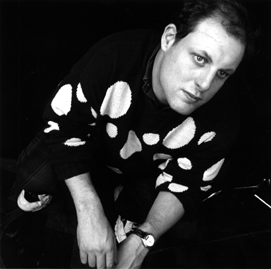
De Amerikaanse schrijfster Jacquelyn Mitchard werd geboren in Chicago, Illinois, op 10 december 1951. Zie ook mijn blog van 10 december 2008.
Uit: No Time to Wave Goodbye
“Before dawn on the day she would finally see his first real film, Beth Cappadora slipped into the guest room and lay down on the edge of the bed where her son, Vincent, slept.
Had she touched his hair or his shoulder, he would not have stirred. When he slept at all, Vincent slept like a man who'd fallen from a relaxed standing position after being hit on the back of the head by a frying pan. Still, she didn't take the risk. Her relationship with Vincent didn't admit of nighttime confidences, funny cards, all the trappings of the sentimental, platonic courtship between a mother and her grown boy. Instead, Beth blessed the air around his head, where coiled wisps of dark hair still sprang up as they had when he was a child.
Show them, Vincent, she said softly. Knock 'em dead.
Beth asked only a minor redemption-something that would stuff back the acid remarks that everyone had made about where Vincent's career of minor crime and major slough-offs would end, because it had so far outlasted the most generous boundaries of juvenile delinquency. She wished one thing itself, simple and linear: Let Vincent's movie succeed.
That night, as she watched the film, and recognized its might and its worth, Beth had to appreciate-by then, against her will-that her wish was coming true. What she didn't realize was something that she'd learned long ago.
Only long months from that morning did Beth, a superstitious woman all her life, realize she had forgotten that if a wish slipped like an arrow through a momentary slice in the firmament, it was free to come true any way it would. Only fools thought its trajectory could ever be controlled.„