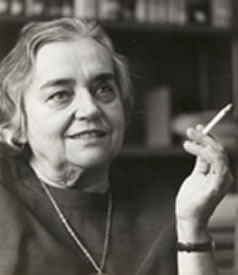
Viktor Astafiev, Reinier van Genderen Stort, Alexej Chomjakov, Marcel Prévost

De Russische schrijver Viktor Astafiev werd geboren op 1 mei 1924 in Ovsyanka. Zie ook mijn blog van 1 mei 2007.
Uit: The Cursed And The Slain (Vertaald door Arch Tait en Martin Dewhirst)
„Leshka Shestakov, warm and comfortable up on the luggage shelf, uncertainly moved his cap from his ear. In this cosmic howling he began to make out the sound of marching feet, the thundering of some vast military formation, and the sound of the iron train, still rasping in the cracking frost, ceased to set his teeth on edge. He felt a chill of fear and unease run down his back, and a tremulous ecstasy. It began to dawn on the recruits that the foggy, frozen world outside the windows was not howling but singing.
All the time they were being herded out of the carriages by impartially ill-natured men in worn military uniforms, lined up alongside the white spattered train, divided into groups of ten, and ordered to fall in behind, they were turning their heads this way and that, trying to find out who was singing, and where, and why.
Only when they got close to the pine forest, its warm tree tops besieging the winter's fog, looming first black then green through the grey, motionless world, only then did the recruits see waves of human beings advancing from all directions out of the impenetrable mist, rolling in towards them beneath the trees, swaying wearily as they moved along, row upon row in close formation. Like automatons the ragged columns as they marched were exhaling puffs of white breath, which were immediately followed by the eery howling which now resolved itself into slow, drawn out sounds and words which had to be guessed at rather than heard: "Across the steppe march regiments renowned", "Once I've seen it through, Marusya, I'll come back to you, Marusya", "A fearless seagull soaring flew above the mighty ocean blue", "Never, Cossacks of Kuban, forget September twenty-one", "Ho, bold Poltava gun, four wheels made to run and run...".
De Nederlandse dichter en schrijver Reinier van Genderen Stort werd geboren op 1 mei 1886 in Buitenzorg, Nederlands Indië. Zie ook mijn blog van 1 mei 2009.
Uit: Kleine Inez
„Hij toog naar Leiden, waar de nieuwe gedachten het welsprekendst werden verkondigd. Hij studeerde het recht en volgde tevens lezingen over wijsbegeerte, godgeleerdheid en geschiedenis. Arm, onthield hij zich van geneuchten, die hij, matig, niet begeerde en de aan Luther toegeschreven rijmen, waaraan een meer zwierend dan werkend studiegenoot hem eens luimig had herinnerd,
Wer nicht liebt Wein, Weib und Gesang,
Der bleibt ein Narr, sein Leben lang,
hadden hem slechts doen schouderophalen.
Na vier jaar promoveerde hij op een proefschrift over het staatswezen in de 14e eeuw, maar zoo uitnemend van kennis en betoog bleek dit omvangrijk geschrift, dat hij weinige maanden later tot hoogleeraar benoemd werd, ter vervanging van den aftredenden Nestor der rechtskundige faculteit.
Dit stout debuut verdiepte een eerzucht, waarvan de uiting nochtans beheerscht bleef. Hij werd een der meest gezaghebbende staathuishoudkundigen in den lande. Briefwisseling met buitenlandsche geleerden, medewerking aan een duitsch maandschrift, vertalingen zijner geschriften verbreidden zijn naam in beide halfronden. Maar de vroede kalmte van het academisch leven voldeed hem niet.
Dadelijker wilde hij invloed oefenen op het leven zijner tijdgenooten. Zoo koerste hij driest met scherpen boeg, de woelige zee op der politiek. Ook hier dwong zijn sterke persoonlijkheid tot aller aandacht, ook hier won hij een aanhang, die gaandeweg zich verkernde tot een liberale keurbende, en waarvan de invloed op 's lands zaken al stelliger bleek.“

Boekomslag van „Kleine Inez“ (uitgave 1969)
De Russische dichter, schrijver, filosoof en theoloog Alexej Stepanovitsj Chomjakov werd geboren op 1 mei 1804 in Moskou. Hij volgde diverse studies aan de Lomonosov-Universiteit te Moskou en schreef al snel zonder moeite artikelen in het Frans, Duits en Engels. Nadat hij van 1822 tot 1825 militaire dienst had vervuld, ging hij naar Parijs, waar hij zich bezighield met schilderkunst en het historisch drama Jermak schreef (uitgegeven in 1832). Toen hij in 1826 terugkeerde naar Moskou publiceerde hij diverse hooggeprezen gedichten in diverse literaire tijdschriften.Van 1828 tot 1829 vocht hij in de Russisch-Turkse oorlog, om zich daarna terug te trekken op zijn landgoed. In 1839 schreef hij daar zijn artikel Over oud en nieuw, waarmee hij de grondslag legde voor de Slavofilie.
Youth
Heaven, make my hands
Like a mighty titan’s!
I’ll envelop nature
In my fervid grasp,
I shall hold nature
To my trembling heart,
And she will respond
To my heart’s desire
With the love of youth.
Everything in her
Shines and breathes with passion;
In her, nothing sleeps
In hibernal slumber.
Fearsome volcanoes
Rumble on the earth;
Boisterous rivers
Flow into the ocean;
In the sea azure
Billows bounce swiftly,
Playing stormy games.
Both the sea and land
Grant ebullient dreams,
Joyfulness and hope,
Fame and youthful beauty
To a mortal man.
Stars in the blue heavens
Hurry after stars;
In the streams of lustre
Flow across the ether
Secret words of passion,
Secret declarations.
Centuries go by,
Centuries are born—
An eternal struggle,
An impassioned life.
Heaven, give a titan’s
Mighty hands to me:
I must hold nature,
Like an ardent lover,
In my joyful grasp.
Vertaald door Dmitry Shatalov

Zelfportret, 1842
De Franse schrijver Marcel Prévost (eig Eugène Marcel) werd geboren op 1 mei 1862 in Parijs. Zie ook mijn blog van 1 mei 2007.
Uit: Marcel Prévost (Biografie door Jules Bertaut)
„On peut donc dire que l'auteur de Mademoiselle Jaufre a subi dans toute son étendue l'éducation
religieuse. On a tant écrit sur l'empreinte fatale qu'impose à un jeune esprit une éducation de cet
ordre, et il n'g aurait point à revenir sur ce sujet si nous n'observions précisément, à propos de M. Marcel Prévost, combien les effets de cette prise de possession d'une âme sont divers et singu-
liers. Que M. Prévost se soit longtemps ressenti de son éducation première, nul ne le conteste
înais qu'il s'en soit ressenti dans le sens où on l'observe d'ordinaire chez les esprits médiocres,
voilà qui est faux. Vous pouvez relire toutes les pages de ses romans et de ses articles, depuis ses débuts au Clairon, depuis le Scorpion jusqu'aux Lettres à Françoise, en aucun passage cous ne rencontrerez cette mollesse de style, cette souplesse lâche de pensée, ce iarabiscotage de l'esprit qui sont proprement les signes qu'un écrivain a subi une première et durable éducation religieuse.
Les oéritables traces de ses influences primitives ne sont point ici, mais dans le souci constant qu'il a de poser et de discuter des problèmes moraux, dans le sentiment des devoirs et des lois sociales et morales, dans l'acceptation ou dans le refus de ces lois et de ces devoirs. Cette disposition de l'esprit qui nous incline à observer la vie non dans le seul but d'en tirer des notations curieuses ou émouvantes, mais dans le désir d'y glaner des faits susceptibles de servir de bases ou d'arguments à une discussion morale et qui est proprement l'état d'esprit du moraliste, M. Marcel Prévost la possède dans toute son étendue, et je ne crains pas d'affirmer que c'est à son éducation première qu'il en doit l'acquisition. Ce n'est un secret pour personne que l'éducation pratiquée par des religieux catholiques et surtout l'exercice du culte catholique développent à l'extrême les faculés d'analyse.“