

Naar de inhoud

Romenu

Over literatuur, gedichten, kunst en cultuur
akke.beakke.be

Berichten van 29 november 2009 tot 30 november 2009

Lee Klein, David Nicholls, Adeline Yen Mah
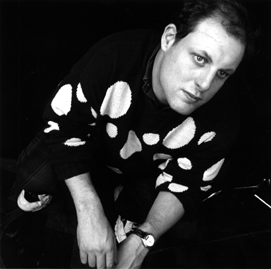
De Amerikaanse dichter, schrijver en essayist Lee Klein werd geboren op 30 november 1965 in New York. Zie ook mijn blog van 30 november 2008.


THE  SHOPPPINGTOWN DOWN UNDER

In the diving bell-Boschian eggshell
   This shopping mall poet descends-
   Into the eucalyptus forest in dream time
   So as if to be an under cover parker
   In an Oceanic "Shoppingtown"

Donning a blazer,
   Sporting pins of pewter
   Sculpted to be as a bas-relief of a continent in releaf
   Purchased from purveyors of
   Plaques and memorabilia
   Commemorating the games of the twenty seventh Olympiad
   "The Olympic store"

Snorkel in mouth sinking
    To the escalator
    Driving the hive
    Foot traffic converging
    During the Olympic fortnight surging
    Down on the ground
   Grownups dressed as mascots are waving
   Swimming through the atrium aquarium
   Aqueous torch burning
   Green and white of cask
   For the flame lit by jet action
   And through the microphone
   Comes forth
   These words

Out in the Outback
   The Outbacks’ the Outback
   But out of the Outback the Outback's a steakhouse
   And down under they build Westfield Shoppingtowns
  from which you may need to backdown

Back out to back down to be out of the Outback
   I might as well be back out or back out form the Outback
   Well at least I am out -out of the Outback

And that's life in a shoppingtown
   Un hey un bamba and de night
    Na na nanna na
    Life in a Shoppingtown

Paramatta, Sydney, Western Suburbs, New South Wales
    A sliding glass door through a parquet meridian
    Of a Thomas Cook branch
    Here in the commonwealth
    To punch up the numbers
    To take you on a round trip
    Round trip one-day only
    Round trip one-day only round trip
     Is the impish man formerly working in a travel agency
     Now presently working at another travel agency
     This Thomas Cook
     He has a chestnut head of hair and sideburns
     The latter graying
    And as he is saying
     But he is having difficulty
    With his computer
    And so he punches the keys grimacing
   Then he is up Walking to the exchange window
   To get change from travel fares
   He is showing them printed receipts
   From downloads on his computer portal
   Into the Thomas Cook hub
  Wearing yellow and blue
  What can he do? Flub!


Lee_klein
Lee Klein (New York,.30 november 1965)


De Engelse schrijver David Nicholls werd geboren op 30 november 1966 in Hampshire. Zie ook mijn blog van 30 november 2008.


Uit: Starter For Ten


“ALL young people worry about things, it’s a natural and inevitable part of growing-up, and at the age of sixteen my greatest anxiety in life was that I’d never again achieve anything as good, or pure, or noble, or true, as my O-level results.

I didn’t make a big deal about them at the time of course; I didn’t frame the certificates or anything weird like that, and I won’t go into the actual grades here, because then it just gets competitive, but I definitely liked having them; Qualifications. Sixteen years-old, and the first time I’d ever felt qualified for anything.

Of course, all that was a long, long time ago. I’m nineteen now, and I like to think I’m a lot wiser and cooler about these things. So my A-levels are, comparatively, no big deal. And besides, the idea that you can somehow quantify intelligence by some ridiculous, antiquated system of written examinations is obviously ridiculous. Having said that, they were Langley Street Comprehensive School’s best A-level results of 1985, the best for fifteen years in fact, 3 As and a B, that’s 19 points – there, I’ve said it now - but I really, honestly don’t believe that’s particularly relevant or impressive or anything, I just mention them in passing, that’s all. And besides, compared to other qualities, like physical courage, or popularity, or grace, or good health, or good looks, or clear skin, or a rich, varied and rewarding sex-life, just knowing loads of stuff isn’t actually that important. Unless of course you don’t have any of those other qualities, in which case you’re frankly just grateful for what you’ve got.

But like Dad used to say, the important thing about an education is the opportunity that it brings, the doors it opens. Because otherwise knowledge, in and of itself, is a blind alley, especially from where I’m sitting, here, on a late September Wednesday afternoon, in a factory that makes toasters.

I’ve spent the holiday working in the despatch department of Ashworth Electricals, which means I’m responsible for putting the toasters in their boxes before they’re sent out to the retailers. Of course, there are only so many ways you can put a toaster in a box, so it’s been a pretty dull couple of months over all, but on the plus side it’s £1.85 an hour, which isn’t bad, as much toast as you can eat of course, and there’s the radio to listen to, and I like to think I’ve got on pretty well with my fellow members of staff.”


david
David Nicholls (Hampshire, 30 november 1966)


De Chinese schrijfster Adeline Yen Mah werd geboren op 30 november 1937 in Tianjin. Zie ook mijn blog van 30 november 2008.


Uit: Chinese Cinderella


“AUTUMN 1941
As soon as I got home from school, Aunt Baba noticed the silver medal dangling from the left breast pocket of my uniform.
She was combing her hair in front of the mirror in our room when I rushed in and plopped my schoolbag down onto my bed.
"What's that hanging on your dress?"
"It's something special that Mother Agnes gave me in front of the whole class this afternoon.
She called it an award."
My aunt looked thrilled. "So soon? You only started kindergarten a week ago. What is it for?"
"It's for leading my class this week. When Mother Agnes pinned it on my dress, she said I could wear it for seven days. Here, this certificate goes with it." I opened my schoolbag and handed her an envelope as I climbed onto her lap.
She opened the envelope and took out the certificate. "Why, it's all written in French or English or some other foreign language. How do you expect me to read this, my precious little treasure?" I knew she was pleased because she was smiling as she hugged me. "One day soon," she continued, "you'll be able to translate all this into Chinese for me. Until then, we'll just write today's date on the envelope and put it away somewhere safe. Go close the door properly and put on the latch so no one will come in."
I watched her open her closet door and take out her safe-deposit box. She took the key from a gold chain around her neck and placed my certificate underneath her jade bracelet, pearl necklace and diamond watch, as if my award were also some precious jewel impossible to replace.“


adeline_Yen_mah

Adeline Yen Mah (Tianjin, 30 november 1937)


Geschreven door Romenu om 00:00 Reageer op dit bericht

Jan G. Elburg, Mark Twain, Jonathan Swift, Philip Sidney

De Nederlandse dichter en schrijver Jan G. Elburg werd geboren op 30 november 1919 te Wemeldinge. Zie ook mijn blog van 30 november 2006 en ook mijn blog van 30 november 2007 en ook mijn blog van 30 november 2008.


Aubade voor zedelijke normen


En het gaat voort. wij maken het hof aan een vliegveld.

vinden wij. goed goed goed praten zullen wij niet.

het is tijd voor een lief gebed: knieën uit de broek

gekipt en sneeuw bestellen om een oude vaderfabel

voor ongelovige ogen op te voeren.

was u neer? was u gepoot? was u verzekerd

tegen uw eigen gevoel van ongelijk? wat lijkt

u het beste van al die engelen met straalaandrijving?

boog u diep? was u deemoedig? wij maken het hof.

praten moet ik. goed goed. praten moet ik.

op zekere dag waren wij met onze zakken vol


van zekerheden. rookten zij onze woorden als sigaren.

stonden wij voor een muizenfluim besef.

woonden wij. ternauwernood. leidden wij

de dag in met lang opstaan, jankend om zeep

van vergetelheid. om de jeuk van ons voorhoofd

te wassen.


en het gaat voort. wij op trams voor de dromen

vluchtend, voor de ogen van onze scholingsboeken,

voor de verstelde vrouwen en dekens, voor de kolen,

voor het ontbijt, eer de kinderen ons aankijken,

wilden vervellen uit de waarheid, van schaamte

geschoren zijn met gave kaken. men moet leven kunnen

zonder lange tanden van alsem in de mond die praten

moet. stil, wij maken het hof aan een vliegveld.

Een ijver kenmerkt ons om het zaad van onze daden

chloorkalk te ofreren. op vrijersvoeten gaan wij onszelf

becijferen. of wij een verbazend bestaan beëindigen.

of wij zijn opgeleid. had u een moeder? had u te eten?

wij hadden een moeder uit angst voor ons willen.

en het gaat voort.


Heks Heks


Tover jij?

je leeft zo eenvoudig

als duizend anderen

binnen een tent van Frans katoen

met je borsten in twee kleine voorkamers

binnen een huisje van dunne kleren

zo klein zo klein

dat je benen de straat op moeten


je droomt zo bescheiden in je ogen

je werkt zo eenvoudig met je schouders

als duizend en een vrouwen

waarom moet mijn stem dan buigen

of een prinses voorbijkomt?


ik geef mij over

er komt een onmetelijke

vredige luchtvloot over


bekèn het maar je

(heks heks)

doet het, nietwaar, toveren.


elburg

Jan G. Elburg (30 november 1919 – 13 augustus 1992)


De Amerikaanse schrijver Mark Twain (pseudoniem van Samuel Langhorne Clemens) werd geboren op 30 november 1835 te Florida. Zie ook mijn blog van 30 november 2006 en ook mijn blog van 30 november 2008.


Uit: The War Prayer


“It was a time of great and exalting excitement. The country was up in arms, the war was on, in every breast burned the holy fire of patriotism; the drums were beating, the bands playing, the toy pistols popping, the bunched firecrackers hissing and spluttering; on every hand and far down the receding and fading spread of roofs and balconies a fluttering wilderness of flags flashed in the sun; daily the young volunteers marched down the wide avenue gay and fine in their new uniforms, the proud fathers and mothers and sisters and sweethearts cheering them with voices choked with happy emotion as they swung by; nightly the packed mass meetings listened, panting, to patriot oratory which stirred the deepest deeps of their hearts, and which they interrupted at briefest intervals with cyclones of applause, the tears running down their cheeks the while; in the churches the pastors preached devotion to flag and country, and invoked the God of Battles beseeching His aid in our good cause in outpourings of fervid eloquence which moved every listener. It was indeed a glad and gracious time, and the half dozen rash spirits that ventured to disapprove of the war and cast a doubt upon its righteousness straightway got such a stern and angry warning that for their personal safety's sake they quickly shrank out of sight and offended no more in that way.

Sunday morning came -- next day the battalions would leave for the front; the church was filled; the volunteers were there, their young faces alight with martial dreams -- visions of the stern advance, the gathering momentum, the rushing charge, the flashing sabers, the flight of the foe, the tumult, the enveloping smoke, the fierce pursuit, the surrender! Then home from the war, bronzed heroes, welcomed, adored, submerged in golden seas of glory! With the volunteers sat their dear ones, proud, happy, and envied by the neighbors and friends who had no sons and brothers to send forth to the field of honor, there to win for the flag, or, failing, die the noblest of noble deaths. The service proceeded; a war chapter from the Old Testament was read; the first prayer was said; it was followed by an organ burst that shook the building, and with one impulse the house rose, with glowing eyes and beating hearts, and poured out that tremendous invocation


God the all-terrible! Thou who ordainest! Thunder thy clarion and lightning thy sword!”


mark-twain
Mark Twain (30 november 1835 – 21 april 1910)


De Engelse schrijver Jonathan Swift werd op 30 november 1667 in Dublin geboren uit Engelse ouders. Zie ook mijn blog van 30 november 2006 en en ook mijn blog van 30 november 2008.


Uit: Gullivers Reizen (Vertaald door Sem Davids)


“Mijn naam is Lemuel Gulliver. In het jaar 1699 was ik scheepsdokter op een groot zeilschip, de Antilope. We voeren van Engeland naar Oost-Indië. Het was gezellig aan boord. Af en toe werd er iemand ziek en dan maakte ik hem weer beter. Maar grote rampen hadden we eigenlijk nog niet meegemaakt. Tot het op een dag, op 5 november 1699, vreselijk hard begon te stormen. Ons schip waaide heen en weer en we waren allemaal erg bang. De matrozen waren de hele tijd aan het jammeren, en de stuurman trok uit alle macht aan het stuur, om ervoor te zorgen dat het schip niet omsloeg. En ik?

Nou ja, het enige wat ik kon doen was mezelf goed vasthouden aan een grote paal. En die paal was mijn redding. Want een grote golf kwam, tilde het schip hoog op, en sloeg het in stukken uiteen op het woeste water. Ik voelde hoe ik in het koude water landde, en bleef mezelf vasthouden aan de paal. In de verte hoorde ik mijn naam schreeuwen: “Gulliver! Gulliver!” Maar al gauw hoorde ik niets meer.

Ik weet niet hoe lang ik in dat water heb gelegen. Maar uiteindelijk zag ik land. Met mijn laatste krachten zwom ik er naartoe. Uitgeput viel ik op het warme zand, en daar moet ik in slaap zijn gevallen.

Toen ik wakker werd, was ik helemaal stijf. Ik moest wel acht uur geslapen hebben. Ik wilde opstaan en mezelf eens lekker uitrekken... maar ik kon me niet bewegen! En toen voelde ik, dat ik met honderden kleine touwtjes vastgebonden zat! Om me heen hoorde ik allemaal stemmetjes. Toen voelde ik iets over mijn lichaam lopen. Met veel moeite tilde ik mijn hoofd op, en ik zag dat het een heel klein mannetje was. Het mannetje was niet groter dan mijn hand. Maar hij was niet alleen. Om mij heen en op mijn lichaam zag ik honderden kleine mensjes. Ze zagen er keurig gekleed uit en liepen opgewonden heen en weer. Ik hoorde heel vaak het woord “Lilliput, Lilliput!” dus ik denk dat ze daarmee bedoelden dat dit het eiland Lilliput was, en dat zij Lilliputters waren. Veel van die Lilliputters hadden een kleine pijl en boog, die ze op mij hadden gericht. Ik probeerde me los te rukken van de touwen, maar de kleine mensen schoten pijlen op me. Die pijlen waren vlijmscherp en deden gemeen zeer. Ik besloot maar rustig te blijven liggen om te zien wat ze van me wilden.

Een mannetje, dat heel deftige kleren aanhad, klom via mijn been omhoog en liep over mijn lichaam naar mijn borst. Daar bleef hij staan en hij begon tegen mij te praten. Maar de taal die hij sprak verstond ik niet. Toen hij uitgepraat was, liet ik met gebaren weten dat ik honger had. Dat begreep hij. Er kwamen ineens honderd Lilliputters aan, met kleine manden vol eten. Er was brood, maar dat was niet groter dan de nagel van mijn duim. En het vlees was niet groter dan de vleugel van een musje. Ik at wel drie stukken vlees tegelijk, en stopte vier broden tegelijk in mijn mond. De mensen keken vol verbazing toe. Toen liet ik merken dat ik graag wilde drinken. De kleine mensjes wisten al wel dat ze met een heel grote beker moesten komen, dus kwamen ze met een grote regenton. Voor mij was het niet groter dan een yoghurtbekertje, maar er waren drie Lilliputters voor nodig om hem te tillen.”


Swift_portrait
Jonathan Swift (30 november 1667 – 19 oktober 1745)

Portret van Swift in Marble Hill House, London


De Engelse schrijver Sir Philip Sidney werd geboren op 30 november 1554 in het  kasteel van Penshurst in het graafschap Kent. Zie ook mijn blog van 30 november 2006 en ook mijn blog van 30 november 2008.


My True Love Hath My Heart, And I Have His 


My true-love hath my heart, and I have his,

By just exchange, one for the other giv'n.

I hold his dear, and mine he cannot miss;

There never was a better bargain driv'n.

His heart in me keeps me and him in one,

My heart in him his thoughts and senses guides;

He loves my heart, for once it was his own;

I cherish his, because in me it bides.

His heart his wound received from my sight:

My heart was wounded with his wounded heart;

For as from me, on him his hurt did light,

So still me thought in me his hurt did smart:

Both equal hurt, in this change sought our bliss:

My true love hath my heart and I have his.


Some Lovers Speak 


Some lovers speak when they their Muses entertain,

Of hopes begot by fear, of wot not what desires:

Of force of heav'nly beams, infusing hellish pain:

Of living deaths, dear wounds, fair storms, and freezing fires.


Some one his song in Jove, and Jove's strange tales attires,

Broidered with bulls and swans, powdered with golden rain;

Another humbler wit to shepherd's pipe retires,

Yet hiding royal blood full oft in rural vein.


To some a sweetest plaint a sweetest style affords,

While tears pour out his ink, and sighs breathe out his words:

His paper pale despair, and pain his pen doth move.


I can speak what I feel, and feel as much as they,

But think that all the map of my state I display,

When trembling voice brings forth that I do Stella love.


SidneyVAold
Sir Philip Sidney (30 november 1554 – 17 oktober 1586)

Naar een miniatuur van Sir Isaac Oliver

Geschreven door Romenu om 00:00 Reageer op dit bericht

John Bunyan, Rudolf Lavant, Winston Churchill, Lucy Maud Montgomery

De Engelse dichter en schrijver John Bunyan werd geboren op 30 november 1628 in Harrowden bij Bedford. Zie ook mijn blog van 30 november 2006 en ook mijn blog van 30 november 2008.


Upon The Lord's Prayer 


Our Father which in heaven art,

Thy name be always hallowed;

Thy kingdom come, thy will be done;

Thy heavenly path be followed

By us on earth as 'tis with thee,

We humbly pray;

And let our bread us given be,

From day to day.

Forgive our debts as we forgive

Those that to us indebted are:

Into temptation lead us not,

But save us from the wicked snare.

The kingdom's thine, the power too,

We thee adore;

The glory also shall be thine

For evermore.


bunyan
John Bunyan (30 november 1628 - 31 augustus 1688)

Standbeeld in Bedford


De Duitse dichter en schrijver Rudolf Lavant (eig. Richard Cramer) werd geboren op 30 november 1844 in Leipzig. Zie ook mijn blog van 30 november 2008.


In der Vorstadt


(Nach dem Englischen des Francis W. L. Adams)


In finstrer Nacht, durch koterfüllte Gassen,

In dem Kanalgewirr und unter Bäumen

Der dumpfe Taktschritt ungesehner Massen,

Ein stöhnend Atmen wie aus wüsten Träumen!

Gespenstisch alles! Nur ein Lichtlein wacht -

Das ist der Vormarsch der Armee der Nacht!


Die Wunden all, die durch die Nacht Vertierten,

Die da in Höhlen und in Gruben wohnen,

Die Frau’n, die tränenlos ins Dunkel stierten,

Sie ziehen alle mit uns wie Dämonen.

Schließt eure Reihn! Welch blanker Schimmer lacht?

Die Bajonette der Armee der Nacht!


Mann, Weib und Kind, so kommen wir gezogen,

In erzner Säule, schweigend und gewaltsam.

Es drängen sich die Reihn wie Meereswogen,

Düster und feierlich und unaufhaltsam.

Der Dämm’rung zu, die leis im Ost entfacht,

Wälzt sich die drohende Armee der Nacht!


Lavant
Rudolf Lavant (30 november 1844 – 6 december 1915)


De Britse staatsman en schrijver Sir Winston Leonard Spencer Churchill werd geboren in Woodstock op 30 november 1874. Zie ook mijn blog van 30 november 2007 en ook mijn blog van 30 november 2008.


Uit: Speech before Commons (June 4, 1940)


“We are assured that novel methods will be adopted, and when we see the originality, malice and ingenuity of aggression which our enemy displays we may certainly prepare ourselves for every kind of novel stratagem and every kind of brutal and treacherous manoeuvre. I think no idea is so outlandish that it should not be considered and viewed with a watchful, but at the same time steady, eye.

We must never forget the solid assurances of sea power and those which belong to air power if they can be locally exercised. I have myself full confidence that if all do their duty and if the best arrangements are made, as they are being made, we shall prove ourselves once again able to defend our island home, ride out the storms of ware outlive the menace of tyranny, if necessary, for years, if necessary, alone.

At any rate, that is what we are going to try to do. that is the resolve of His Majesty's Government, every man of them. that is the will of Parliament and the nation. The British Empire and the French Republic, linked together in their cause and their need, will defend to the death their native soils, aiding each other like good comrades to the utmost of their strength, even though a large tract of Europe and many old and famous States have fallen or may fall into the grip of the Gestapo and all the odious apparatus of Nazi rule.

We shall not flag nor fail. We shall go on to the end. We shall fight in France and on the seas and oceans; we shall fight with growing confidence and growing strength in the air. We shall defend our island whatever the cost may be; we shall fight on beaches, landing grounds, in fields, in streets and on the hills. We shall never surrender and even if, which I do not for the moment believe, this island or a large part of it were subjugated and starving, then our empire beyond the seas, armed and guarded by the British Fleet, will carry on the struggle until in God's good time the New World with all its power and might, sets forth to the liberation and rescue of the Old. .”


churchill
Winston Churchill (30 november 1874 - 24 januari 1965)


De Canadese schrijfster Lucy Maud Montgomery werd geboren in Clifton op 30 november 1874. Zie ook mijn blog van 30 november 2008.


Uit: Anne Of Green Gables


“Mrs. Rachel Lynde lived just where the Avonlea main road dipped down into a little hollow, fringed with alders and ladies' eardrops and traversed by a brook that had its source away back in the woods of the old Cuthbert place; it was reputed to be an intricate, headlong brook in its earlier course through those woods, with dark secrets of pool and cascade; but by the time it reached Lynde's Hollow it was a quiet, well-conducted little stream, for not even a brook could run past Mrs. Rachel Lynde's door without due regard for decency and decorum; it probably was conscious that Mrs. Rachel was sitting at her window, keeping a sharp eye on everything that passed, from brooks and children up, and that if she noticed anything odd or out of place she would never rest until she had ferreted out the whys and wherefores thereof.
There are plenty of people, in Avonlea and out of it, who can attend closely to their neighbors business by dint of neglecting their own; but Mrs. Rachel Lynde was one of those capable creatures who can manage their own concerns and those of other folks into the bargain.
She was a notable housewife; her work was always done and well done; she "ran" the Sewing Circle, helped run the Sunday-school, and was the strongest prop of the, Church Aid Society and Foreign Missions Auxiliary. Yet with all this Mrs. Rachel found abundant time to sit for hours at her kitchen window, knitting "cotton warp" quilts--she had, knitted sixteen of them, as Avonlea housekeepers were wont to tell in awed voices-and keeping a sharp eye on the main road that crossed the hollow and wound up the steep red hill beyond. Since Avonlea occupied a little triangular peninsula jutting out into the Gulf of St. Lawrence, with water on two sides of it, anybody who went out of it or into it had to
pass over that hill road and so run the unseen gauntlet of Mrs. Rachel's all-seeing eye.”


Montgomory
Lucy Maud Montgomery (30 november 1874 – 24 april 1942)

Geschreven door Romenu om 00:00 Reageer op dit bericht

Jean-Philippe Toussaint, Mario Petrucci, Carlo Levi, Silvio Rodríguez, C.S. Lewis

De Belgische schrijver Jean-Philippe Toussaint werd op 29 november 1957 geboren in Brussel. Zie ook mijn blog van 29 november 2006 en ook mijn blog van 29 november 2007 en ook mijn blog van 29 november 2008.


Uit: The Bathroom (Vertaald door Nancy Amphoux en Paul De Angelis)


„1. When I began to spend my afternoons in the bathroom I had no intention of moving into it; no, I would pass some pleasant hours there, meditating in the bathtub, sometimes dressed, other times naked. Edmondsson, who liked to be there with me, said it made me calmer: occasionally I would even say something funny, we would laugh. I would wave my arms as I spoke, explaining that the most practical bathtubs were those with parallel sides, a sloping back, and a straight front, which relieves the user of the need for a footrest.


2. Edmondsson thought there was something desiccating in my refusal to leave the bathroom, but this didn't stop her from making life easier for me, providing for the needs of the household by working part-time in an art gallery.


3. Around me were cupboards, towel racks, a bidet. The washbasin was white; a narrow shelf projected above it, and on the shelf lay toothbrushes and razors. The wall facing me, studded with lumps, showed cracks, and in places cavities pitted the lifeless paint. One crack seemed to be gaining ground. I spent hours staring at its extremities, vainly trying to surprise it in action. Sometimes I made other experiments. I would scrutinize the surface of my face in a pocket mirror and, at the same time, the movements of the hands on my watch. But my face let nothing show. Ever.


4. One morning I tore down the clothesline. I emptied all the cupboards and took everything off the shelves. After piling all the toilet articles into one large refuse bag, I began moving part of my library. When Edmondsson came home I greeted her book in hand, lying with my feet crossed up on the faucet.“


toussaint
Jean-Philippe Toussaint (Brussel, 29 november 1957)


De Engelse dichter en schrijver Mario Petrucci werd geboren op 29 november 1958 in Londen. Zie ook mijn blog van 29 november 2008.


LATE SEPTEMBER

(after Bertolt Brecht, ‘Spring 1938’)

There’d been dew. Maybe light rain.
And a blot drew my eye to that plot of light
through my kitchen window. Closer. I saw

pincer legs measure out each wire. That
pause of the abdomen before it dipped
to spot-weld each link. I took a chair outside

to stand on. Craned. I wanted to live.
It let me brush a fingertip across the velvet
brown of its back, against the nap, and again

till it froze mid-air, eight legs outstretched,
still as a child roused from a trance of play.
There – the same creature I’d raise my slipper to,

hunt across carpet to end in a smudge.
I wouldn’t have it in my hand. In my hair.
Yet it – she – went to all that length to snare

mosquito and bluebottle, those who’d ruin
a soup, or blood. Hours. For once I took
the time. Saw the target complete, her radii

strung high between window and washing line.
I thought of the twist of cells that can work
such wonder. I thought of poets whose words

don’t reach. Spider just does. Reads angles –
but not this freak thunder, its blown-up tongues
of birds. Everywhere. Birds swooping for spiders.

I feared something might skim, unknowing,
through that hard-earned web. A swift perhaps,
impossibly late. I saw spider prey. Hung there

in her patch of unsafe sky.


Petrucci
Mario Petrucci (Londen, 29 november 1958)


De Italiaanse schrijver, schilder, arts en politicus Carlo Levi werd geboren op 29 november 1902 in Turijn. Zie ook mijn blog van 29 november 2008.


Uit: Fear of Freedom (Vertaald door Adolphe Gourevitch)


“Ab Jove principium —everything begins with Jupiter. And we too must begin there, at this non-existent point from which all things are born. Our Jupiter, however, we need not seek in the skies, but where he is wont to stay, in places most dark and earthly, in the maternal dampness of the deep. He is more akin to the worm than to the eagle; but soon enough, he will find his own heraldic eagles, and extol them above every badge or emblem, for only thus will he avoid being devoured, once and for all, by the true eagles of the heavens.
Beyond metaphors, we cannot grasp anything human, unless we start from the feel of the sacred: the most ambiguous, deep-seated, double-edged of all feelings and senses, worm and eagle alike; a continuous dark denial of freedom and art, and—conversely—a continuous creation of art and freedom. And again, we cannot understand anything social, unless we start from the meanings of religion, this disrespectful heir of things sacred.
What is the process of every religion? To change the sacred into the sacrificial: to deprive it of its main feature—inexpressibility—by transforming it into deeds and words; to create the ritual out of the mythical; to substitute a sacramental bird for a shapeless turgidity, and marriage for desire; to turn sacred suicide into consecrated slaughter. Religion is relation and relegation. Relegation of a god into a web of formulas, conjurations, invocations, prayers, so that he may not, as is his way, elude us. Sacredness, the very appearance of terror, shapes itself into law, in order to escape its own self. Pure anarchy becomes pure tyranny. Man, as a free being, is thus bound by the selfsame bonds of the sacred, and relegated into a common reciprocal nexus before the deity. There is no rabble without a king, there are no masses without God. It may be false to claim that every society grows out of a religious tie; but it is certainly true that every monarchy is religious.”


carlo_levi
Carlo Levi (29 november 1902 – 4 januari 1975)


De Cubaanse dichter en singer-songwriter Silvio Rodríguez Domínguez werd geboren in San Antonio de Los Baños op 29 november 1946. Zie ook mijn blog van 29 november 2008.


La Maza


Time,

Time,

Time, see what's become of me

While I looked around for my possibilities.


I was so hard to please.

Look around,

Leaves are brown,

And the sky is a hazy shade of winter.


Hear the Salvation Army band.

Down by the riverside's

Bound to be a better ride

Than what you've got planned.


Carry your cup in your hand.

And look around.

Leaves are brown.

And the sky is a hazy shade of winter.


Hang on to your hopes, my friend.

That's an easy thing to say,

But if your hopes should pass away

Simply pretend that you can build them again.

Look around,

The grass is high,

The fields are ripe,

It's the springtime of my life.


Seasons change with the scenery;

Weaving time in a tapestry.

Won't you stop and remember me

At any convenient time?

Funny how my memory skips

Looking over manuscripts

Of unpublished rhyme.


Drinking my vodka and lime,

I look around,

Leaves are brown,

And the sky is a hazy shade of winter.


rodriguez
Silvio Rodríguez (San Antonio de Los Baños, 29 november 1946)


De Ierse schrijver C.S. Lewis werd geboren op 29 november 1898 in Belfast. Zie ook mijn blog van 29 november 2006 en ook mijn blog van 29 november 2008.


Uit: The Screwtape Letters


„MY DEAR WORMWOOD,

      I note with grave displeasure that your patient has become a Christian. Do not indulge the hope that you will escape the usual penalties; indeed, in your better moments, I trust you would hardly even wish to do so. In the meantime we must make the best of the situation. There is no need to despair; hundreds of these adult converts have been reclaimed after a I brief sojourn in the Enemy's camp and are now with us. All the habits of the patient, both mental and bodily, are still in our favour.

      One of our great allies at present is the Church itself. Do not misunderstand me. I do riot mean the Church as we see her spread but through all time and space and rooted in eternity, terrible as an army with banners. That, I confess, is a spectacle which makes I our boldest tempters uneasy. But fortunately it is quite invisible to these humans. All your patient sees is the half-finished, sham Gothic erection on the new building estate. When he goes inside, he sees the local grocer with rather in oily expression on his face bustling up to offer him one shiny little book containing a liturgy which neither of them understands, and one shabby little book containing corrupt texts of a number of religious lyrics, mostly bad, and in very small print. When he gets to his pew and looks round him he sees just that selection of his neighbours whom he has hitherto avoided. You want to lean pretty heavily on those neighbours. Make his mind flit to and fro between an expression like "the body of Christ" and the actual faces in the next pew. It matters very little, of course, what kind of people that next pew really contains. You may know one of them to be a great warrior on the Enemy's side. No matter. Your patient, thanks to Our Father below, is a fool. Provided that any of those neighbours sing out of tune, or have boots that squeak, or double chins, or odd clothes, the patient will quite easily believe that their religion must therefore be somehow ridiculous. At his present stage, you see, he has an idea of "Christians" in his mind which he supposes to be spiritual but which, in fact, is largely pictorial. His mind is full of togas and sandals and armour and bare legs and the mere fact that the other people in church wear modern clothes is a real—though of course an unconscious—difficulty to him. Never let it come to the surface; never let him ask what he expected them to look like. Keep everything hazy in his mind now, and you will have all eternity wherein to amuse yourself by producing in him the peculiar kind of clarity which Hell affords.“ 


Lewis
C.S. Lewis (29 november 1898 – 22 november 1963)


Zie voor nog meer schrijvers van de 29e november ook
mijn vorige twee blogs van vandaag.
Geschreven door Romenu om 17:15 Reageer op dit bericht

Louisa May Alcott, Wilhelm Hauff, Ludwig Anzengruber, Madeleine L'Engle

De Amerikaanse schrijfster Louisa May Alcott werd geboren op 29 november 1832 in Germantown, Pennylvania. Zie ook mijn blog van 29 november 2006  en ook mijn blog van 29 november 2008.


Uit: Little women (Onder moedervleugels, vertaling door Almine, Amsterdam 1876)


"Ik geloof niet, dat het beetje, dat wij te besteden hebben, veel zou kunnen uitrichten. We hebben elk een rijksdaalder, en het leger zou er niet veel bij winnen, of wij dien nu al gaven. Ik geef toe, dat ik niets van Moeder of van jou moet verwachten, maar ik zou zoo dol graag "Udine en Sintram" voor mezelf willen koopen, ik heb er al zoo lang naar verlangd," zei Jo, die een boekworm was.

"Ik was van plan mijn geld te besteden aan nieuwe muziek," zei Bets met een zuchtje, dat echter door niemand gehoord werd.

"Ik zal een mooi doosje met Faber's teekenpotlood koopen; die heb ik bepaald noodig," zei Amy vast besloten.

"Moeder heeft niets gezegd van ons eigen geld, en ze zal toch niet verlangen, dat we alles opgeven. Laten we ieder iets koopen wat we graag willen hebben en wat pret maken; we zwegen heusch hard genoeg om het te verdienen," riep Jo, terwijl ze de hakken van haar laarzen op jongensmanier bekeek.

"Ik tenminste wel,--die elken dag die gruwelijke kinderen moet leeren, terwijl ik er naar snak prettig thuis te zijn," begon Meta op klagenden toon.

"Jij hebt het niet half zoo hard als ik," vond Jo. "Hoe zou jij het vinden, uren lang opgesloten te zijn met een zenuwachtige, zeurige, oude dame, die je al maar heen en weer laat loopen, nooit tevreden

is, en je plaagt, tot je in staat zou zijn het raam uit te springen, of haar een oorveeg te geven?"

"Het is slecht om ontevreden te zijn,--maar ik geloof, dat borden wasschen en alles netjes houden het naarste werk van de wereld is. Het bederft mijn humeur, en mijn handen worden zoo stijf; ik kan haast

niet studeeren." En Bets keek naar haar ruwe handen met een zucht, die ditmaal heel goed te hooren was.

"En ik geloof niet, dat een van allen het zoo erg heeft als ik," riep Amy, "want jullie hoeven niet naar school te gaan met nuffen, die iemand plagen, als hij zijn lessen niet kent, of uitlachen om zijn kleeren, en met "étain" op iemands vader neerzien, als hij niet rijk is, en iemand beleedigen, als hij geen mooien neus heeft."


Alcott
Louisa May Alcott (29 november 1832 – 6 maart 1888)


De Duitse dichter en schrijver
Wilhelm Hauff werd geboren in Stuttgart op 29 november 1802. Zie ook mijn blog van 29 november 2006 en ook mijn blog van 29 november 2008.


An Emilie


Zum Garten ging ich früh hinaus,

Ob ich vielleicht ein Sträußchen finde?

Nach manchem Blümchen schaut' ich aus,

Ich wollt's für dich zum Angebinde;

Umsonst hatt' ich mich hinbemüht,

Vergebens war mein freudig Hoffen;

Das Veilchen war schon abgeblüht,

Von andern Blümchen keines offen.


Und trauernd späht' ich her und hin;

Da tönte zu mir leise, leise

Ein Flüstern aus dem Zweige Grün,

Gesang nach sel'ger Geister Weise;

Und lieblich, wie des Morgens Licht

Des Tales Nebelhüllen scheidet,

Ein Röschen aus der Knospe bricht,

Das seine Blätter schnell verbreitet.


"Du suchst ein Blümchen!" spricht's zu mir,

"So nimm mich hin mit meinen Zweigen,

Bring' mich zum Angebinde ihr!

Ich bin der wahren Freude Zeichen.

Ob auch mein Glanz vergänglich sei,

Es treibt aus ihrem treuen Schoße

Die Erde meine Knospen neu;

Drum Unvergänglich ist die Rose.


Und wie ein Leben ewig quillt

Und Knosp um Knospe sich erschließet,

Wenn mich die Sonne sanft und mild

mit ihrem Feuerkuß begrüßet,

So deine Freundin ewig blüht,

Beseelt vom Geiste ihrer Lieben;

Denn ob der Rose Schmelz verglüht -

der Rose Leben ist geblieben."


Hauff-Naposta-200

Wilhelm Hauff  (29 november 1802 - 18 november 1827)


De Oostenrijkse schrijver Ludwig Anzengruber werd geboren op 29 november 1839 in Wenen. Zie ook mijn blog van 29 november 2006 en ook mijn blog van 29 november 2008.


Uit: Der Gwissenswurm


III. Akt, 6. Szene

Sechste Szene, Grillhofer und Liesel.


Liesel (kommt vor, frisch). Jo, wir habn schon a Kreuz miteinander...
(Da sie Grillhofer näher ins Auge faßt.) Um Gotteswilln, Bauer, was is der denn?

Grillhofer. Nix, nix, Dirndl, triffst mich grad, wie ich nach meiner neuchen Wohnung ausschau.

Liesel. Gfreut dich dein alte nimmer? (Sieht hinaus.) Wo zu willst denn hinbaun?

Grillhofer (hinausdeutend). Siehst! Siehst! Durt, wo die Kreuzeln herschimmern.

Liesel. Am Freithof? Geh zu, was kümmert dich der Freithof? Dö er angeht, dö wissen nix davon, und dö davon wissen, dö geht er nix an! Schau lieber, wie heunt dö Stern funkeln und 's Mondschein leucht. Bin hizt durch'n Wald hergfahrn, im Gezweig habn dö Johanneskäferln ihr Gspiel triebn und über der stillen Nacht is der ganze Himmel voll Lichter glegn. Und wann ma so hinaufschaut, wie's leucht und funkelt über der weiten Welt, da is ein, als ziehet's ein d' Seel aus der Brust und reichet dö weit über d' Erd in sternlichten Himmel h'nein.

Grillhofer. O jo--wohl--wohl--wonn mer holt no a freie Seel hat!

Liesel (ermutigter). No geh, Bauer, tu net so verzagt, dö deine wird a no keiner am Strickl führn; laß dir hizt von meiner Mahm verzähln, daß d' auf andere Gedanken kimmst!--Denk dir, dö Mahm leidt's net, daß d' dein Hof weggibst!

Grillhofer (erstaunt). Dein Mahm, dö alte Horlacherin, leidt's net? Dös is bsunders! (Steht auf.)

Liesel. Gelt ja!

Grillhofer. Dö leidt's net! No möcht ich doch wissen...

Liesel. Na siehst, wann d' es wissen möchst, mußt d' mich schon anhörn.
--Geh, ich führ dich.

Grillhofer. A na--na--konn schon no selber gehn. (Geht, von Liesel geleitet, zum Sorgenstuhl, setzt sich.) No, so verzähl halt! Hätt net denkt, es verinteressieret mich noch was, aber dös is doch bsunders--ja,ganz bsunders! „


Anzengruber

Ludwig Anzengruber (29 november 1839 – 10 december 1889)


De Amerikaanse schrijfster Madeleine L'Engle werd geboren in New York op 29 november 1918. Zie ook mijn blog van 29 november 2008.


Uit: Camilla


“During that week Mother was very quiet and she looked tired and unhappy. Carter told me that the days I went down to Luisa's after school Mother went out in the afternoon; but the days I came back from school to the apartment with Luisa she was always there waiting for us with hot chocolate and little cakes, and Jacques did not come. But I still had that dead feeling in my heart when I thought about her and when I was with her. My father was very gentle with her, and twice I saw him go up to her and put his arms around her. Oh, Father, I thought. Oh, Father. And I wanted always to keep him from knowing that Mother had talked to Jacques on the telephone.
It's a funny thing how it takes your emotions much longer than your intellect to realize it when some big change happens in your life. My feeling this new numb way about my parents was the biggest change that had ever happened to me and I couldn't get used to it. All that week I'd wake up in the morning and know that something was wrong and my mind had to tell my heart that it was because my mother had talked to Jacques on the phone, because my parents were Rose and Rafferty Dickinson instead of just Mother and Father. Then my heart would try to adjust itself to unhappiness, but still it didn't realize why it was unhappy and it instinctively turned to Mother for comfort, and then my mind would say, "No, you mustn't do that anymore." And gradually my heart began to know what my mind had been telling it every day: that everything was changed, that nothing could ever be the same again.”


L'Engle
Madeleine L’Engle (29 november 1918 – 6 september 2007)

Geschreven door Romenu om 17:11 Reageer op dit bericht

Franz Stelzhamer, Antanas Škėma, Andrés Bello, Maurice Genevoix

De Oostenrijkse dichter en schrijver Franz Stelzhamer werd geboren in Großpiesenham op 29 november 1802. Zie ook mijn blog van 29 november 2008.


Märchen


(31. Mai 1855)


Die Welle kennt nur Wanderlust

Und kann daheim nicht bleiben.

Sie reißt sich von der Mutter Brust

Und strebt hinaus ins Treiben.


Hei, hei, wie ist die Welt so schön,

So grün und so azuren,

Dazwischen, horch das Lentgetön

Unzähliger Kreaturen.


Hei, hei, wie ist so schön die Welt,

Von Sonne, Mond und Sternen,

So süß erwärmt, so hold erhellt,

Fort, fort in alle Fernen.


So sang die Welle, sang und sprang

Keck übers Schwesternköpfchen,

Allein, allein der Sprung mißlang,

Sie fiel ins Blumentöpfchen.


Und dieses Töpfchen war, o Graus,

Der alten Hummel Töpflein,

Die kam auch gleich und trank es aus

Bis auf das letzte Tröpflein.


So gings der Welle und so geht

Es manchem jungen Närrchen.

Drum, wem sein Sinn nach Wandern steht,

Dem sang ich dieses Märchen.


stelzhamer

Franz Stelzhamer (29 november 1802 – 14 juni 1874)

Portret door Josef Danhauser, 1845


De Litouwse dichter en schrijver Antanas Škėma werd op 29 november 1910 geboren in Lodz in Polen. Zie ook mijn blog van 29 november 2008.


FIRST REQUEST


As one star falls, others remain aloft.

They soar and await their fall.

A man dies, and the others say:

"Thank God! It isn't I."

A frog croaks in a marsh, her head thrown back

– the dog lowers his own.

(He cannot seize the frog.)

When oranges ripen in the south, the Arctic boulders

feel naked without moss.

And in a glass a woman gazes at herself:

"What color should I dye my hair, now it is gray?"

she asks her wrinkles.

Stars, people, frogs, dogs, oranges, moss, perhaps

you will explain the sense of things to me.


Vertaald door Mariejo Fonsale


Skema
Antanas Škėma (29 november 1910 – 11 augustus 1961)


De Chileens-Venezolaanse dichter, wetgever, filosoof, politicus, diplomaat, wetenschapper, humanist en taalkundige Andrés Bello werd geboren in Caracas, Venezuela,  op 29 november 1781. Zie ook mijn blog van 29 november 2008.


To the Bio-Bio (Al Biobío)


Blest were he, O Bio-Bio!

Who could dwell forevermore

In a deep grove, cool and shady,

Upon thine enchanted shore!


Just a lowly thatched-roofed cottage

Where thy limpid waters are seen

Pouring their calm flood in silence

Amid foliage fresh and green;


Where, instead of shifting changes

In the fickle things of state,

Wind-stirred oaks and maitens murmur,

And the forest peace is great;


Where the bird amid the branches,

In the early dawning gray,

Sings its untaught, artless music,

Greeting thus the new-born day.


In that humble thatched-roof cottage,

Oh, how happy were my lot,

In the peace that nothing troubles,

Envied not and envying not!


This to me in truth were sweeter

Than the Babel wild and loud

Where in chase of a chimera

All are rushing in a crowd;


Where dark treachery and falsehood

Near the quaking altar stay

That the people's favor raises

To the idols of a day.


Sweet repose, most blissful quiet,

Earthly paradise divine!

Has the palm of war or wisdom

Worth which can outrival thine?


Truth I love, not adulation—

Truth all unadorned and plain,

Not the clamorous applauses

That are raised in Fortune's train.


Growing old, for that false treasure

I would cease my soul to fret—

Say "Farewell to disappointments!

The forgetful I forget.


"Others call excitement pleasure,

Madly seeking fame or pelf;

I in earth's most hidden corner

Wish to live now for myself."


Vertaald door José Wan Díaz


Andres_Bello
Andrés Bello (29 november 1781 - 10 oktober 1865)


De Franse schrijver Maurice Genevoix werd geboren op 29 november 1890 in Decize (Nièvre). Zie ook mijn blog van 29 november 2008.


Uit: Les Eparges


“Un grand balancement de la terre et du ciel à travers le, paupières cuisantes; du froid mouillé; des choses qu'on retrouve dans l' aube blême, les unes après les autres, et toutes; personne de tué dans les ténèbres, personne même d'enseveli malgré l'acharnement des obus: la même terre et les mêmes cadavres; toute la chair qui frémit comme de saccades intérieures, qui danse, profonde et chaude, et fait mal; même plus d'images, cette seule fatigue brûlante que la pluie glace à fleur de peau: et c'est un jour qui revient sur la crête, pendant que toutes les batteries boches continuent de tirer sur elle, sur ce qui reste de nous là-haut, mêlé à la boue, aux cadavres, à la glèbe naguère fertile, souillée maintenant de poisons, de chair morte, inguérissable de notre immonde supplice. Est-ce qu'ils vont contre-attaquer encore ? Ils ne tirent que sur nous: c'est lâche. Nous savons que le colonel, chaque fois qu'il monte et redescend, téléphone vers le Montgirmont: " Qu'on relève mes hommes! Ils sont à bout! Si les Boches contre-attaquent encore, ils pourront venir avec des gourdins, avec leurs poings nus... " C'est ce que nous pensions, nous, l'autre jour. Ce matin, nous le pensons encore ; mais nous ne le croyons plus. Nous sommes très las, c'est vrai; on devrait nous relever, c'est vrai. Nous sommes presque à bout; presque... Et pourtant, ce matin encore, on a entendu cracher les canons-revolvers de Combres et claquer des coups de mauser: une nouvelle contre-attaque, que nous avons repoussée.Il ne faut rien exagérer: au-dessous de nous, de l'autre côté du parados, un caporal de la 8e fait mijoter du cassoulet sur un réchaud d'alcool solidifié. Quelques hommes, de la 8e aussi, sont descendus près de lui; l'un d'eux parle du kiosque de sa soeur, marchande de journaux à Paris: " pour qu'elle comprenne les trous qu'ils font, explique-t-il, j'lui écrirai qu'on pourrait y loger au moins deux kiosques comme le sien. Et ça s'ra pas bourrage de crâne, hein, c'est-i' .? vrai "


genevoix
Maurice Genevoix (29 november 1890 -  8 september 1980)

Geschreven door Romenu om 17:08 Reageer op dit bericht

Meer van Romenu

↑ Terug naar de berichten