Naar de inhoud

Romenu

Over literatuur, gedichten, kunst en cultuur
akke.beakke.be

Berichten van 16 december 2010 tot 17 december 2010

Ronald Giphart, Yvonne Keuls, Jón Kalman Stefánsson, Frank Martinus Arion, Hans Henny Jahnn

De Nederlandse schrijver Ronald Giphart werd geboren op 17 december 1965 in Dordrecht. Zie ook mijn blog van 17 december 2006 en ook mijn blog van 17 december 2007 en ook mijn blog van 17 december 2008 en ook mijn blog van 17 december 2009.


Uit: Phileine zegt sorry


„Dan gebeurt er wat ik in mijn vreselijkste fantasieën niet had kunnen bedenken: Max’ lul wordt schoksgewijs hard en nog harder, zijn drie zwellichamen vullen zich met bloed. Ik bedoel: Max krijgt een erectie on stage. Ja, een method actor is ook maar een mens. Ik geloof dat ik niet goed wordt. Dit is zo’n moment dat ik op mijn beurt het liefst mijn .501 zou willen trekken om ze allemaal dood te schieten. Is dit nou nodig, mijn jongen, is nou werkelijk nodig?
Daar staat ferme Max. Driehonderdtwintig toeschouwers en ik kijken naar een stijve pik, de stijve pik van mijn vriend. En naar Joanne, die er met haar handen een potje aan staat te hannesen. Wat gaat er langs me heen?
Max tongzoent Joanne, en Joanne houdt de lul van mijn vriend vast. Het is duidelijk te zien dat ze er geniepige rukjes aan geeft, Honderden kleinzielige pathetische gedachten schieten in snel tempo door mijn hoofd: kun je een erectie acteren? Hebben ze deze scènes gerepeteerd? Hebben ze deze scènes gekostumeerd gerepeteerd? Waarom heeft Max mij niet van tevoren verteld van deze act? Wat zou Jules ervan denken? En die verdomde buitenaardse medemens? Wat is het Chinese spreekwoord voor deze handeling? Welk cijfer wil CLASS 199six eigenlijk voor deze voorstelling krijgen? Wat hopen ze überhaupt te bereiken, behalve hun vrienden en familieleden van zich te vervreemden? Hun motivatie, wat is in godsnaam hun motivatie? Om ons heen staan tientallen mensen op. Ook mamma Ruth kan het niet langer aanzien en begint zich woest grommend naar de uitgang te wringen. Een andere mevrouw roept: ‘Disgusting! You’re out of your minds!’


 809608-cca360a72aec75872786e2334af3ed88.jpg

Ronald Giphart (Dordrecht, 17 december 1965)


De Nederlandse schrijfster Yvonne Keuls werd geboren op 17 december 1931 in Batavia, toen nog een onderdeel van Nederlands-Indië. Zie ook mijn blog van 17 december 2006 en ook mijn blog van 17 december 2007 en ook mijn blog van 17 december 2008 en ook mijn blog van 17 december 2009.


Uit: Mevrouw mijn moeder


“Ik wilde haar wat afleiden, een beetje uit de mopperput trekken. Misschien, als ze even in een rolstoel wilde zitten, kon ik haar het huis laten zien. Wilde ze dat? Nee. Dat hadden haar zonen al gedaan. En er was niets te zien in dit huis. Misschien wilde ze even naar buiten, want het was zulk mooi weer. Als ze even uit het raam wilde kijken, dan kon ze de andere patiënten in het zonnetje zien zitten. Nee. Want ze was geen patiënt en hield niet van zonnetje zitten. Misschien konden we even beneden een kopje koffie gaan drinken samen. Nee. Want dat deden die verpleegsters al de hele dag. Die dronken maar koffie met elkaar. Als je ze nodig had, waren ze altijd aan het koffiedrinken. Misschien wilde ze dan...
Nee.
Nee.
Nee.
Ze begon zachtjes te huilen.”

(…)


“’Heeft u geërfd deze winkel, meneer?’ vroeg mijn moeder aan de trotse winkelbaas die hoogstpersoonlijk nog maar eens een glaasje jus d’orange serveerde. ‘Nee, nee, nee, mevrouw,’ zei de man glimlachend. ‘Meestal is zo’n winkel toch van vader op zoon?’ dramde mijn moeder door. ‘Ja, en dan gaat de vader dood en dan krijgt de zoon,’ legde Toetie vriendelijk uit. ‘Is bij u niet zo, meneer?’ ‘Nee, nee, nee,’ zei hij. Kom, ze moesten nou maar eens over de brug komen.(...) ‘Vertelt u het eens, wat zoekt u, dames?’ ‘Nou,’ zei mijn moeder, ‘ik wil graag zien die schoen met zes tenen van uw advertentie en Toetie hier, mijn schoonzuster – Toetie begon heftig te knikken – zij wil ook zien, en mijn andere schoonzuster ook. Mijn moeder boog zich nog even voor de zekerheid naar Mekkie en zei tegen haar: ‘Dat is toch zo, ja, Mek, jij wil toch ook zien?’ ‘Ja, maar niet alleen zien,’ zei Mekkie, ‘passen wil ik.’ ‘Zij wil passen,’ herhaalde mijn moeder, ‘en wij ook, wij willen allemaal passen. Maat 37 heb ik en zij hebben allebei maat 40. ‘Masa, hoe kan dat nou? 37 Jij?’ vroeg Mekkie verbaasd aan mijn moeder. ‘Als ik 40 heb, dan heb jij toch ook 40?’ ‘Ja, en ik heb helemaal geen 40,’ zei Toetie, ‘ik heb 38.’”


 809608-fb92e65d23bf32aebb239289c8ef80a8.jpg

Yvonne Keuls (Batavia, 17 december 1931)


De IJslandse schrijver Jón Kalman Stefánsson werd geboren in Reykjavík op 17 december 1963. Zie ook mijn blog van 17 december 2008 en ook mijn blog van 17 december 2009.


Uit: Das Knistern in den Sternen (Vertaald door Karl-Ludwig Wetzig)


„Die Einsamkeit weckt ihn.
Nicht wie ein schwerer Schlag, sondern wie ein leises Ziehen, das im Moment des Aufwachens zu einem Schmerz anwächst. Viele Tage sind vergangen, seit er an ihrer Seite eingeschlafen ist, müde, erschöpft, glücklich, in der schönsten Nacht des Lebens. Am Morgen danach war sie verschwunden. Nicht nur aus seinem Leben, sondern ebenso aus der Stadt. Sie ist davongefahren und hat die Laternenpfähle stehen lassen.
Ist davongefahren und hat sämtliche Vorfahrtsschilder zurückgelassen, die Häuser in der Weststadt, alle Bürgersteige; sie ist weggefahren, und vergeblich preisen die Kinos ihre Filme in Cinemascope an, denn sie ist weg, auf und davon. Weg von der Hringbraut, weg von Skaftahlíð, dem ganzen Skaftahlíð-Hügel, besonders aber weg von einer Kellerwohnung, wo er in tiefer Trauer liegt. Davongelaufen nach Westen in die Fjorde, wohin genau, soll er nicht in Erfahrung bringen, die in Skaftahlíð dürfen ihren Aufenthaltsort nicht preisgeben. Ihre Abwesenheit macht jeden Sack Zement doppelt schwer. Er geht noch einmal zu ihrem Haus, um sich zu erkundigen, trifft aber nur den Dichter, der gerade dabei ist, zu packen.
"Nichts zu tun hier, die Frau in Norwegen, weiß auch nicht, was ich eigentlich hier gesucht habe. Das Mädchen? Nein, keine Ahnung. Verschwunden, sagst du. Ja, mir brauchst du nichts zu erzählen, ich weiß, wie das ist. Mit den Gedichten geht es einem genauso. Sobald man glaubt, sie aus der Tiefe hervorgeholt zu haben und sie mit Händen greifen zu können, verschwinden sie, lösen sich auf und lassen einen allein zurück. Ich beneide dich um deine Arbeit, junger Mann, der Zement lässt den Sand nicht im Stich, und gemeinsam verbinden sie sich zu Beton; bald erhebt sich ein Haus. Du hast es gut."
Blödsinn, er hat es überhaupt nicht gut, der Junge aus dem Osten, und er hat nicht das geringste Interesse an den Schwierigkeiten des Dichters mit seinen Worten; er ist nichts weiter als ein Maurerlehrling, und jeder Tag ein neuer Foltermeister. Ihr Geruch ist aus dem Bettlaken verflogen, die Milch versauert im Kühlschrank, die Zementsäcke werden immer schwerer, bald wird die Erdkruste unter ihm einbrechen.“


 809608-93c86ce865173f215608ec722ba7f6fb.jpg

Jón Kalman Stefánsson (Reykjavík, 17 december 1963)


De Antilliaanse dichter en schrijver Frank Martinus Arion werd geboren op 17 december 1936 op Curaçao. Zie ook mijn blog van 17 december 2006 en ook mijn blog van 17 december 2008 en ook mijn blog van 17 december 2009.


Uit: Dubbelspel


“Men herinnere zich dat Maria, de moeder van Christus (tropenmensen, oudtestamentische of ‘primitieve’, arme mensen, schijnen paradoxaal genoeg allemaal een overeenkomstig geloof te hebben waar al het andere aan ondergeschikt is, en dat is gastvrijheid) in paniek was toen de drank opraakte bij een feest van een kennis van haar en niet eens een feest bij haarzelf thuis, om zich de paniek van Nora in te denken. Nora had bovendien geen zoon die wonderdoener van beroep was. (Haar zoon was op dit moment althans nog niet zo ver.)
Ze had zelf de mannen naar de tafel uitgenodigd voor een borrel, en nu zou ze ineens moeten zeggen, dat de rum opraakte?! Ze dacht aan het barrestaurant op de kruising van de Tulaweg met de Carpataweg waar Chamon Nicolas die middag enkele ronden domino had gespeeld vóór hij bij Boeboe Fiel kwam. Naast dat barrestaurant was ook een winkeltje van een Portugees, dat een fruitwinkeltje heette en dat ’s zondags en om zes uur gesloten hoorde te zijn maar waar men van alles krijgen kon, op alle dagen van de week en op elk uur van de dag; van chocoladerepen tot gymschoenen, tegen alle wetten van het eiland in.
‘Ga,’ zei ze tegen Ostrik, die naast haar met het afdrogen van de borrelglazen stond te helpen, ‘naar de grote slaapkamer. Onder het beeld van het Heilige Hart van Jezus daar, in de holte onder dat beeld, vind je vijftien gulden. Néém dat en koop bij de Portugees een fles rum van een gallon.’
Ze sprak in zijn oor; snel en fluisterend, omdat de mannen die voor haar op hun borrel stonden te wachten, met dit alles niets te maken hadden. Maar Ostrik was zo verrast door het feit dat de vijftien gulden er was, dat hij zijn moeder met open mond bleef aankijken en zich niet bewoog.

‘Ga!’ zei ze, harder en gebiedender. Ze kon nu nog nauwelijks één ronde gaan.
‘Rum?’ fluisterde hij terug. ‘Rum?’ Want dat was zijn tweede verbazing, dat zij met dat belangrijke geld rum wilde kopen.“


 809608-3780a4b01c08ce14f77a6f430499fc4a.jpg

Frank Martinus Arion (Curaçao, 17 december 1936)


De Duitse schrijver Hans Henny Jahnn werd geboren op 17 december 1894 in Hamburg. Zie ook mijn blog van 17 december 2006 en ook mijn blog van 17 december 2008 en ook mijn blog van 17 december 2009.


Uit: Tagebuch 1915: Der Kampf- Wie Deutschland aufblühte, Handel trieb - und dazu den Krieg

Es gibt einen Gott, der schuf die Erde und den Himmel in seiner Pracht, der ließ durch die Sonne gold-bunte Farben entstehen, die sich über sein Werk ausbreiten; erschuf Blumen und Bäume in ihrer Kraft und Tiere schuf er und Menschen, herrlich an ihren Leibern und einfach und adlig in ihrer Seele.
Es gibt einen Teufel, der hat mit seinen Krallen in der Erde gewühlt und hat Gold und Eisen daraus gegraben. Er hat das Gold in die Hand genommen und den Menschen gezeigt und gelogen hat er ihnen, dass es ein wunderbares Metall sei, dem eine seltene Zauberkraft innewohnt. - Und die Menschen glaubten ihm und fielen ihm in die Hände. - Und er, der Satan verstreute das Gold unter sie und lachte unbändiglich, denn er sah, wie die Menschen aufeinander stürzten und sich stritten und sich schlugen. Sie vergaßen das Land, das Korn und Früchte trug, sie wollten das Metall das ihnen so blinkend schien - mit den sehnigen Fäusten schlugen sie aufeinander ein; sie entheiligten die Kraft ihres Leibes - und der Satan lachte. Sie mussten hungern und dursten um des Goldes willen, ihre Seele musste verdorren. Das war die Zauberkraft, der sie nachjagten, und sie fühlten nicht, dass sie irregeleitet. - Nur manchmal stand jemand auf. Dann war der Teufel gar böse und befahl dem Tod, er möchte ein Meuchelmörder sein; dann starb ein Mensch, verhöhnt, verlacht mit gerader, adliger Seele; aber seine Augen waren ausgeweint über die Not, die über die Menschen kam und über ihre Unvernunft.
Aber es war dem Teufel nicht genug mit einer Tat, er schmiedete aus dem Eisen Schwerter und gab sie den Menschen. Die sahen die blanke Waffe, und schlugen einander damit, rissen die Leiber sich auf, die Gott geschaffen, töteten einander, und nannten die grausigen Taten heilig, weil es um Gold ging. Mehr Mühe brauchte sich Satan nicht zu geben, denn das Gemeinste, Roheste war geheiligt worden. Von Altären und geweihten Orten verkündete man die Heiligkeit des Mordes. - Gott war abgesetzt, ein König ward ausgerufen, ein Vertreter des geheiligten Mordens um Gold.-„


809608-3714c5212db3d534638026521e7bdf0d.jpg
Hans Henny Jahnn (17 december 1894 – 29 november 1959)


Zie voor nog meer schrijvers van de 17e december ook mijn vorige blog van vandaag en eveneens mijn eerste blog van vandaag.
Geschreven door Romenu om 19:35 Reageer op dit bericht

Ford Madox Ford, Jules de Goncourt, Penelope Fitzgerald, Alphonse Boudard, Érico Veríssimo

De Engelse dichter, schrijver en publicist Ford Madox Ford werd geboren op 17 december 1873 in Merton, Surrey. Zie ook mijn blog van 17 december 2006 en ook mijn blog van 17 december 2008 en ook mijn blog van 17 december 2009.


Uit: The Good Soldier


“Captain Ashburnham also had a heart. But, whereas a yearly month or so at  Nauheim tuned him up to exactly the right pitch for the rest of the  twelvemonth, the two months or so were only just enough to keep poor  Florence alive from year to year. The reason for his heart was,  approximately, polo, or too much hard sportsmanship in his youth. The reason  for poor Florence’s broken years was a storm at sea upon our first crossing  to Europe, and the immediate reasons for our imprisonment in that continent  were doctor's orders. They said that even the short Channel crossing might  well kill the poor thing.

When we all first met, Captain Ashburnham, home on sick leave from an India  to which he was never to return, was thirty-three; Mrs Ashburnham  Leonora --was thirty-one. I was thirty-six and poor Florence thirty. Thus today Florence would have been thirty-nine and Captain  Ashburnham forty-two; whereas I am forty-five and Leonora forty. You will  perceive, therefore, that our friendship has been a young-middle-aged  affair, since we were all of us of quite quiet dispositions, the Ashburnhams  being more particularly what in England it is the custom to call "quite good  people".

They were descended, as you will probably expect, from the Ashburnham who  accompanied Charles I to the scaffold, and, as you must also expect with  this class of English people, you would never have noticed it. Mrs  Ashburnham was a Powys; Florence was a Hurlbird of Stamford, Connecticut,  where, as you know, they are more old-fashioned than even the inhabitants of  Cranford, England, could have been. I myself am a Dowell of Philadelphia,  Pa., where, it is historically true, there are more old English families  than you would find in any six English counties taken together. I carry  about with me, indeed--as if it were the only thing that invisibly anchored  me to any spot upon the globe--the title

deeds of my farm, which once  covered several blocks between Chestnut and Walnut Streets.”


 809601-4391d95a349425ba48d734a898e4581a.jpg

Ford Madox Ford (17 december 1873 - 26 juni 1939)


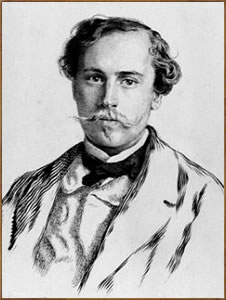
De Franse schrijver Jules de Goncourt werd geboren op 17 december 1830 in Parijs. Zie ook mijn blog van 17 december 2006 en ook mijn blog van 17 december 2008 en ook mijn blog van 17 december 2009.


Uit: Germinie Lacerteux (Door Jules en Edouard de Goncourt)


 « La fosse commune, ce jour-là, c'était cela. Ce terrain, ces croix, ce prêtre disaient : - Ici dort la Mort du peuple et le Néant du pauvre.
O Paris ! tu es le cœur du monde, tu es la grande ville humaine, la grande ville charitable et fraternelle ! Tu as des douceurs d'esprit, de vieilles miséricordes de mœurs, des spectacles qui font l'aumône ! Le pauvre est ton citoyen comme le riche. Tes églises parlent de Jésus-Christ ; tes lois parlent d'égalité ; tes journaux parlent de progrès ; tous tes gouvernements parlent de peuple ; et voilà où tu jettes ceux qui ont sué leur vie à travailler pour toi, à te donner ton bien-être, tes plaisirs, tes splendeurs, ceux qui ont fait ton animation, ton bruit, ceux qui ont mis la chaîne de leurs existences dans ta durée de capitale, ceux qui ont été la foule de tes rues et le peuple de ta grandeur ! Chacun de tes cimetières a un pareil coin honteux, caché entre un bout de mur, où tu te dépêches de les enfouir, et où tu leur jettes la terre à pelletées si avares que l'on voit passer les pieds de leurs bières ! On dirait que ta charité s'arrête à leur dernier soupir, que ton seul gratis est le lit où l'on souffre, et que, passé l'hôpital, toi si énorme et si superbe, tu n'as plus de place pour ces gens-là ! Tu les entasses, tu les presses, tu les mêles dans la mort, comme il y a cent ans, sous les draps de tes Hôtels-Dieu, tu les mêlais dans l'agonie ! Encore hier, n'avais-tu pas seulement ce prêtre en faction pour jeter un peu d'eau bénite banale à tout venant : pas la moindre prière ! Cette décence même manquait : Dieu ne se dérangeait pas ! Mais ce que ce prêtre bénit, c'est toujours la même chose : un trou où le sapin se cogne, où les morts ne sont pas chez eux ! Le corruption y est commune ; personne n'a la sienne, chacun a celle de tous : c'est la promiscuité du ver ! Dans le sol dévorant, un Montfaucon se hâte pour les Catacombes…“


 809601-c96c18fa1d57bf1276debc17bb1eaf34.jpg

Jules de Goncourt (17 december 1830 - 20 juni 1870)


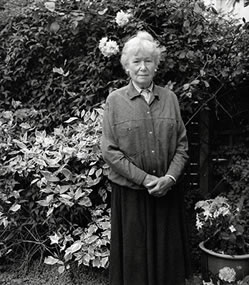
De Engelse dichteres, schrijfster en essayiste Penelope Fitzgerald werd geboren op 17 december 1916 in Lincoln. Zie ook mijn blog van 17 december 2008 en ook mijn blog van 17 december 2009.


Uit: The Means of Escape


„St. george’s church, Hobart, stands high above Battery Point and the harbor. Inside, it looks strange and must always have done so, although (at the time I’m speaking of) it didn’t have the blue-, pink- and yellow-patterned stained glass that you see there now. That was ordered from a German firm in 1875. But St. George’s has always had the sarcophagus-shaped windows, which the architect had thought Egyptian and therefore appropriate (St. George is said to have been an Egyptian saint). They give you the curious impression, as you cross the threshold, of entering a tomb.
In 1852, before the organ was installed, the church used to face east, and music was provided by a seraphine. The seraphine was built, and indeed invented, by a Mr. Ellard, formerly of Dublin, now a resident of Hobart. He intended it to suggest the angelic choir, although the singing voices at his disposal — the surveyor general, the naval chaplain, the harbormaster and their staffs — were for the most part male. Who was able to play the seraphine? Only, at first, Mr. Ellard’s daughter, Mrs. Logan, who seems to have got L20 a year for doing so, the same fee as the clerk and the sexton. When Mrs. Logan began to feel the task was too much for her — the seraphine needs continuous pumping — she instructed Alice Godley, the rector’s daughter.
Hobart stands "south of no north," between snowy Mount Wellington and the River Derwent, running down over steps and promontories to the harbor’s bitterly cold water. You get all the winds that blow. The next stop to the south is the limit of the Antarctic drift ice. When Alice went up to practice the hymns she had to unlock the outer storm door, made of Huon pine, and the inner door, also a storm door, and drag them shut again.“


 809601-b1501eb37ca916854d26b93235144bb3.jpg

Penelope Fitzgerald (17 december 1916 - 28 april 2000)


De Franse schrijver Alphonse Boudard werd geboren op 17 december 1925 in Parijs. Zie ook mijn blog van 17 december 2008 en ook mijn blog van 17 december 2009.


Uit: L’Hôpital


«… les pavés ronds, les arcades, je traverse la cour, j’entre à l’hosto. C’est l’été et c’est Bicêtre. Ils partent les autres au bronzage sur les rives d’Azur. Qu’ils se tirent tous, grand bien leur fasse… mémères,  lardons, pin-up… Nationale 7… Saint-Trop les miches ! Tellement je suis pompé, crouni, qu’ils peuvent se gaver tous les soleils, ça ne me démange pas la jalousie. J’ai la tête lourde,  les cannes tristes et encore ce goût fade de sang dans le fond de la gorge. Je me pointe tout sage aux admissions, bien docile, bien réfléchi. J’ai ma valoche carton bouilli, ma brosse à dents, mon nécessaire, juste ce qu’il me faut.  La canicule, le ciel d’ardoise, l’étouffement que c’est !… chez Géo, l’usine en bas vers la Bascule, les effluves qui montent à vous dégoûter de la saucisse pour le restant de vos repas. Je retire mes pompes. La préposée, la dame en blanc, toujours l’exige. Trop souvent qu’elle en a vus, depuis vingt piges et des poussières qu’elle officie à l’Assistance, de ces messieurs bien sous tous rapports – le col à becter de la tarte, les manchettes à boutons dorés – et cependant les panards cradingues puants. Elle se défie des apparences, elle connaît la vie, les êtres, les plaies profondes, le cœur humain. […]»


 809601-4b7f3887a4277f134bb8fb7b5231d52d.jpg

Alphonse Boudard (17 december 1925 – 14 januari 2000)


De Braziliaanse schrijver
Érico Veríssimo werd geboren op 17 december 1905 in Rio Grande do Sul. Zie ook
mijn blog van 17 december 2008.


Uit: Mexico (Vertaald door Linton Barrett)


„The legendary Rio Grande, that part of it where we crossed and at  that season of the year, was no more than a slender thread of water  running melancholy along its bed of burnished copper.

"The dry season," the ticket-collector, a short man with a sharp  Aztec profile, explains laconically.

Our train--two cars with extremely few passengers--was being  hauled by an elderly locomotive, slow and wheezy.

"You see," I murmured to my companion, "nobody in his right  mind makes this trip by train."

"The crazy ones go by air," she smiled. "So far I have no reason  for complaining."

The examination of passports was rapid. The American inspector  was blond, lean and jovial. The Mexican, fat, hairy and taciturn.  We had no trouble with Customs: at sight of my laissez-passer with
the seal of the Organization of American States they desisted from  inspecting our bags. We slowly entered the territory of Mexico.
Under the light that falls from a faded sky, a metallic tone, this part  of Juárez next to the railway station reminds us of a city of the  Brazilian Northeast, with its low houses, some painted yellow, blue
or pink, the sandy ground and the dry air of a glittering transparency. Barefoot Indian men and women, standing in the streets,  raise their enigmatic, earth-coloured faces toward the train. They  are stumpy, ugly, dirty and sorry-looking. I see men dressed in
a fetal position, their straw hats tilted over their eyes, just as in the  most conventional pictures that claim to represent Mexico. Boys in  blue jeans of visibly Texan influence are playing baseball in a field. The towers of an old church loom above a clump of trees, sharp  against the May horizon. I am gradually being invaded by that sensation which, in certain places we visit for the first time or in certain situations, leads us to think: "I've been here before. This has  already happened to me."


 809601-9b1fe8ecb70422cb9f23d418d9f6a607.jpg

Érico Veríssimo (17 december 1905 – 28 november 1975)

Geschreven door Romenu om 19:26 Reageer op dit bericht

Albert Drach, John Kennedy Toole, John Whittier, Thomas Haliburton, Władysław Broniewski

De Oostenrijkse schrijver Albert Drach werd op 17 december 1902 in Mödling geboren. Zie ook mijn blog van 17 december 2008.


Uit: Das große Protokoll gegen Zwetschkenbaum


„In dem sehr zweifelhaften Schatten eines sogenannten Zwetschkenbaumes saß ein Mann, der hieß auch Zwetschkenbaum, aber er war es nicht. Diese Familienbezeichnung gibt nämlich allerdings einen guten Namen für die damit gemeinte Pflanze mit verholztem Stengel oder Stamm ab.

Denn sie ist gebräuchlich für alle Gewächse solcher Art, welche hinwiederum nützlich und beliebt sind. Dagegen hält man erwähnten Namen für schlecht, wenn er einen Menschen betrifft, und der Verruf, in dem er steht, hat seine Begründung nicht etwa darin, daß einmal ein großer philosophischer Dichter behauptet hat, vieles im Menschen sei noch Pflanze und Gespenst; sondern vielmehr ist man zu einer absprechenden Ansicht deshalb gelangt, weil die Benennung besagten Vegetationsteiles auch noch häufig von einer Spezies Kreatur (Gattung Lebewesen) für sich in Anspruch genommen wird, die man gemeinhin Juden nennt. Und so ist es auch kein Zufall, daß es einmal einen Juden namens Zwetschkenbaum gab, von dem hier die Rede ist.

Dafür, daß er an einem eingangs bezogenen Tage unter einer Pflanze gelegen sei (habe), deren Namen einer seiner Stammesvorgänger sich angeeignet hat, gibt Genannter die folgende Begründung an. Er heiße Schmul Leib Zwetschkenbaum, sei gebürtig in Brody (Ostgalizien), wo sich auch seine Eltern befunden hätten, zu der Zeit nämlich, als dieselben noch am Leben gewesen wären. Sie seien nach Hinterlassung von sieben Kindern arm gestorben. Vorher hätten sie mit allem möglichen gehandelt, angeblich ohne bleibenden Nutzen. Von den sieben Kindern seien zwei in Amerika, und zwar einer in einer Wäscherei, der andere in einer Färberei tätig gewesen. Diese hätten früher ab und zu Geld für die Familie geschickt, seit Ausbruch des Weltkriegs aber nichts mehr.“


809593-e7a5058365dde828796d3aaefe502e67.jpg 

Albert Drach (17 december 1902 – 27 maart 1995)


De Amerikaanse schrijver John Kennedy Toole werd geboren op 17 december 1937 in New Orleans. Zie ook mijn blog van 17 december 2008.


Uit: A Confederacy of Dunces


“Ignatius lumbered over to the picket fence, abandoning the hopeless cause espoused by the wagon, and viewed the oil paintings and pastels and watercolors strung there. Although the style of each varied in crudity, the subjects of the paintings were relatively similar: camellias floating in bowls of water, azaleas tortured into ambitious flower arrangements, magnolias that looked like white windmills. Ignatius scrutinized the offerings furiously for a while all by himself, for the ladies had stepped back from the fence and had formed what looked like a protective little grouping. The wagon, too, stood forlorn on the flagstones, several feet from the newest member of the art guild.
"Oh, my God!" Ignatius bellowed after he had promenaded up and down along the fence. "How dare you present such abortions to the public."
"Please move along, sir," a bold lady said.
"Magnolias don't look like that," Ignatius said, thrusting his cutlass at the offending pastel magnolia. "You ladies need a course in botany. And perhaps geometry, too."
"You don't have to look at our work," an offended voice said from the group, the voice of the lady who had drawn the magnolia in question.
"Yes, I do!" Ignatius screamed. "You ladies need a critic with some taste and decency. Good heavens! Which one of you did this camellia? Speak up. The water in this bowl looks like motor oil."
"Let us alone," a shrill voice said.
"You women had better stop giving teas and brunches and settle down to the business of learning how to draw," Ignatius thundered. "First, you must learn how to handle a brush. I would suggest that you all get together and paint someone's house for a start."
"Go away."
"Had you 'artists' had a part in the decoration of the Sistine Chapel, it would have ended up looking like a particularly vulgar train terminal," Ignatius snorted.
"We don't intend to be insulted by a coarse vendor," a spokeswoman for the band of large hats said haughtily.
"I see!" Ignatius screamed. "So it is you people who slander the reputation of the hot dog vendor."


809593-6b9dde961e94dcc65feb73375c12e1b6.jpg
John Kennedy Toole (17 december 1937 – 26 maart 1969)


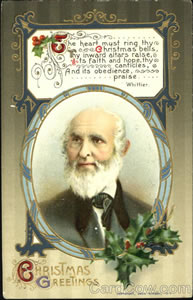
De Amerikaanse dichter en hervormer John Greenleaf Whittier werd geboren in Haverhill, Massachusetts op 17 december 1807. Zie ook mijn blog van 17 december 2008.


A Christmas Carmen 


I.

Sound over all waters, reach out from all lands,

The chorus of voices, the clasping of hands;

Sing hymns that were sung by the stars of the morn,

Sing songs of the angels when Jesus was born!

With glad jubilations

Bring hope to the nations!

The dark night is ending and dawn has begun:

Rise, hope of the ages, arise like the sun,

All speech flow to music, all hearts beat as one!


II.

Sing the bridal of nations! with chorals of love

Sing out the war-vulture and sing in the dove,

Till the hearts of the peoples keep time in accord,

And the voice of the world is the voice of the Lord!

Clasp hands of the nations

In strong gratulations:

The dark night is ending and dawn has begun;

Rise, hope of the ages, arise like the sun,

All speech flow to music, all hearts beat as one!


III.

Blow, bugles of battle, the marches of peace;

East, west, north, and south let the long quarrel cease

Sing the song of great joy that the angels began,

Sing of glory to God and of good-will to man!

Hark! joining in chorus

The heavens bend o’er us!

The dark night is ending and dawn has begun;

Rise, hope of the ages, arise like the sun,

All speech flow to music, all hearts beat as one!


809593-bd4cd2757cbb166823fe80a12010163c.jpg
John Greenleaf Whittier (17 december 1807 – 7 september 1892)

Whittier op een kerstkaart


De Canadese schrijver Thomas Chandler Haliburton werd geboren op 17 december 1796 in Windsor, Nova Scotia. Zie ook mijn blog van 17 december 2008.


Uit: The Clockmaker or, The Sayings and Doings of Samuel Slick, of Slickville


„The Preacher that Wandered from His Text

I guess, said the Clockmaker, we know more of Nova Scotia than the Blue Noses themselves do. The Yankees see further ahead than most folks; they can een a most see round t'other side of a thing; indeed some on them have hurt their eyes by it, and sometimes I think that's the reason such a sight of them wear spectacles. The first I ever heerd tell of Cumberland was from Mr. Everett of Congress;

he know'd as much about it as if he had lived here all his days, and may be a little grain more. He is a splendid man that--we class him No. 1, letter A. One night I chanced to go into General Peep's tavern at Boston, and who should I see there but the great Mr. Everett, a studying over a map of the Province of Nova-Scotia. Why it aint possible! said I--if that aint Professor Everett, as I am alive! why how do you do, Professor? Pretty well, I give you thanks, said he; how be you? but I aint no longer Professor; I gin that up, and also the trade of Preaching, and took to politics. You don't say so, said I; why what on airth is the cause o' that? Why, says he, look here, Mr. Slick. What IS the use of reading the Proverbs of Solomon to our free and enlightened citizens, that are every mite and mortal as wise as he was? That are man undertook to say there was nothing new under the sun. I guess he'd think he spoke a little too fast, if he was to see our steam boats, rail-roads, and India rubber shoes--three inventions worth more nor all he knew put in a heap together. Well, I don't know, said I, but somehow or another, I guess you'd have found preaching the best speculation in the long run; them are Unitarians pay better than Uncle Sam (we call, said the Clockmaker, the American public Uncle Sam, as you call the British John Bull.)“


809593-f662caa904796ab2ad5f6d78b0c2bc2e.jpg
Thomas Haliburton (17 december 1796 – 27 augustus 1865)


De Poolse dichter en militair Władysław Broniewski werd geboren op 17 december 1897 in Plock. Zie ook mijn blog van 17 december 2008.


Bodies


Bodies of children

From crematories
Will fly

High above history

Bodies of boys,

Bodies of girls

In crowns of thorns

Will flock together.

Bodies of men

From field-graveyards

Will march to conquer,

Will be free.


Le premier papillon


Le premier papillon s'envola dans le pré,

lança vers le soleil un bonjour bien joyeux,

dans un nuage blanc s'égara un moment,

battit de l'aile frêle et descendit, prudent;

batifola un peu, insouciant et léger,

de tous ces va-et-vient se sentit fatigué,

s'assit sur une fleur, lui dit : que tu sens bon!

Tel fut le premier jour du premier papillon.


 809593-1f64c31469d51f8ccb1d93673bfd5e07.jpg

Władysław Broniewski (17 december 1897 – 10 februari 1962)

Geschreven door Romenu om 19:21 Reageer op dit bericht

Adriaan van Dis, Jane Austen, Adriaan van der Veen, Noël Coward, Tip Marugg

De Nederlandse schrijver en televisiemaker Adriaan van Dis werd op 16 december 1946 geboren in het Noord-Hollandse Bergen aan Zee. Zie ook mijn blog van 16 december 2006 en ook mijn blog van 16 december 2007 en ook mijn blog van 16 december 2008 en ook mijn blog van 16 december 2009.


Uit: Tikkop


“Het snoer van de laptop was te kort. De voorkamer moest het met twee stopcontacten doen en het dichtstbijzijnde was bezet. Er kropen honderden mieren in en uit. Kleine, rooie sjouwers die elkaar in het voorbijgaan keurig groetten. Hij ging op zijn knieën zitten en blies ze weg. Ze vielen om, klampten zich vast, hernamen zich en kropen een voor een weer richting stopcontact. Het parcours lag vast. Ook al versperde hij de twee gaten met zijn vingers, dan nog verzamelden de mieren zich op de brug van zijn hand. Ze beten niet, ze verkenden zijn knokkels, een litteken tussen duim en wijsvinger, de plooien, ze waagden zich op zijn pols, proefden aan zijn haartjes, zijn horlogebandje. Ze kropen in de tunnel van zijn mouw. Er lag een kruimel op de vloer. Mulder legde hem voorzichtig tussen de mieren. De mieren keurden de gift, tilden hem op en torsten hem dwars door het gedrang tot aan de gestremde poorten van het stopcontact. Minuten tikten voorbij, vol verbazing, liefde en wrede gedachten: hij plette een mier tussen zijn nagels, eentje maar, voor het sap, voor het zien. Ook het lijk verdween in de file. De wijzerplaat verried niet hoeveel minuten verstreken — het glas zag rood van de mieren. Er zat niets anders op dan de tafel naar het enige andere stopcontact in de kamer te verschuiven, tot tegen de bank, dicht bij het raam. Nu kon hij vanachter zijn toetsenbord een boot zien uitvaren.”


808814-3d75895deff48b52aac6ed18065f081e.jpg
Adriaan van Dis (Bergen aan Zee, 16 december 1946)


De Engelse schrijfster Jane Austen werd geboren op 16 december 1775 in Steventon, Hampshire. Zie ook mijn blog van 16 december 2006 en ook mijn blog van 16 december 2007   en ook mijn blog van 16 december 2008 en ook mijn blog van 16 december 2009.


Uit: Mansfield Park


“Sir Thomas Bertram had every intention to gladly assist Lady Bertram’s sister in her relative destitution. But her husband’s profession was such as no interest could reach. And before Sir Thomas could devise another method of aid, an absolute breach between the sisters had taken place. It was a breach of tremendous proportions, a crevasse, a grand canyon, or possibly, a pyramid of sorts—a truly monstrous and rather angular coldness, or maybe a heat, but most likely a thing lukewarm and therefore utterly indifferent, as though brought forth out of the grave, spurred on by royal dead ancients. It was the natural result of the conduct of each party—such as a very imprudent marriage almost always produces.

To save herself from useless remonstrance, Mrs. Price never wrote to her family on the subject till actually married. Lady Bertram, who was a woman of very tranquil feelings, and a temper remarkably easy and indolent—one might say, placid to the point of being simultaneously deceased and yet walking upright—would have contented herself with merely giving up her sister, and thinking no more of the matter. But Mrs. Norris had a spirit of activity, not to mention a vaguely wolfish streak, which could not be satisfied till she had written a long and angry letter to Fanny, to point out the folly of her conduct, and threaten her with all its possible ill consequences—palsy, the poor house, rabid creature bites, the cut complete. Mrs. Price, in her turn, was injured and angry; and her bitter answer to her sisters put an end to all intercourse[1] between them for a considerable period.

Their homes were so distant, and the circles in which they moved so distinct—Lady Bertram, for instance was always surrounded by Egyptologists, famous exotic doctorate-endowed visiting scholars du jour, and attended instructional lectures that would have bored the other to tears—as almost to preclude the means of ever hearing of each other’s existence during the eleven following years. Or, at least, it seemed unlikely to Sir Thomas that Mrs. Norris should ever have it in her power to tell them, as often as she did (in her angry wolfish voice), that Fanny had got another child and it was neither bitten by anything wild nor stunted in limb or brain development.” 


808814-0698e7652980a5c68ca14ded630c9529.jpg
Jane Austen (16 december 1775 – 18 juli 1817)

Portret door Tom Clifford, 2002


De Nederlandse schrijver Adriaan van der Veen werd geboren op 16 december 1916 in Schiedam. Zie ook mijn blog van 16 december 2006 en ook mijn blog van 16 december 2008 en ook mijn blog van 16 december 2009.


Uit: Het wilde feest


“Pas in de middag werd ik wakker. Haastig kleedde ik me aan; op kantoor zou ik Larchmont wel opbellen: Vera moest ik zo gauw mogelijk zien. Zij moest mij nu vertrouwen. Op Grand Central hoorde ik de feesttoeters al; midden in de grote hall sprongen mannen en vrouwen in een grote kring rond, feestmutsen op de rode, verhitte gezichten. Hier en daar zat er een op de trappen, een fles aan zijn mond. De toespraken op kantoor had ik gemist, door een zijdeur liep ik ongezien naar mijn kamertje. In het grote kantoor werd gezongen, ik hoorde de typistes gillen, protesteren. Het feest was overal doorgedrongen. Ik ging zitten en keek naar de deur. Straks zou ik er heengaan, er moest feestgevierd worden. De oorlog was gewonnen, voor ons, dat had de politieman gezegd. Onverschillig nam ik het pakje ongeopende brieven op mijn lessenaar in mijn hand en toen zag ik het dossier. Met een paperclip zat er een memorandum van de baas aan vast.
‘De eerste uit Holland. Met grote spoed passende tekst ontwerpen voor de kranten.’
Ik sloeg de map open en pakte de mooie, glinsterende foto's op. Ik bekeek ze nauwkeurig, een voor een. Er moest een passend tekstje bij gemaakt worden. Wat paste bij dat schreeuwende geraamte van een kind en bij die verschrompelde mummie's? Ik bleef kijken, ik kon er mijn ogen niet van af houden. Mijn keel was dichtgeknepen. Sommige waren uit concentratiekampen, andere uit het hongerende Amsterdam. Voor die doodskoppen van kinderen had de politieman de oorlog gewonnen. Ik liet de foto's door mijn handen glijden en keek naar de achterkant; ze waren van een persbureau en copyrighted. Het briefje van de baas frommelde ik in elkaar en gooide het uit het raam. Een feestelijke sneeuwstorm van papier daalde nog uit alle vijftig verdiepingen. Een typistetje, dat uit een raam tegenover me leunde, wuifde me toe en keerde een papiermand buiten het venster om. Zou ik de foto's naar beneden laten zweven? Gillend zouden de mensen weglopen. Zou het meisje die groteske bekjes, die gapende kindergezichtjes met de in doodsangst grote ogen als haar toekomstige kinderen willen zien? Een man was nu naar haar toe gelopen en zoende haar in de nek. Zij spartelde in zijn armen. Er werd feest gevierd.”


 808814-dd99ac662e70d7c8604e4cacb31bf17e.jpg

Adriaan van der Veen (16 december 1916 – 7 maart 2003)


De Engelse schrijver en songwriter Noël Coward werd geboren op 16 december 1899 in Teddington, Londen. Zie ook mijn blog van 16 december 2006 en ook mijn blog van 16 december 2008 en ook mijn blog van 16 december 2009.


I am no good at love


I am no good at love.

My heart should be wise and free.

I killed the unfortunate golden goose

wherever it may be

with over-articulate tenderness

and too much intensity.


I am no good at love.

I batter it out of shape.

Suspicion tears at my sleepless mind

and gibbering like an ape,

I lay alone in the endless dark

knowing there is no escape.


I am no good at love.

When my easy heart I yield,

wild words come tumbling from my mouth

which should have stayed concealed

and my jealousy turns a bed of bliss

into a battlefield.


I am no good at love.

I betray it with little sins,

for I feel the misery of the end,

in the moment that it begins

and the bitterness of the last goodbye

is the bitterness that always wins.”


808814-d69357574110d9a4766c9fa44f31dc05.jpg
Noël Coward (16 december 1899 - 26 maart 1973)


De Antilliaanse dichter en schrijver Tip Marugg werd geboren op 16 december 1923 in Willemstad, Curaçao. Zie ook mijn blog van 16 december 2006 en ook mijn blog van 16 december 2008 en ook mijn blog van 16 december 2009.


Uit: Weekendpelgrimage


“God, laat ik nu maar liever niet aan mijn werk gaan denken. Er zijn heus wel andere dingen waar je aan kunt denken als je om drie uur in de nacht ver buiten de stad in een helse regen met je auto in een kuil aan de kant van de weg zit. Maar met de grootste inspanning lukt het me niet een ander onderwerp te vinden waar ik aan kan denken. Waar moet je in 's hemelsnaam aan denken als je om drie uur in de nacht ver buiten de stad in een helse regen met je auto in een kuil aan de kant van de weg zit? O ja, ik heb het. Iets uit je kinderjaren. Als je in de penarie zit en je zoekt iets om aan te denken om andere nare gedachten te verdringen, dan moet je terug naar je kinderjaren.”

(…)


“Er is een droom, schrikwekkend maar fier, die de dromer geheel overmeestert en die daarna weer snel afbrokkelt en hem alleen achterlaat in een ijle ruimte, waarin het lang duurt eer hij de weg terug naar de werkelijkheid heeft hervonden. In deze droom speelt de tijd geen rol. Of misschien een heel voorname rol, want de beelden die voor de geest komen, laten het verleden, het heden en de toekomst samenvallen en doen de dromer daardoor een belevenis van oneindigheid en almacht ondergaan, die onbereikbaar is in wakende toestand. In deze ongescheidenheid van tijd geraakt de dromer in een bovennatuurlijke extase, omdat door de opheffing van het tijdpunt alle contact met zichzelf en zijn medemensen verbroken is en alle steunpunten zijn weggevallen. Hij is jong en oud, hij is verlost, onbegrensd, en voelt de bruisende kracht van alvermogen in zich.”


808814-524472d1fc9795ccff1d28b4f6ec7ef0.jpg
Tip Marugg (16 december 1923 - 22 april 2006) 


Zie voor nog meer schrijvers van de 16e december ook mijn vorige blog van vandaag.
Geschreven door Romenu om 19:45 Reageer op dit bericht

Rafael Alberti, Pierre Lachambeaudie, V.S. Pritchett, Mary Russell Mitford, Olavo Bilac

De Spaanse dichter en schrijver Rafael Alberti werd geboren op 16 december 1902 in El Puerto de Santa María (Cádiz). Zie ook mijn blog van 16 december 2008 en ook mijn blog van 16 december 2009.


Einladung zu einer Reise in Tönen

Rameau: Menuett


Auf bald, Blume.
Bis später, Lachen.
Gute Nacht, Anmut.
Wind, guten Tag.


Wenn du mir die Blume gibst,
geb ich dir das Lachen.
Bis später, Anmut.
Auf bald. Wind.


Wenn du mir die Anmut gibst,
geb ich dir den Wind.
Gute Nacht, Blume,
Rose, guten Tag.


Auf bald, Anmut.
Bis später, Wind.


Vertaald door Erwin Walter Palm


Les Anges collégiens


Aucun de nous ne comprenait le secret nocturne des ardoises

ni pourquoi la sphère armillaire s’excitait aussi esseulée quand nous la regardions.

Nous savions seulement qu’une circonférence ne peut pas être ronde

et qu’une éclipse de lune abuse les fleurs

et donne de l’avance à l’horloge des oiseaux.


Aucun de nous ne comprenait quoi que ce fût :

ni pourquoi nos doigts étaient d’encre de Chine,

ni pourquoi le soir ouvrait des compas pour ouvrir à l’aube des livres.

Nous savions seulement qu’une droite peut, à son gré, être courbe ou brisée

et que les étoiles errantes sont des enfants qui ignorent l’arithmétique.


Vertaald door Claude Couffon


 808811-c51950c3e69dd4906a53ba60ab63970a.jpg

Rafael Alberti (16 december 1902 – 27 oktober 1999)


De Franse fabeldichter Pierre Lachambeaudie werd geboren op 16 december 1807 bij Sarlat. Zie ook mijn blog van 16 december 2008 en ook mijn blog van 16 december 2009.


La Locomotive et le Cheval


Un cheval vit, un jour, sur un chemin de fer

Une machine énorme, à la gueule enflammée .

Aux mobiles ressorts, aux longs flots de fumée.

« En vain, s'écria-t-il, ô fille de l'enfer.

En vain tu voudrais nuire à notre renommée.

Une palme immortelle est promise à nos fronts.

Et toi, sous le hangar, honteuse et délaissée,

Tu pleureras ta gloire en naissant éclipsée.

De vitesse avec moi veux-tu lutter? — Luttons !

Dit la machine; enfin ta vanité me lasse. »

Elle roule, elle roule, et dévore l'espace;

Il galope, il galope, et d'un sabot léger

Il soulève le sable et vole dans la plaine.

Mais il se berce, hélas ! d'un espoir mensonger.

Inondé de sueur, épuisé, hors d'haleine,

Bientôt l'imprudent tombe et termine ses jours ;

Et que fait sa rivale? elle roule toujours.

La routine au progrès veut disputer l'empire ;

Le progrès toujours marche, et la routine expire.


 808811-068b11edfbdceb9e9540e050da97b805.jpg

Pierre Lachambeaudie (16 december 1807 – 7 juli 1872)


De Britse schrijver en criticus (Victor Sawdon) V. S. Pritchett werd geboren op 16 december 1900 in Ipswich, Suffolk. Zie ook mijn blog van 16 december 2008 en ook mijn blog van 16 december 2009.


Uit: Essential Stories (The Sack of Lights)


„No one noticed her as she stood on the curb of Piccadilly Circus, nor guessed that at that moment she could have died of laughter, she was so happy. She wanted to shout to see what would happen, but she laughed instead. A miraculous place as high and polished as a ballroom. The façades of the buildings were tall mirrors framed in gold, speeding lights. “Chucking it about,” she cried out. The crowds did not even hear her in the roar. If she jumped, could she see herself in the mirrors? She jumped, but not high enough. She laughed. Rockets shot up in numbere   d showers and exploded noiselessly into brief diagrams of green stars. A tilted bottle dripped beads of wine as red as rail- way signals into a glass and there was the General—Smoke the Army Smoke—standing on a house-top, with a white-hot monocle in his eye, and his cigarette pricking red. Diamonds and pearls and rubies were streamers flying into the Circus and flashed so that people’s faces bobbed up and down like Chinese lanterns.
But below the streaming lights everything was dancing. That was what she noticed. Below it was “Valencia, land of oranges . . .” She sang it out and waved to the cars as they passed. “Valencia . . .” The dark couples of taxis waltzed down dipping to the roll of the tune, and the big dowager cars slipped by, their jewelled bosoms beaming. The young sparking cars darted like dragon-flies—those were the ones she liked, the noisy, erratic ones. The perfume of the dance rose among them. Low horns breathed out flights of warning. The saxophone horns wailed, the jazz engines drummed—how her heart was dancing—and under all was the everlasting undertone, the deep ’cello vibration of the wheels. The ’cello, the voice of movement being born, the voice of the soul. That sound caught her by the waist like a lover. “Valencia . . .” She ran out into the traffic, not to cross the road, but to dance in it!“


808811-c6d2b82bcea9d3c47cde31830472d6e4.jpg
V.S. Pritchett ( 16 december 1900 – 20 maart 1997)


De Engelse schrijfster Mary Russell Mitford werd geboren op 16 december 1787 in Alresford,  Hampshire. Zie ook mijn blog van 16 december 2008 en ook mijn blog van 16 december 2009.


Uit: The Widow’s Dog


„One of the most beautiful spots in the north of Hampshire--a part of the country which, from its winding green lanes, with the trees meeting over head-like a cradle, its winding roads between coppices, with wide turfy margents on either side, as if left on purpose for the picturesque and

frequent gipsy camp, its abundance of hedgerow timber, and its extensive tracts of woodland, seems as if the fields were just dug out of the forest, as might have happened in the days of William Rufus--one of the loveliest scenes in this lovely county is the Great Pond at Ashley End.

Ashley End is itself a romantic and beautiful village, struggling down a steep hill to a clear and narrow running stream, which crosses the road in the bottom, crossed in its turn by a picturesque wooden bridge, and then winding with equal abruptness up the opposite acclivity, so that the scattered cottages, separated from each other by long strips of garden ground, the little country inn, and two or three old-fashioned tenements of somewhat higher pretensions, surrounded by their own moss-grown orchards, seemed to be completely shut out from this bustling world, buried in the sloping meadows so deeply green, and the hanging woods so rich in their various tinting, along which the slender wreaths

of smoke from the old clustered chimneys went smiling peacefully in the pleasant autumn air. So profound was the tranquillity, that the slender streamlet which gushed along the valley, following its natural windings, and glittering in the noonday sun like a thread of silver, seemed to the unfrequent visiters of that remote hamlet the only trace of life and motion in the picture.

The source of this pretty brook was undoubtedly the Great Pond, although there was no other road to it than by climbing the steep hill beyond the village, and then turning suddenly to the right, and descending by a deep cart-track, which led between wild banks covered with heath and feathery broom, garlanded with bramble and briar roses, and gay with the purple heath-flower and the delicate harebell,* to a scene even more beautiful and more solitary than the hamlet itself.“


 808811-cb6044bf883d697c6f33a90231e7d482.jpg

Mary Russell Mitford (16 dcember 1787 - 10 januari 1855)


De Braziliaanse dichter Olavo Bilac werd geboren op 16 december 1865 in Rio de Janeiro. Zie ook mijn blog van 16 december 2008 en ook mijn blog van 16 december 2009.


VIA LÁCTEA - Soneto XIII


"Ora (direis) ouvir estrelas! Certo

Perdeste o senso!" E eu vos direi, no entanto,

Que, para ouvi-las, muitas vezes desperto

E abro as janelas, pálido de espanto...


E conversamos toda a noite, enquanto

A via-láctea, como um pálio aberto,

Cintila. E, ao vir do sol, saudoso e em pranto,

Inda as procuro pelo céu deserto.


Direis agora: "Tresloucado amigo!

Que conversas com elas? Que sentido

Tem o que dizem, quando estão contigo?"


E eu vos direi: "Amai para entendê-las!

Pois só quem ama pode ter ouvido

Capaz de ouvir e de entender estrelas."


MILKY WAY - Sonnet XIII


"Well (thou´ll say) hearing stars! Certainly

Thou´ve lost your mind!" And I´ll say to thee, however

That, to hear them, many times I wake

And open the windows, palid in awe...


And we talk all night long, while

The milky way, as an open canopy,

Shines. And, at the coming of the sun, missing and crying,

I still look for them in the desert sky.


Thou´ll now say: "Crazed friend!

What do thou talk to them? What sense

Has what they say, when they are with thee?"


And I´ll say to thou: "Love to understand them!

Because only he who loves may have ears

Capable of hearing and understanding stars."


Vertaald door Doidimais Brasil


808811-a58457fce3ec91210fa57241432a042c.jpg
Olavo Bilac (16 december 1865 – 28 december 1918)

Geschreven door Romenu om 19:37 Reageer op dit bericht

Meer van Romenu

↑ Terug naar de berichten