Naar de inhoud

Romenu

Over literatuur, gedichten, kunst en cultuur
akke.beakke.be

Berichten van 11 januari 2011 tot 12 januari 2011

Cees van der Pluijm, Jacques Hamelink, Haruki Murakami, Alain Teister, Jakob Lenz

De Nederlandse dichter, schrijver en columnist Cees van der Pluijm werd geboren op 12 januari 1954 te Radio Kootwijk (Gld.). Zie ook mijn blog van 12 januari 2007 en ook mijn blog van 12 januari 2008 en ook mijn blog van 12 januari 2009 en ook mijn blog van 12 januari 2010.


1954


Je was er pas een week of vier
De ouderwetse winterkou
Sloeg bikkelhard de kamer in

Je was de spil van het gezin
De wereld draaide nog om jou
Je leefde, gulzig als een dier

Je moeder in het kraambed lag
Te wachten op de laatste dag

Er werd gebeefd van kou en angst
Je vader was misschien het bangst
Want Oma voerde het gezag

Hij wierp wat plankjes toe naar haar:
Mijn luiers, van de vrieskou zwaar –
Zij brak haar armen bij de vangst


ST. JOZEFSSCHOOL


I

Je kunt de bel nog horen als je wilt
Hij staat nog immer in de hoge deur:
Die strenge man, driedelig in het pak
-
Hij luidt de bel, de kinderschaar verstilt


En schuifelt met een zweem van ongemak
En achting voor hem langs: hij is het Hoofd
Der School (het Hoofd, nog lang geen directeur)
In wiens gezag men moeiteloos gelooft


't Is winter en de grote kachel brandt
Met af en toe een plof. Je ruikt de geur
Van toen: van ijver, angst en kinderzweet


Zelfs nog in dit verbouwd gebouw; dit pand
Waar werd gezwoegd, gerekend, gedicteet
-
Men speelt er nu verantwoord interieur


LENTE IN 'T LAAG EN 'T HOOG


II

Van bloesem wit de oevers van de beek
Waar pas nog sneeuw de koude grond bedekte;
En waar het uit de bomen constant lekte
Ontsprong het groen terwijl je net niet keek


De specht beukt elke ochtend op de bast
Van oud kastanjehout en alles zingt
Als jij het wakker worden nog bedwingt
En slaperig je ochtendplasje plast


Het kriekend licht komt daag'lijks vroeger binnen
En al wat leeft, is spoorslags buiten zinnen
De morgenstond is ongeremd Bacchantisch


En alles bloeit en lonkt en kwinkeleert
Terwijl jij Morpheus' armen prefereert
Natuur is onverdragelijk romantisch


 828908-8893359606f4c567e48046290b25aa5a.jpg

Cees van der Pluijm (Radio Kootwijk, 12 januari 1954)


De Nederlandse dichter en schrijver Jacques Hamelink werd geboren op 12 januari 1939 in Driewegen, bij Terneuzen. Zie ook mijn blog van 12 januari 2007  en ook mijn blog van 12 januari 2008 en ook mijn blog van 12 januari 2009 en ook mijn blog van 12 januari 2010.


Zeemorgen


Terwijl in het eiwit zand kinderen alweer grijpgraag

kuilen graven en huilen om de hitte

en hun rode moeders zich openleggen

en de zon een hete man tussen hun dijen plant

komt de dag kentaurisch snuivend nog druipnat

het spierwit borsthaar glinsterend tevoorschijn

uit het water voert luidkeels nieuwe vogels aan

en fluit naar de verspreid spelende meisjes

zilvergroen geschubde meerminnen in bikini

en de duintoppen welven als borsten van een blote heidin

maar tijd hoog op de poten slaakt waarschuwend

zijn kreet die de schelpenzoeker versteent

te midden van zijn koraaleilanden hij vergaat vaag

in de ruimte het galmende water

dat kathedralen bouwt van zand

met ritselende vlaggen helm en brem bezet

en de eerste minnaars in elkaar verdronken

spoelen aan de ogen zwart van stilzwijgen

om hun ligplaats verdampen de voetsporen

van de nacht en zijn geluidloze mannen

aan de vloedlijn maken meeuwen het uur wit

met gebeden en ritueel en laten gretig

hun mossels op de stenen vallen en hese geluiden

maakt de waakzaam blijvende zee

die verder sprakeloos is en inzicht

te pijndoend om uit te spreken vergt

van de mergheldere oude vissers

zonneblind ontwaakt uit een slaap met roggen

en inktvissen spuwen zij kwaad en zwijgend

naar het wrakkenvol water en gaan de eerste borrel drinken

in de bekaaide herberg en vaarten verzinnen

naar de legendarische broedplaatsen van vroeger

een zaagvis draait zich verraderlijk als een hand om in hun verhaal.


828908-67f1209e14e805876edd610c4f54869f.jpg
Jacques Hamelink (Terneuzen, 12 januari 1939)

Doorkijkje in Terneuzen


De Japanse schrijver en vertaler Haruki Murakami werd geboren op 12 januari 1949 in Kioto. Zie ook mijn blog van 1 maart 2007  en ook mijn blog van 12 januari 2008 en ook mijn blog van 12 januari 2009 en ook mijn blog van 12 januari 2010.


Uit: South of the Border, West of the Sun (Vertaald door Philip Gabriel)


„My birthday's the fourth of January, 1951. The first week of the first month of the first year of the second half of the twentieth century. Something to commemorate, I guess, which is why my parents named me Hajime--"Beginning" in Japanese. Other than that, a 100 percent average birth. My father worked in a large brokerage firm, my mother was a typical housewife. During the war, my father was drafted as a student and sent to fight in Singapore; after the surrender he spent some time in a POW camp. My mother's house was burned down in a B-29 raid during the final year of the war. Their generation suffered most during the long war.

When I was born, though, you'd never have known there'd been a war. No more burned-out ruins, no more occupation army. We lived in a small, quiet town, in a house my father's company provided. The house was prewar, somewhat old but roomy enough. Pine trees grew in the garden, and we even had a small pond and some stone lanterns.

The town I grew up in was your typical middle-class suburb. The classmates I was friendly with all lived in neat little row houses; some might have been a bit larger than mine, but you could count on them all having similar entranceways, pine trees in the garden, the works. My friends' fathers were employed in companies or else were professionals of some sort. Hardly anyone's mother worked. And most everyone had a cat or a dog. No one I knew lived in an apartment or a condo. Later on I moved to another part of town, but it was pretty much identical. The upshot of this is that until I moved to Tokyo to go to college, I was convinced everyone in the whole world lived in a single-family home with a garden and a pet, and commuted to work decked out in a suit. I couldn't for the life of me imagine a different lifestyle.“


828908-2530bcf0502d5f4ceca7b25476874247.jpg
Haruki Murakami (Kioto, 12 januari 1949)


De Nederlandse dichter, schrijver en schilder Alain Teister (eig. Jacob Martinus Boersma werd geboren in Amsterdam op 12 januari 1932. Zie ook mijn blog van 12 januari 2009 en ook mijn blog van 12 januari 2010.


Zelfportret

Ik ben voornamelijk van geen belang.
Ik ben een zachte wang,
en ik ben mijn eigen lippen.
Meestal zonder gezang,
uitblinkend in knorgeluiden
voor enk'le fijne luiden
die mij ter harte gaan.
Ik ben meer kuiken dan haan.
En: ik ben mijn eigen lippen,
waarmee ik uit eigenbelang
mij kus op mijn eigenwang.


828908-902b3b070cc3929f4fe18c56d6ce680e.jpg
Alain Teister (12 januari 1932 – 6 februari 1979)


De Duitse dichter en schrijver Jakob Michael Reinhold Lenz werd geboren op 12 januari 1751 in Seßwegen. Zie ook mijn blog van 1 maart 2007 en ook mijn blog van 12 januari 2009 en ook mijn blog van 12 januari 2010.


Lied eines schiffbrüchigen Europäers,

auf einer wüsten Insel, von der man von Zeit zu Zeit Rauch aufsteigen sehen, aber wegen einer heftigen Brandung nicht zu Hülfe kommen konnte. Diese Insel schien Capitain Wallis als er vorbey segelte, ein völlig unwirthbarer Felsen.


Wenn ichs noch bedenke –

Auf der langen Seereis' – überall –

Wo die Luft so feucht war, gab sie Wein,

Auf Madera, an dem frohen Cap –

Wo sie scharf war, wuchsen Cokusnüsse –

Wo es kalt war, flözte sie uns Holz zu.

Riesen sahen wir, wie David,

Und bezwungen sie mit kleinen Steinchen;

Wilde Teufel sahen wir, sie sangen

Uns die kauderwelschen Friedenslieder

Daß wir ihrer Gutheit lachten –

Ach! wohlthätige Natur!

Ost- und Westwärts – Ueberall!

Sieh! dieß lezte Scheitchen Holz

Leg ich auf – Sein Rauch verschwindet

In die Luft – und Niemand meldet sich – –

Allbedenkende Natur!

Hast du mich vergessen?


828908-45cfbde9ab3226ed64a21a3d1b3874e9.jpg
Jakob Michael Reinhold Lenz (12 januari 1751- 24 mei 1792)


Zie voor nog meer schrijvers van de 12e januari ook mijn vorige blog vandaag.
Geschreven door Romenu om 19:32 Reageer op dit bericht

Fatos Kongoli, William Nicholson, Florian Havemann, Jack London, Ferenc Molnár, Charles Perrault

De Albanese schrijver Fatos Kongoli werd geboren op 12 januari 1944 in Elbasan. Zie ook mijn blog van 12 januari 2009 en ook mijn blog van 12 januari 2010.


Uit: Ein europäischer Traum (Vertaald door Joachim Roehm)


„Als ich den letzten Jahren seines Lebens einmal von ihm wissen wollte, warum er Kommunist geworden war, drückte er sich nicht um eine Antwort: Während der Jahre in Italien sei dies die beste Lösung gewesen. Er habe vor der Alternative gestanden, sich entweder für den Kommunismus eines Antonio Gramsci zu entscheiden oder für den Faschismus des Duce ... Es liegt mir fern, meinem Vater etwas vorzuwerfen, doch außer dem Faschismus des Duce und dem Kommunismus eines Antonio Gramsci wird es in Verdis Vaterland auch noch andere Alternativen gegeben haben. Die letzten Jahre seines Lebens, das tragisch endete, denn er wurde von seiner eigenen Partei geächtet und weggeworfen wie eine ausgequetschte Zitrone, verbrachte er am Klavier, Fugen von Bach spielend, bis er dann starb, verlassen selbst noch von seinen engsten Freunden. Ich, der ich endlich die Mathematik aufgegeben und mich der Literatur zugewandt hatte, begriff damals, dass ich womöglich

den gefährlichsten Fehler meines Lebens begangen hatte. Die Sprache Molières eröffnete mir die Möglichkeit, Kontakt mit den großen Autoren des 20. Jahrhunderts aufzunehmen, und ich begriff einigermaßen, was wirklich Literatur ist. In einem Land wie Albanien, wo auch noch dem unschuldigsten Dissidenten ohne lange zu fackeln der Kopf abgerissen wurde, war es verflucht schwierig, sich mit wirklicher Literatur abzugeben. Aber dieses verdrießliche Kapitel ist allgemein bekannt, und nach dem Fall der Berliner Mauer hat dies alles nichts mehr zu bedeuten. Auerdem

hätte niemand wirklich Lust, mir in den finsteren Tunnel dieser langen Jahrzehnte zu folgen, in denen meine Zähne allmählich verrotteten und zum Teil viel zu früh ausfielen, bis ich mir schließlich ziehen und durch eine Prothese ersetzen ließ, was noch übrig war, sodass ich nun nach Belieben lachen kann, wenn mir zum Weinen ist, ohne befürchten zu müssen, dass ich so schrecklich hässlich aussehe wie in der Zeit vor meiner Prothese.“


 828904-d5c6d0f0f4886b40b5484690022e8061.jpg

Fatos Kongoli (Elbasan, 12 januari 1944)


De Britse schrijver William Nicholson werd geboren op 12 januari 1948 in Tunbridge Wells, Kent. Zie ook mijn blog van 12 januari 2009 en ook mijn blog van 12 januari 2010.


Uit: The Trial of True Love


„Here where two rivers meet by an island, in the early morning, shortly after dawn, there is a mist along the valleys. The sun rises over the railway bridge, white as a moon, and everything is still. I stand before Taw pool, watching the water eddy round the island, my breath cloudy and my thoughts far away. I do not anticipate. And yet there is a moment before the moment that is both a preparation and a culmination. What is about to happen to me is long longed-for, familiar, out of reach, needed, despaired of, completely imagined, but never known: so first, and memorably, comes the intimation that it is about to happen. The light falling from an opening door onto a winter's street. The silence before a phone begins to ring. Anticipation, in the razor-cut of time before it bursts into fulfilment.

The Barnstaple train, headlamp furry in the mist, booms suddenly over the bridge. Rooks rattle out of invisible trees, cawing up into the sky. The premonitory sounds disperse into the slow tumble of the rivers, into my own quiet breaths. The smell of soaked grass and the sharp white air that makes me shiver and the silence after the train.

And then I see her.

This is a story about falling in love. The time is 1977, a generation ago. I am twenty-nine years old, and waiting for my real life to begin. I am engaged in this waiting process in the very small second bedroom of a very small flat in Cross Street in north London, owned by my friend Anna.

She comes back earlier than usual and pours herself a glass of wine, which is not like her, not at five in the afternoon, and says we must talk. So I have a glass of wine too, and we talk.“


828904-37073dd3f799f6dc590695cc89c0316a.jpg
William Nicholson (Tunbridge Wells, 12 januari 1948)


De Duitse schrijver, schilder en componist Florian Havemann werd geboren op 12 januari 1952 in Oost-Berlijn. Zie ook mijn blog van 12 januari 2009 en ook mijn blog van 12 januari 2010.


Uit: Havemann


„Havemann, das ist: ein König ohne Volk bleiben zu wollen, anstatt sich mit dem undankbaren, uneinsichtigen Volk da draußen abmühen, abgeben zu müssen. Und das können dann auch zum Beispiel Kritiker sein. Havemann, das ist: sich irgendwo festsetzen, eine häusliche Existenz führen. Grabow, Borgsdorf und Grünheide bei Berlin, mein Neukölln.

Havemann beginnt mit einem Saathändler, und der Saathändler, das ist Mittelstand, Mittelschicht, und Havemann ist das immer geblieben: Mittelstand, Mittelschicht – nur was das bedeutet, das hat sich immer wieder geändert.

Nein, Havemann beginnt nicht mit diesem Saathändler in Grabow, Havemann beginnt so wenig mit diesem Saathändler in Grabow, daß ich noch nicht mal weiß, wie dieser Havemann mit Vornamen hieß. Der Saathändler Havemann in Grabow, das ist die Vorgeschichte von Havemann, das, wo Havemann herkommt, das, woraus dann Havemann wurde, mit meinem Großvater Hans Havemann wurde, dem Sohn des Saathändlers Havemann in Grabow. Und wenn noch etwas bleibt von diesem Havemann in Grabow, bis zum heutigen Tag und in mir Havemann bleibt, dann der Atheismus, sein Atheismus, denn das einzige, was mir von diesem Saathändler Havemann übermittelt wurde, ist sein für seine Zeit so ungewöhnlicher Atheismus. Sein für eine Kleinstadt so ungewöhnlicher, so auff älliger Atheismus. Der bekennende Atheist Havemann, so die Legende, soll nur ein einziges Mal eine Kirche betreten haben, die Kirche in Grabow – Anlaß: die Konfi rmation seines Sohnes.“


 828904-d991e337eb7f023cf880260bd77ff451.jpg

Florian Havemann (Oost-Berlijn,12 januari 1952)


De Amerikaanse schrijver Jack London (eig. John Griffith Chaney) werd geboren op 12 januari 1876 in San Francisco, Californië. Zie ook mijn blog van 12 januari 2009 en ook mijn blog van 12 januari 2010.


Uit: John Barleycorn


„It all came to me one election day. It was on a warm California afternoon, and I had ridden down into the Valley of the Moon from the ranch to the little village to vote yes and no to a host of proposed amendments to the Constitution of the State of California. Because of the warmth of the day I had had several drinks before casting my ballot, and divers drinks after casting it. Then I had ridden up through the vine-clad hills and rolling pastures of the ranch and arrived at the farmhouse in time for another drink and supper.
“How did you vote on the suffrage amendment?” Charmian asked.
“I voted for it.”
She uttered an exclamation of surprise. For be it known, in my younger days, despite my ardent democracy, I had been opposed to woman suffrage. In my later and more tolerant years I had been unenthusiastic in my acceptance of it as an inevitable social phenomenon.
“Now just why did you vote for it?” Charmian asked.
I answered. I answered at length. I answered indignantly. The more I answered, the more indignant I became. (No; I was not drunk. The horse I had ridden was well-named “The Outlaw.” I ’d like to see any drunken man ride her.)
And yet—how shall I say?—I was lighted up, I was feeling “good,” I was pleasantly jingled.
“When the women get the ballot, they will vote for prohibition,” I said. “It is the wives, and sisters, and mothers, and they only, who will drive the nails into the coffin of John Barleycorn—”

“But I thought you were a friend to John Barleycorn,” Charmian interpolated.
“I am. I was. I am not. I never am. I am never less his friend than when he is with me and when I seem most his friend. He is the king of liars. He is the frankest truth-sayer. He is the august companion with whom one walks with the gods. He is also in league with the Noseless One. His way leads to truth naked, and to death. He gives clear vision, and muddy dreams. He is the enemy of life, and the teacher of wisdom beyond life’s vision. He is a red-handed killer, and he slays youth.”


828904-dc6e8bc643f9eafb80e953614e12fd01.jpg
Jack London (12 januari 1876 - 22 november 1916)

In 1905


De Hongaarse schrijver Ferenc Molnár werd op 12 januari 1878 in een burgerlijk-joods gezin van Duitse afkomst geboren. Zie ook mijn blog van 12 januari 2009 en ook mijn blog van 12 januari 2010.


Uit: The Living Death


„Here is a very serious reason, my dear sisters, why at last, after an absence of twenty years in America, I am confiding to you this strange secret in the life of our beloved and lamented father, and

of the old house where we were children together.  The truth is, if I read rightly the countenances of my physicians as they whisper to each other by the window of the chamber in which I am lying, that

only a few days of this life remain to me.

It is not right that this secret should die with me, my dear sisters.  Though it will seem terrible to you, as it has to me, it will enable you to better understand our blessed father, help you to account for what must have seemed to you to be strange inconsistencies in his character.  That this secret was revealed to me was due to my indolence and childish curiosity.

For the first, and the last, time in my life I listened at a keyhole.  With shame and a hotly chiding conscience I yielded to that insatiable curiosity--and when you have read these lines you will understand why I do not regret that inexcusable, furtive act.

I was only a lad when we went to live in that odd little house. You remember it stood in the outskirts of Rakos, near the new cemetery.  It stood on a deep lot, and was roughly boarded on the side which looked on the highway.  You remember that on the first floor, next the street, were the room of our father, the dining room, and the children's room.  In the rear of the house was the sculpture studio. There we had the large white hall with big windows, where white-clothed laborers worked.  They mixed the plaster, made forms, chiseled, scratched, and sawed.  Here in this large hall had our father worked for thirty years.“


828904-2f40357d714747db3af9cf22b9549ac9.jpg
Ferenc Molnár (12 januari 1878 – 1 april 1952)


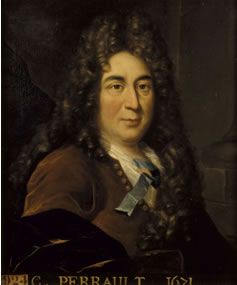
De Franse schrijver Charles Perrault werd geboren op 12 januari 1628 in Parijs. Zie ook mijn blog van 12 januari 2007 en ook mijn blog van 12 januari 2009 en ook mijn blog van 12 januari 2010.


Uit: Les Souhaits Ridicules (De dwaze wensen)


Si vous étiez moins raisonnable,

Je me garderais bien de venir vous conter

La folle et peu galante fable

Que je m'en vais vous débiter.

Une aune de Boudin en fournit la matière.

Une aune de Boudin, ma chère !

Quelle pitié ! c'est une horreur

S'écriait une Précieuse,

Qui toujours tendre et sérieuse

Ne veut ouïr parler que d'affaires de coeur.

Mais vous qui mieux qu'âme qui vive

Savez charmer en racontant,

Et dont l'expression est toujours si naïve,

Que l'on croit voir ce qu'on entend ;

Qui savez que c'est la manière

Dont quelque chose est inventé,

Qui beaucoup plus que la matière

De tout Récit fait la beauté,

Vous aimerez ma fable et sa moralité ;

J'en ai, j'ose le dire, une assurance entière.


Il était une fois un pauvre Bûcheron

Qui las de sa pénible vie,

Avait, disait-il, grande envie

De s'aller reposer aux bords de l'Achéron :

Représentant, dans sa douleur profonde,

Que depuis qu'il était au monde,

Le Ciel cruel n'avait jamais

Voulu remplir un seul de ses souhaits.


828904-1029afc8c72b86b33c39d7fd8a0f4bd1.jpg
Charles Perrault (12 januari 1628 – 16 mei 1703)

Anoniem portret in het Musée National de Versailles et des Trianons, Versailles


Geschreven door Romenu om 19:24 Reageer op dit bericht

Kamiel Verwer

De Nederlandse dichter en schrijver Kamiel Verwer werd op 12 januari 1979 in Tilburg geboren. Hij studeerde Informatica en Filosofie en behaalde twee opeenvolgende Masters diploma’s in 2002 en 2003. Na een dodelijk verkeersongeval van zijn moeder ging hij naar Berlijn en studeerde daar verder filosofie aan de Humboldt Universiteit. Deze studie sloot hij af met een Duits proefschrift over "vrijheid en verantwoordelijkheid in de filosofie van Hans Jonas". In de zomer van 2008 begon hij te reizen en tijdens deze reis kreeg hij het ​​idee van Charity Travel om de ideeën van zijn proefschrift in praktijk te brengen en om zijn passie voor reizen te combineren met gewoon iets goeds doen. Hij startte Charity Travel in 2009 en legde verbanden met kleinschalige goede doelen wereldwijd.


Entree met draaideur


Niets behalve die even aangename windvlaag

langs het tafeltje waaraan ik zat

en de kaars die even oplichtte

maar dan weer was zijn schijnsel

die onbewogen dans

als altijd in het glas van de deur


Nu draait hij weer

een meisje beweegt zich naar binnen

en die onbenullige kaars

hij verlicht haar gezichtje

als een duivel verlicht hij

de stilte naast haar mond

"deur, draai verdomme door"

dreunde keihard door me heen

het was de kaars, die

binnen in mij al vele jaren scheen.


 964534-26ef3f1d46ad6c36b34492177e50d335.jpg

Kamiel Verwer (Tilburg, 12 januari 1979)
Geschreven door Romenu om 00:00 Reageer op dit bericht

Jasper Fforde, Katharina Hacker, Marc Acito, Nikos Kavvadias, Oswald de Andrade, Helmut Zenker

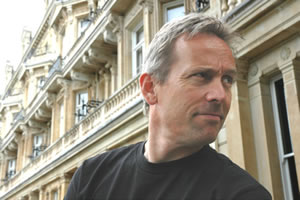
De Britse schrijver en cameraman Jasper Fforde werd geboren op 11 januari 1961 in Londen. Zie ook mijn blog van 11 januari 2008 en ook mijn blog van 11 januari 2009 en ook mijn blog van 11 januari 2010.


Uit: Shades of Grey


„It began with my father not wanting to see the Last Rabbit and ended up with my being eaten by a carnivorous plant. It wasn’t really what I’d planned for myself— I’d hoped to marry into the Oxbloods and join their dynastic string empire. But that was four days ago, before I met Jane, retrieved the Caravaggio and explored High Saffron. So instead of enjoying aspirations of Chromatic advancement, I was wholly immersed within the digestive soup of a yateveo tree. It was all frightfully inconvenient.
But it wasn’t
all
bad, for the following reasons: First, I was lucky to have landed upside down. I would drown in under a minute, which was far, far preferable to being dissolved alive over the space of a few weeks. Second, and more important, I wasn’t going to die ignorant. I had discovered something that no amount of merits can buy you: the truth. Not the whole truth, but a pretty big part of it. And that was why this was all frightfully inconvenient. I wouldn’t get to do anything with it. And this truth was too big and too terrible to ignore. Still, at least I’d held it in my hands for a full hour and understood what it meant.
I didn’t set out to discover a truth. I was actually sent to the Outer Fringes to conduct a chair census and learn some humility. But the truth inevitably found me, as important truths often do, like a lost thought in need of a mind. I found Jane, too, or perhaps she found me. It doesn’t really matter. We found each other. And although she was Grey and I was Red, we shared a common thirst for justice that transcended Chromatic politics. I loved her, and what’s more, I was beginning to think that she loved me. After all, she did apologize before she pushed me into the leafless expanse below the spread of the yateveo, and she wouldn’t have done that if she’d felt nothing.“


 828126-db88011b7ab15827b61a3d6a867242c1.jpg

Jasper Fforde (Londen, 11 januari 1961)


De Duitse dichteres en schrijfster Katharina Hacker werd geboren op 11 januari 1967 in Frankfurt am Main. Zie ook mijn blog van 11 januari 2007 en ook mijn blog van 11 januari 2008 en ook mijn blog van 11 januari 2009 en ook mijn blog van 11 januari 2010.


Uit: Die Erdbeeren von Antons Mutter


“Der kleine Garten, ein Acker eigentlich, der früher, in Antons Kindheit, ringsum an Felder gegrenzt hatte, jetzt an weitere Vorgärten stieß, nur an seiner Rückseite ins Freie überging, war umgegraben, die Erde sah frisch aus, vereinzelt stakten Gräser hervor, an einer Stelle war ein großer Löwenzahn

gewachsen und nahe am Zaun drängten sich die weichen Blätter von Beinwell.

Muß raus, brummte Helmer, der Bauer, der inzwischen eine kleine Gärtnerei betrieb. Das wächst, da haben Sie keine Vorstellung von! Er bückte sich, grub mit den Fingern, riß drei der langen Wurzeln aus. Immer das gleiche, wird man nie wieder los.

Anton stand neben ihm und blinzelte in das diffuse Licht.

Wie alt sind Sie jetzt eigentlich? fragte Helmer. Dreiundvierzig, antwortete Anton.

Na auch schon. Und keine Kinder, und die Schwester immer noch in Amerika?

Immer noch, sagte Anton.

Da haben Sie für Ihre Eltern ja Zeit.

Ich bin Arzt, wandte Anton ein.

Paßt doch. Helmer schaute zu ihm, in seinen Augen mischten sich Kummer und ein freundlicher Spott. Erst die Erdbeeren, sagte Anton.

An den Sträuchern, die in kleinen, schwarzen Töpfchen darauf warteten, wieder eingesetzt zu werden in die Erde, hingen schon grüne Früchte. Helmer schüttelte den Kopf.

Anton wollte in zwei Wochen wiederkommen, und dann wieder zur Ernte.

Wässern kann ich sie Ihnen, heute und morgen, daß ein paar angehen. Stroh können Sie hintun nächstes Mal, sagte Helmer. Ist gut gegen die Fäule. Und gegen Schnecken. Viel werden wird das aber trotzdem nicht.”


828126-fa35430a82a9366c08bb3f1cef7a33a6.jpg
Katharina Hacker (Frankfurt am Main, 11 januari 1967)


De Amerikaanse schrijver en columnist Marc Acito werd geboren op 11 januari 1966 in Bayonne, New Jersey. Zie ook mijn blog van 11 januari 2009 en ook mijn blog van 11 januari 2010.


Uit: How I Paid for College


„I lay my head down on the raft. "You're right, Sis," I say.

She's not really my sister, but she might as well be. Apart from the difference in our complexions, we could be twins: Paula is the pure white twin; I'm the evil dark one. Otherwise, we're both all long curly hair, thick eyelashes, and high body-fat ratio.

I also call her Sis because she uses her nun costume from our production of The Sound of Music to buy us beer, on the entirely correct theory that no one would ask a nun for her ID.

Paula snaps her parasol shut and rows over to me using the handle end. "The problem," she says, "is that I've got a nineteenth-century figure. If I'd been born a hundred years earlier, I would have been considered desirable."

We've had this conversation before. Some of us are born to run, others are born to be wild--Paula was born to wear a hoopskirt.

I feel the tap of a parasol on my shoulder. "Look at these," she says, mashing her boobs together like she's fluffing pillows. "And this." She turns sideways to grab a hunk of her fleshy butt.

"In the case of an emergency water landing, your seat cushion may be used as a flotation device," I say.

Paula tips my mattress over with one of her thick nineteenth-century legs.

I bob up to the surface and try to capsize her by grabbing her tiny feet. "No, no, no, please, Edward," she says, "the hair, the hair, I've got to be at work in an hour."

"Fine," I say, backstroking to the shallow end, "but as far as the nineteenth century goes, I've got two words for you."

"Oh, yeah?"

"Yeah: No anesthesia."

I can hear her deep, chocolaty laugh as I look up at the high-tension wires crisscrossing the baby blue sky. I love making Paula laugh.“


828126-d982ef2bb969871657cb744d0a182744.jpg
Marc Acito (
Bayonne, 11 januari 1966)


De Griekse dichter, schrijver en zeeman Nikos Kavvadias werd geboren op 11 januari 1910 in Nikolski Ousouriski. Zie ook mijn blog van 11 januari 2009 en ook mijn blog van 11 januari 2010.


Southern Cross

(Stavros Tou Notou)


In the nor-wester the waves boiled;

we were both bent over the map.

You turned and told me how in March

you'd be in other latitudes.


A Chinese tatoo drawn on your chest;

however you burn it, it won't come off.

They said that you had loved her once

in a sudden fit of blackest fever.


Keeping watch by a barren cape

and the Southern Cross behind the braces.

You're holding coral worry-beads

and chewing bitter coffee beans.


I took a line on Alpha Centaurus

with the azimuth compass one night at sea.

You told me in a deathly voice:

"Beware of the stars of Southern skies".


Another time from that same sky

you took lessosn for three whole months

with the captain's mulatto girl

in how to navigate at night.


In some shopin Nosy Be

you bought the knife - two shillings it cost -

right on the equator, exactly at noon;

it glittered like a lighthouse beam.


Down on the shores of Africa

for some years now you've been asleep.

You don't remember the lighthouse now

or the delicious Sunday sweet.


Vertaald door Tefkros Symeonides


 828126-c1a72fc69df477e9811436b3df41dd3b.jpg

Nikos Kavvadias (11 januari 1910 – 10 februari 1975)

Beeld bij de haven van Argostoli


De Braziliaanse schrijver Oswald de Andrade werd geboren op 11 januari 1890 in São Paulo. Zie ook mijn blog van 11 januari 2007 en ook mijn blog van 11 januari 2009 en ook mijn blog van 11 januari 2010.


NATIONAL LIBRARY


The Abandoned Child

Doctor Coppelius

Leí Us Go With Him

Miss Spring


Brazilian Code of Civil Law

How to Win the Lottery

Public Speaking for Everyone

The Pole in Flames


ADVERTISEMENT


Says the dainty actress

Margaret Piano Leg

Pretty tint — what a splendid lotion

I consider prettytint the complement

of woman's feminine toilette

for its agreeable odor

and as a tonic for the boyish bob

All women — deal with Mr. Fagundes

sole distributor

in the United States of Brazil


FUNERAL PROCESSION


The Veronica extends her arms

and sings

The baldachin has stopped

All listen

to the voice in the night

full of lighted hills


Vertaald door Jean R. Longland


 828126-b6d28558e68a9b37a8d54f164433574d.jpg

Oswald de Andrade (11 januari 1890 – 22 oktober 1954)


De Oostenrijkse schrijver Helmut Zenker werd geboren op 11 januari 1949 in St. Valentin. Zie ook mijn blog van 11 januari 2009 en ook mijn blog van 11 januari 2010.


Uit: Tohuwabohu


„Ich möchte ein Sonett für dich dichten. Aber warum soll ich ein Sonett für dich dichten, wenn ich ohnehin mit dir im Bett bin? Ich würde mit dir tanzen, obwohl ich nicht tanzen kann. Aber warum soll ich mit dir tanzen, wenn ich schon in dir stecke? Die Kleider sollte ich dir vom Leib reißen. Aber warum soll ich tun, was ich schon längst gemacht habe? Ich möchte dich nackt sehen. Aber warum bist du nackt, wenn ich dich nur ausziehen will? Wohin flüchtet die Zeit? Warum soll mich das interessieren, wenn ich die beste Zeit habe?“


 828126-cccde4adce9e9760ee998b5e458b119d.jpg

Helmut Zenker (11 januari 1949 – 7 januari 2003)


Zie voor nog meer schrijvers van de 11e januari ook mijn vorige blog van vandaag.
Geschreven door Romenu om 19:17 Reageer op dit bericht

Eduardo Mendoza, Diana Gabaldon, Slavko Janevski, Ilse Weber, Alan Stewart Paton, Bayard Taylor

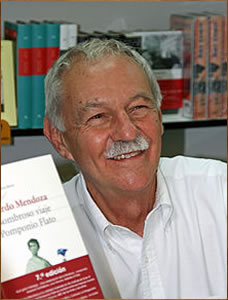
De Spaanse schrijver Eduardo Mendoza werd geboren in Barcelona op 11 januari 1943. Zie ook mijn blog van 11 januari 2007 en ook mijn blog van 11 januari 2008 en ook mijn blog van 11 januari 2009 en ook mijn blog van 11 januari 2010.


Uit: Niemand im Damensalon (Vertaald door Peter Schwaar)


“Nach neun Tagen kam sie wieder, mit denselben Beinen. Wortlos setzte sie sich auf den Sessel, wies mit einer Handbewegung den Frisiermantel zurück und sagte, mir fest in die Augen blickend:
"Ich bin nicht wegen meiner Haare gekommen, sondern um mit dir über eine persönliche Angelegenheit zu sprechen. Macht es dir etwas aus, wenn ich dich duze? Das ist nur logisch in Anbetracht des persönlichen Charakters der Angelegenheit, auf die ich eben angespielt habe. Aber vorher muss ich wissen, ob ich für diese persönliche Angelegenheit und alle sich daraus ergebenden Konsequenzen auf dich zählen kann."
"Ich werde tun, was in meiner Macht liegt," antwortete ich, "vorausgesetzt, es ist nicht unvereinbar mit der Ethik der Coiffure."
"Ich habe keine andere Antwort erwartet. Aber wir unterhalten uns besser nicht hier. Es kann jemand reinkommen und uns bei unserer Fühlungnahme stören. Wann hast du Feierabend?"
"Ein guter Friseur hat nie Feierabend, aber der Damensalon schließt um acht."
"Um diese Zeit erwarte ich dich in der Kneipe gegenüber. Versetz mich nicht."
Zur vereinbarten Stunde erschien ich zu unserer Verabredung. Sie war bereits dort, an einem Tisch im Hintergrund ins Einsaugen eines (vom Kellner der Kneipe) in eine Flasche abgefüllten Erfrischungsgetränks versunken, gleichgültig gegenüber allem um sie herum. Wortlos deutete sie auf den Stuhl. Ich setzte mich. Eine Weile schwiegen wir, sie dachte an ihre Dinge, und ich dachte ebenfalls an ihre Dinge. Das erlaubte mir, sie etwas aufmerksamer zu betrachten, so dass ich dem Leser eine nachträgliche Beschreibung liefern kann - auf ihre untere Hälfte bin ich ja schon andernorts zu sprechen gekommen.”


 828124-fac49b920ccd1cf9ed36349559e17d1e.jpg

Eduardo Mendoza (Barcelona, 11 januari 1943)


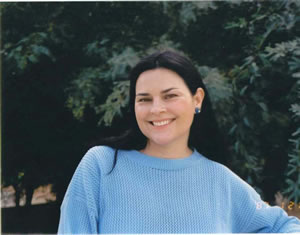
De Amerikaanse schrijfster Diana Gabaldon werd op 11 januari 1952 geboren in Williams, Arizona. Zie ook mijn blog van 11 januari 2009 en ook mijn blog van 11 januari 2010.


Uit: Laoghaire (Book Seven, Outlander)


„He rode slowly past the loch, thinking that this visit was a mistake.  It was possible to leave things behind--places, people, memories--at least for a time.  But places held tight to the things that had happened in them, and to come again to a place you had once lived was to be brought face to face with what you had done there, and who you had been.

Balriggan, though...it hadn't been a bad place; he had loved the wee loch, and the way it mirrored the sky, so still some mornings that you felt you might walk down into the clouds you saw reflected there, feeling their cold mist rise up about you, to wrap you in their drifting peace.  Or in the summer evenings, when the surface glimmered in hundreds of overlapping rings as the hatch rose, the rhythm of it broken now and then by the sudden splash of a leaping salmon.

The road took him closer, and he saw the stony shallows where he'd shown wee Joan and Marsali how to guddle fish, all three of them so intent on their business they'd paid no heed to the midgies biting, and gone home wet to the waist and red with bites and sunburn, the wee maids skipping and swinging from his hands, gleeful in the sunset.  He smiled just a little--then turned his horse's head away, up the hill to the house.

The place was shabby, but in decent repair, he grudgingly noted.  There was a saddle-mule browsing in the paddock behind the house, elderly, but sound-looking.  Well enough.  Laoghaire wasn't spending his money on follies or a coach-and-four, at least.“


 828124-2975d6129ac43b257921d6c93a85c316.jpg

Diana Gabaldon (Williams,11 januari 1952)


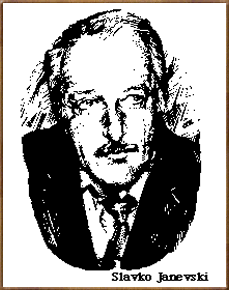
De Macedonische dichter en schrijver Slavko Janevski werd geboren op 11 januari 1920 in Skopje. Zie ook mijn blog van 11 januari 2009 en ook mijn blog van 11 januari 2010.


Uit: The Drowned Man (Vertaald door Zoran Anchevski)


„Never before, in the long chain of their years, had the twelve elders sitting in front of their houses seen a drowned man floating in the calm waters of the lake, gliding to the shore, coming to rest on the wet sand, and as is the case with the dead, prone, motionless, barefoot.
    Probably because of the heat with which even June is generous, the arrival of the corpse caused no great stir in the fishing village. Most men and women were behind the walls of their houses. There were no children. However, in a little while, a few young men, fearing some misfortune—an investigation, a hearing, suspicion—gathered around the drowned man and realized immediately that he was not a local, not from their side of the lake. His clothes of thin white linen seemed too big for him. The drowned man had fragile bones and was not swollen or blue. He seemed to be asleep in the rain—about to wake up.
    With some concern that what he was doing was illegal, one of the fishermen knelt beside the corpse and removed some weed or grass from his face. From the incomplete frame of the gently curved eyebrows two eyes gazed at the fishermen. But what eyes! As if alive! Saved from the layers of murky slime the pupils shrank. The man kneeling by the corpse straightened up. He took a step back but said nothing. The others were also silent. As if they had always known what to do in such situations, as if rituals were a part of their lives, they raised the drowned man from the wet sand. They laid him gently in a wooden boat. Two of them, paler than before, rowed out to the middle of the lake. The watchers on the shore remained silent. They waited in a huddle, indistinguishable one from another, with set white faces.“


 828124-20a869c75ce9cf1755734d3b4637e2bd.gif

Slavko Janevski (11 januari 1920 – 20 januari 2000)


De Duitstalige, joodse, dichteres en schrijfster Ilse Weber werd geboren op 11 januari 1903 in Witkowitz, Tsjechoslowakije. Zie ook mijn blog van 11 januari 2009 en ook mijn blog van 11 januari 2010.


Ade, Kamerad,


hier teilt sich der Pfad,

denn morgen mussi ch fort.

Ich scheide von dir,

man treibt mich von hier,

ich geh mit dem Polentransport.


Du gabst mir oft Mut,

treu warst du und gut,

zum Helfen immer bereit.

Ein Druck deiner Hand

Hat die Sorgen gebannt,

wir truce gemeinsam das Leid.


Ade, Kamerad,

um dich ist es schad,

der Abschied wird mir schwer.

Verlier nicht den Mut,

ich war dir so gut,

jetzt sehn wir uns nimmermehr.


 828124-61ee2d436a6606cdd59e0dc8c3fafee0.jpg

Ilse Weber (11 januari 1903 – 6 oktober 1944)


De Zuidafrikaanse schrijver en politicus Alan Stewart Paton werd geboren op 11 januari 1903 in Pietermaritzburg. Zie ook mijn blog van 11 januari 2009.


Uit: Cry The Beloved Country


„This is no time to talk of hedges and fields, or the beauties of any country. Sadness and fear and hate, how they well up in the heart and mind. Cry for the broken tribe, for the law and the custom that is gone. Aye, and cry aloud for the man who is dead, for the woman and children bereaved. Cry the beloved country, these things are not yet at an end. The sun pours down on the earth, on the lovely land that man cannot enjoy. He knows only the fear of his heart.

Have no doubt it is fear in the land. For what can men do when so many have grown lawless? Who can enjoy the lovely land, who can enjoy the seventy years, and the sun that pours down on the earth, when there is fear in the heart? Who can walk quietly in the shadow of the jacarandas, when their beauty is grown to danger? Who can lie peacefully abed, while the darkness holds some secret? What lovers can lie sweetly under the stars, when menace grows with the measure of their seclusion?

Some cry for the cutting up of South Africa without delay into separate areas, where white can live without black, and black without white, where black can farm their own land and mine their own minerals and administer their own laws. And others cry away with the compound system, that brings men to the towns without their wives and children, and breaks up the tribe and the house and the man, and they ask for the establishment of villages for the labourers in mines and industry.

And the churches cry too. The English-speaking churches cry for more education, and more opportunity, and for a removal of the restrictions on native labour and enterprise. And the Afrikaans-speaking churches want to see the native people given opportunity to develop along their own lines, and remind their own people that the decay of family religion, where the servants took part in family devotions, has contributed in part to the moral decay of the native people. But there is to be no equality in church or state.“


 828124-00259583f62e33da426b1252e68af42b.jpg

Alan Stewart Paton (11 januari 1903 – 12 april 1988)


De Amerikaanse dichter, criticus, vertaler en reisschrijver Bayard Taylor werd geboren op 11 januari 1825 in Kennett Square in Chester County, Pennsylvania. Zie ook mijn blog van 11 januari 2009.


Bedouin Song


FROM the Desert I come to thee

On a stallion shod with fire;

And the winds are left behind

In the speed of my desire.

Under thy window I stand,

And the midnight hears my cry:

I love thee, I love but thee,

With a love that shall not die

Till the sun grows cold,

And the stars are old,

And the leaves of the Judgment Book Unfold!


Look from thy window and see

My passion and my pain;

I lie on the sands below,

And I faint in thy disdain.

Let the night-winds touch thy brow

With the heat of my burning sigh,

And melt thee to hear the vow

Of a love that shall not die

Till the sun grows cold,

And the stars are old,

And the leaves of the Judgment Book Unfold!


My steps are nightly driven,

By the fever in my breast,

To hear from thy lattice breathed

The word that shall give me rest.

Open the door of thy heart,

And open thy chamber door,

And my kisses shall teach thy lips

The love that shall fade no more

Till the sun grows cold,

And the stars are old,

And the leaves of the Judgment Book Unfold!


 828124-24c6cf9728b8330946d19ee2d9601381.jpg

Bayard Taylor (11 januari 1825 – 19 december 1878)

Geschreven door Romenu om 19:10 Reageer op dit bericht

Mart Smeets

De Nederlandse (sport)journalist, schrijver en radio- en televisiepresentator Martinus Jan (Mart) Smeets werd geboren in Arnhem op 11 januari 1947. Smeets is sinds 1974 verbonden aan Studio Sport als verslaggever en presentator en sinds 2002 in vaste dienst van de NOS. Hij doet al jaren vanuit Frankrijk verslag van de Ronde van Frankrijk. Hij doet tevens verslag van diverse schaatsevenementen, schrijft wekelijkse columns, onder andere voor Sportweek, Trouw, Haarlems Dagblad en VARA-gids. Over zijn werk en zijn passies (onder andere muziek en eten) schrijft hij boeken met losse verhalen, waarin hij op een persoonlijke wijze weergeeft wat hij van bepaalde zaken vindt Op 3 december 2008 gunde de jury van de Beeld en Geluid Awards, voorheen de Gouden Beelden, de oeuvreprijs aan Mart Smeets. Hij kreeg tevens een plek in de glazen Wall of Fame in het gebouw van Beeld en Geluid in Hilversum.


Uit: Sportzomerdagboek


„Het wordt elf uur en de telefoon blijft rustig. Geen geluid. Kwart over elf. Niets nog.
Half twaalf. Ik zet de radio iets harder en K. kijkt me weer aan. Ik zeg niets. Mijn binnenste rommelt en ik heb een lichte hoofdpijn.
Zeven minuten over half twaalf. Ik voel eerst de trilling van het apparaatje, hoor dan de ringtoon. Ik neem op: ‘Zeg het maar, Tjeb.’ Hij zegt met rustige stem: ‘Ik zie je volgende maand in Peking.’ Over
famous first words
gesproken.
Ons gesprek duurt niet lang. Ik feliciteer hem en K. roept hard ‘
Yes, yes, yes,’ en balt haar vuist in de lucht. We hangen op en ik voel dat ik natte ogen krijg. Hij heeft bereikt wat hij wilde. Helemaal alleen. Ooit had hij een droom en die heeft hij helemaal zelf waargemaakt.“


Uit: Op de fiets lukte het Hamilton niet (Column in Trouw)

”Er is een tijd geweest dat ik met bewondering naar Tyler Hamilton keek. Hij was onder de vleugels van Lance Armstrong vertrokken naar graziger weiden en had het shirt van CSC aangedaan. Dat rood, wit en zwart stond hem goed en onder de kneedbare handen van Bjarne Riis kwam ineens een renner uit die veel beter leek te zijn dan knecht alleen.
Ik herinner me dat hij viel; een lullige val, over een stoeprand, en dat zijn schouder vet ingetapet moest worden en dat hij duizend doden stierf om nog maar op de fiets te kunnen blijven.
Dat was het Tour-jaar dat een complete filmploeg met veel tamtam hem tijdens de ronde volgde: 2003, zijn eerste jaar in eigen schoenen. Overal waren die mannen; ze filmden hem van 's ochtends vroeg tot lang na de massagetafel. De film, die in 2004 uitgebracht zou worden, zou de intense schoonheid van het wielrennen in de Tour naar voren brengen.
Ik hoorde dat de film door kitsch heen vloog, maar dat de essentie mooi was: de kale mens op een ijzeren ros in de vrije natuur tegen een berg op klauterend. Alleen.
Ik weet nog van het gedoe van Hamilton met zijn hond: Tugboat, een trouw beest dat ziek werd en afgemaakt moest worden terwijl zijn baasje in de Franse ronde tegen grootmacht Armstrong opbood en voorzichtig ten onder ging.
Tugboat overleed en de halsband van het trouwe dier werd een houvast voor de kleine renner. Huilend en triest zocht hij zijn geluk in een ellenlange solovlucht door de Pyreneeën.
Het lukte en iedereen klapte hem toe: wat een karakter, wat een doorzettingsvermogen, wat een held.
Als je foto's van die dag ziet, bemerk je de trotse Hamilton die zijn leermeester Armstrong vol liefde bij de schouders vasthoudt. De twee praten en hebben een uiterst tevreden trek om de mond. Allebei.
Dan wordt het augustus en wordt Hamilton olympisch kampioen. De olijftak op zijn hoofd knelt meteen: positief. Bloeddoping. B-staal niet mogelijk, want onzorgvuldig gedrag bij een laboratoriumbeambte. Hij houdt goud en trekt verder de wereld in.
De Vuelta in september, een gewonnen tijdrit en de leiderstrui; Grote Winst nadert, maar weer ontploffen de testketels: weer positief.
Twee maal in twee maanden; dat is iets teveel.”


 948612-5f66f401cda45fff25826dd34f6444bc.jpg

Mart Smeets (Arnhem, 11 januari 1947)
Geschreven door Romenu om 00:00 Reageer op dit bericht

Meer van Romenu

↑ Terug naar de berichten