Naar de inhoud

Romenu

Over literatuur, gedichten, kunst en cultuur
akke.beakke.be

Berichten van 18 januari 2011 tot 19 januari 2011

Edgar Allen Poe, Julian Barnes, Edwidge Danticat, Gustav Meyrink, Eugénio de Andrade
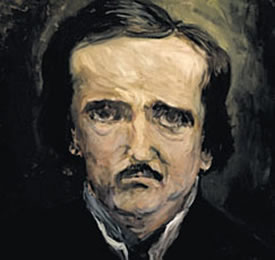
De Amerikaanse schrijver Edgar Allen Poe werd geboren op 19 januari 1809 in Boston. Zie ook mijn blog van 19 januari 2007 en ook mijn blog van 19 januari 2008 en ook mijn blog van 19 januari 2009 en ook mijn blog van 19 januari 2010.


Uit: The Black Cat


„For the most wild, yet most homely narrative which I am about to pen, I neither expect nor solicit belief. Mad indeed would I be to expect it, in a case where my very senses reject their own evidence. Yet, mad am I not --and very surely do I not dream. But to-morrow I die, and to-day I would unburden my soul. My immediate purpose is to place before the world, plainly, succinctly, and without comment, a series of mere household events. In their consequences, these events have terrified --have tortured --have destroyed me. Yet I will not attempt to expound them. To me, they have presented little but Horror --to many they will seem less terrible than baroques. Hereafter, perhaps, some intellect may be found which will reduce my phantasm to the common-place --some intellect more calm, more logical, and far less excitable than my own, which will perceive, in the circumstances I detail with awe, nothing more than an ordinary succession of very natural causes and effects.

From my infancy I was noted for the docility and humanity of my disposition. My tenderness of heart was even so conspicuous as to make me the jest of my companions. I was especially fond of animals, and was indulged by my parents with a great variety of pets. With these I spent most of my time, and never was so happy as when feeding and caressing them. This peculiar of character grew with my growth, and in my manhood, I derived from it one of my principal sources of pleasure. To those who have cherished an affection for a faithful and sagacious dog, I need hardly be at the trouble of explaining the nature or the intensity of the gratification thus derivable. There is something in the unselfish and self-sacrificing love of a brute, which goes directly to the heart of him who has had frequent occasion to test the paltry friendship and gossamer fidelity of mere Man.“


 834035-5d6358e23fe3d1f38f9c96c69da8b9a3.jpg

Edgar Allen Poe (19 januari 1809 – 7 oktober 1849)

Portret door de moderne Duitse schilder Anton Henning


De Engelse schrijver Julian Barnes werd geboren op 19 januari 1946 in Leicester. Zie ook mijn blog van 19 januari 2007 en ook mijn blog van 19 januari 2008 en ook mijn blog van 19 januari 2009 en ook mijn blog van 19 januari 2010.


Uit: Flaubert's Parrot


„Three points need to be made. One is that the writer chooses - as far as he can - the extent of what you call his involvement in life: despite his reputation, Flaubert occupied a half-and-half position. 'It isn't the drunkard who writes the drinking song': he knew that. On the other hand, it isn't the teetotaller either. He put it best, perhaps, when he said that the writer must wade into life as into the sea,but only up to the navel.

Secondly, when readers complain about the lives of writers - why didn't he do this; why didn't he complain to the newspapers about that; why wasn't he more involved in life? - aren't they really asking a simpler, and vainer, question: why isn't he more like us? But if a writer were more like a reader, he'd be a reader, not a writer: it's as uncomplicated as that.

Thirdly, what is the thrust of the complaint as far as the books are concerned? Presumably the regret that Flaubert wasn't more involved in life isn't just a philantropic wish for him: if only old Gustave had a wife and kiddies, he wouldn't have been so glum about the whole shooting match?..... For myself, I cannot think that, for instance, the portrait of provincial manners in Madame Bovary is lacking in some particular aspect which would have been remedied had its author clinked tankards of cider every evening with some gouty Norman bergere.”


 834035-a1eea21b5f4c2436dc99f5fa4b7f3e11.jpg

Julian Barnes (Leicester,  19 januari 1946)


De Amerikaanse schrijfster Edwidge Danticat werd geboren in Port-au-Prince op Haïti op 19 januari 1969. Zie ook mijn blog van 19 januari 2009 en ook mijn blog van 19 januari 2010.


Uit: Breath, Eyes, Memory


„A flattened and drying daffodil was dangling off the little card that I had made my aunt Atie for Mother's Day. I pressed my palm over the flower and squashed it against the plain beige cardboard. When I turned the corner near the house, I saw her sitting in an old rocker in the yard, staring at a group of children crushing dried yellow leaves into the ground. The leaves had been left in the sun to dry. They would be burned that night at the konbit potluck dinner.
I put the card back in my pocket before I got to the yard. When Tante Atie saw me, she raised the piece of white cloth she was embroidering and waved it at me. When I stood in front of her, she opened her arms just wide enough for my body to fit into them.
"How was school?" she asked, with a big smile.
She bent down and kissed my forehead, then pulled me down onto her lap.
"School was all right," I said. "I like everything but those reading classes they let parents come to in the afternoon. Everybody's parents come except you. I never have anyone to read with, so Monsieur Augustin always pairs me off with an old lady who wants to learn her letters, but does not have children at the school."
"I do not want a pack of children teaching me how to read," she said. "The young should learn from the old. Not the other way. Besides, I have to rest my back when you have your class. I have work."
A blush of embarrassment rose to her brown cheeks.

"At one time, I would have given anything to be in school. But not at my age. My time is gone. Cooking and cleaning, looking after others, that's my school now. That schoolhouse is your school. Cutting cane was the only thing for a young one to do when I was your age. That is why I never want to hear you complain about your school." She adjusted a pink head rag wrapped tightly around her head and dashed off a quick smile revealing two missing side teeth. "As long as you do not have to work in the fields, it does not matter that I will never learn to read that ragged old Bible under my pillow."


834035-7506ed9f6f007e40ce92490537f26ba6.jpg
Edwidge Danticat (Port-au-Prince, 19 januari 1969)


De Oostenrijkse schrijver Gustav Meyrink werd op 19 januari 1868 te Wenen geboren. Zie ook mijn blog van 19 januari 2009 en ook mijn blog van 19 januari 2010.


Uit: Das grüne Gesicht


„Vexiersalon

van

Chidher Grün

las der vornehm gekleidete Fremde, der auf dem Fußsteig der Jodenbreestraat unschlüssig

stehengeblieben war, auf der schwarzen Ladentafel eines schräg gegenüberliegenden

Gebäudes eine kuriose Inschrift aus weißen, auffallend verschnörkelten Buchstaben.

Neugierig geworden, oder um der Menge nicht länger als Zielscheibe zu dienen, die ihn in

holländisch bärenhafter Plumpheit umdrängte und ihre Glossen über seinen Gehrock, seinen

blanken Zylinder und seine Handschuhe machte, – lauter Dinge, die in diesem Stadtteil

Amsterdams zu den Seltenheiten gehörten, – überquerte er zwischen hundebespannten

Gemüsekarren hindurch den Fahrdamm, gefolgt von ein paar Gassenbuben, die, die Hände

tief in die unförmlich weiten, blauen Leinwandhosen vergraben, mit krummen Rücken,

eingezogenem Bauch und gesenkten Häuptern, dünne Gipspfeifen durch die roten

Halstücherknoten gesteckt, sich in schlurrenden Holzschuhen faul und schweigsam hinter ihm

dreinschoben.

Das Haus, in dem der Laden des Chidher Grün in einen gürtelartig rings herumlaufenden,

rechts und links bis in zwei parallele Quergäßchen sich hineinziehenden schmalen Glasvorbau

mündete, schien, nach den trüben leblosen Fensterscheiben zu schließen, ein Warenspeicher

zu sein, dessen Rückseite vermutlich in eine sogenannte Gracht abfiel – eine der zahlreichen,

für den Handelsverkehr bestimmten Wasserstraßen.“


834035-8b94e5bd95bb4d524dc59ee21ca927fa.jpg
Gustav Meyrink (19 januari 1868 – 4 december 1932)

Portret door Carl Alexander Wittek, 1919


De Portugese dichter Eugénio de Andrade (eig. José Fontinhas) werd geboren op 19 januari 1923 in Póvoa de Atalaia. Zie ook mijn blog van 19 januari 2009 en ook mijn blog van 19 januari 2010.


Dance


They are lithesome, full of grace.
Ferocious, too,
like a bunch of burning rooftop cats.

They are young and they are dancing – as beautiful
as dunes, wheat, mustangs.


Inhabited Body


Body on a horizon of water,

body open

to the slow intoxication of fingers,

body defended

by the splendour of apples,

surrendered hill by hill,

body lovingly made moist

by the tongue’s pliant sun.


Body with the taste of cropped grass

in a secret garden,

body where I am at home,

body where I lie down

to suck up silence,

to hear

the murmur of blades of grain,

to breathe

the deep dark sweetness of the bramble bush.


Body of a thousand mouths,

all tawny with joy,

all ready to sip,

ready to bite till a scream

bursts from the bowels

and mounts to the towers

and pleads for a dagger.

Body for surrendering to tears.

Body ripe for death.


Body for imbibing to the end –

my ocean, brief

and white,

my secret vessel,

my propitious wind,

my errant, unknown,

endless navigation.


Vertaald door Alexis Levitin


 834035-5d01190378b78db02d39a4b24617d58c.jpg

Eugénio de Andrade (19 januari 1923 – 13 juni 2005)


Zie voor nog meer schrijvers van de 19e januari ook mijn vorige blog van vandaag.
Geschreven door Romenu om 19:17 Reageer op dit bericht

Patricia Highsmith, Thomas Gsella, Paul-Eerik Rummo, Marie Koenen

De Amerikaanse schrijfster Patricia Highsmith werd geboren als Mary Patricia Plangman in Fort Worth (Texas) op 19 januari 1921. Zie ook mijn blog van 19 januari 2008 en ook mijn blog van 19 januari 2009 en ook mijn blog van 19 januari 2010.


Uit: The Talented Miss Highsmith (Biografie door Joan Schenkar)


„On 16 November, 1973, a damp, coldish, breaking day in the tiny French village of Moncourt, France,  Patricia Highsmith, a fifty-two year old American writer living an apparently quiet life beside a branch of the Loing Canal, lit up another Gauloise jaune, tightened her grip on her favorite Parker fountain pen, hunched her shoulders  over her roll-top desk — her oddly-jointed arms and enormous hands were long enough to reach the back of the  roll while she was still seated –- and jotted down in her writer's notebook a short list of helpful activites "which small children" might do "around the house."

It's a casual little list, the kind of list Pat liked to make when she was emptying out the  back pockets of her mind, and it has the tossed-off quality of an afterthought. But as any careful reader of Highsmith knows, the time to pay special attention to her is when she seems to be lounging, negligent, or (God forbid) mildly relaxed. There is a beast crouched in every "unconcerned" corner of her writing mind and, sure enough, it springs out at us in her list's discomfiting title. "Little Crimes for Little Tots," she called it.  And then for good measure she added a subtitle: "Things around the house which small children Can do..."

Pat had recently filled in another little list –- it was for the comics historian Jerry Bails back in the U.S. –- with some diversionary information about her work on the crime-busting comic book adventures of Black Terror and Sgt. Bill King, so perhaps she was  still counting up the ways in which small children could be slyly associated with crime. In her last writer's journal, penned from the same perch in semi-suburban France, she had also spared a few thoughts for children.“


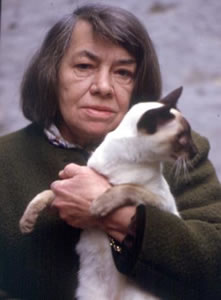
 834022-8a03dd6365f4f24656be87b177cf58db.jpg

Patricia Highsmith (19 januari 1921 - 4 februari 1995)


De Duitse dichter en satiricus Thomas Gsella werd geboren op 19 januari 1958 in Essen. Zie ook mijn blog van 19 januari 2009 en ook mijn blog van 19 januari 2010.


Vogelgrippe


Papa-a?

Ja, mein Kind?

Wenn im Glauben, daß ich penne,

ihr euch nachts wie Hahn und Henne

lauthals durch die Federn vogelt;

wenn ihr dann ... wie soll ich sagen ...

euch am Morgen wie erschlagen

schluffelnd durch die Wohnung mogelt.

saft- und kraftlos, zwei Gerippe –

Ist sie das? Die Vogelgrippe?

Klatschklatsch!


Offenbach


Arschgesichter ziehn per pedes

Durch die Arschgesichterstadt.

Arschgesichter im Mercedes

Fahren Arschgesichter platt.


Arschgesichter tragen Tüten

In ihr Arschgesichterhaus.

Alte Arschgesichter brüten

Neue Arschgesichter aus.


Ach, es bündelt Arschgesichter

Prismagleich dies Arscheloch.

Leider reimt, so klagt der Dichter,

Es sich nicht auf Offenboch.


 834022-9cd9545c34e0b6d2407b63ebc3a9272f.jpg

Thomas Gsella (Essen,19 januari 1958)


De Estlandse dichter, schrijver en politicus Paul-Eerik Rummo werd geboren op 19 januari 1942 in Tallinn. Zie ook mijn blog van 19 januari 2009 en ook mijn blog van 19 januari 2010.


Now give me god the strength


now give me god the strength to run in showers of
chances
and to recognize the inevitability amongst the many
imposing themselves on being it


memory is where our sufferings are nesting
no dog can gnaw through his genetic chain
but it's quite another thing to run just here in showers
of chances
but it's quite another thing to run just here in showers
of chances
inevitability, give me your hand


inevitability, here is my second hand
my first one has been already given to you by my
birth
inevitability, give me your hand


A World


a world whose end is conceivable
is always hanging about its end
and in a huge warm despair
the milk-glass faces are floating


once when we'll become transparent
we can see
whether we have had anything
there in us and backing us


Vertaald door de dichter en Enn Soosaar


 834022-8b1b368cb0ec562e43e8557ba7a37af7.jpg

Paul-Eerik Rummo (Tallinn, 19 januari 1942)

Rummo leest voor, rond 1968


De Nederlandse dichteres en schrijfster Marie Koenen werd geboren in ’s-Hertogenbosch op 19 januari 1879. Zie ook mijn blog van 19 januari 2007 en ook mijn blog van 19 januari 2008 en ook mijn blog van 19 januari 2009 en ook mijn blog van 19 januari 2010.


Uit: De moeder 


„Moeder Severiens trekt haar huisdeur achter zich dicht, en staat een oogenblik met haar kan en korf voor den drempel te dralen, verwonderd om de zoele lucht. Ineenmaal met dezen Aprilschen schemeravond lijkt het voorjaar dan toch eindelijk gekomen.

Uit de akkers, die achter de sleedoornheggen aan de overzijde van den breeden weg tegen de langzaam hellende heuvelflank liggen, slaat zwaar en veiig de wadem van den kleigrond. Dichterbij moeten onder de doorntakken van de haag en in het greppelgroeisel wel veel viooltjes staan, veel sleutelbloemen ook daar verder de boomgaarden in, want een zoete bloemenreuk drijft door den aardwadem heen. Of is 't het hout van de heggen en de appelaren overal, dat kruidig geurt naar den nieuwen groei, naar de botten en bloesems?

‘Weereens het voorjaar over Vlake’ denkt moeder Severiens, en ze voelt wel hoe die lucht haar al-meteen weldadig doortintelt. Ze laat den omslagdoek los om de schouders hangen. Ze loopt langzamer dan anders om temeer goeddoen te hebben van deze milde geurige schemering. Ze houdt het hoofd opgewend om over de oogen, star van het middag-lange kijken op het naaiwerk, de streeling van de zoelte te voelen, en welbehaaglijk ademt ze, alsof ze het voorjaar proeven wil op de lippen.

Maar hier, waar de glooiing van den weg eindigt en de dorpsstraat, dichter aan weerszijden bebouwd, de kom begintte naderen, zijn de kinderen nog luid aan 't spelen.

 Kleine meisjes zingen in een kring van: ‘Hadden we geld, dan hadden we goed,’ en jongens joelen om dans en deuntje heen, dat maar blijft rondwervelen, schel en snel.

‘'s Uchtends de vogels en in den schemer de kinderen’ denkt moeder Severiens. ‘Dat goedje is één.’


 834022-68080b79126c807f1bc36ad952197096.jpg

Marie Koenen (19 januari 1879 - 11 juli 1959)

Geschreven door Romenu om 19:10 Reageer op dit bericht

Rubén Darío, Peter Stamm, Robert Anton Wilson, Arno Schmidt, Franz Blei

De Nicaraguaanse schrijver Rubén Darío werd geboren in Metapa, tegenwoordig Ciudad Darío, op  18 januari 1867. Zie ook mijn blog van 18 januari 2007 en ook mijn blog van 18 januari 2008 en ook mijn blog van 18 januari 2009 en ook mijn blog van 18 januari 2010.


Lichtwärts die mysteriöse Rose


Lichtwärts die mysteriöse Rose,

Wo sie just begraben

Ist dies Tat dreizehn, welche große

Herkul hat zu wagen.


Mond, dein frohes Gleißen,

säumst, Fels, die Stunde.

Doch tausend Blanktopps reisen

Am Himmelsrunde.


Es trägt meine Schaluppe

achtern goldne Sonnen,

Erspäh auf Stieres Kruppe

Ich nun Europas Wonnen.


Rosen und Lilien


Wider alle Qualen, wider Traurigkeiten

Wenn auf bare Häupter schnei'n die rauhen Zeiten

Und die Ängste tosen:

Dies sind die Momente für die roten Rosen.


Doch für Augenblicke schwang'rer Illusionen,

Die sich müh'n dem Herzen Blumen einzuthronen

- Liebliche Delirien -:

Weiße, weiße Lilien.


Vertaald door Martin von Arndt


 833323-0643348f497c554cd8ed74d4519d16d5.jpg

Rubén Darío (18 januari 1867 - 6 februari 1916)

Standbeeld in Buenos Aires


De Zwitserse schrijver Peter Stamm werd geboren op 18 januari 1963 in Weinfelden. Zie ook mijn blog van 18 januari 2007  en ook mijn blog van 18 januari 2008 en ook mijn blog van 18 januari 2009 en ook mijn blog van 18 januari 2010.


Uit: Wir fliegen


“Die Badeanstalt unten am Fluss war geschlossen, der Eingang verriegelt. Es regnete und es war kühl. Der Bademeister war nirgends zu sehen, vielleicht war er nach Hause gegangen oder ins Dorf. Als Lukas über den Maschendrahtzaun kletterte, dachte er an den Betrunkenen, der vor ein paar Jahren

nachts hier eingestiegen und ins Becken gefallen war. Man hatte ihn erst am nächsten Morgen gefunden.

Er ging zu den Umkleidekabinen, die sich in einem flachen weißgestrichenen Backsteingebäude befanden. Neben dem Eingang war ein Schild, Männer und Knaben. Licht fiel nur durch einen breiten Spalt zwischen den Mauern und dem Dach, in den Kabinen war es immer etwas schummrig und feucht, selbst bei der größten Hitze. Lukas schaute in den Schließfächern nach, ob jemand das Pfand

vergessen hatte, aber er fand nichts. Nach der Hälfte der Fächer gab er die Suche auf. Er lief zum Fluss hinunter. Das Wasser war hellbraun und stand hoch. Es floss so schnell, dass seine Oberfläche sich unruhig kräuselte. Äste trieben vorüber, es sah aus, als seien sie schneller als die Strömung. Das Wehr flussabwärts musste nach dem Gewitter geöffnet worden sein, Lukas hörte das entfernte Tosen

des stürzenden Wassers. Es regnete nur noch ganz leicht, schließlich hörte es auf. Er ging zurück zu den Kabinen und zog sich um.

Er dachte an die schulfreien Nachmittage, wenn es heiß war und alle in die Badeanstalt gingen. Auf der Liegewiese bildeten sich kleine und größere Gruppen. Lukas’ Mitschüler spielten am Rand des Beckens, stießen oder warfen sich ins Wasser oder sprangen selbst hinein, bis der Bademeister

sie ermahnte. Lukas schwamm hin und her. Er zählte die Bahnen. Nach einem Kilometer stieg er aus dem Wasser, sein Körper war kühl und er taumelte, als habe er das Gehen verlernt. Seine Freunde lagen auf der großen Wiese auf ihren bunten Badetüchern. Sie redeten über die Sommerferien und darüber, wo sie sie verbringen würden. Er legte sich neben sie ins Gras.”


 833323-564fa647963081fde3f6b0516a780680.jpg

Peter Stamm (Weinfelden,  18 januari 1963)


De Amerikaanse schrijver, filosoof, futuroloog, anarchist en onderzoeker Robert Anton Wilson werd geboren op 18 januari 1932 in New York. Zie ook mijn blog van 18 januari 2008 en ook mijn blog van 18 januari 2009 en ook mijn blog van 18 januari 2010.


Uit: Cosmic Trigger Volume II: Down to Earth


„By 1900, when my father was 8 years old, information had doubled again. The process had only taken 150 years this time.

That year Max Planck published his first paper on quantum mechanics, beginning the process by which science in this century would gradually abandon Aristotelian logic and evolve in a non-Aristotelian, almost Buddhist direction. We were learning that the "one" "objective" Aristotelian "real world" previously posited by all Western thought existed only as a concept in our linguistic structures: that the only worlds we knew were plural and created by our senses and scientific instruments, all of them uncertain to some degree and all of them given structure by the inbuilt hardware and software of our senses and instruments.

The Boer war was raging in South Africa, as the English and Dutch fought over which of them should govern and exploit the native Black population. In China, the Boxer Rebellion represented another of the countless efforts by Third World peoples to throw off dominations of any and all white conquerors, British, Dutch, whoever.

In 1900 also the king of Italy was assassinated by idealists who thought the liberation of the workers could be achieved by murdering the Masters one by one. In Russia, Lenin returned from 3 years exile in Siberia, and went on plotting to liberate the workers by organized world revolution. The International Ladies Garment Workers Union was formed in New York by those who thought the workers could be liberated by forming coalitions and bargaining collectively with the Masters.“


 833323-a4311e293db02974b7c9089972280653.jpg

Robert Anton Wilson (18 januari 1932 – 11 januari 2007)  


De Duitse schrijver
Arno Schmidt werd op 18 januari 1914 geboren in Hamburg. Zie ook mijn blog van 18 januari 2007 en ook mijn blog van 18 januari 2009 en ook mijn blog van 18 januari 2010.


Uit: ZETTEL’S TRAUM


„Nebel schelmenzunftich. 1 erster DianenSchlag; (LerchenPrikkel). Gestier von JungStieren. Und Dizzykopfigstes schuttelt den Morgen aus. / : ≫Sie diesen Galathau, Wilma. Und wie Herr Teat’on mit Auroren dahlt : jetzt ist die Zeit, voll itzt zu seyn ! ≪. / (Aber Sie, noch vom vor—4 benomm’m, shudderDe mit den (echtn! ) Bakk’n) : ≫Dan – Ich bin doch wirklich a woman, for whom the outside world exists. Aber verwichne Nacht . . .≪; ( brach ab; und musterDe Mich, / Den Ihr gefalligst den Draht aus’nander Haltndan : – ? – / : ≫Singularly wild place – ≪; (hatte P indessn gemurmlt. Er ragte, obm wie untn, aus seiner WanderHose; Er, lang—dunn & haarich). / : ≫HasDu uberhaupt zugehort ? Was Ich gesagt hab’ ?≪ / (Vollkomm’ Wilma. Aber a) : ≫hatt’- Ich eine (sundije) Vision zu bekampfn . . .≪ / (: ≫? ! – ≪) / (Galant) : ≫So im Stiel von ›Achab + Zedecias durch 2 ‹ : Dich; in einem Zuber voll Thau ! – ≪; (dann hattn Wir Se, endlich, cnorpulend, hindurch. Und b) : ≫Hab’Ich den D—Zug, von Eschede, rumpln hor’n. – ( ? ) – : Nu ›Eintrubunc‹. ≪; (Vorkeime v Wolckn; Windwebm. ) : ≫Was willsDu nehm’ Franzel ? : ’s DopplGlas ? Oder die YASHIKA ?≪. / (Sie griff stumm. Und der LederRiem’m teilde. (›Das lies Ihr schon zu den dunkelblauen Augen‹.“


833323-03b30fd87282696fcfb1034ae18e7f17.jpg
Arno Schmidt (18 januari 1914 – 3 juni 1979)


De Oostenrijkse schrijver, vertaler en uitgever Frans Blei werd geboren op 18 januari 1871 in Wenen. Zie ook mijn blog van 18 januari 2009 en ook mijn blog van 18 januari 2010.


Uit: Erzählung eines Lebens


“Nirgends auch nur um Geringstes mehr, als was geführtes Leben in Stoff, Wort und Bild hereinbrachte, nichts zu irgendwas Verstelltes. Ganz aus dem Innern dieser Gedichte war der Vers, nirgends von außen appliziert, und er hatte etwas leise Bebendes wie das Zittern eines Pappelblattes. Und auf jedem Worte lag der Tau, als ob es eben aus der Hand Gottes in den Morgen dieser Welt gesetzt worden wäre, und es waren ganz gewöhnliche Worte, nicht »erlauchte«, wie man sie in der damaligen Mode gern – dieses erlaucht inbegriffen – soviel las.
Diese zwei Dutzend Gedichte hatte Walser als ein Siebzehnjähriger aufgeschrieben und von da ab keinen Vers mehr, bis auf einige kleine dramatisierte Gedichte. Ich lese nach dreißig Jahren wieder dieses Schulheft in Glanzleinen. Die Gedichte haben in der langen Zeit kein Fältchen bekommen. Er selber sicher auch nicht, stell ich mir vor, denn ich habe ihn seit langem nicht mehr gesehen. Aber unlängst gehört, wie er als ein Fünfziger den Besuch eines Herrn empfing, der ein Buch von ihm verlegen wollte. Er ließ ihm durch seinen Kammerdiener schreiben, sein Herr sei da und dort in Bern zu sprechen. Der Verleger fuhr nach Bern, kletterte drei Treppen, und auf sein Klingeln öffnete ihm ein blonder Bursch
in Hemdsärmeln. Ja, sein Herr, Herr Walser, sei zu Hause; und führte den Mann in ein Zimmerchen, wo er einen Moment zu warten gebeten wurde. Und gleich darauf trat bei der andern Tür Robert Walser herein, er hatte sich nur einen Rock angezogen. Der Herr war sehr geärgert. Wo doch Walser nur einen seiner Jungenstreiche so für sich selber aufgeführt hatte, indem er sich in sich selber einen Kammerdiener gab, um den Geschäftsmann vielleicht durch ein Lachen menschlicher zu machen. Was ihm mißlang. Aber sonst nichts, weder sein Leben, noch was dieses an Frucht trug.”


 833323-b7963636269a51689bfb7f3b13cbdd5c.jpg

Frans Blei (18 januari 1871 – 10 juli 1942)


Zie voor nog meer schrijvers van de 18e januari ook mijn vorige blog van vandaag en eveneens mijn eerste blog van vandaag.
Geschreven door Romenu om 19:07 Reageer op dit bericht

Alan A. Milne, Paul Léautaud, Roger Bésus, Montesquieu, Jon Stallworthy

De Britse schrijver Alan Alexander Milne werd geboren op 18 januari 1882 in Londen. Zie ook mijn blog van 18 januari 2009 en ook mijn blog van 18 januari 2010.


Uit: Pooh Goes Visiting


„Pooh always liked a little something at eleven o'clock in the morning, and he was very glad to see Rabbit getting out the plates and mugs; and when Rabbit said, 'Honey or condensed milk with your bread?' he was so exited that he said, 'Both' and then, so as not to seem greedy, he added, 'But don't bother about the bread, please.'

And for a long time after that he said nothing...until at last, humming to himself in a rather sticky voice, he got up, shook Rabbit lovingly by the paw, and said that he must be going on. 'Must you?' said Rabbit politely. 'Well,' said Pooh, 'I could stay a little longer if it-if you-' and he tried very hard to look in the direction of the larder. 'As a matter of fact,' said Rabbit, 'I was going out myself directly.' 'Oh well, then, I'll be going on. Good bye.' 'Well good bye, if you're sure you won't have any more.' 'Is there any more?' asked Pooh quickly. Rabbit took the covers of the dishes, and said 'No, there wasn't.' 'I thought not,' said Pooh, nodding to himself. 'Well Good-bye, I must be going on.'

So he started to climb out of the hole. He pulled with his front paws, and pushed with his back paws, and in a little while his nose was in the open again ... and then his ears ... and then his front paws ... and then his shoulders ... and then-'Oh, help!' said Pooh, 'I'd better go back,' 'Oh bother!' said Pooh, 'I shall have to go on.' 'I can't do either!' said Pooh, 'Oh help and bother!' ...


833319-bff21c6cf04149117d5001160d01e6c5.jpg
Alan Alexander Milne (18 januari 1882 - 31 januari 1956)


De Franse schrijver Paul Léautaud werd geboren op 18 januari 1872 in Parijs. Zie ook mijn blog van 18 januari 2009 en ook mijn blog van 18 januari 2010.


Uit: Voyage


„Ma compagnie a pris dès l'arrivée une place pour un des cars qui fait le voyage du Mont-Saint-Michel. Je me refuse à aller voir cette « horreur » dont m'ont dégoûté à l'avance l'admiration des niais et tous les chromos que j'en ai vus [...]. Au moment de son départ, [...] je me ravise [...]. Je prends une place pour moi. A ..... départ pour le Mont-Saint-Michel. [...] La route suit à peu près la côte. Au loin, le Mont-Saint-Michel, qui apparaît, disparaît, reparaît, qu'on voit d'abord un peu sur sa gauche, puis tout à fait sur sa gauche, puis devant soi, selon le tracé de la route. Arrivés à [blanc]. On descend du car. On fait une centaine de mètres à pied, dans le sable, pour gagner l'entrée. Je ne me suis pas trompé dans ma méfiance. Rien de si admirable, ce Mont-Saint-Michel. Très surfait. Par surcroît, nous sommes à marée basse, alors que le site prend toute sa beauté, paraît-il, quand la mer l'entoure de tous côtés. Nous entrons, et tout de suite une rue montante où, comme dans une [illisible] garnie de chaque côté de magasins de cartes postales, de bibelots-souvenirs, d'hôtels, de restaurants, où, comme dans une petite foire, une retape sans arrêt s'exerce à l'égard du visiteur, chacun de ces magasins prétendant à l'excellence de sa marchandise. Le conducteur du car, questionné par nous sur un restaurant, nous avait indiqué le Duguesclin. Fort bien déjeuné là malgré cette enseigne au nom de ce bandit de grand chemin. Ensuite ascension et visite du monastère par ma compagnie, plus curieuse et plus courageuse que moi. Une montée au total de [blanc] marches, paraît-il, et de la plate-forme la plus haute, une vue admirable, avec Avranches au loin. Je me suis contenté pour ma part de rester assis sur une des premières marches, attendant là en pensant à mes affaires, comme si j'eusse été chez moi, dans ma vie ordinaire, nullement transformé, décidément en voyageur. Nombreux Anglais et Américains gravissant en riant la suite d'escaliers, munis d'appareils photographiques, et prenant à chaque instant une vue ou une autre.“


 833319-63587462a2ef0d471abfad0dc52c1aaa.jpg

Paul Léautaud (18 januari 1872 – 22 februari 1956)


De Franse schrijver en beeldhouwer
Roger Bésus werd geboren op 18 januari 1915 in Bayeux. Zie ook mijn blog van 18 januari 2009 en ook mijn blog van 18 januari 2010.


Uit: Journal 1970 - 1994


“5 mars 1971

[…] Pour achever ma journée, lecture du Monde, puis poursuite du livre sur les régimes politiques en URSS. Je me soûle de telles lectures. Ai-je raison ? Je ne voudrais aucune lacune dans mon information. Certes, pourquoi, puisque je n’ai jamais l’occasion d’être discuté ? J’ai le sentiment d’engranger des précisions pour rien : d’abord, mon intuition devrait me suffire ; ensuite, la mort annulera ce que j’aurai acquis avant que j’aie eu à m’en servir. Ce n’est pas même planter, ici. C’est entasser de l’or dans une lessiveuse, enterrée, que personne après moi ne pourra trouver. Cependant, quoi faire d’autre, puisque je n’ai plus, au soir, le courage d’écrire, et que je passe ma vie lucide à appréhender (tel que je fus enfant) de ne pas savoir. Alors, apprendre.

(…)


14 mars 1975 - Train de 10 h pour Paris... Que j’en revienne à Jean, à la sculpture. à l’Art. Avec cette majuscule, échelle qui permet de monter de quelques degrés, de gagner quelques degrés au-dessus des boues. Autre échelle de Jacob. Mythe peut-être. Qui en tout cas satisfait ma conscience. Et plus, les poumons. Ce besoin de respirer jusqu’au fond, de se tenir dans les fraîcheurs natives. De vivre.


- Goethe était entouré des moulages des Grecs.”


 833319-8a7d0860da21fa03a132df9762855c0d.jpg

Roger Bésus (18 januari 1915 – 17 februari 1994)


De Franse schrijver en filosoof Charles Louis de Secondat, baron de La Brède et de Montesquieu werd geboren op 18 januari 1689 op het kasteel La Brède bij Bordeaux. Zie ook mijn blog van 18 januari 2007 en ook mijn blog van 18 januari 2009 en ook mijn blog van 18 januari 2010.


Uit: Eloge de la sincérité


„On croit, par la douceur de la flatterie, avoir trouvé le moyen de rendre la vie délicieuse. Un homme simple qui n'a que la vérité à dire est regardé comme le perturbateur du plaisir public. On le fuit, parce qu'il ne plaît point ; on fuit la vérité qu'il annonce, parce qu'elle est amère ; on fuit la sincérité dont il fait profession parce qu'elle ne porte que des fruits sauvages ; on la redoute, parce qu'elle humilie, parce qu'elle révolte l'orgueil, qui est la plus chère des passions, parce qu'elle est un peintre fidèle, qui nous fait voir aussi difformes que nous le sommes.
Il ne faut donc pas s'étonner si elle est si rare : elle est chassée, elle est proscrite partout. Chose merveilleuse ! Elle trouve à peine un asile dans le sein de l'amitié.
Toujours séduits par la même erreur, nous ne prenons des amis que pour avoir des gens particulièrement destinés à nous plaire : notre estime finit avec leur complaisance ; le terme de l'amitié est le terme des agréments. Et quels sont ces agréments ? Qu'est-ce qui nous plaît davantage dans nos amis ? Ce sont les louanges continuelles, que nous levons sur eux comme des tributs.“


 833319-cad353ea6f43f9405c03fa0c64cbc070.jpg

Montesquieu (18 januari 1689 – 10 februari 1755)

Buste van Jean-Baptiste Lemoyne


De Engelse dichter en letterkundige Jon Stallworthy werd geboren op 18 januari 1935 in Londen. Zie ook mijn blog van 18 januari 2009 en ook mijn blog van 18 januari 2010.


The Almond Tree

I


All the way to the hospital
The lights were green as peppermints.
Trees of black iron broke into leaf
ahead of me, as if
I were the lucky prince
in an enchanted wood
summoning summer with my whistle,
banishing winter with a nod.

Swung by the road from bend to bend,
I was aware that blood was running
down through the delta of my wrist
and under arches
of bright bone. Centuries,
continents it had crossed;
from an undisclosed beginning
spiralling to an unmapped end.


II

Crossing (at sixty) Magdalen Bridge
Let it be a son, a son, said
the man in the driving mirror,
Let it be a son. The tower
held up its hand: the college
bells shook their blessings on his head.


833319-9aa17a1fda6772eb5dee327f95d0de4d.jpg
Jon Stallworthy (Londen, 18 januari 1935)

Portret door Tahmina Sorabji

Geschreven door Romenu om 18:58 Reageer op dit bericht

Henry A. Dobson, Ioan Slavici, Saint-Martin, Madame de Lafayette

De Engelse dichter en essayist Henry Austin Dobson werd geboren op 18 januari 1840 in Plymouth. Zie ook mijn blog van 18 januari 2009 en ook mijn blog van 18 januari 2010.


Fame Is A Food That Dead Men Eat


Fame is a food that dead men eat,—

I have no stomach for such meat.

In little light and narrow room,

They eat it in the silent tomb,

With no kind voice of comrade near

To bid the banquet be of cheer.


But Friendship is a nobler thing,—

Of Friendship it is good to sing.

For truly, when a man shall end,

He lives in memory of his friend,

Who doth his better part recall,

And of his faults make funeral.


 833313-4d34996ef6eb69739ac0b7c310e6f266.jpg

Henry Austin Dobson (18 januari 1840 – 2 september 1921)


De Roemeense schrijver en journalist Ioan Slavici werd geboren op 18 januari 1848 in Siria. Zie ook mijn blog van 18 januari 2009 en ook mijn blog van 18 januari 2010.


Uit: Petrea The Fool


„What happened, happened; had it not happened, there would be no story to tell. Once, there was a man, who was so rich that he lost count of his riches. He had such a large courtyard that seven times seven carts pulled by oxen could move in circles, and surrounding the courtyard were large houses, barns and granaries, stables and sheds and all sorts of other outhouses; he had wide fields, vineyards and orchards, groves and hayfields; he had plenty of yoked oxen and draught horses, a whole herd of milk cattle, droves of pigs, sheep and goats; one cannot say what he didn’t have, for he had plenty of everything. On top of this, God bestowed upon him three sons as well, one worthier than the other: the eldest – no one could be like him, the second eldest – there was no match for him, and the youngest, Petrea – the most foolish for, well, however long he would have lived, he still remained the youngest child.

It so happened that the man, rich as he was, lived, like everyone else, as long as the thread of his life lasted, then he died, asking, on his deathbed, that his three sons should divide the riches left to them like brothers, without quarreling.

“Hmmm! What’s that?!” asked Petrea wonderingly. “What do you do when you divide things like brothers?”

“What do you do?” answered the eldest brother, who was cleverer. “It’s very easy! The brotherly partition: divide everything in three and say: ‘one for me, one for you and one for him’ and make sure that all three parts are equal. Did you understand?”

“I understood,” said Petrea, enlightened. “You said: you take, and you willfully make sure that all is equal.”

“So that,” the second eldest brother, also clever, added “you shouldn’t be cheated and neither should you cheat someone else.”


 833313-c1599bcaaf33346e594d97400fb58b1e.jpg

Ioan Slavici (18 januari 1848 – 17 augustus 1925)


De Franse dichter, schrijver en filosoof Louis-Claude de Saint-Martin werd geboren op 18 januari 1743 te Amboise (Indre-et-Loire). Zie ook mijn blog van 18 januari 2009 en ook mijn blog van 18 januari 2010.


Le Cimetière d'Amboise  (Fragment)


J'aime à porter mes pas dans l'asile des morts.
Là, mourant au mensonge, il me faut moins d'efforts
Pour comprendre leur langue et saisir leur pensée,
Car les morts ne l'ont pas, cette idée insensée,
Que tout s'éteint dans l'homme. En eux, tout est vivant.
Pour eux, plus de silence. Auprès d'eux l'on entend
Les sanglots du pécheur ; les fureurs de l'impie;
Les cantiques du sage ; et la douce harmonie
De ceux dont l'amitié, le zèle et la vertu
N'ont formé qu'un seul cœur pendant qu'ils ont vécus.


Homme, c'est ici-bas qu'il a pris la naissance,
Ce néant où l'on veut condamner ton essence ;
Et c'est ta propre erreur qui lui sert de soutien.
Tu sais tout ! tu peux tout ! et tu veux n'être rien !....
N'être rien ! .... et saisir et juger la lumière! ....
Laisse à l'homme égaré ces rêves de la terre :
Nous n'étions qu'assoupis dans nos corps ténébreux.
Quand le temps nous arrache à leurs débris fangeux,
L'heure qui nous réveille est une heure éternelle.
Oh! juste, quel transports! quelle splendeur nouvelle !


 833313-788d16468a27532746be2f3d77a15930.jpg

Louis-Claude de Saint-Martin (18 januari 1743 – 13 oktober 1803)

Portret door Claudine Cop, 1998


De Franse schrijfster Madame de Lafayette werd geboren op 18 januari 1634 in Parijs. Zie ook mijn blog van 18 januari 2009 en ook mijn blog van 18 januari 2010.


Uit: La princesse de Clèves


„Mme de Clèves avait ouï parler de ce prince à tout le monde, comme de ce qu'il y avait de mieux fait et de plus agréable à la cour ; et surtout madame la dauphine le lui avait dépeint d'une sorte, et lui en avait parlé tant de fois, qu'elle lui avait donné de la curiosité, et même de l'impatience de le voir. Elle passa tout le jour des fiançailles chez elle à se parer, pour se trouver le soir au bal et au festin royal qui se faisait au Louvre. Lorsqu'elle arriva, l'on admira sa beauté et sa parure; le bal commença et, comme elle dansait avec M. de Guise, il se fit un assez grand bruit vers la porte de la salle, comme de quelqu'un qui entrait et à qui on faisait place. Mme de Clèves acheva de danser et, pendant qu'elle cherchait des yeux quelqu'un qu'elle avait dessein de prendre, le roi lui cria de prendre celui qui arrivait. Elle se tourna et vit un homme qu'elle crut d'abord ne pouvoir être que M. de Nemours, qui passait par-dessus quelques sièges pour arriver où l'on dansait. Ce prince était fait d'une sorte qu'il était difficile de n'être pas surprise de le voir quand on ne l'avait jamais vu, surtout ce soir-là, où le soin qu'il avait pris de se parer augmentait encore l'air brillant qui était dans sa personne; mais il était difficile aussi de voir Mme de Clèves pour la première fois sans avoir un grand étonnement.“


833313-85c5513b20f8725bdf3f96d07d33ad3e.jpg
Madame de Lafayette (18 januari 1634 – 26 juni 1893)

Portret door Friedrich August Bouterwek
Geschreven door Romenu om 18:53 Reageer op dit bericht

Sascha Kokot

De Duitse dichter en schrijver Sascha Kokot werd geboren op 18 januari 1982 in Osterburg. Zie ook mijn blog van 23 juli 2009 en ook mijn blog van 23 juli 2010.


Der gute Herr an der Autobahn


Der gute Herr an der Autobahn
streut jeden Tag Gras in die offenen Brüche,
so als wäre es seine Schuld,
dass die Platten nicht sauber vernietet sind
und die Konserven vor der Stadt liegen,
blau und gelb angestrichen.
Abends kommt die Tochter Kräuter pflanzen
für den nächtlichen Tee,
dass der Alte die Kettenglieder wenig später
nicht mahlen hört.


Der Himmel liegt in Fetzen


Der Himmel liegt in Fetzen
Häuser eng in Bombenlücken
gestellt den Fenstern
gegenüber kein Licht
für die rußigen Zimmer
bleibt nur das Elektrische
nackt auf die Haut gestrahlt
wenn niemand anwesend ist
knackt es laut in den Leitungen.


958248-9d0f26f79e619aafb72e37d26c24cde7.jpg
Sascha Kokot (Osterburg, 18 januari 1982)

Geschreven door Romenu om 00:00 Reageer op dit bericht

Meer van Romenu

↑ Terug naar de berichten