Naar de inhoud

Romenu

Over literatuur, gedichten, kunst en cultuur
akke.beakke.be

Berichten van 19 januari 2011 tot 20 januari 2011

Edward Hirsch, Nazim Hikmet, Guy Helminger, Eugen Gomringer, Batya Gur
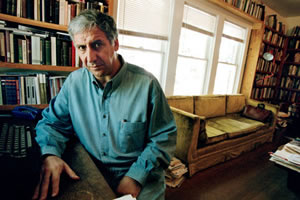
De Amerikaanse dichter en letterkundige Edward Hirsch werd geboren op 20 januari 1950 in Chicago. Zie ook mijn blog van 20 januari 2009 en ook mijn blog van 20 januari 2010.


After a Long Insomniac Night

I walked down to the sea in the early morning
after a long insomniac night.

I climbed over the giant gull-colored rocks
and moved past the trees,
tall dancers stretching their limbs
and warming up in the blue light.

I entered the salty water, a penitent
whose body was stained,
and swam toward a red star rising
in the east—regal, purple-robed.

One shore disappeared behind me
and another beckoned.
                                     I confess
that I forgot the person I had been
as easily as the clouds drifting overhead.

My hands parted the water.
The wind pressed at my back, wings
and my soul floated over the whitecapped waves.


Charades

We waited on two sides of the subway tracks:
you were riding uptown and I was heading downtown
to a different apartment, after all these years.

We were almost paralyzed, as anxious
travelers surged around us in waves,
and then you started to pantomime.

First, you touched your right eye.
Then you palmed your left knee.
Finally, you pointed at me.

I made of a sign of understanding
back to you but the train suddenly roared
into the station and you disappeared.


 834735-7e022c540b26a6c7150f5efa5f6deb31.jpg

Edward Hirsch (Chicago, 20 januari 1950)


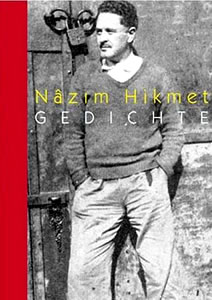
De Turkse schrijver Nazim Hikmet werd op 20 januari 1902 geboren in Thessaloniki. Zie ook mijn blog van 20 januari 2007  en ook mijn blog van 20 januari 2008 en ook mijn blog van 20 januari 2009 en ook mijn blog van 20 januari 2010.


Das schönste Meer


Das schönste Meer:

es ist das noch unbefahrene...

Das schönste Kind:

es ist das noch nicht erwachsene.

Unsere schönsten Tage:

es sind die noch nicht gelebten.

Das allerschönste Wort was ich Dir

sagen wollte:

es ist das noch nicht ausgesprochene Wort...


Sehnsucht


Heimkehren
will ich zum Meer,
hineintauchen in den blauen Wasserspiegel,
ins Meer!
Heimkehren will ich zum Meer!
Die Schiffe streben zum Horizont,
hell und weit,
ihre straffen Segel sind nicht gebläht vom Leid.
Ich wäre glücklich,
könnt ich einmal auf einem solchen Schiff Wache tun.
Da uns der Tod eines Tages gewiss ist,
nun so möcht ich wie ein in der Flut versickerndes Licht
verlöschen im Meer.
Heimkehren will ich zum Meer!
Heimkehren zum Meer!


Vertaald door Rana Talu


 834735-94ac2203c72ad31624465bf8d6790b2b.jpg

Nazim Hikmet (20 januari 1902 – 3 juni 1963)


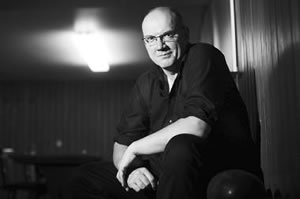
De Duitse (Luxemburgse) schrijver Guy Helminger werd geboren op 20 januari 1963 in Esch-sur-Alzette. Zie ook mijn blog van 20 januari 2007 en ook mijn blog van 20 januari 2008 en ook mijn blog van 20 januari 2009 en ook mijn blog van 20 januari 2010.


Uit: Neubrasilien


„Am frühen Abend des 6. April 1828, zwei Wochen bevor das Schiff ablegen sollte, hing über der Gemeinde Wahl eine Nebelschärpe, die nicht unbedingt dicht zu nennen war, sich aber breit von den Strohdächern fallen ließ und bis zu jener Höhe hin verlief, von der aus Napoleon mehr als zwanzig Jahre zuvor u¨ber das ganze Land geblickt hatte. Josette Meier hingegen sah in der anbrechenden Dunkelheit nur wenige Meter weit, dann schoben sich die Felder und Äcker hinter einen Paravent aus Dunst, der viel, aber nicht alles verdeckte. Solche Stellwände benutzten einige Frauen in der Stadt, hatte ihr Bruder erzählt, obwohl er erst einmal dort gewesen war. Sie selbst war noch nie nach Luxemburg-Stadt gekommen, und so wie die Dinge standen, würde sie die Festung auch in Zukunft nicht sehen.Ihre Absätze klopften auf den festgetretenen Pfad. Der Wind wehte kühl und feucht vom Wald her, Josettes Gesicht aber glühte unter der weißen Haube.”


 834735-c8038d0802b34a3b6acc2be755078bdf.jpg

Guy Helminger (Esch-sur-Alzette, 20 januari 1963)


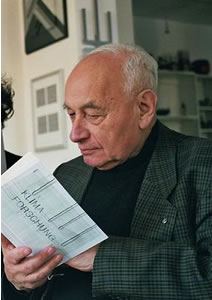
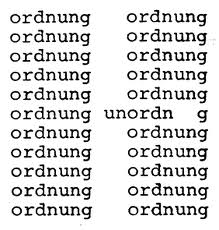
De Zwitserse dichter en schrijver Eugen Gomringer werd op 20 januari 1925 geboren in Cachuela Esperanza, Bolivia. Zie ook mijn blog van 20 januari 2007 en ook mijn blog van 20 januari 2009 en ook mijn blog van 20 januari 2010.


ping pong

        ping pong ping

        pong ping pong

                         ping pong.


du blau

du rot

du gelb

du schwarz

du weiss

du


834735-880f4cee0e3b65ca9596da9555611da6.jpg 


834735-dbcf02db96c4a1b99280c43a6676b5fc.jpg
Eugen Gomringer (Cachuela Esperanza,  20 januari 1925)


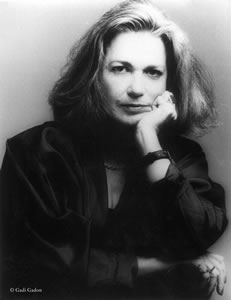
De Israëlische schrijfster, journaliste en literatuurwetenschapster Batya Gur werd geboren op 20 januari 1947 in Tel Aviv. Zie ook mijn blog van 20 januari 2008 en ook mijn blog van 20 januari 2009 en ook mijn blog van 20 januari 2010.


Uit: Murder Duet


„As he put the compact disc into the player and pressed the button, it seemed to Michael Ohayon that he heard a tiny cry. It hovered in the air and went away. He didn't pay too much attention to it, but went on standing where he was, next to the bookcase, looking at but not yet actually reading the liner notes accompanying the recording. He wondered absently whether to shatter, with the ominous opening chord for full orchestra, with pounding timpani, the holiday-eve calm. It was the twilight hour at summer's end, when the air was beginning to cool and clear. He reflected that it was a moot point whether a man called on music to wake sleeping worlds within him. Or whether he sought in it a great echo for his conscious feeling, or listened to it in order to create a particular mood when he himself was steeped in fog and emptiness, when it only seemed that this holiday-eve calm embraced him, too. If that was so, he thought, he wouldn't have chosen this particular work, which was worlds removed from the holiday-eve quiet in Jerusalem.

The city had changed greatly since he had come here, as a boy to attend a boarding school for gifted pupils. He had seen it transformed from a closed, withdrawn, austere, provincial place into a city pretending to be a metropolis. Its narrow streets were jammed with lines of cars, their impatient drivers shouting and impotently shaking their fists. Yet he was moved time and again to see how even now, on every holiday eve (especially Rosh Hashanah, Passover, and Shavuoth, but also on Friday evenings and if only for a few hours, until darkness fell), sudden peace and quiet would reign, utter calm after all the commotion and vociferousness.“


 834735-bb3ca7dc6ec9f6c5fd4ae606fa91409a.jpg

Batya Gur (20 januari 1947 – 19 mei 2005)


Zie voor nog meer schrijvers van de 20e januari ook mijn vorige blog van vandaag en eveneens mijn eerste blog van vandaag.
Geschreven door Romenu om 19:22 Reageer op dit bericht

Egon Bondy, Sawako Ariyoshi, Axel Hacke, Robert Olen Butler Jr

De Tsjechische dichter, schrijver en filosoof Egon Bondy werd geboren op 20 januari 1930 in Praag. Zie ook mijn blog van 20 januari 2009 en ook mijn blog van 20 januari 2010.


Uit: Die invaliden Geschwister (Vertaald door Mira Sonnenschein)


„Als er weiterging und sich von der Mitte der Ebene entfernte, dachte er über die Leiche der Welt nach. Offensichtlich lag sie schon den ganzen Winter über dort. Es war nicht anzunehmen, daß man im Dorf nicht Bescheid wußte. Sie lag gleich hinter ihren Scheunen, direkt am Weg. Allem Anschein nach hatten sie ihr Schuhe und Mütze und bestimmt auch die Uhr abgenommen. Am Rande der Ebene, dort, wo es wieder abschüssig wurde, blieb er stehen. Durch den lichten Wald hindurch konnte er bei grauer, doch klarer Luft bis nach unten sehen. Der Wasserpegel schien wieder gestiegen zu sein. In den letzten Monaten war er unverändert geblieben, nur einige Meter Land hatte die Flut vorübergehend überschwemmt. Über Nacht waren die Wasser offensichtlich wieder gestiegen. Man konnte nur abwarten, ob sie wieder zum Stillstand kamen. Beinahe das gesamte Umland war auf diese Weise überschwemmt. Seltsam, denn der Hügel, auf dem er stand, war keinesfalls der höchste. Selbst hohe Berge wurden bereits vom Wasser überflutet. Es umhüllte sie wie ein wallender Umhang, der sich nicht ablegen ließ, und ihnen mit erstaunlicher Beständigkeit anhaftete und bis weit in die Ebene hinunter reichte. Vielleicht war dies hier das letzte Stück Festland. Drüben, unterhalb des Berges, lag eine Stadt. Dort wohnte er. In der Vorstadt standen schon einige Häuser unter Wasser. Aber sie standen ohnehin bereits leer. Einmal hatte er dort in der Nähe in einem Gasthof gesessen, der in einer Senke lag. Es war nicht auszuschließen, daß sie längst überschwemmt war. Deshalb entschied er sich für einen anderen Heimweg. So würde er es noch vor Einbruch der Dunkelheit schaffen. Diesseits des Hügels lagen unterhalb des Waldes noch zwei Dörfer, und in jedem gab es Bier.“


834731-359d3eac4d696b4b39e107d40625352c.jpg
Egon Bondy (20 januari 1930 – 9 april 2007)


De Japanse schrijfster Sawako Ariyoshi werd geboren op 20 januari 1931 in Wakayama. Zie ook mijn blog van 20 januari 2007 en ook mijn blog van 20 januari 2009 en ook mijn blog van 20 januari 2010.


Uit: The River Ki (Vertaald door Mildred Tahara)


„The morning mist slowly cleared and the sun began to shine. "Look! The river is such a lovely shade of green!"

The sparkling expanse of celadon green extended before the eyes of the women, who had come out of the Miroku Hall to begin their descent of the stone steps on the east of the temple.

"It's beautiful!" breathed Hana, expressing her wonder.

"It is beautiful!" echoed Toyono, clasping tightly Hana's left hand.

Hand-in-hand the two women descended the stone steps, where they were immediately surrounded by the people who had been waiting for them. The boats were ready to depart. It seemed that everyone in Kudoyama Village and Jison-in Village had turned out to see the bride off.

Saki, the hairdresser, rushed up to adjust Hana's hair. Toku went to open the door of the palanquin which had been set down near the landing. That very convenient vehicle, the ricksha, had recently been introduced to Japan but, in keeping with the status of the family, a lacquered palanquin was used for the bride.

"My very best wishes," said Toyono formally. Hana looked down wordlessly. She drew her sleeves to her and got into the palanquin. Toku carefully placed a doll on her mistress' lap, as it was the custom in this part of the country for a bride to set out for her new home carrying an Ichimatsu doll.“


 834731-ed75530d045395377f4dbc374dc5b62e.jpg

Sawako Ariyoshi (20 januari 1931 – 30 augustus 1984)


De Duitse schrijver en journalist Axel Hacke werd geboren op 20 januari 1956 in Braunschweig. Zie ook mijn blog van 20 januari 2009 en ook mijn blog van 20 januari 2010.


Uit: Ich sags Euch jetzt zum letzten Mal


„Übrigens bekommen wir seit Jahren Post vom Jugendamt, gedruckte Rundschreiben, in denen
Erziehungsprobleme abgehandelt werden. Seit Luis Geburt geht das so, alle halbe Jahr ein Text, passend zum Alter.

Neulich kam der Brief für Eltern von Dreieinhalbjährigen zum Thema »Löcher in den Bauch fragen«.
Von »kleinen Fragegeistern« war die Rede, welche immerzu etwas wissen wollen: Warum das Licht brennt. Warum eine Flamme am Gasherd zu sehen ist.

»Eines ist dabei besonders wichtig«, schreibt das Jugendamt. »Unsere Antworten müssen richtig und wahr sein. Dass im Gasherd ein Feuerteufelchen sitzt und die Flamme macht, wäre beispielsweise keine sachgerechte Antwort.«

Jeden Morgen bringe ich den Luis mit dem Auto zum Kindergarten. Eine Viertelstunde lang bin ich für alle Fragen offen und will ihm die Welt erklären.
Wir fahren durch die Straßen. Ein Betonmischer kreuzt unsere Bahn. Ich sage, bevor Luis fragen kann: »Schau mal, Luis, ein Betonmischer.«
»Ja, und da ist ein Mischalong«, ruft Luis.
»Wo ist ein Mischalong?«
»Da!«, ruft Luis und zeigt auf den Betonmischer.
»Das, was du Mischalong nennst, ist ein Betonmischer«, sage ich.
»Nein, es ist ein Mischalong«, sagt er. »Ich will Musik.«

Ich mache das Radio an, aber Luis will eine CD hören.
Er will die CD selbst aussuchen. Jeden Morgen sucht er dieselbe CD aus, kramt in den Plastikhüllen mit den CDs so lange, bis er sie hat, und reicht sie mir nach vorn: den Soundtrack von Pulp Fiction.“


 834731-081715691faa0e9b7cbd93807d3466ea.jpg

Axel Hacke (Braunschweig, 20 januari 1956)


De Amerikaanse schrijver Robert Olen Butler Jr. Werd geboren op 20 januari 1945 in Granite City, Illinois. Zie ook mijn blog van 20 januari 2009 en ook mijn blog van 20 januari 2010.


Uit: The Deep Green Sea


„There is a moment now, come suddenly upon us, when the sound of the motorbikes from the street has faded almost to silence, and I can smell, faintly, the incense I have burned, and I am naked at last. He is naked, too, though I still have not let my eyes move beyond his face and his arms and his hands. He is very gentle, very cautious, in this moment, and to my surprise, I say, "I have never done this before."
      I am lying on my bed and he is beside me and we are lit by neon from the hotel across the street and his cautious hands have touched only my shoulders. One is moving there when I say these words, and it hesitates. There is also a hesitation in me. I hear what I have said. Some place inside me says these words are true, and some other place says that I am a liar.
      I am twenty-six years old and I have been with two men in my life. But I was never with them in this bed, I was never with them in this room where I was a child of my grandmother, this room where I keep the altar to my dead father, and when I removed my clothes with these men, I did not feel I was naked with them, though I wished to be. There was fear in my heart and incomprehension in their eyes, and when we rose from the places where we touched, I felt nothing except that I was alone.
      Until this moment with Ben, I have known how to understand that. I am a girl of this new Vietnam. I am not my mother, who is of a different Vietnam and who had her own fear and incomprehension with men, and who is far away from me. I am alone in this world but it is all right, I have always thought, because in a great socialist republic everyone is equal and each of us can find a place in the state that holds us all. There is no aloneness.“


 834731-16e05cd6768039ee47843b8c85aec0db.jpg

Robert Olen Butler Jr. (Granite City, 20 januari 1945)
Geschreven door Romenu om 19:15 Reageer op dit bericht

Qurratulain Hyder, Raymond Roussel, Michiel de Swaen, Edeltraud Eckert

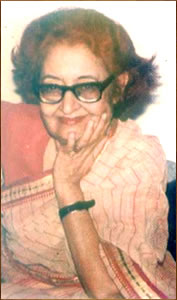
De Indiaase schrijfster Qurratulain Hyder werd geboren op 20 januari 1927 in Aligarh, Uttar Pradesh. Zie ook mijn blog van 20 januari 2009 en ook mijn blog van 20 januari 2010.


Uit: Fireflies in the Mist


“The bearded skipper pricked his ears and moved a bit closer to hear the conversation.

"Isn't he the ancient spirit of the river?" she whispered.

“Donít romanticise everything. He may be the Ancient Mariner and all that. What interests me right now is that he may be a staunch follower of the Muslim League, hoping that soon these Indian rivers would turn into Pakistani rivers. Geography is changed by human beings.

The shipmaster turned round and was greeted by an enthusiastic

Assalam Aleikum by the young man. He was now telling his companion,

"Bengal is a Muslim majority province and the Muslim masses are waiting for progressive leadership."

"The nawabs of Bengal are Muslim League leaders. And they are so reactionary," she hotly replied. With his keen river-eye the captain noticed that the heathen woman was very much in love with this upright follower of the Lord Prophet. But it distressed the Ole Man of the River when the fellow declared, "We, the communists, shall have to come close to the Muslim League. We shall provide progressive leadership to our masses."

(...)


Arjumand Manzil was no Gothic castle. It was quite a normal household.

But why didn't Jehan Ara ever mention him? Why didn't he ever talk about her? This man is a double-crosser. A two-timing crook. Sudden tears filled her eyes. She bent over the railing and stared hard at the dark waves. She remembered the nightmare she had had in Santiniketan. On waking up she had decided never to meet him again. She had not answered his letters.

Still, he had chased her down the Ganges and here he was, smiling away so cheekily.”


 834723-2929c23642d1010fc0155dad087744be.jpg

Qurratulain Hyder (20 januari 1927 – 21 augustus 2007)


De Franse dichter en schrijver
Raymond Roussel werd geboren op 20 januari 1877 in Parijs. Zie ook mijn blog van 20 januari 2009 en ook mijn blog van 20 januari 2010.


Uit: Locus Solus


„Ce jeudi de commençant avril, mon savant ami le maître Martial Canterel m'avait convié, avec quelques autres de ses intimes, à visiter l'immense parc environnant sa belle villa de Montmorency.
    Locus Solus — la propriété se nomme ainsi — est une calme retraite où Canterel aime poursuivre en toute tranquillité d'esprit ses multiples et féconds travaux. En ce lieu solitaire il est suffisamment à l'abri des agitations de Paris — et peut cependant gagner la capitale en un quart d'heure quand ses recherches nécessitent quelque station dans telle bibliothèque spéciale ou quand arrive l'instant de faire au monde scientifique, dans une conférence prodigieusement courue, telle communication sensationnelle.
    C'est à Locus Solus que Canterel passe presque toute l'année, entouré de disciples qui, pleins d'une admiration passionnée pour ses continuelles découvertes, le secondent avec fanatisme dans l'accomplissement de son oeuvre. La villa contient plusieurs pièces luxueusement aménagées en laboratoires modèles qu'entretiennent de nombreux aides, et le maître consacre sa vie entière à la science, aplanissant d'emblée, avec sa grande fortune de célibataire exempt de charges, toutes difficultés matérielles suscitées au cours de son labeur acharné par les divers buts qu'il s'assigne.
    Trois heures venaient de sonner. Il faisait bon, et le soleil étincelait dans un ciel presque uniformément pur. Canterel nous avait reçus non loin de sa villa, en plein air, sous de vieux arbres dont l'ombrage enveloppait une confortable installation comprenant différents sièges d'osier.
    Après l'arrivée du dernier convoqué, le maître se mit en marche, guidant notre groupe, qui líaccompagnait docilement. Grand, brun, la physionomie ouverte, les traits réguliers, Canterel, avec sa fine moustache et ses yeux vifs où brillait sa merveilleuse intelligence, accusait à peine ses quarante-quatre ans. Sa voix chaude et persuasive donnait beaucoup d'attrait à son élocution prenante, dont la séduction et la clarté faisaient de lui un des champions de la parole.“


 834723-1d5420281a7a272f2edb65945d5a5759.jpg

Raymond Roussel (20 januari 1877 – 14 juli 1933)


De Vlaamse dichter, rederijker en heelmeester Michiel de Swaen werd geboren in Duinkerke op 20 januari 1654. Zie ook mijn blog van 20 januari 2009 en ook mijn blog van 20 januari 2010.


Uit: De gecroonde leersse


„Tweede Bedrijf

Ambroos (uytcomende al lacchen)

Wie heeft er oyt soo ver gesworven om den Noort!...

Voor mij, ich hebbe noyt gelesen, nogh gehoort,

Dat in een grooten vorst soo vreemde lusten reesen.

'k Geloof nu evenwel dat sulckx ook waer can wesen,

Al schijnt het wonder vreemt ick twijffel daer niet aen.

Soo aenstonts comen wij, dwers door de mert gegaen,

Met sijne Majesteyt, die, wijl wij voren loopen,

Een vrouwe besigh sagh, met een kappoen te koopen;

Het stuckie  stont hem aen als weerdigh sijnen disch.

Sijn lust was wonder groot: maer op de merten is

Het goet niet voor die 't lust, maer voor die 't eerst betalen

De vrouw, die, soo het scheen, niet langer wilde dralen,

Sprak 't boere wijf in d'oor, en telde haer het gelt.

Den Keyser stont hier op een weynighieverstelt,

En, mits hij van 't kappoen seer geeren had geeeten,

Gebood mij dese vrou te volgen om te weten,

Waer, haere wooningh is, op dat hij nogh van daegh

Een deel van 't stuckie vleys doe sincken in sijn maegh“.


834723-3384dced12f9543b798b91cea453fc88.jpg
Michiel de Swaen (20 januari 1654 – 3 mei 1707)


De Duitse dichteres en schrijfster Edeltraud Eckert werd geboren op 20 januari 1930 in Hindenburg. Zie ook mijn blog van 20 januari 2009 en ook mijn blog van 20 januari 2010.


Ein dunkles Lied


Mein Leben ist ein dunkles Lied,

Das an der Sehnsucht bangem Klange reift,

Und alles, was um mich geschieht,

Ist schwer, weil man es nicht begreift.


Ich bin nicht mehr, was ich einst war

Und weiß noch nicht, was aus mir wird,

Und manchmal scheint es sonderbar,

Dass man noch Leben in sich spürt.


Da draußen fliegt die Zeit vorbei,

Die Blumen blühn, es welkt das Gras,

Nur manchmal ist es einerlei,

Dass man dich lange schon vergaß.


Mein Leben ist ein dunkles Lied,

Das an der Sehnsucht bangem Klange reift -

Ein weher Ton, wenn leis und müd,

Das Schicksal in die Saiten greift.


834723-3cfbdaa5a6477d381917af2a5d3d9b30.jpg
Edeltraud Eckert (20 januari 1930 – 18 april 1955)

Geschreven door Romenu om 19:09 Reageer op dit bericht

Edgar Allen Poe, Julian Barnes, Edwidge Danticat, Gustav Meyrink, Eugénio de Andrade

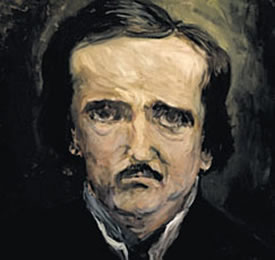
De Amerikaanse schrijver Edgar Allen Poe werd geboren op 19 januari 1809 in Boston. Zie ook mijn blog van 19 januari 2007 en ook mijn blog van 19 januari 2008 en ook mijn blog van 19 januari 2009 en ook mijn blog van 19 januari 2010.


Uit: The Black Cat


„For the most wild, yet most homely narrative which I am about to pen, I neither expect nor solicit belief. Mad indeed would I be to expect it, in a case where my very senses reject their own evidence. Yet, mad am I not --and very surely do I not dream. But to-morrow I die, and to-day I would unburden my soul. My immediate purpose is to place before the world, plainly, succinctly, and without comment, a series of mere household events. In their consequences, these events have terrified --have tortured --have destroyed me. Yet I will not attempt to expound them. To me, they have presented little but Horror --to many they will seem less terrible than baroques. Hereafter, perhaps, some intellect may be found which will reduce my phantasm to the common-place --some intellect more calm, more logical, and far less excitable than my own, which will perceive, in the circumstances I detail with awe, nothing more than an ordinary succession of very natural causes and effects.

From my infancy I was noted for the docility and humanity of my disposition. My tenderness of heart was even so conspicuous as to make me the jest of my companions. I was especially fond of animals, and was indulged by my parents with a great variety of pets. With these I spent most of my time, and never was so happy as when feeding and caressing them. This peculiar of character grew with my growth, and in my manhood, I derived from it one of my principal sources of pleasure. To those who have cherished an affection for a faithful and sagacious dog, I need hardly be at the trouble of explaining the nature or the intensity of the gratification thus derivable. There is something in the unselfish and self-sacrificing love of a brute, which goes directly to the heart of him who has had frequent occasion to test the paltry friendship and gossamer fidelity of mere Man.“


 834035-5d6358e23fe3d1f38f9c96c69da8b9a3.jpg

Edgar Allen Poe (19 januari 1809 – 7 oktober 1849)

Portret door de moderne Duitse schilder Anton Henning


De Engelse schrijver Julian Barnes werd geboren op 19 januari 1946 in Leicester. Zie ook mijn blog van 19 januari 2007 en ook mijn blog van 19 januari 2008 en ook mijn blog van 19 januari 2009 en ook mijn blog van 19 januari 2010.


Uit: Flaubert's Parrot


„Three points need to be made. One is that the writer chooses - as far as he can - the extent of what you call his involvement in life: despite his reputation, Flaubert occupied a half-and-half position. 'It isn't the drunkard who writes the drinking song': he knew that. On the other hand, it isn't the teetotaller either. He put it best, perhaps, when he said that the writer must wade into life as into the sea,but only up to the navel.

Secondly, when readers complain about the lives of writers - why didn't he do this; why didn't he complain to the newspapers about that; why wasn't he more involved in life? - aren't they really asking a simpler, and vainer, question: why isn't he more like us? But if a writer were more like a reader, he'd be a reader, not a writer: it's as uncomplicated as that.

Thirdly, what is the thrust of the complaint as far as the books are concerned? Presumably the regret that Flaubert wasn't more involved in life isn't just a philantropic wish for him: if only old Gustave had a wife and kiddies, he wouldn't have been so glum about the whole shooting match?..... For myself, I cannot think that, for instance, the portrait of provincial manners in Madame Bovary is lacking in some particular aspect which would have been remedied had its author clinked tankards of cider every evening with some gouty Norman bergere.”


 834035-a1eea21b5f4c2436dc99f5fa4b7f3e11.jpg

Julian Barnes (Leicester,  19 januari 1946)


De Amerikaanse schrijfster Edwidge Danticat werd geboren in Port-au-Prince op Haïti op 19 januari 1969. Zie ook mijn blog van 19 januari 2009 en ook mijn blog van 19 januari 2010.


Uit: Breath, Eyes, Memory


„A flattened and drying daffodil was dangling off the little card that I had made my aunt Atie for Mother's Day. I pressed my palm over the flower and squashed it against the plain beige cardboard. When I turned the corner near the house, I saw her sitting in an old rocker in the yard, staring at a group of children crushing dried yellow leaves into the ground. The leaves had been left in the sun to dry. They would be burned that night at the konbit potluck dinner.
I put the card back in my pocket before I got to the yard. When Tante Atie saw me, she raised the piece of white cloth she was embroidering and waved it at me. When I stood in front of her, she opened her arms just wide enough for my body to fit into them.
"How was school?" she asked, with a big smile.
She bent down and kissed my forehead, then pulled me down onto her lap.
"School was all right," I said. "I like everything but those reading classes they let parents come to in the afternoon. Everybody's parents come except you. I never have anyone to read with, so Monsieur Augustin always pairs me off with an old lady who wants to learn her letters, but does not have children at the school."
"I do not want a pack of children teaching me how to read," she said. "The young should learn from the old. Not the other way. Besides, I have to rest my back when you have your class. I have work."
A blush of embarrassment rose to her brown cheeks.

"At one time, I would have given anything to be in school. But not at my age. My time is gone. Cooking and cleaning, looking after others, that's my school now. That schoolhouse is your school. Cutting cane was the only thing for a young one to do when I was your age. That is why I never want to hear you complain about your school." She adjusted a pink head rag wrapped tightly around her head and dashed off a quick smile revealing two missing side teeth. "As long as you do not have to work in the fields, it does not matter that I will never learn to read that ragged old Bible under my pillow."


834035-7506ed9f6f007e40ce92490537f26ba6.jpg
Edwidge Danticat (Port-au-Prince, 19 januari 1969)


De Oostenrijkse schrijver Gustav Meyrink werd op 19 januari 1868 te Wenen geboren. Zie ook mijn blog van 19 januari 2009 en ook mijn blog van 19 januari 2010.


Uit: Das grüne Gesicht


„Vexiersalon

van

Chidher Grün

las der vornehm gekleidete Fremde, der auf dem Fußsteig der Jodenbreestraat unschlüssig

stehengeblieben war, auf der schwarzen Ladentafel eines schräg gegenüberliegenden

Gebäudes eine kuriose Inschrift aus weißen, auffallend verschnörkelten Buchstaben.

Neugierig geworden, oder um der Menge nicht länger als Zielscheibe zu dienen, die ihn in

holländisch bärenhafter Plumpheit umdrängte und ihre Glossen über seinen Gehrock, seinen

blanken Zylinder und seine Handschuhe machte, – lauter Dinge, die in diesem Stadtteil

Amsterdams zu den Seltenheiten gehörten, – überquerte er zwischen hundebespannten

Gemüsekarren hindurch den Fahrdamm, gefolgt von ein paar Gassenbuben, die, die Hände

tief in die unförmlich weiten, blauen Leinwandhosen vergraben, mit krummen Rücken,

eingezogenem Bauch und gesenkten Häuptern, dünne Gipspfeifen durch die roten

Halstücherknoten gesteckt, sich in schlurrenden Holzschuhen faul und schweigsam hinter ihm

dreinschoben.

Das Haus, in dem der Laden des Chidher Grün in einen gürtelartig rings herumlaufenden,

rechts und links bis in zwei parallele Quergäßchen sich hineinziehenden schmalen Glasvorbau

mündete, schien, nach den trüben leblosen Fensterscheiben zu schließen, ein Warenspeicher

zu sein, dessen Rückseite vermutlich in eine sogenannte Gracht abfiel – eine der zahlreichen,

für den Handelsverkehr bestimmten Wasserstraßen.“


834035-8b94e5bd95bb4d524dc59ee21ca927fa.jpg
Gustav Meyrink (19 januari 1868 – 4 december 1932)

Portret door Carl Alexander Wittek, 1919


De Portugese dichter Eugénio de Andrade (eig. José Fontinhas) werd geboren op 19 januari 1923 in Póvoa de Atalaia. Zie ook mijn blog van 19 januari 2009 en ook mijn blog van 19 januari 2010.


Dance


They are lithesome, full of grace.
Ferocious, too,
like a bunch of burning rooftop cats.

They are young and they are dancing – as beautiful
as dunes, wheat, mustangs.


Inhabited Body


Body on a horizon of water,

body open

to the slow intoxication of fingers,

body defended

by the splendour of apples,

surrendered hill by hill,

body lovingly made moist

by the tongue’s pliant sun.


Body with the taste of cropped grass

in a secret garden,

body where I am at home,

body where I lie down

to suck up silence,

to hear

the murmur of blades of grain,

to breathe

the deep dark sweetness of the bramble bush.


Body of a thousand mouths,

all tawny with joy,

all ready to sip,

ready to bite till a scream

bursts from the bowels

and mounts to the towers

and pleads for a dagger.

Body for surrendering to tears.

Body ripe for death.


Body for imbibing to the end –

my ocean, brief

and white,

my secret vessel,

my propitious wind,

my errant, unknown,

endless navigation.


Vertaald door Alexis Levitin


 834035-5d01190378b78db02d39a4b24617d58c.jpg

Eugénio de Andrade (19 januari 1923 – 13 juni 2005)


Zie voor nog meer schrijvers van de 19e januari ook mijn vorige blog van vandaag.
Geschreven door Romenu om 19:17 Reageer op dit bericht

Patricia Highsmith, Thomas Gsella, Paul-Eerik Rummo, Marie Koenen

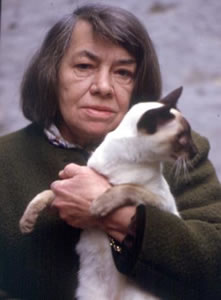
De Amerikaanse schrijfster Patricia Highsmith werd geboren als Mary Patricia Plangman in Fort Worth (Texas) op 19 januari 1921. Zie ook mijn blog van 19 januari 2008 en ook mijn blog van 19 januari 2009 en ook mijn blog van 19 januari 2010.


Uit: The Talented Miss Highsmith (Biografie door Joan Schenkar)


„On 16 November, 1973, a damp, coldish, breaking day in the tiny French village of Moncourt, France,  Patricia Highsmith, a fifty-two year old American writer living an apparently quiet life beside a branch of the Loing Canal, lit up another Gauloise jaune, tightened her grip on her favorite Parker fountain pen, hunched her shoulders  over her roll-top desk — her oddly-jointed arms and enormous hands were long enough to reach the back of the  roll while she was still seated –- and jotted down in her writer's notebook a short list of helpful activites "which small children" might do "around the house."

It's a casual little list, the kind of list Pat liked to make when she was emptying out the  back pockets of her mind, and it has the tossed-off quality of an afterthought. But as any careful reader of Highsmith knows, the time to pay special attention to her is when she seems to be lounging, negligent, or (God forbid) mildly relaxed. There is a beast crouched in every "unconcerned" corner of her writing mind and, sure enough, it springs out at us in her list's discomfiting title. "Little Crimes for Little Tots," she called it.  And then for good measure she added a subtitle: "Things around the house which small children Can do..."

Pat had recently filled in another little list –- it was for the comics historian Jerry Bails back in the U.S. –- with some diversionary information about her work on the crime-busting comic book adventures of Black Terror and Sgt. Bill King, so perhaps she was  still counting up the ways in which small children could be slyly associated with crime. In her last writer's journal, penned from the same perch in semi-suburban France, she had also spared a few thoughts for children.“


 834022-8a03dd6365f4f24656be87b177cf58db.jpg

Patricia Highsmith (19 januari 1921 - 4 februari 1995)


De Duitse dichter en satiricus Thomas Gsella werd geboren op 19 januari 1958 in Essen. Zie ook mijn blog van 19 januari 2009 en ook mijn blog van 19 januari 2010.


Vogelgrippe


Papa-a?

Ja, mein Kind?

Wenn im Glauben, daß ich penne,

ihr euch nachts wie Hahn und Henne

lauthals durch die Federn vogelt;

wenn ihr dann ... wie soll ich sagen ...

euch am Morgen wie erschlagen

schluffelnd durch die Wohnung mogelt.

saft- und kraftlos, zwei Gerippe –

Ist sie das? Die Vogelgrippe?

Klatschklatsch!


Offenbach


Arschgesichter ziehn per pedes

Durch die Arschgesichterstadt.

Arschgesichter im Mercedes

Fahren Arschgesichter platt.


Arschgesichter tragen Tüten

In ihr Arschgesichterhaus.

Alte Arschgesichter brüten

Neue Arschgesichter aus.


Ach, es bündelt Arschgesichter

Prismagleich dies Arscheloch.

Leider reimt, so klagt der Dichter,

Es sich nicht auf Offenboch.


 834022-9cd9545c34e0b6d2407b63ebc3a9272f.jpg

Thomas Gsella (Essen,19 januari 1958)


De Estlandse dichter, schrijver en politicus Paul-Eerik Rummo werd geboren op 19 januari 1942 in Tallinn. Zie ook mijn blog van 19 januari 2009 en ook mijn blog van 19 januari 2010.


Now give me god the strength


now give me god the strength to run in showers of
chances
and to recognize the inevitability amongst the many
imposing themselves on being it


memory is where our sufferings are nesting
no dog can gnaw through his genetic chain
but it's quite another thing to run just here in showers
of chances
but it's quite another thing to run just here in showers
of chances
inevitability, give me your hand


inevitability, here is my second hand
my first one has been already given to you by my
birth
inevitability, give me your hand


A World


a world whose end is conceivable
is always hanging about its end
and in a huge warm despair
the milk-glass faces are floating


once when we'll become transparent
we can see
whether we have had anything
there in us and backing us


Vertaald door de dichter en Enn Soosaar


 834022-8b1b368cb0ec562e43e8557ba7a37af7.jpg

Paul-Eerik Rummo (Tallinn, 19 januari 1942)

Rummo leest voor, rond 1968


De Nederlandse dichteres en schrijfster Marie Koenen werd geboren in ’s-Hertogenbosch op 19 januari 1879. Zie ook mijn blog van 19 januari 2007 en ook mijn blog van 19 januari 2008 en ook mijn blog van 19 januari 2009 en ook mijn blog van 19 januari 2010.


Uit: De moeder 


„Moeder Severiens trekt haar huisdeur achter zich dicht, en staat een oogenblik met haar kan en korf voor den drempel te dralen, verwonderd om de zoele lucht. Ineenmaal met dezen Aprilschen schemeravond lijkt het voorjaar dan toch eindelijk gekomen.

Uit de akkers, die achter de sleedoornheggen aan de overzijde van den breeden weg tegen de langzaam hellende heuvelflank liggen, slaat zwaar en veiig de wadem van den kleigrond. Dichterbij moeten onder de doorntakken van de haag en in het greppelgroeisel wel veel viooltjes staan, veel sleutelbloemen ook daar verder de boomgaarden in, want een zoete bloemenreuk drijft door den aardwadem heen. Of is 't het hout van de heggen en de appelaren overal, dat kruidig geurt naar den nieuwen groei, naar de botten en bloesems?

‘Weereens het voorjaar over Vlake’ denkt moeder Severiens, en ze voelt wel hoe die lucht haar al-meteen weldadig doortintelt. Ze laat den omslagdoek los om de schouders hangen. Ze loopt langzamer dan anders om temeer goeddoen te hebben van deze milde geurige schemering. Ze houdt het hoofd opgewend om over de oogen, star van het middag-lange kijken op het naaiwerk, de streeling van de zoelte te voelen, en welbehaaglijk ademt ze, alsof ze het voorjaar proeven wil op de lippen.

Maar hier, waar de glooiing van den weg eindigt en de dorpsstraat, dichter aan weerszijden bebouwd, de kom begintte naderen, zijn de kinderen nog luid aan 't spelen.

 Kleine meisjes zingen in een kring van: ‘Hadden we geld, dan hadden we goed,’ en jongens joelen om dans en deuntje heen, dat maar blijft rondwervelen, schel en snel.

‘'s Uchtends de vogels en in den schemer de kinderen’ denkt moeder Severiens. ‘Dat goedje is één.’


 834022-68080b79126c807f1bc36ad952197096.jpg

Marie Koenen (19 januari 1879 - 11 juli 1959)

Geschreven door Romenu om 19:10 Reageer op dit bericht

Meer van Romenu

↑ Terug naar de berichten