Naar de inhoud

Romenu

Over literatuur, gedichten, kunst en cultuur
akke.beakke.be

Berichten van 22 maart 2011 tot 23 maart 2011

Mitch Cullin, Gary Whitehead, Yōko Tawada, Steven Saylor, Nils-Aslak Valkeapää
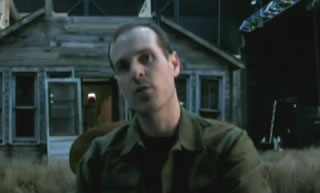
De Amerikaanse schrijver Mitch Cullin werd geboren op 23 maart 1968 in Santa Fe, New Mexico.  Zie ook mijn blog van 23 maart 2007 en ook mijn blog van 23 maart 2008 en ook mijn blog van 23 maart 2009 en ook mijn blog van 23 maart 2010.


Uit: The Post-War Dream


„That serpentine formation of listless souls wound back into the darkness-the shapes of children, men and women, mothers cradling infants, the elderly-coming from where the cows had been headed, drawing nearer while never quite reaching him. But it was the gas mask each one wore which disturbed him the most-such cumbersome equipment obscuring their faces, too large for the heads of small children and practically consuming the entire bodies of the infants, giving the group a uniform, superficial appearance not unlike that of cattle. Even so, he perceived their determined movements as a kind of miserable retreat, a retrogression toward the past and, indeed, toward the living-where, upon arriving at their destination, he imagined the masks would be cast aside and all of them would inhale freely once more.

Yet every step of their bare feet was now preceded by labored breath, a collective exhalation delivered in unison and released as a muted, staccato gasp through chemical air filters-while their paper-thin skin contracted around pronounced rib cages, and many of their arms hung like broken branches at their sides. As the ragged column advanced steadily in the moonlight, he realized the physical condition of the people had deteriorated badly since he'd first seen them decades ago. Their clothing was either reduced to shreds or had fallen away, their ankles and feet were covered with sores, their hair was so long that it ran the length of their backsides, and the men's thick beards jutted from beneath their masks. In that stream of pale, dirty bodies only their protruding bones shone clearly as they marched one after the other.

"Where are you going?" he had once asked them without speaking. "What is it you're looking for? What do you want?"


878097-63a987d00989ce904d2ddc58cdfcde70.jpg
Mitch Cullin (Santa Fe, 23 maart 1968)


De Amerikaanse dichter Gary Joseph Whitehead werd geboren op 23 maart 1965 in Pawtucket, Rhode Island. Zie ook mijn blog van 23 maart 2007 en ook mijn blog van 23 maart 2008 en ook mijn blog van 23 maart 2009 en ook mijn blog van 23 maart 2010.


First Year Teacher to His Students


Go now into summer, into the backs of cars,

into the black maws of your own changing,

onto the boardwalks of a thousand splinters,

onto the beaches of a hundred fond memories

in wait, where the sea in all its indefatigability

stammers at the invitation. Go to your vacation,


to the late morning cool of your basement rooms,

the honeysuckle evening of the first kiss, the first

dip and pivot, swivel and twist. Go to where

the clipper ships sail far upriver, where the salmon

swim in the clean, cool pools just to spawn.

Wake to what the spider unspools into a silver


dawn dripping with light. Sleep in sleeping bags,

sleep in sand, sleep at someone else's house

in a land you've never been, where the dreamers

dream in a language you only half understand.

Slip beneath the sheets, slide toward the plate,

swing beneath the bandstand where the secret


things await. Be glad, or be sad if you want,

but be, and be a part of all that marches past

like a parade, and wade through it or swim in it

or dive in it with your eyes open and your mind

open to wind, rain, long days of sun and longer

nights of city lights mixing on wet streets like paint.


Stay up so late that you forget day-of-the-week,

week-of-the-month, month-of-the-year of what

might be the best summer, the summer

best remembered by the scar, or by the taste

you'll never now forget of someone's lips,

and the trips you took—there, there, there,


where snow still slept atop some alpine peak,

or where the moon rose so low you could see

its tranquil seas...and all your life it'll be like

some familiar body that stayed with you one night,

one summer, one year, when you were young,

and how everywhere you walked, it followed.


878097-6b48c5275172696e692bfbd2819b9029.jpg
Gary Whitehead (Pawtucket,  23 maart 1965)


De Japanse schrijfster Yōko Tawada werd geboren op 23 maart 1960 in Tokyo. Zie ook mijn blog van 23 maart 2007 en ook mijn blog van 23 maart 2008 en ook mijn blog van 23 maart 2009 en ook mijn blog van 23 maart 2010.
 

Uit: Abenteuer der deutschen Grammatik


1. Wortstellung


Das Verb spielt die zweite Geige

Wenn die Melodie zitiert ist

hat es den letzten Ton

An einem gewöhnlichen Tag steht das Subjekt vorne

Jeder kann anfangen aber wer steht am Ende

Wenn ein anderer den Kopf macht

muss das Subjekt

nach hinten rücken

Die Reihenfolge und die Hierarchie sind zweierlei

Der Rhythmus kennt keine Korruption


2. Passé Composé


Ein Kompott

Für uns alle dasselbe

Für mich für dich für ihn für sie denn

Es ist gegessen und vergessen.

Nur die Haltung des Habens unterscheidet sich 

Zwischen mir und ihm und ihr und sie und uns

Bitte nicht zu viel „und“!

Und das Haben zeigt bei jedem ein anderes Ende

Ich bleibe eher offen

Du bis streng verschlossen

Er und sie haben Hüte auf dem Kopf

Gemeinsam sind die eingeatmete Luft und

Die durchgemachte Nacht

Wir lasen nie das gleiche Buch, aber

Gelesen haben wir alle oder

Ich „gelese", du „gelesest"?

Das perfekt Vergangene ist durchkomponiert und vereinfacht

Warum sind wir aber so vielfältig in der Gegenwart?


 878097-d360d08b3ae027d0f5f58ca7de96e85d.jpg

Yōko Tawada (Tokyo, 23 maart 1960)


De Amerikaanse schrijver Steven Saylor werd geboren op 23 maart 1956 in Port Lavaca Texas. Zie ook mijn blog van 23 maart 2008 en ook mijn blog van 23 maart 2009 en ook mijn blog van 23 maart 2010..


Uit: A Murder on the Appian Way


"Papa! Wake up!"

A hand gripped my shoulder and shook me gently. I pulled away and felt cold air on the back of my neck as the blanket slid away. I snatched it back and snuggled against it, burrowing for warmth. I reached for Bethesda, but found only a warm vacancy where she should have been.

"Really, Papa, you'd better wake up." Eco shook me again, not quite so gently.

"Yes, husband," said Bethesda. "Get up!"

What sleep is as deep as the sleep of a cold Januarius night, when the sky is a blanket of lowering clouds and the earth shivers below? Even with my son and wife yammering at me, I slipped back into the arms of Morpheus as easily as a boy slipping into a bottomless, downy bed of goose feathers. It seemed to me that two magpies were chattering absurdly in a tree nearby, calling me "Papa" and "Husband." They swooped down, fluttered their wings, pecked me with their beaks. I groaned and waved my arms to fend them off. After a brief battle they retreated into the frosty clouds, leaving me to dream in peace.

The frosty clouds burst open. Cold water splashed my face.

I sat upright, sputtering and blinking. With a satisfied nod, Bethesda placed an empty cup beside a flickering lamp on a little table against the wall. Eco stood at the foot of the bed, gathering up the blanket he had just pulled off me. I shivered in my sleeping gown and hugged myself.

"Blanket thief!" I mumbled grimly. At that moment it seemed the foulest crime imaginable. "Stealing an old man's rest!"

Eco remained impassive. Bethesda crossed her arms and arched an eyebrow. By the dim lamplight the two of them still looked suspiciously like magpies.

I closed my eyes. "Have pity!" I sighed, thinking an appeal to mercy might gain me just one more blissful moment of sleep.


 878097-fa7bec6e170d1308a0d5b5fec24e292d.jpg

Steven Saylor (Port Lavaca, 23 maart 1956)


De Samische dichter, schilder, musicus en fotograaf  Nils-Aslak Valkeapää werd geboren op 23 maart 1943 in Palonjoensuu nabij Enontekiö. Zie ook mijn blog van 23 maart 2009 en ook mijn blog van 23 maart 2010.


Uit: Trekways of the Wind


For a moment I was with you

rested for a while


And now my friend, my dear bird

it is time to leave again

It is always like that towards the end


And I take out the white reindeer fur coat

not so new any more

but not worn either

And I take out the mottled fur shoes

new shoe strings

nice dark fur leggings

the silver belt the gákti

the silk scarf the cap

the fur gloves

And the food pack


I leave

to arrive

go away

to be closer


To the space of your thoughts

to your heart

I crawl

into the heart


I journey

on the sea of time

follow

the tracks of the wind


878097-8d285a7fb93a9c288ec2911f1fd57fb2.jpg
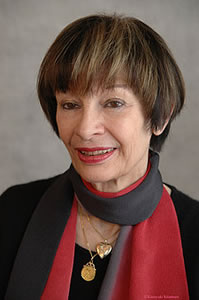
Nils-Aslak Valkeapää
(23 maart 1943 – 26 november 2001)


Zie voor nog meer schrijvers van de 23e maart ook mijn vorige blog van vandaag.
Geschreven door Romenu om 18:35 Reageer op dit bericht

Federica de Cesco, Roger Martin du Gard, Hamvas Béla, Daniel Biga, Ceija Stojka

De Zwitserse schrijfster Federica de Cesco werd geboren op 23 maart 1938 in Pordenone, Zie ook mijn blog van 23 maart 2009 en ook mijn blog van 23 maart 2010.


Uit: Muschelseide


„Ricardo fühlte sich nicht wohl. Herzrhythmusstörungen. Die Anfälle traten gelegentlich auf, waren harmlos, aber unangenehm. Er nahm sie leider als Vorwand, um nicht in den Country-Club zu gehen, und wurde dabei immer blasser und dicker. Da er krank aussah und unsicher auf den Beinen war, sagte ich ihm, er solle sich ausruhen. Er schluckte seine Tabletten und zog sich früh zurück. Als ich später mit Francesca zu Abend aß, hätte ich sie gern gefragt, ob sie etwas über die japanische Gedenksäule wusste. Vielleicht hätte ich Glück: Es gab Momente, in denen ihr die Worte glatt von der Zunge rollten, ohne dass sie sich sehr anzustrengen brauchte. Und wiederum andere, in denen sie nur ihre Arbeit im Kopf hatte und ein Gespräch mit ihr wenig Sinn hatte. Letzteres war gerade der Fall: Sie war übel gelaunt.
Sie fand die Suppe zu salzig, beklagte sich über den Rinderbraten – der tatsächlich zäh war – und rauchte, bis es auch mir den Appetit verdarb. Ich ließ sie beim Portwein allein. Am Morgen erschien Ricardo wie gewohnt zum Frühstück und ließ sich die Zeitung bringen. Francesca erkundigte sich schnodderig nach seinen Befinden. Er antwortete freundlich. »Danke, Francesca. Mir geht es wieder gut.« Sie beließ es dabei. Ihr Leben schien erfüllt zu sein, erfüllt von Dingen, von denen sie nicht sprach. Ich kannte sie wirklich nicht gut. Sie war eine Fremde, von weither gekommen. Manchmal genügte eine Kleinigkeit, ein falsches Wort, dass sie zornig wurde.
Zorn begriff ich, was mir an ihr nicht gefiel, war, dass sie die Menschen so leichtfertig kränkte. Doch war ich nicht einmal sicher, dass sie es bewusst darauf angelegt hatte. Offen bar machte ihr die Malerei zu schaffen. Ihre Knochen womöglich auch. Ich fragte Ricardo, ob er seine Tabletten genommen hatte.“


878094-1fd1c416fafb9bf341c8e0af77ae8ba8.jpg
Federica de Cesco (Pordenone, 23 maart 1938)


De Franse schrijver Roger Martin du Gard werd geboren op 23 maart 1881 in Neuilly. Zie ook mijn blog van 23 maart 2007 en ook mijn blog van 23 maart 2009 en ook mijn blog van 23 maart 2010.


Uit: Les Thibault, I, Le pénitencier


« Jacques ! s'écria-t-il, écoute-moi, ne m'interromps pas ! Ou plutôt, réponds : si nous nous trouvions tout à coup, toi et moi, seuls au monde, est-ce que tu ne voudrais pas venir auprès de moi, vivre avec moi ? »
L'enfant ne comprit pas tout de suite.
« Ah ! Antoine, fit-il enfin, comment veux-tu ? Il y a papa ?... »
Le père se dressait en travers de l'avenir. Une même idée les effleura : « Comme tout s'arrangerait, si subitement... » Antoine eut honte de sa propre pensée, dès qu'il en eut surpris le reflet dans le regard de son frère ; il détourna les yeux.
« Ah ! bien sûr, disait Jacques, si j'avais pu être avec toi, rien qu'avec toi, je serais devenu tout autre ! J'aurais travaillé... Je travaillerais, je deviendrais peut-être un poète... un vrai... »
Antoine l'arrêta d'un geste :
«Eh bien, écoute : si je te donnais ma parole que personne d'autre que moi ne s'occupera de toi, est-ce que tu accepterais de sortir d'ici ?
– Ou...i... » C'était par besoin d'affection et pour ne pas contrarier son frère, qu'il acquiesçait.
« Mais t'engagerais-tu à me laisser organiser ta vie, tes études, et te surveiller en tout, comme si tu étais mon fils ?
– Oui.
– Bon », fit Antoine, et il se tut. Il réfléchissait. Ses désirs étaient toujours si impérieux qu'il ne doutait jamais de leur exécution ; et, en fait, il avait jusqu'à présent mené à bout tout ce qu'il avait ainsi voulu avec opiniâtreté. Il se tourna vers son cadet et sourit :
 « Je ne rêve pas, reprit-il, sans cesser de sourire, mais d'une voix résolue. Je sais à quoi je m'engage. Avant quinze jours, tu m'entends, avant quinze jours... Aie confiance ! Tu vas rentrer dans ta boîte courageusement, sans avoir l'air de rien. Et avant quinze jours, je te le jure, tu seras libre ! »


878094-76ff9eb5bd190d2ff1228792c89d2507.jpg
Roger Martin du Gard (23 maart 1881 – 22 augustus 1958)


De Hongaarse schrijver Hamvas Béla werd geboren op 23 maart 1897 in Eperjes (tegenwoordig Prešov). Zie ook mijn blog van 23 maart 2007 en ook mijn blog van 23 maart 2009 en ook mijn blog van 23 maart 2010.


Uit: Preface to Crime and Punishment (Vertaald door Bors Hulesch)


„Dostoevsky’s Crime and Punishment is not a symbolic piece. It is probably nothing more than the story of a student. The student who wishes to study but hasn’t got the means, and who therefore murders an old pawnbroker. He tries to motivate his murder by contrasting his poverty to the moneybags of the old hag, and representing this as unjust. Which does ring somewhat true. That a young man wishing to study should lead a life of destitude, while the avaricious old witch is hoarding her roubles, seems inappropriate. But for Rodion Raskolnikov to strike the woman down and take her roubles for himself is even more inappropriate. The student knows it; everybody knows it. True; such an uneven distribution of wealth in unfair. But the fact is, when the old usurer is murdered and her bags are taken, injustice does not suddenly become justice. Quite the contrary: it becomes felony. Murder and robbery cannot be represented as acts that restore justice. Dostoevsky himself is of the same opinion; as well as any sane individual who has ever read his novel.

Crime and Punishment is not a symbolic work, and it makes not the slightest reference to any meaning beyond what the story relates. It is the thought itself; nothing more. This is characteristic of mid-19th century attempts to come to terms with the French revolution and the Napoleon-phenomenon. Under the influence of Stendhal and Balzac, one might add. These were the times when greatness and career became confused. For we must remember that Napoleon was a careerist; and an even more talented careerist than Julius Caesar; and the difficulty in understanding him stems from the inability to distinguish greatness from careerism within him.“


 878094-2bacaeee23448c6a1fe9e8f3703ccda5.jpg

Hamvas Béla (23 maart 1897 – 7 november 1968)


De Franse dichter en schrijver  Daniel Biga werd geboren op 23 maart 1940 in Nice. Zie ook mijn blog van 23 maart 2007  en ook mijn blog van 23 maart 2008 en ook mijn blog van 23 maart 2009 en ook mijn blog van 23 maart 2010.


LEOPARDI

Moi poète français du XXème siècle et demi
de race ouvrière
prenant le Flyveflisken à
7 heures un matin d'hiver de Köbenhavn
pour m'encourager
je me récitais ces vers
Passero solitario alla campagna
Cantando vaï finché non more il giorno ;
Ed erra l'armonia per questa valle...
Canti et cosi trapassi

Dell'anno et di tua vita il più bel fiore...
de l'aristocratique Leopardi
poète italien du XIXème en fleur
ayant vécu souffert et étant mort à Recanati
un si petit village des Marches
et la mer l'Oresund en Baltique
charriait des glaces


 878094-f3b124c9eb24ed401eb379bca0de7697.jpg

Daniel Biga (Nice, 23 maart 1940)


De Oostenrijkse schrijfster Ceija Stojka werd op 23 maart 1933 geboren in Kraubarth. Zie ook mijn blog van 23 maart 2008  en ook mijn blog van 23 maart 2007 en ook mijn blog van 23 maart 2010.


Uit: Träume ich, dass ich lebe?

„Und sie hat sich im Stacheldraht ein Loch gemacht, ist hinaus, und hat den Mohn bei den Greißlern, die sie kannte, verkauft. Kannst du dir vorstellen mit welcher Angst! Mit diesem Geld hat sie dann

Milch kaufen können. Sie hat sich hinausgeschlichen, um Milch für uns zu holen. Ihr Glück war, dass sie nie ein Kopftuch getragen hat, sondern immer Kostüme und kleine Stöckelschuhe, so hat man sie nicht als Romni erkannt.

Dann hat sie bei den Gadje gesagt, sie sollen sie auf dem Herd eine Einbrennsuppe machen lassen. Sie hat einen Mehlteig gemacht, für Eingetropftes, aber für trockenes Eingetropftes, als Nudelersatz. Das hat sie in die Suppe gegeben und Kümmel dazu. In einer Milchkanne – eine hellblaue und eine rote mit Tupfen hat sie gehabt – hat sie uns die Suppe gebracht.

Sie ist auch immer nach Floridsdorf gegangen und hat sich Nachricht von einer Romni geholt. Diese Frau war mit einem Mann befreundet, der immer wusste, wann eine schlimme Razzia durchgeführt

werden wird. Schlimme Razzia hieß, dass die Gestapo in jedem Bezirk Menschen einfängt.

Dann sind wir sofort weg. Die Mama ist oft mit der Gusti Godl, das war eine Gadji, die uns geholfen hat, und dem kleinen Ossi nach Schönbrunn gegangen. Er hatte schwarze Haare, blauschwarze Haare, deswegen hat sie ihm immer eine Haube aufgesetzt, eine selbst genähte.

Die Gusti Godl hat meist ein kariertes Kleid getragen, ein Dirndl mit Schürze. Und der Fritz Karasek war manchmal dabei. Er hat meine Schwester Kathi geliebt, er war ein Longinus, er hat oft einen

grauen Anzug getragen. Sie waren Gadje, sie waren nicht auffällig. Manchmal sind wir auch einfach irgendwo herumgegangen. Drei, vier Tage haben wir uns dann nicht gesehen und dann haben wir uns alle wieder getroffen.

Einmal hat uns der Fritz Karasek in ein Wirtshaus gebracht, mich und die Kathi. Das Wirtshaus hatte einen abschüssigen, herrlichen Garten, und ich wollte so sitzen, dass wir in diesen Garten hinunterschauen. Es war ein milder Tag, man hat den Frühling schon gerochen. Dort sind wir gesessen.“


 878094-ef8bb0379e880c83b16b5ab9b98c96fe.jpg

Ceija Stojka (Steiermark, 23 maart 1933)

Geschreven door Romenu om 18:29 Reageer op dit bericht

Billy Collins, Arnold Sauwen, Albrecht Goes, Eveline Hasler, Wolfgang Bächler, Érik Orsenna

De Amerikaanse dichter en schrijver Billy Collins werd geboren in New York op 22 maart 1941. Zie ook mijn blog van 22 maart 2007 en ook mijn blog van 22 maart 2008 en ook mijn blog van 22 maart 2009 en ook mijn blog van 22 maart 2010.


I Go Back To The House For A Book 


I turn around on the gravel and go back to the house for a book, something to read at the doctor's office, and while I am inside, running the finger of inquisition along a shelf, another me that did not bother to go back to the house for a book heads out on his own, rolls down the driveway, and swings left toward town, a ghost in his ghost car, another knot in the string of time, a good three minutes ahead of me — a spacing that will now continue for the rest of my life.


Japan 


Today I pass the time reading

a favorite haiku,

saying the few words over and over.


It feels like eating

the same small, perfect grape

again and again.


I walk through the house reciting it

and leave its letters falling

through the air of every room.


I stand by the big silence of the piano and say it.

I say it in front of a painting of the sea.

I tap out its rhythm on an empty shelf.


I listen to myself saying it,

then I say it without listening,

then I hear it without saying it.


And when the dog looks up at me,

I kneel down on the floor

and whisper it into each of his long white ears.


It's the one about the one-ton temple bell

with the moth sleeping on its surface,


and every time I say it, I feel the excruciating

pressure of the moth

on the surface of the iron bell.


When I say it at the window,

the bell is the world

and I am the moth resting there.


When I say it at the mirror,

I am the heavy bell

and the moth is life with its papery wings.


And later, when I say it to you in the dark,

you are the bell,

and I am the tongue of the bell, ringing you,


and the moth has flown

from its line

and moves like a hinge in the air above our bed.


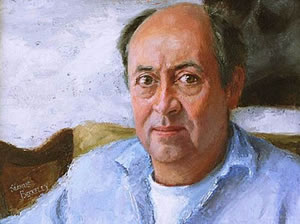
877423-02bcb2109c2ee5b5d4b39b61165dabe0.jpg
Billy Collins (New York, 22 maart 1941)

Portret door Seamus Berkeley


De Vlaamse dichter en schrijver Arnold Sauwen werd geboren te Stokkem op 22 maart 1857. Zie ook mijn blog van 11 mei 2006 en mijn blog van 22 maart 2007 en ook mijn blog van 22 maart 2008 en ook mijn blog van 22 maart 2009 en ook mijn blog van 22 maart 2010.


Zwerversleven


Wat norse wrevel legde in uw borst
die wondre drang om, met uw kinderbende,
jaar in jaar uit te zwerven zonder ende,
uw orgel draaiend voor de schrale korst;

Gij die u nooit aan werk of tucht gewende;
met onbezorgdheid uw bestaan omschorst,
en willig op uw sterke schouders torst
de jammerlast der dagen van ellende?

Van d'arbeid wars, trekt gij door dorp en steê
en speelt uw lied en voert uw have mee,
uw dempig peerd en uw gehuifde wagen;

En vraagt der wereld niets dan 't bedelbrood
en 't plekje gronds waar, bij elk avondrood,
voor éne nacht uw tent wordt opgeslagen.


 877423-dd4a4f85a9fc2337d3093973735f46ba.jpg

Arnold Sauwen (22 maart 1857 – 11 mei 1938)


De Duitse dichter, schrijver en theoloog Albrecht Goes werd geboren op 22 maart 1908 in Langenbeutingen. Zie ook mijn blog van 22 maart 2009 en ook mijn blog van 22 maart 2010.


Karl Barths Altersbriefe


„Wenn dies das Altern ist:
So weit, so frei sein,
so immer noch in Ja und Nein dabei sein,
so herzlich lachen, so getröstet schweigen,
so sich zum Großen, so zum Kleinen neigen –
so nah dem Zeitenton, den Ewig-Psaltern:
wenn dies das Alter ist –
– komm, laß uns altern!“


Gelöbnis

(Nachtwache, Fleckfieberlazarett, Frühling 1943)


Welchem Ziel wir sterben?

Nicht dem Vaterland.

Nicht, daß die Enkel und Erben

Von neuem Länder erwerben,

Mit des Hasses grüngiftigen Schwaden

Von neuem die Seele beladen,

Von neuem die Seele beladen

Mit patriotischem Tand.


Welchem Glauben wir leben?

Uns ward dies Land zu klein.

Die in Panzern verbrannt und in Gräben

Verschüttet, die uns umschweben,

Die Toten, hüben und drüben,
Was wolln sie, als daß wir begrüben

Den bewaffneten Wahn und endlich,

Endlich Brüder sei’n.


 877423-12cab327e7743693eb5c4630da542e3a.jpg

Albrecht Goes (22 maart 1908 – 23 februari 2000)


Zie voor de drie onderstaande schrijvers ook
mijn blog van 22 maart 2007,
mijn blog van 22 maart 2008 en ook mijn blog van 22 maart 2009 en ook mijn blog van 22 maart 2010.


De Zwitserse schrijfster Eveline Hasler werd geboren in Glarus op 22 maart 1933.


Uit: Anna Göldin


„Anna, traurige Berühmtheit.

Steine, wo man hinschaut, wenn man auf ihrer Spur zurückgeht. Dort, wo die Göldin herkommt, im Sennwald, sind Wiesen und Äcker abschüssig, voller Geröll, Felsen wachsen aus ihnen heraus, Berge mit Zacken, Hörnern, Bröckelgestein.

Irgendwann ging ein Bergsturz von den Kreuzbergen nieder zum Rhein; Tannen halten bei Salez die Brocken mit ihren Wurzeln im Griff, nichts rollt mehr, der Staub hat sich verzogen, Vögel fliegen durch die Zweige, ein scheinheiliger Friede.

Steine hatten auch der kleinen Grafschaft den Namen gegeben: Sax, Sassum, Stein. 1615, als den Grafen von Sax das Geld ausging, nur noch Steine übrigblieben, haben sie das Gebiet den Zürchern verkauft; bis zur Revolution steht es unter der »gewalt und bothmässigkeit des Löbl. Standes Zürich«.

Die Zürcher, die einmal Leben und Gut eingesetzt ha- ben für ihre Freiheit, schicken Vögte, einen Ziegler, einen Ulrich, der wohnt auf Forsteck, auf den Felsen des Bergsturzes, wo die Buchen eine Lichtung ausgespart haben, sitzt an seinem schweren Eichentisch, führt in Frey- und Eigen-Büchern säuberlich Buchhaltung über die Untertanen. Da gibt es freie und unfreie Familien und solche, in denen diese beide Kategorien von Abhängigkeit ver- mengt sind: Heiratet eine Freie einen Unfreien oder umgekehrt, so gehört das erste Kind dem Vogt, das zweite ist frei, das dritte unfrei und so fort. Aber auch die sogenannten Freien unterstehen der zürcherischen Obrigkeit, sie haben sich nur von gewissen Abgaben freigekauft.

Auf Annas Spuren habe ich in diesen Büchern nach den Bebauern der steinigen Äcker gesucht. Schon im i B. Jahrhundert heißen mehr als ein Drittel der Einwohner von Sennwald Göldi. Ein Name, in dem kaum Gold steckt, eher der im Dialektwörterbuch vermerkte Wortstamm Göl, Göleten, Geschiebe, Geröll. Auch die Vornamen gleichen sich: so viele Annas, so viele Anna Göldin.“


877423-d9bca74d7bf13f5c67acbc087aabd06a.jpg 

Eveline Hasler (Glarus, 22 maart 1933)


De Duitse dichter Wolfgang Bächler (een pseudoniem van Wolfgang Born) werd geboren op 22 maart 1925 in Augsburg.


Der See


Der See im Tal unter mir
war ein Reiher im Wind Vergleich, wunerschön, malerisch, ruhig
der mit den Flügeln schlug,
ohne aufzufliegen. Langeweile, Stille -nichts passiert.

Alles Grüne war gemäht und verteilt "reiche" Gegend, gehört das
um ein Schloß und Wochenendhäuser lyrische Ich dazu.
herum bis zu den Uferstegen hinab, 3-zeiliges Enjambement-steht
für großer See??
bis ins Wasser hinein, ins Schilf.

Ich konnte die Besitzer nicht sehen. "Ich" gehört nicht dazu
Doch der Wind warf ihr Lachen herauf
und das schrillere ihrer Frauen,
das wie das Klingen und Surren Vergleich; eitel, überheblich,
ihrer Geschäftskassen klang. materialistisch, oberflächlich

Ich wollte, der See flöge ihnen davon,
ließe sich anderswo nieder,
wo noch kein Zaun, keine Mauer,
kein Haus die Ufer verstellt und entstellt
und versperrt. Ich wollte, der See
und das Land gehörten uns allen. Gerechtigkeitssinn.


Ins Weiße blickend


Schnee hat auf Katzenpfoten

den Garten zurückerobert,

die Dächer und Bäume besetzt.


Erfroren starren

die Knospen dich an,

schwarze Pupillen

im Weiß der Zweige.


877423-b606202ec906dddde6b0cf0611478e42.jpg
Wolfgang Bächler (22 maart 1925 – 24 mei 2007)


De Franse schrijver Érik Orsenna werd geboren in Parijs op 22 maart 1947 als Érik Arnoult.


Uit: La Révolte des accents


« Depuis quelque temps, les accents grognaient. Ils se sentaient mal aimés, dédaignés, méprisés. À l’école, les enfants ne les utilisaient presque plus. Les professeurs ne comptaient plus de fautes quand, dans les copies, ils étaient oubliés. Chaque fois que j’en croisais un dans la rue, un aigu, un grave, un circonflexe, il me menaçait.
– Notre patience a des limites, grondait-il. Un jour, nous ferons la grève. Attention, notre nature n’est pas si douce qu’il y paraît. Nous pouvons causer de grands désordres.
Je ne les prenais pas au sérieux. Je me moquais :
– Une grève, allons donc ! Et qui ça dérangerait, une grève des accents ?
Je sentais bien monter leur colère. Je ne croyais pas qu’ils préparaient quelque chose.
J’en suis certain, quand j’y pense, c’est l’affaire des ordinateurs qui a tout déclenché. Le fournisseur s’est trompé. Il a livré au collège des ordinateurs de langue anglaise : aucun accent sur le clavier.
Nos amis se sont rués chez moi. J’ai eu le tort, le très grand tort de me moquer d’eux. J’ai eu le tort, le très grand tort de leur dire qu’il valait mieux des ordinateurs sans accents que pas d’ordinateur.
Ils m’ont fait la leçon et puis ils m’ont insultés.
– Chaque langue a sa logique. Libre à l’anglaise et à l’américaine de vivre sans accents. Mais vous nous avez trahis. Dorénavant, c’est la guerre. »


 877423-7c1c3e913399cb4f163a1f16aca84f1a.jpg

Érik Orsenna (Parijs, 22 maart 1947)


Zie voor nog meer schrijvers van de 22e maart ook mijn vorige blog van vandaag.

Geschreven door Romenu om 18:57 Reageer op dit bericht

Gabrielle Roy, Ludvík Kundera, Léon Deubel, Edward Moore, Karel Poláček, Nicholas Monsarrat, Hans Grimm

De Canadese schrijfster Gabrielle Roy werd geboren op 22 maart 1909 in Saint Boniface, Manitoba. Zie ook mijn blog van 22 maart 2007 en ook mijn blog van 22 maart 2009 en ook mijn blog van 22 maart 2010.


Uit: Children of My Heart


„Now I recognized him: an immigrant from the Abruzzi who had recently come to our town. As yet unable to find work in his own trade of upholsterer, he was doing odd jobs here and there. This was why I had seen him one day in our neighbourhood, digging up a patch of ground. I remembered that his little son has been with him, trying to help, that the two never stopped talking as they worked, no doubt spurring each other on, and that this murmur in a foreign tongue, at our fields’ edge, had seemed to have a special charm.

I went over to them with the very best smile I could muster. As I came near, the child cried out in terror and clung even more desperately to his father, who trembled on contact. I could see that he wouldn’t be much help. On the contrary, with his caresses and soft words he did nothing but keep alive the hope that he might weaken. And in fact the father began to plead with me. Since the boy was so unhappy, wouldn’t it be better to take him home just this once, and try again this afternoon or tomorrow morning, when he’d have time to explain what a school was.

I saw them hanging on my decision, and took my courage in my two hands: “No, when you have to make the break, it doesn’t help to wait.”

The father lowered his eyes, obliged to admit I was right. Even between the two of us we had trouble detaching the child; as soon as we loosened the grip of one hand it slipped away to grasp another handful of the father’s clothing. The odd thing was that while he continued to cling to his father he was furious with him for taking my side, and through his tears and hiccups was calling him a heartless wretch, or words to that effect.“


877415-161b5853ca37620eddccc6757079dd31.jpg 

Gabrielle Roy (22 maart 1909 – 13 juli 1983)


De Tsjechische dichter en schrijver Ludvík Kundera werd geboren op 22 maart 1920 in Brünn. Zie ook mijn blog van 22 maart 2007.en ook mijn blog van 22 maart 2008 en ook mijn blog van 22 maart 2010.


Nachricht über den Tod André Bretons


8.36 Bahnhof Frankfurt

niemand streut

Seesterne

großes Händchen

kleines Händchen

Bündel Koffer

leere Telefonzelle

leere Bank

niemand schüttelt

trockne Königskerzen

zerknüllter Zeitungen raus

gegenüber Zugeinfahrt

Zugluft blättert

in Telefonbüchern

Drähte fleckiges Dach

niemand schält

Kiefernrinde ab

amerikanischer Offizier

dick und bebrillt

mit Frau und vier Töchtern

dicken und bebrillten

Signale weder auf rot

noch auf grün

niemand sprengt

mit rostigen Tannennadeln

8.50 Abfahrtspfiff

leerer Bahnsteig

nur ein einziges einsames Mädchen

winkt einem alten Mann

der abfährt

niemand klopft

mit Schlegeln Sonnenblumen.


877415-232213e9603d8608d05dff45389ae07b.jpg
Ludvík Kundera (22 maart 1920 – 17 augustus 2010)


De Franse dichter Léon Deubel werd geboren op 22 maart 1879 in Belfort. Zie ook mijn blog van 22 maart 2007.en ook mijn blog van 22 maart 2008 en ook mijn blog van 22 maart 2010.


Ma Souffrance


Ma souffrance n'est pas de celles qu'on diffame
Ni de celles que trompe un facile plaisir ;
Elle a le front de ceux qui vivent sans désir
Et ne s'endort jamais sur l'épaule des femmes.

L'orgueil qui la nourrit sans cesse de sa flamme
Et fait luire à ses yeux tous les trésors d'Ophir
L'exalte à des sommets pénibles à gravir
Qui menace l'azur natal qu'elle réclame.

Mais les plus fiers essors sont captifs de Demain,
Et farouche, impuissant et cruel, de ces mains
Frémissantes encor d'avoir tenue la Lyre,

J'offre au ciel fulgurant qui châtia Sodome,
Et voua Prométhée à l'éternel martyre,
L'invincible douleur de ne rester qu'un homme


877415-ed4495c44b4aee4d51e77879092638a5.jpg 

Léon Deubel (22 maart 1879 – 4 juni 1913)


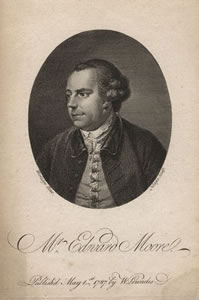
De Engelse schrijver Edward Moore werd geboren in Abingdon, Berkshire op 22 maart 1712. Zie ook mijn blog van 22 maart 2009 en ook mijn blog van 22 maart 2010.


Uit: The Gamester


„Mrs. Bev. And is. I have no fear of his affections. Would I knew that he were safe!

Char. From ruin and his companions. But that's impossible. His poor little boy too! What must become of Him?

Mrs. Bev. Why, want shall teach him industry. From his father's mistakes he shall learn prudence, and from his mother's resignation, patience. Poverty has no such terrors in it as you imagine. There's no condition of life, sickness and pain excepted, where happiness is excluded. The needy peasant, who rises early to his labour, enjoys more welcome rest at night for't. His bread is sweeter to him; his home happier; his family dearer; his enjoyments surer. The sun that rouses him in the morning, sets in the evening to release him. All situations have their comforts, if sweet contentment dwell in the heart. But my poor Beverley has none. The thought of having ruined those he loves, is misery for ever to him. Would I could ease his mind of That!

Char. If He alone were ruined, 'twere just he should be punished. He is my brother, 'tis true; but when I think of what he has done; of the fortune You brought him; of his own large estate too, squandered away upon this vilest of passions, and among the vilest of wretches! O! I have no patience! My own little fortune is untouched, he says: would I were sure on't!“


877415-a6f75d322a451c7cd19b4ce1ae7854e9.jpg
Edward Moore (22 maart 1712 – 1 maart 1757)

Gravure door James Neagle


De Tsjechische schrijver Karel Poláček werd geboren op 22 maart 1892 in Reichenau. Zie ook mijn blog van 22 maart 2007.


Uit: We Were a Handful (Vertaald door Mark Corner)


„Now I go round to the Zilvars, the people from the poorhouse. That’s the most fabulous place of all, but I don’t say anything about it at home because they’d only be against it. Mr. Zilvar was in the Great War, during which he was wounded by enemy gunfire. So he goes begging from house to house and has a wooden leg. I’d like to have a leg like that and I long for one so much that it gives me dreams in which I go around with a wooden leg that makes a heavy “Plonk! Plonk!” sound and people come running out of their homes, each one of them marvelling at my wooden leg, with me feeling very proud. I’ve set my heart on mending my ways, and when they’re mended I’ll ask the family to give me a wooden leg for Christmas, and then the lads will really have something to see.

The poorhouse also has some ladies who go begging and they spend every evening counting what they’ve been able to beg during the day, and then they get into arguments. Mr. Zilvar can’t stand it when they argue a lot. He unfastens his leg and flings it at the old hags and then they stop arguing. Zilvar boasted that his pa’s the chief beggar because he gets the most money and so the others have to listen to what he says. He coughs a lot in the night because of a blood clot. He told me this and was very proud of it.“


 877415-51c48cb9d5c062cd3c9e4f6db0de4574.jpg

Karel Poláček (22 maart 1892 – 19 oktober 1944)


De Engelse schrijver Nicholas Monsarrat werd geboren op 22 maart 1910 in Liverpool. Zie ook mijn blog van 22 maart 2009.


Uit: H.M. Corvette


"Therell be no admirals in this joint," said  M. to me. "It's expecting too much altogether."

There seemed to be almost everything else:  above all, there was a stupefying row going on

the whole time, with everyone contributing according to his means: most of it was rivetting, but even small boys with nothing else to do  would he idly hammering on sheets of iron as  they talked. (I daresay they were training for  the more responsible jobs: I swear they deserved them.) To make ourselves heard at all  we had to shout: and it Is foolish (and unhelpful) to shout "What a horrible noise!" so we mostly kept silent and looked about for our quarry*

There was, as we had suspected, no admiral, but instead a helpful works-foreman who directed us to a hut labelled, dauntingly, NAVAL OFFICERS KEEP OUT; and installed there we

found an R.N.V.R. officer, with a red face and a square chin, dressed in a working-suit which made us look and feel like the First and Second Dudes in a tastelessly lavish production.

He had two stripes to our one, and was in fact the First Lieutenant. After we had announced ourselves he looked us over carefully, from a good many angles : it was difficult to tell which, if any, he liked.


 877415-1166746cf1a1998ed80cb49037aa8628.jpg

Nicholas Monsarrat (22 maart 1910 – 8 augustus 1979)


De Duitse schrijver en publicist Hans Grimm werd op 22 maart 1875 geboren in Wiesbaden. Zie ook mijn blog van 22 maart 2007.en ook mijn blog van 22 maart 2008 en ook mijn blog van 22 maart 2010
 

Uit: Grimm ohne Glocken (Studie van Manfred Franke over Hans Grimm)


„Volk ohne Raum" hatte Grimm so bekannt gemacht, dass er 1928 zu einem von ihm angestrebten Gespräch bei Hitler vorgelassen wurde. Zu denen, die außerdem mit Grimm zusammenkamen, gehörten neben anderen der Politiker Alfred Hugenberg, der Journalist Paul Fechter, der Schriftsteller Arnolt Bronnen sowie der Diplomat Ulrich von Hassell, in späteren Jahren führendes Mitglied des Widerstands. Als nach Inkrafttreten des „Gesetzes zur Wiederherstellung des Berufsbeamtentums" (7. 4. 1933) Grimms ehemaliger Vorgesetzter in der OHL, Paul Landau, seiner jüdischen Herkunft wegen die Existenzgrundlage zu verlieren drohte, wandte er sich an Hans Grimm. Er und der Balladendichter Börries von Münchhausen versuchten Landau zu helfen, letztlich vergeblich. Andererseits hat Grimm kaum eine Gelegenheit ausgelassen, seine Distanz zu Juden und besonders zu jüdischen Kollegen zu betonen. Nach 1945 verstieg er sich sogar dazu, die Anzahl der ermordeten Juden schlichtweg in Abrede zu stellen.

 Grimm konnte für sich geltend machen, nie „Pg." gewesen zu sein. An Hitler freilich hielt er mit Einschränkungen fest. „Wenn wir überhaupt eine nationale Zukunft haben wollen", so Grimm, dürfe „der Nationalsozialismus nicht verloren gehen" und „müsse nur wieder sauber gemacht werden."


 877415-ffb5f59ab54099eac3bb3fbd05287f1d.jpg

Hans Grimm (22 maart 1875 – 27 september 1959)

Geschreven door Romenu om 18:49 Reageer op dit bericht

Meer van Romenu

↑ Terug naar de berichten