Naar de inhoud

Romenu

Over literatuur, gedichten, kunst en cultuur
akke.beakke.be

Berichten van 20 april 2011 tot 21 april 2011

Michael Mann, Meira Delmar, Alistair MacLean, Jamie McKendrick, Népomucène Lemercier
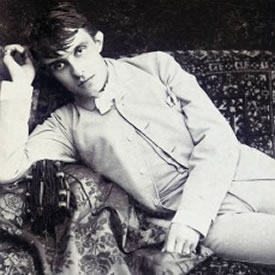
De Duitse literatuurwetenschapper en musicus Michael Mann werd als jongste kind van Thomas en Katia Mann geboren op 21 april 1919 in München. Zie ook mijn blog van 21 april 2009 en ook mijn blog van 21 april 2010.


Uit: Familienbande (roman van Michael Degen over Michael Mann)


„Bald verlangte der Junge auserst geschickt nach der Brust Mieleins. Dem Vater war es ein Grauel, Derartiges mit ansehen zu mussen. Er floh vor dem unerklarlichen Ekel, den ihm das mannliche Gebaren des Sauglings einfloste. Man fing an, sich aus ordinarer Watte birnenformige Ohrstopsel zu drehen, doch das reichte nicht hin. Dann ging man dazu uber, die damals gerade aufkommenden Damenbinden zu zerfleddern, deren Material der altesten Schwester, Eri, undurchlassiger zu sein schien und die sie mit groser Sorgfalt zu winzigen Kugelchen verarbeitete.

Es war alles umsonst. Babys Stimme wurde von Nacht zu Nacht kraftiger und lies besonders Pielein, den kreativen Grosverdiener der Familie, leiden. Wenn dieser die Beherrschung zu verlieren drohte und Anstalten machte, in Babys Zimmer zu sturzen, um es zur Ordnung zu rufen, stand immer schon Mielein mit besorgtem Blick in der Tur und bat stumm um Nachsicht.

Hilflos kehrte Pielein dann in sein Zimmer zuruck, wahrend Mielein den Jungen zu sich ins Bett hinuberrettete. Das hatte stets Erfolg.

Doch die ungewohnte Stille machte es nicht einfacher. Die grosen Geschwister, Klaus und Erika, waren hellwach, sasen im Flur vor ihren Zimmern auf dem Boden und warteten kichernd auf den nachsten Anfall ihres kleinen Bruders. Der kam prompt, sobald Mielein den Schlafenden in sein Bett zuruckzutragen versuchte. Dann vergrub Aissi, wie man den altesten Sohn nannte, seinen spitz zulaufenden Nasenerker im Schos seiner Schwester, um sein hemmungsloses Gelachter zu ersticken.“


 898332-8003605d44939bde0750d6fb7880045c.jpg

Michael Mann (21 april 1919  - 1 januari 1977)

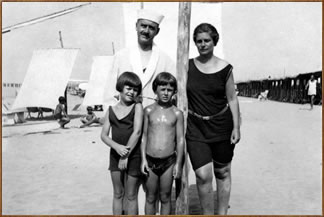
Thomas, Katia, Elisabeth en Michael Mann op Sylt, 1927


De Columbiaanse dichteres Meira Delmar (eig. Olga Isabel Chams Eljach) werd geboren in  Barranquilla op 21 april 1922. Zie ook mijn blog van 21 april 2009 en ook mijn blog van 21 april 2010.


Secret Island


Let time pass between the two
without letting us change soul and soul.

We have remained fixed, one and the other,
with the impassive solitude of statues,
your face in the background of my still eyes,
my face in your gaze.

In vain are the birds, the clouds,
and the sky always fleeing
toward the sunset.
The sea, the sea of the unfathomable heart with
its spread-out sails and its lighthouses.

The trees that come smiling
through the very first leaves,
the rain that models its fine towers
of glass, the mornings,
summer . . . 

As blind men we are. As blind men
of a luminous wind that lifts us
and takes us avidly,
no one knows where.

And everything surrounds us without touching us
in this fantastic love of love
and of silence.


Vertaald door Nicolás Suescún


 898332-1b9fb04c1bc5ef07648e2d938cbd46dc.jpg

Meira Delmar (21 april 1922 - 18 maart 2009)


De Schotse schrijver Alistair Stuart MacLean werd geboren op 21 april 1922 in Glasgow. Zie ook mijn blog van 28 april 2007 en ook mijn blog van 28 april 2008 en ook mijn blog van 28 april 2009 en ook mijn blog van 21 april 2010.


Uit: Puppet on a Chain


„I'd spoken briefly to the stewardess on the way across. A charming girl, but given to a certain unwarranted optimism in her outlook on life in general and I had to take issue with her on two points: I hadn't enjoyed the flight and I didn't expect to enjoy my stay in Amsterdam. I hadn't enjoyed the flight because I hadn't enjoyed any flight since that day two years ago when the engines of a DC 8 had failed only seconds after take-off and led to the discovery of two things: that an unpowered jet has the gliding characteristics of a block of concrete and that plastic surgery can be very long, very painful, very expensive and occasionally not very successful. Nor did I expect to enjoy Amsterdam, even though it is probably the most beautiful city in the world with the friendliest inhabitants you'll find anywhere: it's just that the nature of my business trips abroad automatically precludes the enjoyment of anything.

As the big KLM DC 8 -- I'm not superstitious, any plane can fall out of the sky -- sank down, I glanced round its crowded interior. The bulk of the passengers, I observed, appeared to share my belief in the inherent madness of flying: those who weren't using their finger-nails to dig holes in KLM's upholstery were either leaning back with excessive nonchalance or chattering with the bright gay animation of those brave spirits who go to their impending doom with a quip on their smiling lips, the type who would have waved cheerfully to the admiring throngs as their tumbril drew up beside the guillotine. In short, a pretty fair   cross-section   of   humanity.   Distinctly   law-abiding. Definitely non-villainous. Ordinary: even nondescript.“


898332-389e48e1446085394905d892ffd6d2ed.jpg
Alistair MacLean (21 april 1922 - 2 februari 1987)


De Franse dichter en schrijver Népomucène Lemercier werd geboren op 21 april 1771 in Parijs. Zie ook mijn blog van 21 april 2009 en ook mijn blog van 21 april 2010.


La panhypocrisiade (Fragment)


J'en pleure et ris ensemble ; et tour à tour je crois
Retrouver Héraclite et Démocrite en moi.
Hu ! hu ! dis-je en pleurant, quoi ! ce dieu qui digère,
Quoi ! tant d'effets si beaux, le ventre les opère !
Hu ! hu ! lamentons-nous ! hu ! quels honteux destins,
De nous tant agiter pour nos seuls intestins !
Hu ! hu ! hu ! de l'esprit quel pitoyable centre !
L'homme en tous ses travaux a donc pour but le ventre !
Mais tel que Grand-Gousier pleurant sur Badebec,
Se tournant vers son fils sent ses larmes à sec ;
Hi ! hi ! dis-je en riant, hi ! hi ! hi ! quel prodige,
Qu'ainsi depuis Adam le ventre nous oblige
À labourer, semer, moissonner, vendanger,
Bâtir, chasser, pêcher, combattre, naviguer,
Peindre, chanter, danser, forger, filer et coudre,
Alambiquer, peser les riens, l'air et la poudre,
Étre prédicateurs, poètes, avocats,
Titrer, mitrer, bénir, couronner des Midas,
Nous lier à leur cour comme à l'unique centre,
Hi ! hi ! tout cela, tout, hi ! hi ! hi ! pour le ventre !


 898332-64582d7ba826247a67a6f886c5d4f497.jpg

Népomucène Lemercier (21 april 1771 – 7 juni 1840)

Portret door Isabey Jean Baptiste


Onafhankelijk van geboortedagen:


De Engelse dichter en vertaler Jamie McKendrick werd geboren in 1955 in Liverpool. Zie ook mijn blog van 21 april 2007 en ook mijn blog van 21 april 2008 en ook mijn blog van 21 april 2009 en ook mijn blog van 21 april 2010.


The Resort


Red-eyed and flinching, Flavius
was applying a depilatory paste
of ivy gum and crushed centipede
to little effect. The sudden silence meant
they were waiting for that smooth-cheeked
decimvir to swivel his thumb
over in the arena. Brats of empire
— they'd think the world revolved around them
if they thought the world revolved
which of course it doesn't. It stays put
or gets worse like this heat. A plague
of copulating crystal-winged flies


alights indifferently on plates of meat,
on fruit, on us — a sign of thunder or just
more heat. A sated roar comes from the stalls.
Wild beasts are all the rage in Rome
and here too we import somnolent crocodiles
that only strike when the prisoner's goaded
within three steps of their jaws;
and a great ape that can tear men apart.
My friend Smyntheus, aptly named
after the god of plagues, has had his walls
turned into an entire menagerie
by a Greek dauber with a taste for narrative.


But waiting for war all narrative
has forsaken us: as if these workouts
were reason enough for our existence
or at least provided one for strigils.
I claim the word’s derived from stryx, the owl,
from the shape of the owl’s claw, but Smyntheus
calls that spurious etymology and says
the two words are unrelated and the only
animals involved at all are bees
who have barbed legs to clean their antennae.
Basted in oil and sweat, we think our health
may be all the claws and antennae we need. 


 898332-b00be6ae93bb5a347c3de1c7f7269f13.jpg

Jamie McKendrick (Liverpool, 1955)

Geschreven door Romenu om 19:44 Reageer op dit bericht

Charlotte Brontë, Patrick Rambaud, John Mortimer, Peter Schneider, María Elena Cruz Varela

Bij Witte Donderdag


1139813-758ca42c7fbf1454eb2127f10e16aa10.jpg

Het laatste avondmaal door Vicente Juan Macip (1475– 1545)


Het Laatste Avondmaal (door María Elena Cruz Varela *)


De lucht ruikt duidelijk naar rampspoed. Ik speel met kaarten
die niet van mij zijn. Aan mijn rechterkant. Stijfjes. De Heilige Familie.
Als een strop om mijn nek. Mij omringend. Mij verstikkend.
En zij zijn zó zwaar. God. En zij doen mij zó'n pijn. En zij verlammen mij
met hun pathetische gezichten. Hun nobele gebaren. Onder hun lichte masker
en hun zwijgzaamheid vermoed ik zwarte plekken. De lucht ruikt naar mest.
Angstaanjagende heksensabbat die de zintuigen afstompt. En het doet zo pijn. God.
En zij drukken hun stempel van opgewonden hemelbewakers op ons.
De lucht voert geuren van messen aan na de ochtendstond te hebben doorkliefd.
De lucht ruikt naar schanddaad, Naar eenzaam kind. Naar grijs. Naar warme as.
De lucht ruikt nar avondmaal. Oneindig. Treurig. Natgeworden brood
van het laatste avondmaal. En zij drukken zo. God.
Het bestek dat in het krijtstaat, schraapt zo over de huid.
Ze genieten onverstoorbaar van jouw bloeddruppels die zich mengen met de wijn.
De lucht ruikt naar namen. Naar tijdloze namen. Voorspellers vereeuwigen de vrede in de vensters.
Aan mijn rechterkant. Eeuwig. Levert de Heilige Familie strijd om de resten
van de zoon die ik niet was. En zij krabben zo. God. En zij vinden zichzelf zo fantastisch.
De wind draait. Draagt de dobbelstenen met behulp van verbazing.
Het scherp van zijn blad snijdt de hoop af. De lucht ruikt naar roest.
Naar duidelijke rampspoed. En ik weet dat ik speel. God. En ik weet dat ik mezelf
voor de gek hou.


Vertaald door Mariolein Sabarte Belacortu


* Zie „Onafhankelijk van geboortedata“


De Britse schrijfster Charlotte Brontë werd geboren in Thornton op 21 april 1816. Zie ook mijn blog van 21 april 2007 en ook mijn blog van 21 april 2008 en ook mijn blog van 21 april 2009 en ook mijn blog van 21 april 2010.


Uit: Jane Eyre


“Though I had now extinguished my candle and was laid down in bed, I could not sleep for thinking of his look wen he paused in the avenue, and told how his destiny had risen up before him, and dared him to be happy at Thornfield.

“Why not?” I asked myself. “What alienates him from the house? Will he leave it again soon? Mrs. Fairfax said he seldom stayed here longer than a fortnight at a time; and he has now been resident eight weeks. If he does go, the change will be doleful. Suppose he should be absent spring, summer, and autumn: how joyless sunshine and fine days will seem!”

I hardly know whether I had slept or not after this musing; at any rate, I started wide awake on hearing a vague murmur, peculiar and lugubrious, which sounded, I thought, just above me. I wished I had kept my candle burning: the night was drearily dark; my spirits were depressed. I rose and sat up in bed, listening. The sound was hushed.

I tried again to sleep; but my heart beat anxiously: my inward tranquility was broken. The clock, far down in the hall, struck two. Just then it seemed my chamber door was touched; as if fingers had swept the panels in groping a way along the dark gallery outside. I said, “Who is there?” Nothing answered. I was chilled with fear.

All at once I remembered that it might be Pilot, who, when the kitchen door chanced to be left open, not infrequently found his way up to the threshold of Mr. Rochester’s chamber. I had seen him lying there myself in the mornings. The idea calmed me somewhat: I lay down. Silence composes the nerves; and as an unbroken hush now reigned again through the whole house, I began to feel the return of slumber. But it was not fated that I should sleep that night. A dream had scarcely approached my ear, when it fled affrighted, scared by a marrow-freezing incident enough.“


1139813-5d350f79692871652a7e965a616074b0.jpg
Charlotte Brontë (21 april 1816 – 31 maart 1855)

Portret door George Richmond 


De Franse schrijver Patrick Rambaud werd geboren op 21 april 1946 in Parijs. Zie ook mijn blog van 21 april 2007 en ook mijn blog van 21 april 2008 en ook mijn blog van 21 april 2009 en ook mijn blog van 21 april 2010.
 

Uit Il neigeait


„Ah oui, se souvenait le capitaine, en juin ça avait de la gueule, quand on avait passé le Niémen pour violer le territoire des Russes. Le défilé des troupes sur les ponts flottants avait duré trois jours. Pensez donc, des canons par centaines, plus de cinq cent mille guerriers alertes, Français pour un bon tiers, avec l'infanterie en capotes grises qui côtoyait les Illyriens, les Croates, des volontaires espagnols, les Italiens du prince Eugène. Tant de force, tant d'ordre, tant d'hommes, tant de couleurs : on repérait les Portugais aux plumets orange de leurs shakos, les carabiniers de Weimar à leurs plumets jaunes ; voici les manteaux verts des soldats du Wurtemberg, le rouge et l'or des hussards de Silésie, le blanc des chevau-légers autrichiens et des cuirassiers saxons, les vestes jonquille des chasseurs bavarois. Sur la rive ennemie, la musique de la Garde avait joué Le Nouvel Air de Roland  : « Où vont ces preux chevaliers, l'honneur et l'espoir de la France... »

Le fleuve sitôt franchi, les malheurs commencèrent. Il fallut piétiner dans un désert sous de fortes chaleurs, s'enfoncer dans des forêts de sapins noirs, subir le froid soudain après un orage infernal ; une quantité de voitures s'enlisèrent dans la boue. En moins d'une semaine les régiments avaient distancé les convois de provisions, lourds chariots que tiraient lentement des bœufs. Le ravitaillement posait un problème grave. Quand l'avant-garde arrivait dans un village, elle n'y trouvait rien. Les récoltes ? brûlées. Les troupeaux ? emmenés. Les moulins ? détruits. Les magasins ? dévastés. Les maisons ? vides. Cinq ans plus tôt, lorsque Napoléon conduisait la guerre en Pologne, d'Herbigny avait déjà vu les paysans déserter leurs fermes pour se réfugier au cœur des forêts avec leurs animaux et leurs provisions ; les uns cachaient des pommes de terre sous le carrelage, les autres enfouissaient de la farine, du riz, du lard fumé sous les sapins, ils accrochaient des boîtes pleines de viande séchée aux plus hautes branches. Eh bien cela recommençait en pire.“


 1139813-8c429037f1ce0db058f33320c65fc1d5.jpg

Patrick Rambaud (Parijs, 21 april 1946)


De Engelse schrijver John Mortimer werd geboren op 21 april 1923 in Londen. Zie ook mijn blog van 21 april 2009 en ook mijn blog van 21 april 2010.


Uit: Rumpole and the Reign of Terror


„Tiffany Khan — once, somehow improbably, Tiffany Timson — sat on the edge of my client’s chair in cham­bers as though prepared to rush off at any moment in search of the husband she seemed to believe I would have no difficulty in rescuing. As I have said, she had darker hair and eyes than the rest of the Timsons and when she spoke it was in a soft and gentle voice which I thought she might have caught, in part, from her Pakistani husband.

Her story was both simple and alarming. About twelve years ago she had got a job as a secretary at Oakwood, a north London hospital. It was there she had met Dr Khan, who was some fifteen years older than Tiffany, and they’d fallen in love, married and had two children, a boy of ten and a girl of eight.

Mahmood Khan’s father had come to England in the 1970s and started a small corner shop just off the Edgware Road. His success then led to his acquiring more corner shops and he sent money back regularly to his family in Pakistan.

He also acquired a highly desirable residence, a fairly large house ‘on the better side of Kilburn’. While he was living there, his wife died and his only son, Mahmood (Tiffany’s husband), left Pakistan to join him in England.

Mahmood had qualified as a doctor in Pakistan but he was forced to leave the country of his birth because, Tiffany said, ‘he had become involved in politics, which is a risky thing to do in Pakistan’. Tiffany wasn’t at all clear what exact form her husband’s politics took, but they clearly met with the outright disapproval of the Pakistan government. He told her he’d been in danger of prison, and this was when he managed to escape from his country, Tiffany said, ‘by a few disguises and a long walk across the mountains’, and made his way to England, where his father had organized an immigrant’s visa.

In the course of time the father’s businesses began to fail and he had to sell off the corner shops. That was the bad news.“


1139813-80c66b52824d4834b87e0b321a415876.jpg
John Mortimer (21 april 1923 – 16 januari 2009)


De Duitse schrijver Peter Schneider werd geboren in Lübeck op 21 april 1940. Zie ook mijn blog van 21 april 2009 en ook mijn blog van 21 april 2010.


Uit: Skylla


Ich bete nicht, aber ich staune ihn an, diesen Himmel. Immer wieder habe ich ihn fotografiert, gemalt, in Briefen beschrieben, doch nicht einen Tag gefunden, an dem er sich gleich geblieben wäre. Die Wahrheit ist vielleicht, dass er nicht zu beschreiben ist, weil jede Beschreibung, jedes Foto, jede Zeichnung einen bereits vergangenen, nicht wieder herstellbaren Zustand festhält. Häuser und Landschaften geben eine Zeit lang ein verlässliches Bild ab, Menschen lassen sich anhand eines simplen Passfotos noch nach Jahren wieder erkennen, man kann, in computergenerierten Bildern, ihr zukünftiges Aussehen auf Jahrzehnte vorausberechnen – aber nicht den Himmel, unter dem ich stehe. Dieser Himmel, der jetzt nichts weiter als blau ist, so eintönig und unveränderlich blau wie seit Menschengedenken, kann sich binnen weniger Minuten schwarzgrauviolett verfärben, mit Blitzkaska-

den das Meer und den Horizont aufreißen, die Wälder anzünden und mich und mein Haus vernichten.

Was die Einheimischen über den Fluch erzählen, der über diesem Hügel liegt und Lucynna von mir fortgetrieben haben soll,  ist eine Legende. Wahr ist, dass die Mythen und Geschichten, die unter den Ruinen begraben liegen, eine gefährliche Kraft entfalten können, wenn man sie aufstört.“


 1139813-4a0b093ea9706c7a4c69cc18de65eb90.jpg

Peter Schneider (Lübeck, 21 april 1940)


Onafhankelijk van geboortedata:


De Cubaanse dichteres María Elena Cruz Varela werd in 1953 geboren in Colón. Haar literaire werk bestaat onder meer uit `Mientras la espera el agua' (1986) en `Afuera está lloviendo' (1987). In 1989 ontving ze in Cuba de Nationale Poëzieprijs voor `Hijas de Eva'. Cruz Varela was in mei 1991, als voorzitter van de oppositiegroepering `Criterio Alternativo', een van de ondertekenaars van het `Manifest van de Tien'. In dit document dat door negen andere intellectuelen werd onderschreven, werd Fidel Castro gevraagd democratische maatregelen te nemen en een `nationaal debat' aan te gaan waaraan alle Cubanen deelnemen. Op 21 november 1991 vielen paramilitaire bendes van het regime Cruz Varela in haar huis aan, samen met een paar vrienden en haar twee kinderen van 16 en 11 jaar oud. Op 27 november werd ze voorgeleid en veroordeeld. Het vonnis luidde twee jaar gevangenisstraf voor `onwettig lidmaatschap en laster'. De dichteres werd overgebracht naar de Combinado del Sur-gevangenis.


 1139813-8f8890424028ec712b15f2932f318b13.jpg

María Elena Cruz Varela (Colón, 1953)


Zie voor nog meer schrijvers van de 21e april ook mijn vorige blog van vandaag.
Geschreven door Romenu om 00:00 Reageer op dit bericht

Martinus Nijhoff, Jan Cremer, Jean Pierre Rawie, Sebastian Faulks, Jozef Deleu

De Nederlandse dichter, toneelschrijver en essayist Martinus Nijhoff werd geboren in Den Haag op 20 april 1894. Zie ook mijn blog van 20 april 2007 en ook mijn blog van 20 april 2008 en mijn blog van 20 april 2009 en ook mijn blog van 20 april 2010.


De soldaat die Jezus kruisigde


Wij sloegen hem aan 't kruis. Zijn vingers grepen
Wild om de spijker toen 'k de hamer hief -
Maar hij zei zacht mijn naam en: 'Heb mij lief -'
En 't groot geheim had ik voorgoed begrepen.

Ik wrong een lach weg dat mijn tanden knarsten,
En werd een gek die bloed van liefde vroeg:
Ik had hem lief - en sloeg en sloeg en sloeg
De spijker door zijn hand in 't hout dat barstte.

Nu, als een dwaas, een spijker door mijn hand,
Trek ik een vis - zijn naam, zijn monogram -
In ied're muur, in ied're balk of stam,
Of in mijn borst of, hurkend, in het zand,

En antwoord als de mensen mij wat vragen:
'Hij heeft een spijker door mijn hand geslagen.'


De wandelaar


Mijn eenzaam leven wandelt in de straten,
Langs een landschap of tussen kamerwanden.
Er stroomt geen bloed meer door mijn dode handen,
Stil heeft mijn hart de daden sterven laten.

Kloosterling uit de tijd der Carolingen,
Zit ik met ernstig Vlaams gelaat voor 't raam;
Zie mensen op een zonnig grasveld gaan,
En hoor matrozen langs de kaden zingen.

Kunstenaar uit de tijd der Renaissance,
Teken ik 's nachts de glimlach van een vrouw,
Of buig me over een spiegel en beschouw
Van de eigen ogen het ontzaglijk glanzen.

Een dichter uit de tijd van Baudelaire,
- Daags tussen boeken, 's nachts in een café -
Vloek ik mijn liefde en dans als Salomé.
De wereld heeft haar weelde en haar misère.

Toeschouwer ben ik uit een hoge toren,
Een ruimte scheidt mij van de wereld af,
Die 'k kleiner zie en als van heel ver-af,
En die ik niet aanraken kan en horen.

Toen zich mijn handen tot geen daad meer hieven,
Zagen mijn ogen kalm de dingen aan:
Een stoet van beelden zag ik langs mij gaan,
Stil mozaïekspel zonder perspectieven.


De wolken


Ik droeg nog kleine kleren, en ik lag
Lang-uit met moeder in de warme hei,
De wolken schoven boven ons voorbij
En moeder vroeg wat 'k in de wolken zag.

En ik riep: Scandinavië, en: eenden,
Daar gaat een dame, schapen met een herder -
De wond'ren werden woord en dreven verder,
Maar 'k zag dat moeder met een glimlach weende.

Toen kwam de tijd dat 'k niet naar boven keek,
Ofschoon de hemel vol van wolken hing,
Ik greep niet naar de vlucht van 't vreemde ding
Dat met zijn schaduw langs mijn leven streek.

- Nu ligt mijn jongen naast mij in de heide
En wijst me wat hij in de wolken ziet,
Nu schrei ik zelf, en zie in het verschiet
De verre wolken waarom moeder schreide.


 897770-27624735793d442cc9d152f41458f0eb.jpg

Martinus Nijhoff (20 april 1894 – 26 januari 1953)

Nijhoff in zijn jonge jaren


De Nederlandse schrijver en beeldend kunstenaar Jan Cremer werd geboren in Enschede op 20 april 1940. Zie ook mijn blog van 20 april 2007 en ook mijn blog van 20 april 2008 en mijn blog van 20 april 2009 en ook mijn blog van 20 april 2010. 


 897770-2f6a03b08a8fe4ae70051fa463d88976.jpg

Provence 1


Uit: Ik Jan Cremer


“Het is een warme lentemiddag (de oorlog is afgelopen) en ik zit in onze woonkamer. Opeens voor de ramen een tiental blauwe uniformen. Mamusz is boven. Ik schrik. Met de kolven van hun machinepistolen slaan ze de ruiten in. Een klimt naar binnen en opent de deur. Als een gek ren ik om de tafel. Een tiental BS’ers richten hun machinepistolen op mij, lachend en grinnikend. Als een opgejaagde hond ren ik door de kamer, steeds weer gestopt door de lopen van de stens met daarachter de lachende schooiers. Ik ben nog geen vijf jaar. Een man in ’n witte regenjas vraagt waar mijn moeder is en maant de mannen tot kalmte. Moeder is op het lawaai naar beneden gekomen. Ze wordt vastgegrepen door een zestal BN’ers. In haar moeilijke Nederlands vraagt zij wat er aan de hand is. ‘Dat zul je wel zien, vuile moffenhoer,’ bijten de mannen haar toe, en de man in de regenjas verklaart dat het alleen maar om ’n formaliteit gaat. Zij pakt inderhaast wat kleren bij elkaar en trekt mij mijn schoenen aan. Met machinepistolen in de rug en achter ons een tierende en scheldende massa.
Als wij een paar weken later terugkomen (‘alles berust op ’n misverstand) is ons huis andermaal geplunderd. Laden zijn opengehaald, kasten opengebroken en er heerst een wanorde. Onze kleren zijn weg, alles is weg.”


 897770-1eb2e0663b7a55b905ce55f64fc04169.jpg

Jan Cremer (Enschede, 20 april 1940)


De Nederlandse dichter en vertaler Jean Pierre Rawie werd geboren op 20 april 1951 in Scheveningen. Zie ook mijn blog van 20 april 2007 en ook mijn blog van 20 april 2008 en mijn blog van 20 april 2009 en ook mijn blog van 20 april 2010.


Kerkhof


Een herfstdag tegen Allerzielen,
het was niet anders dan het was
de zon, de bladeren die vielen,
het hek, de zerken en het gras.

Ik had een tijdje rondgezworven
voor ik haar graf gevonden had,
want er wordt toch nog meer gestorven
dan je zou denken in zo'n stad.

En half beschaamd en half bewogen
- je ziet jezelf een beetje staan -
heb ik verwonderd overwogen
hoe vreemd de dingen altijd gaan,

hoe onverbiddelijk de liefde
verband houdt met verdriet en rouw,
en of ik als zij nu nog leefde
nog zoveel om haar geven zou.

En nimmer was het dichter bij me
en nimmer verder van mij af,
het denken over de geheimen
de gruwelijke van het graf.


Moment


Soms hoor ik onverwacht weer achter
gewone woorden die je uit
een zoveel zuiverder en zachter,
adembenemender geluid,

dat ik opnieuw naar je moet kijken
of ik je nooit tevoren zag.
Laat al die jaren maar verstrijken;
zolang ik dit bewaren mag

kan jou en mij de tijd niet deren:
weer voor het eerst met je alleen
hoor ik de harmonie der sferen
door alle alledaagsheid heen.


897770-7ae5c0bf236bd759e2995843d964e9cb.jpg
Jean Pierre Rawie (Scheveningen, 20 april 1951)


De Britse schrijver en journalist Sebastian Faulks werd geboren op 20 april 1953 in Newbury. Zie ook  mijn blog van 20 april 2009. en ook mijn blog van 20 april 2010.


Uit: A Week in December


„Five o'clock and freezing. Piledrivers and jackhammers were blasting into the wasteland by the side of West Cross Route in Shepherd's Bush. With a bare ten months to the scheduled opening of Europe's largest urban shopping center, the sand-covered sitewas showing only skeletal girders and joists under red cranes, though a peppermint facade had already been tacked on to the eastward side. This was not a retail park with trees and benches, but a compression of trade in a city center, in which migrant laborwas paid by foreign capital to squeeze out layers of profit from any Londoner with credit. At their new "Emirates" Stadium, meanwhile, named for an Arab airline, Arsenal of North London were kicking off under floodlights against Chelsea from the West, whilethe goalkeepers--one Czech, one Spanish--jumped up and down and beat their ribs to keep warm. At nearby Upton Park, the supporters were leaving the ground after a home defeat; and only a few streets away from the Boleyn Ground, with its East End mixture ofsentimentality and grievance, a solitary woman paid her respects to a grandfather--come from Lithuania some eighty years ago--as she stood by his grave in the overflowing cemetery of the East Ham Synagogue. Up the road in Victoria Park, the last of the dogwalkers dragged their mongrels back to flats in Hackney and Bow, gray high-rises marked with satellite dishes, like ears cupped to the outside world in the hope of gossip or escape; while in a minicab that nosed along Dalston Road on its way back to base, thedashboard thermometer touched minus two degrees.   In his small rooms in Chelsea, Gabriel Northwood, a barrister in his middle thirties, was reading the Koran, and shivering. He practiced civil law, when he practiced anything at all; this meant that he was not involved in "getting criminals off," but inrepresenting people in a dispute whose outcome would bring financial compensation to the claimants if they won.“


 897770-6f9f3bf6b09c91554cd0f60ca3c04982.jpg

Sebastian Faulks (Newbury, 20 april 1953)


De Vlaamse dichter en schrijver Jozef Hugo Maria Deleu werd geboren in Roeselare op 20 april 1937. Zie ook mijn blog van 20 april 2007 en ook mijn blog van 20 april 2008 en mijn blog van 20 april 2009 en ook mijn blog van 20 april 2010.


Angst


De lamp vult heel de kamer
met zijn bolle glazen oog.

Mijn ogen liggen gans verlaten
in de schaduw van mijn hoofd.

De slagen van de klokken naderen
uit het huis van God-zij-geloofd.

Ik zie een leger lampen in mijn kamer,
ik hoor de stemmen van een koor.

Niemand kan mij zien noch horen
De lampen gloeien rood.

Ik lig mijn lichaam te bewonen.
Is dit een teken misschien?


Landschap 2


Kijken
hoe het licht
wandelt
over het land
met de schaduw
aan de hand
hoe de ruimte
vorm krijgt
van zien


897770-4544439c3f4921b3959098035ed43c22.jpg
Jozef Deleu (Roeselare, 20 april 1937)


Zie voor nog meer schrijves van de 20e april ook mijn vorige blog van vandaag en eveneens mijn eerste blog van vandaag.

Geschreven door Romenu om 20:54 Reageer op dit bericht

Steve Erickson, Arto Paasilinna, Michel Leiris, Emmanuel Bove, Henry de Montherlant

De Amerikaanse schrijver, essayist en criticus Steven Michael Erickson werd geboren op 20 april 1950 in Los Angeles. Zie ook mijn blog van 20 april 2007 en ook mijn blog van 20 april 2008 en mijn blog van 20 april 2009 en ook mijn blog van 20 april 2010.


Uit: The Sea Came in at Midnight


„So Louise became something more profound than tormented: she became haunted. Having traficked in the sort of memories people had spent thousands of years trying to forget, and the sort of dreams they had spent thousands of years trying to awake from,she had wandered at will and without accountability on the apocalyptic landscape of the imagination. Now a stain spread from the darkest center of the unaccountable imagination, becoming only more confounding and unbearable with every moment, the question of when and where the imagination becomes accountable by and to whom, beginning with the one who imagines a nightmare simply for the thrill of its imagining, moving to the one who renders it an artifact to be experienced in common by others, eventually to the collective audiencethat chooses to watch, for the thrill of watching, a girl actually being murdered in a movie, to the individual man or woman who, before suppressing it in horror, entertains a fleeting curiosity, dallying with the temptation to look, then finally conforming to whatever sick social chic compels everyone at a cocktail party to watch, like they would watch the home movie of a summer vacation or a child getting his first bike. At what point, if any, in the exchange betweenthe one whpo bears the fruitof the imagination and the one who devours it, does it all stop short of being beyond the pale, at what point is everyone complicit, at what point can one consider himself unaccountable for what the imagination has wrought, right up until the moment that he is damned by it?“


 897762-9210b6355a93151b8ae415cec3672247.jpg

Steve Erickson (Los Angeles, 20 april 1950)


De Finse schrijver
Arto Paasilinna werd geboren op 20 april 1942 in Kittilä in Lapland. Zie ook mijn blog van 20 april 2007 en ook mijn blog van 20 april 2008 en mijn blog van 20 april 2009 en ook mijn blog van 20 april 2010
 

Uit:  Der wunderbare Massenselbstmord  (Vertaald door Regine Pirschel)


„In der Hitze der Nahkämpfe finden die Geschlechter zueinander, Frauen werden geschwängert. In Schnellbooten fahren Männer hinaus und ertrinken in den Seen und Buchten. Zu Tausenden fallen die Menschen in die Erlenbüsche und Brennnesselsträucher. Man sieht aufopfernde Tapferkeit und zahlreiche Heldentaten. Freude und Glück tragen den Sieg davon, die Schwermut wird vertrieben, das Volk genießt wenigstens eine Nacht im Jahr seine Freiheit, nachdem es den finsteren Unterdrücker gewaltsam bezwungen hat.

So brach in der Provinz Häme, am Ufer des Humalajärvi, der Morgen des Johannistages an. Leichter Rauchgeruch von der nächtlichen Schlacht hing noch in der Luft: Am Abend waren rund um den See Lagerfeuer abgebrannt worden. Eine Schwalbe flog mit offenem Schnabel dicht über der Wasseroberfläche dahin und jagte Insekten. Das Wetter war ruhig und klar, die Menschen schliefen. Nur die Vögel sangen unermüdlich weiter.

Ein einsamer Mann saß auf den Stufen vor seinem Sommerhaus, in der Hand hielt er eine ungeöffnete Bierflasche. Es war Direktor Onni Rellonen, und er hatte die traurigste Miene in der ganzen Gegend. Er gehörte nicht zu den Siegern der nächtlichen Schlacht. Er war schwer verwundet, und es gab kein Feldlazarett, in dem sein gebrochenes Herz hätte behandelt werden können.

Rellonen war fast fünfzig Jahre alt, schlank, von mittlerer Statur, er hatte ziemlich große Ohren, seine Nase war lang und an der Spitze gerötet. Bekleidet war er mit einem kurzärmeligen Sommerhemd und Cordhosen.
Dem Mann war anzusehen, dass in ihm früher vielleicht explosive Kräfte geschlummert hatten, früher, aber jetzt nicht mehr. Er war müde, besiegt, vom Leben gebeutelt. Die Furchen in seinem Gesicht und sein schütteres Haar waren rührende Zeichen der Niederlage im Kampf gegen die Härte und Kürze des Lebens.“


897762-d8ec74328e1f618252cf28586e4accb3.jpg
Arto Paasilinna (
Kittilä, 20 april 1942)


De Franse dichter, schrijver  en etholoog Michel Leiris werd geboren in Parijs op 20 april 1901. Zie ook mijn blog van 20 april 2009 en ook mijn blog van 20 april 2010.


Uit: L'âge d'homme


« Je viens d'avoir trente-quatre ans, la moitié de la vie. Au physique, je suis de taille moyenne, plutôt petit. J'ai des cheveux châtains coupés court afin d'éviter qu'ils ondulent, par crainte aussi que ne se développe une calvitie menaçante. Autant que je puisse en juger, les traits caractéristiques de ma physionomie sont: une nuque très droite, tombant verticalement comme une muraille ou une falaise (...); un front développé, plutôt bossué, aux veines temporales exagérément noueuses et saillantes (...). Mes yeux sont bruns, avec le bord des paupières habituellement enflammé; mon teint est coloré; j'ai honte d'une fâcheuse tendance aux rougeurs et à la peau luisante. Mes mains sont maigres, assez velues, avec des veines très dessinées; mes deux majeurs, incurvés vers le bout, doivent dénoter quelque chose d'assez faible ou d'assez fuyant dans mon caractère. Ma tête est plutôt grosse pour mon corps; j'ai les jambes un peu courtes par rapport à mon torse, les épaules trop étroites relativement aux hanches. Je marche le haut du corps incliné en avant; j'ai tendance, lorsque je suis assis, à me tenir le dos voûté; ma poitrine n'est pas très large et je n'ai guère de muscles. J'aime à me vêtir avec le maximum d'élégance; pourtant, à cause des défauts que je viens de relever dans ma structure et de mes moyens qui, sans que je puisse me dire pauvre, sont plutôt limités, je me juge d'ordinaire profondément inélégant; j'ai horreur de me voir à l'improviste dans une glace car, faute de m'y être préparé, je me trouve à chaque fois d'une laideur humiliante ».


 897762-63be6e7d544417c1fc0c6136cfc1e384.jpg

Michel Leiris (20 april 1901 – 30 september 1990)


De Franse schrijver
Emmanuel Bove (eig. Emmanuel Bobovnikoff) werd geboren op 20 april 1898 in Parijs.
Zie ook mijn blog van 20 april 2009 en ook mijn blog van 20 april 2010.
 

Uit: Mes Amis


„Quand je m'éveille, ma bouche est ouverte. Mes dents sont grasses : les brosser le soir serait mieux, mais je n'en ai jamais le courage. Des larmes ont séché aux coins de mes paupières. Mes épaules ne me font plus mal.

Des cheveux raides couvrent mon front. De mes doigts écartés je les rejette en arrière. C'est inutile : comme les pages d'un livre neuf, ils se dressent et retombent sur mes yeux.

En baissant la tête, je sens que ma barbe a poussé : elle pique mon cou. La nuque chauffée, je reste sur le dos, les yeux ouverts, les draps jusqu'au menton pour que le lit ne se refroidisse pas.

Le plafond est taché d'humidité : il est si près du toit. Par endroits, il y a de l'air sous le papier-tenture. Mes meubles ressemblent à ceux des brocanteurs, sur les trottoirs. Le tuyau de mon petit poêle est bandé avec un chiffon, comme un genou. En haut de la fenêtre, un store qui ne peut plus servir pend de travers.

En m'allongeant, je sens contre la plante des pieds - un peu comme un danseur de corde - les barreaux verticaux du lit-cage. Les habits, qui pèsent sur mes mollets sont plats, tièdes d'un côté seulement. Les lacets de mes souliers n'ont plus de ferrets. Dès qu'il pleut, la chambre et froide. On croirait que personne n'y a couché. L'eau, qui glisse sur toute la largeur des carreaux, ronge le mastic et forme une flaque, par terre.

Lorsque le soleil, tout seul dans le ciel, flamboie, il projette sa lumière dorée au milieu de la pièce. Alors, les mouches tracent sur le plancher mille lignes droites.“


897762-2906223ce3f38f82e24cc5c4f4043202.jpg
Emmanuel Bove (20 april 1898 – 13 juli 1945)


De Franse schrijver
Henry de Montherlant werd geboren op 20 (en niet op 21) april 1896 in Parijs. Zie ook mijn blog van 21 april 2007 en ook mijn blog van 21 april 2008 en ook mijn blog van 20 april 2009 en ook mijn blog van 20 april 2010.
 

Uit: Aux Fontaines du désir


"Entre les fantômes parfois passait une petite réflexion de rien du tout." ; "Si je rencontrais un être humain, peut être qu’il m’offrirait un coup de pinard" ; "Elle me décida enfin à me lever. Je devinais une eau voisine, au fond d’une des poches du sol par le bruit d’un oiseau qui trempait ses ailes et s’envolait à mon approche. C’est un bruit de jardin d’Esfahân".

(…)


"Il n’y a pas de bien ou de mal. Toutes nos actions inscrites sur les feuillets de l’univers sont indifférentes. Méprise le jugement de l’homme, n’aie devant tes yeux que le but vers lequel tu tends par la nature elle-même, c’est à dire Dieu, et méprise les clameurs humaines". Ce jugement de Hâfez n’est-il pas inspiré par le même état qui fait dire à Henry de Montherlant : "Je juge que ceci est bien. Je juge que ceci est mal. L’âme dit service et l’intelligence complète inutile? »

(…)


"Il m’est arrivé, me trouvant dans la même circonstance que tel personnage de la littérature iranienne, de reproduire délibérément ce qu’il avait fait. Par exemple, étant volé par quelqu’un, non seulement de lui laisser ce qu’il me volait, mais de lui en remettre davantage, ce qui est la stricte imitation de ce que j’ai lu dans quelque divan."


 897762-402657046eb627a5d5646a0550f147ab.jpg

Henry de Montherlant (20 april 1896 – 21 september 1972)

Geschreven door Romenu om 20:18 Reageer op dit bericht

Herman Bang, Charles Maurras, Henry Tuckerman, Aloysius Bertrand, Pietro Aretino, Dinah Craik

De Deense schrijver Herman Bang werd geboren op 20 april 1857 in Asserballe. Zie ook mijn blog van 20 april 2009 en ook mijn blog van 20 april 2010.


Uit: Sommerfreuden (Vertaald door Aldo en Ingeborg Keel)


“Frau Brasen ging über den Hof und durch das Tor, wo Fuhrknecht Nielsen fegte. Nielsen war bei der Artillerie gewesen, trug die Mütze im Nacken und rauchte zu all seinen Verrichtungen Zigarre.

Frau Brasen wünschte «guten Morgen», und Nielsen nickte zurück, während er hinter der Wirtin, die das Kopfsteinpflaster der Straße betrat, eine Staubwolke auffegte.

Die Schatten der Häuser zeichneten sich in gewohnter Schärfe ab; sie kamen und wurden

länger und verschwanden, immer in der gleichen Weise. Es war, als benötige man in diesem Ort

überhaupt keine Uhr, so pünktlich bewegten sich die Schatten.

Frau Brasen ging die Straße entlang. Die Ladentüren waren schon aufgeklappt, und die Ge-

sellen warteten, an die Türrahmen gelehnt, mit überkreuzten Beinen. Frau Brasen – sie hatte

einmal stattlich ausgesehen, mit einem solchen Leib, daß die Augen der Männer an ihr haften

blieben – nickte jedem «guten Morgen» zu, während sie weiterging. Die Kommis rührten sich nicht. Frau Brasen war es, als ob die Augen, die ihr folgten, sich in ihren Rücken bohrten.

Es war nicht so ohne, wenn man überall Schul- den hatte. Aber der Doktor war es, außer ihm, dem Kunstmaler, der das so gewollt und in Gang gesetzt hatte; und Brasen, er war ja leicht zu verführen; und die Leute im Ort, die sie bedrängt hatten; und jetzt konnten die sich brüsten, während Brasen, der Ärmste, in der Patsche saß, und Gott weiß, was das für Sommergäste waren, die in so einen kleinen Ort kamen, selbst jetzt, wo sie inseriert hatten …”


897757-f14efbaf7a1aff1ae4f0593cf9eabe8b.jpg
Herman Bang (20 april 1857 – 19 januari 1912)


De Franse schrijver Charles Maurras werd geboren op 20 april 1868 in Martigues. Zie ook mijn blog van 20 april 2009 en ook mijn blog van 20 april 2010.


Uit: Le Chemin de Paradis

 „Dans une grotte, à mi-chemin d'Héraclée et de Sybaris, il habitait un vieillard qu'on renommait pour sa sagesse. Il avait reçu les paroles de Pythagore et plus d'une fois Empédocle l'Agrigentin avait passé la mer pour méditer auprès de lui. Il se nommait Euphorion et, tout en cultivant les lis et les verveines de son petit jardin, il s'appliquait à conformer ses mœurs à la nature.
Ses deux esclaves, un matin, lui demandèrent la faveur d'aller à Sybaris célébrer la fête des Grâces, dont le jour approchait.
« Je le veux, répondit le sage. Il ne nous faut point négliger les divinités du plaisir. La première des trois Charites 2 tient à la main un osselet ; et par là, elle nous fait signe de nous livrer de temps en temps aux jeux variés et aux danses. La seconde, parée du myrte, nous apprend que l'amour est l'ornement de notre vie ; malheur aux orgueilleux qui s'éloignent trop des baisers. Pour la troisième, la ceinture de roses fraîches qui entoure son col et ses flancs délicats nous avertit qu'elle préside aux banquets enjoués où circulent avec les viandes les caresses légères et les coupes de vin au miel.
« Qu'à toutes trois aillent vos vœux. Et abandonnez-leur l'apparence de vos pensées. Mais si vous tenez à vieillir, que leurs voluptés ne pénètrent point très avant dans vos cœurs. Craignez le sort d'Hylas 3 qui connut pleinement la couche des nymphes ; il ne put supporter cette abondance de plaisir. Sa douce vie céda à l'embrassement des déesses. Ainsi l'avaient réglé les dieux. C'est pourquoi soyez sages et faites un heureux retour ; ni Pétilis, ni Métaponte, ni la vénérable Héraclée n'égalent Sybaris dans l'art d'accommoder toutes sortes de joies. »


 897757-5d6b50c0584396e34a2fb5021bbbb69e.jpg

Charles Maurras (20 april 1868 – 16 november 1952)


De Amerikaanse dichter, schrijver, essayist en criticus Henry Theodore Tuckerman werd geboren op 20 april 1813 in Boston, Massachusetts.Zie ook mijn blog van 20 april 2009 en ook mijn blog van 20 april 2010.
 

Uit: A Defense of Enthusiasm


“Who would not feel urged to high achievement, if he knew that every beauty his canvas displayed, or every perfect note he breathed, or every true inspiration of his lyre, would find an instant response in a thousand breasts? Lord Brougham calls the word "impossible" the mother tongue of little souls. What, I ask, can counteract self-distrust, and sustain the higher efforts of our nature but enthusiasm? More of this element would call forth the genius, and gladden the life of New England. While the mere intellectual man speculates, and the mere man of acquisition cites authority, the man of feeling acts, realizes, puts forth his complete energies. His earnest and strong heart will not let his mind rest; he is urged by an inward impulse to embody his thought. He must have sympathy; he must have results. And Nature yields to the magician, acknowledging him as her child. The noble statue comes forth from the marble, the speaking figure stands out from the canvas, the electric chain is struck in the bosoms of his fellows. They receive his ideas, respond to his appeal, and reciprocate his love.”


 897757-0ff5a30092cd4977e18224080c2e1aa4.jpg

Henry Tuckerman (20 april 1813 – 17 december 1871)


De Franse dichter Aloysius Bertrand werd geboren op 20 april 1807 in Ceva, Piemont, Italië. Zie ook mijn blog van 20 april 2009 en ook mijn blog van 20 april 2010.


Le clair de lune


Oh ! qu'il est doux, quand l'heure tremble au clocher,
la nuit, de regarder la lune qui a le nez fait comme
un carolus d'or !

Deux ladres se lamentaient sous ma fenêtre, un chien
hurlait dans le carrefour, et le grillon de mon foyer
vaticinait tout bas.

Mais bientôt mon oreille n'interrogea plus qu'un silence
profond. Les lépreux étaient rentrés dans leurs chenils,
aux coups de Jacquemart qui battait sa femme.

Le chien avait enfilé une venelle, devant les pertuisanes
du guet enrouillé par la pluie et morfondu par la bise.

Et le grillon s'était endormi, dès que la dernière bluette
avait éteint sa dernière lueur dans la cendre de la cheminée.

Et moi, il me semblait, - tant la fièvre est incohérente ! -
que la lune, grimant sa face, me tirait la langue comme
un pendu !


 897757-9a7072d30cf3857a3107377b87a240c9.jpg

Aloysius Bertrand (20 april 1807 – 29 april 1841)


De Italiaanse schrijver Pietro Aretino werd geboren in Arezzo op 20 april 1492. Zie ook mijn blog van 20 april 2009 en ook mijn blog van 20 april 2010.
 

Uit: Die Gespräche des göttlichen Pietro Aretino (Vertaald door Heinrich Conrad)


„Dann hielt er mit seinen Händen sanft ihre Hinterbacken auseinander – es sah aus, wie wenn er die weißen Blätter seines Meßbuches aufschlüge – und betrachtete ganz hingerissen ihren Popo. Der war aber weder ein spitzes Knochengerüst noch ein schwabbeliger Fettklumpen, sondern gerade die richtige Mitte: ein bißchen zitterig und schön rund und schimmernd wie beseeltes Elfenbein; die Grübchen, die man mit solchem Vergnügen an Kinn und Wangen schöner Frauen sieht, sie zierten auch diese beiden Backen, die so zart waren wie eine Mühlenmaus, die in lauter Mehl geboren und aufgewachsen ist. Und so glatt waren alle Glieder des Nönnchens, daß die Hand, die man ihr auf die Lende legte, sofort bis an die Waden herunterfuhr, wie der Fuß auf dem Eise ausrutscht, und Haare sah man auf ihren Beinen sowenig wir auf einem Ei.

Antonia: Da verbrachte wohl der Vater General den ganzen Tag mit seiner andächtigen Bewunderung, he?

Nanna: I, Gott bewahre! Er tunkte seinen Pinsel in den Farbtopf – nachdem er ihn vorher mit Spucke gesalbt hatte – und ließ sie sich drehen und winden, wie die Weiber in den Geburtswehen sich winden oder wenn sie das Mutterweh haben. Und damit der Nagel recht fest stäke, gab er seinem Spinatfreund, der hinter ihm stand, einen Wink; der löste ihm die Hosen, daß sie ihm auf die Hacken fielen, und setzte Seiner Ehrwürden visibilium das Klistier an. Der General aber verschlang mit seinen Augen die beiden anderen Knaben, die sich die beiden Nonnen recht bequem übers Bett gelegt hatten und ihnen die Sauce im Mörser verrieben …“


897757-40e25f26f35d0b7f413c2b37815e19fb.jpg
Pietro Aretino (20 april 1492 - 21 oktober 1556)


De Engelse dichteres en schrijfster Dinah Maria Craik werd geboren op 20 april 1826 in Stoke-on-Trent. Zie ook mijn blog van 20 april 2009 en ook mijn blog van 20 april 2010.


Beatrice To Dante 


REGARD me well: I am thy love, thy love;

Thy blessing, thy delight, thy hope, thy peace:

Thy joy above all joys that break and cease

When their full waves in widest circles move:

Thy bird of comfort, thine eternal dove,

Whom thou didst send out of thy mournful breast

To flutter back and point thee to thy rest:

Thine angel, who forgets her crown star-wove

To come to thee with folded woman-hands

Pleading,--'look on me, Beatrice, who stands

Before thee; by the Triune Light divine

Undazzled, still beholds thy human face,

And is more happy in this happy place

That thou alone art hers and she is thine.'


897757-3ac4f16d567152f0351b6194d3129521.jpg
Dinah Craik (20 april 1826 - 12 oktober 1887)

Marmeren gedenkplaat in Tewkesbury Abbey, Gloucestershire


Geschreven door Romenu om 20:07 Reageer op dit bericht

Meer van Romenu

↑ Terug naar de berichten