Naar de inhoud

Romenu

Over literatuur, gedichten, kunst en cultuur
akke.beakke.be

Berichten van 27 mei 2011 tot 28 mei 2011

Leo Pleysier, Frank Schätzing, Maeve Binchy, K. Satchidanandan, Thomas Moore
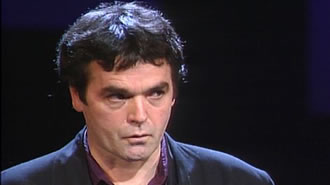
De Belgische schrijver Leo Pleysier werd geboren in Rijkevorsel op 28 mei 1945. Zie ook mijn blog van 28 mei 2007 en ook mijn blog van 28 mei 2008 en ook mijn blog van 28 mei 2009 en ook mijn blog van 28 mei 2010


Uit: Dieperik


“En terwijl hij zit te smullen, strooit hij er geregeld nog een paar lepels witte suiker over uit. (Bruine suiker is voor op mijn boterham met plattekaas. Of anders voor op een bord koude rijstebrij, vaders lievelingsdessert.)
‘Er zit al suiker in hoor!’
‘Wat?’
‘Dat er al suiker in zit!’
En dus nog een lepel witte suiker. En nog een.
En nog een.

(…)


Razend kwaad en helemaal over zijn toeren was nonkel Wies. En dat bleef hij toen nog geruime tijd ja. Al stak hij me op het einde, en anders dan gewoonlijk, bij het afdrogen en terug aankleden een handje toe.
‘Gaat het?’
Ik knikte en snikte van ja. Waarop hij met zijn eigen zakdoek mijn tranen bette en mijn neus en mond nog eens afdroogde.”


921911-9966ecaa665ae301c9e91b4e0598fb21.jpg
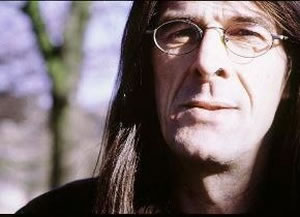
Leo Pleysier (Rijkevorsel, 28 mei 1945)


De Duitse schrijver Frank Schätzing werd geboren in Keulen op 28 mei 1957. Zie ook mijn blog van 28 mei 2007 en ook mijn blog van 28 mei 2008 en ook mijn blog van 28 mei 2009 en ook mijn blog van 28 mei 2010


Uit: Der Schwarm


„Für die Menschen in Stavanger gab es nicht die geringste Überlebenschance. Wer versuchte, vor der Wasserwand davonzulaufen, die plötzlich in den Himmel ragte, rannte vergeblich. Die überwiegende Anzahl der Opfer wurde erschlagen. Das Wasser war wie Beton. Man spürte nichts. Kaum anders erging es denen, die wie durch ein Wunder den Aufprall überlebten, um dann gegen Häuser geschmettert oder zwischen Trümmerteilen zermalmt zu werden. Paradoxerweise ertrank so gut wie niemand, sah man von jenen ab, die in den zulaufenden Kellern gefangen waren. Selbst dort wurden die meisten schon durch die Wucht der hereinströmenden Wassermassen getötet oder erstickten im zusätzlich eindringenden Schlamm. Wer schließlich ertrank, starb einen schrecklichen, aber wenigstens schnellen Tod. Kaum einer von ihnen registrierte. Was mit ihm geschah. Von jeder Sauerstoffzufuhr abgeschnitten, trieben die Körper der Eingeschlossenen im lichtlosen, wenige Grad kalten Wasser. Das Herz begann unregelmäßig zu schlagen, transportierte weniger Blut und kam schließlich zum Stillstand, während sich der Metabolismus extrem verlangsamte. Dadurch lebte das Gehirn noch eine Weile weiter. Erst zehn bis zwanzig Minuten später erlosch die letzte elektrische Aktivität, und der endgültige Tod trat ein.

Nach weiteren zwei Minuten hatte die Gischt die Vororte Stavangers erreicht. Je großräumiger sie sich verteilte, desto flacher wurde die brodelnde Flut. Immer noch nahm ihre Geschwindigkeit ab. Das Wasser tobte und spritzte durch die Straßen, und wer hineingeriet, war hoffnungslos verloren, aber dafür hielten die meisten Häuser dem Drück fürs Erste stand. Wer sich deswegen in Sicherheit wähnte, freute sich dennoch zu früh. Denn der Tsunami verbreitet seinen Schrecken nicht nur bei der Ankunft. Fast noch schlimmer war es, wenn er ging.“
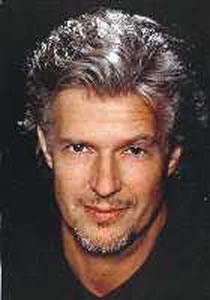


 921911-6c6b271e05669faf56c4f0febdde4191.jpg

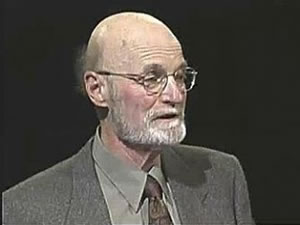
Frank Schätzing (Keulen, 28 mei 1957)


De Ierse schrijfster en columniste
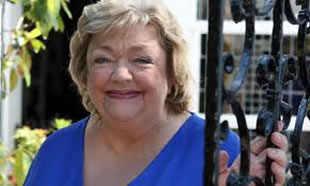
Maeve Binchy werd geboren op 28 mei 1940 in Dalkey.
Zie ook mijn blog van 28 mei 2007 en ook mijn blog van 28 mei 2008 en ook mijn blog van 28 mei 2009 en ook mijn blog van 28 mei 2010
 

Uit: Heart and Soul


“Mountainview, despite its pleasant name, was one of the tough areas of Dublin. Some of the big estates were home to drug dealers and it wasn't a place to walk alone at night. The school had its ups and downs, but it was lucky enough to have a headmaster, Tony O'Brien, who could deal with toughness head-on.Some of the older teachers found the change difficult. Things used to be different. The place had been shabby but they'd had respect. The children came from homes where money was short, but they were all keen to make something of themselves. Today they only cared about money, and if someone's big brother was driving a smart car and wearing an expensive leather jacket, it was hard to get interested in having a job in a bank or an office where you might never make enough to have your own house or car and a leather jacket was just a dream. No wonder so many of them joined gangs. And as for respect?Aidan Dunne told his wife, Nora, all about it.Big fellows would push past you in the corridor and sort of nudge the books out of your hand. Then they would laugh and say that sir must be losing his grip. Aidan remembered when they would rush to pick up the books. Not now. Now they called him Baldy, or asked him if he remembered the First World War.It was the same with the women teachers. If they weren't married, some of the really rough fellows would ask them were they frigid or lesbian. If they were married, they would ask them how many times a night did they do it.“And what do you say?” Nora wondered.“I try to ignore them. I tell myself that they're only insecure kids like always—it's just they have a different way of expressing it. Still, it doesn't make the day's work any easier.”“And how do the women cope?”“


 921911-ffc2db321e978ad94826acefc34ef4bc.jpg

Maeve Binchy (Dalkey, 28 mei 1940)


De Indiaase dichter, vertaler en literatuurwetenschapper K. Satchidanandan werd geboren op 28 mei 1946 in centraal Kerala. Zie ook mijn blog van 28 mei 2009 en ook mijn blog van 28 mei 2010


Who said?


Who said

that waiting is a

railway station in North Malabar?

That a dawn in uniform

will arrive there in a coffin?


Who said

that memory is a fragrant window

opening on ripe cornfields?

That our bodies grow cold

as light grows dim there?


Who said

that trees have ceased to follow

wind’s language?

That we must conceal

from lilies and rabbits

the news of the death of love?


Who said

that now noons will be

heavy like a drunkard’s head?

That evenings will have sick hearts

like a lover’s whispered songs?


Who said that we are running barefoot

over red hot iron

with a fistful of childhood rain?

That we will, at the end,

hand over our keys

to the same rain?


Who said that men once dead grow younger

and then they enter another Time?

That all the birds that vanished

at sunrise will return

when the world ends?


Who said

that we would understand everything

with no one saying anything,

but will still not share

anything with anyone?
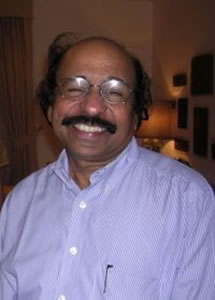


 921911-87d4bb7a556af098e022ff8711818f2b.jpg

K. Satchidanandan (Kerala, 28 mei 1946)


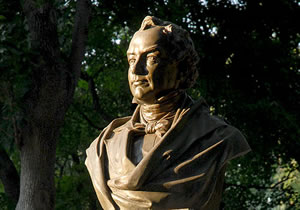
De Ierse dichter en songwriter Thomas Moore werd geboren op 28 mei 1779 in Dublin. Zie ook mijn blog van 28 mei 2010 en eveneens alle tags voor Thomas Moore op dit blog.


The Minstrel Boy


The Minstrel-Boy to the war is gone,

In the ranks of death you'll find him;

His father's sword he has girded on,

And his wild harp slung behind him.

"Land of song!" said the warrior-bard,

"Though all the world betrays thee,

One sword, at least, thy rights shall guard,

One faithful harp shall praise thee!"


The Minstrel fell! -- but the foeman's chain

Could not bring his proud soul under;

The harp he loved ne'er spoke again,

For he tore its chords asunder;

And said, "No chains shall sully thee,

Thou soul of love and bravery!

Thy songs were made for the pure and free,

They shall never sound in slavery."


921911-7315c2792a6a428c1aee389afc8a3fcf.jpg
Thomas Moore (28 mei 1779 – 25 februari 1852)

Borstbeeld in Central Park, New York


Zie voor nog meer schrijvers van de 28e mei ook mijn vorige blog van vandaag en eveneens mijn eerste blog van vandaag.
Geschreven door Romenu om 19:00 Reageer op dit bericht

Ian Fleming, Walker Percy, Patrick White, Sjoerd Leiker, Fritz Hochwälder

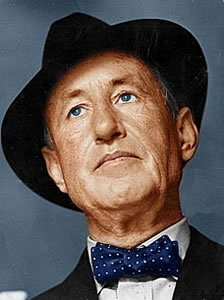
De Britse schrijver Ian Fleming werd geboren op 28 mei 1908 in Londen. Zie ook mijn blog van 28 mei 2007 en ook mijn blog van 28 mei 2009 en ook mijn blog van 28 mei 2010


Uit: Diamonds Are Forever


„With its two fighting claws held forward like a wrestler's arms the big pandinus scorpion emerged with a dry rustle from the finger-sized hole under the rock.

There was a small patch of hard, flat earth outside the hole and the scorpion stood in the centre of this on the tips of its four pairs of legs, its nerves and muscles braced for a quick retreat and its senses questing for the minute vibrations which would decide its next move.

The moonlight, glittering down through the great thorn bush, threw sapphire highlights off the hard, black polish of the six-inch body and glinted palely on the moist white sting which protruded from the last segment of the tail, now curved over parallel with the scorpion's flat back. Slowly the sting slid home into its sheath and the nerves in the poison sac at its base relaxed. The scorpion had decided. Greed had won over fear.

Twelve inches away, at the bottom of a sharp slope of sand, the small beetle was concerned only with trudging on towards better pastures than he had found under the thorn bush, and the swift rush of the scorpion down the slope gave him no time to open his wings. The beetle's legs waved in protest as the sharp claw snapped round his body, and then the sting lanced into him from over the scorpion's head and immediately he was dead.

After it had killed the beetle the scorpion stood motionless for nearly five minutes. During this time it identified the nature of its prey and again tested the ground and the air for hostile vibrations. Reassured, its fighting claw withdrew from the half-severed beetle and its two small feeding pincers reached out and into the beetle's flesh. Then for an hour, and with extreme fastidiousness, the scorpion ate its victim.“


 921908-9464becd6a4095a376a233f98e4661f6.jpg

Ian Fleming (28 mei 1908 – 12 augustus 1964)


De Amerikaanse schrijver Walker Percy werd geboren op 28 mei 1916 in Birmingham, Alabama. Zie ook mijn blog van 28 mei 2009 en ook mijn blog van 28 mei 2010


Uit: The Moviegoer


„My aunt is convinced I have a ``flair for research.'' This is not true. If I had a flair for research, I would be doing research. Actually, I'm not very smart. My grades were average. My mother and my aunt think I am smart because I am quiet and absent-minded-- and because my father and grandfather were smart. They think I was meant to do research because I am not fit to do anything else-- I am a genius whom ordinary professions can't satisfy. I tried research one summer. I got interested in the role of the acid-base balance in the formation of renal calculi; really, it's quite and intersting problem. I had a hunch you might get pigs to form oxalate stones by manipulating the pH of the blood, and maybe even dissolve them. A friend of mine, a boy from Pittsburg named Harry Stern, and I read up the literature and presented the problem to [Dr.] Minor. He was enthusiastic, gave us everything we wanted and turned us loose for the summer. But then a peculiar thing happened. I became extraordinarily affected by the summer afternoons in the laboratory. The August sunlight came streaming across the room. The old building ticked and creaked in the heat. Outside we could hear the cries of summer students playing touch football. In the course of an afternoon the yellow sunlight moved across old group pictures of the biology faculty. I became bewitched by the presence of the building; for minutes at a stretch I sat on the floor and watched motes rise and fall in the sunlight. I called Harry's attention to the presence but he shrugged and went on with his work. He was absolutely unaffected by the singularities of time and place. His abode was anywhere. It was all the same to him whether he catheterized a pig at four o'clock in the afternoon in New Orleans or at midnight in Transylvania.“


921908-42efdb77cf488a5a34167d731c9e6847.jpg
Walker Percy (28 mei 1916 – 10 mei 1990)


De Australische schrijver Patrick White werd geboren in Londen op 28 mei 1912. Zie ook mijn blog van 28 mei 2009 en ook mijn blog van 28 mei 2010


Uit: The Aunt’s Story


"….You will be leaving soon, Theodora. I wonder if you have thought about the future,' Miss Spofforth asked.

Theodora had gone into Miss Spofforth's dark room, the Study it was called, to take the book for which Miss Spofforth had sent. She had not bargained for this. Now she was caught in the wide spaces between the bookcase and the fire, becalmed in her own silence and uncertainty. Fire fell from the logs into the winter afternoon, but did not warm. A cold laurel pressed against the window out of the winter wind.

'Have you thought how you can live most profitably?' Miss Spofforth asked.

And the dark square of her face struggled to open. She very much wanted to communicate.

'No,' said Theodora. 'I shall go home, for the present. I shall live - well, as I have always lived.'

Because living was something that happened in spite of yourself. She did not really believe, as apparently Miss Spofforth did, that you could turn living to profit.

'There is a great deal that happens,' she said.

'I am sure,' Miss Spofforth agreed.

She watched Theodora's hands move as if they were about to reach out and touch something.

'And provided one is happy, it does not matter where,' Miss Spofforth said.

Miss Spofforth had made her own happiness, solid and unmoved as mahogany, and Miss Spofforth was unpleased. She listened to the rooms of the house around her, which was her solidly founded, profitable happiness, but the rooms did not communicate. And outside, the leaf of the cold laurel was stroking space. But this is ridiculous, Miss Spofforth said.


 921908-3f8739a1c3d11ba0cb1079704e79ef0f.jpg

Patrick White (28 mei 1912 - 30 september 1990)


De Nederlandse schrijver en dichter Sjoerd Leiker werd geboren in Drachten op 28 mei 1914. Zie ook mijn blog van 28 mei 2009 en ook mijn blog van 28 mei 2010


Uit: Piet Calis. De vrienden van weleer. Schrijvers en tijdschriften tussen 1945 en 1948


„In mei 1944 kwam Koos Schuur op uitnodiging van Sjoerd Leiker, die hem dus al uit het Groningse kende, bij hem op bezoek. Leiker vertelde hem bij die gelegenheid over De Bezige Bij en probeerde hem over te halen een bundel verzen af te staan aan de uitgeverij.

Op 24 mei berichtte Leiker hierover aan Geert Lubberhuizen: ‘Van Koos Schuur kreeg ik een toezegging van copie voor De Bezige Bij. Ik heb Zondag, na je bezoek, meteen geschreven naar zijn ouders in Veendam. Hij was vanmorgen al hier. Helaas had hij een aantal tijdverzen, “de zeven vloeken” [,] juist verkocht. Die komen eerstdaags uit in een oplage van 110 ex. - Hij had echter nog meer werk klaar en zou daaruit een bundel samenstellen voor jou. Over een of twee weken zou hij die aan mij toesturen.’

Leiker schreef verder: ‘Ik heb hem niet ingewijd in “het bezige plan” - alleen maar gezegd, dat “de bezige bij” na den oorlog zal blijven bestaan.’

Anderhalve maand later - de invasie had intussen plaatsgevonden en de tijd leek te dringen - hadden de plannen voor Voorpost al een meer concrete vorm aangenomen: er was zelfs iets als een soort redactievergadering gehouden.

Op 12 juli nodigde Sjoerd Leiker - onder zijn illegale naam Menno van Haarsma - Charles van Blommestein uit voor een bijeenkomst die enkele weken later bij hem thuis aan de Rijnstraat gehouden zou worden: ‘29 Juli a.s. spreekt bij ons Koos Schuur over “Het dichterschap en over zijn eigen werk”. Ik heb zelf erg veel verwachting van deze inleiding, omdat Koos Schuur na den oorlog zeer waarschijnlijk één van de belangrijkste jongeren zal blijken te zijn en omdat ik met Schuur, Elburg, Ferd. Langen, Evenhuis, Visser, Van Wagenvoorde enz. tot dezelfde constellatie behoor. Ik zou het dan ook erg op prijs stellen als jij deze bijeenkomst kunt bijwonen. - Geert zal je wel het een en ander hebben verteld van het tijdschrift. De eerste redactievergadering is m.i. zeer verhelderend geweest. Als ik me niet vergis krijgen we na den oorlog een groep activisten (Jacobijnen), 2 een groep, die vooroorlogsche tradities zal voortzetten en 3 een groep jongeren (bovengenoemd). Aangaande de laatste durf ik nog geen voorspellingen te wagen. Wat hun vormgevoel betreft zijn enkelen van hen min of meer neo-classisisten.“


 921908-e3ed22801de60ec8772b122601c7b584.jpg

Sjoerd Leiker (28 mei 1914 - 15 december 1988)


De Oostenrijkse schrijver Fritz Hochwälder werd geboren op 28 mei 1911 in Wenen. Zie ook mijn blog van 28 mei 2009 en ook mijn blog van 28 mei 2010


Uit: Der verschwundene Mond (Bespreking van Dramatisch Werk, deel 4 door Lutz Hagestedt)


„Im Anfang war das Ereignis, und so holt Gustave noch in der ersten Szene des ersten Aktes den Mond vom Himmel und verkauft ihn für eine Million. Die schöne Blanche hat ihn verführt und ihm das schnelle Glück versprochen. Aber der Clochard hat nicht bedacht, daß es ohne Mond keine Dichtung mehr geben kann und ohne Dichtung keine Liebe und kein Leben. Als er Blanche nach der Tat wiedersieht, hat sie sich in eine warzenübersäte Hure verwandelt - ein entsetzlicher Anblick, wie von Félicien Rops gemalt. Gustave setzt nun alles daran, den Mond zurückzukaufen, doch nur das Blumenmädchen könnte ihn noch retten. Sie verkörpert das stille, einfache Glück, unerreichbar für Gustave, solange er Geld in den Händen hält. Am Ende sinkt der Clochard tot auf einer Parkbank nieder, und am Himmel steht – als sei er nie fortgewesen – groß und silbern der Mond.

Es ist auffallend, daß Gustaves freie Rede immer wieder von Gedichten unterbrochen wird, die Jakob Haringer geschrieben hat. Aber Gustav zitiert Haringer nicht, er ist Haringer, die Gedichte spiegeln seine eigenen Bewußtseinsvorgänge wider. Monologisch offenbart er sein Seelenleben, er spricht wie für sich, doch der Rezipient, das Publikum im Theater, müßte schon an der poetischen Intensität seiner Rede erkennen daß der tragische Held sich hier selber charakterisiert. Indes kann erst die Realisierung de Stücks auf der Bühne zeigen, ob der Wechsel von freier und gebundener Rede, ob das Gedicht als Mittel der Figuren-Charakterisierung nicht störend wirkt.“


 921908-668217f6ee304bf99b5fdd644548ec45.jpg

Fritz Hochwälder (28 mei 1911 – 20 oktober 1986)

Geschreven door Romenu om 18:53 Reageer op dit bericht

Henri-Pierre Roché, Maximilian Voloshin, Xin Qiji, J. D. Wyss, Maria Müller-Gögler, B. S. Ingemann, C. H. von Ayrenhoff

De Franse schrijver, journalist en verzamelaar Henri-Pierre Roché werd op 28 mei 1879 geboren te Parijs. Zie ook mijn blog van 28 mei 2009 en ook mijn blog van 28 mei 2010


Uit: Victor


„Patricia - Cette chambre m'amuse. Ça manque de sièges ici. Foutons-nous sur votre lit comme divan, c'est-à-dire vous dedans et moi dessus. C'est sans danger puisque nous l'aimons tous les deux. Et parlons de lui.

Elle sauta sur son lit. Ils s'installèrent comme elle avait dit, à distance.

Pierre - Aimez-vous Victor ?

Patricia - Oui.

Pierre - D'amitié ou d'amour ?

Patricia - Des deux. D'amour surtout.

Pierre - D'amour chaste ?

Patricia - Hélas ! Moi d'amour en plein et sans espoir. Je ne sais quel nom donner à ça. Tout le monde l'aime. Il est à tous et à personne. Il a raison sans doute. J'ai tort de le vouloir pour moi. Mais je ne veux que lui. Victor pourrait choisir parmi des héritières. Pas question. Pourrait avoir un gros contrat pour ses tableaux. Pas question. Il les donne presque tous à ses amis. Il donne aussi des leçons de français, fameuses et drôles, à deux dollars l'heure. Il s'amuse tout le temps. Son sourire est aimable, mais c'est un dictateur. il fait que ce qu'il veut, au moment où il veut. Où qu'il arrive, il devient le centre, il est le chef. il a une fantaisie à jet continu. Il a sûrement des aventures, avec des femmes faites, pas avec des jeunes filles. Il est discret, on ne sait rien.”


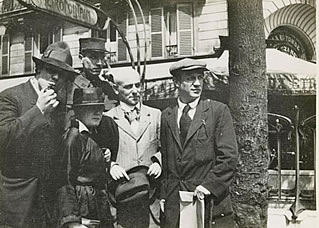
 921903-be794f841576138ccd35b791091bb0c4.jpg

Henri-Pierre Roché (28 mei 1879 – 9 april 1959)

Manuel Ortiz de Zarate, Henri-Pierre Roché [in uniform], Marie Vassilieff, Max Jacob and Picasso, Blvd. Montparnasse, Parijs, 12 Aug. 1916 - door Jean Cocteau


De Russische dichter, schrijver en schilder Maximilian Voloshin werd geboren op 28 mei 1877 in Kiev. Zie ook mijn blog van 28 mei 2009 en ook mijn blog van 28 mei 2010


Wormwood


My bonfire on the shore was burning down.
I heard the rustling sound of streaming glass.
The acrid soul of wistful wormwood wound
Through languid darkness, swayed, and flowed past.


The granite crags resemble fractured wings.
The weight of hills bends down a spinal cord.
The no-man's land is stiff and suffering.
The mouth of Earth has been denied the word!


A child of the inquisitive dark nights,
I am your eyes, wide-open to invite
The gaze of ancient stars, those lonesome lights
Whose prying rays reach out into the night.


I am your mouth of stone, your voiceless lyre!
By silence fettered, I have grown as mute
As extinct suns. I am the frozen fire
Of words. I am the sightless, wingless you.


O captive mother! How at night I bend
To feel your bosom - only you can see
The bitter smoke, the wormwood's bitter scent,
The bitterness of waves - will stay in me.


Vertaald door Constantine Rusanov


 921903-9d034676859836f94582548c041f926e.jpg

Maximilian Voloshin (28 mei 1877 – 11 augustus 1932)


De Chinese dichter Xin Qiji werd geboren op 28 mei 1140 in Jinan, in de provicie Shandong. Zie ook mijn blog van 28 mei 2009 en ook mijn blog van 28 mei 2010


Precious hairpin


Precious hairpin, broken, halved
At the Peach-Leaf Ferry where
We parted; darkening mist and willow shround the place.
I dread to climb the tower-top stair;
Nine days out of ten wind raves, rain torrents race:
It breaks my heart to see the scarlet petals scatter one by one.
All this with nobody to care
Above it - who is there
Will bid the oriole's singing cease?


From mirrored flowers that frame my face
I pluck the petals, try to foretell your return,
Counting and re-counting them a thousand ways.
By silken curtains dimly lit
Words born of dreams fight in my throat for release.
It was he, the Spring, who brought on me this agony of grief;
Who knows where Spring now strays?
He did not guess he should have gone
Taking my grief in his embrace.


Vertaald door A. Ayling en D. Mackintosh


 921903-d7bf5378016b8198646598ba0550afb5.jpg

Xin Qiji (28 mei 1140 – 1207)


De Zwitserse schrijver Johann David Wyss werd geboren op 28 mei 1743 in Bern. Zie ook mijn blog van 28 mei 2009 en ook mijn blog van 28 mei 2010


Uit: The Swiss Family Robinson


“These few words had an immediate effect on the spirits of my children, who at once regarded our problematical chance of escaping as a happy certainty, and began to enjoy the relief from the violent pitching and rolling of the vessel.
My wife, however, perceived my distress and anxiety in spite of my forced composure, and I made her comprehend our real situation, greatly fearing the effect of the intelligence on her nerves. Not for a moment did her courage and trust in Providence forsake her, and on seeing this my fortitude revived.
“We must find some food, and take a good supper,” said she, “it will never do to grow faint by fasting too long. We shall require our utmost strength tomorrow.”
Night drew on apace, the storm was as fierce as ever, and at intervals we were startled by crashes announcing further damage to our unfortunate ship.
“God will help us soon now, won’t He, father?” said my youngest child.
“You silly little thing,” said Fritz, my eldest son, sharply, “don’t you know that we must not settle what God is to do for us? We must have patience and wait His time.”
“Very well said, had it been said kindly, Fritz, my boy. You too often speak harshly to your brothers, although you may not mean to do so.”
A good meal being now ready, my youngsters ate heartily, and retiring to rest were speedily fast asleep. Fritz, who was of an age to be aware of the real danger we were in, kept watch with us. After a long silence, “Father,” said he, “don’t you think we might contrive swimming belts for mother and the boys? With those we might all escape to land, for you and I can swim.”
“Your idea is so good,” answered I, “that I shall arrange something at once, in case of an accident during the night.”


 921903-efcd7559ae2a2a0099865a1a8a52b805.jpg

Johann David Wyss (28 mei 1743 – 11 januari 1818)

Scene uit de film uit 1960 met o.a. John Mills en Dorothy McGuire


Zie voor onderstaande schrijvers ook mijn blog van 28 mei 2010


De Duitse dichteres en schrijfster Maria Müller-Gögler werd geboren op 28 mei 1900 in Leutkirch im Allgäu. Zie ook mijn blog van 28 mei 2009.


De Deense dichter en schrijver Bernhard Severin Ingemann werd geboren op 28 mei 1789 in Thorkildstrup op het eiland Falster. Zie ook mijn blog van 28 mei 2009.


De Oostenrijkse schrijver Cornelius Hermann von Ayrenhoff werd geboren op 28 mei 1733 in Wenen. Zie ook mijn blog van 28 mei 2009.

Geschreven door Romenu om 18:48 Reageer op dit bericht

Adriaan Bontebal

De Nederlandse dichter en schrijver Adriaan Bontebal werd als Aad van Rijn op 28 mei 1952 in Leidschendam geboren. Bontebal debuteerde officieel in 1988 met de verhalenbundel „Een goot met uitzicht“. Daarvoor had hij al „De vuilnisman komt in elke straat. Gedichten van de waanzin“ (1983), „Vijf voor vierentachtig. Verhalen“ (1984), „Alleen in bad, gedichten“ (1984) en „Hannah : een tragisch gedicht in een bedrijf of vijf“ (1986) uitgebracht. Na zijn debuut volgden de prozawerken „De ark“ (1990) en „Charmante jongen, sportief tiep“ (1995), de dichtbundel „Overleven met het oorsmeer in de ketting“ (1996), het prozawerk „Katten vlooien“ (2005) en „Adrenaline“ (2010). Gedichten van Adriaan Bontebal zijn te vinden in Komrij's „Nederlandse poëzie van de 19de t/m de 21ste eeuw in 2000 en enige gedichten“ en in „25 Jaar Nederlandstalige poëzie 1980-2005 in 666 en een stuk of wat gedichten“.


Uit: De Ark


‘Het is Oosters toneel uit de tweede helft van de derde eeuw voor Christus, Indiaas, Pakistaans of Mongools, daar wil ik van af zijn. Gek hè? De culturele belangstelling van mensen gaat in golven, net als de economie. We beleven nu voor het eerst sinds Herman Hesse, Sidharta weet je wel, weer een opleving in de belangstelling voor alles dat ten oosten van de Bosporus komt.
Ik moet, terwijl ik de monoloog uitspreek, de Dans van de Zes Sluiers uitvoeren. Met de laatste zin moet de laatste sluier vallen.’
‘Het is toch de Dans van de Zéven sluiers?’
‘Oorspronkelijk wel. Maar dit is een ideetje van onze regisseur, een oude geile bok. Het is een variant voor vrouwen die niet zo zwaar geschapen zijn.’
‘Neem me niet kwalijk,’ flapte ik eruit. ‘Jij hebt niets te klagen, dacht ik zo. Jij hebt voldoende vlees onder de tepel om topveertig-zangeres te zijn.’
‘Hè hè. Dit is juist de grap. Die ene sluier minder maakt het volgens hem in de uitvoering van een vrouw met een figuur als ik een stuk sexy-er. De regisseur komt daar op klaar.’


1092636-abf34a572dd0b4dcf681d421daec6a75.jpg
Adriaan Bontebal (Leidschendam, 28 mei 1952)

Geschreven door Romenu om 00:00 Reageer op dit bericht

Louis-Ferdinand Céline, Jan Blokker, Niels 't Hooft, Kaur Kender, Said, Adriaan Venema

De Franse schrijver Louis-Ferdinand Céline (pseudoniem van Louis Ferdinand Destouches) werd geboren in Courbevoie op 27 mei 1894. Zie ook mijn blog van 27 mei 2010 en eveneens alle tags voor Louis-Ferdinand Céline op dit blog.


Uit: Reise ans Ende der Nacht (Vertaald door Hinrich Schmidt-Henkel)


„Die Arbeiter konnten einen anwidern, wie sie sich über die Maschinen beugten, ängstlich bemüht, ihnen jeden nur denkbaren Gefallen zu tun, sie mit passenden Bolzen zu füttern, einem nach dem anderen, statt ein für alle Mal Schluß damit zu machen, mit diesem Ölgestank, diesem Qualm, der einem die Kehle hochsteigt, bis in die Ohren, und einem die Trommelfelle verbrennt. [...] Man ergibt sich dem Lärm wie dem Krieg. [...] Man muß das Leben draußen zunichte machen, es genauso in Stahl verwandeln, in etwas Nutzbares. [...] Man muß einen Gegenstand draus machen, was Hartes, das ist die Vorschrift.

(...)


Die Sonnenuntergänge in dieser afrikanischen Hölle erwiesen sich als spektakulär. Beeindruckend. Tragisch jedes Mal, wie ein Riesengemetzel an der Sonne. Eine Mordsveranstaltung. Allerdings ein bißchen zu viel Bewunderung für einen einzelnen Menschen. Der Himmel vollführte eine Stunde lang Paraden, vom einen Ende zum anderen mit delirierendem Scharlachrot angeklatscht, dann platzte das Grün inmitten der Bäume los und stieg in zitternden Schlieren vom Boden bis zu den ersten Sternen hinauf. Danach eroberte Grau den gesamten Horizont, dann wieder Rot, aber jetzt war es müde, das Rot, und hielt sich nicht lang. So ging es zu Ende. Sämtliche Farben fielen in Fetzen wieder herab, ausgewaschen, auf den Wald, wie Flitterkram nach der hundertsten Vorstellung. Jeden Tag genau um sechs Uhr lief das so ab.“


 921325-0aa238f82d9838491d3b7371a6c5e350.jpg

Louis-Ferdinand Céline (27 mei 1894 - 1 juli 1961)


De Nederlandse schrijver, journalist en columnist Jan Blokker werd geboren in Amsterdam op 27 mei 1927. Zie ook mijn blog van 27 mei 2010 en eveneens alle tags voor Jan Blokker op dit blog.


Uit: Hans Righart (column)


„Huizinga moet zich in zijn graf hebben omgedraaid over de manier waarop Righart de popmuziek, de familie Doorsnee, en een 'rookmagier' -   stuk voor stuk uitingen van cultuurverval zou de oude Leidenaar hebben gezegd – als even belangrijke historiografische elementen gebruikte als de Korea-crisis, de bestedingsbeperking van het derde kabinet-Drees, of de opkomst van Nieuw Links. Dat was een definitieve breuk met een geschiedbeschouwing waarin maatschappelijke verschijnselen werden geduld of buitengesloten volgens een heel strikte en onverbiddelijke hiërarchie.

 Over hoe het de wetenschapper Righart in de toekomst zou zijn vergaan kunnen we alleen maar speculeren, zij het dat we van een voorgenomen volgende stap in ieder geval deels op de hoogte zijn. Eind vorig jaar verschenen als een uitgave van het Instituut Geschiedenis van de Utrechtse universiteit de ruwe, maar niet eens zo erg ruwe omtrekken van een boek waarmee Righart in de laatste fase van zijn leven bezig was. Het zou ‘De wereldwijde jaren zestig’  zijn gaan heten, en het zou een vergelijkende studie zijn geworden naar de betekenis van de jaren zestig in een aantal Europese landen én de Verenigde Staten. Twee collega's bezorgden het halfklare manuscript tot een gedrukt boek.

De gezonde behoefte om ter vergelijking buiten de grenzen te kijken was er bij Righart van meet af aan: zijn proefschrift behandelde de katholieke verzuiling in Oostenrijk, Zwitserland, België en Nederland. Maar we hadden hem uit eigenbelang toch vooral als observator en criticus van de Nederlandse samenleving in de buurt willen houden met analyses zoals bij die gelegenheid in 1998 toen hij het neoliberalisme van de jaren negentig verweet dat het zich nu wel tegen de jaren zestig keerde, maar er het hedonisme en de permissiviteit graag van had overgenomen om er handel mee te drijven, waardoor bijvoorbeeld het ideaal van de sexuele revolutie eigendom werd van wat Righart in de desbetreffende lezing ‘het pooierdom van de vrije markt’ noemde.“


 921325-3a9e794cfd4e6f599dfa701cd4d6bbcf.jpg

Jan Blokker (27 mei 1927 -  6 juli 2010)


De Nederlandse schrijver, journalist, blogger en gamedeskundige Niels 't Hooft werd geboren in Leiderdorp op 27 mei 1980. Zie ook mijn blog van 27 mei 2009 en ook mijn blog van 27 mei 2010


Uit: Sneeuwdorp


„Dit is de winter. Er komt damp uit mijn mond als ik adem. De damp verdunt, vermengt zich met de onzichtbare lucht.

Een smeulend peukje. Teken van een echte, levende wereld. Ik kijk naar het perron, de tegels zijn vierkant. Mijn schoenen. Een veter-uiteinde dat loshangt. Dit is waar het allemaal begint.

Mensen vragen mij wel eens: ‘Kever, waar was je toen die Engelse prinses dood ging in haar auto, in een tunnel in Frankrijk?’

Ik zeg dan: ik speelde Super Mario 64, Tick Tock Clock, dat verticale veld waarin je tussen de tandwieltjes van een enorme klok omhoog moet klauteren. Geen gemakkelijk veld. Eentje waarop je dagen moet oefenen voordat je de top bereikt en de gouden ster krijgt waar het je allemaal om te doen was.

De datum: 31 augustus 1997. Ik was nog niet zo lang elf. Ik speelde voor het eerst van mijn leven een spel dat helemaal in 3D was uitgevoerd. Waarin je overal naartoe kunt lopen en alles kunt doen. Met een druk op de knop een achterwaartse salto maken. Op de hoofden van wandelende paddestoelen springen. Je kent dat wel.

Het was zomervakantie. Nog even en ik ging naar de middelbare school. Ik wapende mijzelf door Mario’s sprong te perfectioneren. Achter de tv had ik de touwtjes in handen. De paddestoelenwereld, die begreep ik volledig.“


 921325-22b80f1a3f101589fc23d2d28fba9446.jpg

Niels 't Hooft (Leiderdorp, 27 mei 1980)


De Estse schrijver Kaur Kender werd geboren op 27 mei 1971 in Estland. Zie ook mijn blog van 27 mei 2009 en ook mijn blog van 27 mei 2010


Uit: Through Peaceful Eyes (Vertaald door Jurgen Kaljuvee)


„I first met her a year ago. Beautiful young Russian girl. But a little short. When I met her again, she finally had the exact right height. I asked, how come? She said: “I just turned 17 and I grew a little last year.” Good girl, I thought. Since she was even more beautiful and with the right height, I felt this irresistible desire to spend time with her. I called her the next day (one minute 4.50 Estonian crowns, I spoke 10. 45.00), she said yes. But we could meet only after two hours. I sat in my car (Mercedes, 250 000, on lease, monthly payment about 7000) and drove to the Stockmann department store. I bought Boss (1400) and Armani jeans (1800), two Gant shirts (1400 and 1100), two pairs of Lagerfeld socks (250), Armani underwear (900). Everything in less than 15 minutes. I had 1.45 left. From the ground floor I bought Paco Rabanne XS perfume. Large 100ml bottle (810). They gave me an XS sports bag with the bottle. I had 1.30 left. It will be a while, I knew. I went to an ATM and took out 5000. I drove to the verge of the Old Town. I bought three packs of Camel lights (a 18.50). Then I went to the strip bar on Müürivahe Street. I was the only guest. There were five girls. They danced with little intermissions. I looked at my watch (Rado 32 000). Because I wanted to give away all my money, I had to hurry up. I gave in 500 bills. Even during the first song when you actually do not have to give anything. The girls were looking at me. They suspected that I was a pervert. I ran out of the bar. My mobile phone (Ericsson t28s. 5100) rang. An old lover of mine called. She calls me herself nowadays.“


921325-61722f2016a2b5b50bdceeeda488dd3c.jpg
Kaur Kender (Estland, 27 mei 1971
)


De Duits-Iraanse dichter en schrijver
Said werd geboren op 27 mei 1947 in Teheran. Zie ook mijn blog van 27 mei 2009 en ook mijn blog van 27 mei 2010


für madame f.

eine vergessene haarsträhne
im waschbecken
gestern als du schliefst
krümmte sie sich um meinen finger
als hätte sie angst
die nacht alleine zu verbringen
ob sie heute noch an uns denkt?


 921325-0af141c7d7fac84d7931629513572e03.jpg

Said (Teheran, 27 mei 1947) (Teheran, 27 mei 1947)


De Nederlandse journalist, schrijver en kunsthandelaar Adriaan Harrie Venema werd geboren in Heiloo op 27 mei 1941.  Zie ook mijn blog van 27 mei 2007 en ook mijn blog van 27 mei 2009 en ook mijn blog van 27 mei 2010


Uit: Schrijvers, uitgevers en hun collaboratie. Deel I.5


„Niet lang daarna vergrepen de nationaal-socialisten zich opnieuwaan het werk van Henriëtte Roland Holst. Ditmaal ging het om het gedicht dat begon met de regel ‘Nu kwam de winter met zijn stille luimen’. Het was oorspronkelijk verschenen in de bundel De nieuwe geboort uit 1902. In latere drukken wijzigde Roland Holst het gedicht. De derde en vierde druk verschenen respectievelijk in 1913 en 1918. Deze versie annexeerden de nationaal-socialisten, zodat we in het Midwinterboek 1943, uitgegeven bij Uitgeverij Storm, de regels kunnen lezen:


Nu kwam de winter met zijn stille luimen

zooals hij in het Hollandsch laagland keert,

als de herfstwinden het gebied ontruimen:

hij laat het groen der weiden ongedeerd,


hij stort uit vlakke heemle' als uit een zeef

daglang de helderkleine dropp'len

wier zacht geruisch en regelmatig tokk'len

al de stem is van het natuur-geleef.


Nu gaan de deuren dicht en wij vereenen

door onze zinnen ons niet meer met haar

en beseffen zuiver dit vreemde eene:

er is iets eeuwigs tusschen ons en haar.


Wat trok de nationaal-socialisten in dit gedicht aan om het te plaatsen in een bloemlezing, notabene door Reichsführer ss Heinrich Himmler ingeleid? Spoor heeft een antwoord: ‘In deze eerste twee katrijnen zou een nationaal-socialist de pool nationalisme van het nationaal-socialisme hebben kunnen herkennen, hoewel de Nederlandse ss dit nationale in een Groot-Germaans perspectief zag. In het laatste kwatrijn, met de slotregel “er is iets eeuwigs tusschen ons en haar”, is er sprake van een mystieke band met de natuur. Dit leverde een bruikbaar aanknopingspunt voor de vage ss-ideologie op.’


921325-b011427e1f9346bde3126831c44d628b.jpg
Adriaan Venema
(27 mei 1941 – 31 oktober 1993)


Zie voor nog meer schrijvers van de 27e mei ook mijn vorige blog van vandaag en eveneens mijn eerste blog van vandaag.
Geschreven door Romenu om 19:09 Reageer op dit bericht

John Barth, Herman Wouk, John Cheever, Dashiell Hammett, Georges Eekhoud

De Amerikaanse schrijver John Barth werd geboren op 27 mei 1930 in Cambridge, Maryland. Zie ook mijn blog van 27 mei 2009 en ook mijn blog van 27 mei 2010


Uit: The End of the Road


“What the hell for?"

Rennie had started out with pretty firm, solemn control, but now she got choky and couldn't, or wouldn't, answer the question.

"Has he turned you out?"

"No. Can't you understand why he sent me up here? Please don't make me explain it!" Tears were imminent.

"Honestly, I couldn't guess, Rennie. Are we supposed to reenact the crime in a more analyzable way, or what?"

Well, that finished her control; the head-whipping began. Rennie, incidentally, looked great to me. She'd obviously been suffering intensely for the past few days, and, like exhausted strength, it lent her the sexual attractiveness that tormented women occasionally have. Tender, lovelike feelings announced their presence in me.

"Everything that's happened wrenches my heart," I said to her, laying my hand on her shoulder. "You've no idea how much I sympathize with Joe, and how much more with you. But he sure is making a Barnum and Bailey out of it, isn't he? This sending you up here is the damnedest thing I ever heard of. Is it supposed to be punishment?"

"It's not ridiculous unless you're determined to see it that way," Rennie said, tearfully but vehemently. "Of course you'd say it was, just so you won't have to take Joe seriously."

"What's it all about, for heaven's sake?"

"I didn't want to see you again, Jake. I told Joe that. He told me everything you said to him last night, and at first I thought you were lying all the way. I guess you know I've hated you ever since we made love; when I told Joe about it, I didn't leave out anything we did--not a single detail--but I blamed you for everything."


 921320-9c8c32e208c73bdfa83576c7039d0eb1.jpg

John Barth (Cambridge, 27 mei 1930)


De Amerikaanse schrijver Herman Wouk werd geboren op 27 mei 1915 in New York. Zie ook mijn blog van 27 mei 2009 en ook mijn blog van 27 mei 2010


Uit: A Hole In Texas


„Poking here and there, Carpenter spied the bedraggled creature under a padded lounge chair. Okay, Sweeney! He crouched to grab the beast. Sweeney inched rearward just beyond his grasp, blinking at him. Standard cat maneuver, but this was no time for such foolery, so Carpenter kicked the chair aside and pounced on the cat. With an electric stab of pain, his back went out. Three weeks of slow healing, shot in an instant! He had pulled a muscle playing tennis, with an overhand smash at set point plunk into the net; and now this, no tennis for at least another three weeks. Standard Carpenter performance, he thought, clutching at his throbbing back. Guy's colleagues regarded him as a top man in high-energy physics, his wife Penny adored him when he remembered to take out the trash, but he had a downbeat opinion of Dr. Guy Carpenter, due to a perfectionist bent always nagging at his self-esteem.
"Bad cat," Penny said as he brought Sweeney in, meowing in outrage. Muffled in a bathrobe, she was drying her hair. "Good Lord, you're drowned. I hope you didn't catch your death. The Project Scientist phoned in a huge tizzy —"
"Call her back, say I'm on my way."
Wincing at each move, he dressed, limped out to the garage, and eased himself into his car. When he pressed the garage-door opener, nothing happened. What now? Low battery? He lurched to Penny's car and tried her remote. It did not work, either. The wall button goosed the door to rattle upward a foot, then it halted. He had never before tried using the manual lift. How did it work, exactly? He grasped the thick rough cord in both hands and with excruciating pain hauled the screeching door halfway up, where it stuck. His lower back aflame, pulsating, he called the Project Scientist on his cell phone to beg off from the meeting.“


921320-eb392d89092122edcd5dff4c4f81bc4c.jpg
Herman Wouk (New York, 27 mei 1915)


De Amerikaanse schrijver John Cheever werd geboren op 27 mei 1912 in Quincy, Massachusetts. Zie ook mijn blog van 27 mei 2009 en ook mijn blog van 27 mei 2010


Uit: Verscheurde stilte. De dagboeken (Vertaald door Frank van Dixhoorn)


„De middelbare leeftijd gaat gepaard met mysterie, met mystificatie. Het enige wat ik tegenwoordig merk is een zekere eenzaamheid. Zelfs de schoonheid van de buitenwereld lijkt in verval, ja, zelfs de liefde. Voor mijn gevoel is het ergens misgelopen, ergens scheef gegaan, maar ik weet niet wanneer en ik geloof niet dat ik daar achter zal komen.

Ik denk nu al een week aan Leander, Betsey, en Eben zonder dat ik een woord op papier krijg, zonder enige vooruitgang. En zo zie ik al mijn plannen -- de reis naar Genua, et cetera -- in duigen vallen. Is er iets elementairs aan de hand met die drie, waardoor ik ze niet in mijn vingers krijg? Vanmorgen bedacht dat ik de opera zal laten schieten.

Gisteren was het regenachtig en neerdrukkend bewolkt. Om vier uur met B. over Holbrook Road naar de K.'s gelopen. Het waaide inmiddels, en daardoor klaarde het op. Nu de bewolking verdween voor een gloed van kleur en de zon doorbrak in de vallei, kreeg het uur van de dag iets groots en meeslepends. Backgammon en gin.

Een middag schaatsen bij de Newberry's. Het einde van een heel koude winterdag. Door de kou trok het ijs samen, en maakte een bulderend lawaai. Toen we over het bevroren veld naar het huis liepen hoorden we het bulderen. 's Avonds zijn we teruggegaan. We waren de enigen op de vijver. De hond van de G.'s blafte. Geen maan, en het ijs was zwart. Toen ik naar het midden van de vijver reed leek het aantal sterren dat ik kon zien verveelvoudigd. Ze leken kwistig uitgestrooid, als een vlaag sneeuwvlokken. Toen ik terugschaatste naar de rand van de vijver leken ze weer in aantal af te nemen. Ik was verbijsterd. Misschien lag het aan de whiskey en de wijn. Misschien aan mijn volstrekte onwetendheid op het gebied van kosmologie.“


921320-2e09000b3f658311f9ac00f893dae51d.jpg
John Cheever (27 mei 1912 – 18 juni 1982)


De Amerikaanse schrijver Dashiell Samuel Hammett werd geboren in Saint Mary's County (Maryland), op 27 mei 1894. Zie ook mijn blog van 27 mei 2009 en ook mijn blog van 27 mei 2010


Uit: The Maltese Falcon


„She was tall and pliantly slender, without angularity anywhere. Her body was erect and high-breasted, her legs long, her hands and feet narrow. She wore two shades of blue that had been selected because of her eyes. The hair curling from under her blue hat was darkly red, her full lips more brightly red. White teeth glistened in the crescent her timid smile made

Spade rose bowing and indicating with a thick-fingered hand the oaken armchair beside his desk. He was quite six feet tall. The steep rounded slope of his shoulders made his body seem almost conical--no broader than it was thick--and kept his freshly pressed grey coat from fitting very well.

Miss Wonderly murmured, "Thank you," softly as before and sat down on the edge of the chair's wooden seat.


 921320-a1b16b1c7f5a8c594fa0579acb4b4382.jpg

Humphrey Bogart in de film uit 1941


Spade sank into his swivel-chair, made a quarter-turn to face her, smiled politely. He smiled without separating his lips. All the v's in his face grew longer.

The tappity-tap-tap and the thin bell and muffled whir of Effie Perine's typewriting came through the closed door. Somewhere in a neighboring office a power-driven machine vibrated dully. On Spade's desk a limp cigarette smoldered in a brass tray filled with the re-mains of limp cigarettes. Ragged grey flakes of cigarette-ash dotted the yellow top of the desk and the green blotter and the papers that were there. A buff-curtained window, eight or ten inches open, let in from the court a current of air faintly scented with ammonia. The ashes on the desk twitched and crawled in the current.

Miss Wonderly watched the grey flakes twitch and crawl. Her eyes were uneasy. She sat on the very edge of the chair. Her feet were flat on the floor, as if she were about to rise. Her hands in dark gloves clasped a flat dark handbag in her lap.“


921320-361e64d5f62916ed77d3bd83558b0ed7.jpg
Dashiell Hammett (27 mei 1894 – 10 januari 1961)


De Belgische Franstalige schrijver
Georges Eekhoud werd in Antwerpen geboren op 27 mei 1854. Zie ook mijn blog van 27 mei 2007 en ook mijn blog van 27 mei 2009 en ook mijn blog van 27 mei 2010


Uit: La faneuse d'amour


„Lorsque, devenue comtesse d'Adembrode, Clara Mortsel s'éprit de la nature campinoise, parfois le décor oublié de sa première enfance, écoulée dans une autre région rurale, revenait à sa pensée.

La famille de Clara était originaire du canton de Boom, de ces polders gras et argileux qu'alluvionnent le Rupel et l'Escaut. Sa mère, orpheline élevée par charité, sortit de l'ouvroir vers les dix-huit ans, avec quelques connaissances manuelles, outre la lecture, l'écriture et les quatre règles, et se mit, sur la recommandation des religieuses, au service d'une dame de qualité retirée à la campagne près d'Hemixem, après que, ravies de l'intelligence et de la gentillesse de la petite, les soeurs eussent vainement essayé de la coiffer du béguin. Une piquante brunette, la camériste de la douairière de Dhose! On vantait surtout ses yeux qu'elle avait très noirs et régulièrement fendus et sa chevelure indisciplinée. Elle savait ses avantages, aimait à se les entendre énumérer. Aucun ne les lui détaillait aussi complaisamment que Nikkel Mortsel, le briquetier, un courtaud membru, âgé de vingt ans. Il

avait la joue plutôt cotonneuse que barbue, la parole facile et l'oeil polisson. Nikkel Mortsel, s'était bientôt accointé de cette éventée de Rikka, toujours à la rue, du côté des briqueteries, le panier au bras par contenance.“


921320-12386cf941a08c2b674477a75d98c4de.jpg
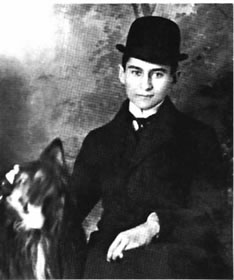
Georges Eekhoud (27 mei 1854 - 29 mei 1927)

Geschreven door Romenu om 19:02 Reageer op dit bericht

Max Brod, Arnold Bennett, Richard Schaukal, Ferdynand Ossendowski, M. A. vonThümmel

De Tsjechisch-Israëlische dichter, schrijver, criticus en componist Max Brod werd geboren in Praag op 27 mei 1884. Zie ook mijn blog van 27 mei 2007 en ook mijn blog van 27 mei 2009 en ook mijn blog van 27 mei 2010


Die dunklen Mächte

Die dunklen Mächte, denen du gebietest,
Sind ohne Mund und Augen. Starr
Verzaubern sie, wie Nebel fugendicht und schwer
Durch die ein süsser Dunst von Most versickert.

Doch draussen, vor dem offnen Fenster spielen
Die Kinder, klingt der Amseln
Geläut wie starker Mai,
und ging ich diese Vorstadtstrasse weiter,
Käm ich zu Hügeln, hell ergrünten Feldern
Mit Licht und leichter Luft darüber hin,
Die sich in Blüten reingebatet hat, -
Fern aller Sorge, allem Fuselduft,
Wie gerne zög ich diesen Weg, und frei
Trüg ich die Hände, hochgemut das Haupt.


921318-f86112584f59d07ef05170153752571d.jpg
Max Brod (27 mei 1884 - 20 december 1968)


De Engelse schrijver Arnold Bennett werd geboren in Hanley, Staffordshire, op 27 mei 1867. Zie ook mijn blog van 27 mei 2009 en ook mijn blog van 27 mei 2010


Uit: The Card


„Edward Henry Machin first saw the smoke on the 27th May 1867, in Brougham Street, Bursley, the most ancient of the Five Towns. Brougham Street runs down from St Luke's Square straight into the Shropshire Union Canal, land consists partly of buildings known as "potbanks" (until they come to be sold by auction, when auctioneers describe them as "extensive earthenware manufactories") and partly of cottages whose highest rent is four-and-six a week. In such surroundings was an extraordinary man born. He was the only anxiety of a widowed mother, who gained her livelihood and his by making up "ladies' own materials" in ladies' own houses. Mrs Machin, however, had a speciality apart from her vocation: she could wash flannel with less shrinking than any other woman in the district, and she could wash fine lace without ruining it; thus often she came to sew and remained to wash. A somewhat gloomy woman; thin, with a tongue! But I liked her. She saved a certain amount of time every day by addressing her son as Denry, instead of Edward Henry.

Not intellectual, not industrious, Denry would have maintained the average dignity of labour on a potbank had he not at the age of twelve won a scholarship from the Board School to the Endowed School. He owed his triumph to audacity rather than learning, and to chance rather than

design.“


921318-94a287075c2dfdf13fbd9faea7362d3b.jpg
Arnold Bennett (27 mei 1867 - 27 maart 1931)

Standbeeld in Burslem


De Duitse dichter en schrijver Richard von Schaukal werd geboren op 27 mei 1874 in Brünn. Zie ook mijn blog van 27 mei 2009 en ook mijn blog van 27 mei 2010


Die Mutter Gottes im Himmel


Die Mutter Gottes im Himmel
hat ein Fenster für sich allein.
Das sitzt sie die ganzen Tage
und schaut in die Welt hinein.

Und hinter ihr steht ein Engel,
der schreibt in ein Buch genau,
was von den guten Kindern
ihm sagt die hohe Frau.

Was aber die bösen machen,
das sagt sie dem Engel nicht:
Der würde das garnicht glauben,
so sanft ist sein Gesicht.


921318-3cd2b5f6900d8a8547f482b6a3dd911f.jpg
Richard von Schaukal (27 mei 1874 – 10 oktober 1942)


De Poolse schrijver, journalist, ontdekkingsreiziger en globetrotter Ferdynand Ossendowski werd geboren op 27 mei 1876 in Dvina. Zie ook mijn blog van 27 mei 2009 en ook mijn blog van 27 mei 2010


Uit: Beasts, Men And God


"Do you understand, 'Comrade,'" said one of them to me, "we are looking for counter-revolutionists to shoot them?"

I knew it without his explanations. All my forces were directed to assuring them by my conduct that I was a simple peasant hunter and that I had nothing in common with the counter-revolutionists. I was thinking also all the time of where I should go after the departure of my unwelcome guests. It grew dark. In the darkness their faces were even less attractive. They took out bottles of vodka and drank and the alcohol began to act very noticeably. They talked loudly and constantly interrupted each other, boasting how many bourgeoisie they had killed in Krasnoyarsk and how many Cossacks they had slid under the ice in the river. Afterwards they began to quarrel but soon they were tired and prepared to sleep. All of a sudden and without any warning the door of the hut swung wide open and the steam of the heated room rolled out in a great cloud, out of which seemed to rise like a genie, as the steam settled, the figure of a tall, gaunt peasant impressively crowned with the high Astrakhan cap and wrapped in the great sheepskin overcoat that added to the massiveness of his figure. He stood with his rifle ready to fire. Under his girdle lay the sharp ax without which the Siberian peasant cannot exist. Eyes, quick and glimmering like those of a wild beast, fixed themselves alternately on each of us. In a moment he took off his cap, made the sign of the cross on his breast and asked of us:

"Who is the master here?"

I answered him.

"May I stop the night?"

"Yes," I replied, "places enough for all. Take a cup of tea. It is still hot."


921318-3d5c0c221bc490c0b9ea0b9b0993ac81.jpg
Ferdynand Ossendowski (27 mei 1876 – 3 januari 1945)


De Duitse dichter en schrijver Moritz August von Thümmel werd geboren op 27 mei 1738 in Schönefeld. Zie ook mijn blog van 27 mei 2009 en ook mijn blog van 27 mei 2010


Uit: Reise in die mittäglichen Provinzen von Frankreich im Jahre 1785-1786


„Wie klein war indeß die Erleichterung, die ich mir damit verschaffte! – Denn, ob ich gleich weder Menschen noch Esel begegnete, die mich an mein Dörfchen erinnerten, so konnte ich doch unmöglich jedem Moose, jedem sprossenden Strauche, das den Moosen und Gesträuchen auf dem Fichtenberge ähnlich sah, aus dem Wege gehen: und als ich mir vollends einfallen ließ, einen seitwärts gelegenen Hügel zu besteigen, so brachte ich mich auf einmal um allen Vortheil meines listigen Umwegs; denn nun trat mir, in dem weiten Zirkel des freundlichen Languedocs, den ich übersah, das kleine liebe Caverac so nahe vor die Augen, daß sie mir übergingen, ehe ich es wehren konnte.

Ein Weilchen ließ ich meinem kindischen Herzen seinen Willen: da aber der annähernde Abend die Gegend immer mehr in's Dunklere zog, so nahm ich den Zeitpunkt wahr, ehe sie mir entwischte, ihr meinen feierlichen Segen zu geben. Es war ein süßer belohnender Augenblick, der mich über mich selbst erhob – ein Gefühl, wie es nur der heilige Vater haben kann, wenn er auf dem Balkon der Peterskirche seine segnende Hand erhebt, und sein ganzes Volk in andächtiger Schwärmerei vor ihm zur Erde niederstürzet. – Der Fleck, wo Margot wohnte, schien noch, ehe er meinen Blicken verschwand, einen sanften Schimmer von sich zu werfen, der meine Seele stärkte, erwärmte, beruhigte. Ich ergriff gutes Muths meinen Wanderstab, und suchte mich zu überreden, ich wäre gefaßt und zufrieden.“


921318-991f7f207abf840e01b4b1c2b7822f9d.jpg
Moritz August von Thümmel (27 mei 1738 – 26 oktober 1817)

Geschreven door Romenu om 18:53 Reageer op dit bericht

Meer van Romenu

↑ Terug naar de berichten