Naar de inhoud

Romenu

Over literatuur, gedichten, kunst en cultuur
akke.beakke.be

Berichten van 25 juni 2011 tot 26 juni 2011

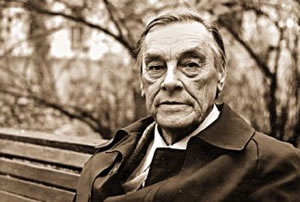
In Memoriam Heere Heeresma


In Memoriam Heere Heeresma


De Nederlandse schrijver Heere Heeresma is zondagochtend op 79-jarige leeftijd overleden in een verzorgingstehuis voor oudere kunstenaars en wetenschappers in Laren. De schrijver was bekend van onder meer zijn romans Een dagje naar het strand en Han de Wit gaat in ontwikkelingshulp. Heere Heeresma werd geboren in Amsterdam op 9 maart 1932. Zie ook mijn blog van 9 maart 2007 en ook mijn blog van 9 maart 2008. en en ook mijn blog van 9 maart 2009 en ook mijn blog van 9 maart 2010.


Uit: Een aanranding in het Vondelpark


„Ze bleef liggen, ze voelde zich te zwak om op te staan. Het was weer doodstil in het park. Het was opgehouden met sneeuwen merkte ze. Ze hoorde helemaal niks meer. Net zoals in het begin. Na die drukte van net leek het wel alsof ze ergens op de Sahara was. Vele vragen spookte door haar hoofd; ‘Wat gebeurt er allemaal? Waarom moet mij dit nou net overkomen?’. ‘Ik moet opstaan en verder lopen. Laat ik dit maar vergeten’ Ze stond op en liep verder. Haar benen voelde nog zwak aan.
Het is doodstil. Ze hoort alleen het kraken van de sneeuw onder haar schoenen. Hé, in de verte zag ze een schommelend lichtje. Waarschijnlijk van een fietser…“


Uit: Kijk, een drenkeling komt voorbij


‘“Nee,” zei hij. “Eerst mijn schelpen verkopen.” “Hoe wil je die kar door het strand trekken?” vroeg ze, liep naar voren, legde een hand op de grijze ezel en duwde. Het dier viel om. Het was van gewapend karton en een voorpoot lag door de val eraf. Bitter keek hij neer op die flauwekul en begon toen de kar los te maken. Vers touw. Echt touw. Geen blauwe of oranje lijnen van kunststof.


Uit: Han de Wit gaat in ontwikkelingshulp


“En daar was vader. De donderende slag waarmee deze de keukendeur achter zich dicht gooide deed het meubilair trillen. Vaders vrolijke bas schalde door het huis en knallend sloeg hij moeder op d'r gat.
‘Ondeugd!’ schreeuwde moeder en dreigde vader met de pollelepel waarbij de soep over haar hand liep.
Glimlachend zag hij het aan. Hij hield er van wanneer vader in een puik humeurtje was. Zo vaak kwam dat niet voor. Streep aan de balk.
‘Zo jan lul!’
‘Dag vader.’ Hij reikte vader de hand en kromp in elkaar toen deze hem even in zijn eeltknuist drukte.
‘Eten!’ riep vader.
‘Trek eerst je duffelse jekker uit en was je jatten, man,’ zei moeder.
‘Deze vuiligheid op m'n kleren en m'n lichaam is tenminste door eerlijk werk verkregen,’ meende vader.
‘Daar behoef je ons toch niet de dupe van te laten worden.’
Mopperend verdween vader in de slaapkamer.


Het allerlaatste gedicht


De hebzucht en de fantasie zijn prima

Want vullen onze eenzaamheid met lust.

Hier is de Bijenkorf al, en daar de Hema.

En straks de dood voor de noodzakelijke rust.


940801-798a0c3db7e5574552095618da577d75.jpg
Heere Heeresma (9 maart 1932 – 26 juni 2011)

Geschreven door Romenu om 21:09 Reageer op dit bericht

Jacqueline van der Waals, Aimé Césaire, Yves Beauchemin, Elisabeth Büchle, Laurie Lee, Pearl S. Buck

De Nederlandse dichteres Jacqueline Elisabeth van der Waals werd geboren op 26 juni 1868 in Den Haag. Zie ook mijn blog van 26 juni 2007 en ook mijn blog van 26 juni 2008 en ook mijn blog van 26 juni 2009 en ook mijn blog van 26 juni 2010.


Rozenboompje


Als de zon des avonds daalt

Staat mijn rozenboom vol rozen,

Nog in 't avondlicht te blozen

Dat zijn kruintje overstraalt.


't Boompje bloost en bloeit en blinkt

In het midden van mijn gaarde,

Waar rondom de duisterende aarde

Reeds in schemering verzinkt.


's Avonds in mijn rozenhof

Blijft het avondlicht gevangen

In de duizend roosjes hangen,

Rodend roos en rozelof.


Vreemd


Vreemd, dat boom en tak zo stil staan

In het gouden licht vandaag,

Dat de bladertjes zo stil gaan,

't Een na 't ander, naar omlaag.


Dat het zonlicht zo voorzichtig

Door de ijlheid straalt van 't lof,

En het groene blad doorzichtig

En veel edeler maakt van stof,


Dat het windje in de twijgen

Zo behoedzaam gaat te werk

En aleen wat blaadjes zijgen

Doet op 't pad en 't bloemenperk,


Zonder 't wazig diep te raken

Waar de groene schemer blauwt,

Of de goudglans schuw te maken

In het ijlbebladerd hout,


Of te roeren aan de vijver,

Waar zeer statiglijk en traag

Twee voorname zwanen drijven

Met hun spiegelbeeld omlaag,


En wat late najaarsrozen,

Als bewasemend amethyst,

Al de weemoed van hun broze

Schoonheid heffen in de mist.


 940761-741ffd2526e880f80ba095b474a9516b.jpg

Jacqueline van der Waals (26 juni 1868 – 29 april 1922)


De Afrocaraïbische schrijver en politicus Aimé Césaire werd geboren op 26 juni 1913 in Basse-Pointe, Martinique. Zie ook mijn blog van 26 juni 2007 en ook mijn blog van 26 juni 2008 en ook mijn blog van 26 juni 2009 en ook mijn blog van 26 juni 2010.


Prophétie


Là
où l'aventure garde les yeux clairs
là où les femmes rayonnent de langage
là où la mort est belle dans la main comme un oiseau
saison de lait
là où le souterrain cueille de sa propre génuflexion un luxe
de prunelles plus violent que des chenilles
là où la merveille agile fait flèche et feu de tout bois

là où la nuit vigoureuse saigne une vitesse de purs végétaux

là où les abeilles des étoiles piquent le ciel d'une ruche
plus ardente que la nuit
là où le bruit de mes talons remplit l'espace et lève
à rebours la face du temps
là où l'arc-en-ciel de ma parole est chargé d'unir demain
à l'espoir et l'infant à la reine,

d'avoir injurié mes maîtres mordu les soldats du sultan
d'avoir gémi dans le désert
d'avoir crié vers mes gardiens
d'avoir supplié les chacals et les hyènes pasteurs de caravanes

je regarde
la fumée se précipite en cheval sauvage sur le devant
de la scène ourle un instant la lave
de sa fragile queue de paon puis se déchirant
la chemise s'ouvre d'un coup la poitrine et
je la regarde en îles britanniques en îlots
en rochers déchiquetés se fondre
peu à peu dans la mer lucide de l'air
où baignent prophétiques
ma gueule
ma révolte
mon nom.


940761-1529b1974ed52e3393d315e19c8a1265.jpg
Aimé Césaire (26 juni 1913 – 17 april 2008)


De Canadese schrijver Yves Beauchemin werd geboren op 26 juni 1941 in Rouyn-Noranda, Quebec. Zie ook mijn blog van 26 juni 2007 en ook mijn blog van 26 juni 2008 en ook mijn blog van 26 juni 2009 en ook mijn blog van 26 juni 2010.


Uit: Les émois d'un marchand de café


„Eh bien! si... si je vous hébergeais pour la nuit? Cela vous donnerait un peu de temps pour chercher un logement, non? J'ai une très grande maison à Outremont, que j'habite seul depuis des années. Enfin, pas tout à fait seul, à vrai dire. J'ai une gouvernante qui s'occupe de mon intérieur.. Je suis divorcé., crut-il bon d'ajouter et mes enfants sont man ès... enfin deux d'entre eux.

Il eut un sourire embarrassé : j'espère que vous ne vous imaginez pas que je suis en train... euh... de vous draguer comme on dit?

Je n'y ai pas pensé une seconde, monsieur répondit-elle, avec un plissement d'œil presque impertinent.

Il arriva chez lui dans un état d'exaltation qu'il n'avait pas connu depuis des années, étonné d'ailleurs par sa réaction, car le bon sens lui disait que l'arrivée de cette jeune femme et de son poupon ne pouvait lui apporter que des complications.
Elle sortit de l'auto et contempla, interdite, l'immense maison de deux étages au revêtement de bardeaux de cèdre grisâtres, puis les arbres centenaires...
- Vous êtes riche, vous!

- Un peu, répondit-il avec un petit rire satisfait. Mais j'ai dû travailler dur, vous savez. Et je continue.

- Qu'est-ce que vous faites?

- Je suis dans le café.“


 940761-7ffa2d4f0bad6a45afe2de9d0d9d2401.jpg

Yves Beauchemin (Rouyn-Noranda, 26 juni 1941)


De Duitse schrijfster Elisabeth Büchle werd geboren op 26 juni 1969 in Trossingen, Baden-Württemberg. Zie ook mijn blog van 26 juni 2009 en ook mijn blog van 26 juni 2010.


 Uit: Goldsommer


„Der kräftige Wind peitschte den Neuschnee auf und trug ihn mit sich davon. Die ganze Welt schien nur noch aus einer weißen, eisigen Wand und dem brennenden Schmerz in ihrem Herzen zu bestehen. „Warum?“, murmelte Amrei zum wiederholten Mal gegen den wütenden Sturm an und zog dabei Schutz suchend die Schultern in die Höhe.

Sie spürte ein unangenehmes Rumoren in sich, als sie beobachtete, wie ihr Bruder seine schwangere Frau fest in die Arme schloss. Inmitten des Schneetreibens wirkte das Paar wie ein einziger dunkler

Schatten. Michael hatte die junge Frau vor einem halben Jahr von einer seiner Reisen mitgebracht und geheiratet. Er hatte keinen Einspruch gegen diese überstürzte Heirat mit einer Fremden, die nur

Hochdeutsch sprach, gelten lassen. Und jetzt ließ er sie alle allein.

Nachdem ihr Vater schon früh als Freiwilliger in den Krieg gezogen war, war nun auch Michael einberufen worden.

„Warum?“, presste Amrei erneut zwischen zusammengebissenen Zähnen hervor. Jetzt blieben auf dem Hof nur noch die alte Großmutter, ein Knecht, diese fremde Frau, die ihre Schwägerin war, und

sie selbst zurück. Amrei hob den Kopf, als das Knirschen des Schnees unter Michaels schweren Schritten sein Näherkommen verriet. Aufrecht, trotz der vom Wind herbeigepeitschten, beißenden Schneegraupel, stand ihr Bruder vor ihr und blickte liebevoll auf sie herunter. Wie so oft lag ein Lächeln auf dem Gesicht des fröhlichen jungen Mannes. „So, Kleine. Jetzt musst du ein paar Wochen ohne mich auskommen.“

„Das wird eine Wohltat sein!“, gab sie patzig zurück, obwohl ihr dabei ein kräftiger Schmerz in ihrem Inneren den Atem zu rauben drohte.

„Das dachte ich mir, Kleine!“, erwiderte Michael grinsend.

„Ich bin 14 Jahre alt und deshalb keineswegs klein!“

„Stimmt, du bist ziemlich groß.”


940761-b0ff77140ebf71c9162e92f335965ed5.jpg 

Elisabeth Büchle (Trossingen, 26 juni 1969)


De Engelse dichter en schrijver Laurence Edward Alan "Laurie" Lee werd geboren in Stroud, Gloucestershire op 26 juni 1914. Zie ook mijn blog van 26 juni 2007 en ook mijn blog van 26 juni 2008 en ook mijn blog van 26 juni 2009 en ook mijn blog van 26 juni 2010.


My Many-Coated Man

Under the scarlet-licking leaves,
through bloody thought and bubbly shade,
the padded, spicy tiger moves
a sheath of swords, a hooded blade.

The turtle on the naked sand
peels to the air his pewter snout
and rubs the sky with slotted shell –
the heart's dismay turned inside out.

The rank red fox goes forth at night
to bite the gosling's downy throat,
then digs his grave with panic claws
to share oblivion with the stoat.

The mottled moth, pinned to a tree,
woos with his wings the bark's disease
and strikes a fungoid, fevered pose
to live forgotten and at ease.

Like these, my many-coated man
shields his hot hunger from the wind,
and, hooded by a smile, commits
his private murder in the mind.


Field of Autumn


"Slow moves the acid breath of noon

over the copper-coated hill,

slow from the wild crab's bearded breast

the palsied apples fall.


Like coloured smoke the day hangs fire,

taking the village without sound;

the vulture-headed sun lies low

chained to the violet ground.


The horse upon the rocky height

rolls all the valley in his eye,

but dares not raise his foot or move

his shoulder from the fly.


The sheep, snail-backed against the wall,

lifts her blind face but does not know

the cry her blackened tongue gives forth

is the first bleat of snow.


Each bird and stone, each roof and well,

feels the gold foot of autumn pass;

each spider binds with glittering snare

the splintered bones of grass.


Slow moves the hour that sucks our life,

slow drops the late wasp from the pear,

the rose tree's thread of scent draws thin -

and snaps upon the air. "


 940761-0e6eb070d5052ebbf6109bef2e6ccebc.jpg

Laurie Lee (26 juni 1914 – 13 mei 1997)


De Amerikaanse schrijfster Pearl S. Buck werd geboren in Hillsboro West-Virginia, op 26 juni 1892. Zie ook mijn blog van 26 juni 2010 en eveneens alle tags voor Pearl S. Buck op dit blog.


Uit: The good earth


„He hurried out into the middle room, drawing on his blue outer trousers as he went, and knotting about the fullness at his waist his girdle of blue cotton cloth. He left his upper body bare until he had heated water to bathe himself. He went into the shed which was the kitchen, leaning against the house, and out of its dusk an ox twisted its head from behind the corner next the door and lowed at him deeply. The kitchen was made of earthen bricks as the house was, great squares of earth dug from their own fields, and thatched with straw from their own wheat. Out of their own earth had his grandfather in his youth fashioned also the oven, baked and black with many years of meal preparing. On top of this earthen structure stood a deep, round, iron cauldron.
This cauldron he filled partly full of water, dipping it with a half gourd from an earthen jar that stood near, but he dipped cautiously, for water was precious. Then, after a hesitation, he suddenly lifted the jar and emptied all the water into the cauldron. This day he would bathe his whole body. Not since he was a child upon his mother's knee had anyone looked upon his body. Today one would, and he would have it clean.
He went around the oven to the rear, and selecting a handful of the dry grass and stalks standing in the corner of the kitchen, he arranged it delicately in the mouth of the oven, making the most of every leaf. Then from an old flint and iron he caught a flame and thrust it into the straw and there was a blaze.
This was the last morning he would have to light the fire. He had lit it every morning since his mother died six years before. He had lit the fire, boiled water, and poured the water into a bowl and taken it into the room where his father sat upon his bed, coughing and fumbling for his shoes upon the floor. Every morning for these six years the old man had waited for his son to bring in hot water to ease him of his morning coughing.“


940761-af19fdc9cdbd69d5db21aefc103d0c29.jpg
Pearl S. Buck (26 juni 1892 – 6 maart 1973)

Portret door Freeman Elliott


Zie voor nog meer schrijvers van de 26e juni ook mijn vorige blog van vandaag

Geschreven door Romenu om 19:41 Reageer op dit bericht

Stefan Andres, Martin Andersen-Nexø, Bankim Chandra Chatterjee, Sunthorn Phu, Branwell Brontë, Sidney Howard

Duitse schrijver Stefan Andres werd geboren op 26 juni 1906 in Breitwies bij Trier. Zie ook mijn blog van 26 juni 2007 en ook mijn blog van 26 juni 2008 en ook mijn blog van 26 juni 2009 en ook mijn blog van 26 juni 2010.


Uit: Wir sind Utopia


„Das braune, eintönige Plateau lag unter der jeden Tag gleich wiederkehrenden Sonne zerpulvert da, und um das Gefährt, das in den sanften Senkungen des Weges verging und wieder hügelan strebte, hatte sich eine so dichte Staubwolke gebildet, daß man nur an seiner Schnelligkeit, dem Benzingestank und dem nachmittäglich langen Schatten einen Lastkraftwagen erkennen konnte. Wer aus der Ferne die knatternde, gelbe Wolke in der Einöde dahinkriechen sah, konnte die groteske Vor-

stellung haben, daß sich ein Stück des Weges erhoben und auf Wanderschaft begeben habe, um die rätselhafte Linie seines Auf und Ab und alle Windungen selber einmal zu verfolgen, in einem goldenen Federbusch dahinstäubend und eine lange, immer dünner und niedriger gleitende Schleppe hinter sich herziehend.

Aber es gab keinen Zuschauer. Die wenigen Bauernhäuser starrten mit schwarzen Fenstern ausgestorben in den Sonnenbrand, nur ein paar Hunde hoben gegen das sich nahende Monstrum aus Staub und Lärm die Nasen, duckten sich und sprangen in die versengten Felder, um dann wieder auf den leeren Weg zurückzukehren, an dessen Rand sie entlangsuchten, um bei einem umgewofenen Gepäckwagen und dem aufgedunsenen Körper eines Pferdes herumzuschnüffeln, zögernd und miteinander zankend, bis der Hunger ihren Abscheu vor dem Aas überwand.

Die Staubwolke aber kroch unentwegt in die Weite, und dort, wo auf der goldbraunen Höhe die ebenso braune Ringmauer einer im Mittelalter liegengebliebenen Stadt wie eine natürliche Felsenstufe sich erhob, verschwand sie unter dem Torbogen wie eine Lokomotive in einem Tunnel, und die Wachsoldaten unterm Tor sahen, wie auf dem Katzenkopfpflaster der Staub um den Wagen plötz-

lich verging und Bajonette hervorblitzten, ein eiserner Verhau um die wie aus Lehm gebackenen Gestalten, die auf dem offenen Lastwagen hockten und mit stumpfen Gesichtern den unerwarteten Schatten genossen und kaum den Kopf zu einem verstohlenen, flüchtigen Um- blick erhoben.


 940758-cdecfd41216b50b11b34a16f5bd7b9a1.jpg

Stefan Andres (26 juni 1906 - 29 juni 1970)


De Deense schrijver Martin Andersen-Nexø werd geboren op 26 juni 1869 in Kopenhagen. Zie ook mijn blog van 26 juni 2007 en ook mijn blog van 26 juni 2009 en ook mijn blog van 26 juni 2010.


Uit: Die Passagiere der leeren Plätze (Vertaald door Ellen Schou en Karl Schodder)


„Wird unser Zeitalter etwa deshalb das eiserne genannt, weil die große Mehrheit von uns mit einer Kette ums Bein zur Welt kommen?
Ich gehörte selbst zu den unschuldig Ausgestoßenen, die, sobald sie kriechen können, den Reihen der Lebenssklaven eingekoppelt werden, deren verfluchtes Los es ist, einigen wenigen Auserwählten die Erde zu einem angenehmen Aufenthaltsort zu machen. Ab und zu wurde einer von uns ausgekoppelt und der Ewigkeit übergeben — billig und ohne Zeremonien; automatisch schloss sich die Reihe wieder, und wir anderen plackten uns zur Erde gebeugt weiter ab, während unsere ausgehungerten Seelen die Luft mit ihrem Geschrei erfüllten. Wie umherirrende Vögel kreisten sie über uns, ruhelos nach einem geschützten Brutplatz jagend. So zahlreich waren sie, dass sie die Sonne verdunkelten und selbst auf die lichtesten Gegenden der Erde Schatten warfen.
Eines Tages wurde ich als unbrauchbar ausgekoppelt — und auf freiem Felde zum Sterben zurückgelassen. Es meldete sich kein Arzt, obwohl ich noch gern ein bisschen gelebt hätte, aber ein schwarzer Pfaffe kreiste in bedenklicher Nähe um mich herum. Er wartete darauf, dass ich abkratzte, damit er meine Seele einfangen könnte. Zu seiner Entschuldigung muss gesagt werden, dass er vom Staat dazu abgerichtet worden war.
Die Beute entschlüpfte ihm aber; eine gutherzige Frau sammelte mich auf und brachte mich zu einem Arzt. „Tuberkulose!" sagte er. — „Und im übrigen verbraucht, ausgezehrt, von Geburt an unterernährt! Wie lange haben Sie gearbeitet?"
„Zwanzig Jahre."
„Und wie alt sind Sie?"
„Vierundzwanzig."
„Dann haben Sie ja eigentlich auch ausgedient." „Ist gar nichts dagegen zu tun?" fragte die warmherzige Frau. „Ein Winter im Süden könnte ihn vielleicht retten. Sonst aber krepiert er."
Das Wort „krepiert" gab mir einen Stich — im Grunde ziemlich sinnlos. Warum sich an Worte hängen, wenn die Bedeutung die gleiche ist? Und die ließ sich nicht missverstehen. In der Gesellschaft ist kein Organ vorhanden, das ein unschuldig zum Tode Verurteilter anrufen und um Begnadigung bitten kann. Verbrauchter und misshandelter Pferde nimmt die Polizei sich an, ein missbrauchter und vor der Zeit ausgenutzter Arbeiter hat nur den Himmel. Ich richtete mich ohne großes Widerstreben darauf ein, meine ausgehöhlten Lungen mit ewiger Seligkeit zu füllen.“


940758-efa14106d16950632745b05b7086fb06.jpg 

Martin Andersen-Nexø (26 juni 1869 – 1 juni 1954)


De Bengaals – Indische dichter, schrijver, essayiste en journalist Bankim Chandra Chatterjee werd geboren op 26 juni 1838 in Kanthalpura. Zie ook mijn blog van 26 juni 2007 en ook mijn blog van 26 juni 2009 en ook mijn blog van 26 juni 2010.


Uit: The Poison Tree (Vertaald door Miriam S. Knight)


„Nagendra was in a great strait. If, in fear of the storm, he should leave the boat, the men would think him a coward; if he remained he would break his word to Surja Mukhi. Some may ask, What harm if he did? We know not, but Nagendra thought it harm. At this moment Rahamat Mullah said, "Sir, the rope is old; I do not know what may happen. The storm has much increased;[6] it will be well to leave the boat." Accordingly Nagendra got out.

No one can stand on the river bank without shelter in a heavy storm of rain. There was no sign of abatement; therefore Nagendra, thinking it necessary to seek for shelter, set out to walk to the village, which was at some distance from the river, through miry paths. Presently the rain ceased, the wind abated slightly, but the sky was still thickly covered with clouds; therefore both wind and rain might be expected at night. Nagendra went on, not turning back.

Though it was early in the evening, there was thick darkness, because of the clouds. There was no sign of village, house, plain, road, or river; but the trees, being surrounded by myriads of fireflies, looked like artificial trees studded with diamonds. The lightning goddess also still sent quick flashes through the now silent black and white clouds. A woman's anger does not die away suddenly. The assembled frogs, rejoicing in the newly fallen rain, held high festival; and if you listened attentively the voice of the cricket might be heard, like[7] the undying crackle of Ravana's funeral pyre. Amid the sounds might be distinguished the fall of the rain-drops on the leaves of the trees, and that of the leaves into the pools beneath; the noise of jackals' feet on the wet paths, occasionally that of the birds on the trees shaking the water from their drenched feathers, and now and then the moaning of the almost subdued wind. Presently Nagendra saw a light in the distance. Traversing the flooded earth, drenched by the drippings from the trees, and frightening away the jackals, he approached the light; and on nearing it with much difficulty, saw that it proceeded from an old brick-built house, the door of which was open. Leaving his servant outside, Nagendra entered the house, which he found in a frightful condition.“


 940758-5982018d28235b56bab3e7b38620b298.jpg

Bankim Chandra Chatterjee (26 juni 1838 – 8 april 1894)


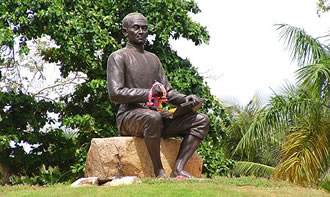
De Thaise dichter Sunthorn Phu werd geboren op 26 juni 1786 in Bangkok. Zie ook mijn blog van 26 juni 2007 en ook mijn blog van 26 juni 2009 en ook mijn blog van 26 juni 2010.


Uit: Phra Aphai Mani (Vertaald door Prince Prem Burachat)


„ONCE upon a time, a certain prince whose name was Sudasna ruled over a small but prosperous country. He had two sons : the elder, fifteen years of age, was called Phra Abhai Mani, and the younger, aged thirteen, was called Sri Suvarna. Realising that they had reached years of discretion, and were ready to have knowledge instilled into them, so that they might later rule the principality rightly and justly, he summoned them into his presence and addressed them thus :

"My sons, one day you will rule over this country. It is meet that, like those princes of old, you should acquire knowledge which will enable you to protect your inheritance. So you must seek out learned men from whom you may receive instruction in such subjects as will be useful to you hereafter."

The two young brothers bowed to their father, and signified their intention of obeying his will. After receiving further words of fatherly advice, they took their leave of him.

In those days, wise and learned men lived the lives of hermits, jealously guarding the treasures of their knowledge in the fastnesses of the forest or in the distant villages. By dint of much effort, and after fifteen days' travel through the jungle, Phra Abhai Mani and Sri Suvarna succeeded in finding two ancient professors worthy of their consideration. One, as a notice on his door announced, taught the gentle art of flute-playing, and the other the sturdier science of self-defence. Phra Abhai Mani dicided without any hesitation that he would learn to play the flute, while Sri Suvarna chose self-defence. The only difficulty was that neither had brought with him the hundred thousand tamlueng of gold which each professor seemed to require in exchange for his instruction, (for in those days before there was popular education, teachers were entitled to demand their price!). However, on explaining the matter to the venerable old men, the latter kindly agreed to accept a ring of each as fee : they knew that the boys were of noble descent.“


 940758-456d44d83674289117c2581934021dde.jpg

Sunthorn Phu (26 juni 1786 - ? 1855)

Standbeeld in Rayong


De Engelse dichter Branwell Brontë werd op 26 juni 1817 geboren in Thornton, Yorkshire. Zie ook mijn blog van 26 juni 2009 en ook mijn blog van 26 juni 2010.


Penmaenmawr (Winter 1845)


I knew a flower whose leaves were meant to bloom

Till Death should snatch it to adorn the tomb,

Now, blanching 'neath the blight of hopeless grief

With never blooming and yet living leaf;

A flower on which my mind would wish to shine,

If but one beam could break from mind like mine:

I had an ear which could on accents dwell

That might as well say 'perish' as 'farewell' -

An eye which saw, far off, a tender form

Beaten, unsheltered, by affliction's storm -

An arm - a lip - that trembled to embrace

My Angel's gentle breast and sorrowing face

A mind that clung to Ouse's fertile side

While tossing - objectless - on Menai's tide!


 940758-7c0e2bcf39fdddc8778ea991e3cc4501.jpg

Branwell Brontë (26 juni 1817 – 24 september 1848)

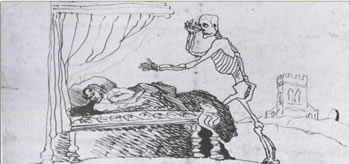
Karikatuur van Branwell zelf, wachtend op de dood


De Amerikaanse toneel- en draaiboekschrijver Sidney Howard werd geboren op 26 juni 1891 in Oakland, Californië. Zie ook mijn blog van 26 juni 2007.


Uit: The Story Gets a Treatment


“If one goes to the root of the matter, motion pictures are neither written nor acted, but made. It is the combination of director with cameraman which, more than the writer, more even than the beloved screen personality, gives the finished picture its life. Apart from the original story material, the writer's function in the making of pictures is a secondary one. Since the screen as we know it draws the vast bulk of its story material from books, periodicals and the stage – with a few imaginative excursions into biography – the screenwriter's task is really a job of adaptation hack writing, cut to the dimension of the director's demands. The screen does not yet ask of its writers much more than technical ingenuity.

In my opinion, novels make better pictures than plays. The playwright selects for his material a story which is most effectively told within the scenic limitations for the stage and is likely to suffer from over-elaboration on the screen. The screening of a play requires expansion, which is bad for a work of art. The screening of a novel, by contrast, requires contraction, which is apt to be good.

The motion-picture form lies somewhere between the novel and the play. It rejoices in at least the geographic freedom of the novel because it can move easily from place to place as a play cannot. However, the motion picture must do without the repose of either novel or play, and therefore without the reflective expansion of either idea or emotion. It has its own and most rigorous technique, which is best described by saying that a moving photograph must move and keep moving. In other words, its story, to be well told, must be told continuously in action. What the characters think or feel on the screen must be expressed by doing, and only strong and clear thoughts and emotions can be expected to pierce through a medium which, even in color, lacks the reality of the flesh and blood of the stage, on the one hand, and of the novelist's personal spell on the other.“


940758-25f4bbe4850fc909bc40d241ee7822e0.jpg
Sidney Howard (26 juni 1891 – 23 augustus 1939)

Geschreven door Romenu om 19:34 Reageer op dit bericht

George Orwell, Ingeborg Bachmann, Larry Kramer, Ariel Gore, Michel Tremblay

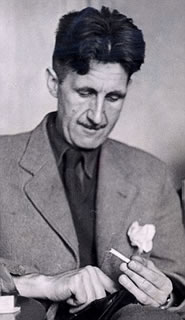
De Britse schrijver George Orwell (pseudoniem van Eric Arthur Blair) werd op 25 juni 1903 geboren in Motihari, India. Zie ook mijn blog van 25 juni 2010 en eveneens alle tags voor George Orwell op dit blog.


Uit: 1984


„As soon as Winston had dealt with each of the messages, he clipped his speakwritten corrections to the appropriate copy of the Times and pushed them into the pneumatic tube. Then, with a movement which was as nearly as possible unconscious, he crumpled up the original message and any notes that he himself had made, and dropped them into the memory hole to be devoured by the flames.

What happened in the unseen labyrinth to which the pneumatic tubes led, he did not know in detail, but he did know in general terms. As soon as all the corrections which happened to be necessary in any particular number of the Times had been assembled and collated, that number would be reprinted, the original copy destroyed, and the corrected copy placed on the files in its stead. This process of continuous alteration was applied not only to newspapers, but to books, periodicals, pamphlets, posters, leaflets, films, sound tracks, cartoons, photographs-to every kind of literature or documentation which might conceivably hold any political or ideological significance. Day by day and almost minute by minute the past was brought up to date. En this way every prediction made by the Party could be shown by documentary evidence to have been correct; nor was any item of news, or any expression of opinion, which conflicted with the needs of the moment, ever allowed to remain on record. All history was a palimpsest, scraped clean and reinscribed exactly as often as was necessary. In no case would it have been possible, once the deed was done, to prove that any falsification had taken place. The largest section of the Records Department, far larger than the one in which Winston worked, consisted simply of persons whose duty it was to track down and collect all copies of books, newspapers, and other documents which had been superseded and were due for destruction. A number of the Times which might, because of changes in political alignment, or mistaken prophecies uttered by Big Brother, have been rewritten a dozen times still stood on the files bearing its original date, and no other copy existed to contradict it. Books, also, were recalled and rewritten again and again, and were invariably reissued without any admission that any alteration had been made. Even the written instructions which Winston received, and which he invariably got rid of as soon as he had dealt with them, never stated or implied that an act of forgery was to be committed; always the reference was to slips, errors, misprints, or misquotations which it was necessary to put right in the interests of accuracy.“


 940071-49f4d4cfc5fa3463564a0ccf533404b2.jpg

George Orwell (25 juni 1903 – 21 januari 1950)


De Oostenrijkse dichteres Ingeborg Bachmann werd geboren op 25 juni 1926 in Klagenfurt. Zie ook mijn blog van 25 juni 2010 en eveneens alle tags voor Ingeborg Bachmann op dit blog.


Nebelland


Im Winter ist meine Geliebte

unter den Tieren des Waldes.

Dass ich vor Morgen zurück muss,

weiß die Füchsin und lacht,

Wie die Wolken erzittern! Und mir

auf den Schneekragen fällt

eine Lage von brüchigem Eis.


Im Winter ist meine Geliebte

ein Baum unter Bäumen und lädt

die glückverlassenen Krähen

ein in ihr schönes Geäst. Sie weiß,

dass der Wind, wenn es dämmert,

ihr starres, mit Reif besetztes Abendkleid hebt und mich heimjagt.


Im Winter ist meine Geliebte

unter den Fischen und stumm.

Hörig den Wassern, die der Strich

ihrer Flossen von innen bewegt,

steh ich am Ufer und seh,

bis mich Schollen vertreiben,

wie sie taucht und sich wendet.


Und wieder vom Jadruf des Vogels

getroffen, der seine Schwingen

über mir steift, stürz ich

auf offenem Feld: sie entfiedert

die Hühner und wirft mir ein weißes

Schlüsselbein zu, Ich nehm's um den Hals

und geh fort duch den bitteren Flaum.


Treulos ist meine Geliebte,

ich weiß, sie schwebt manchmal

auf hohen Schuh'n nach der Stadt,

sie küßt in den Bars mir dem Strohhalm

die Gläser tief auf den Mund,

und es kommen ihr Worte für alle.

Doch diese Sprache verstehe ich nicht.


Nebelland hab ich gesehen,

Nebelherz hab ich gegessen.


Exil


Ein Toter bin ich der wandelt

gemeldet nirgends mehr

unbekannt im Reich des Präfekten

überzählig in den goldenen Städten

und im grünenden Land


abgetan lange schon

und mit nichts bedacht


Nur mit Wind mit Zeit und mit Klang


der ich unter Menschen nicht leben kann


Ich mit der deutschen Sprache

dieser Wolke um mich

die ich halte als Haus

treibe durch alle Sprachen


O wie sie sich verfinstert

die dunklen die Regentöne

nur die wenigen fallen


In hellere Zonen trägt dann sie den Toten hinauf.


Abends frag ich meine Mutter


"Abends frag ich meine Mutter
heimlich nach dem Glockenläuten,
wie ich mir die Tage deuten
und die Nacht bereiten soll.

Tief im Grund verlang ich immer
alles restlos zu erzählen,
in Akkorden auszuwählen,
was an Klängen mich umspielt.

Leise lauschen wir zusammen:
meine Mutter trämt mich wieder,
und sie trifft, wie alte Lieder,
meines Wesens Dur und Moll."


 940071-b628a71dbf59eb01591fdd6018c00741.jpg

Ingeborg Bachmann (25 juni 1926 – 17 oktober 1973)


De Amerikaanse schrijver, columnist en homoactivist Larry Kramer werd geboren in Bridgeport, Connecticut op 25 juni 1935. Zie ook mijn blog van 25 juni 2009 en ook mijn blog van 25 juni 2010


Uit: Faggots


“In a handsome apartment of English and French antiques, deftly combined with American Ward Bennett, on East 66th Street, between Madison and Park, lives the Winston Man. Yes, Virginia, there is a Winston Man.

It is unfortunate that his personality is so submerged in this nefarious product, but the fact remains that to his friends and to his fellow models as the Hans Zoroaster Agency his known, not be his given name, which is Duncan Heinz (his father is a very distant and almost as rich cousin to the pickle-soup-ketchup family, though devoted not to foodstuffs in his own financial empire but to the manufacture of rubber good for home and farm, more specifically, though naturally the family does not spread this about, the production of items of “prophylaxis” for the conduct of sexual intercourse, their Model B-12 widely used in animal husbandry, particularly suited for well-endowed bulls), but as Winnie.

Winnie’s is the true beauty of our moment in time, the fact that, years from now, when we remember, and we shall remember, will be looked back upon as representing our era. His glacially green eyes, his perfect classical nose, his hay hair, his skin of an overall perfection that could sell cream to cows or butter to Danes, all represent today’s desirability and have served to make him not only America’s highest-paid male model but also the ideal god every faggot looks up to as what he’d choose to look like if he could choose to look like anyone.

Winnie’s Philadelphia Main Line background was evident in the tweed and flannel button-downed and Shetlanded aura he had maintained ever since being expelled from the University of Virginia for disinclination to read. He still looked thirty, claimed to be forty, and still didn’t have to work, his father’s “health products” fortune more than ample to provide for him But a Master of Winnie’s at the Hill School in Pottstown had encouraged in him a lifelong desire to go his own way, be his own man, when he had taken the then thirteen-year-old lad aside after a particularly clumsy dropping of a right-field fly and told him point-blank that he was going to be a fairy when he grew up.


 940071-26a325a70ec95e32c748f373b6cb4c6d.jpg

Larry Kramer (Bridgeport, 25 juni 1935)


De Amerikaanse schrijfster en journaliste Ariel Gore werd geboren op 25 juni 1970 in  Carmel, Californië. Zie ook mijn blog van 25 juni 2009 en ook mijn blog van 25 juni 2010


Uit: Traveling Death and Resurrection Show


„The baby, riding with me today, whimpers in his car seat, rubs his sleepy eyes, reminds me of a clean-licked newborn kitten. Shock of black hair. Wide, dark eyes. "I'm hungry," he moans. Poor little fellow. This is our life: new day, new state, same show.

"The Virgin Mary herself will cast your fortune," Madre roars, undaunted by the city's silence. "Your destiny in Our Lady's hands!"

A towheaded little boy, maybe five years old, pale face blushed against the ocean wind, leaps from the doorway of the "I Buy Almost Anything" antique store. "Is it a circus?" he calls out, excited. But before Madre can answer him, a waif of a woman rushes out to the curb and pulls the boy back inside.

"It is a circus!" Madre yells to the crows perched on the roof of an old hotel. "Six p.m. tonight, the River Theater. Admission by donation. No one turned away!"

A white woman with dreadlocks stumbles out of a corner bar. "I'll be there," she promises, waving a tattooed arm before she reaches for the near cement wall to catch her balance.

"This is a show you can't miss," Madre cries with renewed enthusiasm. "One night only, ladies and gentlemen. Levitating mystics, saints performing the stigmata, Mary Magdalen flying through the air like grace itself!"

The caravan rolls to a stop in front of a little blue theater under the truss bridge. I'm driving the second hatchback, park it a few yards ahead of the others. No fans await us in handsome gray Astoria, but at least the church protesters aren't out -- the sallow-eyed men and women with their dark crucifixes and homemade picket signs assuring us all eternal damnation. You'd think we were a traveling brigade of abortionists, the reception we get in some towns. It's just a show, I always want to tell them. Isn't Satan up to anything real you can get your panties in a wad about? But I stay quiet. I understand their indignation more than I'd like to admit. And sometimes, I swear I can see my grandmother's face in those crowds. I cross myself silently, then. "It's just a show," I whisper to the heavens.

A humble mural covers the side of the theater building, pictures the river itself as a stage. Spotlights hang in the clouds. A few spectators float in black inner tubes, watching a lone performer who stands atop the water like some kind of prophet. A little marquee at the corner of the painting announces our coming:

-- Tonight Only --
The Death &
Resurrection Show „


 940071-f956db9d560d5a379ade60ffed607be2.jpg

Ariel Gore (Carmel, 25 juni 1970)


De Canadese schrijver Michel Tremblay werd geboren in Quebec op 25 juni 1942. Zie ook mijn blog van 25 juni 2009 en ook mijn blog van 25 juni 2010


Uit: Demain matin, Montréal m'attend


«LOLA LEE : C'est ça, la piasse ! Toujours la piasse ! On dirait que vous faites c'te métier-là rien que pour la piasse, vous autres !

UNE FILLE : Ben certain !

LOLA LEE : À votre âge, moé, à votre âge, j'faisais dix fois moins d'argent que vous autres pis j'travaillais dix fois plus fort !

UN GARÇON : Tiens, v'là le long playing qui recommence !

LOLA LEE : Pis mes shows, j'les faisais proprement.

UNE FILLE : Ça, on n'était pas là pour le voir…»


940071-333964edbeb4f598d78d7d87c3a555d3.jpg
Michel Tremblay (Quebec,
25 juni 1942)


Zie voor nog meer schrijvers van de 25e juni ook mijn vorige blog van vandaag en eveneens mijn eerste blog van vandaag.


Geschreven door Romenu om 14:30 Reageer op dit bericht

Yann Martel, Arseny Tarkovsky, Heinrich Seidel, Nicholas Mosley, Claude Seignolle

De Canadese schrijver Yann Martel werd op 25 juni 1963 geboren in Salamanca. Zie ook mijn blog van 25 juni 2007 en ook mijn blog van 25 juni 2008 en ook mijn blog van 25 juni 2009 en ook mijn blog van 25 juni 2010


Uit: Life of Pi


“The sloth is at its busiest at sunset, using the word busy here in the most relaxed sense. It moves along the bough of a tree in its characteristic upside-down position at the speed of roughly 400 metres an hour. On the ground, it crawls to its next tree at the rate of 250 metres an hour, when motivated, which is 440 times slower than a motivated cheetah. Unmotivated, it covers four to five metres in an hour.

The three-toed sloth is not well informed about the outside world. On a scale of 2 to 10, where 2 represents unusual dullness and 10 extreme acuity, Beebe (1926) gave the sloth's senses of taste, touch, and its sense of smell a rating of 3. If you come upon a sleeping three-toed sloth in the wild, two or three nudges should suffice to awaken it; it will then look sleepily in every direction but yours.  Why it should look about is uncertain since the sloth sees everything in a Magoo-like blur.  Beebe reported that firing guns next to sleeping or feeding sloths elicited little reaction.  And the sloth's slightly better sense of smell should not be overestimated.  They are said to be able to sniff and avoid decayed branches, but Bullock (1968) reported that sloths fall to the ground clinging to decayed branches "often".

How does it survive you might ask.

Precisely by being so slow.   Sleepiness and slothfulness keep it out of harm's way, away from the notice of jaguars, ocelots, harpy eagles and anacondas. A sloth's hairs shelter an algae that is brown during the dry season and green during the wet season, so the animal blends in with the surrounding moss and foliage and looks like a nest of white ants or of squirrels, or like nothing at all but part of a tree.”


940068-5aaacd65d002d1af5a535ea5b73f8f65.jpg
Yann Martel (Salamanca, 25 juni  1963)


De Russische dichter en vertaler Arseny Alexandrovich Tarkovsky werd geboren op 25 juni 1907 in Elisavetgrad. Zie ook mijn blog van 25 juni 2007 en ook mijn blog van 25 juni 2008.en ook mijn blog van 25 juni 2009 en ook mijn blog van 25 juni 2010


Life, Life


1

I don't believe in omens or fear
Forebodings. I flee from neither slander
Nor from poison. Death does not exist.
Everyone's immortal. Everything is too.
No point in fearing death at seventeen,
Or seventy. There's only here and now, and light;
Neither death, nor darkness, exists.
We're all already on the seashore;
I'm one of those who'll be hauling in the nets
When a shoal of immortality swims by.


2

If you live in a house - the house will not fall.
I'll summon any of the centuries,
Then enter one and build a house in it.
That's why your children and your wives
Sit with me at one table, -
The same for ancestor and grandson:
The future is being accomplished now,
If I raise my hand a little,
All five beams of light will stay with you.
Each day I used my collar bones
For shoring up the past, as though with timber,
I measured time with geodetic chains
And marched across it, as though it were the Urals.


Vertaald door Virginia Rounding


 940068-dbfc83cf982f0e3e36b4714c2d6698f9.jpg

Arseny Tarkovsky (25 juni 1907 – 27 mei 1989)


De Duitse dichter, schrijver en ingenieur Heinrich Seidel werd geboren op 25 juni 1842 in Perlin, Mecklenburg-Schwerin. Zie ook mijn blog van 25 juni 2009 en ook mijn blog van 25 juni 2010


In der Sommerabendsonne - I.


An dem schönen Sommerabend

Saßen wir auf jenem Hügel,

Schauten in den goldnen Westen.

Breithin streckte sich die dunkle

Wolkenbank, darin die Sonne

Nun versunken - nur die Ränder

Glühten noch in goldnem Scheine.

Doch im blauen Himmel drüber

Schwebten rosig weiße Wolken

Angestrahlt von hellem Glanze.

Welch' ein Wunder sah ich droben:

Auf den Wolkenbänken saßen

Ros'ge Engel reihenweise -

Andre lauschten aus den Wolken,

Andre schwebten hin und wieder,

Spielten hier mit Wolkenflocken,

Ritten dort auf einem Wölkchen -

Und es war ein stillbewegtes

Schimmernd rosiges Getümmel.

"Sieh, wie herrlich!" sprach ich leuchtend

Freudevoll zu dem Gefährten.

Dieser nickte nur; wir schauten

Still in's Zauberspiel der Wolken:

Wie die Engel nun verschwebten,

Lauschten noch mit ros'gen Köpfen

Ueber Wolken und verschwanden.

Und der Rosenschein verblaßte,

Bis im bläulichen Gedämmer

Nur ein träumend Roth noch ruhte,

Und der Abend still sich senkte.


940068-63b0664f485cc25ce6311e6e5dd23fad.jpg
Heinrich Seidel (25. Juni 1842 – 7. November 1906)


De Engelse schrijver Nicholas Mosley werd geboren op 25 juni 1923 geboren in Londen. Zie ook mijn blog van 25 juni 2009.


Uit: Hopeful Monsters


“My father said ‘Shall I try to explain?’

I said ‘I like hearing you talk. It doesn’t matter if I don’t understand.’

This was the time – the winter of 1918-19 – when Einstein had recently published his paper concerning the General Theory of Relativity (the papers concerning the Special Theory had been published some years previously), but the conjectures put forward in the General Theory had not yet been verified. Nothing in these theories had yet much caught the public imagination: people seemed not to be ready for such images as they might evoke. But my father had become obsessed with trying to make intelligible an interpretation of the General Theory: it was this, he said, that should alter people’s ideas about the universe and about themselves.

My father said ‘All right, I’ll try to tell you. I’m not sure, anyway, just what it means to understand.’

I think my father had already tried to explain – usually more to himself in fact than to me – the Special Theory of Relativity. I remember the phrases about there being no absolute space nor absolute time: my space is my space; your time is yours; if I am travelling at a certain speed in relation to you it might as well be you who are travelling at a certain speed in relation to me; the only thing that is absolute is the speed of light. The speed of light is constant no matter if it arises from this or that travelling hither or thither: if there seem to be contradictions, these are because the measuring devices themselves get bigger or smaller and not the speed of light. I do not suppose I grasped the latter idea: but I do not think I found it difficult to see the idea of each person, each observer or group, having his or her or its own world: was not this, after all, what I had come to feel about the people in the streets, my mother’s friends, her cousins in the country? I felt sometimes that I understood even about the absoluteness of the speed of light – was not this something that my father and I felt ourselves in touch with as we looked down on all these separate worlds from the superworld of our airship?


940068-de44247860ce26b520c502053a207abf.jpg
Nicholas Mosley (Londen, 25 juni 1923)


De Franse schrijver Claude Seignolle werd geboren op 25 juni 1917 in Périgueux. Zie ook mijn blog van 25 juni 2009.


Uit: Le Retour à Tiburiac


“Embrassai ses paupières closes ; ses cheveux qui gardèrent mon souffle. Je l'avais toute à moi. Elle acceptait enfin l'échange de nos désirs. Soudain, elle eut un cri de détresse si terrible que d'un bond, je m'écartai d'elle. Effrayé, je la regardai. Elle restait allongé, mais ses yeux me fixaient, comme atteints de folie, et exprimaient le vertige d'une lutte telle, qu'un violent frisson me traversa... Ses doigts agrippèrent le drap en une prise féroce... De sa gorge sortit une plainte, un râle qui se gonfla jusqu'à l'ettoufer ... Convulsée par un spasme furieux, elle fit le geste de me saisir à la gorge, mais ses bras retombèrent, la vie brusquement coupée en elle ...

Alors... alors, je mordis mes poings jusqu'au sang afin de ne pas hurler de ce que je vis en un instant ... Elle se raidit...Sa peau se flétrit... verdit... se creva çà et là, laissant l'os apparaître dans une puanteur croissante, si fétide qu'elle m'écroula de nausées... Je vis ses traits se fondre en une infecte boule putride, son crâne surgir, puis ses vertèbres, ses côtes... Et Dieu me fut bon, qui m'avait arrêté de la dénuder completement, sinon j'aurai vu se crever son ventre pourri que sa robe virginale, de satin et de soie, garda au secret de l'horreur... Mais l'étoffe vieillit à son tour, comme de plusieurs siècles, et il n'y eut plus sur ma couche souilée que ces macabres restes d'os blanchis, enveloppés d'une sorte de sac flétri semblable à ceux du "Trou aux Huguenots "...


 940068-68fee60af50cfff396a480f68f81c8c9.jpg

Claude Seignolle (Périgueux, 25 juni 1917)

Geschreven door Romenu om 14:22 Reageer op dit bericht

Hans Marchwitza, Georges Courteline, Friederike Kempner, Adrian Kasnitz, Jan Decker

De Duitse dichter en schrijver Hans Marchwitza werd geboren in Scharley op 25 juni 1890. Zie ook mijn blog van 25 juni 2007 en ook mijn blog van 25 juni 2009.


Uit: Sturm auf Essen


„Der Junge aß die Kartoffeln, die ihm die Mutter aufnötigen musste. Sie beobachtete ihn dabei und wischte an ihren Augen. Groß und mager war er. Und der düstere, abwesende Blick schreckte sie. Sie wusste nicht, dass dieser Blick, diese sich krampfhaft faltende Stirn, die Unrast, mit der er sich umsah, Flandern, Verdun, Aisne und noch einmal Verdun und noch einmal Flandern waren. Sie wusste nicht, dass er nicht dreiundzwanzig Jahre, sondern fünfzig, hundert Jahre alt war, dass er eine Ewigkeit von Schrecken und Toden durchgehetzt hatte. Sie dachte glücklich: Er ist wieder zurückgekommen!, und sie schnaubte die Tränen in ihre Schürze.
Franz sah sich in der Wohnung um. Alles war noch wie früher, stand fast gespenstisch genau auf dem alten Fleck - aber ein Jahrhundert schien zwischen dem Früher und Heute zu liegen. „Wer ist denn von den anderen noch zurückgekommen?" fragte er.
Einige waren zurück. Von einem ganzen Dutzend vier. Ihre alte Ecke war leer geworden. Auch dieses Erinnern an die alte Ecke lag hundert Jahre zurück.
„Ja - der Freising-Bruno und der Koschewa-Edy sind wieder auf der Zeche am Arbeiten. Nur der Kahlstein rennt noch mit dem Gewehr rum", erzählte ihm die
Mutter. „Der Kahlstein-Hermann war doch bei der Marine in Kiel und ist schon vor zwei, drei Wochen zurück. Er rennt wieder mit dem Gewehr..."
Franz grübelte. Er war vorläufig zu gar nichts entschlossen, er wusste nicht, ob er noch einmal in die Grube gehen oder ob er die Arbeit wechseln solle. Vielleicht mit einer Übertagearbeit. Aber er konnte sich das kaum noch vorstellen, dass er jetzt wieder einer normalen Tagesbeschäftigung nachgehen könne; er fühlte sich noch immer draußen im Graben. Und allen, die das Glück hatten, sich zu retten, erging es wohl ebenso; alle phantasierten sie nachts dasselbe; sie waren noch immer in Flandern oder vor Verdun.
„Du wirst doch wohl auch wieder in die Grube gehn?" wagte die Mutter die schüchterne Frage.
„Das weiß ich noch nicht!" antwortete er erst nach einer Weile, und auf seiner Stirn erschien wieder diese finstere Falte, die sie so schreckte. Er wandte sich halb um und blickte sie fast feindselig an: „Wartest du so sehr darauf? Ich sag' dir, ich weiß nicht, was ich machen werde."


940067-80c8ce328c130658719632a93f7ff124.jpg
Hans Marchwitza (25 juni 1890 - 17 januari 1965)

De schrijver temidden van FDJ jeugd in 1959


De Franse schrijver en dramaturg Georges Courteline (eig. Georges Victor Marcel Moineaux ) werd geboren op 25 juni 1858 in Tours. Zie ook mijn blog van 25 juni 2009.


Uit: Le petit malade


“LE MEDECIN, le chapeau à la main. — C'est ici, madame, qu'il y a un petit malade ?

MADAME. — C'est ici, docteur; entrez donc. Docteur, c'est pour mon petit garçon. Figurez—vous, ce pauvre mignon, (je ne sais pas comment ça se fait), depuis ce matin tout le temps il tombe.

LE MEDECIN. — Il tombe !

MADAME. — Tout le temps; oui, docteur.

LE MEDECIN. — Par terre ?

MADAME. — Par terre.

LE MEDECIN. — C'est étrange, cela... Quel âge a-t-il?

MADAME. — Quatre ans et demi.

LE MEDECIN. — Quand le diable y serait, on tient sur ses jambes à cet âge-là !... — Et comment ça lui a-t-il pris ?

MADAME. — Je n'y comprends rien, je vous dis. Il était très bien hier soir et il trottait comme un lapin à travers l'appartement. Ce matin, je vais pour le lever, comme j'ai l'habitude de faire. Je lui enfile ses bas, je lui passe sa culotte, et je le mets sur ses jambes. Pouf ! il tombe !

LE MEDECIN. — Un faux pas, peut-être.

MADAME. — Attendez !... Je me précipite; je le relève... Pouf ! il tombe une seconde fois. Etonnée, je le relève encore... Pouf ! par terre ! et comme ça sept ou huit fois de suite. Bref, docteur, (je vous le répète, je ne sais comment ça se fait), depuis ce matin, tout le temps il tombe.

LE MEDECIN. — Voilà qui tient du merveilleux... Je puis voir le petit malade ?

MADAME. — Sans doute.


(Elle sort puis reparaît tenant dans ses bras le gamin.

Celui-ci arbore sur ses joues les couleurs d'une extravagante bonne santé. Il est vétu d'un pantalon et d'une blouse lâche, empesée de confitures séchées.)“


 940067-5af9cb5da37b352aa4db3421ce3d8431.jpg

Georges Courteline (25 juni 1858 – 25 juni 1929)


De Duitse dichteres Friederike Kempner werd geboren  op 25 juni 1836 te Optatow in de provincie Posen. Zie ook mijn blog van 25 juni 2009.


Es scheint der Mond so helle


Es scheint der Mond so helle,

So silbern strahlt der Mond,

Ich stehe an der Stelle,

Wo all mein Lieben wohnt!


Ich stehe still und segne

Den Platz, das Haus, die Luft,

Daß niemals drin begegne,

Was Schmerz und Tränen ruft.


Fernweh


Gold’ne Sonne mit den Strahlen,

Komm und nimm mich an Dein Herz

Und von Deinem Licht getragen,

Steige mit mir himmelwärts!


Zeige mir dort Deine Wesen,

Deinen großen Wunderraum,

Und damit ich’s nicht verrate,

Laß mich’s schauen wie im Traum!


Oder nimm mich in die Höhe

Nur ein tausend Meilen fern,

Daß ich ihn von dort aus sehe:

Unsern kleinen Erdenstern.


Zanket nicht, hetzet nicht


Motto:Der Weg zur neuen Bildung geht

Von Humanität

Durch Nationalität

Zur Bestialität.

Zanket nicht, hetzet nicht.

Friedlich scheint das Sonnenlicht,

Laßt die Juden und die Christen

Ungekränkt ihr Leben fristen.


Zanket nicht, hetzet nicht,

Jedem scheint das Sonnenlicht,

Laßt die Christen und die Juden,

Muselmänner, Botokuden;

Lasset alle ungestört,

Jede Feindlichkeit zerstört

Harmonien nah und fern!

Lobet alle Gott, den Herrn,

Dessen güt’ge Vorsicht hört

Solch Gezänke gar nicht gern!


 940067-eaff6319eac5c352e5f0c1d822f3ab22.jpg

Friederike Kempner (25 juni 1836 – 23 februari 1904)


Onafhankelijk van geboortedata:


De Duitse  dichter en schrijver.Adrian Kasnitz werd geboren in 1974 in Orneta, Polen. Kasnitz groeide op in Lüdenscheid en studeerde in Keulen en Praag (MA 2002). Hij schrijft poëzie, proza​​, essays, en richt zich op fotografie en geschiedenis. Gedichten zijn verschenen in tal van literaire tijdschriften en bloemlezingen, zoals in Der Große Conrady. Sinds 2003 runt hij zijn uitgeverij Parasitenpresse, waarin  poëzie en proza verschijnt. Kasnitz is mede-organisator van de Lesebühne am Brüsseler Platz.


Uit: Innere Sicherheit


am bankomat leuchten die augen. ein glückender glanz

der sich spiegelt im lcd. du bist jung, du siehst gut

aus, dein kleid findest du in einer hippen filiale

(wie in jeder stadt). in die city, das ist dein sinn nach

der arbeit, nach dem essen, nach der liebe. aber was dein

mann sagt, bleibt geläufig: in die city, das ist sein sinn.

aus dem bankomat fallen scheine, deine gunst & dei

ne blütenfrische. das papier ist rein, jeder mag es

wie du dich bewegst von boutique zu boutique. kauf dir was

schönes, ein kind, wie es in der werbung lacht, weil der wunsch

einfach zu begleichen war mit der goldenen karte.

ein chip, der deine daten trägt, deine maße. dein slip

wird er feucht beim anblick der flakons? bei musik die der

kaufhaus-dj auflegt für deinen privaten cash-flow?


940067-0bae594565137be064dc3f166f71e335.jpg
Adrian Kasnitz (Ometa, 1974)


De Duitse schrijver Jan Decker werd geboren in 1977 in Kassel. Jan Decker studeerde aan het Duitse Literatuur Instituut in Leipzig. Zijn toneelstukken gingen in première in het Theater Vorpommern en het Staatstheater Nürnberg. Geënsceneerde lezingen van zijn toneelstukken waren te zien in het Schauspiel Leipzig, Staatstheater Nürnberg en het Schauspielhaus in Wenen. Hij schreef talloze toneelstukken, onder andere voor de SWR en de WDR. In 2008 werd hij samen met Christoph Schwarz bekroond bij de Leipziger Hörspielwettbewerb als beste auteur. Hij publiceerde talloze artikelen in tijdschriften en bloemlezingen.


Uit: Japanische Miniaturen


„Ein weiter Himmel, grauweiß getuscht. Stetes Platschen der Wellen, das sich in der Bucht verliert. Vom Wind gerecht, liegt Sand in feinen Streifen. Ein Leuchtturm ragt hervor. An seinem Sockel liegt angeschwemmtes Treibholz. Dahinter hoher Schilf, wo ein Frosch kauert. Lautlos wartet er auf die Ankunft der Flut.
Hoch geschlossene Holzmauern umfassen den Schrein. Die Planken von gekreuzten Giebeln ragen in die Luft. Verborgen hinter alten Bäumen liegt das Schwert der Sonnengöttin. Ein Tor spannt sich über den Weg. Unter dem Balken dreht leise der Wind. Zwei Krähen strecken ihre Flügel. Sie flattern auf und fliegen davon.
Gehörntes Schiff auf dem Berg. Die Achse eines Schiffs, dreimal gedreht. Wehrhaft und stark wie der Helm eines Kriegers. Unten treibt der Fluss, lang und geschwungen. Die Blüten der Kirschbäume schwimmen. Sie legen sich auf drei steinerne Hunde, ihre Mäuler aufwärts gespannt. Ein Tempelläuten weht aus der Ferne.
Die Felsinsel ist vom Fischteich begrenzt. Flach im Wasser liegt eine kleine Brücke. Rote Brüstung, sanft zum Bogen gespannt. Ein Schrein aus rotem Holz, die Flügel zum Fischteich geöffnet. Man hat ihn mit Gaben geschmückt. Glücksboten aus Porzellan, vier Maulwürfe. Ihre Bäuche sind ein glattschwarzer Strich.“


 940067-5719971ba226ffc5c5d915bf84064237.jpg

Jan Decker (Kassel, 1977)

Geschreven door Romenu om 14:18 Reageer op dit bericht

Meer van Romenu

↑ Terug naar de berichten