Naar de inhoud

Romenu

Over literatuur, gedichten, kunst en cultuur
akke.beakke.be

Berichten van 16 juli 2011 tot 17 juli 2011

James Purdy, Martin R. Dean, Eelke de Jong, Roger Garaudy, Alie Smeding, Clara Viebig
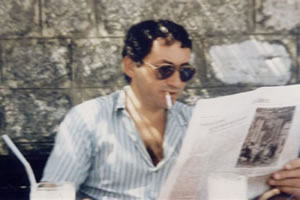
De Amerikaanse schrijver James Purdy werd geboren in Fremont in de staat Ohio op 17 juli 1914. Zie ook mijn blog van 17 juli 2009 en ook mijn blog van 17 juli 2010.


Uit: Color of Darkness


“Sometimes he thought about his wife, but a thing had begun of late, usually after the boy went to bed, a thing which should have been terrifying but which was not: he could not remember now what she had looked like. The specific thing he could not remember was the color of her eyes. It was one of the most obsessive things in his thought. It was also a thing he could not quite speak of with anybody. There were people in the town who would have remembered, of course, what color her eyes were, but gradually he began to forget the general structure of her face also. All he seemed to remember was her voice, her warm hearty comforting voice.
Then there was the boy, Baxter, of course. What did he know and what did he not know. Sometimes Baxter seemed to know everything. As he hung on the edge of the chair looking at his father, examining him closely (the boy never seemed to be able to get close enough to his father), the father felt that Baxter might know everything.
"Bax," the father would say at such a moment, and stare into his own son's eyes. The son looked exactly like the father. There was no trace in the boy's face of anything of his mother.
"Soon you will be all grown up," the father said one night, without ever knowing why he had said this, saying it without his having even thought about it.
"I don't think so," the boy replied.
"Why don't you think so," the father wondered, as surprised by the boy's answer as he had been by his own question.
The boy thought over his own remark also.
"How long does it take?" the boy asked.
"Oh a long time yet," the father said.

"Will I stay with you, Daddy," the boy wondered.
The father nodded. "You can stay with me always," the father said.
The boy said Oh and began running around the room. He fell over one of his engines and began to cry.
Mrs. Zilke came into the room and said something comforting to the boy.
The father got up and went over to pick up the son. Then sitting down, he put the boy in his lap, and flushed from the exertion, he said to Mrs. Zilke: "You know, I am old!"


 954561-1f995cc2fcc39261c4462b56ae526ab3.jpg

James Purdy (17 juli 1914 - 13 maart 2009)


De Zwitserse schrijver Martin R. Dean werd geboren op 17 juli 1955 in Menziken  Aargau. Zie ook mijn blog van 17 juli 2009 en ook mijn blog van 17 juli 2010.


Uit: Meine Väter


„Ray?
In all den Jahren und Jahrzehnten habe ich ihn mir immer wieder anders vorgestellt. Mal hellhäutig, dann wieder eher dunkel, mal schmächtig – oder dann gross und überwältigend wie ein Baum. Mit europäisierten Zügen, was für einen Trinidader indischer Abkunft durchaus denkbar ist.
Ich bin auf dem Weg zum Hochkommissar von Trinidad & Tobago. Mein linkes Auge ist geschwollen und tränt. Und meine Nase so verstopft wie die Strassen von Belgrave, durch die sich der Cab-driver im Rhythmus von Stop and go voranbewegt. Seit vierzehn Tagen schon leide ich an Stirnhöhlenkatarrh. Deutlich sehe ich noch das Röntgenbild mit meinen gegen die Stirnhöhle sich verengenden Nasenlöchern, in denen mein Atem stockt und steckenbleibt. So dass ich zuweilen fast zu ersticken drohe. Keine Panik, pflegt mein Arzt in Basel zu sagen, no panic, it’s the normal rush-hour, meint auch der Cab-driver.
Wenn ich krank werde, sagt mir meine Frau Leonie, was los ist. Meine Krankheiten sind unauffälliger Natur, sie unterscheiden sich nicht von denen meiner Freunde und Bekannten. Mal eine Verzerrung des Nackenmuskels
da, eine Magenverstimmungen dort oder ein Nierenstein. Hypochondrische Kapriolen. Vor allem aber Fieber, Fie-ber seit meinem achtzehnten Lebensjahr. Immer wieder schnellt meine Körpertemperatur nach oben und wirft mich ins Bett. Meine Zunge und mein Hals schwellen an, und meine Wahrnehmung wird trübe.“


 954561-b7dd6b0e9d70060728227daae67890a4.jpg

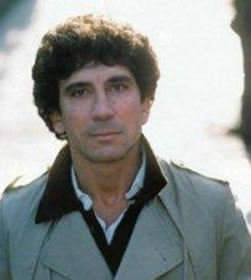
Martin R. Dean (Menziken, 17 juli 1955)


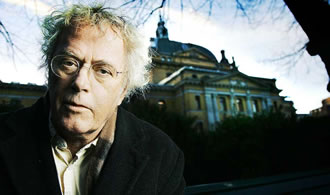
De Nederlandse schrijver Eelke de Jong werd geboren in Apeldoorn op 17 juli 1935.  Zie ook mijn blog van 17 juli 2009 en ook mijn blog van 17 juli 2010.

Uit: Jan Arends I presume


“Hij zat wat te bladeren, stond op, drentelde naar het belendende keukentje, waar er nog twee zaten te ontbijten, ontkurkte een nieuw flesje bier. De jongste van de twee deed hem denken aan een figuur van Oblomov, een jongen van zeventien, sluik blond haar, dat over zijn oren golfde, een wat dik, bleek gezicht, vriendelijke lichtblauwe ogen.

Die jongen woonde als enig kind bij zijn moeder en deed niets anders als slapen, biefstukken braden en eten. Zijn moeder had een pension vol gastarbeiders en als haar zoon een keer niet sliep, biefstukken braadde of at zat hij met de gastarbeiders te kaarten. Ze gaf er niet om, want zo had ze hem de hele dag bij zich, kon ze hem, wanneer het bij haar opkwam, vertroetelen, maar de voogd maakte zich ongerust. De behandeling was nu zo ver gevorderd, dat hij kon vertrekken als hij een baan had. Hij wilde best gaan werken.

Het plan rees om 's avonds konijn te eten. De ontbijters moesten weg, een vriend helpen bij het opknappen en inrichten van een huisje, hij zou 's middags twee konijnen gaan kopen en klaar maken. Om een uur of zeven aan tafel? Prima.

Hij was nog kok geweest bij een hoogbejaarde prinses van Liechtenstein in Genève. Een paar weken ging het goed, gedroeg hij zich als een serviele huisknecht, een hond die een pak slaag verdiende en toen verbrak hij de betovering. Op een avond dat de prinses een souper gaf, draaide hij de pitten van het gas wijd open, wachtte een poosje, in de kamer klonk gedempt gekeuvel, snoof de schroeiende brandlucht diep op en verliet met demonische voldoening het huis.”


 954561-8a0b3d00d88572dba798bb1067b721bf.jpg

Eelke de Jong (17 juli 1935 – 1 augustus 1987)

Hier met acteur en medecolumnist Rijk de Gooijer (rechts) in 1985 


De Franse schrijver, filosoof en politicus Roger Garaudy werd geboren in Marseille  op 17 juli 1913. Zie ook mijn blog van 17 juli 2007 en ook mijn blog van 17 juli 2008 en ook mijn blog van 17 juli 2009 en ook mijn blog van 17 juli 2010.


Uit: Les Etats-Unis avant-garde de la décadence


„Pour comprendre comment, aujourd'hui, la désintégration des mœurs et des arts a pour l'une de ses causes essentielles la diffusion (et les illusions) du «mode de vie américain », il est nécessaire de situer le problème dans la perspective de l'histoire américaine, car la décadence de la culture, ne jouant aucun rôle régulateur dans la vie de la société, découle de la formation et de l'histoire des États-Unis.
En Europe, la culture et les idéologies ont toujours joué un rôle important dans la vie politique, qu'il s'agisse par exemple de l'Europe de la Chrétienté, de l'âge des Lumières et de la Révolution française, du siècle des nationalités - et des nationalismes - ou du marxisme et de la Révolution d'octobre.
En Amérique, en dehors des autochtones indiens dont la haute culture régulait les relations sociales (comme chez les Incas), mais qui ont été décimés à 80 % par le grand génocide, refoulés, marginalisés et finalement parqués dans les réserves, tous les hommes qui peuplent aujourd'hui les États-Unis sont des immigrants.
Quelles que soient leur origine et leur culture première, ils sont venus essentiellement pour chercher du travail et gagner de l'argent. Irlandais ou Italiens, esclaves noirs déportés aux Amériques, Mexicains ou Portoricains, ils avaient chacun leur religion et leur culture; mais pas une religion et une culture communes. Le seul lien qui les rassemble est analogue à celui qui lie le personnel d'une même entreprise.“


954561-2fc55787f31a59d011e2de0c8ef8df65.jpg
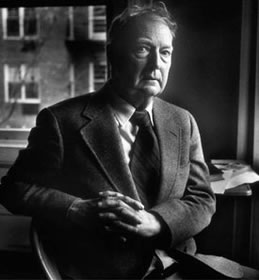
Roger Garaudy (Marseille, 17 juli 1913)


De Nederlandse schrijfster Alie Smeding werd geboren in Enkhuizen op 17 juli 1890. Zie ook mijn blog van 17 juli 2010.


Uit: Achter het anker


“Tjeerd Boltema beklom langzaam de bolle glooiïng van de zeedijk. De verzwakte avond-zon spatte bibberende vonken op de puntige keien, en de grove sintels op het pad aan de haven tintelden als kluitjes vuur.

De jongen keek er even gemelijk op neer, en vadsig van het luieren rekte hij zich. Zijn gebruinde kop met de spitse neus en de forsche kin, lijnden als heel zijn mager lenig lichaam, mèt de hoekig omhoog buigende armen, donker en slank op, tegen de roode licht-gloed uit het Westen. Een oogenblik bleef hij in die houding, en zijn lichte tranig-opengesperde oogen tuurden wéér sloom-afkeerig over het blinkende water.

Amper aaide de futlooze deining een slier schuim tegen de bekorste kei-dam, eentonig-blak en als gevangen in de Zondags-stilte lag de wijde waterplas, leeg tot de horizon toe.

‘Pô'-verdikke nou toch...,’ nijdig foeterde het op in de jongen, zijn armen zakten slap neer langs zijn lijf, en deerlijk verveeld keerde hij zich, liep dralende het lage sintelpad af, naar de tjalk.

In de ovale boog van de havenkom lag hun toch wel bonkig zee-schip nietig achter de groote sleepkaan van de Mussels.

Tjeerd keek er met gefronste oogen naar. ‘Die Mussels, die hadden de spie. 'n Spul toch! 'n Spul dat klonk als 'n klok!’

Zijn mond trok dunner en zijn frons dieper, aan-dachtig staarde hij naar het blinkende tuig en de lieren, bleef er even, dralend bij stil en dacht ineens ook weer aan Mussels' mooie dochter Eefke. ‘Tja, Engel Diepen-donk met zijn schuine bluf over haar! Gô', dat ze met dié ook uitging. Och maar, 't kwam natuurlijk puur van de saaiheid in die dooie pan, hier. Ja, nou, toch niet wat-je-noemt van haar, en smerig van Engel, àls Eefke hem begunstigd had, dat voor elks ooren er uit te snoeven. Ah-tjàkkig, Wiggert die kon ook zoo, en tusschentijds de mond vol over hem, die-broer-van-mij, hè, dat pastoortje, die kamferrok. Tjá, al z'n leven, of hij nou juist zoo'n stijve hark moest wezen, hè, omdat Bouk maar altoos de lijn strak hield met hem,’ de gedachte gleed uit hem weg.”


 954561-b72b13291b0a38911a1367cf569ca759.jpg

Alie Smeding (17 juli 1890 - 5 juli 1938)


De Duitse schrijfster Clara Viebig werd geboren op 17 juli 1860 in Trier. Zie ook mijn blog van 17 juli 2007 en ook mijn blog van 17 juli 2008.en ook mijn blog van 17 juli 2009 en ook mijn blog van 17 juli 2010.


Uit: Vor Tau und Tag


„Sie siedelten im Dorf.
Der reiche May gab Hochzeit; seine einzige Tochter heiratete den einzigen Sohn vom Nachbar Bamberski – schwere Bauern alle zwei.
Der May hatte sieben Pferde und der Bamberski auch, und Scheunen hatten sie, nicht nur Fachwerk, nein, Mauersteine, ganz solide. 
Jeder von den zwei hatte seine vierhundert Morgen Land; ’s war ein anständiger Batzen, der da zusammenkam. 
Die Fenster im Hochzeitshaus waren fest geschlossen, aber die Läden nicht vorgelegt; die Neugierigen auf der Gasse konnten hereingucken in die zwei großen Stuben, wo die Gäste saßen und schmausten. 
Man hatte alles hinausgeschafft, Betten, Schränke und Truhen, nur lange Tische aufgestellt und lange Bänke. Die Tropfen rannen von der Stirn – es war eine barbarische Hitze – der Geruch des Essens mischte sich mit dem des Schweißes, die Backen glühten, die Lippen troffen von Fett. 
Jeder Mann saß bei seiner Frau, und sie schoben sich gegenseitig auf den Teller und ermunterten sich: 
„Du, Voter – du, Mutter – thu’ man assen, so en Guddes kriegste nich alle Tage derhämt!“ 
Brühsuppe, ganz braun vom Einkochen – Nudeln darin und Krebsschwänze – gebackene Fische, junge Gemüse, neue Kartoffeln, Schweinebraten, Kalbsbraten, Gänsebraten – zwischen jedem Fleischgang eine dampfende Mehlspeise – alles in riesigen Schüsseln auf dem Tisch; die Braten in große Stücke gehackt, gleich fertig zum Zulangen. 
Die May-Bäuerin ging herum und nötigte: 
„No, thun Se doch zulangen, ’s is jo man bloß eenmal Hurt bei uns; wer geben’s gerne!“ 
Und sie schenkte ein: Bier, Wein, Likör. Sie allein war im Alltagskleid, hatte sie doch zu viel draußen in der Küche zu schaffen und die Mägde zu beaufsichtigen.“


954561-4cfc904a3dd91bc23cca2995aba51788.jpg
Clara Viebig (17 juli 1860 – 31 juli 1952)

In 1951 


Zie voor nog meer schrijvers van de 17e
 juli ook mijn vorige blog van vandaag.
Geschreven door Romenu om 19:15 Reageer op dit bericht

Rainer Kirsch, Mattie Stepanek, Jakob Christoph Heer, Bruno Jasieńsk, Shmuel Yosef Agnon, Christina Stead, Michio Takeyama

De Duitse dichter en schrijver Rainer Kirsch werd geboren op 17 juli 1934 in Döbeln. Zie ook mijn blog van 17 juli 2007 en ook mijn blog van 17 juli 2009 en ook mijn blog van 17 juli 2010.


Aufschub


Damit wir später reden können, schweigen wir.
Wir lehren unsere Kinder schweigen, damit
Sie später reden können.
Unsere Kinder lehren ihre Kinder schweigen.
Wir schweigen und lernen alles
Dann sterben wir.
Auch unsere Kinder sterben. Dann
Sterben deren Kinder, nachdem
Sie unsere Urenkel alles gelehrt haben
Auch das Schweigen, damit die
Eines Tages reden können.
Jetzt, sagen wir, sit nicht die Zeit zu reden.
Das lehren wir unsere Kinder
Sie ihre Kinder
Die ihre.
Einmal, denken wir, muß doch die Zeit
kommen.


954556-e949541cfa2d722e211d7c4bc2fbb373.jpg 

Rainer Kirsch (Döbeln, 17 juli 1934)

Döbeln, centrum 


De Amerikaanse dichter, schrijver en vredesactivist Mattie Joseph Thaddeus Stepanek werd geboren in Washington D.C. op 17 juli 1990. Zie ook mijn blog van 17 juli 2008 en ook mijn blog van 17 juli 2009 en ook mijn blog van 17 juli 2010.


A New Hope


I need a hope.a new hope.

A hope that reaches for the stars, and

That does not end in violence or war.

A hope that make peace on our earth, and

That does not create evil in the world.

A hope that finds cures for all diseases, and

That does not make people hurt,

In their bodies, in their hearts

Or most of all, in their spirits.

I need a hope.a new hope,

A hope that inspires me to live, and

To make all these things happen,

So that the whole world can have

A new hope, too.


 954556-eedc3d1bc2926e4d5f2ea485064f0c66.jpg

Mattie Stepanek (17 juli 1990 – 22 juni 2004)

Hier met comedian Jerry Lewis (rechts)


De Zwitserse schrijver Jakob Christoph Heer werd geboren op 17 juli 1859 in Winterthur-Töss. Zie en ook mijn blog van 17 juli 2010.


Uit: An heiligen Wassern


»Ja, es thut's!« erwiderte er den Gruß kurz, doch mit freundlichem Wort. Er bläst die Rauchwolken einer Zigarre in die Luft und tätschelt den Hals des Tieres: »Kleiner, es geht bergan, wehre dich, am Schmelzwerk wartet die Galta auf dich, wehre dich.« Als habe das struppige zähe Pferd Verständnis für seine Zurede, reißt es mit jeder Liebkosung stärker an den Strängen, aber von Zeit zu Zeit nötigt es der steile ausgewaschene Weg, mit dem Wägelchen stille zu stehen und Atem zu schöpfen. Dann fliegt ein Zug der Ungeduld über[Pg 7] das Gesicht des Mannes, doch er faßt sich, legt einen Stein unter das Rad und wartet ruhig, bis das Tier von selber den mühsamen Zug wieder aufnimmt. Langsam geht die Fahrt, doch wer ins Glotterthal fuhrwerkt, ist sich dessen gewöhnt. »Am Schmelzwerk wartet die Galta auf dich,« wiederholt der Führer. Aber von Hospel bis zum Schmelzwerk sind es drei Stunden zu Fuß, mit dem Fuhrwerk noch mehr, und dann ist es noch eine Stunde nach dem Dorfe St. Peter, das weltverloren unter den Firnfeldern der Krone liegt. Der Weg windet sich, wenn er die Rebberge von Hospel verlassen hat, in eine Felsenschlucht, über der alte Föhren ihre blaugrünen Schirme halten, dann berührt er in dem sich weitenden Thal die Dörfer Fegunden und Tremis, die mit sonngedunkelten Holzhäusern auf grüner Wiesenhalde liegen, und wird eben. Tief unter ihm gischtet der Fluß in der Felsenschlucht, die altersgrauen Lärchen neigen sich darüber und schwanken im Luftzug, Bergnelken hangen über die Ränder und verzieren den Abgrund mit blühendem Rot. Nur das Rauschen der Glotter und das gleichförmige Ticktack der Merkhämmer einer großen Wasserleitung, die in entlegener Höhe dahinführt, unterbrechen die Stille des Thales.“


954556-97efd81d96e0bda96c41dcff75908e01.jpg
Jakob Christoph Heer (17 juli 1859 - 20. August 1925)


De Poolse futuristische schrijver Bruno Jasieński (eig. Wiktor Zysman) werd geboren op 17 juli 1901 in Klimontov. Zie ook mijn blog van 17 juli 2007 en ook mijn blog van 17 juli 2009 en ook mijn blog van 17 juli 2010.


Uit: I Burn Paris (Vertaald door Soren A. Gauger & Marcin Piekoszewski)


„Thrown into a common cell, the prisoners demanded to be relocated to a section for political prisoners. The prison authorities refused. The prisoners responded with a hunger strike.

Each day, huddled in his corner like a defensive hedgehog, greedily wolfing down his soup with bread, Pierre felt fifteen pairs of grim, steely eyes dilated by the atropine of hunger upon him, and under their gaze the tasty mouthful of prison bread, whose yeast was swollen with saliva, formed an unpalatable ball which stuck in his throat, and the thick soup went cold, developing a layer of skin in the mess tin.

From afar, as if from behind a glass wall, nighttime conversations would reach his ears. Words, carved like blocks, rose and climbed one on top of the other, and after a while a lofty edifice had grown towards heaven. All they had to do was go outside, roll up their sleeves and they could raise the edifice with real stone, perfectly, just as large and sturdy.

The world, like a badly constructed machine, destroyed more than it created. It could not go on like this. It all had to be stripped down to the nuts and bolts, discard anything unnecessary, dismantle and reassemble anew, once and for all. The plans are ready, the fitters are itching to go, it’s just the old, rusty iron won’t allow it. It took root and now the tissue is interwoven with rusty stitches – every thread needs to be torn out with our teeth.“


 954556-aaf211efffd5d4755e321bcc0f6a896c.jpg

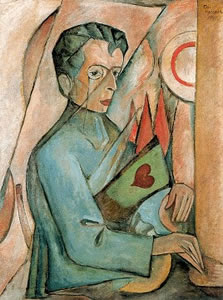
Bruno Jasieński (17 juli 1901 – 17 september 1938)

Portret door Tytus Czyżewski


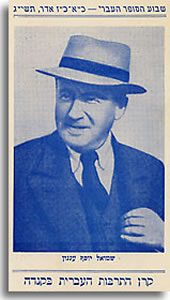
De Hebreeuwse schrijver Shmuel Yosef Agnon (eig. Shmuel Yosef Czaczkes) werd geboren in Buczacs, Galicië (nu in Oekraïne) op 17 juli 1888. Zie ook mijn blog van 17 juli 2007 en ook mijn blog van 17 juli 2008 en ook mijn blog van 17 juli 2010.


Uit: A Whole Loaf (Vertaald door I.M. Lask)


“The waiter returned. Or maybe it was another waiter and, because I was so hungry, I only thought it was the same one. I jumped from my chair in order to remind him of my presence. He came and stood and bowed to me as though mine were a new face. I began wondering who this waiter could be, a fresh fellow or the one from whom I had ordered my food; for if he were a fresh waiter, I would have to order afresh, and if it were the same one, all I had to do was to remind him. While I was thinking it over, he went his way. A little later he returned, bringing every kind of food and drink, all for the fellows sitting to the right or the left of me.
Meanwhile fresh guests came and sat down and ordered all kinds of food and drink. The waiters ran and brought their orders to them. I began to wonder why they were being served first when I had been there before them. Maybe because I had asked for a whole loaf and you could not get a whole loaf at present, so they waiting till they could get one from the baker. I began to berate myself for asking for a whole loaf, when I would have been satisfied with even a small slice.”


 954556-cd563b6eb43b8e7a104992c7891d012a.jpg
Shmuel Yosef Agnon (17 juli 1888 – 17 februari 1970)


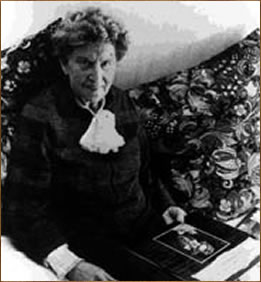
De Australische schrijfster Christina Stead werd geboren in Rockdale, New South Wales op 17 juli 1902. Zie ook mijn blog van 17 juli 2007 en ook mijn blog van 17 juli 2010.


Uit: The Man Who Loved Children


“Visitors looked awkward there, arrayed in the accidents of life's put-together and rough-and-tumble, laughing uncouthly, unexpectedly at imbecile jokes, giving tongue to crackpot idioms; yet they thought themselves important, and it appeared that as they ran about the streets things happened to them. They had knots of relations with whom they argued and sweethearts to whom they cooed; they had false teeth, eyeglasses, and operations.

(…)


Before the children were only lemonade glasses, but before the adults were wineglasses. The children suspected that even on this occasion the sherbet of paradise was to be drunk under their dry lips by the loudmouthed, money-pocketed monsters who had them in thrall. Why didn't these giants ravish the table, send the food flying besides, gobble, guff, grab, and gourmandize? To be bestial giants with the power of sherbet and also to exhibit such mean-spirited stinginess towards their own appetites was a conundrum the children could never solve. Let them once be such giants, let them even have the privilege of Louie, and they would not leave a crumb on a plate nor a drop in a bottle. The children sighed internally and ate as hard as they could hoping by their hunger to soften the miserliness of their elders.” 


954556-22cf5d1fa4bb6023eb1f2b9325f7f9ac.jpg
Christina Stead (17 juli 1902 – 31 maart 1983)


Zie voor onderstaande schrijvers ook mijn blog van 17 juli 2010.


De Japanse schrijver Michio Takeyama werd geboren op 17 juli 1903 in Osaka. 

Geschreven door Romenu om 19:07 Reageer op dit bericht

Tony Kushner, Reinaldo Arenas, Georges Rodenbach, Anita Brookner, Jörg Fauser

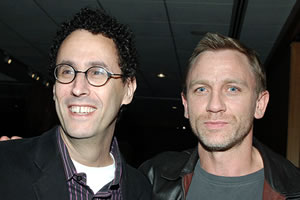
De Amerikaanse schrijver Tony Kushner werd geboren op 16 juli 1956 in New York. Zie ook mijn blog van 16 juli 2009 en ook mijn blog van 16 juli 2010.


Uit: The Intelligent Homosexual’s Guide to Capitalism and Socialism with a Key to the Scriptures


“GUS

You are.  But this… (A shrug.)  Complicated, honey.

(Little pause.)

You remember, I think I told you this, the Daily News strike, I helped out, I was ILWU liaison with the teamsters, the paper and printing trades, when they went out against the Daily News? With the writers, the writers went out too, word and muscle, 1991? Same year the Committees of Correspondence broke from the party, same year I left, I left the party, later I rejoined but — 1991, the year pop died, and Gorbachev was, you know, that whole (gesture, something immense).  The coup attempt in Moscow and Yeltsin and Gus Hall, that (another gesture, throwing away).

The first Iraq — all that crazy s— that year. Anyway. This old guy, this printer, who I met then on the pickets, we liked each other a lot, he was a smart man, he had a perspective, maybe not… (To Clio:) But a perspective.

CLIO

Yeah.

GUS

So a year after all that, I got a call that this old printer, the guy’s been felled by a heart attack, wham, in a hospital. I went to see him, eyes screwed shut, with a stupid tube down his throat, tape around his mouth to, to hold it, and I saw, I sat for a while, and I noticed his hands was going

(He shows how the printer’s hands were going.)

Like, I thought, what is it, is he, is this, like, piano practicing.

(Again with the hands. The gestures aren’t much like piano playing: the fingers are rapidly moving unseen objects up, down, sideways.)

Then I thought, oh I get what — it made me cry, I cried. I thought, his hands want to pull out that tube, dumb Irish, probably he’d let some c—sucking Priest –

(A quick gesture to Pill, placating and acknowledging; Pill lets him off the hook.)

GUS

Some creep got to him, talked him out of a living will, so… And here he was, a prisoner, in that bed. So his hands were going –

(The printer’s hands again:)

His grandson offered me a Kleenex box, and I said, I said look at his hands, he… Maybe you think he wants to get at that tube, or, or the power cord to that goddamn pump?  His grandson says, no, that’s just muscle memory. He’s a typesetter, a compositor. His hands are still working, see? He’s still setting stories and headlines in lead type.

(Little pause.)

That’s what it was, the kid was right. But so was I: His hands were working. Homo laborans. Homo faber. Man the maker. Man the worker. That’s what hands do.

(A look at his hands, then:)

My friend the printer. They left him alone that night, and somehow he managed to pull out the breathing tube. He asphyxiated.

The work of your hands makes the world.

And while you still have the use of them, they can unmake the goddam world, just as well.“


 953885-be7cd4e22c0b47f6f39069a11effc92c.jpg

Tony Kushner (New York, 16 juli 1956)

Hier met de acteur Daniel Craig (rechts)


De Cubaanse dichter en schrijver Reinaldo Arenas werd geboren op 16 juli 1943 in Holguin. Zie ook mijn blog van 16 juli 2007 en ook mijn blog van 16 juli 2008 en ook
mijn blog van 16 juli 2009 en ook mijn blog van 16 juli 2010.


Uit: The Color of Summer (Vertaald door Andrew Hurley)


„The action begins in Havana, and as the curtain rises Gertrudis Gómez de Avellaneda, who has been brought back to life on Fifo's orders so that she will be able to take part in the festivities honoring Fifo's fiftieth year in power, escapes in a little fishing boat and heads for Florida. Learning instantly about the escape, Fifo sends out orders for her arrest, but realizing almost in the same breath that an arrest would cause an international scandal, he orders the people of Cuba to stage an act of repudiation against the poetess, while secretly ordering his trained sharks and diligent midgets to do everything in their power to block her flight. The act of repudiation begins with the appearance of a group of eminent poets who are still on the Island, some of whom have been brought back to life especially for this event. The idea is that all these poets will be able to persuade Avellaneda not to leave the country. On Fifo's orders, they will throw at the fleeing poetess large quantities of rotten eggs, which thousands of midgets have piled along the edge of the ocean. Meanwhile, although at first it isn't clear where Avellaneda is headed (the part about "headed for Florida" was a taunt flung by Radio Aguado), the Cuban poets in exile, including some brought back to life for this event, decide to have a huge demonstration on the southernmost tip of the United States (i.e., Key West) in order to encourage Avellaneda and show their moral support for her. In addition to reciting a great number of poems dedicated to her, they shower her with candy bars, California apples, bonbons, and even fake pearls.


Avellaneda: (On the Malecón in Havana, throwing a small, frail boat into the water) Pearl of the ocean/Star of the West! Once glorious isle, now pain in the ass! I've had it up to here with you! Farewell! I mean, Adios! And a thousand times adios, for tell me, how is one supposed to put up with this mess? See these big ugly bags under my eyes? I haven't slept for days, because this brilliant sky of yours, no longer does Night cover with her sable veil—and so I'm off! Don't try to stop me! The ubiquitous mob has forced me to flee my native land. Adios, once happy homeland, beloved Eden where even Numero Uno, the head hoodlum, has to keep one eye on his behind. No more of this for me; I've made up my mind! (Plus—however far and wide I searched, however hard I tried I never found the man to make me bride.) Into the boat! Hope swells my ample breast! Florida awaits. Next stop—Key West!


She clambers into the dinghy and begins to row quickly away. Avellaneda is a heavyset woman swathed in a long black nineteenth-century gown and wearing an equally black veil that covers her face. Upon seeing this bizarre figure, all the sharks swim away, howling piteously. The midgets also recoil in fright, and then whirl around and head back toward the coast. Fifo has no choice but to trust that the act of repudiation, which he orders to begin at once, will work.“


953885-043bed1237d488d4a63d1ce8cd814cd5.jpg
Reinaldo Arenas (16 juli 1943 – 7 december 1990)


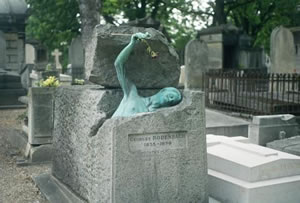
De Belgische dichter en schrijver Georges Rodenbach werd geboren in Doornik op 16 juli 1855. Zie ook mijn blog van 16 juli 2007 en ook mijn blog van 16 juli 2008 en ook mijn blog van 16 juli 2009 en ook mijn blog van 16 juli 2010.


La ville est morte, morte, irréparablement


La ville est morte, morte, irréparablement !
D'une lente anémie et d'un secret tourment,
Est morte jour à jour de l'ennui d'être seule...
Petite ville éteinte et de l'autre temps qui

Conserve on ne sait quoi de vierge et d'alangui
Et semble encor dormir tandis qu'on l'enlinceule ;
Car voici qu'à présent, pour embaumer sa mort,
Les canaux, pareils à des étoffes tramées

Dont les points d'or du gaz ont faufilé le bord,
Et le frêle tissu des flottantes fumées
S'enroulent en formant des bandelettes d'eau

Et de brouillard, autour de la pâle endormie
- Tel le cadavre emmaillotté d'une momie -
Et la lune à son front ajoute un clair bandeau !


Le miroir est l'amour, l'âme-soeur de la chambre


Le miroir est l'amour, l'âme-soeur de la chambre
Où tout d'elle : le lustre en fleur, les bahuts vieux,
La statuette au dos de bronze qui se cambre,
Se réfléchit en un hymen silencieux.

Car l'amour n'est-ce pas n'être plus seul et n'est-ce
Pas se doubler par un autre meilleur que soi ?
Or la chambre se double au fond du miroir coi
Avec un renouveau de songe et de jeunesse ;

Mais les choses pourtant entre le cadre d'or
Ont un air de souffrir de leur vie inactive ;
Le miroir qui les aime a borné leur essor
En un recul de vie exiguë et captive ;

Et l'amour absorbant et profond du miroir
Attriste d'infini la chambre, qui se doute
D'un désaccord entre eux aux approches du soir,
Sentant que le miroir ne la contient pas toute !


 953885-1e399437f1bf289f85b41d4a31eb590a.jpg

Georges Rodenbach (16 juli 1855 – 25 december 1898)

De dichter verrijst uit zijn graf op Père Lachaise, Parijs


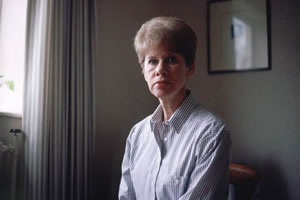
De Engelse schrijfster en historica Anita Brookner werd geboren op 16 juli 1928 in Herne Hill, een voorstad van Londen. Zie ook mijn blog van 16 juli 2007  en ook mijn blog van 16 juli 2008 en ook mijn blog van 16 juli 2009 en ook mijn blog van 16 juli 2010.


 Uit: Making Things Better


„Herz had a dream which, when he awoke into a night that was still black, left him excited and impressed. He dreamed that he had received a call from his cousin, Fanny Bauer, the love of his life. He was to take her to the cinema, she ordained. Eager to conform to her wishes, as he always had been, he shrugged on his coat, and within seconds was elsewhere, as was the norm in dreams of wish-fulfilment. Although it was a weekday afternoon the cinema was so crowded that they had to stand at the back of the auditorium. Fanny was as he had always known her and still remembered her: petulant, with the petulance of a spoilt pretty woman, demanding and discontented. Shortly after the beginning of the film she had clutched his arm and declared that she felt unwell. Again, without transition, they found themselves in the vast cafe that was part of the cinema complex. Fanny had recovered somewhat but looked uncharacteristically dishevelled, with a large camel-hair coat slung over her shoulders. He was conscious of retaining his eager smile, but felt discomfited. This feeling had something to do with the coat, which he recognized as his own, the coat he should have been wearing. He had no memory of having offered it to her. The coat, and Fanny's malaise, remained closely associated in his mind. It was only when he understood that it was he who had been taken ill that the dream attained its peak of significance. Ailing, smiling, he had offered her his remaining health and strength, and she, not in the least grateful, had carelessly dispossessed him, not noticing that she had done so. This was so akin to their real life association that, if anything, his newly awakened self was conscious of its reality.“


 953885-213bf53c134ce797ee96a5346f164047.jpg

Anita Brookner (Herne Hill, 16 juli 1928)


De Duitse schrijver en journalist Jörg Christian Fauser werd geboren op 16 juli 1944 in Bad Schwalbach. Zie ook mijn blog van 16 juli 2007 en ook mijn blog van 16 juli 2008 en ook mijn blog van 16 juli 2009 en ook mijn blog van 16 juli 2010.


Liebesgedicht


Als wir uns liebten.

liebten wir uns selbst nicht.


Als wir uns den Krieg erklärten,

gaben wir uns schon verloren.


Als wir geschlagen waren,

bemühten wir die Geschichte.


Als wir allein waren,

übertönten wir sie mit Musik.


Als wir uns trennten,

blieben wir am gleichen Ort.


So lagen wir uns bald wieder in den Armen

und nannten es ein Liebesgedicht,


aber kein Liebesgedicht erklärt uns

die Angst vor der Liebe,


und warum der Himmel so blau war,

als wir uns trafen.


und warum er immer noch blau sein wird,

wenn wir sterben werden,


du für dich,

ich für mich.


Zum Alex nach Mitternacht


Die Charles-Bronson-Imitation aus Knautschlack

brütet über einer Cola in der roten Sonne

überbelichteter Vorstadt-Träume; erledigte Rivalen,

klatschende Klöten, Kadaver am Galgen, letzter Showdown,

triefende Mösen, abslutes Finalei

in Technicolor.

Der blondgefärbte schwule Iraker mit den lila Denims

gibt es endgültig auf, Mick Jagger nachzuäffen,
Mann ohne Publikum, Publikum

ohne Mann.

Pass auf, dass du im Lokus nicht ausrutscht

und dir deinen

parfürmierten Schwanz brichst.

Dieses miese Loch, Bastard

eines desolaten Hippie-Sommers, sag den letzten

Taxifahrer gute Nacht, sweet Mary,

vor die Wahl gestellt zwischen deinen

abgekauten Titten und dem Nichts

wähle ich deine Titten.

Die Einsamkeit macht uns allefertig, sagt Klaus

und drückt Janis Joplin, Whisky und “Me and Bobby McGee”,

der Joker rattert, Maschinengewehr, Baader geschnappt,

chant d’amour et de la mort, so’n Mordsdusel,

der Apparat spuckt lauter Markstücke aus

und wir bestellen nochmal

ein Magengeschwür.

Alles was da hängt

ist Fleisch.


 953885-b8eab8aabfb32c551a906eb80f936b79.jpg

Jörg Fauser (16 juli 1944 – 17 juli 1987)


Zie voor nog meer schrijvers van de 16e juli ook
mijn vorige blog van vandaag.

Geschreven door Romenu om 19:13 Reageer op dit bericht

Dag Solstad, Bernard Dimey, Andrea Wolfmayr, Pierre Benoit, Franz Nabl

De Noorsde schrijver Dag Solstad werd geboren op 16 juli 1941 in Sandefjord. Zie ook mijn blog van 16 juli 2007 en ook mijn blog van 16 juli 2009 en ook mijn blog van 16 juli 2010.


Uit: Professor Andersens Nacht (Vertaald door Ina Kronenberger)


„Es war Heiligabend, und Professor Andersen hatte in seinem Wohnzimmer einen Weihnachtsbaum.

Er sah ihn an. »Na, so was«, dachte er. »Ich muß schon sagen.« Er wandte sich ab und ging durch das Zimmer, während er den Weihnachtsliedern im Fernsehen lauschte. »Ja, ich muß schon sagen «, wiederholte er. »Ja, was will ich eigentlich sagen?« fragte er sich sodann nachdenklich. Er betrachtete den schön gedeckten Tisch im Eßzimmer. Für eine Person gedeckt. »Seltsam, wie tief es doch sitzt«, dachte er, »und noch dazu ohne jegliche Ironie«, dachte er und schüttelte den Kopf.

Er freute sich auf das Essen. Unter dem Weihnachtsbaum lagen zwei Geschenke, von jedem seiner beiden erwachsenen Neffen eins. »Wenn ich hoffe, daß mir die Speckschwarte schön knusprig gelingt, liegt darin dann ein Hauch von Ironie?

Nein«, dachte er, »gelingt mir die Speckschwarte nicht, werde ich richtig wütend und fluche laut, obwohl Heiligabend ist«, dachte er. So wie er laut geflucht hatte, als er sich damit abmühte, den Baum in den Baumständer zu zwingen, damit dieser richtig saß und anschließend gerade und nicht schief stand, so wie ein Weihnachtsbaum im Haus zu stehen hat. Wie er ebenfalls geflucht hatte, als er die elektrischen Kerzen an den Zweigen des Baums befestigt hatte und feststellte, daß er auch in diesem Jahr im Kreis gegangen war, weswegen sich das Kabel in sich verdreht hatte und er kehrtmachen und wieder zurückgehen mußte, eine Kerze nach der anderen abnehmen und noch einmal fast ganz von vorn beginnen. Verflucht, hatte er da gesagt. Verflucht. Laut und vernehmlich, doch das war gestern gewesen. »Seltsam, wie tief Heiligabend in uns sitzt«, dachte er. Die feierliche Stimmung. Die Heilige Nacht. Die um Mitternacht eingeläutet wird. Nicht vorher, wie so viele in Norwegen glauben, heute ist der Abend vor der Heiligen Nacht. Oder der Stillen Nacht.“


 953879-33df733f178773a57c5481bd23b70547.jpg

Dag Solstad (Sandefjord, 16 juli 1941)


De Franse dichter en schrijver van chansons Bernard Dimey werd geboren op 16 juli 1931 in Nogent-en-Bassigny (tegenwoordig Nogent).  Zie ook mijn blog van 16 juli 2007 en ook mijn blog van 16 juli 2009
en ook mijn blog van 16 juli 2010.


Je vais me foutre à l'eau


Il paraît que je bois, que je bois trop souvent.
J'aime le Juliénas et le Côte-Rôtie
Le Chirouble et l'Brouilly et le Moulin-àVent,
Ces liquides affreux qui vous gâchent la vie,
Il paraît que j'en bois très exagérément,
C'est peut-être pour ça que je perds la mémoire.
Le Pommard, le Morgon et le petit Cahors,
Il paraît qu'à mon âge on a bien tort d'en boire,
Je n'ai plus qu'un moyen pour éviter la mort,


Demain je vais me foutre à l'eau,
Je ne sais pas encore laquelle,
Peut-être bien l'eau de Vittel
Ou la Contrex ou la Badoit.
Pour qu'enfin ma vie soit plus belle,
Je vais me foutre à l'eau pour toi.


Le Muscadet qu'on lèche à sept heure du matin
Avec les plâtriers ou les meneurs de viande,
Ce Traminer d'onze heure que m'offre les putains
Avant que j'aie le temps de passer la commande,
Histoire avant midi de se remettre en train,
Sans parler du whisky, du fin et de la fine
Qu'on écluse la nuit dans les cabarets chics
Avec des créatures échappées des vitrines
Qui vous laissent sans force à l'aurore et sans fric.


Demain je vais me foutre à l'eau.
Dès que j'aurai choisi laquelle
J'irai tout doux m'y fair' la belle,
Mais ni Contrex ni Badoit,
C'est trop sophistiqué pour moi,
J'en garderai un verr' pour toi.


 953879-0aef05d13474afbc9c6feba9a3a080d2.jpg

Bernard Dimey (16 juli 1931 – 1 juli 1981)

Portret door Patrick Clemence


De Oostenrijkse schrijfster en politica Andrea Wolfmayr werd geboren op 16 juli 1953 in Gleisdorf. Zie ook mijn blog van 16 juli 2007 en ook mijn blog van 16 juli 2009 en ook mijn blog van 16 juli 2010.


Uit: Mit Maria im Lift


  "Allein müssen Sie Lift fahren, das ist anders als mit Gruppe oder jemand, dem man graz2003 zeigen will. Da lenkt man sich nur ab, weist rundum und findet alles toll. Oder meckert. Wie die Jugendlichen vor mir. Die raten mir ab: „Nichts Besonderes! Zahlt sich echt nicht aus!" Ich steig trotzdem ins ziemlich verräucherte Kastl. Man ist ja schon in vielen Lifts gefahren, im Kika oder in den Glaskästen in großen Hotels, mein aufregendster war in Peking, an der Außenfront eines 4o-Stockwerke-Gebäudes, es gibt Größeres, Höheres, Schnelleres. Was man aber im Marienlift erleben kann, ist anders. Allein mit Graz, der Herrengasse, blaugrün beleuchtet, den kleinen Manderln, die sich in ihr bewegen. An der Säule hoch, wie man vorher nur die Augen hat hochfahren lassen. Oben stehen. Eine Minute ist lang. Man denkt: Was, wenn man stecken bleibt? Höhenangst, Schwindel. Tief atmen, festhalten am Geländer. Ablenkende Gedanken: Wieder mal Glasarchitektur, unputzbar, vom letzten Regen sieht man noch staubige Tropfen. Maria von der Seite, ihr goldener Mantel, ihr goldenes Haar. Das Profil endlich. Sonnenscheibe, dachte ich, als ich damals als Kunststudentin nach dem Brandanschlag in der Werkstätte, wo die Restaurierung stattfand, das Fragment des Gesichts in die Hand nehmen durfte. Wo ist dieses alte Gesicht jetzt?

Nein, es ist nicht Blasphemie. Es ist Liebe, es ist Neugier. Es ist Atemlosigkeit und Stille, eine Minute allein mit Maria, allein im Zentrum von Graz."


 953879-0ae08f49e07f2ca65217999fb39bac63.jpg

Andrea Wolfmayr (Gleisdorf, 16 juli 1953)


De Franse dichter en schrijver Pierre Benoit werd geboren op 16 juli 1886 in Albi. Zie ook mijn blog van 16 juli 2009
en ook mijn blog van 16 juli 2010.


Uit: L’Atlantide


„Le samedi 6 juin 1903 rompit la monotone vie qu’on menait au poste de Nassi-Inifel par deux événements d’inégale importance : l’arrivée d’une lettre de Mlle Cécile de C… et celle des plus récents numéros du Journal Officiel de la République française.

— Si mon lieutenant le permet ? — dit le maréchal des logis chef Châtelain, se mettant à parcourir les numéros dont il avait fait sauter les bandes.

D’un signe de tête, j’acquiesçai, déjà tout entier plongé dans la lecture de la lettre de Mlle de C…

« Lorsque ceci vous parviendra, écrivait en substance cette aimable jeune fille, maman et moi aurons sans doute quitté Paris pour la campagne. Si, dans votre bled, l’idée que je m’ennuie autant que vous peut vous être une consolation, soyez heureux. Le Grand Prix a eu lieu. J’ai joué le cheval que vous m’aviez indiqué, et, naturellement j’ai perdu. L’avant-veille, nous avons dîné chez les Martial de la Touche. Il y avait Élias Chatrian, toujours étonnamment jeune. Je vous envoie son dernier livre, qui fait assez de bruit. Il paraît que les Martial de la Touche y sont peints nature. J’y joins les derniers de Bourget, de Loti et de France, plus les deux ou trois scies à la mode dans les cafés-concerts. En politique, on dit que l’application de la loi sur les congrégations rencontrera de réelles difficultés. Rien de bien nouveau dans les théâtres. J’ai pris un abonnement d’été à l’Illustration. Si ça vous chante… À la campagne, on ne sait que faire. Toujours le même lot d’idiots en perspective pour le tennis. Je n’aurai aucun mérite à vous écrire souvent. Épargnez-moi vos réflexions à propos du petit Combemale. Je ne suis pas féministe pour deux sous, ayant assez de confiance en ceux qui me disent jolie, et en vous particulièrement. Mais enfin, j’enrage à l’idée que si je me permettais vis-à-vis d’un seul de nos garçons de ferme le quart des privautés que vous avez sûrement avec vos Ouled-Naïls… Passons. Il y a des imaginations trop désobligeantes. »


 953879-f1136b67a64fcae858b241baa934469a.jpg

Pierre Benoit (16 juli 1886 – 3 maart 1962)


De Oostenrijkse schrijver Franz Nabl werd geboren op 16 juli 1883 in Lautschin. Zie ook mijn blog van 16 juli 2007.


Uit: Die Galgenfrist


„Geliebter Leser! — Ich bitte zu beachten, daß ich mit fliesen Worten nicht eine Einleitung oder Vorrede

beginne, sondern unwiderruflich meine Geschichte selbst.

Desgleichen bitte ich zu beachten, daß ich mit eben diesen Worten Leser beiderlei Geschlechtes meine, und zwar an erster Stelle, aus selbstverständlicher Höflichkeit, die Leserin, an zweiter den Leser oder, besser gesagt, das Männchen. — Und nun noch einmal: Geliebter Leser l

Weißt du, wie ich dich mir am liebsten vorstelle? Vor- ausgesetzt natürlich, daß du mir überhaupt gestattest, dies zu tun. — Ja? — Also: entweder auf ein Kanapee oder einen halbwegs bequemen Lehnstuhl hingestreckt, ein paar freie Stunden vor dir, eine Schachtel Zigaretten auf einem Tischchen neben dir, oder wenn dha gerade deinen Sommerurlaub genießest, auf eine lauschige WaMwiese gelagert, vielleicht auch am Waldrand mit Ausblick ins Tal, am Ufer des Baches, Flusses, Teiches

oder Sees, oder aber — natürlich nur, wenn das Ziel der Reise ein angenehmes ist — im Eisenbahnwagen (Eckplatz am Fenster, in der Richtung der Fahrt, nicht wahr?), oder ... übrigens kann es ganz gut möglich sein, daß du dich nach des Tages Mühen und Plagen eben zu Bett legst und nun das Buch vom Nachtkästchen langst, um noch ein halbes Stündchen zu lesen, wobei ich mich der ebenso angenehmen wie wahrscheinlich trügerischen Hoffnung hingebe, dich durch meine Kunst um ein gut Teil deines Schlafes zu bestehlen, oder all dies zusammengenommen ist nicht der Fall, sondern du hast mein Buch gerade — Verzeihung, nicht gekauft! Wie dürfte ich eine so unbillige Forderung an dich stellen! — nein, du hast mein Buch im Vorbeigehen gerade in der Leihbibliothek geholt, besteigst einen Wagen der Straßenbahn und schlägst eben die ersten Seiten auf, um zu sehen, ob du nicht eine gar zu unglückliche Wahl getroffen hast.“


 953879-4ff206d198d7e3ea89b7e3dfa9bd8498.jpg

Franz Nabl (16 juli 1883 – 19 januari 1974)

Hier met de schrijver Elias Canetti (links) 

Geschreven door Romenu om 19:07 Reageer op dit bericht

Meer van Romenu

↑ Terug naar de berichten