Naar de inhoud

Romenu

Over literatuur, gedichten, kunst en cultuur
akke.beakke.be

Berichten van 3 september 2011 tot 4 september 2011

Helga Ruebsamen, Antonin Artaud, Mary Renault, Richard Wright, René de Chateaubriand, Constantijn Huygens

De Nederlandse schrijfster Helga Ruebsamen is op 4 september 1934 geboren in Batavia, in Nederlands lndië. Zie ook mijn blog van 4 september 2006 en ook mijn blog van 4 september 2008 en ook mijn blog van 4 september 2009 en ook mijn blog van 4 september 2010.


Uit: Billy Holiday (Column)


Plotseling zag ik haar weer, na jaren. 't Was laat op de avond en laat in de zomer en daar was ze, op teevee, Billie Holiday. Zo vaak gebeurt dat gelukkig niet.

't Kwam hard aan, deze onverwachte confrontatie met mijn idool.

Het sneed door mijn ziel, zoals alle keren gebeurde dat ik het aandurfde haar met open oren te beluisteren en met open ogen te bekijken, haar elegante verschijning, haar hulpeloos schijnende gebaartjes, maar vooral haar stem. En ik had me niet kunnen wapenen, want ze kwam binnen gevaren als een verstekeling in het programma Zomergasten, daar in gesmokkeld door Henk van Os. Wat moet die kunstprofessor met mijn Billie, dacht ik pissig, laat-ie zich bij zijn Madonna's houden. In plaats van blij te zijn dat zo'n geachte medebewonderaar de zangeres eventjes uit de vergetelheid tilde, voelde ik me alsof hij haar uit mijn wagentje had gekidnapt. Hey man, wat doe jij met mijn baby? Het vervulde mij met afschuw dat ik mijn liefde voor Billie ineens moest delen met honderdduizenden mensen die ik niet kende, dat deze Jan en Alleman onverschillig naar haar keken en naar haar luisterden alsof ze een Imca Marina was, of een Corrie van de Rekels, wisten al die mensen veel. Ze praatten er misschien lustig doorheen of zaten zelfs smakkend te vreten of nog erger, ze stonden almaar op om tussendoor naar de keuken te gaan en nog meer bier en kaas te halen.

Iedereen mag jazz-zangeressen laten opdraven bij de vleet, Billie's voorgangsters bijvoorbeeld, Bessie Smith en Ma Rainey, nog liever Ella Fitzgerald wat mij betreft, een lust voor oor en oog, in haar heerlijke poffertjestentjurken en een en al stemacrobatiek, wat een geweldige dames, allemaal, ik hoor ze graag en durf best met ze mee te neuriën ook. Pompompomperdepom.

Maar Billie Holiday is hors concours. Iedereen moet van haar afblijven.

Bij mijn eerste kennismaking met haar, wel een jaar of veertig geleden, op een 78 toeren-plaat, kon en wilde ik niet geloven wat ik hoorde. Die stem, de voordracht, het effect, onbeschrijflijk, met niets te vergelijken. Als Billie zingt klinkt het niet alleen maar, zoals wel eens is geschreven, als het gekerm van een gevallen engel en evenmin koert en kreunt zij als een gekwelde duivelin, want dit mag dan allemaal waar zijn, het is toch meer en nog mooier.


 987092-03b4ae3fb3409d0d81333670b8d7e2d6.jpg

Helga Ruebsamen (Batavia, 4 september 1934)


De Franse schrijver Antonin Artaud werd geboren op 4 september 1896 in Marseille. Zie ook mijn blog van 4 september 2006 en ook mijn blog van 4 september 2008 en ook mijn blog van 4 september 2009 en ook mijn blog van 4 september 2010.


La rue


La rue sexuelle s’anime
le long de faces mal venues,
les cafés pepiant de crimes
deracinent les avenues.


Des mains de sexe brûlent les poches
et les ventres bouent par-dessous;
toutes les pensees s’entrechoquent,
et les tetes moins que les trous.


Le Navire Mystique


Il se sera perdu le navire archaïque
Aux mers où baigneront mes rêves éperdus ;
Et ses immenses mâts se seront confondus
Dans les brouillards d’un ciel de bible et de cantiques.


Un air jouera, mais non d’antique bucolique,
Mystérieusement parmi les arbres nus ;
Et le navire saint n’aura jamais vendu
La très rare denrée aux pays exotiques.


Il ne sait pas les feux des havres de la terre.
Il ne connaît que Dieu, et sans fin, solitaire
Il sépare les flots glorieux de l’infini.


Le bout de son beaupré plonge dans le mystère.
Aux pointes de ses mâts tremble toutes les nuits
L’argent mystique et pur de l’étoile polaire.


 987092-3aad8a1d49f1a26f89de6cf08bc50c90.jpg

Antonin Artaud (4 september 1896 - 4 maart 1948)


De Engelse schrijfster Mary Renault werd op 4 september 1905 geboren als Mary Challans in Forest Gate in Essex. Zie ook mijn blog van 4 september 2006 en ook mijn blog van 4 september 2008 en ook mijn blog van 4 september 2009 en ook mijn blog van 4 september 2010.
 

Uit: The Praise Singer


“Then came the wedding from which my life was born.

The bridegroom was Laertes, our neighbor Milon's eldest son. He was a sea-captain, his rich father having bought him a ship when he came of age. He had grown rich in his turn, by boldness, shrewdness and luck, trading about lonia and as far as Egypt, and had stayed unmarried till thirty, mostly for lack of time. There was always a stir when he put in with his foreign goods, his outlandish men and his tales. Theas, who was taken to call with our father, used to save the tales for me.

I had never thought they would take me to the wedding. Any treats I had as a child came always from Theasides. This time they could hardly leave me behind, because my five-year-old sister was going. She was pretty, though, with hair as soft as cobweb and red as fire. Once she had asked me gravely how I came to be so ugly, not believing such a thing could happen without a reason her elders would understand. I told her I had been cursed by a raven from whom I had taken a lamb, which left her satisfied. Hearing her crying as her hair was combed, I wondered they should be troubled with either of us at a feast, forgetting that weddings beget weddings and are times for looking ahead.

At all events, my best tunic came out of the chest; a castoff of Theasides's though there were five years between us; quite good, but I was outgrowing it in my turn. I looked dismayed at my lean thighs with their dark pelt of hair. But I would have to show enough to frighten the women, before I would get a new one. Keos is stern.

Before the house of the bride was a gently sloping meadow, where the bridesmaids stood with their garlands, waiting to sing. The thrones of the bride and groom were decked with flowers. My parents greeted their hosts, and sought out their friends among the guests, taking Theasides with them. He was plainly dressed (there are laws in Keos against extravagance), but the cloth was fine, and if he had been in rags his beauty would have graced them. I, knowing what my parents would have wished of me, lost myself in the crowd. There was more in this than filial duty. I had marked down the slab of rock where the bard would stand to sing, and the clump of brush near by where I could listen undisturbed. I meant not to miss a word.”


 987092-4b5ebc9ed4089276f3caffc5628655c2.jpg

Mary Renault (4 september 1905 - 13 december 1983)


De Amerikaanse schrijver Richard Nathaniel Wright werd geboren in Roxie, Mississippi op 4 september 1908. Zie ook mijn blog van 4 september 2007  en ook mijn blog van 4 september 2008 en ook mijn blog van 4 september 2009 en ook mijn blog van 4 september 2010.


Uit: The Ethics of Living Jim Crow: An Autobiographical Sketch (Uncle Tom's Children)


“ I sat brooding on my front steps, nursing my wound and waiting for my mother to come from work. I felt that a grave injustice had been done me. It was all right to throw cinders. The greatest harm a cinder could do was leave a bruise. But broken bottles were dangerous; they left you cut, bleeding, and helpless.

When night fell, my mother came from the white folks' kitchen. I raced down the street to meet her. I could just feel in my bones that she would understand. I knew she would tell me exactly what to do next time. I grabbed her hand and babbled out the whole story. She examined my wound, then slapped me.

 "How come yuh didn't hide?" she asked me. "How come yuh awways fightin'?"

 I was outraged, and bawled. Between sobs I told her that I didn't have any trees or hedges to hide behind. There wasn't a thing I could have used as a trench. And you couldn't throw very far when you were hiding behind the brick pillars of a house. She grabbed a barrel stave, dragged me home, stripped me naked, and beat me till I had a fever of one hundred and two. She would smack my rump with the stave, and, while the skin was still smarting, impart to me gems of Jim Crow wisdom. I was never to throw cinders any more. I was never to fight any more wars. I was never, never, under any conditions, to fight white folks again. And they were absolutely right in clouting me with the broken milk bottle. Didn't I know she was working hard every day in the hot kitchens of the white folks to make money to take care of me? When was I ever going to learn to be a good boy? She couldn't be bothered with my fights. She finished by telling me that I ought to be thankful to God as long as I lived that they didn't kill me.

All that night I was delirious and could not sleep. Each time I closed my eyes I saw monstrous white faces suspended from the ceiling, leering at me.


 987092-97c495975da026c15b503307502fbd63.jpg

Richard Wright  (4 september 1908 – 28 november 1960)


De Franse schrijver François René de Chateaubriand werd geboren op 4 september 1768 in Saint Malo. Zie ook mijn blog van 4 september 2006 en ook mijn blog van 4 september 2008 en ook mijn blog van 4 september 2009 en ook mijn blog van 4 september 2010.


Uit: Le Génie du christianisme


„Le coeur ému par ces conversations pieuses, je portais souvent mes pas vers un monastère voisin de mon nouveau séjour  ; un moment même j'eus la tentation d'y cacher ma vie. Heureux ceux qui ont fini leur voyage sans avoir quitté le port, et qui n'ont point, comme moi, traîné d'inutiles jours sur la terre !
        Les Européens, incessamment agités, sont obligés de se bâtir des solitudes. Plus notre coeur est tumultueux et bruyant, plus le calme et le silence nous attirent. Ces hospices de mon pays, ouverts aux malheureux et aux faibles, sont souvent cachés dans des vallons qui portent au coeur le vague sentiment de l'infortune et l'espérance d'un abri  ; quelquefois aussi on les découvre sur de hauts sites où l'âme religieuse, comme une plante des montagnes, semble s'élever vers le ciel pour lui offrir ses parfums.
        Je vois encore le mélange majestueux des eaux et des bois de cette antique abbaye où je pensai dérober ma vie au caprice du sort  ; j'erre encore au déclin du jour dans ces cloîtres retentissants et solitaires. Lorsque la lune éclairait à demi les piliers des arcades et dessinait leur ombre sur le mur opposé, je m'arrêtais à contempler la croix qui marquait le champ de la mort et les longues herbes qui croissaient entre les pierres des tombes. Ô hommes qui, ayant vécu loin du monde, avez passé du silence de la vie au silence de la mort, de quel dégoût de la terre vos tombeaux ne remplissaient-ils pas mon coeur !
        Soit inconstance naturelle, soit préjugé contre la vie monastique, je changeai mes desseins, je me résolus à voyager. Je dis adieu à ma soeur  ; elle me serra dans ses bras avec un mouvement qui ressemblait à de la joie, comme si elle eût été heureuse de me quitter  ; je ne pus me défendre d'une réflexion amère sur l'inconséquence des amitiés humaines.“


987092-5ee1e9ec20ba7fc574f611593ba3567a.jpg
René de Chateaubriand (4 september 1768 –  4 juli 1848)

Portret door Henri Félix Emmanuel Philippoteaux


De Nederlandse dichter en schrijver Constantijn Huygens werd geboren op 4 september 1596 in Den Haag. Zie ook mijn blog van 4 september 2006 en ook mijn blog van 4 september 2008 en ook mijn blog van 4 september 2009 en ook mijn blog van 4 september 2010.


Haerlem


Al heb ick t'mijner tijd der Vorsten Hof gevoedt,

 't Is mijn geringste roem, mijn hooghste staet in 't bloed,

 Der Goddeloosen bloed; van doen mijn' Staele kielen

 Haer Ys'ren Haven-touw aenvaerdden te vernielen.


t'Huys heb ick oock voor God, voor goed en vryigheit

 Mijn' Borgeren gewaeght, en Spagnen noyt gevleidt.

 Zijn 't koele wonderen, en hoorens' and're meer toe;

 Van 't allerwonderste komt my alleen de eer toe,


Geen ongesiener naem, geen aengenamer stuck;

'k Heb konst en konstenaers geholpen in den Druck.


Edam


De Dam die 't Zuyderdiep het binnen Y onthiel

Gaf my d'Ydammer naem; dien ick niet langer hiel

Dan tot het vett gerucht van mijn' gewilde Kaesen

De wereld had gevult, en naer mijn aes doen raesen:


Sints noemden sy 't Eet-dam daer soo veel etens groeyt.

Maer dat men mijner melt soo verr het ebt en vloeyt,

Is elders op gevest: hoort, Hollander, de wielen

Van uw' Victori-koets zijn uw' bezeilde kielen;


Dat zijn de mijne meest: Behoort niet meest de danck

Den Raden-maker toe van 's wagens gladden ganck?


 987092-161ade5f7463fd722c0f5da0d865a01b.jpg

Constantijn Huygens (4 september 1596 — 28 maart 1687)
Edam

Geschreven door Romenu om 18:51 Reageer op dit bericht

Kiran Desai, Eduardo Galeano, Alison Lurie, Sergej Dovlatov, Lino Wirag

De Indische schrijfster Kiran Desai werd geboren op 3 september 1971 in New Dehli. Zie ook mijn blog van 3 september 2008 en ook mijn blog van 3 september 2009 en ook mijn blog van 3 september 2010.


Uit: Hullabaloo In The Guava Orchard


„It was this year that Sampath Chawla was born to his mother, Kulfi. She was twenty-one years old, newly married to Mr. Chawla, and pregnant. By late September the heat and lack of rain had combined to produce terrible conditions of drought. She grew bigger as it got worse. It got to be so bad that famine-relief camps were set up by the Red Cross to the west of Shahkot. The supply planes flew right over the bazaar and Shahkotians, watching with their heads tilted back, wondered why they didn't stop for them as well, for surely they were suffering quite enough to warrant the same attention and care being so assiduously delivered elsewhere. The ration shop was distributing rice and lentils in smaller and smaller portions all the time. There was no fruit to be found anywhere and hardly any vegetables. Prices had risen so high, nobody would buy the scraggy chickens sitting in cages outside the meat shop. Finally the poor butcher had to eat them himself, and after the last one, he was forced to turn vegetarian like the rest of the town.
Kulfi, in these months, was so enormously large, she seemed to be claiming all the earth's energy for herself, sapping it dry, leaving it withered, shriveled and yellow.
People stopped short in amazement as she walked down the street. How big she was! They forgot their dealings in the almost empty marketplace. They teetered on their bicycles as they looked around for just another sight of that stomach extending improbably before her like a huge growth upon a slender tree. Her eyes were so dark, so sooty and vehement, though, these people who turned their heads to stare turned quickly away again, ill at ease for some reason and unsettled. Not noticing them, she passed by as if they weren't there at all. On her face, about her mouth and in the set of her chin was an expression intent and determined but yet far away and distant, as if all her thoughts were concentrated upon a point invisible to everybody but herself. She walked through Shahkot like this, as distracted as this, as strange as this.
'What do you expect?' asked Ammaji, her mother-in-law, making excuses when curious neighbors asked about Kulfi's state of mind. 'What do you expect from a woman with a baby in her belly like a little fish?'


 986384-9e09bdbb9dd29e28c465b85695dfeff4.jpg

Kiran Desai (New Dehli, 3 september 1971)


De Uruguayaanse schrijver, essayist en journalist Eduardo Hughes Galeano werd geboren op 3 september 1940 in Montevideo. Zie ook mijn blog van 3 september 2008.en ook mijn blog van 3 september 2009 en ook mijn blog van 3 september 2010.


Uit: Upside Down


„In Latin America children and adolescents make up nearly half the population. Half of that half lives in misery. Survivors: in Latin 5 America a hundred children die of hunger or curable disease every hour, but that doesn't stem their numbers in the streets and fields of a region that manufactures poor people and outlaws poverty. The poor are mostly children and children are mostly poor. Among the system's hostages, they have it the worst. Society squeezes them dry, watches them constantly, punishes them, sometimes kills them; almost never are they listened to, never are they understood.

Everywhere on earth, these kids, the children of people who work hard or who have neither work nor home, must from an early age spend their waking hours at whatever breadwinning activity they can find, breaking their backs in return for food and little else. Once they can walk, they learn the rewards of behaving themselves-boys and girls who are free labor in workshops, stores, and makeshift bars or cheap labor in export industries, stitching sports clothes for multinational corporations. They are manual labor on farms and in cities or domestic labor at home, serving whoever gives the orders. They are little slaves in the family economy or in the informal sector of the global economy, where they occupy the lowest rung of the world labor market:

* in the garbage dumps of Mexico City, Manila, or Lagos they hunt glass, cans, and paper and fight the vultures for scraps

* in the Java Sea they dive for pearls
* they hunt diamonds in the mines of Congo
* they work as moles in the mine shafts of Peru, where their size makes them indispensable, and when their lungs give out they end up in unmarked graves

* in Colombia and Tanzania they harvest coffee and get poisoned by pesticides
* in Guatemala they harvest cotton and get poisoned by pesticides
* in Honduras they harvest bananas and get poisoned by pesticides
* they collect sap from rubber trees in Malaysia, working days that last from dark to dark * they work the railroads in Burma.“


 986384-89e41c7e72b6b0f99a230c877b5c74f5.jpg

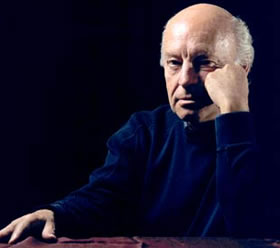
Eduardo Galeano (Montevideo, 3 september 1940)


De Amerikaanse schrijfster en literatuurwetenschapster Alison Lurie werd geboren op 3 september 1926 in Chicago, Illinois. Zie ook mijn blog van 3 september 2007 en ook mijn blog van 3 september 2008 en ook mijn blog van 3 september 2009 en ook mijn blog van 3 september 2010.


Uit: Familiar Spirits


„Jimmy and I might never have met again if we hadn't both found ourselves in Amherst, Massachusetts, five years later. I came in September 1954, as part of the baggage of my first husband, an Amherst College instructor in English. Jimmy, who had graduated from the college in 1947, arrived the following fall as a visiting writer, accompanied by his new friend David Jackson.

In 1955 Jimmy, though less nervous, was still thin and pale, with flat dark hair and something of the air of a clever, inquisitive bird. Later, when I learned that the name "Merrill" could be traced back to the French merle, or "blackbird," this seemed appropriate. He no longer casually paraded his superior learning and sophistication; he had become more sensitive to social situations and able to employ the perfect good manners he had learned as a child from his mother and governess. These good manners were one of his most striking qualities, and they carried over into his work. As he told an interviewer in 1967:

Manners for me are the touch of nature,... Someone who does not take them seriously is making a serious mistake....

The real triumph of manners in Proust is the extreme courtesy towards the reader, the voice explaining at once formally and intimately.

By 1955 Jimmy had also become something of a dandy. Though he wore conventional suits and shirts and neckties to official academic occasions, his everyday clothes were elegant but odd, sometimes slightly comic. He had a subtle, rather Art Nouveau color sense: he liked mauve and purple and apricot and turquoise silk or Egyptian-cotton shirts, and bright flowered ties. At home he often cooked breakfast in a Japanese kimono and sandals. I remember especially some red straw and silk sandals and a gray-striped silk kimono with deep sleeves cuffed in black.

At this time Jimmy had not yet achieved the attentive, contained, charming manner of his later years. He fidgeted with things, and was sometimes awkward and uneasy with strangers. He misplaced ordinary objects, and did not know how to drive. He frequently became panicky when faced with a mechanical or practical problem: a broken window blind, frozen pipes, missing student papers, a canceled plane flight.“


986384-dbd64e6b53c685d8762988ddba1eccbf.jpg
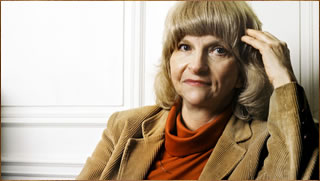
Alison Lurie (Chigaco, 3 september 1926)


De Russische schrijver Sergej Dovlatov werd geboren op 3 september 1941 in Ufa, in het zuiden van Rusland.  Zie ook mijn blog van 3 september 2007 en ook mijn blog van 3 september 2008 en ook mijn blog van 3 september 2009 en ook mijn blog van 3 september 2010.


Uit: Der Koffer (Vertaald door Dorothea Trottenberg)


„Sagt also diese Schnepfe im OVIR zu mir:

„Jedem, der ausreist, stehen drei Koffer zu. So ist die vorgeschriebene Norm. Es gibt eine spezielle Anordnung vom Ministerium.“

Es hatte keinen Sinn zu widersprechen. Ich widersprach natürlich trotzdem:

„Bloß drei Koffer?! Wo soll ich denn hin mit den Sachen?“

„Zum Beispiel?“

„Zum Beispiel mit meiner Rennwagensammlung.“

„Verkaufen“, erwiderte die Beamtin ungerührt. Und fügte dann mit leicht gerunzelter Stirn hinzu:

„Wenn Sie mit irgendetwas nicht zufrieden sind, machen Sie eine Eingabe.“

„Ich bin zufrieden“, sage ich.

Nach dem Gefängnis war ich mit allem zufrieden.

„Na, dann führen Sie sich gefälligst etwas anständiger auf ...“

Eine Woche später packte ich bereits meine Sachen. Und es zeigte sich, dass ich mit einem einzigen Koffer auskam.

Vor lauter Selbstmitleid hätte ich beinahe angefangen zu weinen. Schließlich war ich sechsunddreißig Jahre alt. Achtzehn Jahre davon hatte ich gearbeitet. Etwas verdient, mir etwas gekauft. Mir eingebildet, über einen gewissen Besitz zu verfügen. Und am Ende – ein Koffer. Obendrein von recht bescheidenen Ausmaßen. Ich war also bettelarm? Wie war es bloß dazu gekommen?!

Bücher? Aber ich besaß hauptsächlich verbotene Bücher. Die der Zoll nicht durchlassen würde. Ich musste sie also an Bekannte verteilen, zusammen mit meinem sogenannten Archiv.

Manuskripte? Die hatte ich schon längst heimlich in den Westen geschafft. Möbel? Den Schreibtisch brachte ich zum Gebrauchtwarenladen. Die Stühle holte der Künstler Tschegin ab, der sich bisher mit Kisten beholfen hatte. Den Rest warf ich weg. Und so reiste ich mit einem Koffer aus. Er war aus Sperrholz, mit Stoff überzogen und vernickelten Beschlägen an den Ecken. Das Schloss funktionierte nicht. Ich musste meinen Koffer mit einer Wäscheleine umwickeln.

Früher war ich mit dem Koffer ins Pionierlager gefahren. Auf dem Deckel stand sorgfältig mit Tinte gemalt: „Jüngste Gruppe. Serjoscha Dowlatow.“ Daneben hatte jemand wohlmeinend „Kloputzer“ hingekritzelt. Der Stoff war an einigen Stellen eingerissen.

Von innen war der Deckel mit Fotos vollgeklebt. Rocky Marciano, Armstrong, Joseph Brodsky und die Lollobrigida in durchsichtiger Kleidung. Der Zöllner versuchte, die Lollobrigida mit den Fingernägeln abzureißen. Letzten Endes zerkratzte er sie nur. Brodsky hingegen rührte er nicht an. Er fragte bloß: „Wer ist das?“ Ich erwiderte, ein entfernter Verwandter ...


 986384-e48e2cacbcf8a0cda93a7ce7c2770107.jpg

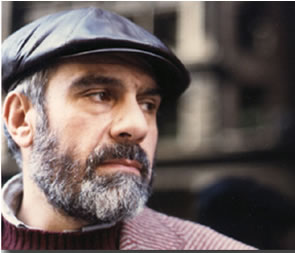
Sergej Dovlatov (3 september 1941 - 24 augustus 1990)


Onafhankelijk van geboortedata:


De Duitse dichter, schrijver en striptekenaar Lino Wirag werd geboren in 1983 in Pforzheim. Zie ook mijn blog van 3 september 2009 en ook mijn blog van 3 september 2010.


Uit: Schnitt // Vorlagen


I // SUPPLICATION // Thomas steht am Tisch u. hackt mit Kraft Karotten, Kartoffeln, Scheiben rollen von der Brett-, der Tischkante auf den Boden, wo sie driften u. auskreiseln. Marina weiß nichts: hält das Rührgerät wie eine Strahlenkanone, flüsternd: Heilige Mutter Maggi Fix, steh uns bei in dunkler Stunde, mater misericordiae. So hält sie die Hände fleischlich beieinander u. weiß nichts von dunklen Tunken, nichts von der Kraft der Karotten, Kartoffeln. //

II // DELIVERANCE // Verena in Stockings, Leggings hat sich in die Ecke gelaufen; schutz-, bewusstlos; dass die andere sie (punktament) anvisieren, abservieren kann. Hic Verena (in Stockings, Leggings), hic die andere, hie heroischer Lebensdurst (wiewohl schutz-, bewusstlos), da Abdeckerwillen, maliziöser. Hebt die eine den Lauf, da --- Ne Scheiße, dat Fernsehn heute, sagt der Vadder u. drückt die Glotze aus kraft seines Daumens. Die Kinder aber gehen zu Bett. //


 986384-bcbf835fa33c865be188112b73f5741c.jpg

Lino Wirag (Pforzheim, 1983)
Geschreven door Romenu om 18:50 Reageer op dit bericht

Meer van Romenu

↑ Terug naar de berichten