Naar de inhoud

Romenu

Over literatuur, gedichten, kunst en cultuur
akke.beakke.be

Berichten van 22 oktober 2011 tot 23 oktober 2011

Michel van der Plas, Masiela Lusha, Augusten Burroughs, Nick Tosches

De Nederlandse dichter en schrijver Michel van der Plas werd geboren op 23 oktober 1927 in Den Haag. Zie ook mijn blog van 23 oktober 2010 en eveneens alle tags voor Michel van der Plas op dit blog.


Heilsoldaat


Er liep een hondje tussen de soldaten,
meisjes giechelden op de laatste rij,
toen zij een lange juichende cantate
over de hemel zongen: Maakt u vrij!
Het was een straat als alle andere straten
Ik zag een heilsoldaat, hoe hij
Haast jubelend zong, of hij 't nooit meer zou laten,
hij keek omhoog en leek onzegbaar blij.

Ik hoorde de trompet niet noch de hoorn,
ik zag alleen de wonderlijke lach
van een, die in verlangen stond verloren
en zong of hij de hemel open zag
en of hij stond tussen de engelenkoren
en of hij God zag op de jongste dag.

Ik die de moed nooit had om op een kist
van God te spreken met geheven handen
niet om in hete zon, regen en mist
met heul en troost bij pooiers te belanden--
maar ik heb nooit geweten, wat ik wist
en ik dacht koud te zijn, maar ik verbrandde,
ik ging een weg, maar ik heb slechts gegist
want ik kwam uit tegen mijn kamerwanden.

En als de dag komt, waar de heilsoldaat
haast jubelend van zong, zal ik als hij,
zo wonderlijk bereid, zo stil en vrij,
uitzien naar waar de Heer op wolken staat?
Als ik nu zing, zing ik dan niet te laat?
en waarom sta ik altijd nog terzij?


 1017312-3eb6a132c4698394da4834ab3f7cddc2.jpg

Michel van der Plas (Den Haag, 23 oktober 1927)


De Albanees-Amerikaanse schrijfster en actrice Masiela Lusha werd geboren op 23 oktober 1985 in Tirana. Zie ook mijn blog van 23 oktober 2008 en ook mijn blog van 23 oktober 2009 en ook mijn blog van 23 oktober 2010


Celestial Rumors


Last night the stars

Rumored of his defeat.

They lined a perfect

Smile across the navy

Duress

And shined a mocking

Tale of every destiny

He had disowned…


He was given the rights

To happiness—

And yet he had baffled

Even the gods.


What is it that he

Didn’t deserve

That ties his story

To the successions of failure?


And will they mock him?

Will destiny shine its sky

Mirror onto his faded pride

And reflect the face of past

Fears?


Will his faith fold, slowly

Piece by happy piece

Inside the darkest chapters

Of his world? Will

He release the hope he was promised,

The sandy world he had quickly built

With dreams?


How quiet the night seems.


He refuses to look into the presence of stars

He refuses to recount their promise

They had already deceived him once.


 1017312-13c5130d8d1328f2c41f969e014ac058.jpg

Masiela Lusha (Tirana, 23 oktober 1985)


De Amerikaanse schrijver Augusten Xon Burroughs werd geboren op 23 oktober 1965 in Pittsburgh, Pennsylvania. Zie ook mijn blog van 23 oktober 2008 en ook mijn blog van 23 oktober 2009 en ook mijn blog van 23 oktober 2010


Uit: Possible Side Effects


“The first time I was star-struck, the object of my affection was a glamorous Eastern Airlines stewardess. She had towering blond hair, frosted blue eyelids, and was well into her twenties. I was 8. We were thrown together when my parents put me on a flight by myself to Lawrenceville, Georgia, to visit my wealthy grandparents.

"I call them by their first names, Jack and Carolyn," I told her with pride. "They're my father's parents. And my grandmother wears lots of jewelry, just like you."

"Aren't you precious?" the flight attendant said.

I smiled because I loved the name, precious. It reminded me of precious stones like rubies and emeralds and diamonds. And even semiprecious stones, like onyx, which was the black stone men wore, and the ugliest one of all.

The flight attendant returned to the kitchen and I looked out the window, happy to see the mundane "North" pass by, far below me.  As the only member of my family for generations born above the Mason-Dixon line, I was fascinated by the impossibly exotic South.

Like, instead of dirty, gray squirrels, my grandparents had Technicolor peacocks on their lawn. And while we got hateful blizzards in the winter, my grandparents got yet more sunshine. I found it impossible to believe that snow did not cover the world but here was proof.

Though this became an annual trip for me, my grandfather traveled a lot, so I never spent much time with him. And he was gruff, so when he was around I was frightened and avoided him.”


 1017312-c66794c09b0c5b2046b405ccb3c53ddf.jpg

Augusten Burroughs (Pittsburgh, 23 oktober 1965)


De Amerikaanse dichter, schrijver en journalist Nick Tosches werd geboren in 1949 in Newark, New Jersey. Zie ook mijn blog van 23 oktober 2008 en ook mijn blog van 23 oktober 2009 en ook mijn blog van 23 oktober 2010


Uit: Patti Smith: A Baby Wolf with Neon Blues


“Patricia Lee Smith hit the linen on December 30, 1946, in Chicago, and was raised, the eldest of four children, in Deptford Township, New Jersey.

She had been slapped about by tuberculosis; she was a frail-seeming punkling, skinny and daydreamy. She attended Glassboro State College, briefly, and tried doing piecework at a toy factory. Both made her carsick. In 1967 she came to New York. From there she went to Paris with her sister Linda. She wanted to be an artist, but her drawing became poems. She returned to New Jersey, then to New York, where she slowly but steadily became arch moll of rhythm’d word.

Patti co-authored a book with playwright Sam Shepard, “Mad Dog Blues & Other Plays.” She appeared in a film, Robert Mapplethorpe Gets His Nipple Pierced. Late in 1971, Telegraph Books published her first volume of poems, “Seventh Heaven,” which she dedicated to Mickey Spillane and Anita Pallenberg. She began to publish prose-poem essays about rock ‘n’ roll in such magazines as Rolling Stone and Creem. A second book of poems, “Kodak,” appeared in 1972. By the time Gotham Book Mart published her “Witt” in 1973, Patti had become a legend on the New York poetry circuit. She was feared, revered, and her public readings elicited the sort of gut response that had been alien to poetry for more than a few decades. Word spread, and people who avoided poetry as the stuff of four-eyed pedants found themselves oohing and howling at what came out of Patti’s mouth. Established poets feared for their credence. Many well-known poets refused to go on after Patti at a reading, she was that awesome.

The music, too. It had started with just Lenny Kaye on guitar, intuitively the two reinvented melic poetry. The band grew; piano, another guitar, then later drums. Finally, after all those years, rock ‘n’ roll had a poet.”


 1017312-d36e34ff0c32ee1209f17ebb890d968f.jpg

Nick Tosches (Newark, 23 oktober 1949)


Zie voor nog meer schrijvers van de 23e oktober ook mijn vorige blog van vandaag.
Geschreven door Romenu om 18:57 Reageer op dit bericht

Robert Bridges, Adalbert Stifter, Rodja Weigand, Gjergj Fishta, Restif de la Bretonne

De Engelse dichter, toneel- en prozaschrijver Robert Seymour Bridges werd geboren in Walmer, Kent, op 23 oktober 1844. Zie ook mijn blog van 23 oktober 2009 en ook mijn blog van 23 oktober 2010


Nightingales


Beautiful must be the mountains whence ye come,

And bright in the fruitful valleys the streams, wherefrom

Ye learn your song:

Where are those starry woods? O might I wander there,

Among the flowers, which in that heavenly air

Bloom the year long!


Nay, barren are those mountains and spent the streams:

Our song is the voice of desire, that haunts our dreams,

A throe of the heart,

Whose pining visions dim, forbidden hopes profound,

No dying cadence nor long sigh can sound,

For all our art.


Alone, aloud in the raptured ear of men

We pour our dark nocturnal secret; and then,

As night is withdrawn

From these sweet-springing meads and bursting boughs of May,

Dream, while the innumerable choir of day

Welcome the dawn.


 1017308-71630852e6ab00a1cb3af2bd1f2e83e5.jpg

Robert Bridges (23 oktober 1844 - 21 april 1930)


De Oostenrijkse schrijver Adalbert Stifter werd geboren in Oberplan op 23 oktober 1805. Zie ook mijn blog van 23 oktober 2010 en eveneens alle tags voor Adalbert Stifter dit blog.


Uit: Feldblumen


„Man legt oft etwas dem Menschen zur Last, woran eigentlich die Chemie alle Schuld hat. Es ist offenbar, daß wenn ein Mensch zu wenig Metalle, z. B. Eisen, in sein Blut bekommen hat, die andern Atome gleichsam darnach lechzen müssen, um, damit verbunden, das chemisch heilsame Gleichgewicht herstellen zu können. Nur mißversteht aber der so schlimm Begabte meistens seinen Drang, und statt in's Blut, schleppt er unbeholfen die Metalle in seine Stube und in die Kästen, und greift hiebei ganz ungeschickt nach Silber und dergleichen. Wir heißen den armen Schelm dann einen Geizhals; – sei's um den Namen – aber verachten soll man ihn nicht so leichtfertig, als sei er selber schuld, was sich doch offenbar durch die Thatsache widerlegt, daß gerade der echteste darunter alles Papiergeld haßt und durchaus nicht nach Zinsen trachtet, sondern das einfache, reine, schöne Metallgeld aufhebt und hütet.

Andere haben andere Verwandtschaften, lieber Titus! z. B. ich und Du, denen man es übel nahm, daß sie die Damen, und darunter wieder die schönsten, oft unbillig anstarren; – aber bei mir wenigstens ist es nicht abzustellen, weil ich, so zu sagen, ein Schönheitsgeizhals bin. Ich habe es jetzt heraus, wie mich das Ding schon als Kind verfolgte, wo ich oft um lichte Steinchen raufte, oder als Knabe mit dicken, rothgeweinten Augen von dem Taubenschlage herabkam, in dem ich stundenlang gekauert saß, um die schönsten Romane zu lesen, die mein seliger Vater gar so sehr verbot, weil er es lieber hatte, daß ich das Quae maribus und solches Zeug lernte, was ich zwar auch that, so daß ich das Ding der Länge nach herzusagen vermochte; – aber ich hatte es millionenmal lieber, wenn ich mich aus einem schönen Ritterbuche abängstigen konnte, oder wenn mir einmal – ich habe seitdem das Werk nicht mehr gelesen – geradezu das Herz brach, da Ludwig der Strenge sofort seine wunderschöne, unschuldige Gattin hinrichten ließ, die bloß verläumdet war, und die Niemand retten konnte als ich, der ich aus dem Buche die ganze Schlechtigkeit ihrer Feinde gelesen hatte, aber unglücklicher Weise dreihundert Jahre zu spät.

Damals, da ich bis zur letzten Seite auf Rettung baute und traute, und endlich keine kam, rieb ich mich fast auf vor Schmerz. Aus jenem unbewohnten, staubigen Taubenschlage, Titus, trug ich wundersame, liebe Gefühle bis in die spätesten Zeiten meines Lebens hinüber, und wurde nach der Hand für und für kein Anderer; immer suche ich noch, bildlich gesprochen, solche Taubenschläge, spanne mich aus der Gewerkswelt los und buhle um die Braut des Schönen“.


 1017308-ff8df95cce5b460db4cd4844daa58336.jpg

Adalbert Stifter (23 oktober 1805  - 28 januari 1868)

Standbeeld in Linz


De Duitse dichter, schrijver en uitgever Rodja Weigand werd geboren op 23 oktober 1945 in München. Zie ook mijn blog van 23 oktober 2010


der augenblick


augenblick bleib
du sitzt nicht oft bei mir
dein arm ruht auf meiner schulter
auf deinen lippen lügt nichts
dein haar fällt rot
auch noch im winter
manchmal horche ich
nach draußen
doch die angst
findet keinen weg mehr


1017308-7b88285403402e4ab3c61b1269d1211d.jpg
Rodja Weigand (München, 23 oktober 1945)


Zie voor onderstaande schrijvers ook
mijn blog van 23 oktober 2010.


De Albanese dichter, vertaler en pater Franciscaan Gjergj Fishta werd geboren op 23 oktober 1871 in Fishta të Zadrimes. Zie ook mijn blog van 23 oktober 2008.


De Franse schrijver Nicolas Edmonde Restif de La Bretonne werd geboren op 23 oktober 1734 in Sacy bij Auxerre. Zie ook mijn blog van 23 oktober 2008.

Geschreven door Romenu om 18:56 Reageer op dit bericht

Doris Lessing, Arjen Lubach, Alfred Douglas

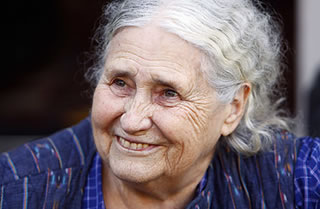
De Britse schrijster Doris Lessing werd geboren in Kermanshah, Perzië op 22 oktober 1919. Zie ook mijn blog van 22 oktober 2010 en eveneens alle tags voor Doris Lessing op dit blog.


Uit: The Grass is Singing


„Long before the murder marked them out, people spoke of the Turners in the hard, careless voices reserved for misfits, outlaws, and the self-exiled. The Turners were disliked, though few of their neighbours had ever met them, or even seen them in the distance. Yet what was there to dislike? They simply 'kept themselves to themselves'; that was all. They were never seen at district dances, or fêtes, or gymkhanas. They must have had something to be ashamed of; that was the feeling. It was not right to seclude themselves like that; it was a slap in the face of everyone else; what had they got to be so stuck-up about? What, indeed! Living the way they did! That little box of a house - it was forgivable as a temporary dwelling, but not to live in permanently. Why, some natives (though not many, thank heavens) had houses as good; and it would give them a bad impression to see white people living in such a way.

And then it was that someone used the phrase 'poor whites'. It caused disquiet. There was no great money-cleavage in those days (that was before the era of the tobacco barons), but there was certainly a race division. The small community of Afri­kaners had their own lives, and the Britishers ignored them. 'Poor whites' were Afrikaners, never British. But the person who said the Turners were poor whites stuck to it defiantly. What was the difference? What was a poor white? It was the way one lived, a question of standards. All the Turners needed were a drove of children to make them poor whites.

Though the arguments were unanswerable, people would still not think of them as poor whites. To do that would be letting the side down. The Turners were British, after all.

Thus the district handled the Turners, in accordance with that esprit de corps which is the first rule of South African society, but which the Turners themselves ignored. They ap­parently did not recognize the need for esprit de corps; that, really, was why they were hated.“


 1016604-9aa85f03c1a21260a7cbcb78ac8551bf.jpg

Doris Lessing (Kermanshah, 22 oktober 1919)


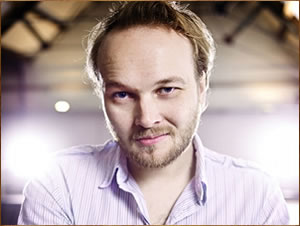
De Nederlandse schrijver, cabaretier en televisiepresentator Arjen Henrik Lubach werd geboren in Lutjegast op 22 oktober 1979. Zie ook mijn blog van 22 oktober 2010.


Uit: Magnus


‘Ik had in Groningen en later in Amsterdam vaak gehoopt op de achtbaan die er van je leven kan worden. Jezelf ergens omhoog takelen en dan zonder enige invloed op het traject naar beneden lazeren, zonder de bochten of de duur van de baan te kennen. Het liefst in de striemende regen en in het gezelschap van onbekenden. Nu het eenmaal zover was, was ik misselijker dan ooit.

’(…)


“Waar we precies over hebben gepraat die avond weet ik niet meer. Het zal vermoedelijk een verzameling roddels over klasgenoten geweest zijn. Herinneringen aan Florence, verwachtingen over het examenjaar en wat we daarna gingen doen. Dat is ook niet wat me is bijgebleven. De onderwerpenop zich zijn niet relevant, het zijn de reacties en grapjes over de onderwerpen die maken dat je met iemand nog geen vijf minuten in een lift kan staan of juist vakanties lang samen in ingesneeuwde chalets kan doorbrengen. Vaak denken mensen dat je de diepte in moet, moet raken aan onaangeraakte roerselen, dat je die bij de ander omhoog moet halen, maar dat is onzin: de verdieping zit in structuur, in het vormen van gedachten, in absurdisme, in taal, in humor.”


1016604-b982caac42e28b67c881dc65f1d44d51.jpg
Arjen Lubach (Lutjegast, 22 oktober 1979)


De Engelse dichter en schrijver
Alfred Douglas werd geboren in Ham Hill in Worcestershire op 22 oktober 1870. Zie ook mijn blog van 22 oktober 2010 en eveneens alle tags voor Alfred Douglas op dit blog.


Two Loves
 

I dreamed I stood upon a little hill,
And at my feet there lay a ground, that seemed
Like a waste garden, flowering at its will
With buds and blossoms. There were pools that dreamed
Black and unruffled; there were white lilies
A few, and crocuses, and violets
Purple or pale, snake-like fritillaries
Scarce seen for the rank grass, and through green nets
Blue eyes of shy peryenche winked in the sun.
And there were curious flowers, before unknown,
Flowers that were stained with moonlight, or with shades
Of Nature's willful moods; and here a one
That had drunk in the transitory tone
Of one brief moment in a sunset; blades
Of grass that in an hundred springs had been
Slowly but exquisitely nurtured by the stars,
And watered with the scented dew long cupped
In lilies, that for rays of sun had seen
Only God's glory, for never a sunrise mars
The luminous air of Heaven. Beyond, abrupt,
A grey stone wall. o'ergrown with velvet moss
Uprose; and gazing I stood long, all mazed
To see a place so strange, so sweet, so fair.
And as I stood and marvelled, lo! across
The garden came a youth; one hand he raised
To shield him from the sun, his wind-tossed hair
Was twined with flowers, and in his hand he bore
A purple bunch of bursting grapes, his eyes
Were clear as crystal, naked all was he,
White as the snow on pathless mountains frore,
Red were his lips as red wine-spilith that dyes
A marble floor, his brow chalcedony.
And he came near me, with his lips uncurled
And kind, and caught my hand and kissed my mouth,
And gave me grapes to eat, and said, 'Sweet friend,
Come I will show thee shadows of the world
And images of life. See from the South
Comes the pale pageant that hath never an end.'
And lo! within the garden of my dream
I saw two walking on a shining plain
Of golden light. The one did joyous seem
And fair and blooming, and a sweet refrain
Came from his lips; he sang of pretty maids
And joyous love of comely girl and boy,
His eyes were bright, and 'mid the dancing blades
Of golden grass his feet did trip for joy;
And in his hand he held an ivory lute
With strings of gold that were as maidens' hair,
And sang with voice as tuneful as a flute,
And round his neck three chains of roses were.
But he that was his comrade walked aside;
He was full sad and sweet, and his large eyes
Were strange with wondrous brightness, staring wide
With gazing; and he sighed with many sighs
That moved me, and his cheeks were wan and white
Like pallid lilies, and his lips were red
Like poppies, and his hands he clenched tight,
And yet again unclenched, and his head
Was wreathed with moon-flowers pale as lips of death.
A purple robe he wore, o'erwrought in gold
With the device of a great snake, whose breath
Was fiery flame: which when I did behold
I fell a-weeping, and I cried, 'Sweet youth,
Tell me why, sad and sighing, thou dost rove
These pleasent realms? I pray thee speak me sooth
What is thy name?' He said, 'My name is Love.'
Then straight the first did turn himself to me
And cried, 'He lieth, for his name is Shame,
But I am Love, and I was wont to be
Alone in this fair garden, till he came
Unasked by night; I am true Love, I fill
The hearts of boy and girl with mutual flame.'
Then sighing, said the other, 'Have thy will,
I am the love that dare not speak its name.'


1016604-01c98a18193b885fddcb91fd53ad4fd9.jpg
Alfred Douglas (22 oktober 1870 – 20 maart 1945)


Zie voor nog meer schrijvers van de 22e oktober ook
mijn vorige blog van vandaag.

Geschreven door Romenu om 18:23 Reageer op dit bericht

Lévi Weemoedt, A. L. Kennedy, Ivan Boenin, Charles Leconte de Lisle

De Nederlandse dichter en schrijver Lévi Weemoedt werd geboren in Geldrop op 22 oktober 1948. Zie ook mijn blog van 22 oktober 2010 en eveneens alle tags voor Lévi Weemoedt op dit blog.


Onder lijn 4


De werkers kwamen fluitend van karwei,
staken de rijweg over, dromden rond de halte.
De adel van hun kracht beschaamde mij:
triest hing daartussen, zinloos, míjn gestalte.

Een eerlijk broodblik priemde in mijn kraag,
een zwaar beslagen schoen rustt' op mijn tenen.
Mijn leven had nog nooit zo leeg geschenen:
ík had alleen een plaat gekocht vandaag.

O! 't Liefst zou ik van hen hier voorman wezen
en legde in één gebaar de hele haven lam!

Maar ach! Voor morgen staat een boek op het program.
En dan maar weer een plaat, men kan niet eeuwig lezen.


De bedriegertjes

"wat 'n treurigheid! O, het is niet waar
toch?", snikte de psychiater.
"En dat heeft u al van uw derde jaar?
Ging dat nooit eens over later...?"

Ach, ik zei maar snel dat het overging
en haalde een glaasje water.


Don juan lul


'k Kan niet lezen en niet schrijven.
'k Ben de langzaamste in vlijt.
Maar het allerdroevigst ben ik
in sociale vaardigheid.

Nooit kan ik iets leuks verzinnen!
Sta ik voor een mooie meid,
ach, dan schiet mij slechts te binnen
dat ik dood wil. Heel de tijd.


 1016602-83f5ff9d80c0807ea1305e9b1e9b9825.jpg

Lévi Weemoedt (Geldrop, 22 oktober 1948)


De Schotse schrijfster Alison Louise Kennedy werd geboren op 22 oktober 1965 in Dundee. Zie ook mijn blog van 22 oktober 2008 en ook mijn blog van 22 oktober 2009 en ook mijn blog van 22 oktober 2010


Uit: What Becomes

“The cinema was tiny: twelve rows deep from the blacked-out wall and the shadowed doorway down to the empty screen, which had started to bother him now, a kind of hanging absence.
How did they make any money with a place this small? Even if it was packed?
Which it wasn’t. Quite the reverse. There was, in fact, no one else here. Boy at the door had to turn the lights on just for him, Frank feeling bad about this, thinking he shouldn’t insist on seeing a film all by himself and might as well go to the bigger space they kept upstairs which had a balcony and quite probably leg room and would be more in the way of a theatre and professional. In half an hour they’d be showing a comedy up there.
Or he could drive to a multiscreen effort: there’d been one in the last big town as he came round the coast—huge glass and metal tower, looked like a part of an airport: they’d have an audience, they’d have audiences to spare.
Although that was a guess and maybe the multiplex was empty, too. The bar, the stalls that sold reconstituted food, the toilets, the passageways, perhaps they were all deserted. Frank hoped so.
And he’d said nothing here as he’d taken back his torn stub and walked through the doorway, hadn’t apologised or shown uncertainty. He’d only stepped inside what seemed a quietly watchful space as the younger man drifted away and left him to it.
Four seats across and then the aisle and then another four and that was it. The room wasn’t much broader than his lounge and it put Frank in mind of a bus, some kind of wide, slow vehicle, sliding off towards destinations it left undisclosed.
He didn’t choose a seat immediately, wandering a little, liking the solitude, a whole cinema of his own—the kind of thing a child might imagine, might enjoy. He believed he would move around later if no one else appeared, run amok just a touch and leave his phone turned on so he could answer it if anybody called.“

 
1016602-10c9c4f8b167e07354c107d44517d214.jpg
A. L. Kennedy (Dundee, 22 oktober 1965)


De Russische schrijver en dichter Ivan Aleksejevitsj Boenin werd geboren in Voronezj op 22 oktober 1870. Zie ook mijn blog van 22 oktober 2008 en ook mijn blog van 22 oktober 2009 en ook mijn blog van 22 oktober 2010


Der Smaragd (Vertaald door Eric Boemer)


“Die nächtliche, dunkelblaue Schwärzung des Himmels in den ruhig dahinziehenden Wolken, die überall weiß sind, nur um den hochstehenden Mond herum hellblau gefärbt. Wenn du lange genug schaust, sind es nicht die Wolken, die ziehen, sondern der Mond selbst, und nahe bei ihm, zusammen mit ihm, fließt die goldene Träne eines Sterns: der Mond verschwindet langsam in der Höhe, die bodenlos ist, und immer höher und höher nimmt er den Stern mit sich fort.

Mit vorgeschobenen Schultern sitzt sie auf der Bank des geöffneten Fensters und schaut, mit zurückgebeugtem Kopf, in die Höhe – im Kopf beginnt es ihr von der Bewegung am Himmel zu schwindeln. Er steht bei ihren Knien.

»Was ist das nur für eine Farbe? Ich kann sie nicht bestimmen! Und sie, Tolja, können sie's?«

»Die Farbe wovon, Kisa?«

»Ich habe ihnen schon tausendmal gesagt, dass sie mich nicht so nennen sollen … «

»Ich habe es vernommen, Ksenija Andreevna.«

»Ich spreche von diesem Himmel dort zwischen den Wolken. Was für eine wundervolle Farbe. Das ist schon die göttliche Wahrheit, auf Erden gibt es sowas nicht. Irgendein Smaragd.«

»Wenn sie schon am Himmel ist, dann ist sie natürlich auch himmlisch. Was ist denn ein Smaragd? Ich habe in meinem Leben noch keinen gesehen. Ihnen gefällt einfach nur das Wort.«

»Ja. Nun, ich weiß nicht, – vielleicht nicht gerade ein Smaragd, sondern ein Saphir … Nur einer von der Sorte, dass es ihn, wirklich, nur im Paradies geben kann. Und wenn man auf diese Weise auf das alles schaut, wie soll man da nicht glauben, dass es ein Paradies gibt, Engel, den göttlichen Thron …«

»Und goldene Birnen an einer Weide …«

»Was sind sie doch verdorben, Tolja. Marja Sergeevna hat schon recht, wenn sie sagt, dass selbst das beschränkteste Mädchen immer noch besser ist, als jeder junge Mann.«

»Die Wahrheit selbst fließt über Marjas geheiligte Lippen, Kisa.«

Sie trägt ein gekräuseltes Kattunkleidchen und billiges Schuhwerk; hat volle Waden und Knie, jungmädchenhaft, ein rundes Köpfchen mit einem kleinen Zopf drumherum, der so lieblich herunterhängt … Er legt eine Hand auf ihr Knie, die andere um ihre Schultern und küsst halb im Scherz ihre leichtgeöffneten Lippen. Sie macht sich ruhig los, schiebt seine Hand von ihrem Knie.

»Was soll das? Sind wir beleidigt?«

Sie lehnt sich mit dem Nacken an den Fensterrahmen, und er sieht, dass sie, während sie sich auf die Lippen beißt, die Tränen zurückhält.

»Was ist denn los?«

»Ach, lassen sie mich …«

»Was ist denn passiert?«

Sie flüstert:

»Nichts …«

Und springt von der Fensterbank und läuft fort.

Er zuckt mit den Schultern:

»Dumm bis zur Heiligkeit!«


 1016602-360e5b6e9289474e69bd12eabca1b3db.jpg

Ivan Boenin (22 oktober 1870 - 8 november 1953)

Monument in Moskou


De Franse dichter en schrijver Charles Marie René Leconte de Lisle werd geboren op 22 oktober 1818 op het eiland Réunion. Zie voor onderstaande schrijvers ook mijn blog van 22 oktober 2008 en ook mijn blog van 22 oktober 2009 en ook mijn blog van 22 oktober 2010


A un poète mort


Toi dont les yeux erraient, altérés de lumière,
De la couleur divine au contour immortel
Et de la chair vivante à la splendeur du ciel,
Dors en paix dans la nuit qui scelle ta paupière.

Voir, entendre, sentir ? Vent, fumée et poussière.
Aimer ? La coupe d'or ne contient que du fiel.
Comme un Dieu plein d'ennui qui déserte l'autel,
Rentre et disperse-toi dans l'immense matière.

Sur ton muet sépulcre et tes os consumés
Qu'un autre verse ou non les pleurs accoutumés,
Que ton siècle banal t'oublie ou te renomme ;

Moi, je t'envie, au fond du tombeau calme et noir,
D'être affranchi de vivre et de ne plus savoir
La honte de penser et l'horreur d'être un homme !


Aux modernes


Vous vivez lâchement, sans rêve, sans dessein,
Plus vieux, plus décrépits que la terre inféconde,
Châtrés dès le berceau par le siècle assassin
De toute passion vigoureuse et profonde.

Votre cervelle est vide autant que votre sein,
Et vous avez souillé ce misérable monde
D'un sang si corrompu, d'un souffle si malsain,
Que la mort germe seule en cette boue immonde.

Hommes, tueurs de Dieux, les temps ne sont pas loin
Où, sur un grand tas d'or vautrés dans quelque coin,
Ayant rongé le sol nourricier jusqu'aux roches,

Ne sachant faire rien ni des jours ni des nuits,
Noyés dans le néant des suprêmes ennuis,
Vous mourrez bêtement en emplissant vos poches.


 1016602-96fc9a84aa64a0c3fa2c8008ce97a8b3.jpg

Charles Leconte de Lisle (22 oktober 1818 – 18 juli 1894)


Geschreven door Romenu om 18:13 Reageer op dit bericht

Meer van Romenu

↑ Terug naar de berichten