Naar de inhoud

Romenu

Over literatuur, gedichten, kunst en cultuur
akke.beakke.be

Berichten van 14 november 2011 tot 15 november 2011

80 Jaar Jan Terlouw, 75 Jaar Wolf Biermann, Gerhard Hauptmann, Heinz Piontek, J. G. Ballard, Liane Dirks


80 Jaar Jan Terlouw


De Nederlandse schrijver, fysicus en voormalig politicus voor Democraten 66
Jan Terlouw werd geboren in Kamperveen op 15 november 1931. Jann Terlouw viert vandaag zijn 80e verjaardag. Zie ook mijn blog van 15 november 2010.


Uit: Oorlogswinter


„Wat was het toch allemachtig donker.

Voetje voor voetje, met één hand tastend voor zich uit, zocht Michiel zijn weg over het verharde fietspad, dat naast het karrenpad liep. In zijn andere hand droeg hij een katoenen tas, met twee flessen melk erin. ‘Nieuwe maan én zwaar bewolkt,’ mompelde hij. ‘Hier moet de boerderij van Van Ommen zijn.’ Hij tuurde naar rechts, maar hoe hij zich ook inspande, hij zag niets. De volgende keer gá ik niet meer als ik de knijpkat niet mee krijg, dacht hij. Dan zorgt Erica maar, dat ze om halfacht thuis is. ’t Is geen doen zo.

De gebeurtenissen gaven hem gelijk. Hoewel hij niet sneller liep dan een halve kilometer per uur, stootte hij met de tas tegen een van de paaltjes die hier en daar stonden, zodat de boerenwagens

niet over het fietspad konden rijden. Verdorie! Voorzichtig voelde hij met zijn hand. Nat! Een van de flessen was gebroken. Wat zonde van die kostelijke melk. Danig uit zijn humeur, maar nog behoedzamer dan eerst, ging hij verder. Mensenlief, wat zie je weinig als het zo donker is. Vijfhonderd meter van huis was hij en hij kende bij wijze van spreken iedere steen. En toch zou hij de grootste

moeite hebben om voor achten binnen te zijn.

Wacht eens even, daar zag hij een uiterst flauw lichtschijnsel. Juist, het huis van Bogaard. Die namen het niet zo nauw met de verduistering. Jammer genoeg hadden ze niet veel meer om te verduisteren

dan het licht van een kaars. Enfin, er waren nu geen paaltjes meer tot de straatweg, wist hij, en als hij eenmaal daar was, ging het gemakkelijker. Daar waren meer huizen en op de een of andere manier kwam er toch meestal wel wat licht uit. Jasses, er droop melk in zijn klomp. Liep daar iemand? Onwaarschijnlijk, ’t was op slag van achten. En om acht uur mocht er niemand meer op straat zijn. Hij voelde dat hij ander wegdek onder zijn voeten kreeg. De straatweg. Nu rechtsaf en oppassen dat hij niet in de sloot terechtkwam. Zoals hij al gedacht had, ging het nu beter. Heel, heel vaag zag hij de omtrekken van de huizen. De Ruiter, juffrouw Doeven, Zomer, de smederij, het gebouwtje van het

Groene Kruis, hij was er bijna.“


1032497-d28e0c6d67b078e9f3560b3ff5be13c8.jpg
Jan Terlouw (Kamperveen, 15 november 1931)


75 Jaar Wolf Biermann


De Duitse zanger, dichter en schrijver
Wolf Biermann werd geboren op 15 november 1936 in Hamburg. Zie ook alle tags voor Wolf Biermann op dit blog.
Wolf Biermann viert vandaag zijn 75e verjaardag.


Warte nicht auf beßre Zeiten


Manchen hör ich bitter sagen
"Sozialismus - schön und gut
Aber was man uns hier aufsetzt
Das ist der falsche Hut!"
Manchen seh ich Fäuste ballen
In der tiefen Manteltasche
Kalte Kippen auf den Lippen
Und in den Herzen Asche

Wartest du auf beßre Zeiten
Wartest du mit deinem Mut
Gleich dem Tor, der Tag für Tag
An des Flusses Ufer wartet
Bis die Wasser abgeflossen
Die doch ewig fließen

Manche raufen sich die Haare
Manche seh ich haßerfüllt
Manche seh ich in das Wolltuch
Des Schweigens eingehüllt
Manche hör ich abends jammern
"Was bringt uns der nächste Tag
An was solln wir uns noch klammern
An was? An was? An was?"

Wartest du auf beßre Zeiten
Wartest du mit deinem Mut
Gleich dem Tor, der Tag für Tag
An des Flusses Ufer wartet
Bis die Wasser abgeflossen
Die doch ewig fließen

Manche hoffen, daß des Flusses
Wasser nicht mehr fließen kann
Doch im Frühjahr, wenn das Eis taut
fängt es erst richtig an
Manche wollen diese Zeiten
wie den Winter überstehn
Doch wir müssen Schwierigkeiten
Bestehn! Bestehn! Bestehn –

Warte nicht auf beßre Zeiten
Warte nicht mit deinem Mut
Gleich dem Tor, der Tag für Tag
An des Flusses Ufer wartet
Bis die Wasser abgeflossen
Die doch ewig fließen

Viele werden dafür sorgen
daß der Sozialismus siegt
Heute! Heute, nicht erst morgen!
Freiheit kommt nie verfrüht
Und das beste Mittel gegen
Sozialismus (sag ich laut)
Ist, daß ihr den Sozialismus
AUFBAUT!!! Aufbaut! (aufbaut)

Wartet nicht auf beßre Zeiten
Wartet nicht mit eurem Mut
Gleich dem Tor, der Tag für Tag
An des Flusses Ufer wartet
Bis die Wasser abgeflossen
Die doch ewig fließen
die doch ewig fließen


1032502-dda99ab7362380c41a5ecc187400813c.jpg
Wolf Biermann (Hamburg, 15 november 1936)


De Duitse schrijver
Gerhart Hauptmann werd geboren in Obersalzbrunn (Neder-Silezië) op 15 november 1862. Zie ook mijn blog van 15 november 2008 en ook mijn blog van 15 november 2009 en ook mijn blog van 15 november 2010.


Uit:
Bahnwärter Thiel


„Allsonntäglich saß der Bahnwärter Thiel in der Kirche zu Neu-Zittau, ausgenommen die Tage, an denen er Dienst hatte oder krank war und zu Bette lag. Im Verlaufe von zehn Jahren war er zweimal krank gewesen; das eine Mal infolge eines vom Tender einer Maschine während des Vorbeifahrens herabgefallenen Stückes Kohle, welches ihn getroffen und mit zerschmettertem Bein in den Bahngraben geschleudert hatte; das andere Mal einer Weinflasche wegen, die aus dem vorüberrasenden Schnellzuge mitten auf seine Brust geflogen war. Außer diesen beiden

Unglücksfällen hatte nichts vermocht, ihn, sobald er frei war, von der Kirche fernzuhalten.

Die ersten fünf Jahre hatte er den Weg von Schön-Schornstein, einer Kolonie an der Spree, herüber nach Neu-Zittau allein machen müssen. Eines schönen Tages war er dann in Begleitung eines schmächtigen und kränklich aussehenden Frauenzimmers erschienen, die, wie die Leute meinten, zu seiner herkulischen Gestalt wenig gepaßt hatte. Und wiederum eines schönen Sonntag Nachmittags reichte er dieser selben Person am Altare der Kirche feierlich die Hand zum Bunde fürs Leben. Zwei Jahre nun saß das junge, zarte Weib ihm zur Seite in der Kirchenbank; zwei Jahre blickte ihr hohlwangiges, feines Gesicht neben seinem vom Wetter gebräunten in das uralte Gesangbuch --; und plötzlich saß der Bahnwärter wieder allein wie zuvor.

An einem der vorangegangenen Wochentage hatte die Sterbeglocke geläutet: das war das Ganze.

An dem Wärter hatte man, wie die Leute versicherten, kaum eine Veränderung wahrgenommen. Die Knöpfe seiner sauberen Sonntagsuniform waren so blank geputzt als je zuvor, seine roten Haare so wohl geölt und militärisch gescheitelt wie immer, nur daß er den breiten, behaarten Nacken ein wenig gesenkt trug und noch eifriger der Predigt lauschte oder sang, als er es früher getan hatte. Es war die allgemeine Ansicht, daß ihm der Tod seiner Frau nicht sehr nahe gegangen sei; und diese Ansicht erhielt eine Bekräftigung, als sich Thiel nach Verlauf eines Jahres zum zweiten Male, und zwar mit einem dicken und starken Frauenzimmer, einer Kuhmagd aus Alte-Grund, verheiratete.


1032497-63c4bb7b438d024b6b2b0d3a4ecb0eab.jpg
Gerhart Hauptmann (15 november 1862 - 6 juni 1946)

Portret door Lovis Corinth, 1900


De Duitse dichter en schrijver
Heinz Piontek werd geboren op 15 november 1925 Kreuzburg (Opper-Silezië). Zie ook mijn blog van 15 november 2009 en en ook mijn blog van 15 november 2010.


Bäume

für Alfred Focke


Ihr ja ihr.

Ruhig auf der dunklen
Erde fußend.

Doch verwundbar
wie wir,

die wir uns vorwärts-

kämpfen müssen.

Nützlich oder
einfach schön

und immer etwas
Neues bedeutend.

So wachsen:

in die Höhe,
in die Tiefe

und mit

ausgebreiteten Armen.


1032497-7fdc1a630c238af0815181f9faa190f5.jpg
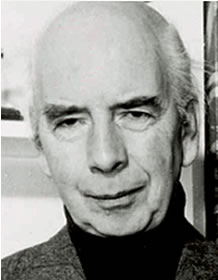
Heinz Piontek (15 november 1925 – 26 oktober 2003)


De Britse dichter en schrijver
James Graham Ballard werd geboren in Shanghai op 15 november 1930. Zie ook
mijn blog van 15 november 2008 en ook mijn blog van 15 november 2009 en ook mijn blog van 15 november 2010.


Uit:
The Dying Fall


„Three years have passed since the collapse of the Tower of Pisa, but only now can I accept the crucial
role that I played in the destruction of this unique landmark. Over twenty tourists died as the thousands of tons of marble lost their grasp on the air and collapsed to the ground. Among them was my wife Elaine, who had climbed to the topmost tier and was looking down at me when the first visible crack appeared in the tower's base. Never were tragedy and triumph so intimately joined, as if Elaine's pride in braving the worn and slippery stairs had been punished by the unseen forces that had sustained this unbalanced mass of masonry for so many centuries.

I realise now that another element — farce — was present on that day. By chance a passing tourist on the steps of the cathedral had taken a photograph of the tower as the crack reached the third floor and a tell-tale section of cornice began its fall to earth. The photograph, endlessly published throughout the world, clearly shows the four startled tourists on the uppermost deck. Three of them are leaning back on their heels, hands raised to grip the sky, aware that the ancient campanile has moved under their feet.

Elaine, alone, has already seized the rail, and is staring at the grass waiting for her nearly two hundred feet below. Using a magnifying glass, one can see that, true to her quirky and mocking character, she shows almost no alarm. Her eyes have noticed the falling cornice, and I like to think that she is already planning to sue the municipality of Pisa for neglecting the safety of its tourists, and is collecting evidence that in due course she will present to her lawyers.

The dozen or so tourists visible on the lower floors are still making their way around its canted decks, groping past the narrow columns as they climb the 300 steps to the roof. A father and his young daughter wave to the tourists below them, two Italian sailors in uniform play the fool for their girl-friends, feigning an attack of giddiness, and an elderly couple pause to rest after climbing to the first floor, determined to complete the ascent. None of them sees the falling cornice and the fine cascade of powdered mortar.“


1032497-02d0e4df763cf7692a0331244b4a68c9.jpg
J. G. Ballard (15 november 1930 - 19 april 2009)


De Duitse dichteres en schrijfster
Liane Dirks werd geboren op 15 november 1965 in Hamburg. Zie ook alle tags voor Liane Dirks op dit blog.


Uit:
Und die liebe?frag ich sie


“Nun hab ich schon so viel gefragt, all die langen Nächte.

Sie ist müde darüber geworden und grau, der Körper sackt zusammen.

An ihren Händen trägt sie noch immer die bunten Ringe und Reifen aus Silber und künstlichem Gold. Ihr Haar ist glatt und gepflegt. Sie hat wie immer Puder aufgelegt.

Auf dem Tisch stehen ein Tee- und ein Cognacglas, mein kleines schwarzes Tonband dazwischen.

Die Vorhänge sind offen, noch ist es hell.

Die Liebe, wiederholt sie.

Ja, sage ich.

Wir werden aufhören danach, nicht wahr?

Ja, sage ich. Bitte! Noch die Liebe. Es wird das letzte sein.

Sie strafft sich, spannt die Muskeln an. Sie stöhnt erneut.

Gut, sagt sie, es gab sie. Und ich drücke den roten Aufnahmeknopf vom Tonband.

Es gab eine Nacht, ich erzähl sie dir, aber es wird unser letztes Band.

Es gab eine Nacht. Ich habe es noch nie erzählt, und ich mache es nur einmal.

Der Anfang war leicht.

Ich kam durch einen Tunnel und sah sie in der Ferne sitzen. Wie eine junge Frau auf einem Mäuerchen, die Beine übereinandergeschlagen, der linke Fuß wippte. Sie trug einen Plisseerock in den Farben Sand und Grau. Ihr Haar war kinnlang, dick und schwer, neben ihr stand ein Mann, mit dem sie kokettierte.

Das Licht war klar an jenem Tag, als hätte ich es mitgebracht von meiner Reise, und warme Luft umstrich noch meinen Körper, der mager war, und meine Seele, die wußte, daß etwas begann.

Darf ich euch vorstellen? fragte der Mann.

Sie lächelte, ich habe schon von Ihnen gehört.

Das wunderte mich, denn von mir gab es noch nicht so viel zu hören.

Wir lasen gemeinsam Texte in einer Schule vor.

Sie von einem Arbeitslosen, der sich bei der Stellenvermittlung als Schwein bewarb, ich irgend etwas in meiner Erinnerung eher Pathetisches von einer Frau, die für immer wegfahren wollte. Was ja schon ein Widerspruch in sich ist, »immer« und »weg«, weil man nicht immer weg sein kann, höchstens und bestenfalls immer da. Den Text hab ich später zerrissen.”


1032497-5a14d195661c06837c8168e0c91685b9.jpg
Liane Dirks (Hamburg, 15 november 1965)


Zie voor nog meer schrijvers van de 15e november ook mijn vorige blog van vandaag.
Geschreven door Romenu om 19:46 Reageer op dit bericht

Marianne Moore, Antoni Słonimski, Elizabeth Arthur, Carlo Emilio Gadda, Janus Secundus, Richmal Crompton, Emmy von Rhoden, Madeleine de Scudéry, José de Lizardi

De Amerikaanse dichteres Marianne Moore werd geboren op 15 november 1887 in Kirkwood, Missouri. Zie ook mijn blog van 15 november 2008 en ook mijn blog van 15 november 2009 en ook mijn blog van 15 november 2010.


Roses Only


You do not seem to realize that beauty is a liability rather

than

an asset - that in view of the fact that spirit creates form

we are justified in supposing

that you must have brains. For you, a symbol of the

unit, stiff and sharp,

conscious of surpassing by dint of native superiority and

liking for everything

self-dependent, anything an


ambitious civilization might produce: for you, unaided, to

attempt through sheer

reserve, to confuse presumptions resulting from

observation, is idle. You cannot make us

think you a delightful happen-so. But rose, if you are

brilliant, it

is not because your petals are the without-which-nothing

of pre-eminence. Would you not, minus

thorns, be a what-is-this, a mere

perculiarity? They are not proof against a worm, the

elements, or mildew;

but what about the predatory hand? What is brilliance

without co-ordination? Guarding the

infinitesimal pieces of your mind, compelling audience to

the remark that it is better to be forgotten than to be re-

membered too violently,

your thorns are the best part of you.


 1032489-01550674d88514cae211321527f3da8a.jpg

Marianne Moore (15 november 1887 – 5 februari 1972)


De Poolse dichter en schrijver Antoni Słonimski werd geboren op 15 november 1895 in Warschau. Zie ook mijn blog van 15 november 2009 en ook mijn blog van 15 november 2010.


Uit: On Jewish Sensivity (Vertaald door Mariusz Wesolowski)


“One of the cardinal and predominant characteristics of the Jewry is the contempt for the greatest achievements of the human spirit. The Jews disdain everything: they butcher the language they speak, they ignore the purity of speech, body and heart, while attaching an irrational value to money. "An important difference!" - one hears this silly phrase from every other Israelite in the street. To say "Rataj cigarettes" instead of "Seraj cigarettes" is a detail not worth the slightest attention. This disdain for language precipitates the disdain for literature. A realistically thinking merchant says to a non-realistically thinking salesman, "Go read Sienkiewicz!"

A similar attitude is also noticeable in the Polish society, but among the Jews it is significantly more pronounced. I doubt if one can find in any other milieu the type of a poet who does not believe in the existence of poetry and thinks that writing good poems is just a matter of flashy technique and conforming to current fashions. A certain young writer of this kind quite seriously asked me to tell him the secret of creating poems that would be easy to publish and which would be "much talked about later".

The Jewish indifference to physical insults - I have witnessed Jews in coffee shops slapping one another's faces and then resume their business without even getting up - is related to their contempt for physical labour. Hard manual work is good only for the "roughnecks". Physical laborers are almost non-existent among the Jews, because theirs is a non-productive nation, active by and large in commerce and middlemanship. Ninety per cent of the white-slave traffickers are Jewish. In reply to such accusations they typically state that it is the result of the conditions in which they are forced to live. Perhaps the Jews are oppressed and barred from many positions of employment but certainly not to such a degree that they would have to engage in white slavery.”


 1032489-60dddefbbd1aa107375a54353064052b.jpg

Antoni Słonimski (15 november 1895 – 4 juli 1976)


De Amerikaanse schrijfster Elizabeth Arthur werd geboren op 15 november 1953 in New York. Zie ook mijn blog van 15 november 2009 en ook mijn blog van 15 november 2010.


Uit: Bring Deeps


„I walked, and thought. Tried not to think of Bastian, although I thought of little else. Though I was angry, still, I longed for him, and wanted him beside me as I walked the streets of Kirkwall. I felt defenseless in the face of all these new impressions, which I drew in as if I were a sponge, attached to firth-bound rocks, and water-hungry. On doors and windows, I saw notices of funerals. And not just on the doors of flower shops, or undertakers, but on the windows of the grocers, bakers. On the same windows, there were notices of celebrations, revels; the daily paths of life announced the dying. I longed for Bastian to explain, to point things out, to bring me fully to this place he'd brought me. As he was not there in his body, I tried to think what he might say about these things. I thought of how the people whom Sebastian studied had had no fuels like coal and peat; in that way, too, their time was different. They had no written language, no notices announcing death, and as for fuel, just wood which drifted onto Orkney's shores, or oil derived from whales and seals and fishes. All surface things, however. Nothing to burn which came from down below them.

And what had that been like? To live upon an earth whose skin had never once been torn? Where only shallow plows had tickled it, and little spades had nudged it, to let it take into itself the seed of things to come? The world had been, I thought, quite like an infant child, kept dry by its earth swaddling cloths, and those who'd walked upon it had never dreamed that this would change, any more than they had dreamed that after they were gone there would be written language. Then everything had changed. Then bronze had come, not quite as strong as iron, but still drawn forth out of the body of the earth as copper. And no coincidence, perhaps, that as the bronze had come, the climate changed, and peace and plenty vanished. As people tried to move to better land, the people who lived already on that land built stone towers — brochs — to stand within and fight, and those stone brochs, signs of the age when neighbor had fought neighbor, still stood in many places in Orkney. All that because of changing winds, and bronze, torn out of secret places in the virgin body of the earth, just like the peat and coal that blew above me.“


 1032489-88e0f7c59aca4e2136e46508eda61dcf.jpg

Elizabeth Arthur (New York, 15 november 1953)


De Italiaanse schrijver Carlo Emilio Gadda werd geboren op 15 november 1893 in Milaan. Zie ook mijn blog van 15 november 2008 en ook mijn blog van 15 november 2009 en ook mijn blog van 15 november 2010.


Uit: That Awful Mess on the via Merulana (Vertaald door William Weaver)


„The tight garters, curled slightly at the edges, with a clear, lettuce-like curl: the elastic of lilac silk, in that hue that seemed in itself to give off a perfume, to signify at the same time the frail gentleness both of the woman and of her station, the spent elegance of her clothing, of her gestures, the secret manner of her submission, transmuted now into the immobility of an object, or as if of a disfigured dummy. Taut, the stockings, in a blond elegance like a new skin, given to her (above the created warmth) by the fable of our years, the blasphemy of the knitting machines: the stockings sheathed the shape of the legs with their light veil, modeling of the marvelous knees: those legs slightly spread, as if in horrible invitation. Oh! the eyes! where, at whom were they looking? The face! . . . Oh, it was scratched, poor object! Under one eye, on the nose! Oh that face! How weary it was, weary, poor Liliana, that head in the cloud of hair that enfolded it, those strands performing a final work of mercy. Sharpened in its pallor, the face: worn, emaciated by the atrocious suction of Death.

A deep, a terrible red cut opened her throat, fiercely. It had taken half the neck, from the front toward the right, that is, toward her left, the right for those who were looking down: jagged at its two edges, as if by a series of blows, of the blade or point: a horror! You couldn't stand to look at it. From it hung red strands, like thongs, from the black foam of the blood, almost clotted already; a mess! with some little bubbles still in the midst. Curious forms, to the policemen: they seemed holes, to the novice, like red-colored little maccheroni, or pink. "The trachea," murmured Ingravallo, bending down, "the carotid, the jugular! . . . God!"


1032489-245c39357ab3843996b7eb5f52724ff2.jpg
Carlo Emilio Gadda (15 november 1893 – 21 mei 1973)


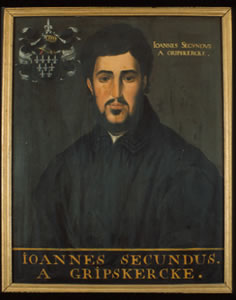
De Nederlandse humanistische dichter Janus Secundus (eigenlijk Jan Everaerts) werd geboren in werd geboren in Den Haag op 15 november 1511. Zie ook mijn blog van 15 november 2009 en ook mijn blog van 15 november 2010.


Het II. kvsken

Bij Douza


Mocht ick (o liefsten) eens uw welgedrongen hals

In mijnen armen zulx bestricken,

Oft ghij mij met de uw zo nauw bekruypen, als

Men om den Elst het loof ziet quicken

Des wijngarts, oft de klijf wutwendich om zijn micken

Nieu wegen met zijn telgen sporen,

Zo wild' ick zonder rust, deed kuskens stadich slicken

Oick deur gheen lust van dranck oft koren,

Oft, dat de zoete vaeck ons d'oghen mocht bekoren,

Mij van uw keel niet laten rucken

Och oft mij Venus eens in dezen wou verhoren,

End ons zodaenen bandt mocht lucken,

Bandt, welck noch Hel, noch Doot konst ummer slaen in stucken

Maer kleevend' aen malcander zouwen,

Zulx als wij zyn gemaickt, een ewighe vreucht plucken,

End' onbeschreumt van Charons snauwen

Met d'algemeijne Schuijt ons over laten stauwen

De swarte Phlegetonsche Veeren.

Van waer wij wouden voorts de zalighe Landouwen

Des Elysijnsche Velts passeren.

Aldaer heur' oude liefd noch naer haer doot hanteren

De vorighe Amoreuze Hanßen

Elck met zyn bruijt gepairt; niet doende dan hoveeren,

Met zoenen, zinghen, ende danßen.


 1032489-af50c4ece77c54123c40d1b2db2d5970.jpg

Janus Secundus (15 november 1511 - 1536)


Zie voor onderstaande schrijvers ook mijn blog van 15 november 2010.


De Engelse schrijfster Richmal Crompton Lamburn werd geboren op 15 november 1890 in Lancashire. Zie ook mijn blog van 15 november 2008.


De Duitse schrijfster Emmy von Rhoden (eig. Emilie Auguste Karoline Henriette Friedrich geb. Kühne)  werd geboren op 15 november 1829 in Magdeburg. Zie ook mijn blog van 15 november 2009.


De Franse schrijfster Madeleine de Scudéry werd geboren op 15 november 1607 in Le Havre. Zie ook mijn blog van 15 november 2008 en ook mijn blog van 15 november 2009.


De Mexicaanse dichter en schrijver José Joaquín Fernández de Lizardi werd geboren in Mexico-stad op 15 november 1776. Zie ook mijn blog van 15 november 2008.

Geschreven door Romenu om 19:33 Reageer op dit bericht

Astrid Lindgren, P.J. O'Rourke, Jonathan van het Reve, Karla Schneider, Jurga Ivanauskaitė

De Zweedse schrijfster Astrid Lindgren werd als Astrid Ericsson geboren op 14 november 1907 en groeide op op de boerderij Näs in Vimmerby in Småland. Zie ook alle tags voor Astrid Lindgren op dit blog.


Uit: Pippi Langstrumpf (Vertaald door Cäcilie Heinig)


„Am Rand der kleinen, kleinen Stadt lag ein alter verwahrloster Garten. In dem Garten stand ein altes Haus und in dem Haus wohnte Pippi Langstrumpf. Sie war neun Jahre alt und sie wohnte ganz allein dort. Sie hatte keine Mama und keinen Papa, und eigentlich war das sehr schön, denn so gab es niemanden, der ihr sagen konnte, dass sie schlafen gehen sollte, wenn sie gerade mitten im schönsten Spiel war, und niemand, der sie zwingen konnte, Lebertran zu nehmen, wenn sie lieber Bonbons essen wollte.

Prinzessin Pippi Früher hatte Pippi mal einen Papa gehabt, den sie schrecklich lieb hatte. Ja, sie hatte natürlich auch eine Mama gehabt, aber das war so lange her, dass sie sich gar nicht mehr daran erinnern konnte. Die Mama war gestorben, als Pippi noch ein ganz kleines Ding war, das in der Wiege lag und so furchtbar schrie, dass es niemand in ihrer Nähe aushalten konnte. Pippi glaubte, dass ihre Mama nun oben im Himmel war und durch ein kleines Loch auf ihr Mädchen runterguckte, und Pippi winkte oft zu ihr hinauf und sagte:

"Hab keine Angst um mich! Ich komm immer zurecht!"

Ihren Papa hatte Pippi nicht vergessen. Er war Kapitän und segelte über die großen Meere, und Pippi war mit ihm auf seinem Schiff gesegelt, bis er einmal bei einem Sturm ins Meer geweht worden und verschwunden war. Aber Pippi war ganz sicher, dass er eines Tages zurückkommen würde. Sie glaubte überhaupt nicht, dass er ertrunken sein könnte. Sie glaubte, dass er auf einer Insel an Land geschwemmt worden war, wo viele Eingeborene wohnten, und dass ihr Papa König über alle Eingeborene geworden war und jeden Tag eine goldene Krone auf dem Kopf trug.“


 1031807-e0b39d51ad109f08cfb4e7e55027f260.jpg

Astrid Lindgren (14 november 1907 -  28 januari 2002)

Standbeeld in Stockholm


De Amerikaanse journalist en schrijver P.J. O'Rourke werd geboren op 14 november 1947 in Toledo, Ohio. Zie ook alle tags voor P.J. O'Rourke op dit blog.

Uit: Parliament of Whores


„What is this oozing behemoth, this fibrous tumor, this monster of power and expense hatched from the simple human desire for civic order? How did an allegedly free people spawn a vast, rampant cuttlefish of dominion with its tentacles in every orifice of the body politic?
The federal government of the United States of America takes away between a fifth and a quarter of all our money every year. That is eight times the Islamic zakat, the almsgiving required of believers by the Koran; it is double the tithe of the medieval church and twice the royal tribute that the prophet Samuel warned the Israelites against when they wanted him to anoint a ruler:
This will be the manner of the king that shall reign over you. . . . He will take the tenth of your seed, and of your vineyards. . . . He will take the tenth of your sheep. . . . And ye shall cry out in that day because of your king. . ..
Our government gets more than thugs in a protection racket demand, more even than discarded first wives of famous rich men receive in divorce court. Then this government, swollen and arrogant with pelf, goes butting into our business. It checks the amount of tropical oils in our snack foods, tells us what kind of gasoline we can buy for our cars and how fast we can drive them, bosses us around about retirement, education and what’s on TV; counts our noses and asks fresh questions about who’s still living at home and how many bathrooms we have; decides whether the door to our office or shop should have steps or a wheelchair ramp; decrees the gender and complexion of the people to be hired there; lectures us on safe sex; dictates what we can sniff, smoke and swallow; and waylays young men, ships them to distant places and tells them to shoot people they don’t even know.
The government is huge, stupid, greedy and makes nosy, officious and dangerous intrusions into the smallest corners of life—this much we can stand. But the real problem is that government is boring. We could cure or mitigate the other ills Washington visits on us if we could only bring ourselves to pay attention to Washington itself. But we cannot.“


 1031807-8850856c014ea13e59f1173c3aab7ff0.jpg

P.J. O'Rourke (Toledo, Ohio,  14 november 1947)


De Nederlandse schrijver en columnist Jonathan van het Reve werd geboren op 14 november 1983 in Amsterdam. Zie ook mijn blog van 14 november 2008 en ook mijn blog van 14 november 2009 en ook mijn blog van 14 november 2010.


Uit: De boot en het meisje


“We gaan aan tafel zitten. Ik pak de wijn en maak hem open, terwijl Rosa de coquilles bakt.
'Kan ik je ergens mee helpen?' roept Bart.
'Ja, eigenlijk wel, heel graag.' roept Rosa uit de keuken.
Bart staat op en laat mij alleen met Rachel.
Ze kijkt ietsje minder bang dan daarnet, maar helemaal op haar gemak lijkt ze nog niet.
'Lekkere wijn,' zegt ze.
'Ja,' zeg ik. Ik draai een beetje met mijn glas. 'Hij ruikt naar noten, vind je niet?'
'O, ik heb echt totaal geen verstand van wijn hoor! Ik vind hem gewoon lekker smaken. Ik zou echt niet weten wat voor wijn dit is.' Ze kijkt naar het etiket. 'Ik koop normaal altijd wijn in de supermarkt, en dan weet ik nog niet wat ik moet kopen. Ik ken ook geen namen van wijnen. Maar ik weet wel wat ik lekker vind.'
'Wat dan?'
'Nou, dit dus. Maar ik haat Chardonnay. Chileense wijn vind ik wel lekker.'
'O ja. Ik weet er ook niet zo veel van, hoor.' Ik neem een slokje. 'Wat doe je eigenlijk?'
'Rietveld, laatste jaar.'
'Wat voor richting?'
'Voorheen Audio-Visueel.'
'Gekke naam is dat toch. Wanneer is de eindtentoonstelling?'
'Volgende maand al.' Haar ogen worden groot. 'Echt stressen nog. Ik moet nog heel veel monteren.'
'Wat voor filmpje heb je gemaakt?'
'Ja, het is een beetje raar hoor, maar het gaat over imperialisme, of misschien wel over heel veel dingen. Het komt erop neer dat ik een stuk steen van het Colosseum in Rome meeneem naar Madison Square Garden in New York. Daarom waren wij daar ook. Om aan te geven dat de Amerikanen een beetje de Romeinen van deze tijd zijn. Qua politiek dan. En hoe ze hun cultuur opdringen aan de rest van de wereld.'
'Hoe heet het?'
'Romans through the time. A rock's quest of entertainment now and then.' “


 1031807-97241b2f5cd7ed24e7c925ea673cdcd7.jpg

Jonathan van het Reve (Amsterdam, 14 november 1983)


De Duitse schrijfster Karla Schneider werd op 14 november 1938 geboren in Dresden. Zie ook mijn blog van 14 november 2008 en ook mijn blog van 14 november 2009 en ook mijn blog van 14 november 2010.


Uit: Glückskind


„Mitten in der Rechenstunde klopfte es an die Tür der Klasse 4a.

Voller Freude über die Unterbrechung legten alle Schüler und Schülerinnen ihre Füller hin. Nur Frau

Spalteholz, die Lehrerin, war nicht begeistert. Sie hasste Unterbrechungen. Hinterher hatten die

Schüler immer alles vergessen, was sie ihnen vor der Unterbrechung erklärt hatte.

Die Tür wurde schwungvoll aufgerissen und über die Schwelle trat der Direktor. In seiner Begleitung

befand sich eine Frau. Sie war nicht mehr jung, aber auch nicht direkt alt. Ihr Rock fegte den Boden.

Ihre Haare hingen offen bis zum Gürtel und waren blond mit schon vielen grauen Strähnen. Ein bisschen sah sie aus wie eine Fee. Aber auch ein bisschen wie eine Hexe.

»Darf ich euch Frau Fortuna vorstellen«, sagte der Direktor. »Sie hat sich eure Klasse ausgesucht,

umeine kleine Befragung durchzuführen. Ich hoffe, ihr gebt Frau Fortuna auf ihre Fragen klare und

deutliche Antworten.«

»Und ich hoffe, es wird nicht allzu lange dauern«, fügte Frau Spalteholz hinzu. »Die Klasse kann

es sich nicht erlauben, eine Mathestunde einzubüßen.« Dann zog sie sich ans Fenster zurück und verschränkte die Arme zu einer Brezel.“


 1031807-4a0b093ea9706c7a4c69cc18de65eb90.jpg

Karla Schneider (Dresden, 14 november 1938)

Dresden bij avond 


De Litouwse schrijfster Jurga Ivanauskaitė werd geboren in Vilnius op 14 november 1961. Zie ook mijn blog van 14 november 2008 en ook mijn blog van 14 november 2009 en ook mijn blog van 14 november 2010.


Uit: The Red Dress (Vertaald door Kristina Sakalavičiūtė)


„This is how Nora fell into the classical situation of Cinderella. Many stars of the stage, according to theater critics, got their start this way. Needless to say, Nora was anxious and paced back and forth in Elegija's dressing room. She walked up to the window many times and looked out into the yard, where children were noisily chasing a bright-red ball through yellow leaves. Snapping her fingers rhythmically, she would then go back to the closet, where the dress hung on a door handle, and caress it with the palm of her hand before returning to the window.

Eventually, Nora sat down in the swivel chair, upholstered in yellow plush. She looked around to see if anyone was watching and began to rummage through Elegija's dressing table drawers. She took out the Salome script; it was stained with something red. Sniffing it, Nora decided against it being wine. She thumbed through the pages, of which several had cigarette burns. Elegija's comments, question marks and exclamation points, made with felt markers of varying colors, filled the text. In the other drawer, Nora found a small book covered in newspaper. She opened it to where a candy wrapper marked the page and read aloud, unconsciously imitating Elegija's intonations, a paragraph underlined in red pencil:

—"I am the Alpha and the Omega, the very first and the very last, the beginning and the end. Blessed are those who wash their clothes in the Blood of the Lamb to gain power from the tree of life and pass through the gates into the city. Outside there are scoundrels, sorcerers, shameless cretins, murderers, idolaters and all who love and live by lies..."

She closed the book, irritated and dissatisfied because the underlined phrase was full of meaning, but just as equally senseless. Even though Nora had secretly expected the book to explain the mystery of Elegija's disappearance, it was no help at all. She opened another drawer and smiled, catching herself looking for one more clue to Elegija's disappearance. In the drawer was a desiccated plant with a note tied to it with a red ribbon. Nora, of course, read it: "To Elegija—the Touch-Me-Not (cf. The Soviet Lithuanian Encyclopedia)—from the 21st Graduating Class of the Donelaitis School." In the same drawer, several tubes of lipstick rolled about and Nora painted her lips with one of them. She looked at the mirror, first puckering her lips, then stretching them wide, and finally smiling. At last she frowned because the color was so unbearably bloody. She darted a glance at the dress and realized at once that the lipstick was the same color and Elegija had bought it especially for the performance.“


 1031807-83152b5631ff8eae4f9c33027b1984e1.jpg

Jurga Ivanauskaitė (14 november 1961 - 17 februari 2007)


Zie voor nog meer schrijvers van de 14e november ook mijn vorige blog van vandaag.
Geschreven door Romenu om 18:23 Reageer op dit bericht

Fondane Benjamin, Eric Malpass, Taha Hussein, Aleardo Aleardi, Adam Oehlenschläger, Herbert Zand, Jakob Schaffner

De Roemeens-Franse dichter, toneelschrijver, literair criticus, regisseur en vertaler Fondane Benjamin (eig. Benjamin Wechsler) werd geboren op 14 november 1898 in Iaşi. Zie ook mijn blog van 14 november 2010.


Préface en prose (Fragment)


C’est à vous que je parle, homme des antipodes,

Je parle d’homme à homme,

avec le peu en moi qui demeure de l’homme

avec le peu de voix qui me reste au gosier,

mon sang est sur les routes, puisse-t-il, puisse-t-il

ne pas crier vengeance !

L’hallali est donné, les bêtes sont traquées,

laissez-moi vous parler avec ces mêmes mots

que nous eûmes en partage –

il reste peu d’intelligibles !


Un jour viendra, c’est sûr, de la soif apaisée,

nous serons au-delà du souvenir, la mort

aura parachevé les travaux de la haine,

je serai un bouquet d’orties sous vos pieds,

- alors eh bien sachez que j’avais un visage

comme vous. Une bouche qui priait, comme vous.


Quand une poussière entrait, ou bien un songe,

dans l’oeil, cet oeil pleurait un peu de sel. Et quand

une épine mauvaise égratignait ma peau,

il y coulait un sang aussi rouge que le vôtre !

Certes, tout comme vous j’étais cruel, j’avais

soif de tendresse, de puissance, d’or, de plaisir, de

douleur.

Tout comme vous j’étais méchant et angoissé

solide dans la paix, ivre dans la victoire,

et titubant, hagard, à l’heure de l’échec !


Oui, j’ai été un homme comme les autres hommes,

nourri de pain, de rêve, de désespoir. Eh oui, j’ai

aimé, j’ai pleuré, j’ai haï, j’ai souffert,

j’ai acheté des fleurs et je n’ai pas toujours

payé mon terme. Le dimanche j’allais à la

campagne pêcher, sous l’oeil de Dieu, des poissons

irréels,

je me baignais dans la rivière

qui chantait dans les joncs et je mangeais des frites

le soir. Après, après, je rentrais me coucher

fatigué, le coeur las et plein de solitude,

le coeur plein de pitié pour moi,

plein de pitié pour l’homme,

cherchant, cherchant en vain sur un ventre de

femme cette paix impossible que nous avions

perdue naguère, dans un grand verger où fleurissait

au centre, l’arbre de la vie …


1031803-013bcee73fbc2afad67c4ea2578d6973.jpg
Fondane Benjamin (14 november 1898 - 2e of 03 oktober 1944)

Portret door Victor Brauner


De Engelse schrijver Eric Lawson Malpass werd geboren op 14 november 1910 in Derby. Zie ook mijn blog van 14 november 2010.


Uit: Morgens um sieben ist die Welt noch in Ordnung (Vertaald door Brigitte Roeseler)


„Morgendämmerung und ein Himmel wie kalter Haferbrei. In den Winkeln des Daches noch

ein paar Flecken nassen Schnees.

In dem großen, weitläufigen Haus lag die Familie im sonntagmorgendlichen Winterschlaf,

eingekuschelt gegen die Kälte und den kommenden Tag.

Aber Gaylord war gegen Kälte unempfindlich. Der junge Gaylord Pentecost war gegen die

meisten Dinge unempfindlich. Gleich nach dem Aufwachen hopste er erst mal ein bisschen auf

dem Bett herum. Als ihm das langweilig wurde, zog er die Schlafanzughose auf seine nicht vorhandene Taille herauf und machte sich auf eine Besuchstour durch das Haus.

Zuerst war Opa an der Reihe. In seinem Zimmer war es noch dunkel. Gaylord zog die Vorhänge

auf. Die Vorhänge hingen an Messingringen. Wenn andere sie zurückzogen, klapperten

sie wie Kastagnetten. Wenn Gaylord sie zurückzog, klang es wie eine Maschinengewehrsalve.

Opa öffnete nicht einmal die Augen. «Verschwinde, zum Teufel noch einmal», sagte er.

Opa wirkte unter der Bettdecke wie ein massiver, kleiner runder Berg. Gaylord nahm einen

Anlauf und landete mitten auf dem Berg. «Ich bin ein Ritter», schrie er. «Und du bist mein

Schlachtross.»

«Ich bin kein Schlachtross», sagte Opa. «Ich bin ein alter Mann, der seine Ruhe haben will.

Herrgott nochmal.»

Neugierig berührte Gaylord mit dem Finger eins der faltigen Augenlider. Er schob das Lid

nach oben und betrachtete nachdenklich das gelbe, Unheil verkündende Auge. Er ließ das

Lid wieder herunterklappen. «Soll ich dir eine Tasse Tee machen?»

«Wenn du recht lange dazu brauchst, ja»,

sagte Opa. Gaylord kletterte von ihm herunter.

«Geht wie der Blitz», antwortete er vergnügt.

«Bitte, lass dir Zeit», sagte Opa.

Gaylord spazierte weiter zu Großtante Marigold.

«Willst du eine Tasse Tee haben?», schrie er von der Tür her.“


 1031803-4a3f1d53818abb43f0284366122a64b3.jpg

Eric Malpass (14 november 1910 - 16 oktober 1996)


De Egyptische schrijver Taha Hussein werd geboren in Al Minya in Egypte op 14 november 1889. Zie ook alle tags voor Taha Hussein op dit blog.


Uit: The Days


“From that day our lad's outlook on life was completely changed. He really knew God and was at great pains to draw near to Him by every possible means, from alms-giving to earnest prayer and the recitation of the Qur'an... From that day the lad knew what night vigils were, for many a time he would spend the dark hours of a whole night, either thinking about his brother or reciting Surat al-Ikhlas [chapter of Qur'an] thousands of times.

(…)


They start the Zikr sitting in silence. Then they begin to move their heads and raise their voices a little. Then a shudder runs through their bodies and lo! they are all standing, having leapt into the air like jacks-in-the-boxes. . The sheikhs move about the circle, reciting the poetry of Ibn Farid and similar poems.”

(…)


Now the connection of the family with one of the Sufi sects was strong and lasting. It left among them many lasting traces in the way of information, stories and talk about miracles and supernatural events.”


1031803-003bfb487867ab63504c559124d57ebd.jpg
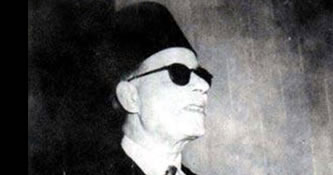
Taha Hussein (14 november 1889 – 28 oktober 1973)


De Italiaanse dichter Aleardo Aleardi werd geboren op 14 november 1812 in Verona. Zie ook alle tags voor Aleardo Aleardi op dit blog.


Cowards


In the deep circle of Siddim hast thou seen,
Under the shining skies of Palestine,
The sinister glitter of the Lake of Asphalt?
Those coasts, strewn thick with ashes of damnation,
Forever foe to every living thing,
Where rings the cry of the lost wandering bird
That on the shore of the perfidious sea
Athirsting dies,--that watery sepulchre
Of the five cities of iniquity,
Where even the tempest, when its clouds hang low,
Passes in silence, and the lightning dies,--
If thou hast seen them, bitterly hath been
Thy heart wrung with the misery and despair
Of that dread vision!
                      Yet there is on earth
A woe more desperate and miserable,--
A spectacle wherein the wrath of God
Avenges Him more terribly. It is
A vain, weak people of faint-heart old men,
That, for three hundred years of dull repose,
Has lain perpetual dreamer, folded in
The ragged purple of its ancestors,
Stretching its limbs wide in its country's sun,
To warm them; drinking the soft airs of autumn
Forgetful, on the fields where its forefathers
Like lions fought! From overflowing hands,
Strew we with hellebore and poppies thick
The way.


 1031803-27072218ce5d82c37136ebdbb0e1cb6e.jpg

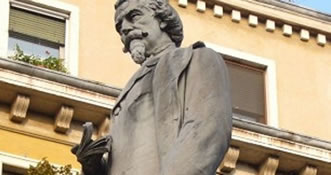
Aleardo Aleardi (14 november 1812 – 17 juli 1878)

Standbeeld in Verona 


De Deense dichter en schrijver Adam Gottlob Oehlenschläger werd geboren op 14 november 1779 in Vesterbro, Kopenhagen. Zie ook mijn blog van 14 november 2009 en ook mijn blog van 14 november 2010.


Christ's Birth


Each year when vapours melt and wane,

Child Jesus Christ is born again;

The Angel in air, in grove, in sea.

It is the Saviour, it is He.

Wherefore all Nature, with serene

Rejoicing, buds in hopeful green.


Now the young stainless shepherd lads.

Watching the stars' high myriads,

See God's angels in fields of night

Assemble, trembling in cool moonlight.

"To-day a Saviour is born," they sing,

"From gentle Mary's womb, from spring.


"His only drink is the earliest dew.

His eyes gaze heavenward into the blue,

His hands reach heavenward; they are bound

With garlands of roses to the ground.

His cry is the breeze, in the straw he lies,

Blue heaven mirrored in his eyes.


"Ah shepherds, go to Bethlehem;

Seek the cold-hearted, counsel them

To go into the fields, and find

The laughing Child, green grass-entwined,

And hear his voice, and see his smile.

That heaven may lift the earth awhile."


The hovering angels reascend.

To Bethlehem the shepherds wend.

And tell their happy news, but they

Are scorned, and mocked, and turned away

Back to the meadows, where the sod

Blooms with the new-born Child of God.


The stars stretch forth their silver hands

And beckon the kings of the eastern lands ;

The rays come singing with holy sound

And humbly sink to the living ground.

Praising the Lord made manifest.

Who smiles from the Mother's lovely breast.


They rise again from the darkened mould

In petals of purple, crimson, and gold,

Innocent children, devout and fair.

Half-lifted, half-bent to the earth in prayer,

Holding their yellow urns astir

With the sweetness of frankincense and myrrh.


 1031803-ef5b4abd7cc331161698d8e9ec219a5e.jpg

Adam Oehlenschläger (14 november 1779 – 20 januari 1850)


Zie voor onderstaande schrijvers ook mijn blog van 14 november 2010.


De Oostenrijkse dichter, schrijver, essayist en vertaler Herbert Zand werd geboren op 14 november 1923 in Knoppen. Zie ook mijn blog van 14 november 2008.


De Zwitserse schrijver Jakob Schaffner werd geboren op 14 november 1875 in Basel. Zie ook mijn blog van 14 november 2008.

Geschreven door Romenu om 18:14 Reageer op dit bericht

Chloe Aridjis

De Engels-Mexicaanse schrijfster Chloe Aridjis werd geboren in New York op 14 november 1971. Zij groeide op in Mexico City en Nederland, waar haar vader werkzaam was als ambassadeur van Mexico. Aridjis studeerde vergelijkende literatuurwetenschap aan Harvard en promoveerde aan de Universiteit van Oxford. Haar boek essays over magie en poëzie in negentiende-eeuws Frankrijk werd uitgebracht in 2005. Ze publiceerde in tijdschriften en kranten in Engeland en Mexico en woont na vijf jaar in Berlijn momenteel in Londen, waar ze werkt aan een roman en een verhalenbundel. Haar eerste roman "Book of Clouds" werd gepubliceerd in 2009. In november 2009 won haar Book of Clouds de Prix du Premier Roman Etranger in Frankrijk.


Uit: Book of Clouds


„I saw Hitler at a time when the Reichstag was little more than a burnt, skeletal silhouette of its former self and the Brandenburg Gate obstructed passage rather than granted it. It was an evening when the moral remains of the city bobbed up to the surface and floated like driftwood before sinking back down to the seabed to further splinter and rot.

 Berlin was the last stop on our European tour — we'd worked our way up from Spain, through France, Belgium and the Netherlands — and soon we would be flying home, back across the Atlantic, to start the new school year. My two brothers, still thrumming with energy, lamented that we had to leave. In every town and city they'd wandered off into the night and not returned until breakfast, answering in cranky monosyllables, between sips of coffee, whenever anyone commented on the amount of money being wasted on hotel rooms. My two sisters, on the other hand, weighed down by stories and souvenirs, were desperate to unload, and my parents too felt weary and ready for home. Not to mention that we'd used up 60 percent of the money we'd just inherited from my grandfather, and the remaining 40 had allegedly been set aside for our ever-expanding deli.

 On our final evening, after an early dinner, our parents announced they were taking us to a demonstration against the Berlin Wall to protest twenty-five years of this "icon of the Cold War." Wherever you went in Berlin, sooner or later you would run into it, even on the day we visited Hansa Studios where Nick Cave and Depeche Mode used to record, or the secondhand shop that sold clothes by the kilo. No matter where you went — east, west, north, south — before long you hit against the intractable curtain of cement and were able to go no further. That was our impression, anyway, so we figured that we too might as well protest against this seemingly endless structure that limited even our movement, though we were just seven tourists visiting the city for the first time.“


 1114687-065367745196f1f5b2778025e99cd880.jpg

Chloe Aridjis (New York, 14 november 1971)
Geschreven door Romenu om 00:00 Reageer op dit bericht

Meer van Romenu

↑ Terug naar de berichten