Naar de inhoud

Romenu

Over literatuur, gedichten, kunst en cultuur
akke.beakke.be

Berichten van 6 december 2011 tot 7 december 2011

Tatamkhulu Afrika, Johann Nestroy, Friedrich Schlögl
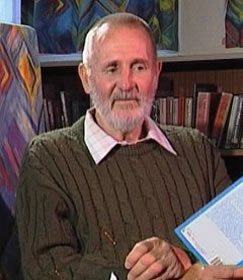
De Zuid-Afrikaanse dichter en schrijver Tatamkhulu Afrika werd geboren op 7 december 1920 in Egypte. Zie ook alle tags voor Tatamkhulu Afrika op dit blog.


The knifing


Black workers pass
me carrying their tools.
I call to them for help:
the stone
masks of their faces turn
aside,
do not look my way again.
He flails the blade
across the top of my skull
(does he see it as a fruit,
splittable, spewing seed?),
slashes, then,
the tender guardians of my wrists,
drives the knife-point in
below my left side’s bottom rib,
and runs.
I leave a spoor
like a wounded beast’s,
make it to the little Indian shop
that sells boiled eggs with mayonnaise,
sway,
falling about in my own blood,
eyes shouting “Help!”
They carry me to the ambulance.
The clouds sweep
me with their sad sides:
yet I hear someone speak
of the bright day
and what a shame it is that this should be done
to anyone on such a day.
A face stares
at me through the wire-mesh
of a police van.
It is his; he sees
my wretched body pass,
blood leaking at every seam:
blood that is also on his hands;
turns away, then with a suddenness that says
more than any tongue,
burrows his face into his hands.
What does he see?
They stitch and stitch,
let my head hang down
when the lights go round and I feel
sense slipping from me like a skin,
and I am the unadorned
genitals of my need.
She screams and screams,
like a cat on heat,
like a little girl drumming her heels.
But she is seventeen:
he beat her until she was all
broken up inside.
I stare at the fluorescent tube;
it shrinks
to a filament of fire in my brain.
Blood still sees
from the black Khayelitsha youth’s
panga-riven-skull;
black bruises prowl
over the old man opposite’s
white-as-his-sheet-skin.
Only I do not sleep.
Time is a pendulum that swings
unlinked to any clock:
only the black window’s scowling back
tell of night; pain writhes
through me like an eel.
I watch the glucose drip,
drop by dizzying drop,
into my veins, wake
to sunlight on the walls,
starlings flirting past the glass,
Khayelitsha mopping blood from his neck,
grinning, saying
I can borrow his pee-bottle if I want.
I sag on the bed,
glucose mellow-honey in my veins,
small pulse of reluctant life
kick-starting way back.
Khayelitsha takes my hand,
hopes I’ll soon be well;
goes out then,
moving slowly amongst the slow-
moving coterie of his friends.
Desultory Xhosa clicks
snap like trodden sticks,
fade down
an inner tribal trial.
I face him then:
his neck nuzzling my palm.
His face still hidden in his hands.
What does he see?
I think to set him free.
How shall he be free?
Or I?
Testicle to testicle, we are trussed
by the winding round
us, rambling plastic coils.
Roaring down each other’s throats,
bellowing of our need,
we are skewered on the sharp
white lightning of his blade.


1048064-43c45be3b150132a30c00f7d78ffc0f3.jpg 

Tatamkhulu Afrika (7 december 1920 – 23 december 2002)


De Oostenrijkse schrijver Johann Nepomuk Eduard Ambrosius Nestroy werd geboren in Wenen op 7 december 1801. Zie ook alle tags voor Johann Nestroy op dit blog.


Uit: Einen Jux will er sich machen


„Erster Aufzug

Zimmer in Herrn Zanglers Hause; die allgemeine Eingangstüre im Prospekt, jedoch gegen die rechte Seite; links am Prospekt ein ziemlich breiter Ofenschirm, rechts und links eine Seitentüre, zu beiden Seiten Tisch und Stuhl

Erster Auftritt


Zangler Ich habe Ihnen jetzt ein für allemal g'sagt –

Sonders Und ich Ihnen ein für allemal erklärt –

Zangler Daß Sie meine Nichte und Mündel nicht kriegen!

Sonders Daß Marie die Meine werden muß!

Zangler Das werd' ich zu verhindern wissen!

Sonders Schwerlich so sicher, als ich es durchzusetzen weiß!

Zangler Kecker Jüngling!

Sonders Hartherziger Mann! Was haben Sie gegen mich? Meine Tante in Brüssel ist reich.

Zangler Gratulier'!

Sonders Ich werde sie beerben.

Zangler Aber wann?

Sonders Sonderbare Frage! Nach ihrem Tode.

Zangler Und bis wann wird sie sterb'n? Aha, da stockt die Antwort. So eine Tant' in Brüssel kann leben, so lang sie will.

Sonders Das wünsch' ich ihr vom Herzen, denn ich weiß, daß sie auch bei Lebzeiten reichlich zu meinem Glücke beitragen wird.

Zangler Reichlich beitragen – wieviel is das in Brüssel? Reichlich beitragen is hier das unbestimmteste Zahlwort, was es gibt, und in unbestimmten Zahlen schließ' ich kein Geschäft. Und kurz und gut, ins Ausland lass' ich meine Mündel schon durchaus nicht heiraten.

Sonders So heirate ich sie und bleibe hier.

Zangler Und derweil schnappt dort ein anderer die Erbschaft weg, das wär' erst gar das Wahre! Mit ei'm Wort, g'horsamer Diener! Plagen Sie sich auch nicht zu sehr mit unnötigem Herumspekulier'n um mein Haus! Meine Nichte is heut' früh an den Ort ihrer Bestimmung abgereist.

Sonders Wie, Marie fort –?

Zangler Ja, nach Dingsda – logiert in der ungenannten Gassen, Numero soundso viel, im beliebigen Stock, rechts bei der zug'sperrten Türe, da können S' anläuten, so oft S' wollen, hineinlassen wer'n s' Ihnen aber nicht.“


 1048064-a3f437215ce61fcede81e0c3e3689ad1.jpg

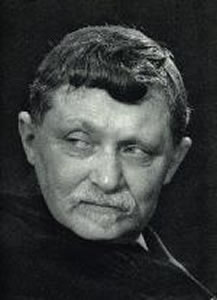
Johann Nestroy (7 december 1801 - 25 mei 1862)

Wenzel Scholz, Karl Treumann en Nestroy, 
Lithographie van Joseph Kriehuber, 1855


De Oostenrijkse schrijver en columnist Friedrich Kilian Schlögl werd geboren op 7 december 1821 in de Weense voorstad Laimgrube (nu Wenen). Zie ook mijn blog van 7 december 2010.


Uit: Sonderbare Käuze


»Mit dem alten Wien – oder vielmehr mit den Empfindungen der alten Wiener – verfährt die Demolierungsära recht grausam. Stück um Stück, woran die liebsten Erinnerungen haften, fallen in Schutt und Trümmer, und bald wird der letzte Rest der einstigen Heimstätte trauter Gemütlichkeit verschwunden sein, um Platz zu schaffen für die anstürmenden Jünger einer neuen Epoche, für die räumlichen Bedürfnisse einer modernen Weltstadt.«

»Die Metamorphose vollzieht sich rasch und rastlos und unaufhaltsam. Mit Beil und Axt kommen sie herangezogen, die unbarmherzigen Apostel der neuen Lehre, welche da heißt: ›Entwickelung‹, und unter ihren Schlägen stürzen die grünsten Bäume, in deren Schatten wir tausendmal gewandelt, und stürzen die Mauerhüllen der altehrwürdigsten Asyle, wohin wir in trüben Stunden geflüchtet, und unter den Fäusten pietätloser Reformen zerbröckelt, was uns einst wert und teuer war!«

So klagte dieser Tage ein alter Wiener, als er während seines gewohnten Spazierganges dazukam, wie die ersten Spatenstiche den Erdhügel des Paradiesgärtchens aufzuwühlen begannen und Hieb um Hieb auf die ächzenden Bäume und Sträucher niederfielen. – Der arme Mann hatte vielleicht eine kleine Berechtigung zu seufzen und zu jammern. Verjagte man ihn doch aller Orten, wo es ihm wohl und heimisch war und sich sein Herz erfreute. Die Basteien nahm man ihm, mit den schön gepflegten Wegen und der entzückenden Fernsicht nach den blauen Bergen des Südens; das Glacis, die Arena seiner Jugendspiele, verschwand, und statt des grünen Kranzes, der die Stadt umsäumte, erhob sich ein kahler Wall ihm fremdartiger Gebäude; den Prater, das urwüchsige Kleinod Wiens, reguliert man ihm bis zur Unkenntlichkeit, und schon rüttelt ein unheimlich Gerücht auch noch an anderen, viellieben Vermächtnissen edelmütiger Herzen, indem die vandalste Spekulation ihre gierigen Augen gerade auf die populärsten Parkidyllen warf, um statt der nutzlosen Baumgruppen und Blumenbeete dividendenfähige Baukomplexe zu gründen. Inzwischen, bis dieses Crimen patronisiert, demoliert man ihm den letzten Aussichtspunkt: das reizende Paradiesgärtchen.“


1048064-07cb1367759499ac0821b0fcbe28785d.jpg
Friedrich Schlögl (7 december 1821 - 7 oktober 1892)


Zie voor nog meer schrijvers van de 7e december ook mijn vorige blog van vandaag.
Geschreven door Romenu om 19:29 Reageer op dit bericht

Gabriel Marcel, Noam Chomsky, Willa Cather, Samuel Gottlieb Bürde

De Franse filosoof en toneelauteur Gabriel Marcel werd geboren op 7 december 1889 in Parijs. Zie ook alle tags voor Gabriel Marcel op dit blog.


Uit: Awakenings (Vertaald door Peter S. Rogers)


„This summer day of 1899 was a terrible date in the life of a child, as  I learned that we were going to leave Stockholm and return to Paris.  How can I ever forget the heavy heart with which I received this  news? As my father suffered somewhat from the Swedish climate and  didn't much care for the worldly and formal aspects of diplomatic  life, he was going to switch positions with a senior member of the  Council of State, Monsieur Catusse. This meant first of all that I  could no longer hope to spend vacation in Finland or in Norway.  What may seem peculiar is that nothing, or almost nothing, attracted
me in the Paris where we were to settle definitively. I also felt that our  return would be, sooner or later, followed by my entrance into the  lycée, something I vaguely feared since, until then, I had been edu-
cated at home. I can't recall whether it was immediately before or  after our stay in Stockholm that, for some months, I attended classes  at Rue Royale where my fellow students were mainly young girls.

What had I most appreciated in the Swedish capital? Without hesitation I would say the landscapes. I remember a discussion with my  father on the topic during a boat ride on the Saltsjön. He was essen-
tially a man of the Midi, the French South, and this somewhat uniform and sad nature bored him. Yet there was something in it that  exalted me. But what words could I use to translate that emotion?

I must have expressed myself rather awkwardly. But when I think  about what I had lived during that year in Stockholm, I see this: it  was as though I had been removed from the humdrum life I was to
suffer from so much later on, by the fact of being far away, and on  the edge of countries that were still farther away and which attracted me.“


 1048061-2df984edd4cb51a4ca2a87670df1e1a3.jpg

Gabriel Marcel (7 december 1889 - 8 oktober 1973)


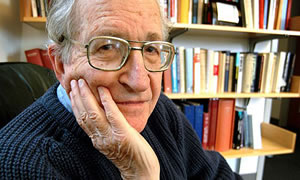
De Amerikaanse taalkundige, mediacriticus en anarchistisch denker Noam Chomsky werd geboren in Philadelphia op 7 december 1928. Zie ook mijn blog van 7 december 2007 en ook mijn blog van 7 december 2008 en ook mijn blog van 7 december 2009 en ook mijn blog van 7 december 2010.


Uit: Chronicles of Dissent, 1992


„QUESTION: One of your books, The Fateful Triangle, focuses specifically on the Middle East, and I was wondering if you could talk about your position on a possible two-state solution to the Palestinian question.

CHOMSKY: I don't think that's the optimal solution, but it has been the realistic political settlement for some time. We have to begin with some fundamentals here. The real question is: there are plainly two national groups that claim the right of self-determination in what used to be Palestine, roughly the area now occupied by Israel minus the Golan Heights, which is part of Syria.

So there are two national groups which claim national self-determination. One group is the indigenous population, or what's left of it -- a lot of it's been expelled or driven out or fled. The other group is the Jewish settlers who came in, originally from Europe, later from other parts of the Middle East and some other places. So there are two groups, the indigenous population and the immigrants and their descendants. Both claim the right of national self-determination. Here we have to make a crucial decision: are we racists or aren't we? If we're not racists, then the indigenous population has the same rights of self-determination as the settlers who replaced them. Some might claim more, but let's say at least as much right. Hence if we are not racist, we will try to press for a solution which accords them -- we'll say they are human beings with equal rights, therefore they both merit the claim to national self-determination. I'm granting that the settlers have the same rights as the indigenous population; many do not find that obvious but let's grant it. Then there are a number of possibilities. One possibility is a democratic secular society. Virtually nobody is in favor of that. Some people say they are, but if you look closely they're not really. There are various models for multi-ethnic societies, say Switzerland or whatever. And maybe in the long run these might be the best idea, but they're unrealistic.“


1048061-e3ebdcb2eadbf38810da47493c1fae70.jpg
Noam Chomsky (Philadelphia, 7 december 1928)


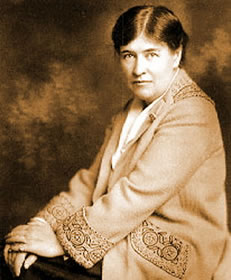
De Amerikaanse schrijfster Willa Cather werd geboren op 7 december 1873 in de buurt van Winchester, Virginia. Zie ook mijn blog van 7 december 2006 en ook mijn blog van 7 december 2009 ook mijn blog van 7 december 2010.


Uit: The Song of the Lark


"She was getting back to the earliest source of gladness that she could remember. She had loved the sun, and the brilliant solitudes of sand and sun, long before these other things had come along to fasten themseves upon her and torment her. That night, when she clambered into her big German feather bed, she felt completely released from the enslaving desire to get on in the world. Darkness had once again the sweet wonder that it had in childhood...

(...)

"She used to wonder at her own inactivity. She could lie there hour after hour in the sun and listen to the strident whirr of the big locusts, and to the light, ironical laughter of the quaking asps. All her life she had been hurrying and sputtering, as if she had been born behind time and had been trying to catch up. Now, she reflected...it was as if she were waiting for something to catch up with her. She had got to a place where she was out of the stream of meaningless activity and undirected effort.

(...)

"Here she could lie for half a day undistracted, holding pleasant and incomplete conceptions in her mind--almost in her hands. They were scarcely clear enough to be called ideas. They had something to do with fragrance and color and sound, but almost nothing to do with words. She was singing very little now, but a song would go through her head all morning, as a spring keeps welling up, and it was a pleasant sensation indefinitely prolonged. It was much more like a sensation than like an idea, or an act of remembering. Music had never before come to her in that sensuous form. It had always been a thing to be struggled with, had always brought anxiety and exaltation and chagrin--never content and indolence."


 1048061-ba9b95ae25768bf3dd29ee3af0ce5869.jpg

Willa Cather (7 december 1873 – 24 april 1947)


De Duitse dichter
Samuel Gottlieb Bürde werd geboren op 7 december 1753 in Breslau. Zie ook mijn blog van 7 december 2010.


Geist der Wahrheit, lehre mich


Geist der Wahrheit, lehre mich

aller Weisheit Quelle kennen!

Jesum kann ich nur durch dich

meinen Herrn und Heiland nennen.

Du nur kannst ihn mir verklären

und mein Herz in Gott belehren.


Du nur machst das Herz gewiß

und erleuchtest meine Seele,

daß ich in der Finsterniß

nicht den Weg des Heils verfehle.

Du nur führst auf Gottes Pfaden,

zeugst von Wahrheit und von Gnaden.


Heiligung und Reinigkeit

und ein gottgefällig Leben,

selige Zufriedenheit,

wahre Weisheit kannst du geben.

Selig, die an deinen Gaben

theil durch Lieb und Glauben haben.


Was mir fehlt, find ich in dir,

nur durch dich kann ich genesen.

Mache Wohnung ganz in mir,

daß werd neu mein ganzes Wesen!

Dann wird meine Schwachheit Stärke

und ich wirke Gottes Werke.


 1048061-d93199ff65ad83905a611b6614703116.jpg

Samuel Gottlieb Bürde (7 december 1753 - 28 april 1831)

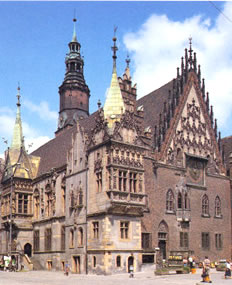
Breslau, raadhuis (Geen portret beschikbaar)

Geschreven door Romenu om 19:25 Reageer op dit bericht

Peter Handke, Rafał Wojaczek, Dirk Dobbrow, Henk van Woerden

De Oostenrijkse schrijver Peter Handke werd op 6 december 1942 in Griffen in Karinthië geboren. Zie ook alle tags voor Peter Handke op dit blog.


Uit: Die Morawische Nacht


“Jedes Land hat sein Samarkand und sein Numancia.

In jener Nacht lagen die beiden Stätten hier bei uns, hier an der Morawa. Numancia, im iberischen Hochland, war einst die letzte Flucht- und Trutzburg gegen das Römerreich gewesen; Samarkand, was auch immer der Ort in der Historie darstellte, wurde und ist sagenhaft; wird, jenseits der Geschichte, sagenhaft sein. Die Stelle der Fluchtburg nahm an der Morawa ein Boot ein, ein dem Anschein nach eher kleines, das sich »Hotel« nannte, in erster Linie aber, seit geraumer Zeit schon, dem Autor, dem ehemaligen Autor, als Wohnung diente. Die Aufschrift HOTEL war bloße

Tarnung: Wer für die Nacht nach einem Zimmer, einer Kabine fragte, der wurde in der Regel mit einem

»Ausgebucht« beschieden. Die Nachfrage blieb freilich nahe null, und nicht nur, weil das Boot jeweils

an einer Flußstelle ankerte, zu der es keine rechten Zufahrtswege gab. Wenn einmal sich einer bis dahin durchschlug, dann höchstens angezogen von dem Namen des »Hotels«, der weithin durch die Finsternis der Flußauen leuchtete: MORAWISCHE NACHT.

Das Boot war nicht verankert, sondern bloß so an Bäumen oder Strommasten vertäut, und zwar derart, daß die Taue leicht und schnell zu lösen waren – eben zur Flucht, oder auch nur zum Mir-nichts-dir-nichts- Weiterfahren oder Wenden, fl ußauf oder fl ußab. (Die Morawa war zu jener Zeit, nach vielen Jahren nicht allein kriegsbedingter Versandung und Verschlammung, dank einer selbst die Grenzen unseres zur Kümmerecke Europas verkrachten Landes überschreitenden und – fast – allesheilenden Wirtschaft, auf große Strecken, bis hin in die Quellgebiete der Südlichen und der Westlichen Morawa in Maßen wieder schiffbar geworden.)

In der Nacht, da wir auf das Boot gerufen wurden, hielt dieses zwischen dem Dorf Porodin und der Stadt Velika Plana. Velika Plana liegt zwar näher am Fluß. Aber der Ruf kam vom Porodiner Ufer, von einer Stelle weitab von der die beiden Orte verbindenden Brücke, und so zickzackten wir, ein jeder für sich, aus dem Dorf, kreuz und quer, jetzt nach links, jetzt nach rechts abbiegend, über die von Feld zu Feld richtungwechselnden Ackerwege.”


1047413-294e200e1e80ed6c088d59fd6c4fe993.jpg
Peter Handke (Griffen, 6 december 1942)


De Poolse dichter
Rafał Wojaczek werd geboren in Mikołów op 6 decmber 1945. Zie ook mijn blog van 6 december 2008 en ook mijn blog van 6 december 2009 en ook mijn blog van 6 december 2010. 


Didactical


Residents of the Other homeland
Across a rosebush are watching Time


Not yet knowing that like a slave
For them performs a dirty labor


Time like pain is of female gender
As the word Death is still unfamiliar


But I bear the guilt of their existence
Purposely giving up their name to the wind


I ought to give them a chance at nonexistence
Independent directly of me


And I enchanted Time in the clockwork of female body
So that lovemakers will feel the pain


Of Death so hard - that still ignorant
Of dying - will vomit out their lungs


Bird of whom I know


My face looks at me from the clouds
Having come out from my body and eyes
This is blood - straining past the horizon


My breath is blood, and a dry wind
That vertically ascends from the anchor
Of my lungs as a stalk of circling bird


But since earth is just now turning in reverse
The lungs turn in me 'til they rip out
Through mouth, through ribcage - like a cloth


Still there is sky, and my face is vast
As blood is dawning over the horizon's rim
The bird still knows his elevation


Yet unknowing, he's slowly seeping
From the large to my tight sky
Of closed eyelids - heavy as shroud.


Vertaald door Thomasz Gil


 1047413-6bf2a7e5b5aed96a650faf3c0d4cfe84.jpg

Rafał Wojaczek (6 december 1945 – 11 mei 1971)


De Duitse schrijver en acteur Dirk Dobbrow werd geboren op 6 december 1966 in Berlijn. Zie ook mijn blog van 6 december 2008 en ook mijn blog van 6 december 2009 en ook mijn blog van 6 december 2010. 
 

Uit: Späte Störung


„Hinter dem Garten begann der Wald.

Über den Bäumen war ein Streifen vom Himmel zu sehen, blassblau in der Dämmerung, mit einer Spur von Rot. Nina stand an dem Tisch mit den Getränken. Sie schraubte eine Whiskyflasche auf. Ihr Haar war hochgesteckt. Frank betrachtete ihren Nacken. Dann glitt sein Blick an ihr herab zu den hochhackigen Schuhen. Er hatte sie noch nie an ihr gesehen. Sie hatte den rechten Fuß aufgestellt und bewegte ihn immerzu hin und her. Der Fremde stand in der Mitte des Raumes mit dem Rücken zu ihm. Als Erstes fiel ihm der blonde Haarschopf auf, dann die schmalen Schultern.

Es war niemand aus Ninas Abiturklasse, kein Junge, eher ein Mann in seinem Alter. Er hielt ein leeres Glas in der Hand. Nina nahm die Flasche und tänzelte auf den Fremden zu. Seine Tochter war angetrunken. Ihr Lidstrich war verschmiert. Endlich bemerkte sie Frank. Er wich ihrem Blick aus. An einem der Ledersitze, zu deren Kauf ihm der Architekt geraten hatte, weil sie angeblich so gut

in die Halle passten, lehnte Ninas Bildermappe. Sie war halb geöffnet, der Ausschnitt einer Zeichnung ragte heraus, darauf eine flache Hand, erhoben zur Abwehr.

»Paps.«

Ihre Stimme klang zittrig. Der Fremde drehte sich zu ihm um. Seine Haut war blass, unter seinen Augen lagen Ringe, doch sein Blick war hellwach. Den Mantel hatte er nicht ausgezogen, dabei war es warm in der Halle, Iris schien wieder an der Heizung gedreht zu haben, obwohl es längst Frühling war. Das Gesicht des Fremden verzog sich zu einem Lächeln. Es wurde immer breiter, bis er Frank

seine Zähne zeigte. Frank zog die Schultern hoch.“


 1047413-09a0ef9ce0205f8a7498dc40d312c7f1.jpg

Dirk Dobbrow (Berlijn, 6 december 1966)

Cover 


De Nederlandse schrijver en schilder Henk van Woerden werd op 6 december 1947 geboren te Leiden. Zie ook alle tags voor Henk van Woerden op dit blog.


Uit: Ultramarine (Vertaald door Susan Ridder)


“Aysel thought that she could read the country – any country – like a newspaper. But this country, this city, was impossible to read. What had happened to her back home was a closed chapter. But the shock of Fragfurti would probably never leave her. That first winter she spent hours along the railway tracks behind Pegasus Street. Just to be outside, no matter how cold she was. To have the feeling that there was sandy ground here too, a grassy patch on the side of the road, a ditch that might acquire significance. So many things had become insubstantial, empty. The neighbourhood was crisscrossed by humming power. lines strung between tall poles. Time and again, with her back up against one of them, she crouched down in the sand. During her pregnancy, she became accustomed to that position: crouching with her hands around her belly. The railway embankment hid the brown-coal power station and the brickworks from view. The railway signal was powered by a gas canister, which had to be replaced every so often by a man in an orange uniform. But whenever she half-closed her eyes and squinted at the low-hanging sun, she felt as if she were somewhere else: the corner of a southern wharf, the shadow of the public garden and the land behind Kargöz Street.”


 1047413-e954e91be5fe16b9270b161352949a69.jpg

Henk van Woerden (6 december 1947 - 16 november 2005)


Zie voor nog meer schrijvers van de 6e december ook
mijn vorige blog van vandaag.
Geschreven door Romenu om 19:34 Reageer op dit bericht

Alfred Joyce Kilmer, Paul Adam, Sophie von La Roche, Baldassare Castiglione

De Amerikaanse journalist en dichter Alfred Joyce Kilmer werd geboren op 6 december 1886 in New Brunswick, New Jersey. Zie ook alle tags voor Alfred Joyce Kilmer op dit blog.


A Blue Valentine

(For Aline)


Monsignore,

Right Reverend Bishop Valentinus,

Sometime of Interamna, which is called Ferni,

Now of the delightful Court of Heaven,

I respectfully salute you,

I genuflect

And I kiss your episcopal ring.


It is not, Monsignore,

The fragrant memory of your holy life,

Nor that of your shining and joyous martyrdom,

Which causes me now to address you.

But since this is your august festival, Monsignore,

It seems appropriate to me to state

According to a venerable and agreeable custom,

That I love a beautiful lady.

Her eyes, Monsignore,

Are so blue that they put lovely little blue reflections

On everything that she looks at,

Such as a wall

Or the moon

Or my heart.

It is like the light coming through blue stained glass,

Yet not quite like it,

For the blueness is not transparent,

Only translucent.

Her soul's light shines through,

But her soul cannot be seen.

It is something elusive, whimsical, tender, wanton, infantile, wise

And noble.

She wears, Monsignore, a blue garment,

Made in the manner of the Japanese.

It is very blue --

I think that her eyes have made it more blue,

Sweetly staining it

As the pressure of her body has graciously given it form.

Loving her, Monsignore,

I love all her attributes;

But I believe

That even if I did not love her

I would love the blueness of her eyes,

And her blue garment, made in the manner of the Japanese.


Monsignore,

I have never before troubled you with a request.

The saints whose ears I chiefly worry with my pleas

are the most exquisite and maternal Brigid,

Gallant Saint Stephen, who puts fire in my blood,

And your brother bishop, my patron,

The generous and jovial Saint Nicholas of Bari.

But, of your courtesy, Monsignore,

Do me this favour:

When you this morning make your way

To the Ivory Throne that bursts into bloom with roses

because of her who sits upon it,

When you come to pay your devoir to Our Lady,

I beg you, say to her:

"Madame, a poor poet, one of your singing servants yet on earth,

Has asked me to say that at this moment he is especially grateful to you

For wearing a blue gown."


 1047410-d4a574ddf6b1fa75ff22b14d11d6994b.jpg

Alfred Joyce Kilmer (6 december 1886 – 30 juli 1918)


De Franse dichter en romanschrijver
Paul Adam werd geboren in Parijs op 6 december 1862. Zie ook mijn blog van 6 december 2008 en ook mijn blog van 6 december 2009 en ook mijn blog van 6 december 2010. 


Poème naïf


La première fois quand je l'ai vue
J'ai tout de suite remarque son regard
J'en étais complètement hagard


Dans ce jardin du Luxembourg
Je me suis dit : Faut que je l'aborde
Pour voir si tous deux on s'accorde


J'ai déposé mon baluchon
Alors j'ai vu tes gros yeux doux
J'en suis dev'nu un peu comme fou


Quand je t'ai dis que tu me plaisais
Que j'aimerai bien te revoir
Tu m'as donné rendez-vous le soir


Et je t'ai dis: Oh Pénélope
Que tu étais une sacrée belle fille
Que je t'aimerai toute ma vie


Quand dans ce lit de marguerites
Tu m'as caressé doucement la tête
Ma vie entière est une fête


Et sous les regards de la foule
J'ai posé ma main sur ta main
Vous voyez bien que ce n'est pas malsain


A l'ombre des eucalyptus
Je t'ai dit: Je veux que tu me suives
Je te sentais d'humeur lascive


Alors comme ça dans les tulipes
Tu m'as fait une petite promesse
Gage d'affection et de tendresse


Si notre amour devait céder
Je n'aurais plus qu'à me faire prêtre
Je ne pourrai jamais m'en remettre


Car si un jour notre amour rouille
Je m'en mordrai très fort les doigts
Chérie vraiment je n'aime que toi


1047410-e5ad5a4a884b08fc4c2b5365a3e9fa58.jpg
Paul Adam (6 december 1862 - 2 januari 1920)


Zie voor onderstaande schrijvers ook mijn blog van 6 december 2010.


De Duitse schrijfster Sophie von La Roche werd geboren op 6 december 1730 in Kaufbeuren als Marie Sophie Gutermann von Gutershofen. Zie ook mijn blog van 6 december 2006 en ook mijn blog van 6 december 2008 en ook mijn blog van 6 december 2009.


De Italiaanse schrijver Baldassare Castiglione, graaf van Novellata werd geboren op 6 december 1478 te Casatico, bij Mantua. Zie ook mijn blog van 6 december 2006 en ook mijn blog van 6 december 2008 en ook mijn blog van 6 december 2009.

Geschreven door Romenu om 19:30 Reageer op dit bericht

Meer van Romenu

↑ Terug naar de berichten