Naar de inhoud

Romenu

Over literatuur, gedichten, kunst en cultuur
akke.beakke.be

Berichten van 22 februari 2012 tot 23 februari 2012

César Aira, Robert Gray, Sonya Hartnett, Marjolijn Februari, Toon Kortooms

De Argentijnse schrijver en vertaler César Aira werd geboren op 23 februari 1949 in Coronel Pringles. Zie ook alle tags voor César Aira op dit blog.


Uit: Die nächtliche Erleuchtung des Staatsdieners Varamo (Vertaald door Matthias Strobel)


„An einem Tag im Jahre 1923 verließ in der Stadt Colón (Panama) ein drittrangiger Schreiber das Ministerium, nachdem er zuvor die Kasse aufgesucht hatte, um sich, da es der letzte Arbeitstag des Monats war, sein Gehalt abzuholen. In der Zeit, die zwischen diesem Augenblick und dem Anbruch des folgenden Tages verging, also innerhalb von zehn bis zwölf Stunden, schrieb er ein langes Gedicht, in einem durch, ab der Entscheidung, es zu schreiben, bis zum Schlusspunkt, nach dem es keine Zusätze oder Änderungen mehr geben würde. Um diese Zeitspanne in sich abzuschließen, sei hier gesagt, dass er nie zuvor in seinem nun schon ein halbes Jahrhundert währenden Leben auch nur eine einzige Verszeile geschrieben hatte oder ihm ein Grund eingefallen war, warum er dies hätte tun sollen; auch danach schrieb er nie wieder etwas. Es war eine Blase in der Zeit und in seiner Biographie, ohne Vorläufer oder Nachfolger. Die Inspiration blieb innerhalb der Aktion und umgekehrt, wo die eine die andere nährte und beide sich gegenseitig verzehrten, ohne Reste übrig zu lassen. Trotzdem wäre es eine private und geheime Episode geblieben, wäre ihr Protagonist nicht Varamo gewesen und das daraus resultierende Gedicht nicht das berühmte Meisterwerk der modernen mittelamerikanischen Lyrik Der Gesang des jungfräulichen Kindes.
Ausgangs- und Höhepunkt der gewagtesten experimentellen Sprachavantgarde, wurde das rätselhafte Gedicht (das wenige Tage später als Buch herauskam, um den Mythos des Plötzlichen zu verfestigen, der
es seither umweht), weil es jeden Kritiker oder Literaturgeschichtler, der es in einen Kontext einzuordnen versucht, vor schier unüberwindliche Schwierigkeiten stellt, wiederholt als unerklärliches Wunder
bezeichnet.
Doch hat auf dieser Welt alles seine Erklärung. Wenn wir sie in diesem Fall finden wollen, müssen wir uns daran erinnern, dass diese Episode, wenn sie ein Ende hat (den Gedichttext), auch einen Anfang haben muss, schon aus Gründen der Symmetrie, so wie die Wirkung auf die Ursache folgt oder umgekehrt.“


 1100178-95b3fbda5ac9a9b9843f571eed07c3a9.jpg

César Aira (Coronel Pringles, 23 februari 1949)


De Australische dichter Robert Gray werd geboren op 23 februari 1945 in Port Macquarie. Zie ook mijn blog van 23 februari 2009 en ook mijn blog van 23 februari 2010 en ook mijn blog van 23 februari 2011.


poems happen in the dark
when the pupils of perception
dilate to enlightenment
and allow what little light
there is to penetrate the darkness


poems happen in the dark
when dim and scattered beams of light
enlighten scattered places
and fight against the nothingness


poems happen in the dark
to show the way amid the shadows
and create stark contrasts
with the night
and save us from the days


Wing-beat


In some last inventory, I’ll have lost a season
through the occlusion
of summer by another hemisphere.
Going there
the winter tolls twice
across the year. The leaves of ice
in their manuscripts
are shelved on the air and each sifts
fine as paper-cuts along the wind. I will go
to crippled snow
moving through the crossings, in the headlights
of early nights.
How glorious summer is to them
who have caught just a glimpse of its billowing hem.
‘Fifty springs are little room,’ an authority
in loss warns, but actuarially
I can expect to own
ten summers, before the heights of blue close down.
Although I’ve gone
northwards, I shall cross the lawn
at home – the trees and yard in bloom –
in the mirror in an empty room.


 1100178-c07dfced23d8d723051db38a0637556a.jpg

Robert Gray (Port Macquarie, 23 februari 1945)


De Australische schrijfster Sonya Hartnett werd geboren op 23 februari 1968 in Box Hill, Melbourne. Zie ook mijn blog van 23 februari 2010 en ook mijn blog van 23 februari 2011.


Uit: Het Elfenkind (Vertaald door Karin Breuker)


"Hoewel ze wist dat ze slechts een klein onderdeeltje uitmaakte van hun drukke leven, wist ze ook dat ze veel van haar hielden als ze onder de omstandigehden voor haar op konden brengen. Maddy had haar tekortkomingen, en aan tafel was ze zich daar altijd scherp van bewust. Ze was geen pop, waar mama mee kon knuffelen en spelen; kleren en feestjes brachten haar in verwarring. Ze was geen jongen, die in de schaduw van de ijzeren man kon staan en die kon leren net zo angstaanjagend te zijn als hij. Maddy was in feite een kind waar je gemakkelijk overheen keek, aarzelend en terughoudend in haar contact met anderen, onopvallend als een muisje. Ze was snel gekwetst, en ze liet zich gemakkelijk om de tuin leiden en ontmoedigen. Maar als ze op zichzelf was aangewezen, was ze vindingrijk, zelfstandig en schrander voor haar leeftijd."


 1100178-47f18bba0bfe6693ea5375c6abfa4f54.jpg

Sonya Hartnett (Box Hill, 23 februari 1968)


De Nederlandse schrijfster, filosofe en columniste Marjolijn Februari (eig. Marjolijn Drenth) werd geboren in Coevorden op 23 februari 1963. Zie
ook mijn blog van 23 februari 2010 en ook mijn blog van 23 februari 2011.


Uit: Word simpeler (Column)


„In de archieven van de Engelse krant The Telegraph las ik dat mensen überhaupt steeds minder vaak tiara’s dragen in hotels, een ontwikkeling die mogelijk samenhangt met het moderne gebruik van shampoo, waardoor ieder ornament uit je haar valt. Dit is, zegt de krant, „slightly detrimental to the wearing of tiaras”.

Geloof me, ik zou er uren over kunnen doorgaan, maar omdat we ook nog iets intellectueels moeten doen vandaag, stuur ik mijn gedachten in de richting van het concrete en het gebrek daaraan in onze tijd. Niet alleen leven we in een tijdperk van vage juridisering en virtuele communicatie, een tijdperk van grote woorden en onduidelijke begrippen dus, de moderne mens verliest ook het contact met de werkelijkheid doordat hij niet langer praat, maar opinieert.

In een essay over politiek en taal – Politics and the English language– schreef George Orwell al in 1946 dat de moderne taal zich verwijderde van het concrete. „The whole tendency of modern prose is away from concreteness.” Vooral in het schrijven over maatschappij en politiek zag hij een grote onverschilligheid ten opzichte van betekenis. Schrijvers hadden geen beeld voor ogen om daar dan vervolgens de woorden bij te zoeken, maar stelden teksten samen uit rondzingende, holle frasen, die aan elkaar werden geknutseld als een geprefabriceerd kippenhok.

Het is duidelijk, zei Orwell, dat verval van de taal allereerst politieke en economische oorzaken heeft; aan de gebrekkige talenten van de individuele schrijvers alleen kan het niet liggen.“


 1100178-58b254037aa73dcc3888376cdd9b6b21.jpg

Marjolijn Februari (Coevorden, 23 februari 1963) 


De Nederlandse schrijver Toon Kortooms werd op 23 februari 1916 in Deurne geboren. Zie ook alle tags voor Toon Kortooms op dit blog.


Uit: Help! De dokter verzuipt... 


„Zo'n geneesheer als Edmund Angelino hebben wij nooit meer gehad. Hij was medicus van zijn geloof, om het aldus eens uit te drukken. Een man, groot in alles. Groot van gestalte. Groot van hart. Zijn handen waren groot. Zijn voeten waren het. Groot was zijn praktijk en daaraan evenredig zijn hartstocht voor zijn werk. Als hij na een ontmoeting afscheid van u nam, zei hij doorgaans: ‘Ik wens u beterschap zo ge soms ziek mocht worden!’ En wérd iemand van ons ziek, dan wenste hij hem niet alleen beterschap, doch genas hem ook.

Hij behoorde niet tot onze religie. Wij hebben dat nooit als een bezwaar gevoeld. Integendeel, zouden wij haast willen zeggen. Want hij was diep in zijn mysterieuze binnenste een gelovig mens die in zijn beroep herhaaldelijk de hand erkende van de Oppergeneesheer, zoals hij hem noemde. En bij het uitspreken van deze eretitel nam hij de hoed af en boog de blote kruin.

Zo kaal als zijn kruin was, zo begroeid waren zijn slapen. Aan weerskanten van zijn hoofd zat een hardnekkige wolk van witte haren. ‘Ach, mijn boomgrens is wat laag uitgevallen,’ kon hij goedmoedig spotten. Zijn eveneens witte wenkbrauwen huifden overmatig voorwaarts en zijn snor gaf hem iets van een walrus. Hij had een opvallend jeugdig gelaat. Zo'n energieke kop waar van alles mee gebeurt.

Faam genoot hij tot ver buiten de grenzen. Over hem gingen de onstuimigste verhalen en geruchten. Ze weefden een legende om hem heen. Ze kwamen voort uit het niets. Desnoods verzon hij ze zelf, nochtans zonder ooit te snoeven op zijn kundigheden.

Jaren had hij als militair arts in de tropen gewerkt. In Borneo met name, waar hij allerhande smerige ziektes en kwalen te lijf was gegaan met al zijn bekwaamheid en heel zijn lichamelijke kracht. Te vroeg gepensioneerd naar zijn zin, hadden ze hem teruggeroepen naar het kille winderige Holland. Hij verveelde er zich weldra stierlijk. Op een dag kwam hij bij ons.“


 1100178-e5d87d4fc05a329660f15a9e69935ec7.jpg

Toon Kortooms (23 februari 1916 – 5 februari 1999)


Zie voor nog meer schrijvers van de 23e februari ook
mijn vorige blog van vandaag. 
Geschreven door Romenu om 19:34 Reageer op dit bericht

Jef Geeraerts, Erich Kästner, Bernard Cornwell, Elisabeth Langgässer, Samuel Pepys

De Vlaamse schrijver Jef Geeraerts werd geboren op 23 februari 1930 in Antwerpen. Zie ook alle tags voor Jef Geeraerts op dit blog.


Uit: Cro-Magnon


“Een donkerblauwe Renault Mégane coupé 2004 met kenteken 482BZ13 vertraagde en sloeg linksaf aan de T van de D4 met de D943 van Gordes naar Apt, in het département Vaucluse. De smalle asfaltweg lag er verlaten bij. De maan hing als een zilveren forel aan de pikzwarte hemel vol sterren. Het was zacht en windstil. De weg liep tussen gemengd loofbos. Hij was bochtig en steeg geleidelijkaan vanaf Apt naar Cadenet in zuidelijke richting naar de vallei van Aiguebrun.
Na ongeveer twaalf kilometer vertraagde de Renault en reed een smal bospad in. Wat verder hield hij stil tussen lage chênes verts. De motor en de koplampen werden uitgezet. De binnenverlichting ging aan. De man achter het stuur, gekleed in een zwart trainingspak, keek even op zijn horloge, haakte een gsm van zijn broekriem, en tikte een nummer.
Het display van de gsm lichtte op. Het was opvallend groot, maar in de plaats van de gewone data verscheen er een digitale, in vierkanten verdeelde ministafkaart met coördinaten. Hij drukte op een knopje tot de cijfers van de coördinaten goed leesbaar werden. Het apparaat leek alleen maar op een gsm. Het was eigenlijk een gps Magellan van Duitse makelij, een peperdure gadget, fel in trek bij de jonge generatie van zogenaamde backpackers, die nooit hadden geleerd met kaart en kompas om te gaan.”


 1100171-b5b15c0da8bbc548fbc83d6a0ee5a91a.jpg

Jef Geeraerts (Antwerpen, 23 februari 1930)


De Duitse schrijver, dichter en cabaretier Erich Kästner werd geboren in Dresden op 23 februari 1899. Zie ook alle tags voor Erich Kästner op dit blog.


Uit: Emil und die Detektive


"Sehr viele ausländische Wagen?", fragte Emil.
"Woher soll ich das wissen?", sagte Frau Wirth und musste niesen. Ihr war Seifenschaum in die Nase gekommen.
"Na, nun mach aber, dass du fertig wirst", drängte die Mutter. "Deinen guten Anzug hab ich im Schlafzimmer zurechtgelegt. Zieh ihn an, damit wir dann sofort essen können, wenn ich Frau Wirth frisiert habe."
"Was für'n Hemd?", erkundigte sich Emil.
"Liegt alles auf dem Bett. Und zieh die Strümpfe vorsichtig an. Und wasch dich erst gründlich. Und ziehe dir neue Schnürsenkel in die Schuhe. Dalli, dalli!"
"Puh!", bemerkte Emil und trollte sich.
Als Frau Wirth, schön onduliert und mit ihrem Spiegelbild zufrieden, gegangen war, trat die Mutter ins Schlafzimmer und sah, wie Emil unglücklich herumlief.
"Kannst du mir nicht sagen, wer die guten Anzüge erfunden hat?"


1100171-219e3d1702a9f8ec072dec440d40a900.jpg
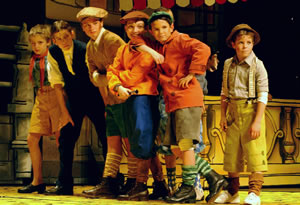
Scene uit de musical van Marc Schubring en Wolfgang Adenberg uit 2001


"Nein, tut mir Leid. Aber warum willst du's wissen?"
"Gib mir die Adresse und ich erschieße den Kerl."
"Ach, hast du's schwer! Andere Kinder sind traurig, weil sie keinen guten Anzug haben. So hat jeder seine Sorgen...Ehe ich's vergesse: Heute Abend lässt du dir von Tante Martha einen Kleiderbügel geben und hängst den Anzug ordentlich auf. Vorher wird er mir aber ausgebürstet. Vergiss es nicht! Und morgen kannst du schon wieder deinen Pullover, dieses Räuberjackett, anziehen. Sonst noch was? Der Koffer ist gepackt. Die Blumen für die Tante sind eingewickelt. Das Geld für Großmutter gebe ich dir nachher. Und nun wollen wir essen. Kommen Sie, junger Mann!" Frau Tischbein legte den Arm um seine Schulter und transportierte ihn nach der Küche.“


 1100171-71938954ace993475be58bd51e6251e3.jpg

Erich Kästner (23 februari 1899 - 29 juli 1974)


De Britse schrijver Bernard Cornwell werd geboren op 23 februari 1944 in Londen. Zie ook mijn blog van 23 februari 2009 en ook mijn blog van 23 februari 2010 en ook mijn blog van 23 februari 2011.


Uit: The Last Kingdom


“My name is Uhtred. I am the son of Uhtred, who was the son of Uhtred and his father was also called Uhtred. My father's clerk, a priest called Beocca, spelt it Utred. I do not know if that was how my father would have written it, for he could neither read nor write, but I can do both and sometimes I take the old parchments from their wooden chest and I see the name spelled Uhtred or Utred or Ughtred or Ootred, and I look at the deeds which say that Uhtred, son of Uhtred is the lawful and sole owner of the lands that are carefully marked by stones and by dykes, by oaks and by ash, by marsh and by sea, and I dream of those lands, wave-beaten and wild beneath the wind driven sky. I dream, and know that one day I will take back the land from those who stole it from me.
I am an Ealdorman, though I call myself Earl Uhtred, which is the same thing, and the fading parchments are proof of what I own. The law says I own that land, and the law, we are told, is what makes us men under God instead of beasts in the ditch. But the law does not help me take back my land. The law wants compromise. The law thinks money will compensate for loss. The law, above all, fears the bloodfeud. But I am Uhtred, son of Uhtred, and this is the tale of a bloodfeud. It is a tale of how I will take from my enemy what the law says is mine. And it is the tale of a woman and of her father, a king.”


 1100171-a5f9d3227b4b1ca2c6bdabe1170365c7.jpg

Bernard Cornwell (Londen, 23 februari 1944)


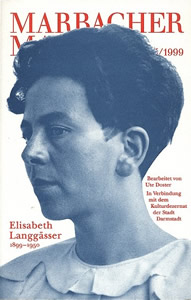
De Duitse dichteres en schrijfster Elisabeth Langgässer werd geboren op 23 februari 1899 in Alzey. Zie ook mijn blog van 23 februari 2009 en ook mijn blog van 23 februari 2010 en ook mijn blog van 23 februari 2011.


In den Mittag gesprochen


Schläfriger Garten. Gedankenlos

wie der Daume über dem Daume.

Sage, wer trägt die Birne im Schoß,

den Apfel, die Eierpflaume.


Breit auseinander setzt Schenkel und Knie’,

weil schon Spilling und Mirabelle

höher sich wölben voll Saft und Magie,

die Natur auf der Sommnerschwelle.


Bis an den Umkreis der Schale erfüllt

sind die Früchte nur mit sich selber,

und in die flimmernden Lüfte gehüllt,

überläuft es sie blauer und gelber.


Pochender Aufschlag. Was trägt und enthält,

ist das Ganze von allen geboren.

Innen ward außen. Was ungepflückt fällt,

geht wie Traum an das Ganze verloren.


Scharren im Laube. Ein brütendes Huhn

sitzt getrost auf zerbrochenem Rade.

Zeit, wohin fließest du? Nach Avalun ...

Süßes, wie heißest du? Kern in den Schuhn

purpurblaun, gelben? Du wirkendes Ruhn?

Und ein jegliches antwortet: Gnade!


 1100171-140ceacca79d4d1b3b5463fc697b3114.jpg

Elisabeth Langgässer (23 februari 1899 – 25 juli 1950)


De Engelse schrijver Samuel Pepys werd geboren op 23 februari 1633 in Londen. Zie ook alle tags voor Samuel Pepys op dit blog.


Uit: The Diary of Samuel Pepys


“Monday 22 February 1668/69

Up, and betimes to White Hall; but there the Duke of York is gone abroad a-hunting, and therefore after a little stay there I into London, with Sir H. Cholmly, talking all the way of Tangier matters, wherein I find him troubled from some reports lately from Norwood (who is his great enemy and I doubt an ill man), of some decay of the Mole, and a breach made therein by the sea to a great value. He set me down at the end of Leadenhall Street, and so I home, and after dinner, with my wife, in her morning-gown, and the two girls dressed, to Unthanke’s, where my wife dresses herself, having her gown this day laced, and a new petticoat; and so is indeed very fine. And in the evening I do carry them to White Hall, and there did without much trouble get into the playhouse, there in a good place among the Ladies of Honour, and myself also sat in the pit; and there by and by come the King and Queen, and they begun “Bartholomew Fayre.” But I like no play here so well as at the common playhouse; besides that, my eyes being very ill since last Sunday and this day se’nnight, with the light of the candles, I was in mighty pain to defend myself now from the light of the candles. After the play done, we met with W. Batelier and W. Hewer and Talbot Pepys, and they follow us in a hackney-coach: and we all stopped at Hercules’ Pillars; and there I did give them the best supper I could, and pretty merry; and so home between eleven and twelve at night, and so to bed, mightily well pleased with this day’s work.”


1100171-038834dfd1e30f8b0dc552e757670acc.jpg
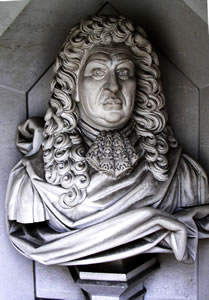
Samuel Pepys (23 februari 1633 – 26 mei 1703)

Guildhall Art Gallery, Londen


Zie voor nog meer schrijvers van de 23e februari ook mijn blog van 23 februari 2011 deel 2 en eveneens deel 3

Geschreven door Romenu om 19:25 Reageer op dit bericht

Arnon Grunberg, Paul van Ostaijen, Hugo Ball, Jane Bowles

De Nederlandse schrijver Arnon Grunberg werd geboren in Amsterdam op 22 februari 1971. Zie ook alle tags voor Arnon Grunberg op dit blog.


Uit: Tirza (Vertaald door Sam Garrett)


„After Ibi began collecting the rent there were fewer complaints about moisture on the wallpaper, radiators that didn’t work, a window that didn’t close well. Her smile took away the complaints, her legs made the sneaking suspicion that one was paying way too much to vanish into thin air. Her eyes compensated for the leaky faucet. Ibi was more important than any defects in the furnished apartment.
And then, one autumn evening, on the first of the month—always the first of the month; when Hofmeester looked back on his life he saw an endless series of paydays—she stayed away for a long time. Hofmeester was reading the evening paper as he listened to one of Elgar’s cello concertos, but when he got to the page with ‘readers’ opinions’, for he read the newspaper from cover to cover, like a book, he became worried. She had been gone for more than half an hour. He read on, but the readers’ opinions no longer sank in. After each sentence he got stuck, and his thoughts wandered to Ibi.
Of course you couldn’t just grab the money and run, sometimes you had to stop and chat a little. He remembered that from when the unwelcome task had been his to fulfill. But half an hour was no chat anymore. That was a conversation, that was half an evening meal.
He had already walked to the door twice to see if she was coming, the way one looks for streetcars that refuse to arrive. The ridiculous assumption that looking made any difference. That a peremptory glance can summon that which apparently will never show up.
She couldn’t have been mugged, she didn’t even have to leave the yard.
It puzzled him, and it kept puzzling him. His wife had gone out to pick up Tirza, who was playing at a friend’s house. Hofmeester had no one with whom to share his anxiety. He turned off the Elgar, went into the garden to look at his apple tree and then peered up through the branches at the windows behind which the tenant was concealed, but could see nothing unusual. The curtains that always hung there and that actually needed washing. No movement. It was a lovely evening for early October. Nothing rustled in the bushes. No screams. Silence. Eternal silence.“


 1099384-5f894a39c74f6ab120beb34512d2ec00.jpg

Arnon Grunberg (Amsterdam, 22 februari 1971)


De Vlaamse dichter en schrijver Paul van Ostaijen werd geboren in Antwerpen op 22 februari 1896. Zie ook alle tags voor Paul van Ostaijen op dit blog.


Leven


Mevr. Dr jur. heeft prachtig verdedigd

de éen-kilo-brood-dief

zijn gezin

          en bedenkt 7 (zeven) arme kinderen

vader

     een korst brood

de rechters hebben gesnikt   Het was een sterk stuk


In de avondkoelte wandelt Mevr. Dr jur.

             Lützowplatz

en zet zich op een bank

juist tegenover de kont van de zeegod

Verdiende rust


0 Wonne


Een schoon gezicht


Een schoon gezicht heeft de dagblad-postiche

CREME LA NYMPHE

zij zou zeer schoon zijn indien

                      zij geen sproeten had

Hoe jammer wanneer een zo schone vrouw sproeten heeft

zomersproeten

zoals bij deze postiche het geval is

gebekt haar

de boog van de wenkbrauwen

en de lieve mond

en de volle wangen

en de kuiltjes

doch zoals gezegd

                 hoe jammer die zomersproeten

Nochtans heb je

                 CREME LA NYMPHE

hoofdapoteek     bijhuizen     overal verkrijgbaar

het jammer kan worden verwijderd

dank zij de hoofdapoteek en de bijhuizen

zijn er op de wereld geen sproeten meer

                 en u

allerschoonste met gekruld haar en verlokkelike lippen

u

 die prijkt op de laatste bladzijde

 van het laatste nieuws

          kan ik beminnen

          omdat gij  dank de nimfezalf

          voortaan zult zijn

          zonder sproeten

of zomersproeten


 1099384-22218565c795acde85a05dc55aa1b09f.jpg

Paul van Ostaijen (22 februari 1896 – 18 maart 1928) 

CD Cover


De Duitse dichter en schrijver Hugo Ball werd geboren op 22 februari 1886 in Pirmasens. Zie ook alle tags voor Hugo Ball op dit blog.


Der grüne König


Wir, Johann, Amadeus Adelgreif,

Fürst von Saprunt und beiderlei Smeraldis,

Erzkaiser über allen Unterschleif

Und Obersäckelmeister vom Schmalkaldis


Erheben unsern grimmen Löwenschweif

Und dekretieren vor den leeren Saldis:

»Ihr Räuberhorden, eure Zeit ist reif.

Die Hahnenfeder ab, Ihr Garibaldis!


Man sammle alle Blätter unserer Wälder

Und stanze Gold daraus, soviel man mag.

Das ausgedehnte Land braucht neue Gelder.


Und eine Hungersnot liegt klar am Tag.

Sofort versehe man die Schatzbehälter

Mit Blattgold aus dem nächsten Buchenschlag.«


Katzen und Pfauen


baubo sbugi ninga gloffa

siwi faffa

sbugi faffa

olofa fafamo

faufo halja finj


sirgi ninga banja sbugi

halja hanja golja biddim


mâ mâ

piaûpa

mjâma


pawapa baungo sbugi

ninga

gloffalor


 1099384-d27359eb000a9aa335d8251487a6e3cc.jpg

Hugo Ball (22 februari 1886 – 14 september 1927) 

Hermann Hesse, Emmy Ball-Hennings, Hugo Ball in 1921


De Amerikaanse schrijfster Jane Bowles werd als Jane Auer geboren op 22 februari 1917 in New York. Zie ook mijn blog van 22 februari 2009 en ook mijn blog van 22 februari 2010 en ook mijn blog van 22 februari 2011.


Uit: Everything is nice


“When I reached the place where I had met Zodelia I went over to the wall and leaned on it. Although the sun had sunk behind the houses in back of me, the sky was still luminous and the color of the blue wall had deepened. I rubbed my fingers along it; the wash was fresh and a little of the powdery stuff came off; but no matter how often I walked through these streets reaching out to touch the chalky blue wash on the houses ... on the walls, I could never satisfy my longing for the town.

I remember that once I reached out to touch the beautiful and powdery face of a clown because his face had awakened some longing; it happened at a little circus but not when I was a child.”


 1099384-8a5fbddd772e1927900abb5415d08234.jpg

Jane Bowles (22 februari 1917 – 4 mei 1973)


Zie voor nog meer schrijvers van de 22e februari ook mijn vorige blog van vandaag.
Geschreven door Romenu om 18:49 Reageer op dit bericht

Danilo Kiš, Sean O'Faolain, Ishmael Reed

De Servische schrijver Danilo Kiš werd geboren op 22 febrari 1935 in Subotica. Zie ook alle tags voor Danilo Kiš op dit blog.


Uit: Garden, Ashes (Vertaald door William J. Hannaher)


“Late in the morning on summer days, my mother would come into the room softly, carrying that tray of hers. The tray was beginning to lose its thin nickelized glaze. Along the edges where its level surface bent upward slightly to form a raised rim, traces of its former splendor were still present in flaky patches of nickel that looked like tin foil pressed out under the fingernails. The narrow, flat rim ended in an oval trough that bent downward and was banged in and misshapen. Tiny decorative protuberances – a whole chain of little metallic grapes – had been impressed on the upper edge of the rim. Anyone holding the tray (usually my mother) was bound to feel at least three or four of these semicylindrical protuberances, like Braille letters, under the flesh of the thumb. Right there, around those grapes, ringlike layers of grease had collected, barely visible, like shadows cast by little cupolas. These small rings, the color of dirt under fingernails were the remnants of coffee grounds, cod-liver oil, honey sherbet. Thin crescents on the smooth, shiny surface of the tray showed where glasses had just been removed. Without opening my eyes, I knew from the crystal tinkling of teaspoons against glasses that my mother had set down the tray for a moment and was moving toward the window, the picture of determination, to push the dark curtain aside. Then the room would come aglow in the dazzling light of the morning, and I would shut my eyes tightly as the spectrum alternated from yellow to blue to red. On her tray, with her jar of honey and her bottle of cod-liver oil, my mother carried to us the amber hues of sunny days, thick concentrates full of intoxicating aromas.“


 1099380-3c575ea23ad6acc16bb11ab2170ef5e6.jpg

Danilo Kiš (22 februari 1935 – 15 oktober 1989)


De Ierse schrijver Sean O'Faolain werd geboren op 22 februari 1900 in Cork. Zie ook mijn blog van 22 februari 2007 en ook mijn blog van 22 februari 2009 en ook mijn blog van 22 februari 2010.


Uit: The Trout


“It was late June, the longest days of the year. The sun had sat still for a week, burning up the world. Although it was after ten o'clock it was still bright and still hot. She lay on her back under a single sheet, with her long legs spread, trying to keep cool. She could see the D of the moon through the fir-tree -- they slept on the ground floor. Before they went to bed her mummy had told Stephen the story of the trout again, and she, in her bed, had resolutely presented her back to them and read her book. But she had kept one ear cocked.

'And so, in the end, this naughty fish who would not stay at home got bigger and bigger, and the water got smaller and smaller. . . .' Passionately she had whirled and cried, 'Mummy, don't make it a horrible old moral story!' Her mummy had brought in a Fairy Godmother, then, who sent lots of rain, and filled the well, and a stream poured out and the trout floated away down to the river below. Staring at the moon she knew that there are no such things as Fairy Godmothers and that the trout, down in The Dark Walk, was panting like an engine. She heard somebody unwind a fishing-reel. Would the beasts fish him out!

She sat up. Stephen was a hot lump of sleep, lazy thing. The Dark Walk would be full of little scraps of moon. She leaped up and looked out the window, and somehow it was not so lightsome now that she saw the dim mountains far away and the black firs against the breathing land and heard a dog say, bark-bark. Quietly she lifted the ewer of water, and climbed out the window and scuttled along the cool but cruel gravel down to the maw of the tunnel. Her pyjamas were very short so that when she splashed water it wet her ankles. She peered into the tunnel. Something alive rustled inside there.

She raced in, and up and down she raced, and flurried, and cried aloud, 'Oh, Gosh, I can't find it,' and then at last she did. Kneeling down in the damp she put her hand into the slimy hole. When the body lashed they were both mad with fright. But she gripped him and shoved him into the ewer and raced, with her teeth ground, out to the other end of the tunnel and down the steep paths to the river's edge.“


 1099380-7c849577e2c128b1b3fccd48114a7c6d.jpg

Sean O'Faolain (22 februari 1900 – 20 april 1991)


De Afro-Amerikaanse dichter, schrijver en essayist Ishmael Scott Reed werd geboren op 22 februari 1938 in Chattanooga, Tennessee. Zie ook mijn blog van 22 februari 2009 en ook mijn blog van 22 februari 2010 en ook mijn blog van 22 februari 2011.


I Am a Cowboy in the Boat of Ra


The devil must be forced to reveal any such physical evil

(potions, charms, fetishes, etc.) still outside the body

and these must be burned.' (Rituale Romanum, published

1947, endorsed by the coat-of-arms and introductory

letter from Francis cardinal Spellman)


I am a cowboy in the boat of Ra,

sidewinders in the saloons of fools

bit my forehead like O

the untrustworthiness of Egyptologists

who do not know their trips. Who was that

dog-faced man? they asked, the day I rode

from town.


School marms with halitosis cannot see

the Nefertiti fake chipped on the run by slick

germans, the hawk behind Sonny Rollins' head or

the ritual beard of his axe; a longhorn winding

its bells thru the Field of Reeds.


I am a cowboy in the boat of Ra. I bedded

down with Isis, Lady of the Boogaloo, dove

deep down in her horny, stuck up her Wells-Far-ago

in daring midday getaway. 'Start grabbing the

blue,' I said from top of my double crown.


I am a cowboy in the boat of Ra. Ezzard Charles

of the Chisholm Trail. Took up the bass but they

blew off my thumb. Alchemist in ringmanship but a

sucker for the right cross.


I am a cowboy in the boat of Ra. Vamoosed from

the temple i bide my time. The price on the wanted

poster was a-going down, outlaw alias copped my stance

and moody greenhorns were making me dance;

while my mouth's

shooting iron got its chambers jammed.


I am a cowboy in the boat of Ra. Boning-up in

the ol' West i bide my time. You should see

me pick off these tin cans whippersnappers. I

write the motown long plays for the comeback of

Osiris. Make them up when stars stare at sleeping

steer out here near the campfire. Women arrive

on the backs of goats and throw themselves on

my Bowie.


I am a cowboy in the boat of Ra. Lord of the lash,

the Loup Garou Kid. Half breed son of Pisces and

Aquarius. I hold the souls of men in my pot. I do

the dirty boogie with scorpions. I make the bulls

keep still and was the first swinger to grape the taste.


I am a cowboy in his boat. Pope Joan of the

Ptah Ra. C/mere a minute willya doll?

Be a good girl and

bring me my Buffalo horn of black powder

bring me my headdress of black feathers

bring me my bones of Ju-Ju snake

go get my eyelids of red paint.

Hand me my shadow


I'm going into town after Set


I am a cowboy in the boat of Ra


look out Set here i come Set

to get Set to sunset Set

to unseat Setto Set down Set


usurper of the Royal couch

imposter RAdio of Moses' bush

party pooper O hater of dance

vampire outlaw of the milky way


 1099380-5eafd780f246e4597fdd146d0ddda206.jpg

Ishmael Reed (Chattanooga, 22 februari 1938)


 Zie voor nog meer schrivers van de 22e februari ook mijn blog van 22 februari 2011 deel 2,

Geschreven door Romenu om 18:44 Reageer op dit bericht

Meer van Romenu

↑ Terug naar de berichten