Naar de inhoud

Romenu

Over literatuur, gedichten, kunst en cultuur
akke.beakke.be

Berichten van 7 juni 2012 tot 8 juni 2012

Marguerite Yourcenar, Ulf Stolterfoht, Gwen Harwood, Gerald Bisinger, Udo Kawasser
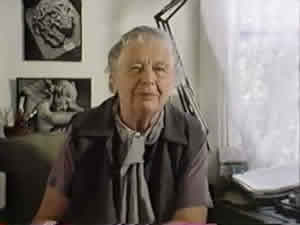
De Belgisch-Amerikaanse, Franstalige schrijfster Marguerite Yourcenar werd geboren in Brussel op 8 juni 1903. Zie ook alle tags voor Marguerite Yourcenar op dit blog.


Uit: Memoirs of Hadrian (Vertaald door Grace Frick, in samenwerking met de schrijfster)


”Whatever I had I chose to have, obliging myself only to possess it totally, and to taste the experience to the full. Thus the most dreary tasks were accomplished with ease as long as I was willing to give myself to them. Whenever an object repelled me, I made it a subject of study, ingeniously compelling myself to extract from it a motive for enjoyment. If faced with something unforeseen or near cause for despair, like an ambush or a storm at sea, after all measures for the safety of others had been taken, I strove to welcome this hazard, to rejoice in whatever it brought me of the new and unexpected, and thus without shock the ambush or the tempest was incorporated into my plans, or my thoughts. Even in the throes of my worst disaster, I have seen a moment when sheer exhaustion reduced some part of the horror of the experience, and when I made the defeat a thing of my own in being willing to accept it. If ever I am to undergo torture (and illness will doubtless see to that) I cannot be sure of maintaining the impassiveness of a Thrasea, but I shall at least have the resource of resigning myself to my cries. And it is in such a way, with a mixture of reserve and of daring, of submission and revolt carefully concerted, of extreme demand and prudent concession, that I have finally learned to accept myself.

(…)


Halcyon seasons, solstice of my days... Far from exaggerating my former happiness, I must struggle against too weak a portrayal; even now the recollection overpowers me. More sincere than most men, I can freely admit the secret causes of this felicity: that calm so propitious for work and for discipline of the mind seems to me one of the richest results of love. And it puzzles me that these joys, so precarious at best, and so rarely perfect in the course of human life, however we may have sought or received them, should be regarded with such mistrust by the so-called wise, who denounce the danger of habit and excess in sensuous delight, instead of fearing its absence or its loss; in tyrannizing over their senses they pass time which would be better occupied in putting their souls to rights, or embellishing them. At that period I paid as constant attention to the greater securing of my happiness, to enjoying and judging it, too, as I had always done for the smallest details of my acts; and what is the act of love, itself, if not a moment of passionate attention on the part of the body? Every bliss achieved is a masterpiece; the slightest error turns it awry, and it alters with one touch of doubt; any heaviness detracts from its charm, the least stupidity renders it dull.


 1174405-57d61eb5a55c6498bc27350c3e92309c.jpg

Marguerite Yourcenar (8 juni 1903 – 17 december 1987)


De Duitse dichter, schrijver en vertaler Ulf Stolterfoht werd geboren op 8 juni 1963 in Stuttgart. Zie ook alle tags voor Ulf Stolterfoht op dit blog.


Uit: fachsprachen I – IX


1.
DIN 2330: begriffe und benennungen.
allgemeine grundsätze

berlin. ballung der besten. gesundes-wort-beginnt-
an-der-wurzel-adepten. mal richtig abzumanteln
bis aufs morph. gut. freitag: arbeit am wort-
schatz. liebevolles eindringen in den sprachleib.


samstag: bereitstellung eines zeichenvorrats. be-
griffsinventur. sonntag: sonderlexik. halbtermini.
scheinsubstantivierung. am abend jeweils arbeitsdienst
in kontextfreier rede. erklärung der «scheuche». Dann


ging man auseinander. // wien. pension «gnadenwahl».
hier ist man unter sich. problem des eichte / *ich.
bezüglich eisenfrei/arm/los verbale explosionen.
durchaus auf ausdruckshöhe zwar doch weit entfernt


vom zu erstellenden glossar. halbherzige einigung auf
«jenes das die größte merkhilfe aufweist». // düssel-
dorf im herbst. die kühlsten köpfe der sprachlichen
not - sie klanglich aufzumöbeln. rechtfertigung des


lauschangriffs: erstmals wird stimmabdruck genommen.
das regelwerk scheint wasserdicht. doch wirkendes wort
vom erhabenen braille: die normenpräger sollen später
nicht umsonst «««alleine an der spur vergangen sein»»».


1174405-7d04e7aa8d241f3f27edea6db5816827.jpg
Ulf Stolterfoht (Stuttgart, 8 juni 1963)


De Australische dichteres en librettiste Gwen Harwood werd geboren op 8 juni 1920 in Taringa, Queensland. Zie ook alle tags voor Gwen Harwood op dit blog.


Dichterliebe


So hungry-sensitive that he
craves day and night the pap of praise,
he'll ease his gripes or fingerpaint
in heartsblood on a public page.
The ordinary world must be
altered to circumvent his rage.

He'll tell, with stylish Angst of course,
the inmost secrets of our bed.
Words are far worse than drugs; there is
no hope of surfeit or remorse.
The world lies wide, and warm. No kiss,
no child, no prayer will keep him here.

I'll wash the floors. He'll watch the stars.
I'll salt his life with common sense.
He'll suck my sap and vigour down
the crude mouth of his private hell.
Visions have no equivalents.
He'll die of drink and candy bars.


 1174405-4a1e3a0477a41509831621c6d4cab925.jpg

Gwen Harwood (8 juni 1920 - 5 december 1995)


De Oostenrijkse dichter en vertaler Gerald Bisinger werd geboren op 8 juni 1936 in Wenen. Zie ook alle tags voor Gerald Bisinger op dit blog.


Jetzt etwas zu sagen


In einem Gasthausvorgarten sitz
ich an der Vorgartenstraße ein
wenig sonnenbestrahlt soeben hab
einen Blick ich auf die Donau ge-
worfen in der Ferne auch auf den
Leopoldsberg was will ich heute
am Ersten des Mai was nicht hab
schon ich geschrieben ich aß Pa-
latschinken mit Marmelade (sie aus
Marillen) gut bin ich ausgeschissen
und genieße den Zustand trink Rot-
wein trink Sodawasser von Oregano
den Geruch in der Nase und mehr
noch von Knoblauch schreib ich an
diesem Gedicht verspüre den Wunsch
nicht donauabwärts demnächst zu
verreisen altere so vor mich hin
und habe niemand jetzt etwas zu sagen


 1174405-ab7ab94096eca6603698f3f08dd9b27b.jpg

Gerald Bisinger (8 juni 1936 – 22 februari 1999)


Onafhankelijk van geboortedata:


De Oostenrijkse dichter, vertaler, danser en choreograaf Udo Kawasser werd geboren in 1965 in Vorarlberg. Zie ook alle tags voor Udo Kawasser op dit blog.


muezzin über brooklyn


ein geviert auch schattenteich
über das ein singsang
brandet in die verwahrlosten
zwischenräume
müllfetzen ein liebeslied
mir gerade
das minarett des bankhochhauses
die hängenden steingärten
semiramis   gerade mir
ins herz   diese finsternisse
in den körpern
und die kleegefasste schrift
in kafkas fenster
schweigt
allahs lied im blockmeer
verkeilter architekturen so
ein konglomerat von lücken
sich versperrenden
und die hintergärten
restleiber warten
ja die gibts
...
(ny, sept.97+jan.99)


1174405-cb9399f4a276476647445d32bdb8a3ae.jpg
Udo Kawasser (Vorarlberg, 1965)


Zie voor nog meer dichters en schrijvers ook mijn blog van 8 juni 2011 deel 2.
Geschreven door Romenu om 19:18 Reageer op dit bericht

Orhan Pamuk, Monika Mann, Nikki Giovanni, Harry Crews, Louise Erdrich, Mascha Kaléko

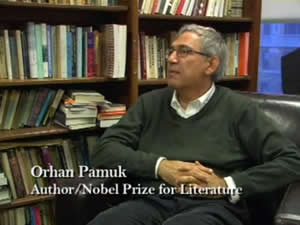
De Turkse schrijver Orhan Pamuk werd geboren op 7 juni 1952 in Istanbul. Zie ook alle tags voor Orhan Pamuk op dit blog.


Uit: Snow (Vertaald door Maureen Freely)


„As he watched the snow fall outside his window, as slowly and silently as the snow in a dream, the traveler fell into a long-desired, long-awaited reverie; cleansed by memories of innocence and childhood, he succumbed to optimism and dared to believe himself at home in this world. Soon afterward, he felt something else that he had not known for quite a long time and fell asleep in his seat.
Let us take advantage of this lull to whisper a few biographical details. Although he had spent the last twelve years in political exile in Germany, our traveler had never been very much involved in politics. His real passion, his only thought, was for poetry. He was forty-two years old and single, never married. Although it might be hard to tell as he curled up in his seat, he was tall for a Turk, with brown hair and a pale complexion that had become even paler during this journey. He was shy and enjoyed being alone. Had he known what would happen soon after he fell asleep—with the swaying of the bus his head would come to lean first on his neighbor's shoulder and then on the man's chest—he would have been very much ashamed. For the traveler we see leaning on his neighbor is an honest and well-meaning man and full of melancholy, like those Chekhov characters so laden with virtues that they never know success in life. We'll have a lot to say about melancholy later on. But as he is not likely to remain asleep for very long in that awkward position, suffice it for now to say that the traveler's name is Kerim Alakusoglu, that he doesn't like this name but prefers to be called Ka (from his initials), and that I'll be doing the same in this book. Even as a schoolboy, our hero stubbornly insisted on writing Ka on his homework and exam papers; he signed Ka on university registration forms; and he took every opportunity to defend his right to continue to do so, even if it meant conflict with teachers and government officials. His mother, his family, and his friends all called him Ka, and, having also published some poetry collections under this name, he enjoyed a small enigmatic fame as Ka, both in Turkey and in Turkish circles in Germany.“


 1173678-e3f44d4144089f466f9fc57cfec3a83e.jpg

Orhan Pamuk (Istanbul, 7 juni 1952)


De Duitse schrijfster Monika Mann werd als vierde kind van Thomas Mann geboren op 7 juni 1910 in München. Zie ook alle tags voor Monika Mann op dit blog.


Uit: Das fahrende Haus


„Daß meine Brüder und Vettern und Freunde für Amerika kämpften, daß sie dafür – nämlich für Demokratie und Menschenwürde – durchs Feuer gingen und daß mein Vater ein Streiter der Demokratie und Menschenwürde war – für die ich mit meinem Herzen gleichwohl eintrat – und daß er ein guter Freund Roosevelts war, half mir nichts: da es hier nicht um der gleichen, sondern um Quoten ging. Ich war ein Besucher Amerikas, immer wieder um das Visita-Visum eingebend. Die Akten

häuften sich. Als ich nach sechsjährigem amerikanischen Aufenthalt bei Kriegsende meine Emigration anstrebte und die Kanzleien des Kolumbus mir zur Gewohnheit gemacht hatte, häuften sich jene Akten noch mehr. Es kam der Tag, daß ich (dem vorgeschriebenen Bumerangprozeß zufolge) die USA verließ, um von draußen, nämlich von Montreal, Kanada, in aller Form in die USA einzuwandern, was während des Krieges nicht möglich gewesen war.

Abgesehen davon, daß ich das alte, gartenreiche französische Städtchen reizend fand, schauderte ich vor dem Stoß meine Person betreffender Amtspapiere, der mich auf dem American Consulate General Montreals anglotzte: Man konnte meinen, es handle sich um einen sechsfach Vorbestraften. Heil back home hieß nicht, daß ich zu Hause war. Bis dahin sollte jener Stoß und das Spiel der Bürokratie an Dimensionen noch gewinnen!

Nach endlichem Empfang der sogenannten First Papers dauerte es ganz auffallend lang, bis ich endlich das Staatsbürgerrecht, bis ich endlich eingeschworen wurde.“


 1173678-cc97987cbacc084f369edab58844735d.jpg

Monika Mann (7 juni 1910 – 17 maart 1992)


De Amerikaanse dichteres en schrijfster Nikki Giovanni werd geboren op 7 juni 1943 in Knoxville, Tennessee. Zie ook alle tags voor Nikki Giovanni op dit blog.


Nikki-Rosa


Childhood rememberances are
always a drag if you're Black
you always remember things like
living in Woodlawn with no inside toilet
and if you become famous or something


They never talk about how happy
you were to have your mother
all to yourself and how good the
water felt when you got your bath
from one of those


Big tubs that folk in chicago barbeque
in and somehow when you talk
about home
it never gets across how much you
understood their feelings as the
whole family attended meetings


About Hollydale and even though you
remember your biographers never
understand your father's pain as he
sells his stock and another
dream goes


And though your're poor it isn't
poverty that concerns you and
though they fought a lot
it isn't your father's drinking that
makes any difference but only that


Everybody is together and you
and your sister have happy birthdays
and very good Christmasses and I
really hope no white person ever has
cause to write about me
because they never understand


Black love is Black wealth and they'll
probably talk about my hard childhood
and never understand that
all the while I was quite happy


1173678-81a33a52f0058930d2c848151d793c79.jpg 

Nikki Giovanni (Knoxville, 7 juni 1943)


De Amerikaanse schrijver Harry Crews werd geboren op 7 juni 1935 in Bacon County, Georgia. Zie ook alle tags voor Harry Crews op dit blog. Harry Crews overleed op 28 maart van dit jaar op 76-jarige leeftijd.


Uit: Celebration


„When Johnson Meechum came up the three steps of his purple double-wide trailer and opened the front door, his wife, Mabel, was waiting for him, her thin hands clenched on her hips, her tinted hair standing from her scalp in a tiny blue cloud. He could look right through the hair to her freckled skull.

He made a small adjustment of the .22-caliber target pistol stuck in the small of his back, behind his belt. He didn't even know why he wore it there. It was not as though she wasn't aware he took it with him when he went out in the morning. She knew everything about him. He knew everything about her. Everything. It was very nearly unbearable at times. He often wondered where all the surprises and lovely secrets had gone. He sometimes felt like he'd be willing to open a vein for one tiny surprise, for one inconsequential secret.

It was terrible to know the most excruciatingly intimate details about her person. He even knew the stink she left in the bathroom was inexplicably tinged with the fragrance of almonds. He had no idea why, but it was. And it had taken him the first two years of marriage to discover that she was capable of leaving a foul odor of any kind anywhere. Nothing stank during those first two years of marriage. Now, after sixty years together, everything stank. Even her age, which she wore like a moldy overcoat, stank of mortality. And he supposed he wore the same stinking overcoat, but if he did, he did everything to resist it, by keeping himself washed down in cologne. Mabel wore nothing, not even face powder. She either had no pride left or had just totally given up on everything.

Johnson didn't know, and he was ashamed to ask. But he could smell her fifteen feet away even if he had a bad head cold. That's why he had taken to sleeping on a blanket on the floor. He told her it was for his bad back, but it was really because of the ripe, almond-tainted effluvium that hovered everywhere about her and the sweat that she never seemed quite able to dig out of the creases and folds of her body. Consequently, she seemed to be covered with the coppery odor of impending death.“


 1173678-9bc12c4ac48b763f4a2e050571b28bf8.jpg

Harry Crews (7 juni 1935 – 28 maart 2012)


De Amerikaanse schrijfster Louise Erdrich werd geboren op 7 juni 1954 in Little Falls, Minnesota. Zie ook alle tags voor Louise Erdrich op dit blog.


Uit: Love Medicine


“The morning before Easter Sunday, June Kashpaw was walking down the clogged main street of oil boomtown Williston, North Dakota, killing time before the noon bus arrived that would take her home. She was a long-legged Chippewa woman, aged hard in every way except how she moved. Probably it was the way she moved, easy as a young girl on slim hard legs, that caught the eye of the man who rapped at her from inside the window of the Rigger Bar. He looked familiar, like a lot of people looked familiar to her. She had seen so many come and go. He hooked his arm, inviting her to enter, and she did so without hesitation, thinking only that she might tip down one or two with him and then get her bags to meet the bus. She wanted, at least, to see if she actually knew him. Even through the watery glass she could see that he wasn’t all that old and that his chest was thickly padded in dark red nylon and expensive down.

There were cartons of colored eggs on the bar, each glowing like a jewel in its wad of cellophane. He was peeling one, sky blue as a robin’s, palming it while he thumbed the peel aside, when she walked through the door. Although the day was overcast, the snow itself reflected such light that she was momentarily blinded. It was like going underwater. What she walked toward more than anything else was that blue egg in the white hand, a beacon in the murky air.

He ordered a beer for her, a Blue Ribbon, saying she deserved a prize for being the best thing he’d seen for days. He peeled an egg for her, a pink one, saying it matched her turtleneck. She told him it was no turtleneck. You called these things shells. He said he would peel that for her, too, if she wanted, then he grinned at the bartender and handed her the naked egg.

June’s hand was colder from the outdoors than the egg, and so she had to let it sit in her fingers for a minute before it stopped feeling rubbery warm. Eating it, she found out how hungry she was. The last of the money that the man before this one had given her was spent for the ticket. She didn’t know exactly when she’d eaten last. This man seemed impressed, when her egg was finished, and peeled her another one just like it. She ate the egg.“


1173678-395f9de52cadd2be76687bfa758be038.jpg 

Louise Erdrich (Little Falls, 7 juni 1954)


De Duitstalige dichteres Mascha Kaléko (eig. Golda Malka Aufen) werd geboren op 7 juni 1907 in Krenau of Schidlow in Galicië in het toenmalige Oostenrijk-Hongarije, nu Polen. Zie ook alle tags voor Mascha Kaléko op dit blog.


Wiedersehen mit Berlin


Seit man von tausend Jahren mich verbannt.

Ich seh die Stadt auf eine neue Weise,

So mit dem Fremdenführer in der Hand.

Der Himmel blaut. Die Föhren lauschen leise.

In Steglitz sprach mich gestern eine Meise

Im Schloßpark an. Die hatte mich erkannt.


Und wieder wecken mich Berliner Spatzen!

Ich liebe diesen märkisch-kessen Ton.

Hör ich sie morgens an mein Fenster kratzen,

Am Ku-Damm in der Gartenhauspension,

Komm ich beglückt, nach alter Tradition,

Ganz so wie damals mit besagten Spatzen

Mein Tagespensum durchzuschwatzen.


Es ostert schon. Grün treibt die Zimmerlinde.

Wies heut im Grunewald nach Frühjahr roch!

Ein erster Specht beklopft die Birkenrinde.

Nun pfeift der Ostwind aus dem letzten Loch.

Und alles fragt, wie ich Berlin denn finde?

— Wie ich es finde? Ach, ich such es noch!


Ich such es heftig unter den Ruinen

Der Menschheit und der Stuckarchitektur.

Berlinert einer: »Ick bejrüße Ihnen!«,

Glaub ich mich fast dem Damals auf der Spur.

Doch diese neue Härte in den Mienen …

Berlin, wo bliebst du? Ja, wo bliebst du nur?


Auf meinem Herzen geh ich durch die Straßen,

Wo oft nichts steht als nur ein Straßenschild.

In mir, dem Fremdling, lebt das alte Bild

Der Stadt, die so viel Tausende vergaßen.

Ich wandle wie durch einen Traum

Durch dieser Landschaft Zeit und Raum.

Und mir wird so ich-weiß-nicht-wie

Vor Heimweh nach den Temps perdus …


Berlin im Frühling. Und Berlin im Schnee.

Mein erster Versband in den Bücherläden.

Die Freunde vom Romanischen Café.

Wie vieles seh ich, das ich nicht mehr seh!

Wie laut »Pompejis« Steine zu mir reden!


Wir schluckten beide unsre Medizin,

Pompeji ohne Pomp. Bonjour, Berlin!


 1173678-5b9eab5f3c2c4a5171bd3318b8f69f2f.jpg

Mascha Kaléko (7 juni 1907 – 21 januari 1975)


Zie voor nog meer schrijvers van de 7e juni ook mijn blog van 7 juni 2011 deel 2.

Geschreven door Romenu om 19:03 Reageer op dit bericht

Meer van Romenu

↑ Terug naar de berichten