

Naar de inhoud

Romenu

Over literatuur, gedichten, kunst en cultuur
akke.beakke.be

Berichten van 11 juni 2012 tot 12 juni 2012

Anne Frank, Christoph Meckel, Renan Demirkan, Djuna Barnes, Sandro Penna, Brigid Brophy, Johanna Spyri
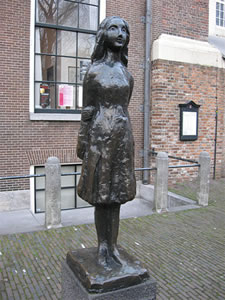
De Nederlandse schrijfster Anne Frank werd geboren in Frankfurt am Main op 12 juni 1929. Zie ook alle tags voor Anne Frank op dit blog.


Uit: The Diary of a Young Girl (Vertaald door B. M. Mooyart-Doubleday)


„Tuesday, 11 April, 1944

Dear Kitty,

My head throbs, I honestly don’t know where to begin.

On Friday (Good Friday) we played Monopoly, Saturday afternoon too. These days passed quickly and uneventfully. On Sunday afternoon, on my invitation, Peter came to my room at half past four, at a quarter past five we went to the front attic, where we remained until six o’clock. There was a beautiful Mozart concert on the radio from six until a quarter past seven. I enjoyed it all very much, but especially the “Kleine Nachtmusik.” I can hardly listen in the room because I’m always so inwardly stirred when I hear lovely music.

On Sunday evening Peter and I went to the front attic together and, in order to sit comfortably, we took with us a few divan cushions that we were able to lay our hands on. We seated ourselves on one packing case. Both the case and the cushions were very narrow, so we sat absolutely squashed together, leaning against other cases. Mouschi kept us company too, so we weren’t unchaperoned.

Suddenly, at a quarter to nine, Mr. Van Daan whistled and asked if we had one of Dussel’s cushions. We both jumped up and went downstairs with cushion, cat, and Van Daan.

A lot of trouble arose out of this cushion, because Dussel was annoyed that we had one of his cushions, one that he used as a pillow. He was afraid that there might be fleas in it and made a great commotion about his beloved cushion! Peter and I put two hard brushes in his bed as a revenge. We had a good laugh over this little interlude!

Our fun didn’t last long. At half past nine Peter knocked softly on the door and asked Daddy if he would just help him upstairs over a difficult English sentence. “That’s a blind,” I said to Margot, “anyone could see through that one!” I was right. They were in the act of breaking into the warehouse. Daddy, Van Daan, Dussel, and Peter were downstairs in a flash. Margot, Mummy, Mrs. Van Daan, and I stayed upstairs and waited“.


 1177088-37d47eef85c1c09e027537016263acfa.jpg

Anne Frank (12 juni 1929 – maart 1945)

Beeld op de Westermarkt, Amsterdam


De Duitse dichter, schrijver en graficus
Christoph Meckel werd geboren op 12 juni 1935 in Berlijn. Zie ook alle tags voor Christopher Meckel op dit blog.


Entwurf eines Menschen der Zukunft


Einer läuft mit dem Handy

herum in Montza,

redet mit seinen Monstern,

Gangs der Eisengürtel, zukünftigen Killern

unbekannt, leere Fresse –

how are you. I’m fine.


Wer ihn sucht

ortet Blutbild, Frequenz, Funktion

von Nerv und Knochen.

Von ihm weiß niemand. Unauffindbar

wo Leere den Raum übernahm

und fortsetzt in Vorzeit, Endzeit, Nachzeit.


Er läuft durch den Tag, die Nacht

ohne vermißt zu werden, verlangt zu werden,

business and more.

Ohne Gefühle rauszulassen

und reinzuholen. Ohne. Ohne.

Und ist kein Stoff für sich selbst

und seinesgleichen.


Keine Geheimzahl, kein Code.

Folgt keiner Spur, hinterläßt nichts,

human society, nicht sein Haus.

Kommt zurück an Niemandes Stelle.

Kein Anlaß für Totschlag, Gelächter, Erbarmen.

Nicht auffindbar in Chronologie

und Erscheinungen anderer.


Ihn übernimmt kein Gott und keine Hölle.


Die Sirenen


- holten mich aus dem Schiffsbauch, befreiten

Hände und Füße von Fesseln und stellten mich

an die Reling ins volle Licht (Meerglast

glühend im Zeichen des Löwen), damit ich

den Gesang zu hören bekam mit offenen Ohren,

um den Verstand gebracht und so weiter

                                                                 (sie lagen

im Schatten der Segel mit verstopften Köpfen)

Wir trieben nah vor den verrufenen Felsen

und nichts geschah – die Sirenen

und ich, der Singvogel, altes Bündnis,

                                      private Geschichte –


 1177088-74a466f74fab4fc1233ea75458df0e47.jpg

Christoph Meckel (Berlijn, 12 juni 1935)


De Turks-Duitse schrijfster en actrice Renan Demirkan werd geboren op 12 juni 1955 in Ankara. Zie ook alle tags voor Renan Demirkan op dit blog.


Uit: Wie buchstabiert man Liebe


Ich möchte von der Liebe erzählen, das heißt, ich will davon erzählen, was dieses ›Liebe‹ so alles mit uns macht.

L-i-e-b-e, nur eine Hand voll Buchstaben und gleichzeitig das größte Wort: Es heißt alles und auch gar nichts.

Es ist ein Wort wie eine Mehrzweckhalle, in der alle möglichen Veranstaltungen organisiert werden können.

Kennen Sie Mehrzweckhallen?

Diese steingewordenen Erbsünden der sechziger Jahre?

Ich kenne die von Leverkusen.

Da finden zum Beispiel die legendären Leverkusener Jazztage statt oder ganz alltägliche Kaffeekränzchen, der gebeutelte Fuß­ballverein trifft sich dort zu einer Krisensitzung oder das Frau­enhaus mit einer Benefizveranstaltung, um Geld für den Anbau zu sammeln.

Jeder macht die Halle für sich passend, baut seine Bühne, sucht Freunde, Helfer oder Verbündete.

Aber wenn nichts und niemand drinnen ist, nichts Greifbares, keine Stimme, kein Gesicht, und man hockt da allein mit seinem Echo, eingebunkert von rauem Spannbeton ohne ein Gegenüber, dann ist es ziemlich trostlos und Furcht erregend dort …

L-i-e-b-e, Liebe, ich sage ein und dasselbe Wort zu meinem Kind und zu meinem Liebsten: Ich liebe dich, meine aber etwas grund­verschieden anderes.

Ich liebe …

Ich liebe auch meine Mutter, meinen Vater, ich liebe es, in der Sonne zu sein, ich liebe die italienische Küche, ich liebe Cha­nel Nr. 5!

Ich liebe …“


 1177088-3742397ea63c9ab43adc7f612f988561.jpg

Renan Demirkan (Ankara, 12 juni 1955)


De Amerikaanse schrijfster Djuna Barnes werd geboren in Cornwall-on-Hudson, Orange County in de staat New York op 12 juni 1892. Zie ook alle tags voor Djuna Barnes op dit blog.


Uit: Nightwood


„In the Vienna of Volkbein's day there were few trades thatwelcomed Jews, yet somehow he had managed, by various dealsin household goods, by discreet buying of old masters and firsteditions and by money changing, to secure for Hedvig a housein the Inner City, to the north, overlooking the Prater, a housethat, large, dark and imposing, became a fantastic museum oftheir encounter.

The long rococo halls, giddy with plush and whorled designsin gold, were peopled with Roman fragments, white and disassociated;a runner's leg, the chilly half-turned head of amatron stricken at the bosom, the blind bold sockets of the eyesgiven a pupil by every shifting shadow so that what they lookedupon was an act of the sun. The great salon was of walnut. Overthe fireplace hung impressive copies of the Medici shield and,beside them, the Austrian bird.

Three massive pianos (Hedvig had played the waltzes ofher time with the masterly stroke of a man, in the tempo ofher blood, rapid and rising - that quick mannerliness of touchassociated with the playing of the Viennese, who, thoughpricked with the love of rhythm, execute its demands in theduelling manner) sprawled over the thick dragon's-blood pileof rugs from Madrid. The study harboured two rambling desksin rich and bloody wood. Hedvig had liked things in twos andthrees. Into the middle arch of each desk silver-headed bradshad been hammered to form a lion, a bear, a ram, a dove and intheir midst a flaming torch. The design was executed under thesupervision of Guido who, thinking on the instant, claimed it asthe Volkbein field, though it turned out to be a bit of heraldrylong since in decline beneath the papal frown. The full lengthwindows (a French touch that Guido thought handsome) overlookingthe park were curtained in native velvets and stuffs fromTunis and the Venetian blinds were of that peculiarly sombreshade of red so loved by the Austrians. Against the panels ofoak that reared themselves above the long table and up to thecurving ceiling hung life-sized portraits of Guido's claim tofather and mother. The lady was a sumptuous Florentine withbright sly eyes and overt mouth. Great puffed and pearledsleeves rose to the pricked-eared pointings of the stiff laceabout the head, conical and braided.“


 1177088-09e8f20215c75e4c9eb0b643f174653c.jpg

Djuna Barnes (12 juni 1892 – 18 juni 1982)

De schrijfsters Solita Solano en Djuna Barnes in Parijs


De Italiaanse dichter en schrijver
Sandro Penna werd geboren op 12 juni 1906 in Perugia. Zie ook alle tags voor Sandro Penna op dit blog.


Black fire between surf


Black fire between surf
Your eyes, confused, caught up in a dream
Of travel and solitude, you, my love


The heat, and the cold


The heat, and the cold, of waiting rooms
The world it seemed a clear dream
Everyday life a legend


If behind the window’s glow


If behind the window’s glow
A small boy sleeps, in summer night,
And dreams…
                        Quickly a train
Goes by, and far
                               The sea is as before


Vertaald door Alexander Booth


 1177088-398ae7978a616036bc541e6d54f40b51.jpg

Sandro Penna (12 juni 1906 – 21 januari 1977)

Thuis, in 1976


De Engelse schrijfster, essayiste, criticaen biografe Brigid Antonia Brophy werd geboren op 12 juni 1929 in Londen.  Zie ook alle tags voor Brigid Brophy op dit blog.


Uit: In Transit


„The voice was mechanical. Mechanical equals international.
‘Bay uh ah annoncent le départ de leur vol six six six, à destination de Rome.’
Italian place-name, Frenched, spoken with an angliccent: its mutations made me diagnose my linguistic leprosy as a fallout disease. The unlocatable loudspeakers were bombarding me with linguistic Beta Eta Alpha rays.
At the recognition, my German dropped off, PLONK, its wing swiftly severed by an invisible-ray buzz-saw in mid flight.
I addressed back to the public-address system my macaronic plaint, with the brilliant apostrophe in qu’it throught which I sobbed on an indrawn breath — a plaint which, because it both stated and illustrated my leprosy, constituted a rebus in language.
I had decided to refuse to follow the hint of ‘destination de Rome’ — and equally of ‘destination: home’.
My internal eternal city, my capital Home, was founded by Romulus and Rebus.
The interlocutor whom child—I used to trail to bed was a punny.
I sprang out of the tweed-suited chair which, sloped backwards, was designed to let you rise from it only as a very slow Venus from the foamrubber, and began to stroll. I would have liked to brisk-march but, alone among strangers, you simply cannot, unless you are sure in the possession of a purpose which, if stopped and asked, you could declare as to the Customs. It makes no difference that you know no one ever would stop you and ask.
I strolled, as if not noticing where, towards the wall of glass through which you could look out on a la piste/die Startbhan/the apron, whereon it was forbidden to smoke/rauchen/fumer.“


 1177088-1fd55e912c025f03c4e3e2bb6b5018b1.jpg

Brigid Brophy (12 juni 1929 - 7 augustus 1995)


De Zwitserse schrijfster Johanna Spyri werd geboren in Hirzel op 12 juni 1827. Zie ook alle tags voor Johanna Spyri op dit blog.


Uit: Heidi kann brauchen, was es gelernt hat


»Alles beim alten, Sebastian?« fragte der Herr Doktor wie gewohnt mit freundlicher Stimme und ging die Treppe hinauf, gefolgt von Sebastian, der nicht aufhörte, allerlei Zeichen der Ergebenheit zu machen, obschon der Herr Doktor sie eigentlich nicht sehen konnte, denn er kehrte dem Nachfolgenden den Rücken.

»Gut, daß du kommst, Doktor«, rief Herr Sesemann dem Eintretenden entgegen. »Wir müssen durchaus noch einmal die Schweizerreise besprechen, ich muß von dir hören, ob du unter allen Umständen bei deinem Ausspruche bleibst, auch nachdem nun bei Klärchen entschieden ein besserer Zustand eingetreten ist.«

»Mein lieber Sesemann, wie kommst du mir denn vor?« entgegnete der Angekommene, indem er sich zu seinem Freunde hinsetzte. »Ich möchte wirklich wünschen, daß deine Mutter hier wäre; mit der wird alles gleich klar und einfach und kommt ins rechte Geleise. Mit dir aber ist ja kein Fertigwerden. Du lässest mich heute zum dritten Male zu dir kommen, damit ich dir immer noch einmal dasselbe sage. –

»Ja, du hast recht, die Sache muß dich ungeduldig machen, aber du mußt doch begreifen, lieber Freund« – und Herr Sesemann legte seine Hand wie bittend auf die Schulter seines Freundes –, »es wird mir gar zu schwer, dem Kinde zu versagen, was ich ihm so bestimmt versprochen hatte und worauf es sich nun monatelang Tag und Nacht gefreut hat. Auch diese letzte schlimme Zeit hat das Kind so geduldig ertragen, immer in der Hoffnung, daß die Schweizerreise nahe sei und daß es seine Freundin Heidi auf der Alp besuchen könne; und nun soll ich dem guten Kinde, das ja sonst schon so vieles entbehren muß, die langgenährte Hoffnung mit einemmal wieder durchstreichen – das ist mir fast nicht möglich.«


 1177088-4c11e81b1da5bd46968a9b4c0dcaca79.jpg

Johanna Spyri (12 juni 1827 - 7 juli 1901)


Zie voor nog meer schrijvers van de 12e juni ook mijn blog van 12 juni 2011 deel 2.
Geschreven door Romenu om 18:42 Reageer op dit bericht

William Styron, Renée Vivien, Jean-Pierre Chabrol, Sophie van der Stap, Ben Jonson, Athol Fugard, Yasunari Kawabata

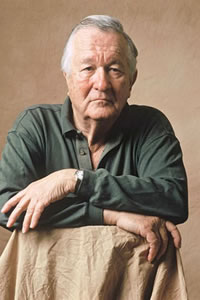
De Amerikaanse schrijver William Styron werd op 11 juni 1925 in Newport News in de staat Virginia geboren. Zie ook alle tags voor William Styron op dit blog.


Uit: Sophie's Choice


„Sometime during my thirties the nickname and I mysteriously parted company, Stingo merely evaporating like a wan ghost out of my existence, leaving me indifferent to the loss. But Stingo I still was during this time about which I write. If, however, it is perplexing that the name is absent from the earlier part of this narrative, it may be understood that I am describing a morbid and solitary period in my life when, like the crazy hermit in the cave on the hill, I was rarely called by any name at all.

I was glad to be shut of my job--the first and only salaried position, excluding the military, of my life--even though its loss seriously undermined my already modest solvency. Also, I now think it was constructive to learn so early in life that I would never fit in as an office worker, anytime, anywhere. In fact, considering how I had so coveted the job in the first place, I was rather surprised at the relief, indeed the alacrity, with which I accepted my dismissal only five months later. In 1947 jobs were scarce, especially jobs in publishing, but a stroke of luck had landed me employment with one of the largest publishers of books, where I was made "junior editor"--a euphemism for manuscript reader. That the employer called the tune, in those days when the dollar was much more valuable tender than it is now, may be seen in the stark terms of my salary--forty dollars a week. After withholding taxes this meant that the anemic blue check placed on my desk each Friday by the hunchbacked little woman who managed the payroll represented emolument in the nature of a little over ninety cents an hour. But I had not been in the least dismayed by the fact that these coolie wages were dispensed by one of the most powerful and wealthy publishers in the world; young and resilient, I approached my job--at least at the very beginning--with a sense of lofty purpose; and besides, in compensation, the work bore intimations of glamour: lunch at "21," dinner with John O'Hara, poised and brilliant but carnal-minded lady writers melting at my editorial acumen, and so on.“


 1176391-223d789a795ab12fff16d1ee44777ce2.jpg

William Styron (11 juni 1925 – 1 november 2006)


De Britse dichteres en schrijfster Renée Vivien (eig. Pauline Mary Tarn) werd geboren op 11 juni 1877 in Londen. Zie ook alle tags voor Renée Vivien op dit blog.


Your Strange Hair


Your strange hair, cold light,
Has pale glows and blond dullness;
Your gaze has the blue of ether and waves;
Your gown has the chill of the breeze and the woods.

I burn the whiteness of your fingers with kisses.
The night air spreads the dust from many worlds.
Still I don't know anymore, in the heart of those deep nights,
How to see you with the passion of yesterday.

The moon grazed you with a slanted glow ...
It was terrible, like prophetic lightning
Revealing the hideous below your beauty.

I saw-as one sees a flower fade-
On your mouth, like summer auroras,
The withered smile of an old whore.


JAPANESE REVERIE


I know not why this recollection forces the frequently closed door of my memory.
It was night-time, in a Japanese tea-house.
In a subdued ascension, the monotonous rhythm, the almost eternal rhythm of three cords were struck with regularity. Three notes, no more... A rhythm in the night...


But the moon was so large, so magnificently powerful, that prodigious stalks of bamboo were seen rising beyond a pool, - which, beneath the moon, took on all the mystery of the sacred pools in the enclosure of a temple. And the immense moon gave to these prodigious stalks the appearance of a dream.


For some time, a melancholy old woman, who was beautiful and a professional musician, played tirelessly... I cannot render this feeling of eternity, of the Eternity which, formerly, seemed terrible to me, incomprehensible and deadly... This strange intuition glided in my veins, with the rhythm of three notes repeated indefinitely, with the Japanese night, with the visage of the melancholy old musician... And little by little, ... and little by little, my soul was appeased until there was a divine annihilation of death in the night...


 1176391-4dc063ac4dee2545fdfddd379ce38f1f.jpg

Renée Vivien (11 juni 1877 – 10 november 1909)

Hier met vriendin Natalie Clifford Barney (rechts)


De Franse schrijver
Jean-Pierre Chabrol werd geboren op 11 juni 1925 in Chamborigaud. Zie ook alle tags voor Jean-Pierre Chabrol op dit blog.


Uit: Clerguemort - Les Rebelles


„Le village suivait trois lignes parallèles qui épousaient étroitement le S étiré de la rivière, sur la rive gauche ; la première ligne était une rangée de maisons dont les murs extérieurs trempaient dans l’eau, la deuxième était la rue, chemin vicinal et grand-rue tout à la fois, qu’il fallait connaître pour la deviner, d’ici, à son tracé noir qui séparait la première ligne des maisons de la deuxième, c’était une rue étroite, profonde, fraîche et sonore.
À l’entrée de Clerguemort, le vieux pont bossu, fait de gros galets ronds, avec, de part et d’autre du sommet, les deux saillies aiguës dans lesquelles on pouvait s’abriter quand se lançait au galop sur les galets de sa pente un coche ou l’attelage de la poste, le bon vieux pont jetait d’un élan l’arche unique et bien ronde sur le grand gouffre dont on ne pouvait même pas deviner le fond.
À ce bout de Clerguemort, la filature, à l’autre bout, le temple et le moulin, c’était le vrai village protestant de la Cévenne.
La filature, avec ses quatre étages, ses quatre verrières en demi-cercle, toute en longueur, massive, était, de loin, la construction la plus imposante de Clerguemort, la seule aussi qui s’élevait sur la rive droite, à l’entrée du pont, avec, bien sûr, quelques baraquettes qui servaient de dépendances et, surtout, la demeure du maître, belle bâtisse bien carrée sur trois étages, qu’on voyait d’abord car elle était la seule crépie en blanc, où filait ses derniers jours le filateur, M. Huguet qu’on appelait lù richo, ou, plus souvent, lù moussu, le monsieur.“


 1176391-e9c9f90608cbbdc85add84fee61793a1.jpg

Jean-Pierre Chabrol (11 juni 1925 – 1 december 2001)


De Nederlandse schrijfster
Sophie van der Stap werd geboren in Amsterdam op 11 juni 1983. Zie ook alle tags voor Sophie van der Stap op dit blog.


Uit: Heute bin ich blond (Vertaald door Barbara Heller)

Sorry«, sage ich, als ich die Haare hinter mir auf dem Parkett sehe. »Das geht auf einmal so schnell.«
Die Frau sieht mich im Spiegel an. Ich habe Fotos von mir mitgebracht, um ihr zu zeigen, wie ich die Haare am liebsten trage. Es sind die Fotos, die Martin vor drei Wochen gemacht hat, als ich noch meine eigenen Haare hatte. Seit meine Haarzellen den Kampf gegen die Chemo verlieren, sehe ich dem Mädchen auf den Bildern immer weniger ähnlich. Sie liegen auf dem Tisch, zwischen einem Perückenprospekt und einem gelbblonden Haarschopf, den die Frau mir eben gebracht hat. Vielleicht etwas in der Art? Ganz bestimmt nicht. Alle diese Frisuren machen mich zu einem Transvestiten, und als die Frau zu einer Perücke aus langen, dunklen Haaren greift, muss ich an den Gitarristen von Guns N’ Roses denken, nur dass die Mähne auf meinem eigenen Kopf sitzt. Grauenhaft.
Der Perückenladen liegt in der Eingangshalle des AMC, des Akademisch Medisch Centrum in Amsterdam; im ersten Stock ist eine Kabine zum Anprobieren. Schön bequem für die Onkologiepatienten, die können nach der Infusion direkt dorthin. Neben mir sitzen meine Mutter, meine Schwester und Annabel, meine beste Freundin. Wir fühlen uns unbehaglich und sind alle ziemlich still, doch dann probiert Annabel eine der Perücken auf, und die Spannung löst sich. Sie sieht unmöglich aus. Wir müssen laut lachen. Ich betrachte meine Schwester mit ihrer dunklen Hochfrisur. Toll sieht sie aus. Wie ich trägt sie ihr Haar am liebsten hinten hochgesteckt, mit einer leichten Welle vorn. Ich betrachte Annabels dichte schwarze Haare und dann wieder das glänzende Haar meiner Schwester, die Kurzhaarfrisur meiner Mutter und schließlich die Bü schel, die bei mir noch übrig sind. Die letzten drei Wochen ziehen im Schnelldurchlauf an mir vorüber, und ich begreife immer noch nicht, was ich hier soll. Was ich hier soll. Ich will weg, mich verstecken in der Geborgenheit meiner vier Wände. Nicht nur vor meiner Krankheit, sondern auch vor den Reaktionen der anderen, die nur bestätigen, was ich vergessen will. Nachbarn, die mich mitleidig ansehen.


1176391-99a52f50af2520d4f7790cd40514cef0.jpg
Sophie van der Stap (Amsterdam, 11 juni 1983)


De Engelse dichter en schrijver
Ben Jonson werd geboren rond 11 juni 1572 in Westminster, Londen. Zie ook alle tags voor Ben Jonson op dit blog.


An Elegy


THOUGH beauty be the mark of praise,
And yours of whom I sing be such
As not the world can praise too much,
Yet 'tis your Virtue now I raise.

A virtue, like allay so gone
Throughout your form as, though that move
And draw and conquer all men's love,
This subjects you to love of one.

Wherein you triumph yet-because
'Tis of your flesh, and that you use
The noblest freedom, not to choose
Against or faith or honour's laws.

But who should less expect from you?
In whom alone Love lives again:
By whom he is restored to men,
And kept and bred and brought up true.

His falling temples you have rear'd,
The wither'd garlands ta'en away;
His altars kept from that decay
That envy wish'd, and nature fear'd:

And on them burn so chaste a flame,
With so much loyalty's expense,
As Love to acquit such excellence
Is gone himself into your name.

And you are he-the deity
To whom all lovers are design'd
That would their better objects find;
Among which faithful troop am I-

Who as an off'ring at your shrine
Have sung this hymn, and here entreat
One spark of your diviner heat
To light upon a love of mine.

Which if it kindle not, but scant
Appear, and that to shortest view;
Yet give me leave to adore in you
What I in her am grieved to want!


 1176391-088e7e9a05a728ce1535247ea4925503.jpg

Ben Jonson (ca. 11 juni 1572 – 6 augustus 1637)


De Zuidafrikaanse schrijver Harold Athol Lannigan Fugard werd geboren op 11 juni 1932 in Middelburg, Kaapprovincie. Zie ook alle tags voor Athol Fugard op dit blog.


Uit: Notebooks


“Tonight, after two weeks of pain, of sleepless nights, of crying and whining in the dark, of vainly imploring Jeeesus and God, Dad broke down and sobbed like a child. Tears and flat spit bubbled his lips. We searched around for pills, for nerve pain specific, and dosed him with the lot. He pulled himself together for a few minutes then, just before I left, he called to me, ‘Come here, my boy’ — started to say something, then floundered and drowned in another flood of tears. Eventually, he

managed to say what he wanted: ‘Don’t let them do anything to my leg.

Don’t let them take it off!’


“Behind the bland withdrawn expression what terrors moved! Behind the midnight agony ... That a cripple might lose his remaining leg — his final vestige of independence, or manhood, would go. ...


“The lies and half-truths that I have spread about Dad — alcoholic, fought in the war, etc. The truth — humility, resignation to suffering. A character who deliberately propagates and establishes a public

image compounded of cowardice, weakness, dependence of another man who was the exact opposite. But done, not out of hate, but in submission to the inevitability of his (the other man’s — Dad’s) fate — and, finally, love.“


 1176391-ef0676092870f02bae9abb898489e762.jpg

Athol Fugard (Middelburg (ZA), 11 juni 1932)


De Japanse schrijver Yasunari Kawabata werd geboren op 11 juni 1899 in Osaka. Zie ook alle tags voor Yasunari Kawabata op dit blog.


Uit: First Snow on Fuji (Vertaald door Michael Emmerich)


„Gazing at the photograph, Takako tried to imagine the princess as she would have looked hoisting a stone onto the mound with the group captain, but the image that came was simply an image. Takako felt no connection to it. Her reading of the articles in the previous day's paper had left her feeling sorry for the princess, who had after all been forced by church law and by certain customs of the English royal family to abandon her love, but that feeling was now gone. In some ways yesterday's empathy itself seemed like a foreign story.

    Takako was unable to read one of the other stories in "This Country, That Country" with so much detachment, however. The story described two actual cases of "spouse swapping."

    The first incident had occurred in Sweden. Two married couples, the Polsens and the Petersons, lived in adjacent apartments in a single building in Egresund, a town near Stockholm. Mr. Polsen and Mr. Peterson were friends of long standing, and they and their wives had grown so close that they lived essentially as a single family. Then, on the twenty-ninth (the article ran on November second, so it must have been October twenty-ninth), the two husbands swapped wives—or to look at it from the other point of view, the wives swapped husbands. In short, the couples were divorced and remarried simultaneously. Neither the Petersons nor the Polsens are at all worried about the shock they've given the world, and all four of them are getting along as well as ever, it was reported.“


 1176391-c11e85ec00b684ec15dcd035f5b02616.jpg

Yasunari Kawabata (11 juni 1899 — 16 april 1972)
In 1917


Zie voor nog meer schrijvers van de 11e juni ook mijn blog van 11 juni 2011 deel 2.
Geschreven door Romenu om 18:59 Reageer op dit bericht

Meer van Romenu

↑ Terug naar de berichten