

Naar de inhoud

Romenu

Over literatuur, gedichten, kunst en cultuur
akke.beakke.be

Berichten van 19 juni 2012 tot 20 juni 2012

Vikram Seth, Paul Muldoon, Kurt Schwitters, Jean-Claude Izzo, Silke Andrea Schuemmer
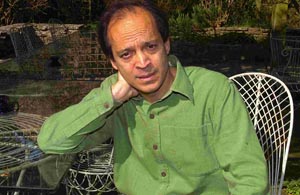
De Indische schrijver Vikram Seth werd geboren op 20 juni 1952 in Kolkata. Zie ook alle tags voor Vikram Seth op dit blog.


Uit: Two Lives


„When I was seventeen I went to live with my great-uncle and great-aunt in England. He was Indian by origin, she German. They were both sixty. I hardly knew them at the time. It was August 1969 – the monsoon season in Calcutta. A few days before I left, Mama had taken me to a temple to be blessed, which was most unlike her. She and Papa came to see me off at Dumdum Airport. I arrived at Heathrow in the afternoon. My great-uncle and great-aunt were still away on their annual holiday in Switzerland and, as I recall, I was met at the terminal by someone in the firm for which my father worked. My first impression was of the width of the road that led (under grey skies) to London. I was housed for a night in a drab hotel somewhere near Green Park.
That evening Shanti Uncle and Aunty Henny returned from Switzerland, and the following day I and my luggage arrived at their door.
I looked at the house that was to be my home for the next few years. There was a red pillar-box not far from the gate of 18 Queens Road, Hendon; this was to be my beacon whenever I trudged up from the tube station. In front of the house was a small, low-walled, immaculately maintained garden with a few rosebushes in full bloom. A path led to the door. To the right of the path, slanted on a stand, was a burnished brass plaque that read:


S. B. Seth
L.D.S., R.C.S. (Edin.), B.Sc., D.M.D. (Berlin)
Dental Surgeon


I set down my luggage on the front step. The thought of meeting people whom I had not seen for years and did not really know, and whose home I would be sharing, made me nervous. I was, in any case, fearfully shy. After a minute I rang the bell.“


 1182503-df721a8c2dfea168597e9d5ff1917851.jpg

Vikram Seth (Kolkata, 20 juni 1952)


De Ierse dichter en schrijver Paul Muldoon werd geboren in Portadown, County Armagh, in Noord-Ierland op 20 juni 1951, Zie ook  Zie ook alle tags voor Paul Muldoon op dit blog.


Milkweed and Monarch


The rain comes flapping through the yard
like a tablecloth that she hand-embroidered.
My mother has left it on the line.
It is sodden with rain.
The mushroom shed is windowless, wide,
its high-stacked wooden trays
hosed down with formaldehyde.
And my father has opened the gates of Troy
to that first load of horse manure.
Barley straw. Gypsum. Dried blood. Ammonia.
Wagon after wagon
blusters in, a self-renewing gold-black dragon
we push to the back of the mind.
We have taken our pitchforks to the wind.

All brought back to me that September evening
fifteen years on. The pair of us
tripping through Barnett's fair demesne
like girls in long dresses
after a hail-storm.
We might have been thinking of the fire-bomb
that sent Malone House sky-high
and its priceless collection of linen
sky-high.
We might have wept with Elizabeth McCrum.
We were thinking only of psilocybin.
You sang of the maid you met on the dewy grass-
And she stooped so low gave me to know
it was mushrooms she was gathering O.

He'll be wearing that same old donkey-jacket
and the sawn-off waders.
He carries a knife, two punnets, a bucket.
He reaches far into his own shadow.
We'll have taken him unawares
and stand behind him, slightly to one side.
He is one of those ancient warriors
before the rising tide.
He'll glance back from under his peaked cap
without breaking rhythm:
his coaxing a mushroom-a flat or a cup-
the nick against his right thumb;
the bucket then, the punnet left or right,
and so on and so forth till kingdom come.

We followed the overgrown tow-path by the Lagan.
The sunset would deepen through cinnamon
to aubergine,
the wood-pigeon's concerto for oboe and strings,
allegro, blowing your mind.
And you were suddenly out my ken, hurtling
towards the ever-receding ground,
into the maw
of a shimmering green-gold dragon.
You discovered yourself in some outbuilding
with your long-lost companion, me,
though my head had grown into the head of a horse
and shook its dirty-fair mane
and spoke this verse:

Come back to us. However cold and raw, your feet
were always meant
to negotiate terms with bare cement.
Beyond this concrete wall is a wall of concrete
and barbed wire. Your only hope
is to come back. If sing you must, let your song
tell of treading your own dung,
let straw and dung give a spring to your step.
If we never live to see the day we leap
into our true domain,
lie down with us now and wrap
yourself in the soiled grey blanket of Irish rain
that will, one day, bleach itself white.
Lie down with us and wait.


 1182503-63d3bc89975f8dc4a6836daf72d948ec.jpg

Paul Muldoon (Portadown, 20 juni 1951)


De Duitse schrijver, dichter en kunstenaar Kurt Schwitters werd geboren op 20 juni 1887 in Hannover. Zie ook alle tags voor Kurt Schwitters op dit blog.


If I Were, When I Was


Untimely gropes without space      The I in the Everywhere You From Morning-Evening-Evening-Morning      toward the next self-consciousness.
From the eternally Old it came,      As I;      Always growing without degree or measure      It remains in the I.
Soon smaller-larger, up-back      In the You the I, in the I the You.      You are like I,      Your I you are,     like I.
Thus we travel in the Nothing      Unevenly different and differently the same      Uneven evenness (Variable parable) of the millions      Me-Thee, Thee-Me: the same way.      Always believing everyone fulfills his duty,      Always faithful to the call within;      The hope that we may unite ourselves,      Remains unsevered.      We live, because we can remember,      And go on living, because we hope.      Time is change all around us,      Space is Cover.
We are the measure,      For Time and eternally,      infinite Space.
We grope, because we know,      If we were, when we were.


Vertaald door Pierre Joris


Dumb Poem


A worm hangs from a fishhook.
A fish bites the worm.
The fish also bites the fishhook.
The hook pulls the fish.
Now the fish hangs from the hook.
The hook swings it through the air.
The fish drops dead in the air.
The hook drops the fish dead.
A new worm hangs from the fishhook.
A new fish bites the new worm.
And new life blossoms out among the ruins.


Vertaald door Jerome Rothenberg


1182503-3c9aebe49ca287145feba1dffeec7bbe.jpg 

Kurt Schwitters (20 juni 1887 – 8 januari 1948)


De Franse schrijver
Jean-Claude Izzo werd geboren op 20 juni 1945 in Marseille. Zie ook alle tags voor Jean-Claude Izzo op dit blog.


Uit: Total Chaos (Vertaald door Howard Curtis)


„Rue des Pistoles, twenty years after

All he had was her address. Rue des Pistoles, in the old neighborhood. It was years since he'd last been in Marseilles. But he didn't have a choice. Not now.

It was June 2nd, and it was raining. Despite the rain, the taxi driver refused to turn into the back alleys. He dropped him in front of Montée-des-Accoules. More than a hundred steps to climb and a maze of streets between there and Rue des Pistoles. The ground was littered with garbage sacks spilling their contents. There was a pungent smell on the streets, a mixture of piss, dampness and mildew. The only big change was that even this neighborhood was being redeveloped. Some houses had been demolished, others had had their fronts repainted ocher and pink, with Italian-style green and blue shutters.

Even on Rue des Pistoles, maybe one of the narrowest streets of all, only one side, the side with even-numbered houses, was still standing. The other side had been razed to the ground, as had the houses on Rue Rodillat, and in their place was a parking lot. That was the first thing he saw when he turned the corner from Rue du Refuge. The developers seemed to have taken a breather here. The houses were blackened and dilapidated, eatenaway by sewer vegetation.

He was too early, he knew. But he didn't want to go to a bistro and sit drinking one coffee after another, looking at his watch, waiting for a reasonable hour to wake Lole. What he wanted was to have his coffee sitting comfortably in a real apartment. He hadn't done that for months. As soon as she opened the door, he headed straight for the only armchair in the room, as if it was something he'd often done. He stroked the armrest with his hand, sat down slowly, and closed his eyes. It was only afterwards that he finally looked at her. Twenty years after.

She was standing. Bolt upright, as always. Her hands deep in the pockets of a straw-colored bathrobe. The color made her skin look browner than usual and emphasized the blackness of her hair, which she was wearing short now. Her hips may have grown thicker, he wasn't sure. She'd become a woman, but she hadn't changed. Lole, the Gypsy. She'd always been beautiful“.


 1182503-84261a660a4591933a64be272f5b8866.jpg

Jean-Claude Izzo (20 juni 1945 – 26 januari 2000)


De Duitse dichteres, schrijfster en kunsthistorica Silke Andrea Schuemmer werd geboren op 20 juni 1973 in Aken. Zie ook alle tags voor Silke Andrea Schuemmer op dit blog.


Uit: Organische Portraits


Was sich ein Nest baut in den Achselhöhlen,
das kriecht auch durch den Nabel fort. Und in die
Muscheln ruft es wilde Worte, färbt Wangen rot,
ist Echolot auch für die Lymphen, die sich wie
grüngebleichte Nymphen zu den Schulterblättern schmiegen.
In den Salzfässern unterm Hals, da leckt sich satt,
was da geschlüpft aus Haar und Poren, was
ausgebrütet zu der Beuge runterfloß, um sich dann
noch einen Weg zu bohren zur andren Seite hin.
Was sich ein Nest baut in den Achselhöhlen,
das schlängelt sich auch durch den Mund,
das brennt und zündelt auf der Zunge,
bis die Lippen wund ein neues Nest gestatten.


Es regt sich, schnarrt und ächzt im Kehlkopf drin
schlägt den harten Gong des Gaumens zwölfmal an
Gewalpert wird vielleicht ganz oben wo sichs wölbt
hier unten, wo der Kiefer leise knackt,
spukt es in der Lippenfurche, huscht ein Schatten übers Kinn
Statt Fäden: Speichelnetze. Was da sich drin verfängt
zappelt eine Weile, stirbt dann schnell wie hingesagt
In den Winkeln ist ein früh verwestes Wort verwoben
ein unterkühltes seilt sich von der Schartenspitze ab
durch klebrig, dichtgesponnenes Gemasch
beschlägt in Tau und lungenwarmem Dunst
Zehn Füße hat der mißgeborne Vers
die rudern, krabbeln um ihr Leben einen Laut
wenn nicht der Atemzug vom nächsten drüberfährt


 1182503-993c593362356cb5fcd8d377bb73350e.jpg

Silke Andrea Schuemmer (Aken, 20 juni 1973)


Zie voor nog meer schrijvers van de 20e juni ook
mijn blog van 20 juni 2011.
Geschreven door Romenu om 19:14 Reageer op dit bericht

Salman Rushdie, Sybren Polet, Josef Nesvadba, Osamu Dazai, José Rizal, Friedrich Huch, Gustav Schwab

De Indisch-Britse schrijver en essayist Salman Rushdie werd geboren in Bombay op 19 juni 1947. Zie ook alle tags voor Salman Rushdie op dit blog.


Uit: Mitternachtskinder (Vertaald door Karin Graf)


“Es war einmal ein kleiner Junge, der wurde in der Stadt Bombay geboren … Nein, so geht es nicht, ich kann mich um das Datum nicht herummogeln: Ich wurde am 15. August 1947 in Dr. Narlikars

privatem Entbindungsheim geboren. Und die Zeit? Die Zeit spielt auch eine Rolle. Also dann: nachts. Nein, man muss schon genauer sein … Schlag Mitternacht, um die Wahrheit zu sagen. Uhrzeiger

neigten sich einander zu, um mein Kommen respektvoll zu begrüßen.

Oh, sprich’s nur aus: Genau in dem Augenblick, in dem In dien die Unabhängigkeit erlangte, purzelte ich in die Welt. Schweres Atmen war zu hören. Und draußen vor dem Fenster Feuerwerk und

Menschenmassen. Ein paar Sekunden später brach mein Vater sich den großen Zeh; aber verglichen mit dem, was mich in diesem verhängnisvollen Augenblick befallen hatte, war sein Unfall eine bloße

Lappalie, denn dank der verborgenen Willkürherrschaft dieser verbindlich grüßenden Uhren war ich auf geheimnisvolle Weise an die Geschichte gefesselt, war mein Geschick unlösbar mit dem meines

Landes verkettet worden. Für die nächsten drei Jahrzehnte sollte es kein Entkommen geben. Wahrsager hatten mich prophezeit, Zeitungen feierten meine Ankunft, Politiker bescheinigten meine

Echtheit. Ich hatte in der ganzen Sache nichts zu sagen. Ich, Saleem Sinai, später auch verschiedentlich Rotznase, Fleckengesicht, Kahlkopf, Schnüffl er, Buddha und sogar Scheibe-vom-Mond genannt, war vom Schicksal schwer mit Beschlag belegt worden – selbst unter günstigsten Umständen eine gefährliche Verstrickung. Und ich konnte mir zu der Zeit noch nicht einmal selbst die Nase putzen.

Nun läuft jedoch die Zeit ab (da sie keine weitere Verwendung für mich hat). Ich werde bald einunddreißig Jahre alt. Vielleicht. Wenn mein zerfallender, überbeanspruchter Körper es zulässt. Aber ich kann nicht darauf hoffen, mein Leben zu retten, ich kann nicht einmal damit rechnen, tausendundeine Nacht zu haben. Ich muss schnell arbeiten, schneller als Scheherazade, wenn mein Leben bei meinem Tod einen Sinn – ja, Sinn – gehabt haben soll. Ich gebe es zu: Mehr als alles andere fürchte ich die Sinnlosigkeit.”


1181834-3583029bf484cfebbd20fce29330eecd.jpg
Salman Rushdie (Bombay, 19 juni 1947)


De Nederlandse dichter en schrijver Sybren Polet (pseudoniem van Sybe Minnema) werd geboren in Kampen op 19 juni 1924. Zie ook alle tags voor Sybren Polet op dit blog.


Verdedigingsgrijs

Dag amper aan de supermarkt ontsnapt,
Verdedigingsgrijs, de allernatuurlijkste kleur.
Leven een quaestie van ondergeluk.
Eten
een krachttoer, een krachtmeting.
De ziel
als een hond met een kunstgebit,
gevangen in de draaideur van een warenhuis.

Een hoog aan de gevel gekleefd
een handvol bejaarde hangjongeren.
In de bomen enkele nagesynchroniseerde merels.
Op het gazon: een zielig hoopje massa-DNA
ter grootte van een molshoop.
Je speurt de zwakke uitstraling.

Droom van een trauma:
de verstrooide as van een gecremeerde crimineel
die je door wind in het gezicht wordt geblazen.

De vijfvingerige leegte die je aangrijnst.

In de lucht: een eigenhandig gedolven mangat
dat je zult vullen met jezelf.
Laberdi laberda laberdonia.


Zonsverduistering


Vanmorgen om 10 u 10
ontmoette ik de man
die de zon heeft verduisterd,
drie minuten lang.

Hij droeg een colbert van krekels,
een dorp als een monocle in zijn oog.

Hij aksepteerde mijn cuba libre niet,
hij aksepteerde mijn cafe solo niet,
hij aksepteerde mij niet;
zijn wenkbrauwen van muggen optrekkend,
liep hij door mij heen,
als een mens door een gedachte.

Een zee had geen branding meer,
drie minuten lang;
en de zon had geen negatieven meer,
drie minuten lang -

Daarna verdween hij uit mijn gedachten,
als een foto die emigreert
naar doorzichtiger schijngebieden -


 1181834-2a70e9543b3256aee001e6139985ecbd.jpg

Sybren Polet (Kampen, 19 juni 1924)

Kampen, op een oude schoolplaat 


De Tsjechische schrijver Josef Nesvadba werd geboren op 19 juni 1926 in Praag. Zie ook alle tags voor Josef Nesvadba op dit blog.


Uit: The Einstein Brain


„While students flock to hear lectures on Goethe or Herder's views on art, we have been forced to give up the gymnasium to the Lecturer in Aesthetics, although when the University was founded his department was almost forgotten, it was so insignificant. The shocking thing is that we cannot imagine how this state of affairs has come about. Is it the natural desire of the younger generation to rebel against their parents and do something different? Or is it some kind of unconscious protest (here Professor Kozhevkin permitted himself to smile) against figures themselves as the symbols of order and therefore as symbols of paternal authority? Our psychologists have been studying this matter for a long time, but alas! they have not been able to come to any conclusion."

We clapped again and Professor Smith-Jones sat down. For a while there was an uncomfortable silence. Nobody felt like carrying on with the discussion. They were all afraid to speak up. Yet the reasons for this changing trend had been known long enough. I decided to speak myself.

"There is no point in refusing to face the facts," I got down to brass tacks at once. "We've come to the end of our resources. We've reached a dead end. It is true that since the end of the nineteenth century the technical sciences have transformed the world and thrown all other branches of knowledge into the shade; they have made it possible for humanity to devote itself to more important tasks and so on and so forth. We are all aware of these things. But technical progress has not solved the fundamental problems of the human mind. People are still asking how and why we should live; we still know nothing of how the universe came into being, and we cannot understand the fourth dimension Einstein worked out. Whenever we set this question to our cybernetic machines they reject it as unscientific, wrongly programmed, too personal, private, human.“


 1181834-836541f3ac28a591dad82638bfcb538a.jpg

Josef Nesvadba (19 juni 1926 – 26 april 2005)


De Japanse schrijver Osamu Dazai (eig.Shūji Tsushima) werd geboren op 19 juni 1909 in Tsugaru. Zie ook alle tags voor Osamu Dazai op dit blog.


Uit: The setting sun (Vertaald door Donald Keene)


“Take the matter of eating soup. Weare trained to lean slightly over theplate, to take up a little soup with thespoon held sideways, and then to bringit to our mouth, still holding the spoonsideways. Mother, on the other hand,lightly rests the fingers of her left handon the edge of the table and sitsperfectly erect, with her head held highand scarcely so much as a glance at theplate. She darts the spoon into the soupand like a swallow — so gracefully andcleanly one can really use the simile —brings the spoon to her mouth at a rightangle, and pours the soup between herlips from the point. Then, with innocentglances around her, she flutters the spoon exactly like a little wing, never spilling adrop of soup or making the least sound of sippingor clinking the plate. This may not be the way of eating soup that etiquette dictates, but to me it ismost appealing and somehow really genuine. As amatter of fact, it is amazing how much bettersoup tastes when you eat it as Mother does,sitting serenely erect, than when you look downinto it. But being, in Naoji's words, a high-classbeggar and unable to eat with Mother's effortlessease, I bend over the plate in the gloomy fashionprescribed by proper etiquette.Mother's way of eating, not only soup butevery-thing else, is quite a thing apart fromnormal table manners. When the meat appearsshe at once cuts it up into little pieces with herknife and fork, then transfers the fork to her righthand and happily skewers one piece afteranother. Again, while we are struggling to free themeat from a chicken bone without rattling theplate, Mother unconcernedly picks up the bone inher fingers and chews the meat off. Even suchuncivilized actions seem not only charming butstrangely erotic when Mother performs them. Thereal things are apt to be deviant.I have sometimes myself thought things wouldtaste better if we ate with our fingers, but I refrainfrom doing so, for fear that if a high-class beggarlike myself imitates Mother badly, it might makeme look a beggar plain and simple”.


 1181834-a61628196731538b8c0f4aca6d68dc84.jpg

Osamu Dazai (19 juni 1909 – 13 juni 1948)


De Filippijnse schrijver José Rizal (eig. José Protacio Rizal Mercado y Alonso Realonda) werd geboren op 19 juni 1861. Zie ook alle tags voor José Rizal op dit blog.


Kundiman


Now mute indeed are tongue and heart:
love shies away, joy stands apart.
Neglected by its leaders and defeated,
the country was subdued and it submitted.

But O the sun will shine again!
Itself the land shall disenchain;
and once more round the world with growing praise
shall sound the name of the Tagalog race.

We shall pour out our blood in a great flood
to liberate the parent sod;
but till that day arrives for which we weep,
love shall be mute, desire shall sleep.


Goodbye to Leonor


And so it has arrived -- the fatal instant,
the dismal injunction of my cruel fate;
so it has come at last -- the moment, the date,
when I must separate myself from you.

Goodbye, Leonor, goodbye! I take my leave,
leaving behind with you my lover's heart!
Goodbye, Leonor: from here I now depart.
O Melancholy absence! Ah, what pain!


 1181834-416cb3a8b0680cfd5e0afc64262c458f.jpg

José Rizal (19 juni 1861 - 30 december 1896)

Portret door Romeo C. MananQuil


De Duitse dichter en schrijver Friedrich Huch werd geboren op 19 juni 1873 in Braunschweig. Zie ook alle tags voor Friedrich Huch op dit blog.


Uit: Enzo


“Es war ein weites, bequem eingerichtetes Gemach, das noch soeben von zwei Stimmen erfüllt gewesen war, die lebhaft, hoffnungsvoll und heiter redeten, befreit von einem schweren Druck. Eine verstaubte Flasche alten Weines stand auf dem Flügel, der schräg die Mitte des Zimmers beherrschte, neben ihr zwei halbgeleerte Gläser, undeutlich beleuchtet von einer elektrischen Stehlampe mit grünem Seidenschirm. Ihr Schein fiel voll auf eine Partitur, deren Zeichen vielfach durchstrichen, verbessert und noch nicht vollendet waren. An den Wänden hingen sehr große Lorbeerkränze mit goldbedruckten roten Bändern.

Jetzt öffnete sich die Tür wieder, und der Kapellmeister trat herein. Er stieß einen langen Seufzer der Erleichterung aus und ließ sich in einen Sessel fallen, wie jemand, der nach langem Kranksein, nach schließlicher Operation endlich aus dem Hospital entlassen, sich auf diesen Augenblick mit einem abschließenden: Gott sei Dank schon tagelang gefreut hat.

Alles glücklich überstanden! murmelte er für sich, alles am Ende noch gut abgelaufen, aber es hat meine Nerven doch sehr heruntergebracht. – Er starrte in einen Winkel, fühlte eine leise Übelkeit, der sich sogleich der Wunsch anreihte, sich zu stärken, und sah verlangend nach der Weinflasche. Aber sollte er schon wieder aufstehen von seinem schönen weichen Sitze? Nach kurzem Schwanken erhob er sich, trat langsam zum Flügel, sah die beiden Gläser an und wußte nun nicht mehr, welches sein eigenes und welches das Glas des Arztes gewesen sei. Mit leidendem Gesicht füllte er sie beide, trank das eine aus und stellte das andere vor sich auf die Flügelplatte, auf der er dann selber mit beiden Ellenbogen für seinen Kopf einen Stützpunkt fand. Sein Mähnenhaar fiel herab und spiegelte sich mit dem Gesichte undeutlich auf dem schimmernden Grund. – Und wenn ich dieses alles hätte persönlich aushalten sollen, dachte er wieder, das hätte ich ganz sicher nicht überstanden. Wie nur eine Frau das durchmachen kann! Und später steht sie wohl und gesund wieder auf und weiß doch, daß ihr so etwas vielleicht noch öfter geschehen wird. Ich hätte kein Talent zur Frau, zur Mutter; Schmerzen sind etwas Entsetzliches.“


1181834-51ebef968fe7ff7df9d8b9920fc4a847.jpg
Friedrich Huch (19 juni 1873 – 12 mei 1913)


De Duitse schrijver en pastor Gustav Schwab werd geboren op 19 juni 1792 in Stuttgart. Zie ook alle tags voor Gustav Schwab op dit blog.


An August Grafen von Platen


Nimm hin den Dank, wie du mein Herz erfrischet!

Das war kein Mahl aus Orients fremder Küche;

Das mundet anders, als die kalten Sprüche,

Die der Hyperbeln Würze heiß gemischet!


Wein, lautern Wein hast du mir aufgetischet,

Erzogen auf durchsonntem Steingebrüche

Glüht er im Kelch, dampft auf in Wohlgerüche,

Und schäumt, daß ihn kein Tadel überzischet.


Im Innersten hab' ich's bekennen müssen:

Du bist, du bist der heil'gen Sänger Einer,

Vor deren Geist der meinige sich beuget.


Ja, selig ist die Lust, die schafft und zeuget;

Doch eine – heut empfind' ich's – ist nicht kleiner:

Die Lust, begabtre Geister zu begrüßen.


Abendsegen


Dank, Vater! dir für Leid und Lust
Und was du mir gegeben.
Laß mich, wie dieses liebe Heut,
Mein Morgen auch erleben.
Erfüll' mir keinen thör'gen Wunsch,
Das Gute laß nicht säumen.
Und was du mir nicht geben kannst,
Ei, davon laß mich träumen!


 1181834-f2b3eb5960c5df5eb7484161ba288074.jpg

Gustav Schwab (19 juni 1792 – 4 november 1850)

Geschreven door Romenu om 20:20 Reageer op dit bericht

Meer van Romenu

↑ Terug naar de berichten