

Naar de inhoud

Romenu

Over literatuur, gedichten, kunst en cultuur
akke.beakke.be

Berichten van 24 september 2012 tot 25 september 2012

Carlos Ruiz Zafón, Andrzej Stasiuk, William Faulkner, Rebecca Gablé
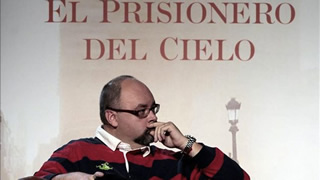
De Spaanse schrijver Carlos Ruiz Zafón werd geboren op 25 september 1964 in Barcelona. Zie ook mijn blog van 25 september 2010 en eveneens alle tags voor Carlos Ruiz Zafón op dit blog.


Uit: The Prisoner Of Heaven (Vertaald door Lucia Graves)


“That year at Christmas time, every morning dawned laced with frost under leaden skies. A bluish hue tinged the city and people walked by, wrapped up to their ears and drawing lines of vapour with their breath in the cold air. Very few stopped to gaze at the shop window of Sempere & Sons; fewer still ventured inside to ask for that lost book that had been waiting for them all their lives and whose sale, poetic fancies aside, would have contributed to shoring up the bookshop’s ailing finances.

‘I think today will be the day. Today our luck will change,’ I proclaimed on the wings of the first coffee of the day, pure optimism in a liquid state.

My father, who had been battling with the ledger since eight o’clock that morning, twiddling his pencil and rubber, looked up from the counter and eyed the procession of elusive clients disappearing down the street.

‘May heaven hear you, Daniel, because at this rate, if we don’t make up our losses over the Christmas season, we won’t even be able to pay the electricity bill in January. We’re going to have to do something.’

‘Fermín had an idea yesterday,’ I offered. ‘He thinks it’s a briljant plan that’ll save the bookshop from imminent bankruptcy.’

‘Lord help us.’

I quoted Fermín, word for word:

‘Perhaps if by chance I was seen arranging the shop window in my underpants, some lady in need of strong literary emotions would be drawn in and inspired to part with a bit of hard cash. According to expert opinion, the future of literature depends on women and as God is my witness the female is yet to be born who can resist the primal allure of this stupendous physique,’ I recited.

I heard my father’s pencil fall to the floor behind me and I turned round.

‘So saith Fermín,’ I added.”


 1243408-90286704659736c80de76db7d72e9d6e.jpg

Carlos Ruiz Zafón (Barcelona, 25 september 1964)


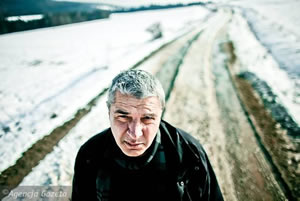
De Poolse schrijver en letterkundige Andrzej Stasiuk werd geboren op 25 september 1960 in Warschau. Zie ook mijn blog van 25 september 2010 en eveneens alle tags voor Andrzei Stasiuk op dit blog.


Uit: Nine (Vertaald door Bill Johnston)


„Snow had fallen in the night.

           Pawel got out of bed and went into the bathroom. The light was on, the mirror was broken. Tubes and brushes and bottles had been swept off the shelf, were all over the floor. A stream of white toothpaste had shot out and dried on the willow-green wall. Disposable razors had been snapped in two and stepped on into a torn box of soap powder. The cracked toilet seat lay in the corner. It occurred to him there was a lot of glass, so he went back to the hallway for his shoes.

           He picked up one of the toothbrushes, rinsed it under the faucet, scraped some toothpaste off the wall. Then he squatted and chose a razor with a cracked handle. He found the can of shaving cream under the bathtub. It was dented but something still swished inside it. He shaved in what was left of the mirror. He splashed water on his face. The Old Spice had been crushed, but there was still something left in the white plastic cover. He shook the crumpled container. It made a grating sound like a deaf-and-dumb version of a childs rattle. A few drops splashed onto his palm. He rubbed them on his cheeks. It hardly stung, so this time he must have managed not to cut himself. He took a leak and went back into the living room.

           Things were no better here. More smashed stuff. The cracked silver casing of the cassette player emptied its colorful guts onto the floor. He flicked the light switch. The lamp was in pieces. The light of early morning hung like dust in the air. Something white poked from the ripped upholstery of the sofa. He smoothed it with his hand and went to the pile of clothes spilling out of the wardrobe. He sniffed a few things to find something clean in the semidarkness. He put on a shirt and sweater. By the bed he found his pants; he dug out some socks from an untouched drawer and pulled them on, and at last stopped shivering.

He sipped at his coffee and gazed through the window. Snow lay on the roofs and on the sidewalk; the black trees were white now, and everything resembled a distant Christmas. A red bus cautiously made a turn. Sleepily and soundlessly it straightened, receded down the avenue of lime trees. The treetops faded into the low sky. He listened for the patter of drops in the gutters. There was no sound. “Itll lie for a while,” he thought.”


 1243408-ff6f5838fd6a25a202ad1e7df58f5fdc.jpg

Andrzej Stasiuk (Warschau, 25 september 1960)


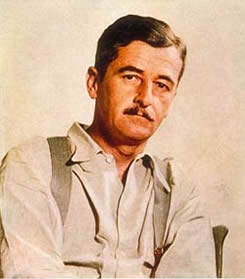
De Amerikaanse schrijver William Faulkner werd geboren op 25 september 1897 in New Albany, Mississippi. Zie ook mijn blog van 25 september 2010 en eveneens alle tags voor William Faulkner op dit blog.


Uit: A Fable


“Wednesday

Long before the first bugles sounded from the barracks within the city and the cantonments surrounding it, most of the city was already awake. These did not need to rise from the straw mattresses and thin pallet beds of their hive-dense tenements, because few of them save the children had ever lain down. Instead, they had huddled all night in one vast tongueless brotherhood of dread and anxiety, about the thin fires of braziers and meagre hearths, until the night wore at last away and a new day of anxiety and dread had begun.

Because the original regiment had been raised in this district, raised in person, in fact, by one of the glorious blackguards who later became Napoleon's marshals, who delivered the regiment into the Emperor's own hand, and along with it became one of the fiercest stars in that constellation which filled half the sky with its portent and blasted half the earth with its lightning. And most of its subsequent replacements had been drawn from this same district, so that most of these old men were not only veterans of it in their time, and these male children already dedicated to it when their time should come, but all these people were parents and kin, not only the actual old parents and kin of the doomed men, but fathers and mothers and sisters and wives and sweethearts whose sons and brothers and husbands and fathers and lovers might have been among the doomed men except for sheer blind chance and luck.

Even before the bugles' echoes died away, the warrened purlieus were already disgorging them. A French or British or American aviator (or a German either for that matter, if he had had the temerity and the luck) could have watched it best: hovel and tenement voiding into lane and alley and nameless cul-de-sac, and lane and alley and cul-de-sac compounding into streets as the trickles became streams and the streams became rivers, until the whole city seemed to be pouring down the broad boulevards converging like wheelspokes into the Place de Ville, filling the Place and then, pressed on by the weight of its own converging mass, flowing like an unrecoiling wave up to the blank gates of the Hôtel where the three sentries of the three co-embattled nations flanked the three empty flagstaffs awaiting the three concordant flags”.


 1243408-8dac44275c36a12cabc6bb0ad98b4f18.jpg

William Faulkner (25 september 1897 - 6 juli 1962)


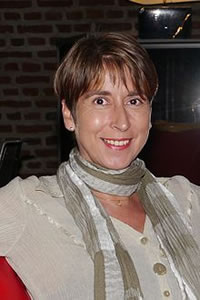
De Duitse schrijfster Rebecca Gablé (pseudoniem van Ingrid Krane-Müschen) werd geboren op 25 september 1964 in Wickrath / Mönchengladbach. Zie ook mijn blog van 25 september 2010 en eveneens alle tags voor Rebecca Gablé op dit blog.


Uit: Von Ratlosen und Löwenherzen


“Am 28. Juni 1461 wurde Edward of March mit nicht einmal zwanzig Jahren zu Edward IV. von England gekrönt – der erste König aus dem Hause York. Die meisten Engländer waren erleichtert. Den einfachen Leuten war nämlich völlig egal, wie ihr König mit Nachnamen hieß. Sie wollten nur, dass nach 116 Jahren Krieg gegen Frankreich und den sich nahtlos anschließenden sechs Jahren Bürgerkrieg endlich mal Ruhe herrschte und niemand in ihre Dörfer kam, um ihre Scheunen zur Versorgung der Truppen zu plündern oder ihre Väter, Ehemänner und Söhne als Bogenschützen anzuwerben, die dann entweder gar nicht oder mit einem Arm, Bein oder Auge weniger nach Hause kamen. Und König Edward machte seine Sache hervorragend. Nach dem jämmerlichen Henry VI. (den seine Königin mitsamt ihrem Sohn in Schottland in Sicherheit gebracht hatte), war es doch irgendwie sehr beruhigend, einen König auf dem Thron zu haben, der auch wie ein König aussah, redete und handelte.
Edward IV. hatte in vieler Hinsicht Ähnlichkeit mit seinen strahlenden Vorgängern Edward III. und Henry V. Genau wie sie legte er keinen Wert auf Rachefeldzüge gegen die besiegten politischen Gegner, sondern setzte auf Aussöhnung. Genau wie sie war er ein König, dem Recht und Rechtsprechung sehr am Herzen lagen, der aber auf dem Schlachtfeld ordentlich hinlangen konnte, wenn es sein musste. Und genau wie sie sah er – so wird berichtet – unverschämt gut aus und ließ nichts, aber auch gar nichts anbrennen. Und genau das wurde sein größtes Problem. Während sein wichtigster Ratgeber, sein Cousin Richard Earl of Warwick, ihn zu einer Ehe mit einer französischen Prinzessin drängte, der kaum weniger einflussreiche Earl of Pembroke auf eine Verbindung mit Burgund setzte, hatte der König sich rettungslos in die Witwe eines unbedeutenden Landritters verliebt, Elizabeth Woodville.”


 1243408-28b2681d699565f1458c5cdbd632403b.jpg

Rebecca Gablé (Wickrath, 25 september 1964)


Zie voor nog meer schrijvers van de 25e september ook nog mijn blog van 25 september 2011 deel 2 en eveneens deel 3.

Geschreven door Romenu om 19:26 Reageer op dit bericht

David Benioff

De Amerikaanse schrijver David Benioff (pseudoniem van David Friedman) werd geboren in New York City op 25 september 1970. Zie ook alle tags voor David Benioff op dit blog.


Uit: City of Thieves


“Off we go, then, on a tour into the haunted theme park of modern European history. It is January 1942, the first winter of what would become a 900-day siege, and David's grandfather, Lev Beniov, at that time a skinny 17-year-old, is trying to survive on his own. Lev's mother and sister left Leningrad before the Germans closed in; his father, a Jewish poet, had been arrested by the Soviet secret police four years earlier and was never heard from again. After looting the corpse of a German soldier, Lev himself is arrested and thrown into the city's huge and silent prison, where he expects to be killed. His cellmate, Kolya, is an insouciant Cossack full of literary pretensions and braggadocio who is in jail for deserting his regiment.
To their infinite surprise, the two young men are sent on a mission instead of being executed. A local army colonel whose daughter is getting married surmises that Lev and Kolya are schooled enough in petty thievery to procure a dozen eggs for the wedding cake. No matter that eggs have not been seen anywhere in Leningrad in months. The lads are given five days, a curfew waiver, and 400 rubles and told that if they fail to deliver the goods, they will be shot.
Talk about your wild goose chase. There are no animals of any kind here; even the pigeons have long since been eaten. In the outdoor food stalls, what's for sale are pricey glasses of dirt mixed with melted sugar and something called "library candy," made by boiling the binding glue from books: "[T]here was protein in the glue, protein kept you alive, and the city's books were disappearing like the pigeons."


 1420354-13507b4a552c3d097310820b91b7cab1.jpg

David Benioff (New York, 25 september 1970)

Geschreven door Romenu om 00:00 Reageer op dit bericht

Mark Boog, A.L. Snijders, F. Scott Fitzgerald, Shamim Sarif

De Nederlandse dichter en schrijver Mark Boog werd geboren op 24 september 1970 in Utrecht. Zie ook mijn blog van 24 september 2010 en eveneens alle tags voor Mark Boog op dit blog.


Onbegrepen offer


Elke stelling verdient het
gebeeldhouwd te zijn.
Steeds weer ben ik aan zet, of jij -
wie raakt nooit de tel kwijt -

en sla. 'Voor je beurt!' 'Niet.'
Ik sla je weer. Onbegrepen offer.

Het spel valt in stukken uiteen. Geen partij.
Als een schaap, met open ogen
naar de scheerder, mug op weg naar web,
de held zijn slagveld tegemoet.


De dagelijkse taken


De dagelijkse taken: het oprichten van het standbeeld
dat ik ben geworden, het bedekken van het lijf, drinken

van koffie, het ontmantelen van de plannen van gisteren,
het enzovoort. Het nogmaals opschorten van ongeloof.

Ik geef me over aan je onthutsende aanwezigheid, je
ogen. Dat ze me zien is nog het vreemdste, dat ze

leven zijn en vol van tijd. De morgen bloeit onwetend
in je spiegel. Ik weet niet precies waarin je gelooft.

Volgt het handwerk van elke dag, het met almaar groter
vakmanschap vervaardigen van redenen en van excuses,

volgt de avond, dan de dood, die we ontwijken in ons
haveloze bed, die we bedriegen door heel stil te liggen.


Atleet


Alle ramen zijn open. De geluiden van binnen en buiten
mengen zich; mengen zich met het licht en de gedachten.

Uiterst verwonderlijk is deze lijdzaamheid. Met handen
waarin geen zand en ogen onder leden wachten we lang.

Het zeggen is bijkomstig. In de verste stilste hoeken
is er plaats voor, tussen het gebeuren, naast het wachten.

Er beweegt zich een atleet door de gangen van het huis,
langs de kamers waarin we zitten, er klinkt voorbijgaan.


1242753-79d0709011297ae9f1e892214b1fea35.jpg
Mark Boog (Utrecht, 24 september 1970)


De Nederlandse schrijver A.L. Snijders (pseudoniem van Peter Cornelis Müller) werd geboren op 24 september 1937 in Amsterdam. Zie ook mijn blog van 20 novemberr 2010 en eveneens alle tags voor A.L. Snijders op dit blog.


Passie


Hij vertelde zijn dochters over de passie, maar ze wilden er niets van weten. Ze verlieten hem in de dageraad en liepen in tien uur zonder te rusten naar zee. Daar bleven ze drie maanden, ze hielpen met de strandstoelen en de tenten, en ze maakten muziek om wat te verdienen. Maar toen de oorlog dreigde liepen ze terug naar huis waar hun vader nog steeds de passie preekte. Nu, omdat ze wat ouder waren geworden, wilden ze er het fijne van weten, ze wilden het fijne van de passie weten. Ze gingen bij hem zitten en spraken hem aan met het woord vader. Hij legde ze uit hoe ze moesten leven, wat ze moesten doen. Ze moesten hun brandglas richten op een willekeurig doel, ze moesten zich vastbijten en niet loslaten, ze moesten geen aandacht schenken aan het hoofdschudden en de woorden 'toe maar, die durft'. Zo moesten ze leven, zo zou het wat worden. De dochters waren woedend dat een vader zich er op zo'n eenvoudige wijze van afmaakte, alsof hij een cursus in een vormingscentrum gaf. Ze gaven hem de raad geen woorden meer te gebruiken en verlieten voor de tweede keer het huis. Aan het strand zagen ze de zandzuigers en graafmachines die de kust versterkten, maar zelf zaten ze met hun voeten in het zand omdat dat zo'n heerlijk gevoel gaf.


1242753-d4eb6925a8d55e78e14840888411fb6c.jpg 

A.L. Snijders (Amsterdam, 24 september 1937)


De Amerikaanse schrijver Francis Scott Fitzgerald werd geboren op 24 september 1896 in Saint Paul, in de staat Minnesota. Zie ook mijn blog van 24 september 2010 en eveneens alle tags voor F. Scott Fitzgerald op dit blog.


Uit: The Beautiful and Damned


“Anthony drew as much consciousness of social security from being the grandson of Adam J. Patch as he would have had from tracing his line over the sea to the crusaders. This is inevitable; Virginians and Bostonians to the contrary notwithstanding, an aristocracy founded sheerly on money postulates wealth in the particular.
Now Adam J. Patch, more familiarly known as “Cross Patch,” left his father’s farm in Tarrytown early in sixty-one to join a New York cavalry regiment. He came home from the war a major, charged into Wall Street, and amid much fuss, fume, applause, and ill will he gathered to himself some seventy-five million dollars.
This occupied his energies until he was fifty-seven years old. It was then that he determined, after a severe attack of sclerosis, to consecrate the remainder of his life to the moral regeneration of the world. He became a reformer among reformers. Emulating the magnificent efforts of Anthony Comstock, after whom his grandson was named, he levelled a varied assortment of uppercuts and body-blows at liquor, literature, vice, art, patent medicines, and Sunday theatres. His mind, under the influence of that insidious mildew which eventually forms on all but the few, gave itself up furiously to every indignation of the age. From an armchair in the office of his Tarrytown estate he directed against the enormous hypothetical enemy, unrighteousness, a campaign which went on through fifteen years, during which he displayed himself a rabid monomaniac, an unqualified nuisance, and an intolerable bore. The year in which this story opens found him wearying; his campaign had grown desultory; 1861 was creeping up slowly on 1895; his thoughts ran a great deal on the Civil War, somewhat on his dead wife and son, almost infinitesimally on his grandson Anthony.

Early in his career Adam Patch had married an anæmic lady of thirty, Alicia Withers, who brought him one hundred thousand dollars and an impeccable entré into the banking circles of New York. Immediately and rather spunkily she had borne him a son and, as if completely devitalized by the magnificence of this performance, she had thenceforth effaced herself within the shadowy dimensions of the nursery. The boy, Adam Ulysses Patch, became an inveterate joiner of clubs, connoisseur of good form, and driver of tandems—at the astonishing age of twenty-six he began his memoirs under the title “New York Society as I Have Seen It.” On the rumor of its conception this work was eagerly bid for among publishers, but as it proved after his death to be immoderately verbose and overpoweringly dull, it never obtained even a private printing”.


1242753-ec9fbeb8a312632ca50d02953a4fce55.jpg 

F. Scott Fitzgerald (24 september 1896 - 21 december 1940)


De Britse schrijfster en filmmaakster Shamim Sarif werd geboren op 24 september 1969 in Londen. Zie ook mijn blog van 24 september 2010 en eveneens alle tags voor Shamim Sarif op dit blog.


Uit: The World Unseen


“She walked over to the counter and picked up her apron. She was caught in the glow of the lamp light now, and Amina patted the baby’s back and watched Miriam, a slight frown on her face. She had never in her life felt so disconcerted by anyone, and as she stood in the gloom by the open door, she examined Miriam as though she were a framed picture on a wall. She watched her slender hands place the apron around her waist, saw the slim muscles that flickered like thin fish beneath the skin of her forearm. She watched the lit face intent on tying the bow, watched the shadowed angles of her cheekbones, and the long eyelashes that brushed the tops of her cheeks when she blinked. Miriam felt the eyes upon her and looked up. The shop was dark beyond the circle of the lamp, and she walked away from the light, towards the door.

“I can’t believe you drove through all this rain,” she said. The baby was restless, and Amina handed her back. Miriam felt the girl’s hands brushing hers as the child moved between them and wondered for a moment why she was so aware of such small things where Amina was concerned.

“I’m used to driving in the rain.”

“Oh, yes. I forgot that you used to do taxi-driving,” replied Miriam.

“I still do,” Amina corrected. “I’m leaving again next week, in fact. To Cape Town.”

“Cape Town,” Miriam repeated, and the tone of wonder in her voice made Amina turn to look at her again. “What is it like, in Cape Town?” asked Miriam.

“It’s beautiful,” Amina said. “Lovely small towns. And the mountains and the beaches. There are some beautiful beaches ‘ especially if you’re White, especially.” She paused and looked out again.

“I don’t stay there long,” she said. “I like the drive more than anything even when it’s not picturesque, like the Garden Route, there are always things to see. Even driving past townships, you see all these people living very different lives from your own.”


 1242753-3cbc273cdc2f9b113a3866ed727d28eb.jpg

Shamim Sarif (Londen, 24 september 1969)


Zie voor nog meer schrijvers van de 24e september ook mijn vorige blog van vandaag.

Geschreven door Romenu om 20:30 Reageer op dit bericht

Fernand Ouellette, Yves Navarre, Hendrik Tollens

De Canadese dichter, essayist en schrijver Fernand Ouellette werd geboren in Montreal, Quebec, op 24 septenber 1930. Zie ook mijn blog van 24 september 2010 en eveneens alle tags voor Fernand Ouellette op dit blog.


TOTEM ANTÉHUMAIN


Mon totem

ma femme héraldique bien enfouie.

Très attentif l'ai retirée de ma tourbe,

suspendue sur un cintre beau vermillon.

Il suffit parfois de la dépendre sous

le coup d'un élancement plus dur.

Certes la belle étoffe s'est fort refroidie,

et même amplifiée comme une morte naissant

de l'onde ô voisine de la morte Aphrodite.

Mais quelle image, quelle grande dame

se laisse encor partager

quelle fragile s'accoutume aux séismes

du froid profanateur

du fol adorateur ?


LA CONNAISSANCE


Alors que le coeur ému et lumineux

se distendait jusqu'au

Soleil:

déferla le plus noirci regard

de la crue la puissante ;

et tristement, avec vigilance,

on empala le neigeux

du corps fait femme.

Puis nous glissâmes dans la spirale,

dans l'étuve à jouissance, les incendiaires,

crispés par les cris du sexe blessé,

nous aggrippant aux matières marbrées

qui nos épaules chargeaient de connaissance.


 1242749-13672ef051ea92202fa1f3d83614fdaf.jpg

Fernand Ouellette (Montreal, 24 septenber 1930)


De Franse schrijver Yves Navarre werd geboren op 24 september 1940 in Condom. Zie ook mijn blog van 24 september 2010. en eveneens alle tags voor Yves Navarre op dit blog.


Uit: L'Espérance de beaux voyages, 1 : Eté-automne


“Il peut prendre une histoire, encore, pour ce qu'elle est, pour ce qu'elle dit, sans forcément vouloir savoir pourquoi. Enfant, si un grand te lit cette histoire, dis-toi qu'il te la lit pour la comprendre. Et il n'y arrivera jamais. Si tu la lis, seul, comme un grand, prends-la, toi, sans trop t'interroger. Il va y avoir un oiseau bleu, merveilleux. Lis les images comme le texte. Dis-toi que tu y trouveras ce que les grands n'y trouvent plus et ce que plus tard, en la racontant à tes enfants, tu chercheras et ne trouveras pas à ton tour. Il était une fois une histoire tellement unique que tous prétendaient la raconter pour la première fois. Une histoire incomprise. Incomprise comme toi quand on ne te comprend pas.

Pierre avait sept ans depuis un mois. Mais j'aurais pu te raconter l'histoire de Pedro, de Petrik, de Piotr, de Peter, de Piero. C'est toujours la même histoire. Celle de Pierre est peut-être la nôtre, plus proche et familière. Il a neigé. Pierre va à l'école en traînant derrière lui un petit bateau. Il rêve d'être marin. Il tient de son grand-père cette chanson Ohé, matelot. j'ai fait trois fois le tour du monde en bateau, je peux te raconter Valparaiso. Ses frères aînés se moquent de lui. Ils lui donnent des coups de poing. «C'est quoi Valparaiso ? » « C’est un port » répond Pierre « à l'autre bout du monde. » « Mais tu n'y es jamais allé ? » Pierre répond : « J'irai. C'est décidé. » Et Pierre part pour l'école en traînant son petit bateau. Qu'il a appelé Valparaiso. Pour un peu, la neige ferait des vagues.


 1242749-48b7ab8d3295dbcd1e9cb0e492adc797.jpg

Yves Navarre (24 september 1940 – 24 januari 1994)


De Nederlandse dichter Hendrik Tollens werd op 24 september 1780 te Rotterdam geboren. Zie ook mijn blog van 24 september 2010 en eveneens alle tags voor Hendrik Tollens op dit blog.


Bede


Wél hem, die 't wislend lot te ontzien heeft noch te duchten;

Die zelf zijn erfgrond bouwt en 't werken zich niet schaamt;

Die, onbekend en vrij, in vaderlandsche luchten,

Op eigen bodem aâmt.


Hem, wien zijn kudde kleedt, hem, wien zijn wingerds drenken,

Hem, wien zijn akker voedt en graan tast in zijn schuur;

Hem, wien, bij zomerbrand, zijn boomen schaduw schenken,

Bij winterkoude, vuur.


Gezegend, die dus leeft, die, met zijn lot te vreden,

Voor vloed noch ebbe schroomt in 's werelds ranke kiel;

Gezegend, die dus zwoegt, met onvermoeide leden

En onbezwaarde ziel.


Gelukkig boven peil, die, wars van aardsche zorgen,

Des daags met ijver zwoegt en 's nachts verkwikkend rust;

Wien de onschuld wiegt in slaap en wien zij, elken morgen,

Weer vrolijk wakker kust!


Schenk, hemel! mij dat lot: schenk, na zoo zoet een leven,

Mij eens een kalmen dood, in diep vergeten staat;

En dat geen marmren praal, voor trotschaards opgeheven,

Mijn needrig graf verraad'.


Naar het Engelsch van Pope.


 1242749-1774976bd925a28924153b5a9d09f744.jpg

Hendrik Tollens (24 september 1780 -21 oktober 1856)


Zie voor nog meer schrijvers van de 24e september ook mijn blog van 24 september 2011 deel 2.

Geschreven door Romenu om 20:24 Reageer op dit bericht

Constantijn Huygensprijs 2012 voor Joke van Leeuwen


Constantijn Huygensprijs 2012 voor Joke van Leeuwen

De Nederlandse dichteres, schrijfster en illustrator Joke van Leeuwen heeft de Constantijn Huygensprijs 2012 gewonnen. Dat heeft de Jan Campert-stichting laten weten. Joke van Leeuwen werd geboren op 24 september 1952 in Den Haag. Zie ook alle tags voor Joke van Leeuwen op dit blog.


Geschenk

Dit zit goed vastgeplakt. Wel mooi papier. Een lint
met krullen. Doen ze met een schaar. Ik weet niet
wat jij hiervan vindt, of jij dit hebt, dat ik het ruil,
dat jij dan wacht op mij, dat ik dan onderwijl wat
anders voor je koop, of, want, tenzij, dat jij het
houden wilt of bij vergissing denkt dat jij het
toch al had, maar niet dus of niet meer of
dat het brak en dat jij dacht als nog een
keer moet ik voorzichtig zijn, of dat
iets dubbels helemaal niet geeft
wat jou betreft. Hier. Neem
een mes. Dit heft.


Binnen

Die wachtte was te goed in doodverzinnen.
Weghelften weg, begroeide grond verschoven,
meren gezwollen, als bij wie ver, met
tijdelijke namen, in de slaap verrast.

Die wachtte dacht een strand, had zich
in zand verpakt, nat zand dat plakte,
hoofd eruit, een hand om plat te slaan,
dat elke vrouw beschreven in een mal.

Pak dit maar uit. Stel maar die vraag.
Een mal? Maar alles druk met scheppen, innen,
spetten, mobiel bellen, nieuwer weer
voorspellen en daar was het al.

Die komen moest kwam lachend, natte voeten,
tas vol groeten, wakker en verwacht.
Ik ben het. Ben je boven?
Nam die verdampte vast.


Perron

Het is weer scharreldag voor kruimelduiven.
Die hoeven niet weg. Die missen een pootje.
Die zwijgen: 'Kijk naar je eige, zeik niet
over aankomst en hoe laat.'

Er zal een trein zijn en eruitgetuimel en
iemand die wuift en sprongetjes maakt en
onverstaanbaar van een reis gaat roepen
naar wie daar al jaren staat.


 1674829-e7c85e900e0cbfa994fa56441a5b5d52.jpg
Joke van Leeuwen (Den Haag, 24 september 1952)

Geschreven door Romenu om 00:00 Reageer op dit bericht

Meer van Romenu

↑ Terug naar de berichten