

Naar de inhoud

Romenu

Over literatuur, gedichten, kunst en cultuur
akke.beakke.be

Berichten van 13 januari 2013 tot 14 januari 2013

J. Bernlef, Edward St Aubyn, Yukio Mishima, Anchee Min, Isaäc da Costa

De Nederlandse schrijver en dichter J. Bernlef  werd geboren op 14 januari 1937 in Sint Pancras. Bernlef overleed op 29 oktober van het afgelopen jaar op 75-jarige leeftijd. Zie ook alle tags voor J. Bernlef op dit blog.


Schaduwtheater


De wijze die zei dat van
alle schilderijen ooit gemaakt
maar een klein deel bleef bewaard
dat het werkelijk genie schuilgaat
in wat voorgoed is zoekgeraakt.

Zo met alles.
De doden, de gebeurtenissen
die niemand onthield of net niet
aan de oppervlakte kwamen,
zij vormen ons schaduwtheater.


Met wortel en tak


Twee handen woelen
in vochtige bosgrond

Een stem. 'Tien dagen geleden - hier -
veertig of vijftig.'

Binnen de jaarringen
is dit moment nog geen
tiende milimeter dik.

't Graven stokt
het licht druipt
langs de stammen.

Twee handen
de polsen gebonden
steken zwart biddend
uit de aarde omhoog.


Hazepad


Het zijden overhemd zakt door het geraamte
het sjaaltje vat vlam
zijn lach gist na op zijn lippen.

Nu wordt hij geïntoneerd, niet de vleugel.

Wie verliet daar zo schielings de woning
zonder om te kijken naar het kind
dat de man nazwaait die het werd?

Waarom kiest iemand voor vernietiging?

Zonder begeleiding koos hij
voor een andere toestand:
het hazepad der extase.


 1316145-9a0fa479c96ae85691febd6637b8b1aa.jpg

J. Bernlef (14 januari 1937 - 29 oktober 2012)


De Britse schrijver en journalist Edward St Aubyn werd geboren op 14 januari 1960 in Cornwall. Zie ook alle tags voor Edward St Aubyn op dit blog.


Uit: Eindelijk (Vertaald door Nicolette Hoekmeijer)


‘Had je me niet verwacht?’ zei Nicholas Pratt, terwijl hij zijn wandelstok in het tapijt van het crematorium priemde en Patrick strak aankeek, waarbij hij iets zinloos afwerends in zijn blik legde, een gewoonte die geen nut meer had, maar die niet meer viel af te leren. ‘Ik loop tegenwoordig nogal wat begrafenissen af. Dat krijg je op mijn leeftijd. Het heeft geen zin om het thuis uit te schateren om de onnozele vergissingen van een jeugdige necroloog, of om je over te leveren aan het nogal eentonige genoegen te turven hoeveel leeftijdgenoten er die dag zijn overleden. Nee! Het leven dient “gevierd” te worden: daar gaat ze dan, de sloerie van de school.

Men zegt dat hij zich kranig heeft geweerd in de oorlog, maar ik weet wel beter! – dat soort dingen, al die wapenfeiten in perspectief plaatsen. Begrijp me goed, het is allemaal heel

aangrijpend, dat zal ik niet ontkennen. Die laatste dagen hebben iets van een aanzwellend orkest. En aan verschrikkingen geen gebrek, natuurlijk. Op mijn dagelijkse gang van ziekenhuisbed naar uitvaartbankje en weer terug moet ik steeds denken aan die olietankers die zich zo ongeveer om de week op de rotsen te pletter voeren, en aan de zwermen vogels die op

het strand lagen te verkommeren, met verkleefde vleugels en een verbijsterde blik in hun knipperende, gelige ogen.’

Nicholas keek om zich heen. ‘Schamele opkomst,’ mompelde hij, alsof hij oefende om straks verslag uit te brengen.

‘Zijn dat de geloofsvrienden van je moeder? Hoogst curieus.

Hoe zou je de kleur van dat pak noemen? Aubergine? Aubergine a la crème d’oursin? Ik moet onmiddellijk naar Huntsman om ook zoiets in elkaar te laten flansen. Hoezo hebt u geen

aubergine? Bij Eleanor Melrose liep iedereen erin. Bestel meteen een el of duizend!”


1316145-6d43e22ffe687001a87484c54c18d540.jpg 

Edward St Aubyn (Cornwall, 14 januari 1960)


De Japanse schrijver Yukio Mishima werd geboren op 14 januari 1925 in Tokyo. Zie ook ook alle tags voor Yukio Mishima op dit blog.


Uit: The Temple of the Golden Pavilion (Vertaald door Ivan Morris)


“It is no exaggeration to say that the first real problem I face in my life was that of beauty. At the thought that beauty should already have come into this world unknown to me, I could not help feeling a certain uneasiness and irritation. If beauty really did exist there, it meant that my own existence was a thing estranged from beauty.

(…)


And that night, indeed, this young man with his stinging tongue, who usually seemed interested in beauty only in so far as he could defile it, showed me a truly delicate aspect of his nature. He had a far, far more accurate theory about beauty than I did. He did not tell it to me in words, but with his gestures and his eyes, with the music that he played on his flute, and with that forehead of his which emerged in the moonlight.

(…)


Later, when I came to know Kashiwagi more intimately, I understood that he disliked lasting beauty. His likings were limited to things such as music, which vanished instantly, or flower arrangements, which faded in a matter of days; he loathed architecture and literature . . . Yet how strange a thing is the beauty of music! The brief beauty that the player brings into being transforms a given period of time into pure continuance; it is certain never to be repeated; like the existence of dayflies and other such short-lived creatures, beauty is a perfect abstraction and creation of life itself. Nothing is so similar to life as music . . .”


1316145-f33b724aed28e152cfceb6aff84e9253.jpg
Yukio Mishima (14 januari 1925 - 25 november 1970)

Foto door Shirou Aoyama, 1956


De Chinese schrijfster
Anchee Min werd geboren in Shanghai op 14 januari 1957. Zie ook alle tags voor Anchee Min op dit blog.


Uit:  Pearl of China


“She was in and out of bamboo groves and brick hallways, behind the hills and around ponds. Under the bright moonlight, NaiNai's long neck stretched. Her head seemed to become smaller. Her cheekbones sharpened. Her slanting eyes glowed as she scanned the temples. NaiNai appeared, disappeared, and reappeared like a ghost. But one night she stopped. In fact, she collapsed. I was aware that she had been ill. Tufts of hair had been falling from her head. There was a rotten smell to her breath. "Go and look for your father," she ordered. "Tell him that my end is near."
Papa was a handsome man in his thirties. He had what a fortuneteller would describe as "the look of an ancient king" or "the matching energy of sky and earth," meaning he had a square forehead and a broad chin. He had a pair of sheep eyes, a garlic-shaped nose that sat on his face like a gentle hill, and a mouth that was always ready to smile. His hair was thick and silky black. Every morning, he combed and braided it with water to make his queue smooth and shining. He walked with his back straight and head up. Speaking Mandarin with an Imperial accent, Papa wore his voice like a costume. But when Papa lost his temper, his voice would slip. People were shocked when Mr. Yee suddenly took up a strange voice. Ignoring NaiNai's opinion that his ambitions would never be realized, Papa dreamed that one day he would work for the governor as an adviser. Papa attended teahouses where he showed off his talent in classic Chinese poems and verse. "I must keep my mind sharp and literary skills tuned," he often said to me. One would never guess from the way he presented himself that Papa was a seasonal coolie.

We lived in Chin-kiang, a small town far away from the capital, Peking, on the south side of the Yangtze River in Jiangsu province. Originally, our family was from Anhui province, a harsh region where survival depended on an endless round of crushing physical labor.”


 1316145-4e4e2c473d7cf28a539751b9c9e39f9c.jpg

Anchee Min (Shanghai, 14 januari 1957)


De Nederlandse dichter en schrijver Isaäc da Costa werd geboren in Amsterdam op 14 januari 1798. Zie ook alle tags voor Isaäc da Costa op dit blog.


Uitboezeming


Neen, 'k was geen Zanger, stout en sterk,
Wie eigen kracht naar 't ruime zwerk
Op brede vleuglen uit deed schieten.
Ik ben een wormke, zwak en klein,
In eigen, in Gods oog onrein!

En, zo mijn zangen indruk lieten,
Hij wete 't, wie dit ondervond,
Dat, zo ik ooit als Dichter stond,
De galm, geslaakt op deze grond,
Een naadring was van hoger waarheid,
Eerst dichterlijk mijn geest verkond,
Maar op een onvergeetbre stond
Uit d' eigen vaderlijke mond
Mijn hart nabij gebracht met onweerstaanbre klaarheid.

Zo wens noch bied mij eer of lof,
Mij, arme kruiper in het stof;
Maar blijv', voor palm of erelover,
Slechts deze naam van mij bestaan,
(Zij ook mijn dichtervonk vergaan!)
Slechts dit getuignis van mij over:

Zijn Dichtkunst had haar tijd - die van een lentebloem; -
Maar Waarheid bleef zijn deel - de Levens boom zijn roem!


 1316145-4db515396628f5a03ca37f822b628290.jpg

Isaäc da Costa (14 januari 1798 – 28 april 1860)

Da Costakade in Amsterdam


Zie voor nog meer schrijvers van de 14e januari ook mijn blog van 14 januari 2011 deel 2 en eveneens deel 3
Geschreven door Romenu om 19:14 1 reactie Reageer op dit bericht

Edmund White, Daniel Kehlmann, Jay McInerney, Lorrie Moore, Jan de Bas, Jurgis Kunčinas, Clark Ashton Smith

De Amerikaanse schrijver en essayist Edmund White werd geboren op 13 januari 1940 in Cincinnati. Zie ook alle tags voor Edmund White op dit blog.


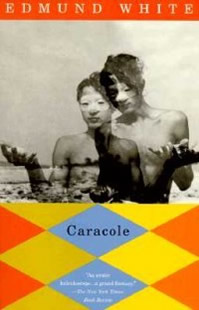
Uit: Caracole


One of them had a clay pig, small enough to fit into his pocket; it whistled one dry, low note when blown on the snout. The other knew the names of stones but he was the hardest to understand. Someone’s youngest brother he called “the Least One.” If he doubted a story, he said, “I don’t confidence you.” Windows he called “lights” and their hiding place in an oak bole he spoke of as the “plunder room.” Where the creek fanned out into a hundred rivulets, this child said, “That’s where it turkey-tailed,” and if a grown-up showed him special attention he’d ask later, “Why did he much me?” Both of Gabriel’s companions spoke in doubled nouns (“biscuit-bread,” “ham-meat,” sulfur-match”). Nor did they grasp what Gabriel meant when he said once, “Have a nice weekend.” After a while it turned out their families worked every day and the notion of a weekend was beyond their means.

(…)


When Mathilda asked Mateo to bring Gabriel to his very first reception at her house, Mateo assumed she was merely being polite out of consideration for him, Mateo. More than once she’d assured him she knew what it was like to be stuck with a child in their nearly childless world of artists and intellectuals; after all she (with Mateo’s distant if affectionate assistance) had raised a child, Daniel, who was now thirty and looked so nearly as though he were her brother that her maternity would have been suspect had not their celebrated, even infamous past together been so well documented. Nevertheless Mathilda was delighted when naïve or provincial people mistook Daniel for her brother or lover, and to increase the confusion she often referred to him coyly as “the darling.” This coyness was so unlike her that people expected to catch a sardonic smile and were shocked to see instead the sort of smile people wear when they speak of their pets. What few people knew was that an older child, a girl, had died when she was four. This loss had poisoned Mathilda’s joy in motherhood at the same time it had intensified her love for – no longer “my son” but “the darling.”


1315526-8f60effa6ee6d834066aa46a2a42db62.jpg
Edmund White (
Cincinnati, 13 januari 1940)

Cover 


De Duitse schrijver Daniel Kehlmann werd op 13 januari 1975 in München geboren. Zie ook alle tags voor Daniel Kehlmann op dit blog.


Uit: Ruhm


“Er wußte, daß jemand anderer sich nun sehr erregt hätte – aber so etwas lag ihm nicht, er war nicht begabt darin. Er drückte die Auflegetaste.

Sekunden später läutete es wieder. «Ralf?» fragte ein Mann.

« Nein. »

« Was ? »

«Diese Nummer ist . . . Sie wurde aus Versehen . . . Sie haben sich verwählt.»

«Das ist Ralfs Nummer!»

Ebling legte auf und steckte das Telefon in die Jackentasche.

Die S-Bahn war wieder überfüllt, auch heute mußte er stehen. Von der einen Seite preßte sich eine fette Frau an ihn, von der anderen starrte ein schnurrbärtiger Mann ihn an wie einen verschworenen Feind. Es gab viel, das Ebling an seinem Leben nicht mochte. Es störte ihn, daß seine Frau so geistesabwesend war, daß sie so dumme Bücher las und daß sie so erbärmlich schlecht kochte. Es störte ihn, daß er keinen intelligenten Sohn hat te und daß seine Tochter ihm so fremd vorkam. Es störte ihn, daß er durch die zu dünnen Wände immer den Nachbarn schnarchen hörte. Besonders aber störten ihn die Bahnfahrten zur Stoßzeit. Immer so eng, immer voll, und gut gerochen hatte es noch nie.

Seine Arbeit aber mochte er. Er und Dutzende Kollegen saßen unter sehr hellen Lampen und untersuchten defekte Computer, die von Händlern aus dem ganzen Land eingeschickt wurden. Er wußte, wie fragil die kleinen denkenden Scheibchen waren, wie kompliziert und rätselhaft”.


1315526-33a8bd6af873b60654369be755566168.jpg
Daniel Kehlmann (München, 13 januari 1975)


De Amerikaanse schrijver Jay McInerney werd geboren op 13 januari 1955 in Hartford, Connecticut. Zie ook alle tags voor Jay McInerney op dit blog.


Uit: How It Ended


“We would arrive Tuesday night from prep school or college, or on Wednesday night from New York, where we were working at a bank while writing a play, or from Vermont, where we were building a log cabin with our roommate from Middlebury before heading up to Stowe at first snow for a season of ski bumming. Dad would take the latter part of the week off, until he retired, which was when things really became dangerous. The riotous foliage that briefly enflamed the chaste New England hills was long gone, leaving the monochromatic landscape of winter: the gray stone walls of the early settlers, the silver trunks of the maples, the white columns of birch.
Manly hugs were exchanged at the kitchen door. Cocktails were offered and accepted. Girlfriends and roommates were introduced. The year of the big snow, footwear was scraped on the blade of the cast-iron boot cleaner outside the door. Dad was particularly pleased with this implement, and always pointed it out to guests, not because he was particularly fastidious about mud and snow, but because it seemed to signify all the supposed charm and tradition of old New England (as opposed to, say, its intolerance of immigrants and its burning of young girls at the stake), although he'd bought this particular boot scraper once upon a time at the local True Value hardware store. But somehow Dad had convinced himself that it had been planted here by the early settlers of the Massachusetts Bay Colony, in between skirmishes with the Wampanoags and the Mohicans. He liked to think of himself as an old Yankee, despite the fact that when his grandfathers arrived in Boston, the windows were full of NO IRISH NEED APPLY signs and they weren't likely to be invited to scrape their boots at anybody's front door. A century and a half later, though, we lived in a big white house with green shutters, which Dad inevitably described as “Colonial,” though it was built in the 1920s to resemble something a hundred years older.”


 1315526-cade24207a0dd352bfdd4f587cf891ea.jpg

Jay McInerney (Hartford, 13 januari 1955)


De Amerikaanse schrijfster Lorrie Moore werd geboren op 13 januari 1957 in Glens Falls, New York. Zie ook alle tags voor Lorrie Moore op dit blog.


Uit: Birds of America


“It's fitting that Christmas should degenerate to this, its barest bones. The family has begun to seem to Therese like a pack of thespians anyway; everyone arrives, performs for one another, catches early flights out, to Logan or O'Hare. Probably it's appropriate that a party game should literally appear and insert itself in the guise of a holiday tradition (which it isn't). Usually, no one in Therese's family expresses much genuine feeling anyway; everyone aims instead--though gamely!--for enactments.
Each year now, the stage is a new one--their aging parents, in their restless old age, buying and selling town houses, moving steadily southward from Maine. The real estate is Therese's mother's idea. Since he's retired, Therese's father has focused more on bird feeders; he is learning how to build them. "Who knows what he'll do next?" Her mother sighs. "He'll probably start carving designs into the side of the house."
This year, they are in Bethesda, Maryland, near where Andrew, Therese's brother, lives. Andrew works as an electrical engineer and is married to a sweet, pretty, part-time private detective named Pam. Pam is pixie-haired and smiley. Who would ever suspect her of discreetly gathering confidences and facts for one's adversaries? She freezes hams. She makes Jell-O salad days in advance. She and Andrew are the parents of a one-and-a-half-year-old named Winnie, who already reads.”


1315526-01550674d88514cae211321527f3da8a.jpg

Lorrie Moore (Glens Falls, 13 januari 1957)


De Nederlandse historicus en dichter Jan de Bas werd geboren op 13 januari 1964 in Waddinxveen. Zie ook alle tags voor Jan de Bas op dit blog.


Die ene bus


Mohammed stond te wachten

op de bus, die ene, ene bus.

Alle mensen stapten in.


Mohammed bleef staan

en wachten op de bus, die ene,

ene bus. En het begon te regenen.


De bussen werden onderzeeërs,

de halte een gezonken schip,

maar Mohammed bleef drijven


en wachten op de bus, die ene,

ene bus. Een taxi voer voorbij

en de chauffeur vroeg: ‘Wil je soms?’


Mohammed schudde het hoofd

en hij bleef wachten op de bus,

die ene, ene bus.


De kracht van vlinders


Ik doe net alsof
ik een gedicht schrijf
dat zogenaamd gaat
over de liefde,

maar als je het leest,
ze je slechts
letters op papier.
Alleen wanneer je

echt wilt dat
het een gedicht is
over de liefde, over
vlinders in een buik,

de mooiste buik
van de hele wereld,
dan, ja dan alleen,
zal het zo zijn.


 1315526-380d1d4b915996abdb951be19ed78d6f.jpg

Jan de Bas (Waddinxveen, 13 januari 1964)


De Amerikaanse dichter, schrijver en beeldhouwer Clark Ashton Smith werd geboren in Long Valley (Californië) op 13 januari 1893. Zie ook alle tags voor Clark Ashton Smith op dit blog.


The Burden of the Suns


Wherefore thy burden and thy toil, O Sun?
Borne up the steep and hollow heavens afar
Thy worlds retard thee, who wert else a star,
Swift with white speed of many a lonelier one;
And heaving mightily, thy pulses run,
Swollen with fires of effort. Shall Mizar
Not pass thee, or the suns of Algebar?
And hopest thou to close with Procyon?


Howbeit, thou and these, thy starrier kin,
Transcending thee, strain ever, tho apart
And with unequal speed, within the same
Black maze of night and Time, where all shall win,
Tho with no path, nor clue, the hollow heart,
Uncompassed and oblivious, whence they came.


The Call of the Wind


I hear the west wind's call through the window open flung:
"Oh, come ye forth the budding woods and fields among.
Your cares and worries fling like a worn-out cloak aside;
And come ye swiftly forth where the vernal day is wide;
Come ye out to the fields and the blue-pavilioned hills,
Where the wakened earth to the sun's warm kisses thrills;
And the songs of the birds are a rapturous paean of praise
To the joy and the beauty of Spring's first perfect days."
I hear the west wind's call, and I must arise and go
Out where the day is fair and the joyous breezes blow.


 1315526-c3afa5a23b83a919a8edda3cbf6ec5e8.jpg

Clark Ashton Smith (13 januari 1893 – 14 augustus 1961)

Portret door Natalae Bixby Porter, 1946.


De Litouwse schrijver en vertaler Jurgis Kunčinas werd geboren op 13 januari 1947 in Alytus. Zie ook alle tags voor Jurgis Kunčinas op dit blog.


Uit: Tula (Vertaald door Elizabeth Novickas)


“I’m here now, here, while above Bekešas hill that broad cloud goes on hanging, surely frozen already into a sole, hardened like a gray block of cement–it has now, out of what was once pure drops of rain, turned into a prophet of corporeal disaster; while I go to you, ignoring not just the cold, but the despair, the late hour, the blind man with dark glasses standing by the bridge’s railing; no longer seeing the bridge, I step into the foaming, raging water and, slipping on the polished stones, I clamber up to your, Tūla’s, shore, and it seems to me that a huge lilac bush gleams blue above my head,–I pick them, and in each hand hold a lavender bouquet as fluffy as spotless white clouds–intoxicating, curly, overflowing with life, dripping in silver streams–and, swaying from exhaustion, I go in the white two-hinged door, on which hangs a modest, worm-eaten, blue mail box, and now I am, Tūla, just a few steps away from you, from your husky voice, your body’s fibers, your most secret little corners...
Speak softly, breathe so I can hardly hear it as I fly in through the air vent, opened just barely for the night, clasping both enormous bouquets of lilac, as I now swoop under the vault–a soundless bat–without a sound, without a rustle; all the words of love and despair hermetically sealed within the skull of a tiny, flying, nocturnal beast, careful not to startle the other spirits hiding within your crumpled soul, body, mind, your most secret thoughts, your dignity, tears, your tiny breasts trembling like a ripple in a stream, all of you, Tūla; I fly in, and with my tiny feet clinging to slanting vault of your room I listen to you breathe, to the hoarfrost melting on your alveoli, to the blood turning one more cycle of circulation inside your sleepy body, to you, not realizing it yourself, speaking to the bread molding in the picture, to the boxes full of memories; in the moonlight I see your long bones, pelvic bones, the pearly skull under the short hair; I see how a small, brightly shining bug walks over your stomach, falls into the hollow of your belly button and can’t crawl out of it–that’s how small it is...”


 1315526-72d38fb7ec33e8f99ba4b5856461a866.jpg

Jurgis Kunčinas (13 januari 1947 – 13 december 2002)


Zie voor nog meer schrijvers van de 13e januari ook mijn eerste blog van vandaag.

Geschreven door Romenu om 19:27 Reageer op dit bericht

Kostís Palamás, Karl Bleibtreu, Victor de Laprade, Eduard von Bauernfeld, Maler Müller, Mark Alexander Boyd

De Nieuwgrieks dichter Kostís Palamás werd geboren op 13 januari 1859 in Patra. Zie ook alle tags voor Kostís Palamás op dit blog.


MIA PIKRA (GRIEF)

My early unforgettable years I lived them
Close to the sea,
There by the shallow and calm sea,
There by the open and boundless sea.

And every time that my budding, early life
Comes back to me,
And I see the dreams and hear the voices
Of my early life there by the sea,

You, oh my heart, feel the same old yearning:
If I could live again,
Close to the shallow and calm sea,
There by the open and boundless sea.

Was it really my destiny, was it my fortune,
I haven't met another
A sea within me as shallow as a lake,
And like an ocean boundless and big.

And, lo! In my sleep a dream brought her
Close again to me,
The same there shallow and calm sea,
The same there boundless and open sea.

Yet, thrice be alas! A grief was poisoning me,
A powerful grief,
A grief that you did not lighten, my dream
Of my great early love, my home by the sea.

What storm, I wonder, was raging in me,
And what whirlwind,
That couldn't put it to rest, or lull it to sleep
My wonderful dream of my home by the sea.

A grief that is unspoken, an unexplained grief,
A powerful grief,
A grief not quenched even within the paradise
Of our early life close to the boundless sea.


Vertaald door Alex Moskios


 1315520-8fbf513647372d3c7844ae54236e5ffb.jpg

Kostís Palamás (13 januari 1859 - 27 februari 1943)

'De dichters' door Georgios Roilos, ca 1919

Dichters van de generatie 1880, in het midden, leunend op zijn hand, Palamás


De Duitse schrijver en criticus Karl August Bleibtreu werd geboren op 13 januari 1859 in Berlijn. Zie ook alle tags voor Karl Bleibtreu op dit blog.


Uit: Bismarck


»Hören Sie, junger Mann, solch« dreisten Antworten müssen Sie sich abgewöhnen. Das riecht nach vorlautem Berlinertum, in der Alma mater Göttingen ist man nicht auf solcher Höhe. Menschen und Hunde sind Ihnen nachgelaufen und dabei haben Sie noch allerlei Faxen gemacht, um Ihr provokantes Auftreten zu verschlimmern. Aus Ihrer Wohnung warfen Sie eine Flasche aus dem Fenster, so daß drunten in der Straße die Scherben herumflogen.«

»Das ging so zu: als ich hier ankam, traf ich einen oberflächlich Bekannten von Berlin her, einen Herrn v. Dronthahn, der hat mich verschleppt unter lauter Mecklenburger. Denen gab ich ein Frühstück, und da ist die Flasche man so rausgekollert.«

»Ach Gott, ist Ihnen wohl aus der Hand gerutscht? Machen Sie mir das vor? Den Tatbestand!« Der Angeklagte setzte sich in Positur und zeigte sich bereit, des Richters Wißbegier zu befriedigen, indem er ein Lineal ergriff. »Halt, halt! Wollen Sie wohl liegen lassen! Warum nicht gar das Tintenfaß! Bitte, nur die Muskelbewegung!« Dies veranschaulichte der Berliner mit entsprechendem Schwung. » Bene, Optime! Also freier Wille zum Wurf vorhanden.« Die wissenschaftliche Gründlichkeit der Untersuchung vertiefte sich. »Vorhin, junger Mann, hetzten Sie mir einen Riesenköter auf den Leib. Ich hätte das Biest passieren müssen, als ich aufstand.«

»Rief ihn doch gleich an der Schwelle zurück, das gute Tier«, verteidigte der gesegnete Besitzer sein Kleinod.

»Über die Güte läßt sich streiten, über die Bissigkeit kaum, der Maulkorb fehlt. Solche Ungesetzlichkeit pöne ich mit fünf Talern Ordnungsstrafe. Überhaupt – Sie wollen wohl Aufsehen erregen? Schmeckt nach revolutionärer Gesinnung.”


 1315520-f506aaed43102798346eee8a4c23e06d.jpg

Karl Bleibtreu (13 januari 1859 – 30 januari 1928)

Bismarck monument in Hamburg


De Franse dichter en criticus Victor Richard de Laprade werd geboren op 13 januari 1812 in Montbrison. Zie ook alle tags voor Victor de Laprade op dit blog.


Dans les Roseaux


Si je brise un jour mes chaînes,

Je veux m'enfuir vers les eaux;

Mieux, que les nids sur les chênes,

Mieux que les aires hautaines,

J'aime un nid dans les roseaux.


J'aime une terre mouillée

Par un lac profond et clair;

Pour tenir l'âme éveillée,

Il faut que, sous la feuillée,

Les eaux chantent avec l'air.


S'il n'a point de rive humide,

Je fuis un site admiré,

Comme un front pur et sans ride,

Mais dont l'oeil serait aride

Et n'aurait jamais pleuré.


La colline la plus verte,

Si l'onde n'est son miroir,

Est comme une âme déserte,

A qui jamais n'est ouverte

Une autre âme pour s'y voir.


Otez les flots à la terre,

La terre sera sans yeux,

Et jamais sa face austère,

Pleine d'ombre et de mystère,

Ne réfléchira les cieux.


Dans ton coeur si quelque chose

Bat des ailes pour voler,

Désir ou douleur sans cause,

Musique ou parfum de rose

Qui demande à s'exhaler;


Si tu nourris d'une flamme

Le souvenir ou l'espoir,

Si l'image d'une femme

Pleure ou sourit dans ton âme,

Près d'un lac il faut t'asseoir.


Écoute, si le flot chante;

Si l'eau dort, regarde au fond;

Miroir où l'azur t'enchante,

Écho d'une voix touchante,

Toujours l'onde te répond.


Les plaines ont l'alouette,

La montagne a l'aigle roi,

Les jardins ont la fauvette;

Mais, ô lac, le doux poète

Et le cygne sont à toi!


Si je brise un jour mes chaînes,

Je veux m'enfuir vers les eaux;

Mieux que les nids sur les chênes,

Mieux que les aires hautaines,

J'aime un nid dans les roseaux.


 1315520-51c5ac42f2a8398a4c41bf2d3e27b682.jpg

Victor de Laprade (13 januari 1812 – 13 december 1883)

Portret in het College Montbrison


De Oostenrijkse dichter en schrijver Eduard von Bauernfeld werd geboren op 13 januari 1802 in Wenen. Zie ook alle tags voor Eduard von Bauernfeld op dit blog.


An die Wintersonne


Es schläft der Strom; sollst ihm die Ruh' nicht stören,

Und ihn mit süßen Küssen nicht bethören;

Im Innern schafft und waltet er so still,

Drum laß ihn, Sonne, weil er träumen will.


Er beut mir seinen starken, schönen Rücken,

Leicht soll ihn nur das blanke Eisen drücken,

Und weit hinab, wo sonst der Nachen wallt,

Treibt mich des Eises schwellende Gewalt.


Ei komm' nur, Sonne, mit den süßen Blicken!

Du wirst mir nimmer meinen Strom berücken;

Kalt ist dein Buhlerkuß! Der Strom, ein Mann,

Schmilzt keinem Kuß, der nicht erwärmen kann.


1315520-b6e62ca76b61c4dbcc5214c48bc0036e.jpg 

Eduard von Bauernfeld (13 januari 1802 – 9 augustus 1890)


De Duitse dichter en schilder Maler (Friedrich) Müller werd geboren op 13 januari 1749 in Kreuznach. Zie ook alle tags voor Maler Müller op dit blog.


O Vater aller Lust und Freud


O Vater aller Lust und Freud,

O Bacchus, Bacchus gieb mir heut

Und allezeit zu trinken;

Doch, Gram Verscheucher gieb auch du

Mir immer, immer Durst dazu,

Daß ich kann immer trinken.

Denn ach! wie hart ist es zu sehn,

Einen goldnen Becher blinkend stehn,

Ohn' daß ich ihn könnt' trinken. –


Der Demokrat


Demokratisch schnaubt er entgegen den Höhern, doch schnüret,

Denen, die unter ihm stehn, vollendes den Athem er ab.


Erfahrungssatz


Groß zu scheinen, ist stets der Kleinen Leidenschaft; Ansehn

Suchet gewißlich der stets, dem es am Werte gebricht.


 1315520-550898c48b307ce6ead810ec63205221.jpg

Maler Müller (13 januari 1749 - 23 april 1825)

Bänkelsäger, 1768. Ets door Maler Müller


De Schotse dichter Mark Alexander Boyd werd geboren op 13 januarri 1562. Zie ook alle tags voor Mark Alexander Boyd op dit blog.


Sonett (Cupido und Venus)


Von Strand zu Strand, von Wald zu Wäldern bin ich
gerannt, schier übermannt vom Fiebertraum;
ein Leben, welches grade fällt vom Baum,
ein Strohhalm, das es fortträgt, wird es windig.

Zwei Götter leiten mich, der eine blind;
Ein Kind macht sich vergebens auf den Weg.
Der andre: eine Frau, rein wie die See
und sie ist heiterer als ein Delphin.

Unglücklich ist der Mann, der nur versteht,
daß er die Samen in die Winde säet,
doch doppelt unglücklich wohl jene sind,
denen ein innrer Kampf zerreißt den Leib,
die durch das Feuer gehen für ein Weib;
Bleib blind und lerne leben wie ein Kind.


Vertaald door “Zaunkönig”


 1315520-25e8cae7a3be118e77655a5e31786c5d.jpg

Mark Alexander Boyd (13 januari 1562 – 10 april 1601)

Geschreven door Romenu om 18:50 Reageer op dit bericht

Meer van Romenu

↑ Terug naar de berichten