Naar de inhoud

Romenu

Over literatuur, gedichten, kunst en cultuur
akke.beakke.be

Berichten van 25 januari 2013 tot 26 januari 2013

Menno ter Braak, Achim von Arnim, Jonathan Carroll, Gerrit Jan Zwier

De Nederlandse schrijver Menno ter Braak werd geboren op 26 januari 1902 in Eibergen. Zie ook alle tags voor Menno ter Braak op dit blog.

Uit: Dr. Dumay verliest...


“Het was behaaglijk in de klas; buiten de zon, die voorbij, gelukkig niet in het lokaal scheen, binnen schriftelijk werk, lichte zuchten van schrijvende wezens, die hun pen niet goed vasthouden en zich al werkende vervelen. Een enkele maal vroeg iemand iets, om iets te vragen. In de verte sloeg de torenklok. Twintig minuten voorbij, constateerde Dumay tevreden, hoewel de aangename temperatuur van de omgeving hem eigenlijk niet naar andere dingen deed verlangen. Over een half uur zou het tijd zijn om koffie te gaan drinken, zonder haast; er volgde een vrije middag.

Hij liep met over de borst gekruiste armen heen en weer en telde zijn passen. Niet om het tellen, maar omdat hij zich daaraan gewend had; ondertusschen hield hij de jongens, die verdachte bewegingen maakten, in het oog. Bij het open raam gekomen zag hij naar buiten. Over het plein, waaraan het gymnasium gebouwd was, bewogen zich hier en daar menschen; de lucht was scherp, de menschen waren duidelijk als op de schilderijen van de primitieven; een werkman schoor het plantsoen kaal; zijn pet had hij op een paaltje gehangen. Het is een amusante tijd, de lente; de leeraren beginnen het land te krijgen, maar de groote vacantie is in het zicht, daarover spreken zij met warmte in hun stem. Zij leven op de vacanties, zij weten precies: over zooveel weken en zooveel dagen, dan is het zoover, dan trekken we de deur achter ons dicht voor zooveel weken en zooveel dagen, en pas dan en dan, 's morgens zóó laat, moeten we weer vroeg opstaan en elkaar een hand geven en vragen, waar we alzoo geweest zijn, of we ook zulk beroerd weer hebben gehad, en zeggen, dat er weer een nieuwe cursus begint.

Dumay voelde neiging om een klein sprongetje te maken, een heel klein sprongetje, meer niet; maar hij liet het na, voor zijn prestige, en hervatte zijn teloefening. Vijf passen tot den bordewisscher. Toen bedacht hij, dat Marie dien middag kwam theedrinken. Marie was slank en geestig, maar dat was zij nu al drie jaar lang, en zij kwam, onafwendbaar; het was trouwens gezellig, dat zij kwam. Echt iemand, om Marie te heeten; niet Maria, of Mary, maar Marie; een magere, lange naam, niet zoo lang als Margriet weliswaar, maar langer dan Maria en minder mollig dan Mary.... Nog achttien thema's te corrigeeren over de trappen van vergelijking.”


 1324312-86d83aac9baf6d8e28b6c4462f932d14.jpg

Menno ter Braak (26 januari 1902 - 14 mei 1940)


De Duitse dichter en schrijver Achim von Arnim werd geboren in Berlijn op 26 januari 1781. Zie ook alle tags voor Achim von Arnim op dit blog.


Laßt uns ruhig weiter bauen


Aus tiefer Not schrei ich zu dir,

Herr Gott, vernimm mein Rufen!


Laßt uns ruhig weiter bauen,

Nur auf Gottes Himmel schauen,

Wie er alle Sterne trägt,

Sonn' und Mond sich da bewegt.

Ein Vertrauen strahlt hernieder,

Fallet auf die Kniee nieder,

Herr, mein Gott, dich loben alle.


Nein, die Sündflut kommt nicht wieder,

Und das Feuer stürzt nicht nieder,

Es erhebet himmelauf

Alles zu der Sterne Lauf:

Ein Vertrauen strahlt hernieder,

Fallet auf die Kniee nieder,

Herr, mein Gott, dich loben alle.


Eine Taube laß ich fliegen,

Die Gebete werden siegen,

Nicht der Feinde wilder Fluch;

Schon mit gleichem Flügelflug

Bringet sie ein Ölblatt wieder:

Fallet auf die Kniee nieder,

Herr, mein Gott, dich loben alle.


Wo soll ich mein Haus nun bauen?

Laß dein Angesicht nur schauen

In der Liebsten Angesicht

Durch die wolk'gen Locken licht:

Ein Vertrauen strahlt hernieder,

Fallet auf die Kniee nieder,

Herr, mein Gott, dich loben alle.


Nur noch eines mir gewähre,

Daß ich selber mich erkläre,

Denn ich fürchte, was ich such,

Allzuhoch ist wohl mein Flug:

Doch, Vertrauen strahlt hernieder,

Höher schwebt die Sonne wieder,

Herr, mein Gott, du schufst uns alle.


Wenn die Stadt auch soll vergehen,

Laß mich ihr zur Seite stehen,

Daß uns drängt zum engsten Raum

Süße Not, wie in dem Traum.

In der Not sind Alle Brüder,

Ja, ich sag es bald ihr wieder,

Wie sie mir so wohl gefalle.


Hast du Sprache doch gegeben

Jedem Menschen mit dem Leben;

Sprach' und Leben ist ihr Blick,

Kündet mir verborgnes Glück,

Ein Vertrauen strahlt hernieder,

Sie vergibt und liebt mich wieder;

Herr, mein Gott, dich loben alle.


 1324312-e1ef792af4ad428e25838e57041e1774.jpg

Achim von Arnim (26 januari 1781 - 21 januari 1831)

Standbeeld van Armin en zijn vrouw Bettina op de Arminplatz, Prenzlauerberg, Berlijn


De Amerikaanse schrijver Jonathan Carroll werd geboren op 26 januari 1949 in New York. Zie ook alle tags voor Jonathan Carroll op dit blog.


Uit: A Child Acros The Sky


„An hour before he shot himself, my best friendPhilip Strayhorn called to talk about thumbs.“Ever noticed when you wash your handshow you don’t really do your thumbs?”“What do you mean?”“It’s your most important finger, but becauseit sticks out, away from the rest, you don’t reallywash it. A little dip and rub, maybe, but not nearlyenough attention for all the work it does. It’s probably the finger that gets dirtiest, too.”“That’s what you called to tell me, Phil?”“It’s very symbolic. Think about it. … Whatare you reading these days?”“Plays. I’m still trying to find the right ones.”“I have to tell you I bumped into Lee Onaxthe other day. Said he’ll still give you half amillion if you direct for him.”“I don’t want to direct films anymore, Phil.You know how I feel.”“Sure, but five hundred thousand dollarswould help your theater a lot.”“

 Five

dollars would help a lot. But if I went back and did a film now, it’d be fun and seductiveand I’d probably want to direct movies again.”“Remember in the

 Aeneid

the hundred andforty thousand different kinds of pain? I wonder what number yours would be? ‘I don’t want to be a famous Hollywood director anymore becauseit’d make me confused.’ Pain number 1387.”“Where are you calling from, Phil?”“LA. We’re still cutting the film.”“What’s the title?”

“Midnight Kills.”

I grinned. “Terrific. What’s the most horriblething you do in it?”The telephone line hissed over the threethousand miles.“Are you still there, Phil?”“Yeah. The most horrible thing is what I

didn’t

do.”“You were making a movie, man. Bad thingshappen sometimes.”“Uh-huh. How are

 you

doing, Weber?”“Good. One of my main actors is really sick, but you’ve got to expect that when you’re workinghere.” I looked at the small Xeroxed poster tackedto the board above my desk,

THE NEW YORK CANCER PLAYERS PRESENT FRIEDRICHDÜRRENMATT’S “THE VISIT.”


1324312-561c87b98d29e29e5bfbf618d4b6a543.jpg 

Jonathan Carroll (New York, 26 januari 1949)


De Nederlandse schrijver Gerrit Jan Zwier werd geboren in Leeuwarden op 26 januari 1947. Zie ook alle tags voor Gerrit Jan Zwier op dit blog.


Uit: Slauerhoff bij kampvuur en traanlamp


“De boten, waarop Slauerhoff voer, brachten hem naar landen die voor een deel nog bestuurd werden door Europese moederlanden. In zijn werk laat hij zich meer dan eens negatief uit over de koloniale situatie zoals hij die aantreft. Zijn afwijzing heeft zowel betrekking op het proces van acculturatie, zoals hij die in kustgebieden onder ogen krijgt, als op het lot van de tropenblanke. Wat hem in Afrika en West-Indië vooral tegenstaat, zijn de ‘negers van het altijd licht potsierlijke, christelijke en beschaafde soort.’ De zogenaamde ‘broeknegers’ dus, zoals de Afrika-reiziger en etnoloog Leo Frobenius hen noemde. In het Ghanese Accra en het Braziliaanse Bahia staart de scheepsdokter gefascineerd en verbijsterd naar de extatische processies van bekeerde zwarten, die draaien en springen alsof op deze heilige dag ‘de charleston weer zal worden geboren.’ En op Barbados, zo schrijft hij, hebben de Engelse puriteinen zich aan hun ‘gebruiksaanwijzing voor negers’ gehouden, die luidt dat de laatsten wel een beetje Engels mogen lijken, maar dat ze zich minderwaardig moeten blijven voelen. De blanken zullen zich in de koloniën echter niet staande kunnen houden, want ‘tegen de tropische natuur en de vruchtbaarheid van de ingeboren bevolking kunnen zij toch niet op. In Afrika kwijnen ze aan de randen van de zee, in China gaan ze in de menigte verloren.’ Over de levenssfeer van de tropenblanke schreef Slauerhoff een verhaal - Such is life in China - en enige gedichten. In Afrikaansche elegie staan de regels die de dichteres Vasalis zo graag mag citeren:


Vanavond danst de dronken varensgast

Met zijn barmeid, tot hij is volgebrast,

Terwijl ik hier zit voor een slecht glas toddy,

Moeheid van zes jaar tropen in mijn body.

Ik heb al sinds verleden week geen zin

In de omhelzing van mijn negerin.


Zo tussen de regels door belijdt Slauerhoff wel zijn voorkeur voor de ‘fiere en toch kinderlijke bewoners van Afrika's oerwouden en savannen,’ maar hij doet dat eigenlijk alleen in anekdotische zin. Van een hang naar primitieve culturen, of een idealisering van het leven van de ‘edele wilde’, is bij hem geen sprake.”


 1324312-08961d97326a91fda0f4996e06256027.jpg

Gerrit Jan Zwier (Leeuwarden, 26 januari 1947)
Op de foto: Jan Slauerhoff


Zie voor nog meer schrijvers van de 26e januari ook mijn vorige blog van vandaag en eveneens mijn eerste blog van vandaag.

Geschreven door Romenu om 14:49 Reageer op dit bericht

Bhai, Rudolf Alexander Schröder, François Coppée, Eugène Sue, Jochen Missfeldt

De Surinaamse dichter Bhai (eig.James Ramlall) werd geboren op 26 januari 1935 in het toenmalige district Suriname. Zie ook alle tags voor Bhai op dit blog.


Het gordijn

Van de stilte

Hangt

Tussen ons in

En houdt

De tijd

Van toen en nu

Gescheiden

Onhoorbaar

Is de pijn

Van het heden

En onmerkbaar

Het verdriet

Zo ligt

De tijd

Van toen en nu

Gescheiden

Ook straks

Wordt nu

Dan toen


Bied bloemen


Bied bloemen
Aan het open graf
De tijd staat stil
Nu de eeuwigheid begint
Dit leven is niets meer
Dan ritselen
Dwarrelen
En dan voorgoed verdorren


 1324306-24162a5c7c78b087300065b54be9d997.jpg

Bhai (District Suriname, 26 januari 1935)


De Duitse dichter en schrijver Rudolf Alexander Schröder werd geboren op 26 januari 1878 in Bremen. Zie alle tags voor Rudolf Alexander Schröder op dit blog.


Abend ward, bald kommt die Nacht


Abend ward, bald kommt die Nacht.

Schlafen geht die Welt;

Denn sie weiß, es ist die Wacht

Über ihr bestellt.


Einer wacht und trägt allein

Ihre Müh und Plag,

Der läßt keinen einsam sein,

Weder Nacht noch Tag.


Jesus Christ, mein Hort und Halt,

Dein gedenk ich nun,

Tu mit Bitten Dir Gewalt,

Bleib bei meinem Ruhn.


Bleib und mach die Herzen still,

der die Herzen schaut,

weiß kein Herz doch, was es will,

eh sich's Dir vertraut.


Wenn Dein Aug ob meinem wacht,

Wenn Dein Trost mir frommt,

Weiß ich, daß auf gute Nacht

Guter Morgen kommt.


1324306-c0b5eb8ae9f809539e345203eee5e4e4.jpg
Rudolf Alexander Schröder (26 januari 1878 – 22 augustus 1962)


De Franse dichter en schrijver François Coppée werd geboren op 26 januari 1842 in Parijs. Zie ook alle tags voor François Coppée op dit blog.


En automne


Quand de la divine enfant de Norvège,
Tout tremblant d'amour, j'osai m'approcher,
Il tombait alors des flocons de neige.

Comme un martinet revole au clocher,
Quand je la revis, plein d'ardeurs plus fortes,
Il tombait alors des fleurs de pêcher.

Ah ! je te maudis, exil qui l'emportes
Et me veux du coeur l'espoir arracher !
Il ne tombe plus que des feuilles mortes.


Novembre


Captif de l'hiver dans ma chambre
Et las de tant d'espoirs menteurs,
Je vois dans un ciel de novembre,
Partir les derniers migrateurs.

Ils souffrent bien sous cette pluie ;
Mais, au pays ensoleillé,
Je songe qu'un rayon essuie
Et réchauffe l'oiseau mouillé.

Mon âme est comme une fauvette
Triste sous un ciel pluvieux ;
Le soleil dont sa joie est faite
Est le regard de deux beaux yeux ;

Mais loin d'eux elle est exilée ;
Et, plus que ces oiseaux, martyr,
Je ne puis prendre ma volée
Et n'ai pas le droit de partir.


 1324306-2d2d63ba5f34a0de4c284b011a6a2c3d.jpg

François Coppée (26 januari 1842 – 23 mei 1908)

Portret door Raphaël Collin, 1893 


De Franse schrijver Eugène Sue zou geboren zijn op 26 januari 1804. Zie alle tags voor Eugène Sue op dit blog


Uit: The Mysteries of Paris (Vertaald door Henry C. Deming)


“Scarcely is my back turned, than there he is, in the twinkling of an eye, worrying and tormenting my poor old dear of a husband, who is as helpless and frightened[Pg 13] as a babby. Only last night, when I had just stepped out as far as M. Ferrand's the notary's—Ah, there's pretty work there, too!"

"But Cecily?" said Rodolph, with some little impatience. "I called to know—"

"Hold hard, my king of lodgers! Don't be in such a hurry, or you'll put me out. And I've such a deal to tell you, I don't know when I shall have done; and if once I'm interrupted in a story, I never know when to begin again."

"There now, go on as fast as you can; I'm listening."

"Well, then, first and foremost, what do you think has happened in the house? Ah, you'll never guess, so I'll tell you. Only imagine, old Mother Burette's being taken up!"

"What, the female pawnbroker?"

"Oh, Lord, she seems to have had a curious mixture of trades: for besides being a money-lender, she was a receiver of stolen goods, a melter of gold and silver, a fortune-teller, a cheat, a dealer in second-hand clothes, and any sort of contraband articles. The worst of the story is that M. Bras-Rouge, her old sweetheart and our principal lodger, is also arrested. I tell you the house is thoroughly upset with these strange doings."

"Arrested! Bras-Rouge arrested?"


1324306-573d12b16887dac7d6d94f562f8e0ce5.jpg
Eugène Sue
(26 januari 1804 – 3 augustus 1857)


De Duitse dichter en schrijver
Jochen Missfeldt
werd geboren op 26 januari 1941 in Satrup. Zie ook alle tags voor Jochen Missfeldt op dit blog.


Uit: Steilküste 


„Der U-Boot-Fahrer grüßte noch einmal unvorschriftsmäßig mit der Hand an der Mütze und nahm diesen Gruß, zusammen mit der Flagge, ins Seemannsgrab. Vorschriftsmäßig wäre der deutsche Gruß gewesen, der ausgestreckte rechte Arm mit der ausgestreckten Hand; er galt ja noch. Aus den hinterlassenen Papieren des Marinesoldaten weiß man: Er wollte mit seinem

Boot untergehen und sterben. Er hatte Frau, Kinder, Eltern und Schwiegereltern verloren und erwartete nichts Besseres als den Tod.

Heißt es nicht bei den Bremer Stadtmusikanten: Etwas Besseres als den Tod fi ndest du immer und überall? Hätte nicht ein Schaulustiger das dem armen U-Boot-Fahrer übers Wasser zurufen können? Des Menschen Wille ist sein Himmelreich, mag der Schaulustige gedacht haben. Oder: Wohl ein Scherz. Oder: Schade um den jungen Menschen. Oder: Blödsinn, der Krieg ist doch aus.

Auch ein vierjähriges Kind stand an der Hand eines Erwachsenen oben auf der Steilküste. Beide hatten den mit Flagge und Boot untergehenden Soldaten beobachtet. Hans Hörgebar

war der Erwachsene, und das Kind war ich. Hörgebar wusste nicht, dass der Soldat ein Selbstmörder war, und verstand das Geschehen als bunte Einlage einer Flaggenparade zum Kriegsende. Der U-Boot-Fahrer, sagte er, werde das Boot unter Wasser schon wieder verlassen, auftauchen und zu den Kameraden schwimmen.

«Bestimmt?», fragte das Kind.


 1324306-670d17b72c18265784af38e5a5d17ab8.jpg

Jochen Missfeldt (Satrup, 26 januari 1941)

Geschreven door Romenu om 14:44 Reageer op dit bericht

Philip José Farmer, Alfons Paquet, Lode Baekelmans, Jan van Hoogstraten, Delphine Gay, Sabino Arana Goiri

De Amerikaanse schrijver Philip José Farmer werd geboren in North Terre Haute (Indiana) op 26 januari 1918. Zie ook alle tags voor  Philip José Farmer op dit blog.


Uit: The Magic Labyrinth


“The satellite had kept track of the Operator and the Ethicals, except for himself, and the agents in The Rivervalley, beaming its messages to the grail which was more than a grail. Then the map had faded from the gray surface, and X had known that something had malfunctioned in the satellite. From now on he could be surprised by the Operator, by the agents, and by the other Ethical.

Long ago, X had made arrangements to track all those from the tower and the underground chambers. He had secretly installed the mechanism in the satellite. The others would have put in a device to track him, of course. But his aura-distorter had fooled the mechanism. The distorter had also enabled him to lie to the council of twelve.

Now, he was as ignorant and helpless as the others.

However, if anybody on this world would be taken aboard by Clemens, even if the complement was full, it would be the Operator. One look at him, and Clemens would stop the boat and hail him aboard.

And when the Mark Twain came along, and he, X, managed to become a crew member, he would have to avoid the Operator until he could take him by surprise.

The disguise, good enough to fool even the other stranded Ethical, would not deceive that great intelligence. He would recognize X instantly, and then he, X, would have no chance. Strong and quick as he was, the Operator was stronger and quicker.”


 1324303-aabf55ff73b482bd162d67a3de14984a.jpg

Philip José Farmer (26 januari 1918 - 25 februari 2009)


De Duitse dichter, schrijver en journalist Alfons Paquet werd geboren op 26 januari 1881 in Wiesbaden. Zie ook alle tags voor Alfons Paquet op dit blog.


Zug des Frühlings


Schaukelnd wiegen sich die Kähne,

Hängt die Segel auf zur Flucht!

Horch, der Schwarm der müden Schwäne

überrauscht die stille Bucht.

Wen mit mir die Sehnsucht drängt,

Fährt hinaus zum stürmisch Vollen.

Fortgeschwommen und verschollen,

Was die Kiele eingezwängt!


Da erheben sich die Winde,

Ein Orkan von Mut und Lust.

Rast und Mühsal, was uns binde,

FortgebIasen; nie gewußt!

Wolken weisen hell hinaus —

Da wird alle Last geringe.

Des befreiten Vogels Schwinge

mißt das große Reich nicht aus.


 1324303-e666c2a613558a60146f89ba3774c547.jpg

Alfons Paquet (26 januari 1881 – 8 februari 1944)


De Vlaamse schrijver Lode Baekelmans werd geboren in Antwerpen op 26 januari 1879. Zie ook alle tags voor Lode Baekelmans op dit blog.


Uit: Athenaeumtijd


„In den weeken Septembernamiddag lagen de jongens op den Oosterweelschen dijk.

Zij waren vermoeid door het spel en de wandeling en keken nu maar naar het water en naar de lucht. Op den ebbenden stroom lei de zon schitterende schilfers. Diepblauw was de hemel en groen waren de schorren en de dijk aan den Vlaanderschen oever. Een stoomer joeg een donkere rookpluim op, liet de stoomfluit brommen.

- Met zoo'n schip ga ik nu ook naar zee, verklaarde een jongen met een hazenlip.

Hij zoog gewichtig aan een lange, donkere sigaar en spuwde met saamgeknepen lippen naar een steen beneden aan den dijk.

- Ik mag niet van mijn moeder, zuchtte een tweede terwijl hij achteloos graspijltjes uittrok, maar barbier zal ik toch ook niet worden.

- En als Marcus van de reis komt, meende een mager baasken, dan gaan wij hem samen afhalen.

- Ikke gaan naar mijn moeder i   n 't Walenland, verklaarde een blozerd, hij zal niet weinig blij zijn.

- We moesten samen een maatschappij stichten, bepeinsde een snuggere.

- Ja, steunde Marcus de zeeman.

- En wat zullen we in die maatschappij aanvangen? vroeg het mager baasken.

- Comedie spelen, oordeelde de jongen die geen barbier wou worden.

- Bijlange niet, verwierp de Snuggere.

- Zingen?

- Dan leeren trommelen?

- Maar neen.

- Sparen, opperde de Waal.

- Maar neen...

- Het onderwijs verdedigen, bedacht de bleeke Willem met warmte.

- Dat is goed, erkende de Snuggere die schoolmeester zou worden, we kunnen verder gezellige uitstapjes inrichten...

- en vergaderen, en samen Marcus afhalen als hij van zee komt, vulde het mager baasken aan.


 1324303-8c117c44adaa1a6a43495221eec8d1c3.jpg

Lode Baekelmans (26 januari 1879 - 11 mei 1965)


De Nederlandse dichter Jan van Hoogstraten werd geboren in Rotterdam op 26 januari 1662. Zie ook alle tags voor Jan van Hoogstraten op dit blog.


Troost in tegenspoed.

Wijze. Philis ik offer u mijn min &c.

Ereptis opibus noli Maereredolendo.


Waarom ô mens. Bezwijktge in moed,

Als gy, van 't lot gedrukt,

Het uw' verliest door ramp, of tegenspoed

Daar 't andren wel gelukt?

Steun op uw God, die 't al gebied.

Stel, om wat goedverlies geen ziels verdriet,

Maar let veeleer, wat eens aan Saul is geschiet.


Hy die zijne ezelen voorheen

Verloor gans ongeagt,

Zag zig met koninglijk gewaad bekleen,

Gezalft, eer 't iemand dagt.

De Almagtige schonk hem deze eer.

Wat schooner winst voor vee verlies wel eer!

Hy wierd in Izrael gekroont, als wettig heer.


Zoo klom Vorst David op zijn troon,

Dien God den scepter gaf:

Doe hy, voor 't goud der koninklijke kroon

Liet zijnen herders staf.

Treur des niet als u 't luk verlaat,


Of eenig mens u dreygt met hoon, of smaat:

God kan 't verandren, 't zy 't u wel, of qualijk gaat.


 1324303-1fe20fcc7ea1393e52fc429f4ef6f82f.jpg

Jan van Hoogstraten (26 januari 1662 – 28 juli 1736)


De Franse dichteres en schrijfster Delphine Gay werd geboren op 26 januari 1804 in Aken. Zie ook alle tags voor Delphine Gay op dit blog.


 Désespoir


 Déjà mon cœur me quitte, et la mort me réclame,

 Et je ne la crains pas : pourquoi me secourir ?

 Vers le Ciel qui l’attend laisse voler mon âme.

       Oh ! ma sœur, laisse-moi mourir !


 Dès longtemps, tu le sais, ma vie est douloureuse ;

 Souvent sur mes chagrins je te vis t’attendrir ;

 Va, ne me retiens pas pour toi, sois généreuse.

       Oh ! ma sœur, laisse-moi mourir !


 Il est temps d’arrêter mes inutiles heures,

 L’horizon dépouillé n’a plus rien à m’offrir ;

 Je n’ai plus rien de moi ; vivante, tu me pleures.

       Oh ! ma sœur, laisse-moi mourir !


 Je ne veux point survivre à mes belles années

 Fraîches fleurs du printemps que l’été va flétrir,

 Parures du matin avant le soir fanées.

       Oh ! ma sœur, laisse-moi mourir !


 Je ne veux point survivre à la saison de plaire,

 Et voir me blonds cheveux de neige se couvrir.

 Sans enfants à bénir, le vieillesse est amère.

       Oh ! ma sœur, laisse-moi mourir !


 Je ne veux pas survivre à mes chants de poète,

 Gloire que ton orgueil me faisait tant chérir.

 Mes yeux sont dessillés, et ma lyre est muette.

       Oh ! ma sœur, laisse-moi mourir !


 Je ne veux pas survivre à mes nobles pensées,

 Trésors de loyauté qu’il est beau d’acquérir.

 Le poison peut entrer dans les âmes blessées...

       Oh ! ma sœur, laisse-moi mourir !


 Il est plus glorieux de tomber généreuse,

 D’embrasser en partant ceux qui nous font souffrir,

 De finir sans remords, comme une femme heureuse.

       Oh ! ma sœur, laisse-moi mourir !


 Ta pieuse douleur ne sera pas sans charmes ;

 De mes ailes, la nuit, je viendrai te couvrir ;

 Je veillerai sur toi, j’adoucirai tes larmes !

       Oh ! ma sœur, laisse-moi mourir !


 Demain, à votre amour quand je serai ravie,

 Tu trouveras ces vers, mon dernier souvenir,

 Et ma mère, en lisant les chagrins de ma vie,

       Me pardonnera de mourir !


 1324303-85bed2dc72ec21e34a7941a475425b89.jpg

Delphine Gay (26 januari 1804 – 29 juni 1855)

Borstbeeld door  Jean Baptiste Auguste Clesinger


De Baskische schrijver en politicus Sabino de Arana y Goiri werd geboren op 26 januari 1865 in Bilbao. Zie ook alle tags voor Sabino Arana Goiri op dit blog.


Anthem of the Basque Ethnicity


Up and up Basque Country

glory and glory

to its Good Lord from above.


There is an oak tree in Biscay

old, strong, healthy

it as its law


On the tree we find

the holy cross

always on our top


Sing "Up Basque Country"

glory and glory

to its Good Lord from above


 1324303-f1dd53a80c15c0b1de7d422956aafe85.jpg

Sabino Arana Goiri (26 januari 1865 – 25 november 1903)

Geschreven door Romenu om 14:39 Reageer op dit bericht

William S. Maugham, Virginia Woolf, Renate Dorrestein, Stephen Chbosky, David Grossman

De Engelse schrijver William Somerset Maugham werd geboren in Parijs op 25 januari 1874. Zie ook alle tags voor  William Somerset Maugham op dit blog.


Uit: A Writer’s Notebook (1894)


“There are two kinds of friendship. The first is a friendship of animal attraction; you like your friend not for any particular qualities or gifts, but simply because you are drawn to him. C'est mon ami parce que je l'aime parce que c'est mon ami'. It is unreasoning and unreasonable; and by the irony of things it is probable that you will have this feeling for someone quite unworthy of it. This kind of friendship, though sex has no active part in it, is really akin to love: it arises in the same way, and it is not improbable that it declines in the same way.
The second kind of friendship is intellectual. You are attracted by the gifts of your new acquaintance. His ideas are unfamiliar; he has seen sides of life of which you are ignorant; his experience is impressive. But every well has a bottom and finally your friend will come to the end of what he has to tell you: this is the moment decisive for the continuation of your friendship. If he has nothing more in him than his experience and his reading have taught him, he can no longer interest or amuse you. The well is empty, and when you let the bucket down, nothing comes up. This explains why one so quickly makes warm friendships with new acquaintances and as quickly breaks them: also the dislike one feels for these persons afterwards, for the disappointment one experiences on discovering that one's admiration was misplaced turns into contempt and aversion. Sometimes, for one reason or another, however, you continue to frequent these people. The way to profit by their society then is to make them yield you the advantages of new friends; by seeing them only at sufficiently long intervals to allow them to acquire fresh experiences and new thoughts. Gradually, the disappointment you experienced at the discovery of their shallowness will wear off, habit brings with it an indulgence for their defects and you may keep up a pleasant friendship with them for many years. But if, having got to the end of your friend's acquired knowledge, you find that he has something more, character, sensibility and a restless mind, then your friendship will grow stronger, and you will have a relationship as delightful in its way as the other friendship of physical attraction.” 


 1323856-11a248127d024dbed6e9b9a7dd82db45.jpg

William Somerset Maugham (25 januari 1874 – 16 december 1965)


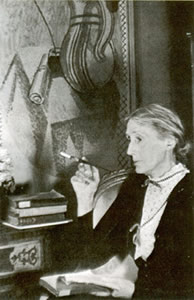
De Engelse schrijfster Virginia Woolf werd geboren op 25 januari 1882 te Londen. Zie ook alle tags voor Virginia Woolf op dit blog.


Uit: To the Lighthouse


"But," said his father, stopping in front of the drawing-room window, "it won't be fine."

Had there been an axe handy, or a poker, any weapon that would have gashed a hole in his father's breast and killed him, there and then, James would have seized it. Such were the extremes of emotion that Mr. Ramsay excited in his children's breasts by his mere presence; standing, as now, lean as a knife, narrow as the blade of one, grinning sarcastically, not only with the pleasure of disillusioning his son and casting ridicule upon his wife, who was ten thousand times better in every way than he was (James thought), but also with some secret conceit at his own accuracy of judgement. What he said was true. It was always true. He was incapable of untruth; never tampered with a fact; never altered a disagreeable word to suit the pleasure or convenience of any mortal being, least of all of his own children, who, sprung from his loins, should be aware from childhood that life is difficult; facts uncompromising; and the passage to that fabled land where our brightest hopes are extinguished, our frail barks founder in darkness (here Mr. Ramsay would straighten his back and narrow his little blue eyes upon the horizon), one that needs, above all, courage, truth, and the power to endure.

"But it may be fine-I expect it will be fine," said Mrs. Ramsay, making some little twist of the reddish-brown stocking she was knitting, impatiently. If she finished it tonight, if they did go to the Lighthouse after all, it was to be given to the Lighthouse keeper for his little boy, who was threatened with a tuberculous hip; together with a pile of old magazines, and some tobacco, indeed, whatever she could find lying about, not really wanted, but only littering the room, to give those poor fellows, who must be bored to death sitting all day with nothing to do but polish the lamp and trim the wick and rake about on their scrap of garden, something to amuse them. For how would you like to be shut up for a whole month at a time, and possibly more in stormy weather, upon a rock the size of a tennis lawn? she would ask; and to have no letters or newspapers, and to see nobody; if you were married, not to see your wife, not to know how your children were,-if they were ill, if they had fallen down and broken their legs or arms; to see the same dreary waves breaking week after week, and then a dreadful storm coming, and the windows covered with spray, and birds dashed against the lamp, and the whole place rocking, and not be able to put your nose out of doors for fear of being swept into the sea? How would you like that? she asked, addressing herself particularly to her daughters. So she added, rather differently, one must take them whatever comforts one can.”


 1323856-1129b3780f08801a85f600af5af1b70c.jpg

Virginia Woolf (25 januari 1882 – 28 maart 1941)

Foto door Gisèle Freund, 1939 


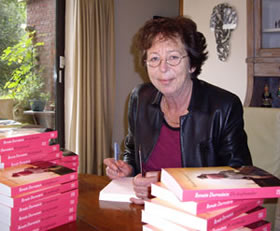
De Nederlandse schrijfster Renate Dorrestein werd geboren in Amsterdam op 25 januari 1954. Zie ook alle tags voor Renate Dorrestein op dit blog.


Uit: Verborgen gebreken


“Schuimige witte wolkjes drijven langs de strakblauwe hemel, nevel dampt rond de bergtoppen en de zee glinstert alsof zij elk moment juwelen zal prijsgeven die ze ooit heeft buitgemaakt. Een ochtend die ‘Ah!’ doet zeggen, als een teug champagne. Een ochtend als een klaroenstoot.

Agnes knippert met haar ogen tegen het licht terwijl ze de dekens van zich af slaat en met stramme benen uit bed stapt. Ze zal eindelijk een zomers bloesje kunnen aantrekken en met haar oude blote voeten in een paar sandalen kunnen stappen. Eerst vlug boterhammen smeren, en dan meteen de zon in.

Maar als ze beneden komt blijkt Bazooka, die in werkelijkheid Christine Jansen heet, in de keuken bezig de tafel te dekken. Messen, vorken, theelepeltjes, zelfs roodgeblokte servetjes: aan alles is gedacht. ‘Wil je koffie of thee?’ vraagt ze gedienstig aan Agnes, onderwijl een mandje met brood op tafel zettend. Het water kookt al. Op het zonbeschenen aanrecht staan de thee- en de koffiepot klaar.

‘Nee maar. Thee, graag,’ zegt Agnes. Het is altijd haar uitgangspunt geweest dat kinderen niet tot huishoudelijke karweitjes moeten worden aangespoord. Ze kunnen later nog genoeg tafels dekken en vaat doen.

Op haar tenen bij het aanrecht staand, schenkt Christine het theewater op. Ze draagt een schoon, lichtblauw trainingspak dat ze in een van de kasten moet hebben gevonden. Ze heeft haar haren gewassen en die nat en wel in een keurige paardestaart gebonden. Haar wangen glimmen alsof ze langdurig zijn geboend. ‘Zal ik brood in de rooster doen?’ Je hoeft heus niet ineens een modelkind te zijn, denkt Agnes, plotseling neerslachtig. Ik stuur je echt niet weg. Ze zegt: ‘Ja, lekker.’ Ze gaat zitten.”


1323856-a2aa18967abc42f68d1b96578f573363.jpg 

Renate Dorrestein (Amsterdam, 25 januari 1954)


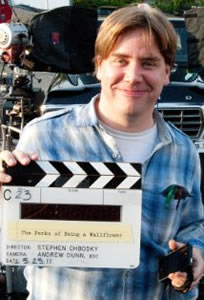
De Amerikaanse schrijver en regisseur Stephen Chbosky werd geboren op 25 januari 1970 in Pittsburgh, Pennsylvania. Zie ook alle tags voor Stephen Chbosky op dit blog.

Uit: Pieces


“I had been writing for a long time. I had made a movie. I had worked for Hollywood studios. But this was different. This was my book and my main character, Charlie, who meant the world to me. This was a singular wish. And someone out there had said yes.

I finished my work that afternoon. I put a rib dinner on American Express that night. And everything was right in the world. Ten months later, after another dinner, I went with my sister Stacy into a bookstore, and for the first time, I saw my book on the shelves. That green cover and picture of the boy's legs, my name, and the title. All I could say was, "There it is." I didn't know what would happen to it. I didn't know if anybody would read it. All I knew was that it was out there, and as long as it was out there, there was a possibility.

So, when Greer Kessel Hendricks, who is my editor and dear friend, asked me to write an introduction to this collection, all I could think about were the fifteen young authors whose stories appear in this book walking into their local bookstores with their friends and families and saying: "There it is."

Then, I thought about the possibility for them. And for you. And I congratulate all persons involved. Because whether you picked up this book because you love short stories, are interested in young authors, thought the cover looked good, or want to hate it, you have it. It's in your hands right now. And there is a possibility that somewhere in these pages, you may discover something special. Something honest. Well-crafted. Messy.”


1323856-d3187245c00fcf924e7b6b40b1d01d43.jpg 

Stephen Chbosky (Pittsburgh, 25 januari 1970)


De Israëlische schrijver
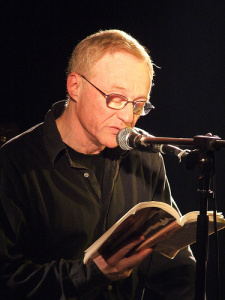
David Grossman werd geboren op 25 januari 1954 in Jeruzalem. Zie ook alle tags voor David Grossman op dit blog.


Uit: Writing in the Dark


“When I was eight years old, my father suggested that I read Sholem Aleichem’s Adventures of Mottel, the Cantor’s Son. Father himself had been a child in the Galician shtetl of Dynow, just a few miles from Lemberg, otherwise known as Lvov. Like Mottel, he had lost his father at a young age and lived with his brothers and sisters and hardworking widowed mother.

Father, who immigrated to Palestine in 1936, did not talk much about his childhood. Only rarely was the curtain drawn to reveal a strange, enchanting, intangible world, almost like a shadow theater. Then I could see my father as a little boy, sitting in the cheder opposite a stern teacher who used to fix broken china during class, binding the pieces together with wire. I could see Father at the age of four, walking home from the cheder in the dark, lighting his way with a candle stuck inside half a radish—nature’s candlestick. I could see the doctor bringing a precious remedy for my grandfather’s ailment as he lay on his deathbed: a paper-thin slice of watermelon. And I could see my father looking out the window.

Father handed me Adventures of Mottel, the Cantor’s Son (in Y. D. Berkowitz’s Hebrew translation), and I read the title of the first chapter while he held the book in his hands—"Today’s a Holiday—Weeping Is Forbidden! "— and then the following words: "I bet no one was so delighted with the warm sunny days following Passover as I, Mottel, the son of Peissi the Cantor, and as the neighbor’s calf, ‘Menie’ (as I, Mottel, have named him)."

I did not understand a word of what I read, and yet there was something there. I took the book from my father’s hands and climbed up onto the windowsill, my favorite reading place. Outside was Beit Mazmil, where the residents were trying to accustom themselves to the neighborhood’s newly ordained Hebrew name, Kiryat Yovel. It was a cluster of apartment buildings whose occupants had made their way from seventy exiles and who argued in seventy languages. The dwellers of the tinshack neighborhood, whom we called asbestonim, looked on enviously at those who were lucky enough to get a tiny apartment in one of the buildings. There were young couples who confronted life with determined optimism, and Holocaust survivors who walked the streets like shadows and whom we children feared. "


1323856-965dec0cea5cf088e32d77e8fadeddce.jpg
David Grossman (Jeruzalem, 25 januari 1954)


Zie voor nog meer schrijvers van de 25e januari ook mijn blog van 25 januari 2012 deel 1 en eveneens deel 2 en ook deel 3.

Geschreven door Romenu om 18:56 1 reactie Reageer op dit bericht

Meer van Romenu

↑ Terug naar de berichten