Naar de inhoud

Romenu

Over literatuur, gedichten, kunst en cultuur
akke.beakke.be

Berichten van 30 maart 2013 tot 31 maart 2013

Am Ostersonntage (Annette von Droste-Hülshoff)


Aan alle bezoekers en mede-bloggers een Vrolijk Pasen!


1365436-a12272d5ebbf4b0343b0d11426739fb1.jpg
Verrijzenis door Raffaelino del Garbo, 1510


Am Ostersonntage


O, jauchze, Welt, du hast ihn wieder,

Sein Himmel hielt ihn nicht zurück!

O jauchzet! jauchzet! singet Lieder!

Was dunkelst du, mein sel'ger Blick?


Es ist zu viel, man kann nur weinen,

Die Freude steht wie Kummer da;

Wer kann so großer Lust sich einen,

Der all so große Trauer sah!


Unendlich Heil hab' ich erfahren

Durch ein Geheimnis voller Schmerz,

Wie es kein Menschensinn bewahren,

Empfinden kann kein Menschenherz.


Vom Grabe ist mein Herr erstanden,

Und grüßet alle die da sein,

Und wir sind frei von Tod und Banden,

Und von der Sünde Moder rein.


Den eignen Leib hat er zerrissen,

Zu waschen uns mit seinem Blut,

Wer kann um dies Geheimnis wissen,

Und schmelzen nicht in Liebesglut!


Ich soll mich freun an diesem Tage

Mit deiner ganzen Christenheit,

Und ist mir doch, als ob ich wage,

Da Unnennbares mich erfreut.


Mit Todesqualen hat gerungen

Die Seligkeit von Ewigkeit,

Gleich Sündern hat das Graun bezwungen

Die ewige Vollkommenheit.


Mein Gott, was konnte dich bewegen

Zu dieser grenzenlosen Huld!

Ich darf nicht die Gedanken regen

Auf unsre unermessne Schuld.


Ach, sind denn aller Menschen Seelen

Wohl sonst ein überköstlich Gut,

Sind sie es wert, dass Gott sich quälen,

Ersterben muss in Angst und Glut!


Und sind nicht aller Menschen Seelen

Vor ihm nur eines Mundes Hauch?

Und ganz befleckt von Schmach und Fehlen,

Wie ein getrübter dunkler Rauch?


Mein Geist, o wolle nicht ergründen,

Was einmal unergründlich ist;

Der Stein des Falles harrt des Blinden,

Wenn er die Wege Gottes misst.


Mein Jesus hat sie wert befunden

In Liebe und Gerechtigkeit;

Was will ich ferner noch erkunden?

Sein Wille bleibt in Ewigkeit!


So darf ich glauben und vertrauen

Auf meiner Seele Herrlichkeit!

So darf ich auf zum Himmel schauen,

In meines Gottes Ähnlichkeit!


Ich soll mich freun an diesem Tage:

Ich freue mich, mein Jesu Christ,

Und wenn im Aug' ich Tränen trage,

Du weißt doch, daß es Freude ist!


1365436-c6f809abba70bf32e156c5f8f5417fd5.jpg 

Annette von Droste-Hülshoff (10 januari 1797 – 24 mei 1848)

Tuinkamer in het Rüschhaus nabij Drostes geboortehuis Burg Hülshoff


Zie voor de dichters van de 31e maart ook mijn vorige drie blogs van vandaag.


Geschreven door Romenu om 12:10 Reageer op dit bericht

Marga Minco, Octavio Paz, Nichita Stănescu, Enrique Vila-Matas, Hartmut Lange

De Nederlandse schrijfster en journaliste Marga Minco, pseudoniem van Sara Minco, werd geboren in Ginneken op 31 maart 1920. Zie ook alle tags voor Marga Minco op dit blog.


Uit: ‘Het Bittere Onkruid’


“De sterren

Van het raam van mijn kamer uit zag ik in de verte mijn vader aankomen. Sinds enige weken was ik uit het ziekenhuis. Wel moest ik nog een paar uur per dag rusten, maar ik was geheel hersteld.

Meer dan deze straat kende ik van Amersfoort nog niet. Het was een stille buitenwijk met nieuwe, twee aan twee gebouwde huizen, omringd door tuinen.

Mijn vader liep met korte, stevige passen en nam met een zwierig gebaar zijn hoed af voor een vrouw, die in haar voortuin bloemen stond te plukken. Zij scheen iets tegen hem te zeggen, want hij hield even zijn pas in. Toen hij vlak bij het huis was, zag ik dat hij een pakje in zijn hand hield. Een bruin pakje. Ik ging naar beneden, stak mijn hoofd om de huiskamerdeur en kondigde aan:

‘Daar komt vader met een pakje.’

‘Wat zit er in?’ vroeg ik bij de voordeur.

‘Waarin?’ vroeg mijn vader, die rustig jas en hoed ophing. Hij had het pakje op de kapstok gelegd.

‘Nou,’ zei ik ongeduldig, ‘in dat pakje, dat je bij je hebt.’

‘Je zult het wel zien,’ zei hij. ‘Kom maar.’

Ik volgde hem naar binnen. Daar legde hij het op tafel, terwijl iedereen er nieuwsgierig naar keek. Er zat een touwtje omheen, waarvan hij eerst geduldig de knopen lospeuterde. Daarna vouwde hij het papier open. Het waren de sterren.

‘Ik heb er voor allemaal wat meegebracht,’ zei hij, ‘dan kunnen jullie ze op al je jassen naaien.’ Mijn moeder nam er een uit het pakje en bekeek die aandachtig. ‘Ik zal eens zien of ik gele zij in huis heb,’ zei ze.

‘'t Is oranje,’ zei ik, ‘je moet er oranje garen voor gebruiken.’

‘Het lijkt mij beter,’ zei Lotte, de vrouw van mijn broer, ‘om garen in de kleur van je mantel te nemen.’


1365431-d810035430d5801a0910bfda3a48d1e0.jpg 

Marga Minco (Ginneken, 31 maart 1920)

Cover 


De Mexicaanse schrijver, dichter, en diplomaat Octavio Paz werd geboren op 31 maart 1914 in Mixcoac, tegenwoordig een deel van Mexico-stad. Zie ook alle tags voor Octavio Paz op dit blog.


Eén aar is al het koren


Eén aar is al het koren
Eén veer is een levende en zingende vogel
Een mens van vlees is een mens van droom
De waarheid is ondeelbaar
De donder verkondigt de daden van de bliksem
Een gedroomde vrouw wordt altijd een geliefde van vlees
De slapende boom spreekt groene orakeltaal
Het water babbelt maar en herhaalt zicht nooit
In de weegschaal van de oogleden is de droom van geen gewicht
In de weegschaal van een tong die raaskalt
Een vrouwentong die ja zegt tot het leven
Slaat de paradijsvogel zijn vleugels open


Vertaald door Stefaan van den Bremt


Hier


Mijn stappen in deze straat
Weerklinken
in een andere straat
waar
ik mijn stappen hoor
passeren in deze straat
waar
Slechts de mist werkelijk is


Vertaald door K. Michel


Twee lichamen


Twee lichamen tegenover elkaar
Zijn soms twee golven
En de nacht is de oceaan

Twee lichamen tegenover elkaar
Zijn soms twee stenen
En de nacht een woestenij

Twee lichamen tegenover elkaar
Zijn soms wortels
In de nacht vastgebonden

Twee lichamen tegenover elkaar
Zijn soms zakmessen
En de nacht een bliksemflits

Twee lichamen tegenover elkaar
Zijn twee hemellichamen die vallen
In een lege hemel.


Vertaald door Annet Burgers


1365431-3f8ff3981ef12f9290de075c2c037da5.jpg
Octavio Paz (31 maart 1914 – 19 april 1998)

Portret door Carlos Enrique Velázquez Moreyra, 1990 


De Roemeense dichter en essayist Nichita Stănescu werd geboren op 31 maart 1933 in Ploieşti. Zie ook alle tags voor Nichita Stănescu op dit blog.


On Horseback at Dawn


Silence strikes the tree trunks, upon itself retracing,
turns to distance, turns to sand.
I have turned my only face toward the sun,
my shoulders scatter leaves in this racing.
Cutting through the field - up on two shoes
my horse leaps, steaming, from the clay.
Ave, I am turning to you, I, Ave!
The sun has burst across the heavens, crying.

Stone drums are sounding, the sun grows,
the vault of heaven, alive with eagles, before him,
collapses into steps of air, and glows.
Silence turns to blue wind,
the spur of my shadow grows
in the ribs of the field.

The sun snaps the horizon in two.
The vault of heaven pulls down its dying prison cells.
Blue spears, with no returning,
I discard my visions, both of them -
they meet him, sweet and grave.
My horse rises on two shoes.
Ave, tide of light, ave!

The sun ascends from objects, crying,
shakes the borders, voiceless and grave.
My soul meets Him, Ave!
My horse rises on two shoes.
My pale mane burns on the wind.


1365431-b71462374b35b7874bcf8bc92868235a.jpg 

Nichita Stănescu (31 maart 1933 – 13 december 1983)


De Spaanse schrijver Enrique Vila-Matas werd geboren in Barcelona op 31 maart 1948. Zie ook alle tags voor Enrique Vila-Matas op dit blog.


Uit: Bartleby & Co. (Vertaald door Jonathan Dunne)


“I wonder if I can do this. I am convinced that only by tracking down the labyrinth of the No can the paths still open to the writing of the future appear. I wonder if I can evoke them. I shall write footnotes commenting on a text that is invisible, which does not mean it does not exist, since this phantom text could very well end up held in suspension in the literature of the next millennium.

1) Robert Walser knew that writing that one cannot write is also writing. Among the many minor positions that he held - bookshop assistant, lawyer's clerk, bank employee, worker in a factory that made sewing machines, and finally major-domo of a castle in Silesia - Robert Walser would from time to time retire to Zurich, to the "Chamber of Writing for Unoccupied Persons" (the name could not be more Walserian, but it is genuine), and there, seated on an old stool, in the evening, in the pale light of an oil lamp, he would make use of his graceful handwriting to work as a copyist, to work as a "Bartleby".

Both his occupation as a copyist and Walser's whole existence remind us of the character in Melville's story, the scrivener who spent twenty-four hours a day in the office. Roberto Calasso, referring to Walser and Bartleby, has remarked that in such beings who have the appearance of ordinary and discreet men there is, however, to be found an alarming tendency to negate the world. All the more radical the less it is observed, the blast of destruction is frequently ignored by people who consider the Bartlebys to be grey, good-natured beings. "For many, Walser, the author of Jakob von Gunten," writes Calasso, "is still a familiar figure and it is possible to read even that his nihilism is middle class and good-natured like the Swiss. And yet he is a remote character, a parallel path of nature, an almost indiscernible knife-edge. Walser's obedience, like Bartleby's disobedience, presupposes a total break [...]. They copy, they transcribe texts that pass through them like a transparent sheet. They make no special pronouncements, no attempt to modify. 'I do not develop,' says Jakob von Gunten in Jakob von Gunten. 'I would prefer not to make any change,' says Bartleby. Their affinity reveals the similarity between silence and a certain decorative use of language."


1365431-57fdd69b4d1542576617081a574cdbdb.jpg 

Enrique Vila-Matas (Barcelona, 31 maart 1948)


De Duitse schrijver
Hartmut Lange werd geboren op 31 maart 1937 in Berlijn.
Zie ook alle tags voor Hartmut Lange op dit blog.


Uit: Das Haus in der Dorotheenstraße


“Jeder kennt die Stimmung, die um einen Schlafenden entsteht. Es ist so etwas wie Fremdheit, und doch bleibt alles, wie es war: Da sind die Möbel, die, nachdem die Nachttischlampe nicht mehr brennt, ihre Schatten werfen, da ist das unverhangene Fenster, durch das genügend Licht fällt, um auch den kahlen Wänden ringsherum Konturen zu geben, und hinter dem Fenster beginnt das grenzenlose Draußen, das, da niemand es wahrnimmt, wie unerlöst, wie beziehungslos, wie eine Welt ohne Gegenüber wirkt, und selbst der Mond, der über den Dächern der Stadt aufsteigt, kann seine Schönheit nicht zur Geltung bringen. Und wenn nun der eben noch Schlafende aus irgendeinem Grund, vielleicht, weil er unbequem lag oder schlecht geträumt hatte, sich plötzlich mit einem Seufzer aufrichtet und, mit beiden Händen Halt suchend, auf der Bettkante zu sitzen kommt, dann wäre es möglich, dass sich zwei Welten, die zusammengehören, für Augenblicke nicht mehr berühren.”


1365431-695e31bae29c6777bbc3a14a9cade2e5.jpg 

Hartmut Lange (Berlijn, 31 maart 1937)

Geschreven door Romenu om 12:04 Reageer op dit bericht

Marge Piercy, Angela Kreuz, Peter Motte, Judith Rossner, Rob Boudestein

De Amerikaanse schrijfster en feministe Marge Piercy werd geboren op 31 maart 1936 in Detroit. Zie ook alle tags voor Marge Piercy op dit blog.


Implications of One Plus One


Sometimes we collide, tectonic plates merging,
continents shoving, crumpling down into the molten
veins of fire deep in the earth and raising
tons of rock into jagged crests of Sierra.

Sometimes your hands drift on me, milkweed's
airy silk, wingtip's feathery caresses,
our lips grazing, a drift of desires gathering
like fog over warm water, thickening to rain.

Sometimes we go to it heartily, digging,
burrowing, grunting, tossing up covers
like loose earth, nosing into the other's
flesh with hot nozzles and wallowing there.

Sometimes we are kids making out, silly
in the quilt, tickling the xylophone spine,
blowing wet jokes, loud as a whole
slumber party bouncing till the bed breaks.

I go round and round you sometimes, scouting,
blundering, seeking a way in, the high boxwood
maze I penetrate running lungs bursting
toward the fountain of green fire at the heart.

Sometimes you open wide as cathedral doors
and yank me inside. Sometimes you slither
into me like a snake into its burrow.
Sometimes you march in with a brass band.

Ten years of fitting our bodies together
and still they sing wild songs in new keys.
It is more and less than love: timing,
chemistry, magic and will and luck.

One plus one equal one, unknowable except
in the moment, not convertible into words,
not explicable or philosophically interesting.
But it is. And it is. And it is. Amen.


1365429-a13c4d16b6e808a8a2d4b0be042daa3b.jpg
Marge Piercy (Detroit, 31 maart 1936)


De Duitse dichteres en schrijfster Angela Kreuz werd geboren in Ingolstadt op 31 maart 1969. Zie ook alle tags voor Angela Kreuz op dit blog.


Echo


Das Rauschen der Muschel

– ein Geschenk von dir –

Ist mir im Ohr, geheimnisvoll


Ich schließe die Augen

Das kalkstarre Kleinod in der Hand

Ein Mini-Meer


Ersehne sein Tosen, sein Bild, den Geruch

Versinke im Ozean wirbelnder Fülle

Und Stille


Unterwasserwelt


Im tiefsten Abgrund

Bist du

Mit offenen Armen


Eine Träne verloren

Im Ozean


Ängste rufen mich zurück

Flieh!

Zerrissen

Gehe ich an Land


Hinter mir: Wellen, Wellen, Wellen


1365429-49f9990217fc4acc408ff7cc655d4fd2.jpg 

Angela Kreuz (Ingolstadt, 31 maart 1969)


De Vlaamse schrijver, vertaler en publicist Peter Motte werd geboren in Geraardsbergen op 31 maart 1966. Zie ook alle tags voor Peter Motte op dit blog.


Uit: Shinigami in manga


“Nadat ik mijn eerste manga had gelezen, geraakte ik zodanig verstrikt in een web van intriges, dat ik er nooit meer uitgeraakte. Die manga heette Death Note, en op dat moment kon ik nog helemaal niet vermoeden dat ik aan de volledige tweede cyclus van die cultreeks zou meewerken. Het begon nochtans onschuldig met de controle van het eerste hoofdstuk van Detective Conan - over een detectivetiener waarvan het lichaam per ongeluk wordt teruggebracht tot zijn zevenjarige proporties - een serie die om een of andere reden nooit door haar publiek werd ontdekt, en die in het Nederlands werd stopgezet. Niets lukt zomaar.

Na dat instappertje werden me Death Note en Shaman King toegeschoven. Death Note bleek een flinke breinbreker, zeker voor de corrector, maar nog meer voor de vertaler. De personages proberen elkaar de loef af te steken door ingewikkelde intriges op te zetten, maar vooral door op slinkse manieren gebruik te maken van een apart wezen waarover ze soms macht uitoefenen, en waarvan ze soms het slachtoffer zijn: shinigami.”


1365429-7a85fa950dba4045e1b2806442888bcf.jpg 

Peter Motte (Geraardsbergen, 31 maart 1966)

Geraardsbergen, markt en raadhuis


De Amerikaanse schrijfster Judith Rossner werd geboren als Judith Perelman op 31 maart 1935 in New York. Zie ook alle tags voor Judith Rossner op dit blog.


Uit: Perfidia


“My mother would have been twenty-seven, Wilkie about ten years older,  this huge, soft-voiced teddy bear with wavy brown hair and bushy brows,  his eyes set so deep under them that they looked trapped. He got by  because he'd had an inheritance of maybe forty thousand dollars and,  bumming around the West, he'd landed in Santa Fe several years before the  real-estate boom. His then artist-girlfriend persuaded him to buy a  crumbling adobe house on a large lot on Canyon Road. Outright. She left  before long, but there were always other artists (artist mostly in  quotes) ready to move in with him. The males and maybe some of the  females paid rent. He had good offers for the whole piece of real estate  but he turned them down. He couldn't imagine where he'd go afterward.  Wilkie was one of the few people I've ever known who didn't need to  do anything, even when he was sober. He could sit at home or in  the coffee shop for hours without even looking at the newspaper, waiting  for people to come by and talk. Or not talk. Just drink coffee at his  regular table. Sober, my mother could do that for five or ten minutes.  Even drunk, she didn't stay still for long. Anyway, I wasn't so much  aware of the difference between drunk and sober, in those days. And she  wasn't drunk so much of the time.
They struck up a conversation in the Pink Adobe, called by regulars the  Pink. His girlfriend had just left. A couple of hours later, we moved  into his room. No mystery about how my mother got pregnant; the marvel is  that it didn't happen more often. She loved babies. She loved anything  that didn't talk back.”


1365429-33220f7b44edfce2aada8ae092aff9d6.jpg 

Judith Rossner (31 maart 1935 – 9 augustus 2005)

New York Easter Parade


De Nederlandse dichter Rob Boudestein werd geboren op 31 maart 1947 in Den Haag. Zie ook mijn blog van 31 maart 2010 en ook mijn blog van 31 maart 2011.


Kaapren varen: De derde kaper


Hij heette Tjores en hij had een baard,
hij was met zwaard en enterhaak bedreven.
Wie hem ontwaarde wendde vast de steven,
vaak tevergeefs, dan werd geen man gespaard.

Maar nooit heeft hij eenzelfde roem vergaard
als Jan, Piet en Corneel, dus ongeschreven
blijft heel de rest van Tjores’ ruige leven;
wie Tjores was bleef voor ons niet bewaard.

En waar hij dan ook rust, hij rust in vree.
Ze waren ferme jongens, stoere knapen
met een alom gerespecteerd beroep.

Dankzij hun spirit telden wij nog mee.
Thans heeft al wie een baard draagt en wil kapen
terstond het halve leger op z’n stoep.


1365429-aa792e42d8ffcbda0f059a777021549f.jpg 

Rob Boudestein (Den Haag, 31 maart 1947)

Geschreven door Romenu om 12:00 Reageer op dit bericht

Andrew Marvell, John Fowles, Edward FitzGerald, Andrew Lang, Robert Brasillach

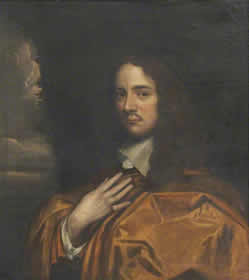
De Engelse dichter Andrew Marvell werd geboren in Winestead, Yorkshire op 31 maart 1621 in Londen. Zie ook alle tags voor Andrew Marvell op dit blog.


The Character Of Holland (Fragment)


Yet still his claim the Injur'd Ocean laid,
And oft at Leap-frog ore their Steeples plaid:
As if on purpose it on Land had come
To shew them what's their Mare Liberum.
A daily deluge over them does boyl;
The Earth and Water play at Level-coyl;
The Fish oft-times the Burger dispossest,
And sat not as a Meat but as a Guest;
And oft the Tritons and the Sea-Nymphs saw
Whole sholes of Dutch serv'd up for Cabillan;
Or as they over the new Level rang'd
For pickled Herring, pickled Heeren chang'd.
Nature, it seem'd, asham'd of her mistake,
Would throw their land away at Duck and Drake.
Therefore Necessity, that first made Kings,
Something like Government among them brings.
For as with Pygmees who best kills the Crane,
Among the hungry he that treasures Grain,
Among the blind the one-ey'd blinkard reigns,
So rules among the drowned he that draines.
Not who first see the rising Sun commands,
But who could first discern the rising Lands.
Who best could know to pump an Earth so leak
Him they their Lord and Country's Father speak.
To make a Bank was a great Plot of State;

Invent a Shov'l and be a Magistrate.
Hence some small Dyke-grave unperceiv'd invades
The Pow'r, and grows as 'twere a King of Spades.
But for less envy some Joynt States endures,
Who look like a Commission of the Sewers.
For these Half-anders, half wet, and half dry,
Nor bear strict service, nor pure Liberty.


1365426-8428070754451437c5e466fd97e9ebbe.jpg 

Andrew Marvell (31 maart 1621 - 16 augustus 1678)

Portret, toegeschreven aan Godfrey Kneller


De Engelse schrijver en essayist John Fowles werd geboren in Leigh-on-Sea (Essex) op 31 maart 1926. Zie ook alle tags voor John Fowles op dit blog.


Uit: The Journals


“5 November 1949
Guy Fawkes night. A great crowd of people, vaguely contented at shaking off the discipline of the world as it is. The undergraduates form the largest part, for the most part just watching, with a few active spirits shouting, calling, singing, making speeches. A certain air of forcedness about all these crowds. Fireworks shooting up, and people exploding away from them when they land. The police and the proctors standing ineffectively. Buses moving slowly, cars being rocked and thumped. Many climb up the scaffolding around the Martyr's Memorial,1 then a vague move is made to the Taj Mahal restaurant where there is a man climbing up, men shouting, and a solid mass of people. Water out of the windows.
Basically one cannot help feeling contempt for all this canaille, noisily and offensively drunk yet not doing anything positive. Most of them posturing in a ridiculous manner. A good many girls, who seem the most genuinely excited.
To a certain extent there is a vast good will that can be sensed; roughly everyone is together and enjoying themselves, with the police and the proctors symbolizing all kinds of emotion and, ultimately, the determinism in life. GH and BB both enjoy themselves, and look for some means to manifest their lawlessness. I have absolutely no desire to do anything else but watch, wanting to be everywhere and see everything, observing people's faces. Roger Hendry2 is like me but not so finely 'set', for he has to pretend to a certain lawlessness which isn't innate in him at all.
Too many of the faces are vacuous and want filling.
The sight of the girl in green, about whom I wrote the Hospital story, with a thick well set-up young man, is distressing. Above all the sight of the moon, nearly full, in a clear night sky, not particularly cold, after a dull, rainy day. I wanted very much to see one of the people who climbed the Memorial fall down to his death. The indrawn breath and sudden laugh would have been most effective”.


1365426-2fa31bb212ff5880bfc4522f7d0ebb05.jpg 

John Fowles (31 maart 1926 - 5 november 2005)


De Engelse dichter, schrijver en vertaler Edward FitzGerald werd geboren in Woodbridge, Suffolk, op 31 maart 1809. Zie ook alle tags voor Edward FitzGerald op dit blog.


Uit: Rubaiyat of Omar Khayyam


III
And, as the Cock crew, those who stood before
The Tavern shouted--"Open then the Door!
You know how little while we have to stay,
And, once departed, may return no more."


IV
Now the New Year reviving old Desires,
The thoughtful Soul to Solitude retires,
Where the WHITE HAND OF MOSES on the Bough
Puts out, and Jesus from the Ground suspires.


VI
And David's Lips are lock't; but in divine
High piping Pehleví, with "Wine! Wine! Wine!
Red Wine!"--the Nightingale cries to the Rose
That yellow Cheek of hers to' incarnadine.


Vertaald door Edward FitzGerald


1365426-c10e3166b221c2a4cbf8405dba0209f1.jpg
Edward FitzGerald (31 maart 1809 - 14 juni 1883)

Illustratie door Edmund Dulac uit de Rubáiyát of Omar Khayyám


De Schotse dichter, schrijver en journalist Andrew Lang werd geboren op 31 maart 1844 in Selkirk. Zie ook alle tags voor Andrew Lang op dit blog.


Spring


Now the bright crocus flames, and now
The slim narcissus takes the rain,
And, straying o'er the mountain's brow,
The daffodilies bud again.
The thousand blossoms wax and wane
On wold, and heath, and fragrant bough,
But fairer than the flowers art thou,
Than any growth of hill or plain.

Ye gardens, cast your leafy crown,
That my Love's feet may tread it down,
Like lilies on the lilies set:
My Love, whose lips are softer far
Than drowsy poppy petals are,
And sweeter than the violet!


In Ithaca


'Tis thought Odysseus when the strife was o'er
With all the waves and wars, a weary while,
Grew restless in his disenchanted isle,
And still would watch the sunset, from the shore,
Go down the ways of gold, and evermore
His sad heart followed after, mile on mile,
Back to the Goddess of the magic wile,
Calypso, and the love that was of yore.

Thou too, thy haven gained, must turn thee yet
To look across the sad and stormy space,
Years of a youth as bitter as the sea,
Ah, with a heavy heart, and eyelids wet,
Because, within a fair forsaken place
The life that might have been is lost to thee.


1365426-0dbd1fa04418b6592b898a7da9ff6d26.jpg 

Andrew Lang (31 maart 1844 – 20 juli 1912)

Andrew Lang aan het werk. Ets door  J. F. Jungling, 1894


De Franse schrijver, dichter en journalist Robert Brasillach werd geboren in Perpignan op 31 maart 1909. Zie ook alle tags voor Robert Brasillach op dit blog.


PSAUME I

L’ouvrage de méchants demeure périssable,
Les idoles d'argent qu'ils se sont élevées
S'écrouleront un jour sur leur base de sable
Et la nuit tombera sur leurs formes rêvées.

O Seigneur, nous qu'ils ont enfermés sous ces portes.
Nous qu'ils ont verrouillés derrière ces verrous,
Nous pour qui les soldats de ces murailles fortes
Font dans les corridors sonner leurs pas à clous,

O Seigneur, vous savez que couchés sur la paille
Ou sur le dur ciment des prisons sans hublot,
Nous avons su garder en nous, vaille que vaille,
L'espoir sans défaillance envers des jours plus beaux.

Nous avons rassemblé les anciennes tendresses,
Nous avons dessiné sur le plâtre des murs
Les magiques portraits de nos saintes jeunesses
Et nos coeurs sans remords savent qu'ils restent purs.

La sottise au dehors dans le sang rouge baigne,
Et l'ennemi déjà s'imagine immortel,
Mais lui seul croit encore au long temps de son règne
Et nos barreaux, Seigneur, ne cachent pas le ciel.


1365426-046008367e0e7478a39d288bab00f562.jpg 

Robert Brasillach (31 maart 1909 - 6 februari 1945)

Geschreven door Romenu om 11:56 Reageer op dit bericht

Asis Aynan

De Nederlandse schrijver Asis Aynan werd geboren in Haarlem op 31 maart 1980. Na de opleidingen MBO en HBO bestuurskunde ging hij als zoon van een Marokkaanse gastarbeider filosofie studeren aan de Universiteit van Amsterdam. Hij verdiepte zich ook in islamitische filosofie, nadat hij het boek “Islamitische filosofie: Een geschiedenis” van filosoof Michiel Leezenberg ontdekt had. Daarnaast is hij docent aan het middelbaar beroepsonderwijs in Haarlem. Hij is redacteur bij het opinietijdschrift Contrast en was columnist voor het weekblad Multined. Hij schrijft momenteel voor de boekenpagina van NRC Handelsblad, wekelijks een column voor Het Parool en hij was ook regelmatig te horen bij de Nederlandse Islamitische Omroep. Zijn stukken verschenen verder onder meer in het literaire tijdschrift Passionate en worden voorgelezen op Radio 5. In zijn bundel “Veldslag en andere herinneringen” (2007), schrijft Aynan over zijn jeugd, of zoals hij het zelf noemt, zijn "katholieke-islamitische-berberachtergrond", de huidige Nederlandse samenleving en de ervaringen van een Berberjongen tussen twee dominante culturen. In 2010 verscheen “Ik, Driss” samen met Hassan Bahara, onder het pseudoniem Driss Tafersiti.

Uit: Ik, Driss

“Op 29 april 1972 werd ik door mijn oudste broer, Moha, in Lille, Frankrijk, op de bus gezet naar Nederland. Ik was eenentwintig jaar. Ik had een klein reiskoffertje bij me. Daarin zaten al mijn bezittingen: twee witte overhemden, wat ondergoed en een van mijn twee pakken. Het andere had ik aan. Ik moest van Moha weg uit Frankrijk. Hij zei dat als ik langer in de mijnen zou werken mijn longen kapot zouden gaan. Net als die van hem. Moha zei dat het werk in Nederland schoner was. En hij zei ook dat Nederlanders aardiger zijn dan de Fransen. Die scholden ons vaak uit voor "vieze Arabieren". Twee jaar heb ik in Lille gewoond en niets van de stad gezien. Mijn dag zag er zo uit: huis-kolenmijn-huis. Het deed mij dan ook niets toen ik het verliet.
De bus kwam aan op het Amstelstation in Amsterdam. Toen ik uitstapte, zag ik dat Moha gelijk had; alles was schoner. Alsof er een groot tapijt over de hele stad was uitgerold. En de mensen die op het tapijt liepen, keken vriendelijk. Ik dacht: Driss kan zich hier thuis voelen.'”


 1539106-c3e3c858fb1ffb231933dba474519521.jpg
Asis Aynan (Haarlem, 31 maart 1980)

Geschreven door Romenu om 00:00 Reageer op dit bericht

Martijn Teerlinck

De Vlaamse dichter en muzikant MartijnTeerlinck werd geboren op 31 maart 1987 in Lendelede. Teerlinck studeerde literatuurwetenschap en Italiaans aan de Universiteit van Amsterdam. Hij won in 2008 de poëzieprijs van het Amsterdams Studenten Festival. In 2010 behaalde hij een gedeelde eerste plaats bij het kampioenschap Poetry Slam. Teerlinck was één van de oprichters van het poëziecollectief Meer Licht. Hij publiceerde onder meer in de tijdschriften ‘Awater’, 'Deus Ex Machina', 'Met Andere Zinnen', 'Digther', 'Krakatau' en 'Op Ruwe Planken'. Ook verscheen zijn werk in de bloemlezingen ‘Met dat hoofd gebeurt nog eens wat’ (2010) en 'We zochten slechts een gat om van te varen' (2010).

schreeuw

ik schreeuw gedempt in de baard van de nacht:

houw jezelf toch uit dat lichaam van beton
laat die witte schubben van je ogen vallen
word een vogel die zijn naam roept

ook jij bent al te vaak een lege grot geweest
verlies geen deuren, word niet dichtgeknipt
maar scheur toch open uit dat bovenkleed
scheur toch open uit die onderhuid

vlecht je ingegroeide botten uit
sta op en loop
onthecht jezelf toch uit de moederwond
en wees vanaf vandaag geboorte


 1512102-6d626134ca62facb91a5cdeac2fa499a.jpg
Martijn Teerlinck (Lendelede, 31 maart 1987)

Geschreven door Romenu om 00:00 Reageer op dit bericht

Am Karsamstage (Annette von Droste-Hülshoff)


Bij Stille Zaterdag


1364946-24577316b09482cfbae8b1c02e5257a2.jpg
Pietà door Pietro Perugino, c. 1483-1493


Am Karsamstage


Tiefes, ödes Schweigen,

Die ganze Erd' wie tot!

Die Lerchen ohne Lieder steigen,

Die Sonne ohne Morgenrot.

Auf die Welt sich legt

Der Himmel matt und schwer,

Starr und unbewegt,

Wie ein gefrornes Meer.

O Herr, erhalt' uns!


Meereswogen brechen,

Sie toben sonder Schall;

Nur die Menschenkinder sprechen,

Doch schaurig schweigt der Widerhall.

Wie versteinet steht

Der Äther um uns her;

Dringt wohl kein Gebet

Durch ihn zum Himmel mehr.

O Herr, erhalt'uns!


Sünden sind geschehen,

Für jedes Wort zu groß,

Daß die Erde müßt' vergehen,

Trüg' sie nicht Jesu Leib im Schoß.

Noch im Tod voll Huld

Erhält sein Leib die Welt,

Daß in ihrer Schuld

Sie nicht zu Staub zerfällt.

O Herr, verschon' uns!


Jesus liegt im Grabe,

Im Grabe liegt mein Gott!

Was ich von Gedanken habe,

Ist doch dagegen nur ein Spott.

Kennt in Ewigkeit

Kein Jesus mehr die Welt?

Keiner der verzeiht,

Und keiner der erhält?

O Herr, errett' uns!


Ach, auf jene Frommen,

Die seines Heils geharrt,

Ist die Glorie gekommen

Mit seiner süßen Gegenwart.

Harrten seiner Huld:

Vergangenheit die Zeit,

Gegenwart Geduld,

Zukunft die Ewigkeit.

O Herr, erlös' uns!


Lange, lange Zeiten

In Glauben und Vertraun,

Durch die unbekannten Weiten

Nach unbekanntem Heil sie schaun.

Dachten sich so viel,

Viel Seligkeit und Pracht.

Ach, es war wie Spiel,

Von Kindern ausgedacht.

O Herr, befrei' uns!


Herr, ich kann nicht sprechen

Vor deinem Angesicht!

Laß die ganze Schöpfung brechen,

Diesen Tag erträgt sie nicht.

Ach, was naht so schwer,

Ist es die ew'ge Nacht,

Ist's ein Sonnenmeer,

In tausend Strahlen Pracht?

O Herr, erhalt' uns!


1364946-c6f809abba70bf32e156c5f8f5417fd5.jpg 

Annette von Droste-Hülshoff (10 januari 1797 – 24 mei 1848)

Het Rüschhaus nabij Drostes geboortehuis Burg Hülshoff, tuinkant


Zie voor de schrijvers van de 30e maart ook mijn vorige drie blogs van vandaag. 

Geschreven door Romenu om 13:09 Reageer op dit bericht

Gerrit Komrij, Uwe Timm, Paul Verlaine, Milton Acorn, Erika Mitterem

De Nederlandse dichter, schrijver, criticus, polemist en toneelschrijver Gerrit Komrij werd geboren op 30 maart 1944 in Winterswijk. Zie ook alle tags voor Gerrit Komrij op dit blog.


De eenhoorn


Wreed schrijdt de eenhoorn in zijn glazen huis
Op de flamingo af, die sneeuwwit rilt.
De vogel weet: er is hier iets niet pluis.
Dan steekt de eenhoorn toe. Er klinkt een gil.

Wel gaat door heel de koepel het gesuis
Van bloed dat lekt en ritselt uit de zij
Van de flamingo, die nu grauw als gruis
Is, sterft met zacht, ontwapenend geschrei.

De eenhoorn, die het bloed gedronken heeft,
Komt in verrukking overeind, verschiet
Van kleur, verkeert, terwijl hij schokt en beeft,
In een helblauwige hermafrodiet.


Harmonie


Je hebt een tuin. Daar loop je 's avonds in.
Nu ja, niet elke avond. Af en toe.
Vaak ben je voor dat groeien zonder zin,
En toch zo grondig, na de dag te moe.

Een bloem geeft alles. Maar zij is al dood.
Jij bent gespleten. Maar jou wacht het leven.
Zo ben je vaak in niets een lotgenoot.
Een wig lijkt tussen haar en jou gedreven.

Zij wil zich haasten. Jij moet blijven duren.
Jij waakt en fragmenteert. Zij bloeit en slaapt.
Soms strookt het. Op zo'n avond, dat je uren
Door een wijd open kelk wordt aangegaapt.


Solidariteit


Op zekere dag zag je een groenteboer,
Een wondermooie Maniak, hij was gewoon
Om alle vrouwen in zijn zaak een loer
Te draaien: hij verkocht ze groente, schoon
Van buiten, maar van binnen enkel schimmel.
O, niet alleen die vrouwen gaf hij dat
Maar ook de doetjes en de boerenpummels,
Kortom, aan wie hij maar een hekel had.

Je lachte. Hij bemerkte je plezier
En knipoogde. Hij zag een kameraad
In je, zoveel was zeker. Een kwartier
Daarna stond je met rotte lof op straat.


1364944-fb4945942814599dfe86b7aaeaee02e6.jpg 

Gerrit Komrij (30 maart 1944 - 5 juli 2012)


De Duitse schrijver Uwe Timm werd geboren op 30 maart 1940 in Hamburg. Zie ook alle tags voor Uwe Timm op dit blog.


Uit: Die Entdeckung der Currywurst


“Ich mach die Bude dicht, endgültig.
Das sagte sie jedesmal, und ich war sicher, sie im nächsten Jahr wiederzusehen. Aber in dem darauffolgenden Jahr war ihr Stand verschwunden.
Daraufhin bin ich nicht mehr in das Viertel gegangen, habe kaum noch an Frau Brücker gedacht, nur gelegentlich an einem Imbißstand in Berlin, Kassel oder sonstwo, und dann natürlich immer, wenn es unter Kennern zu einem Streit über den Entstehungsort und das Entstehungsdatum der Currywurst kam: Die meisten, nein, fast alle reklamierten dafür das Berlin der späten fünfziger Jahre. Ich brachte dann immer Hamburg, Frau Brücker und ein früheres Datum ins Gespräch.
Die meisten bezweifelten, daß die Currywurst erfunden worden ist. Und dann noch von einer bestimmten Person? Ist das nicht wie mit Mythen, Märchen, Wandersagen, den Legenden, an denen nicht nur einer, sondern viele gearbeitet haben? Gibt es den Entdecker der Frikadelle? Sind solche Speisen nicht kollektive Leistungen? Speisen, die sich langsam herausbilden, nach der Logik ihrer materiellen Bedingungen, so wie es beispielsweise bei der Frikadelle gewesen sein mag: Man hatte Brotreste und nur wenig Fleisch, wollte aber den Magen füllen, da bot sich der Griff zu beiden an und war noch dazu voller Lust, man mußte das Fleisch und das Brot ja zusammenmanschen. Viele werden es getan haben, gleichzeitig, an verschiedenen Orten, und die unterschiedlichen Namen bezeugen es ja auch: Fleischbengelchen, Boulette, Fleischpflanzerl; Hasenohr, Fleischplätzchen.”


1364944-370b351a579c656f6e1b8ba79029ea1e.jpg 

Uwe Timm (Hamburg, 30 maart 1940)

Imbiss in Sankt Pauli, Hamburg


De Franse dichter Paul Marie Verlaine werd geboren in Metz op 30 maart 1844. Zie ook alle tags voor Paul Verlaine op dit blog.


Asperges me


Moi qui ne suis qu'un brin d'hysope dans la main
Du Seigneur tout-puissant qui m'octroya la grâce,
Je puis, si mon dessein est pur devant Sa face,
Purifier autrui passant sur mon chemin.

Je puis, si ma prière est de celles qu'allège
L'Humilité du poids d'un désir languissant,
Comme un païen peut baptiser en cas pressant,
Laver mon prochain, le blanchir plus que la neige.

Prenez pitié de moi, Seigneur, suivant l'effet
Miséricordieux de Vos mansuétudes,
Veuillez bander mon coeur, coeur aux épreuves rudes,
Que le zèle pour Votre maison soulevait.

Faites-moi prospérer dans mes voeux charitables
Et pour cela, suivant le rite respecté,
Gloire à la Trinité durant l'éternité,
Gloire à Dieu dans les cieux les plus inabordables,

Gloire au Père, fauteur et gouverneur de tout,
Au Fils, créateur et sauveur, juge et partie,
Au Saint-Esprit, de Qui la lumière est sortie,
Par Quel ainsi qu'une eau lustrale mon sang bout,...

Moi qui ne suis qu'un brin d'hysope dans la main.


Marine


L'Océan sonore
Palpite sous l'oeil
De la lune en deuil
Et palpite encore,

Tandis qu'un éclair
Brutal et sinistre
Fend le ciel de bistre
D'un long zigzag clair,

Et que chaque lame,
En bonds convulsifs,
Le long des récifs
Va, vient, luit et clame,

Et qu'au firmament,
Où l'ouragan erre,
Rugit le tonnerre
Formidablement


Mon rêve familier


Je fais souvent ce rêve étrange et pénétrant
D'une femme inconnue, et que j'aime, et qui m'aime
Et qui n'est, chaque fois, ni tout à fait la même
Ni tout à fait une autre, et m'aime et me comprend.

Car elle me comprend, et mon coeur, transparent
Pour elle seule, hélas ! cesse d'être un problème
Pour elle seule, et les moiteurs de mon front blême,
Elle seule les sait rafraîchir, en pleurant.

Est-elle brune, blonde ou rousse ? - Je l'ignore.
Son nom ? Je me souviens qu'il est doux et sonore
Comme ceux des aimés que la Vie exila.

Son regard est pareil au regard des statues,
Et, pour sa voix, lointaine, et calme, et grave, elle a
L'inflexion des voix chères qui se sont tues.


1364944-77613e79a47558b8fedf1a211bbd7b40.jpg 

Paul Verlaine (30 maart 1844 - 8 januari 1896)


De Canadese dichter Milton James Rhode Acorn werd geboren op 30 maart 1923 in Charlottetown, Prince Edward Island. Zie ook alle tags voor Milton Acorn op dit blog.


The natural History Of Elephants (Fragment)


In the elephant's five-pound brain
Sun and moon are the pieces in a delightfully complex ballgame
That have to do with him...never does he doubt
The sky has opened and rain and thunder descend
For his special ministration. He dreams of mastodons
And mammoths and still his pride beats
Like the heart of the world, he knows he could reach
To the end of space if he stood still and imagined the effort.

In the elephant's five-pound brain
Poems are composed as a silent substitute for laughter,
His thoughts while resting in the shade
Are long and solemn as novels and he knows his companions
By names differing for each quality of morning.
Noon and evening are ruminated on and each overlaid
With the taste of night. He loves his horny perambulating hide
As other tribes love their houses, and remembers
He's left flakes of skin and his smell
As a sign and permanent stamp on wherever he has been.

In the elephant's five-pound brain
The entire Oxford dictionary'ld be too small
To contain all the concepts which after all are too weighty
Each individually ever to be mentioned;
Thus of course the beast has no language
Only an eternal pondering hesitation.


1364944-ec5934aec2fd5f7de5070dd08e8740f6.jpg 

Milton Acorn (30 maart 1923 – 20 augustus 1986)


De Oostenrijkse schrijfster en dichteres Erika Mitterer werd geboren op 30 maart 1906 in Wenen. Zie ook alle tags voor Eika Mitterer op dit blog.


Der Fischer


Der Fischer,

der auf dem felsigen Eiland steht

und zu den Hügeln hinüberblickt,

atmet Unendlichkeit.

Zu seiner Linken:

Unendlichkeit.

Aber gewahrt er sie?

Er hält seine Angel.

Er wartet.

Der Wind

läßt weiße Kämme

schäumen

auf blauer Flut.

Reglos hält er die Angel.

Er wartet.


Lehre mich warten, o Herr,

am Ufer deiner Unendlichkeit,

die ich nicht begreife.


Einzelhaft


Steinerne Wände auf allen vier Seiten

Wasser wie Zeit sickert glitschig hervor.

Oben die Luke in dämmernde Weiten.

Unablässig starr ich empor.


Gibt es die Welt noch? Ich kann's nicht ermessen.

Bäume und Berge, Meer oder Land

jenseits der Mauern? Ich hab es vergessen.

Plötzlich erscheint eine menschliche Hand!


Gibt sie mir Zeichen? Bringt sie mir Nahrung?

Wirft mir ein Seil zu und wird mich befrein?

Oder ist dies meine letzte Erfahrung:

Daß ich die Hand seh ... und bleibe allein?


1364944-f00b28e6e93202fc6567a87dc4661711.jpg 

Erika Mitterer (30 maart 1906 – 14 oktober 2001)

Met de Oostenrijkse minister van onderwijs en kunst Herbert Moritz in 1985

Geschreven door Romenu om 13:01 Reageer op dit bericht

Tom Sharpe, Gert Heidenreich, Theo Breuer, Jean Giono, Gabriela Zapolska

De Engelse schrijver Tom Sharpe werd geboren op 30 maart 1928 in Londen. Zie ook alle tags voor Tom Sharpe op dit blog.


Uit: Grantchester Grind


“While women had come to Porterhouse their numbers were negligible. And since the Senior Tutor was in charge of admissions as well as the Boat Club, those women who were admitted had certain characteristics that distinguished them from the girls in other colleges. Even the Chaplain, always a broad-minded man, had complained.

‘I know the world is a very different place these days and I try to keep up with the times’, he had said over the kidney ragout at dinner one night, ‘but I draw the line at young men wearing lipstick in public places. There is some man on my staircase who is distinctly odd. I found a tube of lipstick in the lavatory this morning and whatever aftershave lotion he uses is most disturbing’.

‘I don’t suppose there is any point in explaining’, said the Praelector, keeping his voice down. The Chaplain was deaf, but it was as well to take precautions.

‘Definitely not’, said the Dean. ‘if he ever found out their real sex, Heaven alone knows what he might get up to’.

‘I suppose we must be grateful he’s not interested in boys. A lot of the dons in other colleges are, I’m told’.

‘It’s amazing he can get up to anything at all at his age’, said the Senior Tutor a trifle mournfully. ‘Still, it was obviously a great mistake to put any women on his staircase’. They looked accusingly at the Bursar who was in charge of room allocations.”


 1364940-6c6590e4afb0e16a51af9362a7bdf64e.jpg

Tom Sharpe (Londen, 30 maart 1928)


De Duitse dichter, schrijver en (radio)journalist Gert Heidenreich werd geboren op 30 maart 1944 in Eberswald. Zie ook alle tags voor Gert Heidenreich op dit blog.


Uit: Die Steinesammlerin von Etretat


“Wieder erhältst du nur Papier, geschwärzt mit Zeichen. Ich  stelle mir vor, ja, ich kann sehen, wie du deine Mütze aufziehst und in Berlin oder irgendwo für den Welt frieden  über die Straße spazierst. Kein gutes Wetter. Viel Trotz in  den Mienen. Den Körper zu Taten bewegen, massenhaft  werden, Ketten aus Kerzen schmieden ... Und ich? Hocke hier an dieser wintergrauen Atlantikküste und schreibe  Zettel voll.

Du hast Recht: Ich war nie die nützliche Kraft wie Hans,  der die Fahne trug und dem die Arme nicht müde wurden. Ich baue keine neue Welt. Nur Sätze. Meine buchstäblichen Mitteilungen weckten in dir immer den Verdacht, ich könnte mich hinter den Texten verbergen. Ich habe mich daran gewöhnt, dass du Wörter und Leben trennst, das Satzgefüge als verwinkeltes Gebäude ansiehst,

in dem ich aus einem Zimmer ins nächste flüchten und zuletzt durch Tapetentüren, wie du meine Vorliebe für den Konjunktiv nennst, entschwinden könnte. Wie einig du dir mit Hans warst, als er sagte, Romane seien «die Nahrung des Zweifels!» Sein herablassender Ton dabei. Dein zufriedenes Lächeln.

Tatsächlich werde ich in meinen Satzbauten immer ganz sichtbar sein. Bleibe du beim Verändern der Lage. Lass mich versuchen, in meinen inneren Bildern eine ungewisse Ordnung aufzuspüren. Eine vergangene, die vielleicht eine künftige werden könnte. Wegweisung. Dies mit aller Vorsicht gesagt.”


1364940-17312a43ec35341bf9dcb2dc11b1188f.jpg 

Gert Heidenreich (Eberswald, 30 maart 1944)


De Duitse schrijver en dichter Theo Breuer werd geboren op 30 maart 1956 in Zülpich. Zie ook alle tags voor Theo Breuer op dit blog.


bensch · endlich –

bensch hat einen brief erhalten
ofen droht schon zu erkalten
da – beim auseinanderfalten
spürt bensch ihn auf warm umschalten

bereits der erste · sanfte · satz
beschirmt den leser (wie ein · ›schatz‹?)
bewegt – trotz tagelanger hatz
nimmt bensch nunmehr (fast friedlich) platz

um die wörter still zu lesen – – –
ungesäumt tritt liebewesen
hintern hocker ihn zu schützen

rücken nacken kopf zu stützen
heilsam hilfreich hier zu nützen
tat mensch je so rasch genesen?


1364940-7081269d0688d0dc798ff6172a87890c.jpg 

Theo Breuer (Zülpich, 30 maart 1956)

Het Weiertor in Zülpich


De Franse schrijver Jean Giono werd geboren op 30 maart 1895 Manosque in het Département Alpes-de-Haute-Provence. Zie ook alle tags voor Jean Giono op dit blog.


Uit: Les Âmes fortes


“C'est tellement réussi que Châtillon n'en dort pas. Elle crie suffisamment pour que le lendemain la commère puisse se donner les gants d'avoir eu peur. Premiers bénéfices : on envoie à la cabane à lapins plus de bouillons de poule qu'il n'en faudrait pour noyer Firmin. Lui il tient son rôle en première : effacé mais présent; contrit et résolu. Si on lui dit : « Heureusement du mariage hier soir » il soupire et lève les yeux au ciel. S'il ne joint pas les mains... peut-être même que devant certains il les joint. Mais tout ça c'est brimborions et bagatelles. Maintenant qu'on a les outils il faut se mettre au boulot. Ne nous endormons pas sur le rôti. Une accouchée n'est jamais rouge. « Va remercier ces dames. » Celle-là y va. Elle a son petit visage tiré et tout pâle, et ses grands yeux. - Tu te souviens de tes grands yeux, Thérèse ? - Elle a ses grands yeux qui lui mangent le visage. Elle se tient cependant droite et solide. Firmin connaît le prix de ce qu'ici (et partout) les bourgeois appellent la bonne volonté. Il faut qu'on dise : « Vous avez vu comme elle était pâle, la pauvre, comme elle a de la bonne volonté ! » Pour les gens comme Firmin et comme Thérèse, la bonne volonté est la clé qui ouvre les portes. Ce qu'il faut surtout éviter, c'est de paraître au dernier degré de la misère. Les bourgeois ne supportent pas le dernier degré. Etre au dernier degré, ou simplement le paraître, et toutes les portes se ferment. Les gens sont sensibles. Il y a des choses qu'ils ne peuvent pas voir.”


1364940-7409fe4c82a2193426ced1f5cf70d093.jpg 

Jean Giono (30 maart 1895 – 9 oktober 1970)

In 1952


De Poolse schrijfster Gabriela Zapolska werd geboren op 30 maart 1857 in Podhajce bij Łuck. Zie ook alle tags voor Gabriela Zapolska op dit blog.


Uit: Sommerliebe (Vertaald door Karin Wolff)


«Fahr, kurier dich und paß auf dich auf!» sagte er zu ihr, die sich aus dem Abteilfenster lehnte. Seine Stimme war matt und belegt. Er schaute sie mit seinen blassen Augen an, die von einem Netz kleiner Falten umgeben waren, aber er schien sie nicht zu sehen. «Und schreib!»
Auch sie wollte etwas sagen, irgend etwas Herzliches, doch fiel ihr auf die schnelle nichts Passendes ein. «Falls dir das Essen im Restaurant nicht zuträglich ist...», begann sie.
Er lächelte nur flüchtig. «Ach, nein.», warf er lässig ein. «Bevor die Jungen nicht in Kalinöwka sind, lasse ich die Köchin nicht gehen. Sie werden daheim essen. Im übrigen dauert das kaum noch eine Woche.»
«Ich rede auch nicht von den Jungen, mir geht es um dich .»
Ein wenig verblüfft schaute er sie an und lächelte sogleich verbindlich, wenn auch etwas gezwungen. Er senkte den Kopf. «Ich danke dir, mach dir keine Sorgen um mich. Ich habe einen robusten Magen...»
Ein Junge mit illustrierten Zeitschriften kam vorbei.
«Soll ich dir irgend etwas kaufen?» fragte Zebrowski.
Genau in diesem Moment schaute Pita aus dem Abteil. Ihr zerstreuter Blick wanderte über den Perron, über den abgetragenen Mantel ihres Vaters, sein flüchtiges Lächeln.”


1364940-e5d1b73721421488ddbb420344892377.jpg 

Gabriela Zapolska (30 maart 1857 – 17 december 1921)

Geschreven door Romenu om 12:56 Reageer op dit bericht

Luise Hensel, Anna Sewell, Herbert Asmodi, Sean O'Casey, Christine Wolter

De Duitse dichteres Luise Hensel werd geboren op 30 maart 1798 in Linum nabij Fehrbellin (Brandenburg). Zie ook alle tags voor Luise Hensel op dit blog.


Beim Lesen der heiligen Schrift
 
Immer muß ich wieder lesen
In dem alten, heil'gen Buch,
Wie der Herr so sanft gewesen,
Ohne Arg und ohne Trug;
 
Wie er ließ die Kindlein kommen,
Wie er hold auf sie geblickt
Und sie in den Arm genommen,
Und an seine Brust gedrückt;
 
Wie er Hülfe und Erbarmen
Allen Kranken gern erwies,
Und die Blöden und die Armen
Seine lieben Brüder hieß;
 
Wie er keinem Sünder wehrte,
Der mit Reue zu ihm kam,
Wie er freundlich ihn belehrte,
Ihm den Tod vom Herzen nahm.
 
Immer muß ich wieder lesen,
Les' und weine mich nicht satt,
Wie der Herr so treu gewesen,
Wie er uns geliebet hat.
 
Hat die Herde mild geleitet,
Die sein Vater ihm verlieh'n;
Hat die Arme ausgebreitet,
Alle an sein Herz zu ziehn.
 
Laß mich knie'n zu deinen Füßen,
Herr, die Liebe bricht mein Herz;
Laß in Thränen mich zerfließen,
Untergehn in Wonn' und Schmerz.


1364937-8a0dfb1dc89d0f7d27b6c4cf4e552abe.jpg
Luise Hensel (30 maart 1798 – 18 december 1878)

Oude ansichtkaart van het Luise Hensel Haus in Wiedenbrück


De Engelse schrijfster
Anna Sewell werd geboren op 30 maart 1820 in Great Yarmouth, Norfolk. Zie ook alle tags voor Anna Sewell op dit blog.


Uit: Black Beauty


"What hare?" I said.

"Oh! I don't know what hare; likely enough it may be one of our own hares out of the woods; any hare they can find will do for the dogs and men to run after;" and before long the dogs began their "yo! yo, o, o!" again, and back they came altogether at full speed, making straight for our meadow at the part where the high bank and hedge overhang the brook.

"Now we shall see the hare," said my mother; and just then a hare wild with fright rushed by and made for the woods. On came the dogs; they burst over the bank, leaped the stream, and came dashing across the field followed by the huntsmen. Six or eight men leaped their horses clean over, close upon the dogs. The hare tried to get through the fence; it was too thick, and she turned sharp round to make for the road, but it was too late; the dogs were upon her with their wild cries; we heard one shriek, and that was the end of her. One of the huntsmen rode up and whipped off the dogs, who would soon have torn her to pieces. He held her up by the leg torn and bleeding, and all the gentlemen seemed well pleased.

As for me, I was so astonished that I did not at first see what was going on by the brook; but when I did look there was a sad sight; two fine horses were down, one was struggling in the stream, and the other was groaning on the grass. One of the riders was getting out of the water covered with mud, the other lay quite still.

"His neck is broke," said my mother.

"And serve him right, too," said one of the colts.

I thought the same, but my mother did not join with us.”


1364937-f7fe5b52dc0e6cbe92973bd2fb86c744.jpg 

Anna Sewell (30 maart 1820 – 25 april 1878)

Scene uit de film “Black Beauty” uit 1994, met Andrew Knott


De Duitse dichter, schrijver en draaiboekauteur Herbert Asmodi werd geboren op 30 maart 1923 in Heilbronn. Zie ook alle tags voor Herbert Asmodi op dit blog.


Reiseempfehlung
Für Rudolf Noelte

Warum in die Ferne schweifen?
Abenteuer, Strapazen, Nervenkitzel
Und die Trophäen der Mannesbewährung?
Wieso zu den Kopfjägern?
Ferien auf den Stromschnellen
Des Colorado River?
Klettern im Himalaja?
Krokodile reiten auf Palau
Und Fallschirmspringen in Ashford?
Oder garantierte Einsamkeit
In den Mc-Kenzie-Bergen?

Wozu der Aufwand?
Bleiben Sie zuhause
Und schwimmen Sie gegen den Strom.
Sie werden staunen.

Der Dschungel beginnt doch vor der Haustür.
Was sind die Papuas
Gegen den Exotismus Ihrer Nachbarn.
In Nepal können Sie nicht tiefer stürzen,
Am Pol nicht ärger frieren,
In der Sahara nicht verlassener sein
Als dort, wo Sie wohnen.
Unter Ihren Landsleuten
Erleben Sie das blaue Wunder
Am Kaffeetisch.

Warum in die Ferne schweifen?
Ruhm ist in der kleinsten Hütte.
Dem Mutigsten winkt
Ein Gelber Stern.


1364937-0a0b4ceb43738f1f64a5f2ff62d84442.jpg
Herbert Asmodi (30 maart 1923 – 3 maart 2007)


De Ierse dichter en toneelschrijver
Sean O'Casey werd geboren in Dublin op 30 maart 1880. Zie ook alle tags voor Sean O'Casey op dit blog.


Uit: Juno and the Paycock.


“Johnny: Is mother back from the doctor yet, with Mary?

Mrs Boyle enters; it is apparent from the serious look on her face that something has happened. She takes off her hat and coat without a word and puts them by. She then sits down near the fire, and there is a few moments’ pause.

Boyle: Well, what did the doctor say about Mary?

Mrs Boyle: (in an earnest manner and with suppressed agitation)

Sit down here Jack, I’ve something to say to you .. . about Mary.

Boyle:(awed by her manner) About ... Mary?

Mrs Boyle: Close that door there and sit down here.

Boyle:(closing the door) More trouble in our native land is it?

(He sits down.) Well, what is it?

Mrs Boyle: It’s about Mary.

Boyle:  Well, what about Mary – there’s nothing wrong with her, is there?

Mrs Boyle:  I’m sorry to say there’s a gradle wrong with her.

Boyle:  A gradle wrong with her! (Peevishly) First Johnny an’ now Mary; is the whole house goin’ to become a hospital! It’s not consumption, is it?

Mrs Boyle:  No.... it’s not consumption ... it’s worse.

Johnny:  Worse! Well, we’ll have to get her into some place ower this, there’s no one to mind her here.

Mrs Boyle:  We’ll all have to mind her now. You might as well know now, Johnny, as another time.”


 1364937-ab78b73256420a5d77c0a48e9b3664fa.jpg

Sean O'Casey (30 maart 1880 – 18 september 1964)


De Duitse schrijfster en vertaalster Christine Wolter werd geboren op 30 maart 1939 in Königsberg. Zie ook alle tags voor Christine Wolter op dit blog.


Uit: The Rooms Of Memory (Vertaald door Isabel Cole)


“I saw this only once, one single time that rain-heavy summer I spent in the Berlin apartment, and though it was nothing out of the ordinary, and surely nothing supernatural, it seized me like an apparition. In the paling evening sky over the trees of the park, in the gray pink broken only by a withered acacia’s rearing crown, birds wheeled. It was not a flock gathering for the autumn migration; the birds darted in all directions across the piece of sky, myriad solitary dark arcs. Are those swallows? I wondered, leaning my forehead against the pane, but even in the rose-gold glow it was too dark to make out the birds. Only their high wheeling flight was still visible and – perhaps because of the appalling silence all around – palpable.

It was a restless rising and sinking, black on vanishing bright, soundless. I watched it, I followed the teeming random motion, it drew me, I circled with it, leaning my face against the pane. That is me. I thought and did not think it; I thought next to nothing, only rose and fell, wheeling, mute, with a glassy sense of absence.

The last time: I did not really think this either, I saw it in the sky. I used to think it sometimes, at partings, on trips; it had been a dramatic, even melodramatic thought. Now everything was simply as it was.”


1364937-1bbf9fe39b278eeda429b3496bcbf20e.jpg
Christine Wolter (Königsberg, 30 maart 1939)

In 1989

Geschreven door Romenu om 12:53 Reageer op dit bericht

Meer van Romenu

↑ Terug naar de berichten