Naar de inhoud

Romenu

Over literatuur, gedichten, kunst en cultuur
akke.beakke.be

Berichten van 27 april 2013 tot 28 april 2013

Roberto Bolaño, Harper Lee, Karl Kraus, Nezahualcóyotl

De Chileense dichter en schrijver Roberto Bolaño werd geboren op 28 april 1953 in Santiago de Chile. Zie ook alle tags voor Roberto Bolaño op dit blog.


GODZILLA IN MEXICO


Listen carefully, my son: bombs were falling
over Mexico City
but no one even noticed.
The air carried poison through
the streets and open windows.
You'd just finished eating and were watching
cartoons on TV.
I was reading in the bedroom next door
when I realized we were going to die.
Despite the dizziness and nausea I dragged myself
to the kitchen and found you on the floor.
We hugged. You asked what was happening
and I didn’t tell you we were on death’s program
but instead that we were going on a journey,
one more, together, and that you shouldn’t be afraid.
When it left, death didn’t even
close our eyes.
What are we? you asked a week or year later,
ants, bees, wrong numbers
in the big rotten soup of chance?
We’re human beings, my son, almost birds,
public heroes and secrets.


Ernesto Cardenal and I


I was out walking, sweaty and with hair plastered

to my face

when I saw Ernesto Cardenal approaching

from the opposite direction

and by way of greeting I said:

Father, in the Kingdom of Heaven

that is communism,

is there a place for homosexuals?

Yes, he said.  

And for impenitent masturbators?

For sex slaves?

For sex fools?

For sadomasochists, for whores, for those obsessed  

with enemas,  

for those who can't take it anymore, those who really truly  

can't take it anymore?

And Cardenal said yes.  

And I raised my eyes

and the clouds looked like

the pale pink smiles of cats

and the trees cross-stitched on the hill

(the hill we've got to climb)

shook their branches.  

Savage trees, as if saying

some day, sooner rather than later, you'll have to come

into my rubbery arms, into my scraggly arms,

into my cold arms. A botanical frigidity

that'll stand your hair on end.


Vertaald door Laura Healy


 1382286-7305007db6f2d70dd5365f87cbf6f6a6.jpg

Roberto Bolaño (28 april 1953 – 15 juli 2003)


De Amerikaans schrijfster Nelle Harper Lee werd geboren in Monroeville op 28 april 1926. Zie ook alle tags voor Harper Lee op dit blog.


Uit: To Kill a Mockingbird


“Maycomb was an old town, but it was a tired old town when I first knew it. In rainy weather the streets turned to red slop; grass grew on the sidewalks, the courthouse sagged in the square. Somehow, it was hotter then: a black dog suffered on a summer's day; bony mules hitched to Hoover carts flicked flies in the sweltering shade of the live oaks on the square. Men's stiff collars wilted by nine in the morning. Ladies bathed before noon, after their three-o'clock naps, and by nightfall were like soft teacakes with frostings of sweat and sweet talcum.

People moved slowly then. They ambled across the square, shuffled in and out of the stores around it, took their time about everything. A day was twenty-four hours long but seemed longer. There was no hurry, for there was nowhere to go, nothing to buy and no money to buy it with, nothing to see outside the boundaries of Maycomb County. But it was a time of vague optimism for some of the people: Maycomb County had recently been told that it had nothing to fear but fear itself.

We lived on the main residential street in town--Atticus, Jem and I, plus Calpurnia our cook. Jem and I found our father satisfactory: he played with us, read to us, and treated us with courteous detachment.

Calpurnia was something else again. She was all angles and bones; she was nearsighted; she squinted; her hand was wide as a bed slat and twice as hard. She was always ordering me out of the kitchen, asking me why I couldn't behave as well as Jem when she knew he was older, and calling me home when I wasn't ready to come. Our battles were epic and one-sided. Calpurnia always won, mainly because Atticus always took her side. She had been with us ever since Jem was born, and I had felt her tyrannical presence as long as I could remember.”


 1382286-12c93152a13cd3512eeca427e3601b6c.jpg

Harper Lee (Monroeville, 28 april 1926)
Gregory  Peck als Atticus Finch en Brock Peters als Tom Robinson in de film uit 1962


De Joods-Oostenrijkse dichter, schrijver en journalist Karl Kraus werd geboren in Jičin, Bohemen, Oostenrijk-Hongarije (thans Tsjechië) op 28 april 1874. Zie ook alle tags voorKarl Kraus op dit blog.


Aus jungen Tagen


Nie kann es anders sein.

Nun wirft mein Glaube keinen Schatten mehr.

Von deinem großen Lichte kam er her,

von des Geschlechtes rätselhaftem Schein.


Nun bin ich ganz im Licht,

das milde überglänzt mein armes Haupt.

Ich habe lange nicht an Gott geglaubt.

Nun weiß ich um sein letztes Angesicht.


Wie es den Zweifel bannt!

Wie wirst du Holde klar mir ohne Rest.

Wie halt' ich dich in deinem Himmel fest!

Wie hat die Erde deinen Werth verkannt.


Du gabst dich zum Geschenk

der Welt, ich hab es für dich aufbewahrt.

Ich habe Gott den größten Schmerz erspart.

Geliebte, bleibe deiner eingedenk!


Wie glänzt mir deine Pracht.

Dein Menschliches umarmt, der beten will.

Er heiligt es im Kuß. Wie ist sie still

von Sternen, deiner Nächte tiefste Nacht.


Nie soll es anders sein.

Ob alles Irdische zerbricht und stirbt,

nur dein Zerfall ein geistig Glück verdirbt.

Vergib dich an die Erde nicht, sei Dein!


Bessere Methode


Sie wußten es, sie sagen fest und steif:
das Volk hier ist zur Freiheit noch nicht reif.
Damit das Volk zur Freiheit endlich reife,
zäumt man das losgelassne Pferd beim Schweife.
Es kann das Volk, wer sollt' es nicht begreifen,
nur in der Sklaverei zur Freiheit reifen.


 1382286-48aec3cab74e0bcb0bfbde35c3bac3a7.jpg

Karl Kraus (28 april 1874 - 12 juni 1936


De Meso-Amerikaanse dichter en filosoof
Nezahualcóyotl werd geboren in Texcoco op 28 april 1402. Zie ook alle tags voor Nezahualcóyotl op dit blog.


A PLAIN SPRING SONG


Flowers descend to earth, Life Giver sends them, sacred yellow flowers. Ohuaya ohuaya.


Let all be adorned, princes, lords. Life Giver sends them, these wailing piles of sacred flowers, these golden flowers. Ohuaya ohuaya.


What do our hearts want on this earth? Heart pleasure. Life Giver, let us borrow your flowers, these golden flowers, these wailing flowers. No one can enjoy them forever, for we must depart. Ahuaye ohuaya ohuaya.

Though they may be gold, you will hide them, though they may be your jades, your plumes. We only borrow them. No one can enjoy them forever, for we must depart. Ahuaye ohuaya ohuaya.


O friends, to a good place we've come to live, come in springtime! In that place a very brief moment! So brief is life!


I, Yoyontzin, say, Here our hearts are glad. Friends, we have come to know each other and each other's beautiful words. Yet they are also dark. Ohuaya ohuaya.


Yes, I suffer, grieve, I am joyless, inconsolable on Earth. Ohuaya ohuaya.


I am a hawk. My heart longs for Life Giver God's glory. Here on earth lords are born and they rule through his glory. Ohuaya ohuaya.


Vertaald door John Curl


 1382286-41eb3b2274a811d9a2cb8a020be4e218.jpg

Nezahualcóyotl (28 april 1402 - 4 juni 1472)


Zie voor nog meer schrijvers van de 28e april ook mijn vorige blog van vandaag.

Geschreven door Romenu om 18:48 Reageer op dit bericht

Auguste Barbier, Ğabdulla Tuqay, Charles Cotton, Bruno Apitz

De Franse dichter Auguste Barbier werd geboren op 28 april 1805 in Parijs. Zie ook alle tags voor Auguste Barbier op dit blog.


La curée (Fragment)


IV
C'est la vierge fougueuse, enfant de la Bastille,
Qui jadis, lorsqu'elle apparut
Avec son air hardi, ses allures de fille,
Cinq ans mit tout le peuple en rut ;
Qui, plus tard, entonnant une marche guerrière,
Lasse de ses premiers amants,
Jeta là son bonnet, et devint vivandière
D'un capitaine de vingt ans
C'est cette femme, enfin, qui, toujours belle et nue,
Avec l'écharpe aux trois couleurs,
Dans nos murs mitraillés tout à coup reparue,
Vient de sécher nos yeux en pleurs,
De remettre en trois jours une haute couronne
Aux mains des Français soulevés,
D'écraser une armée et de broyer un trône
Avec quelques tas de pavés.


V
Mais, ô honte ! Paris, si beau dans sa colère,
Paris, si plein de majesté
Dans ce jour de tempête où le vent populaire
Déracina la royauté,
Paris, si magnifique avec ses funérailles,
Ses débris d'hommes, ses tombeaux,
Ses chemins dépavés et ses pans de murailles
Troués comme de vieux drapeaux ;
Paris, cette cité de lauriers toute ceinte,
Dont le monde entier est jaloux,
Que les peuples émus appellent tous la sainte,
Et qu'ils ne nomment qu'à genoux,
Paris n'est maintenant qu'une sentine impure,
Un égout sordide et boueux,
Où mille noirs courants de limon et d'ordure
Viennent traîner dans leurs flots honteux ;
Un taudis regorgeant de faquins sans courage,
D'effrontés coureurs de salons,
Qui vont de porte en porte, et d'étage en étage,
Gueusant quelque bout de galons ;
Une halle cynique aux clameurs insolentes,
Où chacun cherche à déchirer
Un misérable coin de guenilles sanglantes
Du pouvoir qui vient d'expirer.


 1382283-8c76c2c53c2ddc4970ccf31dceb39561.jpg

Auguste Barbier (28 april 1805 – 14 februari 1882)

Parijs, Le Pont du Carrousel met het Louvre, door Vincent van Gogh, 1886


De Tataarse dichter Ğabdulla Tuqay werd geboren op 28 april 1886 in Qoşlawıç in Kazan, Rusland (tegenwoordig Tatarstan). Zie ook alle tags voor Ğabdulla Tuqay op dit blog.


Autumn


Look around, my friends, autumn is here,

And winter in its white cloak is already near.

The birds are moving southward, flying far away,

They have a better place where it is safe to stay.

The forest dyed in yellow, soon all its leaves are gone,

The harvesters have gathered their grain and corn.

Naked seem the fields, bald like a Tatar’s head,

The lark dives from the sky, hunting for his bread.

Small pockets of grass retain the gleam of silk,

The sun is getting tired – its rays are growing weak.

Darkness ousts the light. It makes me so sad.

The wind is cold and nasty, spins around my head.

Autumn is depressing, as everyone agrees,

Flowers lose their bloom, leafless stand the trees.

A forsaken graveyard is brighter than this field,

Without the summer grass, gone is its glossy shield.

Six months of heavy slumber… So I can shut my eyes,

Oblivious completely to those gloomy skies.

Nothing will awake me, neither heavy wind nor rain,

I will awaken only when spring comes back again.

The carpet of young grass will tempt me to lie down.

Happy I will be like the shah showing off his crown.

I wonder why my people aren’t happy in their land.

So let the day take over, and night come to an end.

Will I ever see this happen while I’m still alive?

Just a dream it is, alas, first I have to die.


 1382283-3a6f887eafd4921c428b7dce37ec1cfe.jpg

Ğabdulla Tuqay (28 april 1886 – 15 april 1913)

Monument in Moskou


De Engelse dichter en vertaler Charles Cotton werd geboren op 28 april 1630 in Beresford in Staffordshire. Zie ook alle tags voor Charles Cotton op dit blog.


The Angler's Ballad  (Fragment)


The boxes and books
For your lines and your hooks,
And, though not for strict need notwithstanding,
Your scissors, and your hone
To adjust your points on,
With a net to be sure for your landing.

All these things being on,
'Tis high time we were gone,
Down, and upward, that all may have pleasure;
Till, here meeting at night,
We shall have the delight
To discourse of our fortunes at leisure.

The day's not too bright,
And the wind hits us right,
And all Nature does seem to invite us;
We have all things at will
For to second our skill,
As they all did conspire to delight us.

Or stream now, or still,
A large pannier will fill,
Trout and grayling to rise are so willing;
I dare venture to say
'Twill be a bloody day,
And we all shall be weary of killing.


 1382283-71e6045e9df062f974bd2f3b278866c7.jpg

Charles Cotton (28 april 1630 – 16 februari 1687)


De Duitse schrijver Bruno Apitz werd geboren in Leipzig op 29 april 1900. Zie ook alle tags voor Bruno Apitz op dit blog.


Uit: Nackt unter Wölfen


„Krämers Spott reizte. Viele lärmten erneut auf.

„Lasst mich sprechen, gottverdammich! – Schließlich habe ich als Lagerältester den größten Brocken zu schleppen und darum auch was zu sagen. – Wieviel Waffen wir eigentlich besitzen, dass weiß ich nicht so genau. Ihr werdet es besser wissen. Aber eines weiß ich! Es werden nicht so viele und so gute Waffen sein, dass wir es mit 6.000 SS-Leuten aufnehmen könnten. Ich weiß auch, daß sich der Kommandant hüten wird, hier ein Leichenfeld zurückzulassen, wenn wir ihn nicht durch unsere eigene Dummheit dazu zwingen!“

„Durch unsere eigene Dummheit?“

„Was bist du für ein Lagerältester?“

„Hört nur, er nimmt den Kommandanten noch in Schutz!“

Bochow griff ein: „Lasst den Lagerältesten zu Ende sprechen.“

Krämer schnaufte.

„Ich weiß nicht, ob ihr alle Kommunisten seid? Ich bin einer! – Hört mir gut zu, damit ihr begreift, was ich meine.“

Er machte eine knappe Pause.

„Wir haben hier im Lager ein kleines Kind versteckt. Sicher wisst ihr davon. Wegen dieses Kindes

haben wir viel durchmachen müssen. Seinetwegen sitzen zwei von uns im Bunker, ihr kennt sie. Wegen

des Kindes hat sich unser Pippig totschlagen lassen. Wegen des Kindes haben viele andere Kumpel

ihren Arsch riskiert. Ihr selbst, wie ihr hier sitzt, seid wegen des Kindes in großer Gefahr gewesen.

Manchmal hing es für das ganze Lager am seidenen Faden. Was war das für eine Dummheit von uns, ein kleines Kind zu verstecken?“


 1382283-ce2e4771679c4e24ae6356e32b82f20f.jpg

Bruno Apitz (28 april 1900 – 7 april 1979)

Geschreven door Romenu om 18:44 Reageer op dit bericht

Astrid Roemer, Hovhannes Shiraz, August Becker, Edwin Morgan, Jules Lemaître

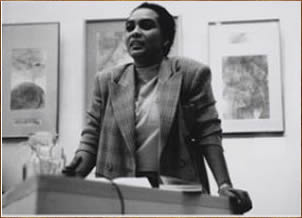
De Surinaamse dichteres en schrijfster Astrid Roemer  werd in Paramaribo geboren op 27 april 1947. Zie ook alle tags voor Astrid Roemer op dit blog..


Uit: Maar een struisvogel kan hard lopen, mam


“Op straat gebeurde wat alle dagen onopgemerkt gebeurt: vrouwen, mannen en voertuigen in beweging - ze verdwenen net zo snel uit het zicht als zij er in schoven. Maar het raam gaf weinig uitzicht en de ramen van het huis waar ze tegenaan keek waren gesloten gebleven. Net als haar eigen ramen thuis. Dicht. Potdicht. En hermetisch gesloten zouden ze blijven ook tot ze lucht had gegeven aan haar eigen interieur. Het was een opslagruimte geworden. Ze had er zoveel opgestapeld al die jaren. Er waren zelfs dingen bij die ze totaal was vergeten ook al voelde ze hun gewicht toenemen. Bezwaren hadden haar binnenkant volledig gevuld.

De laatste tijd had ze ademhalingsmoeilijkheden, maagklachten, kuitkramp, buikloop en sinds kort steken in de borst. En zij was niet van plan zich door gekanker te laten overwoekeren - nooit. Daarom bleef ze in deze kamer zitten op dit ontwapenende uur van de donderdag.

Uitzonderlijk is het niet. Om haar heen kronkelden relaties troosteloos verder en werden er kinderen grootgebracht op stabiele puinhopen. Het echt-paren was met de tijd een serieus spel geworden: schaak, mat - schaak, mat en daartussen het geblokkeerde veld waar vooral de kinderen de hoofdrol in speelden - schaak, mat.

Haar eigen zoons bij voorbeeld. Soms vroeg ze zich verbijsterd af waar ze in 's hemelsnaam vandaan waren gekomen: de oudste, ogend als hij - alwetend en onverschillig en zijn vierjarig broertje dat haar lichaam nog niet was ontgroeid. En de abortus. Eenmaal. Tweemaal. Driemaal. Omdat zij geen zin had in nog meer kroost.

Omdat zij maar geen vat kon krijgen op zijn liefdesleven. De laatste keer had hij haar ronduit bespot omdat ze weer tegen haar zin en ondanks haar spiraaltje zwanger was geworden en hij had er manisch op gestaan zijn nakomeling te houden - desnoods alleen maar om aan wederzijdse vrienden en familie te bewijzen dat er nog vruchtbaar gevrijd wordt tussen ons, had hij gelachen.”


 1381580-8dccd91980e60dcb3a52f9dd23d0027c.jpg

Astrid Roemer (Paramaribo, 27 april 1947)

In 1990


De Armeense dichter Hovhannes Shiraz werd geboren op 27 april 1915 in Alexandropol in het toenmalige Russische rijk (tegenwoordig Gyumri). Zie ook alle tags voor Hovhannes Shiraz op dit blog..


MIRACLE NUMBER II


In my dreams this time I saw my Dad
Who was revealed to me just like my Mom.
With full of fear and also joy, I fell into his arms
While he came out of his grave and began to caress me.


We wept in bitterness and also sweetly;
My Dad looked around,
Smiled to Mount Aragats* tenderly
And then said, "My son is alive indeed!"


But when my elderly father looked at Mount Ararat*,
He looked at me in suspicion,
"In what way can you call yourself my son
When our home is now left to be half empty?"


My Dad once again died due to sorrow and misery
And said to me, "My son, if you want me
And my soul to rest in peace,
Don't let my home be half empty...!"


Vertaald door Daniel Janoyan


 1381580-55be817671935ae936460588f3f6923c.jpg

Hovhannes Shiraz (27 april 1915 – 14 maart 1984)

Bij filmopnamen in Gyumri, 1983, (zittend in de koets)


De Duitse schrijver August Becker werd geboren op 27 april 1828 in Klingenmünster. Zie ook alle tags voor August Becker op dit blog.


Uit: Die Nonnensusel


“Viel tausendmal bin ich diese Straße hin und her gewandert; in jungen Jahren täglich zweimal mit dem Schulränzel auf dem Rücken, um in der Heimat des kräuterkundigen Tabernaemontanus, wo schon die Römer ihre Bergschenken hatten, in das Idiom Cäsars und Xenophons eingeweiht zu werden. Von jeder Höhe, über welche die Straße führt, hatte ich den Anblick des blauen Schwarzwaldes, der, aus dem dunklen Grenzforst der Rheinebene aufsteigend, den Horizont als hohe Gebirgsmauer abschließt. Die Goldammern auf den Schlehdornzweigen, die schnurrende Wachtel am Wiesengraben, der schmetternde Buchfink auf dem Mandelbaum, der oft schon unter Schneeflocken seine Blütenpracht in den kahlen Reben entfaltete, waren mir vertraute Erscheinungen. Kaum bückte ich mich mehr nach den Walnüssen im Straßenstaub, oder im falben Herbstlaub der Hohlwege nach den geplatzten Stachelhülsen der Edelkastanien, die man hier »Kästen« heißt.

Im übrigen waren mir alle Obstbäume am Wege alte Bekannte; insbesondere ein schöner Apfelbaum, der mir schon beim Durchschreiten der langen Dorfgasse von Pleisweiler von ferne gastlich entgegenwinkte. Dieser Apfelbaum, der mich so oft durch seinen Schatten und seine Frucht erquickt hat, stand bei der steinernen Ruhebank zwischen den einander benachbarten Dörfern Pleisweiler und Oberhofen, die politisch und kirchlich eine Gemeinde bilden, in der Nähe eines zertrümmerten Kruzifixes auf einer dornumrankten, moosgrauen Weinbergsmauer, aus deren Spalten mich jedesmal eine goldgrüne Eidechse geheimnisvoll anäugte, wenn ich den gefallenen Sommerapfel von der Straße aufhob. Zuleide konnte ich dem zutraulichen Tierchen nichts tun: denn der Kindermund wußte davon zu erzählen, daß Eidechsen dem Menschen gegen böse Schlangen warnend und helfend beistehen. Scheu zog sich das Geschöpf mit den Märchenaugen nur dann völlig zurück, wenn ich der Gastlichkeit des Apfelbaumes durch einen gutgezielten Steinwurf zu Hilfe kam; darin hatte ich viel Übung, aus bloßer Hand und mit der Schleuder, die ich stets mit mir führte.”


 1381580-3520ae666f0706952077fafc9b0f2bef.jpg

August Becker (27 april 1828 – 23 maart 1891)

Beckers geboortehuis in Klingenmünster 


De Schotse dichter en vertaler Edwin Morgan werd geboren in Glasgow op 27 april 1920. Zie ook alle tags voor Edwin Morgan op dit blog..


The First Men on Mercury


– We come in peace from the third planet.
Would you take us to your leader?

– Bawr stretter! Bawr. Bawr. Stretterhawl?

– This is a little plastic model
of the solar system, with working parts.
You are here and we are there and we
are now here with you, is this clear?

– Gawl horrop. Bawr Abawrhannahanna!

– Where we come from is blue and white
with brown, you see we call the brown
here 'land', the blue is 'sea', and the white
is 'clouds' over land and sea, we live
on the surface of the brown land,
all round is sea and clouds. We are 'men'.
Men come –

– Glawp men! Gawrbenner menko. Menhawl?

– Men come in peace from the third planet
which we call 'earth'. We are earthmen.
Take us earthmen to your leader.

– Thmen? Thmen? Bawr. Bawrhossop.
Yuleeda tan hanna. Harrabost yuleeda.

– I am the yuleeda. You see my hands,
we carry no benner, we come in peace.
The spaceways are all stretterhawn.

– Glawn peacemen all horrabhanna tantko!
Tan come at'mstrossop. Glawp yuleeda!

– Atoms are peacegawl in our harraban.
Menbat worrabost from tan hannahanna.

– You men we know bawrhossoptant. Bawr.
We know yuleeda. Go strawg backspetter quick.

– We cantantabawr, tantingko backspetter now!

– Banghapper now! Yes, third planet back.
Yuleeda will go back blue, white, brown
nowhanna! There is no more talk.

– Gawl han fasthapper?

– No. You must go back to your planet.
Go back in peace, take what you have gained
but quickly.

– Stretterworra gawl, gawl…

– Of course, but nothing is ever the same,
now is it?
You'll remember Mercury.


 1381580-002efd1ce17dadd057e5f35e8af3b214.jpg

Edwin Morgan (27 april 1920 - 19 augustus 2010)


De Franse schrijver en dichter Jules Lemaître werd geboren op 27 april 1853 in Vennecy, Loiret. Zie ook alle tags voor Jules Lemaître op dit blog..


Uit: Les Rois


„Quand la cour se fut rangée des deux côtés du trône, le roi Christian, très vieux, d'une pâleur de cire, sa barbe blanche étalée sur sa tunique militaire et cachant à moitié le grand cordon de l'Aigle-

Bleu, dit, d'une voix forte de commandement, chevrotante à peine:

—Monsieur le grand chancelier, quand il vous plaira.

Le grand chancelier, comte de Moellnitz, debout au pied de l'estrade, devant une table carrée couverte d'un tapis de pourpre à crépines d'or—la table royale des mélodrames historiques—déroula

un parchemin d'où pendait un sceau rouge plus large qu'une hostie, et, scandant les phrases d'un hochement de sa petite tête d'oiseau déplumé, il lut avec une lenteur et des intonations d'archevêque

officiant:

«Nous, Christian XVI, par la grâce de Dieu roi d'Alfanie, à tous présents et à venir salut.

»Considérant que l'âge et la maladie, sans diminuer notre zèle pour le bien de notre peuple, ne nous permettent plus d'y travailler selon notre désir et nous rendent désormais difficile le gouvernement

de nos États;

»Déléguons généralement tous nos pouvoirs à notre fils aîné et héritier présomptif, Hermann, prince de Marbourg, duc de Fridagne, et ce pour une année à dater du présent jour;

»Ordonnons à tous nos sujets, à tous les officiers des armées de terre et de mer, à tous les magistrats, administrateurs et fonctionnaires constitués d'obéir au prince de Marbourg comme à nousmême;

»Appelons les bénédictions de Dieu sur le prince Hermann, afin qu'il exerce avec sagesse et prudence et pour le plus grand avantage de nos sujets la puissance que nous lui déléguons.”


 1381580-e7009e9c6d6aaddb6cb2786b6ff71e6f.jpg

Jules Lemaître (27 april 1853 – 5 augustus 1914)


Zie voor nog meer schrijvers van de 27e april ook mijn vorige blog van vandaag.

Geschreven door Romenu om 14:15 Reageer op dit bericht

Cecil Day Lewis, Mary Wollstonecraft, Hans Bemmann, August Wilson, Fethullah Gülen, Martin Gray

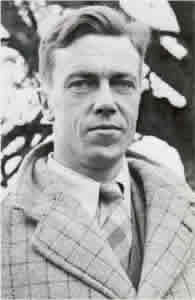
De Brits-Ierse dichter Cecil Day Lewis werd geboren in Ballintogher, Ierland, op 27 april 1904. Zie ook alle tags voor Cecil Day Lewis op dit blog.


My Mother’s Sister


I see her against the pearl sky of Dublin

Before the turn of the century, a young woman

With all those brothers and sisters, green eyes, hair

She could sit on; for high life, a meandering sermon


(Church of Ireland) each Sunday, window-shopping

In Dawson Street, picnics at Killiney and Howth…

To know so little about the growing of one

Who was angel and maid-of-all work to my growth!


- Who, her sister dying, took on the four-year

Child, and the chance that now she would never make

A child of her own; who, mothering me, flowered in

The clover-soft authority of the meek.


Who, exiled, gossiping home chat from abroad

In roundhand letters to a drift of relations –

Squires’, Goldsmiths, Overends, Williams’ – sang the songs

Of Zion in a strange land.  Hers the patience


Of one who made no claims, but simply loved

Because that was her nature, and loving so

Asked no more than to be repaid in kind.

If she was not a saint, I do not know


What saints are…Buying penny toys at Christmas

(The most a small purse could afford) to send her

Nephews and nieces, sh’d never have thought the shop

Could shine for me one day in Bethlehem splendour.


Exiled again, after ten years, my father

Remarrying, she faced the bitter test

Of charity – to abdicate in love’s name

From love’s contentful duties.  A distressed


Gentle woman housekeeping for strangers;

Later, companion to a droll recluse

Clergyman brother in rough-pastured Wexford,

She lived for all she was worth – to be of use.


She bottle plums, she visited parishioners.

A plain habit of innocence, a faith

Mildly forbearing, made her one of those

Who, we were promised, shall inherit the earth


…Now, sunk in one small room of a Rathmines

Old people’s home, helpless, beyond speech

Or movement, yearly deeper she declines

To imbecility – my last link with childhood.


The battery’s almost done: yet if I press

The button hard – some private joke in boyhood

I teased her with – there comes upon her face

A glowing of the old, enchanted smile.


So, still alive, she rots.  A heart of granite

Would melt at this unmeaning sequel, Lord,

How can this be justified, how can it

Be justified?


 1381576-800b68eeec95d6755976122ae78be112.jpg

Cecil Day Lewis (27 april 1904 – 22 mei 1972)


De Engelse schrijfster en feministe Mary Wollstonecraft werd geboren in Hoxton (nu Londen) op 27 april 1759. Zie ook mijn blog van 27 april 2009 en ook mijn blog van 27 april 2010.


Uit: Maria, or the Wrongs of Woman


“Abodes of horror have frequently been described, and castles, filled with spectres and chimeras, conjured up by the magic spell of genius to harrow the soul, and absorb the wondering mind. But, formed of such stuff as dreams are made of, what were they to the mansion of despair, in one corner of which Maria sat, endeavouring to recall her scattered thoughts!

Surprise, astonishment, that bordered on distraction, seemed to have suspended her faculties, till, waking by degrees to a keen sense of anguish, a whirlwind of rage and indignation roused her torpid pulse.

One recollection with frightful velocity following another, threatened to fire her brain, and make her a fit companion for the terrific inhabitants, whose groans and shrieks were no unsubstantial sounds of

whistling winds, or startled birds, modulated by a romantic fancy, which amuse while they affright; but such tones of misery as carry a dreadful certainty directly to the heart. What effect must they then have produced on one, true to the touch of sympathy, and tortured by maternal

apprehension!

Her infant's image was continually floating on Maria's sight, and the first smile of intelligence remembered, as none but a mother, an unhappy mother, can conceive. She heard her half speaking half cooing, and felt the little twinkling fingers on her burning bosom--a bosom bursting with the nutriment for which this cherished child might now be pining in vain. From a stranger she could indeed receive the maternal aliment, Maria was grieved at the thought--but who would watch her with a

mother's tenderness, a mother's self-denial?”


 1381576-c4b23624dad35bdfb1ebb6d1144bc14f.jpg

Mary Wollstonecraft (27 april 1759 – 10 september 1797)

Portret door John Opie, 1797


De Oostenrijkse schrijver
Hans Bemmann werd geboren op 27 april 1922 in Groitzsch nabij Leipzig. Zie ook mijn blog van 27 april 2009.


Uit: Stein und Flöte


“Aber er fragte sich auch, wohin man geraten mochte, wenn man an der Verlässlichkeit seines eigenen Verstandes zu zweifeln begann. Wonach sollte man sich richten, wenn nirgends eine greifbare Wegmarke den Horizont in messbare Abschnitte gliederte? Das würde sein, als ritte man ohne Weg und Ziel über die grenzenlose Steppe, und selbst dort gab es ja noch das ewig kreisende Muster der Gestirne, das dem Kundigen die Richtung wies, wenn er bereit war, sich den Gesetzen ihrer Bewegung anzuvertrauen. Was aber, wenn diese Lichtpunkte einmal ihre geregelte Bahn verlassen sollten? Wer sagt einem, dass sie dies nicht schon längst getan hatten, ohne dass man es hätte merken können?”


 1381576-5a3ca13be08c69c9169c799230b20543.jpg

Hans Bemmann (27 april 1922 – 1 april 2003)


De Amerikaanse toneelschrijver August Wilson (eig. Frederick August Kittel) werd geboren op 27 april 1945 in Pittsbugh. Zie ook alle tags voor August Wilson op dit blog.

Uit: Fences


“Okay, Troy...you're right. I'll take care of your baby for you...cause...like you say...she's innocent...and you can't visit the sins of the father upon the child. A motherless child has got a hard time. From right now...this child got a mother. But you a womanless man.”

(…)


“Don't you think I ever wanted other things? Don't you think I had dreams and hopes? What about my life? What about me. Don't you think it ever crossed my mind to want to know other men? That I wanted to lay up somewhere and forget about my responsibilities? That I wanted someone to make me laugh so I could feel good? You not the only one who's got wants and needs. But I held on to you, Troy. I took all my feelings, my wants and needs, my dreams...and I buried them inside you. I planted myself inside you and waited to bloom. And it didn't take me no eighteen years to find out the soil was hard and rocky and it wasn't never gonna bloom.”


 1381576-182628786761f0d689253654512ba4e8.jpg

August Wilson (27 april 1945 – 2 oktober 2005)

Scene uit „Fences“ met Danzel Washington en Viola Davis, Broadway, 2010 


De Turkse prediker, schrijver en dichter Fethullah Gülen werd geboren in Korucuk, Erzurum, op 27 april 1941 Zie ook alle tags voor Fethullah Gülen op dit blog.


Dawn Comes in Dreams


The spirit wanders through the night
To find a way out
Toward that which it seeks and longs for
Travels with the hope of recovering what is lost

Travels from the reason to the heart
To bereft of power
To distinguish the hopeful
from among the hopeless causes
There’s a cold war between realities and imaginings

Dawn comes in dreams
When everything turns pale in the dead hours of the night
Dawn comes in dreams

Dreams are always vivid
Full of color
There when a man looks deep
Into unfathomed oceans
Beholds the past
The far future and what is near to come
What is old about to be replaced or renewed?

Dawn comes in dreams
When realities are too dark to endure
Dawn comes in dreams

In darkness a man suffers
The extreme of loneliness
When mouths are tight-lipped
As if zip-fastened
He wishes to sprout wings and fly
To the realms beyond and fly

Dawn comes in dreams
When events begin to drive me to give up hope
Dawn comes in dreams


 1381576-3dadb6c39a30dc613ec3c9cf6f4b6807.jpg

Fethullah Gülen (Korucuk, 27 april 1941)


De Poolse schrijver
Martin Gray werd geboren als Mietek Grayewski in Warschauop 27 april 1922. Zie ook alle tags voor Martinn Gray op dit blog.

Uit: Au Nom de Tous les Miens


“Parfois, nous allions vers la Vistule en suivant les Allées de Jérusalem jusqu'au pont Poniatowski. Nous traversions les jardins Krasinski. Des Juifs marchandaient entre eux. Ils me semblaient toujours vêtus des mêmes pardessus noirs, ils étaient pauvres. Mais je ne savais pas ce qu'était la pauvreté. Je ne savais même pas vraiment que nous étions juifs. Nous célébrions les grandes fêtes mais nous avions des catholiques dans notre famille. Nous étions entre les deux religions et mon père, grand, droit, avec sa main forte, me paraissait être à lui seul le début du monde. Nous rentrions, je traînais dans l'Ogrod Saski, les derniers jardins avant la rue Senatorska. Chez nous. Mon père ouvrait la porte : je me souviens encore d'une odeur douce, des cris de mes deux frères. Ma mère était là et la table mise. C'était avant ma naissance, bien avant, une époque de beau temps qui s'acheva avec l'été 1939.
Brusquement, la guerre. Mon père est en uniforme d'officier, il me prend par les épaules et je me rends compte que je suis presque aussi grand que lui. Nous laissons ma mère et mes deux frères à la maison et nous partons, tous les deux, vers la gare. Dans les rues tout est déjà différent : des soldats en groupes, des camions, les premières queues devant les magasins. Nous marchons côte à côte sur la chaussée, épaule contre épaule, il ne me tient plus par la main : je suis un homme. Il m'a crié quelque chose de la fenêtre de son wagon que je n'ai pas entendu et je me suis retrouvé seul dans la rue. Il me semble que c'est ce jour-là que nous avons eu le premier bombardement : j'ai regardé les bombardiers argentés à croix noire qui volaient bas, en formation de trois.
- Rentre ici.
Un policier polonais hurlait dans ma direction depuis un porche où s'agglutinaient des passants affolés.
Je me suis mis à courir dans la rue déserte : il faut que je rentre chez moi, je n'obéis à personne.”


1381576-e229471db8d30af2e17cdf2b16bbeb66.jpg
Martin Gray (Warschau, 27 april 1922)

Geschreven door Romenu om 14:11 Reageer op dit bericht

Meer van Romenu

↑ Terug naar de berichten