Naar de inhoud

Romenu

Over literatuur, gedichten, kunst en cultuur
akke.beakke.be

Berichten van 6 juni 2013 tot 7 juni 2013

Orhan Pamuk, Monika Mann, Nikki Giovanni, Harry Crews, Louise Erdrich, Mascha Kaléko
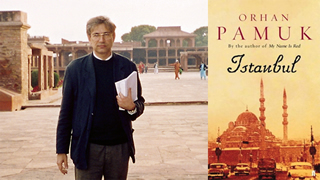
De Turkse schrijver Orhan Pamuk werd geboren op 7 juni 1952 in Istanbul. Zie ook alle tags voor Orhan Pamuk op dit blog.


Uit: Istanbul. Memories and the City (Vertaald door Maureen Freely)

“Here we come to the heart of the matter: I've never left Istanbul - never left the houses, streets and neighbourhoods of my childhood. Although I've lived in other districts from time to time, fifty years on I find myself back in the Pamuk Apartments, where my first photographs were taken and where my mother first held me in her arms to show me the world. I know this persistence owes something to my imaginary friend, and to the solace I took from the bond between us. But we live in an age defined by mass migration and creative immigrants, and so I am sometimes hard-pressed to explain why I've stayed not only in the same place, but the same building. My mother's sorrowful voice comes back to me, 'Why don't you go outside for a while, why don't you try a change of scene, do some travelling ...?'

Conrad, Nabokov, Naipaul - these are writers known for having managed to migrate between languages, cultures, countries, continents, even civilisations. Their imaginations were fed by exile, a nourishment drawn not through roots but through rootlessness; mine, however, requires that I stay in the same city, on the same street, in the same house, gazing at the same view. Istanbul's fate is my fate: I am attached to this city because it has made me who I am.

Flaubert, who visited Istanbul a hundred and two years before my birth, was struck by the variety of life in its teeming streets; in one of his letters he predicted that in a century's time it would be the capital of the world. The reverse came true: after the Ottoman Empire collapsed, the world almost forgot that Istanbul existed. The city into which I was born was poorer, shabbier, and more isolated than it had ever been its two-thousand-year history. For me it has always been a city of ruins and of end-of-empire melancholy. I've spent my life either battling with this melancholy, or (like all Istanbullus) making it my own.

At least once in a lifetime, self-reflection leads us to examine the circumstances of our birth. Why were we born in this particular corner of the world, on this particular date? These families into which we were born, these countries and cities to which the lottery of life has assigned us - they expect love from us, and in the end, we do love them, from the bottom of our hearts - but did we perhaps deserve better?”


1406145-e3f44d4144089f466f9fc57cfec3a83e.jpg 

Orhan Pamuk (Istanbul, 7 juni 1952)


De Duitse schrijfster Monika Mann werd als vierde kind van Thomas Mann geboren op 7 juni 1910 in München. Zie ook alle tags voor Monika Mann op dit blog.


Uit: Das fahrende Haus


“Wer oder was war schuld? War dem Weißen Haus zu Ohren gekommen, daß ich gerne Tolstoi las und die Musik von Mussorgskij liebte? Waren es «linkselende», «peacemongerische», das heißt pazifistische Verwandte, war mein Plan, eine Reise nach Mexiko zu tun, war es die allgemeine Vorsicht der Regierung, die meine Fragen und Forschungen, unterstützt von einem in solchen Dingen gewiegten Rechtsanwalt, nichts fruchten ließ? (Es stand ja alles und manches andere mehr in jenem Aktenstoß.) Ich saß da also immer noch mit meinem (nunmehr ganz «anrüchigen») Ungarpaß.

Das ungarische Konsulat in New York war ausgezogen, umgezogen, stand überhaupt nicht im Telephonbuch. Man mußte wissen, daß es durch die Hintertüre einer britischen Institution

im finstersten Downtown zu betreten war. War ich auch wohl ein wenig abgebrüht, so wurden doch Ohnmacht und Lachkitzel von damals jetzt zur regelrechten Furcht. Ich fühlte mich fehl

am Platz, und ich fürchtete mich. Obgleich mein Mann Ungar gewesen war, habe ich nie ein besonderes Verhältnis zu seiner Heimat gehabt. Ihre Pferdesteppen, ihr buntes, kultiviertes Bu-

dapest, ihre Rhapsodien – ich kannte es aus der Ferne. Doch das, was mir immer an jenem Volk gefiel, war seine Weltaufgeschlossenheit, sein vielinteressiertes, kosmopolitisches Wesen.

Mein Mann war in den verschiedensten Sprachen und Kulturen zu Hause, und er war keine Ausnahme. Diese Herren hier – sie waren klein und geheimnisvoll – sprache überhaupt nur ungarisch. Sie flüsterten hinter staubigen Barrieren mit Seitenblicken nach meiner Person, sie verschwanden und kamen wieder – kopfschüttelnd, mit finster-listigem Grinsen, so schien mir, Namen aussprechend wie Rákosi und Búdapesti. Sie bedeuteten mir mit unheimlichem Händereiben in ihrer Sprache der Mai- käfer, wiederzukommen, ein andermal vielleicht . . .“


 1406145-cc97987cbacc084f369edab58844735d.jpg

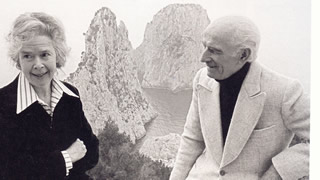
Monika Mann (7 juni 1910 – 17 maart 1992)

Hier op Capri met vriend Antonio Spadaro in de jaren 1970 


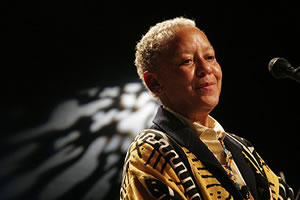
De Amerikaanse dichteres en schrijfster Nikki Giovanni werd geboren op 7 juni 1943 in Knoxville, Tennessee. Zie ook alle tags voor Nikki Giovanni op dit blog.


Rain


rain is
god's sperm falling
in the receptive
woman how else
to spend
a rainy day
other than with you
seeking sun and stars
and heavenly bodies
how else to spend
a rainy day
other than with you


Cotton Candy On A Rainy Day


Don't look now
I'm fading away
Into the gray of my mornings
Or the blues of every night


Is it that my nails
keep breaking
Or maybe the corn
on my secind little piggy
Things keep popping out
on my face or of my life


It seems no matter how
I try I become more difficult
to hold
I am not an easy woman
to want


They have asked
the psychiatrists . . . psychologists . . .
politicians and social workers
What this decade will be
known for


There is no doubt . . . it is
loneliness


1406145-e5b83a00fb1a530dfcd676bc1c0c2b3a.jpg 

Nikki Giovanni (Knoxville, 7 juni 1943)


De Amerikaanse schrijver
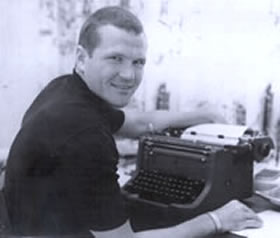
Harry Crews werd geboren op 7 juni 1935 in Bacon County, Georgia. Zie ook alle tags voor Harry Crews op dit blog.


Uit: Harry Crews On Writing


“I decided a long time ago—very long time ago—that getting up at four o’clock to start work works best for me. I like that. Some people don’t like to get up in the morning. I like to get up in the morning. And there’s no place to go at four o’clock in the morning, and nobody’s gonna call you, and you can’t call anybody. Back when I was a drunk, at least in this little town, there’s no place to go buy anything to drink. So it was just me and the writing board.

“So, I write until eight or eight-thirty, then I go over to the gym and work out on the weights for a couple hours, then I go to the karate dojo and, as a rule, spar with a guy who consistently whups my ass. It’s point karate—we’re not going full force, we don’t wear pads on out feet and hands, but—even then—when you’re just touching a guy, and you think a guy’s gonna move one way and you kick, and he doesn’t move that way, he moves the other way, he moves right into your kick, you can get hurt. Well, not hurt bad, as a rule. Maybe bloody a nose or something like that. But you can end up pretty sore.

“Then I come home, eat a light lunch, then just go straight back to the thing. I might work till three o’clock . . . there comes a time of diminishing returns. You’re just jerking yourself off thinking you’re doing some good work, then you go back to it the next day and you think, ‘Oh, my God,’ and you have to throw away two or three pages. But the way I do it—I don’t believe I’ve ever heard of anyone doin’ it quite this way.”


 1406145-9bc12c4ac48b763f4a2e050571b28bf8.jpg

Harry Crews (7 juni 1935 – 28 maart 2012)


De Amerikaanse schrijfster
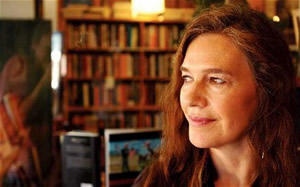
Louise Erdrich werd geboren op 7 juni 1954 in Little Falls, Minnesota. Zie ook alle tags voor Louise Erdrich op dit blog.


Uit: The Round House


“I was reading and drinking a glass of cool water in the kitchen when my father came out of his nap and entered, disoriented and yawning. For all its importance Cohen’s Handbook was not a heavy book and when he appeared I drew it quickly onto my lap, under the table. My father licked his dry lips and cast about, searching for the smell of food perhaps, the sound of pots or the clinking of glasses, or footsteps. What he said then surprised me, although on the face of it his words seem slight.

Where is your mother?

His voice was hoarse and dry. I slid the book on to another chair, rose, and handed him my glass of water. He gulped it down. He didn’t say those words again, but the two of us stared at each other in a way that struck me somehow as adult, as though he knew that by reading his law book I had inserted myself into his world. His look persisted until I dropped my eyes. I had actually just turned thirteen. Two weeks ago, I’d been twelve.

At work? I said, to break his gaze. I had assumed that he knew where she was, that he’d got the information when he phoned. I knew she was not really at work. She had answered a telephone call and then told me that she was going in to her office to pick up a folder or two. A tribal enrollment specialist, she was probably mulling over some petition she’d been handed. She was the head of a department of one. It was a Sunday—thus the hush. The Sunday afternoon suspension. Even if she’d gone to her sister Clemence’s house to visit afterward, Mom would have returned by now to start dinner. We both knew that. Women don’t realize how much store men set on the regularity of their habits. We absorb their comings and goings into our bodies, their rhythms into our bones. Our pulse is set to theirs, and as always on a weekend afternoon we were waiting for my mother to start us ticking away on the evening. And so, you see, her absence stopped time.”


1406145-395f9de52cadd2be76687bfa758be038.jpg 

Louise Erdrich (Little Falls, 7 juni 1954)


De Duitstalige dichteres
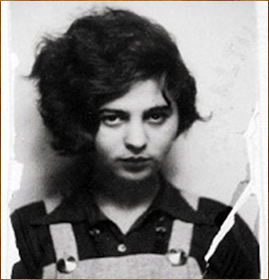
Mascha Kaléko (eig. Golda Malka Aufen) werd geboren op 7 juni 1907 in Krenau of Schidlow in Galicië in het toenmalige Oostenrijk-Hongarije, nu Polen. Zie ook alle tags voor Mascha Kaléko op dit blog.


»Take it easy!«


Tehk it ih-sie, sagen sie dir.

Noch dazu auf englisch.

»Nimm’s auf die leichte Schulter!«


Doch, du hast zwei.

Nimm’s auf die leichte.


Ich folgte diesem populären

Humanitären Imperativ.

Und wurde schief.

Weil es die andre Schulter

Auch noch gibt.


Man muß sich also leider doch bequemen,

Es manchmal auf die schwere zu nehmen.


 1406145-277b3d71ff2b6a736721606c97223b54.jpg

Mascha Kaléko (7 juni 1907 – 21 januari 1975)


Zie voor nog meer schrijvers van de 7e juni ook mijn blog van 7 juni 2011 deel 2.
Geschreven door Romenu om 19:50 Reageer op dit bericht

Thomas Mann, Aleksandr Poesjkin, Sarah Dessen, Jean Cayrol

De Duitse schrijver Thomas Mann werd geboren in Lübeck op 6 juni 1875. Zie ook mijn blog van 6 juni 2010 en eveneens alle tags voor Thomas Mann op dit blog.


Uit: Buddenbrooks


“Zwei und ein halbes Jahr später, um die Mitte des April schon, war zeitiger als jemals der Frühling gekommen, und zu gleicher Zeit war ein Ereignis eingetreten, das den alten Johann Budden­brook vor Vergnügen trällern machte und seinen Sohn aufs freu­digste bewegte.
Um 9 Uhr, eines Sonntag morgens, saß der Konsul im Früh­stückszimmer vor dem großen, braunen Sekretär, der am Fenster stand und dessen gewölbter Deckel vermittelst eines witzigen Mechanismus zurückgeschoben war. Eine dicke Le­dermappe, gefüllt mit Papieren, lag vor ihm; aber er hatte ein Heft mit gepreßtem Umschlage und Goldschnitt herausgenom­men, und schrieb, eifrig darüber gebeugt, in seiner dünnen, winzig dahineilenden Schrift, - emsig und ohne Aufenthalt, es sei denn, daß er die Gänsefeder in das schwere Metall-Tintenfaß tauchte...
Die beiden Fenster standen offen, und vom Garten her, wo eine milde Sonne die ersten Knospen beschien, und wo ein paar kleine Vogelstimmen einander kecke Antworten gaben, weh­te voll frischer und zarter Würze die Frühlingsluft herein und trieb dann und wann sacht und geräuschlos die Gardinen ein wenig empor. Drüben, auf dem Frühstückstische, ruhte die Sonne blendend auf dem weißen, hie und da von Brosamen ge­sprenkelten Leinen und spielte in kleinen, blitzenden Drehun­gen und Sprüngen auf der Vergoldung der mörserförmigen Tassen ...
Beide Flügel der Tür zum Schlafzimmer waren geöffnet, und von dorther vernahm man die Stimme Johann Buddenbrooks, der ganz leise nach einer alten drolligen Melodie vor sich hin summte:

»Ein guter Mann, ein braver Mann,
Ein Mann von Complaisancen;
Er kocht die Stipp' und wiegt das Kind
Und riecht nach Pomeranzen. «


1405760-ae072ca325f561edb83434ed36a4f089.jpg 

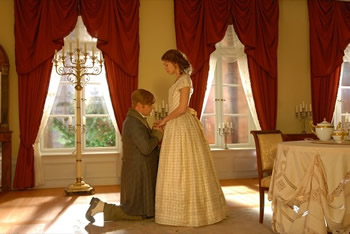
Bendix Grünlich (Justus von Dohnányi) vraagt Tony Buddenbrook (Jessica Schwarz) ten huwelijk.
Scene uit de verfilming van „Buddenbrooks“ uit 2008.


Er saß zur Seite der kleinen Wiege mit grünseidenen Vorhängen, die bei dem hohen Himmelbett der Konsulin stand und die er mit einer Hand in gleichmäßiger Schwingung erhielt. Die Kon­sulin und ihr Gatte hatten sich, der leichteren Bedienung halber, für einige Zeit hier unten eingerichtet, während ihr Vater und Madame Antoinette, die, eine Schürze über dem gestreiften Kleide und eine Spitzenhaube auf den dicken weißen Locken, sich dort hinten am Tische mit Flanell und Linnen zu schaffen machte, das dritte Zimmer des Zwischengeschosses zum Schla­fen benutzten.
Konsul Buddenbrook warf kaum einen Blick in das Neben­zimmer, so sehr war er von seiner Arbeit in Anspruch genom­men. Sein Gesicht trug einen ernsten und vor Andacht beinahe leidenden Ausdruck. Sein Mund war leicht geöffnet, er ließ das Kinn ein wenig hängen, und seine Augen verschleierten sich dann und wann. Er schrieb:
»Heute, d. 14. April 1838, morgens um 6 Uhr, ward meine liebe Frau Elisabeth, geb. Kröger, mit Gottes gnädiger Hilfe aufs glücklichste von einem Töchterchen entbunden, welches in der hl. Taufe den Namen Clara empfangen soll. Ja, so gnädig half ihr der Herr, obgleich nach Aussage des Doktors Grabow die Ge­burt um etwas zu früh eintrat und sich vordem nicht alles zum Besten verhielt und Bethsy große Schmerzen gelitten hat. Ach, wo ist doch ein solcher Gott, wie du bist, du Herr Zebaoth, der du hilfst in allen Nöten und Gefahren und uns lehrst deinen Wil­len recht zu erkennen, damit wir dich fürchten und in deinem Willen und Geboten treu mögen erfunden werden! Ach Herr, leite und führe uns alle, solange wir leben auf Erden ...
« -


 1405760-64ff53fb8e3660f64c72c96184474ec2.jpg

Thomas Mann (6 juni 1875 - 12 augustus 1955)

Ets door Johannes Lindner, 1905


De Russische dichter en schrijver
Aleksandr Poesjkin werd geboren in Moskou op 6 juni 1799. Zie ook alle tags voor Aleksandr Poesjkin op dit blog.


Uit: Evgeny Onegin


Book 2


I

The estate in which our bored Yevgeny

Now lived, was in fact a fine retreat:

There a lover of the simpler pleasures

Would thank the heavens for his fate.

His mansion house was solitary,

Sheltered by hills in windy weather,

And  stood by a river. Stretching away

Far off the meadows were bright and gay

With flowers, and the cornfields golden.

And here was a hamlet, there another,

And cattle wandered the meadows at random,

While shade was cast both deep and wide

By a huge garden all overgrown,

For the pensive Dryads a secret home.


II

The stately mansion was built and planned

As all good mansions should really be:

Sturdily set in the peaceful land

In the refined taste of an age gone by.

All of the rooms were wide and lofty,

Silk wall paper embellished the drawing room,

And portraits of tsars hung on the walls,

The stoves were bright with ceramic tiles.

All this is nowadays somewhat passé,

Indeed, for what reason, I cannot say,

But of course for my friend, our story's hero

There was no need for these things at all,

Because he would yawn with equal distraction

At an ancient pile or a modern mansion.


III

He settled in the sitting room

Where the old-timer in his country ways

For forty years had gazed from the window

Or balled at the housekeeper, or swatted flies.

A simple room, with oaken floors,

Two cupboards, a table and a stuffed settee,

And not a single spot of ink.

Onegin opened the cupboard doors;

He found in one a book of expenses,

In another a shelf of home brewed brandy,

And apple water in an earthenware jar,

And from eighteen o eight a calendar.

The old man having such a busy life

Found that looking in books brought too much strife.


1405760-a5af269fef0b5a38eec9e1e4eb7d5624.jpg 

Aleksandr Poesjkin (6 juni 1799- 10 februari 1837)

Cover


De Amerikaanse schrijfster Sarah Dessen werd geboren op 6 juni 1970 in Evanston, Illinois. Zie ook alle tags voor Sarah Dessen nop dit blog.


Uit: The Moon and More


“Here they come.
"—or I promise you, we'll turn right around and go back to Paterson!" the woman behind the wheel of the burgundy minivan was shouting as it pulled up beside me. She had her head turned towards the backseat, where I could see three kids, two boys and a girl, staring back at her. A vein in her neck was bulging, looking not unlike the interstate, thick and unmissable, on the map held by the man in the passenger seat beside her. "I am serious. I have had it."
The kids didn't say anything. After a moment of glaring at them, she turned to look at me. She had on big sunglasses with bedazzled frames. A large fountain drink, the straw tinged with lipstick, was parked between her legs.
"Welcome to the beach," I said to her, in my best Colby Realty employee voice. "May I—"
"The directions on your Web site are garbage," she informed me. Behind her, I saw one of the kids frog-punch another, who emitted a stifled shriek. "We've gotten lost three times since getting off the interstate."
"I'm so sorry to hear that," I replied. "If you'd like to give me your name, I'll grab you your keys and get you on the way to your rental."
"Webster," she told me.
I turned, reaching into the small rattan bin that held all the envelopes for that day's check-ins. Miller, Tubman, Simone, Wallace . . . Webster.
"Heron's Call," I read off the envelope, before opening it to make sure the keys were both in it. "That's a great property."

In reply, she stuck out her hand. I gave the envelope to her, along with her complimentary beach bag full of all the free stuff—Colby Realty pen, giveaway postcard, area guide, and cheap drink cooler—that I knew the cleaning crew would most likely find untouched when they checked out. "Have a great week," I told her. "Enjoy the beach!"


1405760-dac65305ac908633bdbe664648273e46.jpg 

Sarah Dessen (Evanston, 6 juni 1970)


De Franse dichter en schrijver Jean Cayrol werd geboren op 6 juni 1911 in Bordeaux. Zie ook alle tags voor Jean Cayrol op dit blog.


Chant Funèbre à la mémoire du Père Jacques (Fragment)


Le vent souvent te délivrait, un vent énorme

dévorant paroles et haleines

ce vent où tu entendais que Christ était vivant ;

mais au milieu de ce secret bourdonnant

comme une veine trop tendre qui se déchire

le filet d’une brise lointaine arrivait jusqu’à toi :


le souffle du levant sur le bras de la Seine

le vent de Port Royal, de la guirlande de Julie,

la voix sourde de Phèdre sous un soleil sans vie

le vent sifflant des hauts pendus qui se démènent

le soupir étouffé d’un enfant sous la lampe,

le frôlement soyeux d’un vers de Lamartine

ou le cri étoilé d’une sainte au bûcher,

un battement de pétales dans un ciel qui te devines

l’orage de Rimbaud sur de pâles armées,

le murmure d’un peuple où Claudel a vécu

quand il a traversé les eaux noires du péché

et l’air pur de Pascal où ton cœur est à nu.


mais le souffle mordant de la mort était en toi,

tu respirais déjà le vent des ombres, ce n’était plus

la risée heureuse du printemps sur tes doigts

mais l’air froid des tombeaux ouverts dans les plaines de l’exil

mais la brise des morts, des branches mortes, des eaux mortes,

tu avais trop respiré dans les sèches vallées de la mort

tu étais trop penché sur le dernier aveu qui s’endort

tu avais permis à tous les morts de vivre en toi,

de respirer en toi la dernière gorgée d’air pur,

O ce vent aigu comme une lame qui entrait dans ta chair

flèche vibrante de l’amour du prochain sur ton sein.


 1405760-c406bd42b7acda413ab39bd574f53253.jpg

Jean Cayrol (6 juni 1911 – 10 februari 2005)


Zie voor nog meer schrijvers van de 6e juni ook
mijn blog van 6 juni 2011 deel 1 en eveneens deel 2.

Geschreven door Romenu om 22:39 Reageer op dit bericht

Meer van Romenu

↑ Terug naar de berichten