Naar de inhoud

Romenu

Over literatuur, gedichten, kunst en cultuur
akke.beakke.be

Berichten van 7 juni 2013 tot 8 juni 2013

Marguerite Yourcenar, Ulf Stolterfoht, Gwen Harwood, Gerald Bisinger, Udo Kawasser, Levin Westermann, Sina Klein, Michael Basse
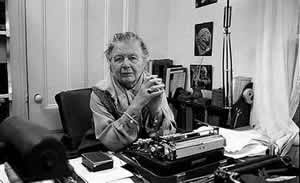
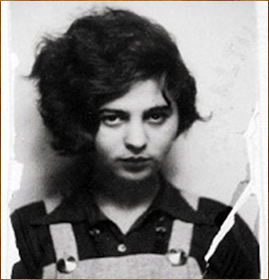
De Belgisch-Amerikaanse, Franstalige schrijfster Marguerite Yourcenar werd geboren in Brussel op 8 juni 1903. Zie ook alle tags voor Marguerite Yourcenar op dit blog.


Uit: Het hermetisch zwart (Vertaald door Jenny Tuin)


“Sinds bijna een eeuw bediende hij zich van zijn geest als van een wig om naar beste vermogen de kieren te verbreden van de muur die ons aan alle kanten insluit. De scheuren werden wijder, of liever gezegd het leek of de muur vanzelf zijn vastheid verloor, zonder evenwel zijn ondoorzichtigheid prijs te geven, alsof het een muur van rook was in plaats van een muur van steen. De voorwerpen speelden niet langer hun rol van nuttige accessoires. Zoals een matras zijn vulsel, lieten ze hun substantie ontsnappen. Een woud vulde de kamer. Dat krukje, afgemeten naar de afstand die het zitvlak van een zittend mens van de grond scheidt, die tafel die dient om aan te schrijven of te eten, die deur die een hoeveelheid lucht, door wanden ingesloten, verbindt met een aangrenzende hoeveelheid lucht, verloren deze hun door een timmerman gegeven redenen van bestaan, om niet anders meer te zijn dan stammen of takken, gestroopt gelijk de Bartholomeusfiguren van kerkschilderingen, beladen met spookachtige bladeren en onzichtbare vogels, nog kreunend onder sinds lang bedaarde stormen, en met hier en daar een druppel gestold sap die de schaaf erop had achtergelaten. Die deken en die oude kleren aan een spijker tegen de muur wasemden de geur van volvet, melk en bloed uit. Die schoenen die naast het bed gaapten hadden meebewogen met de adem van een os, liggend in een weiland, en een uitgebloed varken krijste in het vet waarmee de schoenlapper ze had ingesmeerd. De gewelddadige dood was overal, net als in een slagerij of op een galgenveld. Een geslachte gans schreeuwde in de pen die gebruikt zou worden om op oude lompen gedachten neer te schrijven die men waardig achtte te blijven voortbestaan. Alles was iets anders: dat hemd dat de zusters Bernardijnen voor hem wasten was een vlasakker, blauwer dan de hemel, en ook een bos vezels, te weken gelegd op de bodem van een vaart.”

1406566-deed201e150ea3e9373e6c6480c0cc28.jpg 

Marguerite Yourcenar (8 juni 1903 – 17 december 1987)


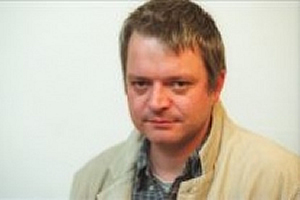
De Duitse dichter, schrijver en vertaler Ulf Stolterfoht werd geboren op 8 juni 1963 in Stuttgart. Zie ook alle tags voor Ulf Stolterfoht op dit blog.


muttersprache 1968/1:
freund-feind-kennung


nach jahren zähsten rum-modulns wehte im vorigen

gedicht so etwas wie ein lüftchen - ein reichlich

laues allerdings. inzwischen wissen andre mehr. man

munkelt seien reingefleischte (blutjunges urgestein


darunter) vereinzelt sogar bestarbeiter - gleichwohl

geneigt nennwert mit -leistung zu verwechseln. so

ändert sich zunächst nicht viel / das ausspiel zeigt

sich relativ stabil: zentnerschwerer ästhet gegen die


pflegeleichten pfundskerls - sie wolln so schreiben wie

sie sind! ER darf - sie nicht! macht davon auch gebrauch.

baut erstmals eine klammer auf (einschluß egal. hier teil

fürs ganze seine wahl: wo "faktisch fetisch" bildlich


trifft packt "bildhaft fetisch" faktisch zu. räumt leicht

umnachtet ein: es könnte eine andre sein. sie schließt des-

ungeachtet von allein) auf diesmal folgenschweren prall:

lumpenelite gegen erstarktes deutungsproletariat. bei


drucklegung ergebnis offen. leiser verdacht erweist sich

schnell als ausgemacht: das projektil im anflug auf das ziel.

hieße auf kunst nach anschuß hoffen. umsonst! das letzte

wort "discorporate" (... legt nah den körper zu verlassen).


 1406566-af8131fccff7346c502c2ce448e3119e.jpg

Ulf Stolterfoht (Stuttgart, 8 juni 1963)


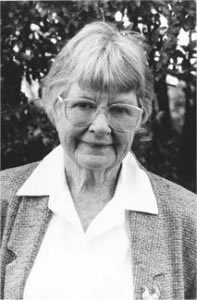
De Australische dichteres en librettiste Gwen Harwood werd geboren op 8 juni 1920 in Taringa, Queensland. Zie ook alle tags voor Gwen Harwood op dit blog.


The Glass Jar

To Vivian Smith


A child one summer's evening soaked
a glass jar in the reeling sun
hoping to keep, when day was done
and all the sun's disciples cloaked
in dream and darkness from his passion fled,
this host, this pulse of light beside his bed.

Wrapped in a scarf his monstrance stood
ready to bless, to exorcize
monsters that whispering would rise
nightly from the intricate wood
that ringed his bed, to light with total power
the holy commonplace of field and flower.

He slept. His sidelong violence summoned
fiends whose mosaic vision saw
his heart entire. Pincer and claw,
trident and vampire fang, envenomed
with his most secret hate, reached and came near
to pierce him in the thicket of his fear.

He woke, recalled his jar of light,
and trembling reached one hand to grope
the mantling scarf away. Then hope
fell headlong from its eagle height.
Through the dark house he ran, sobbing his loss,
to the last clearing that he dared not cross:

the bedroom where his comforter
lay in his rival's fast embrace
and faithless would not turn her face
from the gross violence done to her.
Love's proud executants played from a score
no child could read or realize. Once more

to bed, and to worse dreams he went.
A ring of skeletons compelled
his steps with theirs. His father held
fiddle and bow, and scraped assent
to the malignant ballet. The child dreamed
this dance perpetual, and waking screamed

fresh morning to his window-sill.
As ravening birds began their song
the resurrected sun, whose long
triumph through flower-brushed fields would fill
night's gulfs and hungers, came to wink and laugh
in a glass jar beside a crumpled scarf.

So the loved other is held
for mortal comfort, and taken,
and the spirit's light dispelled
as it falls from its dream to the deep
to harrow heart's prison so heart may waken
to peace in the paradise of sleep.


 1406566-4a1e3a0477a41509831621c6d4cab925.jpg

Gwen Harwood (8 juni 1920 - 5 december 1995)


De Oostenrijkse dichter en vertaler Gerald Bisinger werd geboren op 8 juni 1936 in Wenen. Zie ook alle tags voor Gerald Bisinger op dit blog.


Eine Sonnenbrille


Geschlossen ist noch immer oder schon
wieder das Roland-Café über ein Jahr
lang war in Bratislava ich nicht sitz
auf dem Hauptplatz der Altstadt dennoch
heute trink Rotwein im Freien vor diesem
Café Maximilian das ich bisher nicht kann-
te habe Ansichtskarten verfaßt versuche
jetzt das Gedicht hier zu schreiben nicht
ersatzlos ist geblieben das Roland-Café
so vermisse ichs nicht rauche DALILA
EXTRA LIGHTS im Schatten weder schwitz-
end noch fröstelnd in leidlich bewegter
Luft notier ich Erleben von Gegenwart
erstmals in Bratislava in diesem Jahr 98
hab ich so nebenbei eine Sonnenbrille
sehr preisgünstig gekauft


 1406566-43027ed3c1fba8d25e1119a6162b70c1.jpg

Gerald Bisinger (8 juni 1936 – 22 februari 1999)


Onafhankelijk van geboortedata:


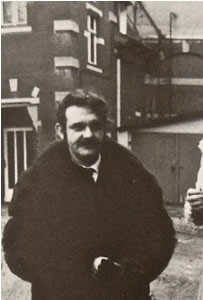
De Oostenrijkse dichter, vertaler, danser en choreograaf Udo Kawasser werd geboren in 1965 in Vorarlberg. Zie ook alle tags voor Udo Kawasser op dit blog.


am monte fusco

für familie corcione


ein scirocco seit letzter nacht
in meinem kopf und rüttelnder falke
eine art dampfküche oder in böen prasselnde
sahara zwischen orangen feigen zitronen
bäume geschmetterte fragezeichen
jener rotkehlchengesang aus einem anderen november
auf chios die feuchte hundeschnauze
im gesicht
hast du schon
die ersten mandarinen ihren geruch
an den fingern

mit der schlafmangel an den schläfen
schon aufgestanden dieser anfälligkeit für wind
gedichte luftfracht aus südlichen breiten
ein raubtieratem hat mir die hefte
vom dach geweht die linien der küste
gelöscht aber vielleicht
hat auch die insel zu driften
begonnen das schwindende kap
von misenum monte
di procida


 1406566-2ec67e638f8561768a8f35f4145e3e04.jpg

Udo Kawasser (Vorarlberg, 1965)


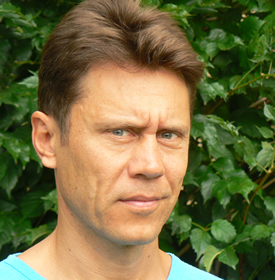
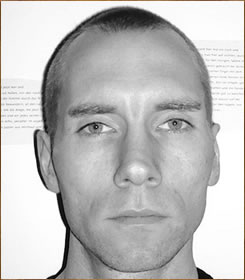
De Duitse dichter Levin Westermann werd in 1980 in Meerbusch, Nordrhein-Westfalen, geboren. Zie ook alle tags voor Levin Westermann op dit blog.


vor den toren der stadt lag das land
mit den wellen aus gras und den wäldern aus baum.
da wohnen die mörder, sagten die alten,
doch wir lachten sie aus und zogen davon,
in kleidern aus federn und wind.
wir kamen zurück mit moos auf den händen
und honig im haar, die alten jedoch
lagen stumm in den stuben, sie waren ganz kalt
und aus stein.


 1406566-1e98e8c0d86dba99db75f76b7f37f3e7.jpg

Levin Westermann (Meerbusch, 1980)


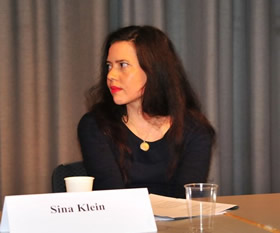
De Duitse dichteres Sina Klein werd geboren in 1983 in Düsseldorf. Zie ook alle tags voor Sina Klein op dit blog.


ophelia phlegmatisch


liegt es an der mondtablette,
halbe, volle – monatstakte -
ihrerstatt statistin einer nacht ?

halten tage die gestalt steril ?
- still, halt still für chirurgie:
wir fischen sie aus ihrem bett …

formaldehyd-getränkte sie,
ist hell von allen ethanolen,
watte innen, hüllen laken

schnitt / ein tisch – ma belle – skalpelle …
akt seziert zurück sich bis auf szene,
bis auf alles sehnen – dort wo’s klafft -
schläft hamlet.


 1406566-9940fa2156f6c92ea9a11178836da06a.jpg

Sina Klein (Düsseldorf, 1983)


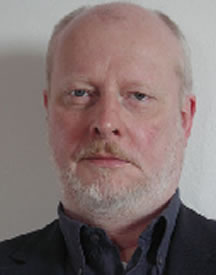
De Duitse dichter, schrijver en vertaler Michael Basse werd geboren in 1957 in Bad-Salzuflen / Nordrhein-Westfalen. Zie ook alle tags voor Michael Basse op dit blog.


Gestreift


Etwas
hat mich
mann ohne leier
gestreift

vielleicht war es der schein
(der vorschein der nachschein
der schöne schein der scheißschein
der augenblick das augengift
und wie sie damit verfahren)

ich nahm es nicht an
es nahm mich nicht an

etwas
ohne namen ohne gesicht
hat mich
mann ohne zaumzeug
gestreift


 1406566-863425c02b542b656872fb7145dcc933.jpg

Michael Basse (Bad-Salzuflen, 1957)
Geschreven door Romenu om 15:20 Reageer op dit bericht

Orhan Pamuk, Monika Mann, Nikki Giovanni, Harry Crews, Louise Erdrich, Mascha Kaléko

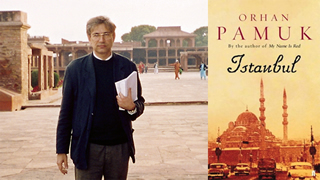
De Turkse schrijver Orhan Pamuk werd geboren op 7 juni 1952 in Istanbul. Zie ook alle tags voor Orhan Pamuk op dit blog.


Uit: Istanbul. Memories and the City (Vertaald door Maureen Freely)

“Here we come to the heart of the matter: I've never left Istanbul - never left the houses, streets and neighbourhoods of my childhood. Although I've lived in other districts from time to time, fifty years on I find myself back in the Pamuk Apartments, where my first photographs were taken and where my mother first held me in her arms to show me the world. I know this persistence owes something to my imaginary friend, and to the solace I took from the bond between us. But we live in an age defined by mass migration and creative immigrants, and so I am sometimes hard-pressed to explain why I've stayed not only in the same place, but the same building. My mother's sorrowful voice comes back to me, 'Why don't you go outside for a while, why don't you try a change of scene, do some travelling ...?'

Conrad, Nabokov, Naipaul - these are writers known for having managed to migrate between languages, cultures, countries, continents, even civilisations. Their imaginations were fed by exile, a nourishment drawn not through roots but through rootlessness; mine, however, requires that I stay in the same city, on the same street, in the same house, gazing at the same view. Istanbul's fate is my fate: I am attached to this city because it has made me who I am.

Flaubert, who visited Istanbul a hundred and two years before my birth, was struck by the variety of life in its teeming streets; in one of his letters he predicted that in a century's time it would be the capital of the world. The reverse came true: after the Ottoman Empire collapsed, the world almost forgot that Istanbul existed. The city into which I was born was poorer, shabbier, and more isolated than it had ever been its two-thousand-year history. For me it has always been a city of ruins and of end-of-empire melancholy. I've spent my life either battling with this melancholy, or (like all Istanbullus) making it my own.

At least once in a lifetime, self-reflection leads us to examine the circumstances of our birth. Why were we born in this particular corner of the world, on this particular date? These families into which we were born, these countries and cities to which the lottery of life has assigned us - they expect love from us, and in the end, we do love them, from the bottom of our hearts - but did we perhaps deserve better?”


1406145-e3f44d4144089f466f9fc57cfec3a83e.jpg 

Orhan Pamuk (Istanbul, 7 juni 1952)


De Duitse schrijfster Monika Mann werd als vierde kind van Thomas Mann geboren op 7 juni 1910 in München. Zie ook alle tags voor Monika Mann op dit blog.


Uit: Das fahrende Haus


“Wer oder was war schuld? War dem Weißen Haus zu Ohren gekommen, daß ich gerne Tolstoi las und die Musik von Mussorgskij liebte? Waren es «linkselende», «peacemongerische», das heißt pazifistische Verwandte, war mein Plan, eine Reise nach Mexiko zu tun, war es die allgemeine Vorsicht der Regierung, die meine Fragen und Forschungen, unterstützt von einem in solchen Dingen gewiegten Rechtsanwalt, nichts fruchten ließ? (Es stand ja alles und manches andere mehr in jenem Aktenstoß.) Ich saß da also immer noch mit meinem (nunmehr ganz «anrüchigen») Ungarpaß.

Das ungarische Konsulat in New York war ausgezogen, umgezogen, stand überhaupt nicht im Telephonbuch. Man mußte wissen, daß es durch die Hintertüre einer britischen Institution

im finstersten Downtown zu betreten war. War ich auch wohl ein wenig abgebrüht, so wurden doch Ohnmacht und Lachkitzel von damals jetzt zur regelrechten Furcht. Ich fühlte mich fehl

am Platz, und ich fürchtete mich. Obgleich mein Mann Ungar gewesen war, habe ich nie ein besonderes Verhältnis zu seiner Heimat gehabt. Ihre Pferdesteppen, ihr buntes, kultiviertes Bu-

dapest, ihre Rhapsodien – ich kannte es aus der Ferne. Doch das, was mir immer an jenem Volk gefiel, war seine Weltaufgeschlossenheit, sein vielinteressiertes, kosmopolitisches Wesen.

Mein Mann war in den verschiedensten Sprachen und Kulturen zu Hause, und er war keine Ausnahme. Diese Herren hier – sie waren klein und geheimnisvoll – sprache überhaupt nur ungarisch. Sie flüsterten hinter staubigen Barrieren mit Seitenblicken nach meiner Person, sie verschwanden und kamen wieder – kopfschüttelnd, mit finster-listigem Grinsen, so schien mir, Namen aussprechend wie Rákosi und Búdapesti. Sie bedeuteten mir mit unheimlichem Händereiben in ihrer Sprache der Mai- käfer, wiederzukommen, ein andermal vielleicht . . .“


 1406145-cc97987cbacc084f369edab58844735d.jpg

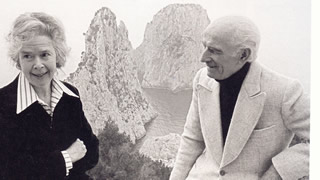
Monika Mann (7 juni 1910 – 17 maart 1992)

Hier op Capri met vriend Antonio Spadaro in de jaren 1970 


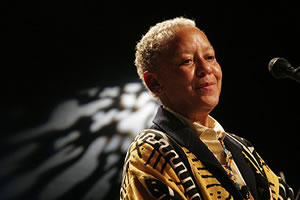
De Amerikaanse dichteres en schrijfster Nikki Giovanni werd geboren op 7 juni 1943 in Knoxville, Tennessee. Zie ook alle tags voor Nikki Giovanni op dit blog.


Rain


rain is
god's sperm falling
in the receptive
woman how else
to spend
a rainy day
other than with you
seeking sun and stars
and heavenly bodies
how else to spend
a rainy day
other than with you


Cotton Candy On A Rainy Day


Don't look now
I'm fading away
Into the gray of my mornings
Or the blues of every night


Is it that my nails
keep breaking
Or maybe the corn
on my secind little piggy
Things keep popping out
on my face or of my life


It seems no matter how
I try I become more difficult
to hold
I am not an easy woman
to want


They have asked
the psychiatrists . . . psychologists . . .
politicians and social workers
What this decade will be
known for


There is no doubt . . . it is
loneliness


1406145-e5b83a00fb1a530dfcd676bc1c0c2b3a.jpg 

Nikki Giovanni (Knoxville, 7 juni 1943)


De Amerikaanse schrijver
Harry Crews werd geboren op 7 juni 1935 in Bacon County, Georgia. Zie ook alle tags voor Harry Crews op dit blog.


Uit: Harry Crews On Writing


“I decided a long time ago—very long time ago—that getting up at four o’clock to start work works best for me. I like that. Some people don’t like to get up in the morning. I like to get up in the morning. And there’s no place to go at four o’clock in the morning, and nobody’s gonna call you, and you can’t call anybody. Back when I was a drunk, at least in this little town, there’s no place to go buy anything to drink. So it was just me and the writing board.

“So, I write until eight or eight-thirty, then I go over to the gym and work out on the weights for a couple hours, then I go to the karate dojo and, as a rule, spar with a guy who consistently whups my ass. It’s point karate—we’re not going full force, we don’t wear pads on out feet and hands, but—even then—when you’re just touching a guy, and you think a guy’s gonna move one way and you kick, and he doesn’t move that way, he moves the other way, he moves right into your kick, you can get hurt. Well, not hurt bad, as a rule. Maybe bloody a nose or something like that. But you can end up pretty sore.

“Then I come home, eat a light lunch, then just go straight back to the thing. I might work till three o’clock . . . there comes a time of diminishing returns. You’re just jerking yourself off thinking you’re doing some good work, then you go back to it the next day and you think, ‘Oh, my God,’ and you have to throw away two or three pages. But the way I do it—I don’t believe I’ve ever heard of anyone doin’ it quite this way.”


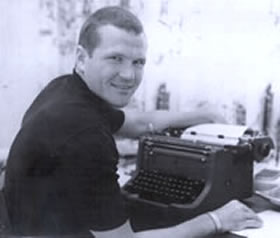
 1406145-9bc12c4ac48b763f4a2e050571b28bf8.jpg

Harry Crews (7 juni 1935 – 28 maart 2012)


De Amerikaanse schrijfster
Louise Erdrich werd geboren op 7 juni 1954 in Little Falls, Minnesota. Zie ook alle tags voor Louise Erdrich op dit blog.


Uit: The Round House


“I was reading and drinking a glass of cool water in the kitchen when my father came out of his nap and entered, disoriented and yawning. For all its importance Cohen’s Handbook was not a heavy book and when he appeared I drew it quickly onto my lap, under the table. My father licked his dry lips and cast about, searching for the smell of food perhaps, the sound of pots or the clinking of glasses, or footsteps. What he said then surprised me, although on the face of it his words seem slight.

Where is your mother?

His voice was hoarse and dry. I slid the book on to another chair, rose, and handed him my glass of water. He gulped it down. He didn’t say those words again, but the two of us stared at each other in a way that struck me somehow as adult, as though he knew that by reading his law book I had inserted myself into his world. His look persisted until I dropped my eyes. I had actually just turned thirteen. Two weeks ago, I’d been twelve.

At work? I said, to break his gaze. I had assumed that he knew where she was, that he’d got the information when he phoned. I knew she was not really at work. She had answered a telephone call and then told me that she was going in to her office to pick up a folder or two. A tribal enrollment specialist, she was probably mulling over some petition she’d been handed. She was the head of a department of one. It was a Sunday—thus the hush. The Sunday afternoon suspension. Even if she’d gone to her sister Clemence’s house to visit afterward, Mom would have returned by now to start dinner. We both knew that. Women don’t realize how much store men set on the regularity of their habits. We absorb their comings and goings into our bodies, their rhythms into our bones. Our pulse is set to theirs, and as always on a weekend afternoon we were waiting for my mother to start us ticking away on the evening. And so, you see, her absence stopped time.”


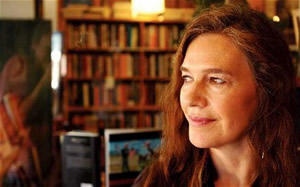
1406145-395f9de52cadd2be76687bfa758be038.jpg 

Louise Erdrich (Little Falls, 7 juni 1954)


De Duitstalige dichteres
Mascha Kaléko (eig. Golda Malka Aufen) werd geboren op 7 juni 1907 in Krenau of Schidlow in Galicië in het toenmalige Oostenrijk-Hongarije, nu Polen. Zie ook alle tags voor Mascha Kaléko op dit blog.


»Take it easy!«


Tehk it ih-sie, sagen sie dir.

Noch dazu auf englisch.

»Nimm’s auf die leichte Schulter!«


Doch, du hast zwei.

Nimm’s auf die leichte.


Ich folgte diesem populären

Humanitären Imperativ.

Und wurde schief.

Weil es die andre Schulter

Auch noch gibt.


Man muß sich also leider doch bequemen,

Es manchmal auf die schwere zu nehmen.


 1406145-277b3d71ff2b6a736721606c97223b54.jpg

Mascha Kaléko (7 juni 1907 – 21 januari 1975)


Zie voor nog meer schrijvers van de 7e juni ook mijn blog van 7 juni 2011 deel 2.

Geschreven door Romenu om 19:50 Reageer op dit bericht

Meer van Romenu

↑ Terug naar de berichten