

Naar de inhoud

Romenu

Over literatuur, gedichten, kunst en cultuur
akke.beakke.be

Berichten van 15 juli 2013 tot 16 juli 2013

Peter Winnen, Reinaldo Arenas, Tony Kushner, Georges Rodenbach, Anita Brookner, Jörg Fauser
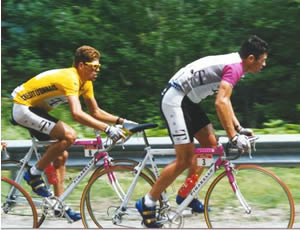

Bij de Tour de France


1427666-9556e6ba8adf52a4fa99c543adbc58e1.jpg 

Jan Ullrich en Udo Bölts, Tour de France, 1997


Uit: Het snot voor ogen


“De drie waarheden, we kunnen gerust spreken van een heilige drievuldigheid, werden al in de beginjaren van de Tour de France neergelegd in een code die even schaamteloos als oprecht is: De basis (de god) van de Tour is de commercie. Het woord, het journalistieke woord, dient om de waarheid van een gloed te voorzien. De wielrenner, de slaaf van het avontuur, de zoon van het volk, de dwaas, de onwetende, de dwangarbeider van de weg, de verlorene, verkrijgt opeens maatschappelijk nut door het hogere doel van de commercie te dienen. Ook hij is gered.

De eerste Tour was een complot. Bijna zouden we spreken van de perfecte misdaad. In elk geval was voor de krant L’Auto de onderneming voor herhaling vatbaar.

Ik mag graag lezen uit de verslaggeving van de prehistorie van de Tour. Renners die weggevaagd worden door modderstromen in de bergen, renners die te lang in herbergen achterblijven en een syfilis oplopen, renners die worden neergeknuppeld door een boer omdat ze een paar pruimen hebben geplukt, renners die vergiftigd worden door supporters van de concurrenten, renners die in plaats van te fietsen de trein nemen, renners die onderweg als oppeppertje een cocktail nemen bestaande uit heroïne, cocaïne, en rattenvergif, en dat overleven. Ik zal niet tornen aan het waarheidsgehalte. Al was het maar uit de romantische verzuchting: mijn god, ik ben te laat geboren!

Het concept van de seculiere drievuldigheid is een bijzonder levensvatbaar concept gebleken. Tot ver in de jaren zeventig van de vorige eeuw bleef de wielrenner een maatschappelijk nuttige paria, die mits hij goed zijn best deed, toch een paar knaken kon verdienen aan heldenmoed betoond op de Franse wegen. En als hij heel erg goed zijn best deed dan werd hij: iemand.”


 1427666-fc1f94fdb0fd00fcabb223062b67a227.jpg

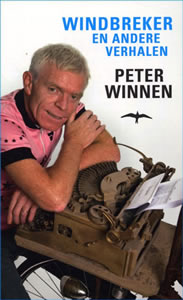
Peter Winnen (Ysselsteyn, 5 september 1957)

Cover 


De Cubaanse dichter en schrijver Reinaldo Arenas werd geboren op 16 juli 1943 in Holguin. Zie ook alle tags voor Reinaldo Arenas op dit blog.


Uit: The Color of Summer (Vertaald door Andrew Hurley)


“Halisia Jalonzo, entering Stage Left, inaugurates the act of repudiation. She is carrying a huge ostrich egg. The truth is, Jalonzo ought not to be in the part of the ceremony devoted to poets, but once she gets something in her head, honey, nobody can do a thing with her—plus, we mustn't forget that she just had her hundredth birthday, or so they say. Still, it's not right—and we'll be sure René Tavernier (R.I.P.), the president of the PEN Club, hears about this.

    Halisia Jalonzo:

Go then, witch! Good riddance to bad rubbish! And don't come back, ingrate Gertrudis! (No way this flight is her idea. Behind it all, I know, is Plizescaya— my nemesis, the cunning Plizescaya.) Go—we'll all be better off without ya!

    She raises the huge ostrich egg and throws it into the sea, making an enormous splash (for the first time in years, honey!) and raising columns of water that drench Avellaneda.

Avellaneda: (dripping wet, but still rowing; to Halisia)

The show you make makes crystal clear
that you're in Fifo's pay, my dear—
whoring, as always, for that "art" of yours.
Some art! You haven't really danced in years.
Farewell, I leave you in Fifo's keeping,
in lands of misery and weeping,
while I depart to seek my freedom.
Before I go, though, I just want to say:
it breaks my heart to see you sell yourself this way—
(though at your age, and in the shape you're in, you kind of have to stay ...)
but good luck, Halisia, anyway—
and as they say in show biz, sweetie, break a leg!
Oh, and thank you for the egg.”


 1427666-e64a36090f41dce1818aea60eff2b09b.jpg

Reinaldo Arenas (16 juli 1943 – 7 december 1990)

Javier Bardem als  Reinaldo Arenas in de film „Before the night falls“ uit 2000


De Amerikaanse schrijver Tony Kushner werd geboren op 16 juli 1956 in New York Zie ook alle tags voor Tony Kushner op dit blog.


Uit: Angels in America


“LOUIS. What are you doing, someone will see us, it’s not a nude beach, it’s freezing!

(Joe is half in, half out of his clothes. He has pulled the upper part of his garment off)

JOE. I’m flayed. No past now. I could give up anything. Maybe … in what we’ve been doing, maybe I’m even infected …

LOUIS. No you’re …

JOE. I don’t want to be. I want to live now. And I can be anything I need to be. And I want to be with you.

(Louis starts to dress Joe)

JOE. (As he’s being dressed) You have a good heart and you think the good thing is to be guilty and kind always but it’s not always kind to be gentle and soft, there’s a genuine violence softness and weakness visit on people. Sometimes self-interested is the most generous thing you can be. You ought to think about that.

LOUIS. I will. Think about it.

JOE. You ought to think about … what you’re doing to me. No, I mean … What you need. Think about what you need. Be brave. And then you’ll come back to me.

(Curtain)”


 1427666-5ae23f348f6b8863e43dac2bade4ee78.jpg

Tony Kushner (New York, 16 juli 1956)


De Belgische dichter en schrijver Georges Rodenbach werd geboren in Doornik op 16 juli 1855. Zie ook alle tags voor Georges Rodenbach op dit blog.


Si tristes les vieux quais bordés d'acacias


Si tristes les vieux quais bordés d'acacias !
Pourtant, toi qui passais, tu les apprécias
Ces vieux quais où tel beau cygne de l'eau changeante
Entre parfois dans une âme qui s'en argente.
Si tristes les vieux quais, les eaux pleines d'adieux,
Inertes comme les bandeaux silencieux
D'une morte ! les eaux sur qui pleure une cloche,
Les immobiles eaux sur qui le carillon
Égoutte ses sons froids comme d'un goupillon.
Et plus tristes les quais lorsque l'hiver approche !
En mai, quand le ciel rit, on s'était essayé
À mettre de la joie aux vitres des demeures,
- Tendant de rideaux blancs le passage des heures -
Et des roses afin que l'air fût égayé,
Petit luxe, au-dehors, de l'aisance des chambres...

Mais quand l'hiver revient, quand cinglent les décembres,
Les acacias nus, filigranés en noir,
Portent le deuil de la saison ; le vent disperse
Leurs feuilles comme des oiseaux parmi l'averse ;
L'eau du canal se gerce et se gèle - miroir
Las de mirer toujours d'identiques façades !
Maintenant les vieux quais sont déserts et maussades ;
Et, dans les logis clos, les rideaux s'échancrant
Laissent voir, en la chambre et derrière l'écran,
Quelques vieillards sans joie autour d'une lumière
Qui végète sur le réchaud de la théière...
Lumière survivante en ces hivers du nord ;
Faible lueur, clarté triste qui les ressemble ;
On dirait un chétif feu de cierge qui tremble,
Et qu'en chaque maison muette, on veille un mort !


1427666-314c6b7b2a73e4f82e20643e9af2eab0.jpg 

Georges Rodenbach (16 juli 1855 – 25 december 1898)


De Engelse schrijfster en historica  Anita Brookner werd geboren op 16 juli 1928 in Herne Hill, een voorstad van Londen. Zie ook alle tags voor Anita Brookner op dit blog.


Uit: Leaving Home


“The other friend, the one I thought of as Betty Pollock, though that might not have been her name, was less opulent, but kinder. This friend we actually journeyed to see, an event so rare that I remembered it. This visit occasioned no wistful comments from my mother, probably because Betty Pollock was not someone of whom she had learned to be slightly afraid. She was even rather unattractive, though clearly was not concerned by this, and in any event her large plain features were transformed by her dazzling smile. The other thing I noted about her was that she was happy. This was mysteriously apparent. I experienced it with relief, though I did not understand it. Now of course I can identify it as a state of steady satisfaction combined with an absence of longing. This must have been less the gift of her husband than of Betty Pollock herself, her smile signalling her contentment with her lot to all within her radius. She too had very red lips, though her hair was grey. She too was eager to reminisce, having nothing to hide. Yet my mother seemed inhibited in her presence, perhaps because of the contrast between them. I think that Betty Pollock vanished from the scene shortly after this visit: her husband was anxious to leave London and move back to Swanage, where he had grown up. I think my mother missed her, though not as much as she missed Dolly Edwards, who remained out of touch.

They had once been part of the same set, though this was a modest suburban affair, formed largely by parents who knew each other as neighbours or friends, and vigilant elder brothers who did duty as escorts when no other was available. I see Dolly as the bold one, Betty as the poor one, and my mother as the beauty, but whose beauty was undermined by an innocence that never left her.”


 1427666-213bf53c134ce797ee96a5346f164047.jpg

Anita Brookner (Herne Hill, 16 juli 1928)


De Duitse schrijver en journalist Jörg Christian Fauser werd geboren op 16 juli 1944 in Bad Schwalbach. Zie ook alle tags voor Jörg Fauser op dit blog.


Uit: Marlon Brando


„Als Sohn eines heute am Field Museum in Chicago wirkenden Linguisten in Bangkok, Siam, geboren, verbrachte Mr. Brando seine Kindheit in Kalkutta, Indochina, der Wüste Gobi und

Ceylon. Seine formale Erziehung begann in der Schweiz und Minnesota, wo die strenge Disziplin einer Militärschule seiner persönlichen Entfaltung im Wege stand. Nach einer Periode,

in der er sich vorübergehend als genialischer Schlagzeuger sah, kam Mr. Brando nach New York, um die Schauspielkunst zu erlernen.


 1427666-6a0ee729560f064eb8624bcd73e20a0e.jpg

Marlon  Brando


In Wirklichkeit wurde Marlon Brando am 3. April 1924 in Omaha im Bundesstaat Nebraska/USA geboren. Nebraska ist tiefer Mittelwesten, Herzland jener Region, die als Middle America

für Konservatismus, Patriotismus und Kleinstadt-mentalitat steht, sich aber vor allem dadurch ausgezeichnet hat, daß sie die Geburtsorte so eminent individualistischer Talente wie Ernest Hemingway (Schriftsteller), Abraham Lincoln (Politiker), Carl Sandburg (Dichter), Spencer Tracy (Schauspieler), James Thurber (Schriftsteller), F. Scott Fitzgerald (Schriftsteller), Clark Gable (Schauspieler), William S. Burroughs (Schriftsteller), Montgomery Clift (Schauspieler),

John Dillinger (Gangster), Adlai Stevenson (Politiker), James Dean (Schauspieler) und Robert Zimmermann alias Bob Dylan (Vortragskünstler und Lyriker) abgegeben hat. Konservativ gewiß, diese Gegend, aber eben auch Heimstatt jenes unverwechselbar amerikanischen Individualismus, der die populäre Volkskultur dieses Landes hervorgebracht und ihr nicht nur im Schriftsteller oder im Schauspieler, sondern z. B. auch in der Figur des Gangsters Ausdruck verliehen hat. Brandos Eltern: ein fast schon klassisches Paar.“


 1427666-fc05af2b0ab9137813da7b650a0cff4d.jpg

Jörg Fauser (16 juli 1944 – 17 juli 1987)


Zie voor nog meer schrijvers van de 16e juli ook
mijn blog van 16 juli 2011 deel 2.

Geschreven door Romenu om 19:44 Reageer op dit bericht

Bert Wagendorp, Iris Murdoch, Richard Russo, Jean Christophe Grangé, Driss Chraïbi, Kunikida Doppo


Bij de Tour de France


1427124-86ae10d58ad4fb90988e68a906b94f1e.jpg 

Tom Simpson, Mont Ventoux, 1967


De Nederlandse schrijver en journalist Bert Wagendorp werd geboren in Groenlo op 5 november 1956. Zie ook alle tags voor Bert Wagendorp op dit blog.


Uit: Ventoux: op de trainer, op de fiets (Column)


“22 JULI Ik word wakker in Avignon. Vandaag is de dag.

Ik ken ‘m als mijn broekzak, de Reus van de Provence: 1.909 meter hoog, 21 kilometer onafgebroken klimmen, eerst door een donker bos en dan door een maanlandschap. ‘Mythisch’, heet dat in het wielrennen.

15 MAART Ik heb het voorwiel van mijn racefiets eruit gehaald en de fiets met het achterwiel vastgezet in een beugel van de Tacx Trainer.
Het achterwiel draait tegen een rol aan, die wordt aangedreven met een elektromotor. Op mijn laptop zie ik de gefilmde route. Naarmate de klim steiler wordt, neemt de rolweerstand toe.

22 JULI Half negen. We rijden Avignon uit, op weg naar Mazan. Vandaar eerst een paar kilometer vlak om warm te rijden. ‘Het is maar een bergje hoor’, zeg ik tegen mijn vrienden Job en Wilfried, als we hem in de verte zien. ‘Er zijn nog veel hogere bergen.’

Allemachtig, moet ik daar tegenop?

15 MAART Het gaat goed! Ik pak mijn mobiel om Wilfried te bellen en hem te vertellen dat ik bij nader inzien helemaal niet zo’n zwakke klimmer ben. Ik hijg geeneens!

22 JULI We zetten de auto op het plein in Mazan. Ik ben veel zenuwachtiger dan op de Tacx.

De Ventoux is een killer, mannen met een midlifecrisis vallen er bij bosjes dood van hun fiets! Hoeveel bar moet er in de bandjes?

15 MAART Ik heb de Tacx ingesteld op 75 kilo. Dat moet ik op 22 juli wegen. Liefst nog 3 kilo minder. Elke kilo zeul je 1.600 meter omhoog, dat is 1.600 kilo 1 meter omhoog.

22 JULI We fietsen Bédoin uit. Het is een mooie ochtend. Niet te warm.
Van de Tacx weet ik dat de eerste 5 kilometer te doen zijn, nergens boven de 5 procent. Nog voor de scherpe bocht bij St. Estève, waar de klim echt begint, laat ik de anderen gaan. Was niet de bedoeling, maar eigen tempo is essentieel, zei Joop Zoetemelk al.

Ik ben de grootste slappeling ter wereld dat ik mijn streefgewicht van
72 kilo niet heb gehaald. En maar doorvreten. Nu zeul ik 6 kilo extra omhoog, helemaal alleen.”


 1427124-b45aed215bfb342d0d9893108c4d99ff.jpg

Bert Wagendorp (Groenlo, 5 november 1956)


De Iers-Britse schrijfster en filosofe
Iris Murdoch werd geboren in Dublin op 15 juli 1919. Zie ook alle tags voor Iris Murdoch op dit blog.


Uit: The Bell


“I know how much you grieve over those who are under your care: those you try to help and fail, those you cannot help. Have faith in God and remember that He will is His own way and in His own time complete what we so poorly attempt. Often we do not achieve for others the good that we intend but achieve something, something that goes on from our effort. Good is an overflow. Where we generously and sincerely intend it, we are engaged in a work of creation which may be mysterious even to ourselves - and because it is mysterious we may be afraid of it. But this should not make us draw back. God can always show us, if we will, a higher and a better war; and we can only learn to love by loving. Remember that all our failures are ultimately failures in love. Imperfect love must not be condemned and rejected but made perfect. The way is always forward, never back.”

(…)


“The talk of lovers who have just declared their love is one of life's most sweet delights. Each vies with the other in humility, in amazement at being so valued. The past is searched for the first signs and each one is in haste to declare all that he is so that no part of his being escapes the hallowing touch.”

(…)


“... he felt himself to be one of them, who can live neither in the world nor out of it. They are a kind of sick people, whose desire for God makes them unsatisfactory citizens of an ordinary life, but whose strength or temperament fails them to surrender the world completely; and present-day society, with its hurried pace and its mechanical and technical structure, offers no home to these unhappy souls.”


1427124-06523b872602ca8c8d089a46b2f0672f.jpg 

Iris Murdoch (15 juli 1919 – 8 februari 1999)

Portret door Tom Philips


De Amerikaanse schrijver Richard Russo werd geboren op 15 juli 1949 in Johnstown, New York. Zie ook alle tags voor Richard Russo op dit blog.


Uit: Empire Falls


“Compared to the Whiting mansion in town, the house Charles Beaumont Whiting built a decade after his return to Maine was modest. By every other standard of Empire Falls, where most single-family homes cost well under seventy-five thousand dollars, his was palatial, with five bedrooms, five full baths, and a detached artist's studio. C. B. Whiting had spent several formative years in old Mexico, and the house he built, appearances be damned, was a mission-style hacienda. He even had the bricks specially textured and painted tan to resemble adobe. A damn-fool house to build in central Maine, people said, though they didn't say it to him.Like all Whiting males, C.B. was a short man who disliked drawing attention to the fact, so the low-slung Spanish architecture suited him to a T. The furniture was of the sort used in model homes and trailers to give the impression of spaciousness; this optical illusion worked well enough except on those occasions when large people came to visit, and then the effect was that of a lavish dollhouse.The hacienda--as C. B. Whiting always referred to it--was built on a tract of land the family had owned for several generations. The first Whitings of Dexter County had been in the logging business, and they'd gradually acquired most of the land on both sides of the Knox River so they could keep an eye on what floated by on its way to the ocean, some fifty miles to the southeast. By the time C. B. Whiting was born, Maine had been wired for electricity, and the river, dammed below Empire Falls at Fairhaven, had lost much of its primal significance. The forestry industry had moved farther north and west, and the Whiting family had branched out into textiles and paper and clothing manufacture.Though the river was no longer required for power, part of C. B. Whiting's birthright was a vestigial belief that it was his duty to keep his eye on it, so when the time came to build his house, he selected a site just above the falls and across the Iron Bridge from Empire Falls, then a thriving community of men and women employed in the various mills and factories of the Whiting empire.”


 1427124-88085b9afd1182a1746b61b8be7f29cf.jpg

Richard Russo (Johnstown, 15 juli 1949)


De Franse schrijver Jean Christophe Grangé werd geboren op 15 juli 1961 in Parijs. Zie ook alle tags voor Richard Russo op dit blog. Zie ook alle tags voor Jean Christophe Grangé op dit blog.


Uit: Les Rivières pourpres


“Deux minutes. Par réflexe, Niémans se tourna et aperçut au loin la place de la Porte-de-Saint-Cloud. Parfaitement déserte. Les trois fontaines se dressaient dans la nuit, comme des totems d'inquiétude. Le long de l'avenue, les cars de CRS se serraient en file indienne. Devant des hommes roulaient des épaules, casques bouclés à la ceinture et matraques cognant la jambe. Les brigades de réserve.

Le brouhaha monta. La foule se déployait entre les grilles hérissées de pieux. Niémans ne put réprimer un sourire. C'était cela qu'il était venu chercher. Il y eut une houle. Des trompettes déchirèrent le vacarme. Un grondement fit vibrer le moindre interstice du ciment. "Ga-na-mos ! Ga-na-mos !" Niémans pressa le bouton de l'émetteur et parla à Joachim, le chef de la compagnie est. "Ici, Niémans. Ils sortent. Canalisez-les vers les cars, boulevard Murat, les parkings, les bouches de métro."

De ses hauteurs, le policier évalua la situation : les risques de ce côté-là était minimes. Ce soir, les supporters espagnols étaient les vainqueurs, donc les moins dangereux. Les Anglais étaient en train de sortir à l'opposé, portes A et K, vers la tribune de Boulogne - la tribune des bêtes féroces. Niémans irait jeter un cil, dès que cette opération serait bien engagée.”


1427124-1d1f10c3955fc76c24c603cbcb7e9a30.jpg 

Jean Christophe Grangé (Parijs, 15 juli 1961)


De Marokkaanse schrijver Driss Chraïbi werd geboren in El Jadida op 15 juli 1926. Zie ook alle tags voor Driss Chraïbi op dit blog.


Uit: Le passé simple


“Un après midi, j’ai fait l’école buissonnière sans m’en rendre compte. J’ai erré dans les rues , siffloté avec les oiseaux, suivi le vol des nuages. Finalement, je me suis perdu. Une vieille femme m’a rencontré, m’a embrassé, m’a donné deux sous. J’ai mis la pièce dans une boîte d’allumettes vide ramassée quelque part.

Vers le soir, je vis une silhouette connue qui venait à ma rencontre à grandes enjambées. Ce n’était autre que mon digne et respecté père. Le règlement de compte, entre lui et moi, se fit, à mes dépens, en trois actes.

ACTE Ier: Nous passâmes rassurer le maître d’école. Afin de profiter d’une si bonne occasion de se démontrer le dévouement qu’il s’acharnaient à avoir l’un pour l’autre (selon les traités verbaux jurés bilatéralement le jour de mon inscription) mon père me bascula en l’air et le maître cingla la plante de mes pieds une bonne centaine de fois. Nous prîmes Camel au passage et allâmes tous trois a la maison.

ACTE II: Rentrés chez nous, après maintes explications, les salamalecs et pleurs de soulagement de ma mère, la même scène que tout à l’heure recommença, mais avec un léger correctif. Ce fut maman, trop heureuse de voir, qui maintint mes jambes et mon père qui fit tournoyer le bâton. Une demi-heure durant.”


1427124-612a331ace0bc224ca8c5a8157add27b.jpg 

Driss Chraïbi (15 juli 1926 – 1 april 2007)


De Japanse dichter en schrijver Kunikida Doppo werd geboren op 15 juli 1871 in Choshi. Zie ook alle tags voor Kunikida Doppo op dit blog.


Uit: The Bonfire (Vertaald door Jay Rubin)


“The boys danced wildly and clapped and sang, The hills are burning, the hills are burning. Their innocent voices rang through the dusk, down the long, lonely beach. The whispering

of the waves blended with their voices. The waves rushed in from the southern tip of the inlet in foaming white lines. The tide was beginning to rise. ...

Still vexed by their failure, the eldest boy looked back at the pile as he ran. One more

time he looked back from the top of the dune before running down the far side. It has caught, he shouted, Our fire has caught, when he saw the flames on the beach. The others, amazed, climbed back to the top. They stood in a row and looked down.

It was true. The stubborn bits of wood, fanned by the wind, had caught fire. Smoke billowed up and red tongues of flame shot out, disappeared and shot out again. The sharp crack of

bamboo joints splitting in the fire, the shower of sparks with each report. Indeed, the fire had

caught. But the boys stood their ground, clapped and shouted with joy, then turned and raced

down the hill for home.

Now the ocean was dark and from the beach, too, the sun was gone. All that was left was

the winter night’s loneliness. And on the desolate beach the fire burned, alone, untended.”


 1427124-e712de0db4fa541cc07fd014d07b204a.jpg

Kunikida Doppo (15 juli 1871 – 23 juni 1908)


Zie voor nog meer schrijvers van de 15e juli ook mijn blog van 15 juli 2011 deel 1 en eveneens deel 2.


Geschreven door Romenu om 19:49 Reageer op dit bericht

Meer van Romenu

↑ Terug naar de berichten