

Naar de inhoud

Romenu

Over literatuur, gedichten, kunst en cultuur
akke.beakke.be

Berichten van 29 juli 2013 tot 30 juli 2013

Piet Paaltjens, Patrick Modiano, Emily Brontë, Pauline van der Lans

Dolce far niente


 1434031-1909e1f4938f4c57d3cd0e8262efca3e.jpg

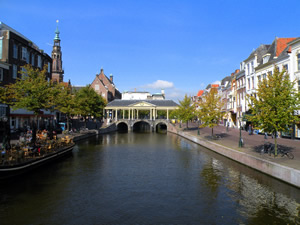
Nieuwe Rijn, Leiden


Immortelle IX


Op `t hoekje van de Hooigracht

En van den Nieuwen Rijn,

Daar zwoer hij, dat hij zijn leven lang

Mijn boezemvriend zou zijn.


En halverwegen tusschen

De Vink en de Haagsche Schouw,

Daar brak hij, zes weken later zoowat,

Den eed van vriendentrouw.


 1434031-622130acdc1de28de4fb218ba515bcd5.jpg

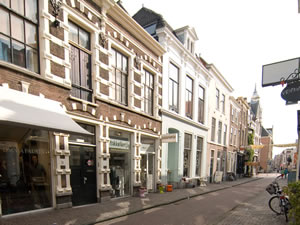
Hogewoerd, Leiden


Des zangers min (Fragment)


De morgendamp hangt over 't veld,

En kleurt den herfstdraad wit.

Voor 't venster op de Hoogewoerd

Een minnedichter zit.


Een dichter, die gewoon is, om

Na d' afloop van 't ontbijt,

Een lied te tokklen op de harp,

Zijn liefje toegewijd.


Niet, dat hij echt een liefje heeft;

Hij stelt het zich maar voor.

Dat doen minnedichters meer;

Daar zijn ze dichters voor.


 1434031-b504e9a3a21b3a20d4121bb9ecce1d4f.JPG

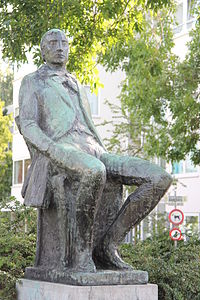
Piet Paaltjens (14 februari 1835 – 19 januari 1894)

Standbeeld in Leiden door Auke Hettema, 1960


De Franse schrijver Patrick Modiano werd geboren in Boulogne-Billancourt op 30 juli 1945. Zie ook alle tags voor Patrick Mondiano op dit blog.


Uit: Une jeunesse


“Les enfants jouent dans le jardin et ce sera bientôt l’heure de la partie d’échecs quotidienne.

— On lui retire son plâtre demain matin, dit Odile. Elle et Louis sont assis sur la terrasse du chalet et observent de loin leur fille et leur fils qui courent à travers la pelouse avec les trois enfants de Viterdo. Leur fils, âgé de cinq ans, porte un plâtre au bras gauche, mais cela ne semble pas le gêner.

— Depuis combien de temps porte-t-il ce plâtre? demande Louis.

— Presque un mois.

Il avait glissé d’une balançoire et l’on s’était aperçu au bout d’une semaine qu’il souffrait d’une fracture.

— Je vais prendre un bain, dit Odile.

Elle monte au premier étage. A son retour, ils commenceront la partie d’échecs. Il entend couler l’eau du bain.

De l’autre côté de la route, derrière la rangée de sapins, le bâtiment du téléphérique ressemble à la petite gare d’une station thermale. L’un des premiers téléphériques que l’on ait construits en France, paraît-il. Louis le suit des yeux, qui gravit lentement la pente du Foraz et le rouge vif de sa cabine tranche sur le vert de la montagne en été. Les enfants se sont faufilés entre les sapins et vont à bicyclette sur le rond-point ombragé, près du bâtiment du téléphérique.

Hier, Louis a décloué de la façade du chalet la plaque de bois où il était écrit en caractères blancs : SUNNY HOME. Elle traîne par terre, devant la porte-fenêtre. Il y a douze ans, quand ils achetèrent le chalet et le transformèrent en home d’enfants, ils ne savaient pas très bien comment l’appeler. Odile préférait un nom français : Les Lutins ou Les Diablerets, mais Louis pensait qu’un nom anglais était plus élégant et attirerait la clientèle. Ils avaient fini par choisir Sunny Home.”


 1434031-62dc617bf7ea6c670f91d23da406ea9f.jpg

Patrick Modiano (Boulogne-Billancourt, 30 juli 1945)


De Engelse dichteres en schrijfster Emily Brontë werd geboren in Thornton in Yorkshire op 30 juli 1818. Zie ook alle tags voor Emily Brontë op dit blog.


High waving heather 'neath stormy blasts bending


High waving heather 'neath stormy blasts bending,
Midnight and moonlight and bright shining stars,
Darkness and glory rejoicingly blending,
Earth rising to heaven and heaven descending,
Man's spirit away from its drear dungeon sending,
Bursting the fetters and breaking the bars.

All down the mountain sides wild forests lending
One mighty voice to the life-giving wind,
Rivers their banks in their jubilee rending,
Fast through the valleys a reckless course wending,
Wider and deeper their waters extending,
Leaving a desolate desert behind.

Shining and lowering and swelling and dying,
Changing forever from midnight to noon;
Roaring like thunder, like soft music sighing,
Shadows on shadows advancing and flying,
Lighning-bright flashes the deep gloom defying,
Coming as swiftly and fading as soon.


A Little Budding Rose


It was a little budding rose,
Round like a fairy globe,
And shyly did its leaves unclose
Hid in their mossy robe,
But sweet was the slight and spicy smell
It breathed from its heart invisible.

The rose is blasted, withered, blighted,
Its root has felt a worm,
And like a heart beloved and slighted,
Failed, faded, shrunk its form.
Bud of beauty, bonnie flower,
I stole thee from thy natal bower.

I was the worm that withered thee,
Thy tears of dew all fell for me;
Leaf and stalk and rose are gone,
Exile earth they died upon.
Yes, that last breath of balmy scent
With alien breezes sadly blent!


'Fall, leaves, fall'


Fall, leaves, fall; die, flowers, away;
Lengthen night and shorten day;
Every leaf speaks bliss to me
Fluttering from the autumn tree.

I shall smile when wreaths of snow
Blossom where the rose should grow;
I shall sing when night's decay
Ushers in a drearier day.


 1434031-5d350f79692871652a7e965a616074b0.jpg

Emily Brontë (30 juli 1818 - 19 december 1848)

Dorothy Black als Emily Brontë in het toneelstuk “The Brontës” door Alfred Sangster


De Nederlandse schrijfster Pauline van der Lans werd geboren op 30 juli 1963 in Den Haag. Zie ook alle tags voor Pauline van der Lans op dit blog.


Uit: Een recente ergernis


“Dat babyboomers op zaterdagochtend voordringen bij de kassa van Albert Heijn, is een behoorlijke ergernis. Meestal zijn het mannen. Babyboomers met een tweede leg. Ik vermoed dat vrouwlief hem en de kinderen het huis heeft uitgeschopt, zodat zij thuis de tafel kan dekken en een zaterdags wasje in de machine kan doen. Of, en dat zou me milder stemmen, ze draait zich nog even om in bed. Die rondrennende kinderen zijn storend, maar niet vervelend. Het zijn kinderen. Die horen te rennen en te storen. Maar dan die vaders. Ik noem hen voor het gemak maar even de ‘BESSEN’: Bilspleten En Slaapkruinen.

De zure BESSEN staren ongewassen en chagrijnig op het boodschappenbriefje, en smijten product na product in hun karretje. Soms krijgt dat karretje alvast een zet naar de volgende gang. Dan moeten ze nog even bij de wijn kijken. En dat ik er dan aankom, nietsvermoedende klant met een mandje, dat interesseert hen niet. Ook niet dat ik hun karretje tegen mijn schenen krijg. Ze zetten me klem bij de kaas, grijpen voor me langs naar de beste bananen, kapen het laatste versgebakken brood voor mijn neus weg, en hurken met behaarde bilspleten te dicht naast mij om koffie van de Euroshopper weg te graaien. Op het werk graaiers, ook bij Albert Heijn graaiers. Vroeger stemden ze PSP. Maar dat was vroeger.”


 1434031-72cae2bebc074fa5e294b57b4a165441.jpg

Pauline van der Lans (Den Haag, 30 juli 1963)


Zie voor nog meer schrijvers van de 30e juli ook mijn blog van 30 juli 2012 en eveneens mijn blog van 30 juli 2011 deel 2.

Geschreven door Romenu om 16:24 Reageer op dit bericht

Rainer Maria Rilke, Paul Verlaine, Harry Mulisch, Chang-Rae, Marja Brouwers


Dolce far niente


Das ist die Sehnsucht: Wohnen im Gewoge


Das ist die Sehnsucht: Wohnen im Gewoge

und keine Heimat haben in der Zeit.

Und das sind Wünsche: Leise Dialoge

täglicher Stunden mit der Ewigkeit.


Und das ist Leben. Bis aus einem Gestern

die Einsamste von allen Stunden steigt,

die, anders lächelnd als die andern Schwestern,

dem Ewigen entgegenschweigt.


1433673-5f3da95f622820fe7ee24193793e5131.jpg
Rainer Maria Rilke (4 december 1875 – 29 december 1926)

Herensteeg, Leiden


Chanson d'automne


Les sanglots longs

Des violons

De l'automne

Blessent mon coeur

D'une langueur

Monotone.


Tout suffocant

Et blême, quand

Sonne l'heure,

Je me souviens

Des jours anciens

Et je pleure;


Et je m'en vais

Au vent mauvais

Qui m'emporte

Deçà, delà

Pareil à la

Feuille morte.


1433673-b74eb6f4b16dd165b6928b7b3355c8fc.jpg
Paul Verlaine (30 maart 1844 - 8 januari 1896)

Pieterskerkhof, Leiden


De Nederlandse schrijver Harry Mulisch werd geboren op 29 juli 1927 in Haarlem. Zie ook alle tags voor Harry Mulisch op dit blog.


Uit: Keuring

Aan I.


‘De dienstplichtige, die zich niet op de voorgeschreven tijd bij de keuringsdienst heeft vervoegd, wordt gestraft met ten hoogste de dood.’

Dat was kursief onder aan het formulier gedrukt. Sander Broodman, die hier ter diskussie staat, had er een uitroepteken bij geplaatst en was gaan biljarten. ‘We zullen eens zien,’ had hij tot een vriend gezegd.

Op de voorgeschreven tijd maakte hij een geraffineerde driebandenstoot van rood.

De volgende ochtend om 7 uur, in het holst van de nacht, bonkte een geweerkolf op de deur van zijn zolderkamertje. Terwijl een droom, waarin een meisje weer geweldig aanwezig was, snel wegtrok, kroop hij met gesloten ogen over zijn bed en draaide de sleutel om. Meteen vulde een gigantische sergeant het vertrek. Hij ontrolde een lang vel papier.

‘Sander Broodman, achttien jaar, zonder beroep, Van der Lubbestraat 47?’ schreeuwde hij.

‘Jawohl,’ grijnsde Sander.

‘Onmiddellijk aankleden en meekomen!’

In een verbazing, steiler van sekonde tot sekonde, bekeek hij de sergeant nu van top tot teen. Was dit een fatsoenlijk ambtenaar van de nederlandse weermacht? Een kantoorloper uit Schoonhoven? Een boerenzoon uit het drentse? Zijn gezicht was met een smerige substantie zwartgemaakt; de modderige, grauw bestoven helm daarboven had op verscheidene plaatsen diepe deuken; aan de rand was het staal ingescheurd. En zijn uniform? Half open, verflard en bebloed. Een linkerbroekspijp was niet aanwezig: bij de lies hingen een paar lange rafels, en op kniehoogte verdween het blote been in smerige, slordig gebonden lappen, waar bloed en etter doorheen geweekt kwam.

Sander sprong van zijn bed en struikelde naar het dakraam. Oorlog? Het land in puin?

Och heden. Zong ooit het vogelgebroed vrediger in de vier wilgen? Geen romp, geen arm hing in de takken; alleen het skelet van een vergane vlieger. Op het fabrieksveld, waaraan men hier grensde, duwden arbeiders hun lorries over de rails, ongewapend en nauwelijks verminkt. De schoorstenen zakten om hun rook vandaan, en in de verte lag het weiland in een bedaarde ochtendnevel, waarop de lichamen der koeien dreven als nieuwe vissen. De zon zou voorshands nog wel niet doorbreken, maar zij was er: achter de wolken boven een vaderland in vrede...


 1433673-8ff721293e7ca51d17282412d6b96098.jpg

Harry Mulisch (29 juli 1927 – 30 oktober 2010)


De Koreaans-Amerikaanse schrijver Chang-Rae Lee werd geboren op 29 juli 1965 in Seoel. Zie ook alle tags voor Chang-Rae Lee op dit blog.


Uit: Aloft


“FROM UP HERE, a half mile above the Earth, everything looks perfect to me.

I am in my nifty little Skyhawk, banking her back into the sun, having nearly completed my usual fair-weather loop. Below is the eastern end of Long Island, and I'm flying just now over that part of the land where the two gnarly forks shoot out into the Atlantic. The town directly ahead, which is nothing special when you're on foot, looks pretty magnificent now, the late-summer sun casting upon the macadam of the streets a soft, ebonized sheen, its orangey light reflecting back at me, matching my direction and speed in the windows and bumpers of the parked cars and swimming pools of the simple, square houses set snugly in rows. There is a mysterious, runelike cipher to the newer, larger homes wagoning in their cul-de-sac hoops, and then, too, in the flat roofs of the shopping mall buildings, with their shiny metal circuitry of HVAC housings and tubes.

From up here, all the trees seem ideally formed and arranged, as if fretted over by a persnickety florist god, even the ones (no doubt volunteers) clumped along the fencing of the big scrap metal lot, their spindly, leggy uprush not just a pleasing garnish to the variegated piles of old hubcaps and washing machines, but then, for a stock guy like me, mere heartbeats shy of sixty (hard to even say that), the life signs of a positively priapic yearning. Just to the south, on the baseball diamond-our people's pattern supreme-the local Little League game is entering the late innings, the baby-blue-shirted players positioned straightaway and shallow, in the bleachers their parents only appearing to sit church-quiet and still, the sole perceivable movement a bounding golden-haired dog tracking down a Frisbee in deep, deep centerfield.

Go, boy, go.”


 1433673-1f940739fc28b0d8ac1f0d41a3381b98.jpg

Chang-Rae Lee (Seoel, 29 juli 1965)


De Nederlandse schrijfster Marja Brouwers werd geboren op 29 juli 1948 in Bergen op Zoom. Zie ook alle tags voor Marka Brouwers op dit blog.


Uit: Casino (Vertaald door Susan Ridder)


“Until the day he met Philip van Heemskerk, nothing in Rink de Vilder’s life gave any intimation of his personal qualities.

The summary of his life until that moment cannot, therefore, be brief enough. He was born at sunrise on 17 October 1962 in The Hague, a city affected by the dullness and stuffiness, a court city in decline. His parents called him Richard, a name whose two Germanic components mean ‘rich’ and ‘courageous’ respectively. Soon, however, this was shortened to Rink, which meant hardly anything. Rink turned out to be a lively little boy with a tendency to bump and break. He fell off the dressing table three times before he learned to walk. After his first half hour in the inevitable playpen, he had broken two of its bars and sailed through the open balcony doors into the garden with them. In the sandpit at the nursery, he whacked other boys’ heads with toy spades. He progressed from there to breaking windows, demolishing bicycles and firing his catapult at the tram’s pantograph until, during his first year at the Haganum Gymnasium, he managed to decapitate an apocalyptic hybrid of Hercules and Paris with an accurate kick of a ball from the courtyard into the  hall. The statue’s head was smashed and his father had to pay for a new, even weirder face for it.

After that he left the material arrangement of man and the world alone and set about acquiring an education. He wrote papers in nine subjects, not eight, got a rounded-up sixty percent in all but one (fifty percent), worked six months as a courier for Euro Parcels, and travelled through Australia until he ran out of money. Then he registered to study Sociology at the University of Amsterdam.”


 1433673-2a793b455789585574be7e131602c250.jpg

Marja Brouwers (Bergen op Zoom, 29 juli 1948)


Zie voor nog meer schrijvers van de 29e juli ook mijn blog van 29 juli 2011 deel 1 en eveneens deel 2. 

Geschreven door Romenu om 22:06 Reageer op dit bericht

Guillermo Martínez

De Argentijnse schrijver en wiskundige Guillermo Martínez werd geboren in Bahía Blanca op 29 juli 1962. Hij behaalde zijna PhD in mathematische logica aan de Universiteit van Buenos Aires. Hierna werkte hij voor twee jaar als postdoc aan het Mathematical Institute van de Universiteit van Oxford. Zijn eerste boek was de korte verhalenbundel “La jungla sin bestias”. In 1989 kreeg hij voor zijn verhalenbundel “Infierno Grande” de Argentijnse Roberto Arlt prijs. Zijn meest succesvolle roman is “Crímenes imperceptibles”, geschreven in 2003. In datzelfde jaar werd hem daarvoor de Planeta Prijs toegekend. Het boek is vertaald in 35 talen, en is ook verfilmd, The Oxford Murders, in 2008, door Álex de la Iglesia. Veel essays van zijn hand (in het Spaans) zijn te vinden op zijn webpagina.

Uit:The Oxford Murders (Vertaald door Sonia Soto)

“Now that the years have passed and everything's been forgotten, and now that I've received a terse e-mail from Scotland with the sad news of Seldom's death, I feel I can break my silence (which he never asked for anyway) and tell the truth about events that reached the British papers in the summer of '93 with macabre and sensationalist headlines, but to which Seldom and I always referred -- perhaps due to the mathematical connotation -- simply as the series, or the Oxford Series. Indeed, the deaths all occurred in Oxfordshire, at the beginning of my stay in England, and I had the dubious
privilege of seeing the first at close range.
I was twenty-two, an age at which almost anything can still be excused. I'd just graduated from the University of Buenos Aires with a thesis in algebraic topology and was travelling to Oxford on a year's scholarship, secretly intending to move over to logic, or at least attend the famous seminars run by Angus MacIntyre. My supervisor, Dr Emily Bronson, had made all the preparations for my arrival with meticulous care. She was a professor and fellow of St Anne's, but in the e-mails we exchanged before my trip she suggested that, instead of staying in the rather uncomfortable college accommodation, I might prefer -- grant money allowing -- to rent a room with its own bathroom, kitchen and entrance in the house of a Mrs. Eagleton, a delightful and discreet lady, she said, the widow of her former professor. I did my sums, as always a little optimistically, and sent off a \cheque for advance payment of the first month's rent, the landlady's only \requirement.
A fortnight later I was flying over the Atlantic in the incredulous state which overcomes me when I travel: it always seems much more likely, and more economical as a hypothesis -- Ockham's Razor, Seldom would have said -- that a last-minute accident will send me back to where I started, or to the bottom of the sea, than that an entire country and the immense machinery involved in starting a new life will appear eventually like an outstretched hand down below.“


 1510637-452687d2027f7d586f15445b134b9377.jpg
Guillermo Martínez (Bahía Blanca, 29 juli 1962)

Geschreven door Romenu om 00:00 Reageer op dit bericht

Meer van Romenu

↑ Terug naar de berichten