

Naar de inhoud

Romenu

Over literatuur, gedichten, kunst en cultuur
akke.beakke.be

Berichten van 6 oktober 2013 tot 7 oktober 2013

100 Jaar Simon Carmiggelt, James Whitcomb Riley, Thomas Keneally

100 Jaar Simon Carmiggelt


De Nederlandse schrijver en dichter Simon Carmiggelt werd geboren op 7 oktober 1913 in Den Haag. Dat is vandaag precies 100 jaar geleden. Zie ook mijn blog van 7 oktober 2010 en eveneens alle tags voor Simon Carmiggelt op dit blog.


Uit: Dagboek van een lezer


“Jammer dat noodweer en overstromingen ons verhinderden met vakantie naar Zwitserland te gaan. Want ik had zo graag in Zürich een das willen kopen.

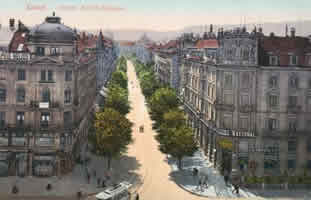
Ik wilde het doen in de winkel ‘London House’ in de Bahnhofstrasse. Niet omdat er dassen worden verkocht die je nergens anders kopen kunt. Maar om, met een geldig alibi, het decor te zien van een kleine, veelbetekenende gebeurtenis die zich daar aan het eind van de jaren dertig heeft afgespeeld. Op een boven-etage van het ‘London House’ stond de schrijver Thomas Mann een pak te passen. De chef verkoper kwam naar hem toe en zei: ‘Weet u wie er beneden is? Gerhart Hauptmann. Wilt u hem spreken?’

‘Och,’ antwoordde Thomas Mann, ‘we kunnen beter andere tijden afwachten.’ Waarop de verkoper sprak:

‘Dat zei meneer Hauptmann ook al.’

Deze anecdote staat in ‘Meine ungeschriebenen Memoiren’, die Katia, de weduwe van Thomas Mann op hoge leeftijd publiceerde.

In het Nederlands verscheen dit (alleraardigste) boek onder de titel ‘Herinneringen aan de tovenaar’. Waarom kwam de tovenaar van ‘De Toverberg’ en ‘Buddenbrooks’ niet naar beneden om de andere tovenaar, die ééns het opstandige toneelstuk ‘De wevers’ had geschreven, de hand te schudden? Ze kenden elkaar toch zo goed van vroeger. Maar in het ‘London House’ te Zürich versperde Hitler de trap tussen de etages. Thomas Mann had verkozen buiten het nationaal-socialistische Duitsland te leven. Hauptmann was er gebleven en had zelfs - volgens Alfred Kerr - op het kasteel dat hij bewoonde de hakenkruisvlag gehesen. Daarom ging Thomas de trap niet af en Gerhart de trap niet op.”


1472387-3f064ce84eefce49f6c260964b31149b.jpg
Zürich, Bahnhofstrasse, op een oude ansichtkaart


Uit: Brieven aan Gerard Reve


“15 juni 1971

(…) Je omgang met mijn onderkoning Alkohol vond ik hoogst aangenaam. Dat je, in deze, handelt onder de geruisloze en tactvolle regie van de jongens, lijkt me meer dan verstandig. Alle lust wil eeuwigheid. Maar de eeuwigheid is zo lang en moeilijk in flessen uit te drukken. Als je mensen die je dierbaar zijn toestaat je eeuwigheid te splijten in wat de Sterreclame voor hondevoer zo treffend ‘hapklare brokken’ noemt, zit je eigenlijk op fluweel. Maar je hebt gelijk: drink nooit in gezelschap van lieden, die je zó weerzinwekkend of alleen maar stomvervelend vindt, dat ze je doen verdwijnen in de damp uit je glas. Als ik, lang geleden, op de Kring kwam, waren een paar daar zittende smoelen, in staat me binnen twee minuten bezinningloos beschonken te maken, voordat ik één slok genomen had. De lucht die er hing maakte me al wankel ter been. Drank is een geheimzinnige vloeistof. Er bestaat niet zoiets als te veel drinken. Wel: ten ongepaste tijde, onder noodlottige omstandigheden en in verkeerd gezelschap drinken.

Je tijdens ons gesprek gedane mededeling dat je heftige woedeaan-vallen gewoon voortkomen uit een gebrek aan enige milligrammen vitamine b werkte, toen ik er over nadacht, op mij tegelijk opluchtend en ontluisterend. Dus geen edele verontwaardiging, doch gewoon een tekortschieten van de apotheek. Het lichaam manipuleert de geest. Ik herinner me ook eens een artikel te hebben gelezen van een medicus, waarin stond dat Marcellus Emants, die altijd over koude voeten klaagde, waarschijnlijk leed aan een ernstige stoornis in de bloedsomloop, die de bodemloze somberheid van zijn oeuvre verklaarde. Van een andere medicus heb ik, in mijn jeugd, eens gelezen dat het hele Marxisme voortkwam uit de maagzweer van Marx. Had hij alleen maar zweetvoeten gehad, dan zat vadertje Czaar dus nog waardig op zijn troon, zoals dat behoort.”


 1472387-08e0c7c30c9e75e0720950e604caae16.jpg

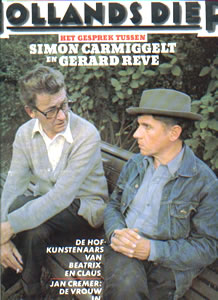
Simon Carmiggelt (7 oktober 1913 – 30 november 1987)

Simon Carmiggelt en Gerard Reve, cover Hollands Diep


De Amerikaanse dichter en schrijver James Whitcomb Riley werd geboren op 7 oktober 1849 in Greenfield, Indiana. Zie ook mijn blog van 7 oktober 2010 en eveneens alle tags voor James Whitcomb Riley op dit blog.


A Letter To A Friend


The past is like a story
I have listened to in dreams
That vanished in the glory
Of the Morning's early gleams;
And--at my shadow glancing--
I feel a loss of strength,
As the Day of Life advancing
Leaves it shorn of half its length.

But it's all in vain to worry
At the rapid race of Time--
And he flies in such a flurry
When I trip him with a rhyme,
I'll bother him no longer
Than to thank you for the thought
That 'my fame is growing stronger
As you really think it ought.'

And though I fall below it,
I might know as much of mirth
To live and die a poet
Of unacknowledged worth;
For Fame is but a vagrant--
Though a loyal one and brave,
And his laurels ne'er so fragrant
As when scattered o'er the grave.


A Noon Interval


A deep, delicious hush in earth and sky --
A gracious lull--since, from its wakening,
The morn has been a feverish, restless thing
In which the pulse of Summer ran too high
And riotous, as though its heart went nigh
To bursting with delights past uttering:
Now--as an o'erjoyed child may cease to sing
All falteringly at play, with drowsy eye
Draining the pictures of a fairy-tale
To brim his dreams with--there comes o'er the day
A loathful silence wherein all sounds fail
Like loitering sounds of some roundelay . . .
No wakeful effort longer may avail --
The wand waves, and the dozer sinks away.


 1472387-6d8d522668f1f040f38022e157ec7527.jpg

James Whitcomb Riley (7 oktober 1849 – 22 juli 1916)

Label op een doos sigaren


De Australische schrijver
Thomas Keneally werd geboren op 7 oktober 1935 in Sydney. Zie ook mijn blog van 7 oktober 2010 en eveneens alle tags voor Thomas Keneally op dit blog.


Uit: Schindler's List


“Trying still to find, in the shadow of Himmler, some hint of Oskar's later enthusiasms, we encounter the Schindlers' next-door neighbor, a liberal rabbi named Dr. Felix Kantor. Rabbi Kantor was a disciple of Abraham Geiger, the German liberalizer of Judaism who claimed that it was no crime, in fact was praiseworthy, to be a German as well as a Jew. Rabbi Kantor was no rigid village scholar. He dressed in the modern mode and spoke German in the house. He called his place of worship a "temple" and not by that older name, "synagogue." His temple was attended by Jewish doctors, engineers, and proprietors of textile mills in Zwittau. When they traveled, they told other businessmen, "Our rabbi is Dr. Kantor—he writes articles not only for the Jewish journals in Prague and Brno, but for the dailies as well."

Rabbi Kantor's two sons went to the same school as the son of his German neighbor Schindler. Both boys were bright enough eventually, perhaps, to become two of the rare Jewish professors at the German University of Prague. These crew-cut German speaking prodigies raced in knee pants around the summer gardens. Chasing the Schindler children and being chased. And Kantor, watching them flash in and out among the yew hedges, might have thought it was all working as Geiger and Graetz and Lazarus and all those other nineteenth-century German-Jewish liberals had predicted. We lead enlightened lives, we are greeted by German neighbors—Mr. Schindler will even make snide remarks about Czech statesmen in our hearing. We are secular scholars as well as sensible interpreters of the Talmud. We belong both to the twentieth century and to an ancient tribal race. We are neither offensive nor offended against. Later, in the mid-1930s, the rabbi would revise this happy estimation and make up his mind in the end that his sons could never buy off the National Socialists with a German-language Ph.D.—that there was no outcrop of twentieth-century technology or secular scholarship behind which a Jew could find sanctuary, any more than there could ever be a species of rabbi acceptable to the new German legislators. In 1936 all the Kantors moved to Belgium. The Schindlers never heard of them again.


 1472387-f2b975ff42634075b923f468348a58fd.jpg

Thomas Keneally (Sydney, 7 oktober 1935)


Zie voor nog meer schrijvers van de 7e oktober ook mijn vorige blog van vandaag.

Geschreven door Romenu om 19:26 Reageer op dit bericht

Dirkje Kuik, Steven Erikson, Wilhelm Müller

De Nederlandse schrijfster en beeldend kunstenares Dirkje Kuik werd geboren in Utrecht op 7 oktober 1929. Zie ook mijn blog van 7 oktober 2010 en eveneens alle tags voor Dirkje Kuik op dit blog.


1472383-45bc0d22930d8dc37012e2a2d5e8f76a.jpg 

Willem D. Kuik. Villa Hadriana, 1967


Nature Morte


Stil eenzelvig oerwoud
voor het bijziend oog.
Verdorde pluimen reizen uit het vuilig
water van het glas.
Terzijde wacht het peloton.
Drie uien, walmlamp, bokking een afgerond bederf,
de resten van een winterjan,
de medicijnfles korporaal.
Een ereprijs in olieverf
van stoffig leven.


 1472383-3040ccf4c09d3d85dea0e8935b498078.jpg

Dirkje Kuik (7 oktober 1929 – 18 maart 2008)


De Canadese schrijver, archeoloog, antropoloog Steven Erikson (pseudoniem van Steve Rune Lundin) werd geboren in Toronto op 7 oktober 1959. Zie ook mijn blog van 7 oktober 2010 en eveneens alle tags voor Steven Erikson op dit blog.


Uit: Gardens of the Moon


“The winds were contrary the day columns of smoke rose over the Mouse Quarter of Malaz City. The Vane’s silence announced the sudden falling-off of the sea breeze that came clambering over the ragged walls of Mock’s Hold, then it creaked back into life as the hot, spark-scattered and smoke-filled breath of the Mouse Quarter reached across the city to sweep the promontory’s heights.
     Ganoes Stabro Paran of the House of Paran stood on tiptoe to see over the merlon. Behind him rose Mock’s Hold, once capital of the Empire but now, since the mainland had been conquered, relegated once more to a Fist’s holding. To his left rose the pike and its wayward trophy.
     For Ganoes, the ancient fortification overlooking the city was too familiar to be of interest. This visit was his third in as many years; he’d long ago explored the courtyard with its heaved cobblestones, the Old Keep-now a stable, its upper floor home to pigeons and swallows and bats-and the citadel where even now his father negotiated the island export tithe with the harbour officials. In the last instance, of course, a goodly portion was out of bounds, even for a son of a noble house; for it was in the citadel that the Fist had his residence, and in the inner chambers that such affairs of the Empire as concerned this island were conducted.
     Mock’s Hold forgotten behind him, Ganoes’ attention was on the tattered city below, and the riots that ran through its poorest quarter.”


 1472383-db3e390a79ac05a7269e81f723dbb293.jpg

Steven Erikson (Toronto, 7 oktober 1959)


De Duitse, romantische dichter Wilhelm Müller werd geboren op 7 oktober 1794 in Dessau. Zie ook mijn blog van 7 oktober 2010 en eveneens alle tags voor Wilhelm Müller op dit blog.


Die Wetterfahne

Der Wind spielt mit der Wetterfahne
Auf meines schönen Liebchens Haus.
Da dacht ich schon in meinem Wahne,
Sie pfiff' den armen Flüchtling aus.

Er hätt' es ehr bemerken sollen,
Des Hauses aufgestecktes Schild,
So hätt' er nimmer suchen wollen
Im Haus ein treues Frauenbild.

Der Wind spielt drinnen mit den Herzen,
Wie auf dem Dach nur nicht so laut.
Was fragen sie nach meinen Schmerzen?
Ihr Kind ist eine reiche Braut.


Gefrorne Tränen

Gefrorne Tropfen fallen
Von meinen Wangen ab:
Und ist's mir denn entgangen,
Daß ich geweinet hab?

Ei Thränen, meine Thränen,
Und seid ihr gar so lau,
Daß ihr erstarrt zu Eise,
Wie kühler Morgentau?

Und dringt doch aus der Quelle
Der Brust so glühend heiß,
Als wolltet ihr zerschmelzen
Des ganzen Winters Eis!


1472383-e19ae0f64f5052730d07b5edf379b32e.jpg

Wilhelm Müller (7 oktober 1794 – 1 oktober 1827)

Cover biografie

Geschreven door Romenu om 19:21 Reageer op dit bericht

Rachel Kushner

De Amerikaanse schrijfster Rachel Kushner werd geboren op 7 oktober 1968 in Eugene, Oregon en verhuisde naar San Francisco in 1979. Zij studeerde af aan de Universiteit van Californië, Berkeley en behaalde haar Master of Fine Arts in creatief schrijven aan de Columbia University in 2001. Na haar MFA woonde Kushner 8 jaar in New York City, waar zij redacteur was van de tijdschriften Grand Street en BOM. Zij schreef veel over hedendaagse kunst, waaronder tal van artikelen in Artforum. Ze is momenteel redacteur van Soft Targets, een tijdschrift over kunst, fictie en poëzie. Kushners meest recente roman “The Flamethrowers” werd in april 2013 gepubliceerd door Scribner. “The Flamethrowers” was finalist voor de 2013 National Book Award en werd uitgeroepen tot een top boek van 2013 door New York Magazine, Time Magazine, The New Yorker, O, The Oprah Magazine, New York Times Book Review, New York Times 'Dwight Garner, Los Angeles Times, San Francisco Chronicle, Vogue, Wall Street Journal, Salon, Slate, Daily Beast, Flavorwire, The Millions, The Jewish Daily Forward en Austin American-Statesman. Kushner ’s eerste roman “Telex from Cuba” werd in juli 2008 gepubliceerd door Scribner. “Telex from Cuba” was finalist voor de 2008 National Book Award.

Uit: The Flamethrowers

“I walked out of the sun, unfastening my chin strap. Sweat was pooling along my collarbone, trickling down my back and into my nylon underwear, running down my legs under the leather racing suit. I took off my helmet and the heavy leather jacket, set them on the ground, and unzipped the vents in my riding pants.
I stood for a long time tracking the slow drift of clouds, great fluffy masses sheared flat along their bottom edges like they were melting on a hot griddle.
There were things I had no choice but to overlook, like wind effect on clouds, while flying down the highway at a hundred miles an hour. I wasn't in a hurry, under no time constraint. Speed doesn't have to be an issue of time. On that day, riding a Moto Valera east from Reno, it was an issue of wanting to move across the map of Nevada that was taped to my gas tank as I moved across the actual state. Through the familiar orbit east of Reno, the brothels and wrecking yards, the big puffing power plant and its cat's cradle of coils and springs and fencing, an occasional freight train and the meandering and summer-shallow Truckee River, railroad tracks and river escorting me to Fernley, where they both cut north.
From there the land was drained of color and specificity, sage-tufted dirt and incessant sameness of highway. I picked up speed. The faster I went, the more connected I felt to the map. It told me that fifty-six miles after Fernley I'd hit Lovelock, and fifty-six miles after leaving Fernley I hit Lovelock. I moved from map point to map point. Winnemucca. Valmy. Carlin. Elko. Wells. I felt a great sense of mission, even as I sat under a truck stop awning, sweat rolling down the sides of my face, an anonymous breeze, hot and dry, wicking the damp from my thin undershirt. Five minutes, I told myself. Five minutes. If I stayed longer, the place the map depicted might encroach. A billboard across the highway said schaefer. when you're having more than one.”


 1603625-4ac761e80066cfb72d31e230c6450b0f.jpg
Rachel Kushner (Eugene, 7 oktober 1968)

Geschreven door Romenu om 00:00 Reageer op dit bericht

Victor Vroomkoning, Ulrike Ulrich, Heinrich Federer, Ludwig Begley, Maria Dąbrowska, Horst Bingel, Peter Gosse

De Nederlandse dichter Victor Vroomkoning (pseudoniem van Walter van de Laar) werd geboren op 6 oktober 1938 in Boxtel. Zie ook mijn blog van 6 oktober 2010 en eveneens alle tags voor Victor Vroomkoning op dit blog.


Zee

Kon je maar beklijven
in de lauwe baai
waaruit je ooit kwam
maar je blijft
de dagelijkse drenkeling
tot aan de laatste schemering.

Kon je je maar in haar
bergen maar je legert je
aan haar rand dolend
in jezelf achteloos
verkerend tussen lotgenoten

die zoals jij de tint
van het land aannamen,
zilten kameleons, vlezen
korrels: loom droog sepia.


Blik


Hoe ziet mijn huis mij arriveren?
Wat hebben de meubels zonder mij
verricht: mijn warmte gekoesterd,
mijn katten vertroeteld?

O, kon ik mijzelf eens vanuit mijn bank
zien naderen, een blik werpen op de man
die vanaf het trottoir naar me zwaait
alsof hij gelukkig huiswaarts keert.


Witheid


In de witte winter in het witte huis
in de witte kamer in het witte bed
op het witte laken fluister ik
in het witte oor dat naast me ligt

de lichte dingen van de liefde.
Wij sluipen de sneeuw in, schuiven
onze lijven warm, schuilen in het
schuim, worden watten poppen.

Terug uit de witte winter in het
witte huis in de witte kamer
in het witte bed op het witte
laken smelten wij mond op

mond samen tot het witte wezen
dat wij zijn als de nacht begint.


1471769-7fa8b355e884d6f286b1b0499d7b8005.jpg
Victor Vroomkoning (Boxtel, 6 oktober 1938)


De Duitse dichteres en schrijfster Ulrike Ulrich werd geboren in op 6 oktober 1968 in Düsseldorf. Zie ook mijn blog van 6 oktober 2010en eveneens alle tags voor Ulrike Ulrich op dit blog.


Durch den Wind


“Durch den Wind sei sie, sagt sie. Durch den Wind sei sie überhaupt nicht mehr hinausgekommen, gar nicht mehr, keinen Schritt vor die Tür. Daheim sei sie und brauche nicht mal hinausschauen, wie der Wind die Wolken vor die Sonne und wieder weg schiebt. Das Licht aus und anknipst. Das sehe sie auch so, ohne hinauszuschauen. Und es sei auch so schlimm genug. Sie fürchtet den Wind. Er weht ihr durch die Gedanken, er wirbelt ihr alle Aufzeichnungen durcheinander und alle Erinnerungen. Wenn sie schon alles gelocht hätte und abgelegt. Abgeordnet. Aber es liegt ja alles lose herum. Wenn so ein Windstoß auf einen Papierstoß trifft, dann ist es zu spät.
Durch den Wind sei sie, sagt sie. Durch den Wind sei sie an die Wohnung gebunden. Und er wehe beständig. Wehe, sagt sie. Und dass sie gegen den Wind sei und der Wind gegen sie. Und immer sei diese Stadt voller Wind, jede einzelne Gasse. Ganz egal um welche Ecke sie biege, immer käme er ihr entgegen. Und sie wisse nicht, warum die Stadt so einen Wind mache. Sie aber wolle das hinter sich lassen. Wind und Wetter.
Und dann geht sie doch hinaus und wendet sich dem Wetter zu und stellt sich dem Wind.
Und da steht sie noch und dreht ihm den Rücken zu. Dem Wind. Soll er doch von hinten kommen, sagt sie. Sie sei gefasst. Sie wird sich jetzt treiben lassen. Sie lässt sich jetzt durch die Gassen schieben, an den Rinnsteinen entlang, über die Kreuzungen. Sie lässt sich unter den Autos hindurchpusten und hält an Laternen fest.
Und dann lässt sie sich wieder los und wird durch den Maschendraht gepresst. Sie wird über Plätze, Brücken und Dächer wirbeln und erst liegen bleiben, wenn er nachlässig wird, der Wind. Wenn er einschläft, dann wird sie sich fortschleichen, ihm davonlaufen, wie der Wind wird sie sich aus dem Staub machen. Sagt sie und steht noch immer da draußen, den Wind im Rücken. Und wenn er dreht, dreht sie sich auch und lächelt. Und dreht sich mit dem Wind.”


 1471769-9556e6ba8adf52a4fa99c543adbc58e1.jpg

Ulrike Ulrich (Düsseldorf, 6 oktober 1968)


De Zwitserse dichter, schrijver en priester
Heinrich Federer werd geboren op 6 oktober 1866 in Brienz. Zie ook mijn blog van 6 oktober 2009 en ook mijn blog van 6 oktober 2010 en eveneens alle tags voor Heinrich Federer op dit blog.


Wie der Abendstern


Ich hatt‘ einen klugen Knaben so gern,

er ist mir so lieb wie der Abendstern

in des Lebens Mühle gewesen.

Ich hielt‘ ihn rein wie das Himmelsbild,

auf seines Herzens sonnigem Schild

mocht ich nur Gutes lesen.


Da flog eine bange Wolke daher,

nicht von ihm, nicht von mir, von ungefähr

und brachte bösen Schaden.

Wir wurden getrennt, ich ward‘ vor Gericht,

als wär es eine heilige Pflicht,

schuldlos mit Schulden beladen.


Nun seufz‘ ich in großer Schmach und Pein,

verstoßen, gefangen, verriegelt, allein,

wo tausend Verbrecher gesessen.

Dem Knaben wurde ein Hündchen geschenkt,

damit er es streichelt und füttert und lenkt,

um den anderen Hund zu vergessen.


 1471769-e3ac503c64874549e056455858ab1584.jpg

Heinrich Federer (6 oktober 1866 – 29 april 1928)

Cover biografie 


De Poolse schrijfster Maria Dąbrowska werd geboren op 6 oktober 1889 in Russów bij Kalisz. Zieook mijn blog van 6 oktober 2009 en eveneens alle tags voor Maria Dąbrowska op dit blog.


Uit: Nights and Days


“These were the parents of Bogumil Niechcic. Bogumil Adrian was their youngest son; he came into the world after many years of marriage. The older children died, one after another, which was, according to local opinion, God's punishment for Lady Florentyna's departure from the road of her holy vocation.

Bogumil grew up healthy, and at the age of fifteen he took part with his father in the rising of 1863.

In point of fact, Michal Niechcic had joined the insurrection not when the gentry finally decided to do so, but at the very beginning, together with the burghers, artisans, and youngsters of all extractions. His participation in the conflict was significant enough to have Jarosty confiscated after the defeat and to send him to Siberia. His wife followed him. The son Bogus was taken care of by some of those relatives who regarded the progeny of Maciej Niechcic as a family of madmen. Their understanding of their educational duties toward the youngster entrusted to their care was such that, shortly afterwards, he fled from them so cleverly that they were unable to find a trace of him. In the meantime, Lady Florentyna, having buried her husband in the remote Siberian forests, came back to Poland and, having cried her eyes out over the lost son, became a housekeeper in a mansion belonging to some acquaintances. She was satisfied with the bread she earned, for she had preserved the serenity of spirit which had never left her whatever her situation. After some time, her health deteriorated from age and the hardships of past life. Then the owners of the estate Krepa where she worked, fixed her a little flat in an outbuilding and settled her there together with her brother Klemens Klicki, also an ex-insurrectionist, who until then, lacking material means and somewhat deranged mentally, had lived in a poorhouse.”


 1471769-4ae94550b9d3dff2db03f74039cc4908.jpg

Maria Dąbrowska (6 oktober 1889 – 19 mei 1965)


De Amerikaanse schrijver
Louis Begley werd geboren als Ludwig Beglejter op 6 oktober 1933 in Stryj (toen Polen, tegenwoordig Oekraïne). Zie ook mijn blog van 6 oktober 2009 en eveneens alle tags voor Louis Begley op dit blog.


Uit: Schmidt Steps Back


“Schmidt's first sight of Alice was at her marriage to Tim Verplanck, a young associate at W & K who had become his favorite. It took place at a church in Washington, Alice's father being then French ambassador to the U.S. That afternoon he danced with her at the embassy reception. She had white freesia in the coils of her hair, which was the color of dark old gold, and wore a veil of billowing ivory lace that Mary had said must have been her grandmother's. In the coming months and years there had been dinners -- Mary would have remembered how many, it was the sort of thing she kept track of -- at the Schmidts' apartment when, according to W & K custom, they entertained associates who worked for him, with their wives or fiancées; there had been also the annual office dinner dances for all lawyers and wives and, after Tim had been taken into the firm, much smaller dinners for partners and wives. Each time Schmidt had been taken aback, truly bowled over, by her beauty, her chic, and her bearing, so perfectly erect, her head held high, the rich mass of her hair twisted into a chignon or gathered by a clasp over the nape of her neck. She had the imperturbable good manners of a diplomat's daughter. Her vertiginously long and perfect legs had a prized place in his memory. An opportunity to inspect them had been offered to the entire firm when she came to an office function wearing a fire-engine-red miniskirt and black mesh tights, no other office wife being attired in anything remotely so eyecatching. But Schmidt was able to swear that he had not coveted her then or at any other time while Tim was alive, office liaisons, not least adulterous ones, being taboo for him and, he believed, all other decent men of his class and generation. There was another, unavowable reason: while Mary lived, all the women who had excited him had something louche about them. They were women he had picked up at hotel bars, a law student with whom he had inexcusably smoked pot while on a recruiting trip to the West Coast.”


 1471769-60135ab00feaa45421ba854ba8bf1195.JPG

Louis Begley (Stryj, 6 oktober 1933)


De Duitse dichter, schrijver, graficus en uitgever Horst Bingel werd geboren in Korbach op 6 oktober 1933. Zie ook mijn blog van 6 oktober 2010 en eveneens alle tags voor Horst Bingel op dit blog.


Deutscher Herbst 1989


Sie rauben dir die Seele, jetzt, die Lust, sie rufen,
meilenweit, schöner, die Glocken, im Wind,

das Pflaster, die Straße, die Faust, die Bombe, die Fenster
aufgebrochen, die Menschen tragen Kerzen, nun, die
Menschen, der Wind, der sie treibt, der Ball, die
Mörder, die Kinder, auf einer Bahre, auferstanden,

im Rabenschrei, die Pferde, im Sturz, im Flug noch, geborgen,
die Kirche, unter den Brücken, schwarz, im Strom,
der Schrei, die Sirenen schweigen,

sie brennen dir diese Stadt in die Haut, das Kutschenrad, die
Speichen, deine Knochen, gestreckt, zum Kranz dir
geflochten, das Holz, morsch, du, in der Marter
auferstanden, niemand, der deine Seele raubt, die
Hölle, abgebrannt, meilenweit.


In einer gelben Kirche


In Lyonel Feiningers gelber Dorfkirche wird
George W. Bush niemals beten, im Raum der
Kunst stirbt Kriegers Lust, Trauer und
Wut, kein Schrei, die
toten Soldaten, alle
Soldaten, in den
Generälen stehen die
Toten stramm, in
der gelben
Dorfkirche
stirbt
Bush.


1471769-787a4e7b86a7c19718b1c4f0e34ad9b2.jpg 

Horst Bingel (6 oktober 1933 – 14 april 2008)


De Duitse dichter, schrijver en essayist Peter Gosse werd geboren in Leipzig op 6 oktober 1938. Zie ook mijn blog van 6 oktober 2010 en eveeneens alle tags voor Peter Gosse op dit blog.


PROVINZBERICHT 1979


M. ist mal ganz Harmonie, mal hormonisch.
Mal gesengte Sau, mal gesenkten Haupts.
Zu zu vielen Gesichtern geteigt oder atomized,
als daß Gesichte blieben. Alptraum wär Gnade.


S. schiebt seine Schicht, und kinderreich,
und gerne im Fernsehn die wackelnden Ärsche der Pferde wackeln
und drüber die Kaffeebohnen der Jockeyärsche
sieht er über schackerschackerreiternden Knien.


W. hat die Witzchen,
die alles Muskeljucken durchs Zwerchfell ablassen,
und gewaltige Gespräche unter vorgehaltener Hand
und das Essen satt .


H., ah, ist Erde heraus aus dem irischen Elend,
und Äolsharfe bläst er naturburschikos, wo’s doch pfeift
auf technologischen Lücken, und Roheit abhanden
und er ausm Schneider.


K. versuchts nun mit älteren Frauen,
von Sehnsucht nach Sehnsucht getrieben
im zählflüssigen Verkehr, geschäftigen Vakuum,
im Sich-Schlagen in die Flucht in die Festwerte.


„Woher Geschichte“, knirscht M., „wie putschen im Punsch!
Zustände!“ knirscht er, „wenige kriegen sie
in Brot und Spüle, taubgespeist im Wettwüsten
die Proleten: mit verschleyertem Blicke, trostlos gesund!“


J. sagt, ein bißchen zu hektisch um zuhörn zu machen,
ein bißchen zu schrill, ein bißchen zu äquatorial:
„Unser Mißmut“, sagt er, „ist provinziell!“
und hat ja sicherlich, sicherlich hat er recht.


1471769-73b6ea48c1f336b3cb2efacaf88edfaa.jpg
Peter Gosse (Leipzig, 6 oktober 1938)


Geschreven door Romenu om 16:02 Reageer op dit bericht

Meer van Romenu

↑ Terug naar de berichten